

Submitted:
19 August 2025
Posted:
20 August 2025
You are already at the latest version
Abstract
This study explores the role of mass media in raising awareness about salinity issues in coastal Bangladesh, a region increasingly affected by climate-induced environmental changes. Set within the broader context of public communication and environmental awareness, the research aimed to assess both the effectiveness of media channels in disseminating information on salinity and the current level of public awareness. A mixed-method approach was employed using face-to-face surveys with 210 purposively selected respondents across seven unions in Koyra Upazila. Moreover, content analysis was conducted over one month on the prime-time night news of Bangladesh Betar, Khulna, and Bangladesh Television using a structured coding sheet. The findings reveal a general lack of public awareness regarding salinity, largely attributed to the limited role played by mass media, NGOs, and government agencies. Media coverage was found to be minimal, with few relevant or targeted programs addressing salinity issues. The content lacked regularity, depth, and contextual relevance to the community’s actual needs. These results highlight the urgent need for coordinated efforts by media agencies, government institutions, and civil society to improve the scope, quality, and frequency of communication on salinity-related challenges. Enhanced media engagement can play a vital role in promoting informed decision-making and community resilience.
Keywords:
media
; awareness
; salinity
; mass media
; content analysis
; governmental organizations
; NGOs
1. Introduction
Climate change has emerged as a defining challenge of the 21st century, with cascading effects on ecosystems, economies, and human settlements across the globe. The rise in global average temperatures, changing rainfall patterns, and intensifying weather extremes have prompted an urgent need for mitigation and adaptation responses [1,2,3]. Among the many environmental consequences of climate change, salinity intrusion represents a slow-onset hazard that is increasingly disrupting coastal ecologies and rural livelihoods worldwide [4,5].
Salinity intrusion is not merely a hydrological anomaly; it reflects deep-rooted climatic and anthropogenic disturbances that threaten soil fertility, freshwater availability, and food systems [6,7]. While salinity is a global issue, its implications are especially severe in deltaic regions, where rising sea levels and upstream freshwater scarcity interact with land use changes and infrastructural weaknesses to drive saline encroachment [8,9].
Bangladesh stands at the forefront of this crisis. Recognized as one of the most climate-vulnerable countries globally, its low-lying coastal geography, dense population, and dependence on natural resources make it highly susceptible to saline intrusion [10,11,12]. Approximately one-third of the country’s landmass lies within coastal regions that are increasingly exposed to salinity due to tidal flooding, sea-level rise, storm surges, and saline water seepage into groundwater and surface water systems [13,14,15]. Upstream water diversion and the degradation of natural buffers like the Sundarbans [16] further worsen the situation.
The impacts of salinity are both environmental and economic. Coastal soils are becoming increasingly unsuitable for crop cultivation, leading to a sharp decline in agricultural productivity, particularly for staple crops [12,17,18]. Saline water intrusion has also compromised access to safe drinking water, triggered out-migration, and increased the incidence of waterborne diseases and skin conditions [19,20,21]. Recent studies highlight the severity of the crisis, particularly in the south-west coastal areas of Bangladesh, where the spatial spread and intensity of salinity have grown significantly in recent decades [22,23,24,25,26].
Koyra Upazila (a sub-district) in the Khulna district is one of the regions most affected by this crisis. Its proximity to the Sundarbans and direct exposure to tidal rivers have made it a salinity hotspot. According to the UNDP Climate Vulnerability Index, Koyra ranks 9th among 463 upazilas in Bangladesh in terms of climate sensitivity and exposure [27]. A Socioeconomic Vulnerability Index assessment covering its seven unions further identifies the area as critically vulnerable to climate change impacts, particularly for agriculture-dependent households [28].
Farming in this area is predominantly smallholder-based, relying on paddy cultivation, seasonal vegetables, and aquaculture. However, rising salinity in both soil and irrigation water has drastically reduced crop yields, forcing shifts from high-yield rice varieties to salt-tolerant but lower-yield alternatives, or even the abandonment of crop farming. Many farmers have turned to brackish water shrimp cultivation [29], which, while offering short-term economic benefits, has accelerated soil degradation, reduced agrobiodiversity, and entrenched salinity levels [30].
The resulting livelihood pressures include declining household incomes, growing indebtedness, and worsening food insecurity. Women in farming households bear additional burdens, such as managing food scarcity and traveling long distances to collect potable water [31]. The combined effects of reduced agricultural productivity, declining fish stocks, and recurrent climatic shocks have eroded livelihood resilience. These realities highlight an urgent need for context-sensitive interventions that enhance community resilience and adaptive capacity.
Effective communication plays a pivotal role in this regard. Mass media, including radio, television, newspapers, and digital platforms, possess the potential to raise public awareness, disseminate knowledge on adaptive practices, and influence both community behavior and institutional responses to tackle salinity intrusion and its associated challenges [32,33,34]. However, in the case of salinity intrusion, particularly in Bangladesh’s coastal regions, the role of media remains largely underexplored and underutilized. Existing coverage tends to be infrequent, superficial, and poorly aligned with the lived realities of farming communities.
Against this backdrop, this study aims to explore the interface between media engagement and community awareness. This research investigates how mass media platforms have addressed the issue of salinity, the extent to which farmers in vulnerable regions are informed, and the perceived relevance and impact of existing media content. It combines community-level data with content analysis of mainstream media to provide an integrated understanding of communication gaps and opportunities.
In doing so, this study contributes to a growing body of literature on environmental communication and climate resilience. It offers empirical insights that can inform the design of more targeted, frequent, and contextually grounded media strategies aimed at promoting adaptive practices and strengthening community preparedness in the face of creeping climate hazards like salinity intrusion.
2. Materials and Methods
This study adopts a mixed method approach to examine how mass media influences awareness of salinity intrusion among farming communities in the coastal region of Bangladesh. Insights from household surveys are combined with content analysis of mainstream media to capture both community perspectives and media narratives. The study area, data collection process, and participant selection method are detailed below.
2.1. Study Area
This study was conducted in Koyra Upazila (Figure 1), located in the southwestern coastal region of Khulna District, Bangladesh. Positioned between 22°12’ and 22°31’ N latitudes and 89°15’ and 89°26’ E longitudes, this upazila spans an area of 1,775.41 square kilometers (including the Sundarbans reserve), making it the third-largest upazila in the country. Administratively, it comprises 7 unions (lowest tier of administrative unit), 72 mouzas, and 131 villages, with approximately 15,078 hectares of cultivable land.
Koyra is home to over 220,092 residents across 55,518 households [35]. Agriculture is the dominant livelihood, yet the region faces significant environmental stress due to its geographic location. Surrounded by rivers and tidal channels, and adjacent to the Sundarbans, it remains highly susceptible to cyclones, tidal surges, river erosion, and particularly salinity intrusion, which has become an increasingly persistent threat to local agriculture.
Climatic variability, characterized by hot summers, heavy monsoons, and a cool, dry winter, exacerbates water scarcity and amplifies soil salinity. Seasonal changes in rainfall and temperature significantly impact soil salinity, particularly during the dry season when irrigation water becomes scarce. Annual rainfall averages approximately 1,840 mm, with temperatures fluctuating between 14°C in winter and 33°C in summer, accompanied by high humidity [36,37]. These conditions, combined with inadequate water management infrastructure, have led to increased salinization of both soil and water resources.
Local farmers adapt by cultivating crops with varying degrees of salt tolerance. For instance, sunflower, maize, cotton, wheat, and mustard are preferred in salinity-prone areas, while transplanted Aman rice is grown in waterlogged conditions. However, despite such adaptive cropping patterns, salinity continues to reduce agricultural productivity. Many farmers leave lands fallow during the dry season due to the unavailability of irrigation water and rising soil salinity. In fact, around 56% of farmers in Koyra cultivate only one crop annually [38], highlighting the constraint salinity imposes on crop diversification and food security.
The vulnerability to salinity of this area intensified by natural hazards and inadequate irrigation options makes it a crucial site for exploring the role of media in enhancing farmers’ awareness and response strategies. The study area reflects both the environmental urgency and the social need for effective communication interventions in climate-stressed rural landscapes.
2.2. Data Collection Method
The study employed a mixed-methods approach, combining survey and content analysis techniques. This dual method allowed for both the collection of community-level perceptions and the examination of institutional communication outputs, thereby strengthening the study’s analytical depth. A structured questionnaire was developed comprising 34 questions, including closed-ended, open-ended, and multiple-choice formats, aimed at capturing respondents’ awareness, media exposure, and knowledge related to salinity. The questionnaire was pre-tested through a pilot survey to validate clarity, relevance, and sequencing. Based on pilot feedback, necessary revisions were incorporated to enhance consistency and respondent comprehension. Each face-to-face interview lasted approximately 30 to 40 minutes, conducted in the local language to ensure accuracy in responses.
In parallel, a content analysis was conducted focusing on audio and video materials from mainstream media. The analysis targeted news broadcasts from two public media channels: Bangladesh Television (BTV) and Bangladesh Betar, Khulna. These platforms were selected purposively due to their significant reach in rural coastal areas. News content was collected and reviewed from October 15 to November 14, 2024, covering the 8:00 PM primetime slot on BTV and the 8:30 PM slot on Bangladesh Betar, Khulna. Only news segments specifically addressing salinity-related issues were included. A structured coding sheet was developed to extract and categorize content based on key themes such as frequency of coverage, framing of salinity issues, geographic focus, affected sectors (e.g., agriculture, water, health), and presence of expert or community voices. The coding categories were derived inductively from the media content itself to ensure grounded and context-sensitive analysis.
The study relied on both primary and secondary data sources. While survey data constituted the primary dataset, secondary sources, including government reports, academic articles, and prior media studies, were used to provide contextual background and to triangulate findings.
2.3. Sampling
The survey focused on active farmers across the seven unions of Koyra Upazila. Considering the exploratory nature of the research, a purposive sampling approach was initially employed to ensure contextual relevance. To enhance representativeness within the target population, the study adopted a multi-stage strategy combining cluster and random sampling. A total of 210 respondents were interviewed, with each union contributing 30 participants. This approach was guided by the minimum sample size threshold required for basic statistical validity. Gender balance was maintained by selecting 15 male and 15 female farmers from each union, allowing for comparative insights into media exposure and salinity awareness across gender lines. Within each union, respondents were randomly selected from farming households, regardless of land size, ownership status, or crop variety, ensuring inclusion of a broad spectrum of agricultural experiences. For the content analysis, media items were purposively selected from prime-time news bulletins aired by BTV and Bangladesh Betar, Khulna station. Only those news segments that explicitly addressed salinity-related themes were included, aligning with the study’s objective of examining the depth and framing of salinity discourse in mainstream public broadcasting.
2.4. Data Processing and Analysis
All quantitative data collected through structured questionnaires were analyzed using SPSS and Microsoft Excel to generate descriptive statistics on respondents’ demographic profiles, media exposure, and salinity awareness. ArcGIS 10.8 was used to map the study area. Qualitative data obtained through content analysis were coded systematically and examined using thematic analysis to identify dominant media narratives, coverage frequency, and contextual framing of salinity issues. The integration of quantitative and qualitative findings offered a comprehensive understanding of both the media’s role (supply side) and farmers’ awareness (demand side) regarding salinity in the study region.
3. Results
3.1. Demographics
The demographic profile of respondents reflects a distinctly youthful farming population. As shown in Table 1, over half of the participants (55.7%) were between 18 and 35 years of age, underscoring the significant presence of younger individuals in local agricultural activities. A further 28.5% fell within the 36 to 50 age group, while only 15.7% were above 50, indicating limited representation from older cohorts. This age distribution suggests that salinity challenges and adaptive practices are likely to be mediated through a relatively young and potentially more adaptive population segment.
Gender parity was intentionally embedded in the sampling strategy, with an equal number of male and female respondents (50% each), thereby ensuring the inclusion of diverse gendered experiences and perspectives. Each of the seven unions contributed an equal number of respondents, 30 per union, divided evenly between men and women. This union-wise balance not only enhanced geographic coverage but also strengthened the internal representativeness of the data, supporting comparative analysis across locations and gender lines.
3.2. Awareness on Salinity
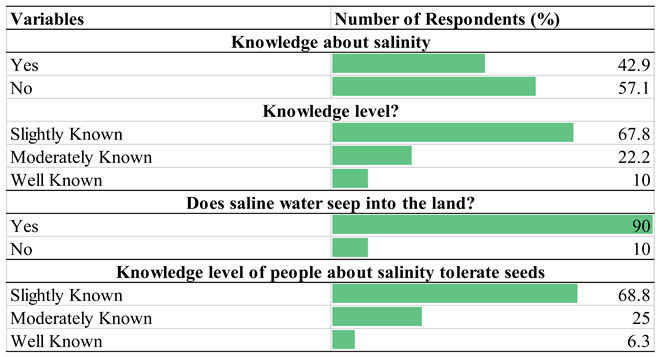
The findings reveal a notable deficit in public understanding of salinity as a pressing environmental issue. More than half of the respondents (57.1%) were unable to define or explain the concept of salinity, reflecting a general lack of exposure to formal or community-based knowledge dissemination. Only 42.9% of respondents demonstrated any awareness of salinity, and within this group, just 10% exhibited a deeper comprehension, highlighting the marginal presence of informed individuals within the community.
Despite this limited conceptual grasp, a striking 90% of respondents reported direct experiences with saline water intrusion on their agricultural land. This contradiction, between lived experience and conceptual awareness, suggests that salinity, while pervasive in daily life, remains poorly articulated or understood within local knowledge systems. The minority (10%) who reported no such experience attributed this to the comparatively elevated position of their land, suggesting that topographical variation still plays a protective role in certain areas.
Awareness of adaptive solutions, particularly the use of salinity-tolerant seed varieties, was similarly low. Nearly 69% of respondents indicated minimal familiarity with such seeds, while 25% reported only a moderate understanding. A mere 6.3% claimed to have in-depth knowledge. This limited awareness of adaptive agricultural technologies raises concerns about the effectiveness of outreach strategies and underlines the need for more participatory, context-sensitive extension services.

Table 2.
Respondent knowledge on salinity.
 |
A large majority of respondents (84.8%) reported no awareness of salinity-tolerant seeds, underscoring a significant knowledge gap regarding adaptive agricultural practices in saline-prone areas. Only 15.2% indicated any familiarity with such seeds, suggesting that dissemination of information and extension services around climate-resilient inputs remain limited.
In terms of adoption, just 8.6% of respondents reported using salinity-tolerant seeds in their farming activities, while the remaining 91.4% had not incorporated them into their practices. The primary barrier to adoption appeared to be lack of awareness, rather than issues related to access or affordability. This disconnection between awareness and use highlights a missed opportunity in promoting resilience through context-specific agricultural innovation.
Figure 2.
Respondent awareness on salinity.
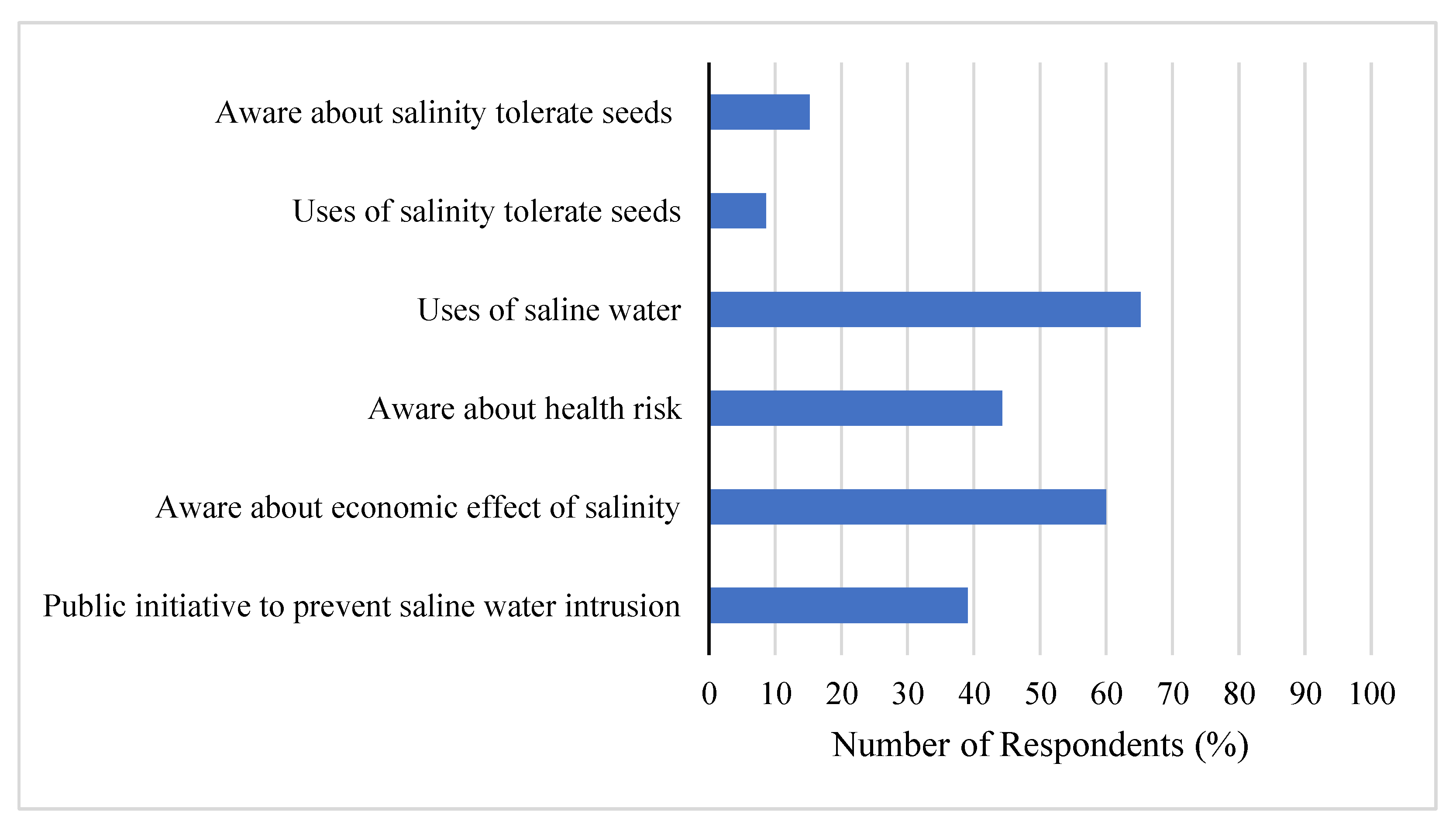
On the broader impact of salinity, 60% of respondents demonstrated awareness of its economic consequences, while 40% remained uninformed. However, awareness did not consistently translate into action. Most notably, 60.9% of respondents stated that they had taken no measures to prevent saline water intrusion onto their land, whereas only 39.1% reported implementing any form of preventive action. This disconnects points to potential constraints such as limited resources, technical knowledge, or institutional support necessary for local adaptation efforts.
3.3. Impact of Salinity
The findings indicate that salinity intrusion has a substantial impact on the lives and livelihoods of the local population. A significant majority of respondents, approximately 63%, reported being adversely affected by the use of saline water, while only 37% noted no direct impact. In terms of agricultural productivity, 56.2% of respondents observed a decline in soil fertility, and 39% indicated that they are unable to cultivate multiple crops due to the persistence of saline conditions.
The intrusion of saline water is largely attributed to two interconnected factors: ineffective management of sluice gates and the proliferation of shrimp farming. Half of the respondents (50%) identified these practices as the main drivers of salinity in the area. Moreover, 37.2% of respondents assessed the impact of these factors as moderate, suggesting a varying but tangible influence on environmental conditions.
Table 3.
Impact of salinity.
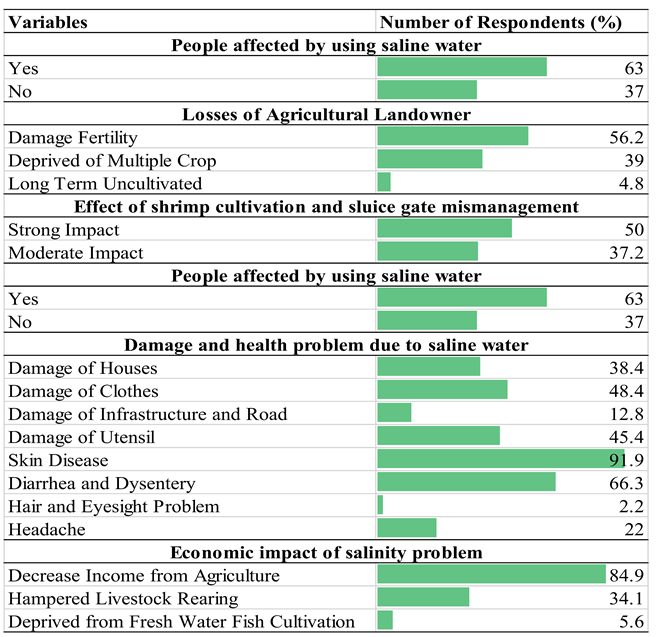 |
The negative consequences of salinity are not confined to agricultural losses. Respondents reported a range of damages associated with saline water exposure. The majority, 91.9%, suffer from skin-related diseases, while 38.4% have experienced damage to their housing materials. Approximately 48.4% observed deterioration in clothing quality, and 45.4% noted similar effects on household utensils. Although less frequent, 12.8% of respondents also identified visible damage to roads and related infrastructure, highlighting the wider community-level implications of saline water intrusion.
Health-related concerns are equally prominent. More than two-thirds of the population, 66.3%, reported suffering from waterborne diseases such as diarrhea and dysentery. Additionally, 22% reported recurring headaches, and a smaller proportion, 2.2%, mentioned hair loss and vision-related issues as potential consequences of prolonged exposure to saline conditions.
Finally, the economic impact of salinity was reflected in reduced income from agricultural activities. Approximately 84.9% of respondents reported a decrease in farm-based earnings. Beyond crop production, 34.1% of respondents indicated that they are unable to rear livestock under current salinity levels, and 5.6% are no longer able to engage in freshwater fish farming. These findings highlight the multifaceted and interconnected nature of salinity-related challenges faced by vulnerable coastal communities.
3.4. Role of Mass Media
The analysis reveals that the role of mass media in addressing salinity-related challenges is perceived by respondents as limited and inadequate. A little over half of the participants (51%) considered media engagement on this issue to be negligible, while 35.7% acknowledged a moderate role. Only 13.3% viewed mass media as having a strong influence in raising awareness of salinity-induced problems.
The majority of respondents (75.7%) reported that mass media fails to deliver sufficient information on salinity mitigation strategies, with 76.4% attributing this gap to the absence of targeted content on management practices. Similarly, only 35% found existing media messages on salinity prevention and management to be effective, whereas 65% considered them ineffective. A further 65.3% perceived such information as irrelevant to their local needs, emphasizing a mismatch between media content and community realities.
Table 4.
Role of mass media in salinity awareness.
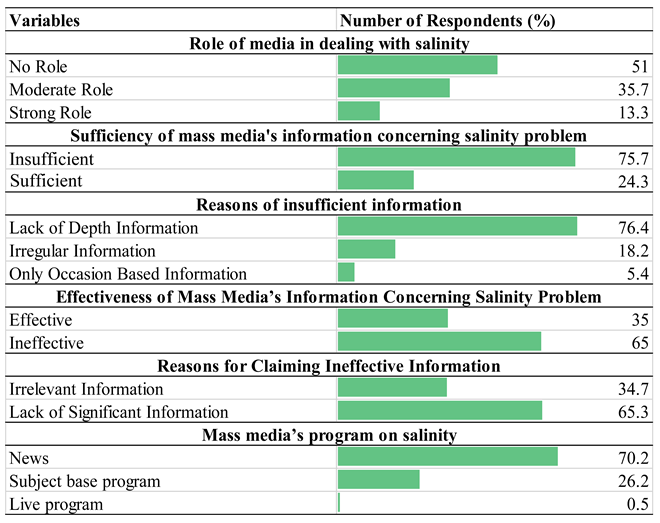 |
When examining preferred information sources, 70.2% of respondents relied primarily on news programs for salinity-related updates, followed by agriculture-focused programs (26.2%). Live programs accounted for an almost negligible share (0.5%), suggesting that interactive formats remain underutilized for awareness-building.
Public perception regarding the role of media in awareness creation (Table 5) further reinforces these findings. A substantial 79.1% rated the media’s contribution as moderate, 19.5% perceived no role at all, and a marginal 1.4% considered it significant. In terms of dependency on mass media for information, more than half (54.7%) expressed partial reliance, with 6% fully dependent and 39.3% not relying on mass media for salinity-related knowledge.
Media usage patterns (Table 6) reveal that television dominates as the primary source of information, cited by 72.6% of respondents, followed by radio at 13.10%. Online news portals accounted for only 3.6%, reflecting limited digital engagement for this specific issue. Broadcast media remains a key avenue for accessing news, with 74.8% of respondents using it regularly, although a quarter of the population (25.2%) does not utilize such platforms for salinity-related updates.
The content analysis of selected media outlets underlines a significant imbalance in coverage. Bangladesh Betar allocated only 0.5% of its prime-time news to salinity issues during the observed month, amounting to 3 minutes 6 seconds out of a total of 10 hours 25 minutes 24 seconds. This minimal allocation was compounded by the lack of diversity in news sources, which were limited to two male voices and one written source, all originating from a single press release by the Ministry of Water Resources. Notably, there was no female representation, indicating both a content and inclusivity gap in reporting.
Table 7.
Salinity-related news coverage by Bangladesh Betar.
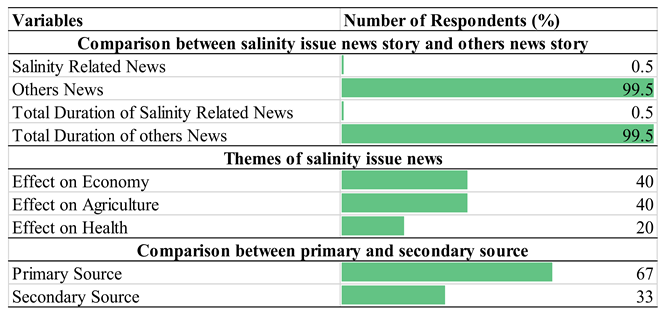 |
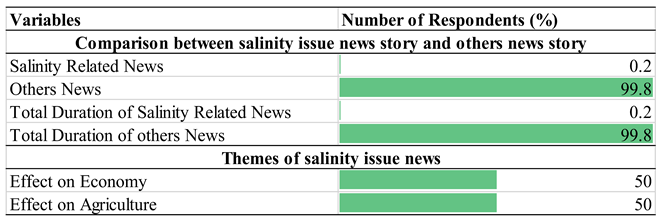
Similarly, Bangladesh Television dedicated only 0.2% of its total prime-time news airtime to salinity issues (Table 8), equivalent to 1 minute 26 seconds out of 14 hours 5 minutes 59 seconds. The thematic focus of this coverage was evenly split between agricultural and economic impacts, suggesting that while both dimensions are recognized, the overall volume of coverage remains disproportionately low compared to the scale of the problem.
These findings collectively highlight a critical disconnect between the information needs of vulnerable communities and the salinity-related content disseminated by mainstream media. The limited coverage, narrow thematic framing, and lack of source diversity suggest that mass media currently fall short of their potential role as a driver of public awareness and community preparedness in the face of climate-induced salinity intrusion.
4. Discussion
This study combined primary data from in-depth interviews with a content analysis of salinity-related coverage in two major national media outlets in Bangladesh. The results reveal a substantial gap in public knowledge about salinity, with only 43% of respondents possessing basic awareness and just 10% demonstrating a comprehensive understanding. This limited awareness aligns with the findings of [39], who highlighted the absence of sustained, community-level awareness initiatives on water and soil salinity as a critical barrier to effective mitigation. The present findings reinforce the notion that knowledge deficits are not merely incidental but are embedded within broader structural and informational shortcomings.
The limited understanding of salinity’s economic implications, where nearly 40% of respondents remain unaware, stands in contrast to the established evidence presented by [40,41,42], who collectively documented severe agricultural losses, reduced incomes, and increased production costs in saline-prone areas. This disjuncture between empirical realities and community-level awareness underscores a pressing communication and education gap that needs targeted intervention.
While previous studies [43] have identified shrimp cultivation and embankment mismanagement as central drivers of salinity intrusion, this research found that 50% of respondents perceived these factors as having no significant impact on salinity levels. This perceptual gap may be shaped by localized experiences, economic dependence on shrimp culture, or the absence of accessible, evidence-based information at the community level. The finding that only 15% of respondents were aware of salinity-tolerant seeds further signals the underutilization of adaptive agricultural technologies, reflecting the barriers to technology diffusion previously explored by [40].
The role of mass media emerged as another critical dimension. Despite 40% of respondents using mass media for multiple purposes, and a majority acknowledging its potential to raise awareness, over half viewed its role in salinity awareness as negligible. This paradox, high recognition of potential but low satisfaction with actual performance, suggests systemic limitations in content depth, thematic coverage, and program regularity. The survey evidence, combined with broadcast analysis, reveals that Bangladesh Betar and Bangladesh Television devoted less than 0.5% of total airtime to salinity issues during the study month, with coverage restricted mainly to agricultural and economic impacts. This thematic narrowness overlooks vital aspects such as health, infrastructure, and livelihood resilience, which are equally critical in the salinity discourse.
The absence of live programming, investigative reports, or follow-up coverage suggests that salinity is treated as an episodic issue rather than a structural challenge, despite its long-term socio-economic consequences. This aligns with the broader critique in media studies that development-related environmental issues are often underrepresented unless tied to disaster events, as discussed by [44]. The near-exclusive reliance on official government sources further limits the diversity of perspectives, excluding community voices that could enrich the public narrative and policy discourse.
These findings have several implications. First, there is a need for integrated awareness programs that combine mass media with community-based communication strategies to ensure more equitable access to knowledge. Second, agricultural extension services and local governance structures should work collaboratively with media outlets to ensure regular, accessible dissemination of adaptive solutions, such as salinity-tolerant crops and sustainable water management practices. Third, the narrow framing of salinity in economic terms should be broadened to include its public health, social, and ecological consequences, thereby providing a more holistic narrative for both policy and community action.
Future research could build on this study by exploring the political economy of environmental news production in Bangladesh, examining how media agendas are shaped by institutional priorities, economic pressures, and audience perceptions. Longitudinal studies could assess whether targeted media interventions measurably improve community awareness and adaptive behaviors. In addition, comparative studies between coastal Bangladesh and other salinity-affected regions could yield valuable insights into context-specific and transferable communication strategies.
5. Conclusions
The media, as a central pillar of contemporary society, holds transformative potential in shaping public perceptions, influencing behaviour, and driving collective action. In Bangladesh, it serves as a primary conduit for information, education, and cultural engagement. However, the findings of this study reveal a considerable deficit in public awareness regarding salinity intrusion, encompassing its causes, socio-economic and environmental consequences, and possible pathways for mitigation and management.
The evidence suggests that both media institutions and relevant agencies, including government and non-governmental organizations, have not fully capitalized on their mandate to communicate critical, evidence-based knowledge to the public. This gap is compounded by limited investigative reporting, sporadic programming, and a tendency to prioritise content that lacks direct relevance to affected communities. As a result, citizens remain ill-equipped to understand the urgency of the issue or to adopt adaptive measures.
Bridging this gap requires an integrated communication strategy in which mass media outlets assume a proactive role in producing and broadcasting sustained, context-specific, and scientifically grounded content. Complementary to this, policy actors and NGOs must collaborate with media professionals to design structured awareness campaigns, guided by behavioral change communication principles and rooted in participatory approaches. Such strategies would not only enhance public understanding but also foster community agency in responding to salinity-related challenges.
Beyond its applied implications, this research contributes to the broader discourse on the media’s role in environmental governance and risk communication in developing contexts. It provides an empirical basis for rethinking media engagement strategies, while also offering a platform for further academic inquiry into the interplay between environmental hazards, public awareness, and institutional accountability. Strengthening this nexus holds promise for more resilient and informed societies, particularly in climate-vulnerable regions across the World.
Author Contributions
M.G.U.B. contributed to the conceptualization, design, data collection, formal analysis, and initial drafting of the manuscript. M.I. served as the academic supervisor and contributed to conceptualization, design, review, and editing. M.M. contributed to the drafting, review, and final editing of the manuscript. S.K. assisted with the visualization, review, and editing of the manuscript. All authors reviewed and approved the final version of the manuscript and provided critical feedback throughout the writing process. All authors have read and agreed to the published version of the manuscript.
Funding
This research received no external funding.
Data Availability Statement
In the event of a reasonable request, the corresponding authors will make the dataset created and analyzed for this study available to the public. However, there are restrictions on the data’s repeatability for reuse and commercially sensitive details.
Acknowledgments
The authors would like to express their profound gratitude to all those who participated in the study. They would like to express their profound gratitude and appreciation to each household member for their graciousness, flexibility, and cooperation in generously donating their time to ensure the success of this study. Additionally, the authors would like to express their profound gratitude to the individual reviewers for their insightful feedback and constructive recommendations.
Conflicts of Interest
The authors have declared that there are no potential conflicts of interest regarding the research, authorship, and publication of this article.
Abbreviations
The following abbreviations are used in this manuscript:
| BBS | Bangladesh Bureau of Statistics |
| BTV | Bangladesh Television |
| MoL | Ministry of Land |
| NGO | Non-Governmental Organization |
| UNDP | United Nations Development Programme |
References
- Lee, C.-T.; Dee, S. Does volcanism cause warming or cooling? Geology 2019, 47, 687–688. [Google Scholar] [CrossRef]
- Mesarović, M.M. Global warming and other climate change phenomena on the geological time scale. Thermal Science 2019, 23, 1435–1455. [Google Scholar] [CrossRef]
- Wuebbles, D.; Easterling, D.R.; Hayhoe, K.; Knutson, T.; Kopp, R.; Kossin, J.; Kunkel, K.; LeGrande, A.; Mears, C.; Sweet, W. Our globally changing climate. 2016.
- Binh, N.T. Vulnerability and adaptation to salinity intrusion in the Mekong Delta of Vietnam. Universitäts-und Landesbibliothek Bonn, 2015.
- Mallick, B.; Rogers, K.G.; Sultana, Z. In harm’s way: Non-migration decisions of people at risk of slow-onset coastal hazards in Bangladesh. Ambio 2022, 51, 114–134. [Google Scholar] [CrossRef] [PubMed]
- Eslami, S.; Hoekstra, P.; Minderhoud, P.S.; Trung, N.N.; Hoch, J.M.; Sutanudjaja, E.H.; Dung, D.D.; Tho, T.Q.; Voepel, H.E.; Woillez, M.-N. Projections of salt intrusion in a mega-delta under climatic and anthropogenic stressors. Communications Earth & Environment 2021, 2, 142. [Google Scholar] [CrossRef]
- Tarolli, P.; Luo, J.; Straffelini, E.; Liou, Y.-A.; Nguyen, K.-A.; Laurenti, R.; Masin, R.; D’Agostino, V. Saltwater intrusion and climate change impact on coastal agriculture. Plos Water 2023, 2, e0000121. [Google Scholar] [CrossRef]
- Nguyen, M.T.; Renaud, F.G.; Sebesvari, Z.; Nguyen, D.C. Resilience of agricultural systems facing increased salinity intrusion in deltaic coastal areas of Vietnam. Ecology and Society 2019, 24. [Google Scholar] [CrossRef]
- Akter, R.; Asik, T.Z.; Sakib, M.; Akter, M.; Sakib, M.N.; Al Azad, A.A.; Maruf, M.; Haque, A.; Rahman, M.M. The dominant climate change event for salinity intrusion in the GBM Delta. Climate 2019, 7, 69. [Google Scholar] [CrossRef]
- Mohibbullah, M.; Gain, A.K.; Ahsan, M.N. Examining local institutional networks for sustainable disaster management: Empirical evidence from the South-West coastal areas in Bangladesh. Environmental Science & Policy 2021, 124, 433–440. [Google Scholar] [CrossRef]
- DAS, L.C.; Mohiul Islam, A.; AKTAR, S.; SULTANA, F. Climate change challenges in Bangladesh. International Journal of Big Data Mining for Global Warming 2024, 6, 2430001. [Google Scholar] [CrossRef]
- Shawkhatuzamman, M.; Roy, S.R.; Alam, M.Z.; Majumder, P.; Anka, N.J.; Hasan, A.K. Soil salinity management practices in coastal area of Bangladesh: a review. Research in Agriculture Livestock and fisheries 2023, 10, 1–7. [Google Scholar] [CrossRef]
- Akhter, T.; Naz, M.; Salehin, M.; Arif, S.T.; Hoque, S.F.; Hope, R.; Rahman, M.R. Hydrogeologic constraints for drinking water security in southwest coastal Bangladesh: implications for sustainable development goal 6.1. Water 2023, 15, 2333. [Google Scholar] [CrossRef]
- Quader, M.A.; Hasan, M.F.; Rahman, M.H.; Malak, M.A. Does Salinity Intrusion Increase the Rate of Chronic Illnesses for the Coastal Communities?: A Case Study from Dacope Upazila of Coastal Region of Bangladesh. In Coastal Disaster Risk Management in Bangladesh; Routledge: 2023; pp. 44-59.
- Rahman, M.S.; Hossain, K.M.; van Loenhout, J.; Wallemacq, P.; Guha-Sapir, D. Effects of salinity on health due to environmental exposure: experiences from Bangladesh. In Coastal Disaster Risk Management in Bangladesh; Routledge: 2023; pp. 15-43.
- Islam, S.D.-U.; Bhuiyan, M.A.H. Sundarbans mangrove forest of Bangladesh: causes of degradation and sustainable management options. Environmental Sustainability 2018, 1, 113–131. [Google Scholar] [CrossRef]
- Bhuyan, M.I.; Mia, S.; Supit, I.; Ludwig, F. Spatio-temporal variability in soil and water salinity in the south-central coast of Bangladesh. Catena 2023, 222, 106786. [Google Scholar] [CrossRef]
- Majeed, A.; Muhammad, Z. Salinity: a major agricultural problem—causes, impacts on crop productivity and management strategies. In Plant abiotic stress tolerance: Agronomic, molecular and biotechnological approaches; Springer: 2019; pp. 83-99.
- Shammi, M.; Rahman, M.M.; Bondad, S.E.; Bodrud-Doza, M. Impacts of salinity intrusion in community health: a review of experiences on drinking water sodium from coastal areas of Bangladesh. In Proceedings of the Healthcare; 2019. [Google Scholar] [CrossRef]
- Chumky, T.; Basu, M.; Onitsuka, K.; Raihan, M.L.; Hoshino, S. How do left-behind families adapt to the salinity-induced male out-migration context? A case study of Shyamnagar Sub-District in coastal Bangladesh. Sustainability 2023, 15, 2756. [Google Scholar] [CrossRef]
- Bain, R.; Moonwara, M.; Mastura, R.R.; Alam, G.N.; Ferdaus, F. Impact of Saline Water Intrusion on Maternal and Neonatal Health in Coastal Communities of Bangladesh. Asia Pacific Journal of Cancer Research 2025, 2, 10–16. [Google Scholar]
- Rahman, S.H.; Barua, P. Water Management Issues of Coastal Bangladesh. In Coastal Disaster Risk Management in Bangladesh; Routledge: 2023; pp. 130-150.
- Ashrafuzzaman, M.; Artemi, C.; Santos, F.D.; Schmidt, L. Current and future salinity intrusion in the south-western coastal region of Bangladesh. Spanish Journal of Soil Science 2022, 12, 10017. [Google Scholar] [CrossRef]
- Akter, T.; Hoque, M.A.-A.; Mukul, S.A.; Pradhan, B. Coastal flood induced salinity intrusion risk assessment using a spatial multi-criteria approach in the South-Western Bangladesh. Earth Systems and Environment 2025, 9, 31–49. [Google Scholar] [CrossRef]
- Faisal Ahmed, K. Spatial and Temporal Variation of Groundwater Salinity in Barisal and Khulna division of Bangladesh. 2011.
- Hossain, M.J. Relative influences of different physical factors on salinity intrusion in coastal aquifer in Bangladesh. 2017.
- UNDP. Climate Vulnerability Index (CVI). 2023.
- Ahsan, M.N.; Warner, J. The socioeconomic vulnerability index: A pragmatic approach for assessing climate change led risks–A case study in the south-western coastal Bangladesh. International Journal of Disaster Risk Reduction 2014, 8, 32–49. [Google Scholar] [CrossRef]
- Akhi, T.H.; Bashar, R.; Jimmy, A. Land-use conversion, shrimp culture and salinity intrusion at the south-western regions of Bangladesh: the cases of Koyra and Shymnagar. Journal of Environment Protection and Sustainable Development 2019, 5, 132–137. [Google Scholar]
- Sadik, M.S.; Nakagawa, H.; Rahman, M.R.; Shaw, R.; Kawaike, K.; Parvin, G.A. Assessment of cyclone Aila recovery progress in Bangladesh: a comparison between rice and shrimp farming villages in Koyra. In Proceedings of the Water, Flood Management and Water Security Under a Changing Climate: Proceedings from the 7th International Conference on Water and Flood Management, 2020; pp. 109-124.
- Ashrafuzzaman, M.; Gomes, C.; Guerra, J. The changing climate is changing safe drinking water, impacting health: a case in the southwestern coastal region of Bangladesh (SWCRB). Climate 2023, 11, 146. [Google Scholar] [CrossRef]
- Aharoni, T.; Amit-Danhi, E.; Overbeck, M.; Baden, C.; Tenenboim-Weinblatt, K. “You’d be right to indulge some skepticism”: trust-building strategies in future-oriented news discourse. Journalism studies 2023, 24, 1651–1671. [Google Scholar] [CrossRef]
- Biasa, I.W.E.; Wahyuni, N.N.T. Platform Media Pembelajaran Interaktif Mata Pelajaran Agama Hindu di Sekolah Dasar. VIDYA SAMHITA: Jurnal Penelitian Agama 2022, 8, 143–150. [Google Scholar] [CrossRef]
- Li, Z.; Feng, X.; Wu, T.; Yan, L.; Elliott, P.; Wu, Y. Randomised trial on effect of involving media reporters in salt reduction programme to increase media reports and the public’s knowledge, belief and behaviors on salt and health: Changzhi reporters trial. Plos one 2021, 16, e0252989. [Google Scholar] [CrossRef]
- BBS. Population & Housing Census 2022. 2022.
- Iqbal, M.H.; Aziz, A. Crop selection as climate change adaptation: A study on Koyra Upazila of Bangladesh. Ecological Economics 2022, 199, 107488. [Google Scholar] [CrossRef]
- Chowdhury, M.A.; Hasan, M.K.; Hasan, M.R.; Younos, T.B. Climate change impacts and adaptations on health of Internally Displaced People (IDP): An exploratory study on coastal areas of Bangladesh. Heliyon 2020, 6. [Google Scholar] [CrossRef]
- MoL. Land Zoning Report: Koyra Upazila. 20.
- Mahmuduzzaman, M.; Ahmed, Z.U.; Nuruzzaman, A.; Ahmed, F.R.S. Causes of salinity intrusion in coastal belt of Bangladesh. International Journal of Plant Research 2014, 4, 8–13. [Google Scholar]
- Ziaul Haider, M.; Zaber Hossain, M. Impact of salinity on livelihood strategies of farmers. Journal of soil science and plant nutrition 2013, 13, 417–431. [Google Scholar] [CrossRef]
- Alam, M.Z.; Carpenter-Boggs, L.; Mitra, S.; Haque, M.M.; Halsey, J.; Rokonuzzaman, M.; Saha, B.; Moniruzzaman, M. Effect of salinity intrusion on food crops, livestock, and fish species at Kalapara Coastal Belt in Bangladesh. Journal of Food Quality 2017, 2017, 2045157. [Google Scholar] [CrossRef]
- Khanom, T. Effect of salinity on food security in the context of interior coast of Bangladesh. Ocean & Coastal Management 2016, 130, 205–212. [Google Scholar] [CrossRef]
- Habiba, U.; Abedin, M.A.; Shaw, R.; Hassan, A.W.R. Salinity-induced livelihood stress in coastal region of Bangladesh. In Water insecurity: A social dilemma; Emerald Group Publishing Limited: 2014; Volume 13, pp. 139-165.
- Carter, D.L. Problems of salinity in agriculture. In Plants in saline environments 1975, pp. 25-35.
Figure 1.
Map of unions in Koyra upazila.
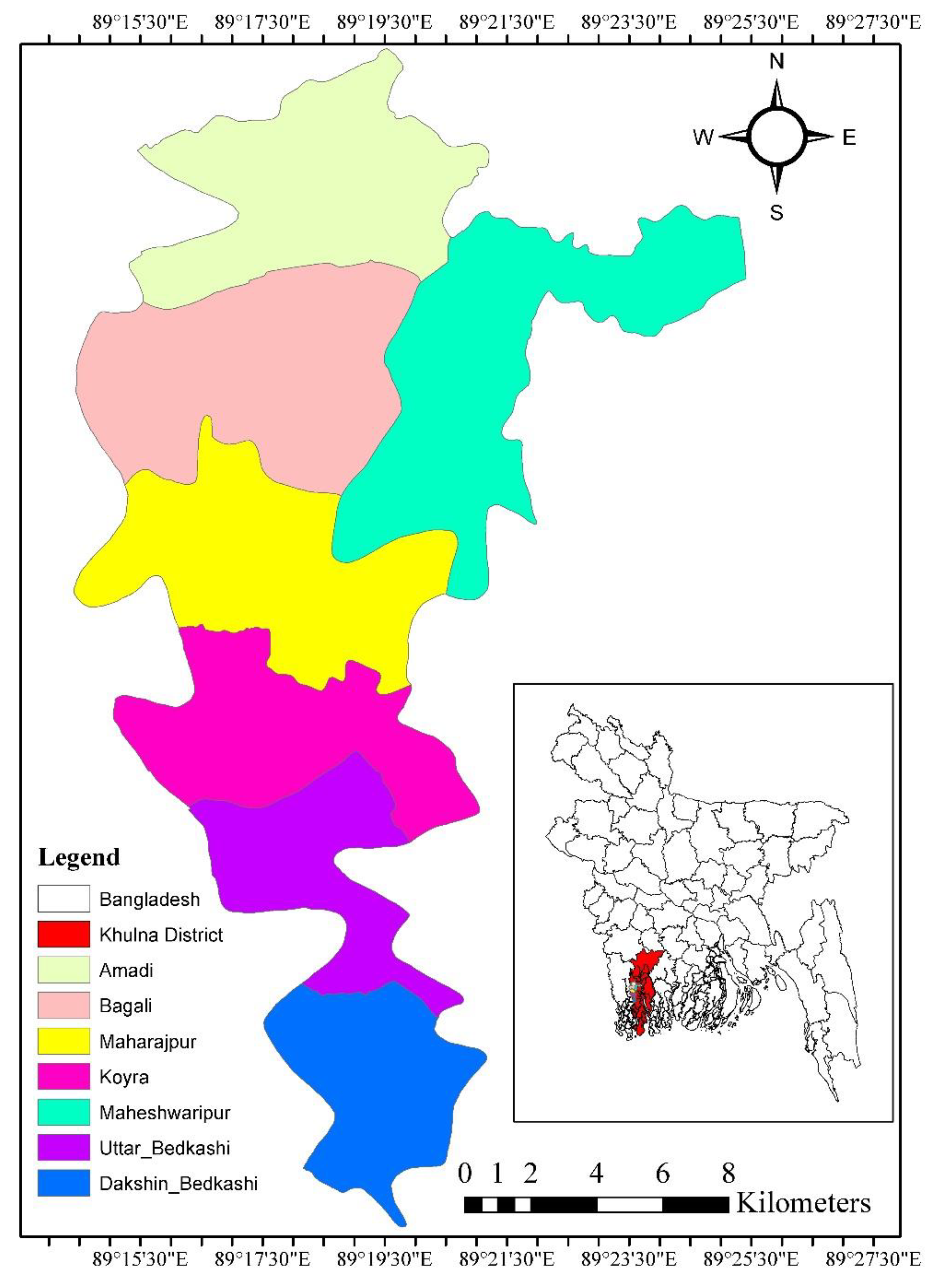
Table 1.
Demographic information of the study area.
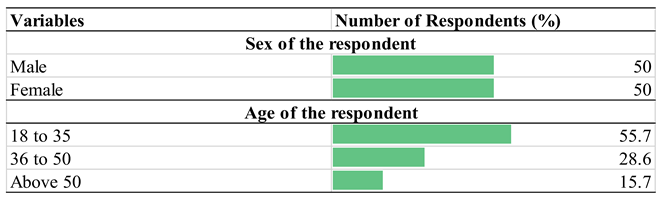 |
Table 5.
Public perception about mass media.
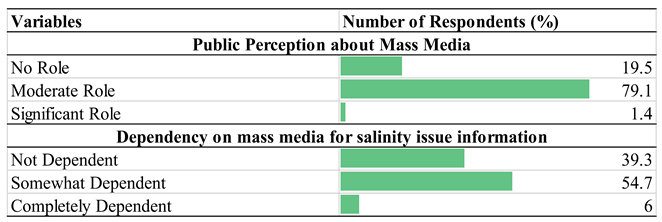 |
Table 6.
Use of mass media.
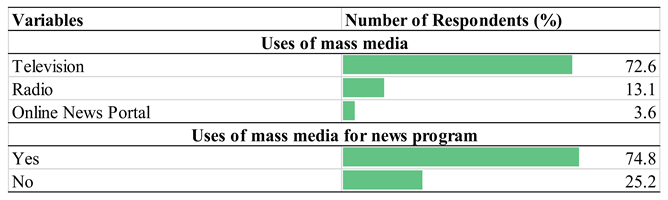 |
Table 8.
Salinity-related news coverage by Bangladesh Television.
 |
Disclaimer/Publisher’s Note: The statements, opinions and data contained in all publications are solely those of the individual author(s) and contributor(s) and not of MDPI and/or the editor(s). MDPI and/or the editor(s) disclaim responsibility for any injury to people or property resulting from any ideas, methods, instructions or products referred to in the content. |
© 2025 by the authors. Licensee MDPI, Basel, Switzerland. This article is an open access article distributed under the terms and conditions of the Creative Commons Attribution (CC BY) license (http://creativecommons.org/licenses/by/4.0/).
Copyright: This open access article is published under a Creative Commons CC BY 4.0 license, which permit the free download, distribution, and reuse, provided that the author and preprint are cited in any reuse.


