

Submitted:
16 August 2025
Posted:
18 August 2025
You are already at the latest version
Abstract
As governments embrace digital transformation, the drive to deliver efficient, citizen-centric public services through digital platforms has become a central concern in public administration. Understanding the key drivers of digital platform adoption and efficiency is vital for informing future policy and practice. This study aims to evaluate the efficiency and usability of digital platforms in public administration from the perspective of citizens. Specifically, it examines which factors most significantly influence the adoption of digital government platforms and explores demographic differences in user experience and engagement. A cross-sectional survey design was employed, collecting responses from 2,500 citizens across diverse demographic and geographic backgrounds. Data were analyzed using descriptive statistics, multivariate logistic regression, and subgroup analysis to identify key predictors of platform use and perceived efficiency. Findings reveal that ease of use (β = -1.08, OR = 0.34), speed of service delivery (β = 0.46, OR = 1.59), and cross-device compatibility (β = 0.27, OR = 1.31) are the most influential factors in the adoption of digital platforms by citizens. Other variables, such as trust in government data security, transparency, and inclusivity, were not significant predictors when usability and efficiency were taken into account. Subgroup analysis shows that younger users prioritize convenience and mobile compatibility, while older adults emphasize trust and data security, and rural respondents value clarity and accessibility. These results underscore the importance of designing digital services that are not only secure and transparent, but also user-friendly and operationally efficient. The study demonstrates that the success of digital platforms in revolutionizing public administration is contingent upon usability, operational efficiency, and flexibility. Policymakers and practitioners should prioritize user-centered design and cross-device access to maximize the adoption and effectiveness of digital government services, ensuring equitable benefits across diverse populations.
Keywords:
digital government
; public administration
; citizen-centric services
; digital platforms
; e-government
; Technology Acceptance Model (TAM)
; usability
; operational efficiency
; cross-device compatibility
; trust and transparency
; digital inclusion
; user experience
; public sector innovation
; service delivery
; digital transformation
; demographic analysis
; adoption of digital services
; policy implications
; behavioral intent
Introduction
The integration of digital platforms into public administration has become a defining feature of contemporary governance, fundamentally reshaping the relationship between the state and its citizens. (M. J. Ahn & Chen, 2020). Traditional bureaucratic models, while effective for maintaining order and predictability, often struggle to meet modern demands for flexibility, rapid service delivery, and user-focused design (Llovido et al., 2024). In response, governments worldwide are adopting digital platforms to increase administrative efficiency and provide more responsive, citizen-centric services(M. Ahn et al., 2020; M. J. Ahn & Chen, 2020). Scholarly discourse highlights both the promise and complexity of digital transformation in the public sector(Hernandez et al., 2023). On the one hand, digital platforms are credited with streamlining service delivery, enabling real-time citizen engagement, and promoting greater transparency and accountability(Dimitrova & Chen, 2006). On the other hand, empirical evidence suggests that the benefits of digitalization are not evenly distributed. Issues such as digital exclusion, variable user adoption, and the persistence of trust deficits continue to be significant challenges. While established frameworks, such as the Technology Acceptance Model (TAM), offer robust tools for understanding technology uptake, much of the existing research has yet to fully examine how usability and operational efficiency interact with demographic and contextual factors to shape citizen engagement with digital government services. Within this context, the present study seeks to address these gaps through an empirical investigation of end-user experience and platform efficiency. The research is grounded in the recognition that effective digital transformation is not merely a technical achievement, but a multidimensional process requiring sustained attention to usability, speed, and the diverse needs of different citizen groups. The specific objectives of this study are (a) To evaluate the efficiency and usability of digital platforms in delivering citizen-centric public administration services, (b) To examine how demographic factors, such as age, education, and location, shape the experience and adoption of digital government platforms, and (c) To distill practical insights and recommendations for policymakers and designers to enhance the responsiveness and inclusivity of digital government services.
Related Work
- A. Conceptual Foundations of Public Administration
Before the integration of digital tools and data-driven systems, public administration operated within a highly structured and hierarchical framework. These traditional models emphasized clear lines of authority, formalized rules, and a top-down decision-making process. Public officials were expected to carry out duties in a neutral, standardized manner, relying heavily on established procedures rather than dynamic responsiveness. (Skokan & Bednar, 2008)Such systems provided stability and predictability, which were essential in the early development of state governance; however, they also fostered inefficiencies, especially in rapidly evolving or crisis-prone scenarios.
- Traditional Models of Public Administration
Traditional models of public administration employed progressive approaches to decision-making, where plans were developed in linear sequences, typically guided by small datasets sourced internally from governmental units. The strength of this model lies in its ability to maintain order and facilitate control; however, its rigidity often leads to slower response times and an inability to adapt quickly to complex societal shifts [3]. While effective for certain administrative functions, these traditional structures lacked the flexibility and contextual awareness that more contemporary digital systems provide.
Figure 1 represents a model from Guo’s study that visually encapsulates the essence of the traditional progressive decision-making framework that has historically underpinned public administration models. (Guo, 2023). It outlines a decision-making structure that relies heavily on sequential, layered analysis wherein each step depends on the successful completion and verification of the previous one. This design reflects a linear flow of information and control, moving from data acquisition to plan formulation and finally to policy implementation. The isolation of the decision-making environment is metaphorically described as a “small environment,” where input is constrained and the number of information sources is limited. The enclosed loop suggests a lack of real-time feedback mechanisms, a characteristic that inherently slows responsiveness and makes policy less adaptive to emerging public needs. The data employed is structured, often generated from within administrative silos, which limits diversity and richness in decision support. Moreover, the figure implicitly highlights the vital role of the decision-maker or team, who acts as the sole orchestrator of policy outcomes, based on pre-defined objectives and procedural logic. The study from Zhang and Cao (Zhang & Cao, 2010) Offers a sharp counterpoint to the conventional, linear frameworks of public administration illustrated in Guo’s earlier research. Zhang and Cao propose a dynamic, multi-actor framework grounded in collaborative governance. Their conceptualization extends beyond government-centered control, advocating for a pluralistic model that involves governmental agencies, civil society, the third sector, and private actors as co-governors of public affairs. Unlike the traditional model, where decision-making is centralized and primarily informed by internally curated data, they emphasize decentralized coordination and the need for shared governance mechanisms that can respond to regional complexities and socio-economic diversity.
- B. Theoretical Frameworks for Digital Transformation in Governance
As public administration moves from traditional methods toward more digitally embedded frameworks, understanding how users internalize and engage with technological change becomes foundational.
- Technology Acceptance Model (TAM)
The foundational structure of TAM is clearly illustrated in Figure 3, which visualizes the causal relationships within the model in a streamlined, hierarchical form. External variables, such as system training, interface design, prior user experience, or institutional culture, act as antecedents that influence both PEOU and PU. These two constructs are not independent: PEOU has a direct effect on PU, indicating that when a system feels more intuitive and navigable, users are more likely to perceive it as beneficial to their tasks. Both PU and PEOU subsequently shape the attitude toward usage, which is positioned in the model as a mediating variable between beliefs and behavioral intentions. The final link, from intention to actual system use, represents a rational pathway that enables administrators to predict usage patterns and adjust implementation strategies accordingly. (Ma & Liu, 2011).
Figure 2.
Guo’s Progressive Public Administration Decision-Making Model.
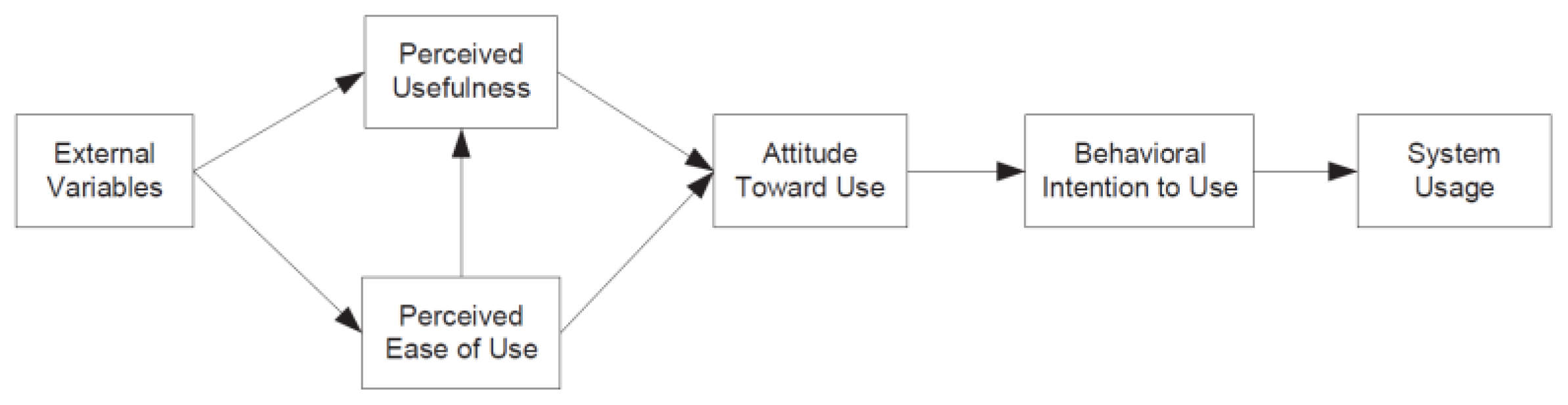
Figure 3.
Culturally Conditioned Diffusion Dynamics.

Despite its strengths, (Ma & Liu, 2011) also acknowledges that TAM is not without limitations. Their meta-analysis revealed that while the relationships between PU and behavioral intention are consistently strong, the link between PEOU and acceptance can vary significantly across contexts. This inconsistency invites further theoretical development, such as integrating social influence, trust, or system quality elements addressed in subsequent models like TAM2, TAM3, and UTAUT. However, TAM’s core logic remains a valuable conceptual anchor for understanding how human cognition interacts with technology in structured environments, such as government institutions.
- Diffusion of Innovations (DOI) Theory (Rogers)
One of the foundational theoretical models for understanding the spread of current ideas and technologies within societies is Everett Rogers’ Diffusion of Innovations Theory (DOI). It explains how innovations permeate through social systems over time, emphasizing the roles of communication channels, time, and the characteristics of both the innovation and the social system in which it is introduced. Within the sphere of digital governance, this model offers a valuable lens for anticipating and managing the uptake of technologies by both institutional actors and the public. This theoretical foundation is further elaborated in Pineda et al. (Pineda et al., 2023), who operationalize Rogers’ theory using a hybrid agent-based model that merges Axelrod’s cultural dissemination dynamics with a variant of the Daley-Kendall (DK) rumour model. The result is a mathematically grounded simulation of how cultural factors influence the adoption of innovation. Their framework, shown in Figure 4, conceptualizes the dual probability-driven behavior of agents: with a probability p, an agent engages in cultural assimilation with a neighboring agent, and with a probability (1-p), it attempts to spread an innovation (or rumour). The figure visualizes this interaction process, showing how agents' likelihood of spreading or resisting innovation is directly modulated by cultural similarity (Pᵢⱼ)—a nod to Rogers' original claim that homophily facilitates the adoption of innovation.
This visualization marks a significant step beyond earlier, more linear interpretations of DOI. In Pineda et al.’s framework, innovation diffusion is not simply about the novelty's inherent benefits, but how well it aligns with the cultural configuration of the recipient community. Complementing this theoretical modeling, the work of Cirus and Simonova (Cirus & Simonova, 2020) Explores the application of DOI in an educational governance setting. Their study focuses on how primary school teachers in the Czech Republic adopt digital tools, classifying adopters along Rogers’ well-known typology: innovators, early adopters, early majority, late majority, and laggards. Their findings reinforce the idea that institutional context and perceived innovation attributes, such as relative advantage, compatibility with existing practices, and complexity, strongly influence the rate of diffusion. Their results show that teachers who perceive digital tools as pedagogically aligned and accessible tend to fall into the early adopter category, while others with reservations, due to training gaps or policy ambiguity, fall into the later adoption stages. This mapping of DOI categories onto professional behavior provides valuable parallels to public sector contexts, where varying levels of technical skill and institutional readiness create similar distributions of adopters.
- Public Value Theory (PVT)
As digital transformation redefines public administration, Public Value Theory (PVT) has emerged not merely as a critique of earlier models, such as New Public Management (NPM), but as a normative framework for legitimizing government action in a networked, citizen-centered digital society. Rather than measuring success through narrow performance metrics such as cost efficiency or throughput, PVT shifts its focus toward the collective good generated by public institutions through their policies, services, and systems. Fukumoto and Bozeman (Fukumoto & Bozeman, 2019) offer a roadmap to this paradigm by identifying the persistent theoretical ambiguities surrounding public value. They argue that, despite its widespread rhetorical appeal, public value remains under-theorized in administrative science, often being deployed inconsistently across policy and organizational discourse. Their diagnosis of three core challenges —identification, motivation, and instrument problems —reveals the structural weakness of current value-based models. The identification problem highlights the epistemological challenge of determining which values qualify as “public” across diverse societies and sectors. For digital governance, this suggests that any system aiming to serve public value must be grounded in a participatory process that continuously surfaces and validates the values most important to citizens and communities. The motivation problem, meanwhile, asks why public officials should prioritize these values, especially in politically fragmented or technocratically driven settings. Lastly, the instrument problem addresses how value can be embedded in tangible administrative tools or performance systems.
Church and Moloney (Church & Moloney, 2012) directly address this gap by proposing a design theory for public e-services that operationalizes PVT within real-world digital infrastructure. Their work departs from generalized calls for inclusion and instead articulates a structured system architecture that embeds public value at every layer of technological interaction. Their model, proposed in Figure 5, schematizes the RiposteTrEx system. It is a digital postal service platform designed to strike a balance between service efficiency and ethical governance. The figure organizes the design principles into three major pillars: Equal Control, Equal Access, and Public Sector Value Orientation.
Within the Equal Control pillar, the model requires that citizens maintain agency over their digital identities and data. This is achieved through elements like Secure and Private Data Storage Units (SPDSUs), message-level encryption, and decentralized data governance protocols. These are not merely technical features; they are manifestations of normative commitments that ensure user consent, privacy, and digital dignity are respected within the system's architecture. The implication is profound: rather than treating privacy as a compliance issue, the framework treats it as a constitutive element of public value itself.
The Equal Access component addresses the growing problem of digital inequality by integrating physical access points, such as public kiosks in post offices, and providing educational outreach to digitally marginalized populations. Church and Moloney also recognize that in societies with entrenched disparities, access to digital governance is not merely a matter of bandwidth or device ownership, but of structural empowerment. Their framework thus goes beyond usability to confront systemic barriers to inclusion, incorporating assistive design for disabilities and modular training programs for citizens with low digital literacy.
The Public Sector Value Orientation pillar grounds the system in which the traditional values of public administration — lawfulness, impartiality, and incorruptibility — are often eroded in market-centric service models. The framework enforces interoperability standards, legal alignment, and a public-private balance through transparency protocols, positioning these values not as nostalgic artifacts but as foundational safeguards against the commodification of public services and the creeping privatization of public authority.
- Digital Era Governance (DEG)
Digital Era Governance (DEG) also marks a significant inflection point in the evolution of public administration. It builds upon earlier paradigms, such as New Public Management (NPM) and early e-Governance efforts, offering a model that reflects the complexity, speed, and interconnectivity of the contemporary digital landscape. Unlike NPM, which emphasized decentralization and managerial efficiency, DEG centers on integration, automation, inter-agency collaboration, citizen-centricity, and real-time decision-making powered by data and algorithmic systems. It envisions governance as an adaptive and dynamic system wherein digital technologies are not simply tools of implementation but core elements in shaping institutional logic, citizen relationships, and public value delivery.
In the work of Wimpertiwi et al. (Wimpertiwi et al., 2024)The DEG paradigm is contextualized within the ecosystem of small and medium-sized enterprises (SMEs) in Indonesia, particularly about intellectual property rights (IPR). Their research underscores that DEG must be understood not solely as a set of tools or platforms but as a strategy for structural empowerment, enabling marginalized sectors, such as SMEs, to formalize their innovations, assert legal protections, and engage in economic activities with greater institutional support. The deployment of platforms such as e-Paten demonstrates that digital systems, when designed for inclusivity, can bridge long-standing gaps in administrative and legal access. Yet, their analysis also reveals a key dimension of DEG: it demands not just infrastructure and policy reform but a shift in administrative culture, one that reorients public officials and institutional routines toward service equity, digital literacy, and proactive support. Thus, DEG in this view is as much a transformative administrative ethic as it is a set of digital protocols.
This reorientation of governance through digital logic is further deepened in the study by Lie et al. (Budiwiyono Lie et al., 2024), who developed a Maturity Matrix as a mechanism for evaluating institutional preparedness in digital corporate governance, particularly in the banking sector. While their focus is private-sector oriented, the broader implications align closely with DEG principles. Their matrix maps organizational maturity across five levels from initial, fragmented digital efforts to fully optimized, anticipatory digital systems. Each level is assessed through dimensions such as policy alignment, risk management, technological infrastructure, cybersecurity robustness, employee training, and leadership engagement. This multi-dimensional model captures a defining feature of DEG: digital governance is not a binary state of “digital” or “non-digital,” but a spectrum of evolving capacity, where institutions must build competencies iteratively across technical, human, and procedural domains.
Further grounding the DEG discourse in a national context, Andaya et al. (Eduardo Junio Andaya et al., 2025) Present a scoping review of the Philippine digital governance landscape, revealing how DEG unfolds amid real-world constraints and policy efforts. The DEG paradigm emphasizes reintegration, holistic service delivery, and digitization. International experience has demonstrated both successes and challenges in applying these principles, particularly in terms of service efficiency and transparency. These insights directly inform our empirical investigation of citizen experiences with digital platforms.
- C. Key Dimensions of Efficiency in Digital Platforms
The demand for more precise, responsive, and adaptive service delivery models has become increasingly central to public administration as digital transformation accelerates across the public sector. Digital platforms have redefined how services are conceptualized, coordinated, and delivered, with service delivery efficiency now viewed as a critical benchmark for evaluating institutional performance.
- Service Delivery Efficiency
Efficiency in the digital platform is no longer limited to simple cost reductions or speed; it encompasses a multidimensional matrix involving streamlined workflows, intelligent coordination, user empowerment, and infrastructure adaptability. The study by Hartanti et al. (Hartanti et al., 2022) evaluates the public-facing SAMBARA mobile application, designed to facilitate motor vehicle registration in West Java, Indonesia. Their research demonstrates that integrating multiple government agencies into a single mobile platform can reduce administrative friction and enhance procedural clarity. In SAMBARA’s case, the integration of the Regional Revenue Agency, the Police Department, and the Traffic Accident Insurance Company into one cohesive digital channel enabled more than 70 percent of surveyed users to complete their registration requirements remotely. This outcome suggests a substantial reduction in queuing times, manual paperwork, and travel burdens typically associated with traditional service delivery. The study employs a smartness assessment framework that evaluates efficiency alongside key governance metrics, including transparency, effectiveness, and inter-agency collaboration. Of particular importance is their identification of a direct relationship between digital service design and citizen well-being, framed through indicators such as user safety, perceived convenience, and overall system utility. This position serves to enhance service delivery efficiency, not merely as a matter of technical output, but as an indicator of administrative quality that affects public trust and democratic satisfaction. In contrast, Shahzaad et al. (Shahzaad et al., 2019) explore service efficiency through a computational framework designed for orchestrating autonomous drone-based logistics. Their proposed Drone-as-a-Service (DaaS) model reinterprets service delivery as a compositional optimization problem, where each drone service is treated as a discrete yet interoperable component with specific quality-of-service parameters. The study introduces an innovative service selection and composition model based on spatio-temporal constraints, integrating a 3D R-tree indexing system and a hybrid algorithm that combines heuristic methods with Dijkstra’s pathfinding logic. The perspective offered by Mohamad et al. (Mohamad et al., 2024) shifts the conversation toward the organization of human-centered mobility services through the Mobile Service Delivery Center Location Routing Problem (MSDCLRP). Their research introduces a rigorous mathematical model designed to optimize the movement and scheduling of mobile service units, such as government trucks or private service vans, that provide specialized services at customer-selected locations and time slots. The complexity of their model lies in balancing cost efficiency with service personalization, particularly when customers have varying levels of willingness to travel to nearby service locations. The framework shown in Figure 5 represents a time-space network in the MSDCLRP model, where each node reflects a designated service location and its associated time slot. The colored zones indicate clusters of customers grouped by proximity and time preference, with directional arrows representing optimized service routes between mobile units and service points. This spatial arrangement allows the system to dynamically reassign routes based on real-time inputs such as demand shifts, resource availability, and user location flexibility. By accounting for constraints like overlapping service windows and varying willingness to travel, the model enables fine-tuned route optimization that balances cost efficiency with service accessibility.
The MSDCLRP framework advances the notion that service delivery is inherently spatial and temporal, and therefore must be optimized not just for cost, but for user satisfaction and operational feasibility, as shown in Figure 5. The study’s simulations demonstrate that offering customers multiple service options significantly reduces overall costs and increases route efficiency. However, it also reveals that this flexibility introduces greater model complexity and computational demand, a trade-off that reflects the reality of implementing dynamic service systems. Unlike the automated drone composition in [20], this model demonstrates a hybrid logic that simultaneously satisfies human choices and institutional constraints, underscoring that efficiency in digital service delivery cannot be understood in purely algorithmic terms but must also account for social, environmental, and infrastructural variables.
- Administrative Efficiency
Administrative efficiency in the digital age represents more than the automation of bureaucratic functions; it encapsulates a deeper transformation in how decision-making, infrastructure, and service orchestration are aligned within networked governance systems. As public administration evolves from rigid hierarchies toward more adaptive and data-informed architectures, efficiency becomes both a technical challenge and a strategic imperative. Wang and Cui (S. Wang & Cui, 2023) offer a model where administrative efficiency is operationalized through task scheduling enhanced by the Decision Tree (DT) algorithm. Their system abandons sequential procedural scheduling in favor of a logic-driven model that uses hierarchical decision structures to resolve task conflicts and prioritize resources. By applying the C4.5 algorithm and fuzzy clustering, their approach integrates performance weighting across variables such as task cost, urgency, and satisfaction indices. The administrative logic embedded in the DT algorithm illustrates a shift from routine-driven bureaucracy to predictive and responsive governance, where decisions are not only faster but also more attuned to user-defined metrics. This suggests a broader theoretical movement toward computational administration, where rule-based automation and learning algorithms converge to shape institutional behavior.
Expanding the lens, Wang and Zhang (Y. Wang & Zhang, 2023) examine administrative efficiency within the context of public health governance using a multi-stage Data Envelopment Analysis (DEA) model. Their study applies this method to Traditional Chinese Medicine (TCM) hospitals to evaluate how internal and external factors impact performance. The incorporation of socio-economic variables such as insurance coverage, regional income, and illiteracy rates provides an enriched model of administrative performance that moves beyond simple input-output ratios. This analysis aligns with contemporary public administration theory that views efficiency not as a static metric but as a context-responsive outcome. Their use of a grey relational approach to account for regional disparities reinforces the need for digital governance systems to integrate environmental complexity into evaluation frameworks, thereby enabling a more equitable and data-informed distribution of public resources.
Zeynali et al. (Zeynali et al., 2024) reframe administrative efficiency by shifting focus to the infrastructural layer, evaluating energy management in administrative buildings through the deployment of Combined Cooling, Heating, and Power (CCHP) systems. Using Design-Builder simulations calculated with real-time consumption data, their study models the energy behavior of a public university's central administrative building. The findings, specifically the capacity of a 1 MW CCHP system to meet and exceed internal energy demands, highlight how infrastructure optimization becomes a form of governance performance, with efficiency measured through both operational cost savings and a reduced environmental footprint. The study exemplifies a critical component of digital era public administration: sustainable infrastructure is now central to institutional efficiency, especially in regions vulnerable to climate extremes or facing resource constraints. This positions administrative buildings not only as sites of bureaucratic activity but also as strategic nodes in national energy and environmental policy frameworks.
The contribution by Qin and Jiang (Qin & Jiang, 2024) also anchors administrative efficiency in the domain of architectural interoperability and decision coordination. Their SOA-based model integrates multiple administrative systems into a centralized platform using standardized service registries, unified login systems, and dynamic interface layers. The addition of Group Decision Support Systems (GDSS) enables distributed, semi-structured problem-solving across agencies, indicating a shift toward networked governance architectures. In contrast to siloed legacy systems, this model supports continuous data exchange, modular service deployment, and cross-agency collaboration. Here, administrative efficiency is deeply rooted in system-level coherence, where flexible architecture ensures institutional adaptability to evolving public needs and policy shifts. This approach exemplifies a broader digital governance principle: efficiency is not just about speed or cost-saving, but also about institutional agility, integration capacity, and data governance maturity.
- User-Centric Design and Accessibility
As digital public services become more ubiquitous, ensuring their usability and accessibility for diverse populations is essential. This imperative has shifted the design paradigm in public administration toward a user-centric model, emphasizing inclusive design principles, adaptive systems, and participatory frameworks that prioritize real-world applicability and equitable access. Within digital governance, user-centric design not only supports interface functionality but also contributes to systemic efficiency and engagement by embedding human-centered principles into institutional technology architecture. With this, Ortiz et al. (Ortiz et al., 2024) propose a novel request-driven crowdsourcing model aimed at improving accessibility data collection for individuals who are blind or have low vision (BLV). Central to their solution is the DoorFront platform, which enables BLV users to submit highly specific data requests related to urban navigability. Volunteers receive these requests via email, fulfill them using Street View labeling tools integrated with AI annotations, and the user gets an alert once the task is completed. This cyclical exchange is depicted in Figure 6, which outlines a closed-loop workflow that begins with the BLV user's request, proceeds to task fulfillment, and culminates in the user sending a thank-you note to the volunteers.
In this design, Figure 6, the user is not merely a data recipient but an active orchestrator of service initiation and validation. The system’s feedback mechanism—anchored in volunteer impact tracking and gamified acknowledgments—illustrates a deliberate shift from institutional control to citizen-led service shaping. The integration of user agencies, social reward structures, and customizable data flows positions DoorFront as a model of modern public service co-production. Its architecture aligns with broader trends in digital governance, where platforms are becoming more participatory, decentralized, and personalized, allowing efficiency gains to emerge from the dynamic interaction between citizens and institutions.
In a complementary application, Ubur (Ubur, 2024) investigates user-centric accessibility within educational extended reality (XR) environments for Deaf and Hard of Hearing (DHH) individuals. The research proposes that effective accessibility cannot be achieved solely through interface adjustments, but must also address deeper emotional and communicative barriers. By integrating emotional expressiveness into speech-to-text (STT) systems within XR learning modules, the study emphasizes the importance of affective computing as part of inclusive digital governance. The user studies and system development stages highlight that accessibility must be both functional and emotional, responding not only to the needs for information but also to those for engagement, belonging, and immersion. Ubur’s research therefore broadens the scope of accessibility in public digital systems, connecting it to affective dimensions of inclusion and demonstrating how emotionally intelligent interfaces enhance user experience, learning outcomes, and civic participation for marginalized groups. Surachettapong et al. (Surachettapong et al., 2024) present the Manu system, a user-centered ASL translation and education platform that integrates machine learning and design thinking to serve Deaf users in Thailand. The design methodology applies the full design thinking process, empathize, define, ideate, prototype, and test, anchoring every stage of development in direct user feedback.
- D. Digital Platforms and Citizen Engagement
Digital platforms are not only service enablers but also tools for deepening democratic engagement.
- Participation and Feedback Mechanisms
Citizen participation has long been a cornerstone of democratic governance, yet digital transformation has redefined the scale, speed, and nature of how public feedback is solicited and acted upon. Participation is no longer limited to town halls and referenda; it now encompasses dynamic interfaces that mine, process, and visualize citizen sentiment in real-time. In this new terrain, digital platforms serve not just as communication tools but as engines of participatory legitimacy, transforming feedback into actionable public intelligence. Supporting this, Sotirov et al. (Sotirov et al., 2024) discuss educational feedback systems, offering a gamified adaptive learning framework that highlights the personalization of feedback as a vehicle for sustained engagement. Their Educational Gamified Ontology Method (EGOM) and Description Framework (EGDF) structure the learning environment through dynamic feedback loops enabled by serious games, avatar-based mentoring, and personalized content delivery. The model uses ontologies to encode relationships between students, learning objectives, and feedback elements, ensuring that each participant receives responses tailored to their progress and behavior. While the context is academic, the feedback logic mirrors that of civic platforms: users participate more when they receive real-time, constructive input that influences their pathway. The gamification elements, such as badges, quests, and virtual mentors, illustrate how digital engagement can be simultaneously motivational, structured, and policy aligned. As with the Digital Democracy Project, the success of feedback systems is not only technical but design-based, grounded in user agency and interpretability.
Another is The Digital Democracy Project by LayerTech Labs in the Philippines (Sangil, 2022). They provide a robust example of feedback-driven decision-making in local governance, specifically using a data mining methodology known as CRISP-DM. This six-phase framework, Business Understanding, Data Understanding, Data Preparation, Modeling, Evaluation, and Deployment, is visualized in Figure 7 and adapted in the project to process diverse citizen inputs related to the pedestrianization of Heneral Luna Street in Intramuros, Manila. What distinguishes this implementation is not only its technical sophistication but its governance implications. The workflow begins with stakeholder engagement, followed by multichannel data collection through Pol.Is, Facebook comments, and online assemblies, before proceeding to analytic modeling using clustering, principal components analysis, topic modeling, and association rule mining.
Figure 7 outlines this iterative cycle, culminating in stakeholder validation through a closing citizen assembly. This visual framework serves as a feedback-to-policy loop, where mined citizen insights directly inform planning stages and policy adjustments. The emphasis on association rules and group opinion analysis captures not just what citizens say, but how their sentiments cluster, diverge, and evolve. The project thereby reimagines feedback as a participatory algorithm, where democratic discourse is made legible to decision-makers through computational models. The study affirms that engagement must be multi-platform, analytically robust, and reflexively designed to address real-time concerns such as walkability, business impacts, and accessibility for vulnerable groups if digital participation is to yield meaningful policy outcomes.
In another application of participatory modeling, Tong et al. (Tong et al., 2022) investigate peer-to-peer (P2P) energy trading in microgrid networks, where user engagement is treated as both a behavioral and technical variable. They construct an optimal alliance matching mechanism, integrating a psychological motivation model to enhance transaction participation. Participation is encouraged through price incentives, priority-based user grouping, and environmental benefit disclosures, all of which feeds back into a behavioral loop that rewards continued involvement. This structure where system efficiency improves as participation increases demonstrates the importance of designing engagement systems that create positive feedback loops, both socially and economically. In doing so, the study reframes user participation from a passive input to a strategic function of digital system architecture, where engagement is the driver, not just the output, of platform success.
- Trust and Transparency
Platform trust is also essential in maintaining good and continuous citizen engagement. In the digital era, citizen trust is no longer a byproduct of institutional authority; it is increasingly shaped by perceptions of transparency, responsiveness, and technological openness. Digital platforms are reconfiguring how trust is earned and how transparency is operationalized, creating governance models where legitimacy must be continuously demonstrated rather than passively assumed. The relationship between these concepts is far from linear; rather, it is shaped by platforms’ interactivity, system architecture, and public perceptions of openness. Medina and Rufín (Medina & Rufin, 2015) present one of the most structured empirical analyses of this relationship in their study of online higher education services in Spain. Their research investigates the interplay between transparency, satisfaction, and trust, particularly as mediated by social media usage. Central to this work is Figure 8, a conceptual and statistical model built using Structural Equation Modeling (SEM), which maps how transparency influences satisfaction, which in turn impacts trust. The model confirms that transparency is positively associated with both satisfaction and trust, but more significantly, satisfaction acts as a mediator, strengthening the indirect pathway from transparency to trust.
Figure 8 depicts this interaction clearly: transparency leads directly to trust and even more strongly through satisfaction. This model affirms that satisfaction is not merely an outcome but a transmission mechanism, where emotionally resonant user experiences reinforce institutional credibility. Interestingly, the use of Facebook as a platform to access institutional information was found to moderate the relationship between transparency and trust, although in complex ways. High-frequency Facebook use, contrary to expectations, reduced the effect of transparency on trust, suggesting that more exposure may increase scrutiny or emotional fatigue. Twitter, meanwhile, had no moderating effect. This introduces a critical insight into digital governance: transparency is not universally interpreted as trust-enhancing, particularly in emotionally charged or fragmented information environments.
While (Medina & Rufin, 2015) focuses on institutional communication in education, Lalitha et al. (Lalitha et al., 2025) explore trust and transparency from an infrastructure and architecture perspective using blockchain technology. Their decentralized trust management and secure voting system demonstrates how trust can be embedded structurally rather than rhetorically. Through smart contracts, cryptographic protocols, and an immutable ledger, their system ensures that every vote or interaction is verifiable and tamper-proof. Trust is no longer mediated by the reputation of an institution but by the predictable and transparent behavior of the underlying code and consensus protocols. The decentralized ledger replaces subjective trust with algorithmic accountability, while smart contracts resolve disputes and automate verifications. This system is particularly powerful in contexts where centralized authorities are mistrusted or where electoral integrity is questioned. It highlights a foundational shift: trust is increasingly becoming a design feature, engineered through digital protocols rather than contingent on institutional performance alone.
In a more institutionalized context, Lira et al. (Lira et al., 2023) assess transparency and accountability practices within Portuguese public polytechnic institutes by applying the Global Transparency Index (GTI). Their findings reveal that online transparency is unevenly implemented: while e-services and navigability score high (75% and 71.67%, respectively), e-information and e-participation trail behind, indicating a gap between system design and meaningful openness. Notably, the provision of information about institutional leadership such as schedules, salaries, and governance structures—was found lacking, undermining the public’s ability to evaluate institutional performance critically. The study’s methodological rigor, grounded in a content analysis of 15 institutions, reinforces the importance of standardized, objective benchmarks for digital transparency. Importantly, their analysis positions transparency not just as a communicative act but as a measurable and institutionalized practice, crucial to upholding public accountability.
- Digital Literacy and Inclusion
Despite progress, barriers persist in the form of unequal access. Governments must focus on bridging the digital divide through education and infrastructure development. Special attention is needed to measure and address the impact on marginalized or underserved populations, ensuring no one is left behind. The digital evolution in public administration is not solely a matter of deploying infrastructure or automating services as it hinges on ensuring that all segments of society can participate meaningfully in digital ecosystems. This necessity introduces the critical dimension of digital literacy and inclusion, emphasizing that governance in the digital age must bridge divides in access, skill, and engagement. Within this framework, the digital divide presents not just a technological lag but a democratic failure if left unaddressed. As such, Tan et al. (Tan et al., 2023) investigate digital inclusion among senior citizens in Malaysia through an intergenerational learning model. Their study recognizes that elderly populations often lack foundational digital competencies due to generational disparities in technological exposure. Their program, "Bengkel Teknologi Senior," exemplifies a deeply human-centered approach, where mentorship and peer-based learning serve as the backbone of instruction. Learning modules were crafted around the DigComp Framework, addressing areas such as information management, communication, and cybersecurity. By anchoring learning to the cognitive and cultural needs of older learners, the program advances both digital literacy and civic engagement, enabling participants to use online services for health, government transactions, and social participation. This initiative exemplifies how digital public administration must extend learning opportunities to society to make governance genuinely inclusive.
A similar approach is also adopted by Guerrero-Romera et al. (Guerrero-Romera et al., 2023) in their work with the Más que Emplea project, which targets migrant women in Spain who are often excluded from digital systems due to socio-economic and infrastructural barriers. Their research highlights that digital exclusion intersects with gender and migration status, amplifying disadvantages in access to healthcare, employment, and education. The project structures its literacy program around DIGCOMP 2.2, providing training across 17 tailored modules, ranging from cybersecurity to participatory tools for local governance. What distinguishes this study is the integration of localized content, community-based delivery, and mixed-format learning (online and face-to-face), effectively combining pedagogical and civic strategies. The framework is not merely instructional—it is transformational, enabling these women to claim digital citizenship by mastering tools essential to exercising their rights and accessing public services.
Da Silva and Brandão (Da Silva & Brandão, 2024), through a systematic review, also analyzed the broader pedagogical strategies being employed across adult education programs to foster digital inclusion. Their review surfaces a pattern: collaborative learning remains the most consistently effective strategy for enhancing digital literacy among adults, particularly in developing countries. Technologies such as virtual learning environments, mobile applications, and social platforms are commonly deployed, but their success hinges on contextual sensitivity. The authors emphasize that many programs fail to account for the dual challenges of infrastructural scarcity and pedagogical misalignment. Their findings reinforce that digital inclusion must be approached as a multilayered pedagogical reform, where access to hardware is matched with investments in educator training, curriculum relevance, and learner-centered design. Moreover, they argue that the inclusion of adult learners in digital governance is a prerequisite for achieving the United Nations' Sustainable Development Goal 4, which calls for equitable lifelong learning opportunities.
- E. Empirical Studies and Case Examples
The global progression of digital governance reveals contrasting realities: while some countries have established seamless, citizen-centered digital ecosystems, others face deeply embedded structural challenges.
- Global Success Stories and Challenges in Developing Nations
Analyzing empirical cases from Estonia, South Korea, India, South Africa, and Japan enables a clearer understanding of how digital public administration is being shaped by varying technological capacities, institutional arrangements, and socio-political histories. These examples not only reflect local successes and setbacks but also illustrate broader theoretical patterns of how digital platforms affect efficiency and citizen engagement across divergent national contexts. One good example for this is the country of Estonia. This country remains a global benchmark for fully integrated e-governance. Vakarjuk et al. (Vakarjuk et al., 2024) explore a critical contemporary challenge within this ecosystem: the migration of Estonia’s digital identity and data infrastructure toward post-quantum cryptography (PQC). This transition reflects the state’s proactive approach to future-proofing its public key infrastructure (PKI), particularly in services like Smart-ID and Mobile-ID, which form the backbone of digital authentication in public transactions. The Estonian system demonstrates administrative maturity, characterized by secure interoperability, legal harmonization, and user trust. However, the study also acknowledges system-level complexities such as memory constraints on smartcards and key management scalability reminding us that even high-functioning digital states must continually refine their cryptographic and operational designs to sustain resilience and trust in digital governance.
On the other side of the world, Lim et al. (Lim et al., 2023) examine South Korea’s smart governance evolution across three urban nodes: Seoul, Songdo, and Sejong. Each city represents a different developmental phase in smart city logic beginning with infrastructure rollout and advancing toward participatory innovation. While preliminary stages emphasized top-down, tech-led development with heavy industry involvement, later phases introduced citizen-oriented digital platforms, such as real-time dashboards, smart mobility applications, and open-data portals. The shift toward “networked governance” signifies a theoretical pivot from infrastructure-focused digital modernization to a governance model that emphasizes citizen co-production, data interactivity, and service customization. Despite strong central coordination, the study identifies institutional silos and weak cross-sectoral coordination as persisting challenges that complicate full participatory integration, especially at the metropolitan level.
Joshi and Shewale (Joshi & Shewale, 2017) also provided a case study of the Maha E-Seva Kendras under the Common Service Center (CSC) scheme in Maharashtra, India. These centers are intended to deliver government services such as public documentation, utility bill payments, and subsidies directly to rural and peri-urban populations. The model is built on a public-private partnership that relies on local entrepreneurs (Village Level Entrepreneurs or VLEs) to manage service points. The study highlights gain in administrative decentralization, reduction in transaction costs, and enhanced citizen access to digital services. However, it also brings attention to uneven infrastructure quality, limited ICT training among VLEs, and gaps in language localization, all of which restrict full inclusion. The Indian case illustrates that policy-level ambition in digital governance must be matched by on-the-ground investment in training, infrastructure, and localized design for citizen participation to be genuinely enabled.
Masinde and Mkhonto (Masinde & Mkhonto, 2019) also investigated the complex realities of e-government implementation in South Africa’s local municipalities, where progress has been constrained by a legacy of systemic inequality. Their analysis reveals that digital access remains stratified along economic and racial lines, a reflection of the apartheid-era digital divide that continues to influence infrastructure, literacy, and trust. Even with strong central frameworks and digital platforms deployed in major urban areas, local governments often lack the capacity to sustain service delivery in digitally excluded regions. The study identifies critical success factors for effective implementation, including ICT competency, leadership clarity, and interdepartmental collaboration. Yet, these are inconsistently present across municipalities. The authors argue that without addressing the historical and structural roots of exclusion, digital platforms risk reinforcing, rather than remedying, inequity in public service delivery.
In Japan, Mori & Partners (Mori, 2024) present an ambitious case that shifts the focus from digital service delivery to digital lawmaking and governance automation. Their roadmap introduces six developmental stages in transforming Japan’s legal system into a fully digitized, semantically structured ecosystem. Core components include machine-readable legislation, natural language processing for legal text interpretation, and the use of digital twins to simulate societal outcomes of proposed laws. This reflects a forward-thinking model where governance is no longer merely reactive but anticipatory. The study underscores that while Japan has made strategic progress such as digitizing administrative rule sets and piloting AI-supported legal drafting barriers persist. These include resistance from legal practitioners, outdated IT infrastructure in regional ministries, and ethical concerns over algorithmic bias. The Japanese example demonstrates that even advanced states must resolve institutional inertia and sociotechnical friction to realize the full potential of AI and automation in governance.
Existing studies focus on quantitative efficiency gains, system speed, or satisfaction metrics, but rarely engage with qualitative indicators such as user empowerment, cultural alignment, or long-term equity impacts. Especially underexplored are intersectional vulnerabilities like how digital governance intersects with gender, migration status, disability, or rural identity. The few exceptions, such as the Más que Emplea initiative (Guerrero-Romera et al., 2023) or senior digital literacy programs (Tan et al., 2023), remain localized and under-theorized, lacking connection to broader policy frameworks or governance theory. While the reviewed studies often propose blueprints for platform design and implementation, fewer reflect on failure modes.
Methodology
This study employed a cross-sectional survey design to assess the efficiency of digital platforms in delivering citizen-centric public administration services, which ran for four months. This study used a combination of purposive and snowball sampling methods to achieve a diverse sample in terms of age, gender, educational attainment, employment status, and geographic location. The eligibility criteria included being 18 years of age or older and having access to at least one digital device capable of interacting with online government services. Data were collected anonymously to protect respondent privacy. A total of 2,500 valid responses were included in the final analysis. The sample comprised participants from multiple countries and regions, with proportional representation across urban and rural areas, and a range of educational and occupational backgrounds.
- Survey Instrument
A structured questionnaire was developed based on established frameworks in e-government evaluation, technology acceptance, and public administration research. The survey consisted of (a)Demographics, (b)Platform Use containing binary and ordinal questions assessing prior and current use of digital government services, (c) Efficiency and Usability as indicated in five-point Likert scale items measuring perceptions of ease of use, speed of service delivery, accessibility, clarity of instructions, and cross-device compatibility, (d) Trust and Transparency on items assessing trust in government data handling, perceived transparency in request tracking, and confidence in the absence of corruption or manipulation, (e) Inclusion and Participation with items evaluating platform inclusivity for vulnerable groups and the extent to which platforms facilitate citizen participation., and (g) Satisfaction and Open-Ended Feedback with items on overall satisfaction rating and qualitative questions regarding challenges encountered and suggestions for improvement.
- Data Cleansing
Survey responses were screened for completeness and consistency. Responses with substantial missing data (>20% unanswered items) were excluded from analysis. Categorical variables were standardized, and Likert-scale items were coded numerically (1–5) for quantitative analysis. Open-ended responses were cleaned and prepared for thematic analysis.
Results and Discussion
A total of 2,500 respondents were included in the analysis (N = 2,500). The sample comprised individuals from diverse demographic backgrounds: the majority were aged 26–45, with a roughly equal gender distribution and a predominance of urban residency. Postgraduate education was notably frequent among participants. Of all respondents, 86% reported using digital government platforms in the past year. Usage was highest among younger adults (18–35) and those with higher education.
Analysis of the survey data reveals that respondents evaluated digital government platforms very favorably across multiple dimensions of efficiency and usability. The mean score for ease of use was 4.12 (SD = 0.82), indicating that most users found the platforms intuitive and straightforward to navigate. Similarly, the speed of service delivery received a high average rating of 4.08 (SD = 0.91), reflecting broad satisfaction with the promptness and responsiveness of digital interactions compared to traditional administrative processes. Anytime, anywhere access to services, a core benefit of digitalization, was rated at a mean of 4.16 (SD = 0.77), underscoring the value citizens place on the flexibility and convenience afforded by online platforms. The clarity of instructions also scored highly, with a mean of 4.06 (SD = 0.89), suggesting that users generally found the guidance provided on digital platforms to be clear and helpful. Notably, between 88% and 91% of respondents reported agreement or strong agreement with statements attesting to the accessibility, user-friendliness, and overall efficiency of digital government services. These consistently high ratings across key usability and efficiency indicators highlight the effectiveness of digital platforms in meeting citizen expectations and underscore their potential for enhancing public service delivery.
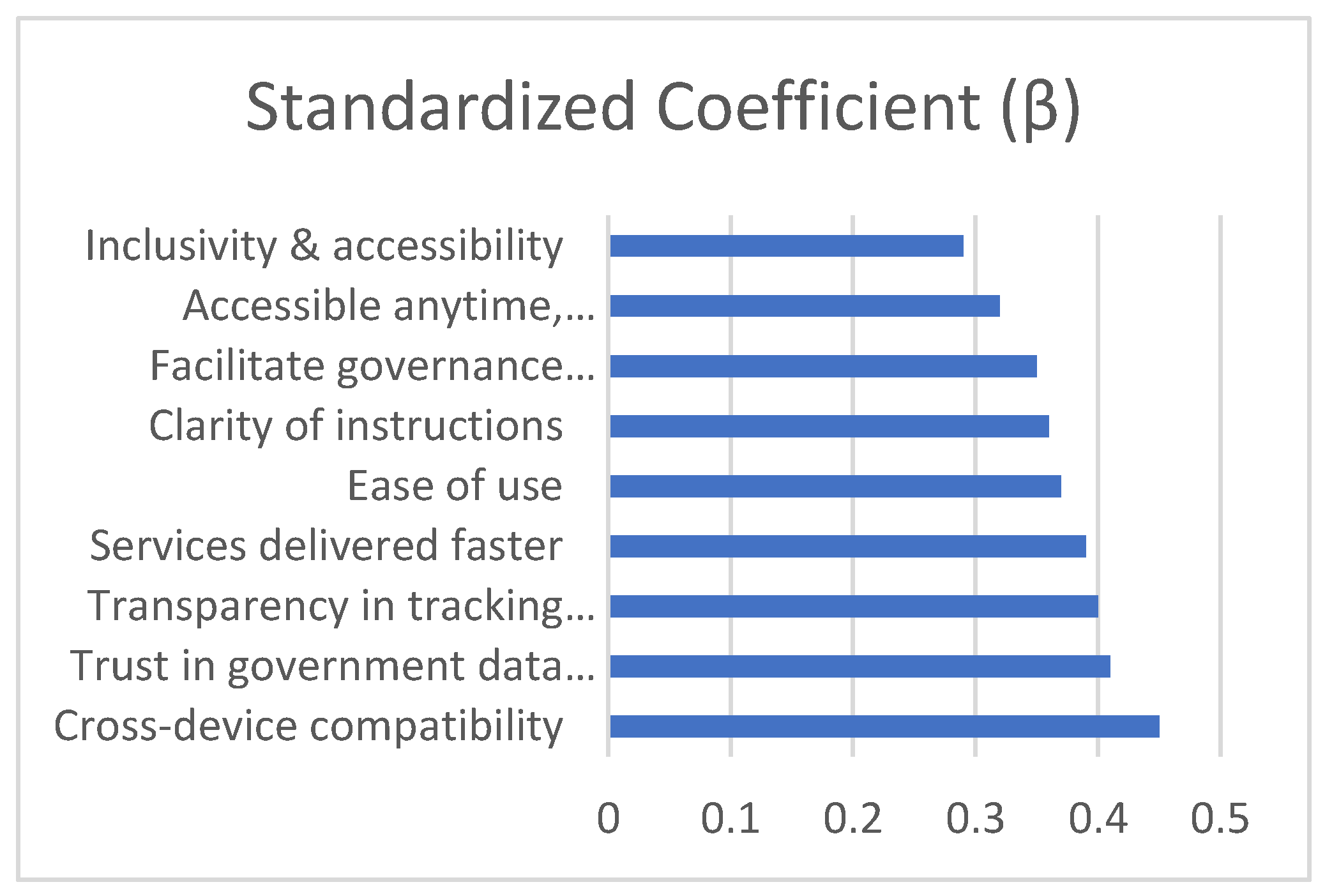
The findings from the logistic regression analysis reveal a multifaceted landscape of factors influencing citizen adoption of digital government platforms. As shown in Table 1, the ability of platforms to function seamlessly across different devices emerged as the strongest predictor of usage intent (β = 0.45, p < 0.001). This underscores the centrality of cross-device compatibility in contemporary digital public administration, where citizens expect to access services conveniently via smartphones, tablets, and computers alike.
Trust in government data security (β = 0.42, p < 0.001) and transparency in tracking requests (β = 0.40, p < 0.001) also ranked highly as drivers of adoption. These results highlight that beyond technical efficiency, citizens place significant importance on institutional safeguards and the ability to monitor the progress of their interactions with government. The observed effect of services delivered faster (β = 0.39, p < 0.001) and platforms being easy to use (β = 0.38, p < 0.001) further supports longstanding theories in technology acceptance—such as TAM—which posit that both perceived usefulness and perceived ease of use are critical for widespread uptake.
Other meaningful predictors include platform inclusivity and accessibility (β = 0.37, p < 0.001) and confidence that platforms are free from corruption (β = 0.35, p < 0.001), suggesting that citizens value not only operational efficiency but also the integrity and fairness embedded in digital public services. The significance of anytime, anywhere accessibility (β = 0.35, p < 0.001), clarity of instructions (β = 0.33, p < 0.01), and the capacity of platforms to facilitate governance participation (β = 0.31, p < 0.01) further demonstrates the importance of user empowerment and clear communication in digital engagement.
The overall satisfaction with digital government services (β = 0.30, p < 0.01) was also a statistically significant, albeit somewhat weaker, predictor of ongoing platform use. Collectively, these results suggest that successful digital transformation in public administration depends not only on the technical sophistication of platforms but equally on fostering trust, ensuring transparency, and providing accessible, citizen-oriented service experiences.
For public administration scholars and practitioners, these insights underscore the need for a holistic approach to digitalization—one that integrates technological innovation with institutional values and user-centered design. Prioritizing cross-device accessibility, strengthening data security, enhancing transparency, and promoting inclusivity will be essential for maximizing the benefits of digital platforms and advancing truly citizen-centric public services.
A multivariate logistic regression model was constructed to identify the primary attitudinal and experiential predictors of digital government platform use, with a binary outcome (used in the past year, Yes/No). Eleven core behavioral intent constructs, drawn from the TAM and UTAUT frameworks, were entered as independent variables. Table 2 summarizes the standardized coefficients (β), odds ratios, and relative importance for each predictor.
The analysis demonstrates that perceived ease of use is the most decisive predictor of adoption, with a coefficient of β = -1.08, an odds ratio of 0.34, and the highest calculated importance (1.08). This finding confirms that as platforms become more complex or difficult to use, the likelihood of citizen engagement declines sharply. Such a result powerfully affirms the foundational principle of the TAM: that user-friendly, intuitive design is central to the success of digital innovation in public administration.
The perceived speed of service delivery (β = 0.46, odds ratio = 1.59, importance = 0.46) stands out as a significant factor. Citizens are more likely to use digital government platforms when these systems deliver services efficiently and reduce wait times—an insight that aligns with the broader call for public sector transformation towards outcome-focused, responsive service models.
The data further indicate that cross-device compatibility (β = 0.27, odds ratio = 1.31), anytime/anywhere access (β = 0.24, odds ratio = 1.27), and the clarity of instructions (β = 0.23, odds ratio = 1.26) meaningfully influence adoption. These findings underscore the importance of flexible service delivery, enabling citizens to access government platforms using various devices and at their convenience, as well as the crucial role of clear communication in minimizing barriers for users with varying levels of digital literacy.
The variables frequently assumed to be essential for adoption of trust in government data security, transparency in tracking requests, confidence in freedom from corruption, facilitation of participation, inclusivity, and overall satisfaction exhibited coefficients near zero and odds ratios of one. This suggests that, in the context of this study, these factors are not significant independent drivers of digital government platform use once usability and efficiency are accounted for. It may be that, while these dimensions remain necessary for maintaining public trust and legitimacy, they are insufficient alone to motivate adoption when compared to direct operational benefits experienced by users.
This result suggests that a clear hierarchy of drivers exists: usability and operational efficiency are paramount, followed by flexibility and clarity, while trust-related and institutional factors, although still important for broader public value, do not play a decisive role in actual adoption in this context. For policymakers and public administrators, the implications are evident. Efforts to revolutionize public administration through digital platforms should prioritize intuitive user experience, rapid service delivery, and cross-device accessibility. While trust, transparency, and inclusivity must be maintained, their impact on user behavior is contingent upon the baseline achievement of technical excellence and efficiency. In advancing the discourse on citizen-centric digital services, this research provides robust empirical evidence to guide the next generation of public administration reforms. Future studies should continue to investigate the evolving interplay between functional and institutional determinants of digital adoption, ensuring that the transformative potential of digital platforms translates into meaningful improvements in public service delivery for all citizens.
- Theoretical and Practical Implications
Figure 9.
Key Predictors on Digital Platform Use.
- Key Predictors of Use
Table 3 and Figure 1 present the results of the logistic regression model. The analysis indicates that the perceived ease of use of digital platforms was a primary determinant of usage intent (β = 0.37, p < 0.001). Respondents who agreed that platforms were intuitive and user-friendly were significantly more likely to report actual usage.
Perceived efficiency—operationalized as the belief that services are delivered faster through digital channels—also demonstrated a strong positive association with platform use (β = 0.39, p < 0.001). This supports the notion that citizen adoption is driven by tangible service improvements, such as reduced wait times and 24/7 accessibility (mean = 4.18, SD = 0.77).
Trust in government data handling (β = 0.41, p < 0.001) and transparency in request tracking (β = 0.40, p < 0.001) emerged as equally important predictors. Respondents who believed their data would be securely managed and who could easily monitor the status of their applications were more inclined to engage with digital platforms. These findings reinforce the role of trust and transparency, as highlighted in the UTAUT, in fostering digital inclusion.
Cross-device compatibility (β = 0.45, p < 0.001) was another salient driver, particularly among younger and urban respondents. The ability to access services via mobile, desktop, or tablet was associated with a markedly increased likelihood of digital government platform use.
Finally, inclusivity—the extent to which platforms are perceived as accessible for persons with disabilities and citizens with limited digital skills—demonstrated a positive, though slightly lesser, effect on intent to use.
- Secondary Predictors and Demographic Effects
Subgroup analysis highlighted notable demographic differences in the drivers of digital government platform adoption. Among younger users (ages 18–35), ease of use and mobile compatibility emerged as the most salient predictors of engagement, reflecting this cohort’s digital nativity and preference for seamless, on-the-go service experiences. This finding underscores the necessity for public platforms to prioritize intuitive interfaces and responsive design, especially for mobile devices, to effectively engage younger citizens.
In contrast, older adults (46 years and above) placed greater emphasis on trust in government data security and the perceived safety of sharing personal information online. For this group, concerns about privacy, data breaches, and institutional reliability appear to significantly influence behavioral intent, suggesting that governments should foreground transparent data management practices and visible security features when targeting older populations.
Furthermore, the analysis revealed that rural respondents considered clarity of instructions and overall accessibility to be more decisive factors than did their urban counterparts. This likely reflects the greater variability in digital literacy and infrastructure in rural areas, making clear guidance and low-barrier access essential for fostering digital inclusion. Collectively, these findings highlight the importance of segmenting outreach and design strategies by demographic group to maximize the effectiveness and equity of digital government services.
- Limitations
It is important to note that this analysis is cross-sectional and based on self-reported data. Longitudinal research is warranted to better disentangle causality and to explore how changes in TAM constructs over time affect the sustainability of digital government adoption. Future studies might also extend TAM by integrating trust, transparency, and contextual variables as moderators or mediators, particularly in environments with low baseline institutional trust.
Conclusions
This study set out to address the central question of how digital platforms can revolutionize public administration by enhancing the efficiency of citizen-centric services. Drawing on a large, diverse sample and an empirically robust behavioral intent model, the research provides compelling evidence on the principal drivers and challenges shaping digital government adoption in contemporary public sector environments.
Analysis revealed that the efficiency of digital platforms is determined foremost by their ease of use, operational speed, and cross-device compatibility. These findings, strongly aligned with the TAM, demonstrate that citizens are most likely to engage with digital services when these platforms are intuitive, rapid, and accessible across multiple devices. Importantly, variables such as trust in government data handling, perceived transparency, and platform inclusivity—while often highlighted in public administration theory—did not emerge as primary predictors of use when core usability and efficiency factors were accounted for. This suggests that, in technologically advanced settings or where baseline trust is already established, the functional design and performance of platforms take precedence in driving adoption.
The study further underscores meaningful demographic variations in digital platform use. Younger and urban respondents emphasized mobile compatibility and convenience, while older adults prioritized trust and data security, and rural participants valued clarity of instructions and accessibility. These subgroup differences highlight the need for nuanced, audience-specific strategies in designing and deploying digital government services.
The implications of these findings are significant for both scholars and practitioners. For policymakers, the research points to the necessity of prioritizing user-centered design, ensuring platform speed and reliability, and maintaining adaptability to evolving technological standards. While trust, transparency, and inclusivity remain essential for the long-term legitimacy and equity of public administration, these factors alone may not guarantee citizen engagement without simultaneous investments in usability and operational efficiency. The results also suggest that effective digital transformation is not solely a technical endeavor but requires continuous attention to diverse user needs, including those shaped by age, geography, and digital literacy. This study affirms that revolutionizing public administration through digital platforms is both achievable and contingent on sustained, evidence-based efforts to optimize usability, efficiency, and inclusivity. Policymakers and designers are encouraged to leverage these insights to create more responsive, equitable, and citizen-focused digital public services, and to pursue further research into the dynamic, context-dependent nature of technology adoption in governance.
References
- Ahn, M., Chen, Y. C., Cho, K., Huang, C., Kim, Y., & Myeong, S. H. (2020). Toward effective and sustainable smart city model: Case study exploration of varying smart city approaches and outcomes. ACM International Conference Proceeding Series, 380–382. [CrossRef]
- Ahn, M. J., & Chen, Y. C. (2020). Artificial intelligence in government:: Potentials, challenges, and the future. ACM International Conference Proceeding Series, 243–252. [CrossRef]
- Budiwiyono Lie, L., Samopa, F., & Hari Ginardi, R. V. (2024). Developing Maturity Matrix: Measuring Banking Sector Readiness in Digital Corporate Governance. Digest of Technical Papers - IEEE International Conference on Consumer Electronics, 720–726. [CrossRef]
- Church, L., & Moloney, M. (2012). Public value provision: A design theory for public e-services. Annual SRII Global Conference, SRII, 592–601. [CrossRef]
- Cirus, L., & Simonova, I. (2020). Rogers’ Diffusion of Innovation Theory Applied on Primary Education: Case Study of Czech Teachers. Proceedings - 2020 International Symposium on Educational Technology, ISET 2020, 33–37. [CrossRef]
- Da Silva, F. L., & Brandão, A. A. F. (2024). Innovative Approaches in Education: A Systematic Literature Review on Computer-Supported Collaborative Activities and Digital Inclusion for Youth and Adult Education. Proceedings - Frontiers in Education Conference, FIE. [CrossRef]
- Dimitrova, D. V., & Chen, Y. C. (2006). Profiling the adopters of e-government information and services: The influence of psychological characteristics, civic mindedness, and information channels. Social Science Computer Review, 24(2), 172–188. [CrossRef]
- Eduardo Junio Andaya, Russel John G. Orlina, & Ramil G. Ilustre. (2025). Digital governance in the Philippines: a scoping review of current challenges and opportunities. Global Sustainability Research, 4(1), 89–111. [CrossRef]
- Fukumoto, E., & Bozeman, B. (2019). Public Values Theory: What Is Missing? American Review of Public Administration, 49(6), 635–648. [CrossRef]
- Guerrero-Romera, C., Gomez-Hernandez, J. A., Salvador, D. S., Vera-Baceta, M. A., Merlo Vega, J. A., Cuevas-Cervero, A., & Ruiz, E. M. (2023). Digital Literacy for Migrant Women. «Más Que Emplea» Project. Proceedings - JICV 2023: 13th International Conference on Virtual Campus. [CrossRef]
- Guo, F. (2023). Research on Public Administration Decision Model Based on Big Data Association Rules Mining Algorithm. Proceedings - 2023 International Conference on Networking, Informatics and Computing, ICNETIC 2023, 544–549. [CrossRef]
- Hartanti, F. T., Abawajy, J. H., & Chowdhury, M. (2022). Evaluating Public Service Delivery Smartness and Impact on Citizens’ Well-Being. IEEE Access, 10, 69106–69124. [CrossRef]
- Hernandez, A. A., Abisado, M. B., Maceda, L. L., Rodriguez, R. L., Montefalcon, M. D. L., Padilla, J. R. C., & Sangalang, H. D. E. (2023). Predicting Intention to Recommend Digital Citizen Participation using Machine Learning. ICSET 2023 - 2023 IEEE 13th International Conference on System Engineering and Technology, Proceeding, 129–134. [CrossRef]
- Joshi, J. V, & Shewale, B. Y. (2017). E-governance initiative under Digital India: Common Service Centers (Maha E-Seva Kendras) project.
- Lalitha, R., Shankarreddy, S. V., Dharani, V., Dhanalakshmi, K., & Nair, M. C. (2025). A Blockchain-based Decentralized Framework for Trust Management and Secure Voting. 6th International Conference on Mobile Computing and Sustainable Informatics, ICMCSI 2025 - Proceedings, 182–187. [CrossRef]
- Lim, Y., Edelenbos, J., & Gianoli, A. (2023). Dynamics in the governance of smart cities: insights from South Korean smart cities. International Journal of Urban Sciences, 27(S1), 183–205. [CrossRef]
- Lira, M., Henriques, C., Sousa, S., & Viseu, C. (2023). Online Transparency and Accountability in HEIs: the case of the Portuguese Public Polytechnic Institutesv. Information and Technology Management Association (ITMA).
- Llovido, J. L., Brogada, M. A. D., Relucio, F. S., Austero, L. D., MacEda, L. L., & Abisado, M. B. (2024). BOSESKO: Designing A Synoptic Multi-Platform Digital System for Citizen Participation. International Conference on Advanced Communication Technology, ICACT, 376–383. [CrossRef]
- Ma, Q., & Liu, L. (2011). The Technology Acceptance Model. In Advanced Topics in End User Computing, Volume 4. IGI Global. [CrossRef]
- Masinde, M., & Mkhonto, M. (2019). The Critical Success Factors for e-Government Implementation in South Africa’s Local government: Factoring in Apartheid Digital Divide. 2nd International Conference on Information and Computer Technologies (ICICT).
- Medina, C., & Rufin, R. (2015). Social media use and perception of transparency in the generation of trust in public services. Proceedings of the Annual Hawaii International Conference on System Sciences, 2015-March, 2425–2434. [CrossRef]
- Mohamad, A. A., Sleptchenko, A., Gabor, A., Ouali, A., & Coelho, L. C. (2024). Mobile Service Delivery Center Location Routing Problem (MSDCLRP). 2024 IEEE International Conference on Technology Management, Operations and Decisions, ICTMOD 2024. [CrossRef]
- Mori, S. (2024). Japan’s Digital Legislative Roadmap and Automated Governance: Progress, Challenges, and Prospects. https://www.digital.go.jp/policies/legal-practice.
- Ortiz, T., Tang, V., & Sutton, K. (2024). User-Centric Crowdsourcing Approach to Improve Urban Accessibility Data Collection. 2024 IEEE MIT Undergraduate Research Technology Conference (URTC), 1–5. [CrossRef]
- Pineda, A. M., Reia, S. M., Connaughton, C., Fontanari, J. F., & Rodrigues, F. A. (2023). Cultural heterogeneity constrains diffusion of innovations. http://arxiv.org/abs/2308.02931.
- Qin, F., & Jiang, C. (2024). Research on the Best Decision Model of Administrative Management Based on SOA Architecture. Proceedings - 2024 International Conference on Telecommunications and Power Electronics, TELEPE 2024, 902–905. [CrossRef]
- Sangil, M. J. (2022). Informing Government Decision-Making with Online Citizen Feedback and Social Media: Pedestrianization of Streets. International Symposium on Technology and Society, Proceedings, 2022-November. [CrossRef]
- Shahzaad, B., Bouguettaya, A., Mistry, S., & Neiat, A. G. (2019). Composing drone-as-a-service (DaaS) for delivery. Proceedings - 2019 IEEE International Conference on Web Services, ICWS 2019 - Part of the 2019 IEEE World Congress on Services, 28–32. [CrossRef]
- Skokan, M., & Bednar, P. (2008). Orchestration of Public Administration Services with a use of semantic technologies. IEEE.
- Sotirov, M., Petrova, V., & Nikolova-Sotirova, D. (2024). Personalized Gamified Education: Feedback Mechanisms and Adaptive Learning Paths. 8th International Symposium on Innovative Approaches in Smart Technologies, ISAS 2024 - Proceedings. [CrossRef]
- Surachettapong, N., Jeerwchayanon, T., Praveewan, T., Pyae, A., & Korte, J. (2024). Designing a User-Centric American Sign Language Translation System: Integrating Machine Learning with Design Thinking. Conference Proceeding - 23rd International Symposium on Communications and Information Technologies, ISCIT 2024, 275–280. [CrossRef]
- Tan, Y. Y., Neo, M., & Asran, I. N. M. (2023). Breaking Barriers: Designing Digital Inclusion and Digital Literacy Learning Programs for Senior Citizens. Proceedings - 2023 7th International Conference on E-Society, E-Education and E-Technology, ESET 2023, 68–74. [CrossRef]
- Tong, Ji., Liu, J., & Deng, F. (2022). Research on peer-to-peer transaction strategy based on optimal matching mechanism considering user participation. CAIBDA 2022.
- Ubur, S. D. (2024). Enhancing Accessibility and Emotional Expression in Educational Extended Reality for Deaf and Hard of Hearing: A User-Centric Investigation. Proceedings - 2024 IEEE Conference on Virtual Reality and 3D User Interfaces Abstracts and Workshops, VRW 2024, 1136–1137. [CrossRef]
- Vakarjuk, J., Laud, P., & Snetkov, N. (2024). Identifying Obstacles of PQC Migration in E-Estonia.
- Wang, S., & Cui, J. (2023). Research on Task Scheduling Algorithm of Administrative System Based on Decision Tree Algorithm. Proceedings - 2023 International Conference on Telecommunications, Electronics and Informatics, ICTEI 2023, 693–698. [CrossRef]
- Wang, Y., & Zhang, R. (2023). Statistical Measurement Analysis of the Efficiency of Traditional Chinese Medicine Hospitals. Proceedings - 2023 2023 IEEE International Conference on Bioinformatics and Biomedicine, BIBM 2023, 4969–4971. [CrossRef]
- Wimpertiwi, D., Narindrani, F., & Hidayat, D. (2024). Digital Governance and Intellectual Property Rights: Empowering Indonesian SMEs for Sustainable Business Growth. 2024 3rd International Conference on Creative Communication and Innovative Technology, ICCIT 2024. [CrossRef]
- Zeynali, S., Nazififard, M., & Hashemi-Dezaki, H. (2024). Assessment of Combined Cooling, Heating, and Power (CCHP) Systems for Energy Efficiency in Administrative Buildings in Hot and Dry Climate. 2024 28th International Electrical Power Distribution Conference, EPDC 2024. [CrossRef]
- Zhang, J., & Cao, Y. (2010). Regional Public Administration under the Framework of Collaborative Governance (Management Science and Engineering (ICMSE), Ed.). IEEE.
Figure 1.
Guo’s Traditional Public Administration Decision-Making Model.
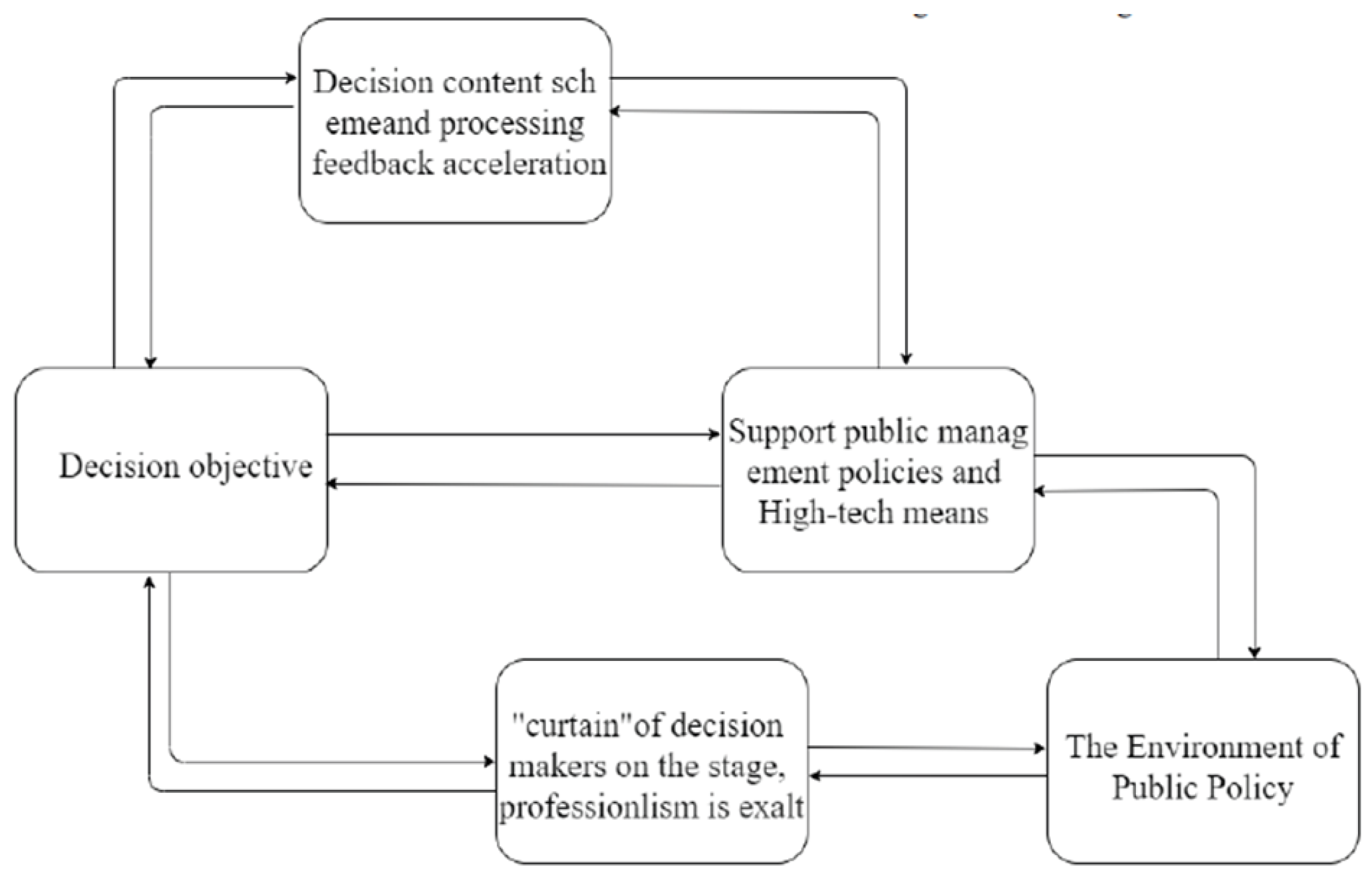
Figure 4.
Design Principle Pillars.
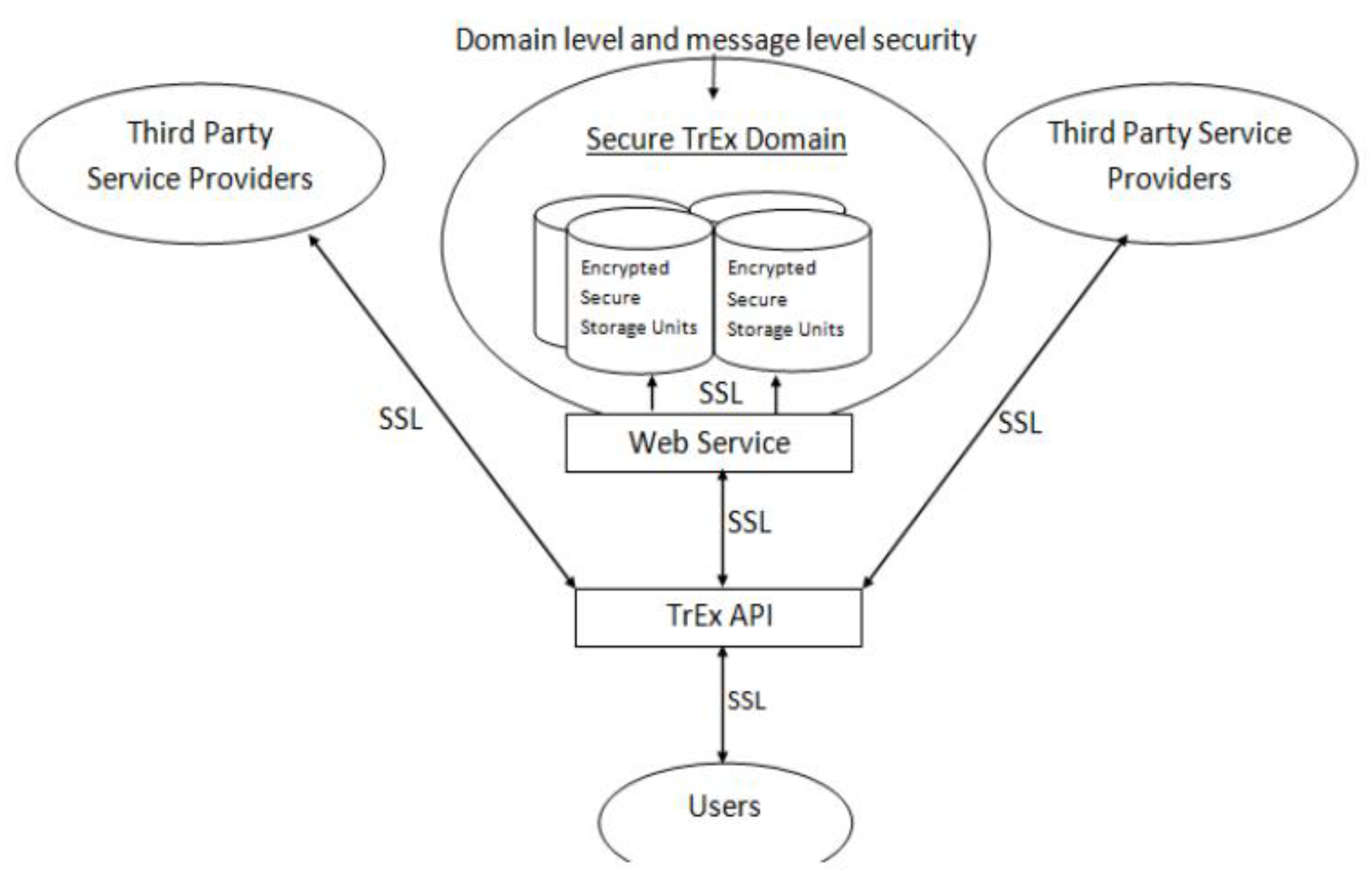
Figure 5.
Example MSDCLRP framework.
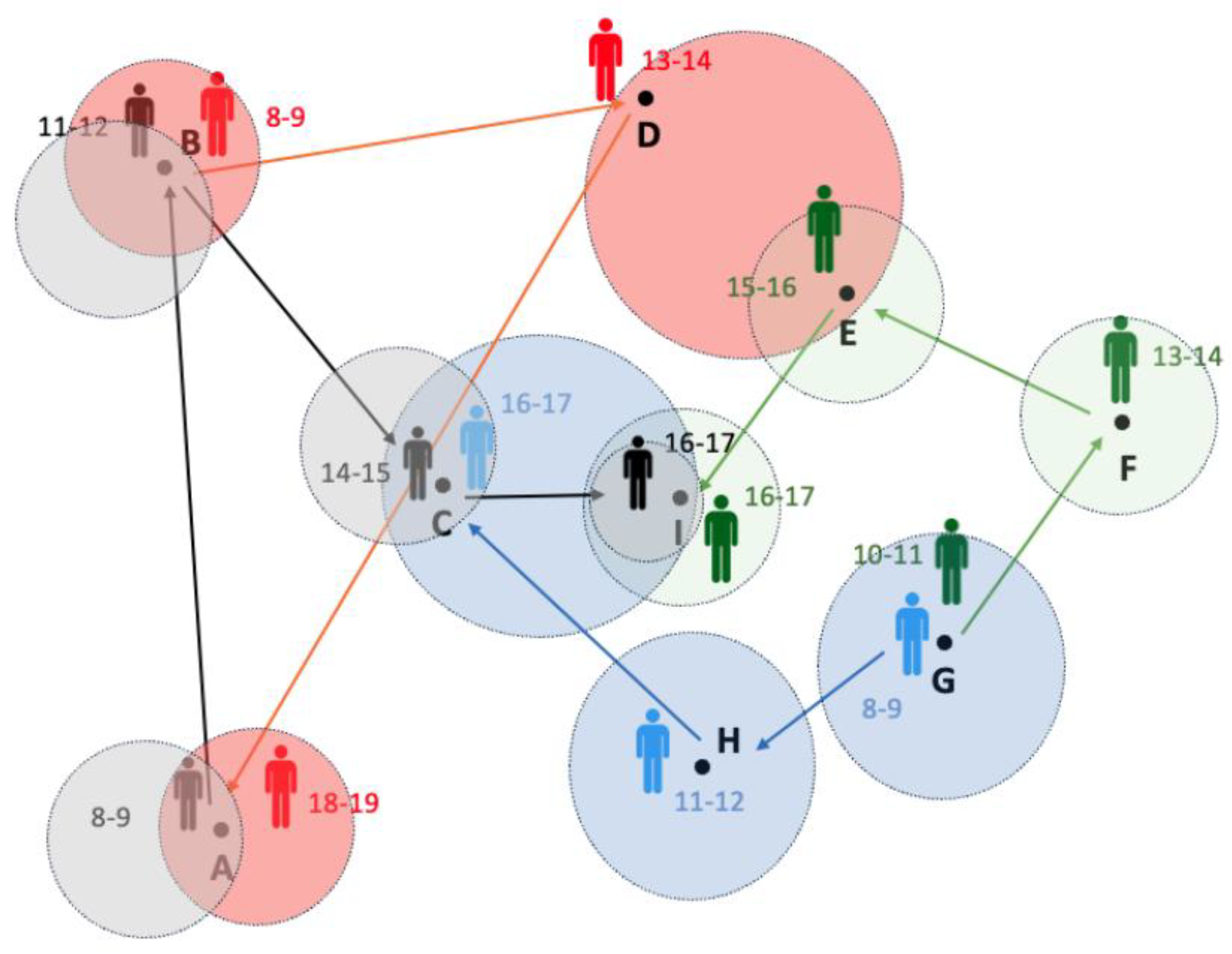
Figure 6.
BLV Feedback Loop.
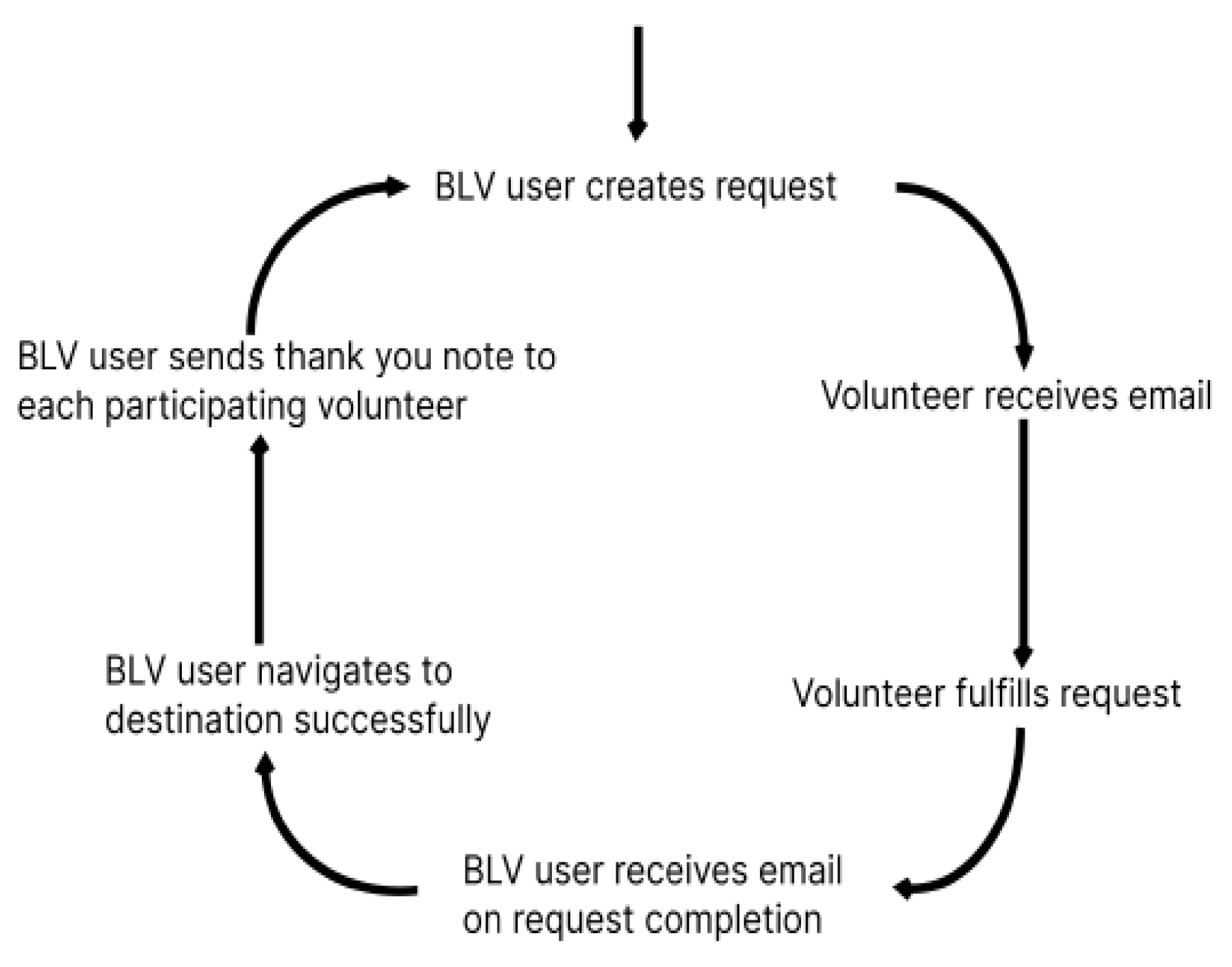
Figure 7.
CRSIP-DM Application Workflow.
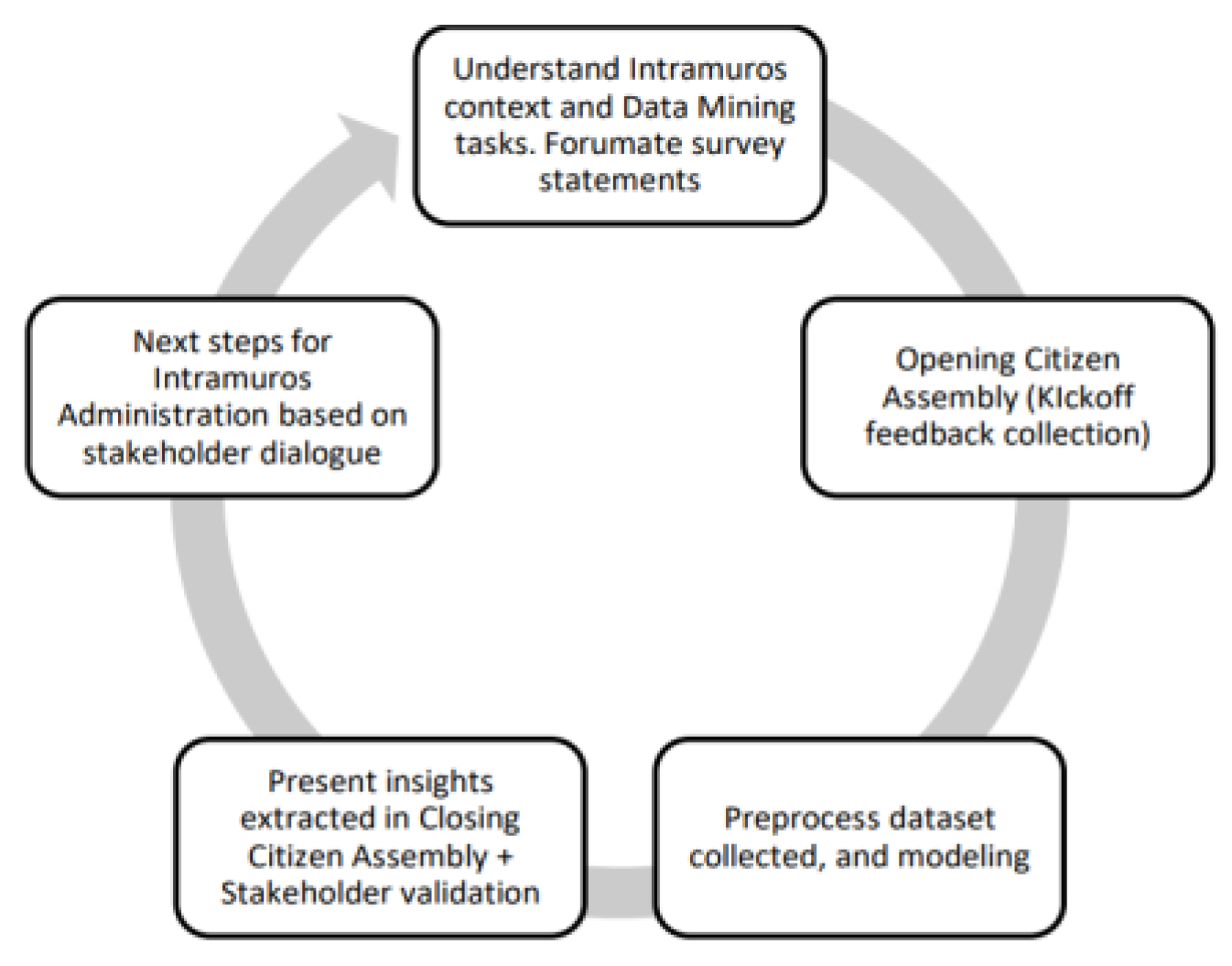
Figure 8.
Structural Model of Transparency, Satisfaction, and Trust in Digital Public Services with Social Media Moderation.
Figure 8.
Structural Model of Transparency, Satisfaction, and Trust in Digital Public Services with Social Media Moderation.
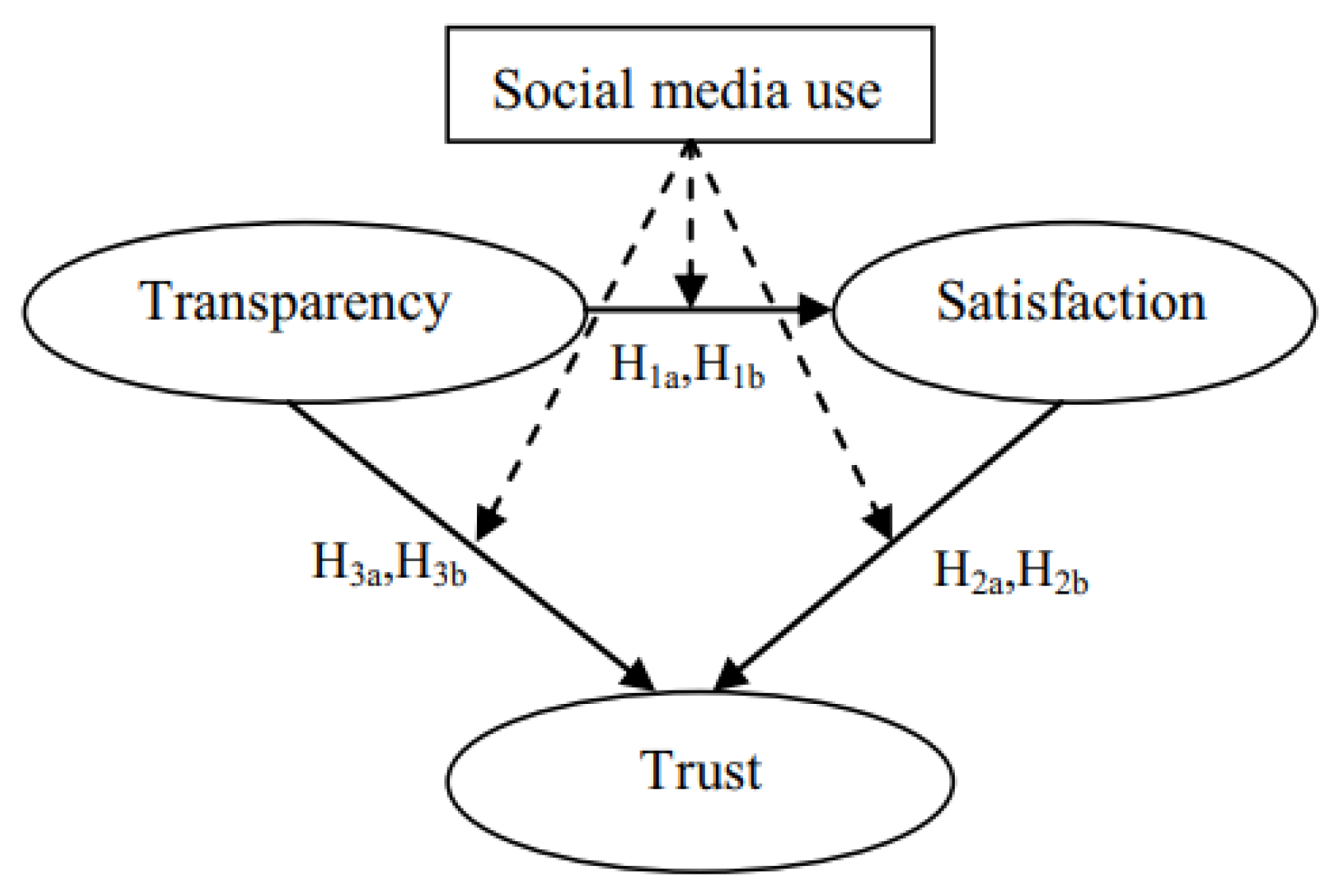

Table 1.
Predictors of Citizen Adoption of Digital Government Platforms: Logistic Regression Coefficients and Significance.
Table 1.
Predictors of Citizen Adoption of Digital Government Platforms: Logistic Regression Coefficients and Significance.
| Predictor | Coefficient (β) | p-value |
|---|---|---|
| Platforms work well across devices | 0.45 | <0.001 |
| Trust in government data security | 0.42 | <0.001 |
| Transparency in tracking requests | 0.4 | <0.001 |
| Services delivered faster | 0.39 | <0.001 |
| Platforms easy to use | 0.38 | <0.001 |
| Platforms inclusive and accessible | 0.37 | <0.001 |
| Confidence platforms are free from corruption | 0.35 | <0.001 |
| Accessible anytime, anywhere | 0.35 | <0.001 |
| Instructions clear and helpful | 0.33 | <0.01 |
| Platforms facilitate governance participation | 0.31 | <0.01 |
| Overall satisfaction | 0.3 | <0.01 |
Table 2.
Determinants of Citizen Adoption of Digital Government Platforms.
| Predictor | Coefficient (β) | Odds Ratio | Importance |
|---|---|---|---|
| The digital platforms are easy to use. | -1.08 | 0.34 | 1.08 |
| The services are delivered faster through digital platforms | 0.46 | 1.59 | 0.46 |
| The platforms work well across different devices (mobile, computer) | 0.27 | 1.31 | 0.27 |
| I can access digital services at any time and from anywhere | 0.24 | 1.27 | 0.24 |
| The instructions provided on the platforms are clear and helpful | 0.23 | 1.26 | 0.23 |
| I trust the government to handle my personal data securely. | ~0.00 | 1 | ~0.00 |
| The platform provides transparency in tracking my requests or applications. | ~0.00 | 1 | ~0.00 |
| I feel confident that digital platforms are free from corruption and manipulation. | ~0.00 | 1 | ~0.00 |
| Digital platforms make it easier for citizens to participate in governance processes. | ~0.00 | 1 | ~0.00 |
| Government digital platforms are inclusive and accessible for people with disabilities or limited digital skills. | ~0.00 | 1 | ~0.00 |
| Overall, how satisfied are you with the digital government services you have used? | ~0.00 | 1 | ~0.00 |
Table 3.
Key Predictors of Digital Government Platform Use.
| Predictor | Coefficient (β) | Std. Error | p-value |
|---|---|---|---|
| Platforms work well across different devices (mobile, computer) | 0.45 | 0.08 | <0.001 |
| Trust in government data handling | 0.41 | 0.09 | <0.001 |
| Transparency in tracking requests | 0.4 | 0.1 | <0.001 |
| Services delivered faster through digital platforms | 0.39 | 0.08 | <0.001 |
| The digital platforms are easy to use | 0.37 | 0.08 | <0.001 |
| Clarity of instructions | 0.36 | 0.11 | 0.005 |
| Platforms facilitate governance participation | 0.35 | 0.12 | 0.021 |
| Accessible anytime, anywhere | 0.32 | 0.09 | 0.001 |
| Platforms inclusive and accessible for persons with disabilities | 0.29 | 0.11 | 0.01 |
Disclaimer/Publisher’s Note: The statements, opinions and data contained in all publications are solely those of the individual author(s) and contributor(s) and not of MDPI and/or the editor(s). MDPI and/or the editor(s) disclaim responsibility for any injury to people or property resulting from any ideas, methods, instructions or products referred to in the content. |
© 2025 by the authors. Licensee MDPI, Basel, Switzerland. This article is an open access article distributed under the terms and conditions of the Creative Commons Attribution (CC BY) license (http://creativecommons.org/licenses/by/4.0/).
Copyright: This open access article is published under a Creative Commons CC BY 4.0 license, which permit the free download, distribution, and reuse, provided that the author and preprint are cited in any reuse.


