
Submitted:
08 August 2025
Posted:
12 August 2025
You are already at the latest version
Abstract
Low temperatures increase the viscosity of heavy oil and limit the solubility of short-chain alkanes, which increases their toxicity to microorganisms and delays biodegradation. This study aimed to isolate efficient heavy oil-degrading bacteria from contaminated soil and sewage sludge to evaluate their potential for bioremediation under cold climate conditions. Using enrichment culture with heavy oil as the sole carbon source, two potent strains (designated C1 and C2) were isolated from the Japanese soil, and a third strain (C3) was isolated from the Korean sludge. All three strains were identified as Pseudomonas aeruginosa via 16S rDNA sequencing. Residual oil was estimated using Gas chromatography analysis. At 30°C, C1, C2, and C3 showed 57%, 51%, and 33% after 7 days, respectively. At 15°C, degradation was delayed by a lag phase, suggesting a temperature-dependent metabolic activation. At 10°C, C3 displayed negligible activity, whereas C1 and C2 degraded 49% and 12% in two weeks. Notably, at 5°C, no activity was observed in 7 days. However, 35% degradation was observed by C1 and C2 after 98 days. The strains C1 and C2 also showed 60% and 70% heavy oil biodegradation in artificially contaminated soil at 5°C. In conclusion, these Pseudomonas strains, especially C1 and C2 demonstrated the ability to degrade heavy oil in low-temperature environments and can contribute to environmental sustainability.
Keywords:
heavy oil
; biodegradation
; bacteria
; low temperature
; gas chromatography
1. Introduction
Mineral oils are an essential part of industrial society, used as gasoline, fuels, kerosene, lubricants for industrial machinery, and feedstocks for a wide spectrum of petroleum-derived products [1]. Similar to other countries, mineral oils are also widely used in Japan, posing serious environmental threats. Mineral oil contamination in soil and groundwater can take place due to insufficient management of storage facilities, accidental leakage, and improper disposal [2.3]. There is a huge risk of leaching mineral oil contaminants from the polluted soil into the aquatic ecosystem, posing serious threats to human and aquatic organisms' lives. Many studies have highlighted the soil contamination with mineral oil in Japan and suggested urgent steps to remediate this pollution [4].
Mineral oils are classified into two major categories: light oils and heavy oils. The mineral oils with shorter hydrocarbon chains and low boiling points are light oils, such as gasoline and kerosene. Light oils have fewer than 20 carbon atoms, which makes them highly volatile and reduces their tendency to be absorbed onto the soil particles. Although light oils' volatility raises concerns about widespread pollution, at the same time, their high degradation through physical and biological processes facilitates their remediation [1,5]. On the other hand, heavy oil, including lubricants and fuel oil, has more than 20 carbon atoms, which makes it highly viscous and less volatile with a high boiling point. These properties of heavy oils make them a threat to the environment by adsorption on soil particles. Moreover, heavy oils are less biodegradable by microorganisms due to their high viscosity and complex molecular structure [1,6].
A promising, economical, and environmentally friendly method of treating mineral oil contamination is bioremediation, which uses the metabolic powers of microorganisms to break down and purify contaminants [1,7]. Both natural attenuation and bioaugmentation techniques have been shown in recent research to be effective in accelerating the breakdown of petroleum hydrocarbons in contaminated soils; significant gains are seen when native microbial communities are augmented with nutrients or functional consortia [1,7]. In certain field applications, for example, targeted bioaugmentation has raised the removal rates of polycyclic aromatic hydrocarbons and total petroleum hydrocarbons by more than 50% [1]. Furthermore, it has been demonstrated that cutting-edge bioremediation agents like earthworms and mushrooms greatly increase the populations of fungi and bacteria that use hydrocarbons in oil-contaminated soils. Mushrooms, in particular, have shown exceptional effectiveness in fostering microbial recovery and hydrocarbon degradation [8].
Nonetheless, the efficient implementation of bioremediation, particularly for heavy oil contamination, is hindered by insufficient understanding of the specific microbial taxa and consortia that can degrade recalcitrant hydrocarbons [1,5]. Heavy oils break down much more slowly than light oils. Recent research shows that light oil can mineralize up to 100 times faster than bitumen in the absence of oxygen, probably because short-chain hydrocarbons have a simpler structure [5]. Environmental elements, including temperature, exacerbate remediation challenges in cold climates, as low temperatures can impede microbial activity and the physicochemical processes essential for efficient biodegradation [9]. Some research indicates that cold-adapted microorganisms maintain the ability for hydrocarbon mineralization, albeit at diminished rates relative to warmer environments [10].
Regulatory and policy frameworks have been established in Japan to address the increasing prevalence of soil and groundwater contamination, including the Oil Contamination Countermeasures Guidelines and the Soil Contamination Countermeasures Act [2,3]. Despite these initiatives, the scope and complexity of the issue demand that sophisticated, affordable, and low-impact remediation technologies be developed further, with a focus on tailoring bioremediation strategies to local environmental conditions and contaminant profiles [2].
For the remediation of chemical pollutants, including mineral oils, bioremediation—a biological technique that uses microorganisms' capacity for degradation—has attracted a lot of interest recently as an economical, energy-efficient, and ecologically sustainable approach [11]. Nonetheless, a thorough understanding of the particular microbial taxa that can break down the target contaminants is necessary for the efficient application of bioremediation. Even with its bright future, there is still a lack of research on bioremediation of heavy oil contamination, and little is known about the microbial species and consortia that can break down heavy oils. A significant obstacle to the development and effective application of bioremediation technologies for environments contaminated by heavy oil is this knowledge gap [12].
A complex interaction between physicochemical environmental parameters, such as pH, oxygen availability, and temperature, and microbial ecological factors, such as the abundance, diversity, and metabolic activity of the degrading microorganisms, controls the microbial degradation of chemical substances released into the environment [13,14].
Low ambient temperatures pose a serious barrier to the effectiveness of in situ bioremediation procedures in cold climates like Hokkaido. Therefore, in order to effectively biodegrade heavy oils, it is necessary to clarify not only the metabolic capacities and degradation pathways of pertinent microorganisms, but also the particular environmental circumstances in which these organisms can be used most effectively in situ [15]. In this study, we aim to observe the biodegradation of heavy oil at low temperatures by bacteria isolated from contaminated areas. The efficiency of isolated strains for heavy oil biodegradation in soil was also confirmed by investigating the biodegradation of heavy oil in artificially contaminated soil.
2. Results
2.1. Isolation and Characterization of Heavy Oil-Degrading Bacteria
2.1.1. GC analysis of heavy oil biodegradation by isolated strains
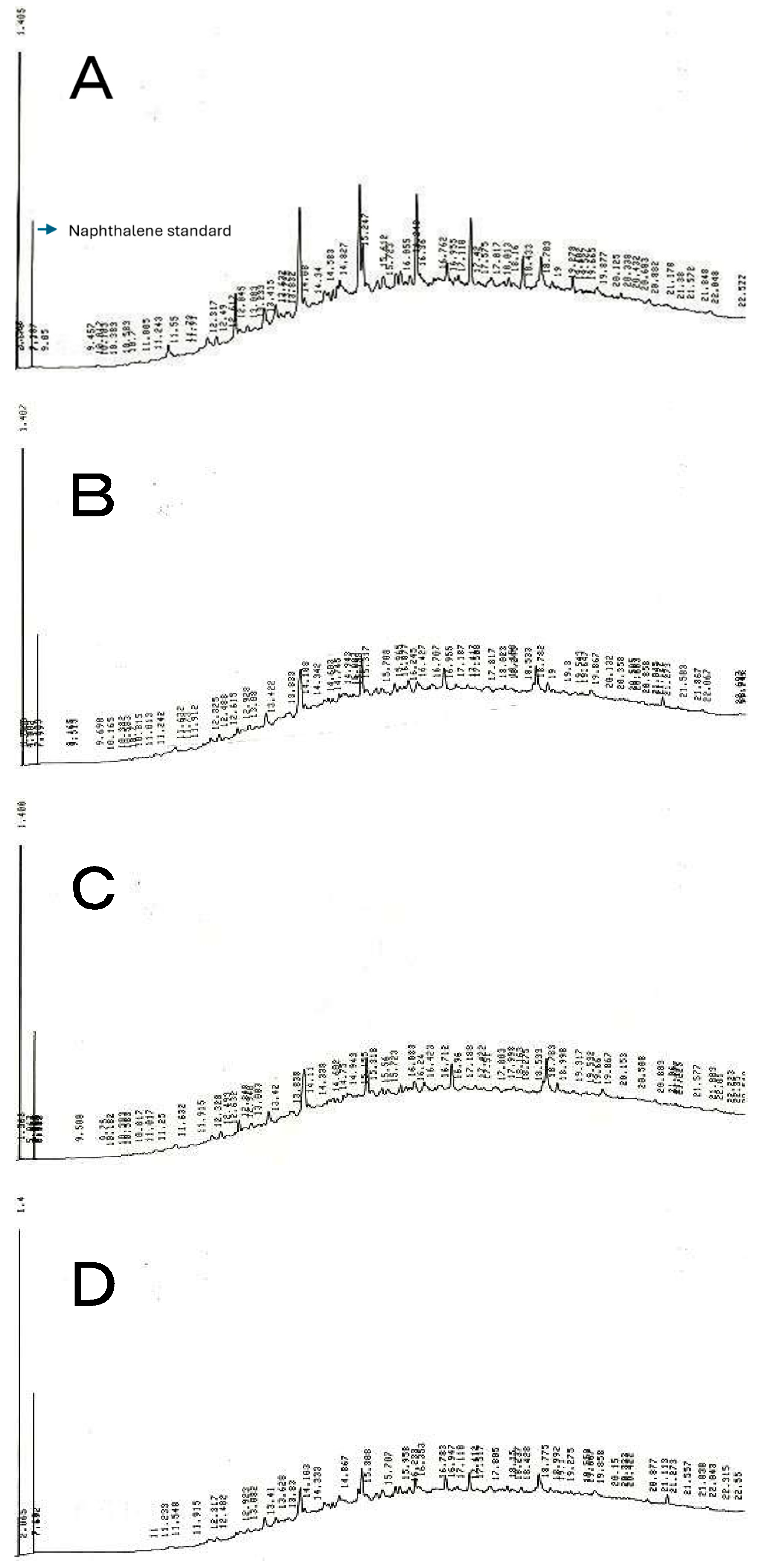
To identify strains with superior heavy oil-degrading capabilities among the 15 isolated candidates, a heavy oil degradation assay was performed. An example of the GC spectrum obtained from the extracted residual heavy oil after two weeks of incubation is presented in Figure 1.1 (A). Based on the degradation profiles observed in the GC analyses, strains C1 and C2—both isolated from the heavy oil-contaminated soil—and strain C3, isolated from the activated sludge, were selected for further study. These three strains demonstrated substantial degradation of heavy oil over the two-week cultivation period. While peaks corresponding to some residual heavy oil components remained detectable, the major hydrocarbon peaks were significantly diminished, indicating effective biodegradation by the selected strains (Figure 1.1 (B, C, D)).
Figure 1.
1. GC spectrum of the heavy oil extracted two weeks after cultivation in the heavy oil degradation experiment using the isolated colonies. (A) The GC spectrum of the heavy oil (control), (B) GC spectrum of heavy oil after biodegradation by strain C1, (C) GC spectrum of heavy oil after biodegradation by strain C2, (D) GC spectrum of heavy oil after biodegradation by strain C3.
Figure 1.
1. GC spectrum of the heavy oil extracted two weeks after cultivation in the heavy oil degradation experiment using the isolated colonies. (A) The GC spectrum of the heavy oil (control), (B) GC spectrum of heavy oil after biodegradation by strain C1, (C) GC spectrum of heavy oil after biodegradation by strain C2, (D) GC spectrum of heavy oil after biodegradation by strain C3.
2.1.2. Phylogenetic Analysis of Heavy Oil-Degrading Bacteria
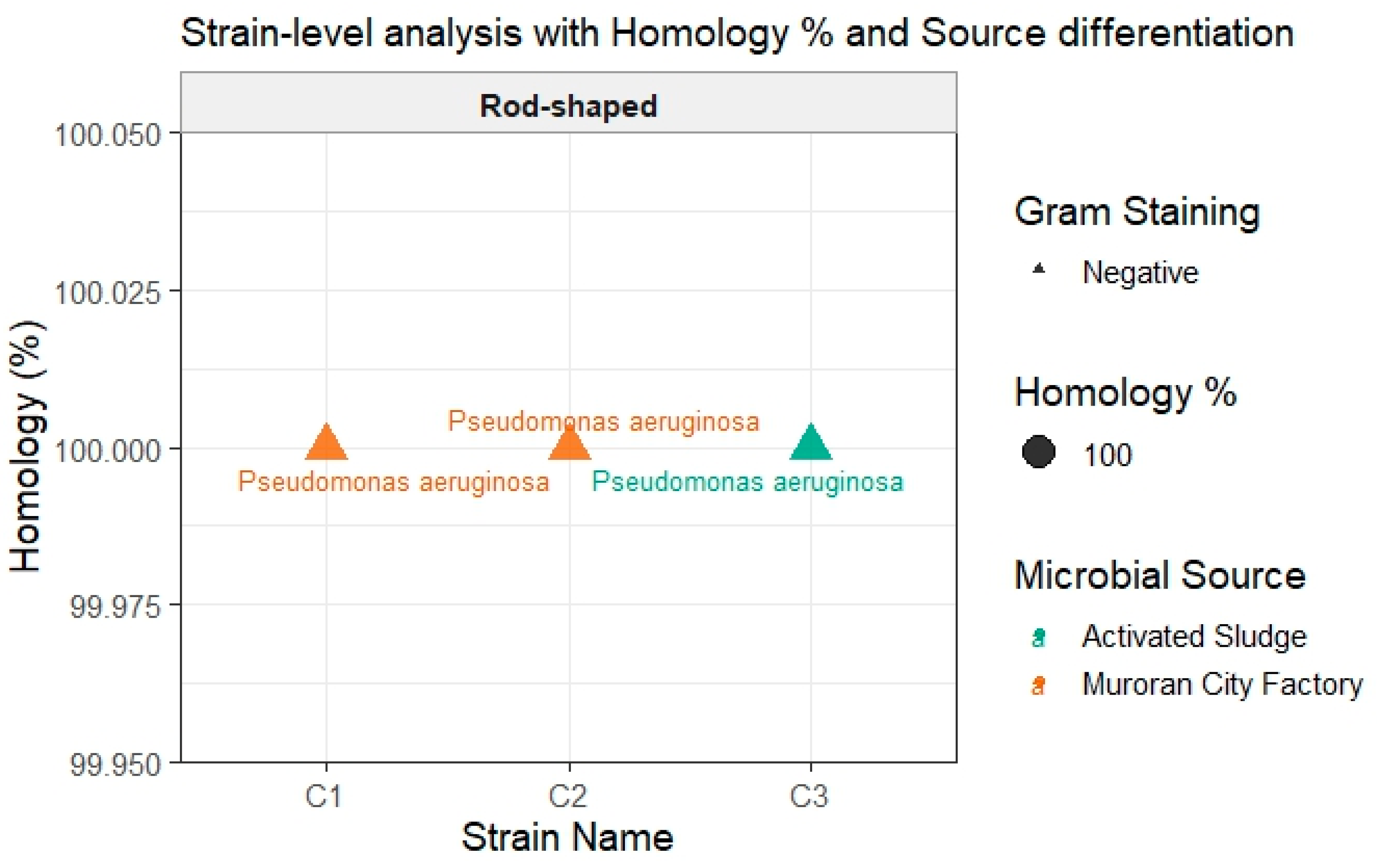
To identify the isolated heavy oil-degrading strains C1, C2, and C3, both Gram staining and 16S rDNA sequence analyses were performed. All three strains were determined to be Gram-negative, rod-shaped bacteria. The 16S rDNA sequences of strains C1, C2, and C3 were determined and subjected to a BLAST search against the GenBank database. The results showed that the 16S rDNA sequences of the three isolates were nearly identical and exhibited 100% sequence homology with that of Pseudomonas aeruginosa, leading to the conclusion that all three strains belong to P. aeruginosa. A summary of these findings is presented in Figure 1.2.
Figure 1.
2. Gram Staining and Phylogenetic Analysis Results.
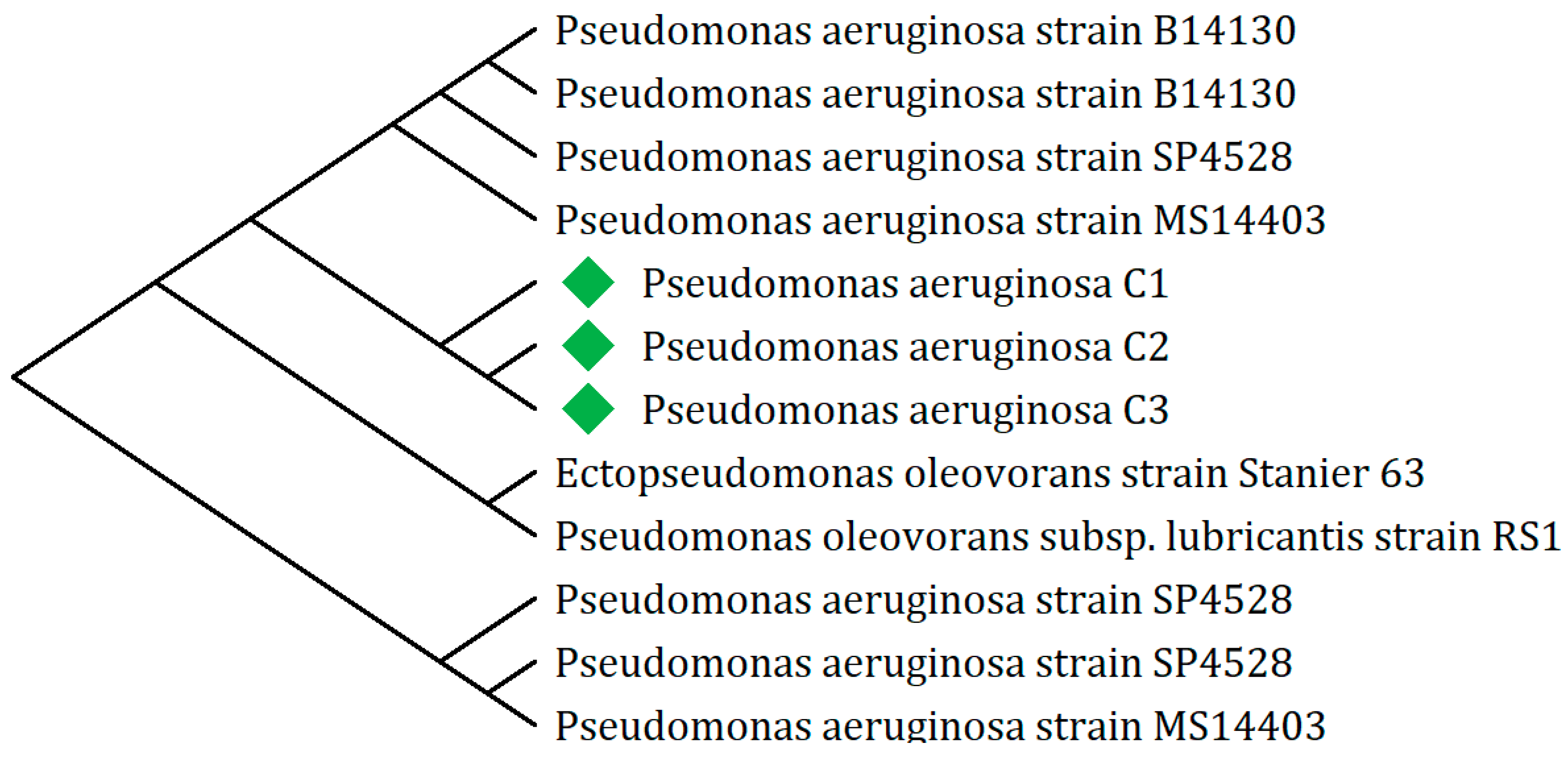
A phylogenetic tree constructed based on the 16S rDNA sequences of closely related species with high sequence similarity is shown in Figure 1.3. The isolates were phylogenetically positioned within the P. aeruginosa clade, consistent with previous reports of Pseudomonas oleovorans, which have been identified as capable of degrading engine oil [16].
Figure 1.
3. Phylogenetic Tree of Isolated Strains Based on 16S rDNA Sequences.
2.2. Effect of Temperature on Biodegradation of Heavy Oil by Isolated Strains
2.2.1. Degradation Experiment under 30°C Culture Conditions
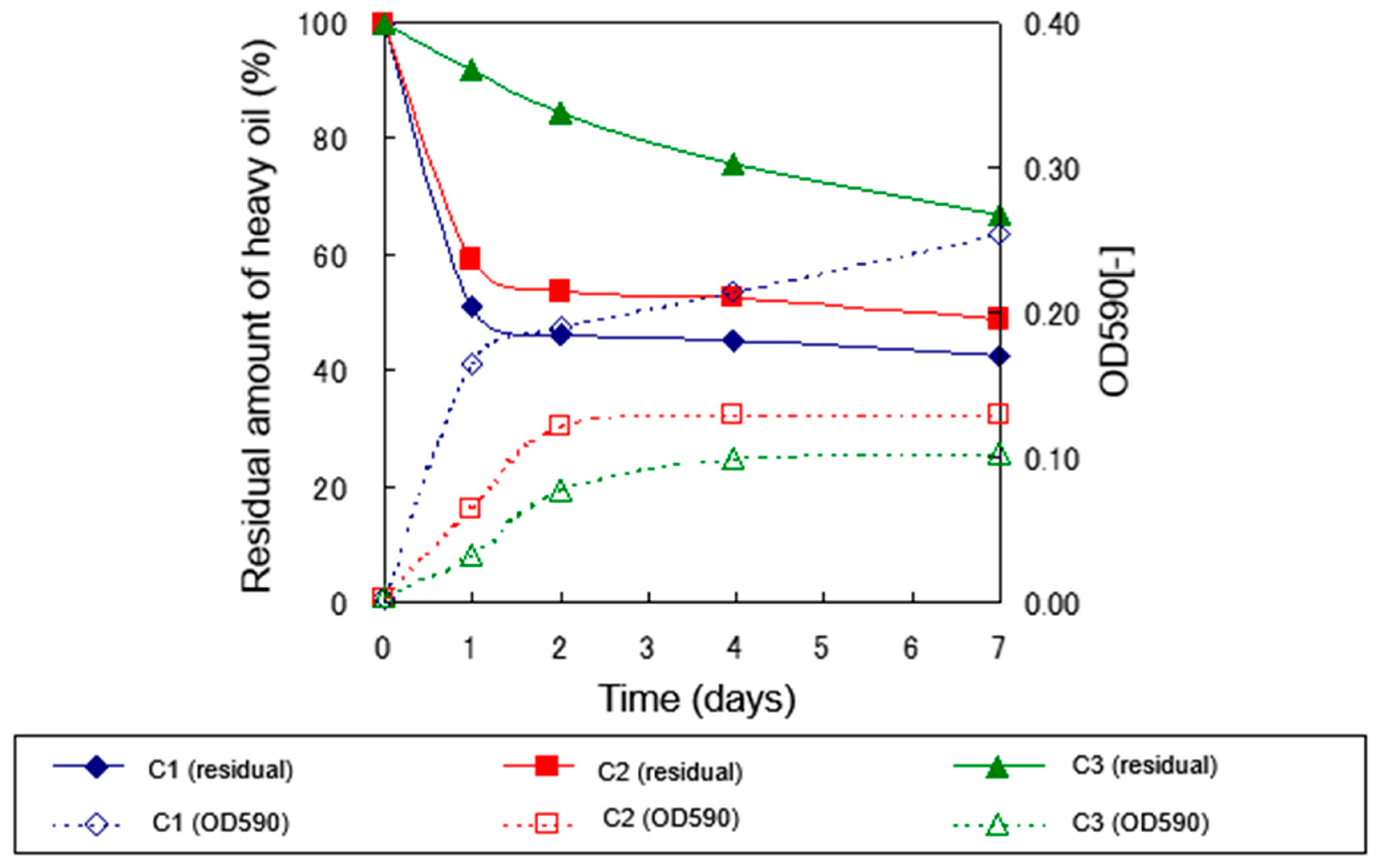
Strains C1, C2, and C3 were cultured at 30°C for 7 days, and the degradation of heavy oil was monitored over time. The residual rates of heavy oil decreased rapidly, without an apparent lag phase (induction period), indicating that all three strains began degrading heavy oil immediately. After one week of cultivation, strain C1 degraded 57% of the heavy oil, strain C2 degraded 51%, and strain C3 degraded 33% of the added heavy oil (Figure 2.1). The GC analysis can be observed in Supplementary data Fig. 2.1, 2.2, and 2.3 for strain C1, C2 and C3.
Figure 2.
1 Residual Rate of Heavy Oil and Bacterial Growth at 30°C.
2.2.2. Degradation Experiment under 15°C Culture Conditions
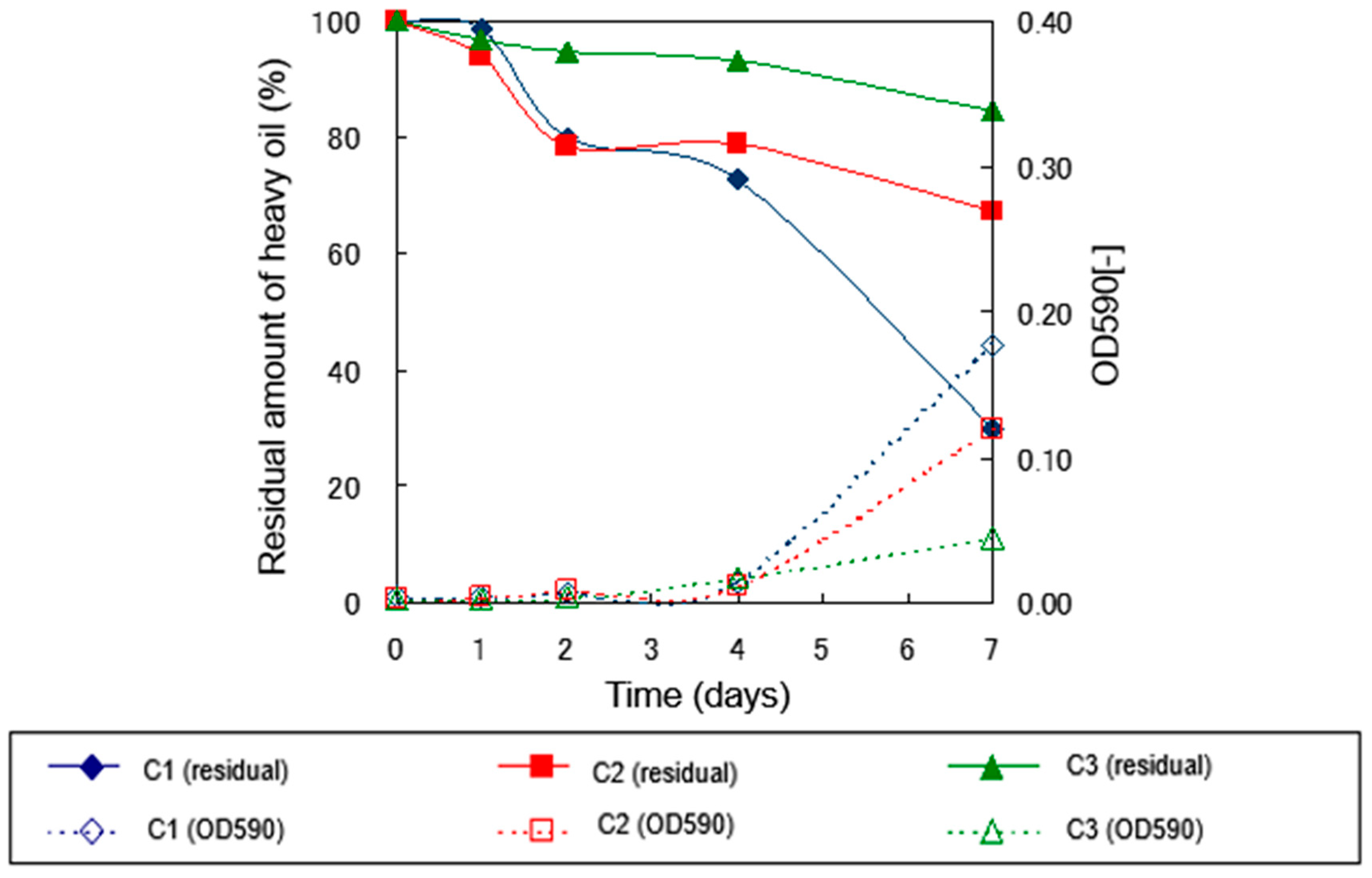
The time course of the residual heavy oil and bacterial growth (OD590) under 15°C conditions is presented in Figure 2.2 and GC results in the supplementary section Fig. 3.1, 3.2 and 3.3. When strains C1, C2, and C3 were cultured at 15°C for 7 days, a lag phase of approximately 1 day was observed before any degradation of heavy oil occurred in each case. After the lag phase, strain C1 rapidly degraded heavy oil, breaking down 70% of the added heavy oil within the first week. Strain C2 also started degrading heavy oil after the lag phase, but the degradation rate was slower compared to strain C1, with only 33% of the added heavy oil degraded in one week. Strain C3, which exhibited the slowest degradation rate, only degraded 15% of the added heavy oil during the same period.
Figure 2.
2. Residual Rate of Heavy Oil and Bacterial Growth at 15°C.
2.2.3. Degradation Experiment under 10°C Culture Conditions
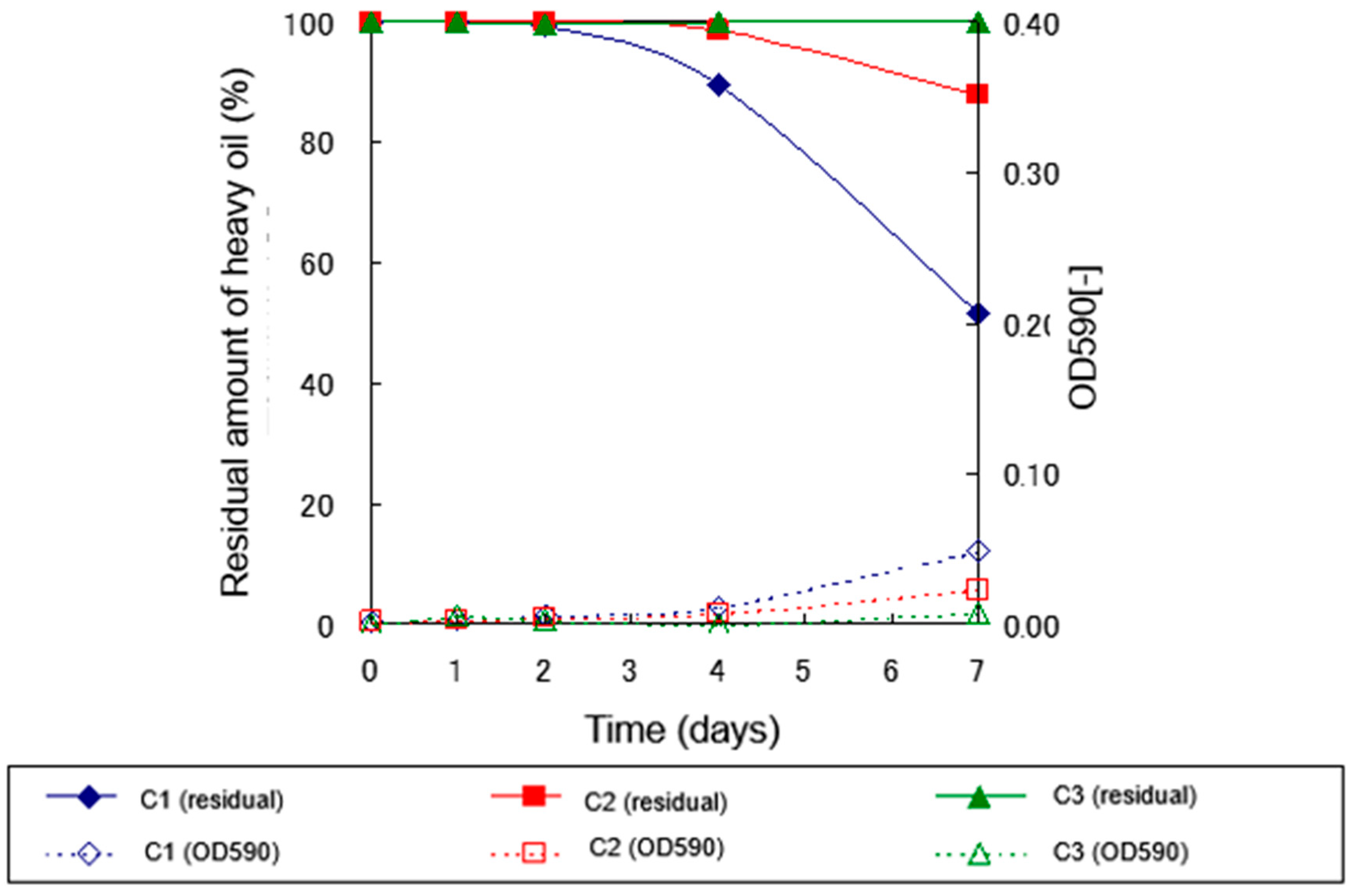
When strain C1 was cultured at 10°C for 7 days, a lag phase of approximately 2 days was observed before heavy oil degradation began. After this delay, strain C1 rapidly degraded heavy oil, breaking down 49% of the added heavy oil within one week. In contrast, strain C2 exhibited a longer lag phase of about 4 days before degradation began, and after the lag phase, the degradation rate was slower than strain C1, with only 12% of the added heavy oil degraded in one week (Figure 2.3) and GC results in the supplementary section Fig. 4.1, 4.2 and 4.3.
Figure 2.
3. Residual Rate of Heavy Oil and Bacterial Growth at 10°C.
2.3. Long-Term Degradation Experiment at Low Temperatures
As we observed a low biodegradation rate at lower temperatures, we conducted the heavy oil biodegradation at 5°C and 10°C for 98 days. We only used C1 and C2 strains for long-term low-temperature biodegradation because C2 showed no growth at low temperatures.
2.3.1. Long-Term Degradation Experiment at 10°C
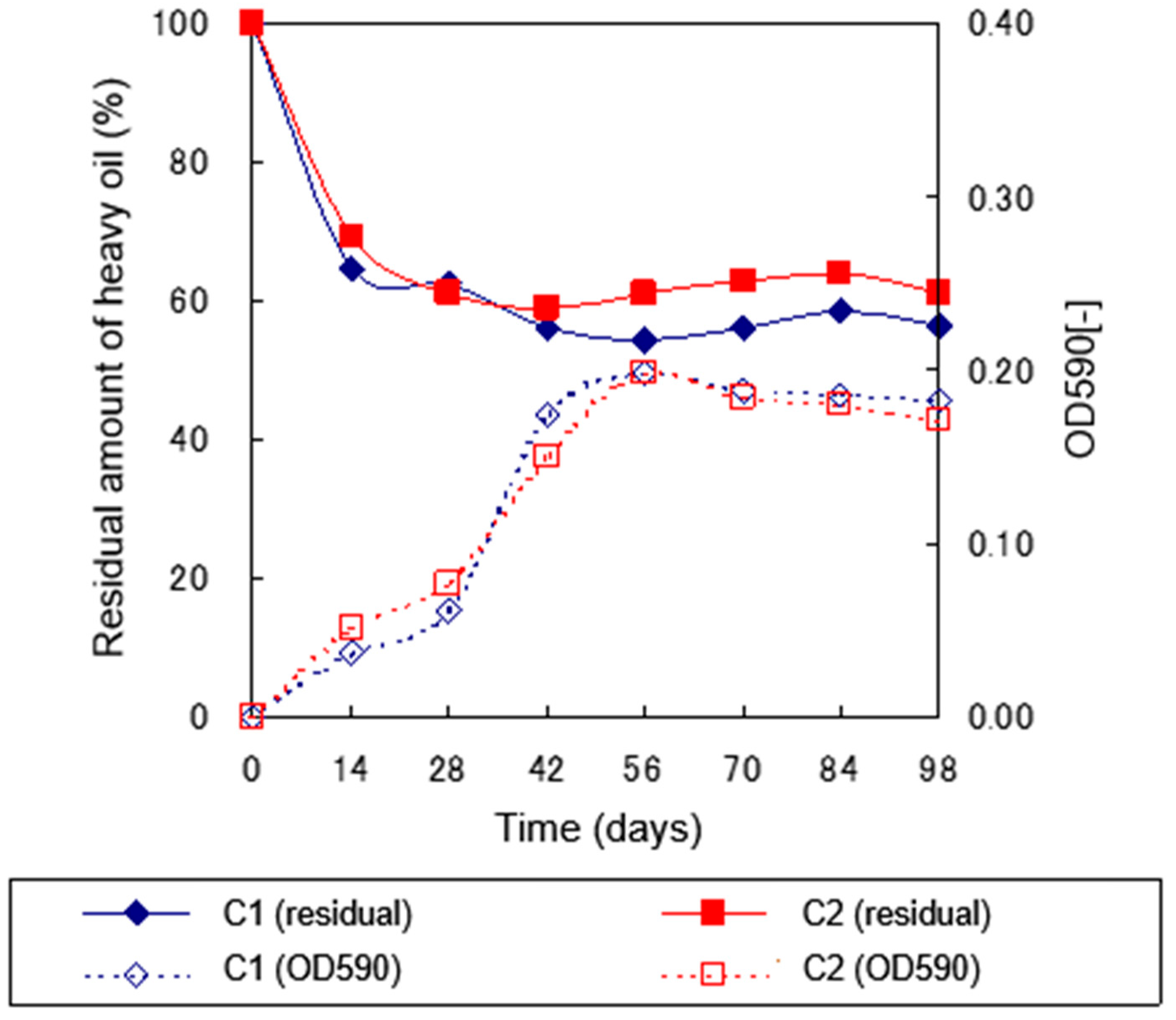
A long-term degradation experiment (98 days) was conducted using strains C1 and C2 at 10°C, and the results are shown in Figure 3.1 and GC graphs in supplementary file Fig. 5.1 and 5.2. After 56 days of cultivation, both C1 and C2 strains had degraded approximately 40% of the added heavy oil, and bacterial growth was observed alongside the degradation process. These results indicate that strain C1 can degrade a substantial amount of heavy oil within a relatively short period, while strain C2 requires a longer time frame to achieve similar degradation, even under the low temperature conditions of 10°C.
Figure 3.
1. Residual Rate of Heavy Oil and Bacterial Growth at 10°C.
2.3.2. Degradation Experiment under 5°C Culture Conditions
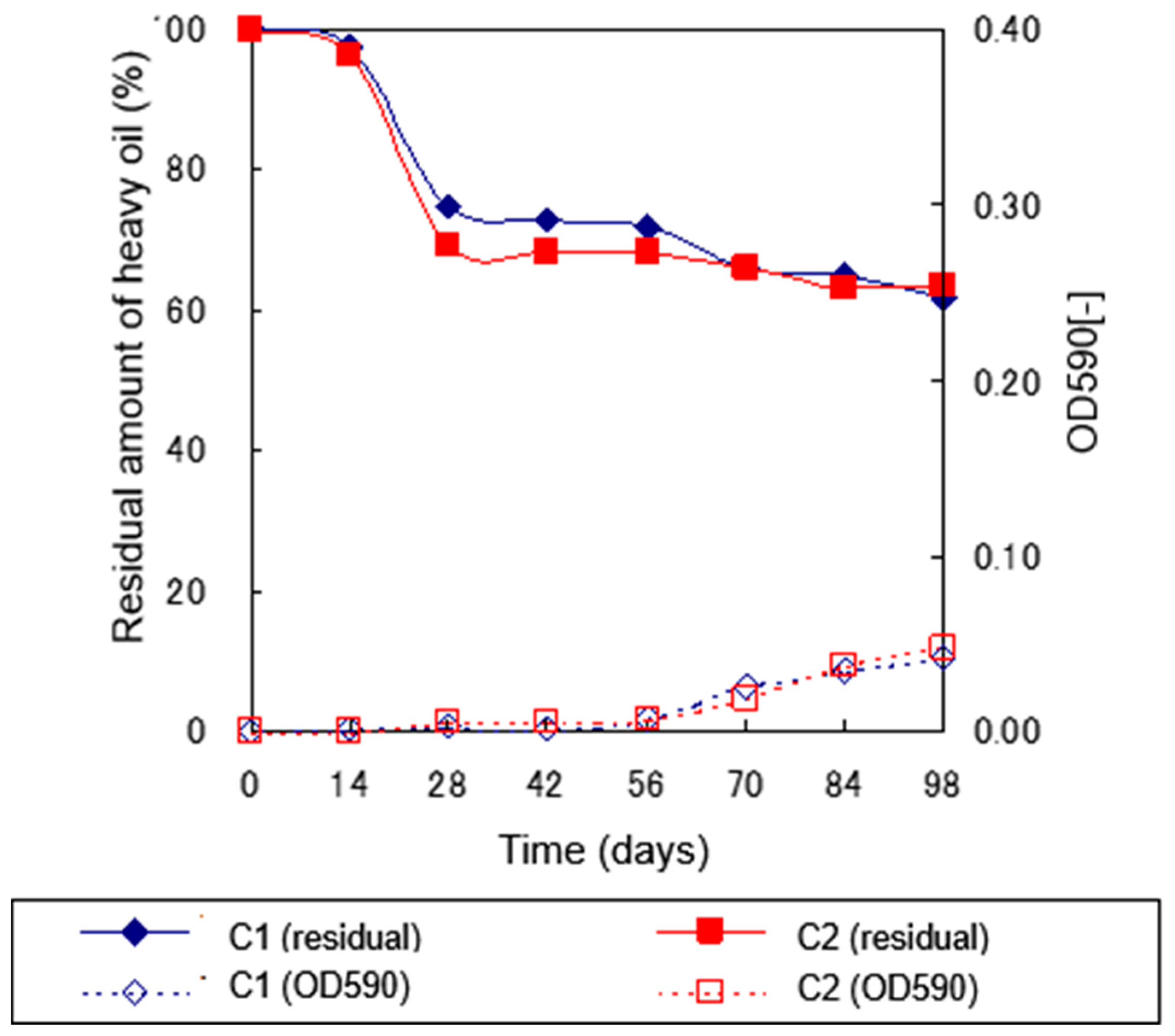
long-term (98 days) degradation experiments were conducted using the test strains C1 and C2 at 5°C. The results are shown in Figure 3.2 and GC results in the supplementary section Fig. 6.1 and 6.2. Over the 98-day period, both C1 and C2 strains gradually degraded heavy oil, breaking down approximately 35% of the added heavy oil. Bacterial growth, although minimal, was observed alongside the degradation process.
Figure 3.
2. Residual Rate of Heavy Oil and Bacterial Growth at 5°C.
2.4. Heavy Oil Degradation Experiments Using Test Soil
To confirm the biodegradation of heavy oil by the isolated strains in soil, we observed the heavy oil biodegradation in sterile soil at 30°C and at a low temperature of 5°C.
2.4.1. Heavy Oil Degradation in Sterile Soil at 30°C
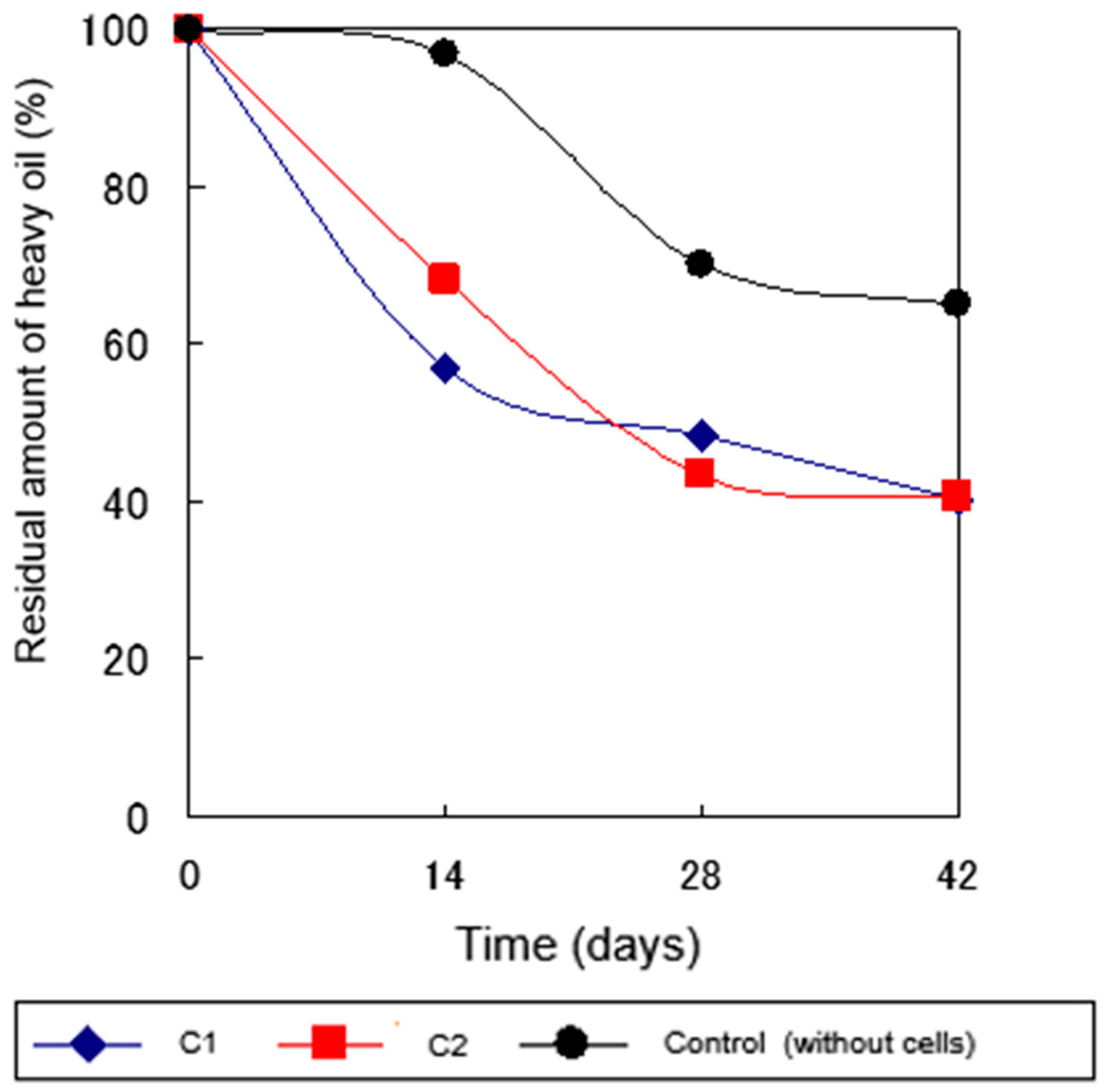
At 30°C, the results of the degradation experiments revealed that both C1 and C2 strains were highly effective in degrading heavy oil in the soil. Approximately 60% of the added heavy oil was removed after 42 days. This was a significant degradation, demonstrating that these strains can effectively break down heavy oil under optimal temperature conditions (Figure 4.1) and GC results in the supplementary section Fig. 7.1, 7.2 and 7.3.
Figure 4.
1. Residual Rate of Heavy Oil at 30°C in Sterile Soil.
2.4.2. Heavy Oil Degradation in Sterile Soil at 5°C
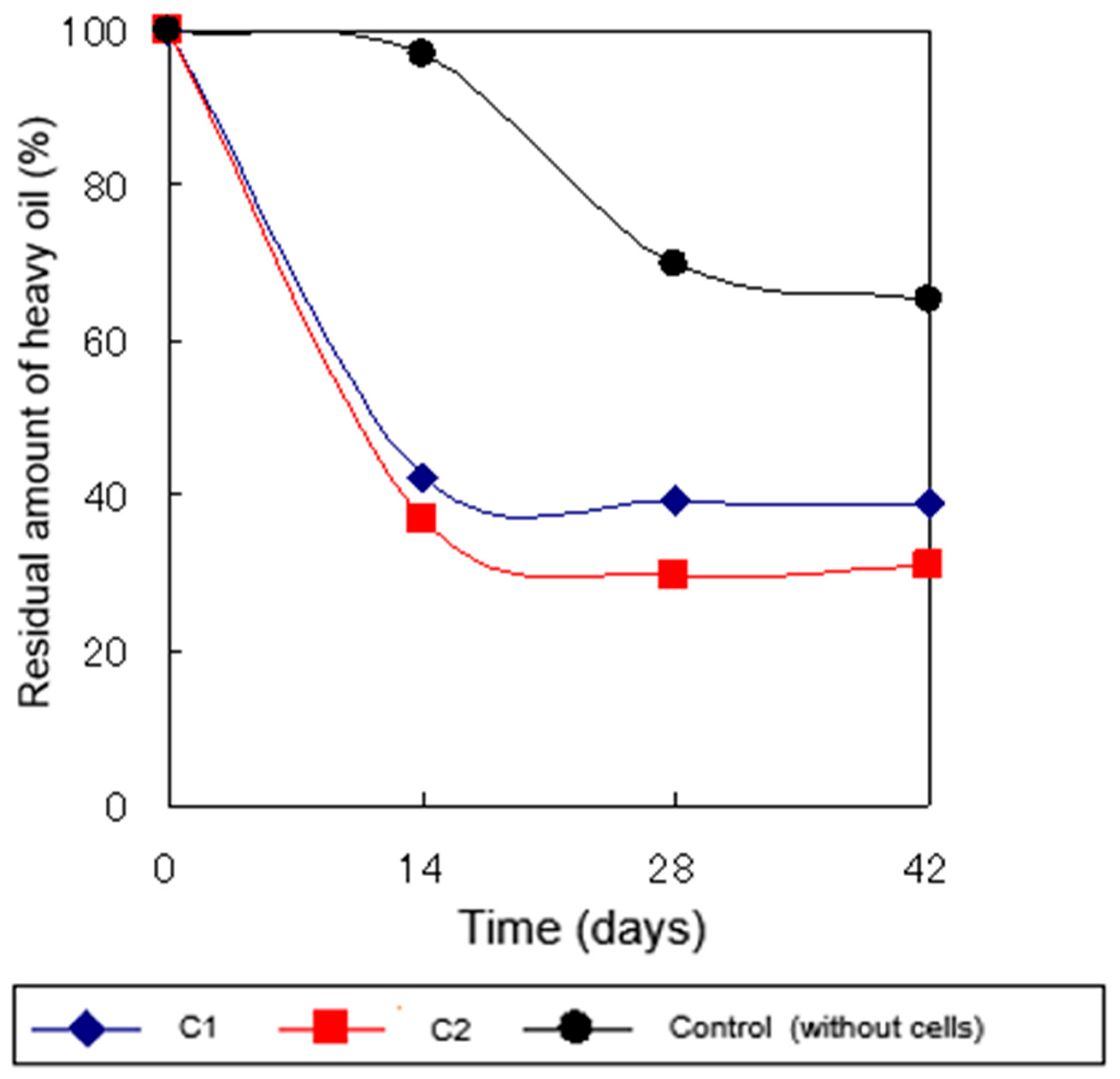
The results of the heavy oil remediation experiment conducted at 5°C are shown in Figure 4.2 and GC analysis in supplementary section Fig. 8.1, 8.2 and 8.3. Both strains C1 and C2 demonstrated significant heavy oil degradation even under the challenging low-temperature condition of 5°C, removing approximately 60% of the added heavy oil over a 42-day period. This outcome is particularly noteworthy since many oil-degrading bacteria are less active in cold environments.
Figure 4.
2. Residual Rate of Heavy Oil in Sterile Soil at 5°C.
3. Discussion
The degradation of petroleum hydrocarbons and, in particular, heavy crude oil as the remediation method in a broad sense is difficult due to the complex chemical composition of such pollutants and the fact that the environmental conditions cannot always be duplicated [17]. The current paper has highlighted the degradation of heavy oil through bacteria that were screened out of the Activated Sludge and the Muroran City factory. On successful isolation, 15 strains of bacteria were obtained. The experiment leading to the degradation of heavy oil was carried out in MSM and heavy oil emulsification, and three isolates (C1, C2, and C3) were found to be positive in GC analysis and percentage of residual oil. The 16S ribotyping demonstrated the homology of these strains to Pseudomonas aeruginosa. The observation corresponds with a substantial row of studies based on which the genus Pseudomonas is also a very effective and wide-range microorganism regarding hydrocarbon degradation [18,19]. P. aeruginosa is metabolically diverse and capable of degrading a broad range of xenobiotic compounds, and this characteristic was already defined in multiple studies; this is one of the factors why this microbe is often utilized in the process of bioremediation [20].
Analysis of different bacteria reveals that bacterial strains such as Rhodococcus jostii and Achromobacter have a very high efficiency in the degradation of light crude oil, and also, there is a linear relationship between the percentage of degradation and bacterial growth [21]. Additionally, certain halophilic organisms like strain TM-1 have been shown to possess a special capacity to grow in high salt conditions as well as to utilize organic substances in such a way that converts the crude oil constituents [22]. Furthermore, bacteria consortia and strains such as B. siamensis HoB-1 play a good role in reducing heavy oil and transforming its composition, which puts them in the position of having a potential for improved oil recovery [23].
Biodegradation efficiency is influenced by both abiotic factors (temperature, water availability, aeration, pH, and the existence of biogenic minerals) and by biotic factors (microbial species). The significant variable in microbial life, in general, and the degrading potential of microbes in petroleum is temperature [24].
The temperature effect on the biodegradation of heavy oil was observed in this study by our isolated strains. At 30°C, strains C1, C2, and C3, all of which were Pseudomonas aeruginosa, grew on heavy oil with a fast and high rate of growth without any sign of lag time. Degradation rates were especially high in the case of strains C1 and C2 that removed 57 and 51% of the analyte, respectively, in the course of one week. Other studies showed that bacteria, such as R. jostii and Achromobacter species, degraded light crude oil by 69% in seven days of the experiment period [21].
Cold temperatures weaken the viscosity and, in turn, bioavailability of crude oil hydrocarbons. Numerous studies have also shown that the degradation of oil seawater HC during winter is slower as opposed to that during summer seasons [25, 26]. One study in arctic tundra soil demonstrated that removal of total petroleum hydrocarbon (TPH) was 450 μg/g at 7°C, whereas 300 μg/g at 0°C, and at -5°C, it was removed by zero. This is corroborated by studies of degradation on a psychrotrophic yeast (Yarrowia lipolytica) that demonstrated a declining degradation activity at lower temperatures of 4°C. A different analysis of the Gulf of Mexico showed that at 4°C versus 24°C, different bacterial communities were functioning, suggesting that this was a temperature-dependent shifting of microbial activity. Some cold-adapted microorganisms are able to degrade oil at or close to 0°C, although the rate at cold temperatures is much lower than at higher temperatures [27, 28, 29].
The current study monitored the efficiency of the individual strains in the biodegradation of heavy oil under low temperatures. When we performed this measurement in our study at 15°C, we did have a clear lag step prior to degradation, and growth occurred with the three strains, which does suggest that there was a real decrease in the activity of the bacteria with respect to the temperature. The observation is also consistent with what the researchers established, namely that the abundance of bacteria that inhabit marine sediments and the biodegradation potential that they possess were tightly correlated with the temperature [30] [26]. Nonetheless, our isolates were found to exhibit important rates of degradation, where the C1 strain degraded 70% of the heavy oil and the C2 strain degraded 33% in a weekly period at 15 °C.
Low temperatures also influence the rates of biodegradation of oils as they lower the solubility of some oil compounds. This is quite pertinent considering that the sea surface temperatures have been relatively cold all year in the Labrador Shelf, with a temperature of -2°C to 10 °C. Microbial communities in the low temperature responding to hydrocarbons may not be the same as high temperature responding microbial life forms (Murphy et al., 2021). In this study, we found that strain P. aeruginosa C3 showed no metabolic activity to degrade heavy oil at 10 °C, indicating that the strain is limited to cold environments. This is due to the fact that it developed under temperature conditions of activated sludge, which is usually regulated at 20°C to 30°C. Conversely, P. aeruginosa C1 and P. aeruginosa C2 pertained to the contaminated soil of a low-temperature area and managed to remain active, however. They both showed signs of a lag phase, as well as the ability to degrade the heavy oil and grow. There was firm evidence that their activity was sustained, and a long-term experiment at 10°C showed that, after 56 days, both strains had degraded approximately 40% of the oil. This resiliency can be especially noted with respect to other research at 10°C. In contrast, Semenova et al. (2023) investigated the hydrocarbon-contaminated Arctic soils and discovered that some strains were able to degrade crude oil in the frozen state, proving that there are highly adapted psychrotolerant or even psychrophilic organisms [19].
The flexibility of strains P. aeruginosa C1 and P. aeruginosa C2 was also proved in the prolonged degradation at 5°C. There was also no noticeable activity observed during the first 7 days of exposure, but after 98 days of incubation, the two strains had left a residue of about 35% of the added heavy oil. This slow but great degradation of the pollutant at 5°C is hugely important as it shows that when left long enough, these strains have the potential to remediate oil spills in places where there are very low temperatures, as in polar or deep ocean waters.
Hydrocarbons (HC) introduction into the soil environment can occur from pipeline blow-outs, road accidents, leaking of underground storage tanks, landfarming fields, and uncontrolled landfilling. When released on the soil surface, HC adsorbs on the organo-mineral matter (OMM) of the soil. HC can be subjected to biodegradation, volatilization, and leaching. The presence of high rates of organic matter and clay may affect the extent of biodegradation due to a priming effect on microbial communities and to a decrease in accessibility to microorganisms [32]. In a study, a mixed cold-adapted bacterial flora JY, including petroleum-degrading strains Arthrobacter sp., Rhodococcus sp., Pseudomonas sp., Stenotrophomonas sp., and Sphingobacterium sp., respectively, was isolated from Alpine Meadow soil. The mixed flora demonstrated 53.68% of total petroleum hydrocarbons (TPH) removal of the contaminated water (1 g oil L-1) after 30 days of incubation under 10 °C [33].
In this study, we conducted an experiment to observe the biodegradation of heavy metals in artificially contaminated soil using the isolated strains at 30 °C and 5 °C. At 30°C, the results of the degradation experiments revealed that both P. aeruginosa C1 and P. aeruginosa C2 strains were highly effective in degrading heavy oil in the soil. Approximately 60% of the added heavy oil was removed after 42 days. This was a significant degradation, demonstrating that these strains can effectively break down heavy oil under optimal temperature conditions. Both strains, P. aeruginosa C1 and P. aeruginosa C2, demonstrated significant heavy oil degradation even under the challenging low-temperature condition of 5°C, removing approximately 60% and 70% of the added heavy oil over a 42-day period, respectively. The persistence of these strains in the contaminated soil under low-temperature conditions indicates that P. aeruginosa C1 and P. aeruginosa C2 can be effectively utilized for bioaugmentation strategies in harsh cold environments, where many traditional oil-degrading bacteria struggle to survive and function. This further strengthens the potential application of these strains in bioremediation efforts, especially in cold regions or during winter months.
4. Materials and Methods
4.1. Microbial Source, Culture Conditions, and Identification of Heavy Oil-Degrading Bacteria
4.1.1. Microbial Sources
Soil samples were collected from a factory site in Muroran City, Hokkaido, Japan, known for chronic heavy oil contamination due to prolonged industrial activity. This environment provided a natural reservoir for oil-degrading microorganisms. Additionally, activated sludge from a municipal sewage treatment plant in South Korea served as a supplementary microbial source.
4.1.2. Heavy Oil Used
The degradation experiments used TUFDraw, a commercially available lubricating oil (Fuchs), as the representative heavy oil. TUFDraw comprises approximately 33% naphthenic components, 30% chlorinated hydrocarbons, and various plant-derived oils. The product has a specific gravity of 0.968 and a flash point of 138°C [34].
4.1.4. Preparation of Microbial Inoculum
To prepare the inoculum, 2 g of either soil or sludge was suspended in 100 mL of a 5 mg/L sodium tripolyphosphate solution. This was incubated at 30°C with shaking for 24 hours, and the supernatant was used for subsequent enrichment [35].
4.1.5. Enrichment Culture
Enrichment of oil-degrading bacteria was conducted in a minimum salt medium (MSM) containing 1000 mg/L emulsified heavy oil. 15ml of microbial inoculum was added to 135 mL of MSM in 300 mL flasks and incubated at 30°C, 120 rpm for two weeks. The enrichment was continued by transferring 5 mL into fresh MSM with oil. A second round of enrichment was performed using 5000 mg/L heavy oil to select for more robust degraders. At weeks 0, 1, and 2, oil was extracted from 10 mL samples using acetone and n-hexane. After evaporation, the residue was dissolved in n-hexane and analyzed by Gas Chromatography (GC) using an internal standard (naphthalene, 1000 mg/L). GC conditions are discussed in our previous study, Ali et al. (2025) [35].
4.1.6. Isolation of Bacteria
Enriched cultures were serially diluted and spread on 1/10 LB agar plates. Colonies were picked and purified by re-streaking [Supplementary section Fig. 1.1 and 1.2]. For degradation assays, pre-cultures were grown in 1/10 LB, centrifuged, washed, and resuspended in MSM to an OD₅₉₀ of 0.5. The cultures were incubated with 5000 mg/L heavy oil in vials for two weeks. Oil extraction followed the same protocol as enrichment, and GC analysis was used to confirm degradation.
4.1.7. Phylogenetic Analysis
Strain identification was carried out using genotypic methods. For 16S rDNA sequencing, genomic DNA was extracted using proteinase K digestion, phenol–chloroform purification, and ethanol precipitation. PCR was conducted with primers 27F and 1392R (Table 5), and products were sequenced by Takara Bio Inc. Sequences were analyzed via BLAST, aligned using CLUSTAL X, and phylogenetic trees were constructed using Mega 11 software, comparing isolates to known petroleum-degrading bacteria from GenBank.
4.2. Culture Conditions and Analytical Methods
To investigate the biodegradation of heavy oil, the oil was emulsified in Mineral Salt Medium (MSM) to a final concentration of 2000 mg/L. The emulsified medium (100 mL) was prepared in 300 mL Erlenmeyer flasks. Isolated bacterial strains (C1, C2, and C3), previously cultured on agar plates, were inoculated into the medium using a platinum loop. These cultures were incubated at 30°C and 120 rpm for 5 days to serve as a pre-pre-culture. Subsequently, 5 mL of this culture was transferred into fresh 100 mL of 1/10 LB medium and incubated for 12 hours under the same conditions to obtain a pre-culture. The bacterial cells were harvested via centrifugation (15,000 rpm, 5 min), washed with 50 mM phosphate buffer (pH 7.0), and resuspended in MSM to an OD₅₉₀ of 1.0.
For the degradation experiment, 9 mL of MSM with 2000 mg/L heavy oil was dispensed into 20 mL vials, followed by inoculation with 1 mL of the prepared cell suspension. Vials were incubated at 120 rpm under different temperatures (5°C, 10°C, 15°C, and 30°C). Sampling was performed in duplicate for each condition.
Heavy oil was extracted by adding 1 mL 1N HCl, 5 mL acetone, and 5 mL n-hexane to each vial, followed by shaking and centrifugation (2000 rpm, 10 min) [36]. The n-hexane layer was collected and re-extracted thrice. After evaporation, residues were redissolved in 150 μL n-hexane with 50 μL naphthalene (1000 mg/L) as an internal standard [37]. Gas Chromatography (GC) was performed, and residual oil was quantified using peak area ratios. Bacterial growth was assessed by measuring OD₅₉₀ of the aqueous phase post-extraction [35].
4.3. Heavy Oil Degradation Experiments Using Test Soil
4.3.1. Preparation of Heavy Oil-Contaminated Soil
Commercially available potting soil (comprising natural soil and compost; neutral pH; electrical conductivity <1.0 mS/cm) was used to prepare contaminated soil samples. The soil was passed through a 2.0 mm mesh sieve to ensure uniformity. 10g (wet weight) of sieved soil was placed into 30 mL glass vials and sterilized by autoclaving at 121°C for 30 minutes, repeated three times to eliminate indigenous microorganisms. After cooling, heavy oil was added to each vial to achieve a final concentration of 2000 mg/kg. The soil-oil mixture was shaken vigorously for 5 minutes to ensure even distribution. For one week following oil addition, the vials were shaken for 3 minutes daily to maintain uniform contamination.
4.3.2. Medium and Cultivation Conditions
Mineral Salt Medium (MSM) was emulsified with heavy oil to a final concentration of 2000 mg/L in 100 mL volumes within 300 mL Erlenmeyer flasks. Individual colonies of strains C1 and C2, previously cultured on agar, were inoculated into the emulsified MSM. These cultures were incubated at 30°C and 120 rpm for 5 days (preculture). Then, 5 mL of each culture was transferred into 100 mL of 1/10 LB medium and incubated under the same conditions for 12 hours to obtain the pre-culture. Cells were harvested via centrifugation, washed with 50 mM phosphate buffer (pH 7.0), and resuspended to an OD₅₉₀ of 1.0. 1mL of this suspension was inoculated into each vial containing contaminated soil. Vials were incubated statically at 30°C and 5°C for 42 days, with 500 μL of sterile water added every two days to maintain moisture [35].
5. Conclusions
Heavy oil biodegradation is challenging in cold regions due to its viscosity and toxicity to microorganisms. Strains P. aeruginosa C1 and P. aeruginosa C2, isolated in this study, demonstrated the ability to utilize heavy oil as a sole carbon source and showed capacity for degradation-based bioremediation across a wide range of temperatures, including conditions as low as 5°C. The ability of these strains to degrade heavy oil in cold environments is a significant finding, as most reports focus on microbial degradation of light oils in more temperate conditions. Given their cold tolerance and persistent activity at low temperatures, P. aeruginosa C1 and P. aeruginosa C2 are promising candidates for the bioremediation of heavy oil contamination in cold regions. This study contributes valuable insights into the development of bioremediation technologies specifically designed for cold-climate regions, where traditional microbial strains may not be effective.
Author Contributions
“Conceptualization, Y.-C.C.; methodology, Y.-C.C.; software, S.A. and I.; validation, Y.-C.C.; formal analysis, S.A. and I.; investigation, Y.-C.C.; resources, Y.-C.C.; data curation, Y.-C.C.; writing—original draft preparation, S.A. and I.; writing—review and editing, Y.-C.C, S.A. and I.; visualization, S.A. and I.; supervision, Y.-C.C.; project administration, Y.-C.C.; funding acquisition, Y.-C.C. All authors have read and agreed to the published version of the manuscript.”
Funding
This study was funded by JSPS KAKENHI (grant number: 24K11471). This research was also funded by the Ogasawara Foundation for the Promotion of Science and Engineering (Japan) and Iwatani Foundation for the Promotion of Science and Engineering (Japan).
Institutional Review Board Statement
Not applicable.
Informed Consent Statement
Not applicable.
Data Availability Statement
Data will be provided on demand
Abbreviations
The following abbreviations are used in this manuscript:
| GC | Gas Chromatography |
| MSM | Minimum Salt Media |
| HC | Hydrocarbons |
| TPH | Total Petroleum Hydrocarbons |
| LB media | Luria Bertani Media |
| PCR | Polymerase Chain Reaction |
| OMM | Organic Mineral Matter |
| HCL | Hydrochloric Acid |
References
- Song, Q.; Zhou, B.; Song, Y.; Du, X.; Chen, H.; Zuo, R.; Zheng, J.; Yang, T.; Sang, Y.; Li, J. Microbial community dynamics and bioremediation strategies for petroleum contamination in an in-service oil Depot, middle-lower Yellow River Basin. Front. Microbiol. 2025, 16, 1544233. [CrossRef]
- Evans, F.G.; Nkalo, U.H.; Amachree, D.; Raimi, M.O. From Killer to Solution: Evaluating Bioremediation Strategies on Microbial Diversity in Crude Oil-Contaminated Soil over Three to Six Months in Port Harcourt, Nigeria. Adv. Environ. Eng. Res. 2024, 05, 1–26. [CrossRef]
- Ferreira, A.R.; Guedes, P.; Mateus, E.P.; Jensen, P.E.; Ribeiro, A.B.; Couto, N. (2021). Hydrocarbon-Contaminated Soil in Cold Climate Conditions: Electrokinetic-Bioremediation Technology as a Remediation Strategy. Electrokinetic Remediation for Environmental Security and Sustainability, 173-190.
- Evrard, O.; Chalaux-Clergue, T.; Chaboche, P.-A.; Wakiyama, Y.; Thiry, Y. Research and management challenges following soil and landscape decontamination at the onset of the reopening of the Difficult-to-Return Zone, Fukushima (Japan). SOIL 2023, 9, 479–497. [CrossRef]
- M. Zhang (2019), ZHANG, M. (2019). Challenges of solving the problem of soil and groundwater contamination—An interdisciplinary approach—. Synthesiology English Edition, 12(1), 41-50.
- Zhang, J.; Gao, H.; Xue, Q. Potential applications of microbial enhanced oil recovery to heavy oil. Crit. Rev. Biotechnol. 2020, 40, 459–474. [CrossRef]
- Kondrat, R. G. (2000). Punishing and Preventing Pollution in Japan: Is American-Style Criminal Enforcement the Solution?. Pac. Rim L. & Pol'y J., 9, 379.
- Mayans, B.; Antón-Herrero, R.; García-Delgado, C.; Delgado-Moreno, L.; Guirado, M.; Pérez-Esteban, J.; Escolástico, C.; Eymar, E. Bioremediation of petroleum hydrocarbons polluted soil by spent mushroom substrates: Microbiological structure and functionality. J. Hazard. Mater. 2024, 473, 134650. [CrossRef]
- Beilig, S.; Pannekens, M.; Voskuhl, L.; Meckenstock, R.U. Assessing anaerobic microbial degradation rates of crude light oil with reverse stable isotope labelling and community analysis. Front. Microbiomes 2024, 3, 1324967. [CrossRef]
- Van Stempvoort, D., & Biggar, K. (2008). Potential for bioremediation of petroleum hydrocarbons in groundwater under cold climate conditions: A review. Cold Regions Science and Technology, 53(1), 16-41.
- Adedeji, J.A.; Tetteh, E.K.; Amankwa, M.O.; Asante-Sackey, D.; Ofori-Frimpong, S.; Armah, E.K.; Rathilal, S.; Mohammadi, A.H.; Chetty, M. Microbial Bioremediation and Biodegradation of Petroleum Products—A Mini Review. Appl. Sci. 2022, 12, 12212. [CrossRef]
- Dai, X.; Lv, J.; Wei, W.; Guo, S. Bioremediation of heavy oil contaminated intertidal zones by immobilized bacterial consortium. Process. Saf. Environ. Prot. 2022, 158, 70–78. [CrossRef]
- Uppar, R.; Dinesha, P.; Kumar, S. A critical review on vegetable oil-based bio-lubricants: preparation, characterization, and challenges. Environ. Dev. Sustain. 2022, 25, 9011–9046. [CrossRef]
- Mukhopadhyay, A.; Quinn, M.; Al-Haddad, A.; Al-Khalid, A.; Al-Qallaf, H.; Rashed, T.; Bhandary, H.; Al-Salman, B.; Bushehri, A.; Boota, A.; et al. Pollution of fresh groundwater from damaged oil wells, North Kuwait. Environ. Earth Sci. 2017, 76, 1–16. [CrossRef]
- Gomez, F.; Sartaj, M. Field scale ex-situ bioremediation of petroleum contaminated soil under cold climate conditions. Int. Biodeterior. Biodegradation 2013, 85, 375–382. [CrossRef]
- Nisar, N.; Fareed, A.; Alam Naqvi, S.T.; Zeb, B.S.; Amin, B.A.Z.; Khurshid, G.; Zaffar, H. Biodegradation Study of Used Engine Oil by Free and Immobilized Cells of the Pseudomonas oleovorans Strain NMA and Their Growth Kinetics. ACS Omega 2024, 10, 541–549. [CrossRef]
- Sui, X.; Wang, X.; Li, Y.; Ji, H. Remediation of Petroleum-Contaminated Soils with Microbial and Microbial Combined Methods: Advances, Mechanisms, and Challenges. Sustainability 2021, 13, 9267. [CrossRef]
- Liu, Y.; Zhang, J.; Yang, S.; Yang, H. Biodegradation and removal of heavy oil using Pseudomonas sp. and Bacillus spp. isolated from oily sludge and wastewater in Xinjiang Oilfield, China. J. Environ. Chem. Eng. 2023, 11. [CrossRef]
- Semenova, E.M.; Tourova, T.P.; Babich, T.L.; Logvinova, E.Y.; Sokolova, D.S.; Loiko, N.G.; Myazin, V.A.; Korneykova, M.V.; Mardanov, A.V.; Nazina, T.N. Crude Oil Degradation in Temperatures Below the Freezing Point by Bacteria from Hydrocarbon-Contaminated Arctic Soils and the Genome Analysis of Sphingomonas sp. AR_OL41. Microorganisms 2023, 12, 79. [CrossRef]
- Yang, S.; Zhang, J.; Liu, Y.; Feng, W. Biodegradation of hydrocarbons by Purpureocillium lilacinum and Penicillium chrysogenum from heavy oil sludge and their potential for bioremediation of contaminated soils. Int. Biodeterior. Biodegradation 2023, 178. [CrossRef]
- Chen, N.; Altalbawy, F.M.A.; Sur, D.; Karim, S.A.; Chahar, M.; Verma, R.; Juraev, N.; Alamir, H.T.A.; Mohammed, F.; Kadhim, A.J.; et al. Isolation and Identification of Some Crude Oil-Degrading Bacterial From Soil Contaminated With Crude Oil. Energy Sci. Eng. 2025. [CrossRef]
- Hao, R.; Lu, A. Biodegradation of heavy oils by halophilic bacterium. Prog. Nat. Sci. 2009, 19, 997–1001. [CrossRef]
- Zhang, J.; Feng, W.; Xue, Q. Biosurfactant production and oil degradation by Bacillus siamensis and its potential applications in enhanced heavy oil recovery. Int. Biodeterior. Biodegradation 2022, 169. [CrossRef]
- Stepanova, A. Y., Gladkov, E. A., Osipova, E. S., Gladkova, O. V., & Tereshonok, D. V. (2022). Bioremediation of soil from petroleum contamination. Processes, 10(6), 1224.
- Schreiber, L.; Hunnie, B.; Altshuler, I.; Góngora, E.; Ellis, M.; Maynard, C.; Tremblay, J.; Wasserscheid, J.; Fortin, N.; Lee, K.; et al. Long-term biodegradation of crude oil in high-arctic backshore sediments: The Baffin Island Oil Spill (BIOS) after nearly four decades. Environ. Res. 2023, 233, 116421. [CrossRef]
- Nordam, T.; Lofthus, S.; Brakstad, O.G. Modelling biodegradation of crude oil components at low temperatures. Chemosphere 2020, 254, 126836. [CrossRef]
- Liu, J.; Bacosa, H.P.; Liu, Z. Potential Environmental Factors Affecting Oil-Degrading Bacterial Populations in Deep and Surface Waters of the Northern Gulf of Mexico. Front. Microbiol. 2017, 7, 2131. [CrossRef]
- Zekri, A.Y.; Chaalal, O. Effect of Temperature on Biodegradation of Crude Oil. Energy Sources 2005, 27, 233–244. [CrossRef]
- Rike, A.G.; Schiewer, S.; Filler, D.M. (2008). Temperature effects on biodegradation of petroleum contaminants in cold soils. Bioremediation of petroleum hydrocarbons in cold regions, 84-108.
- Bargiela, R.; Mapelli, F.; Rojo, D.; Chouaia, B.; Tornés, J.; Borin, S.; Richter, M.; Del Pozo, M.V.; Cappello, S.; Gertler, C.; et al. Bacterial population and biodegradation potential in chronically crude oil-contaminated marine sediments are strongly linked to temperature. Sci. Rep. 2015, 5, 11651. [CrossRef]
- Murphy, S.M.C.; Bautista, M.A.; Cramm, M.A.; Hubert, C.R.J.; Semrau, J.D. Diesel and Crude Oil Biodegradation by Cold-Adapted Microbial Communities in the Labrador Sea. Appl. Environ. Microbiol. 2021, 87, e0080021. [CrossRef]
- Chaîneau, C.H.; Yepremian, C.; Vidalie, J.F.; Ducreux, J.; Ballerini, D. Bioremediation of a Crude Oil-Polluted Soil: Biodegradation, Leaching and Toxicity Assessments. Water, Air, Soil Pollut. 2003, 144, 419–440. [CrossRef]
- Teng, T.; Liang, J.; Zhang, M.; Wu, Z.; Huo, X. Biodegradation of Crude Oil Under Low Temperature by Mixed Culture Isolated from Alpine Meadow Soil. Water, Air, Soil Pollut. 2021, 232, 1–12. [CrossRef]
- Iwashita, S.; Callahan, T.P.; Haydu, J.; Wood, T.K. Mesophilic aerobic degradation of a metal lubricant by a biological consortium. Appl. Microbiol. Biotechnol. 2004, 65, 620–626. [CrossRef]
- Ali, S.; Isha; Chang, Y.-C. Biodegradability of Heavy Oil Using Soil and Water Microbial Consortia Under Aerobic and Anaerobic Conditions. Processes 2025, 13, 2057. [CrossRef]
- Li, X.; Du, Y.; Wu, G.; Li, Z.; Li, H.; Sui, H. Solvent extraction for heavy crude oil removal from contaminated soils. Chemosphere 2012, 88, 245–249. [CrossRef]
- Adebusoye, S.A.; Ilori, M.O.; Amund, O.O.; Teniola, O.D.; Olatope, S.O. Microbial degradation of petroleum hydrocarbons in a polluted tropical stream. World J. Microbiol. Biotechnol. 2007, 23, 1149–1159. [CrossRef]
Disclaimer/Publisher’s Note: The statements, opinions and data contained in all publications are solely those of the individual author(s) and contributor(s) and not of MDPI and/or the editor(s). MDPI and/or the editor(s) disclaim responsibility for any injury to people or property resulting from any ideas, methods, instructions or products referred to in the content. |
© 2025 by the authors. Licensee MDPI, Basel, Switzerland. This article is an open access article distributed under the terms and conditions of the Creative Commons Attribution (CC BY) license (http://creativecommons.org/licenses/by/4.0/).
Copyright: This open access article is published under a Creative Commons CC BY 4.0 license, which permit the free download, distribution, and reuse, provided that the author and preprint are cited in any reuse.


