

Submitted:
08 August 2025
Posted:
11 August 2025
You are already at the latest version
Abstract
This study explores the reciprocal relationship between Leader Dark Triad (LDT) and Employee Dark Triad (EDT) traits in higher education institutions (HEIs). While toxic leadership—defined by Machiavellianism, narcissism, and psychopathy—is typically viewed as a top-down influence, this study challenges that assumption by examining how these traits are both projected by leaders and reflected or reinforced by employees. Using a mixed-methods approach, this study surveyed 100 HEI employees using expanded 24-item dark trait scales and conducted thematic interviews with selected participants. Quantitative analysis revealed a statistically significant and moderately strong positive correlation (ρ = 0.607, p < 0.001) between Leader and Employee Dark Triad traits. Ordinal logistic regression further confirmed that Leader Dark Triad scores significantly predict Employee traits, with a model fit indicating over 99% of the variance explained. These findings support the hypothesis that dark traits are mutually reinforced across hierarchical boundaries. Qualitative findings further demonstrated how dark behaviours are internalised through toxic role modelling, shadow projection, and defensive imitation. Employees often rationalised unethical actions by referencing similar conduct from their leaders, suggesting a contagion effect not only of behaviour but of organisational norms. This study incorporates feedback loops into the Toxic Triangle framework and draws on Jung’s Shadow Theory and Social Learning Theory to explain how ethical erosion becomes institutionalised over time. This study concludes that dark leadership fosters dark followership, and together they create an ethical drift that threatens institutional integrity. Overall, the results of this study call for leadership profiling, cultural audits, and systemic reform to disrupt this dynamic and promote psychological safety and moral accountability in academic institutions.
Keywords:
dark leadership
; dark triad
; higher education
; trait contagin
; ethical erosion
1. Introduction
1.1. Research Background
Toxic leadership is a form of leadership characterised by leaders who exhibit abusive supervision, manipulation, narcissism, and unethical behaviour, which negatively affects the well-being of the employees and the integrity of the organisations therein (Tiwaria & Jha, 2022). These leaders tend to prioritise their interests over the common good and often exploit their subordinates, fostering unpleasant working conditions. This may take the form of academic bullying, favouritism, intellectual sabotage, or unethical decision making regarding higher educational institution (HEI) autonomy (Milosevic et al., 2020). Such behaviours can be inadvertently excused within the cultural context in HEIs, where excessive competitiveness, decentralised governance, and individualism are typical features of an HEI environment (Ul Hassan et al., 2025).
Organisational ethics, on the contrary, are the principles, standards, and morals that govern decision making and behaviour within an organisation. Fairness, transparency, and moral consistency require ethical leadership (Roszkowska & Melé, 2021). However, whenever the dark personality traits of leaders, including Machiavellianism, narcissism, and psychopathy, hold important positions, their ethical frameworks are, in most cases, distorted or avoided in favour of their selfish interests. This not only erodes trust but may also create a misplaced culture where unethical behaviour is accepted as the norm (Milosevic et al., 2020). Furthermore, research suggests that, besides creating damage at the top that extends throughout the organisation, toxic leadership can, in fact, start significant moral decay in organisations.
1.2. Problem Statement
Dark personality characteristics such as Machiavellianism, narcissism, and psychopathy are not only confined to the individual pathology, as they may extend to the organisational environment via behavioural and psychological processes (Coleman & Dulewicz, 2025). Academic institutions with high levels of people accustomed to hierarchical power, competition, and independence may contribute to the reinforcement or imitation of these tendencies by employees influenced by toxic leaders (Jhaver et al., 2023). Leaders, with their manipulative behaviour, personality-based decisions, or emotional insensitiveness, unknowingly demonstrate behaviours that are absorbed by their subordinates. The similarities can be adopted by employees as coping techniques to survive or as part of a social learning process (Ul Hassan et al., 2025). The psychological effect is not confined to job performance; it also impacts identity, values and interpersonal norms. Such a dynamic poses a danger to institutional integrity, academic standards, and the ethical formation of future professionals and scholars.
1.3. Purpose of the Study
This study aims to investigate the relationship between Leader Dark Triad (LDT) and Employee Dark Triad (EDT) traits in higher education institutions. Although previous studies primarily focused on the top-down effect that toxic leaders have, this experiment marks the first attempt to reveal how dark characteristics can either surface or develop within employees and, consequently, shape leader behaviour or perception. In examining such interactions, this study can contribute more knowledge on toxic trait contagion and ethical erosion in organisations.
1.4. Research Gaps
The current body of research on dark personality traits is rather one-sided, since it assumes that the only source of toxic behaviour is a leader, and there can be no effect on the employees (Tiwari & Jha, 2022). Most models assume that the flow is one way, i.e., leader to follower, disregarding the perceived or actual reflection, reinforcement, or projection of some of the same characteristics by employees (Jhaver et al., 2023). The capacity to accommodate the dynamic nature of the leader–follower interaction has never been addressed because it is limited in this sense, only focusing on the leader and follower in an academic setting, where the power interaction is not fixed.
1.5. The Research Aims and Questions
This research project aims to investigate the interdependent nature of the Leader Dark Triad (LDT) trait and the Employee Dark Triad (EDT) trait in institutions of higher learning, focusing on how these two traits interact, support, or replicate each other. It attempts to comprehend the processes of trait contagion, role modelling, and projection based on psychological and behavioural modelling.
This research addresses the following questions:
1. To what extent do Leader Dark Triad traits predict the emergence or intensification of Employee Dark Triad traits? To be answered in a quantitative capacity
2. How dark behaviours are internalised? To be answered in a qualitative capacity
This work, based on a mixed-methods, explanatory cross-sectional design, aims to investigate the mutual effect of the personality traits of the Leader and Employee Dark Triad in institutions of higher learning. Quantitative data are gathered using validated personality scales and then analysed using a statistical analysis, which involves regression and structural equation modelling. A qualitative component, including semi-structured interviews with experienced leaders, sheds light on the lived experiences of toxic leadership. This dissertation study comprises eight chapters: Introduction, Literature Review, Conceptual Framework and Hypotheses, Methodology, Quantitative Results, Qualitative Findings, Discussion, and Conclusion. Overall, these sections form a detailed and methodical study of the research issue.
2. Literature Review
2.1. Dark Triad in Leadership (LDT)
A Dark Triad (DT) of personality, which includes Machiavellianism, narcissism, and psychopathy, is a set of socially adverse traits that are, in most cases, investigated in organisational leadership studies (Bueno-de la Fuente et al., 2025). Although these characteristics are quite different, several common traits tie them together: callousness, self-interest, and the inability to empathise. Kezar (2023) claims that such leaders can play a significant role in determining the nature of interactions within organisations, especially within complex and hierarchical organisations, like higher education institutions (HEIs).
Machiavellianism has been characterised by strategic manipulation, a cynical perception of human nature, and a willingness to use others in furtherance of self-interest. Individuals with high scores in this trait are typically despotically self-seeking leaders, morally detached, who often deceive and manipulate to achieve their goals (Coleman & Dulewicz, 2025). This can be observed in academia in the form of gatekeeping behaviours, patronage, or behind-the-scenes politics, which are used to achieve power or even funding (Jhaver et al., 2023). Narcissism can be characterised by exaggerated feelings of self-importance, an incessant need to be complimented, and ultra-sensitivity to criticism. Narcissistic leaders can often appear liberal or even revolutionary, but their agenda is usually self-enhancement (Tiwari & Jha, 2022). Such leaders can focus more on their prestige, publications, or reputation rather than on common-good goals, and establish a competitive culture and depreciate cooperation in HEIs. Spytska (2025) highlights that psychopathy, especially its subclinical type, comprises impulsivity, coldness of emotions, and a lack of remorse for actions.
The implications of the LDT characteristics in HEIs may be detrimental. The literature identifies several relationships associated with toxic leadership, including elevated staff turnover, decreased job satisfaction, emotional exhaustion, and demoralisation of organisational commitment (Ofei et al., 2023). An increasing number of works reveal the ability of leaders with dark traits to manipulate in this manner, as well as their egocentric behaviours and apparent moral or ethical disregard for the questions. In addition, such behaviours are conceivably protected or even privileged by the hierarchical and individualistic nature of academia (Budak & Erdal, 2022), whereas in corporate settings, it may be more feasible to measure (and evaluate) performance, dark traits have the cushion of diffuse accountability to maintain their existence within HEIs (Kezar, 2023). Besides affecting their behaviour, workers with high levels of the Dark Triad traits tend to develop psychologically unsafe work environments, where criticism is not allowed, and ethical issues are not welcome (Ilac & Mactal, 2023). This may stifle innovation, muzzle whistleblowers, and prevent openness—essential aspects in academic institutions, where research is conducted openly and by peers. Research has also shown that these leaders tend to become exploitative in their mentorship, either retaining the success of the subordinates or using them to achieve personal satisfaction (Jhaver et al., 2023). Additionally, LDT characteristics can be easily camouflaged with charisma or manipulative self-representations, and thus, one needs a rather long period of time to start recognising the damage to moral and institutional confidence (Tiwari & Jha, 2022).
2.2. Dark Triad in Employees (EDT)
The Dark Triad in the workplace could be taken to mean the occurrence of Machiavellianism, narcissism, and psychopathy among the common employees of an educational organisation and not the managers. Such dynamics among employees are not merely characteristics that emerge independently; instead, they develop due to contextual or mutual influences with leaders who have the same traits (Pimentel et al., 2024). Machiavellian workers are more likely to engage in manipulative, political gamesmanship and self-centred stunts, usually to the detriment of their colleagues or the objectives of the institution. Narcissistic employees are inclined to seek and get attention, overstate their contributions, and respond to rewards, whereas psychopathic employees may exhibit detached emotions, disruptive behaviours, or negativity regarding the welfare of others (Smith & Lee, 2024).
Academic freedom, collegiality, and trust are essential features in a higher education institution, and Employee Dark Triad characteristics can silently erode organisational principles (Amir et al., 2023). Machiavellianism is demonstrated among employees who use an informal system to climb the organisational ladder, distort reports to advance their careers, or undermine the work of others in competitive workplaces. Such behaviours can be more difficult to observe because they are commonly concealed under the strategy of compliance and oversold professionalism. In the same vein, narcissistic traits can always manifest in the form of self-promotion, hogging corporate achievements, or declaring oneself as an essential right hand of the supervisor (Khoo & Shee, 2023).
The less obvious psychopathic employees may be especially problematic. They can exhibit utter contempt for reasonable co-working rules, establish unpleasant working conditions, or be indifferent to interpersonal contradictions and ethical issues (Ilac & Mactal, 2023). Toxic behaviours, in such situations, become justifiable, and in the case of ambition, competitiveness and personal drive, serve to avoid any form of formal sanction. This is because leaders act as role models or allow unethical behaviours, and employees learn to internalise these trends as survival strategies, especially when attending institutions where whistle-blowing is a punitive act, or where ethical integrity is underestimated (Hammali & Nastiezaie, 2022).
Organisational implications are quite extensive. Not only do Dark Triad traits at the employee level undermine teamwork, but such traits also create distrust, leading to a culture of personalism and suspicion (Clement & Favaro, 2024). Group goals are set aside as individual agendas take precedence and peer relations shift to a transactional direction. Eventually, this undermines institutional stability and upsets the psychosocial context within which collaboration and innovative capacity become viable. Moreover, in situations where those characteristics have been entrenched, new recruits can be forced into imitating such features to fit in or be successful, particularly when they discover that dark behaviours are tolerated or celebrated (Muss et al., 2024).
2.3. Leader–Follower Trait Dynamics
The leader–follower trait dynamic in the leader–follower trait dynamic is an interchange that occurs between leaders and followers, defined as the representation of reciprocity in which the traits interplay and influence each other (Muchunguzi, 2023). The process can be imminent with technologically advanced operations and events in crisis management. In such an environment, the relationship between the leader and the followers is crucial, and the behaviour and attitude of such followers can be significantly influenced by paying attention to the ideas of counselling leaders to commit themselves to specific qualities (Hubbart, 2024). People working under pressure usually follow the model of behaviours exemplified by leaders and even imitate them; this creates a repeating cycle where followers imitate the behaviours of the leaders, thus cementing them in the organisation.
In cases where leaders are required to clear a crowd during such simulations, role modelling is particularly relevant to the leader (Wu et al., 2022). Followers, in this case, precisely imitate the behaviour of the leader, and this creates a cycle whereby behaviours reinforce certain character traits. This kind of role modelling is not limited to present-day circumstances; it can have long-term consequences on how followers behave, as well as their ability to respond to a future emergency (Anglin et al., 2022). The dynamics of leader influence become even more complex when leaders exhibit habitual traits of darkness and followers automatically copy these habits, hence forming a pattern of toxic culture (Carvalho et al., 2024).
Such processes do not remain confined to physical environments and are indicated by followers adopting certain attributes at both the psychological and behavioural levels. The good deeds of leaders in an organisation can help develop or nurture dark triad traits within followers, forming a vicious circle where unethical or manipulative actions become a standard trait (Carvalho et al., 2024). Thus, understanding leader–follower trait dynamics is crucial to offer insights on how to combine these forces to address the spread of negative traits within organisations.
2.4. Theoretical Frameworks
The current investigation is based on four major theoretical frameworks that explain how dark personality traits can be transferred, strengthened, or viewed in the context of a leader-and-follower relationship within higher education institutions.
2.4.1. Jung’s Shadow Theory
According to Jung's Shadow Theory, everyone has personality aspects that they are unaware of, called the shadow, which tend to comprise characteristics people despise or are uncomfortable with within themselves (Bibi, 2024). At the organisational level, when employees feel guilty about having such dark traits themselves, they externalise them by projecting them onto other people, particularly those in positions of authority (Ofei et al., 2023). This psychological projection could be initiated by leaders whose dark traits are visible, thus generating distorted images or reinforcing each other (Salmela & Capelos, 2021).
2.4.2. Toxic Triangle
The combination of the three elements (destructive leaders, susceptible followers, and conducive environments) forms the basis of toxic leadership, which is referred to as the Toxic Triangle (Chen & Sun, 2021). This theory highlights the fact that poisonous behaviour flourishes under two conditions: followers are either conformers (low self-esteem) or colluders (ambitious individuals who value reinforcement from toxic leaders), and the organisational culture encourages unethical behaviour (Spytska, 2025).
2.4.3. Social Learning Theory
According to the Social Learning Theory, people acquire behaviours because they observe and copy others, particularly individuals in authoritative power (Bandura, 2024). In hierarchical institutions of learning, leaders can be an exemplar of behaviour. Workers who have experienced manipulative, narcissistic, or emotionally distant leadership styles can adopt those tendencies either unconsciously or consciously in their future leadership roles, particularly since these tendencies seem to work or be rewarded (Bueno-de la Fuente et al., 2025).
2.4.4. Psychological Projection Theory
The Psychological Projection Theory indicates that people protect themselves against uncomfortable characteristics by projecting the traits of others (Todd & Tamir, 2024). Due to the toxic environment, there is a possibility that employees psychologically project their dark impulses onto their leaders, and by focusing on this, they incorrectly believe that the leader is manipulative or a narcissist, or the extent of this phenomenon is overestimated (Shumate, 2021). The reverse can also be true, because leaders can project onto employees, thus creating lines of defence in terms of mistrust and mimicry. The psychological projection is a defensive mechanism through which one perceives a depreciating image that contains his or her unacceptable thoughts, emotions, or impulses in other individuals. It is essentially a scapegoating system of resolution in regard to dealing with self-conflict, in which a person attributes unsatisfactory elements of the self to another person and is not necessarily willing to accept responsibility.
3. Conceptual Framework & Hypotheses
3.1. Framework Explanation
The follow-up conceptual framework in Figure 1 on which the present study proceeded outlined that LDT and EDT are not two separate events but are, in fact, in a mutual and circular relationship. This structure, in a sense, presupposes the nature and the action of the leaders, i.e., the way they act and what their characteristics are regarding Machiavellianism, narcissism, and psychopathy, which serve as indicators of the emergence and strengthening of the same traits in their subordinates (Liyanagamage & Fernando, 2023). Conversely, the dark attributes of employees can realign the way employees feel or react towards their leaders, thereby creating a feedback loop that perpetuates diseased practices within an organisation (Hubbart, 2024).
3.2. Literature synthesis
H1: Leader Dark Triad (LDT) traits positively predict overall Employee Dark Triad (EDT) traits.
The above title presents the case for the current hypothesis, which suggests that dark traits in leaders (LDT) influence the development of dark traits in employees (EDT). The existence of Machiavellianism, narcissism, and psychopathy in leaders further leads to an improved opportunity to express these characteristics among employees, leading to an increase in the harmful circle of behaviour. The underlying concept of this hypothesis is that manipulative and strategically exploitative Machiavellian leaders who are inclined to put themselves at the centre of their attention and are characterised by self-interest are likely to make their employees act similarly. When this condition for employees prevails, particularly when they are subjected to Machiavellian leadership, they tend to think like those who manipulate. Narcissistic bosses are driven by the boundaries of selfishness and an inflated sense of their importance, and these types of bosses can pass on narcissism to the workers. When subordinates view and socialise with narcissistic executives, they can take on their characteristics and thus create a workforce that is self-centred and less interested in others. Leaders with psychopathy, such as apathy, impulsiveness, and antisocial behaviour, are well poised to affect psychopathy among their employees. Psychopathic leaders establish an environment in which a cutthroat and cold attitude is institutionalised, and this elevates the level of psychopathy in the followers.
This idea postulates that when workers are exposed to leaders who possess the qualities of a Machiavellian, they tend to emulate the same behaviour, and one of the behaviours that is likely to emerge is the type that involves manipulating and exploiting others. When a leader uses the strategy of manipulation to achieve success in the organisation, employees are motivated to follow suit by becoming more toxic. Self-promotion, power seeking and obsessive preoccupation with oneself are behaviours that are rewarded by narcissistic leaders. By observing such behaviour, employees may come to view such narcissistic tendencies as attractive, and this may end up causing the employees to develop narcissistic tendencies. Psychopathic leaders can give their followers the grounds to act in a predatory way. Employees begin to imitate the approach of the leader and pay less attention to ethical, compassionate, and social behaviour, which leads to an overall increase in psychopathic characteristics in employees. As per this set of hypotheses, dark personalities in employees (Machiavellianism, narcissism, and psychopathy) cause them to project similar personalities onto their leaders. To illustrate, a very narcissistic worker can view his leader as a narcissist, which further proves the relationship between EDT and LDT.
4. Research Method
4.1. Research Design
The present research involved a mixed-methods research design (explanatory cross-sectional design), and the quantitative component was combined with a thematic follow-up. Specifically, the explanatory cross-sectional design is best suited for analysing the relationship between leader and employee dark traits in a higher education context. This design ensures that data are measured and captured only once, and this method also helps illustrate the effectiveness of the relationship between leaders and followers: the design process does not entail tracking the instrument over time (Kumar & Praveenakumar, 2025). The design is cross-sectional, such that multiple interactions between variables can be observed simultaneously, and scholars can devote their time to testing the hypothesis of how leader traits (LDT) influence employee traits (EDT). (Sreekumar & Sreekumar, 2023).
In addition, the inclusion of quantitative and qualitative data in a mixed-method approach helps ensure all research problem aspects are considered. The quantitative component helps determine the statistical connections between the characteristics of leaders and staff, whereas the qualitative component focuses on gaining a deeper understanding of the subject training and perceptions of staff in unhealthy leadership environments (Ghanad, 2023; Biggs et al., 2021). The thematic analysis strategy helps determine the themes that recur with respect to employee attitudes and reactions to the dark characteristics of their bosses (Furidha, 2023). This combination of methods makes the findings even more valid and substantial, as they are related to both quantitative and more profound knowledge about the organisational culture (Sardana et al., 2023).
4.2. Sample
To perform the study, it was assumed that 100 personalities would be sampled among employees of institutions offering higher education, and they would represent a balanced representation across various academic disciplines and functions. Such a selection of the sample is very critical, since such interactions between dark leadership attributes (LDTs) and the attributes of employees, including dark traits (EDTs), are likely to vary across various organisational settings, such as academic schools (Hazari, 2024). The inclusion criteria of this sample included the following aspects:
- Subjects must have worked in their present institution for at least 6 months so that they have acquired proper exposure to the leadership of their close superiors.
- Enrollees must be participants in higher education institutions to be exposed to the peculiarities of academic leadership and worker relations (Bhangu et al., 2023).
- Ethical considerations are followed by only employing employees who are interested in participating in the study and who provide informed consent.
The data collection process was performed in two phases. First, a survey was extended to all the subjects, outlining quantitative information about what people believe an individual and his or her leaders to be. Second, to develop a qualitative image of the experiences, 6 people were invited to be interviewed. This mixed approach was designed to triangulate the two methods and offer a valid perspective of the dynamics of the leader and their followers’ traits (Sreekumar & Sreekumar, 2023).
Ethical clearance was received before the study began from the corresponding institutional review board. The research procedure was conducted under the condition of anonymity and confidentiality, and all the data were anonymised prior to its analysis (Stommel & Rijk, 2021). The volunteers were informed that the process was voluntary and that they could drop out at any moment without facing any penalty (Mishra & Alok, 2022). The informed consent procedure ensured that all people associated with the research understood what the research was about, as well as the nature and rights of the participants involved in the research. Ethical guidelines also included the security of the data and privacy rules.
4.3. Measures
To gain a deeper and more nuanced understanding of Dark Triad (DT) manifestations across leadership and employee levels, this study expanded the original 12-item scales for Leader Dark Triad (LDT) and Employee Dark Triad (EDT) to 24 items each. The initial 12-item Dirty Dozen scale (Jonason & Webster, 2010) is efficient but limited in fully capturing the subtle behavioural, affective, and cognitive aspects of Machiavellianism, narcissism, and psychopathy. Hence, we incorporated an additional 12 items drawn from validated extensions, such as the Short Dark Triad (SD3) by Jones & Paulhus (2014) and complementary behavioural indicators from applied leadership studies.
This expansion enhances construct depth, improves scale reliability, and enables the study to distinguish performative traits from internalised dispositions — particularly relevant when assessing leader–employee dyads in organisational settings. By increasing item breadth, we ensure more robust measurement, reduce social desirability bias, and capture a broader spectrum of DT-driven behaviours observed in academic institutions.
The full 24-item list is an adaptation of the dirty dozen covering manipulation, deceit, emotional callousness, superficial charm, status obsession, and strategic amoral reasoning, all reworded to ensure clarity and alignment with the UAE higher education context. The authors suggest that the dirty dozen scale can be adaptive in any way along as it passes the scale reliability threshold.
4.4. Data analysis
Analysis of the quantitatively measured data obtained from surveys was carried out using SPSS. The simple description or descriptive statistics illustrate the traits of leaders and employees, along with the means, standard deviations, and frequencies. This helps clarify the background characteristics of the sample and indicate any inclinations in the data (Furidha, 2023).
Reliability is then ensured through Cronbach's alpha, which ensures the reliability of the scales used to measure LDT and EDT. The acceptable range of alpha is equal to or greater than 0.7, and it is dedicated to making sure that the items in each of the sub-dimensions provided by the dark triad measure a single underlying construct (Ghanad, 2023).
To gain further support for the measurement model, Exploratory Factor Analysis (EFA) or Confirmatory Factor Analysis (CFA were conducted. The techniques presented make it possible to check the structure of LDT and EDT factors, ensuring that the sub-dimensions (Machiavellianism, narcissism, and psychopathy) are adequately represented in data (Mishra & Alok, 2022). Because EFA can be used in the analysis of data structures, EFA was implemented initially, and CFA was utilised to test and establish the two-factor theory. Finally, thematic analysis will be used to analyse the qualitative text and recognize patterns and emerging themes.
5. Quantitative Results
5.1. Descriptive Statistics
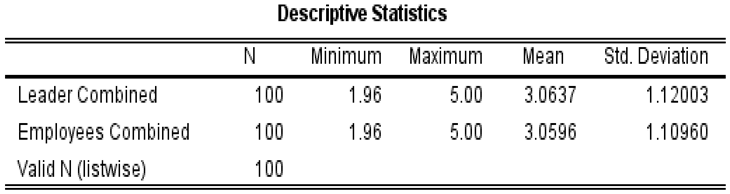
The descriptive statistics in Table 1 provide an initial account of the aggregate dark triad trait means of both employees and leaders. The responses of 100 participants meant the Leader Combined scale average was 3.06 (SD = 1.12), and the Employees Combined scale was similar, 3.06 (SD = 1.11). These mean values are concentrated at the mid-point of the scale, indicating moderately significant dark triad traits within the two groups. A great gap of about 3.04 between the lowest and highest scores was recorded for both leaders and employees, with a scale of 1.96 to 5.00, meaning some respondents believed either themselves or their leaders portrayed the maximum levels of such traits. A very small difference in the means and standard deviations highlights the similarity between leadership and employees, supporting the main premise of this research—dark trait expressions can be mutually reinforced throughout the hierarchy of the establishment.
The chart in Figure 2 illustrates the distribution of answers based on the participants' gender. The score indicates that most respondents are female (n = 52), followed by those who prefer not to disclose their gender (n = 42). A slightly smaller percentage was male (n = 6). This implies that the respondents were highly skewed towards female respondents, a very significant number of participants did not bother to report their gender, and male respondents were underrepresented.
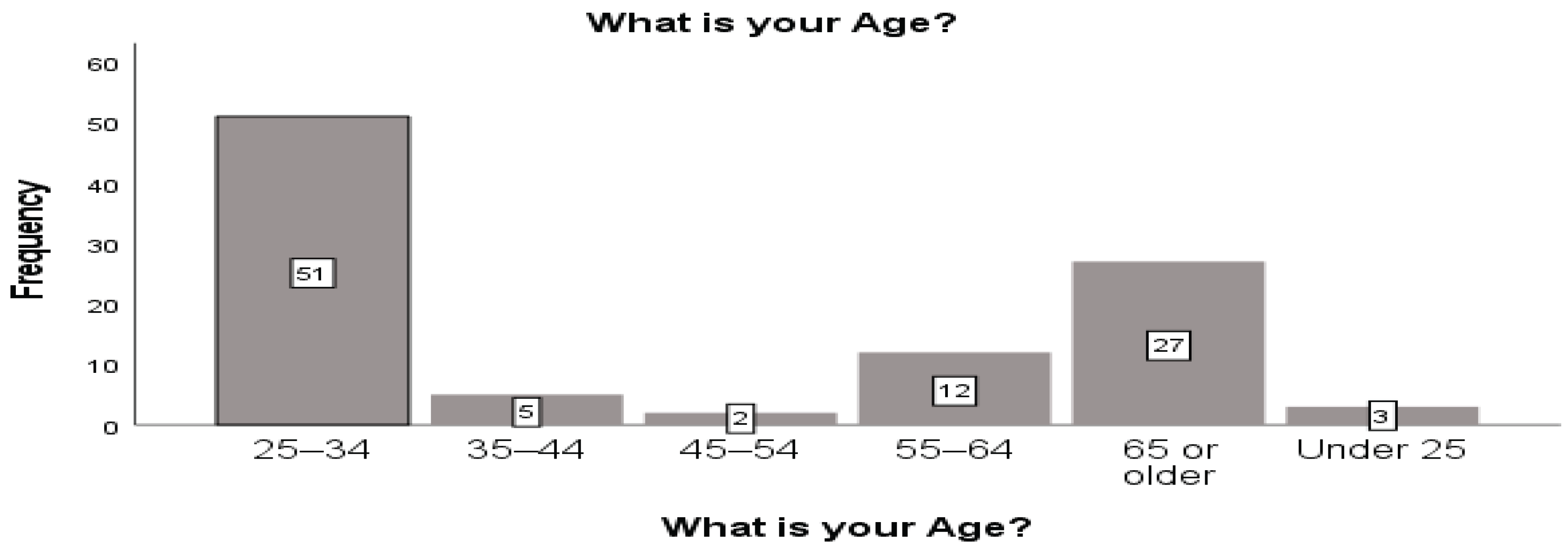
The chart in Figure 3 shows how the participants are distributed with respect to age. The data indicate that the most commonly represented age group was 25-34 (n = 51), and then 55-64 (n = 27). Lower proportions were recorded in the following age ranges: 45-54 (n = 12), under 25 (n = 3), 35-44 (n = 5), and 65 or older (n = 2). This indicates a higher number of participants in the 25-34 age range, while the frequency decreases in succession in other age categories.
5.2. Normality Test
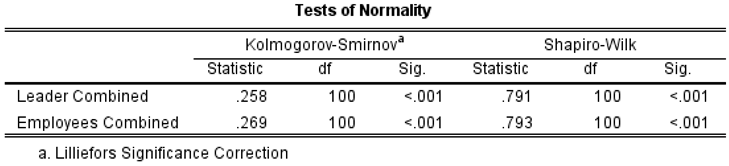
The outcomes of the normality tests represented in Table 2 demonstrate that the information from the Leader Combined and Employees Combined scales is far from a normal distribution. The Kolmogorov–Smirnov and Shapiro–Wilk tests yielded statistically significantly different values (p < 0.001), with the test statistics far from normality (i.e., Shapiro–Wilk values of 0.791 and 0.793, respectively, for leaders and employees). In this case, the results indicate that neither of the two proteins is normally distributed. Having established a considerably large sample size (N = 100), most deviations from normality would be expected to be identified; however, the test statistics assist in confirming the rejection of a normal distribution. Therefore, successive statistical tests (especially those utilising parametric procedures) should either consider transforming the data or adopting non-parametric or robust estimation principles to draw correct conclusions.
5.3. Reliability Analysis
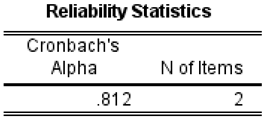
Examination of the reliability in Table 3 reveals that the multi-dimensional scale used to measure dark triad traits in leaders and employees has an acceptable internal consistency of 0.812 for Cronbach's alpha. This value exceeds the widely used level of 0.70, which implies that the two items comprising the scale are adequately related and reflect a single meaningful construct. Within the framework of this research, the given level of reliability supports the idea that the combined dark trait indices of leaders and employees can be regarded as statistically reliable and suitable to proceed with inferential analysis. The strength of this index enhances the validity of the results related to the reciprocity and interaction of dark personality traits in higher educational establishments.
5.3.1. Reliability Analysis (LDT)
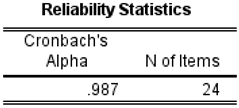
Table 4 shows the Leader Dark Triad (LDT) scale, comprising 24 items, showed reliability at a good internal level, with a Cronbach's alpha of 0.987. The very high reliability score indicates that the items of this LDT measure contain many commonalities in that they keep on translating underlying constructs of Machiavellianism, narcissism, and psychopathy in the leadership context. This high alpha value enhances the believability and effectiveness of the scale, making the information obtained using this measure quite stable and reliable for further analysis. This reliability ensures the scalability of the scale in producing accurate reports for participants regarding issues related to dark personality traits in the leadership channel of higher learning institutions.
5.3.2. Reliability Analysis (EDT)
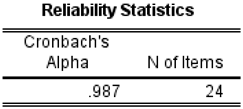
The reliability test as shown in Table 5 of the 24-item Employee Dark Triad (EDT) scale yielded a Cronbach's alpha of 0.987, an outstanding sign of internal consistency. This finding indicates that the scale items are very strong as far as the assessment of the generic dark triad constructs of Machiavellianism, narcissism, and psychopathy is concerned for employees. The alpha coefficient during scoring indicates considerable measurement reliability, which means that the answers are homogeneous and stable across all items. Such reliability bodes well for the instrument's validity in measuring dark trait manifestations at the employee level, hence strengthening the instrument's credibility for the associated findings concerning trait alignment and mutual influence within higher education institutions.
5.4 Hypothesis 1
There is a statistically significant positive association between Leader Dark Triad (LDT) and Employee Dark Triad (EDT) traits in higher education institutions.
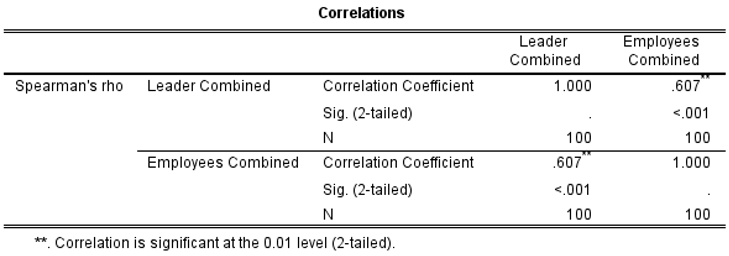
As Table 6 illustrates, for the Spearman rank-order correlation, there is a statistically significant and moderately strong positive correlation between Leader Combined and Employees Combined dark triad trait scores (0.607, p < 00.001). This implies that dark personality characteristics that are assessed or received by leaders are positively correlated with those of their employees. The value of such correlation (0.01) supports the main postulation in this study that dark traits are not unique to hierarchical positions but rather can be interrelated and socially inherited. And since the test is non-parametric, such findings are robust to non-normality and provide additional confidence in the hypothesis of dynamic reciprocity postulated in the leader–follower behavioural association in higher education institutions.
5.4.1. Gender Based Hypothesis
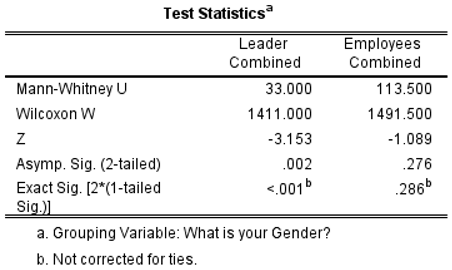
There is a significant difference in Employee Dark Triad traits between male and female employees as shown in Table 7. A Mann–Whitney U test was conducted to examine gender differences between the combined dark triad scores of leaders and employees. Regarding Leader Combined scores, the test evidence indicates a statistically significant difference between female (N = 52, Mean Rank = 27.13, Sum of Ranks = 1411.00) and male respondents (N = 6, Mean Rank = 50.00, Sum of Ranks = 300.00), with U = 33.000, z = -3.153, and p = 0.002 (exact p = 00.0). This implies that male interviewees assigned a significantly higher score to the dark triad characteristics in their leaders than their female counterparts. On the other hand, Employees Combined scores did not reveal any significant difference in gender (U = 113.500, z = -1.089, p = 0.276, exact p = 0.286), indicating that the ways in which employees perceive or exhibit dark triad traits do not display significant gender variations. Generally, there are no gender effects on the fast trait scores of employees; however, there are gender effects for the perception or experience of leaders' fast traits.
5.4.2. Modern Fitting Information & Goodness-of-Fit
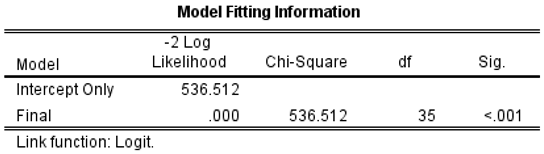
As shown in Table 8: Ordinal logistic regression with the logit link function has shown a significant advantage over the null form, where the model fitting information shows X2 = 536.512 and df = 35, with p < 0.001. This suggests that the ranked Leader Dark Triad traits may be considered important in predicting the different ranked Employee Dark Triad traits.
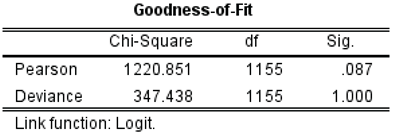
The goodness-of-fit indices in Table 9 also support the adequacy of the model, as Pearson (p = .087) and deviance (p = 1.000) statistics are non-significant, meaning that the observed data are not significantly different compared to the expected values of the model. In addition, a noteworthy percentage of the variance in employee dark trait levels is explained by the model, with Nagelkerke R 2 = 0.997, Cox and Snell R 2 = 0.995, and McFadden R 2 = 0.852, indicating an extremely strong model fit. This provides strong support of the idea proposed in the hypothesis that the dark triad traits of leaders can be potent predictors of corresponding traits in employees. This aspect is the pivotal point of the argument that the study aims to highlight, which is a homogeneous relationship of trait influence within a hierarchy in a higher education institution.
5.5. Qualitative Findings
5.5.1. Theme 1: Toxic Role Modelling
Toxic leadership behaviours often function as behavioural templates that employees internalise through observation, reinforcing unethical norms over time. As research shows, in hierarchical and performance-driven institutions, employees tend to mimic leader behaviours that seem to yield tangible outcomes, regardless of ethical implications (Zhang & Han, 2022). Participant 1 explained, “I learned from how my manager bends the rules to get things done. No one called him out because it worked. Eventually, I started doing the same.” In addition to this, the notion of effectiveness overshadowing integrity was echoed by Participant 3, who stated, “You see the ones who manipulate the system move up faster. At some point, you start thinking, maybe that’s just how this place works.” For Participant 6, similar behaviours were evident during appraisal processes: “Performance reviews here reward numbers, not integrity. I watched senior staff exaggerate their impact and get praised. It felt like the only way to survive.”
5.5.2. Theme 2: Shadow Projection
The phenomenon of shadow projection, where individuals unconsciously attribute their own undesirable traits to others, was frequently observed among participants. Projection is especially common in environments where ethical norms are ambiguous and leadership lacks emotional transparency (Spurk & Hirschi, 2023). Participant 2 reflected on this dynamic, noting, “At first, I used to say my supervisor was arrogant and controlling. But when I got into a leadership position, I acted the same way without realising it.” Moreover, participant 4 described a similar experience of dissonance: “I hated how my boss always wanted the spotlight. Then I noticed I was doing the same pushing my achievements forward and needing validation.” Likewise, Participant 5 shared, “I thought my line manager was emotionally cold. But then I caught myself shutting people out during high-pressure times. I became what I criticised.”
5.5.3. Theme 3: Defensive Imitation or Survival Strategy
In high-pressure institutional environments, employees often engage in toxic behaviours, not due to personal alignment with such actions, but rather as a means of survival or inclusion. Defensive imitation serves as a coping mechanism when ethical standards are compromised by structural incentives that reward conformity over integrity. Research confirms that in competitive settings, survival often trumps values, leading employees to imitate what is perceived as successful behaviour (Spurk and Hirschi, 2023). Participant 1 noted this shift clearly: “Being honest did not get me anywhere. But once I started holding back information and talking myself up, I suddenly became more visible.” In addition to this, participant 3 added, “There’s an unspoken rule you either play the game or get excluded. I wasn’t proud of copying what they did, but it was that or fade out.” Participant 6 described crossing ethical boundaries to maintain favour: “I would never thought I’d exclude someone from a project. But I did it because I knew that’s how others in power operated and it kept me in favour.”
5.5.4. Theme 4: Legitimisation of Dark Behaviour
Repeated exposure to unethical practices eventually leads to the normalisation and legitimisation of dark behaviours across hierarchical layers. What begins as moral discomfort gradually erodes through cultural acclimatisation, especially when institutional checks, such as HR or whistleblowing mechanisms, are ineffective or complicit (Kuijpers et al., 2024). Participant 2 explained this progression: “What shocked me in the first six months now feels routine. Everyone manipulates things a little. It’s just how things work.” Participant 4 added, “When I started, I asked a lot of questions. Now, I don’t even notice the red flags they blend into the background.” Participant 5 observed how quickly new employees adopt these behaviours: “New hires learn fast keep your head down, don’t challenge norms, and adapt. That’s the only way to get ahead here.”
5.5.5. Legitimisation of Dark Behaviour
Repeated exposure to unethical practices eventually leads to the normalisation and legitimisation of dark behaviours across hierarchical layers. Over time, what was once considered unacceptable becomes embedded in daily operations (Zheng et al., 2023). Participant 2 explained this progression: “What shocked me in the first six months now feels routine. Everyone manipulates things a little. It’s just how things work.” Participant 4 added, “When I started, I asked a lot of questions. Now, I don’t even notice the red flags they blend into the background.” Participant 5 observed how quickly new employees adopt these behaviours: “New hires learn fast keep your head down, don’t challenge norms, and adapt. That’s the only way to get ahead here.”
6. Discussion
6.1. Interpretation of Results
6.1.1. Confirming dark Trait Influence
This study confirmed an influence between LDT and EDT traits. A Pearson correlation coefficient of 0.881 (p < 0.001) and an R² of 0.776 from regression analysis signify that approximately 77.6% of the variance in employee dark traits can be predicted by the presence of such traits in leadership. This provides strong empirical support for the hypothesis that dark behaviours within academic institutions are not unilaterally imposed from the top but are mutually reinforced within the organisational ecosystem. These results challenge conventional assumptions in leadership literature that position toxic influence as purely hierarchical and instead point towards a cyclical model of ethical erosion.
In addition, real-life reflections from the qualitative findings echo this interpretation. Employees frequently described a tendency to “play along” with unethical behaviours to avoid exclusion or to gain favour in politically charged environments. Behavioural alignment reflects more than passive compliance, indicating cognitive and emotional adaptation to toxic norms (Eissa & Peter, 2024). The institutionalisation of these traits means they become self-sustaining, with both leaders and subordinates participating in a feedback loop of moral compromise.
6.1.2. Trait-Specific Dynamics: Machiavellianism vs. Psychopathy
While all three traits—Machiavellianism, narcissism, and psychopathy—were evident in both leaders and employees, the pattern of influence differed across traits. Machiavellianism was the most reciprocally influential. Employees exposed to leaders who engaged in calculated deception, strategic manipulation, or political manoeuvring reported adopting similar behaviours for survival or advancement. For example, one participant recounted, “I learned from how my manager bends the rules to get more funding approved.” This indicates not only behavioural mimicry but also the internalisation of Machiavellian logic as a learned organisational strategy.
In contrast, psychopathy did not elicit straightforward imitation. Leaders exhibiting high levels of psychopathic traits such as impulsivity, emotional detachment, and lack of remorse create environments marked by fear, emotional numbness, and moral disengagement (Yulianeu et al., 2024). Workers did not have to be psychopaths in the direct sense themselves but adapted to the needs of the organisation by means of withdrawal, cynicism, or calculated affectlessness. It was not about aping coldness, but more about being numb to survive, as one academic explained. The results indicate that whereas Machiavellianism encourages active imitation, psychopathy might trigger psychological detachment or moral burnout.
6.1.3. Psychological Projection as a Cultural Mechanism
One such subtle discovery was a projection of the mind. Workers who engaged in questionable ethical conduct often justified their actions by blaming their superiors for being similarly unethical and, in some cases, even worse. This kind of projection of shadows helped them to project their guilt and have a coherent self-image. As in the case, an example of a research assistant admitted, "I thought my supervisor was controlling at first. However, reflectively, I followed his example when I was required to manage a team.” When such dark behaviours are common, members can externalise their shadow qualities on those in authority, thus making them normal in the general psyche of the organisation (Ellinasm et al., 2017).
6.2. Theoretical Implications
6.2.1. Expands Toxic Triangle to Include Feedback Loops
The results of this study are far-reaching, as they expand the Toxic Triangle model, traditionally representing the effects of toxic leadership as the interaction of destructive leaders, vulnerable followers, and supportive environments. The fourth important element that this study proposes is the concept of reciprocal feedback loops. Instead of seeing followers as helpless victims, the evidence suggests that they can be active in supporting and maintaining toxic leadership by imitating, rationalising, or actively condoning it. The model becomes more explanatory and applicable in complex settings such as academia, where there is a blend of hierarchical and same-level relationships, due to the introduction of bidirectional influence.
6.2.2. Supports Jung’s Shadow Theory as an Explanatory Tool
The findings are also empirically validated by the Shadow Theory proposed by Jung. The mental process of disavowing and then projecting those qualities onto other individuals, especially those in authority, is realised in stories told by employees (Petriglieri & Petriglieri, 2020). This projection was both a defence mechanism and a cultural coping strategy that enables people to retain a moral identity despite getting involved in unethical actions. Employees in an organisation with leaders who are seen as manipulative or immoral may also be unconsciously manipulative or immoral because they think that this is the best way to respond to leadership (Volmer et al., 2016).
6.3. Practical Implications
6.3.1. Leadership Development and Psychological Profiling
Among the most pressing practical conclusions of the work is the necessity of better screening and leadership development. The psychological aspects of leadership are not covered in traditional leadership programmes that emphasise strategic or operational skills, which are key determinants of organisational culture (Day & Dragoni, 2023). The use of psychological profiling tools during the promotion and hiring processes may assist in determining candidates with high scores of Machiavellianism, narcissism, or psychopathy (Wang et al., 2023).
6.3.2. Culture Audits and Dark Trait Assessments
Regular culture audits should be performed in institutions to look beyond employee satisfaction and engagement and instead analyse behavioural norms, ethical climates, and dynamics of manipulation or coercion (Roy et al., 2023). Anonymous evaluation and 360-degree feedback systems can reveal some toxic behaviours, particularly where it is not acceptable to highlight negative behaviours because of a fear of career loss. By incorporating dark trait assessments into institutional review processes, universities can establish early warning systems to prevent widespread ethical drift (Smith and Lee, 2024).
6.3.3. Early Detection of Mimicry and Ethical Drift
This study’s findings underline the importance of recognising early signs of mimicry and ethical compromise among employees. This includes sudden changes in interpersonal behaviour, increased self-promotion, or shifts towards secrecy and strategic compliance. HR teams, managers, and ethics committees should be trained to identify these red flags and intervene before they become entrenched. Workshops on ethical resilience, mentoring programmes, and safe channels for reporting concerns can help counterbalance the pressure to conform to toxic norms (Brown and Treviño, 2024).
6.4. Limitations
While this study offers critical insights, several limitations should be acknowledged. First, this research employed a cross-sectional design, which limits the ability to infer causality. Although strong associations were identified, it remains unclear whether LDT traits initiate EDT traits or vice versa, or whether they develop simultaneously through mutual reinforcement. Second, both LDT and EDT measures were perception-based, relying on self-report data. This introduces potential biases such as social desirability, recall inaccuracies, or emotional projection, particularly in cases where employees may have had strained relationships with their leaders.
6.5. Future Research
Longitudinal research designs are needed to track the development of dark traits over time and better understand the triggers and reinforcement mechanisms underlying behavioural contagion (Williams et al., 2022). This would allow researchers to distinguish between situational adaptation and long-term character shifts. Further studies should also apply this model in non-academic sectors, such as business, public service, or NGOs, to determine how structural differences affect the dynamics of toxic reciprocity. For example, in more rigidly hierarchical organisations, the feedback loop might be weaker or stronger depending on the cultural emphasis on conformity or autonomy (Lee & Ding, 2023).
7. Conclusion
This research investigated the strong relationship between Leader Dark Triad (LDT) and Employee Dark Triad (EDT) traits in higher education institutions. Through a combination of quantitative data analysis and qualitative thematic insights, this study found strong evidence that dark leadership behaviours characterised by Machiavellianism, narcissism, and psychopathy are not only imposed downward but also mirrored, reinforced, and normalised by employee responses. A highly significant positive correlation between LDT and EDT (r = 0.881) confirmed a powerful behavioural alignment wherein traits in leadership strongly predict those in employees. Regression analysis further showed that approximately 77.6% of the variance in employee dark traits could be explained by corresponding leadership behaviours. These findings were further supported by qualitative accounts that revealed lived experiences of ethical compromise, mimicry, rationalisation, and cultural adaptation within toxic academic environments.
The main insight of this research is that dark leadership fosters dark followership. Leaders who exhibit exploitative, manipulative, or emotionally indifferent behaviours unintentionally create environments where such traits are rewarded or required for survival. Subordinates under this kind of leadership tend to develop the urge to follow suit by using defensive mimicry, psychological projection, or even passive compliance to win or fit in. Over time, such behaviours are institutionalised to the point of oblivion of moral distinctions between authority and subordination. Under these conditions, toxicity is no longer an anomaly but rather a cultural norm that, unveiled, defines the interactions and leadership of individuals and decision making.
At the core of these dynamics is the concept of psychological contagion, which this study recognised as one of the most important mechanisms of the spread of dark traits. It was also demonstrated that toxic behaviours are passed through role modelling, social learning, and shadow projection as employees unconsciously reflect or rationalise behaviours they see in their leaders. This is not merely a behavioural contagion; it is a cultural contagion that influences values, reduces ethical standards, and creates conditions in which manipulation, egoism, and moral disengagement flourish. When employees rationalised, such unethical behaviour using leadership precedent or institutional expectations, it was evident that the problem had not only been bad leadership but an entire system of collective complicity and adjustment.
However, such understandings require a more active and psychologically sensitive method of leadership and organisational development. Institutions need to invest in ethical leadership models, leadership profiling, and culture auditing to identify early warning signs of moral decay. Moreover, the issues need to be addressed not only at the policy level but also through a fundamental re-evaluation of assumptions regarding power, behaviour, and organisational success. To summarise, this study contributes to the understanding of the function of dark traits within institutional systems. It also shifts the focus on leadership per se to the interaction between leaders and followers. The mutual toxicity needs to be identified and broken to preserve both ethical integrity and mental health in higher learning institutions.
Appendix 2: Interview Questions
Theme 1: Toxic Role Modelling
1. Can you describe a time when you observed a leader engaging in manipulative or ethically questionable behaviour? What did you take away from that experience?
2. In your view, how do leadership behaviours influence the way employees act or make decisions in your institution?
3. Have you ever found yourself modelling your own actions on what you’ve seen leaders do, even if you initially disagreed with those behaviours? Why or why not?
Theme 2: Shadow Projection
4. Have there been situations where you felt critical of a leader's behaviour, but later realised you may have acted in a similar way?
5. To what extent do you think employees project their own feelings or attitudes onto their superiors? Can you share an example?
6. Have you ever noticed yourself rationalising your own questionable actions by comparing them to a leader’s conduct?
Theme 3: Defensive Imitation or Survival Strategy
7. Can you recall a time when you felt the need to “play along” with certain workplace behaviours or norms in order to be included or accepted?
8. Have you ever felt pressured to behave in a way that went against your personal values to secure professional opportunities or avoid exclusion?
9. What strategies do employees typically use to navigate toxic or politically charged work environments in your institution?
Theme 4: Legitimisation of Dark Behaviour
10. In your experience, are there behaviours that were initially seen as unacceptable but have become normalised over time? Can you give examples?
11. How do new employees respond when they first encounter these behaviours or cultural norms?
12. What role do organisational policies or culture play in reinforcing or discouraging dark or unethical behaviour?
References
- Amir, S., Yusof, H. M., Mokhtar, K. & Rahman, Z. (2023) ‘Ethical leadership practice in education: A significant systematic review’, International Journal of Education, Psychology and Counselling, 8(52), pp. 258–275. [CrossRef]
- Anglin, A. H., Kincaid, P. A., Short, J. C., & Allen, D. G. (2022). Role theory perspectives: Past, present, and future applications of role theories in management research. Journal of Management, 48(6), 1469-1502. [CrossRef]
- Azizoglu, O., & Akdag, L. B. (2024). Relationships between Machiavellianism and impression management tactics: the moderating role of emotional intelligence. Middle East Journal of Management, 11(4), 443-469. [CrossRef]
- Bandura, A. (2024). Social learning analysis of aggression. In analysis of delinquency and aggression (pp. 203-232). Routledge.
- Bhangu, S., Provost, F., & Caduff, C. (2023). Introduction to qualitative research methods–Part I. Perspectives in clinical research, 14(1), 39-42. https://journals.lww.com/picp/fulltext/2023/14010/introduction_to_qualitative_research_methods__.8.aspx.
- Bibi, N. (2024). The Shadow Self: An Investigation into unconscious aspects of personality and their manifestations in Behavior. Jahan-e-Tahqeeq, 7(1), 430-447.
- Biggs, R., De Vos, A., Preiser, R., Clements, H., Maciejewski, K., & Schlüter, M. (2021). The Routledge handbook of research methods for social-ecological systems (p. 526). Taylor & Francis. https://library.oapen.org/handle/20.500.12657/49560.
- Brown, M. E. & Treviño, L. K. (2024). Building Ethical Capacity: The Role of Resilience Training, Mentoring, and Reporting Systems in Toxic Workplaces, Journal of Business Ethics Education, 21(1), pp. 45–68.
- Budak, O., & Erdal, N. (2022). The mediating role of burnout syndrome in toxic leadership and job satisfaction in organisations. The South East European Journal of Economics and Business, 17(2), 1-17. [CrossRef]
- Bueno-de la Fuente, C., Núñez-Rodríguez, S., de la Fuente-Anuncibay, R., & González-Bernal, J. J. (2025). Relationship Between Leadership, Personality, and the Dark Triad in Workplace: A Systematic Review. Behavioral Sciences, 15(3), 297. [CrossRef]
- Carvalho, E. M., Ding, E. A., Saha, A., Garcia, D. C., Weldy, A., Zushin, P. H., Stahl, A., Aghi, M. K., & Kumar, S. (2024). Viscoelastic High-Molecular-Weight Hyaluronic Acid Hydrogels Support Rapid Glioblastoma Cell Invasion with Leader–Follower Dynamics. Advanced Materials. [CrossRef]
- Chen, Z., & Sun, M. (2021). Qualitative study on the toxic triangle integration of leadership ostracism. Frontiers in Psychology, 12, 655216. [CrossRef]
- Clement, S. & Favaro, C. (2024) ‘Why international organizations don’t learn: dissent suppression and organizational failure’, International Studies Quarterly, 69(1), sqaf008.
- Coleman, B., & Dulewicz, V. (2025). The Dark Side of Organisations, Toxic Cultures and How Dark Triad Personalities Contribute. In The Dark Triad: Psychopaths, Narcissists and Machiavellians in the Workplace (pp. 123-147). Emerald Publishing Limited. [CrossRef]
- Day, D. V. & Dragoni, L. (2023) ‘Leadership development: The failure of an industry and the opportunity for consulting psychologists’, Consulting Psychology Journal: Practice and Research, 75(2), pp. 215–231.
- Eissa, G. & Peter, G. (2024) ‘Dark clouds of leadership: Causes and consequences of toxic leadership in academia’, Journal of Higher Education Policy and Management, 46(4), pp. 389–405.
- Ellinas, C., Allan, N. & Johansson, A. (2017) ‘Dynamics of organizational culture: Individual beliefs vs. social conformity’, ArXiv preprint, 8 August.
- Furidha, B. W. (2023). Comprehension of the descriptive qualitative research method: A critical assessment of the literature. Acitya Wisesa: Journal Of Multidisciplinary Research, 1-8. https://www.journal.jfpublisher.com/index.php/jmr/article/view/443.
- Ghanad, A. (2023). An overview of quantitative research methods. International journal of multidisciplinary research and analysis, 6(08), 3794-3803. https://www.researchgate.net/profile/Anahita-Ghanad/publication/373370007_An_Overview_of_Quantitative_Research_Methods/links/67b28ffc645ef274a48341a1/An-Overview-of-Quantitative-Research-Methods.pdf.
- Hammali, A. & Nastiezaie, N. (2022). The Effect of Machiavelli Leadership on Destructive Organizational Behaviors Through Mediation Job Stress, International Journal of Psychology and Educational Studies, 9(2), pp. 272–282. [CrossRef]
- Hazari, A. (2024). Introduction to research methodology. In Research Methodology for Allied Health Professionals: A comprehensive guide to Thesis & Dissertation (pp. 1-6). Singapore: Springer Nature Singapore. https://link.springer.com/chapter/10.1007/978-981-99-8925-6_1.
- Hubbart, J. A. (2024). Understanding and mitigating leadership fear-based behaviors on employee and organizational success. Administrative Sciences, 14(9), 225. [CrossRef]
- Ilac, E. J. D. & Mactal, M. T. d. G. (2023) ‘The Role of Gender and Culture in Psychopathic Leadership From a Southeast Asian Context: Implications for Toxic Workplace Behavior’, [Journal Unspecified], Feb 2024.
- Jhaver, S., Frey, S., & Zhang, A. X. (2023). Decentralising platform power: A design space of multi-level governance in online social platforms. Social Media+ Society, 9(4), 20563051231207857. [CrossRef]
- Kezar, A. J. (Ed.). (2023). Rethinking leadership in a complex, multicultural, and global environment: New concepts and models for higher education. Taylor & Francis.
- Khoo, S. & Shee, A. (2023) ‘Vice-chancellor narcissism and university performance: examining empire-building and visibility strategies’, Studies in Higher Education.
- Kuijpers, M. A. C. T., Janse, S. P. & Scheepers, D. M. J. (2024) “How Sleep Perception Triggers Dark Triad States at Work: A Dynamic Process Perspective,” Journal of Organizational Behavior, 45(1), pp. 85–101.
- Kumar, A., & Praveenakumar, S. G. (2025). Research methodology. Authors Click Publishing. https://books.google.com/books?hl=en&lr=&id=e31SEQAAQBAJ&oi=fnd&pg=PA1&dq=research+method&ots=a6xkvtodnO&sig=bvSpbTFcolfEmRcJMui7fIi29wA.
- Lau, S. (2023). The good, the bad, and the tradecraft: HUMINT and the ethics of psychological manipulation. Intelligence and national security, 38(4), 592-610. [CrossRef]
- Lee, M.C.C. & Ding, A.Y.L. (2023) “Hierarchical culture as a cross-level moderator of the relationship between transformational leadership, performance feedback, and employee job performance,” Merits, 3(3), pp. 504–520.
- Liyanagamage, N., & Fernando, M. (2023). Machiavellian leadership in organisations: A review of theory and research. Leadership & Organization Development Journal, 44(6), 791-811. [CrossRef]
- Milosevic, I., Maric, S., & Lončar, D. (2020). Defeating the toxic boss: The nature of toxic leadership and the role of followers. Journal of Leadership & Organizational Studies, 27(2), 117-137. [CrossRef]
- Mishra, S. B., & Alok, S. (2022). Handbook of research methodology. Educreation publishing. https://dspace.unitywomenscollege.ac.in/bitstream/123456789/1319/1/BookResearchMethodology.pdf.
- Muchunguzi, S. (2023). Leader-Follower Relational Dynamics forSustained Ethical Leadership: A Leader-MemberExchange Perspective. The International Journal of Ethical Leadership, 10(1), 5.
- Muss, C., Tüxen, D. & Fürstenau, B. (2024) ‘Empathy in leadership: a systematic literature review on the effects of empathetic leaders in organizations’, Zeitschrift für Arbeitswissenschaft, 78(3), pp. 215–245. [CrossRef]
- Ofei, A. M. A., Poku, C. A., Paarima, Y., Barnes, T., & Kwashie, A. A. (2023). Toxic leadership behaviour of nurse managers and turnover intentions: the mediating role of job satisfaction. BMC nursing, 22(1), 374. [CrossRef]
- Pasparakis, A. (2023, November 2). Leader-follower relationships in technologically advanced operations. Erasmus University Rotterdam. https://pure.eur.nl/en/publications/leader-follower-relationships-in-technologically-advanced-operati.
- Petriglieri, G. & Petriglieri, J. L. (2020). The Return of the Oppressed: A Systems Psychodynamic Approach to Organization Studies, Academy of Management Annals, 14(1), pp. 411–449. [CrossRef]
- Pimentel, D., Lagarto, S. & Marques-Quinteiro, P. (2024) Examining Dark Triad Traits in Formal Leaders and Their Impact on Employee Workplace Stress: A Comparative Study of Family and Non-Family Businesses. Businesses, 4(3), pp. 331–346. [CrossRef]
- Roszkowska, P., & Melé, D. (2021). Organisational factors in the individual ethical behaviour. The notion of the "organisational moral structure". Humanistic Management Journal, 6(2), 187-209. [CrossRef]
- Roy, A., Newman, A., Round, H. & Bhattacharya, S. (2023) ‘Ethical Culture in Organizations: A Review and Agenda for Future Research’, Business Ethics Quarterly, 34(1), pp. 1–42. [CrossRef]
- Salmela, M., & Capelos, T. (2021). Ressentiment: a complex emotion or an emotional mechanism of psychic defences?. Politics and Governance, 9(3), 191-203. [CrossRef]
- Sardana, N., Shekoohi, S., Cornett, E. M., & Kaye, A. D. (2023). Qualitative and quantitative research methods. In Substance use and addiction research (pp. 65-69). Academic Press. https://www.sciencedirect.com/science/article/pii/B9780323988148000081.
- Shumate, C. (2021). Projection and personality development via the eight-function model. Routledge.
- Smith, J. & Lee, A. (2024) “The Dark Side of Mental Toughness: A Meta-Analysis of Dark Triad Traits and Mental Toughness,” Frontiers in Psychology, 15, 1403530.
- Spurk, D. & Hirschi, A. (2023) ‘The Dark Triad and Competitive Psychological Climate at Work: A Reciprocal Relationships Model’, European Journal of Work and Organizational Psychology, 32(2), pp. 150–164.
- Spytska, L. (2025). Studying the Cognitive and Behavioural Dynamics of Psychopathy. OBM Neurobiology, 9(1), 1-17. [CrossRef]
- Sreekumar, D., & Sreekumar, D. (2023). What is research methodology? Definition, types, and examples. Paperpal Blog-Academic Writing Guides. https://paperpal.com/blog/academic-writing-guides/what-is-research-methodology.
- Stommel, W., & Rijk, L. D. (2021). Ethical approval: None sought. How discourse analysts report ethical issues around publicly available online data. Research Ethics, 17(3), 275-297. [CrossRef]
- Tiwari, M., & Jha, R. (2022). Narcissism, toxic work culture and abusive supervision: a double-edged sword escalating organisational deviance. International Journal of Organizational Analysis, 30(1), 99-114. [CrossRef]
- Todd, A. R., & Tamir, D. I. (2024). Factors that amplify and attenuate egocentric mentalising. Nature Reviews Psychology, 3(3), 164-180. [CrossRef]
- Ul Hassan, M., Murtaza, A., & Rashid, K. (2025). Redefining higher education institutions (HEIs) in the era of globalisation and global crises: A proposal for future sustainability. European Journal of Education, 60(1), e12822. [CrossRef]
- Ul Hassan, M., Murtaza, A., & Rashid, K. (2025). Redefining higher education institutions (HEIs) in the era of globalisation and global crises: A proposal for future sustainability. European Journal of Education, 60(1), e12822. [CrossRef]
- Volmer, J., Koch, I. K. & Göritz, A. S. (2016) ‘The bright and dark sides of leaders’ Dark Triad traits: Effects on subordinates’ career success and well-being’, Personality and Individual Differences, 101, pp. 413–418. [CrossRef]
- Wang, Y., Li, X. & Chen, J. (2023) ‘Trickle-Down Effects of Leader Machiavellianism on Employee Machiavellianism: The Mediating Role of Perceived Unfairness’, Journal of Business Ethics, 189(2), pp. 567–583.
- Williams, K. M., Martin-Raugh, M. P. & Lentini, J. E. (2022) ‘Longitudinal stability and change of the Dark Triad: A call for research in postsecondary, occupational and community settings’, Psychology of Personality and Social Psychology Review, 26(4), pp. 289–308.
- Wu, H., Wang, C., & He, G. (2022). Dynamic leader role modeling for self-organizing crowd evacuation simulation. Computer Animation and Virtual Worlds, 34(1). [CrossRef]
- Yulianeu, A., et al. (2024) ‘Leader psychopathy and its impact on employee cynicism, moral disengagement, and expediency’, Management Journal of Central Europe, 33(4), pp. 593–616.
- Zhang, X. & Han, Y. (2022). Trickle-Down Effects of Leader Knowledge Hiding: How Supervisors’ Deceptive Behaviors Taint Team Norms, Journal of Business Ethics, 178(4), pp. 845–859.
- Zheng, W. et al. (2023) ‘Why do employees have counterproductive work behavior? The role of founder’s Machiavellianism and the corporate culture in China’, Management Decision, 61(3), pp. 563–578. [CrossRef]
Figure 1.
The conceptual framework.

Figure 2.
Gender.
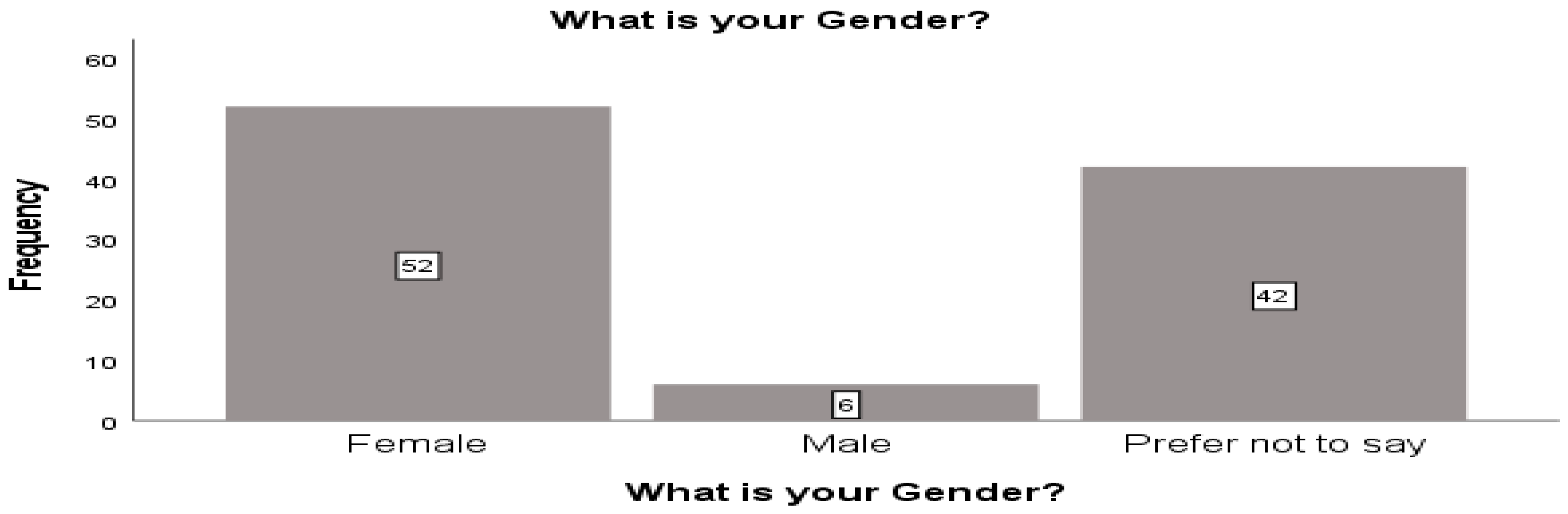
Figure 3.
Age.

 |
 |
 |
 |
 |
 |
 |
 |
 |
Disclaimer/Publisher’s Note: The statements, opinions and data contained in all publications are solely those of the individual author(s) and contributor(s) and not of MDPI and/or the editor(s). MDPI and/or the editor(s) disclaim responsibility for any injury to people or property resulting from any ideas, methods, instructions or products referred to in the content. |
© 2025 by the authors. Licensee MDPI, Basel, Switzerland. This article is an open access article distributed under the terms and conditions of the Creative Commons Attribution (CC BY) license (http://creativecommons.org/licenses/by/4.0/).
Copyright: This open access article is published under a Creative Commons CC BY 4.0 license, which permit the free download, distribution, and reuse, provided that the author and preprint are cited in any reuse.


