

Submitted:
04 August 2025
Posted:
05 August 2025
You are already at the latest version
Abstract
We present a detailed theoretical and experimental study of cascaded double resonance long period gratings (C DR LPGs) fabricated for sensing applications. The matrix description of cascaded LPGs is presented and several important particular cases related to the regular and turn around point (TAP) gratings are considered. A pulsed CO2 laser was used to fabricate single and cascaded DR LPGs in a photosensitive optical fiber. The responses of the fabricated C DR LPGs to surrounding refractive index (SRI) temperature as well to longitudinal strain have been studied. A statistical comparison of the SRI sensitivities of ordinary and cascaded DR LPGs is presented to outline the capabilities and advantages of cascaded DR gratings. It was experimentally established that the temperature dependence of the wavelength split at TAP follows a logarithmic dependence and the sensitivity to temperature is inversely proportional to the temperature itself. We evaluate the temperature stability needed for SRI based sensing application and the importance of fine-tuning to the operational point slightly after the TAP to ensure a maximum sensitivity of the sensor.
Keywords:
1. Introduction
2. Matrix Description of LPGs and Cascaded LPGs
2.1. Coupling Matrices
2.1.1. A Single LPG
2.1.2. A Cascaded LPG (C LPG)
2.2. Particular Cases
2.2.1. Non-Uniform and Uniform Structures
2.2.2. Effect of Dispersion
- A)
- Linear dependence
- B)
- Non-linear dependence and double resonance LPGs
3. Experimental Part
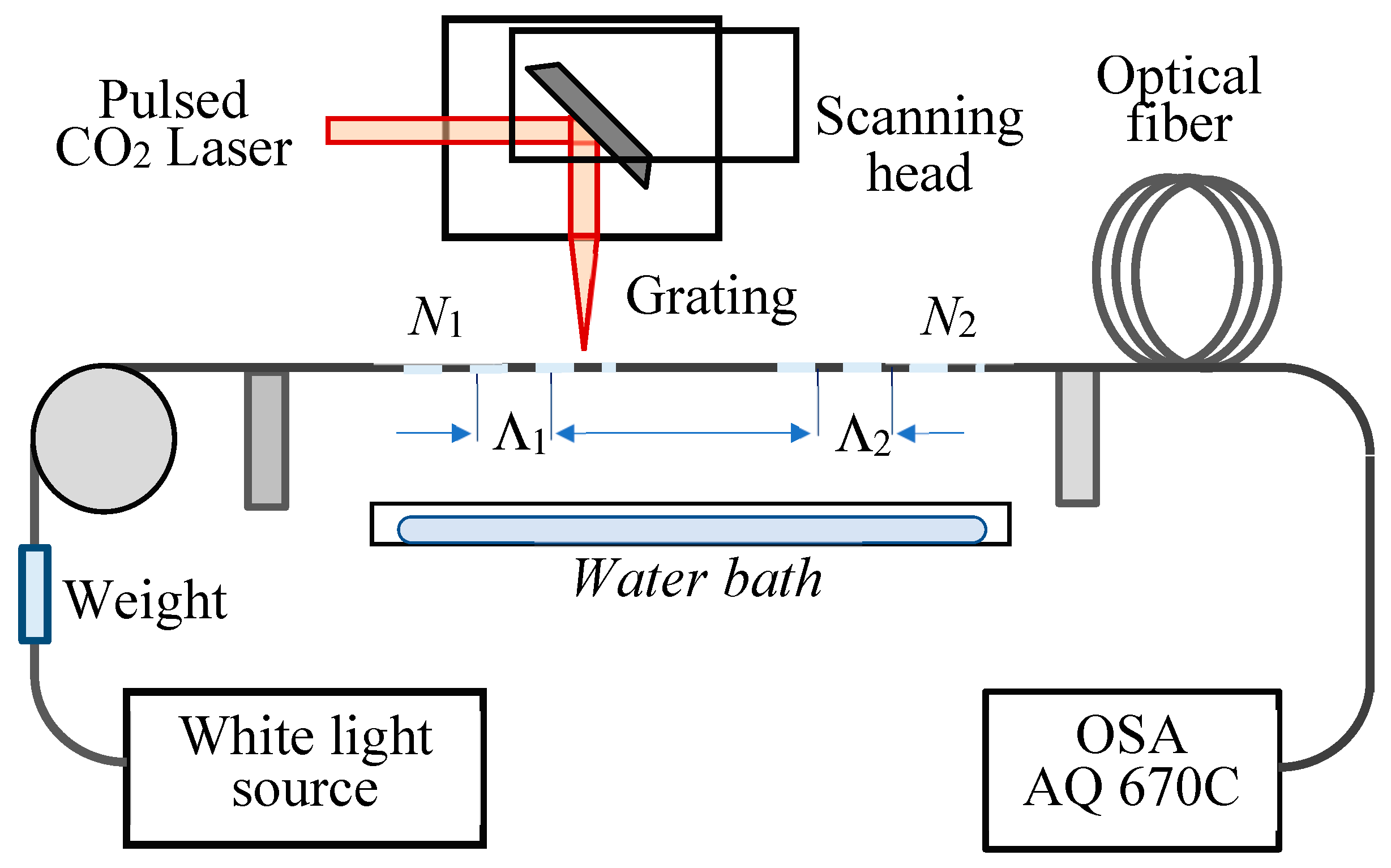
3.1. Experimental Setup
3.2. CO2 Laser Writing Process
3.2.1. Fabrication Procedure
- i)
- A section of about 10 cm of photosensitive PS1250/1500 fiber was cleaved, spliced in between SMF-28 lead-in/lead-out fibers and stripped bare over the whole length.
- ii)
- The fiber was placed and fixed to one of the holders and kept straight with a small weight of 5g over a pulley at the other end.
- iii)
- The particular grating pattern was drawn using the built-in software.
- iv)
- The changes of the spectrum were controlled during the writing process which was carried out as consecutive scans if a single scan at a particular relative power was not sufficient to achieve the desired results.
- v)
- After each scan the LPG was immersed in the water bath to check if the LPG splits in water.
- vi)
- The process continues with the next scan until the LPG spectrum splits in water.
3.2.2. Fine Tuning Procedure
- i)
- The spectrum of the DR LPG is measured in water.
- ii)
- The LPGs is then lifted from the U-shaped water container and is moved to a similar container filled with HF acid.
- iii)
- The grating is kept in the acid and the spectrum is monitored continuously.
- iv)
- As the spectrum approaches the TAP, the grating is returned to the water bath upon the TECs.
- v)
- The temperature of the etched grating is varied to establish at what temperature exactly the grating splits.
4. Results
4.1. Postfabrication Tuning
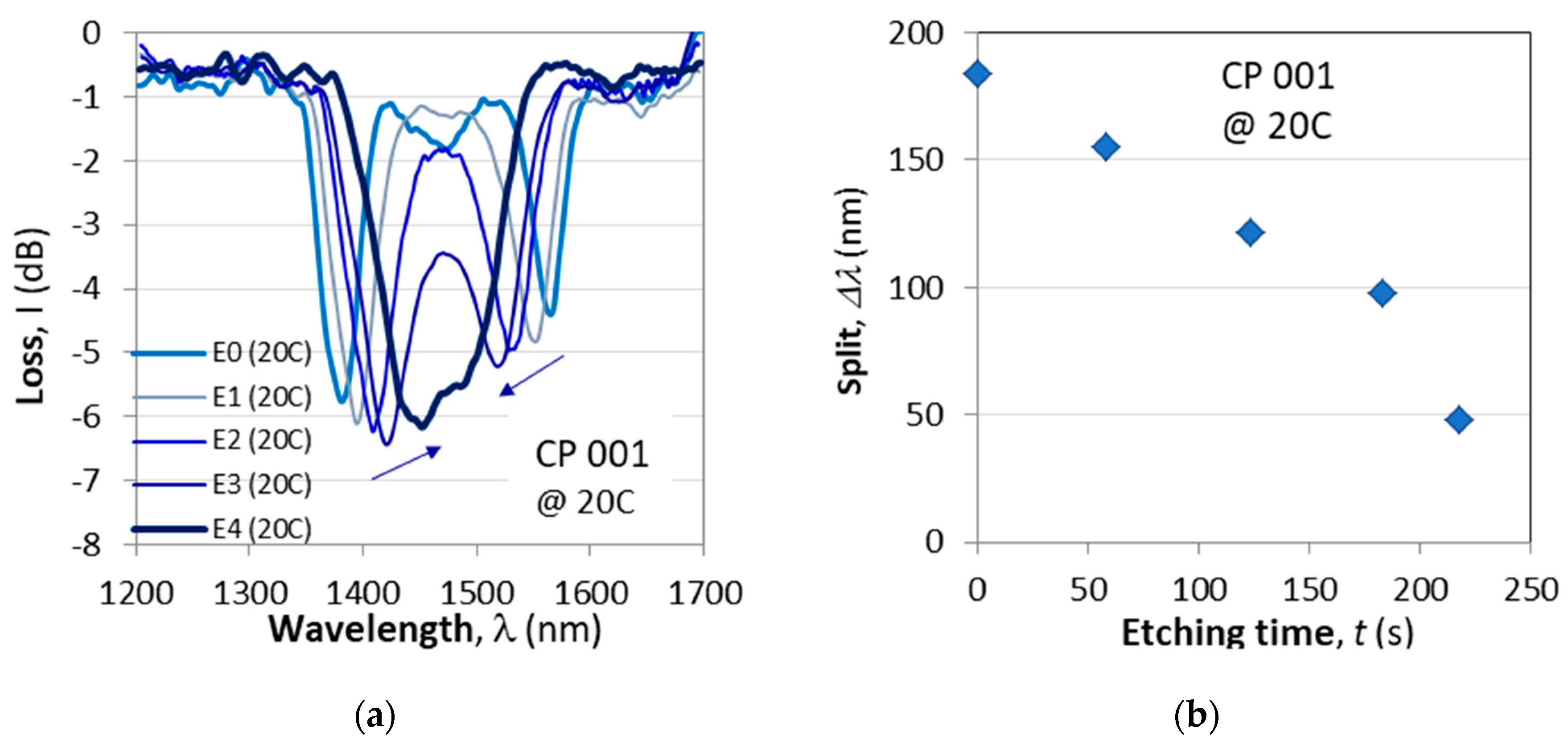
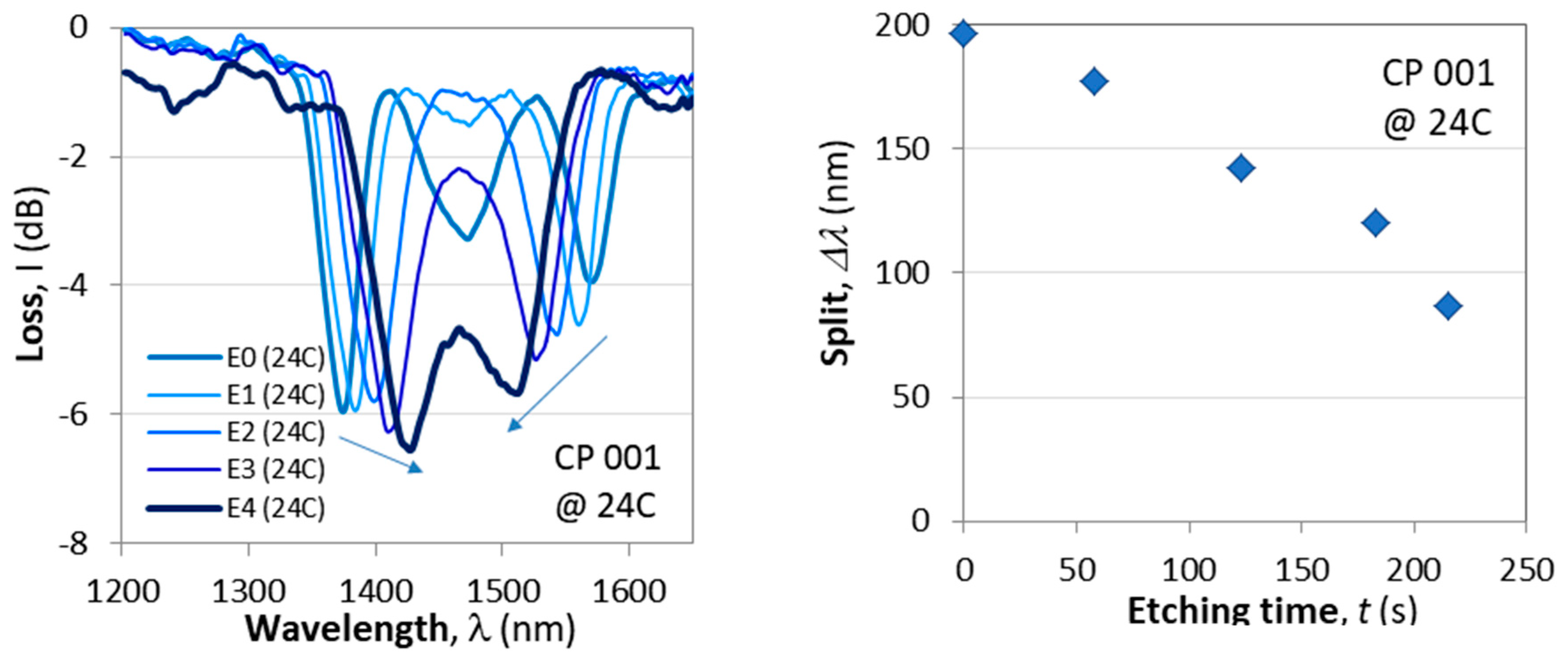
4.1.1. Etching to TAP
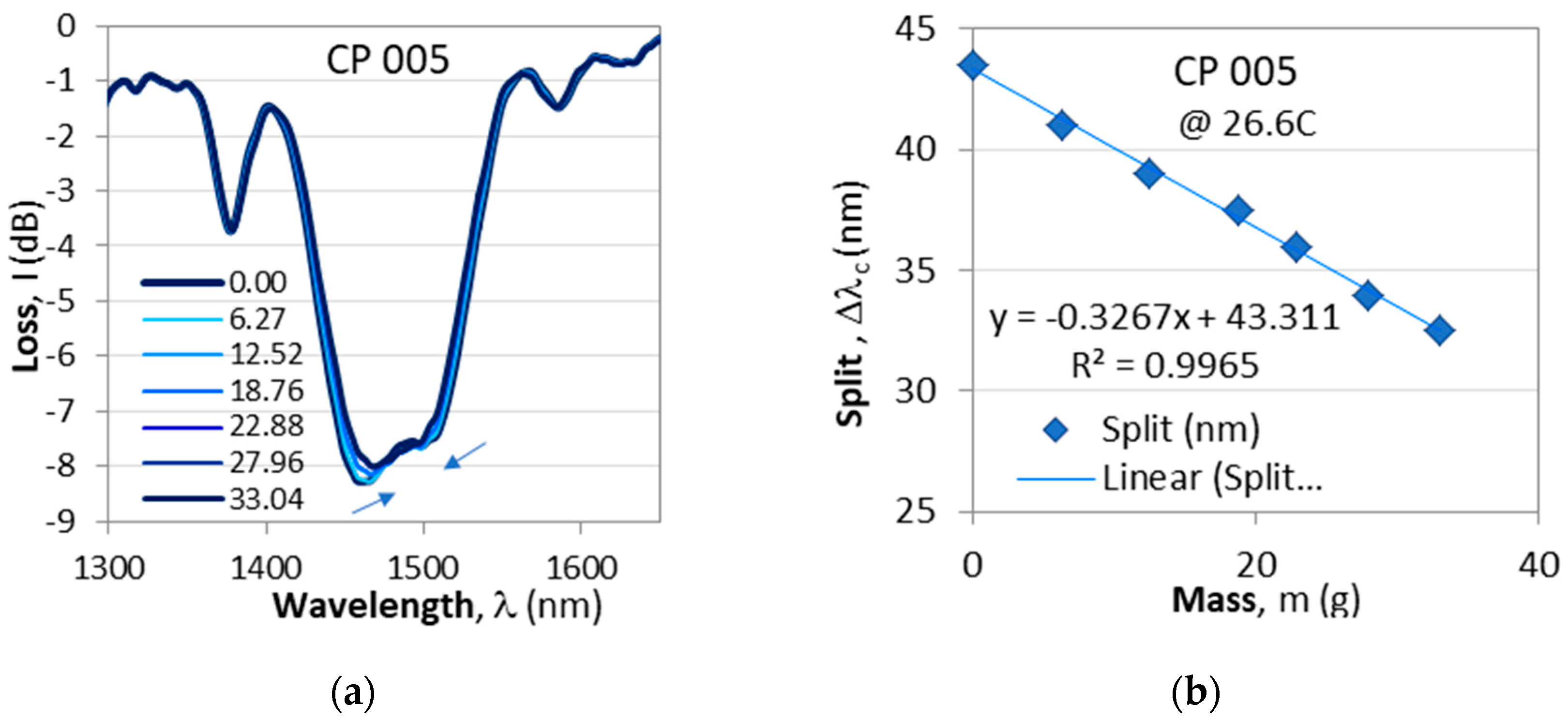
4.1.2. Fine Tuning to TAP by Means of Longitudinal Strain
4.2. Responses and Sensitivities to the Measurands
4.2.1. Responses and Sensitivities to SRI
- i)
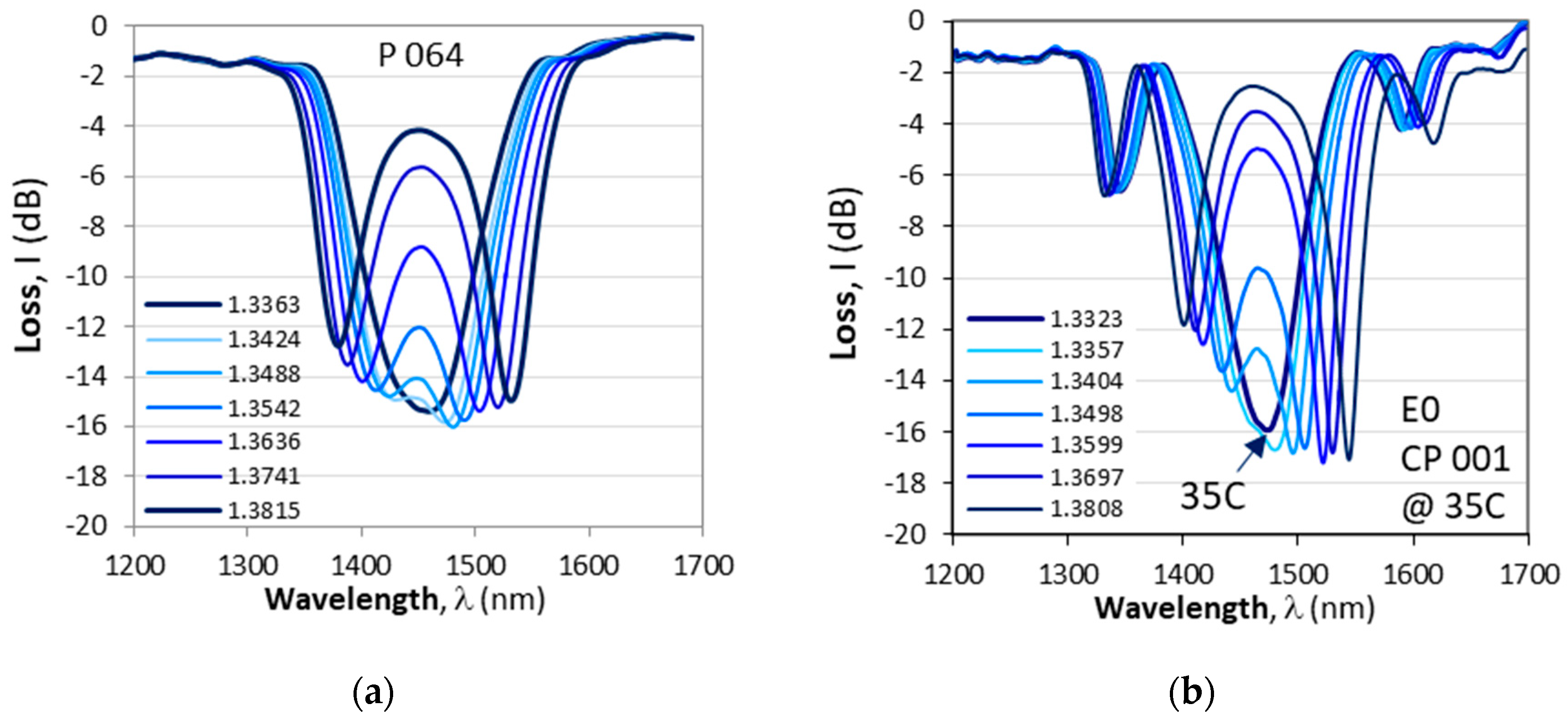
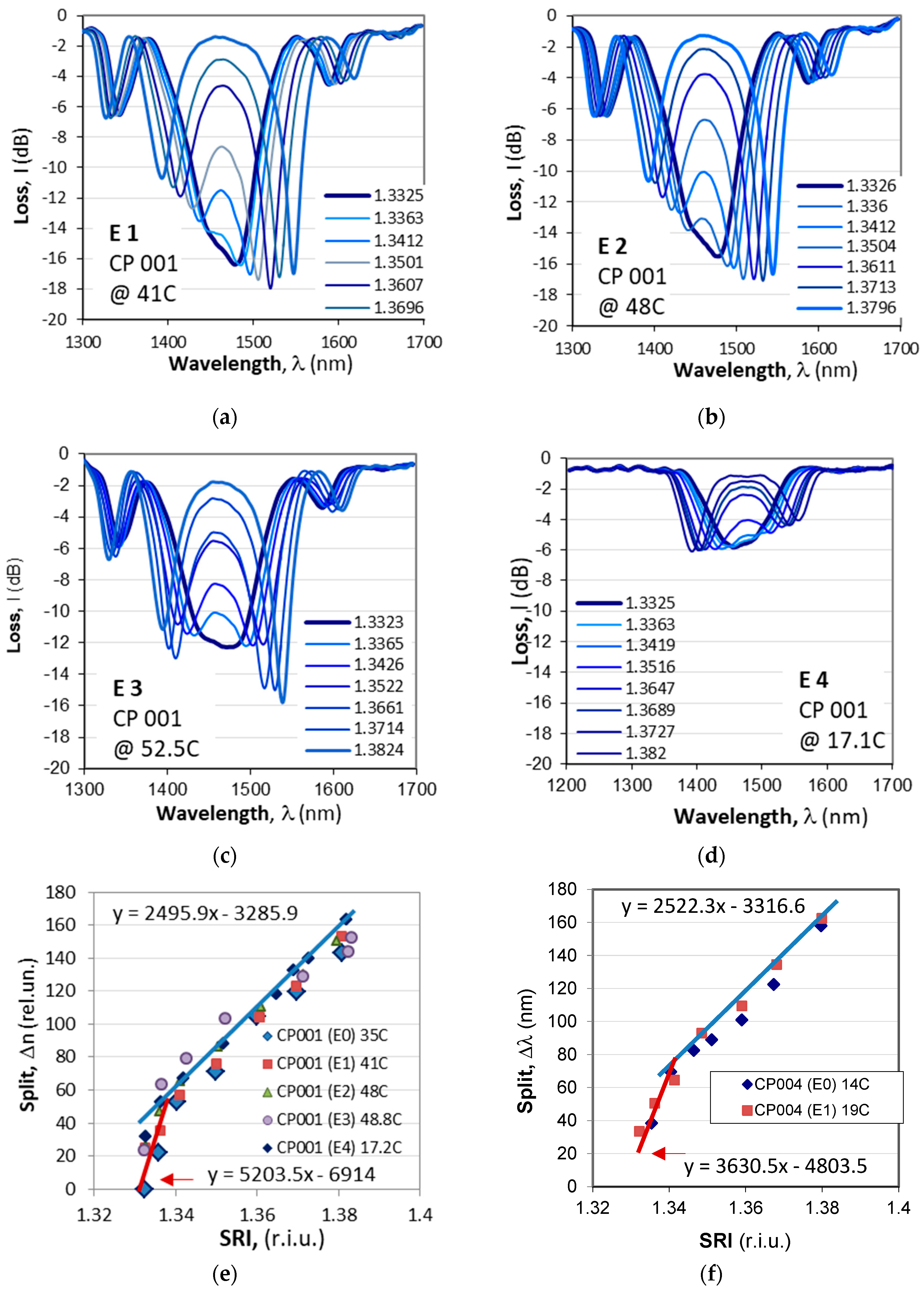
- The cascaded DR LPGs (CP 001) is narrower Δλ0 = 171 nm (E0)vs. Δλ = 260 nm for the DR LPG (P064). The spectral width Δλ0 above was measured prior to etching, but after etching 175 nm (E1), 205nm (E2 @ 9C), 175 nm (E2 @ 48C), 181nm (E3 @ 10.5C), 177nm (E3 @ 52.5C) and essentially remains the same.
- ii)
- The minima of the cascaded DR LPG are narrower compared to those of the ordinary DR LPGs
- iii)
- The cascaded LPG exhibits additional minima because of the equivalent interferometer arrangements which shift at a lower sensitivity compared to the inner minima.
- i)
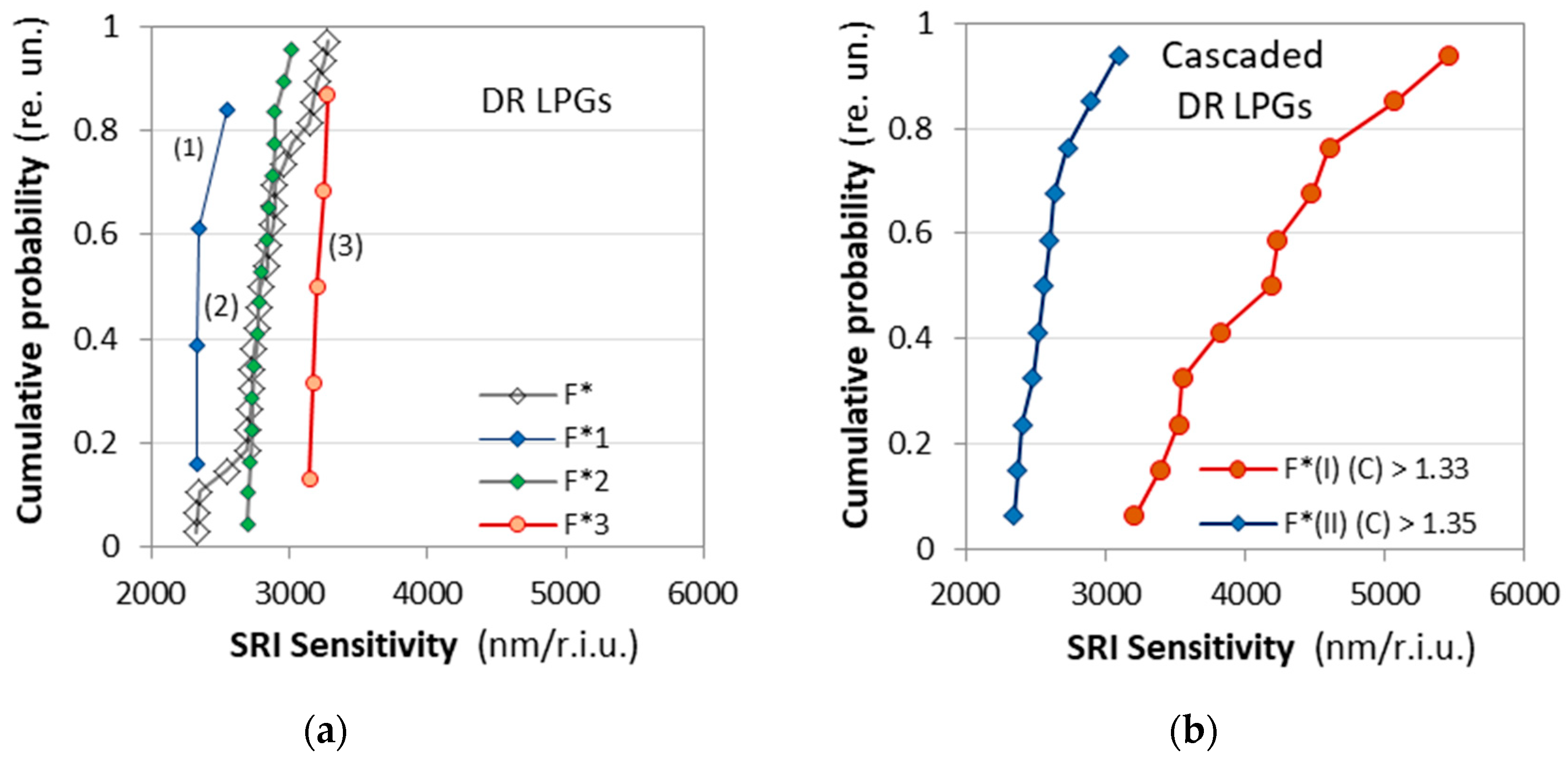
- The average sensitivity of the simple DR LPGs is by about 9% higher than the average sensitivity of the cascaded DR LPGs for SRI > 1.35.
- ii)
- The sensitivity of the cascaded DR LPGs around water (SRI = 1.33 ÷ 1.35) is on the average by about 50 % higher than the average sensitivity of the simples DR LPGs.
- iii)
- The variance of the sensitivities around lower SRI for the cascaded DR LPGs is quite large and can vary by up to 70%.
4.3. Response and Sensitivity to Temperature
4.3.1. Spectral Evolution

| Etching stage | Low temperature split | Mid temperature split | High temperature split |
|---|---|---|---|
| E 0 (prior to etching) | < 5C (≈ 0C) @ -4C | 36C @ -7dB | > 70C |
4.3.2. Sensitivity Curves
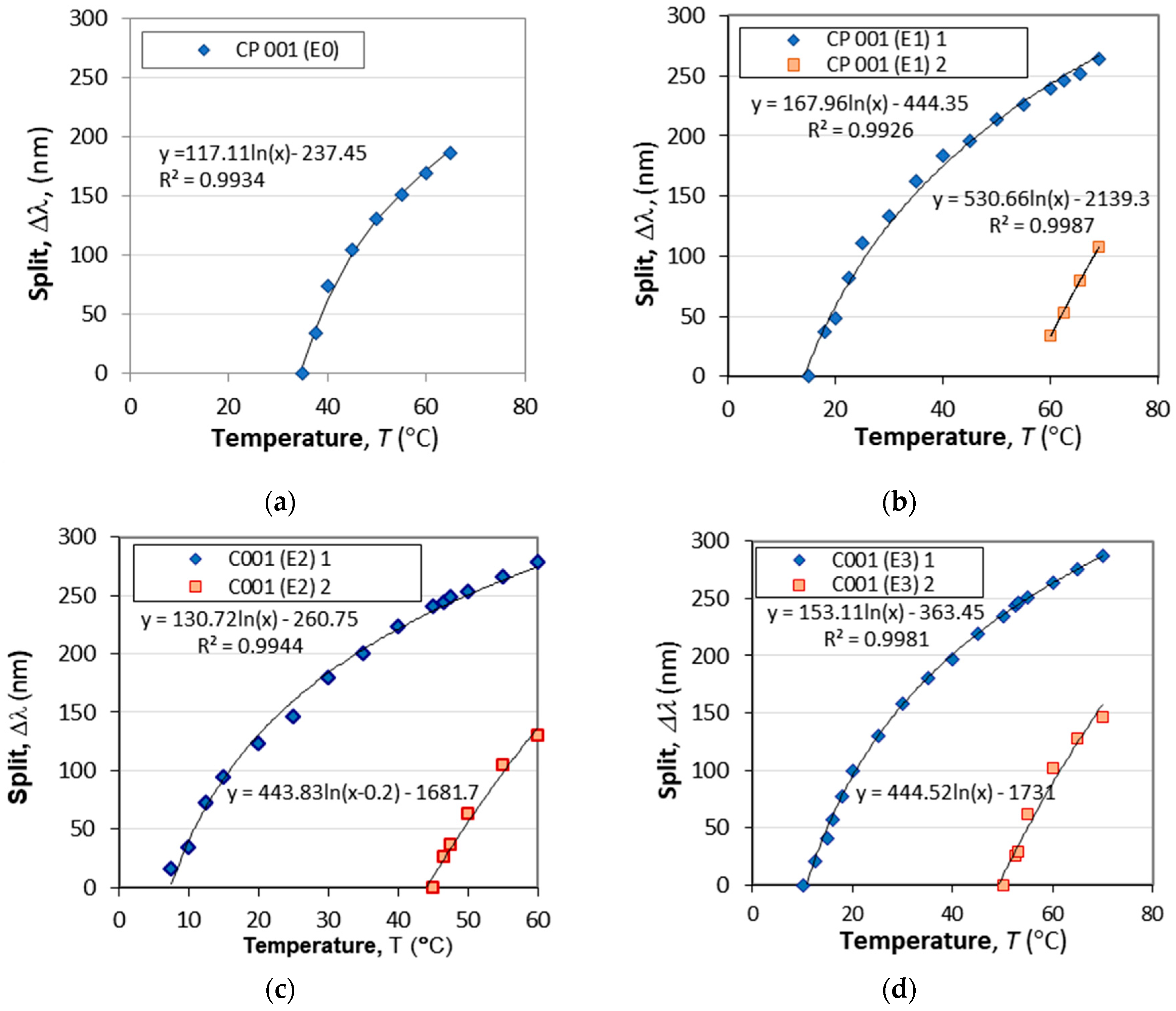
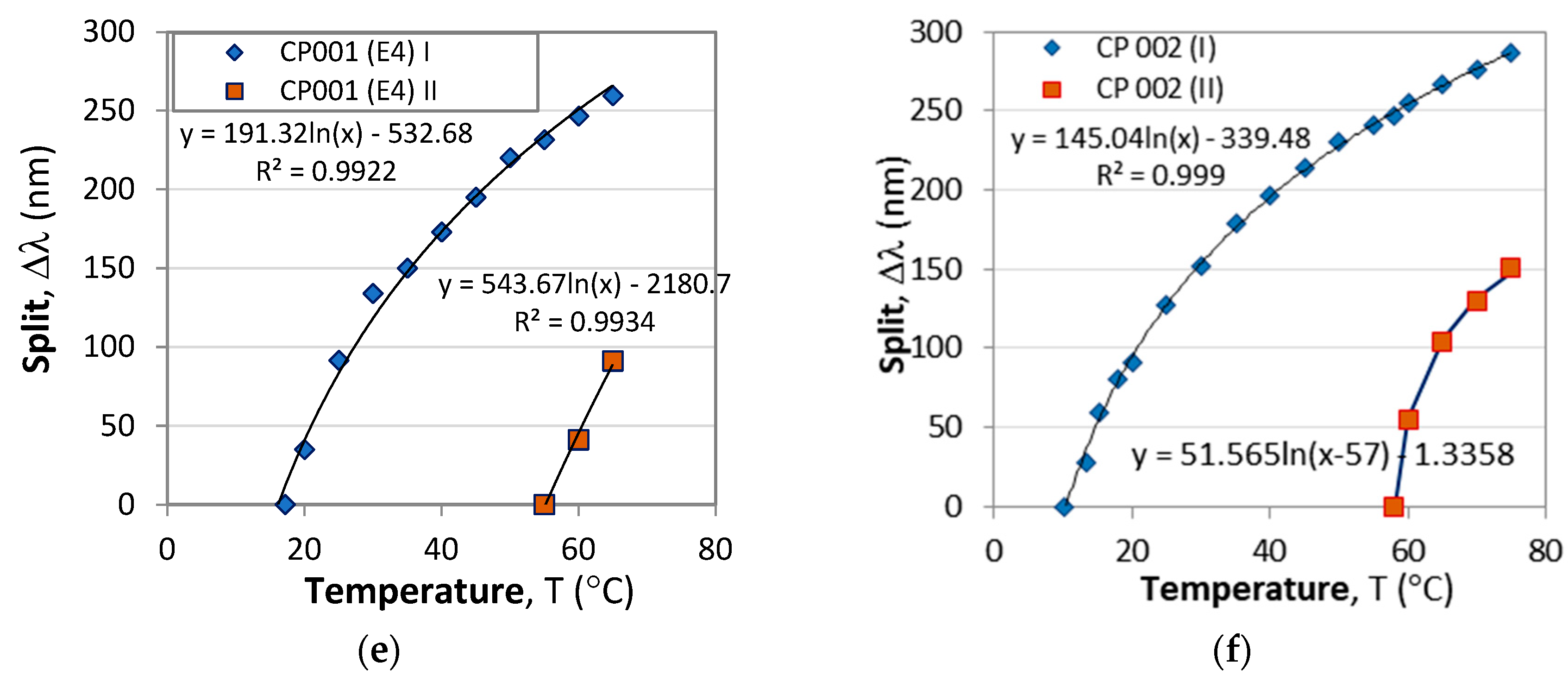
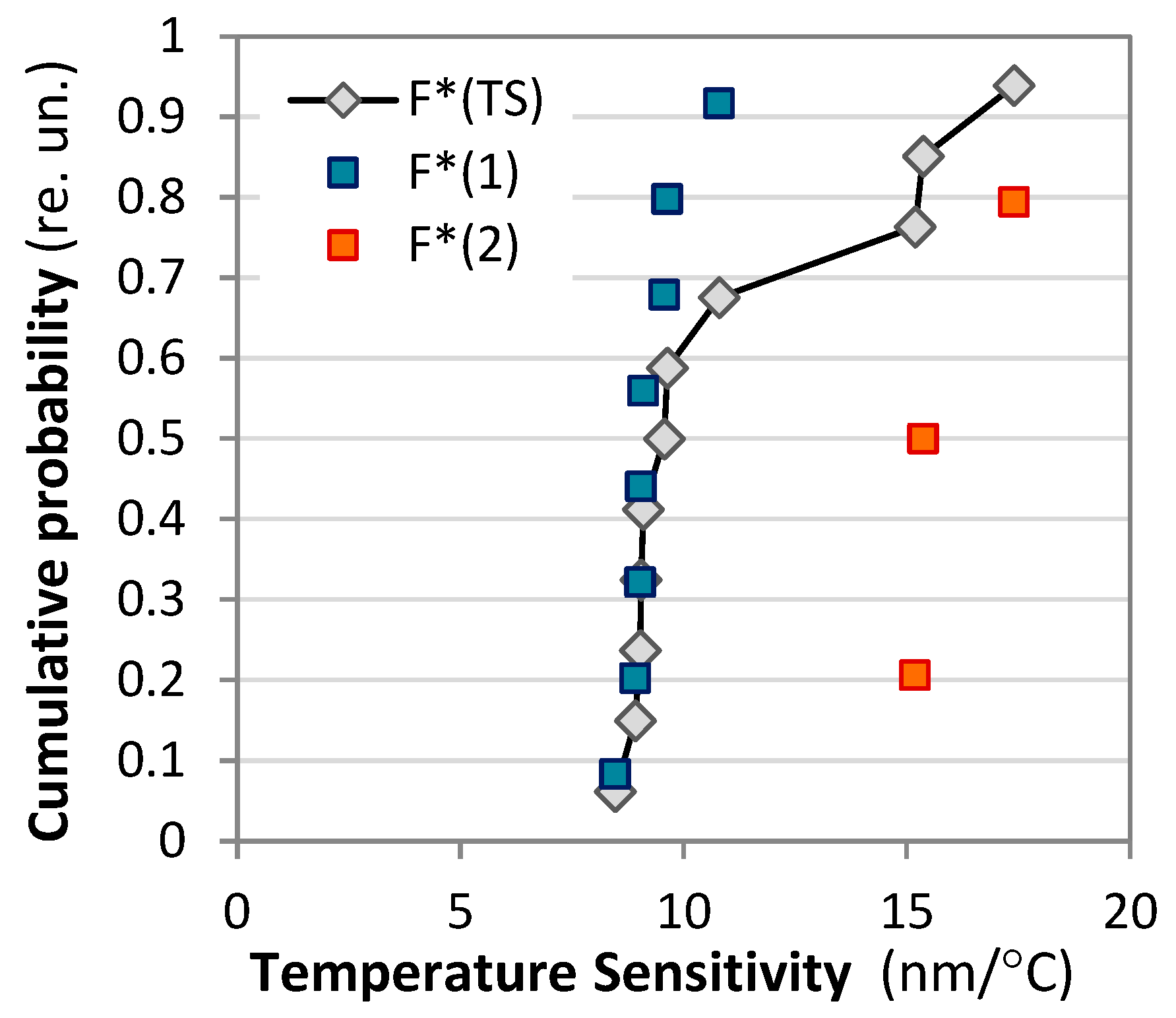
4.4. Sensitivity to Strain
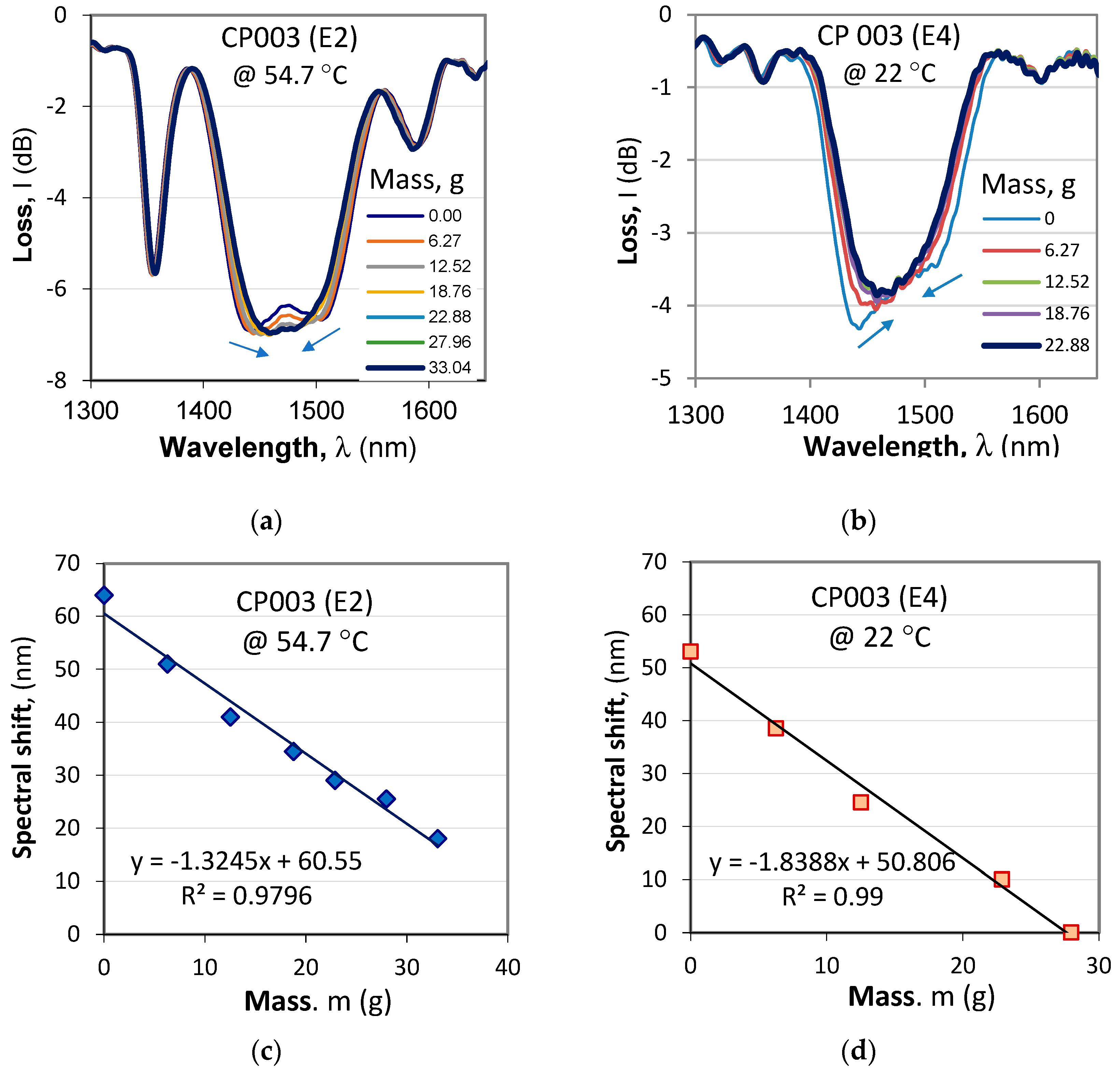
5. Discussion
6. Conclusions
Author Contributions
Funding
Data Availability Statement
Conflicts of Interest
References
- Vengsarkar A.M.; Lemaire P.J.; Judkins J.B.; Bhatia V.; Erdogan T.; Sipe J.E., Long period fiber gratings as band-rejection filters, J. Lightwave Technol. 1996, 14, 58–65. [CrossRef]
- Erdogan, T. Fiber grating spectra. J. of Lightwave Technology, 1997, 15(8), 1277–1294. [CrossRef]
- Martinez-Rios, D. Monzon-Hernandez, I. Torres-Gomez and G. Salceda-Delgado, Long Period Fibre Gratings, Chapter · February 2012. IntechOpen, pp.275-294. [CrossRef]
- Bhatia V., Applications of long-period gratings to single and multi-parameter sensing, Opt. Express 1999, 4, 457-466.
- Koffi N’G.: T.Eftimov; Arapova A.; Lesage F.; J.Bock W.; Cherif A., Simultaneous measurement of thermal gradient and average temperature in concrete blocks using non-uniform long period optical fibre gratings, IEEE Trans. on Instrum. & Meas., 2022, 71. Art no. 9509308, pp.1-8.
- Cai, J.; Liu, Y.; Shu, X. Long-Period Fiber Grating Sensors for Chemical and Biomedical Applications, Sensors, 2023, 23, 542. [CrossRef]
- Liu Y.; Williams J.A.R.; Zhang L.; Bennion I., Phase shifted and cascaded long-period fiber gratings, Optics Communications 1999, 164, 27–31.
- Han, Y.-G.; Lee, B. H.; Han, W.-T.; Paek, U.-C.; Chung, Y. Fibre-optic sensing applications of a pair of long-period fibre gratings. Measurement Science and Technology, 2001, 12, 778–781. [CrossRef]
- Eftimov T.; Koffi N’G.; Lesage F.; Mikulic P.; Bock W. J., Responses to temperature and thermal gradients of non-uniform cascaded LPGs taking into account dispersion, Optical Fiber Techn., 2020, 55, 102098. [CrossRef]
- Eftimov T.A.; Bock W.J.; Chen J; Mikulic P., Müller–Stokes analysis of long-period gratings part I: uniformly birefringent LPGs, J. of Lightwave Techn., 2009, 27, 3752-3758.
- Lan, X.; Han, Q.; Wei, T.; Huang J.; and Xiao, H. Turn-Around-Point Long-Period Fiber Gratings Fabricated by CO2 Laser Point-by-Point Irradiations, IEEE Photonics Technology Letters, 2011, 23, 1664-1666. https://ieeexplore.ieee.org/document/6003759. [CrossRef]
- Shen F., Zhou K., Zhang L., and Shu X., Long Period Fiber Grating around the Dispersion Turning Point Fabricated with a Femtosecond Laser, in Asia Communications and Photonics Conference, OSA Technical Digest (online) (Optica Publishing Group, 2017), paper Su2A.104.
- Gambhir, M. and Gupta, S. Review of Turn around Point Long Period Fiber Gratings. J. of Sensor Technology, 2015, 5, 81-89. [CrossRef]
- Dey, T. K.; Tombelli, S.; Biswas, P.; Giannetti, A.; Basumallick, N.; Baldini, F.; Bandyopdhayay, S.; Trono, C. Analysis of the Lowest Order Cladding Mode of Long Period Fiber Gratings near Turn Around Point. J. of Lightwave Techn., 2020, 39, 4006 - 4012. [CrossRef]
- Wong R. Y.-N., Juan D. H., Ibsen M., and Shum P. P., Optical Fibre Long-Period Grating Sensors Operating at and around the Phase Matching Turning Point, Applications of Optical Fibers for Sensing. IntechOpen, Apr. 24, 2019. [CrossRef]
- Dey, T.K.; Tombelli, S.; Roy, A.; Biswas, P.; Giannetti, A.; Basumallick, N.; Baldini, F.; Bandyopadhyay, S.; Trono, C. Sensitivity Analysis of Sidelobes of the Lowest Order Cladding Mode of Long Period Fiber Gratings at Turn Around Point, Sensors 2022, 22, 2965. [CrossRef]
- Xiao, A.; Du, J.; Ling, Q.; Chen, Y.; Gu, Z.; Chen, H.; Yu, Z.; Mao, B.-M.; Guan, Z.; Chen, D. Angularly Cascaded Long-Period Fiber Grating for Curvature and Temperature Detection. Sensors 2024, 24, 184. [CrossRef]
- Trono C., Long period fiber grating-based biosensing: Recent trends and future perspectives, Trends in Analytical Chemistry 2024, 179, 117875. [CrossRef]
- Gu, Z.; Xu, Y.; Deng, C.; Zhang, J. (2009). Dual peak resonance and transmission spectrum characteristics in a coated long-period fiber grating. Journal of Optics A: Pure and Applied Optics, 11(8), 085701–. [CrossRef]
- Zawisza, R.; Eftimov, T.; Mikulic, P.; Bock, W.J.; Jaroszewicz, L.R. Ambient Refractive-Index Measurement with Simultaneous Temperature Monitoring Based on a Dual-Resonance Long-Period Grating Inside a Fiber Loop Mirror Structure. Sensors 2018, 18, 2370. [CrossRef]
- Dey, T.K.; Tombelli, S.; Biswas, P.; Giannetti, A.; Basumallick, N.; Baldini, F.; Bandyopadhyay, S.; Trono, C. Realization of Enhanced Evanescent Field Long Period Fiber Grating near Turn around Point for Label-Free Immunosensing. Proceedings 2020, 60, 9. [CrossRef]
- Dyankov, G.; Eftimov, T.; Hikova, E.O.; Najdenski, H.; Kusovski, V. Genova-Kalou, P.; Mankov, V.; Kisov, H.; Veselinov, P. Ghaffari, S. S.; Kovacheva-Slavova, M.; Vladimirov, B.; Malinowski, N. SPR and Double Resonance LPG biosensors for Helicobacter pylori BabA Antigen Detection, Sensors 2024, 2424, 2118. [CrossRef]
- Eftimov T.; Genova-Kalou P.; Dyankov G.; Bock W. J.; Mankov V.; Ghaffari S. S.; Veselinov P.; Arapova A. and Makouei S., Capabilities of Double Resonance LPG and SPR Methods for Hypersensitive Detection of SARS Cov-2 Structural proteins: A Comparative Study, Biosensors 2023, 13, 318. [CrossRef]
- Dyankov G.; Genova-Kalou P.; Eftimov T.; Ghaffari S.S.; Mankov V.; Kisov H.; Veselinov P.; Hikova E. and Malinowski N., Binding of SARS CoV-2 structural proteins to hemoglobin and myoglobin studied by SPR and DR LPG, Sensors 2023, 23, 3346. [CrossRef]
- Feng W.; and Gu Z., Design of a high-sensitivity cascaded long-period fiber grating sensor operating at PMTP, J. Opt. Soc. Am. 2018, B 35, 2788-2793.
- Zhou, W.; Ran, Y.; Yan, Z.; Sun, Q.; Liu, C.; Liu, D. Sensitivity Characterization of Cascaded Long-Period Gratings Operating near the Phase-Matching Turning Point. Sensors 2020, 20, 5978. [CrossRef]
- Lazareva E. N. and Tuchin V. V., Blood refractive index modelling in the visible and near infrared spectral regions, J of Biomedical Photonics & Eng, 2018, 4, 010503-1. [CrossRef]



| # | Label | 2xN +L0 | S(I) 1.33 to 1.35 |
S(II) > 1.35 |
@ T(C) |
|---|---|---|---|---|---|
| 1 | CP 001 | 2x80+6mm | 4182.7 | 2369.1 | 20C |
| 2 | CP 005 | 2x80+6mm | 3518.4 | 2518 | 24.2 C |
| 3 | CP 013 | 2x118+13mm | 4231.1 | 2342.3 | 25.5 C |
| 4 | CP 014 | 2x118+13mm | 3385.4 | 2555.3 | 23 C |
| 5 | CP 015 | 2x118+13mm | 4602.5 | 2399.1 | 22.5C |
| 6 | CP 017 | 2x118+13mm | 3549 | 2728.5 | 20.5C |
| 7 | CP 018 | 2x118+13mm | 5457.4 | 2634.1 | 25.5C |
| 8 | CP 019 | 2x118+20mm | 5063.2 | 2476.9 | 22.7C |
| 9 | CP 020 | 2x118+20mm | 3816.9 | 2599.3 | 20.5C |
| 10 | CP 022 | 2x118+20mm | 4475.2 | 2893.2 | 22C |
| 11 | CP 023 | 2x118+20mm | 3201.8 | 3090.2 | 25C |
| Etching stage | Low temperature split | High temperature split |
|---|---|---|
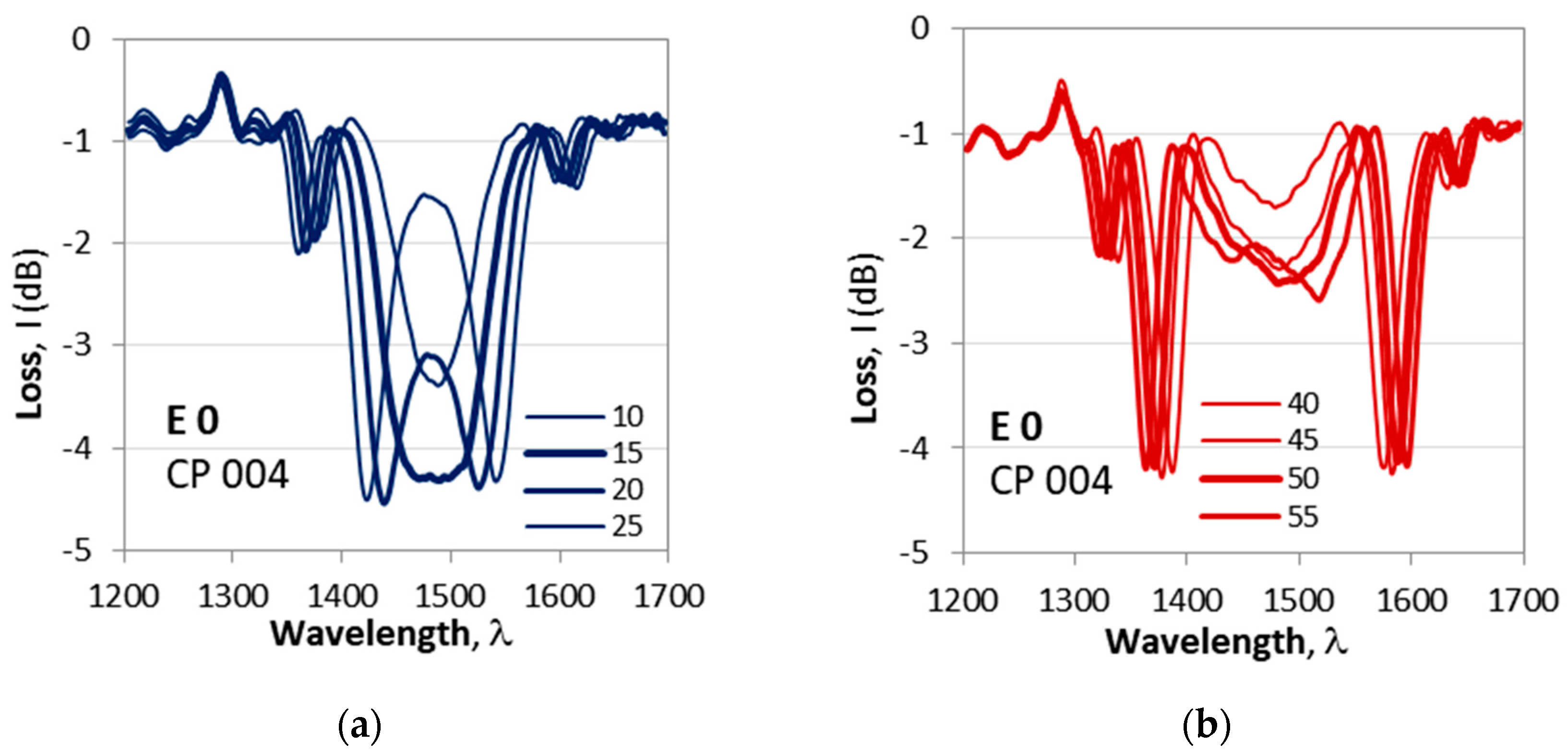
| E 0 (prior to etching) | 15 C @ -4.2 dB | 50C @ -2.3dB |
| Etching stage | Low temperature split | High temperature split |
|---|---|---|
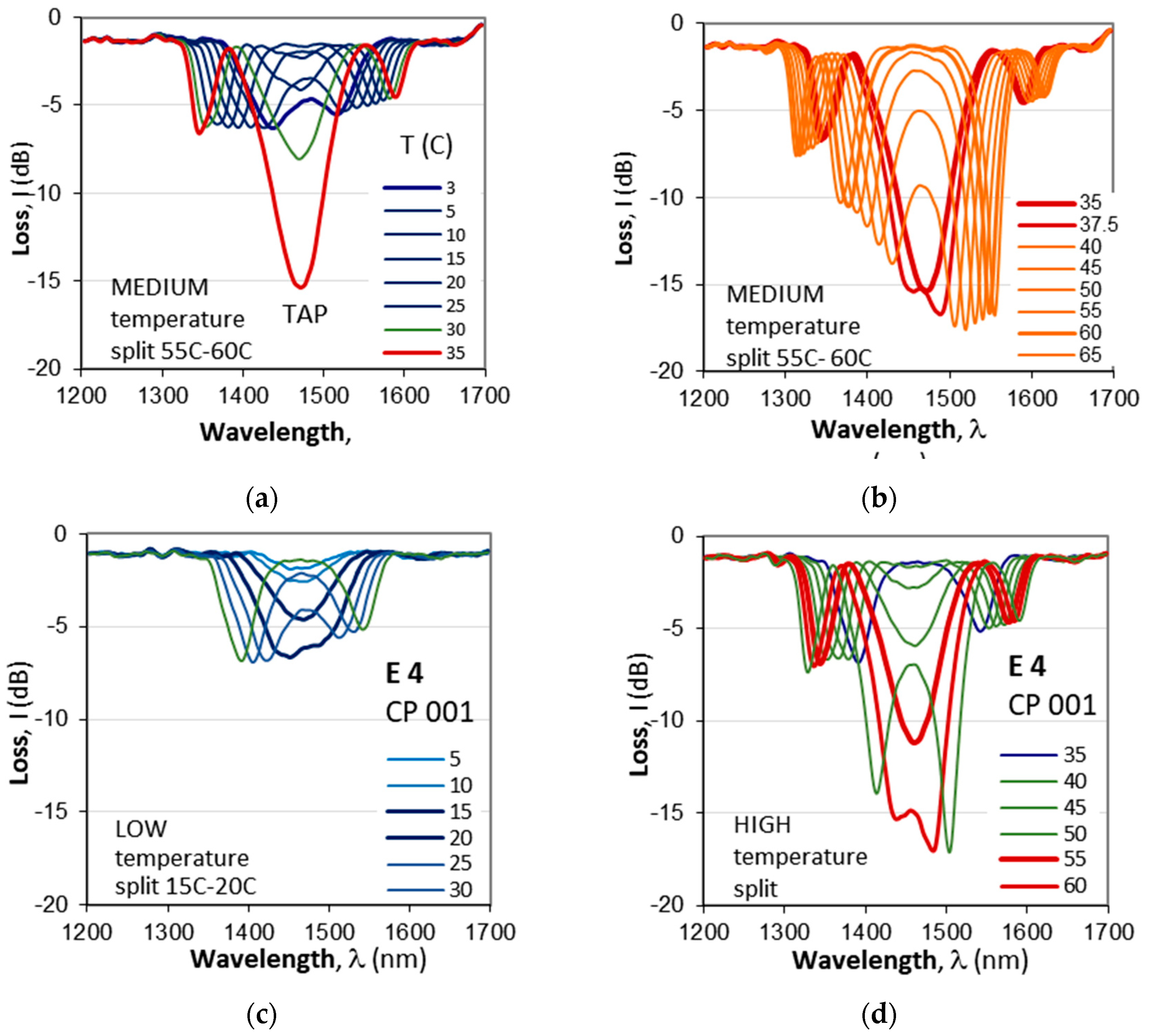
| E 0 (prior to etching) | < 0C | 36C @ -14dB |
| E 1 (after 1st etching) | 5.2C @ -3 dB | 41.1 C @ -16dB |
| E 2 (after 2nd etching) | 10C @ -5.8 dB | 46.5C @ -16dB |
| E 3 (after 3rd etching) | 12 C @ -6.2dB | 52C @-16dB |
| E 4 (after 4th etching) | 17.2C @ -6.5dB | 58C @ -16dB |
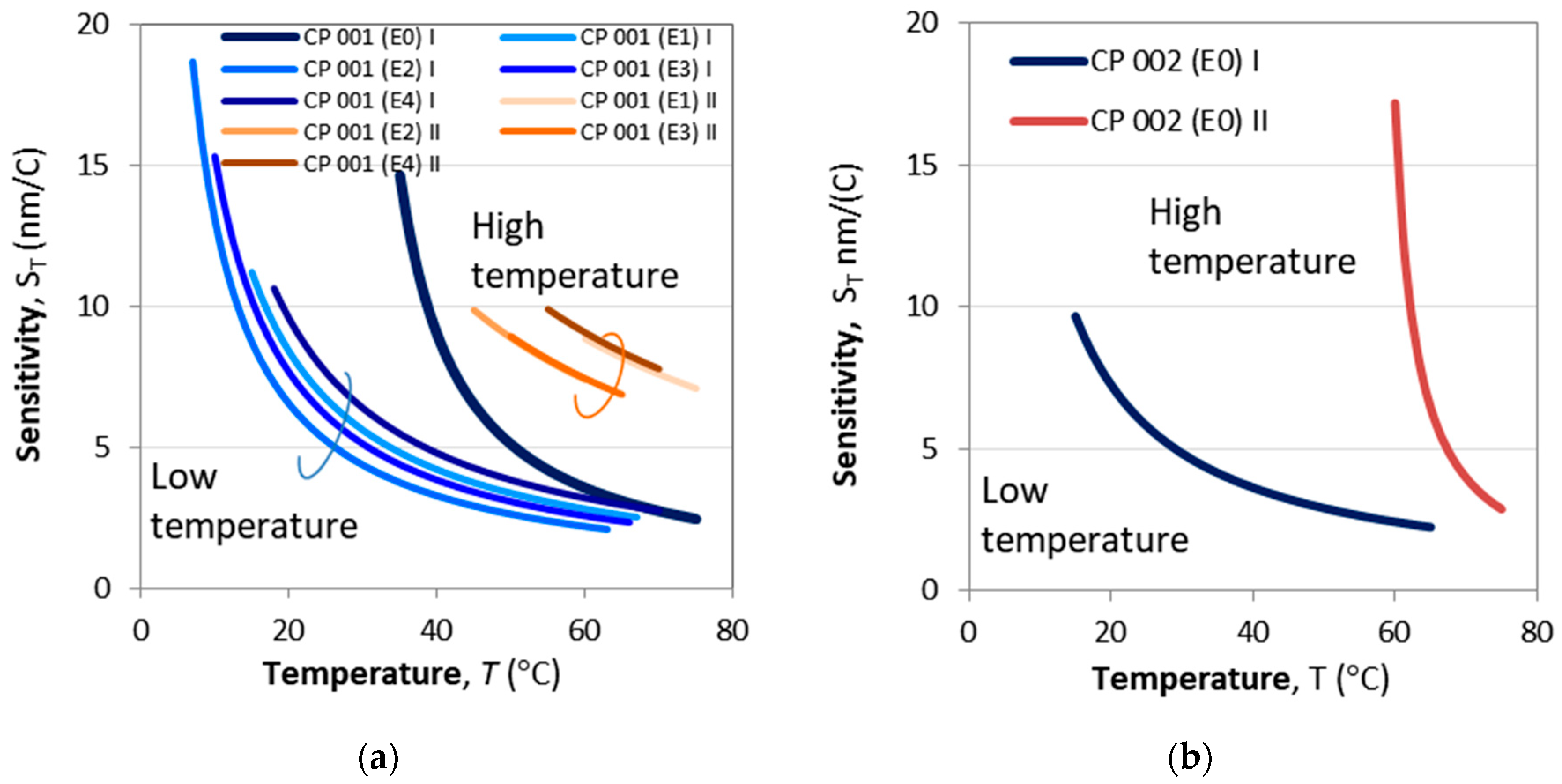
| # | Label | Tb (°C) | C | C0 | TAP temperature (°C) | STAP (nm/ °C) |
| 1 | CP 001 | 0 | 191.32 | -532.68 | 20 C | 9.57 |
| 2 | CP 005 | 0 | 233.3 | -730.48 | 24.2 C | 9.64 |
| 3 | CP 013 | 0 | 221.24 | -680.88 | 24.8 C | 8.92 |
| 4 | CP 014 | 0 | 212.12 | -642.47 | 23.5 C | 9.03 |
| 5 | CP 015 | 0 | 242.94 | -732.46 | 22.5C | 10.8 |
| 6 | CP 017 | 0 | 204.86 | -608.7 | 22.5 C | 9.1 |
| 7 | CP 018 | 0 | 215.89 | -666.4 | 25.5C | 8.47 |
| 8 | CP 019 | 18 | 100.94 | -154.28 | 23.8C | 17.40 |
| 9 | CP 020 | 15 | 98.373 | -154.45 | 21.4C | 15.37 |
| 10 | CP 022 | 14 | 121.51 | -247.33 | 22C | 15.19 |
| 11 | CP 023 | 0 | 199.09 | -597.34 | 22C | 9.05 |
Disclaimer/Publisher’s Note: The statements, opinions and data contained in all publications are solely those of the individual author(s) and contributor(s) and not of MDPI and/or the editor(s). MDPI and/or the editor(s) disclaim responsibility for any injury to people or property resulting from any ideas, methods, instructions or products referred to in the content. |
© 2025 by the authors. Licensee MDPI, Basel, Switzerland. This article is an open access article distributed under the terms and conditions of the Creative Commons Attribution (CC BY) license (http://creativecommons.org/licenses/by/4.0/).


