
Submitted:
06 September 2025
Posted:
08 September 2025
You are already at the latest version
Abstract
Pastoralist socio-ecological systems across Africa, Asia, and Latin America are transforming under climate stress, with adaptation patterned by gendered power. I systematically reviewed 35 empirical studies (2013–2025) using PRISMA 2020 and the SWiM protocol. Searches in Web of Science and Scopus applied pre-registered inclusion criteria (empirical, pastoralist/agro-pastoralist focus, gender analysis); screening used a single reviewer with a 25% independent audit. The objective of the research was to examine power as an organising principle across four interconnected domains: labour redistribution, resource control, decision-making authority, and knowledge recognition. Majority of studies (≈70–80%) report increased women’s workloads alongside male control of land, water, and high-value stock, decision-making as mitigated by committee presence without agenda/budget authority, and women’s knowledge recorded as informal rather than actionable. Exceptions arise where inheritance or titling and decision procedures change. The paper’s innovation is a relational agency framework that links roles, rights, and records to specify tractable, auditable levers that convert participation into consequential authority. The goal is to guide context sensitive reforms that redistribute power and improve adaptation in pastoralist systems.
Keywords:
climate adaptation governance
; adaptive capacity
; gendered power relations
; pastoralist socio-ecological systems
; PRISMA and SWiM synthesis
; relational agency
1. Introduction
Pastoralist socio-ecological systems (SES) in the Global South face profound transformations driven by increasing climate variability, disrupted livelihoods, and institutional marginalisation [1]. Adaptation emerges from dynamic interactions between ecological shifts and socially embedded governance systems, with power relations playing a leading role in shaping outcomes [2,3]. Historically marked by ecological mobility and collective governance, these systems now confront recurrent droughts affecting over 268 million pastoralists globally, with a 29% rise in drought frequency over the past 20 years [4]). Challenges such as erratic rainfall, land fragmentation, heightened resource competition, and ongoing exclusion from climate governance frameworks intersect with existing power structures to influence adaptation outcomes [5,6]. Given the complexity of these dynamics, theoretical frameworks are needed to clarify how social relations in pastoralist communities influence the relationship between institutional reactions and ecological change. This interface is particularly evident in pastoralist SES, where the very social relations that govern access to resources mediate the effects of both institutional and ecological shifts in livelihoods.
Additionally, power in adaptation governance is expressed through the ability to influence how resources are allocated, who gains a voice in decision-making, and which forms of knowledge are legitimised, processes that are mediated by institutionalised gender hierarchies controlling access to critical assets [7,8]. An individual’s capacity to address climate-related stresses is therefore shaped by their skillset, access to livelihood opportunities, ownership of assets, and knowledge base, which together determine how and which resources to deploy in times of uncertainty [9,10]. Within these arrangements, men commonly occupy privileged positions in spheres such as mobility, formal governance, and decision-making, while women carry the main responsibility for care work, maintaining food security, and engaging in informal or subsistence livelihoods [5,11]. On the face of climate adaptation therefore, the household can be understood as a political arena where both cooperation and contestation take place, as men and women negotiate to secure or strengthen their standing within family and community settings [9,12].
Furthermore, these micro-political social arrangements stem from deep-rooted gendered inequalities embedded within institutional structures rather than from innate differences [9]. Such inequalities often persist despite environmental changes, prompting critical reflection on whether adaptation processes challenge or reinforce existing power hierarchies [13,14]. Consequently, shifts in responsibilities driven by climate stress commonly lead to increased labour and resource burdens. These burdens are often linked to male outmigration as men seek livelihood opportunities elsewhere, leaving women to manage both household and agricultural duties [15]. Despite taking on these expanded roles, women’s authority in decision-making remains constrained by entrenched power relations and institutionalised gender norms, which limit their control over resources and governance processes [16].
Therefore, while women bear greater workloads, their influence over adaptation strategies and resource allocation often does not increase proportionally. This phenomenon that scholars in Feminist Political Ecology term as adaptive labour feminisation without power redistribution [5,13,17,18] reveals a significant disconnect between the burden of adaptation and the redistribution of authority. While women may engage more intensively in productive and reproductive tasks, entrenched gender norms and institutional barriers often prevent these changes from challenging existing power hierarchies [17,19]. In other cases, however, institutional settings enable collective action that can bolster access to shared resources and knowledge [5]. Such collective efforts not only contribute to sustainable livelihoods but also enhance women’s intra-household bargaining power and social status [9,13]. Consequently, a critical gap concerning why some institutional contexts facilitate transformative power shifts while others preserve traditional hierarchies is illuminated. Addressing this gap is vital to developing interventions enabling genuine power redistribution rather than merely increasing women’s workloads without corresponding decision-making influence.
Moreover, while there has been growing attention to gender in pastoralist adaptation research, the literature remains fragmented and largely descriptive rather than theoretically robust [20,21]. Many studies continue treating gender as a binary demographic variable, reinforcing reductive frameworks that obscure the complex, relational, and institutional nature of power [17]. Consequently, research often overlooks how power is enacted through gendered institutions, knowledge systems, and resource governance, which collectively mould adaptation outcomes across intersecting domains [13,22]. The mechanisms whereby adaptation reorganises labour, consolidates or destabilises authority, and affects recognition of diverse knowledge systems remain insufficiently synthesised [1,23]. This gap restricts the identification of leverage points for interventions aimed at genuine transformation rather than superficial role modifications. Furthermore, existing conceptual frameworks inadequately account for how institutional variations modulate responses to adaptation pressures and power redistribution [24,25].
In this context, our review develops a theoretical framework explicating how institutional and social mechanisms shape climate adaptation in pastoralist SES, either reinforcing existing gendered power hierarchies or enabling genuine power redistribution. Using PRISMA 2020 guidelines and the SWiM protocol, we synthesise evidence from 35 studies conducted between 2013 and 2025 across Africa, Asia, and Latin America. The analysis focuses on power as an organising principle across four interconnected domains: labour redistribution, resource control, decision-making authority, and knowledge recognition. The study examines circumstances under which adaptation interventions either challenge or sustain structural exclusions and identifies when emergent agency reflects transformative change or continued accommodation within entrenched hierarchies. Through examining power relations beyond demographic gender categories, the framework advances understanding through three core contributions: repositioning adaptation as a politically embedded process shaped by institutional power; revealing how gendered power functions simultaneously across multiple domains to shape outcomes; and pinpointing key institutional leverage points for effecting power transformation in pastoralist adaptation governance.
2. Materials and Methods
This review follows PRISMA 2020 to ensure transparent identification, screening, and inclusion of studies [26]. It and applies the Synthesis Without Meta-analysis (SWiM) approach aligned with PRISMA Items 14 and 21 to synthesise a methodologically diverse evidence base [27]. SWiM was selected due to variation in design, outcome types, and analytical focus across included articles. Findings were grouped into four conceptual domains that capture gendered adaptation in pastoralist socio-ecological systems. Thematic grouping and vote counting by direction of effect were used to track patterns. This approach supports transparency, reduces reporting bias, and preserves contextual specificity.
2.1. Search Strategy and Selection
A comprehensive search was conducted in April 2023 in Web of Science and Scopus for 2013–2022. An update in April 2025 covered 2023–April 2025. Searches combined climate adaptation terms with gender terms and a pastoralist focus, using Boolean operators and truncation. For instance, climate adaptation (e.g. “climate change adaptation,” “resilience,” “coping”) and gender (e.g. “gender,” “women,” “men,” “masculinities”). Inclusion criteria required empirical studies on adaptation in pastoralist or agro-pastoralist systems that reported gender-disaggregated findings or included explicit gender analysis. Grey literature was excluded due to inconsistent peer review standards, though it is acknowledged that NGO literature may offer policy insights.
Titles and abstracts were screened by a single reviewer against predefined eligibility criteria (see Appendix A1: Codebook for operational definitions and decision rules used during screening). To enhance reliability, a second reviewer independently audited a random 25% sample of records at both title and abstract and full-text stages. Observed agreement on the audited sample was ~92–93%, with Cohen’s κ = 0.82; disagreements were resolved through discussion. Owing to the single-screener workflow, κ was not calculated for the full dataset. From 707 initial records in 2013 to 2022 and 68 in 2023 to 2025, 27 and 8 studies were retained respectively, giving 35 included studies in total. Figure 1 and Figure 2 present the PRISMA flow diagrams below.
Screening was undertaken by a single reviewer; a 25% random audit by a second reviewer is reported in Section 2.1. Disagreements in the audit were resolved by discussion. Agreement on the audited sample was 92% with Cohen’s κ = 0.82. Reasons for full-text exclusion and study characteristics are provided in Appendix A1.
Screening was undertaken by a single reviewer; a 25% random audit by a second reviewer is reported in Section 2.1. Disagreements in the audit were resolved by discussion. Agreement on the audited sample was 93% with Cohen’s κ = 0.82. Diagram adapted from PRISMA 2020 guidance [26]; study details appear in Appendix A1.
2.2. Data Extraction and Study Characteristics
A piloted extraction form captured bibliographic details, location, design, sample, variables, gendered adaptation findings, and study limitations. The form and field definitions were aligned with Appendix A1: Codebook, which provides the matrix of the 35 included articles and details each study’s characteristics and coding rules. The studies cover East Africa, notably Kenya, Ethiopia, and Tanzania, with additional cases from West and Southern Africa, North Africa, Asia, and Latin America. Most were community-based studies using qualitative or mixed methods, and several used quantitative designs such as quasi-experimental evaluations and gender-disaggregated surveys. Common areas of focus included labour, resource access, decision-making, and knowledge systems, which align with established dimensions of gender relations and guide the synthesis structure. Screening and extraction were conducted manually; no automation tools were used.
2.3. Quality Appraisal
Each study was appraised for methodological rigour and relevance to the synthesis, though none were excluded solely on quality. Qualitative components were appraised using SRQR criteria, quantitative components were assessed for sampling, measurement validity, and confounder control, and mixed methods were reviewed for integration quality. Studies were not excluded solely on appraisal. We considered reporting biases qualitatively, including selective outcome emphasis and the absence of null findings. Given the predominance of qualitative outcomes and mixed evidence types, no formal quantitative publication-bias assessment was undertaken.
2.4. Synthesis Without Meta-Analysis Approach
The synthesis followed SWiM guidelines to organise findings from a methodologically diverse body of evidence [27]. Heterogeneity in designs, measures, and contexts precluded statistical meta-analysis, so SWiM guidance was used to structure a transparent narrative synthesis. As required by PRISMA Item 14, Studies were grouped into four a priori domains: labour, resources, decision-making, and knowledge. Quantitative findings were summarised by vote counting with textual justification, and qualitative findings were synthesised thematically. Adjusted estimates were prioritised where available, and each synthesis statement is linked to its contributing studies. To address contextual heterogeneity, I planned subgroup analyses by world region and by study design by comparing East Africa and Latin America to reflect contrasts in governance arrangements and property regimes. In addition, a regional subgroup analysis (East Africa versus South Asia) revealed consistent patterns of childcare burden but differing decision-making norms. Sensitivity checks excluded higher risk-of-bias studies to assess whether domain-level interpretations persisted
Following PRISMA Item 21, the synthesis logic, grouping rationale, and prioritisation were documented to reduce reporting bias. Findings corroborated across studies or methods were prioritised; divergent cases were retained for contextual specificity. No effect sizes or heterogeneity metrics were reported due to the qualitative nature of most outcomes. The synthesis balances contextual distinctiveness with coherence.
2.5. Synthesis Process
Findings were coded to the four domains, and a single study could contribute to multiple domains where relevant. Within each domain, evidence was organised by sub-topic. Where findings diverged, we compared study context, including geography and socio-cultural setting. We examined regional patterns such as mobility-centered adaptation in parts of East Africa in contrast to Latin American settings where communal property institutions and lineage obligations shaped choices. Original effect measures from primary studies were retained as reported and used descriptively to complement the qualitative synthesis. No statistical transformations or data conversions were applied. Terminology was standardised during coding and missing or unclear non-outcome variables were coded as “not reported” following the rules in Appendix A1: Codebook.).
2.6. Data Presentation
Patterns supported across multiple studies or methods were prioritised, and divergent findings were retained where they clarified context. Confidence in domain-level statements was judged narratively based on consistency across studies, methodological diversity, and contextual coherence. GRADE was not applied given the qualitative emphasis. SWiM summary tables for each domain present context, design, key findings, and limitations, and distinguish between small sample ethnographies and larger surveys. We describe consistency qualitatively and note the number of studies contributing to each pattern. Readers should consult Appendix A1 for the complete matrix of included studies and their characteristics.
3. Results
I organise the analysis around four domains that reveal how gendered power relations shape adaptation in pastoralist socio-ecological systems: labour, resources, decision-making, and knowledge. Across the evidence base, adaptation redistributes work and responsibility while filtering whose authority and expertise are recognised in formal and informal arenas. Regional settings and institutional arrangements matter, yet the patterns recur with sufficient regularity to trace mechanisms rather than isolated anecdotes. Therefore, I report domain findings with selective regional contrasts where they sharpen interpretation and retain distinctive cases where they clarify boundary conditions/ Claims in the text are anchored to specific contributing studies and to the SWiM tables to maintain a clear line of sight from evidence to inference [26,27]. This structure keeps the focus on how power organises labour, assets, authority, and knowledge within adaptation processes.
3.1. Synthesis Across Thematic Domains.
Findings are presented by domain using two complementary strategies that follow SWiM guidance: direction-of-effect summaries for quantitative signals and thematic synthesis for qualitative material [26,27]. I interpret convergence as indicative of a stable pattern while reading divergence for what it reveals about context and mechanism rather than treating it as noise. Regional subgroup contrasts are introduced where they aid interpretation, including East Africa versus Latin America, and East Africa versus South Asia etc. Original effect measures are reported as given in primary studies to avoid unwarranted transformation while still enabling comparison with qualitative accounts. Distinctive cases are retained when they illuminate institutional levers or reveal limits to generalisation across settings. Readers can consult Appendix A1 for the study matrix that underpins each domain table and for operational definitions used in coding. This approach keeps interpretation close to data while allowing cross-study patterning to be visible.
3.1.1. Labour and Work Roles
Climate pressures have altered who does what within households and communities, yet authority over strategic choices has largely remained with men in many settings. Women have taken on expanded productive responsibilities alongside care work as drought, livelihood diversification, and male out-migration reorder everyday tasks, with herding, water collection, and market activity commonly added to existing duties [15,21,28]. Across the corpus, about 70% of studies (≈24/35) report increased women’s workload without a corresponding rise in operational discretion or final authorisation to act; the few exceptions are context-specific (e.g. short-lived crisis role-shifts). The cumulative costs are non-trivial, including stress, health risks, and interruptions to girls’ schooling as time is redirected to survival tasks [29,30,31]. Across regions the drivers differ, yet the direction of change is similar, for example mobility constraints in parts of East Africa compared with tenure and lineage obligations in several Latin American cases ([32,33]. I describe this as labour expansion without commensurate authority because additional responsibilities rarely translate into formal influence over strategy or assets [15,34]. The pattern situates labour change within the political economy of adaptation rather than treating it as neutral task shifting.
Furthermore, shifts in workload seldom come with a shift in who decides. In Kenyan and Ethiopian cases, women manage daily herd care and household provisioning while men retain control over grazing routes, water allocation, and mobility strategies that shape adaptation trajectories [9,15]. Similar dynamics appear in Tunisia and Tanzania where committee participation increased presence without converting into influence, and where longer trips for fuel and water intensified care burdens in drought periods [35,36]. Income gains through cooperatives or small enterprises rarely change this calculus because total hours rise and strategic control over cash or livestock assets typically remains with men [21,29]. A large share of studies report increased female labour without comparable gains in authority, signalling a recurring disjuncture between contribution and control [5,29]. This reading links everyday time use to institutional rules that govern who can decide during scarcity. The evidence therefore points to structural rather than purely behavioural explanations for observed labour patterns.
Social position therefore shapes how these burdens are distributed although primary studies less often analyse these intersections systematically. Evidence from India shows that Dalit women face restrictions in access to formal support and recognition even as workloads rise, with caste and gender working together to narrow options during stress ([5,21]. Age also matters because adolescent girls commonly absorb domestic tasks while being excluded from decision spaces and from tools that could support learning for adaptation, such as mobile information services [29,30]. Economic status conditions whether households can secure labour-saving technologies or temporary help, which affects the capacity to buffer shocks and maintain schooling for children [28,31]. These patterned differences suggest that gender alone is an incomplete lens for understanding who carries the costs of adaptation. The direction of effects is consistent across diverse contexts despite limited systematic intersectional analysis in the corpus. This gap identifies a clear agenda for future primary research on labour and adaptation.
Counter-examples clarify the role of institutions and norms and help identify levers for change. In several Ugandan cases, men temporarily undertook childcare and provisioning following herd losses, experiences reported as status threats rather than durable re-negotiations of authority, which highlights the fragility of such shifts without institutional support [37,38]. Selected Kenyan studies describe circumstances in which women had stronger say over land allocation or drought response within specific lineage arrangements, which opened space for different labour and decision patterns, though these spaces were narrow and contingent [39,40]. Collective water harvesting initiatives in parts of India distributed responsibilities more evenly and improved short-term coordination during scarcity, again without guaranteed translation into lasting authority or asset control (Rao et al., 2020; Caine, 2021). The lesson is not that labour is fixed, but that change in tasks does not by itself realign who decides. Where rules and recognition remain intact, labour shifts tend to consolidate unpaid or low-status work rather than alter the allocation of voice. These cases therefore serve as tests of mechanism rather than exceptions that overturn the broader pattern.
Ultimately, adaptation has generally increased the volume and range of tasks carried by women while leaving strategic authority and recognised control largely untouched. Women deploy considerable agency through informal cooperation, market activity, and collective action, yet these strategies seldom convert into formal say over key decisions or assets without concurrent changes to institutional rules and resource governance [29,41]. This labour pattern connects directly to the next domains on resources and decision-making, where control over material assets and governance authority explains why expanded effort rarely yields greater voice. Policy interventions that target labour alone risk deepening time poverty unless they are paired with measures that address ownership, representation, and recognition within decision arenas [5]. The cross-regional evidence supports this integrated reading of workload, assets, and authority as mutually reinforcing elements of adaptation systems. This framing guides the subsequent synthesis of resources and power.

Table 1.
Labour and Work Roles Results.
| Study | Region | Domain | Findings |
| [42] | Kenya | Shifting gender roles in adaptation | Male out-migration expanded women’s labour to include herding and income generation. |
| [30] | Ethiopia | Labour burdens among adolescents | Girls were withdrawn from school to help with domestic tasks during climate stress. |
| [5] | India and Africa | Gendered labour and caste | Women undertook labour-intensive adaptation while control stayed with dominant caste men. |
| [20] | Kenya | Kinship-based labour reallocation | Women used informal work-sharing during droughts, taking on extra provisioning roles. |
| [25] | Tanzania | Gendered adaptation practices | Adaptation increased women’s labour through collective and household roles. |
| [9] | Ethiopia | Household labour division. | Women managed livestock care but only men had influence over adaptation decisions. |
| [28] | Gambia | Youth climate innovation and roles | Young women led climate innovation but remained marginal in formal institutions. |
| [40] | Kenya | Environmental committees and gender | Women attended more meetings, but men retained decision-making authority. |
| [43] | Kenya | Household burden redistribution | Men occasionally helped with food, but domestic burdens remained with women. |
| [36] | Tanzania | Adaptation pressures on work roles | Women travelled farther for water and fuelwood during stress. |
| [32] | Multi-country | Global review of pastoral labour | Women’s labour rose globally without matching decision-making power. |
| [44] | Tanzania | Drought responses and household roles | Climate shocks shifted household labour, burdening women disproportionately. |
| [21] | India | Livelihood transitions and gender | Women joined cooperatives, gaining income but working longer hours. |
| [29] | Namibia | Goat markets and informal economies | Women established covert markets, increasing agency within informal systems. |
| [41] | Benin | Labour in climate-impacted farming | Women’s labour intensified as livestock farming became less viable. |
| [15] | Kenya | Rainfall declines and work roles | Women assumed new forage and water roles as rainfall declined |
| [35] | Tunisia | Labour shifts and environmental interventions | Women’s roles expanded through ecological restoration efforts |
| [31] | Ethiopia | Participatory work roles | Women joined research efforts but had no implementation authority. |
3.1.2. Access to and Control over Resources
This subsection assesses rights and control over land, water, livestock, and financial assets as core determinants of adaptive capacity in pastoralist socioecological systems [39]. I treat resource control as recognised claims, titles, registries, and allocation rules that govern who may use, transfer, or authorise the use of assets. Roughly four in five studies, about twenty eight of thirty-five in our SWiM, describe male controlled regimes over land, water, and high value stock, with women’s claims remaining mediated and contingent. A minority of cases show inheritance, communal entitlements, or joint titling that generate direct claims for women. Our stance is institutional: formal rules, customary arrangements, and everyday practice align to stabilise or recalibrate control, rather than culture acting alone [18,20]. Exceptions are read as design relevant signals rather than curiosities, since they show which rules alter access and authorisation during stress.
Evidence from multiple regions shows that men retain primary ownership of high value assets and authority over their strategic use, while women’s access remains mediated by kinship and customary structures [18,29,35]. In northern Kenya, erratic rainfall has lengthened water collection routes for women, yet mechanised boreholes and private wells are commonly registered to male household members or governed by male committees [15,39]. In Tunisia, exclusive rights to land and valuable livestock such as camels remain with men despite women’s growing roles in daily animal care and drought response [35]. In Ethiopia’s Borana zone, elder led institutions concentrate grazing and water rights among men, which limits women’s autonomous access to rangelands and stock even when they manage herds during male absence [9]. Latin American cases in the wider adaptation literature describe lineage and communal property rules routing allocations through male heads, with women’s claims contingent on marriage or guardianship [45]. These patterns illustrate how registries, titles, and committee rules shape who can mobilise assets at authorisation points during crisis.
The consequences are patterned and material. Limited rights to land and livestock restrict diversification, collateralisation, and asset substitution when shocks occur, even where women manage herds and water daily [5,41]. Formal titling has at times codified male dominated ownership that was previously negotiable under customary practice, narrowing women’s fallback claims during stress in parts of northern Kenya [40]. Scarcity of water and fuel increases time costs and health risks for women and girls through longer collection times and reduced access to clean sources, which also constrains schooling and enterprise activity in several East African settings [20,44]. Competition over shrinking resources heightens tensions where male controlled committees arbitrate access, further limiting women’s influence over allocation outcomes [9]. These costs follow from how resource regimes are organised, not from incidental side effects. They clarify why responsibilities expand without matching rights or recognised authority to act.
Boundary cases indicate how specific institutional designs recalibrate access and control, although these arrangements are uneven and often fragile. In selected Kenyan settings, lineage rules enabled women to inherit or manage land during crisis periods, which stabilised food security and permitted small stock rebuilding after drought [39]. Matrilineal systems reported in parts of South Asia allowed women to retain claims over land and small stock, buffering losses when male migration extended and income flows became irregular [18,29,42]. In some Indian cases, women accessed communal plots through collective action despite intersecting caste and gender barriers, showing how entitlements embedded in social organisation can mitigate exclusion [21,46]. These arrangements did not remove labour burdens, but they shifted who could authorise sales, borrowing, or input purchases at critical moments. The design lesson is that kinship rules and governance procedures are actionable levers, and that enforceable claims alter who can act when shocks arrive.
Programmes that aim to extend women’s access have achieved partial gains yet often leave underlying power relations unchanged. Quotas and microfinance schemes have increased access to working capital, though control over productive assets or the terms of investment commonly remains with male household heads or male dominated groups in Ethiopia and Kenya [41,47]. Where projects align with existing governance structures without adjusting allocation rules, women’s priorities in domestic water and time saving needs are sidelined during irrigation scheduling or drought rationing [35,48]. Land titling reforms designed to secure property rights have in several cases displaced customary access that women previously used, formalising exclusion where joint or individual titles for women were not pursued [40]. Women only cooperatives have delivered income and mutual support, but their reach is bounded when upstream rights over land, water, or grazing remain unchanged [35,47]. These patterns suggest that altering membership or credit alone is insufficient unless allocation and dispute rules also change [41,48].
Resource access and control therefore remain structured by institutional mechanisms that stabilise male dominance while drawing heavily on women’s labour. Consistent patterns appear across regions, with context-specific cases demonstrating how kinship and governance rules can alter claims and the capacity to act during crisis [35,39]. Where reforms have focused on membership or finance without changing allocation rules, women’s priorities have been marginal in water scheduling, grazing access, and the use of household income, which limits adaptation benefits [47,48]. Addressing these exclusions requires changes to titles, representation, and dispute resolution alongside practical access, so that recognised rights accompany growing responsibilities [41]. Such reforms are foundational to adaptive capacity because they condition whose strategies are viable and whose claims are enforceable.
This nexus between resource ownership and capacity to act explains why increased labour or program participation alone rarely yields strategic control over resources. It motivates the bridge to decision making authority, where rules of representation and authorisation are considered directly. Resource control and procedural authority operate as linked dimensions of power. Ownership and recognised claims provide the basis for influence over planning and allocation, while formal procedures determine whether proposals become recorded actions. Consequently, gains in access without accompanying changes to representation and rules seldom shift outcomes; the next subsection examines authority arrangements in detail.
Table 2.
Access and Control of Resources findings.
| Study | Region | Domain | Findings |
| [26] | Kenya | Land access disparities | Land access disparities, labour divisions, historical empowerment |
| [8] | India | Caste-mediated resource access | Caste-mediated resource access, intra-household conflicts, collective labour |
| [27] | Kenya | Kinship networks | Kinship networks, gendered resource sharing, drought coping strategies |
| [47] | Ethiopia | Land tenure insecurity | Land tenure insecurity, microfinance impacts, gendered vulnerability |
| [18] | B Kenya | Marital instability | Marital instability, generational resource conflicts, women’s collectives |
| [29] | Kenya | Enclosure impacts | Enclosure impacts, women’s networks, land privatization effects |
| [25] | Namibia | Covert networks | Covert networks, market strategies, gendered livestock management |
| [11] | Ethiopia | Gender roles | Gender roles, resource access, decision-making power, drought perceptions |
| [48] | Tanzania | Gender inequalities in resource access | Gender inequalities in resource access, climate information utilization |
| [1] | Kenya | Social differentiation | Social differentiation, adaptation pathways, land tenure |
| [21] | Ethiopia | Gendered resource access | Gendered resource access, market strategies, climate impacts |
| [28] | Tunisia | Gendered labour | Gender shaped resource access, climate exposure, and adaptive capacity. |
| [16] | Kyrgyzstan | Resource access | Gendered views on climate impacts on resources and rural livelihoods. |
| [2] | Kenya | Community resource governance | Quotas raised women’s presence but left key decisions in male hands. |
| [8] | India | Caste-based land access | Dalit women accessed communal land via matrilineal rights despite caste and gender barriers. |
| [20] | Benin | Perceived climate risk and adaptive capacity | Women smallholders saw climate risks but lacked mobility and land to adapt. |
| [5] | Tanzania | Resource scarcity and gender roles | Drought reduced water and fuel access, increasing women’s burdens and restricting mobility |
3.1.3. Decision-Making Power
Decision-making authority concerns who sets priorities, allocates resources, and authorises actions in household, community, and external fora during adaptation. Attendance without authority rarely alters outcomes. Across the corpus, committee quotas increased visibility, yet agenda control, quorum rules, voting procedures, and budget authority remained concentrated with established members, which limited the conversion of proposals into decisions [35,40]. At the household level, final authorisation over mobility, livestock sales, and expenditures typically rested with male heads or elders even where women managed daily production and provisioning through drought and recovery [9,15]. Regional subgroup analysis indicates consistent burdens around childcare alongside differing authorisation norms, which clarifies who can act on information when access is nominally equal [16,29,43]. Accordingly, I treat agenda control, recorded reasons, and votes that bind budgets as the instruments that translate presence into consequential decisions.
Household and community choices about mobility, pasture access, and expenditure are commonly mediated by male heads and elder councils even where women manage herds during male migration [9,18,49]. In Kenyan and Ethiopian cases, women reported responsibility for daily herd care and provisioning while men retained final say over routes, watering points, and livestock sales, which shaped exposure to risk and access to cash during drought [9,15]. Committee membership increased women’s presence in several local bodies yet influence over agenda setting and final outcomes often remained limited, with speaking time, quorum practices, and voting rules favouring established male members [35,40]. Similar dynamics appear in parts of Tanzania and South Africa where natural resource committees discussed women’s concerns, but prioritised mobility proposals advanced by male representatives during scarcity [36,49]. Other cases with communal tenure describe assembly procedures in which only male household heads vote, such as the Dzumsa in the Himalayas [46]. Among the Wayuu in Colombia, clan assemblies led by male leaders make formal determinations on herd management and resource allocation even where women’s labour sustains production [45]. These patterns position women as implementers rather than directive authorities.
Regional subgroup comparisons show broadly consistent directions with context specific rules that shape deliberation. In East Africa, elder and lineage hierarchies structure grazing and mobility, and women’s influence is strongest in domains coded as domestic or health related [9,15]. In South Asia, childcare norms and household rules intersect with caste and age to curtail women’s say on spending and risk-taking during hazard seasons, even where women manage small stock and water [5,21]. Subgroup analysis indicates that childcare burdens are similar across regions, yet authorisation over movement and sales varies, with formal say more tightly held by men in several South Asian settings [5,46]. In Latin American communal systems, household head voting often concentrates authority and can sideline women’s priorities during negotiations over pasture and water rotations [33,46]. These contrasts identify where representation and procedural reforms can shift outcomes.
Interventions that increase participation have produced modest gains when procedures change and weak effects when attendance alone increases [41]. Quotas and reserved seats improved visibility but did not consistently alter agenda control or budget authority, which limited influence on grazing and water during drought [35,50]. The Productive Safety Net Programme in Awash Ethiopia did not reach the most vulnerable peri urban women, which constrained any downstream influence on household authorisations [51]. Savings groups and cooperatives created forums where women shaped spending on inputs and schooling, yet herd composition and mobility often still required male approval [21,29]. Programme committees that rotated chairing responsibilities, recorded reasons, and required votes that bind budgets showed more frequent uptake of women’s proposals on water scheduling and input distribution, although examples remain limited in number and duration [18,41]. Where digital or radio advisories reached women directly, reported confidence in proposing actions improved, but final approval typically remained with male heads or committees [30,43]. These findings indicate that procedural rules and recognised claims must move together to alter authority.
Counter cases clarify levers for shifting voice where authority is formally opened or linked to enforceable claims. In several Kenyan lineages, inheritance rights enabled women to authorise sales of small stock and negotiate relief inputs, which changed household choices during drought and recovery [40]. Ugandan studies noted temporary role reallocations after herd losses, with some men undertaking care responsibilities, yet these shifts rarely translated into sustained changes in representation or budget control [38,39]. In Indian settings where women secured collective rights to communal plots, proposals on water allocation and fodder purchase gained uptake in village meetings, particularly when minutes and voting records were enforced [18]. These instances link authority to claims and procedures that can be verified in everyday practice. They remain bounded but instructive for design.
Across the corpus, approximately three quarters of studies report that women’s presence did not translate into agenda control, voting power, or budget authority, and effects improved only where procedures changed [35,41]. Where representation rules, agenda control, and recognised claims were adjusted in tandem, women’s contributions had clearer effects on strategy and budgeting [40,41]. Where attendance alone changed, outcomes in pasture access, water rotations, and crisis spending continued to track existing hierarchies, even when women carried the heaviest daily responsibilities [15,35]. The link to the knowledge domain is direct because authority determines whose expertise attains evidentiary status and is registered as an item for action. The next subsection examines recognition, circulation, and uptake of knowledge.
Table 3.
Decision-making power findings.
| Study | Region | Domain | Findings |
|---|---|---|---|
| [26] | Kenya | Land access disparities | Land access disparities, labour divisions, historical empowerment |
| [23] | Ethiopia | Youth agency | Youth agency, gendered labour burdens, digital innovation |
| [19] | Gambia | Male migration patterns | Male migration patterns, women’s leadership, digital adaptation tools |
| [50] | Ethiopia | Migration | Migration, household splitting, intra-household dynamics |
| [25] | Namibia | Covert networks | Covert networks, market strategies, gendered livestock management |
| [49] | South Africa | Social differences | Social differences, power relations, drought vulnerability |
| [11] | Ethiopia | Gender roles | Gender roles, resources, authority, drought perceptions. |
| [33] | Ethiopia | Gender-differentiated vulnerability | Gendered vulnerability, climate adaptation, traditional governance. |
| [43] | Kenya | Gendered climate resource use | Climate information access, drought preparedness, decision-making outcomes |
| [18] | Peru | Gendered herding labour | Gendered herding, social networks, decision-making exclusion. |
| [34] | Colombia | Pastoralist SES | Pastoralism as identity, reciprocity, and resilience beyond animal care. |
| [31] | Uganda | Ethnicity | Ethnicity, labour division, marital stress |
| [32] | Uganda | Seasonality of malnutrition | Seasonality of malnutrition, women’s workload |
3.1.4. Knowledge Systems and Networks
Knowledge for adaptation includes indigenous practices, local ecological observations, and formal climate and market information transmitted through extension, media, and digital channels [16,41]. Around two thirds of our studies (≈23/35) found women’s observations entered records as informal inputs rather than actionable items; recognition improved where minutes required source attribution, rights of reply, and follow-up. The question is not only who accesses information but whose knowledge is recognised as credible evidence in planning and response. Across many settings, women contribute granular observations about water points, forage quality, animal health, and household coping, yet their insights are often treated as domestic or auxiliary rather than strategic. Formal channels frequently flow through male leaders or household heads, which filters which messages are acted upon and by whom. Intermediaries such as extension officers, veterinary staff, and NGO workers mediate credibility by deciding which voices and data enter meetings or advisories. The analysis foregrounds recognition as a condition for influence, not simply as an input to decisions. This lens helps explain why access without validation has limited effect on outcomes.
Channels and gatekeeping shape who receives information and whose observations are documented. In Kyrgyzstan, Kenyan and Ethiopian contexts, extension, and water committee updates commonly reach men through meetings scheduled around herding or trading, while women rely on informal networks and occasional clinic or market encounters to exchange information [15,16,51]. In Tunisia, women’s reports on water quality and household needs were recorded, yet technical guidance on rotations and repairs was channelled through male leaders, reducing the weight of women’s inputs in final schedules [35]. In parts of South Asia, advisory messages sent to household phones often reached men who controlled devices and airtime, which limited women’s ability to act on seasonal warnings even when responsible for water and small-stock [21,30]. Latin American cases with communal assemblies recorded women’s observations but prioritised technical assessments presented by male technicians during pasture negotiations [33]. These patterns show how circulation and validation interact to privilege certain voices. They also point to practical entry points for reform.
Regional contrasts and subgroup findings reveal both consistency and meaningful differences. Across East Africa and South Asia, burdens linked to childbirth and care are widely reported, yet norms around who interprets and authorises actions based on forecasts or market updates differ, with several South Asian cases concentrating interpretive authority with male household heads [52]. In East African settings, women’s knowledge of water points and forage often informs day-to-day tactics, yet translation into strategic decisions on mobility and sales is less common unless women hold recognised claims or roles[37,51]. Latin American communal systems frequently elevate written technical advice in assemblies, which can marginalise experiential observations shared by women even where they manage household supply and small-stock [33,45]. These contrasts reflect how recognition is embedded in procedural rules and documentation practices. They also clarify where changes to agenda design and record-keeping may alter what counts as evidence.
Programmes that improve women’s access to information have produced clearer gains when they also adjust recognition and decision procedures. Women-targeted radio slots and clinic-based advisories increased reported confidence and knowledge sharing, but uptake in budgets and schedules improved where meeting formats required recording the source of proposals and reasons for acceptance or rejection [30,40]. Training for extension and veterinary staff on inclusive facilitation increased the citation of women’s observations about animal health and water quality in several meetings, which shifted priorities for inputs and repair [33,39]. Savings and producer groups that coupled information sessions with small grants for household water storage or fodder purchase saw higher execution rates of women’s plans where signatures and receipts were controlled by women members in India and Namibia [21,29]. These examples remain limited but indicate that recognition and procedure are as important as delivery of content. Access without procedural change does not reliably produce influence.
Counter-examples illustrate how recognition can shift when authority and claims change together. In Kenyan cases where inheritance rights gave women recognised titles, women’s proposals on water scheduling and small-stock sales were more frequently recorded and enacted in community meetings [39,42]. In Indian settings where women held collective rights to communal plots, their monitoring of forage conditions and pest outbreaks was incorporated into rotation plans rather than treated as anecdotal [5,53]. Ugandan instances of role reallocation after herd losses did not by themselves lead to validation of women’s knowledge in committees, which underscores that workload changes without authority rarely alter credibility hierarchies [37,38]. Latin American assemblies that required written justifications for decisions showed higher inclusion of observations from women when facilitators enforced these rules, though persistence depended on leadership turnover [33]. These cases clarify that recognition is institutional, not only cultural. They point to the design of fora and documentation as levers for change.
In conclusion, knowledge access and recognition remain uneven, with women’s detailed observations frequently circulating informally while formal decisions privilege information controlled or interpreted by men. Where procedures and claims are adjusted together, women’s knowledge is more likely to shape strategy, budgets, and timing of actions [18,39]. Where delivery improves without procedural reform, influence tends to remain limited despite increased access to content [30,35]. The evidence links recognition to resource control and authority, completing the picture set out in the previous domains. Policy choices that adjust documentation, facilitation, and rights can change what counts as credible evidence in adaptation spaces. Without such changes, information initiatives risk reinforcing existing hierarchies rather than improving outcomes.
Table 4.
Indigenous and Local Knowledge Systems findings.
| Study | Region | Knowledge Domain | Gendered Findings |
|---|---|---|---|
| [51] | Ethiopia | Watershed and adaptation training | Male-dominated learning groups limited women’s participation |
| [32] | Uganda | Child malnutrition, seasonal knowledge | Women used nuanced indigenous classifications and causal reasoning |
| [54] | Kenya | Weather forecasting, herd mobility | Elder men dominate forecasting; women contribute to food storage knowledge |
| [38] | India | Seed saving, soil conservation | Women manage seed and soil conservation; male knowledge prioritised in formal systems |
| [18] | Peru | Forage knowledge, institutional exclusion | Male leaders consulted, sidelining women’s expertise |
| [22] | Kyrgyzstan | Pasture use, governance participation | Women and youth excluded from pasture decision spaces |
| [34] | Colombia | Herd migration, cultural knowledge | Women maintain kinship-based adaptation and knowledge transmission |
| [16] | Kenya | Rainfall perception, forage tracking | Women engage in observational monitoring, but excluded from early warning systems |
| [20] | Benin | Climate risk perception | All women recognised climate shifts, but not consulted in planning |
| [7] | Tanzania | Informal adaptation networks | Women exchanged drought knowledge through local groups |
| [27] | Kenya | Crisis-based food and water knowledge | Kin-based systems supported informal knowledge sharing |
| [25] | Namibia | Market intelligence sharing | Women used covert channels to circulate livestock pricing data |
| [23] | Ethiopia | Youth digital access | Boys accessed information digitally; girls relied on social networks |
| [19] | Gambia | Youth innovation programme | Programme expanded girls’ and boys’ climate knowledge and digital inclusion |
| [5] | Tanzania | Local forecasting and planning | Combined local and formal climate knowledge through dialogues |
| [28] | Tunisia | Rangeland and livestock decision-making | Women’s participation in communal rangeland committees was limited and often tokenistic. |
| [30] | Ethiopia | Microfinance and household investment | Microfinance improved women’s liquidity but did not shift intra-household decision-making. |
| [29] | Kenya | Land tenure and customary authority | Matrilineal households retained female land decision roles; formalisation displaced many women. |
| [8] | India | Caste and adaptation planning | Dalit women excluded from adaptation forums due to caste and gender. |
| [4] | Kenya | Marital negotiations and adaptation | Women used marital strategies to influence household adaptation decisions. |
| [16] | Kenya | Household adaptation strategies | Men dominated decision-making; women executed but did not steer strategy. |
The four domains map where adaptation is decided, resourced, enacted, and rendered credible. What matters next is how these patterned arrangements can shift without eroding existing coping capacity. Accordingly, the Discussion evaluates levers in rules, representation, and recognition that alter outcomes. It also reads our findings through the study’s theoretical lens to test its explanatory reach. Policy pathways are considered with attention to procedural design, enforceable claims, and practical supports. Finally, I identify priority gaps for primary research and monitoring frameworks that track change. These steps connect evidence to action.
3.2. Study Strengths and Limitations
This review’s strength lies in its use of the PRISMA framework and SWiM approach to synthesise a heterogeneous literature on gender and climate adaptation in pastoralist socio-ecological systems. Grouping findings across four domains enabled structured thematic synthesis, while vote-counting and narrative comparison enhanced transparency. Including qualitative, quantitative, and mixed-methods studies allowed triangulation across approaches. Where available, intersectional data (e.g. age, caste) enriched the analysis, though few studies explicitly employed intersectional frameworks. Excluding higher risk-of-bias studies did not alter domain-level interpretations. During appraisal and synthesis, I qualitatively assessed risk of bias due to missing results by noting selective outcome emphasis, incomplete methodological reporting, and absence of null findings in contributing studies. Given the predominantly qualitative evidence and lack of registries for primary studies, no formal quantitative assessment (e.g., funnel plots) was feasible; potential reporting biases are considered in interpreting domain-level patterns.
4. Discussion
This review set out to explain how institutional and social mechanisms shape gendered climate adaptation in pastoralist socio-ecological systems and to propose a practical framework linking labour, resource control, decision authority, and knowledge recognition. Institutions and socially embedded rules organise who bears costs, who can mobilise assets, whose proposals are authorised, and which knowledge attains evidentiary status, and our synthesis shows these mechanisms across regions and designs. SWiM kept context visible while tracing recurrent signals, which supports a mechanism-centered reading rather than one focused only on hazard exposure reckoning with [10]. Prior theory on governance and adaptation anticipates patterned effects when rules and roles align, and the results specify where those alignments concentrate power [3,24]. Concurring with [2], our alignment positions adaptation as a political process embedded in governance architectures rather than a neutral set of coping tasks. This framework’s value lies in identifying tractable levers such as titles, procedures, and representation through which redistribution can be made credible.
Evidence on labour shows workload expansion for women without proportional gains in operational discretion or control over strategy, which challenges the claim that flexible task sharing alone strengthens capacity. Across East Africa, South Asia, and Latin America, drought, diversification, and male migration correspond with women taking on herding, water collection, and market activity while care work persists [15,21,45]. Costs appear as time poverty, health risks, and curtailed schooling for girls, which are structural consequences of how work and authority are organised [29,30]. Regional contrasts alter proximate drivers rather than the direction of change, for example mobility constraints in parts of East Africa and lineage or tenure obligations in several Latin American cases [32,33,53]. The framework reads this feminisation of labour without redistribution of power as a system property that demands institutional remedies, not activity support alone.
Resource governance explains the durability of the gap between contribution and control. Formal titles, customary allocations, and committee procedures concentrate land, water, and high-value stock under male authority even when women sustain daily production and supply [9,40,55]. Evidence from northern Kenya and Tunisia shows boreholes, wells, and valuable livestock managed through male registrants and leadership while women undertake drought response and routine animal care [15,35]. Feasible strategies narrow when rights are contingent, since diversification, collateralisation, and timely sales depend on recognised claims during shocks [20,29]. Boundary cases indicate that rules can travel in the opposite direction, for example inheritance or joint titling that permits women to authorise small-stock sales or secure plots during crisis periods [29,39,42]). These arrangements, however, do not erase workload, yet they reposition decision moments and alter which plans can be enacted. The framework thus locates leverage in rights and allocation procedures rather than in participation alone.
Decision-making results show that attendance without authority rarely alters outcomes. Committee quotas increase visibility, yet agenda control, voting rules, and budget authority determine whether proposals translate into water schedules, grazing rotations, or crisis expenditure [16,49,51]. Household rules follow a similar logic when final authorisation over movement and sales sits with those who do not carry the daily labour, even where women manage herds and provisioning during male migration. Stronger effects appear where procedures change, including rotation of chairs, recorded reasons for decisions, and votes that bind gendered allocations to proposals [18,32,40]. Regional subgroup analysis confirms consistent burdens linked to childcare with differing household authorisation norms, which explains variation in who can act on information even when access is equal [5,29]. Prior work [17,22,56]cautions against equating women’s and other vulnerable groups presence with influence, and the synthesis identifies design levers that convert voice into decisions. Authority I illustrated in this study as emerging as procedural before it is numerical in rosters.
Knowledge and recognition close the mechanism chain. Women generate detailed observations on water, forage, animal health, and household stress, yet formal pathways often privilege technical advisories and male intermediaries, which narrows what counts as evidence and who can act on it [35,38]. Extension meetings and phone-based advisories commonly reach men first, while women rely on informal networks and clinic or market encounters, reducing the likelihood that proposals enter minutes as items for action [9,16]. Interventions that adjust procedure as well as delivery show clearer traction, for example facilitation standards that require source attribution in minutes, rights of reply, and follow-up on recorded commitments confirming earlier studies [36,57]. Documented practice shows women’s inputs affecting timing of repairs, allocation of inputs, and scheduling of rotations once records treat observations as propositions to be decided [15,21]. Calls to integrate indigenous and local knowledge therefore have greatest impact when coupled with procedural standards rather than delivery channels alone [3]. Recognition appears therefore as an institutional property that can be designed, monitored, and audited.
Regional contrasts illustrate how the same mechanisms operate through different social architectures. East African cases link elder hierarchies and migration patterns to the retention of strategic authority by men even when women manage herds and water through extended droughts [20,51,53]. Asian cases show how caste and age mediate access to devices, meetings, and credit, which limits discretion even where women carry intensified responsibilities for water and small-stock [5,16,21,46]. Latin American communal systems sometimes provide footholds for women through assembly procedures and inheritance norms that place titles or votes within women’s reach, although effects depend on governance design and enforcement [33,45]. The planned regional sub-analysis indicates relatively consistent patterns of child-care burden with differing rules around authorisation to act, particularly in South Asian settings [35,41,46,49]These contrasts reinforce the portability of procedural levers rather than a single template. Programme design therefore travels as a set of rule changes linked to budgets, titles, and records.
Policy directions follow directly from these mechanisms and from the framework set in the Introduction. Tenure reforms that secure joint or individual titles for women, budget rules that bind allocations to recorded votes, and representation changes that include rotation of chairs and rights of reply alter who can act and with what authority [11,40]. Knowledge integration requires delivery channels that reliably reach women and documentation practices that register the source and status of proposals, supported by facilitation standards for extension and committee meetings [23,30,32]. Labour measures such as childcare, reliable water access, and time-saving technologies need pairing with authority and asset claims to convert effort into discretion [16,21,35]. Financial inclusion shows larger effects when linked to enforceable rights over inputs and sales rather than access to credit alone [39,47]. These steps align with a relational agency reading of adaptation, where credible change follows from re-designing the junctions of roles, rights, and records. The approach turns findings into actionable reform rather than generic inclusion goals.
Consequently, relational agency merges as the mechanism that turns diagnosis into action because intervention is produced through relationships, not possessed in isolation [3,10]. At the societal scale, enforceable tenure and representation rules set the outer limits of what actors can credibly attempt; where titles and voting rights include women, feasible strategies expand [18,39]. At the community scale, procedures such as recorded minutes, rotation of chairs, and votes that bind budgets convert voice into decisions and shift schedules for water, grazing, and inputs ([29,40,49]. At the household scale, recognised claims over livestock and income alter who authorises sales and spending during drought and recovery, reducing the gap between labour and discretion [50,54]. At the individual scale, direct access to advisories and small grants “sticks” only when linked to those upstream rights and procedures, which is why information alone has mixed effects [21,25,30]. Feedback then runs in reverse: household decisions feed community records, which legitimate claims in assemblies and bolster the social capital that Adger associates with adaptive capacity ([10,58]. This framework therefore specifies where to intervene is in titles, procedures, representation and how to verify progress through auditable artefacts such as deeds, minutes, votes, and budget lines that track relational change.
5. Conclusions
This review set out to explain how institutional and social mechanisms shape gendered climate adaptation in pastoralist socio-ecological systems and to offer a practical framework that links labour, resource control, decision authority, and knowledge recognition. Synthesising thirty-five studies with SWiM, I found recurrent mechanisms across regions and designs that position adaptation as a governed process rather than a neutral set of coping tasks. The framework shows how responsibilities, rights, and recognition align to channel who bears costs, who can mobilise assets, and whose proposals are enacted. Relational agency emerges as the connective logic: capacity to act is produced in relations, not possessed in isolation. This shifts attention from activity counts to the design of rules and roles that make action consequential. The contribution lies in specifying tractable levers and in linking them to auditable signals of change. The result is a theory-informed account that travels across contexts without erasing place-specific conditions.
Policy and practice implications follow directly from these mechanisms. Tenure reforms that secure joint or individual titles for women expand feasible strategies and reduce contingency in moments of stress. Representation must extend beyond seats to procedures that convert voice into decisions, including agenda design, rotation of chairs, recorded reasons, and votes that bind budgets to proposals. Knowledge integration requires delivery channels that reliably reach women and documentation standards that register the source and status of inputs so they can be acted upon. Labour measures such as childcare, water access, and time-saving technologies should be paired with authority and budgetary discretion to translate reduced time costs into real influence. Regional variation argues for tailoring, yet the levers themselves are portable when implemented as rule changes rather than as one-off projects. Monitoring should rely on verifiable artefacts such as titles, minutes, votes, and budget lines so progress is measurable and enforceable.
Future research should consolidate this framework into testable propositions and evaluate reforms at multiple scales. Priority designs include intersectionally sampled longitudinal studies, comparative mixed-methods that track proposals from articulation to outcome, and quasi-experimental evaluations of procedural and tenure reforms. Useful hypotheses include whether joint titling increases women’s budget authority when paired with recorded votes, whether rotating chairs and reason-giving increase uptake of women’s proposals, and whether information plus small grants produces action only when linked to recognised claims. Measurement should privilege auditable indicators that capture relational change rather than relying solely on perceptions. Evidence from such designs would clarify when agency shifts endure and how feedback across household, community, and institutional levels stabilise gains. Anchoring adaptation success in reallocation of rights and voice, not participation alone, provides a clear standard for equitable and effective climate governance in pastoralist settings.
Author Contributions
This is a single author article.
Funding
This research received no external funding.
Informed Consent Statement
Not applicable.
Registration protocol
Internal protocol registered on Inplasy. DOI number 10.37766/inplasy2025.8.0019
Data Availability Statement
The original contributions presented in this study are included in the article/supplementary material. Further inquiries can be directed to the corresponding author.
Conflicts of Interest
The author declares no conflicts of interest.
Abbreviations
The following abbreviations are used in this manuscript:
| MDPRI | Multidisciplinary Digital Publishing Institute |
| PRISMA | Preferred Reporting Items for Systematic Reviews and Meta-Analyses |
| SWiM | Synthesis Without Meta-analysis |
| SES | Socio-Ecological Systems |
Appendix A
Appendix A.1
This appendix (separate spreadsheet labelled Appendix 1 contains more details and characteristics of the 35 articles reviewed in this article.
References
- Ng’ang’a, T.W.; Crane, T.A. Social differentiation in climate change adaptation: One community, multiple pathways in transitioning Kenyan pastoralism. Environ. Sci. Policy 2020, 114, 478–485. [Google Scholar] [CrossRef]
- Bruckmeier, K. Social-Ecological Transformation: Reconnecting Society and Nature; Palgrave Macmillan: London, UK, 2016. [Google Scholar] [CrossRef]
- Carr, E.R. Resilient livelihoods in an era of global transformation. Glob. Environ. Change 2020, 64, 102155. [Google Scholar] [CrossRef]
- FAO. Pastoralism—Making Variability Work; FAO Animal Production and Health; FAO: Rome, Italy, 2021. [Google Scholar] [CrossRef]
- Rao, N.; Lawson, E.T.; Raditloaneng, W.N.; Solomon, D.; Angula, M.N. Gendered vulnerabilities to climate change: Insights from the semi-arid regions of Africa and Asia. Clim. Dev. 2017, 11, 14–26. [Google Scholar] [CrossRef]
- Mertz, O.; Rasmussen, K.; Vang Rasmussen, L. Weather and resource information as tools for dealing with farmer–pastoralist conflicts in the Sahel. Earth Syst. Dyn. 2016, 7, 969–976. [Google Scholar] [CrossRef]
- Sen, A. Ingredients of famine analysis: Availability and entitlements. Q. J. Econ. 1981, 96, 433–464. [Google Scholar] [CrossRef]
- Carr, E.R. Between structure and agency: Livelihoods and adaptation in Ghana’s Central Region. Glob. Environ. Change 2008, 18, 689–699. [Google Scholar] [CrossRef]
- Anbacha, A.E.; Kjosavik, D.J. The dynamics of gender relations under recurrent drought conditions: A study of Borana pastoralists in southern Ethiopia. Hum. Ecol. 2019, 47, 435–447. [Google Scholar] [CrossRef]
- Adger, W.N. Social capital, collective action, and adaptation to climate change. Econ. Geogr. 2003, 79, 387–404. [Google Scholar] [CrossRef]
- Agarwal, B. Gender and forest conservation: The impact of women’s participation in community forest governance. Ecol. Econ. 2009, 68, 2785–2799. [Google Scholar] [CrossRef]
- Kabeer, N. Resources, agency, achievements: Reflections on the measurement of women’s empowerment. Dev. Change 1999, 30, 435–464. [Google Scholar] [CrossRef]
- Jerneck, A. What about gender in climate change? Twelve feminist lessons from development. Sustainability 2018, 10, 627. [Google Scholar] [CrossRef]
- Elmhirst, R. Feminist political ecology. Int. Encycl. Geogr. 2015. [Google Scholar] [CrossRef]
- Galwab, A.M.; Koech, O.K.; Wasonga, O.V.; Kironchi, G. Gender-differentiated roles and perceptions on climate variability among pastoralist and agro-pastoralist communities in Marsabit, Kenya. Nomad. Peoples 2024, 28, 41–71. [Google Scholar] [CrossRef]
- Azarov, A.; Kulikov, M.; Sidle, R.C.; Zaginaev, V. Climate change and its impact on natural resources and rural livelihoods: Gendered perspectives from Naryn, Kyrgyzstan. Climate 2025, 13, 57. [Google Scholar] [CrossRef]
- Djoudi, H.; Locatelli, B.; Vaast, C.; Asher, K.; Brockhaus, M.; Basnett Sijapati, B. Beyond dichotomies: Gender and intersecting inequalities in climate change studies. Ambio 2016, 45, 248–262. [Google Scholar] [CrossRef]
- Rao, N. From abandonment to autonomy: Gendered strategies for coping with climate change, Isiolo County, Kenya. Geoforum 2019, 102, 27–37. [Google Scholar] [CrossRef]
- Vigil, S. Towards a feminist political ecology of migration in a changing climate. Geoforum 2024, 155, 104076. [Google Scholar] [CrossRef]
- Omolo, N.; Mafongoya, P.L. Gender, social capital and adaptive capacity to climate variability: A case of pastoralists in arid and semi-arid regions in Kenya. Int. J. Clim. Chang. Strateg. Manag. 2019, 11, 744–758. [Google Scholar] [CrossRef]
- Venkatasubramanian, K.; Ramnarain, S. Gender and adaptation to climate change: Perspectives from a pastoral community in Gujarat, India. Dev. Change 2018, 49, 1580–1604. [Google Scholar] [CrossRef]
- Carr, E.R.; Thompson, M.C. Gender and climate change adaptation in agrarian settings: Current thinking, new directions, and research frontiers. Geogr. Compass 2014, 8, 182–197. [Google Scholar] [CrossRef]
- Sithole, A. Women’s use of indigenous knowledge systems to cope with climate change. Adv. Soc. Sci. Res. J. 2019, 6, 111–119. [Google Scholar] [CrossRef]
- Eriksen, S.H.; Nightingale, A.J.; Eakin, H. Reframing adaptation: The political nature of climate change adaptation. Glob. Environ. Change 2015, 35, 523–533. [Google Scholar] [CrossRef]
- Wangui, E.E.; Smucker, T.A. Gendered opportunities and constraints to scaling up: A case study of spontaneous adaptation in a pastoralist community in Mwanga District, Tanzania. Clim. Dev. 2018, 10, 369–376. [Google Scholar] [CrossRef]
- Page, M.J.; Moher, D.; Bossuyt, P.M.; Boutron, I.; Hoffmann, T.C.; Mulrow, C.D.; Shamseer, L.; Tetzlaff, J.M.; Akl, E.A.; Brennan, S.E.; et al. PRISMA 2020 explanation and elaboration: Updated guidance and exemplars for reporting systematic reviews. BMJ 2021, 372, n160. [Google Scholar] [CrossRef]
- Campbell, M.; McKenzie, J.E.; Sowden, A.; Katikireddi, S.V.; Brennan, S.E.; Ellis, S.; Hartmann-Boyce, J.; Ryan, R.; Shepperd, S.; Thomas, J.; et al. Synthesis without meta-analysis (SWiM) in systematic reviews: Reporting guideline. BMJ 2020, 368, l6890. [Google Scholar] [CrossRef]
- Olaniyan, O.F. Adapting Gambian women livestock farmers’ roles in food production to climate change. J. Food Agric. Soc. 2017, 5, 56–66. Available online: https://nbn-resolving.org/urn:nbn:de:hebis:34-2017082853363 (accessed on 12 April 2023).
- Hazel, A.; Meeks, G.; Bharti, N.; Jakurama, J.; Matundu, J.; Jones, J.H. Opportunities and constraints in women’s resource security amid climate change: A case study of arid-living Namibian agro-pastoralists. Am. J. Hum. Biol. 2021, 33, e23633. [Google Scholar] [CrossRef]
- Presler-Marshall, E.; Yadete, W.; Jones, N.A.; Gebreyehu, Y. Making the “unthinkable” thinkable: Fostering sustainable development for youth in Ethiopia’s lowlands. Sustainability 2022, 14, 4239. [Google Scholar] [CrossRef]
- Zecca, F.; Saima, S. Pastoralism and women’s role in food security in the Ethiopian Somali region. Humanit. Soc. Sci. Commun. 2025, 12, 4680. [Google Scholar] [CrossRef]
- Walker, S.E.; Bruyere, B.L.; Solomon, J.N.; Powlen, K.A.; Yasin, A.; Lenaiyasa, E.; Lolemu, A. Pastoral coping and adaptation climate change strategies: Implications for women’s well-being. J. Arid Environ. 2022, 197, 104656. [Google Scholar] [CrossRef]
- Caine, A. Who would watch the animals? Gendered knowledge and expert performance among Andean pastoralists. Cult. Agric. Food Environ. 2021, 43, 4–13. [Google Scholar] [CrossRef]
- Hampson, K.J.; Chapota, R.; Emmanuel, J.; Tall, A.; Huggins-Rao, S.; Leclair, M.; Perkins, K.; Kaur, H.; Hansen, J. Delivering Climate Services for Farmers and Pastoralists through Interactive Radio: Scoping Report for the GFCS Adaptation Programme in Africa; CCAFS/WMO: Copenhagen, Denmark, 2014. [Google Scholar]
- Najjar, D.; Baruah, B. “Even the goats feel the heat:“ Gender, livestock rearing, rangeland cultivation, and climate change adaptation in Tunisia. Clim. Dev. 2024, 16, 526–539. [Google Scholar] [CrossRef]
- Sangeda, A.; Maleko, D.; Mtengeti, E.J. Socio-economic and ecological dimensions of climate variability and change for agro-pastoral communities in central Tanzania. Livest. Res. Rural Dev. 2013, 11. [Google Scholar]
- Rao, N.; Singh, C.; Solomon, D.; Camfield, L.; Sidiki, R.; Angula, M.; Poonacha, P.; Sidibé, A.; Lawson, E.T. Managing risk, changing aspirations and household dynamics: Implications for wellbeing and adaptation in semi-arid Africa and India. World Dev. 2020, 125, 104667. [Google Scholar] [CrossRef]
- Ayub, M.; Muhanguzi, F.K.; Boonabaana, B. The effects of climate change on gender roles among agro-pastoral farmers in Nabilatuk District, Karamoja subregion, NorthEastern Uganda. Front. Hum. Dyn. 2023, 5, 1092241. [Google Scholar] [CrossRef]
- Catley, A.; Arasio, R.L.; Hopkins, C. Using participatory epidemiology to investigate women’s knowledge on the seasonality and causes of acute malnutrition in Karamoja, Uganda. Pastoralism 2023, 13, 25. [Google Scholar] [CrossRef]
- Archambault, C.S. Re-creating the commons and re-configuring Maasai women’s roles on the rangelands in the face of fragmentation. Int. J. Commons 2016, 10, 728–746. [Google Scholar] [CrossRef]
- Grillos, T. Women’s participation in environmental decision-making: Quasi-experimental evidence from northern Kenya. World Dev. 2018, 108, 115–130. [Google Scholar] [CrossRef]
- Dimon, E.; Toukourou, Y.; Egah, J.; Assani Seidou, A.; Diogo, R.V.C.; Alkoiret Traore, I. Determinants of women small ruminant farmers’ perceptions of climate change impact in Northern Benin. Anim. Prod. Sci. 2025, 65, AN23427. [Google Scholar] [CrossRef]
- Nunow, A.; Muthama, N.J.; Mwalichi, I.J.; Josiah, K. Comparative analysis of the role of gender in climate change adaptation between Kajiado and Kiambu County, Kenya. J. Clim. Chang. Sustain. 2019, 3, 28–37. [Google Scholar] [CrossRef]
- Emongor, A.O.; Bikketi, R.; Were, E. Assessment of gender and innovations in climate-smart agriculture for food and nutrition security in Kenya: A case of Kalii watershed. Int. J. Agric. Resour. Gov. Ecol. 2017, 13, 109–137. [Google Scholar] [CrossRef]
- Mtupile, E.E.; Liwenga, E.T. Adaptation to climate change and variability by gender in agro-pastoral communities of Tanzania. Int. J. Environ. Agric. Biotechnol. 2017, 2, 1651–1659. [Google Scholar] [CrossRef]
- Forero, O.A.; Rúa Bustamante, C.; Zambrano Ortiz, J.R. Beyond animal husbandry: The role of herders among the Wayuu of Colombia. Hum. Ecol. 2023, 51, 627–640. [Google Scholar] [CrossRef]
- Mihiretu, A.; Okoyo, E.N.; Lemma, T. Determinants of adaptation choices to climate change in agro-pastoral dry lands of Northeastern Amhara, Ethiopia. Cogent Environ. Sci. 2019, 5, 1636548. [Google Scholar] [CrossRef]
- Sandstrom, S.; Strapasson, A. Socio-environmental assessment of gender equality, pastoralism, agriculture and climate information in rural communities of Northern Tanzania. J. Gend. Agric. Food Secur. 2017, 2, 66–83. [Google Scholar] [CrossRef]
- Ebhuoma, E.E.; Donkor, F.K.; Ebhuoma, O.O.; Leonard, L.; Tantoh, H.B. Subsistence farmers’ differential vulnerability to drought in Mpumalanga province, South Africa: Under the political ecology spotlight. Cogent Soc. Sci. 2020, 6, 1792155. [Google Scholar] [CrossRef]
- Bhadwal, S.; Sharma, G.; Gorti, G.; Sen, S.M. Livelihoods, gender and climate change in the Eastern Himalayas. Environ. Dev. 2019, 31, 68–77. [Google Scholar] [CrossRef]
- Camfield, L.; Leavy, J.; Endale, S.; Tefera, T. People who once had 40 cattle are left only with fences: Coping with persistent drought in Awash, Ethiopia. Eur. J. Dev. Res. 2020, 32, 889–905. [Google Scholar] [CrossRef]
- Aregu, L.; Darnhofer, I.; Tegegne, A.; Hoekstra, D.; Wurzinger, M. The impact of gender-blindness on social-ecological resilience: The case of a communal pasture in the highlands of Ethiopia. Ambio 2016, 45, 287–296. [Google Scholar] [CrossRef]
- Rao, N.; Mishra, A.; Prakash, A.; Singh, C.; Qaisrani, A.; Poonacha, P.; Vincent, K.; Bedelian, C. A qualitative comparative analysis of women’s agency and adaptive capacity in climate change hotspots in Asia and Africa. Nat. Clim. Change 2019, 9, 964–971. [Google Scholar] [CrossRef]
- Walker, S.E.; Bruyere, B.L.; Yasin, A.; Lenaiyasa, E.; Lolemu, A. The good life in the face of climate change: Understanding complexities of a well-being framework through the experience of pastoral women. J. Dev. Stud. 2021, 57, 1120–1137. [Google Scholar] [CrossRef]
- Opiyo, F.; Wasonga, O.V.; Nyangito, M.M.; Mureithi, S.M.; Obando, J.; Munang, R. Determinants of perceptions of climate change and adaptation among Turkana pastoralists in northwestern Kenya. Clim. Dev. 2016, 8, 179–189. [Google Scholar] [CrossRef]
- Balehey, S.; Tesfay, G.; Balehegn, M. Traditional gender inequalities limit pastoral women’s opportunities for adaptation to climate change: Evidence from the Afar pastoralists of Ethiopia. Pastoralism 2018, 8, 30. [Google Scholar] [CrossRef]
- Carr, E.R. Properties and projects: Reconciling resilience and transformation for adaptation and development. World Dev. 2019, 122, 70–84. [Google Scholar] [CrossRef]
- Abbasi, Z.A.K.; Nawaz, A.; Amsalu, A.; Adem, A.; Sa’adi, Z.; Shahid, S.; Ismail, T.; Chung, E.S.; Wang, X.J.; Eshete, Z.S.; Mulatu, D.W.; et al. The impact of climate change on pastoral production systems: A study of climate variability and household adaptation strategies in southern Ethiopian rangelands. Clim. Dev. 2014, 5. [Google Scholar]
- Adger, W.N. Vulnerability. Glob. Environ. Change 2006, 16, 268–281. [Google Scholar] [CrossRef]
Figure 1.
PRISMA flow diagram for study update with articles from 2023 - April 2025.
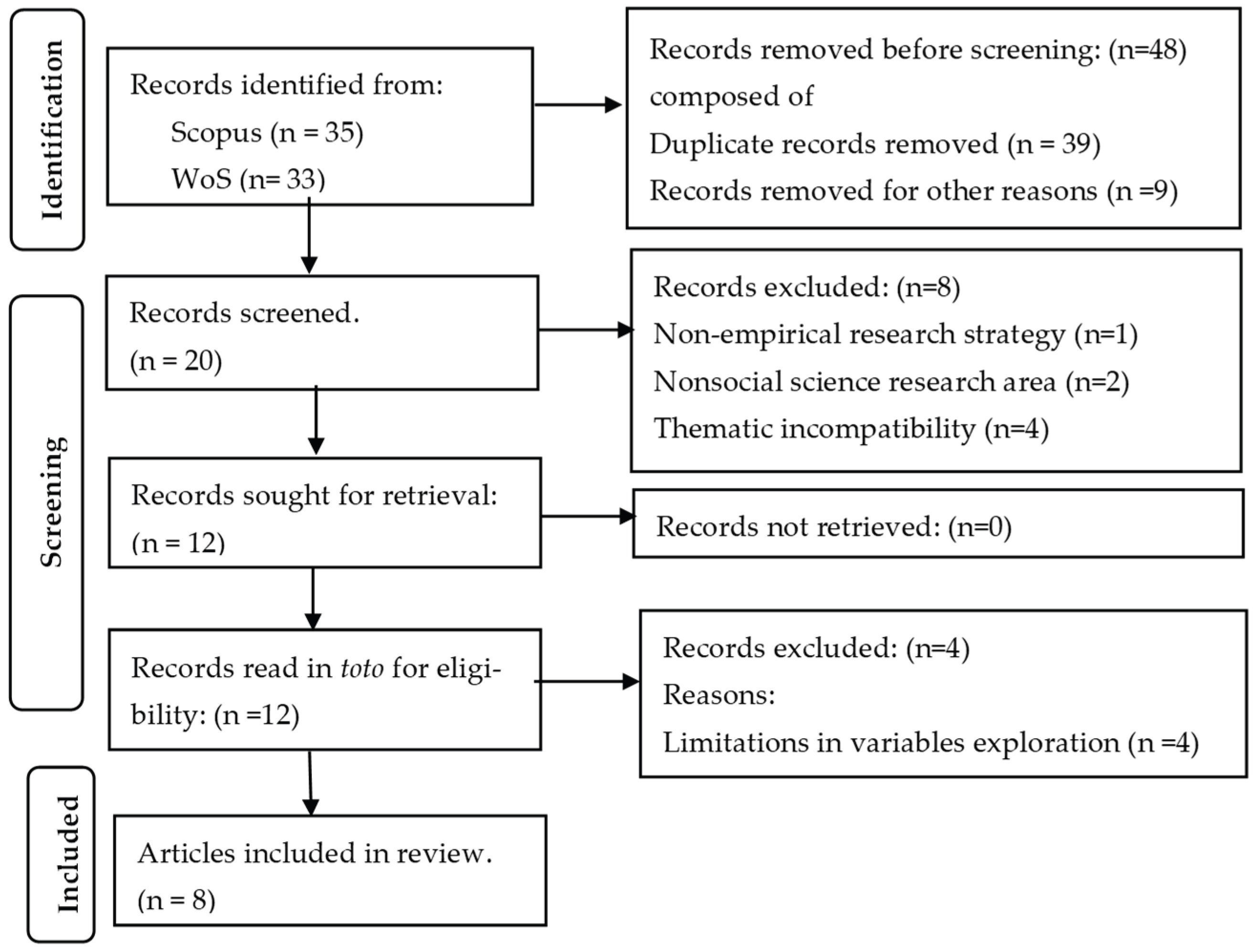
Figure 2.
PRISMA flow diagram for articles from 2013- 2022.
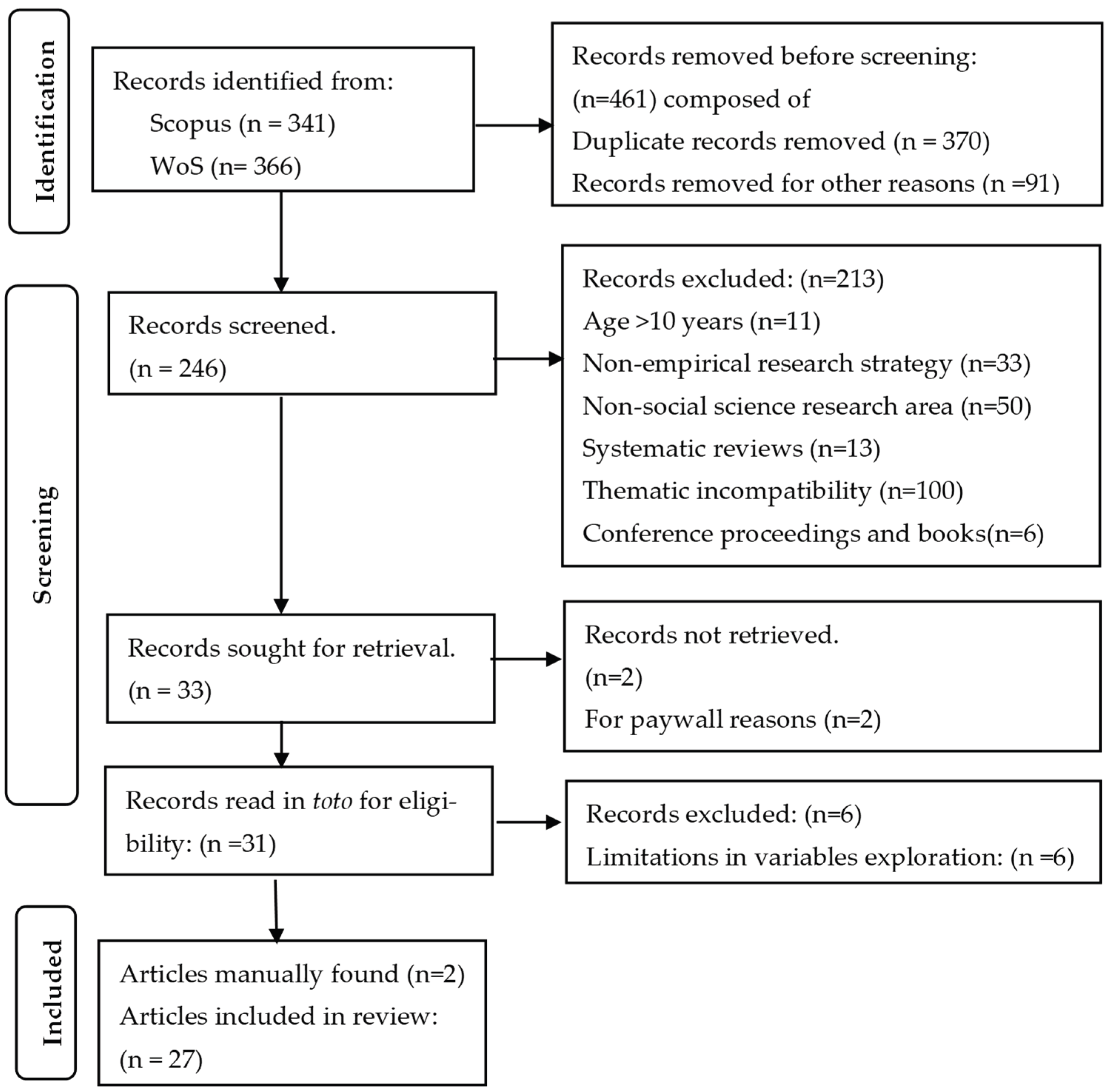
Disclaimer/Publisher’s Note: The statements, opinions and data contained in all publications are solely those of the individual author(s) and contributor(s) and not of MDPI and/or the editor(s). MDPI and/or the editor(s) disclaim responsibility for any injury to people or property resulting from any ideas, methods, instructions or products referred to in the content. |
© 2025 by the authors. Licensee MDPI, Basel, Switzerland. This article is an open access article distributed under the terms and conditions of the Creative Commons Attribution (CC BY) license (http://creativecommons.org/licenses/by/4.0/).
Copyright: This open access article is published under a Creative Commons CC BY 4.0 license, which permit the free download, distribution, and reuse, provided that the author and preprint are cited in any reuse.