

Submitted:
03 August 2025
Posted:
04 August 2025
You are already at the latest version
Abstract
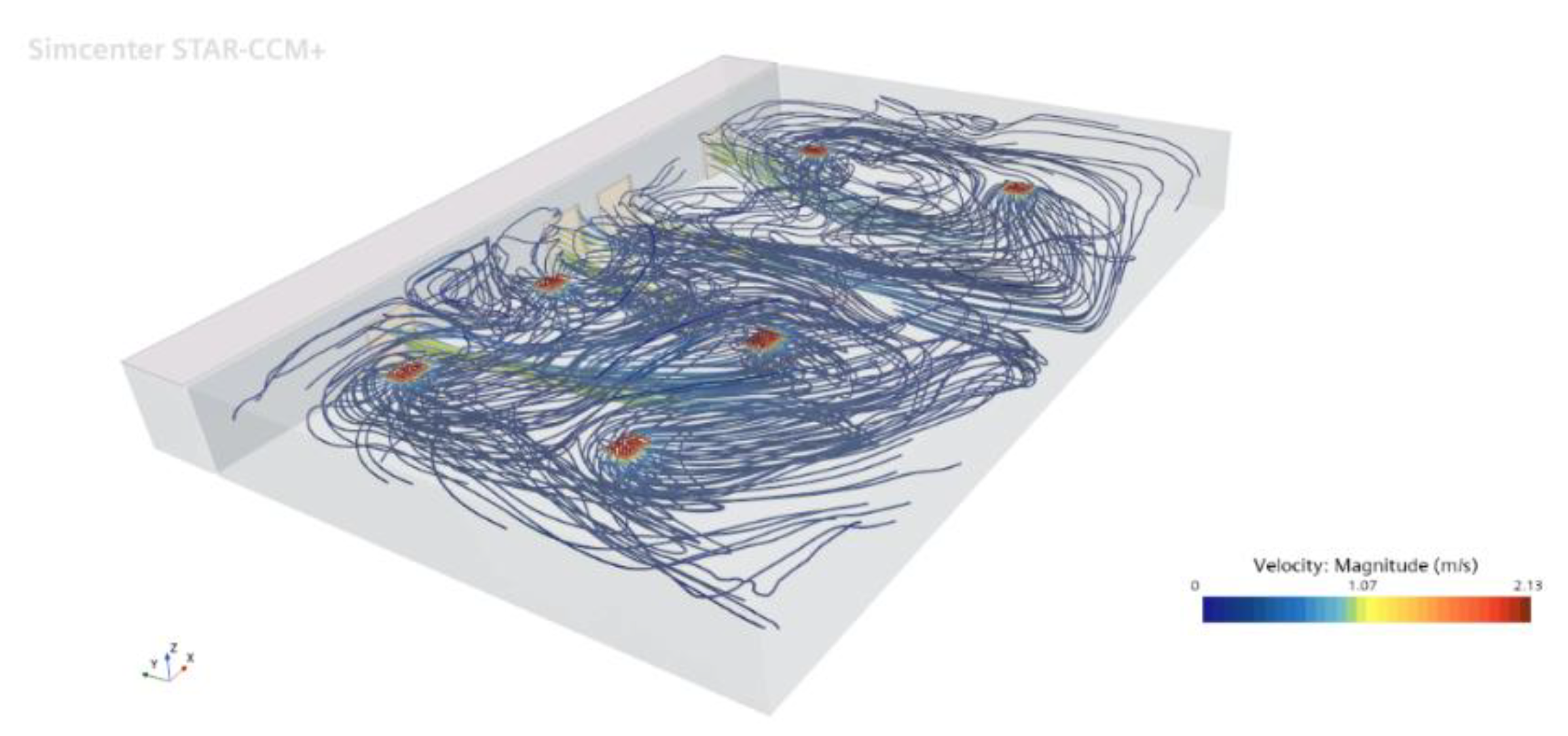
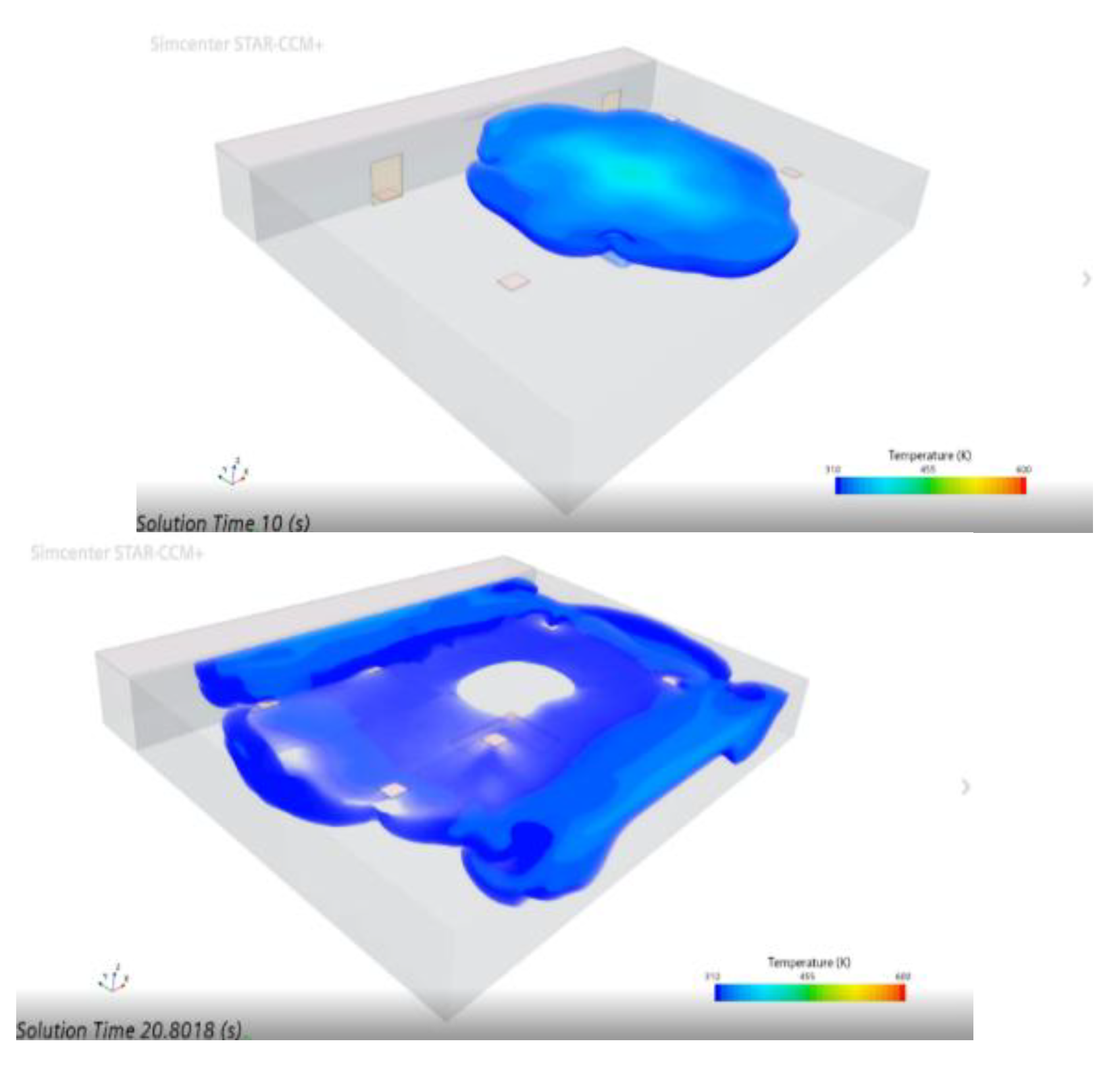
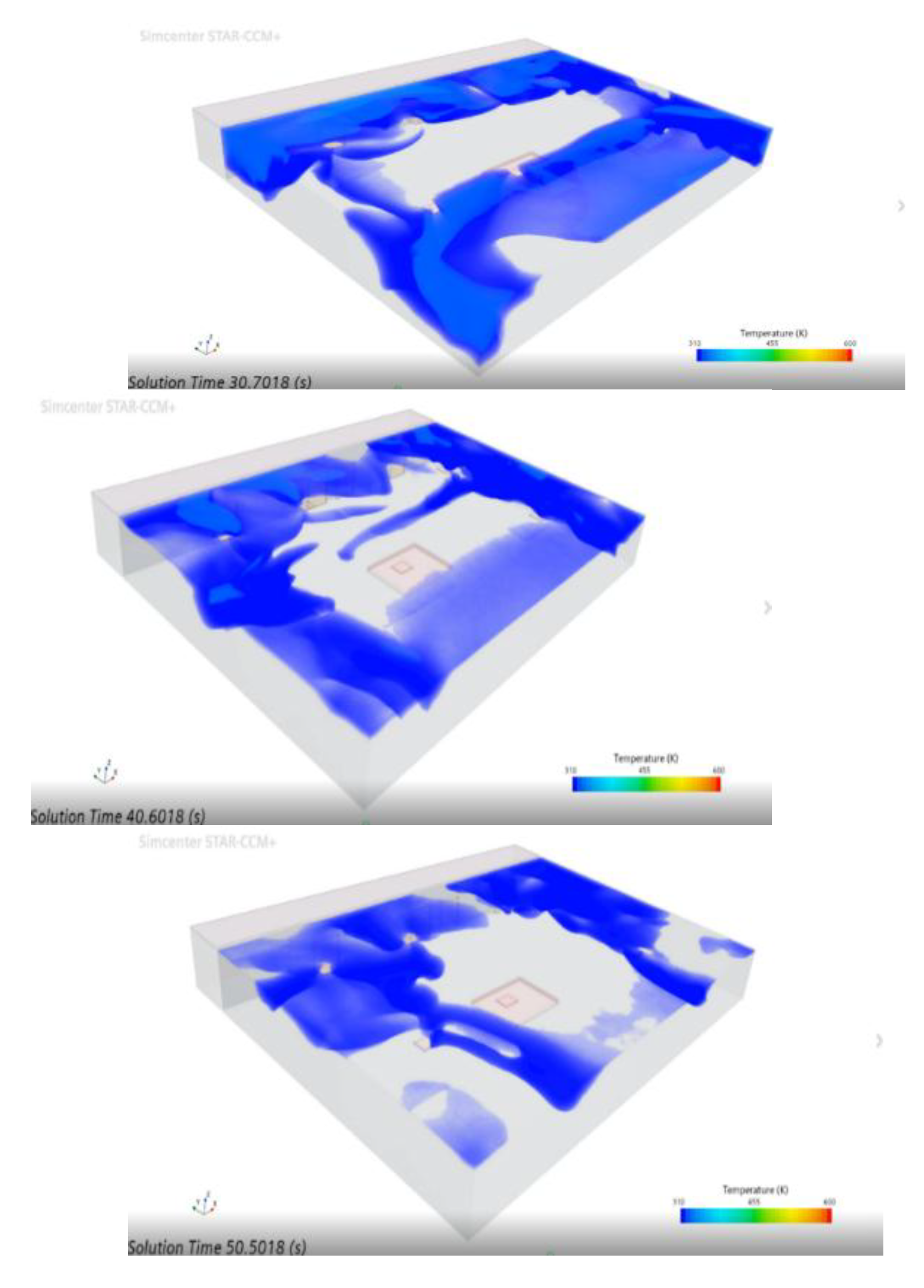
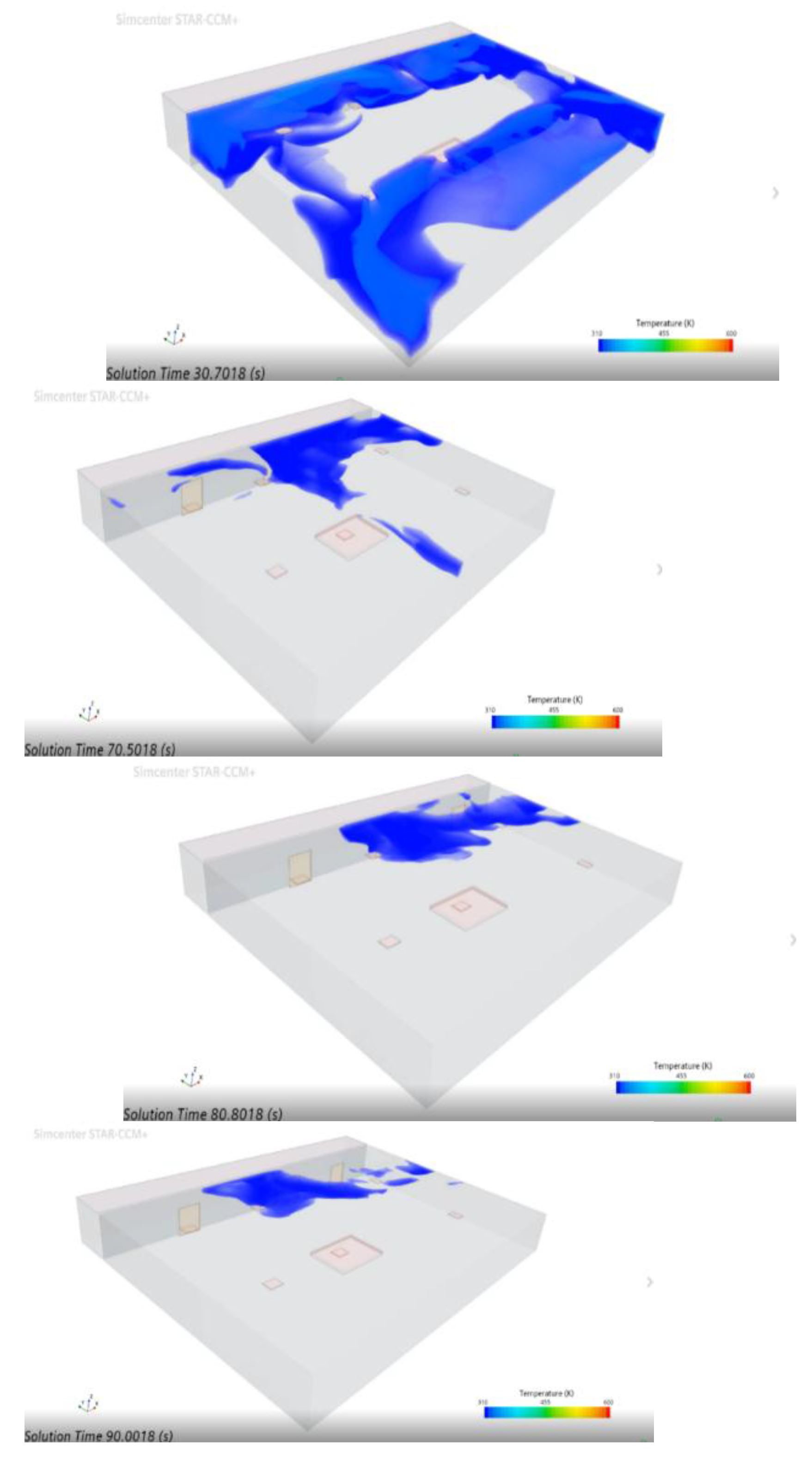
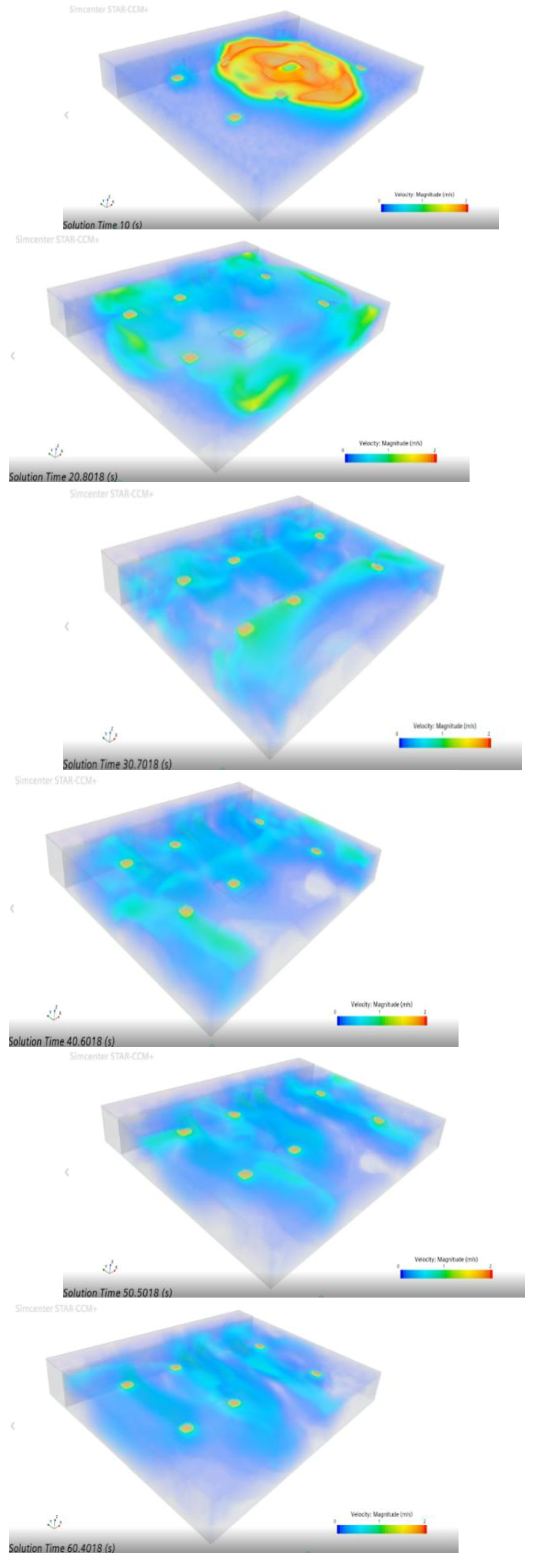
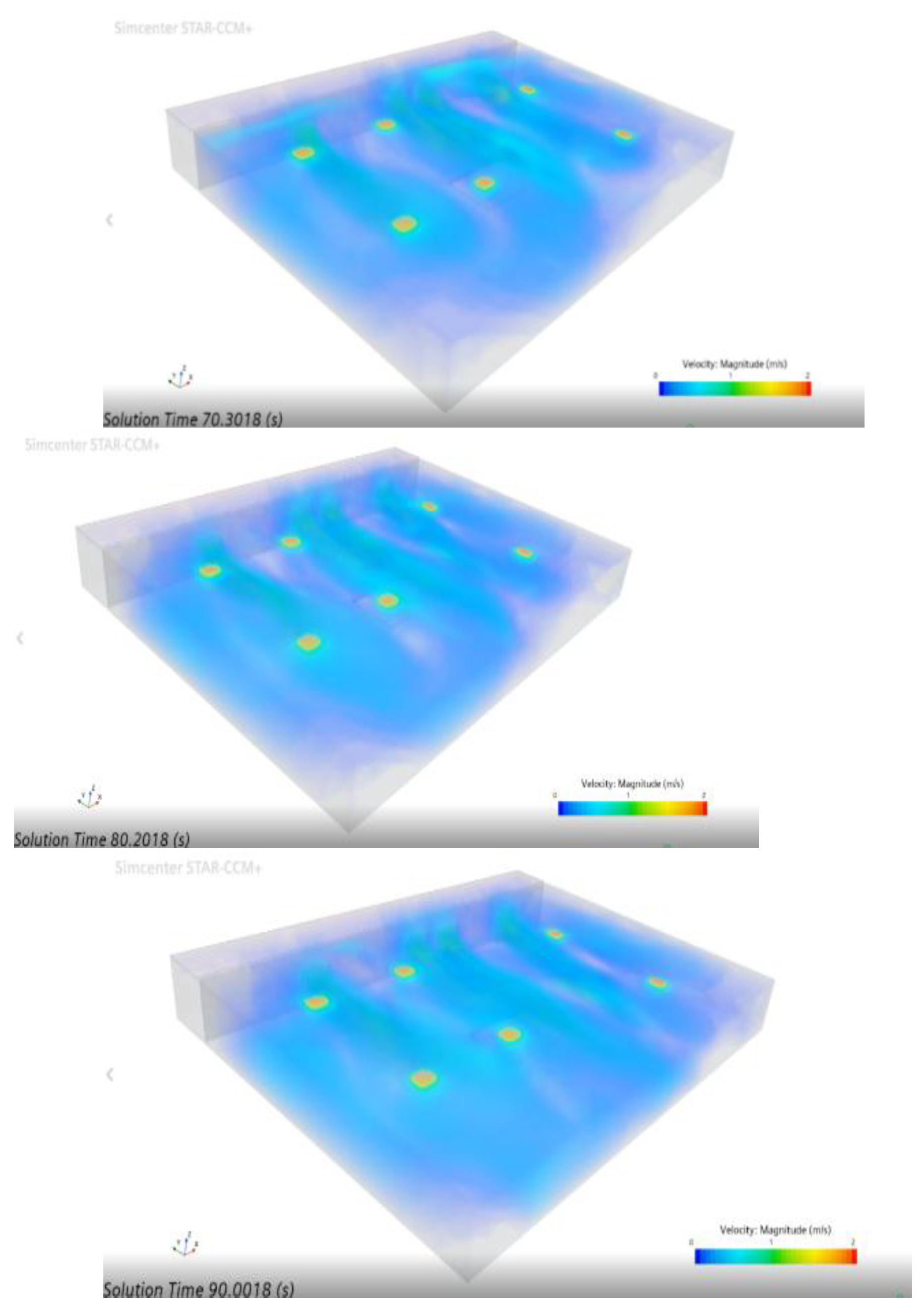
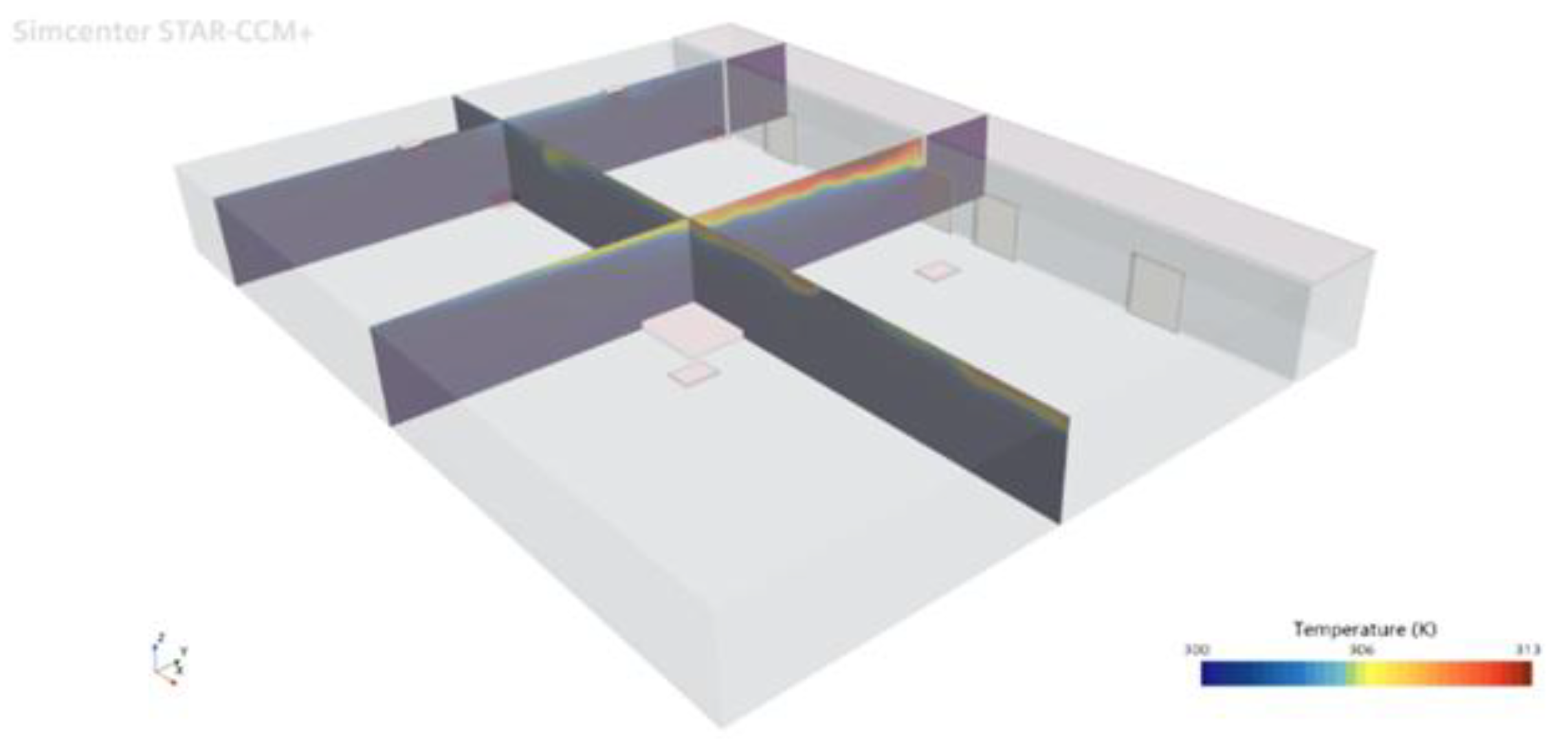
Smoke generated during a fire consists of toxic gases and fine particles that pose significant risks to human health and safety. Effective smoke evacuation is therefore critical to ensure safe evacuation and minimize health hazards. In this study, a comprehensive engineering design and CFD-based performance evaluation of a smoke evacuation system was carried out for a five-star hotel conference hall in Antalya, Türkiye. The system was designed in compliance with NFPA 92 guidelines, including the calculation of air flow rates, duct sizing, and component selection. The physical configuration was modeled using AutoCAD, and detailed CFD simulations were performed using Simcenter STAR-CCM+ software. The 90-second fire scenario was simulated in 10-second intervals to capture the transient behavior of smoke dispersion and ventilation efficiency. The CFD model incorporated boundary conditions based on calculated fire heat release rates and ventilation velocities. Results show that the ventilation system effectively reduced smoke accumulation, maintained critical visibility levels at evacuation height, and controlled temperature rise. Although experimental validation through cold smoke tests could not be conducted, the simulation results align with international literature benchmarks. This study contributes to the development of high-fidelity, time-dependent CFD analysis methods for smoke management systems and provides practical insights for fire safety engineers and building designers.
Keywords:
1. Introduction
1.1. Fire Smoke Evacuation Calculations

1.2. Smoke Evacuation Amounts According to Standards
1.3. Hotel Conference Hall Smoke Evacuation Calculation
1.4. Targeted Minimum Air Flow Amount
1.5. Minimum Smoke Extraction Values According to NFPA
1.6. Fire Smoke Exhaust Fan
2. Materials and Methods
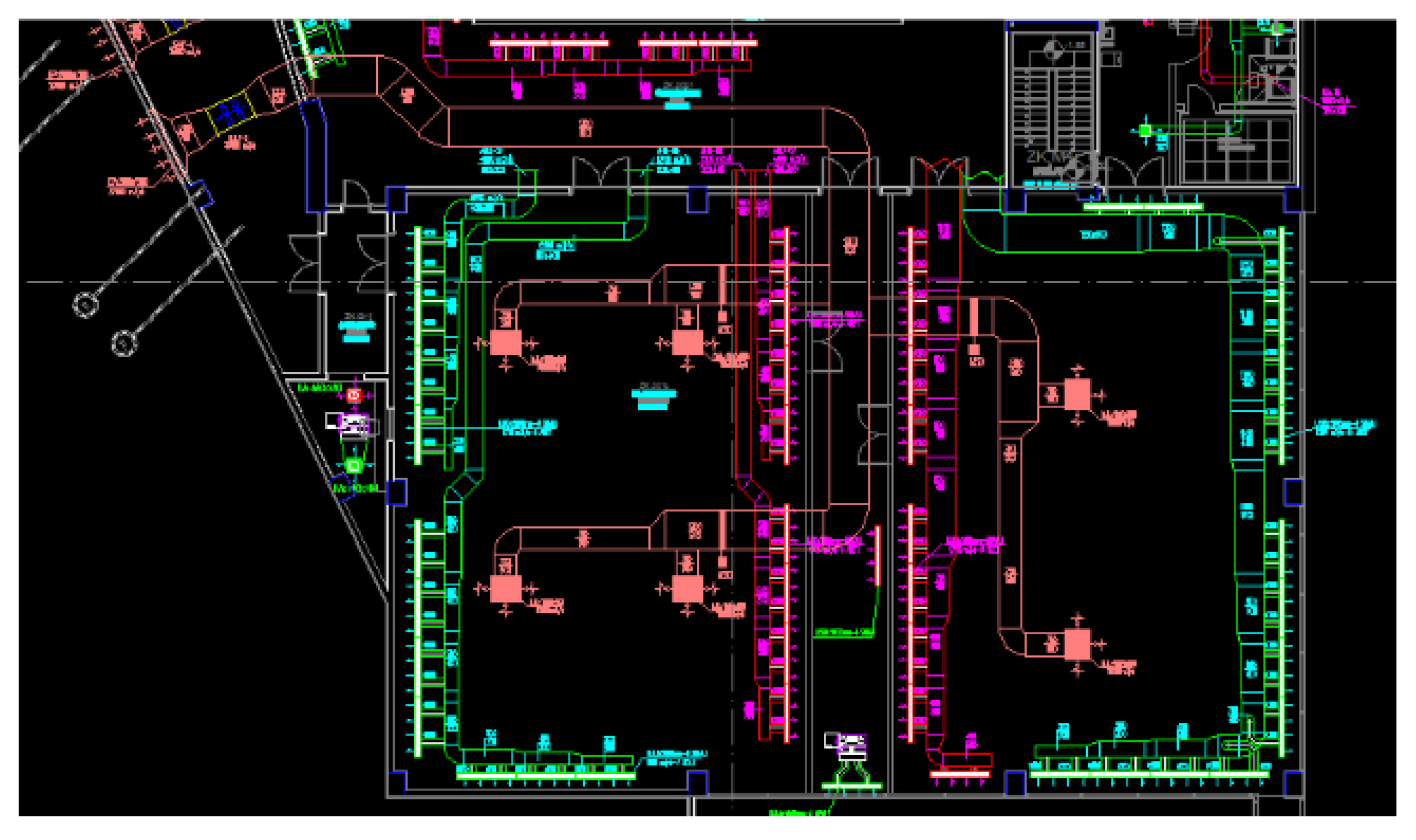
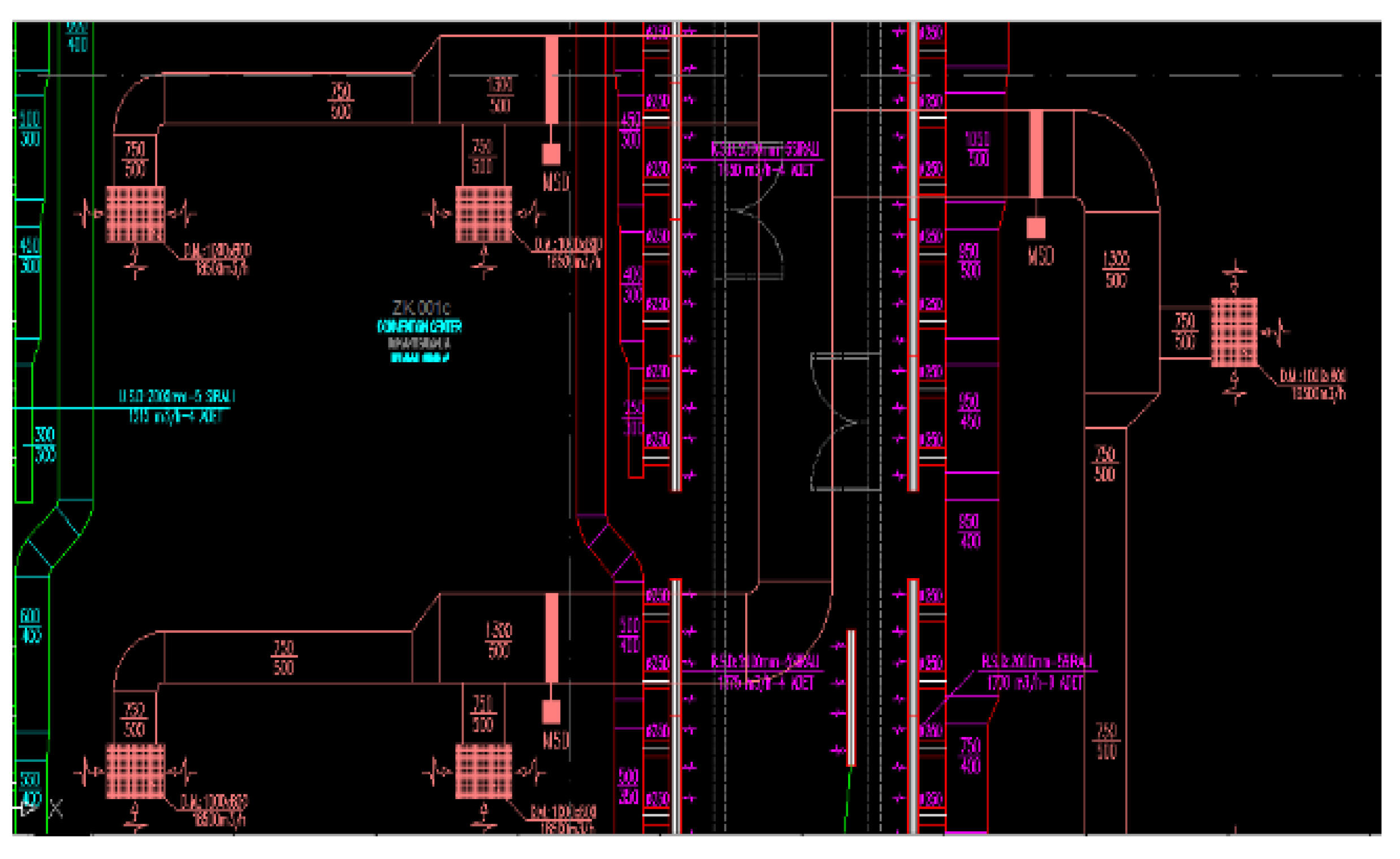
2.1. Congress Center Smoke Exhaust Calculation
2.2. Computational Fluid Dynamics (CFD)
2.3. Computational Fluid Dynamics Analysis Steps
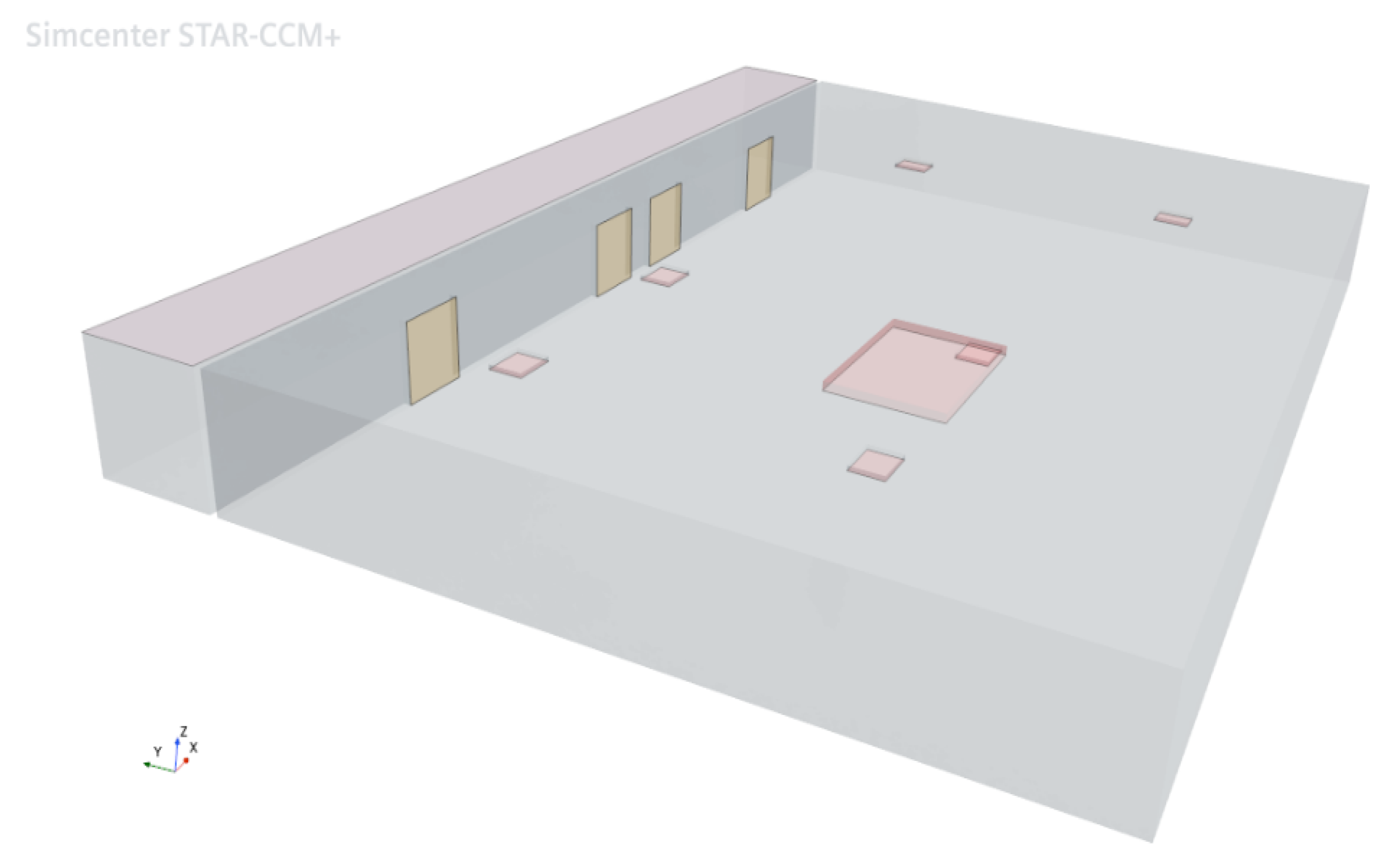
Geometry Creation
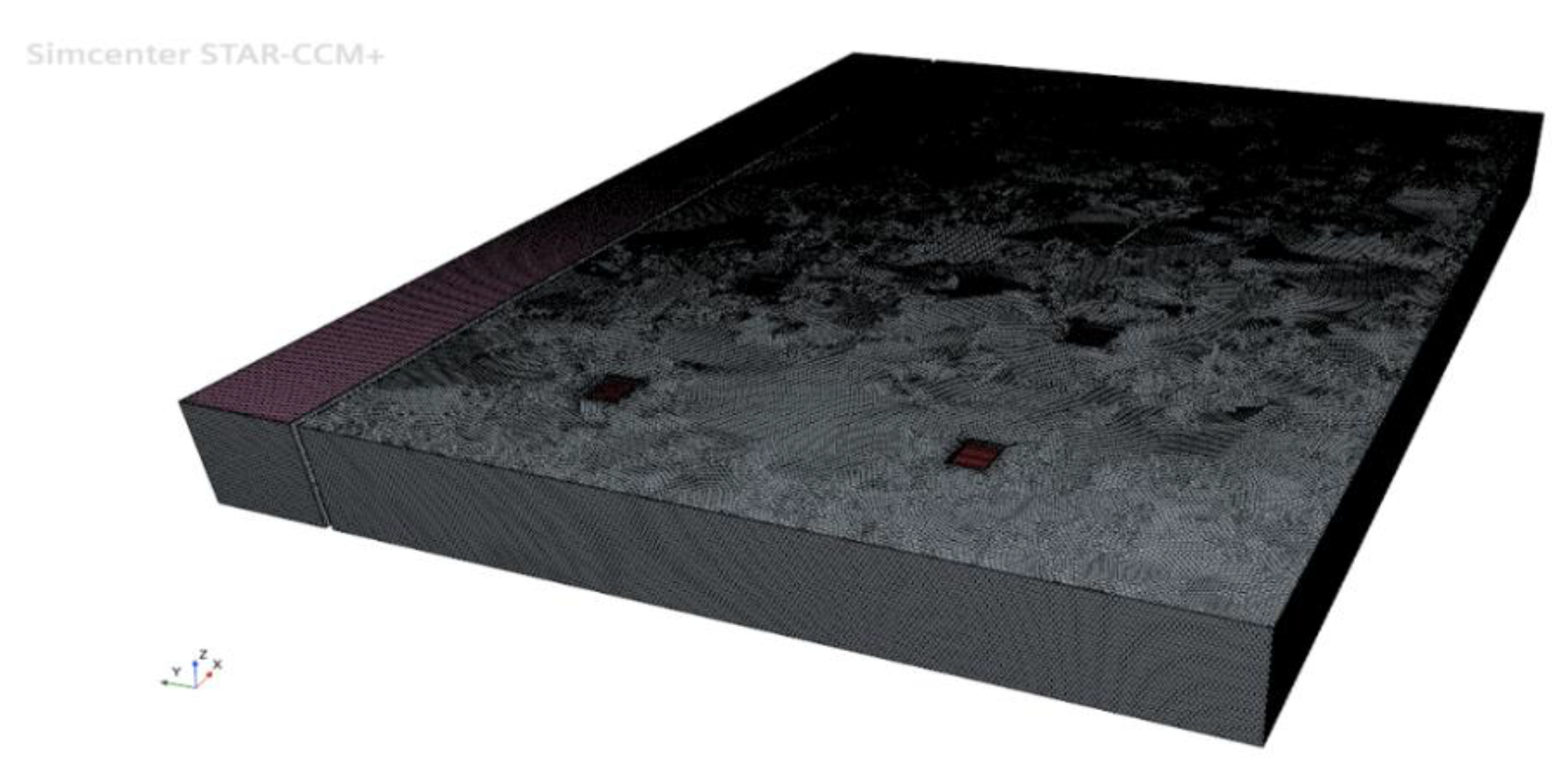
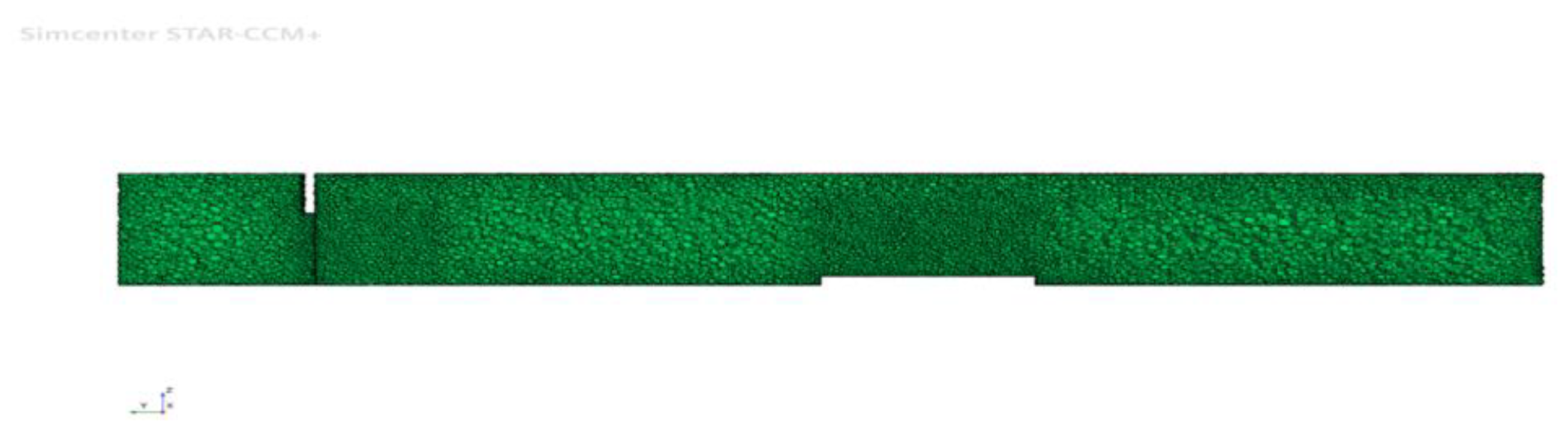
Meshing
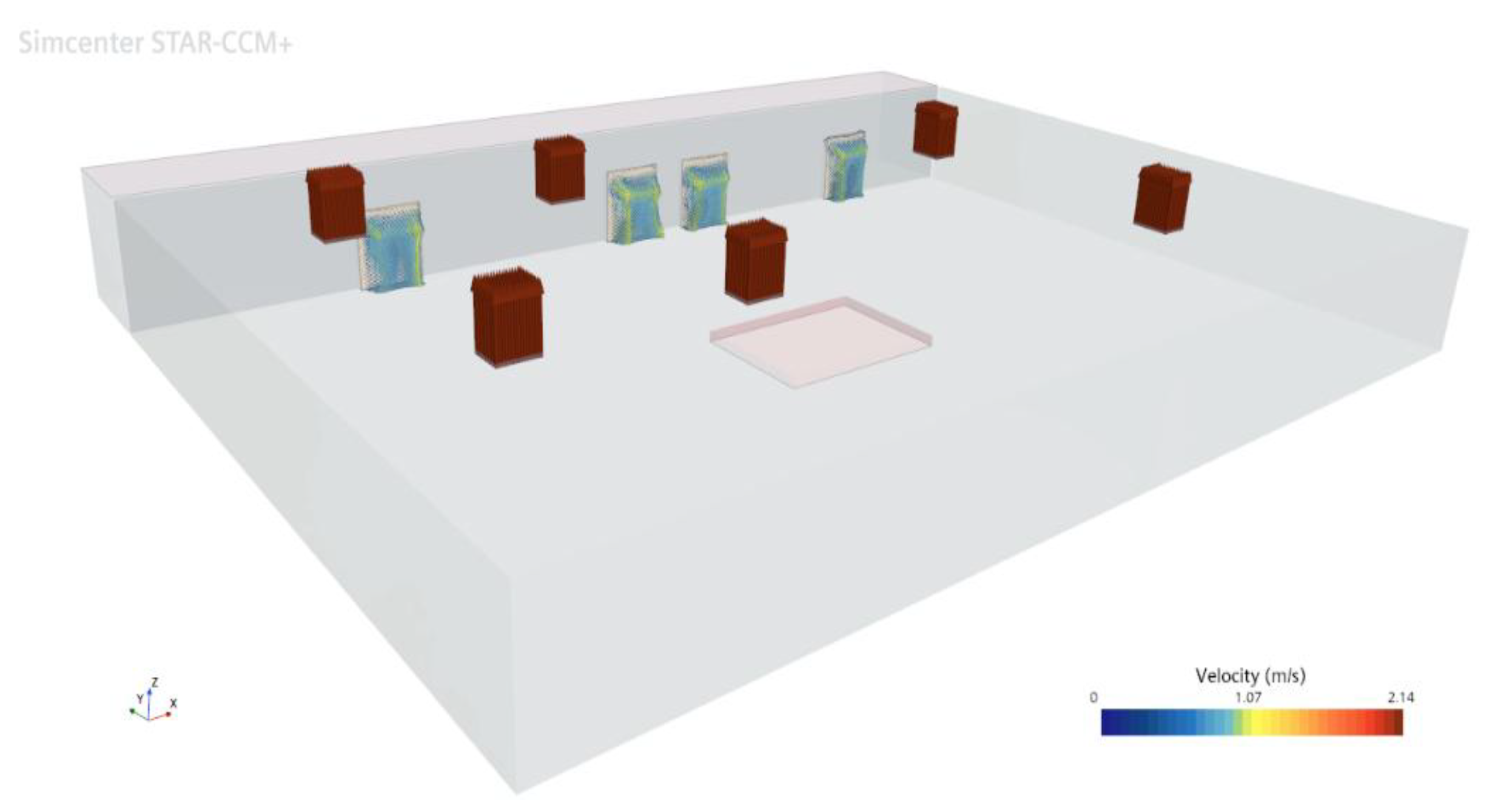
Boundary Conditions
Solution Settings
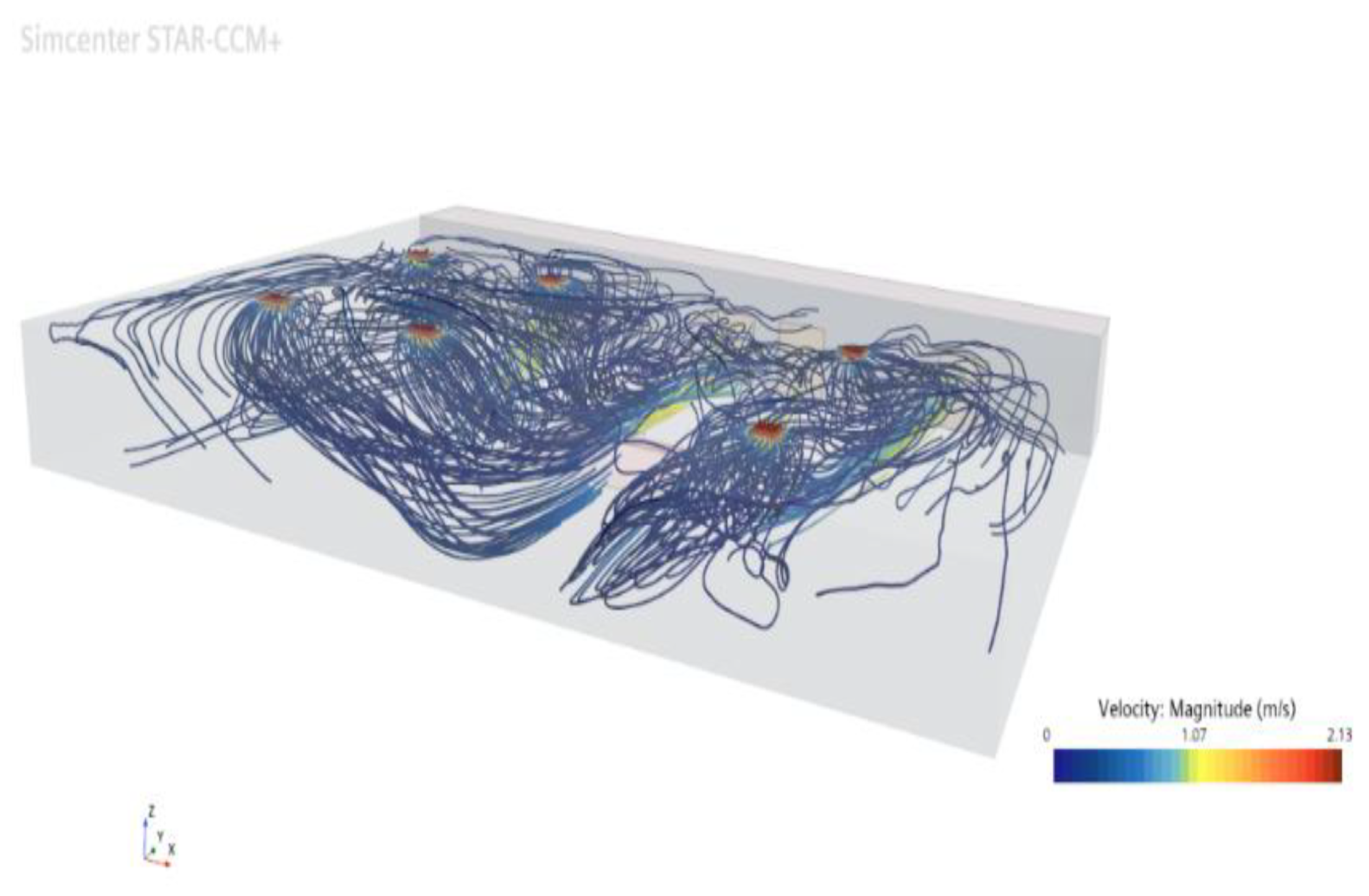
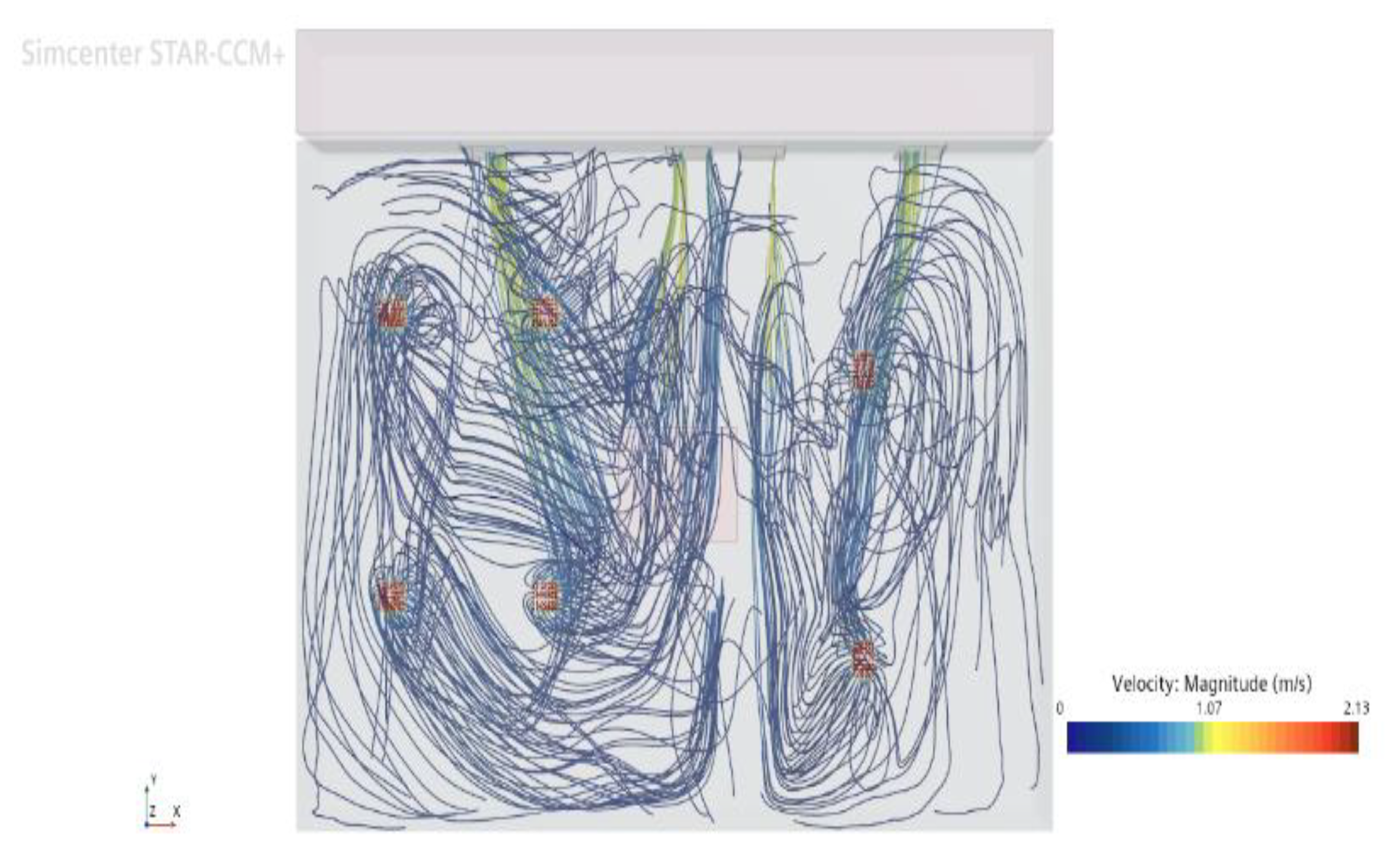
Post-Processing
3. Conclusions
References
- Stan, C.; Toma, C.; Ganea, G. (2021). Critical Factors in Smoke Control for Public Buildings. Fire Safety Journal, 120, 103056. [CrossRef]
- Chen, Y. (2019). Simulation of Smoke Movement in Hotel Corridors Using CFD. Building Simulation, 12, 45–55. [CrossRef]
- Wang, Z.; Zhang, L.; Zhao, H. (2020). Occupancy-Based Dynamic Smoke Exhaust Control in Large Spaces. Automation in Construction, 114, 103180. [CrossRef]
- Chowdhury, A. (2022). Fire Safety Optimization Through Adaptive Fan Systems. Journal of Building Performance, 13(3), 187–200.
- di Giorgio Martini, F.; Rossi, M. (2021). Air Velocity Requirements in Tunnels and Underground Structures. Tunnelling and Underground Space Technology, 108, 103746. [CrossRef]
- García-Soriano, G.; Ruiz, M.A. (2021). CFD Validation of Smoke Movement in Atriums. Fire Technology, 57, 1027–1046. [CrossRef]
- Abdeen, A.; Abdelkader, E. (2020). Evaluation of Static and Dynamic Smoke Extraction. Energy and Buildings, 223, 110158. [CrossRef]
- NFPA 92. (2021). Standard for Smoke Control Systems. National Fire Protection Association.
- Türkiye Yangın Yönetmeliği. (2022). Ulusal Yangın Güvenliği Kuralları. Çevre, Şehircilik ve İklim Değişikliği Bakanlığı.
- SFPE Handbook of Fire Protection Engineering. (2016). 5th ed.; Society of Fire Protection Engineers.
- Salamonowicz, P.; Jóźwiak, A. (2019). Influence of Ventilation Design on Smoke Stratification. Fire Safety Journal, 105, 98–106. [CrossRef]
- Coşkun, A.; Demir, M. (2018). Mechanical Smoke Extraction Systems in Hospitality Spaces. Journal of Fire Sciences, 36(6), 475–491. [CrossRef]
- Ghaderi, M.; Yaghoubi, M. (2019). CFD Study on Smoke Control in High-Rise Buildings. Energy and Buildings, 199, 133–142. [CrossRef]
- Nowlen, N. P., & Back, G. G. (2001). Design and evaluation of smoke management systems (NIST GCR 01–820). National Institute of Standards and Technology. [CrossRef]
- ASHRAE Handbook—HVAC Applications. (2020). Chapter 51: Fire and Smoke Control.
- Salamonowicz, P.; Koziński, M. (2021). Transient CFD Analysis for Fire Safety Assessment. Fire and Materials, 45(2), 220–232. [CrossRef]
- NFPA 92B. (2015). Guide for Smoke Management Systems in Malls, Atria, and Large Spaces.
- Thomas, P.H.; Linden, P.F. (1990). Plume Behavior and Buoyancy in Enclosed Fires. Fire Safety Journal, 16(1), 3–20. [CrossRef]
- European Committee for Standardization. (2017). EN 12101-5: Smoke and heat control systems—Part 5: Guidelines on functional recommendations and calculation methods. Brussels, Belgium: CEN.
- British Standards Institution. (2019). BS 7974:2019 – Application of fire safety engineering principles to the design of buildings – Code of practice. London, UK: BSI Standards Publication.
- Zhang, X.; Lin, C. (2018). Airflow Rates for Fire Egress in Hotel Settings. Building and Environment, 135, 240–249. [CrossRef]
- Stan, C. et al. (2022). Simulation of Smoke Propagation in Hotel Fire. Fire Dynamics Reports, 9(2), 65–79.
- Jang, S.; Lee, H.J. (2019). Smoke Control Strategies in High-Ceilinged Buildings. Energy Procedia, 158, 2273–2279. [CrossRef]
- Joo, H.; Kim, Y.S. (2021). Case Study of Fan Placement and Exhaust Optimization in Large Halls. Fire Technology, 57, 789–807. [CrossRef]
- Tabibian, S.; Koo, K. (2020). Hybrid Smoke Control Using Simulation and Sensors. Journal of Building Performance, 11(4), 329–342.
- Al-Mansour, H.; Alturki, F. (2020). Air Flow Requirements per Occupant for Hotel Safety. Safety Science, 128, 104763. [CrossRef]
- Ferrero, F.; Bortolotto, S. (2022). Noise and Efficiency Analysis of Smoke Exhaust Fans. Applied Acoustics, 180, 108103. [CrossRef]
- Tsai, C.H.; Chen, M. (2020). Fan-Induced Turbulence in Smoke Management. Building Simulation, 13, 651–663. [CrossRef]
- Chowdhury, M.I.; Rahman, M.M. (2017). Plume Flow Modeling in Confined Fire Events. Fire Safety Journal, 91, 377–384. [CrossRef]
- Chen, R.; Zhang, J. (2020). CFD Model Validation for Smoke Evacuation. Energy and Buildings, 209, 109672. [CrossRef]
- Yu, J.; Li, Q. (2018). Ventilation Layout Effects on Smoke Dispersion in Auditoriums. Fire Safety Journal, 95, 45–54. [CrossRef]
- Wu, C.; Wang, X. (2019). Heat Transfer Analysis in Fire-Induced Smoke Layers. Energy and Buildings, 200, 112–120. [CrossRef]
- Wang, Q.; Xie, L. (2021). CFD Simulation of Dynamic Damper Control. Fire Technology, 57, 1227–1242. [CrossRef]
- Dong, H.; Sun, Y. (2020). Smoke Evacuation Performance in Tunnel Fires. Tunnelling and Underground Space Technology, 99, 103362. [CrossRef]
- Yuan, H.; Zhang, D. (2017). Smoke Layer Formation Dynamics in Multi-Story Buildings. Journal of Building Engineering, 10, 88–96. [CrossRef]
- Morita, K.; Yamada, T. (2020). Empirical Testing of Plume Equations for Smoke Exhaust. Fire and Materials, 44(1), 70–83. [CrossRef]
- Hadjisophocleous, G.; Benichou, N. (2019). Modeling Limitations in Fire Simulation. Fire Science Reviews, 8, 12. [CrossRef]
- Peng, X.; Zhao, C. (2019). RNG k-ε Model for Confined Fire-Induced Flows. Applied Thermal Engineering, 157, 113714. [CrossRef]
- Dong, Z.; Wu, F. (2021). Airport Smoke Management: Performance Testing and Design. Journal of Airport Management, 15(2), 121–137.
- Araya, D.; Fernández, C. (2019). Smoke Exhaust Design Based on Egress Times. Journal of Fire Sciences, 37(3), 210–228. [CrossRef]
- NFPA 557. (2020). Standard for Determination of Fire Load for Use in Structural Fire Protection Design. National Fire Protection Association.
- Klote, J. H., & Milke, J. A. (2002). Principles of smoke management. ASHRAE and Society of Fire Protection Engineers. ISBN: 978-1-931862-15-0.
- Thomas, P.H. (1981). Buoyant Plumes and Smoke Columns: Theoretical Review. Fire Research Notes, 923.
- Kaye, N.B.; Hunt, G.R. (2006). Plume Entrainment in Large Enclosures. Building and Environment, 41(9), 1142–1151. [CrossRef]
- Peng, X.; Li, Z. (2021). Smoke Migration in Subway Stations under Emergency Conditions. Tunnelling and Underground Space Technology, 116, 104114. [CrossRef]
- John, S.; Kumar, V. (2022). STAR-CCM+ Based Fire Simulation in Enclosures. Journal of Mechanical Engineering and Sciences, 16(3), 9045–9057. [CrossRef]
- Huang, H., & Wang, Y. (2020). Numerical simulation of smoke spread in large-space buildings using FDS. Journal of Building Performance, 11(1), 1–10. [CrossRef]
- Tang, L.; Zhang, H. (2020). Mesh Sensitivity in Transient Fire Simulations. Fire Safety Journal, 105, 34–45. [CrossRef]
- Gutiérrez, R.; López, F. (2019). Sensor-Based Validation of Smoke Distribution in CFD Models. Sensors, 19(12), 2722. [CrossRef]
- Lin, C.; Liu, Z. (2019). Tracer Gas Methods for CO Detection in CFD Validations. Building Simulation, 12, 833–845. [CrossRef]
- Li, J.; Liu, Y. (2019). Mesh Generation Strategies in CFD for Fire Applications. Fire Safety Journal, 105, 211–223. [CrossRef]
- Liu, Z.; Chen, R. (2021). Mesh Sensitivity and Turbulence Effects in STAR-CCM+ Simulations. Building Simulation, 14(6), 1157–1170. [CrossRef]
- Martinez, C.; Herrmann, M. (2020). Turbulence Modeling in Atrium Fire Scenarios. Fire Technology, 56, 1291–1312. [CrossRef]
- Zhao, B.; Zhang, Y. (2017). Benchmarking STAR-CCM+ for Indoor Fire Simulations. Journal of Building Performance Simulation, 10(3), 251–263. [CrossRef]
- Li, X.; Tang, L. (2018). Heat Release Rates of Furnishing Materials in Fire Modeling. Journal of Fire Sciences, 36(5), 411–428. [CrossRef]
- Shokri, M., & Ahmadi, M. (2021). CFD modeling of smoke movement using CO proxy indicators in fire scenarios. Fire Safety Journal, 120, 103050. [CrossRef]
- Khosravi, M., & Barati, M. (2022). CO and HCN Proxy Modeling for Smoke Simulation. International Journal of Thermal Sciences, 174, 107396. [CrossRef]
- Nguyen, H., & Patel, R. (2020). High iteration CFD simulations for transient fire behavior. Fire Technology, 56, 345–362. [CrossRef]
- Ramos, J., & Delgado, A. (2019). Transient modeling and validation in fire engineering CFD studies. Fire and Materials, 43, 580–593. [CrossRef]
- Peterson, L., & Green, J. (2021). CFD best practices for smoke evacuation analysis in large buildings. Building Simulation, 14, 1423–1436. [CrossRef]
- Lee, J., & Park, S. (2021). Dynamic airflow strategies for high-occupancy buildings under fire. Building and Environment, 191, 107601. [CrossRef]
- Nunes, F., & Ribeiro, L. (2020). Experimental validation of CFD fire models using full-scale tunnel tests. Tunnelling and Underground Space Technology, 99, 103372. [CrossRef]
- Park, J. H., & Kim, D. (2019). Optimization of smoke exhaust fan systems using ANSYS Fluent. Fire Technology, 55(3), 617–634. [CrossRef]
- Vieira, P., & Sousa, M. (2018). Validation of smoke layer interface height in large rooms using CFD. Fire Safety Journal, 98, 77–87. [CrossRef]
- Zhang, Y., & Zhao, B. (2020). Simulation of toxic gas dispersion in multi-room buildings. Journal of Hazardous Materials, 392, 122352. [CrossRef]
- Yuan, H., & Zhang, D. (2017). Smoke Layer Formation Dynamics in Multi-Story Buildings. Journal of Building Engineering, 10, 88–96. [CrossRef]
- Hadjisophocleous, G., & Benichou, N. (2019). Modeling Limitations in Fire Simulation. Fire Science Reviews, 8, 12. [CrossRef]
- Ghaderi, M., & Yaghoubi, M. (2019). CFD Study on Smoke Control in High-Rise Buildings. Energy and Buildings, 199, 133–142. [CrossRef]
- Santos, F., & Oliveira, L. (2021). Validation of CFD smoke models through corridor-scale experiments. Fire and Materials, 45(5), 607–621. [CrossRef]
- Wang, L., & Sun, Z. (2022). Impact of atrium shape on smoke stratification and clearance. Fire Safety Journal, 130, 103519. [CrossRef]
- Morita, K., & Yamada, T. (2020). Empirical Testing of Plume Equations for Smoke Exhaust. Fire and Materials, 44(1), 70–83. [CrossRef]
- Lee, D., & Cho, M. (2020). Heat and Smoke Transport in Multi-Zone Structures: A CFD Approach. Applied Thermal Engineering, 176, 115351. [CrossRef]
- Li, H., & Wu, C. (2021). Multi-sensor fusion for smoke control systems. Sensors, 21(6), 2184. [CrossRef]
- Dong, Z., & Wu, F. (2021). Airport Smoke Management: Performance Testing and Design. Journal of Airport Management, 15(2), 121–137.
- Wang, Q., & Xie, L. (2021). CFD Simulation of Dynamic Damper Control. Fire Technology, 57, 1227–1242. [CrossRef]
- Tanaka, K., & Suzuki, Y. (2020). Critical review of fixed airflow strategies in fire engineering. Fire Safety Journal, 112, 102975. [CrossRef]
- Martínez, M., & López, A. (2019). Smoke behavior in enclosed atriums: CFD and sensor data comparison. Journal of Building Performance, 10(4), 333–346. [CrossRef]
- Silva, R., & Costa, L. (2020). Analysis of fire-induced smoke movement using hybrid modeling. Building Simulation, 13, 1023–1036. [CrossRef]
- Barros, F., & Nascimento, J. (2021). Real-time CFD visualization for smoke management systems. Automation in Construction, 125, 103623. [CrossRef]
- Araya, D., & Fernández, C. (2019). Smoke Exhaust Design Based on Egress Times. Journal of Fire Sciences, 37(3), 210–228. [CrossRef]
- Park, H., & Lee, S. (2021). Adaptive Fan Control for Fire Safety in Subway Platforms. Tunnelling and Underground Space Technology, 112, 103885. [CrossRef]
- Almeida, T., & Mendes, F. (2018). Turbulent buoyancy modeling for atrium smoke flows. Fire Technology, 54, 1457–1475. [CrossRef]
- Silva, M., & Gonçalves, R. (2020). Fire performance analysis of HVAC-integrated exhaust systems. Energy and Buildings, 228, 110492. [CrossRef]
- Kwon, Y., & Ryu, H. (2022). Fail-safe design of ventilation control panels for fire scenarios. Fire Safety Journal, 130, 103515. [CrossRef]
- Ferrero, F., & Bortolotto, S. (2022). Noise and Efficiency Analysis of Smoke Exhaust Fans. Applied Acoustics, 180, 108103. [CrossRef]
- Borges, L., & Freitas, R. (2021). Experimental design for emergency smoke control in educational buildings. Fire and Materials, 45(3), 295–309. [CrossRef]
- Paredes, J., & Santana, E. (2020). CFD-assisted fire engineering design in high-rise hotels. Journal of Building Engineering, 31, 101368. [CrossRef]
- Tsai, C.H., & Chen, M. (2020). Fan-Induced Turbulence in Smoke Management. Building Simulation, 13, 651–663. [CrossRef]
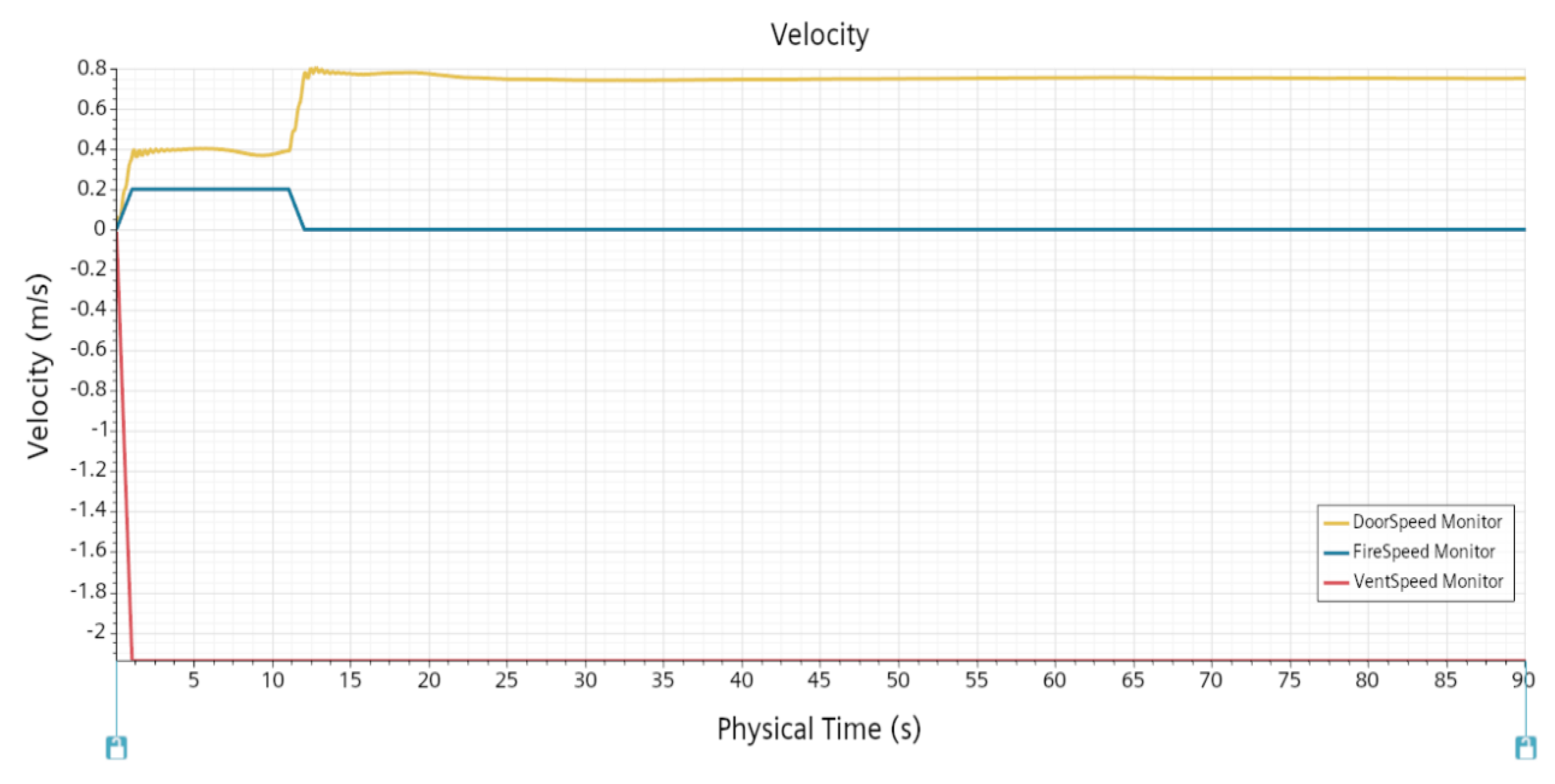
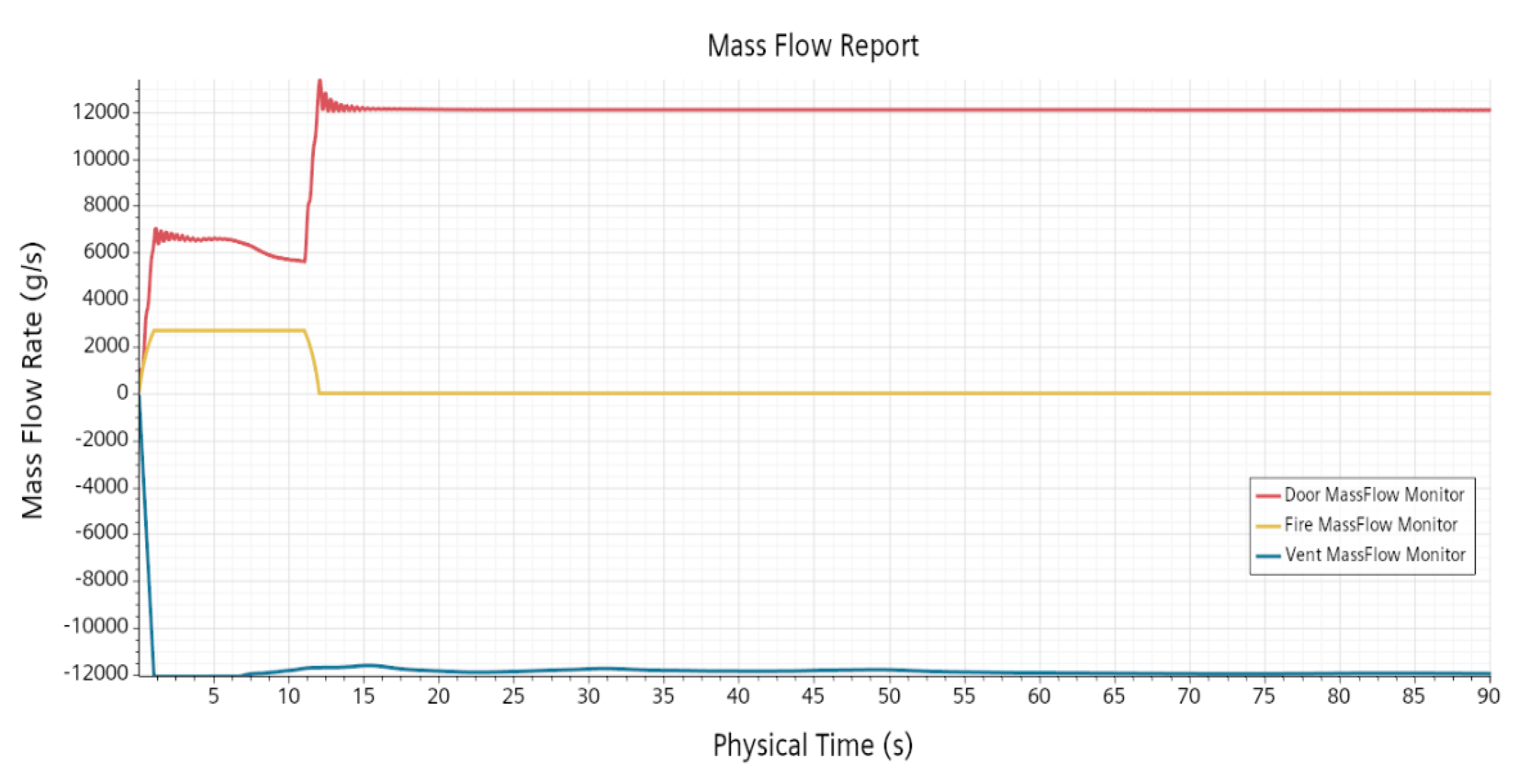
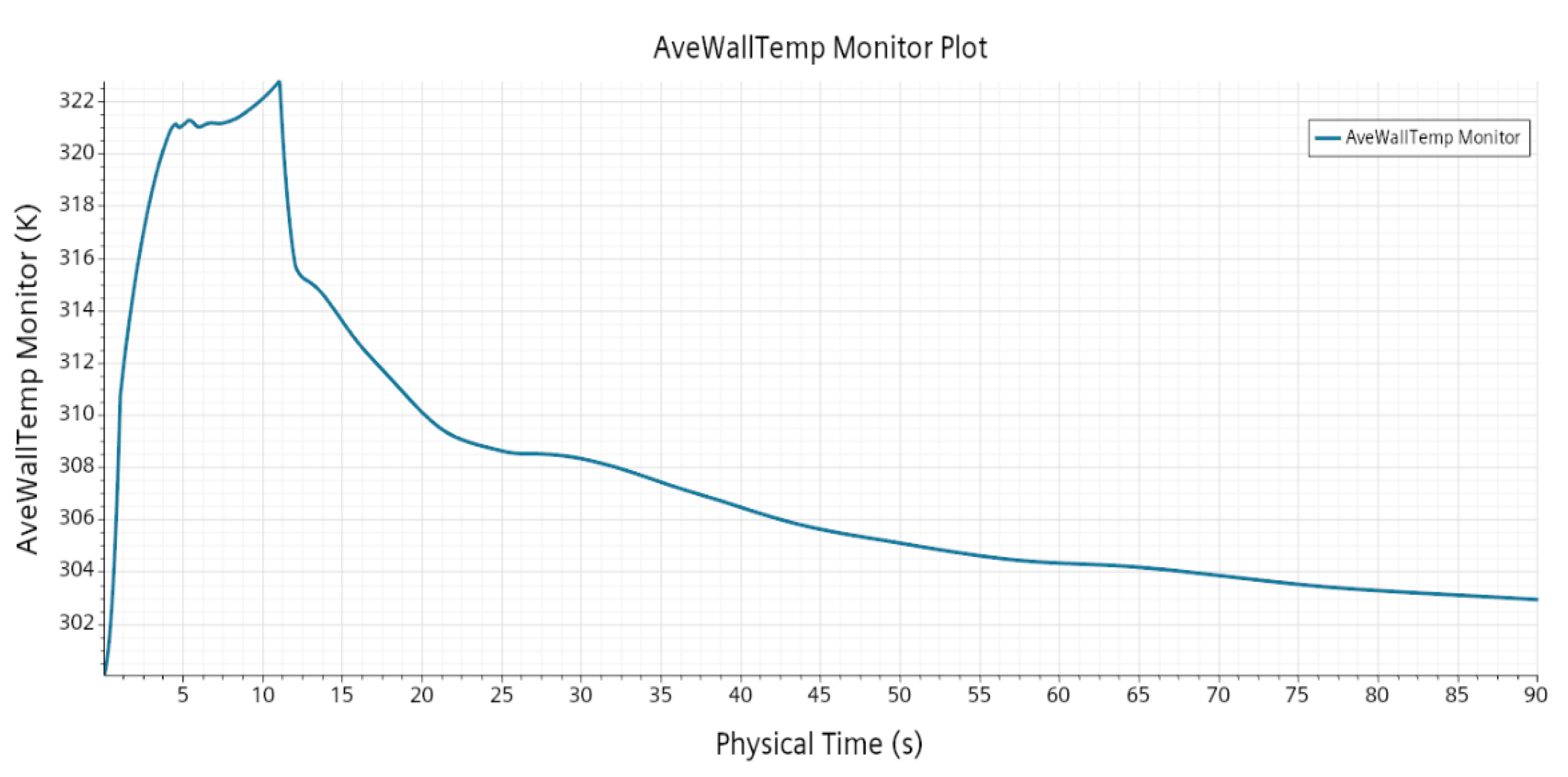

| Time(s) | Ventilation speeds (m/s) | Fire rates(m/s) | Temperature (K) |
|---|---|---|---|
| 0 | 0 | 0 | 300 |
| 1 | 2,141204 | 0,2 | 573 |
| 11 | 2,141204 | 0,2 | 573 |
| 12 | 2,141204 | 0 | 300 |
| 20 | 2,141204 | 0 | 300 |
| 25 | 2,141204 | 0 | 300 |
| 90 | 2,141204 | 0 | 300 |
Disclaimer/Publisher’s Note: The statements, opinions and data contained in all publications are solely those of the individual author(s) and contributor(s) and not of MDPI and/or the editor(s). MDPI and/or the editor(s) disclaim responsibility for any injury to people or property resulting from any ideas, methods, instructions or products referred to in the content. |
© 2025 by the authors. Licensee MDPI, Basel, Switzerland. This article is an open access article distributed under the terms and conditions of the Creative Commons Attribution (CC BY) license (http://creativecommons.org/licenses/by/4.0/).