
Submitted:
31 July 2025
Posted:
01 August 2025
You are already at the latest version
Abstract
Professor Hong Chaosheng, as the founding pioneer of China's hydrogen and helium cryogenic technology, played a pivotal role in advancing this field from its inception to global competitiveness. This paper systematically reviews the seven-decade cryogenic research trajectory of the Technical Institute of Physics and Chemistry, CAS (formerly the Cryogenic Center), with particular emphasis on milestone scientific achievements and their significant applications. In the 1960s, the Institute's breakthrough in long-piston expander precooled helium liquefaction technology provided critical support for China's space technology and superconductivity research. Since the 21st century, building upon Professor Hong's academic legacy, the Institute has successively overcome core technological challenges including high-speed helium turbine expanders, high-efficiency oil-flooded screw compressors, and superfluid helium temperature refrigeration systems. These innovations have yielded a complete series of large-scale cryogenic equipment with fully independent intellectual property rights. These advancements have been successfully implemented in national megaprojects such as neutron sources and Superconductivity magnet testing facilities, with some technical parameters reaching internationally leading standards. Looking ahead, with the rapid development of quantum computing and fusion energy, China's hydrogen-helium cryogenic technology will continue to optimize equipment performance while expanding application frontiers through enhanced international collaboration, thereby making greater contributions to cutting-edge scientific research and clean energy development.
Keywords:
Hong Chaosheng
; Hydrogen helium cryogenics
; Turbine expander
; Superconductivity
; Engineering
1. Introduction
During the 13th International Congress of Refrigeration (1971), the scientific community standardized the definitions of 'cryogenics' and 'cryogenic temperature' to differentiate them from conventional refrigeration. The upper limit for 'cryogenic temperature' was set at 120 K (-153℃), with 'cryogenics' encompassing all phenomena, processes, and technologies occurring below this threshold [1].
Cryogenic Engineering (or Cryogenics) is broadly defined as the engineering discipline dedicated to generating and utilizing deep cryogenic temperatures. It serves as an interdisciplinary field closely integrated with physics and various technological sciences. Globally, sectors such as space technology, large-scale scientific projects, environmental protection, and new energy are driving increasingly stringent technical and scalability demands for cryogenic engineering [2,3].
As the most difficult gas to liquefy, helium serves as the key cryogenic working fluid. Large-scale helium cryogenic systems (operating below 23 K/-250 ℃ with cooling power exceeding 150 W) enable critical applications in fundamental research, space technology, energy, and medicine due to helium's exceptional properties [4].
As a critical component of modern science and industry, hydrogen-helium cryogenics drives advancements in multiple frontier fields. Hong Chaosheng, China's pioneer in this discipline, led the development of the nation's first hydrogen/helium liquefaction systems and propelled theoretical, technological, and applied progress. His efforts in research and international collaboration were instrumental in elevating China's standing in global cryogenics. He won the Mendelson Award and received the Samuel C. Collins Award for his distinguished service in the development of cryogenic engineering in China and the world [5].
2. Overview of Development
In 1949, Qian Sanqiang and Peng Huanwu proposed that China should carry out basic research in low-temperature physics. In 1951, the Chinese Academy of Sciences decided to establish a cryogenic physics laboratory at the Institute of Applied Physics (now the Institute of Physics). In early 1953, the Institute of Physics of the Chinese Academy of Sciences established a cryogenic research group, which was expanded into a research division in 1959 to conduct research on hydrogen and helium cryogenic technology. The development of China's large-scale cryogenic technology was closely related to cryogenic liquid rocket technology. In the mid-1950s, in the development of space technology, new areas of cryogenic engineering that needed priority development included engine technology using liquid hydrogen and liquid oxygen, spacecraft cooling sources, ground-based space environment simulation equipment, etc. These more urgent demands for cryogenic technology became an important opportunity for Hong Chaosheng to carry out related research [5].
During the 1950s, China's gas industry remained in its nascent stage, exhibiting significant technological disparities compared to international standards. At that historical juncture, cryogenic technology played a pivotal role in the advancement of critical industrial sectors including steel production, natural gas processing, and chemical manufacturing. Recognizing its strategic importance, the Chinese government prioritized research and development in gas separation technologies. With substantial support from the Ministry of Machine Building and the Ministry of Chemical Industry, numerous cryogenic laboratories were established across the nation. Concurrently, technical universities incorporated specialized curricula in this field. These coordinated institutional developments laid a solid foundation for subsequent progress in hydrogen and helium cryogenic technologies.
In 1956, Hong Chaosheng, Zhu Yuanzhen and their team accomplished China's first hydrogen liquefaction using a liquefied-air precooling and high-pressure hydrogen throttling process, achieving a hydrogen liquefaction rate of 10 L/h (liters per hour). By 1959, Hong's team successfully realized helium liquefaction with liquid hydrogen precooling, attaining a liquefaction rate of 5 L/h and developing China's first Linde-type helium liquefier. These achievements marked significant breakthroughs in China's hydrogen-helium cryogenic technology, ushering in a new developmental phase [6]. For their contributions, Hong and his colleagues were awarded the 1978 National Science Conference Award for their work on "Development and Promotion of Cryogenic Technology Equipment."
In the development of helium liquefaction technology, the traditional piston-type expansion engine solution faced numerous technical challenges, including demanding machining precision requirements and difficulties in material selection. In 1962, Zhou Yuan from the Institute of Physics proposed an improved long-piston design. By December 1964, a helium liquefier precooled by this long-piston expansion engine was successfully developed, achieving an expansion engine efficiency of 67% and a liquefaction rate of 2.5 L/h [7]. The device's structure resembled the advanced Collins-type helium liquefier while offering advantages such as lower machining precision requirements, higher operational stability, and simpler maintenance. In 1965, the improved expansion engine-type helium liquefier (model CHY-5) with a capacity of 5 L/h reached internationally advanced technical standards. These helium liquefiers were subsequently manufactured in over 20 units with varying capacities ranging from 5 to 35 L/h, finding applications in various laboratories and industrial settings, and playing a crucial role in advancing China's superconductivity research.
In 1982, CAS established the Cryogenic Technology Experimental Center by merging its Physics Institute's Cryogenic Lab and Gas Plant, which later (1999) combined with the Photographic Chemistry Institute to create today's Technical Institute of Physics and Chemistry. Large helium cryogenic systems remained indispensable for advanced research, with liquid H₂/He technologies proving particularly crucial for scientific progress.
From 1965 to 1970, CAS physics institutes jointly developed China's first piston-expander helium cryogenic system (KM3) for space simulation, used in 1971 for inaugural recoverable satellite testing. Later upgraded with gas-bearing turbine expanders (800 W@20 K), it preceded the 1976 KM4 system featuring 88,000rpm turbine expanders delivering 1200 W@20 K at 70% efficiency [8].
In 1985, the Cryogenic Center successfully developed a new-type helium refrigerator, liquid hydrogen circulation system, and their corresponding telemetry and remote control systems. The systems passed the appraisal by the Chinese Academy of Sciences at the end of 1985 and were awarded the CAS Science and Technology Progress Second Prize in 1987.
The main appraisal comments were as follows: The refrigeration system integrates several advanced technologies, including a new-type expander and oil-injection cooled compressor, as well as a thermosiphon self-circulating hydrogen system. The system features rational design, safe and reliable operation, and is recommended for widespread application in the field of cryogenic refrigeration.
In 1988, researchers including Hong Chaosheng and Zhou Yuan from the Cryogenic Center of the Chinese Academy of Sciences participated in the construction of the Beijing Heavy Water Reactor Cold Neutron Source Facility. This facility utilizes liquid hydrogen or deuterium to moderate thermal neutrons from the reactor, producing neutron beams with wavelengths exceeding 0.4 nm.
The wavelengths of cold and ultra-cold neutrons are comparable to the atomic or molecular structural dimensions of most materials, enabling the study of microscopic structures through wave characteristics, thereby providing essential research tools for biology, physics, life sciences and other disciplines. The role of cryogenic technology in this system is to maintain thermal balance during neutron moderation through refrigeration. As neutron velocities decrease, the density of cold neutrons increases, resulting in a high-gain cold neutron beam.
Since 2009, the Technical Institute of Physics and Chemistry (TIPC) of the Chinese Academy of Sciences has undertaken major research equipment development projects, focusing on large-scale cryogenic refrigeration technologies across liquid hydrogen, liquid helium, and superfluid helium temperature ranges. The institute has successfully developed a comprehensive large-scale cryogenic refrigeration system with independent intellectual property rights, achieving a series of significant breakthroughs. These accomplishments have established TIPC as an internationally prominent research institution in the field of large-scale cryogenic technologies.
Significant advancements have been achieved in the following key technologies: high-speed turbine expanders with rotational speeds exceeding 100,000 rpm, oil-flooded screw helium compressors, vacuum-insulated cryostats, etc. A series of large-scale cryogenic refrigerators have been successively developed, as shown in Figure 1, including [9,10]:
Helium refrigerators @20K: 2 kW@20 K, 10 kW@20 K
Large-scale hydrogen liquefiers: 5 TPD (tons per day)
Helium liquefiers: 40 L/h, 300 L/h, and 3000 L/h
Cryogenic helium refrigerators: 250 W@4.5 K, 1000 W@4.5 K, and 500 W@2 K
Most of these systems are currently in long-term operation, supporting the superconductivity experiments and large-scale scientific research facilities.
3. Development of Cryogenic Devices in the Liquid Hydrogen Temperature Range
Large-scale cryogenic technology in the liquid hydrogen temperature range represents an irreplaceable core platform technology for advanced scientific applications. To meet the technical requirements of cryogenic systems such as the China Spallation Neutron Source (CSNS), the Technical Institute of Physics and Chemistry of the Chinese Academy of Sciences has entered a new phase of large-scale cryogenic engineering development since 2008.
3.1. 2 kW@20 K Cryogenic Helium Turbine Refrigerator
From June 2009 to March 2012, researchers at the Technical Institute of Physics and Chemistry successfully developed China's first large-scale 2 kW@20 K helium refrigeration system. The turbine expander-based cryogenic refrigerator was specifically designed to meet the technical specifications required for the China Spallation Neutron Source (CSNS) cryogenic system, though it was ultimately not deployed in the actual project.
As shown in Figure 2, this refrigeration system implements a liquid nitrogen-precooled, low-pressure single-expander reverse Brayton cycle, operating at 7.5 bara (high pressure) and 1.05 bara (low pressure). The helium turbine expander incorporates several innovative features: (1) hydrostatic gas bearing technology; (2) optimized flow paths through one-dimensional aerodynamic design; (3) a 35 mm diameter impeller with 60 mm brake fan; and (4) an operating speed of 120,000 rpm with ≥70% design efficiency. Stability was enhanced through an integrated bearing system featuring multi-row tangential orifice-fed radial bearings combined with single-row annular orifice-fed thrust bearings.
Performance testing demonstrated exceptional results: the turbine expander achieved 132,000 rpm during over speed tests, with measured adiabatic efficiency exceeding 72% and maximum cooling capacity surpassing 2.2 kW@20 K. The compressor station employs advanced oil-removal technology utilizing multi-stage coalescent filtration and activated carbon adsorption, maintaining oil contamination below 10 ppb by weight. The system's cryogenic components include a multilayer-insulated high-vacuum cold box and fully domestically produced aluminum plate-fin heat exchangers, with helium leak rates verified by mass spectrometry to be better than 1×10⁻⁹ Pa·m³/s.
3.2 10 kW@20 K large-Scale Cryogenic Refrigerator
In 2010, the Technical Institute of Physics and Chemistry initiated the development of large-scale cryogenic refrigeration equipment targeting a cooling capacity of 10 kW at 20 K. During this pioneering development, the research team successfully overcame five critical technological challenges: (1) stability enhancement for high-speed helium gas-bearing turbine expanders; (2) design and fabrication of ultra-low leakage plate-fin cryogenic heat exchangers; (3) high-precision oil separation technology; (4) manufacturing techniques for pneumatic cryogenic regulating valves; and (5) integrated system control technology. Through collaborative efforts, the project team achieved a significant milestone by developing China's first large-scale 10 kW liquid hydrogen temperature-range cryogenic refrigeration system, demonstrating a verified cooling capacity of ≥10 kW at 20 K while maintaining turbine adiabatic efficiency ≥70%.
In August 2014, the 10 kW@20 K large-scale cryogenic refrigeration system achieved successful laboratory operation, which overall arrangement is shown in Figure 3. Field test results demonstrated excellent performance characteristics: (1) cold load outlet temperature maintained at 19.7 K ± 0.3 K; (2) cooling capacity measured at 10.7 kW with ±0.3 kW variation; and (3) turboexpander adiabatic expansion efficiency exceeding 76%.
In 2015, the national research project "Large-Scale Cryogenic Refrigeration Systems from Liquid Helium to Superfluid Helium Temperature Ranges" was officially launched. This initiative focused on developing advanced cryogenic equipment (liquid helium/superfluid helium regimes), aiming to drive continuous progress in large-scale cryogenic refrigeration technologies and better address the growing and diversified demands of China's high-tech fields.
The research team successfully addressed five critical technological challenges during the project implementation: (1) stability enhancement of high-speed helium turbine expanders as shown in Figure 4, (2) design and manufacturing of ultra-low leakage aluminum plate-fin heat exchangers, (3) development of high-precision oil filtration systems, (4) fabrication of pneumatic cryogenic regulating valves, and (5) implementation of integrated system control technologies. All technical parameters achieved performance levels comparable to internationally advanced counterparts in the same category.
The most critical component of this project was the helium gas-bearing turbine expander, with the gas bearing technology representing its core technological innovation. Through the development of this refrigeration system, the research institute successfully engineered high-load-capacity, high-stability helium gas bearings that ensure long-term reliable operation of the helium turbine expander. Key technical progress includes determining the best high-efficiency blade profile by comparing various blade designs with optimized aerodynamic design. Through the comparative study of different structural designs, the ideal thrust bearing configuration with excellent stability and load-bearing capacity is determined. The cryogenic dynamic sealing structure is optimized to minimize the leakage of cold air while maintaining sufficient support force, thus significantly reducing the loss of refrigeration capacity.
The Institute began to establish key technologies and equipment. These mainly include helium screw compressor performance test platform, cryogenic pipeline test platform, high-precision oil removal system test platform, cryogenic valve test platform, etc.
4. Development of Cryogenic Equipment for Liquid Helium to Superfluid Helium Temperature Ranges
4.1 40 L/h Helium Liquefier
Since 2013, the Institute of Physics and Chemistry has successfully developed two 40 L/h helium liquefiers, one of which incorporates an ultra-high-speed helium turbine expander and compressor system featuring two-stage rotational speeds up to 220,000 rpm. Extensive testing has demonstrated significant breakthroughs in turbine expander technology, with operational stability fully verified. Key achievements include reaching a stable two-stage turbine speed of 170,000 rpm in November 2014, optimizing the cooling process through implementation of purified return gas circulation from the internal purification path which reduced precooling time by approximately 15 hours, and ultimately achieving successful helium liquefaction for the first time on September 25, 2015. The cold box is shown in Figure 5.
This breakthrough achievement demonstrates great capabilities in developing ultra-high-speed helium turbine expanders, while simultaneously validating several critical technological approaches for helium turbine expander liquefiers, including: (1) process configuration of 4.5 K refrigeration systems, (2) plate-fin cryogenic heat exchanger technology, (3) cryostat integration technology, and (4) helium screw compressor technology. Building upon this foundation, the research team has initiated development efforts focused on further enhancing turbine expander efficiency, optimizing system architecture and operational parameters, and accelerating the deployment of productized medium-to-large scale helium liquefaction systems. Notably, the critical challenge of maintaining expander stability under ultra-high rotational speeds has been successfully resolved.
4.2 Advanced Development of High-Efficiency Helium Compressors
As a representative breakthrough in core critical technologies, helium compressor technology warrants detailed elaboration. The helium screw compressor serves as the power source for helium cryogenic systems, determining their operational stability while accounting for over 60% of the total system power consumption. Oil-flooded screw compressors have emerged as the primary model employed in large-scale helium cryogenic refrigeration systems. To develop high-efficiency helium screw compressors, comprehensive research has been conducted encompassing the entire development process - from optimization design of screw rotor profiles to studies on oil-injected cooling and systematic optimization design.
The first hydrogen and helium liquefier developed in China in 1959 utilized an imported German-made multi-stage piston compressor. The long-piston helium liquefier, finalized and put into widespread use in 1965, employed a domestically produced piston compressor. The initial 5 L/h helium liquefier adopted a modified piston compressor with a flow rate of 60 Nm³/h and discharge pressure of 3 MPa, model number 7XY-1/30, manufactured by Hangzhou Oxygen Plant [7].
Due to the poor reliability of piston compressors and the complex maintenance issues caused by their numerous components, international large-scale cryogenic systems began replacing piston compressors with oil-flooded screw compressors starting in 1979. To address the localization challenges of helium oil-flooded compressors, Zhongjun Hu et al. invented two distinct rotor profiles tailored for different working pressures, compression ratios, and helium mass flow rates, which significantly improved both volumetric efficiency and adiabatic efficiency [11]. Based on different operational conditions such as single-stage compression ratio and discharge capacity, two novel asymmetric hydrodynamic profiles specifically designed for helium compression were invented. These optimized profiles demonstrate superior dynamics for oil-film formation, thereby significantly enhancing both volumetric efficiency and operational reliability.
The Technical Institute of Physics and Chemistry, in collaboration with domestic manufacturers, has successfully developed industrial-grade helium compressor systems featuring single-stage pressure ratios of 4-15, flow capacities of 100-10,000 Nm³/h, and input power requirements of 90-2,200 kW, with overall performance metrics meeting or exceeding comparable international products. These domestically developed compressors have found successful applications across multiple critical sectors including national cryogenic equipment projects, superconductivity material testing, controlled nuclear fusion experimental facilities, helium recovery from natural gas, liquid hydrogen production, and aerospace applications. These technological achievements have been recognized with Science and Technology Progress Awards from both Jiangsu and Fujian provinces. Furthermore, the institute has spearheaded the establishment of China's first set of industry standards for oil-flooded screw helium compressors, including "Oil-flooded screw helium compressors," "Reliability evaluation methods of oil-flooded screw helium compressor," and” Oil-flooded screw helium compressor—Acceptance testis ", significantly advancing the development of this specialized industrial sector. The large-scale screw helium compressor units used in the 2500 W@4.5 K refrigerator is shown in Figure 6.
4.3 Large-Scale Cryogenic Systems for Liquid Helium to Superfluid Helium Temperature ranges
Between 2015 and 2020, we successfully developed large-scale helium refrigeration systems with capacities of 2500 W at 4.5 K and 500 W at 2 K, marking the nation's attainment of large-scale cryogenic refrigeration capabilities at both kilowatt-level (4.2 K) and hectowatt-level (2 K) temperature ranges. The systems incorporated, for the first time in operational deployment, include large-capacity high-efficiency oil-flooded screw helium compressors featuring optimized rotor profiles. Performance testing demonstrated actual cooling capacities of 2717 W at 4.45 K in primary operation mode and 510 W at 2 K in an alternative refrigeration configuration. The two-stage turbine expander achieved efficiencies exceeding 75%, while the system's overall energy efficiency ratio (total power consumption divided by cooling capacity) reached 399 W/W. Figure 7 shows the cold box of the large refrigerator.
Through targeted development of novel screw rotor profiles optimized for helium's unique compression properties; we have achieved breakthroughs in core technologies for large-capacity, high-efficiency oil-flooded screw helium compressors. These advancements have enabled China's megawatt-class helium screw compressors to surpass international counterparts by approximately 10% in key performance metrics. The technological innovations have yielded a comprehensive product series covering various pressure and flow rate specifications, significantly advancing the domestic helium compressor industry. Notably, these developments have driven substantial technical improvements across the broader screw compressor sector.
In December 2024, we further established two critical industry standards, namely “Technical specifications for helium liquefiers” and “Code for operation and maintenance of helium liquefiers”. These standards now serve as foundational guidelines for the industry's standardized development.
5. Cryogenic Applications
5.1 Applications in Space Technology
The application of hydrogen and helium cryogenic technologies in space systems has garnered equal prominence to their utilization in large-scale scientific facilities. These cryogenic technologies have co-evolved with space technologies through mutual advancement. During the 1960s-1970s, research institutions in China successively developed helium refrigeration systems employing both piston expanders and turbine expanders for space environment simulation. These systems enabled critical thermal balance and thermal vacuum testing for various satellites, thereby ensuring successful satellite development and operation. Furthermore, hydrogen/helium cryogenic technologies have played pivotal roles such as in spacecraft thermal control systems, and the cryogenic propellant storage and transportation for launch vehicles, and on-orbit cryogenic instrumentation cooling.
5.2 Applications in Frontier Scientific Research
In 1988, the China-French collaborative Beijing Cold Neutron Source Facility successfully utilized liquid hydrogen for neutron moderation to generate long-wavelength neutron beams, providing a powerful tool for multidisciplinary research, with critical components including the liquid hydrogen circulation system and helium refrigeration system embodying the intellectual contributions of Hong Chaosheng's team and marking a significant milestone for China's neutron science development. Commencing in September 2004, the Technical Institute of Physics and Chemistry participated in the cryogenic engineering upgrade for the Beijing Electron-Positron Collider II (BEPCII), collaborating with the Institute of High Energy Physics to complete system design verification and commissioning for the BEPCII cryogenic system, and subsequently actively leading or contributing to the design and construction of cryogenic systems for several major domestic and international scientific projects including the Shanghai Synchrotron Radiation Facility (SSRF), Peking University Free Electron Laser, ADS Injector II, China Spallation Neutron Source (CSNS), and International Thermonuclear Experimental Reactor (ITER).
An 80 L/h helium liquefier completed by the Institute of Physics and Chemistry has been used for a long time in the testing of superconducting materials in the Institute of High Energy.
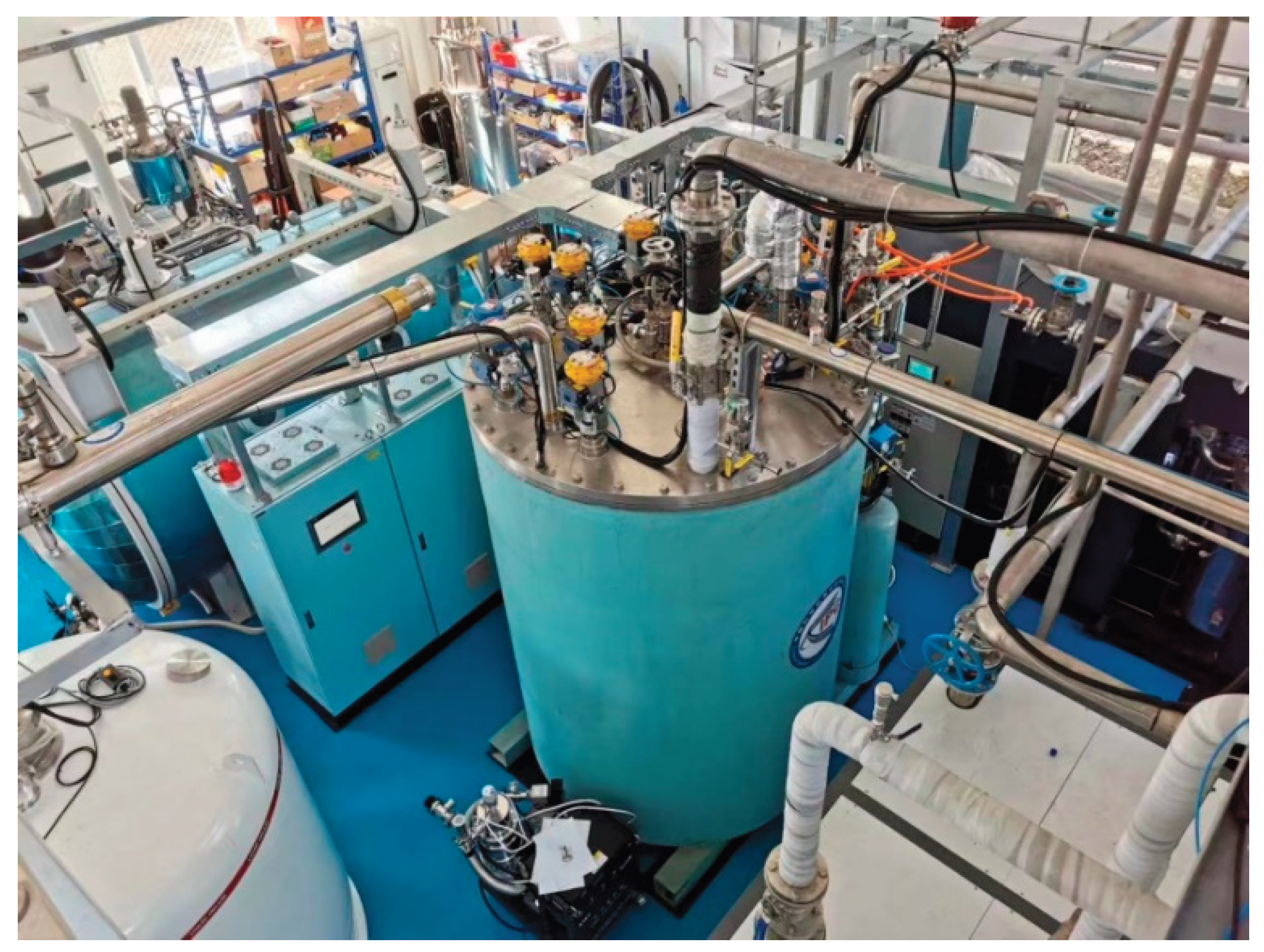
This helium liquefier is installed in the superconducting test hall of the Institute of High Energy Physics (IHEP) to serve its superconducting magnet test platform, as shown in Figure 8. Successfully put into demonstration operation five years ago, it has become an integral part of IHEP's superconducting magnet test platform, forming a closed-loop system for complete helium recovery and liquefaction. Its operation has reduced magnet testing costs by an order of magnitude and increased testing frequency from once or twice per year to once every one or two months, which is of great significance for the development of the superconducting magnet technology at IHEP.
6. Conclusions
Professor Hong Chaosheng is the pioneer and promoter of hydrogen and helium cryogenic technology in China. From the very beginning, his work made China's hydrogen-helium cryogenic technologies mature. He directly promoted the leap-forward development of cryogenic engineering in China from scratch and from weak to strong. His leadership provided core technical support for China's development in key fields such as aerospace, superconductivity and energy. From the 1950s to the independent development of a large helium refrigeration system in the 21st century, the work of Hong Chaosheng and the scientific research team he trained runs through. This makes our country gradually develop and expand in the field of cryogenic engineering, and the key technologies are constantly improving. The power of cryogenic systems is increasing, the refrigeration temperature is decreasing, and the refrigeration performance index is increasing.
The engineering application of cryogenic technology is the only way to develop cryogenic engineering. Cryogenic technology has made continuous technological progress in engineering applications, especially in frontier scientific projects such as space technology and cold neutron source. The innovative development of key equipment such as oil-injected screw helium compressor and cryogenic regulating valve has also promoted the development of related industries.
With the rapid development of frontier fields such as quantum computing, fusion energy and deep space exploration, the demand for cryogenic technology is increasing. On the basis of the technology laid by Hong Chaosheng, China has the ability to develop highly efficient and stable cryogenic technology. It is necessary to further improve the performance of core components and explore new refrigeration cycles in the future. At the same time, it will promote the application of cryogenic technology in a wider range of fields, such as energy and medical care. In addition, strengthening international cooperation and participating in ITER and other major international scientific projects will further enhance the global influence of China's cryogenic technology.
Author Contributions
Zhongjun Hu: Writing original draft, conceptualization and investigation.
Funding
Financial support for this work was provided by the fund of Strategic Pilot Science and Technology Projects of Chinese Academy of Sciences (Grant No. XDC10040000).
Acknowledgments
We gratefully acknowledge all colleagues at our institute for their collaborative work. Special thanks to Profs. Yuan Zhou, Kejian Yang, Liang Zhang, Qing Li, Liqiang Liu, Linghui Gong, and Lianyou Xiong et al for their enduring dedication.
Conflicts of Interest
The authors declare that they have no known competing financial interests or personal relationships that could have appeared to influence the work reported in this paper.
References
- J. Wilks, D. S. Betts. An introduction to liquid helium (2nd ed.), Oxford Science Publications, Clarendon Press: Oxford, 1987.
- C.S. Hung. Cryogenics in China today. Proceedings of ICEC 8. Genova; Italy, edited by C. Rizzuto. 1980, 881-892.
- Hong Chaosheng. Historical development review and prospect of cryogenic engineering- Discussion on the development of cryogenic engineering in China. Proceedings of the 13th full-network conference of mechanical industry gas separation equipment science and technology information network (In Chinese). Hangzhou: Hangzhou Oxygen Machine Research Institute, 2003; 1-3.
- Hong Chaosheng. Development of cryogenic and Superconductivity technologies in China. Journal of Refrigeration (In Chinese) 1981, 02, 1-10.
- Hong C.S. Cryogenics for China tomorrow? --a reverie--. Proceedings of ICEC 18, Mumbai, India, edited by K.G. Narayankhedkar, 2000, 59-62.
- Institute of Physics, Chinese Academy of Sciences. Technical summary of helium liquefier with piston expander precooling. Cryogenic Bulletin (In Chinese) 1968, 1, 6-22.
- Cryogenic Station. Operation summary of 20 liter/h helium liquefier. Cryogenic and Superconductivity (In Chinese) 1975, 04, 1-13.
- Zhu Senyuan. China cryogenic technology in space field. Physics (In Chinese) 1991, 02, 141-145.
- Qing Li. Progress of Helium Refrigerators in TIPC. 8th International Workshop on Cryogenics Operations (Cryo-Ops 2018), June 4th to 7th, Beijing, 2018.
- Liu Liqiang. Development progress of large-scale helium refrigerator. Vacuum and Cryogenic (In Chinese) 2020, 26 (06),471-475.
- Zhongjun Hu, Jingyu Li, Hailong Tan. Helium screw compressor for 5tpd large-scale hydrogen liquefier. Cryogenics 2024, 141, 103890. [CrossRef]
Figure 1.
Development roadmap of large-scale cryogenic refrigeration technology at TIPC.
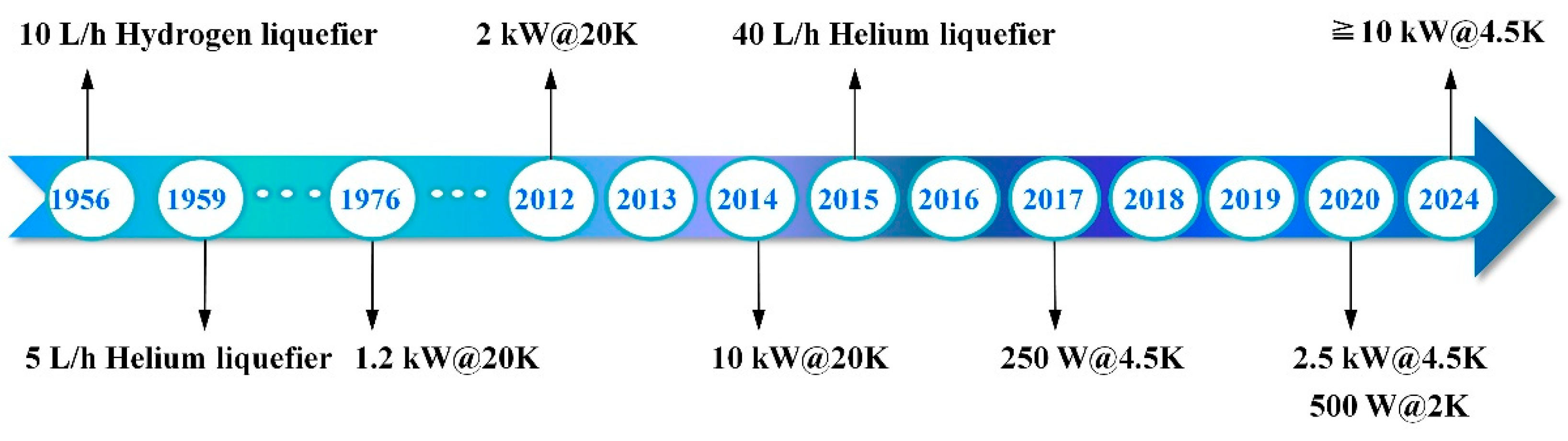
Figure 2.
Process flow and overview photo of 2 kW@20K helium cryogenic refrigerator.
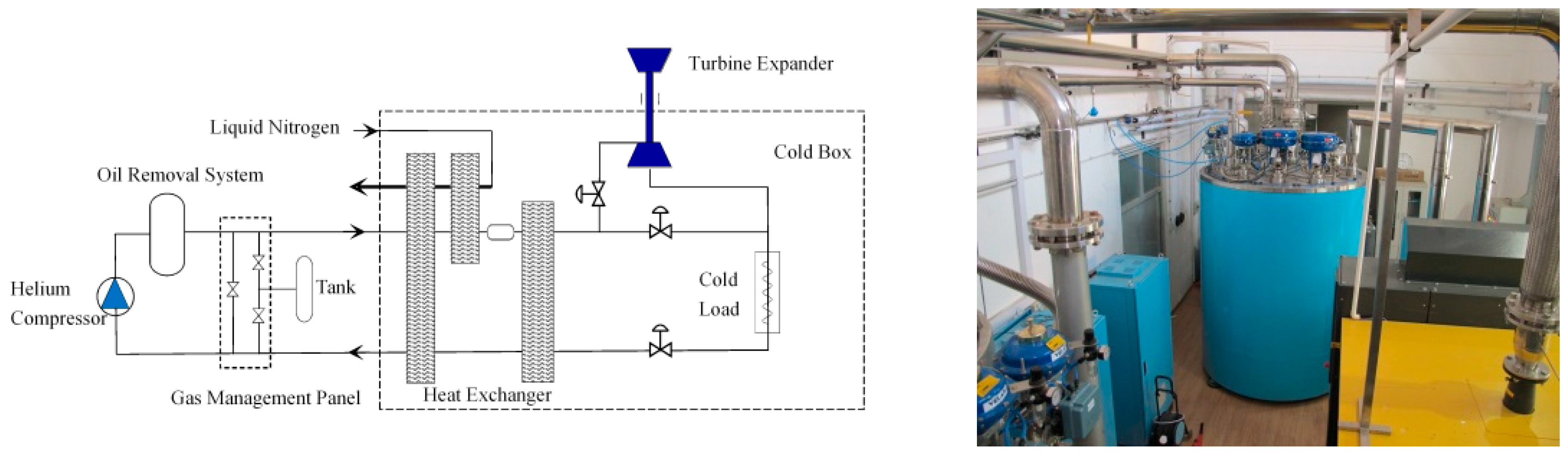
Figure 3.
General three-dimensional layout of 10 kW@20 K helium refrigerator.
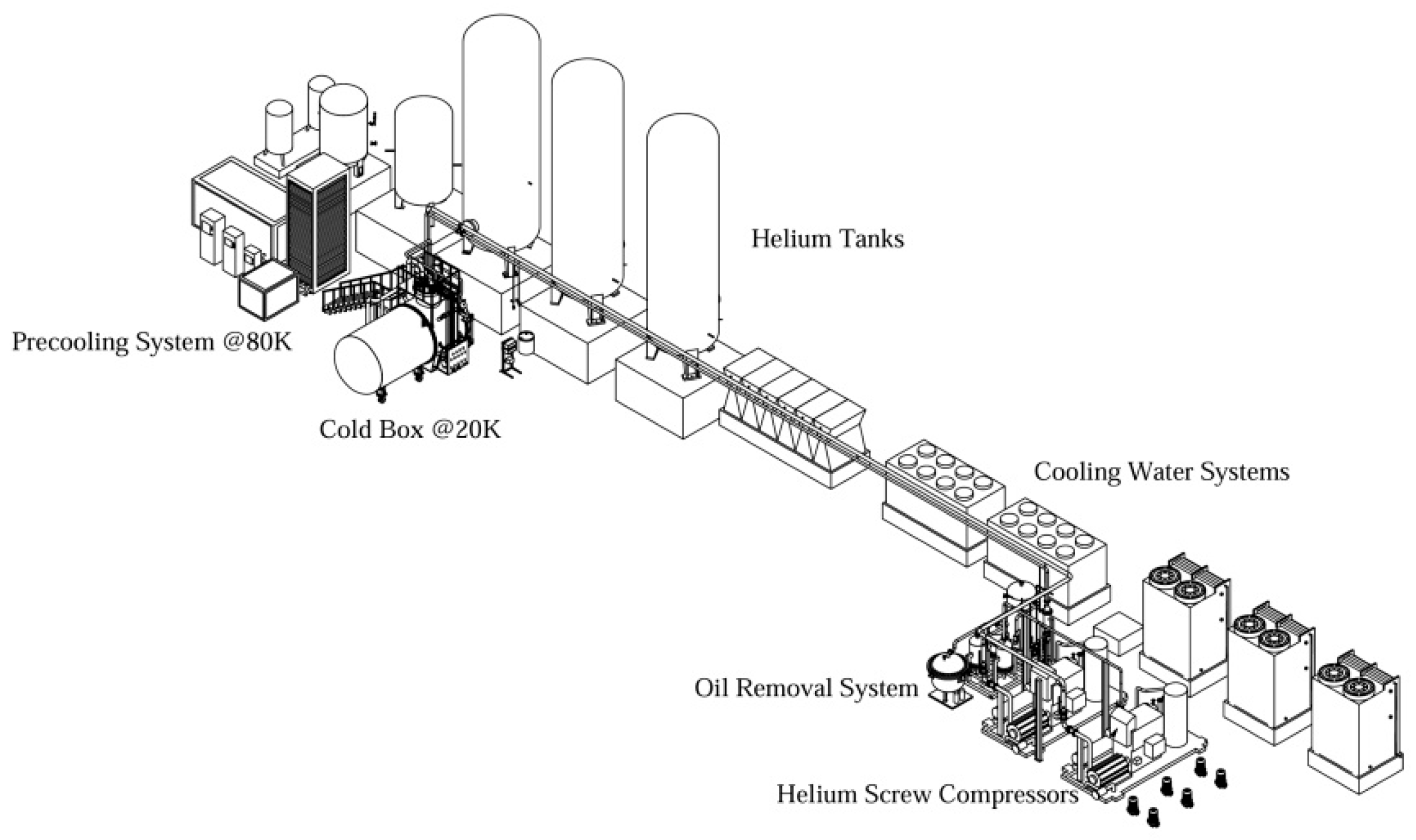
Figure 4.
The rotor shaft and impeller of the helium turbine expander.
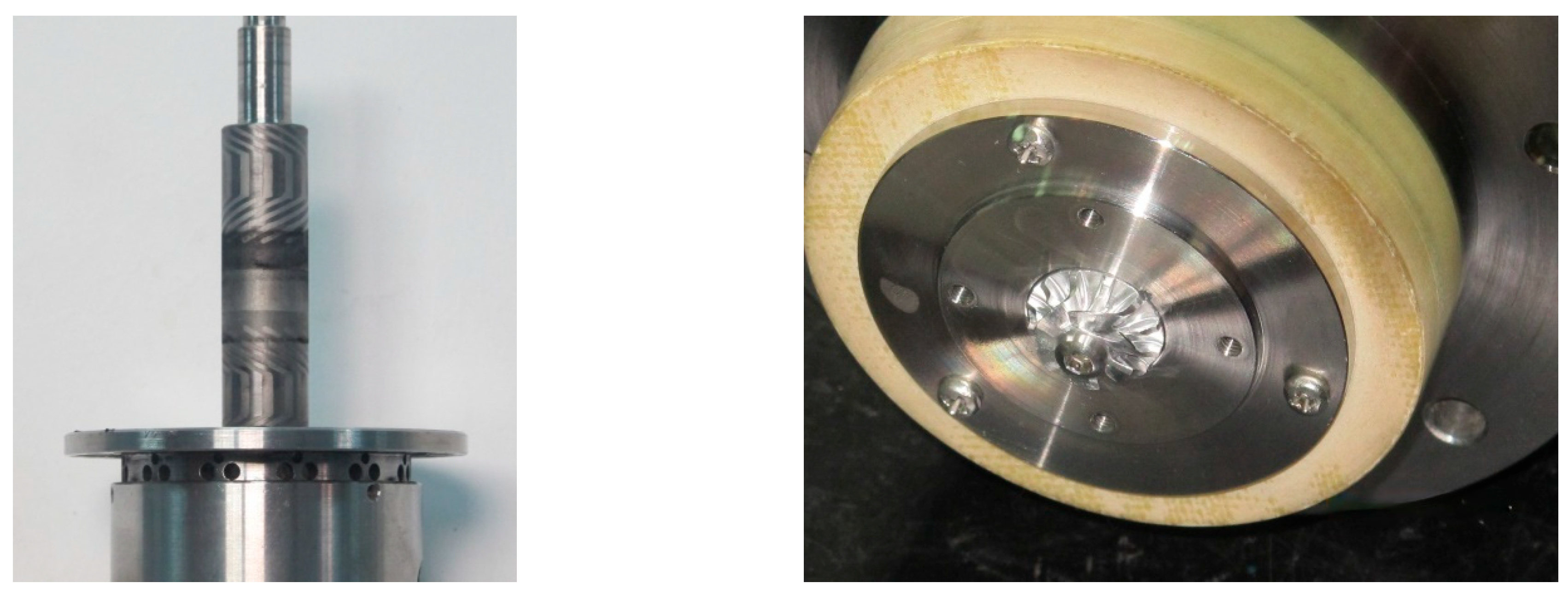
Figure 5.
Cold box of 40 L/h helium liquefier and the internal photo.
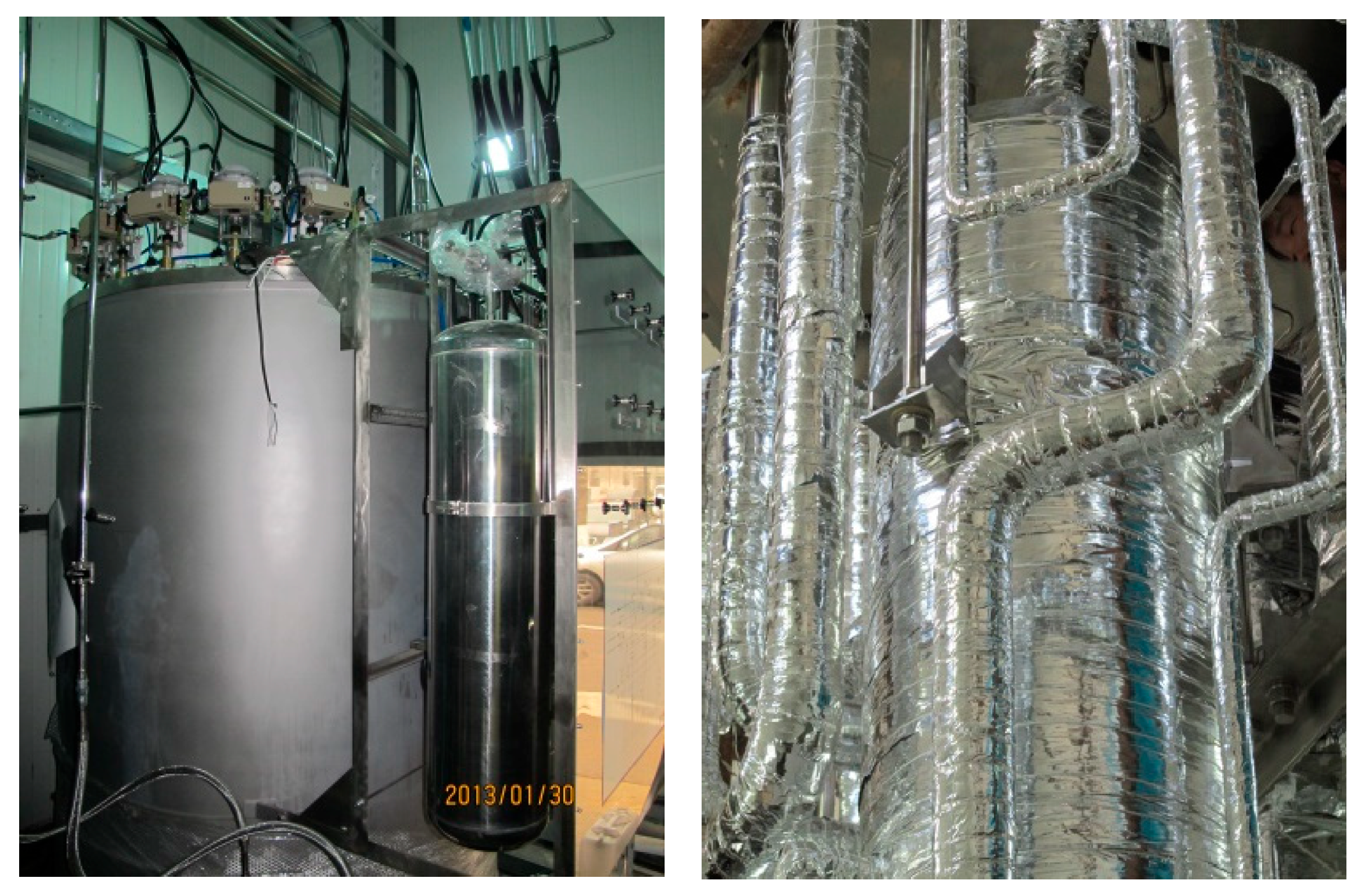
Figure 6.
Large-scale screw helium compressor units used in the refrigerator (2500 W@4.5 K/500 W@2 K).
Figure 6.
Large-scale screw helium compressor units used in the refrigerator (2500 W@4.5 K/500 W@2 K).
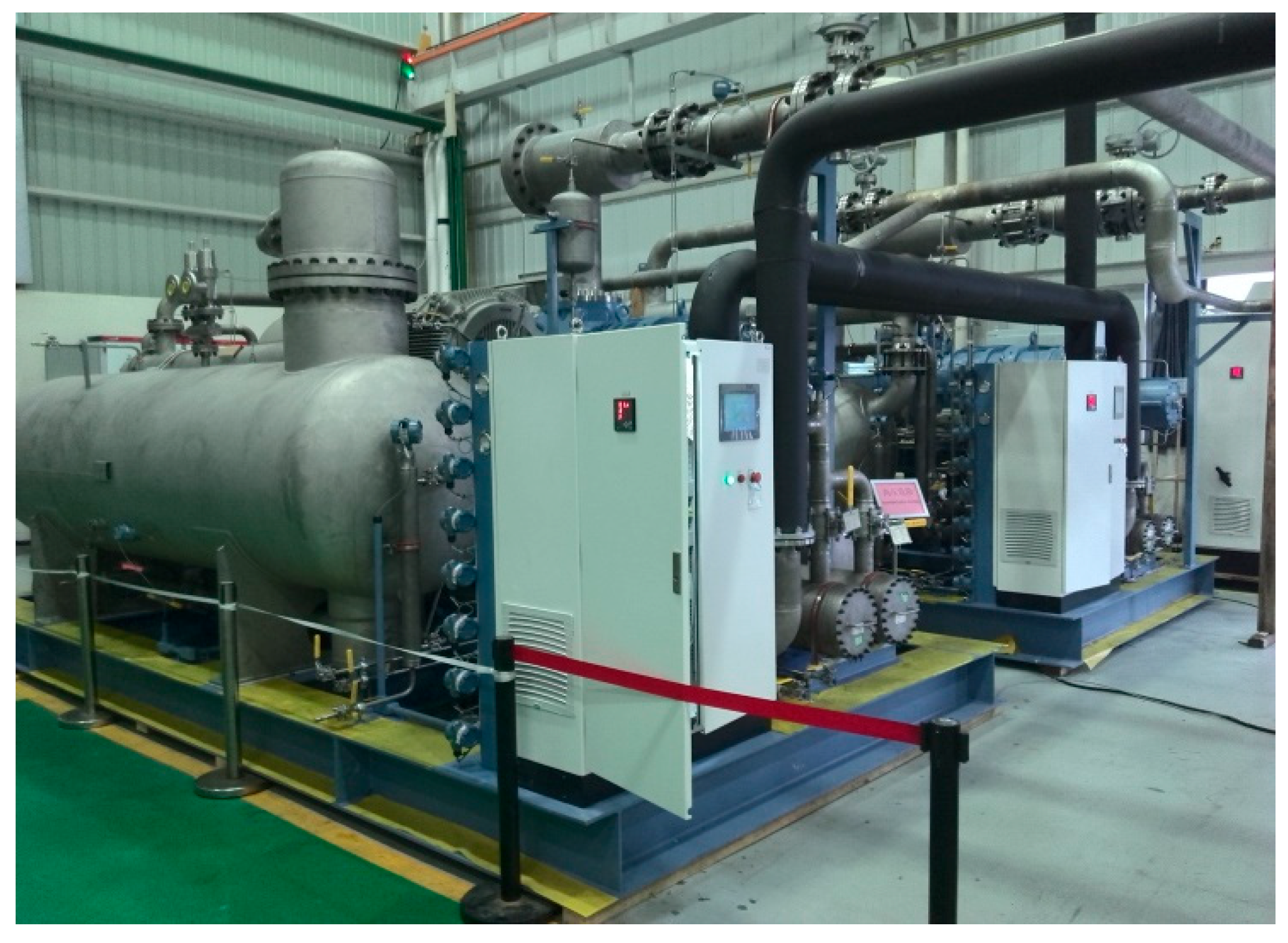
Figure 7.
Large-scale cryogenic refrigeration cold boxes for liquid helium to superfluid helium temperature range (2500 W@4.5 K/500 W@2 K).
Figure 7.
Large-scale cryogenic refrigeration cold boxes for liquid helium to superfluid helium temperature range (2500 W@4.5 K/500 W@2 K).
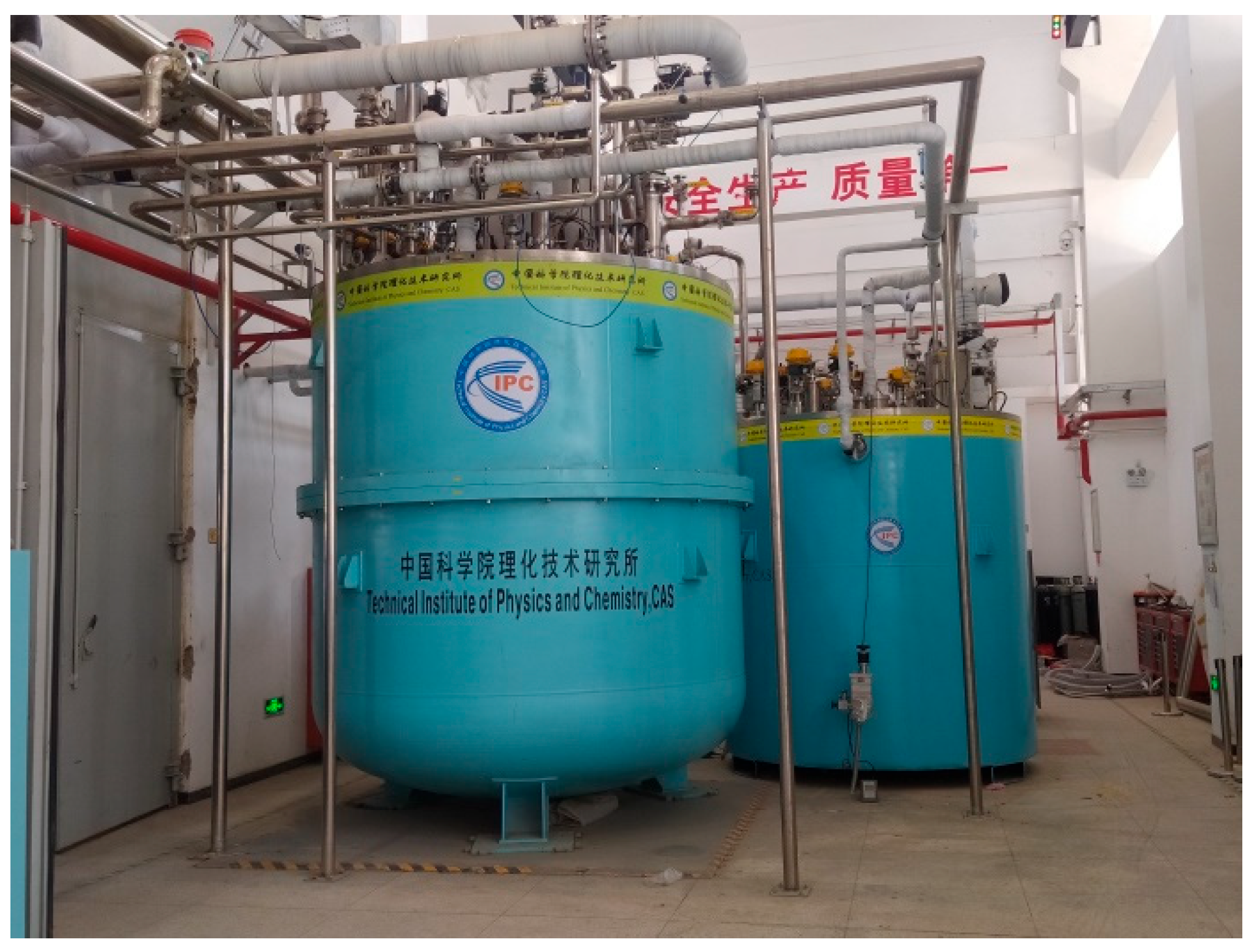
Figure 8.
80 L/h helium liquefier for the superconducting magnet test platform.
Disclaimer/Publisher’s Note: The statements, opinions and data contained in all publications are solely those of the individual author(s) and contributor(s) and not of MDPI and/or the editor(s). MDPI and/or the editor(s) disclaim responsibility for any injury to people or property resulting from any ideas, methods, instructions or products referred to in the content. |
© 2025 by the authors. Licensee MDPI, Basel, Switzerland. This article is an open access article distributed under the terms and conditions of the Creative Commons Attribution (CC BY) license (http://creativecommons.org/licenses/by/4.0/).
Copyright: This open access article is published under a Creative Commons CC BY 4.0 license, which permit the free download, distribution, and reuse, provided that the author and preprint are cited in any reuse.