

Submitted:
29 July 2025
Posted:
31 July 2025
Read the latest preprint version here
Abstract
AI-powered wearable sensors represent a transformative frontier in remote health monitoring, offering unprecedented opportunities for real-time diagnostics, personalized interventions, and proactive disease management. This review synthesizes advancements in AI-integrated biosensor technologies, exploring their applications across diverse health conditions—including diabetes, cardiovascular diseases, neurodegenerative disorders, mental health, and maternal/neonatal care—while addressing critical challenges in scalability, privacy, and robustness. By analyzing peer-reviewed studies from 2014 onward, we highlight how machine learning algorithms, such as federated learning, transfer learning, and edge-AI, enhance the precision of wearable devices in processing physiological signals like glucose levels, gait patterns, and heart rate variability. Key innovations, such as continuous glucose monitors (CGMs) with FDA-approved over-the-counter accessibility and AI-driven digital twins for predictive health modeling, underscore the shift toward patient-centric care. However, persistent gaps remain, including sensor-device heterogeneity, data privacy concerns, and the need for adaptive models to address distribution shifts across populations. We further discuss emerging paradigms like large language models (LLMs) for contextualized health insights and counterfactual explanations for transparent decision-making. By bridging technical advancements with clinical needs, this review charts a roadmap for the future of AI-powered wearables, emphasizing their potential to democratize healthcare access, reduce disparities, and enable precision medicine on a global scale. Through an in-depth analysis of methodologies, biomarkers, and emerging trends, this review provides a comprehensive perspective on how AI-powered biosensors are paving the way for precision medicine, adaptive interventions, and more effective disease management.
Keywords:
digital twin
; counterfactual
; wearable sensor
; Mobile Health
; personalized health monitoring
; LLM
; hydration
; glucose monitor
; stress
; behavioral health
; deep learning
; Human-in-the-loop
; real-time monitor
; Parkinson
; gait
1. Introduction
Wearable sensors and embedded systems have demonstrated potential to revolutionize the way healthcare is delivered, enabling continuous monitoring of physiological parameters outside of traditional clinical settings. These technologies are becoming integral in a wide range of applications, including disease diagnosis, chronic disease management, disease prevention, fitness tracking, and personalized health interventions [1,2]. Central to this transformation is the integration of Artificial Intelligence (AI) with biosensors, which enhances the capabilities of wearable devices by enabling real-time data analysis, pattern recognition, and predictive modeling.
AI-powered biosensors are equipped with advanced algorithms that can process data directly from the sensor to provide actionable insights, detect anomalies, and predict health events in real-time [3]. This paradigm shift has the potential to not only improve the accuracy and efficiency of health monitoring but also contribute to personalized medicine by adapting to individual needs and preferences [4]. With the increasing availability of data and the rise of machine learning techniques, AI has become an indispensable tool in enhancing the functionality and usability of wearable sensors.
However, the application of AI in wearable sensors presents unique challenges. These include ensuring model robustness in the presence of distribution shifts, where sensor data can vary across different environments and populations, and developing personalized models that can adapt to individual users over time [5,6]. Furthermore, the integration of edge AI and human-in-the-loop systems adds another layer of complexity, requiring seamless interaction between the device and its user to refine predictions based on user feedback.
This review explores the latest developments in AI-powered wearable biosensors and bio instrumentation, focusing on key advancements, challenges, and future directions in this rapidly evolving field. We will examine how AI is being used to address issues related to model personalization, robustness, and edge computing, as well as how human feedback can further optimize system performance and user experience.
2. Materials and Methods
2.1. Study Design
This scoping review was conducted following the guidelines of the Preferred Reporting Items for Systematic Reviews and Meta-Analyses Extension for Scoping Reviews (PRISMA-ScR) [7]. Figure 1 provides an overview of the screening process, detailing the number of records identified, screened, and included in the final synthesis. These guidelines provided a structured approach to ensure the review’s comprehensiveness and rigor, focusing on the integration of AI-powered biosensors in wearable devices across diverse health applications.
2.2. Eligibility Criteria
For this review, we included peer-reviewed articles that explored the application of AI-powered wearable biosensors in health monitoring, diagnostics, and personalized medicine. Eligible studies were required to demonstrate empirical findings, providing quantitative or qualitative insights into the performance, efficacy, and challenges of these technologies. Articles had to be published within the last decade (2014 onwards) to reflect advancements in AI and wearable biosensor technologies and written in English to ensure accessibility and thorough analysis.
Studies were excluded if they were reviews, commentaries, theoretical models without empirical evaluation, or if they fell outside the specified timeframe. Additionally, priority was given to studies that detailed technical aspects, including AI algorithms, sensor designs, and integration methodologies, to align with the review’s focus on innovation in wearable biosensor technology.
The timeframe of 2014 onwards was chosen as a critical starting point due to the rapid evolution of AI applications in wearables during this period, driven by advancements in edge computing, federated learning, and biosensor miniaturization. This window ensures a comprehensive examination of the field’s recent developments and trends.
2.3. Information Sources
Relevant studies were identified by conducting systematic searches across major electronic databases, including PubMed, Scopus, IEEE Xplore, and Web of Science. The search strategy employed a combination of keywords and Boolean operators to ensure the retrieval of relevant studies. Keywords included “AI-powered biosensors,” “wearable technology,” “health monitoring,” “real-time diagnostics,” and “personalized medicine.”
2.4. Search and Selection of Sources of Evidence
A standardized data extraction protocol was developed to ensure consistency and accuracy in capturing relevant information from the included studies. Key data points included publication details (authors, year), study location, sample size, sensor types and configurations, AI methodologies, health domains addressed, and main outcomes. Data extraction was independently conducted by two reviewers to minimize bias and improve reliability. Any discrepancies were resolved through discussion or consultation with a third reviewer.
To address the study`s objectives, the research question was framed using the PICO (Population, Intervention, Comparison, Outcome) framework [8]. The population included users of wearable biosensors, the intervention focused on AI-powered biosensor applications, and the outcomes centered on advancements in health monitoring, personalization, and diagnostic accuracy.
Search terms such as “AI-powered biosensors”, “wearable health monitoring”, “edge AI in wearables”, and “personalized health diagnostics” were employed to identify studies showcasing the role of biosensors in dynamic and real-time health monitoring scenarios. The review aimed to synthesize findings on how wearable biosensors combined with AI enhance user safety, optimize health interventions, and address issues like privacy, personalization, and model robustness.
3. Recent Advancements in Mobile Health
With AI systems getting more and more powerful, in the recent days, mobile health has become an integral part of our daily lives, even without always realizing it. About 21% of American adults wear smartwatches according to a 2019 consumer report (source: Statista). Recent advancements in wearables and smartwatches have significantly enhanced their capabilities, transforming them into powerful tools for health monitoring, fitness tracking, and beyond [9]. Modern devices integrate cutting-edge sensors that measure vital signs such as heart rate, blood oxygen levels, and even ECGs with clinical-grade accuracy [10]. Innovations in artificial intelligence and machine learning allow these wearables to provide personalized insights, detect anomalies like arrhythmias, and predict health trends over time [11]. Additionally, wearable ecosystems now include stress monitoring, sleep quality assessment, and menstrual health tracking, catering to diverse user needs [12,13,14]. With longer battery life, improved water resistance, and sleek designs, wearables are becoming indispensable in daily life. Furthermore, the integration of technologies like GPS, NFC for contactless payments, and real-time notifications ensures that these devices remain functional, fashionable, and futuristic (source: online).
Continuous Glucose Monitors (CGMs) are revolutionizing diabetes management by offering real-time insights into glucose levels without the need for fingerstick tests. These wearable devices use tiny sensors inserted under the skin to measure interstitial glucose levels, enabling users to track fluctuations and trends throughout the day and night. Advanced CGMs provide predictive alerts for high or low glucose levels and integrate seamlessly with smartphones, insulin pumps, and health apps, empowering users to make data-driven decisions. A significant milestone in their adoption is the recent FDA approval of certain CGMs for over-the-counter sales, making them more accessible to individuals with diabetes or those looking to monitor their glucose for general health purposes [15]. This shift highlights the growing recognition of CGMs as essential tools for proactive health monitoring, promoting broader usage beyond clinical settings.
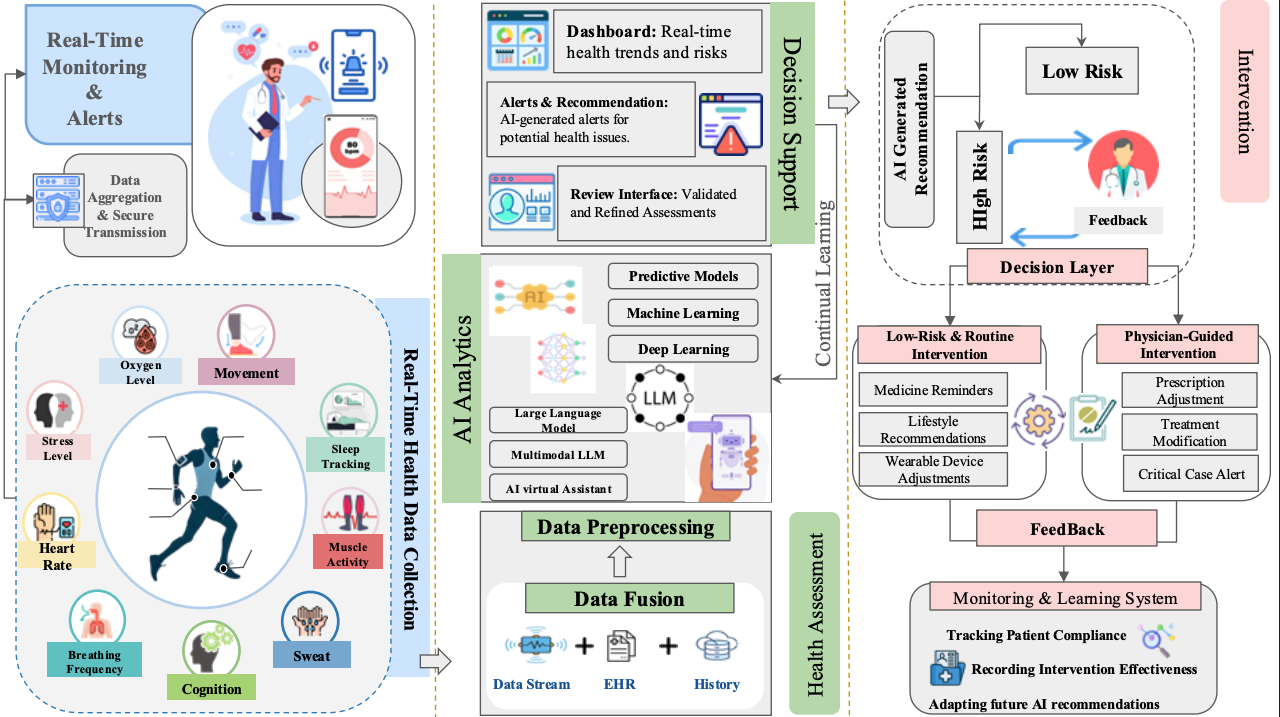
Figure 2 provides a conceptual overview of AI-powered wearable biosensors and their role in healthcare. The framework is structured into three pillars: monitoring, health assessment, and intervention. The monitoring pillar captures real-time physiological and behavioral data through wearable and implantable biosensors, which is then processed using AI-driven algorithms. The health assessment pillar enables pattern recognition, anomaly detection, and predictive modeling, incorporating techniques like federated learning, transfer learning, and continual learning to enhance model robustness. Finally, the intervention pillar translates AI-driven insights into personalized health recommendations, clinical decision support, and adaptive interventions. This modular approach illustrates how AI, human-in-the-loop systems, and digital twin technologies work together to optimize personalized medicine and real-time health monitoring (Figure 2).
4. Applications of Biosensors
Wearable biosensors have become essential tools for continuous health monitoring, enabling the measurement of multiple physiological and behavioral parameters. Figure 3 illustrates various applications of biosensors, including monitoring oxygen levels, movement, sleep patterns, muscle activity, and cognition.
In recent years biosensors have become transformative tools in metabolic health, where they are extensively used to manage conditions such as diabetes and obesity. CGMs provide real-time insights into glucose fluctuations, enabling better glycemic control and early detection of irregularities. Beyond diabetes, biosensors are being used to monitor metabolic biomarkers like lactate and ketones, aiding in personalized diet and exercise regimens. In neonatal health, biosensors are deployed to monitor vital parameters such as oxygen saturation, heart rate, and respiration in real-time, providing critical support in neonatal intensive care units (NICUs). These devices can alert clinicians to potential adverse events, such as hypoxia or bradycardia, ensuring timely interventions and better outcomes for premature or at-risk infants. Integrating AI with biosensors further enhances their utility, enabling predictive analytics and personalized recommendations in these domains.
In cardiovascular health, biosensors play a pivotal role in monitoring heart rate, blood pressure, and other hemodynamic parameters, aiding in the early detection of arrhythmias, hypertension, and heart failure. Wearable biosensors, like smartwatches and chest straps, enable continuous and non-invasive monitoring, empowering individuals to manage their cardiovascular health proactively. Similarly, biosensors are transforming the landscape of cognitive health by providing real-time monitoring solutions for neurological disorders such as Alzheimer’s and Parkinson’s diseases. For instance, wearable sensors can track motor symptoms like tremors, gait abnormalities, or freezing of gait in Parkinson’s patients, supporting early diagnosis and therapy adjustments [22,24]. In Alzheimer’s care, biosensors are used to monitor sleep patterns, cognitive function, and physiological stress markers, offering insights into disease progression and the effectiveness of interventions. By enabling continuous, data-driven monitoring across these health domains, biosensors are paving the way for precision medicine and improved quality of life.

Table 1.
Applications of Biosensors in Health Conditions
| Application | Publications |
|---|---|
| Physiological and Behavioral Mental Health Monitoring (Sleep, Stress, Anxiety, Cardiovascular, Substance Use Monitoring) | [1,10,12,14,16,17,18,19,20,21] |
| Gait and Motor Function Monitoring | [22,23,24,25,26] |
| Neurodegenerative Chronic Diseases (Parkinson, Alzheimer) | [22,23,24,23] |
| Obesity, Metabolic, Hydration Health | [11,16,27,28,29,30,31,32] |
| Maternal / Neonatal / Women’s Health | [13,33,34,35] |
Table 2.
The methodologies used in biosensors and their associated physiological signals or biomarkers.
Table 2.
The methodologies used in biosensors and their associated physiological signals or biomarkers.
| Methodology | Signals/Biomarkers | Publications |
|---|---|---|
| Human Activity Recognition (HAR) & Behavioral Health | Motion sensors, accelerometers, gyroscopes, heart rate | [16,25,36,37,38,39] |
| Gait/Motor Function Analysis | Gait speed, step frequency, movement symmetry, Irregular biometric signals, deviations in heart rate, temperature, movement patterns | [22,23,24,25] |
| Glucose (CGMs), Hydration Monitoring | Blood glucose levels, metabolic biomarkers, Fluid intake volume, type of liquid consumed | [11,27,28,29] |
5. Challenges with AI-Powered Biosensors
AI-powered biosensors, widely used for health monitoring and diagnostics, often face challenges related to data privacy, personalization, and model robustness. Traditional centralized learning methods require aggregating user data in a single location, raising significant privacy and security concerns. Federated learning addresses this by enabling biosensors to collaboratively train AI models locally on their devices, ensuring sensitive health data remains private. Edge-AI, the deployment of artificial intelligence algorithms on edge devices such as smartphones, wearables, and IoT sensors, transforms how data is processed and utilized. By performing computations locally on the device rather than relying on cloud servers, Edge-AI minimizes latency, enhances data privacy, and reduces the bandwidth needed for data transmission. This is particularly beneficial for time-sensitive applications like health monitoring with biosensors, autonomous vehicles, and real-time industrial automation [40]. Edge-AI systems leverage specialized hardware such as AI accelerators and optimized algorithms to ensure efficient performance within the resource constraints of edge devices. Moreover, the technology supports offline functionality, enabling critical operations even in areas with poor connectivity. As Edge-AI continues to evolve, advancements in energy-efficient neural networks and federated learning further enhance its potential, making it a cornerstone for next-generation AI applications across diverse industries [41].
Another common issue is the heterogeneity of biosensor devices, such as differences in sensor quality, user behaviors, and environmental conditions. Transfer learning can mitigate these issues by leveraging pre-trained models to adapt quickly to new devices or scenarios, reducing the need for extensive retraining. Moreover, biosensors frequently deal with noisy, incomplete, or imbalanced datasets, which can impair AI performance, especially in detecting rare but critical health conditions [23,36,37].
Continual learning and human-in-the-loop systems are pivotal in addressing challenges associated with adaptability and interpretability. Biosensors operate in dynamic environments where users’ physiological patterns may change due to aging, illness, or lifestyle adjustments, requiring models to adapt continuously without catastrophic forgetting of prior knowledge. Continual learning enables this by allowing models to incrementally learn from new data while retaining previous knowledge [25]. Human-in-the-loop systems further enhance the reliability of AI-powered biosensors by incorporating user feedback and expert annotations. These systems help correct errors, refine predictions, and improve user trust in the technology. By combining federated learning, continual learning, transfer learning, and human-in-the-loop approaches, AI-powered biosensors can overcome critical challenges, paving the way for more robust, personalized, and secure health monitoring solutions.
Despite advancements in AI-powered biosensors, fundamental differences between biological systems and wearable electronics pose additional challenges. Biology and electronics differ significantly in their materials, functional principles, fabrication techniques, and operational environments, creating a complex interface for integration. For instance, biological systems are inherently flexible, soft, and dynamic, whereas wearable electronics are often rigid, brittle, and optimized for static conditions. These differences, summarized in Table 3, highlight the need for innovative design approaches to bridge the gap between biological and electronic systems effectively.
6. Future of AI-Powered Biosensors
The future of AI-powered biosensors lies in their integration with cutting-edge technologies like Large Language Models (LLMs), digital twins, and counterfactual explanations, enabling more intelligent and personalized healthcare solutions. One emerging area is precise diet and hydration recommendations, where biosensors can track fluid intake and optimize hydration levels in real-time. Hydration plays a vital role in both physical performance and cognitive health, yet current wearable technologies lack the ability to monitor both fluid type and volume simultaneously [28,29]. LLMs can serve as a critical component of the biosensor ecosystem by processing and contextualizing vast amounts of health data. They can generate personalized health insights, offer recommendations based on user-specific patterns, and act as conversational agents for patients and clinicians. For instance, LLMs can synthesize data from wearables and biosensors to identify correlations between lifestyle factors and health metrics, guiding users in optimizing their behaviors [27]. Moreover, their natural language capabilities enable users to interact intuitively with health systems, ask questions about their data, and receive comprehensible explanations, bridging the gap between complex AI outputs and human understanding [16,42].
Digital twins and counterfactual explanations promise to revolutionize how biosensor data is analyzed and utilized. A digital twin—a virtual replica of an individual’s physiological systems—can simulate the impact of interventions, such as medication adjustments or lifestyle changes, providing a proactive approach to healthcare. Biosensors will feed real-time data into these digital twins, ensuring that the simulations are dynamic and accurately reflect the user’s current health status [43,44]. Meanwhile, counterfactual explanations will enhance trust and transparency in AI-powered biosensors by illustrating alternative scenarios. For example, they can explain to users how changes in diet, exercise, or medication would affect health outcomes, offering actionable insights. Together, these innovations will empower individuals and healthcare providers with predictive, explainable, and actionable intelligence, advancing precision medicine and preventative care. The convergence of these technologies ensures a future where AI-powered biosensors are not just tools for monitoring but also partners in health decision-making.
7. Conclusions
In summary, advancements in AI-powered technologies like wearables, CGMs, and biosensors are revolutionizing healthcare by enabling personalized, real-time monitoring and decision-making. The growing accessibility of devices, such as over-the-counter CGMs, underscores their expanding role beyond clinical settings, empowering individuals to take control of their health. However, these innovations come with challenges such as data privacy, device heterogeneity, and the need for robust, adaptable AI models. Techniques like federated learning, continual learning, transfer learning, and human-in-the-loop systems address these issues by enhancing privacy, adaptability, and reliability. Similarly, the rise of Edge-AI is driving efficiency and responsiveness by processing data locally on devices, ensuring real-time functionality even in constrained environments. Together, these advancements are shaping a future where AI-powered health technologies are more accessible, secure, and effective, paving the way for a smarter and healthier society.
References
- Alinia, P.; Sah, R.K.; McDonell, M.; Pendry, P.; Parent, S.; Ghasemzadeh, H.; Cleveland, M.J. Associations between physiological signals captured using wearable sensors and self-reported outcomes among adults in alcohol use disorder recovery: development and usability study. JMIR Formative Research 2021, 5, e27891. [Google Scholar] [CrossRef]
- Zhang, Y.; Hu, Y.; Jiang, N.; Yetisen, A.K. Wearable artificial intelligence biosensor networks. Biosensors and Bioelectronics 2023, 219, 114825. [Google Scholar] [CrossRef] [PubMed]
- Arefeen, A.; Akbari, A.; Mirzadeh, S.I.; Jafari, R.; Shirazi, B.A.; Ghasemzadeh, H. Inter-beat interval estimation with tiramisu model: a novel approach with reduced error. ACM Transactions on Computing for Healthcare 2024, 5, 1–19. [Google Scholar] [CrossRef]
- Katsoulakis, E.; Wang, Q.; Wu, H.; Shahriyari, L.; Fletcher, R.; Liu, J.; Achenie, L.; Liu, H.; Jackson, P.; Xiao, Y.; et al. Digital twins for health: a scoping review. NPJ Digital Medicine 2024, 7, 77. [Google Scholar] [CrossRef]
- Wilson, G.; Doppa, J.R.; Cook, D.J. CALDA: Improving Multi-Source Time Series Domain Adaptation With Contrastive Adversarial Learning. IEEE Trans. Pattern Anal. Mach. Intell. 2023, 45, 14208–14221. [Google Scholar] [CrossRef]
- Yu, H.; Sano, A. Semi-supervised learning for wearable-based momentary stress detection in the wild. Proceedings of the ACM on Interactive, Mobile, Wearable and Ubiquitous Technologies 2023, 7, 1–23. [Google Scholar] [CrossRef]
- Page, M.J.; McKenzie, J.E.; Bossuyt, P.M.; Boutron, I.; Hoffmann, T.C.; Mulrow, C.D.; Shamseer, L.; Tetzlaff, J.M.; Akl, E.A.; Brennan, S.E.; et al. The PRISMA 2020 statement: an updated guideline for reporting systematic reviews. bmj 2021, 372. [Google Scholar]
- Miller, S.A.; Forrest, J.L. Enhancing your practice through evidence-based decision making: PICO, learning how to ask good questions. Journal of Evidence Based Dental Practice 2001, 1, 136–141. [Google Scholar] [CrossRef]
- Huhn, S.; Axt, M.; Gunga, H.C.; Maggioni, M.A.; Munga, S.; Obor, D.; Sié, A.; Boudo, V.; Bunker, A.; Sauerborn, R.; et al. The impact of wearable technologies in health research: scoping review. JMIR mHealth and uHealth 2022, 10, e34384. [Google Scholar] [CrossRef]
- Odeh, V.A.; Chen, Y.; Wang, W.; Ding, X. Recent Advances in the Wearable Devices for Monitoring and Management of Heart Failure. Reviews in Cardiovascular Medicine 2024, 25, 386. [Google Scholar] [CrossRef] [PubMed]
- *Shajari, S.; Kuruvinashetti, K.; Komeili, A.; Sundararaj, U. The emergence of AI-based wearable sensors for digital health technology: a review. Sensors 2023, 23, 9498. [Google Scholar] [CrossRef] [PubMed]
- Sah, R.K.; Cleveland, M.J.; Ghasemzadeh, H. Stress Monitoring in Free-Living Environments. IEEE Journal of Biomedical and Health Informatics 2023. [Google Scholar] [CrossRef]
- Lyzwinski, L.; Elgendi, M.; Menon, C. Innovative approaches to menstruation and fertility tracking using wearable reproductive health technology: systematic review. Journal of Medical Internet Research 2024, 26, e45139. [Google Scholar] [CrossRef]
- Neupane, S.; Saha, M.; Ali, N.; Hnat, T.; Samiei, S.A.; Nandugudi, A.; Almeida, D.M.; Kumar, S. Momentary Stressor Logging and Reflective Visualizations: Implications for Stress Management with Wearables. In Proceedings of the CHI Conference on Human Factors in Computing Systems; 2024; pp. 1–19. [Google Scholar]
- FDA. FDA Clears First Over-the-Counter Continuous Glucose Monitor. U.S. Food and Drug Administration, 2024. Accessed: 2024.
- *Kim, Y.; Xu, X.; McDuff, D.; Breazeal, C.; Park, H.W. Health-llm: Large language models for health prediction via wearable sensor data. arXiv 2024. [Google Scholar] [CrossRef]
- Azghan, R.R.; Glodosky, N.C.; Sah, R.K.; Cuttler, C.; McLaughlin, R.; Cleveland, M.J.; Ghasemzadeh, H. CUDLE: Learning Under Label Scarcity to Detect Cannabis Use in Uncontrolled Environments using Wearables. IEEE Sensors Journal 2025, 1–1. [Google Scholar] [CrossRef]
- Holder, R.; Sah, R.K.; Cleveland, M.; Ghasemzadeh, H. Comparing the predictability of sensor modalities to detect stress from wearable sensor data. In Proceedings of the 2022 IEEE 19th Annual Consumer Communications & Networking Conference (CCNC); IEEE, 2022; pp. 557–562. [Google Scholar]
- Hosseini, S.; Gottumukkala, R.; Katragadda, S.; Bhupatiraju, R.T.; Ashkar, Z.; Borst, C.W.; Cochran, K. A multimodal sensor dataset for continuous stress detection of nurses in a hospital. Scientific Data 2022, 9, 255. [Google Scholar] [CrossRef]
- Hughes, A.; Shandhi, M.M.H.; Master, H.; Dunn, J.; Brittain, E. Wearable devices in cardiovascular medicine. Circulation research 2023, 132, 652–670. [Google Scholar] [CrossRef] [PubMed]
- Vos, G.; Trinh, K.; Sarnyai, Z.; Azghadi, M.R. Generalizable machine learning for stress monitoring from wearable devices: A systematic literature review. International Journal of Medical Informatics 2023, 173, 105026. [Google Scholar] [CrossRef] [PubMed]
- *Koltermann, K.; Clapham, J.; Blackwell, G.; Jung, W.; Burnet, E.N.; Gao, Y.; Shao, H.; Cloud, L.; Pretzer-Aboff, I.; Zhou, G. Gait-Guard: Turn-aware Freezing of Gait Detection for Non-intrusive Intervention Systems. In Proceedings of the 2024 IEEE/ACM Conference on Connected Health: Applications, Systems and Engineering Technologies (CHASE). IEEE; 2024; pp. 61–72. [Google Scholar]
- Soumma, S.B.; Mangipudi, K.; Peterson, D.; Mehta, S.; Ghasemzadeh, H. Self-Supervised Learning and Opportunistic Inference for Continuous Monitoring of Freezing of Gait in Parkinson’s Disease. arXiv 2024, arXiv:cs.LG/2410.21326. [Google Scholar]
- Pardoel, S.; AlAkhras, A.; Jafari, E.; Kofman, J.; Lemaire, E.D.; Nantel, J. Real-Time Freezing of Gait Prediction and Detection in Parkinson’s Disease. Sensors 2024, 24, 8211. [Google Scholar] [CrossRef]
- Jha, S.; Schiemer, M.; Zambonelli, F.; Ye, J. Continual learning in sensor-based human activity recognition: An empirical benchmark analysis. Information Sciences 2021, 575, 1–21. [Google Scholar] [CrossRef]
- Shi, B.; Tay, A.; Au, W.L.; Tan, D.M.; Chia, N.S.; Yen, S.C. Detection of freezing of gait using convolutional neural networks and data from lower limb motion sensors. IEEE Transactions on Biomedical Engineering 2022, 69, 2256–2267. [Google Scholar] [CrossRef]
- Healey, E.; Tan, A.L.M.; Flint, K.L.; Ruiz, J.L.; Kohane, I. A case study on using a large language model to analyze continuous glucose monitoring data. Scientific Reports 2025, 15, 1143. [Google Scholar] [CrossRef]
- Pedram, M.; Mirzadeh, S.I.; Rokni, S.A.; Fallahzadeh, R.; Woodbridge, D.M.K.; Lee, S.I.; Ghasemzadeh, H. LIDS: mobile system to monitor type and volume of liquid intake. IEEE Sensors Journal 2021, 21, 20750–20763. [Google Scholar] [CrossRef]
- *Spinelli, J.C.; Suleski, B.J.; Wright, D.E.; Grow, J.L.; Fagans, G.R.; Buckley, M.J.; Yang, D.S.; Yang, K.; Beil, S.M.; Wallace, J.C.; et al. Wearable microfluidic biosensors with haptic feedback for continuous monitoring of hydration biomarkers in workers. npj Digital Medicine 2025, 8, 76. [Google Scholar] [CrossRef]
- Stecher, C.; Pfisterer, B.; Harden, S.M.; Epstein, D.; Hirschmann, J.M.; Wunsch, K.; Buman, M.P. Assessing the pragmatic nature of Mobile health interventions promoting physical activity: systematic review and meta-analysis. JMIR mHealth and uHealth 2023, 11, e43162. [Google Scholar] [CrossRef]
- Hirten, R.P.; Danieletto, M.; Sanchez-Mayor, M.; Whang, J.K.; Lee, K.W.; Landell, K.; Zweig, M.; Helmus, D.; Fuchs, T.J.; Fayad, Z.A.; et al. Physiological Data Collected from Wearable Devices Identify and Predict Inflammatory Bowel Disease Flares. Gastroenterology 2025. [Google Scholar] [CrossRef]
- Cohen, R.; Fernie, G.; Roshan Fekr, A. Monitoring fluid intake by commercially available smart water bottles. Scientific Reports 2022, 12, 4402. [Google Scholar] [CrossRef]
- Pruksanusak, N.; Chainarong, N.; Boripan, S.; Geater, A. Comparison of the predictive ability for perinatal acidemia in neonates between the NICHD 3-tier FHR system combined with clinical risk factors and the fetal reserve index. Plos one 2022, 17, e0276451. [Google Scholar] [CrossRef] [PubMed]
- Mamun, A.; Devoe, L.D.; Evans, M.I.; Britt, D.W.; Klein-Seetharaman, J.; Ghasemzadeh, H. Use of What-if Scenarios to Help Explain Artificial Intelligence Models for Neonatal Health. arXiv 2024. [Google Scholar] [CrossRef]
- Evans, M.I.; Britt, D.W.; Evans, S.M.; Devoe, L.D. Changing perspectives of electronic fetal monitoring. Reproductive Sciences 2022, 29, 1874–1894. [Google Scholar] [CrossRef] [PubMed]
- Fallahzadeh, R.; Ashari, Z.E.; Alinia, P.; Ghasemzadeh, H. Personalized activity recognition using partially available target data. IEEE Transactions on Mobile Computing 2021, 22, 374–388. [Google Scholar] [CrossRef]
- Mamun, A.; Mirzadeh, S.I.; Ghasemzadeh, H. Designing deep neural networks robust to sensor failure in mobile health environments. In Proceedings of the 2022 44th Annual International Conference of the IEEE Engineering in Medicine & Biology Society (EMBC); IEEE, 2022; pp. 2442–2446. [Google Scholar]
- Pedram, M.; Sah, R.K.; Ghasemzadeh, H. Efficient Sensing and Classification for Extended Battery Life. In Activity Recognition and Prediction for Smart IoT Environments; Springer, 2024; pp. 111–140. [Google Scholar]
- Sah, R.K.; Ghasemzadeh, H. Adversarial Transferability in Embedded Sensor Systems: An Activity Recognition Perspective. ACM Transactions on Embedded Computing Systems 2024, 23, 1–31. [Google Scholar] [CrossRef]
- Chawla, N.; Dalal, S. Edge AI with Wearable IoT: A Review on Leveraging Edge Intelligence in Wearables for Smart Healthcare. Green Internet of Things for Smart Cities 2021, 205–231. [Google Scholar]
- Soumma, S.B.; Alam, S.M.R.; Rahman, R.; Mahi, U.N.; Mamun, A.; Mostafavi, S.M.; Ghasemzadeh, H. Freezing of Gait Detection Using Gramian Angular Fields and Federated Learning from Wearable Sensors. arXiv 2024. [Google Scholar] [CrossRef]
- *Clusmann, J.; Kolbinger, F.R.; Muti, H.S.; Carrero, Z.I.; Eckardt, J.N.; Laleh, N.G.; Löffler, C.M.L.; Schwarzkopf, S.C.; Unger, M.; Veldhuizen, G.P.; et al. The future landscape of large language models in medicine. Communications medicine 2023, 3, 141. [Google Scholar] [CrossRef] [PubMed]
- Cappon, G.; Facchinetti, A. Digital Twins in Type 1 Diabetes: A Systematic Review. Journal of Diabetes Science and Technology 1932, 19322968241262112. [Google Scholar] [CrossRef] [PubMed]
- Cappon, G.; Sparacino, G.; Facchinetti, A. GATA: a toolbox for automated glucose data analysis [published online ahead of print January 5, 2023]. J Diabetes Sci Technol.
Figure 1.
PRISMA Flow Diagram for Study Selection Process.
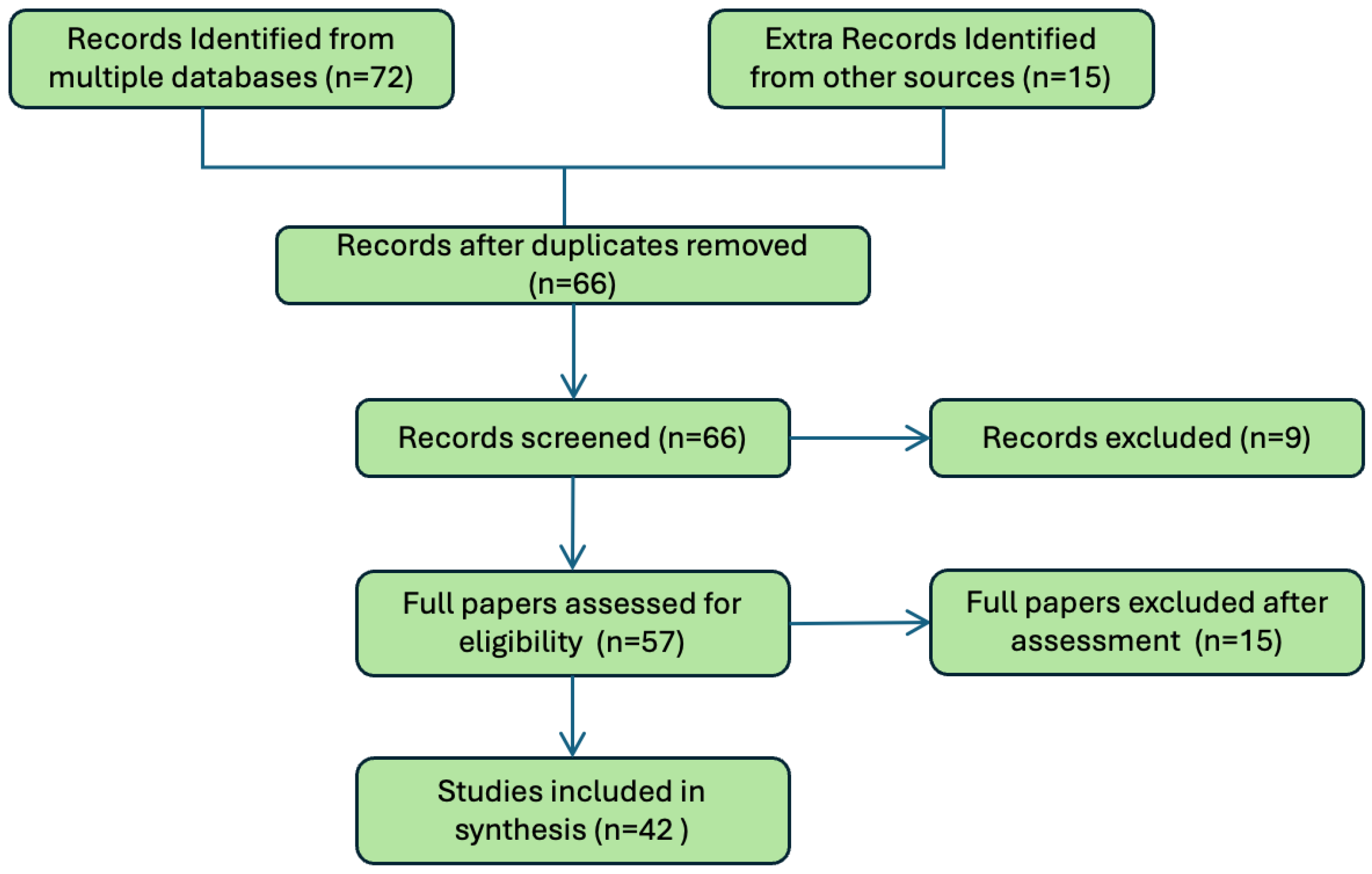
Figure 2.
A Conceptual Framework for Intelligent Health Monitoring and Adaptive Interventions.
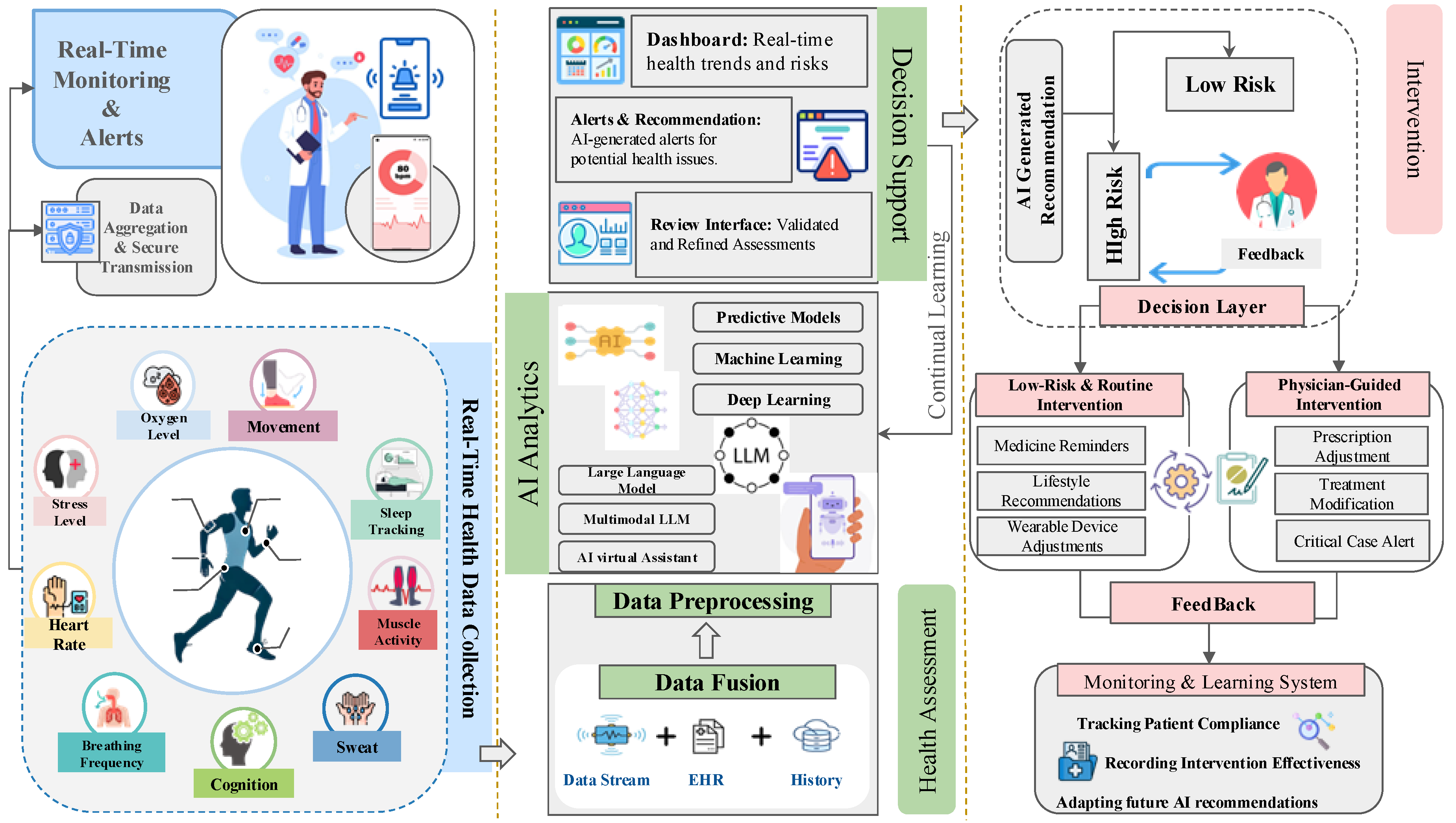
Figure 3.
Applications of Wearable Biosensors for Real-Time Health Monitoring.
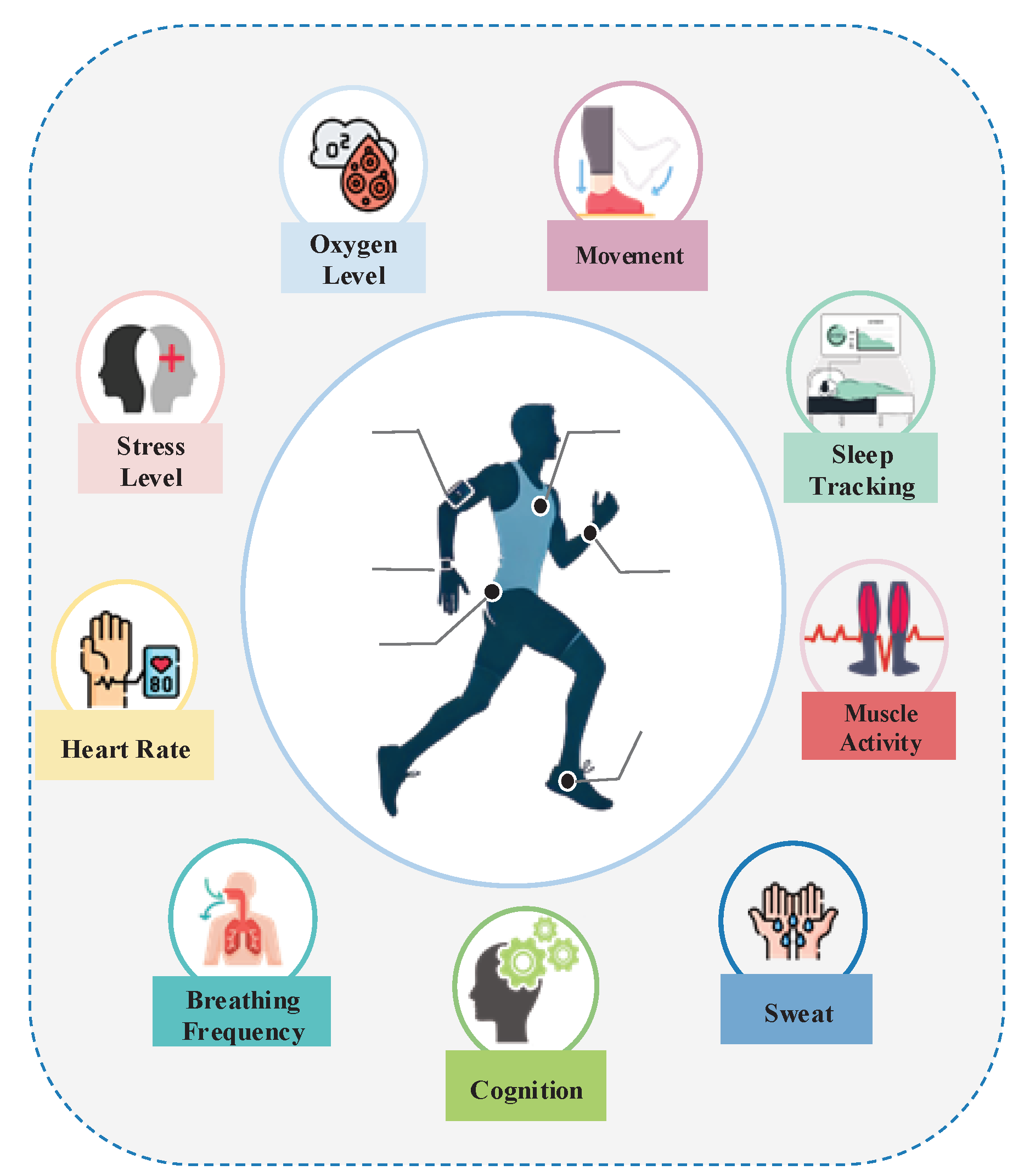
Table 3.
Key Challenges in Integrating Wearable Electronics with Biological Systems.
| Biology | Wearable Electronics | |
|---|---|---|
| Mechanical Properties | Flexible, soft, and compliant organic materials | Stiff, brittle, and rigid inorganic structures |
| Fabrication Techniques | 3D self-organized growth and assembly | 2D structured patterns using lithographic methods |
| Operational Environment | Hydrated, dynamic, and biochemical surroundings | Dry, static, and controlled conditions |
| Functional Principles | Predominantly ion-driven processes with genetic regulation | Primarily electron-driven systems governed by electromagnetic theory |
Disclaimer/Publisher’s Note: The statements, opinions and data contained in all publications are solely those of the individual author(s) and contributor(s) and not of MDPI and/or the editor(s). MDPI and/or the editor(s) disclaim responsibility for any injury to people or property resulting from any ideas, methods, instructions or products referred to in the content. |
© 2025 by the authors. Licensee MDPI, Basel, Switzerland. This article is an open access article distributed under the terms and conditions of the Creative Commons Attribution (CC BY) license (http://creativecommons.org/licenses/by/4.0/).
Copyright: This open access article is published under a Creative Commons CC BY 4.0 license, which permit the free download, distribution, and reuse, provided that the author and preprint are cited in any reuse.