Preprint
Review

This version is not peer-reviewed.

Overview of Injuries with Racket Sports in Pediatric and Adolescent Population: A Narrative Review

Submitted:

29 July 2025

Posted:

30 July 2025

You are already at the latest version

Abstract

Objectives: The popularity of racket sports has been increasing globally over recent years, with tennis remaining the most played worldwide, and pickleball rising in popularity in the United States. While there are many studies addressing the injuries associated with racket sports in adults, there is minimal data available focusing on pediatric and adolescent populations. This study aims to review various injuries associated with racket sports in pediatric and adolescent populations. Methods: Using the PubMed database, we conducted a search of studies completed in the most recent 10 years that addressed injuries due to racket sports in age groups up to 18 years old, as well as adult studies that included pediatric and adolescent populations. Results: 66 studies met our inclusion criteria, with 18 of these being descriptive studies. The most common injuries reported in the studies were lower extremity injuries, specifically knee and ankle injuries. Upper extremity injuries were the next most common, specifically shoulder injuries. Most of the studies reported multiple musculoskeletal injuries as opposed to just one. Tennis was found to be the racket sport that causes the highest number of injuries, as well as the most severe injuries. Conclusions: There are not many studies on musculoskeletal injuries from racket sports in pediatric and adolescent populations. This review found tennis to be the sport with the highest number of injuries and most severe injuries. There is a significant amount of physical and mental growth occurring during childhood and adolescence, therefore more kinematic studies should be done pertaining to racket sports, which will hopefully help with injury prevention in these age groups.

Keywords: 
;  ;  ;  ;  ;  

1. Introduction

Racket sports—including tennis, badminton, squash, pickleball, and padel—have witnessed a significant surge in global popularity over recent years. Tennis continues to be a widely played sport worldwide, with substantial participation across various age groups. Badminton and squash also maintain strong global followings, with millions engaging in these sports recreationally and competitively. Padel, a hybrid of tennis and squash, has emerged as one of the fastest-growing sports globally, with over 25 million players across 90 countries [1].
In the United States, pickleball has experienced an unprecedented rise in popularity. According to the Sports & Fitness Industry Association’s 2025 Topline Participation Report, pickleball participation reached 19.8 million in 2024, marking a 45.8% increase from the previous year. This rapid growth has been particularly notable among older adults, with most players being over the age of 50 [2,3].
The surge in pickleball’s popularity has been accompanied by a corresponding increase in musculoskeletal injuries, especially among older adults. A study analyzing data from the U.S. Consumer Product Safety Commission’s National Electronic Injury Surveillance System (NEISS) between 2013 and 2022 found a significant rise in pickleball-related injuries, particularly among individuals aged 60 and above. These injuries predominantly involve the upper and lower extremities, with common diagnoses including sprains, strains, and fractures [3,4,5].
While the injury patterns in adult racket sport athletes have garnered attention, there remains a notable scarcity of research focusing on pediatric and adolescent populations. Despite millions of children and adolescents participating in racket sports, studies examining musculoskeletal injury epidemiology in these age groups are limited. A systematic review highlighted the association between early sports specialization and an increased risk of acute and overuse injuries in youth athletes. Furthermore, young athletes are susceptible to unique injuries because of growth on the musculoskeletal system, including injuries to the growth plate, apophysis, and joint surfaces [6,7,8]
Injury surveillance in youth racket sports is limited. A study monitoring sport participation and injury risk in young athletes found that racket and individual sports were associated with a lower injury risk compared to team sports. However, comprehensive epidemiologic injury tracking systems for youth sports in the United States are lacking, hindering efforts to quantify injury rates and evaluate prevention initiatives [9,10].
Racket sports comprise of more than 30 sports which can be grouped as
(A)
Tennis and variants- Tennis, Real tennis, soft tennis, Platform tennis, Paddle tennis, Padel, Squash tennis, Tennis polo, Sticke Tennis
(B)
Badminton and variants- Badminton, table tennis, Ball badminton, Speedminton/Crossminton,
(C)
Squash and variants- Squash, hardball squash, racquetball, racketball, racquets
(D)
Pickleball and variants- pickleball, pitton, paleta fronton, matkot/frescobol, pelota mixteca, beach tennis, speedball, qianball, racketlon, tamburello
(E)
Pelota and variants- Basque pelota, fives, frontenis, Jai alai [11]

2. Materials and Methods

We conducted a literature search in PubMed for articles related to racket sports injuries in pediatric and adolescent populations published from 2015 to 2025. Searching PubMed using the terms (“Racquet Sports”[Mesh] OR “Racquet Sports/injuries”[Mesh] OR “racquet sport*”[tiab] OR “racket sport*”[tiab] OR badminton[tiab] OR “ball badminton”[tiab] OR “battledore and shuttlecock”[tiab] OR crossminton[tiab] OR speedminton[tiab] OR frontenis[tiab] OR “lawn tennis”[tiab] OR qianball[tiab] OR rackets[tiab] OR racketball[tiab] OR racquetball[tiab] OR “real tennis”[tiab] OR “soft tennis”[tiab] OR speed-ball[tiab] OR squash[tiab] OR tennis[tiab] OR touchtennis[tiab] OR “table tennis”[tiab] OR “paddle tennis”[tiab] OR padel[tiab] OR pickleball[tiab] OR “platform tennis”[tiab] OR racketlon[tiab] OR sticke[tiab] OR “tennis polo”[tiab] OR “basque pelota”[tiab] OR “beach tennis”[tiab] OR “downside ball game”[tiab] OR “four wall paddleball”[tiab] OR frescotennis[tiab] OR jokari[tiab] OR matkot[tiab] OR kadima[tiab] OR frescobol[tiab] OR miniten[tiab] OR “one wall paddleball”[tiab] OR paddleball[tiab] OR “paddle ball”[tiab] OR “paleta fronton”[tiab] OR “pan pong”[tiab] OR “pelota mixteca”[tiab] OR pitton[tiab] OR “road tennis”[tiab] OR “spec tennis”[tiab] OR sphairee[tiab] OR stoolball[tiab] OR “table squash”[tiab] OR tamburello[tiab] OR “totem tennis”[tiab]) AND (“Athletic Injuries”[Mesh] OR “athletic injur*”[tiab] OR “sports injur*”[tiab] OR injur*[tiab]) AND (“Pediatrics”[Mesh] OR “Adolescent”[Mesh] OR “Child”[Mesh] OR child*[tiab] OR pediatric*[tiab] OR adolescent*[tiab] OR teen*[tiab] OR youth*[tiab]) returned 211 results in the last 10 years. We included studies that focused on pediatric and adolescent populations up to 18 years of age, as well as adult studies that included pediatric and adolescent age groups. Studies on musculoskeletal injuries due to one or more racket sports were also included. Out of 211 studies as found in PubMed search for last 10 years, 66 studies met inclusion criteria. Common reasons of the rejected articles had either lacrosse as racket sports, had adult studies only or studied physiology of injury instead of epidemiology and type of injuries.

3. Results

Figure 1 shows the distribution of study types by frequency. Out of all the 66 studies selected based on the criteria, most of the studies were descriptive studies followed by cross-sectional studies and case reports respectively.
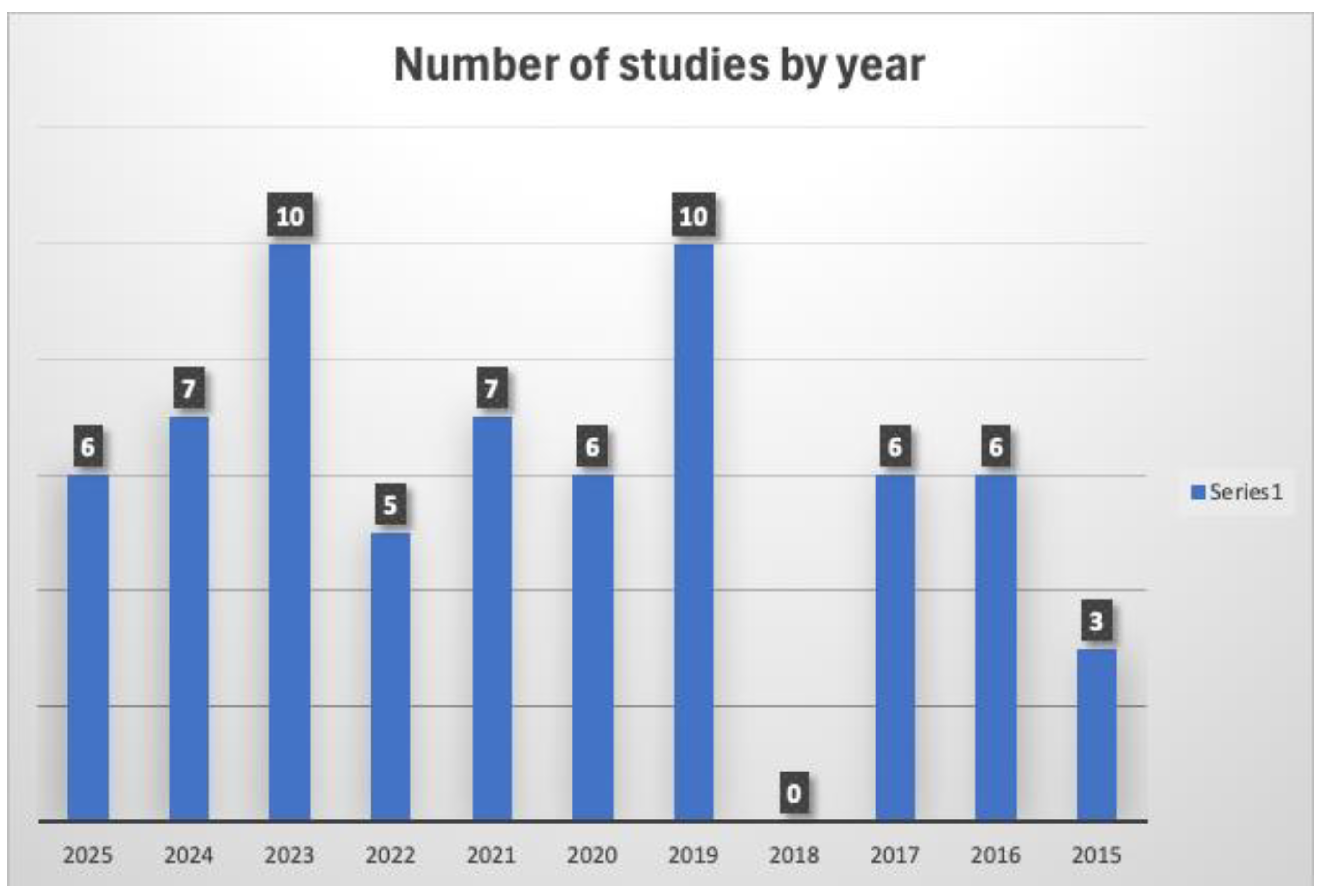
Figure 2 shows the distribution of studies by year of publication. The highest number of studies published that met our criteria were in 2023 and 2019 which were 10 each. There were no studies that met our criteria published in 2018.
Table 1 gives an overview of the location of injuries from the selected articles. Most of the injuries were in the lower extremity, specifically the knee and ankle. Shoulder injury was the most common injury in the upper extremity. There were small but significant number of traumatic eye injuries. While some articles only describe one injury, there were many articles which described many different injuries so there is an overlap of injuries within this table. This table also highlights different possible musculoskeletal injuries present in racket sports, but it does not differentiate what specific injuries are more common with certain racket sports.
We will now describe specific injuries related to certain common racket sports below:
  • Tennis:
Tennis is considered one of the most popular racket sports. While playing tennis can have many health benefits in terms of good aerobic exercise and fitness the dynamics involved in landing a very powerful overhead serve with force generation from the hips, knees and pelvis can lead to various types of injuries [12]. 30 articles from selected articles described some form of injuries by tennis.
1.1.
Head and Eye injury: Patel et.al [13] studied tennis related ocular injuries in US from 2000 to 2019 and found 16000 tennis related eye injuries with males affected twice than females and young age group had highest number of injuries. One third of hospitalized patients had open globe injuries. O’Connor et al. [14] studied sport related concussion (SRC) rate in high schoolers and found overall SRC rate per 10000 exposures for boys and tennis were 0.74 and 1.94 respectively. Girls collectively had higher overall SRC rate than boys among all sports.
1.2.
Upper extremity injury: There are a lot of overuse injuries to shoulder and elbows while playing tennis. Wang et al. [15] describe a case report of a youth athlete with acute anterior rotator cuff strain. Dennis et.al [16] did systematic review in young athletes and found high impact sports like tennis, badminton etc. could cause periphyseal stress injuries in shoulder, elbow, hand, wrist, foot and knee, ankle and foot. Pasulka et.al [17] did a case-control study in 1190 athletes and found that tennis at 46.7% was the sport with highest proportion of single-sport specialized athletes. Single sport specialized athletes in individual sports accounted for higher proportion of overuse injuries (44.3% vs 32.2%, p=0.037) and serious overuse injuries (28.8% vs 13.8%, p=0.011) but a lower proportion of acute injuries (28.8% vs 13.8%, p=0.001) compared to single-sport athletes involved in team sports. Kohyama et.al [18] reported a case report of stress fracture of scaphoid in an elite junior Japanese tennis player and concluded it was due to repeated practicing of attacking backhand high volley which involved too much dorsal flexion of the wrist. Young et al. [19] did a cross-sectional study of 125 professional female athletes and reported high level of infraspinatus atrophy in their dominant shoulders.
1.3.
Lower extremity: Holst-Christensen et al. [20] studied mechanism of injury and return to sport rates following anterior cruciate ligament injuries in tennis among 231 patients and found that lunging, running forward to the net and movements related to smashing were the most frequent activities leading to injury. Casadei and Kiel [21] reports Little League shoulder also called proximal humeral epiphysiolysis which is common in baseball players and throwing athletes is also seen in tennis players and competitive gymnasts, and the typical age of presentation is between 11 and 16 years old with the mechanism of injury being physis remain open before the closure of growth plate. Bittner and Hartstein [22] published a case report 5th metatarsal avulsion fracture in 17-year-old male tennis. Brant et.al [23] did a descriptive epidemiology study from 2005 to 2016 using high school reporting information online (HSRIO) data and found lower extremity sports injuries were higher in girls in tennis compared to boys with rate ratios (RR) more than two to one. Girls had a higher proportion of severe lower extremity sport injuries needing imaging fall sports except volleyball. Ramponi and Baker [24] reported calcaneal apophysitis or Sever’s disease as the primary cause of heel pain in pediatric patients between 8 and 15 years from high impact sports like tennis.
1.4.
Trunk and back injury: Gescheit et.al [25] performed a prospective cohort multiyear injury incidence in elite junior tennis players and found that lumbar spine was the most commonly and severely injured area in both sexes followed by shoulder injuries and knee injuries. Whale. et.al [26] data case report of 16-year-old Asian male was the elite tennis player with one month history of left shoulder pain which was later found to have first rib stress fracture.
2.
Badminton:
Badminton uses a softer racket than tennis and uses shuttle cock made of feathers than harder ball like tennis. So, though badminton players exert a whip like faster motion using their hand causing faster head velocity, use of softer shuttle cock usually mean less severe injuries [12]. Zhou et al. [27] studied epidemiological characteristics in 7–22-year-old badminton players from 2018-2023 and found among 711 players, 60.3% suffered at least one badminton related injury. The most common site was knee (male 18.8%, female 18.6%) followed by ankle and lower back. Saragaglia et al. [28] performed a retrospective epidemiologic study of 135 patients between 10 and 66 years for acute injuries in badminton and found out of 146 total injuries, 88.3% of lesions in lower limbs followed by 11% in upper limbs and 0.7% to head. There were 61% sprains, 22% tendino-muscular lesions, 9% fractures, 2% meniscal injuries and contusions each and 1 wound (0.7%). Zhou et al. [29] studied 366 badminton player aged 7-12 years via questionnaire and found ankle pain was the most common followed by knee, plantar, shoulder and lower back. Lau and Mukherjee [30] studied shoulder and elbow injuries in 532 overhead youth athletes aged 12-18 years and other sports along with badminton was studied. Prevalence of shoulder overuse injuries were 31% and elbow overuse injuries was 9.2%. Being older (15-18 years), training more than 11 hours per week and having more than 8 years of experience increased the odds of injuries. Shaari et al. [31] did a systematic review regarding metacarpal stress fracture in athletes (mean age 17 years) and found badminton and tennis were the most common sports with the metacarpal stress fracture and presented with pain in dorsal hand with activity and recovered with return to play in 9 weeks following non-operative management. Studies by Jao et al. [32] and Yu et al. [33] describes 12 and 85 patients each for ocular injurie sin badminton. Among 85 patients, 60 cases were hit by shuttlecock and 25 were hit by partner’s racket. 80 injuries were non-penetrating and 5 cases were penetrating. There were 58 cases with hyphema, 36 with secondary glaucoma, 23 with lens subluxation and 2 with retinal detachment. There was long term glaucoma related morbidity in the 12-case series. Both studies recommend eye protection to reduce morbidity.
3.
Pickleball:
Pickleball is an increasing popular sport in the world, especially in USA. It has wooden rackets and hollows balls with holes in and has net like tennis but a smaller pitch. Only one out of 66 selected articles, only one study by Boroumand et al. [34] described pickle ball injuries but it was a comprehensive overview of all upper and lower extremity injuries with pickleball present to emergency departments in USA from 2003-2022 using National electronic injury and Surveillance system (NEISS) database. There were 33 pediatric cases aged 12-15 years among 749 patients (286 adult and 430 geriatric). Pediatric and geriatric patients had more upper extremity injuries relative to adults (60.2% vs 40.6%, p<0.001 in children). Pediatric patients have lower frequency of lower extremity injuries than adults (36.2% vs 59.4%, p=0.22). Pediatric patients also had higher frequency of contusions vs adults (18.2% vs5.9%, p=0,020). School was the most common location for pediatric athletes (63.6%) followed by home. Among pediatric injuries, 63.6% of injuries were in upper extremity, shoulder and finger injury each 18.2% were most common upper extremity location followed by hand and wrist at 9% each. Lower extremity injuries comprised remaining 36.4% with ankle injury at 18.2% being most common followed by knee (9%) and foot (6%). Strain and sprain at 42% formed the bulk of type of injuries followed by fracture (21%), contusion (18%0 and dislocation (9%). All pediatric athlete injuries were treated at emergency department and released home and none were admitted.
4.
Squash:
A well-known sport, it has enclosed court with hollow rubber ball and player must strike the wall and injuries can happen with ball with speeds reaching 170 mph [11,12]. Horsley et al. [35] performed retrospective analysis between 2004-2017 in 67 elite English players between 18-35 years. Most injuries were in the lower limb (76.5%) out of which ankle and heel were most common location (20.8%) followed by thigh at 12.6% and knee at 10%. Majority of injuries were soft tissue injuries (71%). An overview of type of injury revealed tendonitis/bursitis being highest reported 22.6% followed by muscle spasm and muscle strain (16.2% each), ligament strain (9.6%), minor joint trauma (11.6%), atraumatic arthritis (7%), hematoma and chondral damage at 5% each and nerve damage and fracture at 1% each. Another study by Rejeb et al. [36] looking at injury data from 166 adolescent multisport athletes from 2009-2014 showed squash sport had the highest rate injury (8.5 injuries per athletes). Prevalence of overuse injuries was 50.3% with most injuries involved lower extremities (67%) of which foot and ankle were most common body parts. Genot Jendrusch [37] studies eye injuries due to high velocity sports like squash, tennis, badminton in club and school sports using ARAG sport insurance database between 1987-2017 and found 1.08% injuries were eye injuries out of which blunt trauma was more than 50% of cases.
5.
Table tennis:
Also called ping-pong, it is also a popular game played in a small table with net with small racket bat and soft hollow plastic ball. Studnicka and Ampat [38] describe lumbosacral spondylolisthesis to be common in children playing sports that require repetitive lower back extension like table tennis etc. They can present with lower back pain worsened by activity. Tan et al. [39] analyzed a cohort of 2548 college students with primary anterior cruciate ligament (ACL) reconstruction in Henei province, China and found table tennis, badminton etc. to be a most prevalent sports causing ACL injuries. The patterns of ACL injuries were simplex ACL, meniscal injury, cartilage injury and multi-ligament injuries.
6.
Racquet ball/paddleball:
Racquetball is played similarly to squash but with bigger court and with no tin and have larger and bouncier ball [11]. Changstrom et al. [40] performed descriptive epidemiologic study of all racket sports injuries in US emergency departments between 2007-2016 and had 75,615 number of injuries in ages less than 18 years. Tennis at 69.9% formed bulk of their injuries followed by squash/racquetball/paddleball (SRP) at 16.5% and badminton at 6.4%. 34% of the injuries were of lower extremity and 25% were that of upper extremity. Strain and sprain were the most common type of injury at 39.8% followed by fracture/dislocation at 18.6%. Cronin et al. [41] did multicentric orthopedic outcomes network (MOON) cohort study of 1235 patients with large labra tears of shoulders and found racquet sports among others like swimming, skiing etc. (p=0.01) to be associated with large labral tears.
7.
Speed ball:
It involves a racket to hit a ball tethered to a tall pole and famous in Egypt. Meshram et al. [42] conducted descriptive epidemiological survey of 100 athletes between 18-41 years. 65 out of 100 reported having at least 1 injury during the season and most injuries occurred during practice (77%) than competition (23%). Most common sites of injury were shoulder (50%), elbow (14%) and low back (9%). The most common causes of injury were due to lack of training (40%) and lack of warming up (18%). About 77% of them needed to go to health professional and 9% of them needed surgery.
Table 2 summarizes most of these injuries and the sports that causes these injuries:

4. Discussion

To our knowledge there are very few studies which have reviewed musculoskeletal injuries in the pediatric and adolescent population in racket sports. This review shows that tennis is the most common sport in causing the greatest number of injuries as well as severity of injuries. Tennis has shown to cause all injuries from concussion in head, eye injuries to overuse shoulder, knee, back injuries and fracture of wrist, hand, knee and rarely rib fracture [13,14,15,16,17,18,19,20,21,22,23,24,25,26]. This is understandable as tennis is a relatively fast-moving game which needs a very powerful serve with an outstretched overhead hand movement. Johansson et al. [43,44] examined association between spikes in external training load and shoulder injuries and back pain in competitive adolescent tennis players in his SMASH cohort study and found that accumulated external workload spikes of tennis training associated with the higher rate of shoulder injuries and back pain and suggested having consistency in training load on a weekly basis is beneficial for reducing shoulder injuries than having a training schedule comprising rapid increases in workload. Another study by Fernandez-Fernandez et al. [45] performed A randomized control trial to see the influence of muscular fatigue and tennis serve performance within regular training sessions and examine 25 young male and female around 14 years of age were given multiple training serve exercises before and after tennis training. It was found that it was more effective to provide serve training before the regular training of tennis in youth players and if that was given after training, there was excessive levels of fatigue which could cause shoulder imbalances and increase the risk of injury. As per the rules of International Tennis federation players must serve alternately from two different positions which is deuce on the right and ad court on the left side. Fett et al. [46] studied the kinematic characteristic of the tennis serve and found that though the mean service velocity was similar on both sides, there were differences in characteristics of the serve and ball kinematics. There were differences in front dash foot angle relative to the baseline and lateral distance between the feet significantly as well as during the service, upper torso range of motion from maximum clockwise rotation until impact was significantly greater on the deuce court. There is benefit in understanding these differences and explore adaptation in the service position by both players and coaches which could help with minimizing injuries during serve.
Badminton is a popular and an easy game to play. Compared to tennis, it does not have a hard and heavy ball, but has a shuttlecock made of feathers and is light. While the speed velocity of the shuttlecock can be fast, it has less propensity to cause severe injury due to its lightness. We saw earlier during our results that most of the injuries related to badminton were in lower extremities which involved knees and ankle and most of the injuries were sprains and strains, though really it can cause injuries on the face including ocular injuries. Zhao et al. [47] investigated the effects of integrated muscular training on injury prevention by enrolling 38 participants to high risk and low risk groups for 8 week integrated neuromuscular training. It was found that integrated neuromuscular training can effectively improve the asymmetry of female athletes’ limbs and prevent sport injuries and help with improving their performance ability. Another study by Stausholm et al. [48] compared the internal and external rotation strength of shoulder in adolescent and adult elite badminton players and demonstrated that adolescents have stronger shoulder external rotation than adults on both sides which implied that increased age appears to be associated with weaker shoulder muscles and elite badminton players. Although uncommon, rare case report of humeral diaphyseal fracture with badminton has also been reported [49].
Pickleball is emerging to be a very popular sport in all age groups especially in adults and geriatric age population in the last 5 years as shown in the study by Boroumand et al. [34]. This study also showed that pediatric players had more frequency of upper extremity injuries and more finger injuries than adults. This could be attributed to jamming of fingers during fall [49] or high end of the paddle handle for better grip [50]. There were also more contusion injuries in pediatric population which could be attributed to poor muscle strength and coordination an incomplete mastery of complex motor skills needed in a skillful game like pickleball [51]. This also highlights that warmup and training before the game could help with preventing injuries.
Squash is another popular racket sport, but it can lead to injuries as the ball travels very fast and it is an enclosed game with multiple bounces that has propensity to cause injuries in all parts of the body and sometimes cause serious injuries. Study by Horsley et al. [34] showed that injuries were more prevalent in the lower age group of 18-23 years of age which could be attributed to development change happening at younger age including changes to the muscle strength flexibility and coordination [52]. Most injuries were also present in the lower extremities like the knee and ankle which could be attributed to rapid lunging and forward movements needed in squash play.
Table tennis or ping pong is another common racket sport enjoyed mostly by Asians but is getting popular all over the world. There is a mix of fast play along with spinning which needs delicate hand movements and first interactions with hand-eye coordination. There is repetitive over extension of spine and back which could lead to back in back injuries [38]. Due to its fast play, there could also be possibility of lower extremity injuries including knee injuries [39].
Racquetball and speedball are fast moving games like squash and are known to cause injuries like squash. Most of the injuries with racquetball are lower extremity injuries. Speedball which originated in Egypt is very popular in that area. Injuries related to speedball are commonly upper extremity injuries. Ankle and knee sprains go to happen due to rapid change in direction which could cause the angle to roll in and cause sprain. Shoulder injuries can happen with too many serve or overhead in a short period of time resulting in muscle fatigue causing injuries.
This is a narrative review but in future, there could be room for a more defined systematic review of similar topics. There are more than 30 racket sports but the lack of studies in less commonly played sports including pickleball in pediatric population which is getting very popular is surprising. There could be room for more kinematic studies of various sports in children and adolescents as this age group represents the age of growth and strength building. Another benefit of these kinematic studies could be in injury prevention which is common at these young age group.

5. Conclusions

This is one of the few review studies on the musculoskeletal injuries in pediatric and adolescent population. Tennis is not only a popular racket sport but due to a heavier ball with fast velocity and larger court, it also has the most significant and the greatest number of injuries among all racket sports. Most studies are limited to tennis, badminton, squash and table tennis and there is lack of studies in lesser-known racket sports.
Children and adolescents are more vulnerable to injury as they are growing mentally and physically. More studies are needed to understand their kinematics, which could help with prevention of injuries. The existing literature underscores the need for targeted injury surveillance and prevention strategies in pediatric and adolescent racket sport participants. Developing dedicated surveillance programs would help identify common injury types and risk factors in junior players, enabling stakeholders to devise evidence-based interventions to reduce injury risk. As racket sport participation continues to expand across all ages, it is imperative to proactively safeguard the youngest participants through focused injury monitoring and tailored preventive measures.

Author Contributions

For research articles with several authors, a short paragraph specifying their individual contributions must be provided. The following statements should be used “Conceptualization, Mahesh Shrestha and Dilip Patel.; methodology, Mahesh Shrestha and Ann Harris; investigation, Ann Harris; writing—original draft preparation, Mahesh Shrestha, Asra Usmani, Serena Karlov.; writing—review and editing, Mahesh Shrestha and Dilip Patel.; visualization, Mahesh Shrestha.; supervision, Mahesh Shrestha and Dilip Patel.; funding acquisition, none required. All authors have read and agreed to the published version of the manuscript.”.

Funding

This research received no external funding.

Institutional Review Board Statement

Not applicable due to review study.

Informed Consent Statement

Not applicable.

Data Availability Statement

Data available upon request.

Acknowledgments

Kirsten Hickok, statistician, WMU Homer Stryker MD School of Medicine, Kalamazoo, MI, 49008.

Conflicts of Interest

The authors declare no conflicts of interest.

Abbreviations

The following abbreviations are used in this manuscript:
SRC Sport related concussion
HSRIO High school reporting information online
SMASH Shoulder Management and Assessment Serving High Performance
MOON Multicentric orthopedic outcomes network

References

  1. Padelathletes. Padel Statistics and Facts 2025. 2025. Available online: https://padelathletes.com/padel-statistics/ (accessed on 2 June 2025).
  2. Flamm, J. Pickleball Participation Surges to Nearly 20 million in 2024. 2025. Available online: https://www.thedinkpickleball.com/report-pickleball-participation-surges-to-nearly-20-million-in-2024/ (accessed on 2 June 2025).
  3. Vitale, K.; Liu, S. Pickleball: Review and Clinical Recommendations for This Fast-Growing Sport. Curr Sports Med Rep. 2020, 19, 406–413. [Google Scholar] [CrossRef]
  4. Yu, J.; Yendluri, A.; Linden, G.S.; Namiri, N.K.; Corvi, J.J.; Song, J.; Parsons, B.O.; Parisien, R.L. Increasing Incidence of Pickleball Injuries Presenting to US Emergency Departments: A 10-year Epidemiologic Analysis of Mechanisms and Trends. Orthop J Sports Med. 2025, 13, 23259671241305364. [Google Scholar] [CrossRef]
  5. Touhey, D.C.; Bozorgmehr, C.K.; Tartibi, D.S.; Smith, M.V.; Knapik, D.M.; Smith, M.; Knapik, D. Pickleball Injuries in the Aging Athlete: A Critical Analysis Review. Cureus. 2024, 16, e69950. [Google Scholar] [CrossRef]
  6. Fabricant, P.D.; Lakomkin, N.; Sugimoto, D.; Tepolt, F.A.; Stracciolini, A.; Kocher, M.S. Youth Sports Specialization and Musculoskeletal Injury: A Systematic Review of the Literature. Phys Sportsmed. 2016, 44, 257–262. [Google Scholar] [CrossRef]
  7. Soprano, J.V. Musculoskeletal Injuries in the Pediatric and Adolescent Athlete. Curr Sports Med Rep. 2005, 4, 329–334. [Google Scholar] [CrossRef]
  8. Jayanthi, N.A.; LaBella, C.R.; Fischer, D.; Pasulka, J.; Dugas, L.R. Sports-Specialized Intensive Training and The Risk of Injury in Young Athletes: A Clinical Case-Control Study. Am J Sports Med. 2015, 43, 794–801. [Google Scholar] [CrossRef]
  9. Theisen, D.; Frisch, A.; Malisoux, L.; Urhausen, A.; Seil, R. Monitoring of Sport Participation and Injury Risk in Young Athletes. J Sci Med Sport. 2013, 16, 200–204. [Google Scholar] [CrossRef]
  10. Kerr, Z.Y.; Comstock, R.D.; Dompier, T.P.; Marshall, S.W. The First Decade of Web-Based Sports Injury Surveillance (2004–2005 through 2013–2014): Methods of the National Collegiate Athletic Association Injury Surveillance Program and High School Reporting Information Online. J Athl Train. 2018, 53, 729–737. [Google Scholar] [CrossRef] [PubMed]
  11. Gradasevic, H. List of 31 Racket Sports and How to Play Them. 2023. Available online: https://sportscentaur.com/list-of-31-racket-sports-and-how-to-play-them/ (accessed on 2 June 2025).
  12. Jayanthi, N.; Esser, S. Racket Sports. In Sports Rehabilitation and Injury Prevention; Comfort, P., Abrahamson, E., Eds.; Wiley-Blackwell, 2010; pp 265–280.
  13. Patel, P.S.; Uppuluri, A.; Oydanich, M.; Langer, P.D.; Zarbin, M.A.; Bhagat, N. Epidemiology of United States Tennis-Related Ocular Injuries from 2000 to 2019. Int Ophthalmol. 2023, 43, 997–1003. [Google Scholar] [CrossRef] [PubMed]
  14. O’Connor, K. L.; Baker, M. M.; Dalton, S. L.; Dompier, T. P.; Broglio, S. P.; Kerr, Z. Y. Epidemiology of Sport-Related Concussions in High School Athletes: National Athletic Treatment, Injury and Outcomes Network (NATION), 2011–2012 Through 2013–2014. J. Athl. Train. 2017, 52, 175–185. [Google Scholar] [CrossRef] [PubMed]
  15. Wang, Y.; Yi, N.; Ericksen, H.M.; Zhang, W. Case Report: Self-Performed Orthopedic Exams in Telehealth Treatment of a Youth Athlete with Acute Rotator Cuff Strain. Front Sports Act Living. 2023, 5, 1150850. [Google Scholar] [CrossRef]
  16. Caine, D.; Meyers, R.; Nguyen, J.; Schöffl, V.; Maffulli, N. Primary Periphyseal Stress Injuries in Young Athletes: A Systematic Review. Sports Med. 2022, 52, 741–772. [Google Scholar] [CrossRef]
  17. Pasulka, J.; Jayanthi, N.; McCann, A.; Dugas, L.R.; LaBella, C. Specialization Patterns Across Various Youth Sports and Relationship to Injury Risk. Phys Sportsmed. 2017, 45, 344–352. [Google Scholar] [CrossRef]
  18. Kohyama, S.; Kanamori, A.; Tanaka, T.; Hara, Y.; Yamazaki, M. Stress Fracture of the Scaphoid in an Elite Junior Tennis Player: A Case Report and Review of the Literature. J Med Case Rep. 2016, 10, 1–4. [Google Scholar] [CrossRef] [PubMed]
  19. Young, S.W.; Dakic, J.; Stroia, K.; Nguyen, M.L.; Harris, A.H.; Safran, M.R. High Incidence of Infraspinatus Muscle Atrophy in Elite Professional Female Tennis Players. Am J Sports Med. 2015, 43, 1989–1993. [Google Scholar] [CrossRef]
  20. Holst-Christensen, T.; Hölmich, P.; Andersen, F.F.; Kaldau, N.C. Anterior Cruciate Ligament Injuries in Tennis: Injury Mechanism and Return to Sport Rates Following Injury. Scand J Med Sci Sports. 2025, 35, e70064. [Google Scholar] [CrossRef]
  21. asadei, K.; Kiel, C J. Proximal Humeral Epiphysiolysis. StatPearls. 2023. Available online: https://pubmed.ncbi.nlm.nih.gov/30485006/ (accessed on 2 June 2025).
  22. Bittner, J.S.; Hartstein, A.J. Fifth Metatarsal Avulsion Fracture in an Adolescent Tennis Player. J Orthop Sports Phys Ther. 2019, 49, 620. [Google Scholar] [CrossRef]
  23. Brant, J.A.; Johnson, B.; Brou, L.; Comstock, R.D.; Vu, T. Rates and Patterns of Lower Extremity Sports Injuries in All Gender-Comparable US High School Sports. Orthop J Sports Med. 2019, 7, 2325967119873059. [Google Scholar] [CrossRef] [PubMed]
  24. Ramponi, D.R.; Baker, C. Sever’s Disease (Calcaneal Apophysitis). Adv Emerg Nurs J. 2019, 41, 10–14. [Google Scholar] [CrossRef] [PubMed]
  25. Gescheit, D.T.; Cormack, S.J.; Duffield, R.; Kovalchik, S.; Wood, T.O.; Omizzolo, M.; Reid, M. A Multi-Year Injury Epidemiology Analysis of an Elite National Junior Tennis Program. J Sci Med Sport. 2019, 22, 11–15. [Google Scholar] [CrossRef]
  26. Wahle, C.F.; Hart, C.M.; Beck, J.J. First Rib Stress Fracture in an Adolescent Elite Tennis Player: A Case Report. JBJS Case Connect. 2023, 13, 1–4. [Google Scholar] [CrossRef]
  27. Zhou, X.; Imai, K.; Liu, X.X.; Chen, Z.; Watanabe, E.; Zeng, H. Epidemiological Characteristics of Injury in 7-22-Year-Old Badminton Players by Age and Sex. Sci Rep. 2025, 15, 2889. [Google Scholar] [CrossRef] [PubMed]
  28. Saragaglia, D.; Banihachemi, J.J.; Chamseddine, A.H. Acute Injuries in Badminton from 10 to 66 Years of Age: An Epidemiological Study of 140 Cases Among All Types of Practice. Eur J Orthop Surg Traumatol. 2023, 33, 1945–1951. [Google Scholar] [CrossRef]
  29. Zhou, X.; Imai, K.; Chen, Z.; Liu, X.; Watanabe, E.; Zeng, H. The Characteristics of Badminton-Related Pain in Pre-Adolescent and Adolescent Badminton Players. Children (Basel). 2023, 10, 1501. [Google Scholar] [CrossRef] [PubMed]
  30. Lau, R.; Mukherjee, S. Prevalence of Shoulder and Elbow Overuse Injuries Among Competitive Overhead Youth Athletes in Singapore. Orthop J Sports Med. 2023, 11, 23259671231156199. [Google Scholar] [CrossRef]
  31. Shaari, A.L.; Fano, A.N.; Ferraro, J.; Ahmed, I. Metacarpal Stress Fractures in Athletes: A Systematic Review. Hand (N Y). 2024, 15589447241266965. [CrossRef]
  32. Jao, K.K.; Atik, A.; Jamieson, M.P.; Sheales, M.P.; Lee, M.H.; Porter, A.; Roufas, A.; Goldberg, I.; Zamir, E.; White, A.; Skalicky, S.E. Knocked by the Shuttlecock: Twelve Sight-Threatening Blunt-Eye Injuries in Australian Badminton Players. Clin Exp Optom. 2017, 100, 365–368. [Google Scholar] [CrossRef] [PubMed]
  33. Yu, J.; Chen, Y.; Miao, J.; Zhao, M.; Keng, C.; Wang, X.; Guo, J.; Liu, Y. Doubles Trouble-85 Cases of Ocular Trauma in Badminton: Clinical Features and Prevention. Br J Sports Med. 2020, 54, 23–26. [Google Scholar] [CrossRef]
  34. Boroumand, S.; Park, N.; Katsnelson, B.; Qian, E.; Norman, M.; Joo, P.; Diatta, F.; Noel, O.; Moran, J.; Jimenez, A. The Perils of Pickleball: A Two Decade Analysis of Upper and Lower Extremity Injuries from America’s Fastest Growing Sport. J Sports Sci. 2025, 1–8. [Google Scholar] [CrossRef]
  35. Horsley, I.G. Dr.; O’Donnell, V.; Leeder, J. The Epidemiology of Injuries in English Professional Squash; A Retrospective Analysis Between 2004 and 2015. Phys Ther Sport. 2020, 46, 1–6. [Google Scholar] [CrossRef]
  36. Rejeb, A.; Johnson, A.; Vaeyens, R.; Horobeanu, C.; Farooq, A.; Witvrouw, E. Compelling Overuse Injury Incidence in Youth Multisport Athletes. Eur J Sport Sci. 2017, 17, 495–502. [Google Scholar] [CrossRef]
  37. Jendrusch, G. Augenverletzungen und Fehlsichtigkeit im Schul- und Vereinssport [Eye Injuries and Defective Vision in School and Club Sports - Arguments for DIN-approved Glasses Suitable for School Sports]. Klin Monbl Augenheilkd. 2025, 242, 521–531. [Google Scholar] [CrossRef]
  38. Studnicka, K.; Ampat, G.; Lumbosacral Spondylolisthesis. StatPearls. 2023. Available online: https://pubmed.ncbi.nlm.nih.gov/32809514/ (accessed on 2 June 2025).
  39. Tan, Y.; Zhou, P.; Ma, C. Analysis of Sport-Injured Pattern of Anterior Cruciate Ligament in the Reconstruction Period of Chinese College Students. J Sports Med Phys Fitness. 2016, 56, 1346–1351. [Google Scholar]
  40. Changstrom, B.; McBride, A.; Khodaee, M. Epidemiology of Racket and Paddle Sports-Related Injuries Treated in the United States Emergency Departments, 2007-2016. Phys Sportsmed. 2022, 50, 197–204. [Google Scholar] [CrossRef]
  41. Cronin, K.J.; Magnuson, J.A.; Wolf, B.R.; Hawk, G.S.; Thompson, K.L.; Jacobs, C.A. MOON Shoulder Group; Hettrich, C.M.; Bishop, J.Y.; Bollier, M.J.; et al. Male Sex, Western Ontario Shoulder Instability Index Score, and Sport as Predictors of Large Labral Tears of the Shoulder: A Multicenter Orthopaedic Outcomes Network (MOON) Shoulder Instability Cohort Study. Arthroscopy. 2021, 37, 1740–1744. [Google Scholar] [CrossRef]
  42. Meshram, P.; Yasser, O.; Joseph, J.; Larijani, K.; Lopes Sauers, A.; Srikumaran, U.; McFarland, E.G. Descriptive Epidemiology of Injuries in Professional Speedball Athletes. J Sport Rehabil. 2022, 31, 778–784. [Google Scholar] [CrossRef]
  43. Johansson, F.; Cools, A.; Gabbett, T.; Fernandez-Fernandez, J.; Skillgate, E. Association Between Spikes in External Training Load and Shoulder Injuries in Competitive Adolescent Tennis Players: The SMASH Cohort Study. Sports Health. 2022, 14, 103–110. [Google Scholar] [CrossRef] [PubMed]
  44. Johansson, F.; Gabbett, T.; Svedmark, P.; Skillgate, E. External Training Load and the Association with Back Pain in Competitive Adolescent Tennis Players: Results from the SMASH Cohort Study. Sports Health. 2022, 14, 111–118. [Google Scholar] [CrossRef] [PubMed]
  45. Fernandez-Fernandez, J.; Moya-Ramon, M.; Santos-Rosa, F.J.; Gantois, P.; Nakamura, F.Y.; Sanz-Rivas, D.; Granacher, U. Within-Session Sequence of the Tennis Serve Training in Youth Elite Players. Int J Environ Res Public Health. 2020, 18, 244. [Google Scholar] [CrossRef]
  46. Fett, J.; Oberschelp, N.; Vuong, J.L.; Wiewelhove, T.; Ferrauti, A. Kinematic Characteristics of the Tennis Serve from the Ad and Deuce Court Service Positions in Elite Junior Players. PLoS One. 2021, 16, e0252650. [Google Scholar] [CrossRef] [PubMed]
  47. Zhao, W.; Wang, C.; Bi, Y.; Chen, L. Effect of Integrative Neuromuscular Training for Injury Prevention and Sports Performance of Female Badminton Players. Biomed Res Int. 2021, 2021, 5555853. [Google Scholar] [CrossRef]
  48. Stausholm, M.B.; Baun, M.; Bjordal, J.M.; Nielsen, D.; Aagaard, H.; Magnusson, S.P.; Couppé, C. Shoulder Rotational Strength Profiles of Danish National Level Badminton Players. Int J Sports Phys Ther. 2021, 16, 504–510. [Google Scholar] [CrossRef]
  49. Gibly, R.F.; Shomaker, T.; Bompadre, V.; Steinman, S.E. Understanding the Spectrum of Paediatric Mechanical Finger and Hand Trauma Seeking Acute Care. J Child Orthop. 2018, 12, 622–628. [Google Scholar] [CrossRef] [PubMed]
  50. The Dink. Experimenting with Paddle Grip Position. 2023. Available online: https://www.thedinkpickleball.com/paddle-grip-position-options/ (accessed on 6 June 2025).
  51. Adirim, T.A.; Cheng, T.L. Overview of Injuries in the Young Athlete. Sports Med. 2003, 33, 75–81. [Google Scholar] [CrossRef] [PubMed]
  52. Berson, B.L.; Rolnick, A.M.; Ramos, C.G.; Thornton, J. An Epidemiologic Study of Squash Injuries. Am J Sports Med. 1981, 9, 103–106. [Google Scholar] [CrossRef] [PubMed]
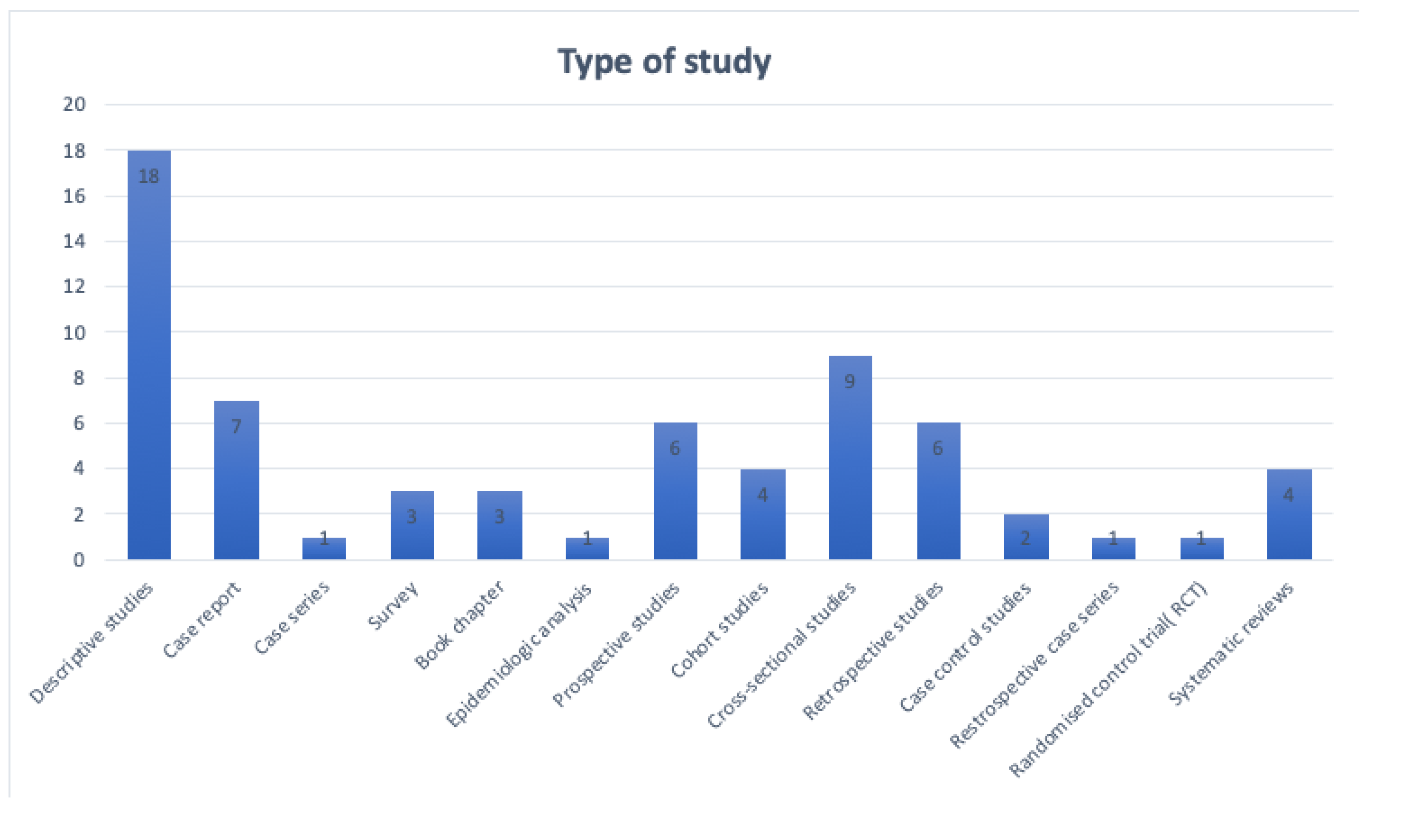
Figure 1. Type of studies.
Preprints 170167 g001
Figure 2. Distribution of studies by year of publication.
Preprints 170167 g002
Table 1. Overview of location of injuries and distribution of articles.
Location and type of injury Number of
articles describing these injuries
1. Head
 1.1. Eye injury
  1.1.1. Traumatic hyphema
  1.1.2. Blunt eye injury
  1.1.3. Macular hole
 1.2. Concussion
13 (total)
7
2
1
1
2
2. Back
 2.1. Unspecified back injury
 2.2. Lumbosacral spondylolisthesis
 2.3. Lumbosacral injury
6 (total)
3
1
2
3. Upper extremity and chest
 3.1. Non-specific upper extremity injury
 3.2. Shoulder injury
  3.2.1. Rotator cuff injury
  3.2.2. Little league shoulder
  3.2.3. Infraspinatus atrophy
 3.3. Rib injury-1st rib stress fracture
 3.4. Arm injury
  3.4.1. Proximal humeral epiphysiolysis
  3.4.2. Humerus diaphyseal fracture
 3.5. Clavicle fracture
 3.6. Elbow injury
 3.7. Trunk injury
 3.8. Wrist/hand injury
  3.8.1. Non-specific injury
  3.8.2. Metacarpal stress fracture
  3.8.3. Carpal stress fracture
29(total)
3
9
1
1
1
1
1
1
1
1
2
1
4
1
1
4. Lower extremity
 4.1. Non-specific injury
 4.2. Knee injury
  4.2.1. ACL injury
  4.2.2. Patellar tendinopathy
 4.3. Ankle injury
 4.4. Thigh injury
 4.5. Hip injury
 4.6. 5th metatarsal avulsion fracture
 4.7. Sever’s disease (calcaneal apophysitis)
39 (total)
8
10
5
1
11
1
1
1
1
5. Miscellaneous
 5.1. Sprain/strains
 5.2. Overuse injuries
5(total)
2
3
Table 2. Summary of injuries reported in racket sports.
Location Injury Racket sports in which injury is reported Comments
Head Concussion [reference. 14,28] Tennis (and other non-racket sports like track, lacrosse, soccer etc.)
Badminton
Girls reports more concussion per 10,000 exposures in major sports
Eyes Traumatic
Hyphema [ref. 13]
Blunt injury to globe [ref. 13,32,33,37]
Retinal detachment [ref. 32,33]
Tennis, badminton, squash High number of hospitalized athletes due to tennis had open globe trauma
Chest/ thorax Stress fracture of the first rib [ref. 43] Tennis
Back and spine Lumbosacral sprain [ref. 25,27,38]
Lumbosacral spondylolisthesis [ref.26]
Tennis, badminton, table tennis
Shoulder Overuse injuries, rotator cuff tendonitis, strain [ref. 16, 17,30,34,42]
Proximal humeral physis stress injury (‘Little League shoulder) [ref. 21]
Infraspinatus atrophy [ref. 19]
Fracture [ref. 18,34,40]
Labral tears [ref. 41]
Tennis, badminton,
Pickleball, speedball
Overuse injuries common with medium to high velocity sports like tennis, badminton, squash, pickleball
Elbow Tennis elbow, non-specific tennis injury [ref. 16, 29,30] Tennis, badminton
Wrist and hand Metacarpal stress fracture [ref. 31]
Carpal stress fracture [ref. 18]
Badminton, tennis
Arm Humeral diaphyseal fracture [ref. 18, 34, 40,49] Tennis, racquetball, pickleball, badminton
Finger Finger injury [ref. 17, 34] Tennis, Pickleball
Knee Anterior cruciate ligament sprain or tear [ref. 22, 27, 28, 34, 39]
Patellar tendinopathy [ref. 22]
Tennis, Badminton, pickleball, table tennis Knee is the most common site of overuse injuries
Foot and ankle 5th metatarsal avulsion fracture [ref. 22]
Calcaneal apophysitis [ref. 24]
Tennis
Disclaimer/Publisher’s Note: The statements, opinions and data contained in all publications are solely those of the individual author(s) and contributor(s) and not of MDPI and/or the editor(s). MDPI and/or the editor(s) disclaim responsibility for any injury to people or property resulting from any ideas, methods, instructions or products referred to in the content.
Copyright: This open access article is published under a Creative Commons CC BY 4.0 license, which permit the free download, distribution, and reuse, provided that the author and preprint are cited in any reuse.
Prerpints.org logo

Preprints.org is a free preprint server supported by MDPI in Basel, Switzerland.

Subscribe

Disclaimer

Terms of Use

Privacy Policy

Privacy Settings

© 2026 MDPI (Basel, Switzerland) unless otherwise stated