

Submitted:
25 July 2025
Posted:
29 July 2025
You are already at the latest version
Abstract
This article explores an integrative framework for medical rehabilitation that combines regenerative medicine, systemic homeostasis, and microbiome modulation to optimize recovery and long-term health. Moving beyond conventional rehabilitation approaches focused on symptomatic recovery, this multidimensional paradigm emphasizes cellular repair, physiological balance, and microbial health as interdependent pillars of effective recovery. The framework leverages advancements in stem cell therapy, immune system modulation, and microbiota-targeted interventions to address both immediate functional restoration and long-term systemic resilience. By highlighting the synergistic interplay between these components, this article provides actionable insights into transforming medical rehabilitation into a proactive and holistic endeavor, paving the way for en-hanced therapeutic outcomes and sustained patient well-being.
Keywords:
regenerative medicine
; systemic homeostasis
; immunological training
; microbiome modulation
; holistic rehabilitation
1. Introduction
The field of medical rehabilitation is undergoing a transformative evolution, driven by advancements in science and technology that challenge traditional paradigms [1,2]. Historically, rehabilitation has focused on restoring physical functionality following injury or illness, emphasizing therapies aimed at the symptomatic recovery of motor, sensory, or cognitive impairments. However, this conventional scope is expanding to encompass a broader, more integrative framework that addresses the body’s systemic capacity to heal, adapt, and thrive [3]. This paradigm shift combines regenerative medicine, homeostatic interventions, and immunological training [4] into a cohesive strategy that seeks not only to recover lost functionality but also to enhance the body’s intrinsic mechanisms for healing and long-term maintenance [5].
At the core of this approach lies the recognition that recovery is not merely a matter of repairing isolated damage but a process involving the intricate interplay of biological systems [3]. Regenerative medicine offers tools to repair and replace damaged tissues at a cellular level, employing innovations such as stem cells and tissue engineering [6]. Homeostatic interventions, in turn, stabilize the internal physiological environment, ensuring that systemic balance—critical for health and recovery—is restored and sustained. Immunological training refines the body's defense and repair capabilities, enabling precise and effective responses to injury or disease [4]. Together, these approaches create a dynamic framework for addressing the complexities of recovery in diverse clinical scenarios [7].
Emerging research underscores the pivotal role of the human microbiome—a vast ecosystem of microorganisms residing within the body—in maintaining homeostasis and influencing overall health [8]. The gut microbiota, in particular, acts as a central regulator of immune function, metabolic processes, and neurophysiological health [9,10,11]. Beyond digestion, it influences inflammation, hormonal regulation, and even mood and cognition. The profound connection between microbiome health and systemic rehabilitation has brought microbiome modulation—through probiotics, prebiotics, and postbiotics—into the spotlight as an essential component of modern therapeutic strategies [12].
The convergence of these fields signals a new frontier in medical rehabilitation, where recovery is viewed as a multidimensional process involving cellular repair, systemic balance, and microbial health [13]. This integrated approach offers the potential to not only restore lost functionality but also to preemptively enhance resilience and adaptability, setting the stage for a more holistic and comprehensive vision of health care. By leveraging these advancements, medical science is poised to redefine rehabilitation as a proactive endeavor that fosters systemic restoration, resilience, and lifelong well-being [14].
2. A Holistic Framework: From Individual Interventions to Systemic Synergy
The intersection of regenerative medicine, homeostatic interventions, immunological training, and microbiome modulation offers a holistic approach to medical rehabilitation. These components are interconnected, with each contributing to a unified goal of systemic restoration and resilience. The paradigm of medical rehabilitation is, indeed, increasingly characterized by a systemic and integrated approach that combines regenerative medicine, homeostatic interventions, immunological training, and microbiome modulation [15]. Each of these components plays a distinct yet interconnected role in enhancing the body’s capacity to recover from injury or illness, fostering not only functional recovery but also systemic resilience. Together, they contribute to a unified goal of health restoration, where the emphasis is on addressing both the immediate and long-term challenges of recovery.
At the heart of modern rehabilitation lies regenerative medicine, which focuses on repairing or replacing damaged tissues to restore functionality. Innovations such as stem cell therapy, 3D bioprinting, and tissue engineering have revolutionized the field, offering the ability to rejuvenate tissues at a cellular level. For instance, mesenchymal stem cells (MSCs) have been shown to promote angiogenesis, reduce inflammation, and stimulate endogenous repair processes, making them a cornerstone of regenerative efforts [16]. Moreover, the advent of biomaterials and scaffold-based approaches allows for the creation of bioengineered tissues that closely mimic natural structures. These techniques are particularly relevant for musculoskeletal injuries, where precise anatomical reconstruction is critical. By addressing the structural damage underlying functional impairments, regenerative therapies provide a foundation for comprehensive recovery [5]. Table 1 illustrates the key regenerative medicine techniques relevant in this regard.
The restoration of homeostasis—defined as the body’s ability to maintain stable internal conditions—is another crucial aspect of rehabilitation. Homeostatic interventions focus on stabilizing physiological systems such as metabolism, hormone regulation, and cardiovascular function to create an optimal environment for healing. For example, metabolic recalibration through personalized nutritional strategies has demonstrated significant benefits in patients with chronic diseases, helping to reduce systemic inflammation and improve energy availability. Similarly, hormonal interventions targeting thyroid or adrenal imbalances can enhance recovery outcomes by optimizing cellular repair and regeneration processes. These interventions not only address existing imbalances but also provide a preventative framework, reducing the likelihood of recurrent health issues [3].
The immune system is a double-edged sword in recovery, capable of both facilitating and hindering the healing process. Immunological training aims to harness the positive aspects of immune function while mitigating the risks of excessive inflammation or autoimmune complications. For example, therapies involving cytokine modulation have shown promise in reducing chronic inflammation while promoting tissue repair. Proactive strategies, such as vaccines targeting specific immune pathways, are also being explored to prevent infections and enhance resilience during rehabilitation. Furthermore, immunomodulatory agents, including monoclonal antibodies, are increasingly used to fine-tune immune responses, ensuring that they align with the body’s repair needs [17].
The human microbiome, particularly the gut microbiota, plays a pivotal role in regulating immune, metabolic, and neurophysiological pathways critical for recovery. Microbiome modulation through probiotics, prebiotics, and postbiotics has emerged as a key component of holistic rehabilitation strategies. The gut microbiota influences systemic inflammation, nutrient absorption, and even neural signaling, making it an essential factor in recovery. For instance, short-chain fatty acids (SCFAs) produced by microbial fermentation are known to enhance T-cell differentiation and promote anti-inflammatory responses. By restoring microbial diversity and stability, microbiome-targeted therapies support overall health and complement other rehabilitation efforts. Emerging therapies involving fecal microbiota transplantation (FMT) have also shown potential in treating conditions associated with microbial dysbiosis, such as inflammatory bowel disease and systemic autoimmune disorders, further highlighting the microbiome’s therapeutic value [4].
Overall, the integration of regenerative therapies, homeostatic interventions, immunological training, and microbiome modulation represents a holistic approach to rehabilitation [18,19]. These components are deeply interconnected, with each reinforcing the others to achieve systemic restoration in that a) Regenerative therapies provide the structural basis for recovery, creating a platform for functional restoration; b) Homeostatic interventions stabilize internal systems, ensuring a conducive environment for healing; c) Immunological training refines defense mechanisms, preventing complications and optimizing repair; d) Microbiome modulation supports these processes by enhancing immune regulation, reducing inflammation, and improving systemic health. This multidimensional approach shifts the focus from isolated treatments to comprehensive strategies that address the full spectrum of recovery needs, paving the way for more resilient and adaptive health outcomes [4]. Box 1 schematically summarizes how a multidimensional approach offers a proactive vision for rehabilitation, addressing both immediate recovery needs and long-term health outcomes.
––––––––––––––––––––––––––––––––––––––––––––––––––––––––––––––––––––––––––
Box 1: The multidimensional approach to medical rehabilitation
- Regenerative Medicine: Building the Foundation
At the core of the multidimensional framework for rehabilitation is regenerative medicine, a field focused on repairing and replacing damaged tissues and organs. With innovations such as stem cell therapies, tissue engineering, and 3D bioprinting, regenerative medicine provides the tools to rebuild the physical structures necessary for recovery. These techniques enable cellular rejuvenation and repair, offering new hope for conditions previously considered untreatable. From musculoskeletal injuries to neural damage, regenerative medicine serves as the cornerstone of recovery, creating a foundation upon which other therapeutic strategies can build [20,21,22,23,24].
- Homeostatic Interventions: Stabilizing the System
Effective rehabilitation requires more than repairing damaged tissues; it demands a stable physiological environment conducive to healing. Homeostatic interventions focus on restoring and maintaining internal equilibrium, addressing systemic imbalances that can hinder recovery. These interventions encompass metabolic regulation, hormonal balancing, and the correction of chronic dysregulation, creating an optimized environment for cellular repair and systemic resilience. By ensuring stability at the core of the body's systems, homeostatic approaches provide the groundwork for sustained recovery and prevention of relapse [25,26,27,28,29].
- Immunological Training: Refining Biological Responses
The immune system plays a dual role in recovery, acting both as a driver of healing and a potential impediment when dysregulated. Immunological training harnesses the immune system’s power to balance pro-inflammatory and anti-inflammatory responses, ensuring optimal healing conditions. By modulating immune pathways, therapies can prevent chronic inflammation, stimulate angiogenesis, and promote tissue repair complications [30,31,32,33]. This shows how immunological interventions, from cytokine therapies to adoptive immune cell transfer, refine the body's natural defenses to enhance recovery and reduce.
- Microbiome Modulation: The Overlooked Partner
The human microbiome is increasingly recognized as a critical factor in rehabilitation and systemic health. Particularly, the gut microbiota influences immune regulation, metabolic stability, and neurophysiological processes, all of which are central to recovery. Microbiome modulation through prebiotics, probiotics, and postbiotics supports these functions, offering a complementary approach to conventional rehabilitation strategies [34,35,36,37]. This underlies the concept of microbiome management as a therapeutic tool, emphasizing its potential to improve outcomes across diverse rehabilitation contexts.
- Interconnected Mechanisms
Rehabilitation is not merely the sum of isolated interventions but a dynamic interplay of interconnected systems. Regenerative medicine, homeostasis, immunity, and microbiome modulation do not function in silos; instead, they form a synergistic network that supports recovery at multiple levels [11,18,38,39]. These components interact, reinforcing one another to enhance outcomes.
––––––––––––––––––––––––––––––––––––––––––––––––––––––––––––––––––––––––––
3. The Role of the Immune System in Rehabilitation and Tissue Regeneration
The immune system is a central orchestrator of rehabilitation and tissue regeneration, playing multifaceted roles in initiating, sustaining, and resolving healing processes. Through its ability to modulate inflammation, promote angiogenesis, stimulate repair mechanisms, resolve inflammation, and facilitate immunomodulation, the immune system integrates multiple biological pathways to support effective tissue regeneration.
Inflammation is the body's initial response to tissue damage, and the immune system plays a critical role in regulating this process. Controlled inflammation is essential for clearing cellular debris and pathogens, creating a clean environment for tissue repair. Innate immune cells such as macrophages and neutrophils are among the first responders, releasing pro-inflammatory cytokines like interleukin-1 (IL-1) and tumor necrosis factor-alpha (TNF-α). These cytokines recruit additional immune cells to the site of injury, amplifying the inflammatory response and initiating repair. However, excessive or prolonged inflammation can lead to chronic damage, making precise immune regulation critical [40].
The immune system facilitates the formation of new blood vessels (angiogenesis), a process essential for supplying oxygen and nutrients to regenerating tissues. Macrophages, a key component of the immune system, release vascular endothelial growth factor (VEGF) and platelet-derived growth factor, which stimulate endothelial cells to form capillaries. This vascularization ensures that regenerating tissues receive the metabolic support required for repair and functional recovery. Angiogenesis is particularly vital in contexts such as wound healing, myocardial repair, and bone regeneration [41].
Immune cells play a critical role in activating the body’s own repair mechanisms by releasing growth factors and cytokines. For example, macrophages secrete transforming growth factor-beta (TGF-β) and insulin-like growth factor-1, which promote the proliferation and differentiation of resident stem cells. These factors facilitate tissue regeneration in multiple contexts, from skeletal muscle repair to neural regeneration. Additionally, the interplay between immune cells and local stem cell niches helps maintain a balance between repair and fibrosis, ensuring optimal functional recovery [42].
Equally important as initiating inflammation is the resolution phase, where the immune system actively suppresses pro-inflammatory signals to prevent chronic inflammation and fibrosis. Specialized pro-resolving mediators, including resolvins and protectins, are lipid mediators derived from omega-3 fatty acids that guide this resolution phase. Regulatory T cells (Tregs) and alternatively activated macrophages (M2 macrophages) contribute to anti-inflammatory signaling, promoting tissue remodeling and scar reduction. This resolution phase is critical for avoiding complications such as excessive fibrosis, which can impair functional recovery [43].
Harnessing the immune system through immunomodulatory therapies represents a cutting-edge approach in regenerative medicine. Strategies such as cytokine therapy, immune checkpoint inhibitors, and adoptive T-cell transfer have shown promise in enhancing tissue repair. For example, therapies targeting interleukin-10 (IL-10) and TGF-β can tilt the balance toward anti-inflammatory responses, optimizing the healing environment. Additionally, biomaterials that modulate immune responses are being developed to create pro-regenerative microenvironments. These advancements highlight the therapeutic potential of immune modulation in improving rehabilitation outcomes [44].
Effective tissue regeneration depends on the immune system's ability to balance pro-inflammatory and anti-inflammatory responses. An optimal immune response is characterized by a timely transition from the pro-inflammatory to the resolution phase, minimizing tissue damage while promoting repair. Dysregulation of this balance, whether through excessive inflammation or inadequate resolution, can result in chronic conditions such as fibrosis, delayed healing, or autoimmune diseases. Thus, understanding and manipulating this balance is a cornerstone of contemporary rehabilitation science [45] .
In conclusion, the immune system is a pivotal player in rehabilitation and tissue regeneration, orchestrating the processes of inflammation, angiogenesis, endogenous repair, and resolution. Advances in immunology have opened new avenues for leveraging these mechanisms in therapeutic strategies, offering hope for enhanced recovery in a wide range of medical conditions. By understanding and harnessing the immune system's complexity, researchers and clinicians can pave the way for more effective and holistic approaches to rehabilitation and regenerative medicine.
4. Immunological Training: Refining Biological Responses
The immune system is a cornerstone of the body’s ability to heal and recover, performing a dual role as both a catalyst for tissue repair and a potential source of pathological complications when dysregulated. In this complex interplay, immunological training represents a cutting-edge approach that leverages the immune system’s natural capabilities while minimizing risks. By refining the balance between pro-inflammatory and anti-inflammatory responses, immunological training ensures that the immune system operates within an optimal therapeutic window, facilitating efficient recovery without incurring the damage associated with chronic or excessive inflammation. For expanding the concept of medical rehabilitation to include regenerative, homeostatic, and immunological interventions, the following considerations may be taken into account:
- The Immune System as a Driver of Healing
The immune system initiates the healing process through inflammation, a natural response to injury or infection. In the acute phase, immune cells such as macrophages and neutrophils infiltrate the damaged tissue, releasing pro-inflammatory cytokines like IL-1 and TNF-α. These cytokines not only recruit additional immune cells to the site but also clear cellular debris and pathogens, laying the groundwork for subsequent repair. This inflammatory phase is indispensable for activating downstream processes such as angiogenesis, tissue remodeling, and stem cell activation. However, the challenge lies in ensuring that this phase is appropriately regulated to avoid chronic inflammation, which can lead to fibrosis, delayed healing, or autoimmunity. Undoubtedly, immunological training may be an important mechanism for precision control of the immune system, as it involves interventions designed to enhance or suppress specific immune responses, depending on the clinical context. At its core, this approach seeks to achieve precision control of immunological processes, tailoring their activity to meet the specific demands of tissue recovery. Key strategies in this regard include cytokine therapy and monoclonal antibodies. Administering or inhibiting cytokines to modulate the inflammatory response. For instance, IL-10 is a potent anti-inflammatory cytokine that can suppress excessive immune activity, while granulocyte-macrophage colony-stimulating factor promotes macrophage activity and tissue repair[46]. Targeting specific immune pathways to block pro-inflammatory signals or enhance reparative processes [17,40,41,43,44,45,47,48]. Drugs such as infliximab, which inhibits TNF-α, have shown promise in reducing chronic inflammation in autoimmune diseases while supporting healing [49,50].
- Enhancing Angiogenesis Through Immune Modulation
Angiogenesis, the formation of new blood vessels, is a critical aspect of tissue repair that is closely regulated by the immune system. Immune cells such as macrophages and T-cells release VEGF, a key signaling molecule that stimulates endothelial cell proliferation and migration. VEGF plays a central role in creating new vascular networks, ensuring that regenerating tissues receive adequate oxygen and nutrients to support effective recovery [51]. Immunological training strategies that enhance angiogenesis, such as VEGF-boosting therapies, are particularly relevant in contexts where inadequate blood supply impairs healing. For example, in myocardial infarction and chronic wounds, targeted interventions that stimulate VEGF production have shown promise in accelerating vascularization and improving clinical outcomes [52,53]. Furthermore, therapies utilizing macrophage polarization to the M2 phenotype, which promotes pro-angiogenic activity, have demonstrated efficacy in preclinical models of ischemic injury [54]. These advances underscore the therapeutic potential of immune modulation in restoring vascular integrity and facilitating recovery.
- Preventing Chronic Inflammation: The Role of Resolution Mediators
While initiating inflammation is critical, the resolution phase is equally important for completing the healing process. Specialized pro-resolving mediators such as resolvins and protectins, derived from omega-3 fatty acids, play a central role in terminating inflammation and promoting tissue remodeling. Immunological training can harness these molecules to accelerate the resolution phase, reducing the risk of chronic inflammation and fibrosis. For example, therapies that enhance the activity of Tregs or promote the M2 phenotype of macrophages are effective in creating an anti-inflammatory environment conducive to healing [55,56].
- Adoptive Immune Cell Transfer and Beyond
Recent advancements in immunology have introduced novel therapies such as adoptive immune cell transfer, where immune cells are modified or expanded outside the body before being reintroduced to the patient. This technique allows for highly targeted interventions, such as enhancing the reparative functions of Tregs or dendritic cells. Moreover, adoptive cell therapy has demonstrated potential in treating autoimmune conditions and enhancing recovery in transplant medicine [57].
- Applications in Chronic and Acute Conditions
Immunological training is being increasingly applied across a spectrum of conditions, from acute injuries to chronic diseases. In conditions like rheumatoid arthritis, where the immune system plays a pathological role, therapies aim to suppress harmful immune responses while preserving reparative functions. Conversely, in cases of acute trauma or infection, immunological training focuses on amplifying the immune system’s ability to repair tissue and fight pathogens. The versatility of immunological approaches underscores their relevance to both rehabilitation and regenerative medicine [58,59].
- Future Directions in Immunological Training
The field of immunological training is poised for significant advancements as new technologies enable more precise manipulation of the immune system. Bioinformatics and artificial intelligence are being used to identify novel immune targets, while nanotechnology facilitates the delivery of immunomodulatory agents with unprecedented accuracy [59]. Personalized medicine is also expected to play a crucial role, tailoring immunological interventions to the unique genetic and environmental factors influencing each patient’s recovery. Overall, Immunological training represents a transformative approach in medical rehabilitation, redefining the role of the immune system as a carefully regulated driver of recovery [60]. By balancing pro-inflammatory and anti-inflammatory responses, enhancing angiogenesis, and leveraging advanced therapies such as adoptive immune cell transfer, this field is unlocking new possibilities for treating a wide range of conditions. As research continues to uncover the complexities of immune regulation, immunological training is set to become an integral component of holistic rehabilitation strategies, improving outcomes for patients worldwide [61].
5. Conceptual Link with Microbiome and Homeostasis
The human microbiome, comprising trillions of microorganisms residing on and within the body, plays an essential role in maintaining homeostasis and promoting overall health [62]. As research into the microbiome advances, its critical connection to systemic health and rehabilitation outcomes becomes increasingly clear. This section explores the microbiome’s profound influence on immune function, metabolic regulation, and systemic balance, positioning it as a cornerstone in modern rehabilitation strategies. Box 2 exemplifies how the microbiome can influence regenerative processes.
––––––––––––––––––––––––––––––––––––––––––––––––––––––––––––––––––––––––––
Box 2: The microbiome influences regenerative processes through several mechanisms
- Immune System Interaction: The microbiome interacts with the host's immune system, influencing inflammation and immune responses that are critical for regeneration. This interaction can either promote or inhibit regenerative processes depending on the balance of microbial communities.
–––––––––––––––––––––––––––––––––––––––––––––––––––––––––––––––––––
Overall, the microbiome plays a significant role in modulating various regenerative processes across different tissues and systems, highlighting its potential as a therapeutic target in regenerative medicine.
Further conceptual links to be considered in this regard may include:
- Microbiome and Immune Function
The gut microbiota serves as a pivotal regulator of immune system development and functionality [66]. During early life, exposure to a diverse microbiota helps "train" the immune system, enabling it to distinguish between harmful pathogens and benign antigens. This process of immune education continues throughout life, with microbial metabolites influencing the differentiation of Tregs and modulating inflammatory responses [75]. Particularly, in the context of rehabilitation, modulating the microbiome offers significant therapeutic potential. Probiotics—live beneficial bacteria—and prebiotics—nutritional compounds that promote the growth of beneficial microbes—can enhance immune responses and reduce systemic inflammation[15]. For example, probiotic strains like Lactobacillus rhamnosus and Bifidobacterium breve have demonstrated efficacy in reducing inflammatory markers, accelerating recovery from inflammatory diseases, and improving outcomes in conditions such as irritable bowel syndrome and autoimmune disorders [76,77].
- Prebiotics, Probiotics, and Postbiotics: Restoring Microbial Balance
Disruptions in the microbiome, known as dysbiosis, are linked to a wide range of health issues, including metabolic disorders, immune dysregulation, and chronic inflammation. Thus, restoring microbial balance is critical for maintaining systemic homeostasis [78]. In recent years, the emergence of evidence linking gut dysbiosis to a wide range of human diseases has sparked the development of microbiome-based therapeutic approaches. Probiotics, indeed, help replenish beneficial bacterial populations, while prebiotics like inulin and fructooligosaccharides feed these bacteria, supporting nutrient absorption, metabolic efficiency, and pathogen resistance. Although these approaches have shown promise in various disease contexts, their widespread use has been limited by numerous challenges, including the intestinal survival of orally administered probiotics or the risk of transferring potential pathogens to the new host by FMT [78]. In addition, as the existing microbial community influences the efficacy of these microbiome-based therapeutic strategies, the interindividual variability could be a limiting factor. However, postbiotic-based therapeutics can overcome these caveats. As microbial metabolites largely contribute to the beneficial effects of commensal microbes and their efficacy is less dependent from the composition of endogenous flora, their administration may be more universally applicable than targeting phylogeny [79]. Postbiotics, such as SCFAs, tryptophan (Trp) metabolites, bile acids and antimicrobial peptides – in addition to others – have proven to directly influence host physiology by reducing oxidative stress, modulating immune responses, and promoting intestinal barrier integrity [80,81,82]. SCFAs such as acetate, butyrate, and propionate, produced by gut microbiota through the fermentation of fibers, act as signaling agents that influence inflammatory pathways, immune cell differentiation, and metabolic homeostasis. The implications of SCFAs extend beyond the gastrointestinal tract. Their ability to cross the gut barrier allows them to exert systemic effects, including modulation of pulmonary inflammation, improved insulin sensitivity, and neuroprotective functions. In the context of rehabilitation, SCFAs have been linked to enhanced recovery outcomes by mitigating inflammatory cascades and promoting a favorable immune response. Therapeutic strategies aimed at boosting SCFA production through dietary prebiotics or targeted probiotic supplementation offer a promising avenue for integrating microbiota modulation into comprehensive rehabilitation frameworks [83].
In recent years, microbial Trp metabolites, such as indole and derivatives, have also emerged as key metabolites [84,85]. Functioning as unique microbial molecules signaling via the aryl hydrocarbon receptor (AhR) [86], indole and derivatives thereof play a crucial role in maintaining health and immune homeostasis at mucosal surfaces [39,87]. Activation of AhR modulates cytokine production, enhances regulatory T-cell differentiation, and fosters anti-inflammatory environments conducive to tissue repair [80].
Together, these interventions contribute to a stable internal environment, creating a foundation for systemic recovery and resilience [88]. Table 2 illustrates the roles of probiotics, prebiotics, and postbiotics in rehabilitation.
- Microbiome and Metabolic Homeostasis
The microbiome is intricately linked to metabolic processes, influencing everything from glucose regulation to energy expenditure. Bioactive metabolites interact with host metabolic pathways and play a crucial role in maintaining glucose and lipid homeostasis, regulating appetite, and preventing metabolic disorders [89]. In rehabilitation, targeting the microbiome to stabilize metabolic processes can have far-reaching benefits, particularly in patients with diabetes, obesity, or metabolic syndrome. Emerging therapies include FMT, which transfers healthy microbiota from a donor to a recipient to restore balance and improve metabolic outcomes [19]. These therapies exemplify how microbiome modulation can directly enhance rehabilitation strategies by addressing underlying metabolic dysfunctions.
- Microbiome Modulation: Indole-Based Postbiotics in Pulmonary Rehabilitation
Studies have already shown that integrating microbiome-targeted interventions, such as tailored dietary regimens or probiotic therapies, can enhance pulmonary rehabilitation. For example, Lactobacillus and Bifidobacterium strains have demonstrated efficacy in reducing respiratory inflammation and improving lung function in clinical trials [90,91]. In chronic obstructive pulmonary disease (COPD), pulmonary rehabilitation is associated with changes in oral microbiota that contributed to the benefits of the rehabilitation [92].
Because of the multifactorial nature of many chronic human diseases, microbial metabolites capable of targeting multiple features of disease pathogenesis may offer the opportunity to greatly improve clinical outcomes. Considering the stability and the suitability for dose-dependent administration of postbiotics, they can be viewed as attractive therapeutic options. However, there are challenges associated with their administration, such as the rapid metabolism upon parenteral administration or the premature metabolism in the upper intestinal tract after oral administration. This necessitates the use of appropriate biopharmaceutical formulations designed to ensure controlled and targeted delivery of microbial metabolites, enhancing therapeutic efficacy while minimizing unwanted toxicities and preventing off-target effects [93].
Recent studies have highlighted the therapeutic potential of indole-based postbiotics, particularly in enhancing systemic recovery mechanisms and supporting targeted rehabilitation strategies [94]. In pulmonary rehabilitation, indole-based postbiotics offer unique benefits through the gut-lung axis, a bidirectional relationship in which gut microbiota influence pulmonary health via immune and inflammatory pathways and viceversa [92,95,96,97]. Accumulating evidence also underscores the role of local microbial diversity in maintaining respiratory homeostasis, particularly in conditions such as COPD and asthma. Dysbiosis – characterized by reduced microbial diversity and increased pathogenic strains – has been associated with exacerbated lung inflammation, impaired recovery, and cancer [98]. Microbial metabolites regulate pulmonary immunity by modulating cytokine production, enhancing the activity of Tregs, and influencing alveolar macrophage function. By functioning as a proton ion carrier – thereby modulating membrane potential of epithelial cells, influencing alveolar macrophage functionality and reducing cytokine-induced pulmonary inflammation – these postbiotics support respiratory recovery. At the same time, indole derivatives can act as signaling molecules regulating microbial growth and virulence, thus contributing to microbial eubiosis and functioning [83,95]. Thus, by engaging specific molecular pathways, they shape immune and microbial responses during recovery and rehabilitation.
The feasibility of respiratory administration, such as aerosolized formulations of indole derivatives, is an emerging area of focus. This route bypasses systemic metabolic challenges, directly delivering therapeutic agents to target tissues and accelerating recovery in chronic obstructive pulmonary disease and post-viral syndromes [81]. Integrating indole-based postbiotics into rehabilitation protocols holds promise for synergizing microbiome modulation with systemic and localized interventions. These strategies, particularly when paired with regenerative medicine approaches, enhance outcomes by addressing microbial dysbiosis and leveraging microbiota-host interaction pathways [82]. Undoubtedly, harnessing these mechanisms therapeutically could involve precision prebiotic formulations designed to enhance metabolite production or postbiotic approaches delivering bioactive microbial metabolites directly. Such strategies align with personalized rehabilitation programs, optimizing recovery outcomes for diverse patient populations. Altogether, these findings support a broader implementation of gut microbiota modulation in rehabilitation protocols for respiratory conditions. Table 3 illustrates a potential therapeutic roadmap along this direction.
- The Holistic Health Approach in Rehabilitation
As mentioned above, integrating microbiome management into rehabilitation strategies offers a holistic approach that addresses both physical and systemic health. The microbiome’s influence extends beyond the gut, affecting neurophysiological processes, mood, and cognitive function through the gut-brain axis [85]. For instance, microbial metabolites such as serotonin precursors can impact mental health, highlighting the microbiome’s role in psychological well-being during recovery. Thus, by combining microbiome modulation with other rehabilitation strategies, such as regenerative medicine and immune training, a comprehensive recovery process can be achieved. This integration ensures that rehabilitation efforts target not only localized injuries but also systemic imbalances that could hinder full recovery. Long anticipated by pioneering work [34], the expected result is a more robust, sustainable approach to healing, particularly in complex conditions such as autoimmune diseases, chronic fatigue syndrome, and neurodegenerative disorders.
Taken as a whole, these considerations support the concept of the microbiome’s profound influence on immune function, metabolic regulation, and systemic homeostasis makes it an indispensable element of modern rehabilitation frameworks. By leveraging prebiotics, probiotics, postbiotics, and advanced microbiome-targeted therapies, clinicians can address the root causes of systemic dysfunction, creating a fertile environment for recovery. As our understanding of the microbiome continues to evolve, its integration into holistic rehabilitation strategies promises to redefine therapeutic possibilities, improving both immediate and long-term outcomes for patients.
6. Conclusions
The convergence of microbiome science and regenerative medicine offers unprecedented opportunities for enhancing rehabilitation outcomes. Probiotic and prebiotic therapies can complement regenerative strategies by creating a microenvironment conducive to cellular repair and tissue regeneration. Emerging research also suggests that combining microbiome-targeted interventions with stem cell therapies can synergistically improve outcomes. For instance, prebiotic supplementation has been demonstrated to enhance the efficacy of mesenchymal stem cell treatments by modulating systemic inflammation and promoting a regenerative phenotype. This integrative approach represents a paradigm shift in rehabilitation, focusing on systemic optimization rather than isolated interventions Figure 1.
As the field advances, microbiome-based biomarkers are poised to become essential tools for predicting rehabilitation outcomes and tailoring interventions. Specific microbial signatures or metabolite profiles could guide therapeutic decisions, enabling clinicians to adopt a precision medicine approach. Furthermore, novel microbiome-targeted therapeutics, such as engineered probiotics or phage therapy, offer exciting prospects. Engineered probiotics could be designed to produce specific metabolites or modulate immune pathways, while phage therapy could selectively target pathogenic strains, restoring microbial balance without disrupting beneficial communities. These innovations hold significant promises for addressing the complex needs of patients undergoing rehabilitation [96,97].
Translating microbiome research into clinical practice requires actionable strategies tailored to specific rehabilitation contexts. For pulmonary rehabilitation, dietary interventions rich in fermentable fibers, coupled with targeted probiotic supplementation, can enhance recovery by modulating gut-lung interactions. In chronic conditions such as diabetes or metabolic syndrome, microbiome-targeted therapies can stabilize systemic inflammation and improve metabolic control. Future protocols should also integrate patient-specific factors, such as genetic predispositions and baseline microbial diversity, to personalize interventions [99,100]. By leveraging microbiome science in conjunction with established rehabilitation methodologies, clinicians can achieve more comprehensive and sustainable recovery outcomes [98].
Ethics approval and consent to participate. Not applicable.
Consent for publication. Not applicable.
Availability of data and material. Data sharing is not applicable to this article as no datasets were generated or analyzed during the current study.
Authors' contributions: E.G., M.A.R., M.Pa., M. Pu., C.F., S.B., M.M.B., M.R., M.F.: Writing–review and editing; L.R.: Conceptualization, Funding acquisition, Writing–original draft, Writing–review and editing.
Funding
The author(s) declare that financial support was received for the research, authorship, and/or publication of this article. Funded by the HDM-FUN (European Union’s Horizon 2020 Research and Innovation program), number 847507, to LR.
Acknowledgments
Not applicable.
Conflicts of Interest
The authors declare no conflicts of interest.
Abbreviations
| MSCs | mesenchymal stem cells |
| SCFAs | short-chain fatty acids |
| FMT | fecal microbiota transplantation |
| IL-1 | like interleukin-1 |
| TNF-α | tumor necrosis factor-alpha |
| VEGF | vascular endothelial growth factor |
| TGF-β | transforming growth factor-beta |
| Tregs | Regulatory T cells |
| M2 | macrophages |
| IL-10 | interleukin-10 |
| Trp | tryptophan |
| AhR | aryl hydrocarbon receptor |
| COPD | chronic obstructive pulmonary disease |
| FOS | fructo-oligosaccharides |
References
- Chua, K.S.G. and C.W.K. Kuah, Innovating With Rehabilitation Technology in the Real World: Promises, Potentials, and Perspectives. Am J Phys Med Rehabil, 2017. 96(10 Suppl 1): p. S150–s156.
- Kannenberg, A. , et al., Editorial: Advances in technology-assisted rehabilitation. Frontiers in Rehabilitation Sciences, 2024. 5.
- McClave, S.A. and R.G. Martindale, Why do current strategies for optimal nutritional therapy neglect the microbiome? Nutrition, 2019. 60: p. 100–105.
- Sinha, A. and S. Roy, Prospective therapeutic targets and recent advancements in the treatment of inflammatory bowel disease. Immunopharmacology and Immunotoxicology, 2024. 46(4): p. 550–563.
- Zhang, N. , et al., Harnessing immunomodulation to combat sarcopenia: current insights and possible approaches. Immunity & Ageing, 2024. 21(1): p. 55.
- Hammerhøj, A. , et al., Organoids as regenerative medicine for inflammatory bowel disease. iScience, 2024. 27(6).
- Cervenka, I., L. Z. Agudelo, and J.L. Ruas, Kynurenines: Tryptophan’s metabolites in exercise, inflammation, and mental health. Science, 2017. 357(6349): p. eaaf9794.
- Shavandi, A. , et al., The role of microbiota in tissue repair and regeneration. Journal of Tissue Engineering and Regenerative Medicine, 2020. 14(3): p. 539–555.
- Ogunrinola, G.A. , et al., The Human Microbiome and Its Impacts on Health. Int J Microbiol, 2020. 2020: p. 8045646.
- Afzaal, M. , et al., Human gut microbiota in health and disease: Unveiling the relationship. Frontiers in Microbiology, 2022. 13.
- Nunzi, E. , et al., Host-microbe serotonin metabolism. Trends Endocrinol Metab, 2025. 36(1): p. 83–95.
- Preethy, S. , et al., Integrating the Synergy of the Gut Microbiome into Regenerative Medicine: Relevance to Neurological Disorders. Journal of Alzheimer's Disease, 2022. 87: p. 1451–1460.
- Golchin, A. , et al., The Role of Probiotics In Tissue Engineering And Regenerative Medicine. Regenerative Medicine, 2023. 18(8): p. 635–657.
- Velikic, G. , et al., Harnessing the Stem Cell Niche in Regenerative Medicine: Innovative Avenue to Combat Neurodegenerative Diseases. International Journal of Molecular Sciences, 2024. 25(2): p. 993.
- Mazziotta, C. , et al., Probiotics Mechanism of Action on Immune Cells and Beneficial Effects on Human Health. Cells, 2023. 12(1): p. 184.
- Ji, S. , et al., Cellular rejuvenation: molecular mechanisms and potential therapeutic interventions for diseases. Signal Transduction and Targeted Therapy, 2023. 8(1): p. 116.
- Aurora, Arin B. and Eric N. Olson, Immune Modulation of Stem Cells and Regeneration. Cell Stem Cell, 2014. 15(1): p. 14–25.
- Belkaid, Y. and Timothy W. Hand, Role of the Microbiota in Immunity and Inflammation. Cell, 2014. 157(1): p. 121–141.
- Rooks, M.G. and W.S. Garrett, Gut microbiota, metabolites and host immunity. Nature Reviews Immunology, 2016. 16(6): p. 341–352.
- Berthiaume, F., T. J. Maguire, and M.L. Yarmush, Tissue engineering and regenerative medicine: history, progress, and challenges. Annu Rev Chem Biomol Eng, 2011. 2: p. 403–30.
- Hunsberger, J. , et al., Improving patient outcomes with regenerative medicine: How the Regenerative Medicine Manufacturing Society plans to move the needle forward in cell manufacturing, standards, 3D bioprinting, artificial intelligence-enabled automation, education, and training. STEM CELLS Translational Medicine, 2020. 9(7): p. 728–733.
- Saini, G. , et al., Applications of 3D Bioprinting in Tissue Engineering and Regenerative Medicine. Journal of Clinical Medicine, 2021. 10(21): p. 4966.
- de Jongh, D. , et al., Early-Phase Clinical Trials of Bio-Artificial Organ Technology: A Systematic Review of Ethical Issues. Transplant International, 2022. 35.
- Makuku, R. , et al., New frontiers of tendon augmentation technology in tissue engineering and regenerative medicine: a concise literature review. J Int Med Res, 2022. 50(8): p. 3000605221117212.
- Long, Y.C. and J.R. Zierath, AMP-activated protein kinase signaling in metabolic regulation. J Clin Invest, 2006. 116(7): p. 1776–83.
- Mauvais-Jarvis, F., D. J. Clegg, and A.L. Hevener, The Role of Estrogens in Control of Energy Balance and Glucose Homeostasis. Endocrine Reviews, 2013. 34(3): p. 309–338.
- Pillon, N.J. , et al., Metabolic consequences of obesity and type 2 diabetes: Balancing genes and environment for personalized care. Cell, 2021. 184(6): p. 1530–1544.
- Pataky, M.W., W. F. Young, and K.S. Nair. Hormonal and metabolic changes of aging and the influence of lifestyle modifications. in Mayo Clinic Proceedings. 2021. Elsevier.
- Tao, Z. and Z. Cheng, Hormonal regulation of metabolism—recent lessons learned from insulin and estrogen. Clinical Science, 2023. 137(6): p. 415–434.
- Netea, Mihai G., J. Quintin, and Jos W.M. van der Meer, Trained Immunity: A Memory for Innate Host Defense. Cell Host & Microbe, 2011. 9(5): p. 355–361.
- Bindu, S. , et al., Prophylactic and therapeutic insights into trained immunity: A renewed concept of innate immune memory. Human Vaccines & Immunotherapeutics, 2022. 18(1): p. 2040238.
- Terrén, I. , et al., Cytokine-Induced Memory-Like NK Cells: From the Basics to Clinical Applications. Front Immunol, 2022. 13: p. 884648.
- Li, F. , et al., Nanomedicine for T-Cell Mediated Immunotherapy. Advanced Materials, 2024. 36(22): p. 2301770.
- Zelante, T. , et al., Tryptophan catabolites from microbiota engage aryl hydrocarbon receptor and balance mucosal reactivity via interleukin-22. Immunity, 2013. 39(2): p. 372–85.
- Martyniak, A. , et al., Prebiotics, Probiotics, Synbiotics, Paraprobiotics and Postbiotic Compounds in IBD. Biomolecules, 2021. 11(12): p. 1903.
- Liu, Y., J. Wang, and C. Wu, Modulation of Gut Microbiota and Immune System by Probiotics, Pre-biotics, and Post-biotics. Frontiers in Nutrition, 2022. 8.
- de Sire, A. , et al., Role of dietary supplements and probiotics in modulating microbiota and bone health: the gut-bone axis. Cells, 2022. 11(4): p. 743.
- López-Otín, C. and G. Kroemer, Hallmarks of Health. Cell, 2021. 184(1): p. 33–63.
- Zelante, T. , et al., Regulation of host physiology and immunity by microbial indole-3-aldehyde. Curr Opin Immunol, 2021. 70: p. 27–32.
- Medzhitov, R. , Origin and physiological roles of inflammation. Nature, 2008. 454(7203): p. 428–435.
- Tonnesen, M.G., X. Feng, and R.A. Clark, Angiogenesis in wound healing. J Investig Dermatol Symp Proc, 2000. 5(1): p. 40–6.
- Wynn, T.A. and L. Barron, Macrophages: master regulators of inflammation and fibrosis. Semin Liver Dis, 2010. 30(3): p. 245–57.
- Serhan, C.N. , Pro-resolving lipid mediators are leads for resolution physiology. Nature, 2014. 510(7503): p. 92–101.
- Mantovani, A. , et al., Macrophage plasticity and polarization in tissue repair and remodelling. J Pathol, 2013. 229(2): p. 176–85.
- Nathan, C. and A. Ding, Nonresolving inflammation. Cell, 2010. 140(6): p. 871–82.
- Fang, Y. , et al., Granulocyte-macrophage colony-stimulating factor enhances wound healing in diabetes via upregulation of proinflammatory cytokines. British Journal of Dermatology, 2010. 162(3): p. 478–486.
- McInnes, I.B. and E.M. Gravallese, Immune-mediated inflammatory disease therapeutics: past, present and future. Nature Reviews Immunology, 2021. 21(10): p. 680–686.
- Song, Y., J. Li, and Y. Wu, Evolving understanding of autoimmune mechanisms and new therapeutic strategies of autoimmune disorders. Signal Transduction and Targeted Therapy, 2024. 9(1): p. 263.
- Stratos, I. , et al., Inhibition of TNF-α Restores Muscle Force, Inhibits Inflammation, and Reduces Apoptosis of Traumatized Skeletal Muscles. Cells, 2022. 11(15).
- Livia, C. , et al., Infliximab Limits Injury in Myocardial Infarction. J Am Heart Assoc, 2024. 13(9): p. e032172.
- Carmeliet, P. and R.K. Jain, Molecular mechanisms and clinical applications of angiogenesis. Nature, 2011. 473(7347): p. 298–307.
- Chu, H. and Y. Wang, Therapeutic angiogenesis: controlled delivery of angiogenic factors. Ther Deliv, 2012. 3(6): p. 693–714.
- Shimamura, M. , et al., Progress of Gene Therapy in Cardiovascular Disease. Hypertension, 2020. 76(4): p. 1038–1044.
- Li, W. , et al., Macrophage regulation in vascularization upon regeneration and repair of tissue injury and engineered organ transplantation. Fundamental Research, 2024.
- Livshits, G. and A. Kalinkovich, Resolution of Chronic Inflammation, Restoration of Epigenetic Disturbances and Correction of Dysbiosis as an Adjunctive Approach to the Treatment of Atopic Dermatitis. Cells, 2024. 13(22).
- Clark, M. , et al., Attenuation of adipose tissue inflammation by pro-resolving lipid mediators. Curr Opin Endocr Metab Res, 2024. 36: p. 100539.
- Kattamuri, L. , et al., Safety and efficacy of CAR-T cell therapy in patients with autoimmune diseases: a systematic review. Rheumatol Int, 2025. 45(1): p. 18.
- Netea, M.G. , et al., Defining trained immunity and its role in health and disease. Nature Reviews Immunology, 2020. 20(6): p. 375–388.
- Vuscan, P. , et al., Trained immunity: General and emerging concepts. Immunological Reviews, 2024. 323(1): p. 164–185.
- Salauddin, M. , et al., Trained immunity: a revolutionary immunotherapeutic approach. Animal Diseases, 2024. 4(1): p. 31.
- Clemente-Suárez, V.J. , et al., New Insights and Potential Therapeutic Interventions in Metabolic Diseases. International Journal of Molecular Sciences, 2023. 24(13): p. 10672.
- Chen, Y. and J.-Y. Fang, The role of colonic microbiota amino acid metabolism in gut health regulation. Cell Insight, 2025: p. 100227.
- Liu, H.X. , et al., Implications of microbiota and bile acid in liver injury and regeneration. J Hepatol, 2015. 63(6): p. 1502–10.
- Zheng, Z. and B. Wang, The gut-liver axis in health and disease: The role of gut microbiota-derived signals in liver injury and regeneration. Frontiers in immunology, 2021. 12: p. 775526.
- Yin, Y. , et al., Gut microbiota promote liver regeneration through hepatic membrane phospholipid biosynthesis. J Hepatol, 2023. 78(4): p. 820–835.
- Zheng, D., T. Liwinski, and E. Elinav, Interaction between microbiota and immunity in health and disease. Cell Research, 2020. 30(6): p. 492–506.
- Blander, J.M. , et al., Regulation of inflammation by microbiota interactions with the host. Nature Immunology, 2017. 18(8): p. 851–860.
- Williams, K.B. , et al., Regulation of axial and head patterning during planarian regeneration by a commensal bacterium. Mechanisms of Development, 2020. 163: p. 103614.
- Tung, A. and M. Levin, Extra-genomic instructive influences in morphogenesis: A review of external signals that regulate growth and form. Developmental biology, 2020. 461(1): p. 1–12.
- Tran, S. , et al., Microbial pattern recognition suppresses de novo organogenesis. Development, 2023. 150(9).
- Kobayashi, T., S. Naik, and K. Nagao, Choreographing Immunity in the Skin Epithelial Barrier. Immunity, 2019. 50(3): p. 552–565.
- Piipponen, M., D. Li, and N.X. Landén, The Immune Functions of Keratinocytes in Skin Wound Healing. Int J Mol Sci, 2020. 21(22).
- Wang, G. , et al., Bacteria induce skin regeneration via IL-1β signaling. Cell Host Microbe, 2021. 29(5): p. 777–791.e6.
- Uberoi, A. , et al., Commensal microbiota regulates skin barrier function and repair via signaling through the aryl hydrocarbon receptor. Cell Host Microbe, 2021. 29(8): p. 1235–1248.e8.
- Kim, C.H. , Complex regulatory effects of gut microbial short-chain fatty acids on immune tolerance and autoimmunity. Cell Mol Immunol, 2023. 20(4): p. 341–350.
- Virk, M.S. , et al., The Anti-Inflammatory and Curative Exponent of Probiotics: A Comprehensive and Authentic Ingredient for the Sustained Functioning of Major Human Organs. Nutrients, 2024. 16(4).
- Rau, S. , et al., Prebiotics and Probiotics for Gastrointestinal Disorders. Nutrients, 2024. 16(6): p. 778.
- Suez, J. and E. Elinav, The path towards microbiome-based metabolite treatment. Nat Microbiol, 2017. 2: p. 17075.
- Consortium, H.M.P. , Structure, function and diversity of the healthy human microbiome. Nature, 2012. 486(7402): p. 207–14.
- Agus, A., K. Clément, and H. Sokol, Gut microbiota-derived metabolites as central regulators in metabolic disorders. Gut, 2021. 70(6): p. 1174–1182.
- Takeuchi, T., Y. Nakanishi, and H. Ohno, Microbial Metabolites and Gut Immunology. Annu Rev Immunol, 2024. 42(1): p. 153–178.
- Du, Y. , et al., The Role of Short Chain Fatty Acids in Inflammation and Body Health. Int J Mol Sci, 2024. 25(13).
- Kumar, P., J. H. Lee, and J. Lee, Diverse roles of microbial indole compounds in eukaryotic systems. Biol Rev Camb Philos Soc, 2021. 96(6): p. 2522–2545.
- Roager, H.M. and T.R. Licht, Microbial tryptophan catabolites in health and disease. Nat Commun, 2018. 9(1): p. 3294.
- Agus, A., J. Planchais, and H. Sokol, Gut Microbiota Regulation of Tryptophan Metabolism in Health and Disease. Cell Host Microbe, 2018. 23(6): p. 716–724.
- Hubbard, T.D. , et al., Adaptation of the human aryl hydrocarbon receptor to sense microbiota-derived indoles. Sci Rep, 2015. 5: p. 12689.
- Li, S. , Modulation of immunity by tryptophan microbial metabolites. Front Nutr, 2023. 10: p. 1209613.
- Mafe, A.N. , et al., Probiotics and Food Bioactives: Unraveling Their Impact on Gut Microbiome, Inflammation, and Metabolic Health. Probiotics and Antimicrobial Proteins, 2025.
- Ma, T. , et al., Targeting gut microbiota and metabolism as the major probiotic mechanism - An evidence-based review. Trends in Food Science & Technology, 2023. 138: p. 178–198.
- Du, T. , et al., The Beneficial Role of Probiotic Lactobacillus in Respiratory Diseases. Frontiers in Immunology, 2022. 13.
- Shen, H.-T. , et al., A Lactobacillus Combination Ameliorates Lung Inflammation in an Elastase/LPS—induced Mouse Model of Chronic Obstructive Pulmonary Disease. Probiotics and Antimicrobial Proteins, 2024.
- Melo-Dias, S. , et al., Responsiveness to pulmonary rehabilitation in COPD is associated with changes in microbiota. Respir Res, 2023. 24(1): p. 29.
- Puccetti, M. , et al., Turning Microbial AhR Agonists into Therapeutic Agents via Drug Delivery Systems. Pharmaceutics, 2023. 15(2).
- Hijová, E. , Postbiotics as Metabolites and Their Biotherapeutic Potential. Int J Mol Sci, 2024. 25(10).
- Ye, X. , et al., Dual Role of Indoles Derived From Intestinal Microbiota on Human Health. Front Immunol, 2022. 13: p. 903526.
- Hoseinzadeh, A. , et al., A new generation of mesenchymal stromal/stem cells differentially trained by immunoregulatory probiotics in a lupus microenvironment. Stem Cell Res Ther, 2023. 14(1): p. 358.
- Wang, Y., T. Gao, and B. Wang, Application of mesenchymal stem cells for anti-senescence and clinical challenges. Stem Cell Research & Therapy, 2023. 14(1): p. 260.
- Kim, Y.C., K. H. Sohn, and H.R. Kang, Gut microbiota dysbiosis and its impact on asthma and other lung diseases: potential therapeutic approaches. Korean J Intern Med, 2024. 39(5): p. 746–758.
- Chotirmall, S.H. , et al., Therapeutic Targeting of the Respiratory Microbiome. Am J Respir Crit Care Med, 2022. 206(5): p. 535–544.
- Druszczynska, M. , et al., The Intriguing Connection Between the Gut and Lung Microbiomes. Pathogens, 2024. 13(11): p. 1005.
Figure 1.
A multidimensional rehabilitation framework. This framework represents the interplay between key components essential to a comprehensive medical rehabilitation paradigm ensuring internal homeostasis conducive to healing and optimal function —1. Regenerative Medicine: Focuses on repairing and regenerating damaged tissues and organs using techniques such as stem cell therapy, tissue engineering, and biomaterials. These methods provide the structural foundation for recovery and rehabilitation; 2. Immunological Training: Enhances the immune system’s capacity to respond effectively to injuries and infections. Strategies include controlled antigen exposure, immunotherapy, and exercise-induced immune modulation to build resilience and facilitate recovery; 3. Microbiome Modulation: Explores the pivotal role of the gut microbiome in health and disease. Probiotics, prebiotics, and dietary interventions are used to regulate systemic inflammation, modulate immune responses, and stabilize metabolic processes, thereby supporting rehabilitation efforts. These components converge in a holistic rehabilitation program (Integrated approach) addressing physical, immunological, and metabolic needs of the patient. Each component is integrated dynamically across the rehabilitation timeline. Personalized interventions are developed to optimize recovery, improve functional outcomes, and enhance quality of life.
Figure 1.
A multidimensional rehabilitation framework. This framework represents the interplay between key components essential to a comprehensive medical rehabilitation paradigm ensuring internal homeostasis conducive to healing and optimal function —1. Regenerative Medicine: Focuses on repairing and regenerating damaged tissues and organs using techniques such as stem cell therapy, tissue engineering, and biomaterials. These methods provide the structural foundation for recovery and rehabilitation; 2. Immunological Training: Enhances the immune system’s capacity to respond effectively to injuries and infections. Strategies include controlled antigen exposure, immunotherapy, and exercise-induced immune modulation to build resilience and facilitate recovery; 3. Microbiome Modulation: Explores the pivotal role of the gut microbiome in health and disease. Probiotics, prebiotics, and dietary interventions are used to regulate systemic inflammation, modulate immune responses, and stabilize metabolic processes, thereby supporting rehabilitation efforts. These components converge in a holistic rehabilitation program (Integrated approach) addressing physical, immunological, and metabolic needs of the patient. Each component is integrated dynamically across the rehabilitation timeline. Personalized interventions are developed to optimize recovery, improve functional outcomes, and enhance quality of life.
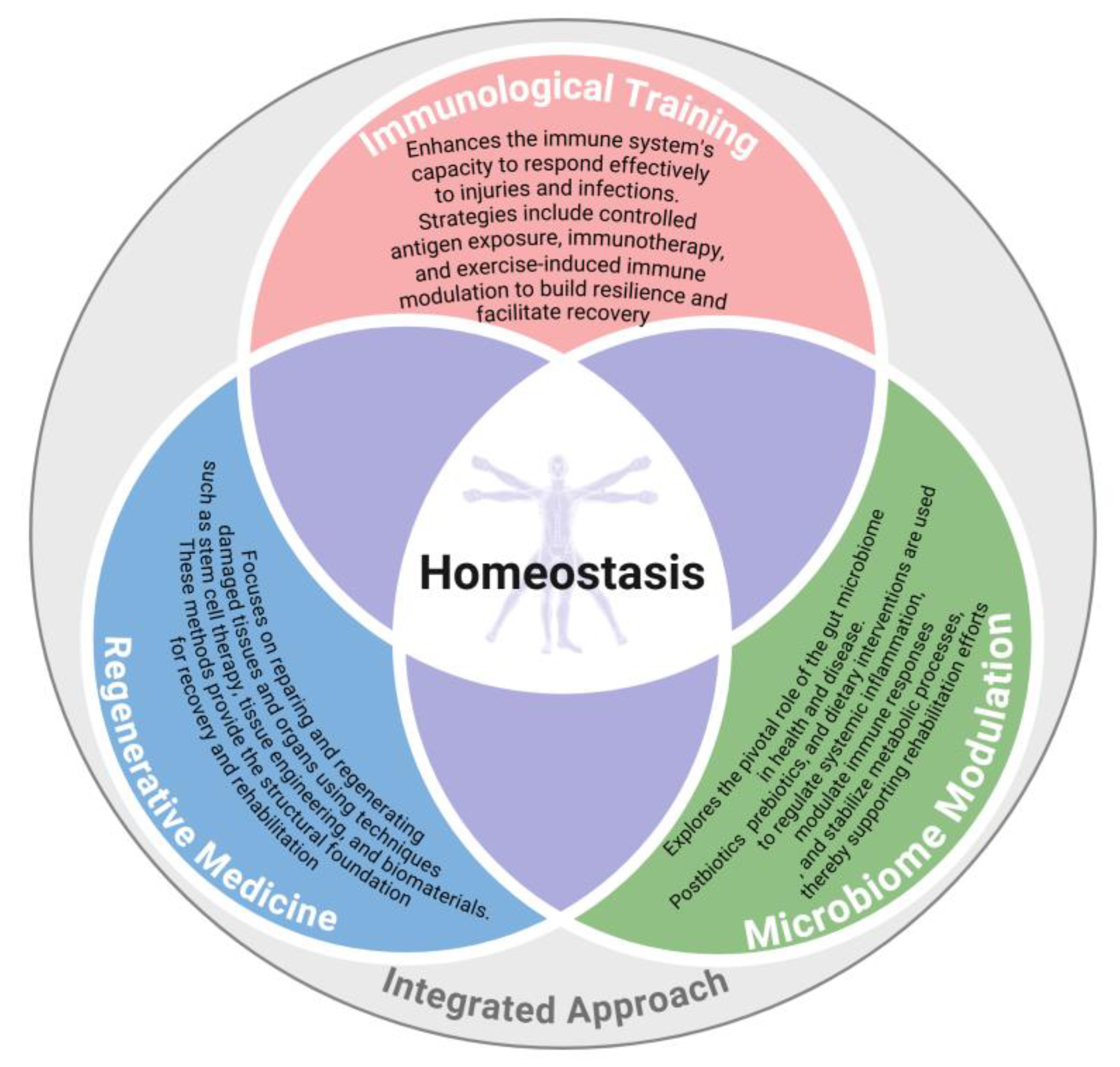

Table 1.
Comparative Table of Key Regenerative Medicine Techniques.
| Technique | Description | Clinical Applications | Outcomes |
| Stem Cell Therapy | Utilization of stem cells to regenerate or repair damaged tissues. | Musculoskeletal injuries, neurodegenerative disorders, cardiac repair. | Promotes tissue repair, reduces inflammation, enhances functional recovery. |
| Tissue Engineering | Development of bioengineered tissues using scaffolds, cells, and growth factors. | Skin grafts, organ reconstruction, cartilage repair. | Enables anatomical restoration, improves structural integrity, and accelerates healing. |
| 3D Bioprinting | Layer-by-layer printing of biomaterials to create complex tissue structures. | Bone repair, vascular grafts, organ models for testing. | Offers precise structural replication and reduces reliance on donor tissues. |
| Gene Therapy | Introduction of genetic material to correct or modify cellular dysfunctions. | Genetic disorders, cancer, immunodeficiencies. | Corrects genetic mutations, enhances targeted therapies, and improves cellular functionality. |
| Immunomodulatory Agents | Use of agents to regulate immune responses and promote healing. | Autoimmune diseases, chronic inflammation, transplant medicine. | Balances immune responses, prevents complications, and supports tissue regeneration. |
Table 2.
Roles of Probiotics, Prebiotics, and Postbiotics in Rehabilitation.
| Component | Role | Mechanisms | Benefits |
| Probiotics | Live beneficial bacteria administered to restore microbial balance. | Compete with pathogens, produce bioactive compounds, and enhance immune cell activity. | Supports immune modulation, improves digestion, and accelerates recovery. |
| Prebiotics | Nutritional compounds that promote the growth of beneficial bacteria. | Fermented by gut microbiota to produce bioactive metabolites. | Enhances gut microbiota diversity, supports nutrient absorption, and stabilizes homeostasis. |
| Postbiotics | Bioactive compounds produced by probiotics, such as SCFAs, indole derivatives or peptides. | Directly influence host physiology through anti-inflammatory and antioxidant effects and promoting gut barrier integrity. | Reduces oxidative stress, systemic inflammation, promotes tissue healing and systemic homeostasis. |
Table 3.
Therapeutic Roadmap: Steps for Integrating Microbiome Modulation into Personalized Rehabilitation Plans.
Table 3.
Therapeutic Roadmap: Steps for Integrating Microbiome Modulation into Personalized Rehabilitation Plans.
| Step | Description | Actions | Expected Benefits |
| 1. Baseline Assessment | Evaluate the patient’s microbiome profile and overall health status. | Conduct gut microbiota analysis, assess dietary habits, and identify dysbiosis or imbalances. | Personalized insights into microbiome health and targeted intervention planning. |
| 2. Targeted Nutritional Plan | Design a dietary strategy to support microbial diversity and SCFA production. | Incorporate prebiotics (e.g., inulin, fructo-oligosaccharides; FOS) and fiber-rich foods into the patient’s diet. | Enhances gut microbiota diversity, supports metabolic homeostasis, and improves recovery. |
| 3. Probiotic Supplementation | Introduce beneficial live bacteria tailored to individual needs. | Prescribe specific probiotic strains based on identified deficiencies (e.g., Lactobacillus, Bifidobacterium). | Restores microbial balance, reduces inflammation, and boosts immune resilience. |
| 4. Postbiotic Integration | Incorporate bioactive metabolites produced by beneficial bacteria into the therapy plan. | Use SCFA supplements or postbiotic formulations to enhance systemic and localized recovery. | Strengthens gut barrier integrity, modulates immunity, and accelerates tissue healing. |
| 5. Monitor and Adjust | Regularly assess microbiome-related health outcomes to refine the rehabilitation plan. | Perform follow-up microbiota analyses and adapt dietary or supplementation strategies. | Ensures sustained microbiome health and optimizes long-term rehabilitation outcomes. |
| 6. Gut-Health Education | Empower patients with knowledge about maintaining a healthy microbiome. | Provide guidance on diet, lifestyle, and probiotic use to prevent dysbiosis. | Promotes long-term health resilience and prevents recurrence of imbalances. |
Disclaimer/Publisher’s Note: The statements, opinions and data contained in all publications are solely those of the individual author(s) and contributor(s) and not of MDPI and/or the editor(s). MDPI and/or the editor(s) disclaim responsibility for any injury to people or property resulting from any ideas, methods, instructions or products referred to in the content. |
© 2025 by the authors. Licensee MDPI, Basel, Switzerland. This article is an open access article distributed under the terms and conditions of the Creative Commons Attribution (CC BY) license (http://creativecommons.org/licenses/by/4.0/).
Copyright: This open access article is published under a Creative Commons CC BY 4.0 license, which permit the free download, distribution, and reuse, provided that the author and preprint are cited in any reuse.