

Submitted:
23 July 2025
Posted:
23 July 2025
You are already at the latest version
Abstract
Feeding a balanced diet such as total mixed ration (TMR) is a widely adopted feeding strategy providing a uniformly blended diet of roughages, concentrates, and supple-ments that enhances ruminant productivity by optimizing nutrient utilization, stabi-lizing rumen fermentation, and improving microbial activity. Scientific studies have confirmed that TMR increases dry matter intake (DMI), milk yield, and growth per-formance in dairy and beef cattle, as well as in sheep and goats. TMR’s advantages in-clude consistent feed quality, reduced selective feeding, and improved feed efficiency. A key benefit of TMR is its ability to promote the production of volatile fatty acids (VFAs), which are the primary energy source for ruminants, particularly propionate. This en-hances energy metabolism, resulting in higher carcass yields, increased milk produc-tion, and economic benefits compared to conventional or supplementary feeding sys-tems. However, TMR feeding is also susceptible to mycotoxin contamination (e.g., af-latoxins, zearalenone), potential effects on methane emissions, and the need for precise formulation to maintain consistency and optimise profitability. Prevention and good practices, including routine inspection of feed for pathogens and vulnerable ingredients, as well as careful management of particle size and forage-to-concentrate ratios, are crucial in preventing subacute ruminal acidosis (SARA) and the development of other subclinical diseases. Mycotoxin binders, such as hydrated sodium calcium aluminosil-icate, can also reduce mycotoxin absorption. Another advantage of practicing TMR is that it can support sustainable farming by integrating agro-industrial byproducts, which minimises environmental impact. For sustainable production, future research should focus on optimizing TMR formulations with alternative ingredients (e.g., agro-industrial byproducts) and precision feeding strategies to enhance livestock health and animal productivity while minimizing environmental impacts.
Keywords:
Agro-industrial byproducts
; feed additives
; forage-concentrate
; nutrient digestibility
; growth performance
; milk production
; carcass yield
; meat quality
; mycotoxin
; methane emissions
; sustainability
1. Introduction
The rapidly expanding global population necessitates advancements in sustainable livestock production to meet the rising demand for meat, milk, and their processed products [1,2]. Given the growing demand for efficient and sustainable livestock production, understanding the importance of formulating balanced diets such as total mixed ration (TMR) is essential to maximise animal productivity. However, management is critical for farmers, nutritionists, and researchers alike. Optimal nutrition is paramount for achieving high performance, better animal health, and economic viability in modern livestock farming, particularly for ruminant species such as dairy cows, beef cattle, buffaloes, goats, and sheep [3,4]. A total mixed ration is a scientifically formulated feeding strategy that combines all dietary components, including forages, concentrates, vitamins, and minerals, into a single, uniform mix [3,5,6]. This innovative approach ensures that the diet consumed by the animal is nutritionally complete and balanced, minimizing selective feeding. This approach offers numerous benefits for the entire flock or herd’s health, performance and productivity [7,8,9,10].
The widespread adoption of TMR is driven by its primary benefits, which extend from individual animal performance to broader farm sustainability. For instance, TMR provides a consistent nutrient supply that stabilizes rumen pH and promotes efficient microbial activity, creating an optimal environment crucial for improved animal health and performance. Studies consistently demonstrate that TMR leads to enhanced nutrient digestibility and feed efficiency, with nitrogen often utilized more effectively by cows on TMR diets compared to those on pasture [8,11,12]. Furthermore, TMR has been linked to maximised production outcomes through nutrient optimisation, leading to higher average daily gain (ADG) and body weight in beef cattle and higher milk production in lactating dairy animals [13,14]. For instance, a 3-5% increase in milk production alongside improved milk fat, solids-not-fat (SNF), and protein content in dairy cows [15,16], and improved marbling score in beef cattle have been reported upon TMR feeding [17,18,19,20,21].
Beyond animal productivity, TMR systems significantly reduce feed costs and support sustainable farming practices by facilitating the efficient use of locally available agricultural by-products and minimizing feed wastage [22]. While certain considerations, such as particle size, precise formulation, and proper mixing, are crucial for its effectiveness. It is vital that innovations in TMR continue to refine its application and effectiveness, including variations like Ensiled Total Mixed Ration (ETMR) for enhanced nutrient preservation [23,24] and Fermented Total Mixed Ration (FTMR), which has shown promise in improving nutrient digestibility, rumen fermentation, and growth performance, particularly when utilizing agricultural by-products [25].
Despite these advancements, the implementation of TMR is not without challenges. Issues such as aerobic deterioration, potential feed sorting, and the risk of mycotoxin contamination require careful management [26]. High-grain TMR, especially in pelleted forms, can also increase the risk of subacute ruminal acidosis (SARA) if not properly managed [17,27]. The degradation of essential vitamins, such as vitamin A, in TMR silage under acidic conditions also poses a concern, necessitating the development of specific mitigation strategies, including the inclusion of lactic acid bacteria with high antioxidant activity [28].
Given the complex interplay of feed formulation, animal physiology, and environmental factors, continuous research and optimization of TMR systems are crucial to unlock their full potential, further eliminating existing limitations. The ability of TMR to enable precision in nutrient formulation, optimize the use of available agricultural by-products, and provide greater control over ration composition positions signifies its importance in modern livestock nutrition. The research is critical for developing sustainable, cost-effective, and environmentally friendly feeding practices that support animal health and productivity. Thus, this work aims to provide a comprehensive review and analysis of current research on formulation of a balanced diet for ruminants, such as TMR, focusing on its formulation, benefits across diverse ruminant species, challenges, and recent innovations. By synthesizing existing knowledge, we aim to enhance understanding and provide practical insights for farmers and researchers. This approach ultimately contributes to a more efficient, sustainable, and profitable future of livestock production. These advancements not only boost farm profitability but also contribute to global food security and ecosystem protection.
1.1. Justification for the Literature Review
Formulating a balanced diet for ruminants in the form of TMR has become a cornerstone of modern ruminant nutrition, widely adopted globally for its ability to deliver a consistent, balanced diet. This feeding strategy enhances dry matter intake, improves milk production, and improves growth rates and carcass quality by stabilizing rumen function as described below (Figure 1). It promotes efficient nutrient digestion and the production of volatile fatty acids (VFAs), which are crucial for animal energy. However, the benefits of TMR are accompanied by significant complexities. High-concentration formulations, especially those in pelleted versions, can disrupt rumen pH, thereby increasing the risk of SARA and subclinical diseases. Feed sorting by animals may also undermine nutritional consistency. Furthermore, TMR is susceptible to mycotoxin contamination from ingredients such as silage, which may pose significant health risks. In addition, its environmental footprint, particularly in terms of methane emissions, varies considerably depending on the diet composition, and digestibility is also a concern associated with it.
These challenges necessitate the continuous refinement of existing TMR practices. Innovations such as ensiled TMR and fermented TMR offer potential for better nutrient preservation and reduced methane emissions. At the same time, additives like yeast cultures aim to enhance fibre breakdown and rumen stability. Simultaneously, optimizing TMR formulations with alternative ingredients and precise particle sizes requires ongoing investigation. The economic aspect is also vital; while TMR improves feed efficiency, the initial investment can be substantial, which in turn influences adoption among farmers. A literature review is, therefore, essential to synthesize the extensive, sometimes conflicting, research across diverse ruminant species (cattle, sheep, goats) and production systems (intensive and semi-intensive). By critically evaluating the interplay between TMR formulation, animal physiology, economic viability, and environmental impact, this review consolidates the current understanding, identifies optimal strategies, research gaps, and guides future research toward more efficient, sustainable, and profitable ruminant production systems. This consolidated knowledge is fundamental for translating scientific insights into practical applications that enhance on-farm success and productivity.
2. Methodology
This review consolidates current knowledge on the formulation, benefits, and challenges of Total Mixed Ration in ruminant nutrition, with a focus on its impact on productivity, rumen health, and environmental sustainability. To ensure a comprehensive assessment, literature search was conducted across multiple academic databases, including Web of Science, PubMed, Google Scholar, and Scopus, using targeted search terms such as “Total Mixed Ration AND ruminant performance,” “TMR AND rumen fermentation,” “fermented TMR AND meat quality,” and “TMR formulation AND feed efficiency.” The inclusion criteria prioritized peer-reviewed studies, in vivo studies, and selected in-vitro studies, while excluding non-ruminant research and non-scientific sources.
The extracted data encompassed TMR composition (e.g., forage-to-concentrate ratios, inclusion of wet brewers’ grains, yeast cultures, and fermented additives), processing methods (ensiling techniques), and their effects on feed intake, growth performance, milk yield, rumen fermentation parameters (volatile fatty acid profiles, pH stability, microbial diversity), and methane mitigation, as well as economic and environmental considerations. Given the narrative structure of this review, no formal statistical analysis was conducted. Instead, findings were synthesized to provide a balanced interpretation of TMR’s role in modern ruminant production systems, emphasizing practical implications for farmers and researchers. The discussion integrates mechanistic insights, such as how fiber digestibility is influenced by particle size or how microbial additives improve aerobic stability, to clarify the functional basis of TMR’s benefits and limitations. References were selected based on relevance, scientific rigor, and applicability across dairy and beef cattle, sheep, and goats, ensuring a representative overview of global TMR practices.
3. Typical Composition and Importance of Total Mixed Ration for Ruminants
The Total Mixed Ration is a widely adopted feeding strategy in ruminant production, ensuring a balanced intake of nutrients by blending forages, concentrates, and supplements into a homogeneous mixture [26,29]. This method prevents selective feeding, stabilizes rumen fermentation, and enhances feed efficiency, making it particularly beneficial for high-producing dairy cattle and intensively reared beef and sheep [18,30]. The formulation of TMR varies depending on animal species, production stage, and available feed resources, but its core objective remains consistent: optimizing nutrient utilization while maintaining animal health and productivity.
The composition of TMR is carefully balanced to meet the nutritional demands of ruminants. Typically, TMR consists of forages (60–70%) and concentrates (30–40%) on a dry matter (DM) basis [31] (Figure 2). It is also understandable that the ratios may vary slightly from species to species, based on the selection/availability of forages and concentrates, which affect their economic viability. In addition, small amounts of additives (1–2%) may be included, such as yeast or molasses, to enhance palatability and digestion [14,32]. For dairy cows, the forage-to-concentrate ratio typically ranges from 50:50 to 60:40, whereas beef cattle and growing lambs may receive higher forage proportions [33]. Forage components commonly include corn silage, alfalfa hay, grass/clover silage, and straw [34]. In tropical regions, Napier grass and Megathyrsus maximus are frequently incorporated [35]. These forages provide structural fiber, promoting rumination and saliva production, which buffers rumen pH [36].
Concentrate ingredients often consist of corn meal, soybean meal, wheat bran, and sunflower meal, supplemented with molasses, minerals (calcium carbonate, dicalcium phosphate), and vitamin premixes [37]. By-products, such as wet corn gluten feed (WCGF) and distillers’ grains, are increasingly used to reduce feed costs while maintaining nutritional value [21]. Processing methods significantly influence TMR effectiveness. Pelleting reduces particle size, improving starch digestibility and feed intake [27]. Conversely, FTMR enhances preservation through the inclusion of lactic acid bacteria (LAB), which inhibit the growth of spoilage microorganisms and improve aerobic stability [38]. The nutrient composition and fermentation quality of TMR silage are affected by storage conditions. Prolonged storage at higher temperatures can alter in-vitro ruminal fermentation profiles [39]. Innovative technologies, such as optical sensors for fiber length estimation, improve TMR consistency during mixing [40]. Ensuring the right proportions and managing fermentation quality are crucial for optimizing the benefits of TMR [39,41].
3.1. Key Advantages of Total Mixed Rations
Total Mixed Ration offers multiple benefits, including enhanced rumen function, improved nutrient utilization, optimized production performance, and cost-effective sustainability (Figure 3). Unlike traditional feeding methods, TMR prevents selective feeding, ensuring uniform nutrient intake and stabilizing rumen fermentation. Research consistently demonstrates its positive impact on growth rates, milk production, and feed conversion efficiency. By providing a balanced and consistent nutrient supply, which stabilizes rumen pH and promotes efficient microbial activity, leading to better feed efficiency and animal health. Studies indicate that TMR-fed cattle exhibit higher average daily gain (ADG), improved milk yield (3–5% increase), and enhanced meat quality (e.g., marbling score in beef). Additionally, TMR minimizes feed wastage, allows precision nutrient formulation, and supports sustainable farming by incorporating locally available by-products. Variations such as ETMR and FTMR further enhance nutrient digestibility and aerobic stability, making TMR a versatile and efficient feeding strategy.
Innovations like Compact TMR (CTMR) and TMR silage (TMRS) have further optimized the feed utilization while reducing labor costs. However, factors such as forage quality, particle size, and moisture content must be carefully monitored to maximize benefits from TMR systems. Although TMR offers clear advantages in terms of productivity and sustainability, continuous research is necessary, especially to refine formulations, particularly in relation to carcass traits and methane emissions.
3.2. Ensiled and Fermented Total Mixed Ration
Ensiled Total Mixed Ration (ETMR) and Fermented Total Mixed Ration (FTMR) represent advanced feeding strategies that leverage preservation and fermentation technologies to enhance ruminant nutrition. Both approaches share a common scientific foundation in modifying feed composition through microbial activity, but they differ in their specific mechanisms and implications for animal health and productivity. ETMR combines the benefits of total mixed rations with ensiling, creating an anaerobic environment that promotes lactic acid fermentation, thereby preserving nutrients and reducing spoilage [42]. This process stabilizes proteins and carbohydrates, which are otherwise prone to degradation in conventional TMR due to aerobic microbial activity (Wang et al., 2020). The inclusion of additives such as lactic acid bacteria (LAB) accelerates pH reduction, inhibiting spoilage microorganisms, while propionic acid enhances aerobic stability by suppressing mold growth (Cao et al., 2010). Nutritionally, ETMR improves digestibility by breaking down complex fibers, enhancing volatile fatty acid (VFA) production, and increasing energy availability for the animal [42]. Additionally, it can reduce methane emissions by shifting rumen fermentation toward propionate production, thereby improving energy efficiency and mitigating environmental impact [30]. For livestock, ETMR ensures uniform nutrient intake, reduces selective feeding, and minimizes metabolic disorders such as acidosis [43]. Its improved palatability and aerobic stability also support higher dry matter intake (DMI), leading to better growth and milk production [42]. Similarly, FTMR enhances feed quality through fermentation, improving nutrient availability and rumen function. The process breaks down complex carbohydrates and proteins into more digestible forms, increasing crude protein (CP) and neutral detergent fiber (NDF) digestibility, which translates to improved weight gain in sheep and higher milk yield in dairy cows [44,45]. FTMR stabilizes rumen pH by promoting lactic acid production, fostering beneficial microbial populations such as Prevotella and Ruminococcus, which enhance fiber degradation [46]. Like ETMR, FTMR reduces methane emissions by favoring propionate over methanogenesis [44]. Economically, FTMR lowers feed costs by incorporating agro-industrial byproducts such as rice straw and alfalfa silage, while fermentation extends shelf life by inhibiting spoilage microorganisms [45,47]. It also simplifies feeding management by ensuring dietary consistency, preventing selective feeding, and improving feed efficiency [48]. The broader implications of these mixed rations highlight their superiority over conventional TMR systems, which are prone to spoilage and nutrient loss, particularly in challenging climates [49]. ETMR and FTMR address these limitations by utilizing preservation and fermentation techniques, ensuring feed stability and nutritional consistency [39,47,50]. Both systems offer sustainable solutions by improving feed efficiency, reducing environmental impact, and enhancing livestock productivity. Future research should focus on optimizing fermentation conditions, including inoculant strains, moisture content, and duration, to maximize benefits across different production systems. The integration of these technologies into modern livestock farming underscores their potential to revolutionize ruminant nutrition while addressing economic and ecological challenges.
3.3. Fermentation Quality (Silage) and Its Implications for Total Mixed Ration
Fermentation quality in silage is a critical determinant of the nutritional value and stability of TMR for ruminants. The process of ensiling involves the anaerobic fermentation of forage, primarily driven by LAB, which convert water-soluble carbohydrates into lactic acid, thereby lowering the pH and inhibiting the growth of spoilage microorganisms [42,51]. A well-fermented silage typically exhibits a pH below 4.2, high lactic acid content, and minimal concentrations of undesirable fermentation byproducts such as butyric acid and ammonia-N [28]. These parameters are important because they influence not only the preservation of nutrients but also the palatability and intake of the TMR by livestock. The inclusion of high-quality silage in TMR formulations enhances rumen function and animal performance. For instance, Liu et al. [45] reported that replacing alfalfa hay with oat hay in fermented TMR improved rumen microbiota composition in lambs, leading to better fiber digestion and growth performance. This is attributed to the fact that well-fermented silage promotes a stable rumen environment by maintaining optimal pH levels, which supports the growth of cellulolytic bacteria essential for fiber degradation [24]. Conversely, poor fermentation quality, characterized by high butyric acid or ammonia-N levels, can lead to reduced feed intake, impaired rumen function, and lower milk or meat production [42].
The role of additives in improving silage fermentation cannot be overstated. Studies have shown that inoculants, such as Lactobacillus acidophilus and Bacillus subtilis, enhance fermentation efficiency by accelerating acid production and suppressing undesirable microbes [43]. Furthermore, Paul et al. [52] found that fermented TMR supplemented with molasses and Saccharomyces cerevisiae improved in-vitro digestibility and gas production, indicating better nutrient availability. These findings suggest that the strategic use of microbial inoculants and fermentation enhancers can significantly improve the nutritional quality of TMR, thereby benefiting animal productivity. However, challenges remain in maintaining fermentation quality, particularly in hot and humid climates where aerobic spoilage is a significant concern [53]. Proper compaction, sealing, and the use of organic acid additives such as propionic acid have been shown to improve aerobic stability, ensuring that silage retains its nutritional value over time [42]. Moreover, forage particle size in TMR plays a role in fermentation dynamics; finer particles may ferment faster, but could also reduce fiber digestibility, if not properly managed [27]. From a practical standpoint, the fermentation quality of silage in TMR has direct implications for livestock health and farm profitability. Poorly fermented silage can lead to metabolic disorders such as SARA, particularly in high-concentrate TMR formulations [17]. On the other hand, well-fermented TMR promotes efficient nutrient utilization, leading to improved growth rates, milk yield, and overall herd health [45].
4. Effects of Total Mixed Ration in Ruminant Diets
4.1. Effects of Total Mixed Ration on Rumen Fermentation
The composition of TMR plays a crucial role in determining rumen fermentation dynamics, which affects pH stability, VFAs production, and microbial diversity (Table 1). One of the most critical aspects of TMR is its influence on rumen pH stability. A well-balanced TMR improves nutrient utilization, enhances animal performance, and reduces metabolic disorders, whereas a poorly formulated TMR can lead to acidosis and reduced feed efficiency. Research indicates that TMR formulations with balanced roughage-to-concentrate ratios help maintain optimal rumen pH (6.0–6.5), reducing the risk of SARA [27]. However, high-concentrate TMR diets (exceeding 60% concentrate) can lead to excessive production of lactic acid, lowering pH and impairing fiber-digesting microbes [17]. This is particularly evident in pelleted TMR, where smaller particle sizes accelerate fermentation, further exacerbating pH fluctuations [54]. Conversely, TMR containing adequate roughage, such as maize silage or alfalfa hay, promotes saliva production during chewing, which buffers rumen acidity and stabilizes pH [45].
The production of VFAs is another key indicator of rumen fermentation efficiency. TMR formulations rich in fermentable carbohydrates, such as grains and molasses, enhance propionate and butyrate production, which are crucial for energy metabolism in ruminants [55]. However, excessive concentrate inclusion can shift VFA profiles toward higher propionate at the expense of acetate, reducing fiber digestibility [27]. FTMR has been shown to improve VFA production by promoting microbial activity through the inclusion of probiotics like Lactobacillus acidophilus and Saccharomyces cerevisiae [42]. Moreover, yeast-supplemented TMR enhances fiber degradation, leading to a more balanced acetate-to-propionate ratio, which supports both energy supply and rumen health [24].
Microbial diversity in the rumen is significantly influenced by TMR composition. A well-formulated TMR supports a diverse microbial population, including cellulolytic bacteria (Fibrobacter succinogenes, Ruminococcus flavefaciens) and amylolytic species (Streptococcus bovis) [43]. However, high-grain TMR can reduce microbial diversity by favoring lactate-producing bacteria (Megasphaera elsdenii) over fiber degraders, leading to dysbiosis [17]. Fermented TMR, particularly those incorporating lactic acid bacteria, has been found to enhance microbial stability by suppressing pathogenic bacteria and promoting beneficial microbes [52]. Additionally, the inclusion of wet brewers’ grains (WBG) as a roughage substitute in TMR has been reported to maintain microbial balance while improving nutrient utilization [64].
The implications of these findings are significant for both animal performance and feed efficiency. Stable rumen pH ensures optimal digestion and minimizes metabolic disorders, while balanced VFA production maximizes energy availability for growth and milk production. Furthermore, maintaining microbial diversity enhances feed efficiency and reduces methane emissions, contributing to more sustainable livestock production [55]. However, improper TMR formulation, such as excessive concentrate or insufficient fiber, can lead to digestive disturbances, reduced feed intake, and lower productivity [27]. In conclusion, TMR offers a scientifically validated approach to optimizing rumen fermentation, but its success depends on careful formulation and management. Future research should focus on precision feeding strategies, including the use of fermentation enhancers and alternative roughage sources, to further enhance rumen function and overall animal health. Farmers and nutritionists should prioritize optimal roughage-to-concentrate ratios, consider fermented TMR options, and incorporate feed additives like yeast and probiotics to maximize rumen health and productivity.
4.2. Effects of Total Mixed Ration on Nutrient Digestibility
The adoption of TMR in ruminant feeding systems significantly improves the digestibility of nutrients—such as dry matter, organic matter, crude protein, neutral detergent fiber, and acid detergent fiber—by ensuring a balanced and consistent diet (Table 2). Proper formulation, including optimal roughage-to-concentrate ratios and strategic use of additives, enhances rumen function and overall animal performance. This approach not only boosts productivity but also supports sustainable livestock farming by improving feed efficiency and reducing environmental impacts. Several studies have demonstrated that TMR enhances the digestibility of all nutrients compared to conventional feeding systems. For instance, Arbaoui et al. [17] found that TMR formulations with optimized concentrate-to-roughage ratios significantly improved DM and OM digestibility by ensuring a consistent nutrient supply, which stabilizes rumen fermentation. This is primarily because a finely balanced TMR prevents selective feeding, ensuring that animals consume all dietary components in the intended proportions [54]. Moreover, the inclusion of high-quality roughages such as alfalfa hay and maize silage in TMR has been shown to enhance fiber digestibility (NDF and ADF) by promoting rumen microbial activity (Liu et al., 2023). Hamidan et al. [53] reported that diets with adequate NDF content support rumen health by maintaining proper rumen motility and buffering capacity, which in turn improves fiber degradation. However, excessive inclusion of roughage may reduce digestibility due to the increased lignin content, particularly in low-quality forages [79]. Bo Trabi et al. [27] observed that smaller forage particle sizes in TMR increase passage rates but may reduce fiber digestibility due to insufficient rumen retention time for microbial degradation.
Crude protein digestibility is also positively influenced by TMR, particularly when protein sources are well-balanced between degradable and undegradable fractions. Lakhani & Tyagi [78] reported that TMR containing 11–14% CP optimizes microbial protein synthesis while minimizing nitrogen wastage. Additionally, FTMR containing microbial additives, such as Lactobacillus acidophilus and Saccharomyces cerevisiae further enhances CP digestibility by promoting proteolytic activity in the rumen [42]. Wang et al. [24] also demonstrated that yeast supplementation in TMR improves fiber digestibility by stimulating cellulolytic bacteria, leading to better NDF and ADF breakdown. The implications of these findings are significant for both animal productivity and feed efficiency. Improved DM and OM digestibility indicate better energy utilization, which translates to higher milk yield in dairy cows and improved weight gain in beef cattle [80]. Enhanced fiber digestibility ensures optimal rumen function, reducing the risk of metabolic disorders such as SARA. Furthermore, the use of FTMR and additives like wet brewers’ grains [38] or yeast culture [24] offers a sustainable approach to enhancing nutrient utilization while reducing feed costs. Farmers and nutritionists should focus on ingredient quality, forage particle size, and fermentation techniques to maximize digestibility while minimizing metabolic risks.
4.3. Effects of Total Mixed Ration on Growth Performance
Total Mixed Ration represents a significant advancement in ruminant nutrition, integrating forage, concentrates, and additives into a homogeneous mixture that enhances growth performance metrics, including BW, ADG, DMI, and feed efficiency (Table 3). Early research by Lailer et al. [81] established that TMR ensures uniform nutrient delivery, minimizing selective feeding and stabilizing rumen fermentation. This consistency prevents fluctuations in ruminal pH and VFAs production, both of which are critical for efficient nutrient utilization. For instance, Liu et al. [45] reported that lambs fed TMR with optimal oat-to-alfalfa ratios exhibited higher DMI and ADG due to improved palatability and balanced energy-to-protein ratios. Similarly, Nguyen et al. [14] observed increased BW in cattle fed alkaline-treated rice straw-based TMR, attributing it to enhanced digestibility from reduced lignin content, which facilitated microbial access to cellulose.
The scientific basis for improved ADG lies in TMR’s ability to synchronize carbohydrate and protein degradation in the rumen. Wang et al. [5] found that lambs fed TMR with 40% sweet sorghum and 60% alfalfa silage achieved the highest ADG, as the blend provided readily fermentable carbohydrates alongside bypass protein, promoting microbial protein synthesis. Furthermore, Sun et al. [72] demonstrated that pelleting TMR with live yeast increased ADG in lambs by 11%, as yeast metabolites enhanced fibrolytic bacteria activity, boosting neutral detergent fiber digestibility. This aligns with Bo Trabi et al. [27], who noted that smaller forage particles in high-grain TMR accelerated ruminal turnover but cautioned that excessive starch could reduce fiber digestibility and increase the risk of acidosis.
Improvements in dry matter intake under TMR systems are often linked to the physical and chemical properties of the feed. Koch et al. [82] observed that dry TMR formulations incorporating by-products like straw maintained DMI comparable to conventional silage-based rations, as the mix’s density and moisture content reduced sorting behavior. Ferrari et al. [21] further noted that replacing modified distillers’ grains with dry-rolled corn in beef steer TMR linearly decreased DMI, likely due to lower palatability and energy density. However, wet brewers’ grains in TMR countered this by providing soluble fibers that stimulated rumination and saliva production, buffering rumen pH and supporting consistent intake [38].
Feed efficiency improvements stem from TMR’s optimization of nutrient absorption. Tufarelli et al. [73] reported a 15% better FCR in lambs fed wheat middlings-based TMR, as the diet’s balanced degradable protein and energy reduced nitrogen wastage and directed nutrients toward muscle deposition. Additionally, fermented TMR with lactic acid bacteria, as studied by Chen et al. [28], increased propionate production through enhanced carbohydrate fermentation, thereby supplying more glucogenic precursors for growth. This was corroborated by Zhang et al. [56] in dairy calves, where TMR enriched cellulolytic bacteria like Rikenellaceae, improving fiber degradation and metabolic energy availability. Challenges persist, however, high-grain pelleted TMR can lower rumen pH and increase lactate production, predisposing animals to subacute acidosis [27]. Martins et al. [26] also highlighted the risks of mycotoxin contamination in TMR, particularly from maize silage, which can suppress feed intake and impair hepatic function. Nonetheless, innovations like yeast supplementation [24] and moisture-stabilizing additives [28] mitigate these issues by enhancing aerobic stability and detoxification. Total Mixed Ration significantly enhances ruminant growth performance by ensuring balanced nutrient intake, stabilizing rumen function, and improving feed efficiency. Its adaptability to incorporate agricultural by-products reduces costs while maintaining productivity, making it indispensable for sustainable livestock farming. Farmers should prioritize consistent mixing, moisture control and mycotoxin management to maximize benefits, as these factors directly influence animal health and economic returns.
4.4. Effects of Total Mixed Ration on Milk Yield and Composition
Total Mixed Ration has been widely adopted in ruminant nutrition due to its ability to provide a balanced diet, ensuring consistent nutrient intake and improving milk production (Table 4). Several studies have demonstrated that TMR enhances milk yield and modifies milk composition, primarily due to its well-balanced formulation of concentrates, roughages, and additives. Sunarso et al. [80] reported that dairy cows fed TMR exhibited higher milk yields compared to those on conventional feeding systems, likely due to the optimized energy and protein balance in TMR. Similarly, Lailer et al. [81] found that TMR improves feed efficiency, leading to increased milk production by maintaining stable rumen fermentation conditions. The nutritional quality of TMR also influences the composition of milk. A higher concentrate proportion in TMR (30–80%) elevates energy density, which directly impacts milk fat and protein content [27]. However, excessive concentrate inclusion may reduce fiber digestibility, negatively affecting milk fat synthesis due to altered rumen pH and volatile fatty acid production [53]. The fatty acid composition of milk can also be influenced by the high proportion of concentrate in TMR, particularly by reducing the levels of health-promoting fatty acids like vaccenic, rumenic, and alpha-linolenic acids, and increasing the formation of trans-10 fatty acids associated with milk fat depression in dairy ruminants [95].
Conversely, adequate roughage inclusion, such as maize silage or alfalfa hay, ensures sufficient fiber intake for rumen health, promoting optimal milk composition [45]. The inclusion of fermented components, such as molasses and microbial additives like Saccharomyces cerevisiae, further enhances nutrient availability, leading to improved milk yield and quality [24,42].
Moreover, the physical characteristics of TMR, such as particle size, play a crucial role in digestion and milk production. Smaller particle sizes increase feed intake and rumen turnover but may reduce fiber digestibility, potentially lowering milk fat content [54]. On the other hand, proper fermentation of TMR, as seen in FTMR, enhances nutrient preservation and digestibility, leading to better milk yield and composition (Paul et al., 2023). The addition of yeast culture in TMR has also been shown to stabilize rumen pH and improve fiber degradation, further supporting milk production [24]. Despite these benefits, challenges such as feed sorting and SARA may arise, particularly with high-grain TMR formulations [17,85]. Proper management, including optimal roughage-to-concentrate ratios and the use of fermentation enhancers, is essential to mitigate these risks. Additionally, environmental factors, such as storage conditions, can affect TMR quality, emphasizing the need for proper ensiling techniques to maintain nutrient integrity [42,61].
The adoption of TMR in dairy farming significantly improves milk yield and composition by ensuring balanced nutrient intake, enhancing rumen function, and optimizing feed efficiency. However, careful formulation and management are necessary to prevent metabolic disorders and maintain consistent milk quality. Farmers should consider incorporating fermented additives and maintaining proper roughage levels to maximize the benefits of TMR while minimizing potential drawbacks. This approach not only enhances productivity but also supports sustainable dairy farming practices.
4.5. Carcass Traits and Meat Quality in Livestock Fed Total Mixed Ration
The evaluation of carcass traits and meat quality in livestock fed TMR reveals significant insights into the nutritional and physiological impacts of this feeding strategy. Table 5 summarizes data from various studies that demonstrate how TMR formulations influence carcass yield and meat characteristics, with variations observed across species, breeds, and TMR compositions. Khy et al. [87] reported that beef steers fed a hedge lucerne-based TMR showed no difference in dressing percentage but had higher chilled carcass weight compared to controls. This suggests that TMR enhances muscle deposition without altering fat distribution, likely due to balanced nutrient intake. Similarly, Huuskonen et al. [34] found that Aberdeen Angus cattle fed a TMR with 60% grass silage achieved superior carcass gain (967 g/d) and conformation, attributed to the optimal fiber-to-energy ratio promoting lean tissue growth.
Marbling, a critical determinant of meat quality [79], was significantly improved in beef cattle fed whole crop rice-based TMR [88]. The higher marbling score indicates enhanced intramuscular fat deposition, which is linked to improved juiciness and flavor [1,103]. However, the absence of significant changes in rib eye area suggests that TMR primarily influences fat metabolism rather than muscle hypertrophy. This is corroborated by Ku et al. [66], who observed that Hanwoo steers fed a 70:30 forage-to-concentrate TMR had the highest intramuscular fat content, alongside favorable shear strength and drip loss. Moreover, the inclusion of fermented components in TMR, such as molasses and Saccharomyces cerevisiae, has been shown to positively influence meat quality by improving tenderness and reducing shear force [42]. This is attributed to enhanced protein metabolism and reduced oxidative stress in muscle tissues, which preserves meat structure during post-mortem aging [4]. Additionally, the use of wet brewers’ grains as a partial replacement for traditional roughages contributes to higher IMF content, which is associated with improved juiciness and flavor [1,55]. However, excessive concentrate inclusion in TMR may lead to rapid fat deposition, which, while increasing marbling, could also result in undesirable fatty acid profiles if not adequately balanced with fiber sources [53]. The lower n-6/n-3 fatty acid ratio in this group further highlights the role of forage-rich TMR in promoting healthier lipid profiles, as omega-3 fatty acids are associated with cardiovascular benefits in consumers [55,103].
In small ruminants, Wang et al. [91] demonstrated that Karakul sheep fed a 40% sweet sorghum-alfalfa silage TMR exhibited increased carcass weight, subcutaneous fat thickness, and improved meat quality parameters such as water-holding capacity (WHC) and CP content. The enhanced WHC is particularly important, as it results in better moisture retention during cooking, which contributes to tenderness [4,55]. Furthermore, Zhang et al. [48] observed that crossbred lambs fed pelleted TMR (PTMR) had higher carcass yield (54.5% vs. 49.4%) compared to unpelleted TMR, likely due to improved feed efficiency and nutrient utilization. The scientific basis for these findings lies in the ability of TMR to synchronize nutrient release in the rumen, optimizing microbial fermentation and energy availability. For instance, Liu et al. [6] reported that yaks fed a high-energy TMR exhibited a 106.43% increase in carcass weight and 57.52% dressing percentage, alongside improved tenderness and reduced cooking loss. These outcomes are driven by the TMR’s balanced energy-to-protein ratio, which supports muscle hypertrophy and fat deposition while minimizing metabolic waste.
On the other hand, Cooke et al. [29] found that beef heifers fed high-concentrate TMR had higher marbling but also an elevated n-6/n-3 ratio, which is less desirable from a human health perspective [3,55]. This highlights the importance of carefully formulating TMR to strike a balance between meat quality and nutritional value. The study by Horcada et al. [20] on Retinta cattle further emphasized that TMR with maize silage increased PUFA content (18.8% vs. 14.3%) and n-3 PUFA (0.47% vs. 0.35%) compared to a high-concentrate diet, suggesting that forage inclusion can enhance the nutritional quality of meat [1,2]. TMR ensures consistent nutrient intake, reducing selective feeding and metabolic disorders. For example, Iraira et al. [19] found that Simmental heifers fed TMR had no differences in meat tenderness compared to free-choice diets. However, the TMR group exhibited longer rumination times, indicating better rumen health. This aligns with the findings of Alhidary et al. [10], where Naemi lambs fed TMR supplemented with alfalfa hay showed improved meat color and reduced shear force, reflecting enhanced muscle fiber structure.
The impact of TMR on meat quality extends to its oxidative stability and shelf life. FTMR has been reported to enhance the antioxidant capacity of meat due to the presence of beneficial microbial metabolites, such as short-chain fatty acids and bioactive peptides [90,91]. This is particularly evident when FTMR includes Lactobacillus acidophilus and Bacillus subtilis, which modulate rumen microbiota and reduce lipid oxidation in meat [43]. On the other hand, improper TMR processing, such as inadequate particle size reduction, may lead to inconsistent nutrient absorption, negatively affecting meat texture and color stability [54]. From a practical standpoint, the adoption of TMR in livestock farming ensures consistent growth performance and meat quality; however, it requires careful formulation to avoid metabolic disorders, such as SARA. The inclusion of NDF at optimal levels is essential for maintaining rumen health and preventing excessive fat deposition, which can compromise carcass yield [6,78,87]. For farmers, TMR offers a practical solution to optimize growth and carcass quality while reducing feed wastage. For scientists, the data highlight the importance of ingredient selection and processing (e.g., pelleting, fermentation) in modulating meat quality. For instance, Chen et al. [42] demonstrated that Boer goats fed TMR with 7.5% intact rapeseed had altered fatty acid profiles, including higher linolenic acid and lower palmitic acid, which are beneficial for human health. Additionally, Santos-Silva et al. [104] found that feeding finishing young bulls a TMR with high forage content supplemented with sunflower seeds (10% DM) improved the meat fatty acid profile by increasing the levels of alpha-linolenic, vaccenic, and rumenic acids, while reducing the proportion of t10–18:1, a fatty acid that can be detrimental to human health and is often present in meat from animals fed high-concentrate diets [105].
Furthermore, the economic benefits of TMR, including reduced feed wastage and improved feed conversion efficiency, make it a viable strategy for both small-scale and commercial producers [80].
5. Benefits and Drawbacks of Feeding Ruminants with Total Mixed Ration
5.1. Enteric Methane Emissions
Methane (CH4) is a potent greenhouse gas, and agriculture is a significant contributor to global CH4 emissions, largely due to enteric fermentation in ruminants. Globally, agriculture accounts for 52% of CH4 emissions, with 80 million tonnes of this being a product of enteric fermentation in ruminants [94]. This represents a considerable energy loss for the animal, typically ranging from 2% to 12% of gross energy intake [94,106]. Therefore, strategies to mitigate enteric CH4 are crucial for both environmental sustainability and animal productivity. Methane production is highly dependent on the quantity of feed consumed and the composition of the diet [2,94,106]. Furthermore, methane emissions from ruminants are primarily driven by rumen microbial fermentation, where methanogenic archaea utilize hydrogen (H2) and carbon dioxide (CO2) to produce CH4 [3]. Studies indicate that TMR formulations influence methane production by altering the rumen environment, revealing complex interactions between diet composition and microbial activity. Metzler-Zebeli et al. [67] found that TMR with a high concentrate content (490 g/kg DM) resulted in rapid gas production during the early fermentation stage (2–4 hours), followed by a decline in gas production. This suggests that associative effects between feed components (e.g., grass silage, cereal concentrate) may transiently stimulate microbial activity, increasing methane output before stabilizing. Particle size also plays a critical role. Tafaj et al. [69] demonstrated that reducing TMR particle size (5.5 mm vs. 25 mm) lowered rumen pH and shifted VFA profiles toward propionate, which competitively reduces H2 availability for methanogenesis. Smaller particles increase surface area for microbial degradation, accelerating fermentation and potentially lowering methane yield due to improved energy utilization. Recently Jairath et al. [51] found significantly lower methane production under in-vitro condition when maize grain in concentrate portion of TMR was replaced with fermented agro-waste at 32% level. In contrast, feeding high-forage, low-starch TMR with 10% DM of sunflower seeds to finishing crossbred bulls increased digestive CH4 emissions compared to a concentrate finishing diet. However, the carbon footprint did not differ between diets, 6.63 vs 6.51 kgCO2e/kg LWG [104]).
5.2. Role of Rumen Inoculum and Microbial Populations
The source of rumen inoculum has a significant impact on methane emissions. Metzler-Zebeli et al. [67] observed higher gas production with particle-associated liquid (PAL) inoculum compared to free rumen liquid (FRL), likely due to greater microbial density and fibrolytic activity. This implies that in-vitro studies using only FRL may underestimate methane potential, as PAL microbes are more representative of the rumen mat, where fiber degradation is most active. FTMR has shown promise in mitigating methane emissions. Cao et al. [30] reported a 25% reduction in methane when sheep were fed FTMR, attributed to increased propionate production from lactate fermentation. This metabolic shift consumes H2, diverting it away from methanogenesis (the production of methane). Similarly, Li et al. [46] found that FTMR inoculated with lactic acid bacteria reduced methane by 15–20% in-vitro, correlating with higher propionate and butyrate levels.
5.3. Impact of Dietary Composition
High-concentrate TMR typically reduces methane per unit of feed intake but may increase total emissions due to higher dry matter intake. O’Neill et al. [94] reported that dairy cows fed TMR produced more methane (397 g/day) than pasture-fed cows (251 g/day), despite higher milk yields. This reflects the trade-off between productivity and environmental impact, where energy-dense TMR improves efficiency but may elevate absolute emissions. Conversely, high-fiber TMR can lower methane but risk impairing digestibility. Zhong et al. [65] noted that pelleted TMR improved feed efficiency but had no significant effect on methane, likely due to balanced fiber and starch ratios. Including additives like yeast culture [24] or tannins [107] in TMR further reduces methane by inhibiting methanogens or altering fermentation pathways. While methane mitigation is crucial, TMR must maintain rumen health. Arbaoui et al. [17] observed that high-concentrate TMR lowered rumen pH (5.58 vs. 5.87 in separate feeding), thereby increasing the risk of acidosis. However, FTMR stabilizes pH by promoting lactate-utilizing bacteria (e.g., Megasphaera elsdenii), which convert lactate to propionate [30,44]. This dual benefit of reducing methane while supporting rumen function makes FTMR a viable strategy for sustainable livestock production. Therefore, sustainable TMR strategies must strike a balance between methane reduction, feed efficiency, and rumen stability to meet both environmental and production goals.
5.4. Feed Utilisation
The environmental implications of TMR are closely linked to its composition, processing methods, and efficiency in nutrient utilization. Scientific evidence suggests that TMR reduces feed wastage and improves rumen fermentation stability, which in turn enhances productivity while mitigating methane emissions [17]. This is particularly significant given that methane is a potent greenhouse gas and optimizing feed efficiency can contribute to more sustainable livestock production. One of the key environmental benefits of TMR lies in its ability to incorporate agricultural by-products such as wet brewers’ grains (WBG) and rice straw, reducing reliance on conventional feedstuffs while minimizing waste [45,91]. Furthermore, FTMR has been shown to improve aerobic stability and nutrient retention, which reduces spoilage and further enhances [42]. The inclusion of microbial additives, such as Saccharomyces cerevisiae and Lactobacillus acidophilus, in FTMR not only improves fibre degradation but also stabilises rumen pH, resulting in more efficient digestion and lower methane output [24]. These findings suggest that TMR, particularly when fermented, can play a vital role in reducing the carbon footprint of ruminant production systems (Table 6).
6. Mycotoxin Contamination and Mitigation Costs
Mycotoxin contamination in TMR poses significant risks to ruminant health and productivity, with scientific evidence linking it to poor feed quality, storage conditions, and ingredient sourcing (Table 7). Mycotoxins are toxic secondary metabolites produced by fungi, primarily Aspergillus, Fusarium, and Penicillium species, which can proliferate in feed components under favorable conditions [43].
6.1. Mycotoxins in Total Mixed Ration
The presence of mycotoxins in TMR is particularly concerning because TMR combines multiple ingredients, increasing the likelihood of contamination if even one component is compromised. One of the primary reasons for mycotoxin contamination in TMR is the inclusion of mold-infected roughages such as maize silage, rice straw, and alfalfa hay [45]. These forages are highly susceptible to fungal growth, especially when harvested or stored at high moisture levels [26]. Moreover, the fermentation process in ETMR does not always eliminate mycotoxins, as some fungal strains remain viable and continue to produce toxins even under anaerobic conditions [42]. This is further exacerbated when wet by-products, such as brewers’ grains, are incorporated, as improper drying or storage can introduce additional fungal contamination [37,38].
The primary source of mycotoxins in TMR is often maize silage, which is highly susceptible to fungal colonization. Cogan et al. [109] reported that 90% of maize silage-based TMR samples contained DON and ZON, whereas grass silage-based TMR showed no detectable mycotoxins. This contrast highlights the role of feed composition in contamination risk. Additionally, González-Jartín et al. [110] observed that fumonisins (74%), DON (42.5%), and ZEN (39.1%) were the most prevalent mycotoxins in maize silage TMR, with co-occurrence increasing health risks due to potential synergistic effects. Rodríguez-Blanco et al. [111] further noted that 58% of TMR samples were contaminated with Fusarium-derived mycotoxins, emphasizing the need for rigorous feed quality control.
Sultana et al. [112] found that 100% of TMR samples tested were contaminated with aflatoxin B1 (AFB1) and ochratoxin A (OTA), exceeding European Union regulatory limits. AFB1, a potent hepatotoxin, was detected at 30 ng/g, while OTA averaged 48.5 ng/g, raising concerns about chronic exposure in dairy cattle. Furthermore, 50% of samples contained zearalenone (ZON) at 700 ng/g, a mycotoxin linked to reproductive disorders. These findings reveal the widespread nature of mycotoxin contamination in TMR, particularly in regions with suboptimal feed storage conditions. The implications for animal health are profound. AFB1 is metabolized in the liver to aflatoxin M1 (AFM1), which is excreted in milk and poses risks to both livestock and consumers. Mohammadi Shad et al. (2019) found that 75% of milk samples from high-yielding dairy cows exceeded the EU limits for AFM1 (50 ng/L), which was linked to TMR contaminated with AFB1. Mycotoxins like DON disrupt gut integrity and immune function, while ZEN interferes with reproductive hormones, leading to infertility and reduced milk yield. Even at subclinical levels, chronic exposure can impair growth, feed efficiency, and overall herd health [112]. The quality of TMR is further compromised by microbial and endotoxin contamination.
Vaičiulienė et al. [114] reported that TMR had the highest endotoxin levels (293.44 EU/mL) compared to silages, likely due to bacterial proliferation during feed mixing and storage. Enterobacteriaceae counts were elevated in maize silage (3.93 log10 CFU/g), suggesting poor hygienic conditions that exacerbate mycotoxin risks. These findings indicate that TMR not only introduces mycotoxins but also creates an environment conducive to secondary microbial challenges.
Mitigation strategies are critical to reduce mycotoxin exposure and ensure feed safety. Masoero et al. [115] demonstrated that sequestering agents (e.g., clay-based binders) reduced AFM1 excretion in milk by 47% when incorporated into TMR. Pelletizing these agents enhanced their efficacy, underscoring the importance of feed processing. Additionally, improving silage management, such as ensuring anaerobic conditions and using inoculants, can minimize fungal growth. Cogan et al. [109] noted that farms using silage additives had higher metabolizable energy content and milk yields, indirectly reducing mycotoxin risks. In conclusion, mycotoxin contamination in TMR is a multifaceted issue driven by the quality of feed ingredients, storage practices, and environmental factors. The scientific evidence highlights the importance of adopting integrated approaches, including routine mycotoxin screening, enhanced silage management, and the utilisation of binding agents, to ensure animal health and food safety. Addressing these challenges will enhance the sustainability and productivity of ruminant production systems. Effective mitigation requires a combination of rigrous feed quality monitoring, improved storage practices, and the use of mycotoxin binders. Addressing these issues is essential to ensure animal welfare, milk safety, and farm profitability. Farmers and nutritionists must prioritize mycotoxin management to sustain productive and sustainable livestock systems.
6.2. Mycotoxin Mitigation Costs
A significant economic concern in TMR is mycotoxin contamination, which can reduce feed quality and animal health. Maize silage, a common ingredient in TMR, is particularly susceptible to aflatoxins and Fusarium toxins [111]. Contaminated feed leads to decreased productivity, increased disease incidence, and higher veterinary costs [26]. Although effective mitigation strategies, such as mycotoxin binders and improved silage storage, add to operational expenses but are necessary to prevent losses [115]. Routine monitoring and sourcing high-quality ingredients are essential to minimize these risks. In conclusion, the economic benefits of TMR are well-documented, including improved feed efficiency, labor savings, and enhanced livestock productivity. However, these advantages depend on proper formulation, management practices, and investment in technology. Farmers must balance cost-effectiveness with animal health considerations, such as maintaining adequate fiber levels and preventing mycotoxin contamination. For small-scale operations, partial TMR systems or cooperative feed mixing may offer viable alternatives. Ultimately, TMR represents a scientifically validated approach for optimizing livestock production, but its economic viability must be assessed in the context of farm-specific conditions.
7. Implications of Total Mixed Ration for Animal Health and Economic Sustainability
7.1. Blood Metabolites
Blood metabolites serve as critical indicators of metabolic health, nutrient utilization, and overall physiological status in ruminants. The reported blood metabolite profiles in TMR- fed animals reflect the dietary composition, rumen fermentation dynamics, and subsequent metabolic adaptations. Understanding these profiles provides insights into the nutritional adequacy of TMR and its implications for animal health and productivity. The dietary energy content and the patterns of rumen fermentation influence blood glucose levels. Studies have shown that TMR formulations with high fermentable carbohydrates (e.g., maize silage, cereal grains) lead to increased propionate production in the rumen, which is a primary precursor for hepatic gluconeogenesis [67]. Hu et al. [118] observed elevated blood glucose in dairy heifers fed high-straw fermented TMR (HSF), likely due to enhanced VFAs production. However, excessive concentrate inclusion in TMR can lead to rapid fermentation, causing SARA, which may impair glucose metabolism due to systemic inflammation [18].
Blood urea nitrogen (BUN) levels reflect nitrogen metabolism and the efficiency of protein utilization. High BUN in TMR-fed animals may indicate excessive rumen-degradable protein (RDP) or inadequate energy synchronization, leading to increased ammonia absorption and hepatic urea synthesis [63]. Conversely, optimized TMR formulations with balanced protein-to-energy ratios (e.g., alfalfa silage + maize silage) reduce BUN by improving microbial protein synthesis [66]. FTMR has been shown to reduce BUN by enhancing nitrogen retention, possibly due to improved microbial efficiency [64]. TMR composition significantly affects lipid metabolism, as seen in altered serum triglycerides (TG) and cholesterol levels. High-concentrate TMR increases hepatic lipid mobilization due to elevated insulin resistance and altered VFA profiles [18]. In contrast, TMR with forage inclusion (e.g., alfalfa hay) promotes healthier fatty acid profiles, reducing intramuscular fat saturation [10]. The inclusion of oilseeds (e.g., rapeseed) in TMR further modulates lipid metabolism, increasing the proportion of unsaturated fatty acids [42].
Blood antioxidant markers, such as superoxide dismutase and total antioxidant capacity, serve as indicators of oxidative stress levels. High-grain TMR can induce oxidative stress due to the increased production of reactive oxygen species (ROS) resulting from rapid fermentation [63]. Conversely, FTMR with LAB enhances antioxidant capacity by stabilizing rumen pH and reducing inflammatory responses [64]. The blood metabolite profiles suggest that TMR must balance fermentable carbohydrates, physically effective fiber, and protein sources to maintain metabolic health. For example, in lactating cows, TMR with moderate starch (25–30% DM) and adequate fiber (≥30% NDF) stabilizes glucose and minimizes SARA risk [67]. Additionally, in growing cattle, FTMR enhances nutrient digestibility and reduces methane emissions, thereby improving energy retention [46]. For goats and sheep, TMR particle size and fiber content must be optimized to prevent suboptimal fermentation [76]. Optimal TMR formulation should ensure balanced energy, protein, and fiber to maintain stable glucose, efficient nitrogen utilization, and minimal oxidative stress. Future research should explore precision feeding strategies using real-time metabolite monitoring to tailor TMR for different production stages.
7.2. Economic Feasibility
The economic impact of feeding TMR is multifaceted, encompassing feed efficiency, labor costs, animal health, and overall farm profitability. Scientific studies have demonstrated that TMR improves nutrient utilization, enhances rumen fermentation, and reduces feed wastage, leading to better growth performance and milk production in livestock [66,67]. These benefits translate into economic gains for farmers (Table 8), but the underlying mechanisms and their implications for animal health and productivity warrant critical examination.
One of the primary economic advantages of TMR is its ability to improve feed efficiency. By blending roughage and concentrates into a homogeneous mixture, TMR prevents selective feeding and ensures a balanced intake of carbohydrates, proteins, and minerals [69]. This synchronization of nutrients optimizes rumen microbial activity, leading to enhanced VFA production and better energy utilization [59]. Zhong et al. [65] found that pelleted TMR increased dry matter intake and average daily gain in lambs due to improved digestibility and rumen fermentation. However, excessive grinding of TMR components can reduce physically effective fiber (peNDF), potentially leading to suboptimal rumen function. Jang et al. [76] observed that while Korean native goats maintained stable digestion despite reduced peNDF, dairy cattle are more sensitive, with low peNDF increasing the risk of SARA. Thus, the economic benefits of TMR depend on proper formulation to avoid metabolic disorders that may offset gains in feed efficiency.
7.3. Labor and Operational Cost Savings
Automation in TMR feeding systems has been shown to reduce labor costs significantly (Table 8). Tangorra and Calcante [108] reported that automatic feeding systems (AFS) lowered labor requirements by 75% and energy consumption by 91% compared to conventional mixer wagons. Additionally, AFS improved feed distribution accuracy, minimizing waste and ensuring consistent nutrient delivery. These efficiencies contribute to the long-term economic sustainability, particularly in large-scale dairy operations. However, the initial investment in TMR equipment can be substantial. Smallholder farmers may find the cost prohibitive, which limits their widespread adoption. Studies suggest that partial TMR strategies, where TMR is combined with grazing or forage supplementation, may offer a cost-effective alternative [12,92].
TMR feeding has been associated with higher milk yields and improved carcass quality. In dairy cows, TMR-fed herds produced more milk with higher fat and protein content compared to pasture-based systems [94]. Similarly, beef cattle fed TMR exhibited better marbling and meat tenderness due to optimized energy intake [29]. However, the high-concentrate TMR formulations used in feedlots can increase methane emissions and alter fatty acid profiles, potentially reducing the nutritional quality of meat [9]. Balancing productivity with environmental and health outcomes is crucial for sustainable profitability.
8. Challenges in Feeding Total Mixed Ration to Ruminants
TMR is widely adopted in ruminant production due to its ability to provide a nutritionally balanced diet, improve feed efficiency, and enhance productivity. However, several challenges arise in its implementation, affecting both animal health and farm profitability (Figure 4). One major challenge is ruminal acidosis, particularly with high-concentrate TMR formulations that reduce rumen buffering capacity. Bo Trabi et al. [27] found that pelleted TMR (PTMR) reduces particle size, thereby increasing starch digestibility; however, it lowers rumen pH, which increases the risk of SARA. Similarly, Arbaoui et al. [17] reported that high-concentrate TMR resulted in a lower rumen pH (5.58 vs. 5.87 in separate feeding), thereby increasing the risk of acidosis. This implies that while TMR enhances nutrient utilization, improper forage-to-concentrate ratios can disrupt rumen homeostasis, negatively impacting microbial activity and fiber digestion.
Feed sorting is another concern, where animals selectively consume preferred ingredients, leading to nutrient imbalances. Although TMR is designed to minimize this, studies indicate that compact TMR or FTMR may better prevent sorting by improving homogeneity [60,114]. Furthermore, mycotoxin contamination in TMR, particularly from maize silage, poses health risks. Martins et al. [26] highlighted that mycotoxins, such as aflatoxin B1 and deoxynivalenol, are prevalent in TMR, which can impair liver function and reduce feed intake. This emphasizes the importance of rigorous feed quality control and the use of mycotoxin binders to mitigate these effects.
Methane emissions from TMR-fed ruminants also present environmental challenges. O’Neill et al. [94] observed that TMR-fed dairy cows emitted more methane (397 g/day) than pasture-fed cows (251 g/day), despite higher milk yields. This suggests that while TMR improves productivity, its environmental footprint must be addressed through strategies like FTMR or methane-inhibiting additives [46]. In conclusion, the challenges of feeding TMR include ruminal acidosis, feed sorting, mycotoxin contamination, and methane emissions, highlighting the need for precise formulation, quality control, and innovative strategies such as FTMR or yeast supplementation. Addressing these issues ensures sustainable ruminant production, striking a balance between productivity, animal health, and environmental impact. Future research should focus on optimizing TMR composition and mitigating its associated drawbacks to enhance farm profitability and global food security (Figure 4).
9. Conclusions and Gaps Identified
While TMR offers a precision feeding strategy that significantly enhances ruminant productivity and health, the current body of research identifies several limitations and points towards crucial directions for future investigation. Early studies, such as the one conducted by Lakhani et al. [78], involved a relatively small sample size of Murrah buffaloes (n = 18 for the feeding trial, n = 9 for in vitro and in vivo comparison) which, while demonstrating the reliability of in vitro techniques for predicting metabolizable energy, suggests that broader validation with more extensive data is needed. Moreover, Tafaj et al. [69], when examining the impact of TMR particle size on rumen fermentation, also noted that their findings were based on limited number of observations (n = 3 cows for the main experiment) and emphasized the need for further studies to verify observed trends and better understand the complex relationships between in vitro gas production and in vivo measurements across different digesta compartments.
A significant challenge in TMR research lies in the translation of in vitro findings to in vivo animal performance and livestock productivity as milk and meat. Researchers, such as Mansfield et al. [119], highlighted that rumen simulation systems, like Rusitec, may not perfectly replicate the natural rumen environment due to factors including reduced protozoa numbers, potential shifts in bacterial populations, and limitations imposed by feed enclosures in nylon bags, which can affect microbial accessibility and nutrient recycling. This discrepancy hinders direct comparisons and the drawing of definitive conclusions for the live animal feeding complex, despite some short-term in vitro studies showing similar fermentation patterns to those of the natural rumen. Furthermore, Mendoza et al. [99] observed that the spot sampling technique used for assessing microbial protein flow might lack sufficient sensitivity to detect small differences between dietary treatments, indicating a methodological limitation that could obscure subtle biological responses. Similarly, Zhong et al. [65] cautioned that their findings on rumen pH and risk of acidosis in dairy cows fed pelleted TMR were based on a single sampling over 42 days, emphasizing the need for longer-term evaluations consisting multiple sample collection to establish the sustained effects on lactating performance and health status. Sun et al. [72] also noted that their study’s short duration might have limited the detection of significant differences in carcass traits in fattening lambs supplemented with live yeast.
The physical characteristics of TMR ingredients also present limitations. Zhang et al. [48] pointed out that while pelleted TMR can improve growth performance, the fine grinding of roughage often reduces physically effective neutral detergent fiber (peNDF) content, potentially leading to lower rumen pH and compromised fiber degradation. This can sometimes result in minimal or no substantial difference in feed conversion ratio despite increases in average daily gain. Jang et al. [76] found that for goats, traditional peNDF metrics based on particle size distribution might not be as effective in predicting chewing activity or digestibility, suggesting that goats, due to their unique digestive characteristics, may respond differently to feeding pattern and particle size variations, necessitating further research with a broader range of peNDF levels and particle sizes to better identify these effects. Confounding factors can also complicate interpretations of finding in terms of practical on farm applicability. Kronqvist et al. [31] reported that their study design was unable to distinguish between the effects of particle size and dry matter concentration on feed intake, highlighting the need for studies specifically designed to isolate these variables.
Variability in environment and feed raw material pose additional challenges. Mohammadi Shad et al. [116] reported that aflatoxin B1 (AFB1) contamination in TMR and feed ingredients, particularly cottonseed cake and corn gluten meal, was higher during the rainy season, emphasizing the influence of climatic conditions on feed quality and the need for improved storage and feeding procedures to mitigate mycotoxin occurrence and carryover effect into milk. Furthermore, high-concentration TMR, especially when finely pelleted, can pose a higher risk of acidosis due to rapid fermentation and reduced buffering from saliva if not carefully managed, which may result in reduced feed intake and lower animal performance. An unusually low protein content in the control TMR for one study also highlights the importance of consistent feed quality in comparative trials. These limitations directly inform future research directions.
10. Future Research Directions
This review underpins a need for long-term studies to fully assess the sustained effects of various TMR formulations, including pelleted and fermented TMR (FTMR), on livestock health, animal productivity, and milk composition, particularly at different stages of lactation. Research should focus on optimizing TMR composition, including ideal forage to concentrate ratios, and exploring alternative ingredients, such as sweet sorghum and alfalfa silage mixtures, or novel agricultural by-products, while comprehensively evaluating their impact on rumen function, microbial populations, and digestive enzyme activity. The efficacy of processing methods, such as fermentation, which potentially incorporates lactic acid bacteria and fibrolytic enzymes, in improving nutrient digestibility, reducing methane production, enhancing feed storage quality, and improving aerobic stability, warrants further in vivo validation. Moreover, future investigations should delve deeper into the impact of feed additives, such as yeast cultures for ameliorating rumen pH drops and enhancing fibre degradation, or essential oils and volatile fatty acid solutions as alternative energy sources, with a focus on optimal dosage and long-term effects.
Understanding the intricate interplay between diet, rumen microbiota, and metabolic profiles is crucial for developing precision feeding strategies and identifying markers related to feed efficiency and growth performance. Economic analyses are also important to determine the feasibility of incorporating novel ingredients or feeding strategies, such as the use of wheat middlings in lamb diets or total mixed ration silage in dairy and beef cattle production in tropical countries, to ensure sustainable and profitable livestock farming. Ultimately, continuous research is essential for developing more resilient TMR formulations that can cope with variations in raw material quality and environmental conditions, thereby ensuring optimal animal performance and contributing to global food security in an environmentally responsible manner.
Author Contributions
M.C.D.: Conceptualization, Writing Original Draft. G.J.: Writing – Review & Editing. I.U.G.: Conceptualization, Methodology, Writing Original Draft, Table/Figure Visualization, Writing – Review & Editing. S.P.A.: Constructive Feedback, Writing – Review & Editing. E.N.P.: Conceptualization, Writing Original Draft, Methodology, Critical Evaluation of the Content, Writing – Review & Editing. All authors have read and agreed to the published version of the manuscript.
Funding
This research received no external funding.
Institutional Review Board Statement
Not applicable.
Informed Consent Statement
Not applicable.
Data Availability Statement
No new data were created or analyzed in this study. Data sharing does not apply to this article.
Acknowledgments
The authors extend their sincere gratitude to Ruminants for the invitation to contribute this invited feature paper. The authors also acknowledge and appreciate the support of their respective institutions. The graphical illustration was designed using BioRender.com
Conflicts of Interest
The authors declare no conflicts of interest.
References
- Ponnampalam, E. N.; Kerr, M. G.; Butler, K. L.; Cottrell, J. J.; Dunshea, F. R.; Jacobs, J. L. Filling the out of Season Gaps for Lamb and Hogget Production: Diet and Genetic Influence on Carcass Yield, Carcass Composition and Retail Value of Meat. Meat Sci 2019, 148, 156–163. [CrossRef]
- Gadzama, I. U. Evaluation of Fresh Microalgae in Ruminant Nutrition: Impact on Rumen Fermentation, Productive Performance and Meat Quality. MPhil Thesis, The University of Queensland, 2024. [CrossRef]
- Gadzama, I. U.; Ray, S.; Méité, R.; Mugweru, I. M.; Gondo, T.; Rahman, M. A.; Redoy, M. R. A.; Rohani, M. F.; Kholif, A. E.; Salahuddin, M.; Brito, A. F. Chlorella Vulgaris as a Livestock Supplement and Animal Feed: A Comprehensive Review. Animals 2025, 15 (6), 879. [CrossRef]
- Ponnampalam, E. N.; Butler, K. L.; McDonagh, M. B.; Jacobs, J. L.; Hopkins, D. L. Relationship between Muscle Antioxidant Status, Forms of Iron, Polyunsaturated Fatty Acids and Functionality (Retail Colour) of Meat in Lambs. Meat Sci 2012, 90 (2), 297–303. [CrossRef]
- Wang, J.; Yang, B. Y.; Zhang, S. J.; Amar, A.; Chaudhry, A. S.; Cheng, L.; Abbasi, I. H. R.; Al-Mamun, M.; Guo, X. F.; Shan, A. S. Using Mixed Silages of Sweet Sorghum and Alfalfa in Total Mixed Rations to Improve Growth Performance, Nutrient Digestibility, Carcass Traits and Meat Quality of Sheep. Animal 2021, 15 (7), 100246. [CrossRef]
- Liu, Y.-X.; Ma, X.-M.; Xiong, L.; Wu, X.-Y.; Liang, C.-N.; Bao, P.-J.; Yu, Q.-L.; Yan, P. Effects of Intensive Fattening With Total Mixed Rations on Carcass Characteristics, Meat Quality, and Meat Chemical Composition of Yak and Mechanism Based on Serum and Transcriptomic Profiles. Front. Vet. Sci. 2021, 7. [CrossRef]
- Pereira, D. M.; De Oliveira, J. S.; Ramos, J. P. D. F.; Cavalcante, I. T. R.; Santos, F. N. D. S.; Da Silva, E. D. S.; Perazzo, A. F.; Macêdo, A. J. D. S.; Tôrres Júnior, P. D. C.; Santos, E. M. Total Mixed Ration Silage Based on Cactus Pear and Cottonseed Cake in the Feeding of Feedlot Finished Lambs. Trop Anim Health Prod 2025, 57 (2). [CrossRef]
- Rooney, M.; O’Connor, A.; Gollogly, C.; Mills, A.; Dunne, S.; Chonnacháin, C. N.; Timlin, M.; Brodkorb, A.; O’Callaghan, T. F.; Magan, J. B.; Tobin, J.; O’Donovan, M.; Hennessy, D.; Harbourne, N.; Pierce, K. M.; Feeney, E. L.; Gibney, E. R. The Impact of Pasture-Fed versus Total Mixed Ration Derived Whole Milk Powder (WMP) on Circulating Fatty Acid Concentrations and Cardiometabolic Health in Healthy Adults: Results from a Randomized Controlled Crossover Trial. The Journal of Nutritional Biochemistry 2025, 145, 110004. [CrossRef]
- Bharanidharan, R.; Arokiyaraj, S.; Kim, E. B.; Lee, C. H.; Woo, Y. W.; Na, Y.; Kim, D.; Kim, K. H. Ruminal Methane Emissions, Metabolic, and Microbial Profile of Holstein Steers Fed Forage and Concentrate, Separately or as a Total Mixed Ration. PLoS ONE 2018, 13 (8), e0202446. [CrossRef]
- Alhidary, I. A.; Abdelrahman, M. M.; Alyemni, A. H.; Khan, R. U.; Al-Saiady, M. Y.; Amran, R. A.; Alshamiry, F. A. Effect of Alfalfa Hay on Growth Performance, Carcass Characteristics, and Meat Quality of Growing Lambs with Ad Libitum Access to Total Mixed Rations. R. Bras. Zootec. 2016, 45 (6), 302–308. [CrossRef]
- Schären, M.; Seyfang, G. M.; Steingass, H.; Dieho, K.; Dijkstra, J.; Hüther, L.; Frahm, J.; Beineke, A.; Von Soosten, D.; Meyer, U.; Breves, G.; Dänicke, S. The Effects of a Ration Change from a Total Mixed Ration to Pasture on Rumen Fermentation, Volatile Fatty Acid Absorption Characteristics, and Morphology of Dairy Cows. Journal of Dairy Science 2016, 99 (5), 3549–3565. [CrossRef]
- Tozer, P. R.; Bargo, F.; Muller, L. D. Economic Analyses of Feeding Systems Combining Pasture and Total Mixed Ration. Journal of Dairy Science 2003, 86 (3), 808–818. [CrossRef]
- Kim, S. H.; Alam, M. J.; Gu, M. J.; Park, K. W.; Jeon, C. O.; Ha, J. K.; Cho, K. K.; Lee, S. S. Effect of Total Mixed Ration with Fermented Feed on Ruminal In Vitro Fermentation, Growth Performance and Blood Characteristics of Hanwoo Steers. Asian Australas. J. Anim. Sci 2011, 25 (2), 213–223. [CrossRef]
- Nguyen, H. T.; Nguyen, T. Q.; Le, P. B. T.; Do, D. T.; Nguyen, T. N.; Duong, K. N. Total Mixed Ration (TMR) Based on Alkaline-Treated Rice Straw Improves Growth Rate and Feed Intake of Sindhi Crossbred Cattle. IOP Conf. Ser.: Earth Environ. Sci. 2025, 1465 (1), 012023. [CrossRef]
- Bae, D.; Shin, C.; Ko, K. Effect of total mixed ration including apple pomace for lactating cows. Korean Journal of Dairy Science 1994, 16 (4), 295–302.
- Sarker, N. R.; Yeasmin, D.; Habib, M. A.; Tabassum, F. Feeding Effect of Total Mixed Ration on Milk Yield, Nutrient Intake, Digestibility and Rumen Environment in Red Chittagong Cows. Asian J. Med. Biol. Res 2019, 5 (1), 71–77. [CrossRef]
- Arbaoui, A.; Gonzalo, G.; Belanche, A.; De Vega, A. Unmixed Diet Versus Total Mixed Ration in Beef Cattle Fed High-Concentrate Diets: Effects on Methane Emissions, Animal Performance, and Rumen Fermentation. Animals 2025, 15 (5), 723. [CrossRef]
- Li, W.; Ye, B.; Wu, B.; Yi, X.; Li, X.; A, R.; Cui, X.; Zhou, Z.; Cheng, Y.; Zhu, X.; Tang, X.; Fu, X.; Li, N.; Wu, H.; Zhou, Z. Effect of Total Mixed Ration on Growth Performance, Rumen Fermentation, Nutrient Digestion, and Rumen Microbiome in Angus Beef Cattle during the Growing and Fattening Phases. Fermentation 2024, 10 (4), 205. [CrossRef]
- Iraira, S. P.; Madruga, A.; Pérez-Juan, M.; Ruíz-de-la-Torre, J. L.; Rodríguez-Prado, M.; Calsamiglia, S.; Manteca, X.; Ferret, A. Performance, Behaviour and Meat Quality of Beef Heifers Fed Concentrate and Straw Offered as Total Mixed Ration or Free-Choice. Span. j. agric. res. 2015, 13 (4), e0610. [CrossRef]
- Horcada, A.; Polvillo, O.; Juárez, M.; Avilés, C.; Martínez, A. L.; Peña, F. Influence of Feeding System (Concentrate and Total Mixed Ration) on Fatty Acid Profiles of Beef from Three Lean Cattle Breeds. Journal of Food Composition and Analysis 2016, 49, 110–116. [CrossRef]
- Ferrari, V. B.; Bondurant, R. G.; Erickson, G. E.; Wilke, K. H.; MacDonald, J. C. Effects of Displacing Modified Distillers Grains with Dry-Rolled Corn in a Totally Mixed Ration on Performance of Growing Beef Steers Consuming Cornstalk Residue from Different Harvest Methods. Applied Animal Science 2024, 40 (6), 717–724. [CrossRef]
- Panadi, M.; Mat, K.; Rusli, N. D.; Darmansah, N. F. Cost-Effectiveness of Total Mixed Ration with Varying Crude Protein Levels for Feeding Dorper Lambs for Human Consumption. HumEnTech 2022, 1 (2), 17–25. [CrossRef]
- Chen, Y.-H.; Chen, Y.-M.; Tu, P.-A.; Chen, C.-Y.; Wang, H.-T. Stabilizing Total Mixed Ration Dry Matter to Mitigate Environmental-Relative-Humidity Effects on Lactating Cow Performance. Animals 2025, 15 (8), 1137. [CrossRef]
- Wang, X.; Li, F.; Zhang, N.; Ungerfeld, E.; Guo, L.; Zhang, X.; Wang, M.; Ma, Z. Effects of Supplementing a Yeast Culture in a Pelleted Total Mixed Ration on Fiber Degradation, Fermentation Parameters, and the Bacterial Community in the Rumen of Sheep. Animal Feed Science and Technology 2023, 296, 115565. [CrossRef]
- Lee, S. J.; Kim, D. H.; Guan, L. L.; Ahn, S. K.; Cho, K. W.; Lee, S. S. Effect of Medicinal Plant By-Products Supplementation to Total Mixed Ration on Growth Performance, Carcass Characteristics and Economic Efficacy in the Late Fattening Period of Hanwoo Steers. Asian Australas. J. Anim. Sci 2015, 28 (12), 1729–1735. [CrossRef]
- Martins, D.; Lemos, A.; Silva, J.; Rodrigues, M.; Simões, J. Mycotoxins Evaluation of Total Mixed Ration (TMR) in Bovine Dairy Farms: An Update. Heliyon 2024, 10 (4), e25693. [CrossRef]
- Bo Trabi, E.; Seddik, H.; Xie, F.; Lin, L.; Mao, S. Comparison of the Rumen Bacterial Community, Rumen Fermentation and Growth Performance of Fattening Lambs Fed Low-Grain, Pelleted or Non-Pelleted High Grain Total Mixed Ration. Animal Feed Science and Technology 2019, 253, 1–12. [CrossRef]
- Cheng, Y.; Wu, Z.; Bi, K.; Wang, X.; Yu, H.; Tian, P. Impact of Inoculating Various Lactic Acid Bacteria on Vitamin A Levels in Total Mixed Ration Silage. Sci Rep 2025, 15 (1). [CrossRef]
- Cooke, D. W. I.; Monahan, F. J.; Brophy, P. O.; Boland, M. R. Comparison of Concentrates or Concentrates Plus Forages in a Total Mixed Ration or Discrete Ingredient Format: Effects on Beef Production Parameters and on Beef Composition, Colour, Texture and Fatty Acid Profile.
- Cao, Y.; Takahashi, T.; Horiguchi, K.; Yoshida, N.; Cai, Y. Methane Emissions from Sheep Fed Fermented or Non-Fermented Total Mixed Ration Containing Whole-Crop Rice and Rice Bran. Animal Feed Science and Technology 2010, 157 (1–2), 72–78. [CrossRef]
- Kronqvist, C.; Petters, F.; Robertsson, U.; Lindberg, M. Evaluation of Production Parameters, Feed Sorting Behaviour and Social Interactions in Dairy Cows: Comparison of Two Total Mixed Rations with Different Particle Size and Water Content. Livestock Science 2021, 251, 104662. [CrossRef]
- Liu, W.; Li, E.; Xu, C.; Chen, L.; Wang, X. Nutritional Strategies for Nile Tilapia: Protein and Carbohydrate Balances in Saline-Alkaline Aquaculture. Journal of Animal Science and Biotechnology 2025, 16 (1), 86. [CrossRef]
- Soder, K. J.; Brito, A. F.; Rubano, M. D. Effect of Supplementing Orchardgrass Herbage with a Total Mixed Ration or Flaxseed on Fermentation Profile and Bacterial Protein Synthesis in Continuous Culture. Journal of Dairy Science 2013, 96 (5), 3228–3237. [CrossRef]
- Huuskonen, A.; Hietala, S.; Hyvönen, J.; Leinonen, I.; Manni, K. Environmental Impacts and Animal Performance of Finishing Bulls Fed Different Silage-Based Total Mixed Rations. Livestock Science 2023, 268, 105166. [CrossRef]
- Sant’Anna, M. A. C.; Carlis, M. S. D. P.; Polizel, D. M.; Ferreira, E. M.; Andrighetto, C.; Luz, P. A. D.; Araujo, L. C. D. Megathyrsus Maximus Addition in Total Mixed Ration on Performance, Metabolism, and Quality of Lamb Carcasses. Cienc. Rural 2025, 55 (3). [CrossRef]
- Schingoethe, D. J. A 100-Year Review: Total Mixed Ration Feeding of Dairy Cows. J Dairy Sci 2017, 100 (12), 10143–10150. [CrossRef]
- Zhang, G.; Li, Y.; Fang, X.; Cai, Y.; Zhang, Y. Lactation Performance, Nitrogen Utilization, and Profitability in Dairy Cows Fed Fermented Total Mixed Ration Containing Wet Corn Gluten Feed and Corn Stover in Combination Replacing a Portion of Alfalfa Hay. Animal Feed Science and Technology 2020, 269, 114687. [CrossRef]
- Du, E.; Mao, N.; Liu, S.; Zhang, H.; Fan, M.; Sun, H.; Zheng, Y.; Cheng, Q.; Wang, C.; Li, P.; Xie, Y. Effects of Different Wet Distillers’ Grains Ratios on Fermentation Quality, Nitrogen Fractions and Bacterial Communities of Total Mixed Ration Silage. BMC Microbiol 2025, 25 (1). [CrossRef]
- Kondo, M.; Shimizu, K.; Jayanegara, A.; Mishima, T.; Matsui, H.; Karita, S.; Goto, M.; Fujihara, T. Changes in Nutrient Composition and in Vitro Ruminal Fermentation of Total Mixed Ration Silage Stored at Different Temperatures and Periods. Journal of the Science of Food and Agriculture 2016, 96 (4), 1175–1180.
- Brambilla, M.; Lazzari, A.; Giovinazzo, S.; Tangorra, F.; Calcante, A.; Bisaglia, C. Operational Evaluation of an Optical Sensor for the Automatic In-Line Estimation of Total Mixed Ration Fibre Length and Particle Size in a Mixing Wagon. J Agric Eng 2025. [CrossRef]
- Gheller, L. S.; Ghizzi, L. G.; Marques, J. A.; Takiya, C. S.; Grigoletto, N. T. S.; Dias, M. S. S.; Silva, T. B. P.; Nunes, A. T.; Da Silva, G. G.; Fernandes, L. G. X.; Rennó, L. N.; Rennó, F. P. Effects of Organic Acid-Based Products Added to Total Mixed Ration on Performance and Ruminal Fermentation of Dairy Cows. Animal Feed Science and Technology 2020, 261, 114406. [CrossRef]
- Chen, F.; Wei, J.; Yang, X.; Zhao, N.; Zhang, W.; Huang, S.; Yan, N.; Guo, W. Effect of Pelleted Total Mixed Rations with Different Levels of Intact Rapeseed on Performance, Carcass Traits, Serum Biochemical Indices and Meat Quality of Boer Goats. Anim. Prod. Sci. 2019, 59 (1), 82. [CrossRef]
- Miguel, M.; Mamuad, L.; Ramos, S.; Ku, M. J.; Jeong, C. D.; Kim, S. H.; Cho, Y. I.; Lee, S. S. Effects of Using Different Roughages in the Total Mixed Ration Inoculated with or without Coculture of Lactobacillus Acidophilus and Bacillus Subtilis on in Vitro Rumen Fermentation and Microbial Population. Animal Bioscience 2020, 34 (4), 642.
- Cao, Y.; Takahashi, T.; Horiguchi, K.; Yoshida, N.; Zhou, D. In Vitro Ruminal Dry Matter Digestibility and Methane Production of Fermented Total Mixed Ration Containing Whole-crop Rice and Rice Bran. Grassland Science 2012, 58 (3), 133–139. [CrossRef]
- Liu, M. J.; Wang, Y.; Li, Y. Y.; Si, Q.; Bao, J.; Ge, G. T.; Wang, Z. J.; Jia, Y. S.; Du, S. Effects of Alfalfa and Oat Supplementation in Fermented Total Mixed Rations on Growth Performances, Carcass Characteristics, and Meat Quality in Lambs. Small Ruminant Research 2023, 218, 106877. [CrossRef]
- Li, Y.; Lv, J.; Wang, J.; Zhou, S.; Zhang, G.; Wei, B.; Sun, Y.; Lan, Y.; Dou, X.; Zhang, Y. Changes in Carbohydrate Composition in Fermented Total Mixed Ration and Its Effects on in Vitro Methane Production and Microbiome. Front. Microbiol. 2021, 12. [CrossRef]
- Supapong, C.; Cherdthong, A. Can Dietary Fermented Total Mixed Ration Additives Biological and Chemical Improve Digestibility, Performance, and Rumen Fermentation in Ruminants? Animal Biotechnology 2023, 34 (9), 5113–5123.
- Zhang, C.; Li, M. M.; Al-Marashdeh, O.; Gan, L. P.; Zhang, C. Y.; Zhang, G. G. Performance, Rumen Fermentation, and Gastrointestinal Microflora of Lambs Fed Pelleted or Unpelleted Total Mixed Ration. Animal Feed Science and Technology 2019, 253, 22–31. [CrossRef]
- Ahammed, B.; Alam, J.; Shubho, A.; Ali Biswas, A. Effect of the Fermented Total Mixed Ration on In-Vitro Gas Production and Digestibility in Cattle. BJVAS 2021. [CrossRef]
- Wang, H.; ur Rehman, K.; Feng, W.; Yang, D.; ur Rehman, R.; Cai, M.; Zhang, J.; Yu, Z.; Zheng, L. Physicochemical Structure of Chitin in the Developing Stages of Black Soldier Fly. International Journal of Biological Macromolecules 2020, 149, 901–907.
- Jairath, G.; Verma, A. K.; Rani, D.; Marappan, G.; Bs, Y.; Singh, B.; Mal, G.; Gopinath, D.; Sharma, R.; Katoch, S.; Rialch, A.; Singh, P. Self-Fermented Agro-Wastes as Antioxidant Enriched Maize Grain Replacer for Sustainable Animal Feeding. Journal of Cleaner Production 2023, 427, 139223. [CrossRef]
- Paul, O.; Urmi, S.; Biswas, M. Effect of TMR and Fermented TMR on Ruminal in Vitro Digestion and Gas Production Adv. Anim. Vet. Sci 2023, 11 (4), 586–594.
- Hamidan, M. F. R.; Nadzir, M. N. H. M.; Bakar, M. F. A.; Shohaimi, S.; Bidin, H.; Samat, N. Effect of Azolla Filiculoides Meal Inclusion in the Napier Silage Total Mixed Ration on the in Vitro Cumulative Gas Production and Digestibility. 2022.
- Marchesini, G.; Cortese, M.; Ughelini, N.; Ricci, R.; Chinello, M.; Contiero, B.; Andrighetto, I. Effect of Total Mixed Ration Processing Time on Ration Consistency and Beef Cattle Performance during the Early Fattening Period. Animal Feed Science and Technology 2020, 262, 114421.
- Gadzama, I. U.; Hoffman, L. C.; Holman, B. W. B.; Chaves, A. V.; Meale, S. J. Effects of Supplementing a Feedlot Diet with Microalgae (Chlorella Vulgaris) on the Performance, Carcass Traits and Meat Quality of Lambs. Livestock Science 2024, 288, 105552. [CrossRef]
- Zhang, J.; Shang, J.; Hao, Y.; Wang, Y.; Cao, Z.; Yang, H.; Wang, W.; Li, S. Growth Performance, Blood Metabolites, Ruminal Fermentation, and Bacterial Community in Preweaning Dairy Calves Fed Corn Silage-Included Starter and Total Mixed Ration. Journal of Dairy Science 2023, 106 (7), 4545–4558. [CrossRef]
- Vibart, R. E.; Burns, J. C.; Fellner, V. Effect of Replacing Total Mixed Ration with Pasture on Ruminal Fermentation. The Professional Animal Scientist 2010, 26 (4), 435–442. [CrossRef]
- Pastorini, M.; Pomiés, N.; Repetto, J. L.; Mendoza, A.; Cajarville, C. Productive Performance and Digestive Response of Dairy Cows Fed Different Diets Combining a Total Mixed Ration and Fresh Forage. Journal of Dairy Science 2019, 102 (5), 4118–4130. [CrossRef]
- Boguhn, J.; Kluth, H.; Rodehutscord, M. Effect of Total Mixed Ration Composition on Fermentation and Efficiency of Ruminal Microbial Crude Protein Synthesis In Vitro. Journal of Dairy Science 2006, 89 (5), 1580–1591. [CrossRef]
- Bakshi, M. P. S.; Singh, A. S.; Wadhwa, M. Impact of Type and Level of Herbs Supplemented to Total Mixed Ration on the Fermentation Pattern and In Vitro Methane Emission. Indian Journal of Animal Nutrition 2022, 39 (3), 264–271. [CrossRef]
- Meenongyai, W.; Pattarajinda, V.; Stelzleni, A. M.; Sethakul, J.; Duangjinda, M. Effects of Forage Ensiling and Ration Fermentation on Total Mixed Ration pH, Ruminal Fermentation and Performance of Growing Holstein-Zebu Cross Steers. Animal Science Journal 2017, 88 (9), 1372–1379. [CrossRef]
- Jahan, R.; Amin, M.; Sarker, N.; Kamal, M. Feeding Effects of Total Mixed Ration on Rumen Metabolic Profile in Cattle. Bang. J. Anim. Sci. 2018, 47 (1), 35–39. [CrossRef]
- Zhang, X.; Wang, H.; Guo, X. Effects of Total Mixed Ration with Various Silage on Growth Performance, Serum Parameters, Ruminal Fermentation, and Bacteria Community Profile in Beef Cattle. Food Science & Nutrition 2021, 9 (11), 5959–5970. [CrossRef]
- Song, J.; Ma, Y.; Zhang, H.; Wang, L.; Zhang, Y.; Zhang, G. Fermented Total Mixed Ration Alters Rumen Fermentation Parameters and Microbiota in Dairy Cows. Animals 2023, 13 (6), 1062. [CrossRef]
- Zhong, R.; Zhao, C.; Feng, P.; Wang, Y.; Zhao, X.; Luo, D.; Cheng, L.; Liu, D.; Fang, Y. Effects of Feeding Ground versus Pelleted Total Mixed Ration on Digestion, Rumen Function and Milk Production Performance of Dairy Cows. Int J of Dairy Tech 2020, 73 (1), 22–30. [CrossRef]
- Ku, M.-J.; Miguel, M. A.; Kim, S.-H.; Jeong, C.-D.; Ramos, S. C.; Son, A.-R.; Cho, Y.-I.; Lee, S.-S.; Lee, S.-S. Effects of Italian Ryegrass Silage-Based Total Mixed Ration on Rumen Fermentation, Growth Performance, Blood Metabolites, and Bacterial Communities of Growing Hanwoo Heifers. J Anim Sci Technol 2023, 65 (5), 951–970. [CrossRef]
- Metzler-Zebeli, B. U.; Scherr, C.; Sallaku, E.; Drochner, W.; Zebeli, Q. Evaluation of Associative Effects of Total Mixed Ration for Dairy Cattle Using in Vitro Gas Production and Different Rumen Inocula. J Sci Food Agric 2012, 92 (12), 2479–2485. [CrossRef]
- Rodriguez, M. P.; Mariezcurrena, M. D.; Mariezcurrena, M. A.; Lagunas, B. C.; Elghandour, M. M. M. Y.; Kholif, A. M.; Kholif, A. E.; Almaráz, E. M.; Salem, A. Z. M. Influence of Live Cells or Cells Extract ofSaccharomyces Cerevisiaeonin VitroGas Production of a Total Mixed Ration. Italian Journal of Animal Science 2015, 14 (4), 3713. [CrossRef]
- Tafaj, M.; Zebeli, Q.; Junck, B.; Steingass, H.; Drochner, W. Effects of Particle Size of a Total Mixed Ration on in Vivo Ruminal Fermentation Patterns and Inocula Characteristics Used for in Vitro Gas Production. Animal Feed Science and Technology 2005, 123–124, 139–154. [CrossRef]
- Alhadas, H.; Valadares, S.; Souza, C.; Rocha, L.; Pacheco, M.; Silva, B.; Costa, D.; Mantovani, H. PSX-18 Inclusion of Physically Effective Fiber from Forage on Whole Corn Based Diets for Beef Cattle and Its Effects on the Intake and Digestibilities of Dry Matter, Starch and Neutral Detergent Fiber. Journal of Animal Science 2018, 96 (suppl_3), 414–414. [CrossRef]
- Felizari, L.; Millen, D.; Perina Bertoldi, G.; Squizatti, M.; Silvestre, A.; Pavão Coffani Nunes, A.; Garcia Mesquita, L.; Millen, D. PSX-26 Ruminal Bacteria and Protozoa Profile during Adaptation and Finishing Periods of Nellore Cattle Previously Submitted to Either Nutritional Restriction or Intake Concentrate Feedstuffs. Journal of Animal Science 2018, 96 (suppl_3), 415–416. [CrossRef]
- Sun, X.; Wang, H.; You, P.; Pacheco, D.; Wang, M.; Wu, T.; Song, B.; Kang, K.; Li, Y.; Li, B.; He, Y.; Huo, Q.; Li, C.; Tian, W.; Li, R.; Li, J.; Wang, C.; You, M.; Cai, Q.; Wubulayin, B. Agglomerated Live Yeast (Saccharomyces Cerevisiae) Supplemented to Pelleted Total Mixed Rations Improves the Growth Performance of Fattening Lambs. Livestock Science 2022, 258, 104855. [CrossRef]
- Tufarelli, V.; Khan, R. U.; Laudadio, V. Feeding of Wheat Middlings in Lamb Total Mixed Rations: Effects on Growth Performance and Carcass Traits. Animal Feed Science and Technology 2011, 170 (1–2), 130–135. [CrossRef]
- Nkosi, B. D.; Meeske, R. Effects of Ensiling Totally Mixed Potato Hash Ration with or without a Heterofermentative Bacterial Inoculant on Silage Fermentation, Aerobic Stability, Growth Performance and Digestibility in Lambs. Animal Feed Science and Technology 2010, 161 (1–2), 38–48. [CrossRef]
- Nha, B.; Pattarajinda, V. Effect of Physically Effective Neutral Detergent Fibre and Moisture Content in Fermented Total Mixed Ration on Lactating Cow Performance. Indian Journal of Animal Research 2019, 53 (7), 913–917.
- Jang, S. Y.; Kim, E. K.; Park, J. H.; Oh, M. R.; Tang, Y. J.; Ding, Y. L.; Seong, H. J.; Kim, W. H.; Yun, Y. S.; Moon, S. H. Effects of Physically Effective Neutral Detergent Fiber Content on Dry Matter Intake, Digestibility, and Chewing Activity in Korean Native Goats (Capra Hircus Coreanae) Fed with Total Mixed Ration. Asian-Australas J Anim Sci 2017, 30 (10), 1405–1409. [CrossRef]
- Kumar, V.; Tyagi, A.; Thakur, S.; Singh, N. P.; Chaudhary, J. Effect of Different Feeding Systems on Performance of Lactating Murrah Buffaloes. Indian J Dairy Sci 2015, 68 (1).
- Lakhani, N.; Tyagi, N. Comparative Evaluation of in Vitro Techniques for Predicting Metabolizable Energy Content of Total Mixed Ration for Murrah Buffaloes. Indian J of Anim Sci 2021, 91 (3). [CrossRef]
- Ponnampalam, E.; Priyashantha, H.; Vidanarachchi, J.; Kiani, A.; Holman, B. Effects of Nutritional Factors on Fat Content, Fatty Acid Composition, and Sensorial Properties of Meat and Milk from Domesticated Ruminants: An Overview. Animals 2024, 14 (6), 840. [CrossRef]
- Sunarso; Christiyanto, M.; Nuswantara, L. K. Feeding of Total Mixed Ration on the Productivity of Friesian Holstein Cross-Grade Cattle. IOP Conf. Ser.: Earth Environ. Sci. 2018, 119, 012024. [CrossRef]
- Lailer, P.; Dahiya, S.; Chauhan, T. Complete Feed for Livestock Concept, Present Status and Future Trend: A Review. The Indian Journal of Animal Sciences 2005, 75 (1).
- Koch, C.; Schönleben, M.; Mentschel, J.; Göres, N.; Fissore, P.; Cohrs, I.; Sauerwein, H.; Ghaffari, M. H. Growth Performance and Economic Impact of Simmental Fattening Bulls Fed Dry or Corn Silage-Based Total Mixed Rations. animal 2023, 17 (4), 100762. [CrossRef]
- Teshome, D.; Fita, L.; Feyissa, F.; Kitaw, G.; Wondatir, Z. Effect of Total Mixed Ration on Dry Matter Intake, Milk Yield and Composition of Early Lactating Jersey Cows. Journal of Biology 2017.
- Hernández-Ortega, M.; Martínez-Fernández, A.; Soldado, A.; González, A.; Arriaga-Jordán, C. M.; Argamentería, A.; De La Roza-Delgado, B.; Vicente, F. Effect of Total Mixed Ration Composition and Daily Grazing Pattern on Milk Production, Composition and Fatty Acids Profile of Dairy Cows. Journal of Dairy Research 2014, 81 (4), 471–478. [CrossRef]
- Mäntysaari, P.; Khalili, H.; Sariola, J. Effect of Feeding Frequency of a Total Mixed Ration on the Performance of High-Yielding Dairy Cows. Journal of Dairy Science 2006, 89 (11), 4312–4320. [CrossRef]
- Caccamo, M.; Veerkamp, R. F.; Licitra, G.; Petriglieri, R.; La Terra, F.; Pozzebon, A.; Ferguson, J. D. Association of Total-Mixed-Ration Chemical Composition with Milk, Fat, and Protein Yield Lactation Curves at the Individual Level. Journal of Dairy Science 2012, 95 (10), 6171–6183. [CrossRef]
- Khy, V.; Prucsasri, P.; Kanthapanit, C.; Chtwachirawong, P. A Comparison of Growth, Feed Efficiency and Carcass Characteristics of Kamphaengsaen Steers Fed Two TMR Fiber Sources During Two Different Feeding Period. Agriculture and Natural Resources 2000, 34 (2), 216–226.
- Kim, J. G.; Cheong, E. C.; Li, Y. F.; Kim, H. J.; Farhad, A.; Kim, M. J. Effect of TMR Feed Mixed with Whole Crop Rice on Growth Performance and Meat Quality of Hanwoo Steers. Journal of The Korean Society of Grassland and Forage Science 2021, 41 (4), 267–272.
- Yun, Y.-S.; Seong, H.-J.; Zhang, Q.-M.; Chung, S.-U.; Lee, G.-E.; Jang, S.-Y.; Lee, J.; Lee, S.-H.; Moon, S.-H. Changes in Goat Productivity and Economical Efficiency at Feeding Systems by Castrated Growing Korean Native Goat (Capra Hircus Coreanae). Journal of The Korean Society of Grassland and Forage Science 2018, 38 (3), 150–155.
- Kim, T.; Mayakrishnan, V.; Lim, D.; Yeon, J.; Baek, K. Effect of Fermented Total Mixed Rations on the Growth Performance, Carcass and Meat Quality Characteristics of Hanwoo Steers. Animal Science Journal 2018, 89 (3), 606–615. [CrossRef]
- Wang, J.; Yang, B. Y.; Zhang, S. J.; Amar, A.; Chaudhry, A. S.; Cheng, L.; Abbasi, I. H. R.; Al-Mamun, M.; Guo, X. F.; Shan, A. S. Using Mixed Silages of Sweet Sorghum and Alfalfa in Total Mixed Rations to Improve Growth Performance, Nutrient Digestibility, Carcass Traits and Meat Quality of Sheep. Animal 2021, 15 (7), 100246. [CrossRef]
- Soder, K. J.; Rotz, C. A. Economic and Environmental Impact of Utilizing a Total Mixed Ration in Pennsylvania Grazing Dairy Herds. The Professional Animal Scientist 2003, 19 (4), 304–311. [CrossRef]
- Pankaj, P. K.; Ramana, D.; Nirmala, G.; Maruthi, V.; Shankar, K. S.; Prasad, T.; Singh, V. K. Enhancing Dryland Sheep Productivity with Densified Crop Residue Total Mixed Rations. Indian J. Dryland Agric. Res. & Dev 2023, 38 (2), 49–53.
- O’Neill, B. F.; Deighton, M. H.; O’Loughlin, B. M.; Mulligan, F. J.; Boland, T. M.; O’Donovan, M.; Lewis, E. Effects of a Perennial Ryegrass Diet or Total Mixed Ration Diet Offered to Spring-Calving Holstein-Friesian Dairy Cows on Methane Emissions, Dry Matter Intake, and Milk Production. Journal of Dairy Science 2011, 94 (4), 1941–1951. [CrossRef]
- Griinari, J. M.; Dwyer, D. A.; McGuire, M. A.; Bauman, D. E.; Palmquist, D. L.; Nurmela, K. V. Trans-Octadecenoic Acids and Milk Fat Depression in Lactating Dairy Cows. J Dairy Sci 1998, 81 (5), 1251–1261. [CrossRef]
- Mohammad, M.; Gorgulu, M.; Goncu, S. The Effects of Total Mixed Ration and Separate Feeding on Lactational Performance of Dairy Cows. ARJA 2017, 5 (2), 1–7. [CrossRef]
- Østergaard, S.; Sørensen, J. T.; Hindhede, J.; Kristensen, A. R. Technical and Economic Effects of Feeding One vs. Multiple Total Mixed Rations Estimated by Stochastic Simulation under Different Dairy Herd and Management Characteristics. Livestock Production Science 1996, 45 (1), 23–33. [CrossRef]
- Renna, M.; Cornale, P.; Lussiana, C.; Battaglini, L. M.; Turille, G.; Mimosi, A. Milk Yield, Gross Composition and Fatty Acid Profile of Dual-purpose AOsta REd PIed Cows Fed Separate Concentrate-forage versus Total Mixed Ration. Animal Science Journal 2014, 85 (1), 37–45. [CrossRef]
- Mendoza, A.; Cajarville, C.; Repetto, J. L. Digestive Response of Dairy Cows Fed Diets Combining Fresh Forage with a Total Mixed Ration. Journal of Dairy Science 2016, 99 (11), 8779–8789. [CrossRef]
- Wongnen, C.; Wachirapakorn, C.; Patipan, C.; Panpong, D.; Kongweha, K.; Namsaen, N.; Gunun, P.; Yuangklang, C. Effects of Fermented Total Mixed Ration and Cracked Cottonseed on Milk Yield and Milk Composition in Dairy Cows. Asian Australas. J. Anim. Sci 2009, 22 (12), 1625–1632. [CrossRef]
- Kolver, E.; Muller, L. Performance and Nutrient Intake of High Producing Holstein Cows Consuming Pasture or a Total Mixed Ration. Journal of dairy science 1998, 81 (5), 1403–1411.
- Sakai, T.; Devkota, N. R.; Oishi, K.; Hirooka, H.; Kumagai, H. Evaluation of Total Mixed Ration Silage with Brewers Grains for Dairy Buffalo in Tarai, Nepal. Anim Sci J 2015, 86 (10), 884–890. [CrossRef]
- Ponnampalam, E. N.; Norng, S.; Burnett, V. F.; Dunshea, F. R.; Jacobs, J. L.; Hopkins, D. L. The Synergism of Biochemical Components Controlling Lipid Oxidation in Lamb Muscle. Lipids 2014, 49 (8), 757–766. [CrossRef]
- Santos-Silva, J.; Alves, S. P.; Francisco, A.; Portugal, A. P.; Dentinho, M. T.; Almeida, J.; da Silva, J. L. R.; Fialho, L.; Cachucho, L.; Jerónimo, E.; Barradas, A.; Rodrigues, A.; Rodrigues, N.; Teixeira, R. F. M.; Domingos, T.; Bessa, R. J. B. Forage Based Diet as an Alternative to a High Concentrate Diet for Finishing Young Bulls - Effects on Growth Performance, Greenhouse Gas Emissions and Meat Quality. Meat Sci 2023, 198, 109098. [CrossRef]
- Alves, S. P.; Vahmani, P.; Mapiye, C.; McAllister, T. A.; Bessa, R. J. B.; Dugan, M. E. R. Trans-10 18:1 in Ruminant Meats: A Review. Lipids 2021, 56 (6), 539–562. [CrossRef]
- Johnson, K. A.; Johnson, D. E. Methane Emissions from Cattle. Journal of animal science 1995, 73 (8), 2483–2492.
- Koenig, K.; Beauchemin, K.; McGinn, S. PSX-22 Feeding Condensed and Hydrolysable Tannins in High Protein Finishing Diets to Beef Cattle to Reduce Ammonia Emissions from Manure. Journal of Animal Science 2018, 96 (suppl_3), 415–415. [CrossRef]
- Tangorra, F. M.; Calcante, A. Potential Economic and Environmental Benefits of Automating Milking and Total Mixed Ration (TMR) Feeding on a Dairy Farm; Springer, 2024; pp 935–943.
- Cogan, T.; Hawkey, R.; Higgie, E.; Lee, M. R. F.; Mee, E.; Parfitt, D.; Raj, J.; Roderick, S.; Walker, N.; Ward, P.; Wilkinson, J. M. Silage and Total Mixed Ration Hygienic Quality on Commercial Farms: Implications for Animal Production. Grass and Forage Science 2017, 72 (4), 601–613. [CrossRef]
- González-Jartín, J. M.; Rodríguez-Cañás, I.; Alvariño, R.; Alfonso, A.; Sainz, M. J.; Vieytes, M. R.; Gomes, A.; Ramos, I.; Botana, L. M. Occurrence of Mycotoxins in Total Mixed Ration of Dairy Farms in Portugal and Carry-over to Milk. Food Control 2024, 165, 110682. [CrossRef]
- Rodríguez-Blanco, M.; Marín, S.; Sanchis, V.; Ramos, A. J. Fusarium Mycotoxins in Total Mixed Rations for Dairy Cows. Mycotoxin Res 2020, 36 (3), 277–286. [CrossRef]
- Sultana, N.; Rashid, A.; Tahira, I.; Hanif, H.; Hanif, N. Distribution of Various Mycotoxins in Compound Feed, Total Mix Ration and Silage. Pakistan Veterinary Journal 2013, 33 (2).
- Chohan, K. A.; Awan, F.; Ali, M. M.; Iqbal, U.; Ijaz, M. Assessment of Aflatoxin in Dairy Concentrate Feeds, Total Mixed Rations, Silage and Various Feed Ingredients in Pakistan.
- Vaičiulienė, G.; Bakutis, B.; Jovaišienė, J.; Falkauskas, R.; Gerulis, G.; Kerzienė, S.; Baliukonienė, V. Prevalence of Mycotoxins and Endotoxins in Total Mixed Rations and Different Types of Ensiled Forages for Dairy Cows in Lithuania. Toxins 2021, 13 (12), 890. [CrossRef]
- Masoero, F.; Gallo, A.; Diaz, D.; Piva, G.; Moschini, M. Effects of the Procedure of Inclusion of a Sequestering Agent in the Total Mixed Ration on Proportional Aflatoxin M1 Excretion into Milk of Lactating Dairy Cows. Animal Feed Science and Technology 2009, 150 (1–2), 34–45. [CrossRef]
- Mohammadi Shad, Z.; Ghavami, M.; Atungulu, G. G. Occurrence of Aflatoxin in Dairy Cow Feed Ingredients and Total Mixed Ration. Applied Engineering in Agriculture 2019, 35 (5), 679–686. [CrossRef]
- Gallo, A.; Minuti, A.; Bani, P.; Bertuzzi, T.; Cappelli, F. P.; Doupovec, B.; Faas, J.; Schatzmayr, D.; Trevisi, E. A Mycotoxin-Deactivating Feed Additive Counteracts the Adverse Effects of Regular Levels of Fusarium Mycotoxins in Dairy Cows. J Dairy Sci 2020, 103 (12), 11314–11331. [CrossRef]
- Hu, Z.; Zuo, M.; Ding, S.; Zhong, Y.; Xue, M.; Zheng, H. Integrating Metabolomics and Genomics to Uncover the Impact of Fermented Total Mixed Ration on Heifer Growth Performance Through Host-Dependent Metabolic Pathways. Animals 2025, 15 (2), 173. [CrossRef]
- Mansfield, H.; Endres, M.; Stern, M. Comparison of Microbial Fermentation in the Rumen of Dairy Cows and Dual Flow Continuous Culture. Animal Feed Science and Technology 1995, 55 (1–2), 47–66.
Figure 1.
Total mixed ration represents a nutritionally balanced feeding strategy by using a mixer wagon and offers numerous benefits, including increased dry matter intake, higher milk yield, and improved growth performance. They also stabilize the rumen environment, reducing the risk of acidosis, and enhance nutrient digestibility leading to better animal health.
Figure 1.
Total mixed ration represents a nutritionally balanced feeding strategy by using a mixer wagon and offers numerous benefits, including increased dry matter intake, higher milk yield, and improved growth performance. They also stabilize the rumen environment, reducing the risk of acidosis, and enhance nutrient digestibility leading to better animal health.
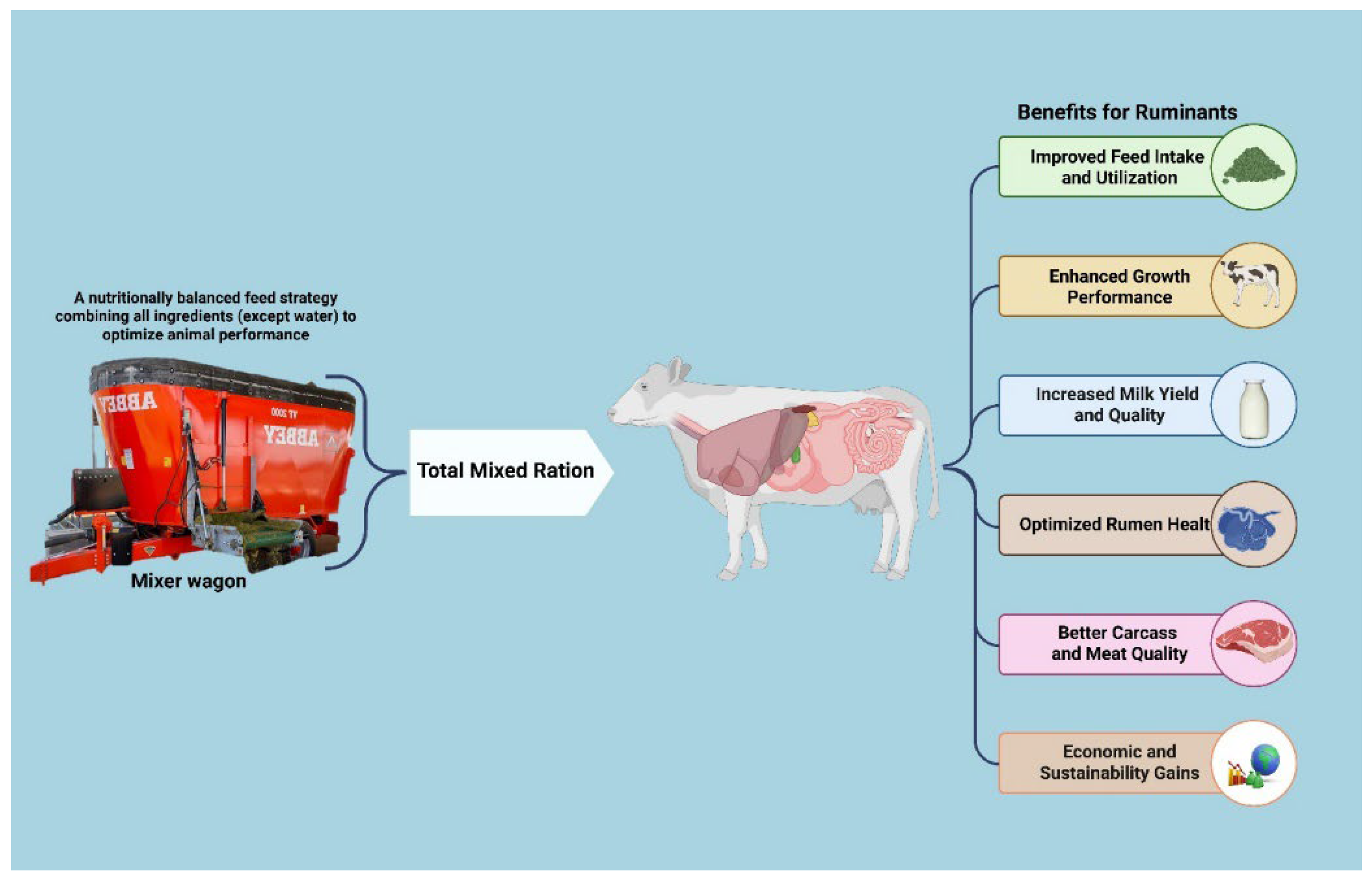
Figure 2.
The typical composition of TMR for ruminants includes a balanced mix of forage, concentrates, and additives, tailored to meet the specific nutritional needs of the animals. Note that the ratios may vary slightly from species to species, depending on the selection and availability of forages and concentrates, which affect their economic viability.
Figure 2.
The typical composition of TMR for ruminants includes a balanced mix of forage, concentrates, and additives, tailored to meet the specific nutritional needs of the animals. Note that the ratios may vary slightly from species to species, depending on the selection and availability of forages and concentrates, which affect their economic viability.
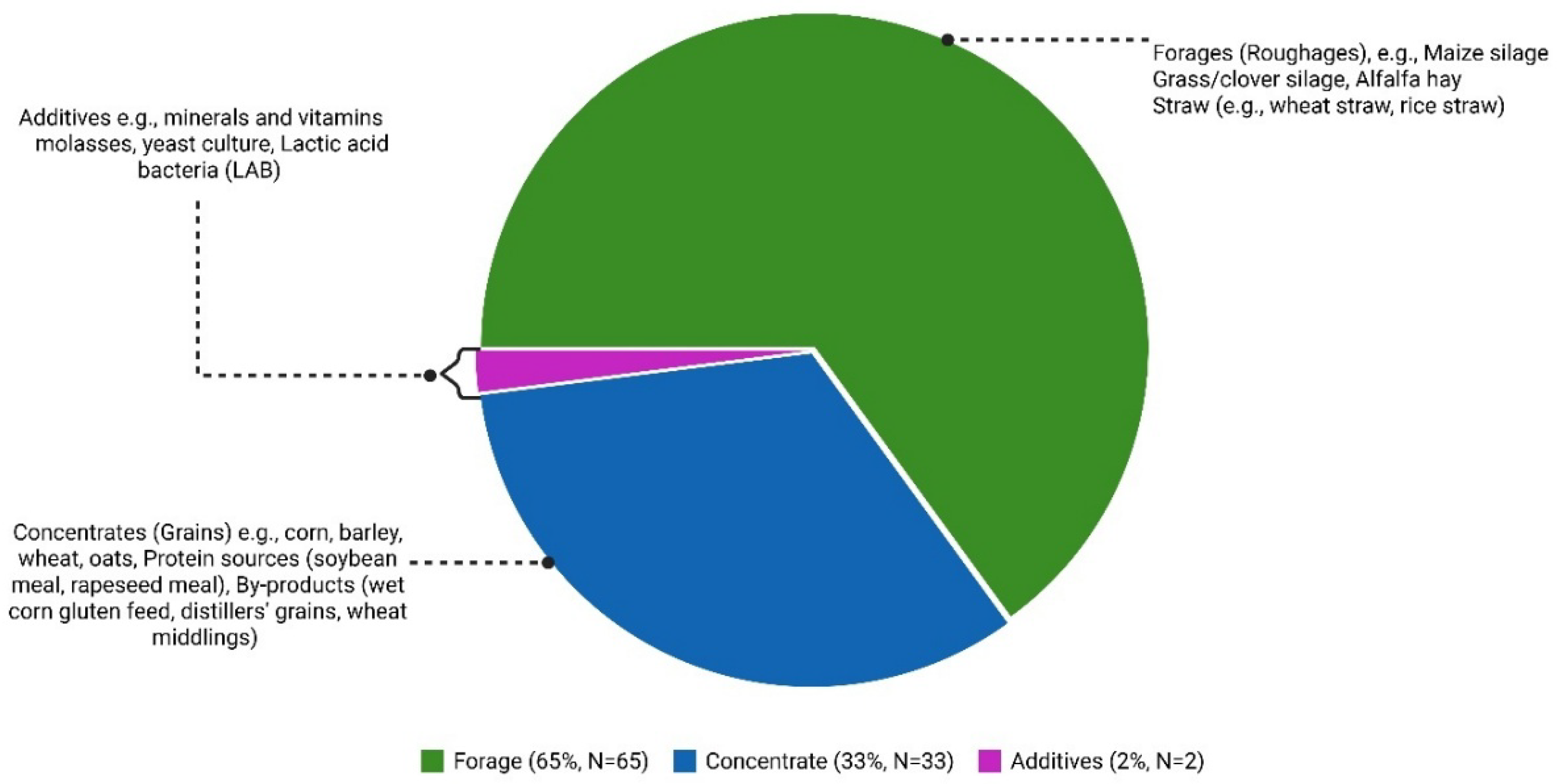
Figure 3.
Key Advantages of TMR in Ruminants: Promoting higher feed intake, milk yield, and growth performance, while stabilizing rumen health and improving nutrient digestibility.
Figure 3.
Key Advantages of TMR in Ruminants: Promoting higher feed intake, milk yield, and growth performance, while stabilizing rumen health and improving nutrient digestibility.
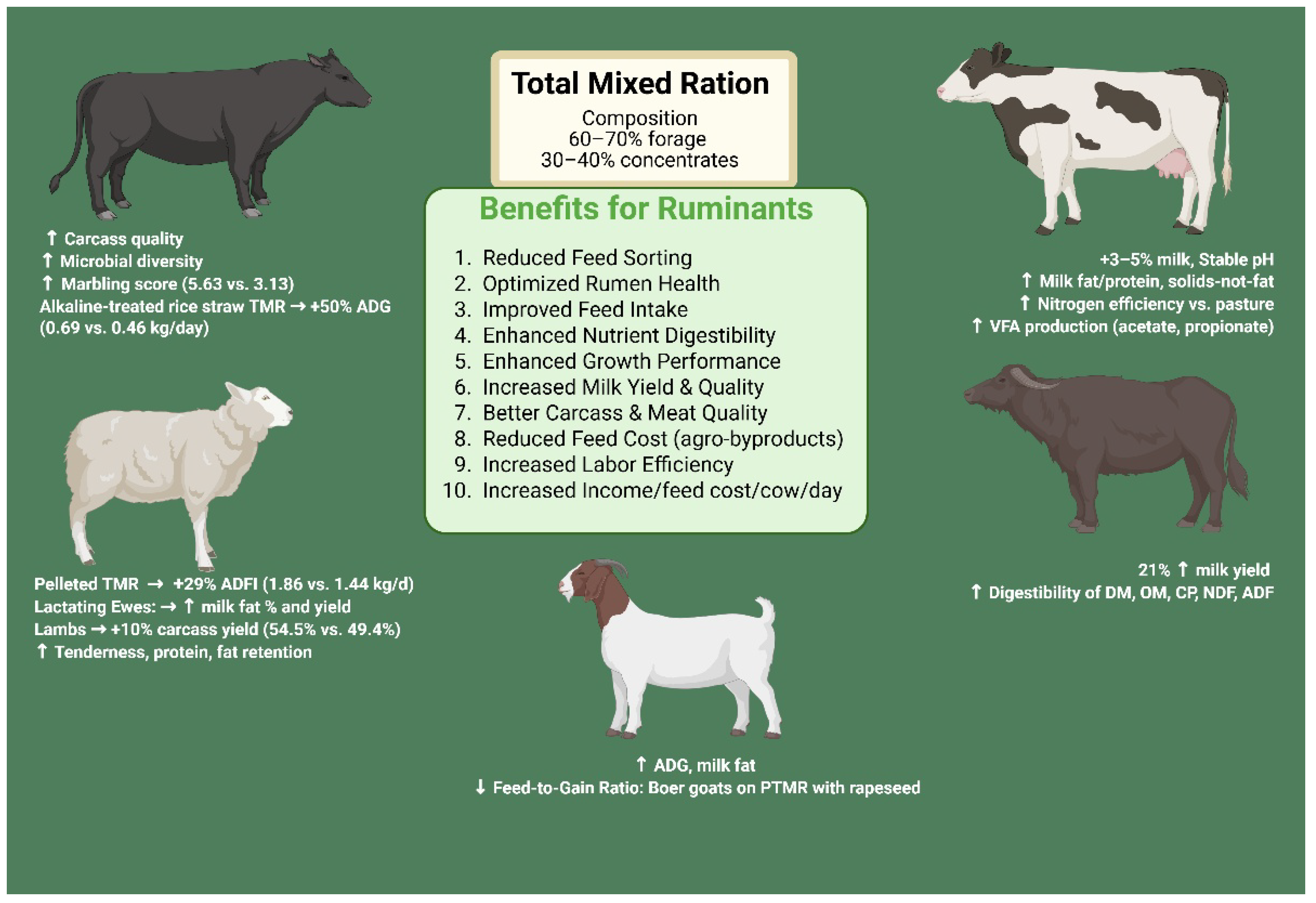
Figure 4.
Some challenges of feeding total mixed ration to ruminants and potential solutions.
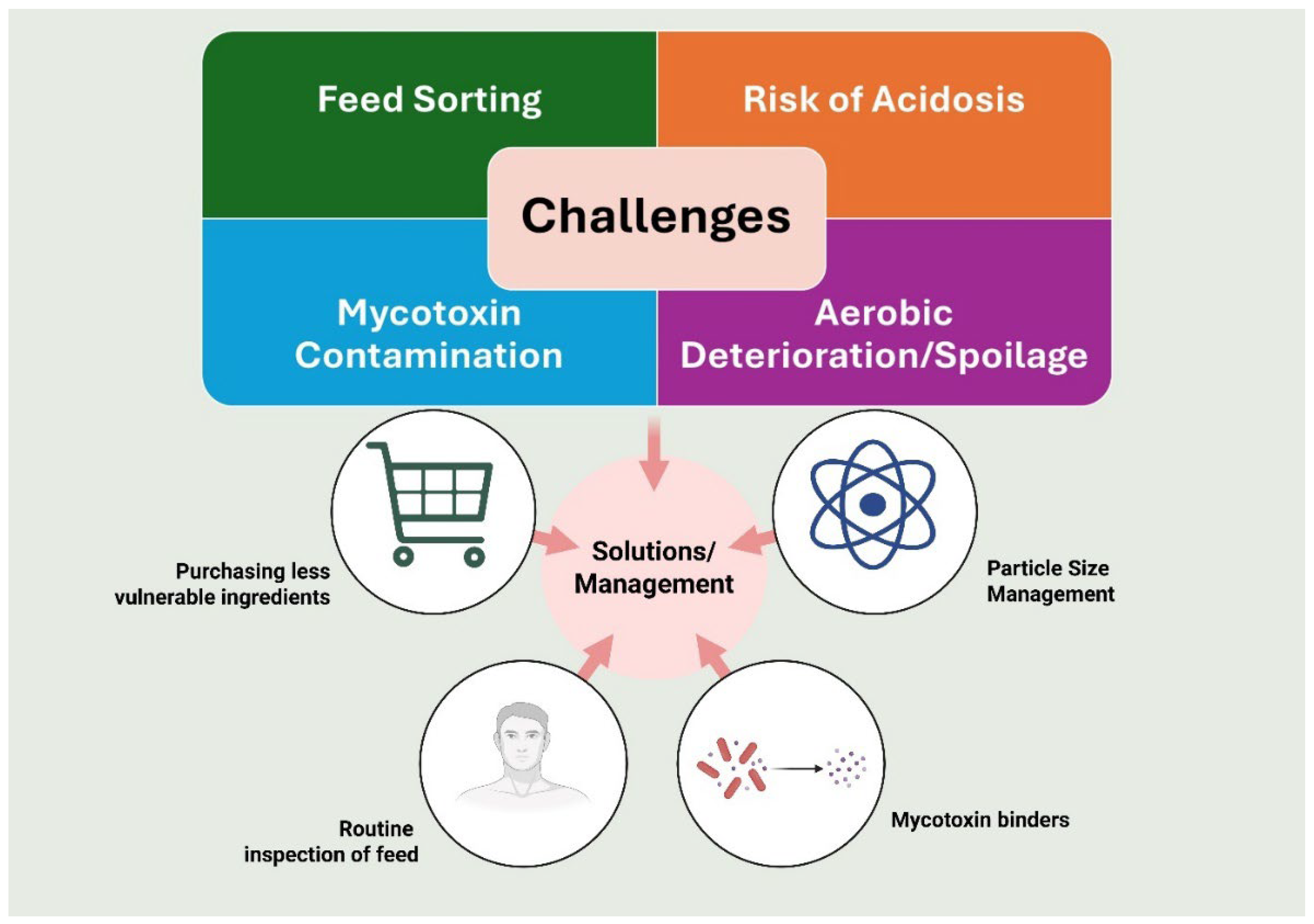

Table 1.
Effects of Total Mixed Ration on Rumen Fermentation (pH, VFA, Microbial Diversity).
| Species/Breed | TMR Type/Modification | Summary of results | Reference |
| Holstein calves | WPCS-based TMR (CTMR) | Higher rumen pH, total VFA, and propionate vs. CSCS (15% WPCS) | [56] |
| Crossbred lambs | Pelleted TMR (PTMR) | Higher acetate (49.8 vs. 45.7 mmol/L), propionate (24.8 vs. 21.4 mmol/L) | [48] |
| Hu sheep lambs | High-grain pelleted TMR | Lower pH, Increased lactate, Reduced Fibrobacteres | [27] |
| Mixed ruminal microbes | TMR + ryegrass pasture | ↑ Butyrate/valerate, ↓ Methane, ↑ Microbial biomass N | [57] |
| Holstein dairy cows | TMR + FF | Stable pH/VFA; ↓ N-NH3 in 50% FF | [58] |
| Red Chittagong Cows | Maize stover-based TMR | ↑ TVFA/NH3-N; stable rumen pH | [16] |
| Dairy cows (in vitro) | Varied TMR compositions | CP fermentation: 25–60%; CPM synthesis: 677–1778 mg/day | [59] |
| Red Chittagong cows | Maize stover-based TMR | ↑ TVFA and NH3-N | [16] |
| Buffalo (in vitro) | HFA-supplemented TMR | ↑ VFAs, ↓ methane (Shatavari @ 3% most effective) | [60] |
| Dairy cows (in vitro) | 100% TMR (69:31 forage:concentrate) | ↑ Total VFA (+16.6 mmol/L), ↑ Acetate:propionate ratio | [33] |
| German Holstein cows | Pasture transition (from TMR to pasture) | Lower pH in the pasture group (SARA risk in wk 9–10). No adverse LPS effects. |
[11] |
| Holstein-Zebu steers | Fermented TMR (FTMR; pH 3.5) | Stable ruminal pH despite low TMR pH. No acidosis observed. | [61] |
| Angus beef cattle | High-concentrate TMR | Significantly decreased rumen pH | [18] |
| Wethers (Sheep) | Pelleted TMR + 1% yeast culture | Higher mean pH, reduced time below pH 5.8. | [24] |
| Simmental bulls | Multi-silage TMR (MS) | Improved rumen pH stability linked to higher VFA production. | [5] |
| German Holstein cows | Pasture transition | ↓ Acetate (C2%), ↑ butyrate (C4%), ↓ C2/C3 ratio | [11] |
| Cattle (Bulls) | 60:40 Roughage:Concentrate | Highest TVFA production (optimal fermentation) | [62] |
| Holstein-Zebu steers | FTMR (pH 3.5) | ↑ Acetic/butyric acid; ↓ propionate. | [61] |
| Crossbred lambs | Pelleted TMR (PTMR) | ↑ Acetate (49.8 vs. 45.7 mmol/L) and propionate (24.8 vs. 21.4 mmol/L). | [48] |
| Wethers (Sheep) | Pelleted TMR + 1% yeast | ↑ Total VFA, propionate, and n-butyrate. | [24] |
| Simmental bulls | Multi-silage TMR (MS) | ↑ TVFA (62.49 vs. 56.09 mmol/L) and acetate. | [63] |
| German Holstein cows | Pasture transition | ↓ Rumen papillae surface area (recovered by wk 10). | [11] |
| Angus beef cattle | High-concentrate TMR | ↑ Starch-degraders (Bacteroidota), ↓ fiber-degraders (Ruminococcus). | [18] |
| Crossbred lambs | Pelleted TMR (PTMR) | ↑ Prevotellaceae (rumen), ↓ Ruminococcaceae. | [48] |
| Holstein cows | Fermented TMR (FTMR) | ↑ Unclassified_Bacteroidales, ↓ Candida (fungi). | [64] |
| Wethers (Sheep) | Pelleted TMR + 1% yeast | ↑ Fibrolytic bacteria (NK4A214, FD2005). | [24] |
| Yellow cattle (in vitro) | Fermented TMR (FTMR) | ↓ Methane production, ↓ Methanobrevibacter abundance. | [46] |
| Holstein cows | Fermented TMR (FTMR) | ↑ Methanobrevibacter (due to higher H2 availability). | [64] |
| Holstein (Dairy) | Pelleted TMR | Lower rumen pH (6.10 vs. 6.48), higher propionate | [65] |
| Cattle (Bulls) | 60:40 Roughage:Concentrate | Optimal TVFA, stable pH | [62] |
| Hanwoo Heifers | Italian Ryegrass TMR | Increased propionate, enriched Ruminococcus bromii | [66] |
| Holstein dairy cows | Grass silage + concentrate + hay | Higher early GP (2–4 h) with particle-associated inocula (PAL). Declined later. | [67] |
| Brown Swiss cows | TMR + Saccharomyces cerevisiae (CE/LC) | CE improved asymptotic GP more than LC; low/intermediate doses are most effective. | [68] |
| Suffolk sheep | Fermented TMR (FTMR) | Higher GP due to enhanced microbial activity from lactic acid fermentation. | [44] |
| Hanwoo steers | TMR with fermented feed (TMRF) | Improved GP linked to higher acetate/propionate production. | [13] |
| Holstein cows | TMR with varying particle sizes (5.5–25 mm) | Smaller particles ↑ SCFA in dorsal rumen; ↓ acetate:propionate ratio. | [69] |
| Suffolk sheep | Fermented TMR (FTMR) | ↑ Propionate (392.4 mmol/mol), ↓ butyrate (86.6 mmol/mol). | [30] |
| Nellore bulls | TMR with pefNDF | Optimal SCFA at 20.5 g pefNDF/kg DM; higher fiber ↑ butyrate. | [70] |
| Holstein steers | TMR vs. separate feeding | Higher total VFA and propionate at 1.5 h post-feeding. | [9] |
| Holstein cows | TMR (5.5–25 mm particle size) | 5.5 mm: ↓ rumen pH; 11 mm: maintained pH and ↑ protozoa. | [69] |
| Montbéliarde cattle | TMR (high concentrate) | Lower rumen pH (5.58 vs. 5.87 in control), higher acidosis risk. | [17] |
| Suffolk sheep | FTMR in varying pH media | Lower pH (5.62–5.66) ↓ CH4 and ↑ propionate. | [44] |
| Nellore steers | High-concentrate TMR | Faster microbial adaptation in preconditioned cattle. | [71] |
| TMR = total mixed ration, WPCS = whole-plant corn silage, CTMR = corn silage-based TMR, CSCS = corn silage-concentrate starter, VFA = volatile fatty acids, PTMR = pelleted TMR, ↑ = increased, ↓ = decreased, mmol/L = millimoles per liter, pH = potential of hydrogen | |||
Table 2.
Effects of Total Mixed Ration on Nutrient Digestibility (DM, OM, CP, NDF, ADF).
| Species/Breed | TMR Type/Modification | Summary of results | Reference |
| Holstein calves | WPCS-based TMR (CTMR) | Lower in vitro DM/CP/NDF digestibility vs. starter (CONS) | [56] |
| Karakul sheep | 40% SS-AF silage TMR | Higher DM, CP, and NDF digestibility | [5] |
| Fattening lambs | Pelleted TMR + LY | Increased DM (38 g/kg), OM (41 g/kg), and NDF (193 g/kg) digestibility | [72] |
| Comisana lambs | WM-based TMR | Higher aNDF/ADF digestibility No difference in DM/OM/CP |
[73] |
| Red Chittagong cows | Maize stover-based TMR | ↑ DM/CP/NDF digestibility | [16] |
| Dorper lambs | LB-inoculated PH-TMR | Higher DM intake and nutrient digestibility vs. untreated PH-TMR | [74] |
| Dairy ewes | Wheat middlings-based TMR | ↑ NDF digestibility | [73] |
| Dorper lambs | Cactus pear + cottonseed cake | ↑ DMD, OMD, EED in 20–30% cottonseed TMR ↓ Rumination time |
[7] |
| Crossbred cows | FTMR with 25% peNDF | Improved nutrient digestibility (CP, NDF, ADF) | [75] |
| Red Chittagong Cows | Maize stover-based TMR | ↑ Digestibility of DM, CP, OM | [16] |
| Korean native goats | TMR with varying peNDF | No difference in DM, CF, or other nutrient digestibility | [76] |
| Dairy cows (in vitro) | 16 TMR formulations | OM fermentation: 35–47%; NDF fermentation: 3–28% | [59] |
| Buffaloes | TMR vs. conventional | ↑ DM, OM, NDF digestibility | [77] |
| Holstein dairy cows | TMR + FF | ↑ Nitrogen efficiency in 50% FF ↓ urinary N excretion |
[58] |
| Korean native goats | TMR with varying peNDF | No difference in Nitrogen balance | [76] |
| Holstein-Zebu steers | FTMR (pH 3.5) | ↑ Crude protein digestibility ↓ fat digestibility in silage-TMR. |
[61] |
| Angus beef cattle | High-concentrate TMR | ↓ DM, CP, and NDF digestibility | [18] |
| Yellow cattle (in vitro) | Fermented TMR (FTMR) | ↓ NDF/ADF; ↑ lactic acid and soluble carbohydrates. | [46] |
| Simmental bulls | Multi-silage TMR (MS) | Improved fiber degradation linked to ↑ Prevotella-1. | [63] |
| Murrah buffaloes | TMR (maize silage:concentrate ratios) | Highest DMI (14.35 kg/d) at 50:50 ratio; ME content ↓ with ↑ silage. | [78] |
| Hanwoo steers | TMR with fermented feed (TMRF) | Higher DM disappearance (3–12 h) and weight gain (308 kg vs. 284 kg control). | [13] |
| Suffolk sheep | Fermented TMR (FTMR) | ↑ CP, EE, ADF, and GE digestibility vs. non-fermented TMR. | [30] |
| Montbéliarde cattle | TMR (90% concentrate) | No difference in DMI or digestibility vs. separate feeding. | [17] |
| Nellore bulls | TMR with pefNDF | Optimal fiber digestion at 20.5 g pefNDF/kg DM. | [70] |
| TMR = total mixed ration, DM = dry matter, OM = organic matter, CP = crude protein, NDF = neutral detergent fiber, ADF = acid detergent fiber, WPCS = whole-plant corn silage, CTMR = corn silage-based TMR, CONS = conventional starter, SS-AF = sweet sorghum-alfalfa, LY = live yeast, WM = wheat middlings, aNDF = amylase-treated NDF, LB = lactic acid bacteria, PH-TMR = pineapple husk TMR, DMD = dry matter digestibility, OMD = organic matter digestibility, EED = energy efficiency of digestion; g/kg = grams per kilogram, ↑ = increased, ↓ = decreased | |||
Table 3.
Effects of Total Mixed Ration on Growth Performance (BW, ADG, DMI, Feed Efficiency).
| Species/Breed | TMR Type/Modification | Summary of results | Reference |
| Holstein dairy calves | WPCS-based TMR (CTMR) | No difference in BW, ADG, or feed efficiency vs. starter (CONS) | [56] |
| Karakul sheep | 40% SS-AF silage TMR | Highest BW, ADG, and DMI | [5] |
| Fattening lambs | Pelleted TMR + LY (0.8 g/kg) | 11% higher ADG (+36 g/d) | [72] |
| Jersey cows | 60% grass hay + 40% concentrate | Higher DMI (12.82 vs. 10.55 kg/day; ↓ FCR (1.36 vs. 1.72) | [83] |
| Red Chittagong cows | Maize stover-based TMR (50:50) | Higher DMI in block form (T1) vs. mash (T2) | [16] |
| Holstein cows | MS or IRS TMR + grazing | Night grazing ↑ grass intake (8.53 vs. 5.65 kg DM/d) | [84] |
| Finnish Ayrshire cows | Grass silage + concentrate (FF1 vs. FF5) | FF1 ↑ DMI (20.9 vs. 19.9 kg/d) in multiparous cows | [85] |
| Holstein-Friesian cows | High-starch (27.7% DM) TMR | Starch content ↑ DMI and milk yield | [86] |
| Holstein dairy cows | 100% TMR vs. TMR + fresh forage (FF) | No DMI reduction with ≤29% FF; 8% decrease at 47% FF | [58] |
| Red Chittagong Cows | Maize stover-based TMR (50:50) | Higher DMI vs. conventional feeding | [16] |
| Korean native goats | TMR with varying peNDF (grinding speeds) | No DMI differences despite reduced peNDF | [76] |
| Crossbred lambs | Pelleted TMR (PTMR) | Higher ADG (341 vs. 265 g/d) and ADFI (1.86 vs. 1.44 kg/d) | [48] |
| Comisana lambs | Wheat middlings (WM)-based TMR | Higher final BW (23.5 vs. 21.9 kg) and daily gain (199 vs. 174 g/d) | [73] |
| Hu sheep lambs | High-grain pelleted TMR (70% concentrate) | No ADG difference vs. high-grain non-pelleted; lower rumen pH | [27] |
| Aberdeen Angus cattle | 60% grass silage + barley (MC TMR) | Highest carcass gain (967 g/d); Best feed conversion (11.1 kg DM/kg gain) | [34] |
| Crossbred lambs | FTMR with varying oat/alfalfa ratios | AH-300: Higher DMI, ADG, and total weight gain vs. CK and AH-400 | [45] |
| Dorper lambs | Cactus pear + cottonseed cake (20–30%) | No effect on WG/ADG; all treatments met target ADG (200 g/day) | [7] |
| Beef steers | Hedge lucerne/leucaena TMR | Higher ADG and FCR vs. control (fresh grass + concentrate) | [87] |
| Dairy cattle (fattening) | Whole crop rice TMR | Higher BW and ADG in mid/late fattening stages | [88] |
| Goats (barn-fed) | TMR vs. mountainous pasture | ADG doubled in the TMR group | [89] |
| Sheep | Pelleted vs. unpelleted TMR | Higher feed intake and ADG with pelleted TMR | [46] |
| Crossbred lambs | Pelleted TMR (PTMR) | ↑ ADG (341 vs. 265 g/d) and carcass yield (54.5% vs. 49.4%). | [48] |
| Holstein-Zebu steers | Grass silage-TMR (STMR) | ↑ Early-phase ADG; better FCR in FTMR later. | [61] |
| Simmental bulls | Multi-silage TMR (MS) | ↑ ADG (1.56 vs. 1.30 kg/day); ↓ FCR (10.96 vs. 12.36). | [63] |
| Angus beef cattle | High-concentrate TMR | ↑ DMI but no improvement in ADG or feed efficiency. | [18] |
| Hanwoo Steers | T70 (70:30 forage:concentrate) | Compensatory growth in late fattening stage; slower initial growth | [66] |
| Hanwoo Steers | Fermented TMR | Higher DMI (7.17 kg) Increased BW (615.20 kg), improved ADG (0.56 kg) |
[90] |
| Yak | High-energy TMR | Higher ADG (0.87 kg/day vs. -0.17 kg/day in grazing) | [6] |
| Karakul Sheep | 40%SS-60%AF silage TMR | Higher BW, ADG, and DMI (P < 0.05) | [91] |
| Naemi Lambs | TMR + alfalfa hay (300 g/3 days) | Increased BW and feed conversion ratio | [10] |
| Boer Goats | TMR + 7.5% intact rapeseed | Reduced feed-to-gain ratio (improved efficiency) | [42] |
| Sindhi Crossbred | Alkaline-treated straw TMR | Higher ADG (0.69 vs. 0.46 kg/day) & BW (278.8 vs. 258.2 kg) | [14] |
| Dorper Lambs | Creep feed (18% CP TMR) | Higher weight gain (22.17 vs. 17.83 kg pre-weaning) | [22] |
| Hanwoo Steers | TMR + Medicinal Plants (30g/kg) | Improved ADG & feed efficiency | [25] |
| Simmental Heifers | TMR vs. Free choice | No difference in ADG | [19] |
| Holstein (Dairy) | pTMR | Balanced nutrient intake, reduced purchased feeds | [92] |
| Hanwoo Heifers | Italian Ryegrass TMR | No difference in DMI/FCR; improved nitrogen efficiency | [66] |
| Dairy cows | Apple pomace TMR | Increased LWG | [15] |
| Sheep | TMR blocks vs. mash | Higher B:C ratio in TMR blocks | [93] |
| Hanwoo steers | TMRF (fermented feed) | ↑ Weight gain (308 kg vs. 284 kg) and feed efficiency (0.16 vs. 0.12). | [13] |
| Holstein-Friesian | TMR (maize silage + concentrate) | ↑ BW gain (0.54 kg/d vs. loss in control). | [94] |
| BW = body weight, ADG = average daily gain, DMI = dry matter intake, TMR = total mixed ration, WPCS = whole-plant corn silage, CONS = conventional starter, SS-AF = sweet sorghum-alfalfa, LY = live yeast, ADFI = average daily feed intake, FTMR = fermented total mixed ration, CK = control, WG = weight gain, FCR = feed conversion ratio. < = less than, kg = kilograms, g/d = grams per day, kg/d = kilograms per day, g/kg = grams per kilogram, DM = dry matter. | |||
Table 4.
Effects of Total Mixed Ration on Milk Yield and Composition.
| Species/Breed | TMR Type/Intervention | Summary of results | Reference |
| Lactating Holstein cows | Hay-based TMR (DM-adjusted) | Increased milk yield (26.99 → 27.29 kg/d) | [23] |
| Jersey cows | 60% grass hay + 40% concentrate | ↑ Milk yield (9.57 vs. 6.23 kg/day | [83] |
| Red Chittagong cows | Maize stover-based TMR | ↑ Milk yield (T1: 3.6 L/d; T2: 3.49 L/d vs. T0: 3.35 L/d) | [16] |
| Holstein cows | TMR vs. separate feeding | TMR ↑ milk yield (34.4 vs. 32.7 kg/d in R2X/R4X) | [96] |
| Finnish Ayrshire cows | Once vs. 5x daily feeding | No difference (32.8 kg/d ECM FF1 vs. 32.5 kg/d FF5) | [85] |
| Jersey cows | 60% grass hay + 40% concentrate | No difference in fat %; No difference in protein % | [83] |
| Red Chittagong cows | Maize stover-based TMR | ↑ Fat % in T1/T2 | [16] |
| Holstein cows | TMR vs. separate feeding | Separate feeding ↓ fat % (2.14-2.31% vs. 3.31%) | [96] |
| Dairy ewes | Wheat middlings-based TMR | ↑ Fat % and yield | [73] |
| Holstein (Dairy) | Confinement TMR | Highest yield (10,000 kg/cow) | [92] |
| Holstein (Dairy) | Pasture + Concentrate (PC) | Lowest yield (7,500 kg/cow) | [92] |
| Holstein (Dairy) | Full TMR (confinement) | 38.1 kg/day > pTMR (32.0 kg/day) > PC (28.5 kg/day) | [12] |
| Danish Black/White | Multi-group TMR | Higher yield at high feed levels vs. single-group TMR | [97] |
| Dairy cows | Apple pomace TMR | Increased milk yield | [15] |
| Holstein (Dairy) | Pelleted TMR | Higher milk protein (3.38% vs. 3.16%), lower fat | [65] |
| Holstein-Friesian | TMR (maize silage + concentrate) | ↑ Milk yield (29.5 kg/d vs. 21.1 kg/d) | [94] |
| Crossbred cows | FTMR with 25% peNDF | ↑ Milk fat % due to ↑ acetate | [75] |
| Aosta Red Pied cows | TMR vs. separate feeding | No difference in protein % | [98] |
| Holstein cows | TMR + night grazing | ↑ PUFA (CLA, VA, ALA) in milk | [99] |
| Holstein dairy cows | 100% TMR vs. TMR + FF | 8.5% higher yield in 100% TMR; ↑ UFA in 50% FF | [58] |
| Red Chittagong Cows | Maize stover-based TMR | Higher milk yield, fat, and SNF vs. control | [16] |
| Holstein cows | Cracked cottonseed in FTMR | ↑ C18:2 (linoleic acid) in milk | [100] |
| Dairy cows | Pasture vs. TMR (maize silage + concentrates) | TMR: 33% higher milk yield; No difference in fat/SCC | [101] |
| Buffaloes | Brewers’ grain + rice straw TMR | Higher milk yield at 1.2% supplement No difference in composition |
[102] |
| Dairy cows | Apple pomace TMR | Increased milk yield and protein; reduced lactose | [15] |
| TMR = total mixed ration, DM = dry matter, SCC = somatic cell counts; kg/d = kilograms per day, % = percent | |||
Table 5.
Effects of Total Mixed Ration on Carcass Traits and Meat Quality.
| Species/Breed | TMR Type/Modification | Summary of results | Reference |
| Beef steers | Hedge lucerne TMR | No difference in dressing %; Higher chilled carcass weight | [87] |
| Aberdeen Angus cattle | MC TMR (60% grass silage) | Best carcass gain (967 g/d) and conformation | [34] |
| Beef cattle | Whole crop rice TMR | Higher marbling score; No difference in carcass weight/rib eye area | [88] |
| Karakul sheep | 40% SS-AF silage TMR | ↑ Carcass weight, subcutaneous fat; Improved WHC, CP, EE, and shear force | [91] |
| Crossbred lambs | Pelleted TMR (PTMR) | Higher carcass yield (54.5% vs. 49.4%) | [48] |
| Comisana lambs | WM-based TMR | Higher cold-carcass dressing (10.5 vs. 9.7 kg) | [73] |
| Crossbred lambs | FTMR (AH-300) | Higher backfat thickness, intramuscular fat; Lower shear force | [45] |
| Hanwoo Steers | T50 (50:50 forage:concentrate) | Comparable carcass weight to control; higher IMF | [66] |
| Hanwoo Steers | FTMR | Higher marbling score (5.63 vs. 3.13), fat thickness (13.25 mm) | [90] |
| Yak | High-energy TMR | Increased carcass weight (106.43%), dressing percentage (57.52%) | [6] |
| Karakul Sheep | 40%SS-60%AF silage TMR | Higher carcass weight and subcutaneous fat thickness. | [91] |
| Beef Cattle | TMR (pre-mixed) | Higher carcass weight (279.5 kg vs. 268.6 kg in control) | [29] |
| Hanwoo Steers | FTMR | Improved tenderness, juiciness, crude fat (18.39%); no pH/cooking loss differences | [90] |
| Yak | High-energy TMR | Improved tenderness (↓ shear force), reduced cooking loss (↓ 7.28%) | [6] |
| Karakul Sheep | 40%SS-60%AF silage TMR | Improved WHC, CP, EE; reduced shear force | [91] |
| Naemi Lambs | TMR + alfalfa hay | Improved meat color (L, a, b*); reduced shear force | [10] |
| Beef Cattle (Retinta) | Maize silage TMR | Higher PUFA (18.8% vs. 14.3%) and n-3 PUFA (0.47% vs. 0.35%) | [20] |
| Boer Goats | TMR + 7.5% intact rapeseed | ↑ Linolenic acid, eicosenoic acid; ↓ palmitic acid | [42] |
| Beef Cattle | High-concentrate TMR | Higher 18:1, lower 18:3; increased n-6/n-3 ratio (3.83 vs. 2.72) | [29] |
| Hanwoo Steers | TMR + Medicinal Plants | Improved meat quality grade | [25] |
| Simmental Heifers | TMR | No difference in meat tenderness | [19] |
| TMR = total mixed ration, SS-AF = sweet sorghum-alfalfa, WHC = water-holding capacity, CP = crude protein, EE = ether extract, PTMR = pelleted TMR, WM = wheat middlings, FTMR = fermented total mixed ration, MC = mixed concentrate; ↑ = increased, % = percentage, kg = kilograms, g/d = grams per day; Carcass yield = (carcass weight / live weight) × 100; Cold-carcass dressing = carcass weight after chilling; Marbling score = intramuscular fat content grading; Shear force = tenderness measurement (lower values indicate more tender meat); Rib eye area = cross-sectional area of longissimus dorsi muscle; Dressing % = (hot carcass weight / live weight) × 100 | |||
Table 6.
Environmental Impact of Feeding Total Mixed Ration to Ruminants.
| Brown Swiss cows | TMR + Saccharomyces cerevisiae (CE) | CE (0.6 mg/g DM) increased CH4; LC had no effect. | [68] |
| Suffolk sheep | Fermented TMR (FTMR) | 25% lower CH4 compared to the control due to a propionate shift. | [30,44] |
| Holstein steers | High-concentrate TMR | Higher CH4 (138.5 L/day) vs. separate feeding (118.2 L/day). | [9] |
| Holstein-Friesian | TMR (maize silage + concentrate) | Higher CH4 (397 g/d) vs. grass diet (251 g/d). | [94] |
| Holstein (Dairy) | pTMR | Lower N leaching (21 kg/ha) but higher volatilization (98 kg/ha) | [92] |
| Holstein (Dairy) | Automatic TMR (AFS) | 67.5% lower CO2e emissions | [108] |
| Holstein (Dairy) | Pasture + Concentrate | Highest N volatilization (116 kg/ha) | [92] |
| Aberdeen Angus | MC TMR (60% grass silage) | Lowest GWP (19.1 kg CO2 eq/kg beef); best feed conversion | [34] |
| TMR = total mixed ration; CE = Saccharomyces cerevisiae; DM = dry matter; LC = low concentrate; FTMR = fermented total mixed ration; pTMR = precision total mixed ration; AFS = automatic feeding system; MC = medium concentrate; GWP = global warming potential. CH4 = methane; CO2 = carbon dioxide; CO2e = carbon dioxide equivalent; N = nitrogen; L/day = liters per day; g/d = grams per day; kg/ha = kilograms per hectare; kg CO2 eq/kg beef = kilograms of carbon dioxide equivalent per kilogram of beef. | |||
Table 7.
Mycotoxin Contamination in Total Mixed Ration for Ruminants.
| Species/Breed | TMR Type/Intervention | Summary of Results | Reference |
| Dairy cattle | Mycotoxin-contaminated TMR | 100% AFB1 (30 ng/g, exceeding EU limits); 100% OTA (48.5 ng/g); 50% ZON (700 ng/g) | [112] |
| Holstein cows | Grass silage-based TMR | No mycotoxins detected | [109] |
| Holstein cows | Maize silage-based TMR | 90% samples had DON/ZON | [109] |
| Dairy cows | Maize silage TMR | Fumonisins (74%), DON (42.5%), ZEN (39.1%) prevalent | [110] |
| Dairy cows | Fusarium-contaminated TMR | 58% samples contaminated (FBs 34%, DON 17%, ZEN 16%) | [111] |
| Dairy cattle (Pakistan) | Commercial TMR | 33.3% AFB1 positive (mean 21.97 ppb) | [113] |
| Holstein cows | Grass silage TMR | Higher enterobacteria in TMR vs silage; linked to SCC | [109] |
| Dairy cows | Maize/grass silage TMR | Highest endotoxins in TMR (293.44 EU/mL) | [114] |
| Holstein cows | Maize silage TMR | Enterobacteriaceae: 3.93 log10 CFU/g in maize silage | [114] |
| Dairy cows | Maize silage-based TMR | Maize silage = primary source of DON/ZEA; co-occurrence increases health risks | [26] |
| Aflatoxin Carryover to Milk | |||
| Holstein cows | AFB1-contaminated TMR + sequestering agent | 47% reduction in AFM1 with optimal SA inclusion | [115] |
| High-yielding cows | AFB1-contaminated TMR | 75% milk samples exceeded EU AFM1 limits (50 ng/L) | [116] |
| Dairy cows (Portugal) | Mycotoxin-contaminated TMR | RC/BEA/enniatins showed 2-10% carryover to milk | [110] |
| Mitigation Strategies | |||
| Holstein cows | Pelletized SA in TMR | Most effective (0.013 AFM1 excretion) | [115] |
| Dairy cows | Mycotoxin adsorbents in TMR | Reduced toxin bioavailability | [117] |
| Dairy cows | Inoculant additives in grass silage TMR | Improved ME content and milk yield | [109] |
| AFB1 = aflatoxin B1, OTA = ochratoxin A, ZON = zearalenone, DON = deoxynivalenol, ZEN = zearalenone, FBs = fumonisins, SCC = somatic cell count, SA = sequestering agent, AFM1 = aflatoxin M1, RC = roquefortine C, BEA = beauvericin, ME = metabolizable energy. ng/g = nanograms per gram, ppb = parts per billion, EU/mL = endotoxin units per milliliter, log10 CFU/g = logarithmic colony-forming units per gram, ng/L = nanograms per liter. | |||
Table 8.
Economic Impact of Feeding Total Mixed Ration to Ruminants.
| Species/Breed | TMR Type/Intervention | Findings vs. Control | Reference |
| Simmental bulls | Dry TMR (straw-based) | Higher feed costs but similar carcass yield vs. conventional TMR | [82] |
| Crossbred lambs | FTMR (AH-300) | Improved net income due to better feed efficiency | [45] |
| Dorper Lambs | 16% CP Growing TMR | Lowest feed cost/kg gain (RM 8.94 vs. RM 22.92 control) | [22] |
| Holstein (Dairy) | Confinement TMR | Highest net return ($738/cow) but greatest risk | [92] |
| Holstein (Dairy) | Automatic TMR (AFS) | 75% lower labor costs, 91% energy reduction | [108] |
| Hanwoo Steers | TMR + Medicinal Plants | Reduced feed costs, increased carcass price | [25] |
| Sindhi Crossbred | Alkaline-treated TMR | 17.75% higher economic benefit/kg gain | [14] |
| TMR = total mixed ration, FTMR = fermented total mixed ration, CP = crude protein, AFS = automated feeding system. RM = Malaysian ringgit, $ = US dollar, % = percent, kg = kilogram. | |||
Disclaimer/Publisher’s Note: The statements, opinions and data contained in all publications are solely those of the individual author(s) and contributor(s) and not of MDPI and/or the editor(s). MDPI and/or the editor(s) disclaim responsibility for any injury to people or property resulting from any ideas, methods, instructions or products referred to in the content. |
© 2025 by the authors. Licensee MDPI, Basel, Switzerland. This article is an open access article distributed under the terms and conditions of the Creative Commons Attribution (CC BY) license (http://creativecommons.org/licenses/by/4.0/).
Copyright: This open access article is published under a Creative Commons CC BY 4.0 license, which permit the free download, distribution, and reuse, provided that the author and preprint are cited in any reuse.