

Submitted:
10 July 2025
Posted:
17 July 2025
You are already at the latest version
Abstract
Emerging and persistent food contaminants continue to pose major threats to global food safety and public health. Over the past decade, rapid industrialization, climate change, and modern agricultural practices have contributed to the prevalence of both legacy contaminants, such as heavy metals, pesticides, and mycotoxins, and emerging pollutants, including microplastics, pharmaceutical residues, and endocrine-disrupting chemicals. This narrative review synthesizes evidence from peer-reviewed studies published between September 2014 and September 2024, retrieved from PubMed, Scopus, Web of Science, and Google Scholar. The review followed SANRA quality appraisal criteria, scoring 11 out of 12, indicating high methodological quality and consistency. Health risks and underlying molecular mechanisms, including oxidative stress, mitochondrial dysfunction, endocrine disruption, and DNA damage, are discussed. Documented health effects range from acute poisoning to cancer, neurodegenerative disorders, reproductive toxicity, and metabolic diseases. The review also explores advances in detection technologies, such as biosensors and omics tools, and highlights emerging mitigation strategies, including phytoremediation, bioadsorbents, and green processing methods. The findings emphasize the need for strengthened regulatory frameworks, global cooperation, and future research to address food safety challenges linked to both emerging and persistent contaminants.
Keywords:
Emerging contaminants
; persistent pollutants
; food safety
; toxicological risk
; mitigation
; microplastics
; pesticides
; pharmaceutical residues
; endocrine disruptors
1. Introduction
Food safety is increasingly threatened by industrialization, environmental degradation, climate change, and global population growth.[1] Both persistent contaminants—such as heavy metals, mycotoxins, and pesticides—and emerging contaminants, including microplastics, PFAS, and pharmaceutical residues, now pervade food systems, posing serious risks to health and security.[2] Persistent contaminants are known for their bioaccumulation and links to cancer, neurotoxicity, and endocrine disruption, while emerging pollutants often evade detection and regulation due to their novel properties and low-dose complexity.[3,4]
Contamination pathways include polluted environments, agrochemical use, poor post-harvest practices, and industrial processing.[5] Climate change exacerbates these risks by altering contaminant behavior and increasing foodborne toxin production. The health impacts extend beyond acute illness to chronic diseases—mediated through oxidative stress, immune disruption, mitochondrial dysfunction, and epigenetic changes—especially in vulnerable populations lacking regulatory and nutritional safeguards. [6,7] Despite progress in detection tools and food safety policies, major gaps remain in surveillance, exposure assessment, and risk mitigation. A coordinated, multidisciplinary approach is needed to address the growing complexity of food contamination.[8] This review synthesizes the sources, mechanisms, health effects, and mitigation strategies of both persistent and emerging contaminants.
2. Methodology
This narrative review aimed to synthesize current evidence on emerging and persistent food contaminants, their health risks, and mitigation strategies. A comprehensive search of PubMed, Scopus, Web of Science, and Google Scholar was conducted for English-language publications dated between September 2014 and September 2024. The search utilized Boolean logic with targeted keywords, including “food contaminants,” “toxicology,” “emerging pollutants,” “pesticides,” “mycotoxins,” “microplastics,” “pharmaceutical residues,” “endocrine disruptors,” and “mitigation strategies.” Selection criteria focused on studies addressing contaminant sources, toxicity pathways, health outcomes, and control interventions relevant to food safety. Eligible sources included peer-reviewed original research, reviews, and gray literature or institutional reports with a focus on human or food-related environmental health. Articles lacking methodological rigor or relevance to food toxicology were excluded. Screening involved a two-step process: initial review of titles and abstracts followed by full-text evaluation. Key data were extracted into a structured matrix capturing contaminant type, route of entry into the food chain, toxicological mechanisms, associated health effects, and mitigation approaches. Due to the heterogeneity of data, findings were synthesized qualitatively and categorized thematically under major contaminant classes, health risks, and control strategies.
Although this was not a systematic review or meta-analysis, the process adhered to rigorous screening and appraisal standards, guided by the Scale for the Assessment of Narrative Review Articles (SANRA). This tool evaluates justification of topic relevance, clarity of objectives, search strategy, referencing, scientific reasoning, and data presentation. Each of the six SANRA criteria was rated from 0 (low quality) to 2 (high quality), with a maximum score of 12 [9]. This review achieved a score of 11, indicating high methodological quality and consistency (Figure 1).
3. Classification of Food Contaminants Based on Environmental Persistence and Detection Recency
Food contaminants can be broadly classified by their persistence, sources, and potential for human exposure. A widely accepted framework distinguishes between Persistent Contaminants and Emerging Contaminants, each with distinct characteristics in environmental behavior, bioaccumulation, and regulatory focus.[3,7] This classification is endorsed by major organizations, including the World Health Organization (WHO), Food and Agriculture Organization (FAO), Codex Alimentarius Commission, European Food Safety Authority (EFSA), and the United States Environmental Protection Agency (US EPA) (Table 1 & Figure 2).
Persistent Contaminants
Persistent food contaminants refer to long-established chemical hazards, known for their resistance to degradation, environmental stability, and capacity to bioaccumulate in the food chain [4]. These include heavy metals, organochlorine pesticides, and legacy industrial pollutants
Heavy metals such as lead, cadmium, mercury, and arsenic are among the most critical persistent contaminants due to their non-degradable nature and widespread occurrence stemming from both natural sources and anthropogenic activities.[10] These elements accumulate in the environment—soil, water, and biological tissues—over time. Lead contamination, largely from past industrial emissions and lead-based products, persists in the environment and is frequently found in food and water sources. It is notably neurotoxic, particularly in children, impairing cognitive and neurological development.[11] Cadmium, introduced through phosphate fertilizers and industrial waste, accumulates in leafy vegetables, cereals, and seafood, posing risks of kidney damage and bone demineralization.[12] Mercury, especially in its methylated form, bioaccumulates in aquatic organisms and threatens neurodevelopment in fetuses and young children. Arsenic, often leached from natural mineral deposits or used groundwater, is associated with carcinogenic and cardiovascular effects.[13] Other metals like chromium, nickel, and copper may become harmful at elevated levels, despite their roles as essential micronutrients.[14]
Pesticides are synthetic chemicals used to protect crops, yet many persist in the environment and remain as residues in food.[15] Organochlorine pesticides (OCPs) like DDT and aldrin, though banned in several countries, continue to contaminate agricultural products due to their chemical stability.[16] These compounds accumulate in adipose tissues and are linked to endocrine disruption, cancer, and neurotoxicity. Organophosphates (OPs) and carbamates, though less persistent, pose acute neurotoxic risks via cholinesterase inhibition, and are commonly found on fruits, vegetables, and grains.[17] Neonicotinoids, newer systemic insecticides, are moderately persistent and raise concerns regarding their potential neurotoxicity in humans and harm to pollinators. [18,19] Additionally, herbicides such as glyphosate and various fungicides contribute to ongoing residue contamination.[20]
Mycotoxins are naturally occurring toxins produced by certain fungi, especially in warm and humid climates, affecting crops both pre- and post-harvest.[21] These stable secondary metabolites often survive food processing, remaining in the final product. Aflatoxins, produced by Aspergillus species, are potent carcinogens and have been associated with liver cancer, acute toxicity, immune suppression, and impaired child growth.[21] Ochratoxin A, commonly found in cereals, coffee, and dried fruits, is nephrotoxic and possibly carcinogenic.[23] Fumonisins, mainly contaminating maize, have been linked to esophageal cancer and neural tube defects.[24] Other toxins like zearalenone and deoxynivalenol (DON) show estrogenic and immunotoxic effects. Mycotoxin prevalence is influenced by climatic conditions, crop variety, agricultural methods, and storage hygiene.[25]
Industrial pollutants contribute a diverse set of persistent contaminants in food systems. Polychlorinated biphenyls (PCBs), once used in electrical equipment, persist in sediments and accumulate in fish and animal fats, with links to endocrine disruption and cancer.[26,27] Dioxins and furans, generated during combustion and industrial processing, contaminate animal-based foods and are associated with reproductive, immune, and developmental toxicity.[28] Per- and polyfluoroalkyl substances (PFAS)—used in non-stick cookware, packaging, and industrial coatings—have recently gained concern for their bioaccumulative nature and links to immune dysfunction, metabolic disorders, and cancer.[29,30] Polycyclic aromatic hydrocarbons (PAHs), created during grilling and smoking of foods, are recognized for their mutagenic and carcinogenic properties.[31,32]
3.2. Emerging Contaminants
Emerging food contaminants are newly recognized or increasingly detected substances whose health implications and exposure pathways remain insufficiently characterized. Examples include micro- and nanoplastics, per- and polyfluoroalkyl substances (PFAS), pharmaceutical residues, and engineered nanomaterials [21].
Microplastics—plastic fragments under 5 mm—and their nanoscale counterparts (<100 nm) have become ubiquitous in the global food chain. As noted by EFSA, they originate from the degradation of larger plastics or are purposefully produced for use in packaging, cosmetics, and industrial applications.[33] These particles are now commonly detected in seafood, bottled water, honey, table salt, and even fruits and vegetables, entering the food chain through marine pollution, soil contamination, and atmospheric deposition.[34] Beyond their physical presence, they can adsorb hazardous compounds such as heavy metals and persistent organic pollutants, acting as carriers that heighten chemical exposure.[35] Research suggests micro- and nanoplastics induce oxidative stress, inflammation, cytotoxicity, and gut microbiome disruption in biological systems.[36] Nanoplastics, in particular, raise concern due to their ability to cross biological membranes and interact with cellular processes.[37] However, data from human studies remain sparse, and standardized analytical tools are still under development, leaving significant gaps in exposure assessment and risk evaluation.[38]
Residues of pharmaceuticals and personal care products—including antibiotics, hormones, analgesics, and antiseptics—are emerging as contaminants in food systems, primarily through wastewater discharge, agricultural runoff, and improper drug disposal.[39] These substances have been detected in meat, dairy, fish, and crops irrigated with contaminated water. Antibiotic residues are particularly concerning due to their role in promoting antimicrobial resistance, a recognized global health crisis.[40] Hormonal compounds from PPCPs may act as endocrine disruptors, with evidence linking chronic exposure to immune dysfunction, allergic reactions, and microbiome disturbances.[41]
EDCs encompass a wide array of chemicals that disrupt hormonal function, including bisphenol A (BPA), phthalates, DDT, PBDEs, and alkylphenols.[42] These compounds enter the food system through pesticide residues, migration from plastic packaging, and environmental accumulation in animal products.[43] Their health effects range from infertility and developmental disorders to obesity, diabetes, thyroid dysfunction, and neurodevelopmental delay.[44] Some EDCs, such as BPA, are also implicated in hormone-sensitive cancers like breast and prostate cancer.[45] Their low-dose and non-linear biological activity complicates risk assessment, especially in real-world scenarios involving exposure to multiple EDCs simultaneously.[46]
PFAS are a group of highly stable, synthetic compounds used in non-stick cookware, waterproof textiles, firefighting foams, and food packaging.[47] Their extreme environmental persistence and bioaccumulation in aquatic and agricultural systems have earned them the label “forever chemicals.” Exposure occurs through contaminated water, fish, and food-contact materials like fast-food wrappers.[48] Health effects include immune suppression, reduced vaccine response, thyroid disruption, increased cholesterol, and cancers of the kidney and testis.[49] Regulatory efforts are complicated by the vast number of PFAS compounds, many of which lack toxicological data.[50] Although some long-chain PFAS have been phased out, their short-chain alternatives may pose similar risks. [29]
Additional emerging threats include engineered nanomaterials (e.g., nanosilver, titanium dioxide), which are used in food additives and packaging and may interact with cells at the molecular level despite limited toxicological data. [51,52] Cyanotoxins, produced by harmful algal blooms intensified by climate change, contaminate water and seafood with potent neuro- and hepatotoxins. [53,54].
4. Chemical Structure, Persistence, and Physicochemical Properties
The environmental behavior, biological uptake, and toxicological impact of food contaminants are fundamentally governed by their chemical structure and physicochemical characteristics [55]. Persistent contaminants, in particular, are defined by their strong covalent bonds, low volatility, and high lipophilicity, which render them resistant to degradation and prone to accumulation in ecological and biological systems [56]. These features facilitate their persistence across environmental compartments and promote biomagnification through the food web. Heavy metals such as lead (Pb), cadmium (Cd), mercury (Hg), and arsenic (As) exemplify elemental or inorganic contaminants that are chemically stable and biologically non-degradable. Their persistence in soil and water systems is strongly influenced by speciation, which dictates solubility, adsorption behavior, and subsequent uptake by crops and livestock [57]. For instance, lead can accumulate in neural tissues and bone, while cadmium preferentially targets renal and skeletal systems. Arsenic, frequently present in groundwater used for irrigation, is notably associated with cardiovascular toxicity and carcinogenesis.
Similarly, organochlorine pesticides (OCPs) such as dichlorodiphenyltrichloroethane (DDT) and its metabolites contain halogenated aromatic rings that confer high chemical and photolytic stability [58]. These structures persist for decades after application has ceased and are often detected in fatty tissues of animals and humans. Although organophosphate pesticides degrade more readily due to the presence of labile phosphate ester bonds, their acute neurotoxicity—primarily via inhibition of acetylcholinesterase—remains a major health concern. Emerging contaminants, including per- and polyfluoroalkyl substances (PFAS), present novel challenges due to their distinctive fluorinated carbon chains. These structures impart exceptional chemical and thermal stability, as well as amphiphobic properties, enabling PFAS to resist hydrolysis, oxidation, and microbial degradation in environmental and biological matrices [59]. Their widespread use in food packaging and processing materials contributes to dietary exposure, while their bioaccumulative and endocrine-disrupting effects are increasingly documented.
Microplastics and nanoplastics, consisting of synthetic polymers such as polyethylene and polypropylene, demonstrate physical persistence and capacity for contaminant adsorption. These particles are increasingly detected in marine organisms, processed foods, and drinking water, raising concerns about their role as vectors for secondary contaminants including persistent organic pollutants and heavy metals [60]. Fundamental physicochemical parameters—including water solubility, vapor pressure, molecular size, and octanol-water partition coefficient (Kₒw)—further influence contaminant fate and toxicity [61]. Lipophilic compounds with high Kₒw values are particularly prone to bioaccumulate in adipose tissues, posing long-term exposure risks, especially for apex predators and human populations consuming animal-derived products.
5. Toxicokinetic and Bioaccumulation
Toxicokinetic encompasses the processes of absorption, distribution, metabolism, and excretion (ADME) of contaminants within biological systems, critically influencing their internal dose and potential toxicity [62]. The toxicokinetic profiles of food contaminants vary considerably, shaped by factors such as molecular size, polarity, metabolic pathways, and species-specific physiology. Typically, absorption occurs primarily through the gastrointestinal tract following ingestion of contaminated food [63]. Lipophilic compounds, including organochlorine pesticides (OCPs) and per- and polyfluoroalkyl substances (PFAS), are efficiently absorbed, subsequently entering systemic circulation and preferentially accumulating in adipose tissue, liver, and kidneys. In contrast, hydrophilic contaminants may demonstrate lower absorption rates but can localize in compartments such as blood plasma. Metabolic biotransformation plays a central role in modulating toxicity: Phase I reactions—oxidation, reduction, and hydrolysis—can either detoxify xenobiotics or bioactivate them into reactive intermediates, as seen with certain mycotoxins and pesticide metabolites [64]. Phase II conjugation typically enhances water solubility, facilitating elimination via renal or biliary routes. However, some persistent contaminants resist metabolic breakdown, resulting in extended biological half-lives [65].
Bioaccumulation describes the net accumulation of contaminants within organisms from all exposure pathways, governed by the balance between uptake and elimination rates [66]. Biomagnification, the process by which contaminant concentrations increase at successive trophic levels, is particularly pronounced for lipophilic and persistent compounds [67]. For instance, methylmercury formed in aquatic environments bioaccumulates in fish, thereby posing substantial health risks to human consumers. The toxicokinetic of emerging contaminants such as microplastics and nanoplastics remain less characterized but present unique challenges owing to their particulate nature, ability to translocate across biological barriers, and interactions with co-contaminants [68]. Similarly, PFAS display complex distribution and elimination dynamics, marked by prolonged biological half-lives in humans.

Table 1.
Classification and Characteristics of Persistent and Emerging Food Contaminants.
| Category | Contaminant Class | Examples | Primary Sources | Toxicological Effects | Persistence/Bioaccumulation |
| Persistent contaminants | Heavy Metals [10,11,14] | Lead (Pb), Cadmium (Cd), Mercury (Hg), Arsenic (As), Chromium, Nickel, Copper | Industrial emissions, fertilizers, mining, water contamination | Neurotoxicity, nephrotoxicity, carcinogenicity, developmental toxicity | Highly persistent, bioaccumulate in soils and food chains |
| Pesticides [16,18,19] | Organochlorines (DDT), Organophosphates, Carbamates, Neonicotinoids, Glyphosate | Agricultural application, residual soil contamination | Endocrine disruption, neurotoxicity, reproductive and developmental toxicity | Varies by type; OCPs highly persistent; OPs less persistent but acutely toxic | |
| Mycotoxins [22,24] | Aflatoxins, Ochratoxin A, Fumonisins, Zearalenone, Deoxynivalenol | Mold growth in cereals, nuts, stored grains | Hepatotoxicity, nephrotoxicity, immunosuppression, carcinogenicity | Stable during processing; bio accumulative in some cases | |
| Industrial Pollutants [29,30] | PCBs, Dioxins, Furans, PAHs, PFAS | Electrical waste, combustion, packaging, industrial effluents | Cancer, immune dysfunction, endocrine and reproductive toxicity | High environmental and biological persistence | |
| Emerging contaminants | Microplastics & Nano plastics [33,35,36] | Polyethylene, Polypropylene, Polystyrene | Breakdown of plastic waste, packaging, textiles | Inflammation, oxidative stress, gut microbiota disruption | Physically persistent, adsorb other pollutants, bio accumulative |
| Pharmaceutical & Personal Care Products (PPCPs) [40,41] | Antibiotics, Hormones, Analgesics, Antiseptics | Wastewater, veterinary use, improper disposal | Antimicrobial resistance, hormonal effects, allergic reactions | Low degradation in water; accumulation in livestock and crops | |
| Endocrine-Disrupting Chemicals (EDCs) [43,44,46] | Bisphenol A (BPA), Phthalates, DDT, PBDEs, Alkylphenols | Plastics, pesticides, cosmetics, detergents | Reproductive disorders, thyroid dysfunction, metabolic and neurodevelopmental effects | Lipophilic and persistent; low-dose potency | |
| PFAS [48,50] | PFOA, PFOS, Short-chain PFAS | Food packaging, cookware, water, firefighting foam | Immunotoxicity, cancer, endocrine disruption, developmental toxicity | “Forever chemicals”; bioaccumulate and resist degradation | |
| Other Emerging Contaminants | Engineered nanomaterials, Cyanotoxins, Masked mycotoxins | Additives, algal blooms, food processing | Cellular damage, hepatotoxicity, neurotoxicity | Incomplete toxicokinetic profiles; unknown persistence |
6. Sources and Pathways of Exposure
The contamination of food arises from multiple interconnected pathways, reflecting the complexity of today’s global food systems. Identifying these sources and understanding their routes of entry is essential for mitigating exposure and safeguarding public health [69] (Table 2 and Figure 3).
6.1. Agricultural Practices
Agriculture remains fundamental to food production but is a major source of chemical contamination. Extensive use of pesticides and herbicides to protect crops introduces residues that persist in soil and plant tissues, often reaching concentrations that pose chronic health risks [70]. Many pesticides are chemically stable to maintain effectiveness, contributing to environmental accumulation and bioaccumulation within food chains [36]. Legacy organochlorine pesticides such as DDT persist long after bans, while newer compounds, including neonicotinoids, raise ecological concerns [71]. Fertilizers—both synthetic and organic (e.g., sewage sludge and manure)—may introduce heavy metals such as cadmium, lead, and arsenic into soils, which are subsequently taken up by crops. Livestock farming introduces further complexity, as veterinary drugs including antibiotics and hormones may leave residues in meat, milk, and eggs if improperly managed, raising toxicity and antimicrobial resistance concerns [72]. Contaminated irrigation water—frequently sourced from rivers polluted by industrial effluents or untreated sewage—adds chemical and microbial hazards to crops. Postharvest handling and storage conditions also contribute through fungal contamination and mycotoxin production (notably aflatoxins and ochratoxin A), potent carcinogens and immunosuppressants [73]. Collectively, agricultural inputs and practices are critical contributors to chemical contamination in the food supply.
6.2. Industrial Discharges and Environmental Pollution
Industrialization has intensified environmental pollution, contaminating soil, water, and air, which serve as vectors for contaminants entering the food chain. Heavy metals such as mercury, lead, cadmium, and arsenic are released from mining, metal finishing, chemical manufacturing, and energy production, contaminating agricultural lands and aquatic ecosystems [74]. These metals are persistent, bioaccumulative, and neurotoxic, and increase cancer risk. Persistent organic pollutants (POPs), including polychlorinated biphenyls and dioxins, arise from industrial processes and waste incineration, entering food chains via contaminated soil and sediments [75]. Pharmaceutical residues and personal care products, emerging contaminants discharged from pharmaceutical manufacturing, hospitals, and urban wastewater systems, bioaccumulate in aquatic organisms, raising concerns about endocrine disruption and the propagation of antibiotic resistance genes [76]. Microplastics and nanoplastics—degraded plastic debris contaminating soils and waters—adsorb toxic chemicals and microbes, increasing risks when ingested through seafood and irrigated crops [77]. Atmospheric deposition disperses airborne pollutants across wide areas, contaminating lands and waters remote from pollution sources. Urban runoff and landfill leachate contribute hydrocarbons, heavy metals, and other toxicants, compounding exposure risks [78]. Industrial activities thus contribute a complex mixture of legacy and emerging contaminants to the food supply [79].
6.3. Food Packaging and Processing
Food processing and packaging further introduce contamination risks that affect food safety and quality. Plastic packaging materials contain additives such as phthalates, bisphenol A, and per- and polyfluoroalkyl substances (PFAS), which can migrate into food under heat, prolonged storage, or mechanical stress [80]. These compounds are persistent and exhibit endocrine-disrupting properties. Processing equipment constructed from metals may leach nickel, chromium, or lead, particularly with inadequate maintenance or hygiene [29]. Food additives and preservatives, while essential for shelf-life extension and safety, can generate harmful byproducts or interact with other contaminants to exacerbate toxicity. Cross-contamination during processing, especially in multi-product facilities, can introduce allergens or chemical residues into unintended foods, posing particular risks for sensitized individuals [81]. Thermal processing methods such as frying, smoking, and grilling reduce microbial loads but may produce carcinogens such as acrylamide and polycyclic aromatic hydrocarbons (PAHs) [82].
6.4. Climate Change and Ecological Disruption
Climate change is an increasingly important factor influencing food contamination by altering ecosystems, agricultural productivity, and contaminant dynamics [83]. Rising temperatures and changing humidity foster fungal proliferation and increased mycotoxin production in crops, elevating exposure to aflatoxins and related toxins with serious human health effects [84]. Altered pest distributions lead to increased pesticide application, potentially raising residue levels in foods. Water scarcity and reduced water quality due to droughts, floods, and contamination events compel use of suboptimal irrigation sources, facilitating contaminant transfer to crops [85]. Extreme weather events mobilize soil-bound pollutants, industrial wastes, and agrochemicals into agricultural fields and water bodies, increasing contamination risks [86]. Ecological disruptions and biodiversity loss impair natural pollutant degradation pathways and may modify bioaccumulation and biomagnification within food webs [87]. These changes jeopardize the safety of fish, wildlife, and plant-based food resources consumed by humans. Consequently, climate change acts as a multiplier of existing contamination challenges.
7. Human Exposure Routes
Humans are exposed to food contaminants through three primary routes—ingestion, inhalation, and dermal contact—each varying in relevance depending on the contaminant type and exposure context. These exposures often occur as a result of environmental contact with contaminated soil, water, air, or surfaces. Ingestion remains the most significant and direct route of exposure. Contaminated foodstuffs, whether plant-based or animal-derived, serve as the principal vehicles for introducing toxic substances into the gastrointestinal tract [88]. Chronic ingestion of low-dose contaminants, including heavy metals, pesticide residues, mycotoxins, and endocrine-disrupting chemicals, can lead to bioaccumulation and systemic toxicity. Infants and young children are particularly vulnerable due to their lower body weight, developing metabolic systems, and higher intake relative to body mass [89]. Drinking water contaminated with arsenic, lead, or fluoride further contributes to oral exposure, especially in low-resource settings [90].
Though less direct, inhalation constitutes a meaningful exposure pathway, particularly in occupational environments such as agriculture and food processing. Aerosols containing pesticide residues, microplastics, and airborne heavy metal particles may be inhaled during activities such as spraying, milling, or packaging [91]. Additionally, microplastics released from food packaging during heating or originating from environmental sources can become suspended in indoor air, leading to chronic inhalation exposures. Inhalation of contaminated dust is particularly relevant in regions with inadequate industrial emission controls or in households that use biomass fuel for cooking, where volatilization of food contaminants may occur (Figure 4) [92].
Dermal exposure arises when contaminants come into contact with the skin during food handling, agricultural work, or pesticide application. Although the skin generally functions as a barrier, certain lipophilic compounds—such as organophosphate pesticides and phthalates—can penetrate and be absorbed into systemic circulation [93]. Dermal absorption may also occur via transfer of contaminants present in personal care products (e.g., triclosan, parabens) during food preparation. While cumulative dermal exposures are generally lower than those from ingestion, repeated or occupational contact can still pose health risks [94].
7.1. Vulnerable Populations and Differential Exposure and Cumulative Exposure and Biomagnification
Certain populations experience heightened exposure or increased sensitivity to food contaminants due to physiological, behavioral, or socioeconomic factors. Children and infants show greater susceptibility to toxicants such as mycotoxins, lead, and bisphenol A (BPA) owing to their developmental sensitivity. Pregnant women face elevated risks from contaminants capable of disrupting endocrine function or crossing the placental barrier, including mercury and phthalates [95]. Occupational groups—farmers, factory workers, fishermen—may encounter elevated contaminant burdens through inhalation and dermal exposure routes [96]. Low-income populations often rely on food from contaminated sources and may have limited regulatory protections, compounding exposure risks [97].
Chronic exposure to multiple low-dose contaminants via diverse routes results in cumulative toxic effects [98]. Biomagnification, especially pronounced in aquatic food chains, leads to higher contaminant concentrations in predatory fish consumed by humans. Persistent organic pollutants and lipophilic toxins accumulate in adipose tissue and organs, prolonging toxicological effects [99].
7.2. Integrated Exposure Perspective
Combined or simultaneous exposure through multiple routes is common, particularly in urban settings where individuals may inhale polluted air, ingest contaminated food, and experience dermal contact with food packaging—all potentially occurring within a single meal context [100]. These exposure pathways may act additively or synergistically, underscoring the need for integrated multi-route risk assessment models and biomonitoring for accurate exposure evaluation. Complex interactions among routes—for example, inhaled contaminants cleared by mucociliary action and subsequently swallowed—further complicate exposure dynamics [101].
Beyond primary sources, several other pathways and contextual factors influence food contamination exposure. Globalized food supply chains facilitate the translocation of contaminated products across regions and countries, potentially transferring contaminants from areas with less stringent regulations to consumers worldwide [102]. This complexity complicates traceability and control efforts. Household and consumer behaviors, including food preparation methods such as washing, peeling, cooking, and storage, can substantially modify contaminant levels; for instance, peeling root vegetables may reduce pesticide residues, while certain cooking processes may generate or degrade contaminants. Occupational exposure in agriculture and food processing affects not only worker health but may also contribute to secondary contamination of food products [103].
Table 2.
Sources and Pathways of Exposure to Food Contaminants.
| Category | Source / Subcategory | Contaminant Types | Pathways | Health Implications |
| Agricultural Practices [70,71,72,73] | Pesticides and herbicides | Organochlorines, Organophosphates, Neonicotinoids | Crop residues, soil uptake | Neurotoxicity, endocrine disruption, carcinogenicity |
| Fertilizers and soil amendments | Cadmium, Lead, Arsenic | Soil → plant uptake → food | Renal damage, developmental toxicity | |
| Livestock inputs | Antibiotics, Hormones | Meat, milk, eggs | Antimicrobial resistance, hormonal imbalance | |
| Contaminated irrigation | Industrial effluents, sewage | Crops and vegetables | Multi-pathway toxicity | |
| Improper storage | Mycotoxins (Aflatoxins, Ochratoxin A) | Grains, nuts, cereals | Hepatotoxicity, immunosuppression, carcinogenesis | |
| Industrial Pollution [74,75,76,77,78,79] | Mining, smelting, waste incineration | Lead, Mercury, Cadmium, Arsenic | Soil, water, air → crops, aquatic organisms | Neurological, carcinogenic effects |
| POPs and industrial byproducts | PCBs, Dioxins, PAHs | Soil → food crops, fish | Endocrine disruption, immunotoxicity | |
| PPCPs from urban waste | Antibiotics, Hormones, Triclosan | Aquatic food, crops via irrigation | Antibiotic resistance, endocrine disruption | |
| Plastic pollution | Microplastics, Nano plastics | Water, seafood, airborne particles | Inflammation, oxidative stress | |
| Food Processing & Packaging [80,81,82] | Food contact materials | Phthalates, BPA, PFAS | Migration into food during storage or heating | Endocrine disruption, immune effects |
| Processing byproducts | Acrylamide, PAHs, Heavy metals | Frying, grilling, metal equipment | Carcinogenicity, neurotoxicity | |
| Additives and preservatives | Nitrates, Sulfites, Benzoates | Chemical interactions in processed food | Allergies, potential genotoxicity | |
| Cross-contamination | Allergens, chemical residues | Multi-product processing lines | Anaphylaxis, chronic illness | |
| Climate & Ecology [83,84,85,86,87] | Fungal proliferation | Mycotoxins | Contaminated crops | Liver cancer, stunted growth |
| Increased pesticide use | Modern agrochemicals | Crop residues | Bioaccumulation, ecological toxicity | |
| Contaminated irrigation | Floods, droughts, poor water quality | Crops and food animals | Gastrointestinal and systemic effects | |
| Biodiversity loss | Altered pollutant degradation | Food webs, aquatic systems | Elevated biomagnification | |
| Human Exposure Routes [88,89,90,91,92,93,94] | Ingestion | Food, water | Heavy metals, pesticides, EDCs, mycotoxins | Systemic toxicity, chronic illness |
| Inhalation | Dust, aerosols, indoor air | Microplastics, pesticides, heavy metals | Respiratory damage, mucosal uptake | |
| Dermal contact | Skin handling, contaminated surfaces | Organophosphates, phthalates | Local or systemic absorption | |
| Vulnerable Populations [95,96,97] | Infants and children | BPA, Lead, Mycotoxins | Diet, environment | Neurological damage, immune dysfunction |
| Pregnant women | Mercury, Phthalates | Fish, packaging | Fetal toxicity, endocrine effects | |
| Occupational groups | Farmers, food workers | Multiple (via air, skin) | Cumulative toxicity | |
| Low-income populations | Poor-quality foods | Multiple | Increased exposure, limited care access | |
| Additional Considerations [102,103] | Globalized trade | Imported products | Variable regulation | Transboundary contamination |
| Household behaviors | Cooking methods, storage | Acrylamide, PAHs, degradation products | Formation or reduction of contaminants | |
| Dietary choices | Fish, organic, processed foods | Metals, POPs, additives | Differential exposure |
Pb = Lead; Cd = Cadmium; Hg = Mercury; As = Arsenic; PCB = Polychlorinated biphenyls; PFAS = Per- and polyfluoroalkyl substances; EDCs = Endocrine-disrupting chemicals; PPCPs = Pharmaceuticals and Personal Care Products; OCPs = Organochlorine pesticides; OPs = Organophosphates.
8. Mechanisms of Toxicity
Food contaminants, encompassing both persistent agents such as heavy metals, pesticides, and mycotoxins, and emerging threats like microplastics, pharmaceutical residues, and endocrine disruptors, induce a broad spectrum of toxic effects in humans (Table 3 and Figure 5) [104].
8.1. Oxidative Stress and Mitochondrial Damage
A primary pathway of toxicity involves oxidative stress, characterized by excessive generation of reactive oxygen species (ROS) coupled with impaired antioxidant defenses [105]. Heavy metals—including cadmium, mercury, lead, and arsenic—disturb redox balance by catalyzing free radical formation and depleting key antioxidants like glutathione [106]. Pesticides and mycotoxins similarly impair mitochondrial function, disrupting the electron transport chain and increasing superoxide and hydrogen peroxide production [106]. Mitochondrial damage hampers ATP synthesis, alters membrane potential, and triggers the release of pro-apoptotic factors such as cytochrome c and apoptosis-inducing factor, culminating in intrinsic apoptotic cell death [107]. Chronic oxidative injury to lipids, proteins, and DNA further contributes to tissue degeneration and the pathogenesis of cancer, neurodegenerative disorders, and cardiovascular diseases. Notably, microplastics and nanoplastics have recently been implicated in elevating ROS levels within gastrointestinal and hepatic tissues, highlighting oxidative stress as a common denominator among diverse contaminants [108].
8.2. Inflammatory Signaling and Immune Modulation
Inflammatory signaling represents another critical mechanism. Food contaminants activate pathways including nuclear factor-kappa B (NF-κB) and mitogen-activated protein kinases (MAPKs), leading to the upregulation of pro-inflammatory cytokines such as interleukin-6 (IL-6), tumor necrosis factor-alpha (TNF-α), and interleukin-1 beta (IL-1β) [109]. Persistent inflammation fosters chronic systemic states linked to metabolic syndrome, atherosclerosis, and autoimmune diseases. Compounds like bisphenol A (BPA), phthalates, and dioxins disrupt immune homeostasis by modulating T-helper cell balance, impairing antigen presentation, and altering macrophage and dendritic cell functions, resulting in either immunosuppression or hypersensitivity reactions [110,111]. Microplastics have been shown to activate the NLRP3 inflammasome, further amplifying inflammatory responses in intestinal tissues [112]. Thus, beyond direct cellular damage, contaminants contribute to immune dysregulation that exacerbates chronic disease risks.
8.3. DNA Interaction and Genotoxicity
Genotoxicity is a hallmark of many foodborne toxicants. Some, like aflatoxin B1, undergo metabolic activation to reactive intermediates (e.g., AFB1-8,9-epoxide) that covalently bind DNA, causing mutations notably in tumor suppressor genes such as TP53 [113]. Heavy metals induce oxidative DNA damage, including strand breaks and cross-links, through ROS-mediated mechanisms [114]. Additionally, certain contaminants inhibit DNA repair enzymes, compounding genotoxic stress. Emerging contaminants such as pharmaceutical residues and per- and polyfluoroalkyl substances (PFAS) induce epigenetic DNA alterations, including aberrant methylation patterns that can activate oncogenes or silence tumor suppressors [115].
8.4. Hormonal Interference and Endocrine Disruption
Endocrine disruption is a further key mechanism, with endocrine-disrupting chemicals (EDCs) interfering at multiple points in hormonal signaling [116]. EDCs may mimic hormones, antagonize receptors, or alter hormone synthesis and metabolism. BPA acts as a xenoestrogen engaging estrogen receptors, while phthalates impair testosterone biosynthesis by inhibiting steroidogenic enzymes. PFAS affect thyroid hormone transport proteins, disrupting thyroxine signaling [117]. These perturbations are especially consequential during sensitive developmental windows—prenatal life, puberty, and pregnancy—and are linked to reproductive abnormalities, infertility, developmental delays, and hormone-dependent cancers [118,119].
8.5. Disruption of Gut Microbiota (Gut Dysbiosis)
An emerging area of concern is the disruption of gut microbiota, or gut dysbiosis, resulting from contaminant exposure. The gut microbiome regulates immunity, metabolism, and neurochemistry, but antibiotics, heavy metals, microplastics, and additives can reduce beneficial bacterial populations and promote pathogens [120,121]. Dysbiosis compromises the intestinal barrier, increasing permeability to microbial products like lipopolysaccharides (LPS), which trigger systemic inflammation implicated in metabolic, neurological, and immune disorders via the gut-brain axis [122,123]. Altered microbiota also affect xenobiotic metabolism, potentially modulating contaminant toxicity.
8.6. Epigenetic Modifications
Epigenetic modifications constitute a vital, non-genotoxic pathway through which food contaminants exert long-lasting and heritable effects. These include changes in DNA methylation, histone modifications, and regulation by non-coding RNAs such as microRNAs [124]. Contaminants such as BPA, phthalates, and arsenic induce aberrant methylation patterns, affecting genes critical for development and disease suppression [125]. Histone modifications influenced by organophosphate pesticides alter chromatin structure and gene expression, exacerbating toxic outcomes [126]. Dysregulation of microRNAs involved in inflammation, cell survival, and tumorigenesis has also been documented following contaminant exposure [129]. Crucially, epigenetic alterations may persist transgenerationally, with maternal exposure during gestation linked to offspring developmental delays, immune dysfunction, and increased chronic disease risk [130,131].
8.7. Disruption of Cell Signaling and Apoptosis
Several food contaminants interfere with intracellular signaling pathways that regulate cell proliferation, differentiation, and programmed cell death (apoptosis) [132]. Persistent organic pollutants (POPs) such as polychlorinated biphenyls (PCBs) and dioxins activate the aryl hydrocarbon receptor (AhR), modulating the transcription of detoxification enzymes while dysregulating pathways involved in cell growth and immune responses [133]. Pesticides and mycotoxins like deoxynivalenol (DON) activate stress kinases including c-Jun N-terminal kinase (JNK) and p38 MAPK, leading to increased expression of pro-apoptotic proteins such as Bax and reduced levels of the anti-apoptotic protein Bcl-2 [134]. This imbalance promotes caspase-dependent apoptosis in hepatocytes, neurons, and other target cells. Dysregulated apoptosis, especially when combined with impaired DNA repair and chronic inflammation, contributes to tissue damage, fibrosis, and tumorigenesis [135].
8.8. Bioaccumulation and Chronic Low-Dose Toxicity
Many persistent food contaminants exhibit bioaccumulative properties due to their lipophilicity, chemical stability, and resistance to metabolic breakdown. Compounds such as methylmercury, PCBs, and per- and polyfluoroalkyl substances (PFAS) accumulate in adipose tissue, liver, kidneys, and the nervous system, with long biological half-lives [136]. Chronic exposure—even at low environmental levels—can result in cumulative tissue burdens surpassing toxicity thresholds over time. Furthermore, emerging evidence shows that several contaminants display non-monotonic dose-response relationships, where low-dose effects are not predictable from high-dose exposures [137]. Vulnerable groups including pregnant women, infants, elderly individuals, and those with preexisting health conditions are particularly at risk. The extended latency between exposure and disease manifestation complicates causal inference, underscoring the need for improved epidemiological methods and biomonitoring strategies [138]. The bioaccumulative nature of contaminants stresses the importance of preventive measures aimed at reducing exposure before toxic effects arise [139].
8.9. Synergistic and Additive Effects of Contaminant Mixtures
Exposure to mixtures of food contaminants often results in synergistic or additive toxic effects that exceed those of individual substances [140]. For example, combined exposure to heavy metals and pesticides increases oxidative stress and tissue damage more than single agents alone [141]. Mycotoxins and endocrine disruptors together amplify genotoxicity and suppress detoxification enzymes [142]. Microplastics can carry other toxicants, enhancing their bioavailability and toxicity [143]. These interactions are often non-linear and dose-dependent, complicating risk assessments. Advanced tools and regulatory focus on mixture toxicity are essential to address cumulative risks, especially for vulnerable populations [144].
Table 3.
The Mechanism of Food Contaminants Toxicity.
| Toxicological Mechanism | Key Food Contaminants | Biological Effects | Health Implications | Supporting Evidence |
| Oxidative Stress & Mitochondrial Damage [105,106,107,108] | Heavy metals (Cd, Hg, Pb, As), pesticides, mycotoxins, microplastics | ROS overproduction, mitochondrial dysfunction, ATP depletion, cytochrome c release | Neurodegeneration, carcinogenesis, cardiovascular diseases | Mitochondrial ETC inhibition, lipid peroxidation, apoptosis induction |
| Inflammatory Signaling & Immune Modulation [109,110,111,112] | BPA, phthalates, dioxins, microplastics | NF-κB and MAPK activation, cytokine upregulation, inflammasome activation | Chronic inflammation, autoimmune disease, infection susceptibility | IL-6, TNF-α, IL-1β elevation; NLRP3 inflammasome activation in intestines |
| DNA Interaction & Genotoxicity [113,114,115] | Aflatoxin B1, arsenic, chromium, PFAS, pharmaceutical residues | DNA adducts, strand breaks, oxidative lesions, impaired DNA repair | Mutagenesis, carcinogenesis | TP53 mutations; inhibition of BER/NER pathways; promoter methylation changes |
| Endocrine Disruption [116,117,118,119] | BPA, phthalates, PFAS, dioxins | Hormone mimicry/antagonism, disrupted synthesis and signaling | Reproductive disorders, hormonal cancers, developmental delays | Xenoestrogen activity; steroidogenesis inhibition; altered thyroid function |
| Gut Microbiota Disruption (Dysbiosis) [120,121,122,123] | Antibiotics, heavy metals, microplastics, additives | Microbial imbalance, barrier dysfunction, endotoxin leakage | Metabolic syndrome, inflammation, neurobehavioral disorders | Leaky gut; LPS-induced systemic inflammation; altered xenobiotic metabolism |
| Epigenetic Modifications [124,125,126,127] | BPA, phthalates, arsenic, cadmium, lead, mycotoxins | DNA methylation changes, histone modification, miRNA dysregulation | Cancer, neurodevelopmental and metabolic disorders, transgenerational effects | p16/p53 hypermethylation; miR-21 overexpression; heritable epigenetic reprogramming |
| Cell Signaling Disruption & Apoptosis [132,133,134,135] | PCBs, dioxins, pesticides, mycotoxins, microplastics | AhR activation, MAPK/JNK signaling, altered Bcl-2/Bax ratio | Fibrosis, organ damage, tumorigenesis | Apoptotic gene dysregulation; necroptosis induction in GI tissues |
| Bioaccumulation & Chronic Low-Dose Toxicity [136,137,138,139] | Methylmercury, PCBs, PFAS | Lipid accumulation, prolonged half-life, systemic burden | Delayed toxicity, vulnerable population risks | Non-monotonic dose-response; toxic threshold accumulation |
| Synergistic & Additive Mixture Effects [140,141,142,143,144] | Heavy metals + pesticides, mycotoxins + PAHs, microplastics + POPs | Amplified toxicity, detoxification impairment, "Trojan horse" effects | Multi-organ damage, cumulative risk, low-dose potentiation | Co-exposure amplifies oxidative stress, inflammation, neurotoxicity |
Cd: Cadmium; Hg: Mercury; Pb: Lead; As: Arsenic; BPA: Bisphenol A; PFAS: Per- and polyfluoroalkyl substances; POP: Persistent Organic Pollutant; PAH: Polycyclic Aromatic Hydrocarbon; ETC: Electron Transport Chain; LPS: Lipopolysaccharide; AhR: Aryl hydrocarbon receptor; MAPK/JNK: Mitogen-Activated Protein Kinase/c-Jun N-terminal kinase; BER/NER: Base/Nucleotide Excision Repair.
9. Health Risks Associated with Food Contaminants
Food contaminants—both persistent and emerging—have been strongly linked to a broad spectrum of diseases including neurodevelopmental delays, cancer, metabolic disorders, and immune dysfunction [55,123]. Their toxic effects arise through diverse mechanisms like oxidative stress, endocrine disruption, DNA damage, and immune interference, with severity influenced by exposure level, duration, life stage, bioaccumulation, genetic factors, and co-exposure (Table 4 & Figure 4). Neurotoxic effects are especially concerning, as heavy metals like lead, mercury, and arsenic impair cognition and behavior in children and promote neurodegeneration, while pesticides and EDCs disrupt neuroendocrine signaling and neurotransmission [145,146,147,148]. Carcinogens such as aflatoxins, arsenic, nitrates, and dioxins induce cancer via DNA adducts, epigenetic changes, hormone mimicry, and chronic inflammation, increasing risks for liver, breast, prostate, and gastrointestinal cancers [149,150,151,152]. Liver and kidney toxicity result from bioaccumulation of mycotoxins, metals, PFAS, and pesticides that impair detoxification and excretion, often progressing silently to fibrosis or organ failure [24,63,153]. Reproductive and developmental effects emerge from endocrine disruptors like BPA, phthalates, and dioxins, reducing fertility, altering hormone levels, and inducing fetal malformations or transgenerational epigenetic changes [154,155,156,157]. Metabolic disruptions—including obesity and diabetes—are linked to contaminants that affect PPAR signaling, glucose metabolism, and adipogenesis, particularly in early life [158,159,160,161]. Immune toxicity arises from metals, mycotoxins, POPs, and microplastics, leading to weakened defenses, hypersensitivity, and altered cytokine responses, while PFAS reduce vaccine efficacy [43,120,162,163,164]. Finally, gastrointestinal effects stem from epithelial damage and microbiota disruption caused by metals, mycotoxins, microplastics, pesticides, and EDCs, resulting in leaky gut, inflammation, reduced beneficial bacteria, and long-term systemic impacts, especially during early development [120,123,165,166].
10. Mitigation Strategies for Emerging and Persistent Food Contaminants
Mitigating the threats posed by emerging and persistent food contaminants demands more than isolated actions—it requires an integrated, multidisciplinary strategy that harmonizes regulatory frameworks, technological advancement, environmental stewardship, and collaboration across all stakeholders (Table 5). The following sections explore the most widely adopted and scientifically supported strategies currently shaping the global response to food contamination.
10.1. Regulatory Control and Policy Interventions
Regulatory control remains the cornerstone of food contaminant mitigation. Across the world, national governments and global institutions—including the Codex Alimentarius Commission, the World Health Organization (WHO), and the Food and Agriculture Organization (FAO)—have instituted comprehensive standards to protect public health [167]. Maximum residue limits (MRLs) are established and enforced for hazardous substances such as arsenic, mercury, lead, pesticide residues, and mycotoxins. These legal limits help curb the accumulation of toxic substances in the food supply. Countries have simultaneously enacted food safety laws, environmental protection acts, and structured waste management policies, aiming to minimize the entry of contaminants into agricultural systems and food chains [168]. When contamination occurs, food recall mechanisms are activated to rapidly withdraw unsafe products from the market, thus averting public health emergencies [169]. Harmonization of international standards through Codex Alimentarius also facilitates global food trade while maintaining safety. As new threats emerge—like microplastics and by-products from novel food technologies—frequent policy updates based on scientific evidence and surveillance data become essential.
10.2. Technological Innovations in Detection and Monitoring
In today’s food safety landscape, early detection and efficient monitoring of contaminants are vital. Recent progress in analytical chemistry and biosensor technology now enables the identification of trace contaminants with extraordinary precision [170]. Tools such as gas chromatography-mass spectrometry (GC-MS), liquid chromatography-tandem mass spectrometry (LC-MS/MS), and inductively coupled plasma mass spectrometry (ICP-MS) allow laboratories to accurately analyze complex samples for a wide array of toxicants including heavy metals, pesticide residues, and mycotoxins [171]. Beyond the lab, portable biosensors and rapid detection kits facilitate immediate field assessments, particularly in resource-constrained settings. Technological innovations have also reached the digital realm—smart packaging, blockchain technology, and sensor-based supply chain tracking are being integrated to enhance food traceability and real-time contaminant monitoring [172]. Artificial intelligence (AI) and big data analytics offer promising avenues for predicting contamination events by analyzing environmental, agricultural, and logistics data sets [173], allowing authorities and companies to act preemptively rather than reactively.
10.3. Agricultural and Pre-Harvest Interventions
Effective mitigation often begins in the field. Reducing contamination at the agricultural level is not only cost-effective but also environmentally sustainable. Good Agricultural Practices (GAP) are at the forefront of this effort, promoting clean irrigation, judicious use of fertilizers and pesticides, regular soil testing, and safe handling of agrochemicals [174]. Integrated Pest Management (IPM), which blends biological, physical, and chemical controls, reduces pesticide reliance while maintaining pest control efficacy [175]. Advances in crop genetics—including selective breeding and genetic engineering—have created plant varieties that either resist fungal contamination or limit heavy metal uptake. These traits decrease the occurrence of foodborne toxins such as aflatoxins and ochratoxin A. Additionally, soil remediation approaches like phytoremediation—using plants that absorb toxic metals—have shown promise in detoxifying contaminated agricultural lands [176]. These pre-harvest efforts lay the groundwork for a safer food supply from the very start of production.
10.4. Post-Harvest Handling, Processing, and Storage Controls
Contamination doesn’t end at harvest—processing, storage, and transportation stages are equally critical. Proper post-harvest handling can prevent fungal proliferation and bacterial growth, especially in grains and nuts where mycotoxins are common [177]. Maintaining optimal moisture, temperature, and ventilation significantly reduces mold risks. Processing methods such as washing, peeling, heat treatment, and fermentation help remove or degrade pesticide residues and chemical pollutants [178]. Meanwhile, new decontamination technologies like ultraviolet (UV) light, ozone treatment, and irradiation are being implemented to neutralize pathogens and toxins without compromising food quality. Packaging is another vital control point—modern food-grade packaging materials are now designed to be biodegradable, non-toxic, and resistant to contaminant leaching, particularly of microplastics [179]. These cumulative interventions significantly lower the likelihood of contamination persisting into consumer-ready products.
10.5. Industry Responsibility and Supply Chain Management
The responsibility for food safety doesn’t rest with regulators alone. The food industry—from farmers and processors to distributors and retailers—plays an integral role in contamination mitigation. Many companies now adopt food safety systems like Hazard Analysis and Critical Control Points (HACCP) and adhere to internationally recognized standards such as ISO 22000, Global G.A.P., and BRC Global Standards [180]. Auditing suppliers, testing raw ingredients, and enforcing traceability systems have become best practices. Blockchain and digital traceability tools empower companies to track products from origin to shelf, allowing swift responses in the event of contamination [181]. Moreover, firms are increasingly embracing environmental sustainability and ethical sourcing practices to prevent upstream contamination from agricultural and industrial sources. These collaborative efforts among industry actors, regulators, and consumers help foster a transparent, accountable, and resilient food system [182].
10.6. Environmental Protection and Waste Management
Environmental contamination is a major contributor to food contaminants, particularly for heavy metals, persistent organic pollutants, and emerging pollutants like microplastics. Effective waste management and pollution control strategies are therefore critical for long-term mitigation [183]. Industrial activities such as mining, manufacturing, and chemical production must adhere to strict environmental regulations to prevent the release of contaminants into soil, water, and air. The safe disposal and treatment of industrial and agricultural waste, including pesticides, fertilizers, and packaging materials, reduce the risk of environmental contamination [184]. Global agreements such as the Stockholm Convention on Persistent Organic Pollutants aim to eliminate or restrict the production and use of harmful chemicals that can accumulate in the food chain [185]. Furthermore, improved wastewater treatment, stormwater management, and control of agricultural runoff help protect water sources used for irrigation and aquaculture. Climate change adaptation strategies, such as promoting drought-resistant crops and improving pest control, also contribute to reducing contamination risks exacerbated by environmental stressors [186].
10.7. Research, Education, and International Collaboration
Scientific research and international collaboration are essential to develop innovative solutions and enhance global capacity to mitigate food contaminants. Research efforts focus on improving detection methods, understanding the toxicological impacts of emerging contaminants, and developing safer alternatives to hazardous chemicals used in agriculture and food processing [187]. Public and private investment in research accelerates the development of biopesticides, natural preservatives, and green technologies that reduce contaminant levels in food. Capacity building, particularly in developing countries, is critical to strengthen laboratory infrastructure, surveillance systems, and regulatory frameworks [188]. Education and awareness campaigns targeted at farmers, food handlers, industry stakeholders, and consumers promote the adoption of safe practices and empower individuals to make informed food choices [189]. Global data sharing platforms, such as those facilitated by the WHO, FAO, European Food Safety Authority (EFSA), and International Food Safety Authorities Network (INFOSAN), enable real-time exchange of information on food safety incidents and emerging risks [190]. Through coordinated efforts at national, regional, and international levels, the food safety community can effectively address the complex challenge of emerging and persistent food contaminants.
11. Strengths, Limitations, and Future Directions
This review provides a comprehensive synthesis of current knowledge on emerging and persistent food contaminants, integrating molecular toxicity mechanisms with advances in detection and mitigation strategies. Its methodological rigor, ensured through SANRA appraisal, strengthens the reliability of findings and supports evidence-based recommendations. However, limitations include potential publication bias and uneven data availability across regions, particularly from low-income countries where surveillance is limited. Additionally, rapid technological developments may outpace the literature covered, underscoring the need for continuous updates.
Future research should focus on standardizing detection methods and harmonizing regulatory policies globally to improve monitoring and control of contaminants. Greater emphasis is needed on scalable, cost-effective mitigation technologies suitable for diverse socioeconomic contexts. Interdisciplinary studies combining toxicology, environmental science, and socioeconomics can provide holistic insights into food safety challenges. Moreover, enhancing international collaboration and public engagement will be crucial in addressing knowledge gaps and fostering sustainable food safety solutions amid evolving environmental and industrial landscapes.
12. Conclusion
Emerging and persistent food contaminants pose a significant and evolving challenge to global food safety and public health. Despite advances in detection technologies and mitigation strategies, many contaminants continue to evade comprehensive monitoring and effective control, particularly in developing regions. This review highlights the multifaceted health risks associated with these contaminants, driven by complex molecular mechanisms such as oxidative stress, endocrine disruption, and genotoxicity. While innovative approaches like phytoremediation, bioadsorbents, and green processing show promise, their large-scale application remains limited by regulatory, technological, and socioeconomic barriers. Strengthening international regulatory frameworks, fostering cross-sector collaboration, and investing in research are critical to closing existing knowledge gaps. Moreover, integrating advanced detection systems with risk assessment and public awareness campaigns can enhance early identification and management of food contaminants. Future efforts must prioritize sustainable, cost-effective solutions to safeguard food systems worldwide, ensuring health protection in the face of ongoing environmental and industrial changes.
Acknowledgments
None.
Conflict of Interest
The author declares no conflicts of interest, financial or otherwise.
CRediT Authorship Contribution Statement: Gudisa B
Conceptualization, administration, supervision, writing – original draft, writing – review and editing. The author has read and approved the final version of the manuscript.
References
- Nayak, R.; Waterson, P. Global food safety as a complex adaptive system: Key concepts and future prospects. Trends Food Sci Technol. 2019, 91, 409–25. [Google Scholar] [CrossRef]
- Iqbal, B.; Alabbosh, K.F.; Jalal, A.; et al. Sustainable food systems transformation in the face of climate change: strategies, challenges, and policy implications. Food Sci Biotechnol. 2024, 1–3. [Google Scholar] [CrossRef] [PubMed]
- Zeng, R.; Abate, M.C.; Cai, B.; et al. A systematic review of contemporary challenges and debates on Chinese food security: integrating priorities, trade-offs, and policy pathways. Foods. 2025, 14, 1057. [Google Scholar] [CrossRef] [PubMed]
- Pingali, P.; Aiyar, A.; Abraham, M.; et al. Transforming food systems for a rising India. Springer Nature; 2019.
- Garvey, M. Food pollution: a comprehensive review of chemical and biological sources of food contamination and impact on human health. Nutrire. 2019, 44, 1. [Google Scholar] [CrossRef]
- Li, C.; Li, C.; Yu, H.; et al. Chemical food contaminants during food processing: sources and control. Crit Rev Food Sci Nutr. 2021, 61, 1545–55. [Google Scholar] [CrossRef] [PubMed]
- Iwu, C.D.; Okoh, A.I. Preharvest transmission routes of fresh produce-associated bacterial pathogens with outbreak potentials: a review. Int J Environ Res Public Health. 2019, 16, 4407. [Google Scholar] [CrossRef] [PubMed]
- Zhang, J.; Huang, H.; Song, G.; et al. Intelligent biosensing strategies for rapid detection in food safety: a review. Biosens Bioelectron. 2022, 202, 114003. [Google Scholar] [CrossRef] [PubMed]
- Baethge, C.; Goldbeck-Wood, S.; Mertens, S. SANRA—a scale for the quality assessment of narrative review articles. Res Integr Peer Rev. 2019, 4, 5. [Google Scholar] [CrossRef] [PubMed]
- Munir, N.; Jahangeer, M.; Bouyahya, A.; et al. Heavy metal contamination of natural foods is a serious health issue: a review. Sustainability. 2021, 14, 161. [Google Scholar] [CrossRef]
- Mititelu, M.; Neacșu, S.M.; Busnatu, Ș.S.; et al. Assessing heavy metal contamination in food: implications for human health and environmental safety. Toxics. 2025, 13, 333. [Google Scholar] [CrossRef] [PubMed]
- Hembrom, S.; Singh, B.; Gupta, S.K.; et al. A comprehensive evaluation of heavy metal contamination in foodstuff and associated human health risk: a global perspective. Contemp Environ Issues Chall Clim Change Era. In Contemp Environ Issues Chall Clim Change Era; 2020; pp. 33–63. [Google Scholar]
- Angon, P.B.; Islam, M.S.; Das, A.; et al. Sources, effects and present perspectives of heavy metals contamination: soil, plants and human food chain. Heliyon. 2024, 10. [Google Scholar] [CrossRef] [PubMed]
- Sarker, A.; Kim, J.E.; Islam, A.R.; et al. Heavy metals contamination and associated health risks in food webs—a review focuses on food safety and environmental sustainability in Bangladesh. Environ Sci Pollut Res. 2022, 29, 3230–45. [Google Scholar] [CrossRef] [PubMed]
- Carvalho, F.P. Pesticides, environment, and food safety. Food Energy Secur. 2017, 6, 48–60. [Google Scholar] [CrossRef]
- Ali, S.; Ullah, M.I.; Sajjad, A.; et al. Environmental and health effects of pesticide residues. Sustain Agric Rev. 2021, 48, 311–36. [Google Scholar]
- Grewal, A.S. Pesticide residues in food grains, vegetables, and fruits: a hazard to human health. J Med Chem Toxicol. 2017, 2, 1–7. [Google Scholar] [CrossRef]
- Paoli, M.; Giurfa, M. Pesticides and pollinator brain: how do neonicotinoids affect the central nervous system of bees? Eur J Neurosci. 2024, 60, 5927–48. [Google Scholar] [CrossRef] [PubMed]
- Buszewski, B.; Bukowska, M.; Ligor, M.; et al. A holistic study of neonicotinoids neuroactive insecticides—properties, applications, occurrence, and analysis. Environ Sci Pollut Res. 2019, 26, 34723–40. [Google Scholar] [CrossRef] [PubMed]
- Graham, K.Z. Federal regulation of pesticide residues: a brief history and analysis. J Food Law Policy. 2019, 15, 98. [Google Scholar]
- Neme, K.; Mohammed, A. Mycotoxin occurrence in grains and the role of postharvest management as a mitigation strategies: a review. Food Control. 2017, 78, 412–25. [Google Scholar] [CrossRef]
- Adeyeye, S.A. Fungal mycotoxins in foods: a review. Cogent Food Agric. 2016, 2, 1213127. [Google Scholar] [CrossRef]
- Assefa, T.; Geremew, T. Major mycotoxins occurrence, prevention and control approaches. Biotechnol Mol Biol Rev. 2018, 12, 1. [Google Scholar]
- Awuchi, C.G.; Ondari, E.N.; Ogbonna, C.U.; et al. Mycotoxins affecting animals, foods, humans, and plants: types, occurrence, toxicities, action mechanisms, prevention, and detoxification strategies—a revisit. Foods. 2021, 10, 1279. [Google Scholar] [CrossRef] [PubMed]
- Awuchi, C.G.; Ondari, E.N.; Eseoghene, I.J.; et al. Fungal growth and mycotoxins production: types, toxicities, control strategies, and detoxification. In: Fungal Reprod Growth. IntechOpen; 2021.
- Ododo, M.M.; Wabalo, B.K. Polychlorinated biphenyls (PCBs) and their impacts on human health: a review. J Environ Pollut Hum Health. 2019, 7, 73–7. [Google Scholar]
- Reddy, A.V.; Moniruzzaman, M.; Aminabhavi, T.M. Polychlorinated biphenyls (PCBs) in the environment: recent updates on sampling, pretreatment, cleanup technologies and their analysis. Chem Eng J. 2019, 358, 1186–207. [Google Scholar] [CrossRef]
- Jeno, J.G.; Rathna, R.; Nakkeeran, E. Biological implications of dioxins/furans bioaccumulation in ecosystems. In: Environ Pollut Remediat. Springer; 2021:395-420.
- Yashwanth, A.; Huang, R.; Iepure, M.; et al. Food packaging solutions in the post-PFAS and microplastics era: a review of functions, materials, and bio-based alternatives. Compr Rev Food Sci Food Saf. 2025, 24, e70079. [Google Scholar] [CrossRef] [PubMed]
- Eze, C.G.; Okeke, E.S.; Nwankwo, C.E.; et al. Emerging contaminants in food matrices: an overview of the occurrence, pathways, impacts and detection techniques of per- and polyfluoroalkyl substances. Toxicol Rep. 2024. [Google Scholar] [CrossRef] [PubMed]
- Oz, E. Mutagenic and/or carcinogenic compounds in meat and meat products: polycyclic aromatic hydrocarbons perspective. Theor Pract Meat Process. 2022, 7, 282–7. [Google Scholar] [CrossRef]
- Adeyeye, S.A.; Ashaolu, T.J. Polycyclic aromatic hydrocarbons formation and mitigation in meat and meat products. Polycycl Aromat Compd. 2022, 42, 3401–11. [Google Scholar] [CrossRef]
- Panel on Contaminants in the Food Chain (CONTAM). Presence of microplastics and nanoplastics in food, with particular focus on seafood. EFSA J. 2016, 14, e04501.
- Toussaint, B.; Raffael, B.; Angers-Loustau, A.; et al. Review of micro- and nanoplastic contamination in the food chain. Food Addit Contam Part A. 2019, 36, 639–73. [Google Scholar] [CrossRef] [PubMed]
- Liu, Q.; Chen, Z.; Chen, Y.; et al. Microplastics and nanoplastics: emerging contaminants in food. J Agric Food Chem. 2021, 69, 10450–68. [Google Scholar] [CrossRef] [PubMed]
- Amobonye, A.; Bhagwat, P.; Raveendran, S.; et al. Environmental impacts of microplastics and nanoplastics: a current overview. Front Microbiol. 2021, 12, 768297. [Google Scholar] [CrossRef] [PubMed]
- Nelis, J.L.; Schacht, V.J.; Dawson, A.L.; et al. The measurement of food safety and security risks associated with micro- and nanoplastic pollution. TrAC Trends Anal Chem. 2023, 161, 116993. [Google Scholar] [CrossRef]
- Alimi, O.S.; Farner Budarz, J.; Hernandez, L.M.; et al. Microplastics and nanoplastics in aquatic environments: aggregation, deposition, and enhanced contaminant transport. Environ Sci Technol. 2018, 52, 1704–24. [Google Scholar] [CrossRef] [PubMed]
- Chaturvedi, P.; Shukla, P.; Giri, B.S.; et al. Prevalence and hazardous impact of pharmaceutical and personal care products and antibiotics in environment: a review on emerging contaminants. Environ Res. 2021, 194, 110664. [Google Scholar] [CrossRef] [PubMed]
- Kumar, M.; Sridharan, S.; Sawarkar, A.D.; et al. Current research trends on emerging contaminants pharmaceutical and personal care products (PPCPs): a comprehensive review. Sci Total Environ. 2023, 859, 160031. [Google Scholar] [CrossRef] [PubMed]
- Rehman, M.U.; Nisar, B.; Yatoo, A.M.; et al. After effects of Pharmaceuticals and Personal Care Products (PPCPs) on the biosphere and their counteractive ways. Sep Purif Technol. 2024, 126921. [Google Scholar] [CrossRef]
- Guarnotta, V.; Amodei, R.; Frasca, F.; et al. Impact of chemical endocrine disruptors and hormone modulators on the endocrine system. Int J Mol Sci. 2022, 23, 5710. [Google Scholar] [CrossRef] [PubMed]
- Chen, Y.; Yang, J.; Yao, B.; et al. Endocrine disrupting chemicals in the environment: Environmental sources, biological effects, remediation techniques, and perspective. Environ Pollut. 2022, 310, 119918. [Google Scholar] [CrossRef] [PubMed]
- Pan, J.; Liu, P.; Yu, X.; et al. The adverse role of endocrine disrupting chemicals in the reproductive system. Front Endocrinol. 2024, 14, 1324993. [Google Scholar] [CrossRef] [PubMed]
- Lauretta, R.; Sansone, A.; Sansone, M.; et al. Endocrine disrupting chemicals: effects on endocrine glands. Front Endocrinol. 2019, 10, 178. [Google Scholar] [CrossRef] [PubMed]
- Priyadarshini, E.; Parambil, A.M.; Rajamani, P.; et al. Exposure, toxicological mechanism of endocrine disrupting compounds and future direction of identification using nano-architectonics. Environ Res. 2023, 225, 115577. [Google Scholar] [CrossRef] [PubMed]
- Glüge, J.; Scheringer, M.; Cousins, I.T.; et al. An overview of the uses of per-and polyfluoroalkyl substances (PFAS). Environ Sci Process Impacts. 2020, 22, 2345–73. [Google Scholar] [CrossRef] [PubMed]
- Glenn, G.; Shogren, R.; Jin, X.; et al. Per-and polyfluoroalkyl substances and their alternatives in paper food packaging. Compr Rev Food Sci Food Saf. 2021, 20, 2596–625. [Google Scholar] [CrossRef] [PubMed]
- Gaines, L.G. Historical and current usage of per-and polyfluoroalkyl substances (PFAS): A literature review. Am J Ind Med. 2023, 66, 353–78. [Google Scholar] [CrossRef] [PubMed]
- Dias, D.; Bons, J.; Kumar, A.; et al. Forever chemicals, per-and polyfluoroalkyl substances (PFAS), in lubrication. Lubricants. 2024, 12, 114. [Google Scholar] [CrossRef]
- Ogunsona, E.O.; Muthuraj, R.; Ojogbo, E.; et al. Engineered nanomaterials for antimicrobial applications: A review. Appl Mater Today. 2020, 18, 100473. [Google Scholar] [CrossRef]
- Suvarna, V.; Nair, A.; Mallya, R.; et al. Antimicrobial nanomaterials for food packaging. Antibiotics. 2022, 11, 729. [Google Scholar] [CrossRef] [PubMed]
- Zhang, W.; Rhim, J.W. Titanium dioxide (TiO2) for the manufacture of multifunctional active food packaging films. Food Packag Shelf Life. 2022, 31, 100806. [Google Scholar] [CrossRef]
- Younis, A.B.; Haddad, Y.; Kosaristanova, L.; et al. Titanium dioxide nanoparticles: Recent progress in antimicrobial applications. Wiley Interdiscip Rev Nanomed Nanobiotechnol. 2023, 15, e1860. [Google Scholar] [CrossRef] [PubMed]
- Thompson, L.A.; Darwish, W.S. Environmental chemical contaminants in food: review of a global problem. J Toxicol. 2019, 2019, 2345283. [Google Scholar] [CrossRef] [PubMed]
- Ali, H.; Khan, E.; Ilahi, I. Environmental chemistry and ecotoxicology of hazardous heavy metals: environmental persistence, toxicity, and bioaccumulation. J Chem. 2019, 2019, 6730305. [Google Scholar] [CrossRef]
- Chmiel, T.; Mieszkowska, A.; Kempińska-Kupczyk, D.; et al. The impact of lipophilicity on environmental processes, drug delivery and bioavailability of food components. Microchem J. 2019, 146, 393–406. [Google Scholar] [CrossRef]
- Lead, J.R.; Batley, G.E.; Alvarez, P.J.; et al. Nanomaterials in the environment: behavior, fate, bioavailability, and effects—an updated review. Environ Toxicol Chem. 2018, 37, 2029–63. [Google Scholar] [CrossRef] [PubMed]
- Améduri, B. Fluoropolymers as unique and irreplaceable materials: challenges and future trends in these specific per or poly-fluoroalkyl substances. Molecules. 2023, 28, 7564. [Google Scholar] [CrossRef] [PubMed]
- Talabazar, F.R.; Baresel, C.; Ghorbani, R.; et al. Removal of per-and polyfluoroalkyl substances (PFAS) from wastewater using the hydrodynamic cavitation on a chip concept. Chem Eng J. 2024, 495, 153573. [Google Scholar] [CrossRef]
- Ross, I.; Kalve, E.; McDonough, J.; et al. Per-and polyfluoroalkyl substances. Emerg Contam Handb. 2019:85-257.
- Rietjens, I.M.; Tyrakowska, B.; van den Berg, S.J.; et al. Matrix-derived combination effects influencing absorption, distribution, metabolism and excretion (ADME) of food-borne toxic compounds: implications for risk assessment. Toxicol Res. 2015, 4, 23–35. [Google Scholar] [CrossRef]
- Gupta, A. Toxicokinetics, pharmacokinetics, and absorption, distribution, metabolism, and excretion. In: Inf Resour Toxicol. Academic Press; 2020:483-488.
- Rajpoot, K.; Tekade, M.; Sharma, M.C.; et al. Principles and concepts in toxicokinetic. Pharm Tox Consider. 2022, 1–26. [Google Scholar]
- Nichols, J.W.; Arnot, J.A.; Barron, M.G. Toxicokinetics in fishes. In: Toxicol Fishes. CRC Press; 2024:3-59.
- Wang, W.X. Bioaccumulation and biomonitoring. In: Mar Ecotoxicol. Academic Press; 2016:99-119.
- Nnaji, N.D.; Onyeaka, H.; Miri, T.; et al. Bioaccumulation for heavy metal removal: a review. SN Appl Sci. 2023, 5, 125. [Google Scholar] [CrossRef]
- Spacie, A.; McCarty, L.S.; Rand, G.M. Bioaccumulation and bioavailability in multiphase systems. In: Fundam Aquat Toxicol. CRC Press; 2020:493-521.
- Khatri, P.; Kumar, P.; Shakya, K.S.; et al. Understanding the intertwined nature of rising multiple risks in modern agriculture and food system. Environ Dev Sustain. 2024, 26, 24107–50. [Google Scholar] [CrossRef]
- Alengebawy, A.; Abdelkhalek, S.T.; Qureshi, S.R.; et al. Heavy metals and pesticides toxicity in agricultural soil and plants: Ecological risks and human health implications. Toxics. 2021, 9, 42. [Google Scholar] [CrossRef] [PubMed]
- Beyuo, J.; Sackey, L.N.; Yeboah, C.; et al. The implications of pesticide residue in food crops on human health: a critical review. Discov Agric. 2024, 2, 123. [Google Scholar] [CrossRef]
- Nieder, R.; Benbi, D.K.; Reichl, F.X.; et al. Health risks associated with pesticides in soils. In: Soil Comp Hum Health. 2018:503-73.
- Botnaru, A.A.; Lupu, A.; Morariu, P.C.; et al. Balancing health and sustainability: assessing the benefits of plant-based diets and the risk of pesticide residues. Nutrients. 2025, 17, 727. [Google Scholar] [CrossRef] [PubMed]
- Annar, S. The characteristics, toxicity and effects of heavy metals arsenic, mercury and cadmium: A review. Int J Multidiscip Educ. 2022, 2022, May 10. [Google Scholar]
- Rahman, Z.; Singh, V.P. The relative impact of toxic heavy metals (THMs)(arsenic, cadmium, chromium, mercury, and lead) on the total environment: an overview. Environ Monit Assess. 2019, 191, 1–21. [Google Scholar] [CrossRef] [PubMed]
- Mishra, S.; Bharagava, R.N.; More, N.; et al. Heavy metal contamination: an alarming threat to environment and human health. In: Environ Biotechnol Sustain Future. Springer Singapore; 2018:103-125.
- Sonone, S.S.; Jadhav, S.; Sankhla, M.S.; et al. Water contamination by heavy metals and their toxic effect on aquaculture and human health through food chain. Lett Appl NanoBioSci. 2020, 10, 2148–66. [Google Scholar]
- Sankhla, M.S.; Kumari, M.; Nandan, M.; et al. Heavy metals contamination in water and their hazardous effect on human health-a review. Int J Curr Microbiol Appl Sci. 2016, 5, 759–66. [Google Scholar] [CrossRef]
- Jagaba, A.H.; Lawal, I.M.; Birniwa, A.H.; et al. Sources of water contamination by heavy metals. In: Membr Technol Heavy Metal Remov Water. CRC Press; 2024:3-27.
- Panou, A.; Karabagias, I.K. Migration and safety aspects of plastic food packaging materials: need for reconsideration? Coatings. 2024, 14, 168. [Google Scholar] [CrossRef]
- Ong, H.T.; Samsudin, H.; Soto-Valdez, H. Migration of endocrine-disrupting chemicals into food from plastic packaging materials: an overview of chemical risk assessment, techniques to monitor migration, and international regulations. Crit Rev Food Sci Nutr. 2022, 62, 957–79. [Google Scholar] [CrossRef] [PubMed]
- Proietti, M. Genotoxic effects of plastic leachates and plastic-related chemicals, Bisphenol A (BPA) and perfluorooctanoic acid (PFOA), in Drosophila melanogaster.
- Misiou, O.; Koutsoumanis, K. Climate change and its implications for food safety and spoilage. Trends Food Sci Technol. 2022, 126, 142–52. [Google Scholar] [CrossRef]
- Duchenne-Moutien, R.A.; Neetoo, H. Climate change and emerging food safety issues: a review. J Food Prot. 2021, 84, 1884–97. [Google Scholar] [CrossRef] [PubMed]
- Bhatt, P.; Kumar, V.; Singh, S.; et al. Climatic/Meteorological Conditions and Their Role in Biological Contamination: A Comprehensive Review. Airborne Biocontam Impact Hum Health. 2024:56-88.
- Singh, B.K.; Delgado-Baquerizo, M.; Egidi, E.; et al. Climate change impacts on plant pathogens, food security and paths forward. Nat Rev Microbiol. 2023, 21, 640–56. [Google Scholar] [CrossRef] [PubMed]
- Gomes, M.P. The convergence of antibiotic contamination, resistance, and climate dynamics in freshwater ecosystems. Water. 2024, 16, 2606. [Google Scholar] [CrossRef]
- Rather, I.A.; Koh, W.Y.; Paek, W.K.; et al. The sources of chemical contaminants in food and their health implications. Front Pharmacol. 2017, 8, 830. [Google Scholar] [CrossRef] [PubMed]
- Mohammad, A.M.; Chowdhury, T.; Biswas, B.; et al. Food poisoning and intoxication: A global leading concern for human health. In: Food Saf Preserv. 2018:307-52.
- Lebelo, K.; Malebo, N.; Mochane, M.J.; et al. Chemical contamination pathways and the food safety implications along the various stages of food production: a review. Int J Environ Res Public Health. 2021, 18, 5795. [Google Scholar] [CrossRef] [PubMed]
- Sridharan, S.; Kumar, M.; Singh, L.; et al. Microplastics as an emerging source of particulate air pollution: A critical review. J Hazard Mater. 2021, 418, 126245. [Google Scholar] [CrossRef] [PubMed]
- Boccia, P.; Mondellini, S.; Mauro, S.; et al. Potential effects of environmental and occupational exposure to microplastics: an overview of air contamination. Toxics. 2024, 12, 320. [Google Scholar] [CrossRef] [PubMed]
- Anderson, S.E.; Meade, B.J. Potential health effects associated with dermal exposure to occupational chemicals. Environ Health Insights. 2014, 8, EHI–S15258. [Google Scholar] [CrossRef] [PubMed]
- Nurulain, M.U.; Syed Ismail, S.N.; Emilia, Z.A.; et al. Pesticide application, dermal exposure risk and factors influenced distribution on different body parts among agriculture workers. Malays J Public Health Med. 2017, 1, 123–32. [Google Scholar]
- Tola, G.B. Food Contaminants: A Scoping Review of Sources, Toxicity, Pathophysiological Insights, and Mitigation Strategies. 2025.
- Kościelecka, K.; Kuć, A.; Kubik-Machura, D.; et al. Endocrine effect of some mycotoxins on humans: a clinical review of the ways to mitigate the action of mycotoxins. Toxins. 2023, 15, 515. [Google Scholar] [CrossRef] [PubMed]
- Di Renzo, G.C. Nutrients and environmental toxicants: effect on placental function and fetal growth. Obstet Gynecol Reprod. 2024, 18, 112–24. [Google Scholar] [CrossRef]
- Bonnineau, C.; Artigas, J.; Chaumet, B.; et al. Role of biofilms in contaminant bioaccumulation and trophic transfer in aquatic ecosystems: current state of knowledge and future challenges. Rev Environ Contam Toxicol. 2021, 253, 115–53. [Google Scholar] [PubMed]
- Stanley, J.; Preetha, G. Pesticide toxicity to fishes: exposure, toxicity and risk assessment methodologies. In: Pesticide Tox Non-target Organ. 2016:411-97.
- Stucki, A.O.; Sauer, U.G.; Allen, D.G.; et al. Differences in the anatomy and physiology of the human and rat respiratory tracts and impact on toxicological assessments. Regul Toxicol Pharmacol. 2024, 105648. [Google Scholar] [CrossRef] [PubMed]
- Farraj, A.K.; Hazari, M.S.; Costa, D.L. Pulmonary toxicology. Mammalian Toxicol. 2015, 519–538. [Google Scholar]
- Faour-Klingbeil, D.; Todd, E.C. A review on the rising prevalence of international standards: Threats or opportunities for the agri-food produce sector in developing countries, with a focus on examples from the MENA region. Foods. 2018, 7, 33. [Google Scholar] [CrossRef] [PubMed]
- Thorsen, M.; Hill, J.; Farber, J.; et al. Megatrends and emerging issues: Impacts on food safety. Compr Rev Food Sci Food Saf. 2025, 24, e70170. [Google Scholar] [CrossRef] [PubMed]
- Dupouy, E.; Popping, B. Emerging contaminants. In: Present Knowl Food Saf. 2023:267-69.
- Afzal, S.; Abdul Manap, A.S.; Attiq, A.; et al. From imbalance to impairment: the central role of reactive oxygen species in oxidative stress-induced disorders and therapeutic exploration. Front Pharmacol. 2023, 14, 1269581. [Google Scholar] [CrossRef] [PubMed]
- Lushchak, V.I. Contaminant-induced oxidative stress in fish: a mechanistic approach. Fish Physiol Biochem. 2016, 42, 711–47. [Google Scholar] [CrossRef] [PubMed]
- Anetor, G.O.; Nwobi, N.L.; Igharo, G.O.; et al. Environmental pollutants and oxidative stress in terrestrial and aquatic organisms: examination of the total picture and implications for human health. Front Physiol. 2022, 13, 931386. [Google Scholar] [CrossRef] [PubMed]
- Meli, R.; Monnolo, A.; Annunziata, C.; et al. Oxidative stress and BPA toxicity: an antioxidant approach for male and female reproductive dysfunction. Antioxidants. 2020, 9, 405. [Google Scholar] [CrossRef] [PubMed]
- Zhang, F.L.; Kong, L.; Zhao, A.H.; et al. Inflammatory cytokines as key players of apoptosis induced by environmental estrogens in the ovary. Environ Res. 2021, 198, 111225. [Google Scholar] [CrossRef] [PubMed]
- Farkhondeh, T.; Mehrpour, O.; Buhrmann, C.; et al. Organophosphorus compounds and MAPK signaling pathways. Int J Mol Sci. 2020, 21, 4258. [Google Scholar] [CrossRef] [PubMed]
- Harshitha, P.; Bose, K.; Dsouza, H.S. Influence of lead-induced toxicity on the inflammatory cytokines. Toxicol. 2024, 503, 153771. [Google Scholar] [CrossRef] [PubMed]
- Mohammadi, H.; Ashari, S. Mechanistic insight into toxicity of phthalates, the involved receptors, and the role of Nrf2, NF-κB, and PI3K/AKT signaling pathways. Environ Sci Pollut Res. 2021, 28, 35488–527. [Google Scholar] [CrossRef] [PubMed]
- Cao, W.; Yu, P.; Yang, K.; et al. Aflatoxin B1: Metabolism, toxicology, and its involvement in oxidative stress and cancer development. Toxicol Mech Methods. 2022, 32, 395–419. [Google Scholar] [CrossRef] [PubMed]
- Hassan, S.M.; Mughal, S.S.; Hassan, S.K.; et al. Cellular interactions, metabolism, assessment and control of aflatoxins: an update. Comput Biol Bioinform. 2020, 8, 62–71. [Google Scholar] [CrossRef]
- Monazzah, M.; Lachenmeier, D.W. Genotoxicity of Coffee, Coffee By-Products, and Coffee Bioactive Compounds: Contradictory Evidence from In Vitro Studies. Toxics. 2025, 13, 409. [Google Scholar] [CrossRef] [PubMed]
- Stiefel, C.; Stintzing, F. Endocrine-active and endocrine-disrupting compounds in food–occurrence, formation and relevance. NFS J. 2023, 31, 57–92. [Google Scholar] [CrossRef]
- Rodrigues, V.G.; Henrique, G.; Sousa-Vidal, É.K.; et al. Thyroid under Attack: The Adverse Impact of Plasticizers, Pesticides, and PFASs on Thyroid Function. Endocrines. 2024, 5, 430–53. [Google Scholar] [CrossRef]
- Li, H.; Spade, D.J. Reproductive toxicology: Environmental exposures, fetal testis development and function: phthalates and beyond. Reproduction. 2021, 162, F147–67. [Google Scholar] [CrossRef] [PubMed]
- Di Nisio, A.; Corsini, C.; Foresta, C. Environmental impact on the hypothalamus-pituitary-testis axis. In: Environ Endocrinol Endocr Disruptors. 2023:207-38.
- Elmassry, M.M.; Zayed, A.; Farag, M.A. Gut homeostasis and microbiota under attack: Impact of the different types of food contaminants on gut health. Crit Rev Food Sci Nutr. 2022, 62, 738–63. [Google Scholar] [CrossRef] [PubMed]
- Elmassry, M.M.; Zayed, A.; Farag, M.A.; et al. Gut homeostasis and microbiota under attack: Impact of different types of food contaminants on gut health. Crit Rev Food Sci Nutr. 2022, 62, 738–63. [Google Scholar] [CrossRef] [PubMed]
- Claus, S.P.; Guillou, H.; Ellero-Simatos, S. The gut microbiota: a major player in the toxicity of environmental pollutants? Npj Biofilms Microbiomes. 2016, 2, 1. [Google Scholar] [CrossRef] [PubMed]
- Popli, S.; Badgujar, P.C.; Agarwal, T.; et al. Persistent organic pollutants in foods, their interplay with gut microbiota and resultant toxicity. Sci Total Environ. 2022, 832, 155084. [Google Scholar] [CrossRef] [PubMed]
- Feng, P.; Ye, Z.; Kakade, A.; et al. A review on gut remediation of selected environmental contaminants: possible roles of probiotics and gut microbiota. Nutrients. 2018, 11, 22. [Google Scholar] [CrossRef] [PubMed]
- Desaulniers, D.; Vasseur, P.; Jacobs, A.; et al. Integration of epigenetic mechanisms into non-genotoxic carcinogenicity hazard assessment: focus on DNA methylation and histone modifications. Int J Mol Sci. 2021, 22, 10969. [Google Scholar] [CrossRef] [PubMed]
- Buha, A.; Manic, L.; Maric, D.; et al. The effects of endocrine-disrupting chemicals (EDCs) on the epigenome—A short overview. Toxicol Res Appl. 2022, 6, 23978473221115817. [Google Scholar] [CrossRef]
- Singh, D.D. Epigenetic mechanisms of endocrine-disrupting chemicals in breast cancer and their impact on dietary intake. J Xenobiot. 2024, 15, 1. [Google Scholar] [CrossRef] [PubMed]
- Langie, S.A.; Koppen, G.; Desaulniers, D.; et al. Causes of genome instability: the effect of low dose chemical exposures in modern society. Carcinogenesis 2015, 36 (Suppl_1), S61–S88. [Google Scholar] [CrossRef] [PubMed]
- Spatari, G.; Allegra, A.; Carrieri, M.; et al. Epigenetic effects of benzene in hematologic neoplasms: the altered gene expression. Cancers. 2021, 13, 2392. [Google Scholar] [CrossRef] [PubMed]
- Acharjee, S.; Chauhan, S.; Pal, R.; et al. Mechanisms of DNA methylation and histone modifications. Prog Mol Biol Transl Sci. 2023, 197, 51–92. [Google Scholar] [PubMed]
- Lewis, C.J.; Mardaryev, A.N.; Sharov, A.A.; et al. The epigenetic regulation of wound healing. Adv Wound Care (New Rochelle). 2014, 3, 468–75. [Google Scholar] [CrossRef] [PubMed]
- Lewis, C.J.; Stevenson, A.; Fear, M.W.; et al. A review of epigenetic regulation in wound healing: implications for the future of wound care. Wound Repair Regen. 2020, 28, 710–8. [Google Scholar] [CrossRef] [PubMed]
- Nagar, N.; Saxena, H.; Pathak, A.; et al. A review on structural mechanisms of protein-persistent organic pollutant (POP) interactions. Chemosphere. 2023, 332, 138877. [Google Scholar] [CrossRef] [PubMed]
- Hoyeck, M.P.; Matteo, G.; MacFarlane, E.M.; et al. Persistent organic pollutants and β-cell toxicity: a comprehensive review. Am J Physiol Endocrinol Metab. 2022, 322, E383–413. [Google Scholar] [CrossRef] [PubMed]
- Guillotin, S.; Delcourt, N. Studying the impact of persistent organic pollutants exposure on human health by proteomic analysis: a systematic review. Int J Mol Sci. 2022, 23, 14271. [Google Scholar] [CrossRef] [PubMed]
- Beigh, S. A phytochemicals approach towards the role of dioxins in disease progression targeting various pathways: insights. Ind J Pharm Educ Res. 2024, 58, s732–s756. [Google Scholar] [CrossRef]
- Hou, H.; Ji, Y.; Pan, Y.; et al. Persistent organic pollutants and metabolic diseases: from the perspective of lipid droplets. Environ Pollut. 2024, 124980. [Google Scholar] [CrossRef] [PubMed]
- Babaniyi, B.R.; Isaac, G.O.; Adebomi, J.I.; et al. Effect of biodegradation and biotransformation of perfluorinated compounds (PFCs), polybrominated diphenyl ethers (PBDEs), and perfluoroalkyl substances in human body and food products. In: Emerging Contaminants in Food and Food Products. CRC Press; 2024:162-185.
- Velasco, A.M.; Lesmes, I.B.; Perales, A.D.; et al. Report of the scientific committee of the Spanish Agency for Food Safety and Nutrition (AESAN) on the available evidence in relation to the potential obesogenic activity of certain chemical compounds that may be present in foods. 2023 Sep.
- Wang, X.; Sun, Z.; Liu, Q.S.; et al. Environmental obesogens and their perturbations in lipid metabolism. Environ Health. 2024, 2, 253–68. [Google Scholar] [CrossRef] [PubMed]
- Uchendu, C.; Ambali, S.F.; Ayo, J.O.; et al. Chronic co-exposure to chlorpyrifos and deltamethrin pesticides induces alterations in serum lipids and oxidative stress in Wistar rats: mitigating role of alpha-lipoic acid. Environ Sci Pollut Res Int. 2018, 25, 19605–11. [Google Scholar] [CrossRef] [PubMed]
- Reddam, A.; McLarnan, S.; Kupsco, A. Environmental chemical exposures and mitochondrial dysfunction: a review of recent literature. Curr Environ Health Rep. 2022, 9, 631–49. [Google Scholar] [CrossRef] [PubMed]
- Lou, Y.; Xu, X.; Lv, L.; et al. Co-exposure to cadmium and triazophos induces variations at enzymatic and transcriptional levels in Opsariichthys bidens. Chemosphere. 2024, 362, 142561. [Google Scholar] [CrossRef] [PubMed]
- Beyrami, S.; Ramezanifar, S.; Golmohammadi, H.; et al. Changes in oxidative stress parameters in terms of simultaneous exposure to physical and chemical factors: a systematic review. Iran J Public Health. 2023, 52. [Google Scholar] [CrossRef] [PubMed]
- Pei DS, Liu Y, editors. Toxicological Assessment of Combined Chemicals in the Environment. John Wiley & Sons; 2025.
- Kaur, M.; Sharma, A.; Bhatnagar, P. Vertebrate response to microplastics, nanoplastics and co-exposed contaminants: assessing accumulation, toxicity, behaviour, physiology, and molecular changes. Toxicol Lett. 2024. [CrossRef] [PubMed]
- Asuku, A.O.; Ayinla, M.T.; Ajibare, A.J.; et al. Heavy metals and emerging contaminants in foods and food products associated with neurotoxicity. In: Emerging Contaminants in Food and Food Products. 2024:236-50.
- Ashif, I.; Musheer, A.; Shahnawaz, A.; et al. Environmental neurotoxic pollutants. Environ Sci Pollut Res Int. 2020, 27, 41175–98. [Google Scholar]
- Thakur, M.; Rachamalla, M.; Niyogi, S.; et al. Molecular mechanism of arsenic-induced neurotoxicity including neuronal dysfunctions. Int J Mol Sci. 2021, 22, 10077. [Google Scholar] [CrossRef] [PubMed]
- Kabbashi, E.B.M. Major contaminants of peanut and its products and their methods of management. 2024.
- Panel EFSA CONTAM; Schrenk, D.; Bignami, M. Panel EFSA CONTAM; Schrenk, D.; Bignami, M.; et al. Risk assessment of aflatoxins in food. 2020.
- Cascella, M.; Bimonte, S.; Barbieri, A.; et al. Dissecting the mechanisms and molecules underlying the potential carcinogenicity of red and processed meat in colorectal cancer (CRC): an overview on the current state of knowledge. Infect Agents Cancer. 2018, 13, 1. [Google Scholar] [CrossRef] [PubMed]
- Cantwell, M.; Elliott, C. Nitrates, nitrites and nitrosamines from processed meat intake and colorectal cancer risk. J Clin Nutr Diet. 2017, 3, 27. [Google Scholar] [CrossRef]
- Mandal, P.; Lanaridi, O.; Warth, B.; et al. Metabolomics as an emerging approach for deciphering the biological impact and toxicity of food contaminants: the case of mycotoxins. Crit Rev Food Sci Nutr. 2024, 64, 9859–83. [Google Scholar] [CrossRef] [PubMed]
- Czarnywojtek, A.; Jaz, K.; Ochmańska, A.; et al. The effect of endocrine disruptors on the reproductive system-current knowledge. Eur Rev Med Pharmacol Sci. 2021, 25. [Google Scholar]
- Amir, S.; Shah, S.T.; Mamoulakis, C.; et al. Endocrine disruptors acting on estrogen and androgen pathways cause reproductive disorders through multiple mechanisms: a review. Int J Environ Res Public Health. 2021, 18, 1464. [Google Scholar] [CrossRef] [PubMed]
- Pan, J.; Liu, P.; Yu, X.; et al. The adverse role of endocrine disrupting chemicals in the reproductive system. Front Endocrinol (Lausanne). 2024, 14, 1324993. [Google Scholar] [CrossRef] [PubMed]
- Patisaul, H.B. Reproductive toxicology: endocrine disruption and reproductive disorders: impacts on sexually dimorphic neuroendocrine pathways. Reproduction. 2021, 162, F111–30. [Google Scholar] [CrossRef] [PubMed]
- Bernal, K.; Touma, C.; Erradhouani, C.; et al. Combinatorial pathway disruption is a powerful approach to delineate metabolic impacts of endocrine disruptors. FEBS Lett. 2022, 596, 3107–23. [Google Scholar] [CrossRef] [PubMed]
- Celik, M.N.; Yesildemir, O. Endocrine disruptors in child obesity and related disorders: early critical windows of exposure. Curr Nutr Rep. 2025, 14, 1–24. [Google Scholar] [CrossRef] [PubMed]
- Nappi, F.; Barrea, L.; Di Somma, C.; et al. Endocrine aspects of environmental “obesogen” pollutants. Int J Environ Res Public Health. 2016, 13, 765. [Google Scholar] [CrossRef] [PubMed]
- Nwanaforo, E.; Obasi, C.N.; Frazzoli, C.; et al. Exposure to environmental pollutants and risk of diarrhea: a systematic review. Environ Health Insights. 2024, 18, 11786302241304539. [Google Scholar] [CrossRef] [PubMed]
- Guerrieri, N.; Mazzini, S.; Borgonovo, G. Food plants and environmental contamination: an update. Toxics. 2024, 12, 365. [Google Scholar] [CrossRef] [PubMed]
- Abbasi, A.; Sheykhsaran, E.; Hosseinzadeh, N.; et al. Novel approaches in establishing chemical food safety based on the detoxification capacity of probiotics and postbiotics: a critical review. Probiotics Antimicrob Proteins. 2025 Jun 13:1-41.
- Cassani, L.; Gomez-Zavaglia, A.; Simal-Gandara, J. Technological strategies ensuring the safe arrival of beneficial microorganisms to the gut: from food processing and storage to their passage through the gastrointestinal tract. Food Res Int. 2020, 129, 108852. [Google Scholar] [CrossRef] [PubMed]
- Jamroz, E.; Kulawik, P.; Gokbulut, C.; et al. The impact of nano/micro-plastics toxicity on seafood quality and human health: facts and gaps. Crit Rev Food Sci Nutr. 2023, 63, 6445–63. [Google Scholar]
- van der Meulen, B.; Wernaart, B. Food and agriculture organization (FAO) and Codex Alimentarius commission. In: Res Handb Eur Union Int Organ. 2019 Sep 27:82-100.
- Fortin, N.D. Global governance of food safety: the role of the FAO, WHO, and Codex Alimentarius in regulatory harmonization. In: Res Handb Int Food Law. 2023 Nov 9:227-42.
- World Health Organization. Understanding the codex alimentarius. Food Agric Organ. 2018 Jun 13.
- Ranjan, S.; Chaitali, R.O.; Sinha, S.K. Gas chromatography–mass spectrometry (GC-MS): a comprehensive review of synergistic combinations and their applications in the past two decades. J Anal Sci Appl Biotechnol. 2023, 5, 72–85. [Google Scholar]
- Meher, A.K.; Zarouri, A. Environmental applications of mass spectrometry for emerging contaminants. Molecules. 2025, 30, 364. [Google Scholar] [CrossRef] [PubMed]
- Shyamalagowri, S.; Shanthi, N.; Manjunathan, J.; et al. Techniques for the detection and quantification of emerging contaminants. Phys Sci Rev. 2023, 8, 2191–218. [Google Scholar] [CrossRef]
- Bhavadharini, B.; Kavimughil, M.; Malini, B.; et al. Recent advances in biosensors for detection of chemical contaminants in food—a review. Food Anal Methods. 2022, 15, 1545–64. [Google Scholar] [CrossRef]
- Nirmala, G. Impact of good agricultural practices (GAP) on small farm development: knowledge and adoption levels of farm women of rainfed areas. Indian Res J Ext Educ. 2015, 15, 153–6. [Google Scholar]
- Kılıç, O.; Boz, I.; Eryılmaz, G.A. Comparison of conventional and good agricultural practices farms: A socio-economic and technical perspective. J Clean Prod. 2020, 258, 120666. [Google Scholar] [CrossRef]
- Olaniran, A.F.; Taiwo, A.E.; Iranloye, Y.M.; et al. The role of good agricultural practices (GAPs) and good manufacturing practices (GMPs) in food safety. Food Saf Toxicol. 2023, 417–432. [Google Scholar]
- Sarrocco, S.; Vannacci, G. Preharvest application of beneficial fungi as a strategy to prevent postharvest mycotoxin contamination: a review. Crop Prot. 2018, 110, 160–70. [Google Scholar] [CrossRef]
- Dufera, L.T.; Jimma, E. Management of mycotoxin in post-harvest food chain of durable crops. Manag. 2020, 100, 12–20. [Google Scholar]
- Bartholomew, H.P.; Bradshaw, M.; Jurick, W.M.; et al. The good, the bad, and the ugly: mycotoxin production during postharvest decay and their influence on tritrophic host–pathogen–microbe interactions. Front Microbiol. 2021, 12, 611881. [Google Scholar] [CrossRef] [PubMed]
- Bešić, C.; Bogetić, S.; Ćoćkalo, D.; et al. The role of global GAP in improving competitiveness of agro-food industry. Ekonomika Poljoprivrede. 2015, 62, 583–97. [Google Scholar] [CrossRef]
- Gordon, A.; Mueses, C.; Kennedy, H.; et al. Supplier quality assurance systems: important market considerations. In: Food Saf Qual Syst Dev Ctries. 2020 Jan 1:125-84.
- Kimanya, M.E. Contextual interlinkages and authority levels for strengthening coordination of national food safety control systems in Africa. Heliyon, 2024; 10. [Google Scholar]
- Weldeslassie, T.; Naz, H.; Singh, B.; et al. Chemical contaminants for soil, air and aquatic ecosystem. Mod Age Environ Prob Remediat. 2018:1-22.
- Dehkordi, M.M.; Nodeh, Z.P.; Dehkordi, K.S.; et al. Soil, air, and water pollution from mining and industrial activities: sources of pollution, environmental impacts, and prevention and control methods. Results Eng. 2024, 102729. [Google Scholar] [CrossRef]
- Khanam, Z.; Sultana, F.M.; Mushtaq, F. Environmental pollution control measures and strategies: an overview of recent developments. Geospat Anal Environ Pollut Model. 2023 Dec 2:385-414.
- Awewomom, J.; Dzeble, F.; Takyi, Y.D.; et al. Addressing global environmental pollution using environmental control techniques: a focus on environmental policy and preventive environmental management. Discov Environ. 2024, 2, 8. [Google Scholar] [CrossRef]
- Li, X.; Shen, X.; Jiang, W.; et al. Comprehensive review of emerging contaminants: detection technologies, environmental impact, and management strategies. Ecotoxicol Environ Saf. 2024, 278, 116420. [Google Scholar] [CrossRef] [PubMed]
- Pereira, L.C.; de Souza, A.O.; Bernardes, M.F.; et al. A perspective on the potential risks of emerging contaminants to human and environmental health. Environ Sci Pollut Res. 2015, 22, 13800–23. [Google Scholar] [CrossRef] [PubMed]
- Lebelo, K.; Malebo, N.; Mochane, M.J.; et al. Chemical contamination pathways and the food safety implications along the various stages of food production: a review. Int J Environ Res Public Health. 2021, 18, 5795. [Google Scholar] [CrossRef] [PubMed]
- Mu, W.; Kleter, G.A.; Bouzembrak, Y.; et al. Making food systems more resilient to food safety risks by including artificial intelligence, big data, and internet of things into food safety early warning and emerging risk identification tools. Compr Rev Food Sci Food Saf. 2024, 23, e13296. [Google Scholar] [CrossRef] [PubMed]
Figure 1.
The Scale for the Assessment of Narrative Review Articles.

Figure 2.
Classification Food Contaminants Based on Environmental Persistence and Detection Recency.
Figure 2.
Classification Food Contaminants Based on Environmental Persistence and Detection Recency.
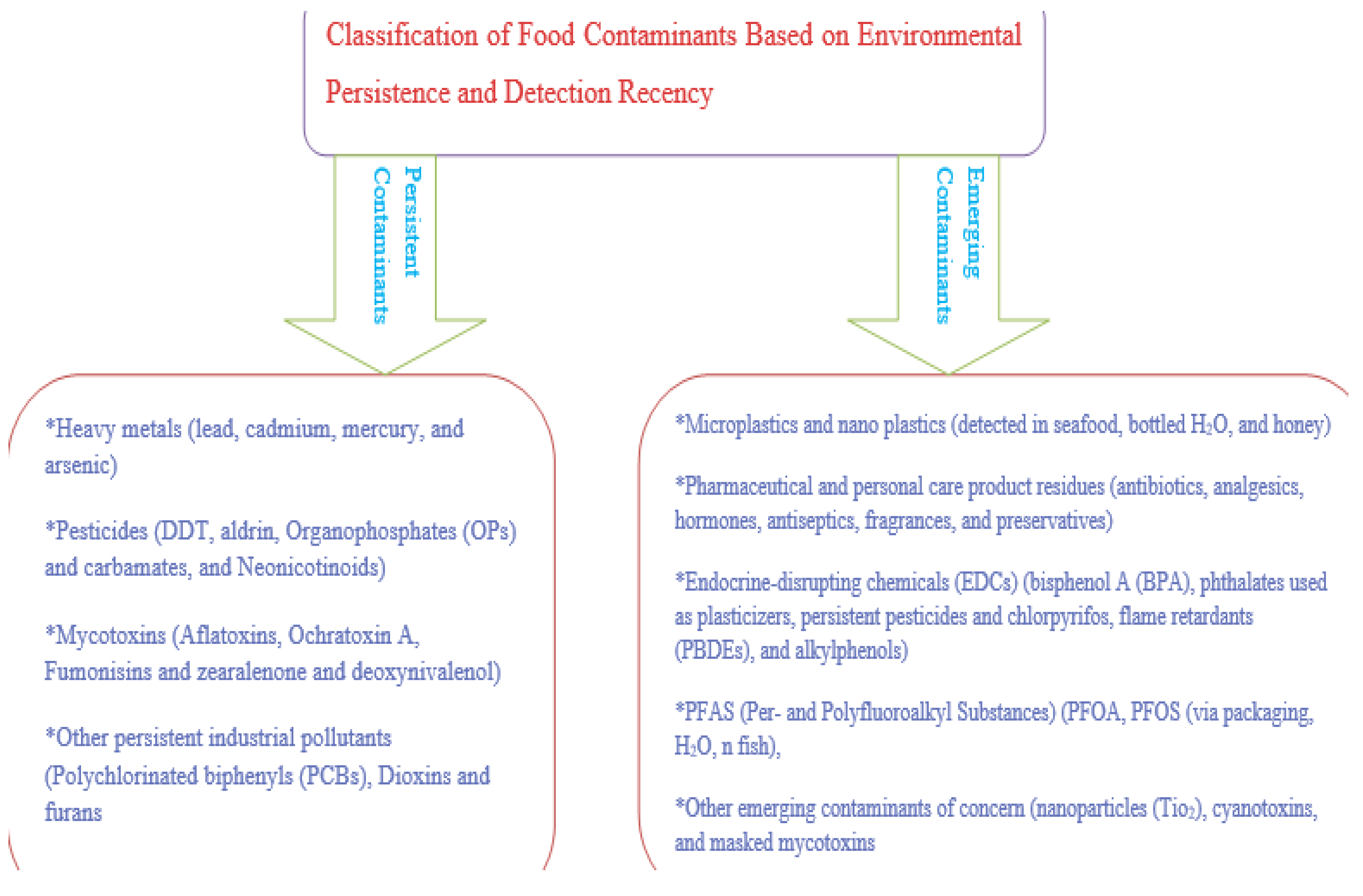
Figure 3.
Sources and Pathways of Exposure to Food Contaminants.
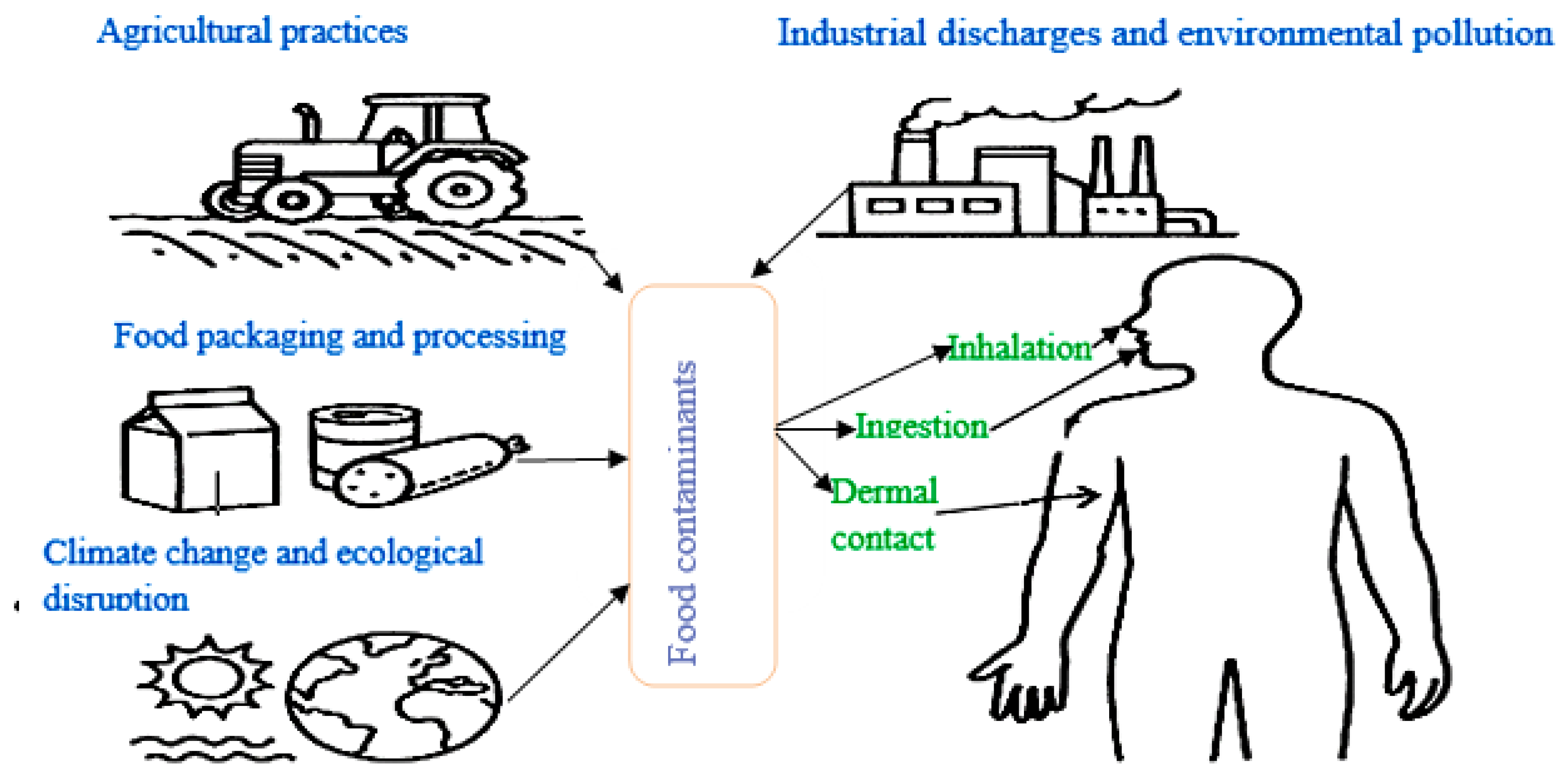
Figure 4.
The mechanism and health impacts of food contaminants.
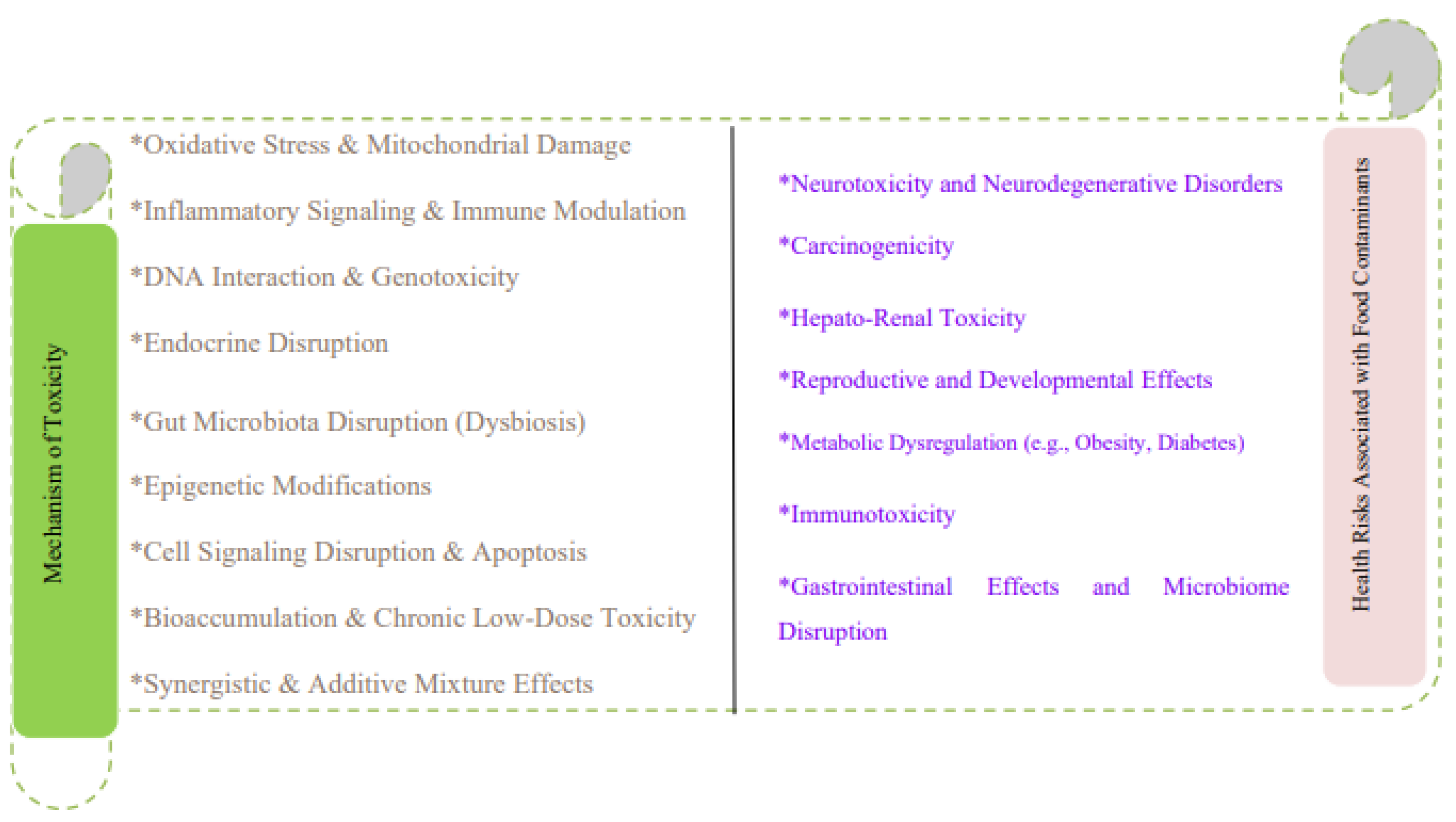
Figure 5.
The Mitigation Strategies of Food Contaminants.
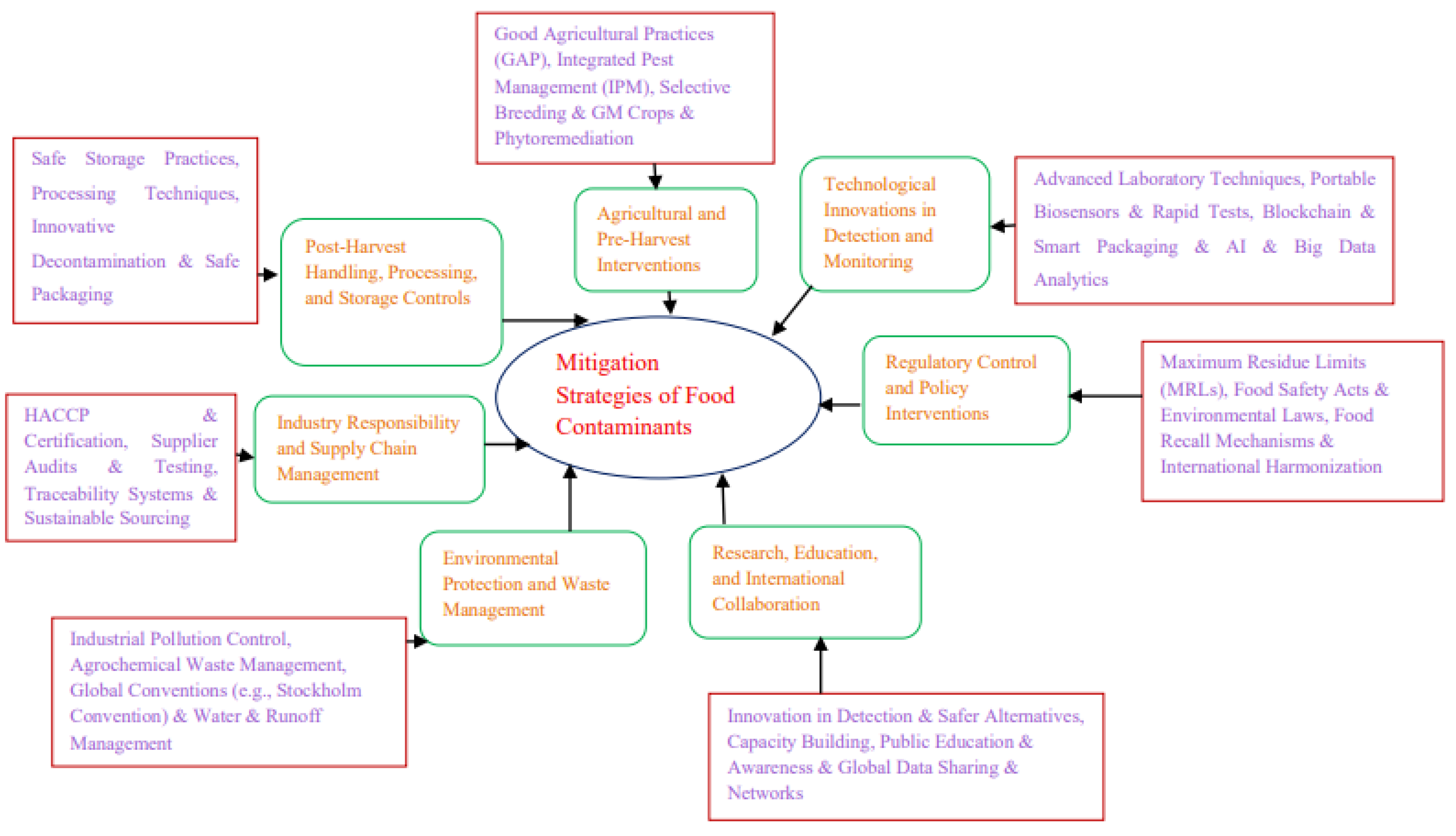
Table 4.
The Major Health Risks Associated with Food Contaminants.
| Health Outcome | Key Contaminants | Mechanisms of Toxicity | Vulnerable Populations | Representative Evidence |
| Neurotoxicity and Neurodegeneration [145,146,147,148] | Lead, mercury, arsenic, organophosphates, paraquat, BPA, phthalates, microplastics | Oxidative stress, mitochondrial dysfunction, neuroinflammation, neurotransmitter disruption, endocrine interference | Children, pregnant women, agricultural workers | Lead: ↓IQ in children; Methylmercury: fetal neurotoxicity; Pesticides: ↑Parkinson’s risk |
| Carcinogenicity [149,150,151,152] | Aflatoxins, arsenic, dioxins, PCBs, nitrites/nitrates | DNA adducts, epigenetic changes, hormone mimicry, chronic inflammation | Individuals with HBV, processed food consumers | Aflatoxins: liver cancer; Nitrites: colorectal cancer; POPs: breast cancer |
| Hepato-Renal Toxicity [153] | Aflatoxins, ochratoxin A, cadmium, lead, arsenic, PFAS, microplastics | Lipid peroxidation, fibrosis, enzyme dysregulation, histopathological damage | Populations exposed via contaminated crops and water | Cadmium: renal failure; PFAS: ↑ALT and creatinine in rodents |
| Reproductive and Developmental Effects [154,155,156,157] | BPA, phthalates, dioxins, PCBs, cadmium, nitrates | Hormone disruption, epigenetic changes, gametotoxicity, fetal malformations | Pregnant women, fetuses, neonates | Phthalates: ↓sperm quality; BPA: brain sexual dimorphism in animals |
| Metabolic Dysregulation [158,159,160,161] | BPA, phthalates, arsenic, PFAS, organotins | PPAR activation, β-cell dysfunction, mitochondrial stress, lipid accumulation | Children, adolescents, metabolically vulnerable individuals | BPA: ↑obesity in children; Arsenic: insulin resistance; PFAS: ↑cholesterol |
| Immunotoxicity [162,163,164] | Lead, cadmium, aflatoxins, BPA, PFAS, microplastics | Suppressed lymphocyte proliferation, cytokine imbalance, altered antibody response, immune activation | Infants, elderly, immunocompromised individuals | Lead: ↓antibody levels; BPA: immune dysregulation; PFAS: ↓vaccine efficacy |
| Gastrointestinal & Microbiome Disruption [165,166] | Cadmium, mercury, DON, antibiotics, microplastics, BPA, triclosan | Increased permeability, epithelial damage, dysbiosis, SCFA imbalance | Children, individuals with GI disorders | DON: intestinal barrier disruption; Microplastics: dysbiosis in mice; BPA: altered gut flora |
BPA: Bisphenol A; PCBs: Polychlorinated biphenyls; PPARs: Peroxisome proliferator-activated receptors; PFAS: Per- and polyfluoroalkyl substances; DON: Deoxynivalenol; SCFA: Short-chain fatty acids; HBV: Hepatitis B Virus; POPs: Persistent Organic Pollutants.
Table 5.
The Mitigation Strategies of Food Contaminants.
| Main Strategy | Sub-strategy | Description | Relevant Stakeholders |
| Regulatory Control and Policy Interventions [167,168,169] | Maximum Residue Limits (MRLs) | Legally enforced limits for contaminants like heavy metals, pesticides, and mycotoxins to protect consumer health. | Governments, FAO, WHO, Codex Commission |
| Food Safety Acts & Environmental Laws | National laws to regulate food safety, environmental protection, and waste management to prevent contamination. | National Governments, Regulatory Agencies | |
| Food Recall Mechanisms | Systems to rapidly remove contaminated products from the market to prevent public health crises. | Food Industry, Food Safety Authorities | |
| International Harmonization | Global standards (e.g., Codex Alimentarius) to align food safety regulations and facilitate safe trade. | FAO, WHO, Codex Commission | |
| Technological Innovations in Detection and Monitoring [170,171,172,173] | Advanced Laboratory Techniques | Techniques like GC-MS, LC-MS/MS, ICP-MS for highly sensitive contaminant detection. | Laboratories, Food Safety Authorities |
| Portable Biosensors & Rapid Tests | On-site, quick detection of contaminants using immunoassays or molecular methods, crucial in resource-limited areas. | Food Producers, Inspectors | |
| Blockchain & Smart Packaging | Technologies for product traceability and real-time monitoring of contamination risks along the food chain. | Food Industry, Retailers | |
| AI & Big Data Analytics | Predictive tools to analyze contamination risks based on environmental and supply chain data. | Food Industry, Tech Developers | |
| Agricultural and Pre-Harvest Interventions [174,175,176] | Good Agricultural Practices (GAP) | Safe use of water, fertilizers, and pesticides to reduce contaminants at the source. | Farmers, Extension Workers |
| Integrated Pest Management (IPM) | Sustainable pest control combining biological, cultural, and chemical methods to minimize residues. | Farmers, Agribusiness | |
| Selective Breeding & GM Crops | Development of crops with reduced contaminant uptake or fungal resistance (e.g., aflatoxin-resistant varieties). | Researchers, Seed Companies | |
| Phytoremediation | Use of metal-accumulating plants to remediate contaminated soils, reducing heavy metal risks. | Farmers, Environmental Agencies | |
| Post-Harvest Handling, Processing, and Storage Controls [177,178,179] | Safe Storage Practices | Control of moisture, temperature, and aeration to prevent mold growth and mycotoxin production. | Food Handlers, Storage Operators |
| Processing Techniques | Washing, peeling, thermal treatment, fermentation to reduce chemical contaminants. | Food Processors | |
| Innovative Decontamination | UV light, ozone, and irradiation technologies to degrade chemical contaminants and pathogens. | Food Industry | |
| Safe Packaging | Use of food-grade, biodegradable materials to prevent leaching of harmful substances like microplastics. | Packaging Industry, Food Producers | |
| Industry Responsibility and Supply Chain Management [180,181,182] | HACCP & Certification | Implementation of HACCP, ISO 22000, Global G.A.P. to ensure food safety from farm to fork. | Food Industry, Auditors |
| Supplier Audits & Testing | Regular checks to prevent contaminated raw materials entering the production process. | Food Companies, Retailers | |
| Traceability Systems | Use of digital tools, including blockchain, to track food products and enable rapid response to contamination events. | Food Industry, Tech Providers | |
| Sustainable Sourcing | Sourcing practices aimed at minimizing environmental pollution and contamination risks. | Food Companies, Suppliers | |
| Environmental Protection and Waste Management [183,184,185,186] | Industrial Pollution Control | Regulations to limit contaminant release from mining, manufacturing, and other industrial activities. | Environmental Agencies, Industries |
| Agrochemical Waste Management | Safe disposal and treatment of pesticides, fertilizers, and packaging materials to prevent environmental contamination. | Farmers, Waste Management Services | |
| Global Conventions (e.g., Stockholm Convention) | International efforts to restrict or eliminate persistent organic pollutants that can accumulate in the food chain. | Governments, International Bodies | |
| Water & Runoff Management | Wastewater treatment and control of agricultural runoff to protect irrigation water and aquatic food sources. | Farmers, Environmental Agencies | |
| Research, Education, and International Collaboration [187,188,189,190] | Innovation in Detection & Safer Alternatives | Research to improve detection methods and develop biopesticides, natural preservatives, and green technologies. | Research Institutions, Private Sector |
| Capacity Building | Strengthening of laboratory, surveillance, and regulatory capacities, particularly in developing countries. | Governments, Donors, NGOs | |
| Public Education & Awareness | Campaigns targeting farmers, food handlers, industry, and consumers to promote safe practices. | Health Agencies, Media, Educators | |
| Global Data Sharing & Networks | International platforms (WHO, FAO, INFOSAN) to exchange food safety information and coordinate responses. | Governments, International Organizations |
Disclaimer/Publisher’s Note: The statements, opinions and data contained in all publications are solely those of the individual author(s) and contributor(s) and not of MDPI and/or the editor(s). MDPI and/or the editor(s) disclaim responsibility for any injury to people or property resulting from any ideas, methods, instructions or products referred to in the content. |
© 2025 by the authors. Licensee MDPI, Basel, Switzerland. This article is an open access article distributed under the terms and conditions of the Creative Commons Attribution (CC BY) license (http://creativecommons.org/licenses/by/4.0/).
Copyright: This open access article is published under a Creative Commons CC BY 4.0 license, which permit the free download, distribution, and reuse, provided that the author and preprint are cited in any reuse.


