
Submitted:
09 July 2025
Posted:
14 July 2025
You are already at the latest version
Abstract
The application of artificial intelligence (AI) in small and medium-sized enterprises (SMEs) in Latin America, highlighting its potential to optimize processes and improve resilience in an uncertain business environment. Using a systematic review of fourteen studies published between 2020 and 2025 and the PRISMA protocol, significant barriers such as lack of technological infrastructure, shortage of specialized talent, and budget constraints were identified. Despite these challenges, AI adoption is advancing, allowing companies to automate processes and perform predictive analytics to make more informed decisions. The discussion emphasizes the need for clear regulatory frameworks to address ethical issues, such as data privacy. In conclusion, although there are significant obstacles, the responsible adoption of AI can significantly improve business performance in the region, provided that public policies are implemented that foster inclusive and sustainable technological development.
Keywords:
artificial intelligence
; technological adoption
; sustainability
; SMEs
1. Introduction
Artificial intelligence (AI) has established itself as a fundamental resource in the digital transformation of companies globally, with special relevance in contexts of high uncertainty [1]. In Latin America, its adoption is advancing significantly, especially in key sectors such as banking, manufacturing, retail, and utilities [2]. However, the process of adopting artificial intelligence is hampered by structural barriers, such as insufficient adequate technological infrastructure and limited specialized professionals and budget constraints [3]. These barriers make it difficult to integrate AI into existing value chains, impacting companies' ability to optimize operations and adapt [4].
Managing risk and uncertainty has become a major challenge for modern business leaders, exacerbated by factors such as geopolitical fluctuation, shifts in consumer preferences, and disruptive technological advancements [5]. In this context, AI not only represents an additional challenge, but also a crucial strategic tool for anticipating risks and improving the decision-making process, thanks to its predictive analytics capabilities [6]. However, its effective implementation in Latin America requires an ethical approach [7]. That considers regional particularities, in order to maximize the benefits of AI while minimizing the associated risks [8]. This strategic focus on AI aligns with theories of uncertainty management and the use of emerging technologies for decision-making [9]. Globally, AI is presented as a fundamental tool for companies seeking to adapt to a highly volatile environment [10]. However, the challenge lies in its ethical implementation, especially in emerging markets such as Latin America, where social, economic, and political contexts play a crucial role in the development of AI-based business strategies [11].
The application of AI in Latin America faces the "paradox of technological adoption", where companies must break with traditional structures to incorporate advanced technologies without losing their ability to adapt [10]. Structural constraints, such as poor technological infrastructure and a lack of specialized training, create resistance to change, which could cause Latin American companies to miss key opportunities to improve their business resilience and regional competitiveness [12].
In this context, the study proposes a strategic uncertainty management approach, focused on how Latin American companies use AI to manage specific risks and improve decision-making [13]. This framework includes not only technological adoption, but also the evaluation of ethical considerations, and the analysis of the impact of AI on business competitiveness and resilience in the region [14].
This study is based on a systematic review on the use of AI in companies in Latin America[15]. Emerging opportunities, barriers to implementation, and best practices are explored, with a particular focus on ethical considerations related to their adoption [11]. In addition, it assesses how AI can affect business resilience and competitiveness in the Latin American context [16].
2. Materials and Methods
Latin America is implementing artificial intelligence (AI) to manage uncertainty and optimize its value chains. The PRISMA protocol is followed [17], to ensure the quality and reproducibility of the findings. The search was carried out in the SCOPUS database, focusing on peer-reviewed articles and empirical studies dealing with the accounting treatment of biological assets and their effect on financial reporting. Subsequently, a two-stage selection procedure was applied: first, a reading of titles and abstracts was carried out, followed by an examination of the full text. The selected studies were evaluated according to their thematic relevance, methodological design and significance of the results; In addition, the systematic extraction of data in comparative analysis matrices was organized, which made it possible to identify common patterns, significant findings, and neglected areas in the research that guarantees the quality and reproducibility of the results. The methodological process followed is described below.
Research Questions, with their keywords
Q1: How are companies in Latin America using artificial intelligence (AI) to manage uncertainty in their value chains and strategic processes?
("artificial intelligence" OR "ai" OR "machine learning" OR "deep learning") AND ("Latin America" OR "South America" OR "Central America" OR "Latin American") AND ("applications" OR "impact" OR "development" OR "adoption") AND ("technology" OR "innovation" OR "research" OR "industry") AND ("challenges" OR "opportunities" OR "trends" OR "growth")
Q2: What are the main structural and organizational barriers that limit the adoption of artificial intelligence in small and medium-sized enterprises (SMEs) in Latin America?
("barrier" OR "obstacle" OR "challenge" OR "hindrance") AND ("AI" OR "artificial intelligence" OR "machine learning" OR "automation") AND ("adoption" OR "implementation" OR "integration" OR "utilization") AND ("SME" OR "small business" OR "medium enterprise" OR "entrepreneurship") AND ("Latin America" OR "LAC" OR "South America" OR "Central America")
Q3: How does the implementation of artificial intelligence influence the competitiveness and resilience of Latin American organizations in the face of high volatility scenarios?
("artificial intelligence" OR "ai" OR "machine learning" OR "deep learning") AND ("Latin America" OR "Latin American" OR "South America" OR "Central America") AND ("organization" OR "company" OR "enterprise" OR "institution") AND ("application" OR "implementation" OR "use" OR "adoption") AND ("impact" OR "effect" OR "benefit" OR "challenge")

Table 1.
Inclusion and exclusion criteria applied in the selection of studies for the systematic review.
Table 1.
Inclusion and exclusion criteria applied in the selection of studies for the systematic review.
| Criteria | Inclusion | Exclusion | Criteria |
|---|---|---|---|
| Type of study | Original research articles, systematic reviews, case studies, institutional reports | Non-academic studies, publications without peer review, editorials or opinions | Type of study |
| Thematic focus | Application of artificial intelligence (AI) in uncertainty management and value chain optimization | Studies that do not address AI or that do not focus on uncertainty management or value chains | Thematic focus |
| Publication period | Publications between 2020 and 2025 | Publications prior to 2020 | Publication period |
| Geographical focus | Studies focused on Latin America or analysis of the impact of AI in this region | Studies without specific mention of the Latin American context | Geographical focus |
| Scope of application | Research in business or industrial contexts | Studies with an exclusive focus on other areas such as health, education or the environment (if not linked to business management) | Scope of application |
Winemaking: Own.
3. Results
The findings derived from the studies chosen and evaluated in this systematic review offer fundamental information about the incorporation of artificial intelligence (AI) in uncertainty management and the improvement of value chains in Latin America. The results classified into various relevant categories are presented below.
Academic databases: Scopus
Figure 1.
Prisma Process Flowchart [17].
Figure 1.
Prisma Process Flowchart [17].
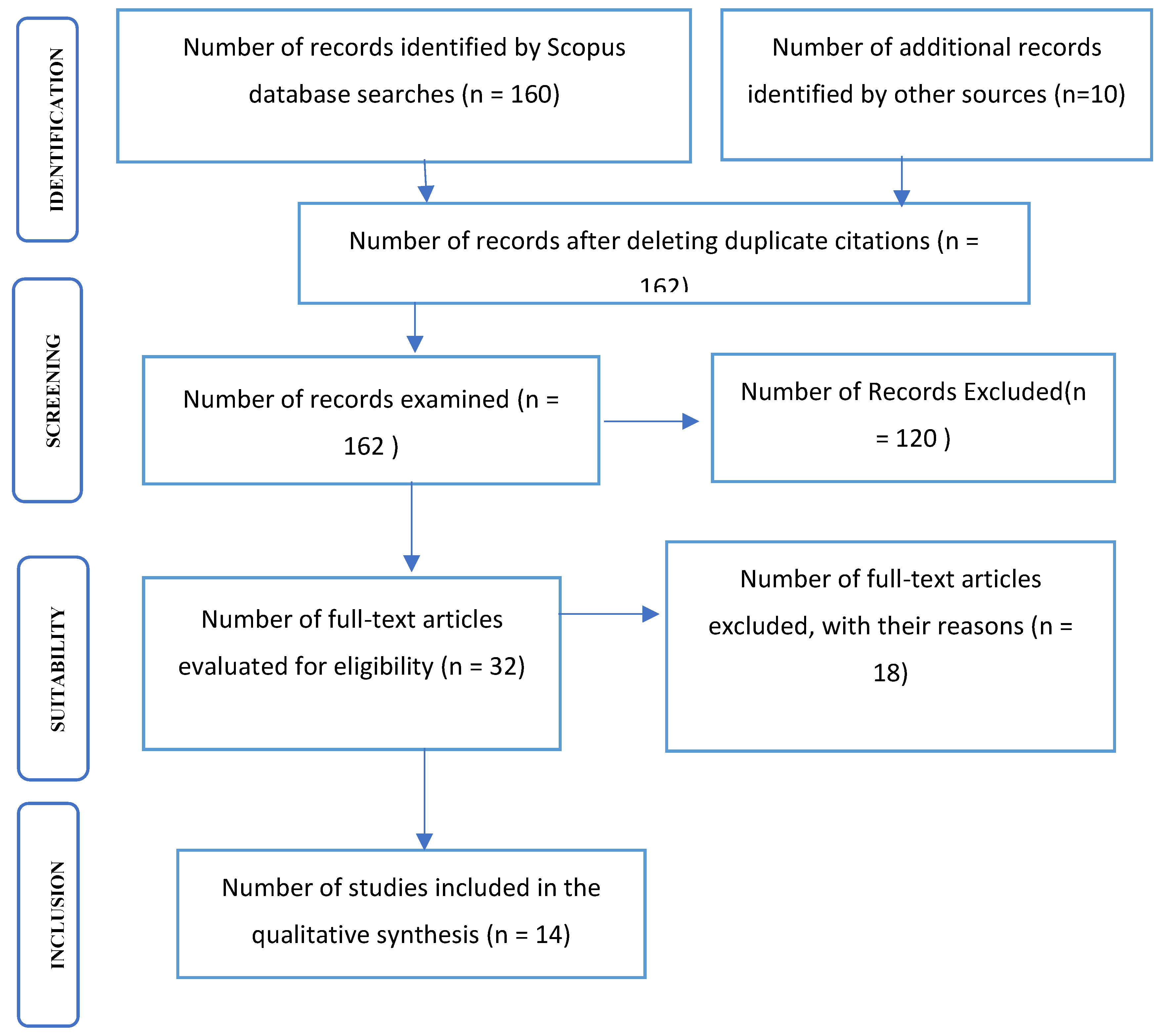
Table 2.
Study Selection.
| N° | Author | Year | Article | Enterprise AI Relationship |
|---|---|---|---|---|
| 1 | Davila-Zamora et al.,[18] | 2024 | Artificial Intelligence Adoption in Emerging Economies: Challenges, Opportunities, And Strategies for Peru’s Business Transformation. | This study examines how companies in Latin America are adopting AI in key sectors and the technological barriers they face |
| 2 | Dittmar & Girón, [1] | 2025 | Keys in the adoption of new technologies in Latin American SMEs: Challenges for a sustained growth in the AI age. | The report analyzes how AI is used to optimize logistics operations and improve resilience in Latin American supply chains. |
| 3 | Rojas-Torres et al.,[19] | 2021 | Financial Technology in Latin America. | It explores the impact of AI on strategic decision-making in banking, with an emphasis on predictive analytics. |
| 4 | Pozzo et al., [20] | 2024 | Managers' attitudes and behavioral intentions towards using artificial intelligence for organizational decision-making: A study with Colombian SMEs. | It studies the attitudes and behavioral intentions of managers of Colombian SMEs towards the use of AI in decision-making. |
| 5 | Serna Gómez et al., [21] | 2021 | Advances, Opportunities, and Challenges in the Digital Transformation of HEIs in Latin America. | It describes advances and challenges in the digital transformation of higher education institutions in Latin America. |
| 6 | Castillo-Ortiz et al.,[16] | 2025 | Artificial Intelligence in the Latin American Hospitality Industry: A Scope Review. | Through a case study, it examines the use of AI by retail platforms to improve customer experience and operations. |
| 7 | Yangüez Cervantes & Zapata-Jaramillo [14] | 2021 | Artificial Intelligence and Industry 4.0 Across the Continent: How AI and 4.0 are Addressed by Region. | It analyzes the adoption of AI in Latin America's manufacturing industry, highlighting barriers and transformative potential. |
| 8 | Gonzalez-Argote et al., [22] | 2023 | Trends in scientific output on artificial intelligence and health in Latin America. | It reviews trends in scientific production on AI and health in Latin America, identifying sectors with the highest growth. |
| 9 | Chavez & Vizuete-Sandoval,[23] | 2025 | Widening the divide, reloading dependency: the political economy of data and AI capability building in Latin America. | This study addresses the political and economic implications of capacity building in artificial intelligence (AI) in Latin America. |
| 10 | Villanueva-Eslava et al.,[24] | 2023 | Artificial intelligence and logistics services: A systematic literature review. | the application of artificial intelligence (AI) in logistics services. The most relevant trends and advances in the implementation of AI in various areas of the logistics sector in companies are identified. |
| 11 | Tubaro et al.,[25] | 2025 | The digital labour of artificial intelligence in Latin America: a comparison of Argentina, Brazil, and Venezuela | It analyzes the role of digital work in the development of artificial intelligence (AI) in Latin America, comparing working conditions in companies, the platform economy, and social impacts in Argentina, Brazil, and Venezuela. |
| 12 | Soares Seto,[26] | 2025 | AI From the South: artificial intelligence in Latin America through the sociotechnical imaginaries of Brazilian tech workers | It explores how tech workers in Brazil conceptualize artificial intelligence, from a sociotechnical imaginaries perspective, revealing tensions between technological autonomy, structural dependence, and alternative visions of business development in Latin America. |
| 13 | Albaz & Khalifa, [27] | 2024 | The Role of Artificial Intelligence Applications in Achieving Competitive Advantage for Business Organizations - Challenges and Proposed Solutions | It examines how artificial intelligence (AI) applications contribute to the achievement of competitive advantages in business organizations, highlighting the main technical, organizational and ethical challenges, as well as strategic solutions for their effective implementation. |
| 14 | Espinoza-Acero et al.,[28] | 2024 | Exploring the role of chatbots in the recruitment process in latin america | It investigates the use of chatbots in recruitment processes in Latin America, analyzing their impact on selection efficiency, candidate experience, and the challenges associated with automation in human talent management. |
Winemaking: Own.
The table defines the criteria and parameters necessary to carry out an analysis of the implementation of artificial intelligence (AI) in uncertainty management and value chain optimization in Latin America during the period from 2020 to 2025. It includes relevant publications that address business and regional aspects, excluding exclusively technological studies or without a Latin American context. Key sources from the Scopus database are consulted, dimensions such as AI adoption, barriers, ethics, training and their strategic impact on value chains are addressed. The analysis will be qualitative and thematic, seeking to identify patterns, challenges, opportunities, and concrete examples of cases and public policies that influence the adoption of AI in the region.
Barriers and challenges in AI adoption
Despite the opportunities offered by artificial intelligence, the implementation of AI in Latin America faces several barriers. Among the most prominent are:
In Latin America, the implementation of artificial intelligence (AI) faces significant structural barriers. These include a lack of adequate technological infrastructure, a shortage of skilled professionals, budget constraints—particularly in small and medium-sized enterprises (SMEs)—and a lack of robust regulatory frameworks that address issues of ethics and algorithmic governance. These challenges hinder the effective integration of AI into business processes. However, there are strategic areas where AI is already producing positive effects, such as the optimization of supply chains, the automation of routine tasks and predictive analytics in industries such as banking, manufacturing and commerce. These applications are helping to improve operational efficiency, lower costs, and empower data-driven decision-making.
Faced with these challenges, various initiatives have been launched to promote the development of AI skills, including educational programs offered by academic institutions and non-profit organizations, as well as public-private collaborations focused on training human talent, especially within the SME sector. In addition, the ethical debate has become more relevant, particularly on issues related to personal data privacy and algorithmic transparency. The lack of a robust regulatory framework in these areas could erode consumer confidence and call into question the legitimacy of the use of AI in sensitive sectors. In this context, factors such as training, regulation, and cross-sector collaboration are essential pillars to achieve responsible and equitable adoption of artificial intelligence in the region.
Impact on business resilience and regional competitiveness
A recurring theme in the studies reviewed is the positive impact of AI on the adoption of artificial intelligence has allowed organizations to face the volatility of the markets, optimizing their operational efficiency and facilitating more informed decision-making. This has been especially important in vulnerable sectors, such as manufacturing and financial services, which have experienced disruptions due to external factors, such as the COVID-19 pandemic.
Improved decision-making: Companies have been able to anticipate potential disruptions and improve their ability to adjust to uncertain circumstances thanks to predictive analytics tools and artificial intelligence models.
Increased competitiveness: The adoption of AI has allowed many Latin American companies to compete globally, improving their productivity, reducing operating costs, and creating new products and services.
Table 3.
AI Adoption Latin America.
| Country | AI Adoption Percentage (%) | Main Barriers |
|---|---|---|
| Brazil | 69.3 | The lack of clear policies or tax incentives to encourage the adoption of advanced technologies can be a major obstacle. |
| Chile | 73.1 | Consumer concerns about privacy and data misuse could act as a barrier to AI adoption. |
| Uruguay | 65.0 | Rural areas have less access to technological infrastructure and education, making it difficult to integrate AI into all sectors. |
| Mexico | 66.2 | Challenges related to the lack of clear regulations governing the use of artificial intelligence, which can discourage investment and project development. |
| Argentina | 55.8 | Argentina's high inflation and structural economic problems make AI adoption costly and risky, hindering companies' ability to invest in new technologies. |
| Colombia | 52.6 | The lack of robust data protection measures and digital infrastructure creates distrust and resistance to adopting emerging technologies such as AI. |
| Ecuador | 34.60 | Seasonal power outages and a lack of modern energy infrastructure limit the effective use of advanced technologies, including AI. |
| Panama | 37.50 | The education sector and the offering of advanced digital skills training programs are not constantly updated, making it difficult to prepare the workforce for AI adoption. |
Fountain: (ILIA, 2024) [29].
The findings of this systematic review indicate that, despite facing considerable obstacles, such as a lack of infrastructure and a lack of trained professionals, the implementation of artificial intelligence is progressing rapidly in Latin America. Countries such as Brazil and Chile, which are at the forefront, are leading this transformation; however, major challenges remain that prevent the region from reaching its full potential. Training, collaboration between the public and private sectors, as well as improved ethical governance, will be key to ensure that AI not only boosts competitiveness, but also supports inclusive and sustainable economic development.
4. Discussion
The incorporation of artificial intelligence (AI) in Latin America faces significant obstacles, which are not limited only to technological aspects, but also include ethical and regulatory considerations. It is critical to address these challenges promptly to ensure that their adoption is both responsible and fair. In this context, several key questions emerge that guide the analysis of the impact of AI in the region.
Q1: How are companies in Latin America using artificial intelligence (AI) to manage uncertainty in their value chains and strategic processes?
Companies in Latin America are adopting artificial intelligence to improve automation, predictive analytics, and risk management in strategic areas. However, to ensure ethical implementation of these technologies, it is crucial to establish precise regulatory frameworks that safeguard data privacy and promote transparency in algorithm-based decisions.
Q2: What are the main structural and organizational barriers that limit the adoption of artificial intelligence in small and medium-sized enterprises (SMEs) in Latin America?
The most significant difficulties are found in the lack of adequate technological infrastructure, the shortage of trained personnel and economic constraints, especially in the context of small and medium-sized enterprises (SMEs). A representative case is Brazil, where the implementation of laws such as the LGPD has impacted these SMEs, which highlights the urgent need to establish public policies that mitigate these obstacles.
Q3: How does the implementation of artificial intelligence influence the competitiveness and resilience of Latin American organizations in the face of high volatility scenarios?
AI improves competitiveness and resilience by enabling greater operational efficiency and informed decision-making. These measures help companies better adapt to unstable environments, although the lack of unified regulations in the region remains a hurdle.
Findings and gaps in research
The structural barriers to AI adoption in Latin America are diverse and complex. The lack of adequate technological infrastructure is presented as a fundamental obstacle for many companies, especially in countries with emerging economies, such as Ecuador and Colombia, which face limitations in accessing advanced technologies, such as cloud computing and high-speed networks [1]. This deficiency not only hinders the implementation of AI solutions, but also limits the capabilities of companies to leverage AI holistically and adapt to global market demands.
Another critical barrier identified is the shortage of specialized AI talent. The analysis revealed that insufficient training in key areas such as data science and algorithm programming prevents Latin American companies from effectively integrating these technologies into their daily operations [30]. This is aggravated in small and medium-sized enterprises (SMEs), which face greater difficulties in accessing specialized training and resources that allow them to integrate AI into their processes.
In addition, budget constraints continue to be a key challenge, especially in countries where SMEs represent a significant portion of the business fabric. The high cost of implementing AI can discourage many companies from adopting these technologies, creating a vicious cycle of resistance to change and lack of competitiveness [13].
Despite the challenges, artificial intelligence presents valuable opportunities for companies in Latin America, especially in aspects such as process automation, optimization of operational efficiency, and predictive analytics for strategic decision-making [31]. A fundamental finding of this review is that the implementation of AI in the improvement of value chains has allowed companies to significantly increase their operational efficiency and reduce costs. This phenomenon is especially evident in the manufacturing sector, where AI is used to anticipate equipment failures and manage inventories more effectively, increasing resilience to disruptions, such as those caused by the COVID-19 pandemic [14].
Likewise, in the financial field, predictive artificial intelligence has revolutionized the ability of organizations to assess risks and predict market trends. This has facilitated the personalization of services and the adoption of data-driven decisions [19]. This advance in the adoption of AI has been fundamental to improve competitiveness and allow Latin American companies to compete globally, opening new opportunities in international markets.
An essential aspect to consider in the adoption of AI in Latin America is the ethical and governance implications, which continue to be areas of great concern for companies and governments in the region [32]. Issues of data privacy and transparency in algorithms emerge as the most prominent ethical challenges. The lack of clear regulations on data protection and algorithm governance poses risks to consumer trust and AI adoption, especially in sensitive sectors such as healthcare, education, and financial services [7].
The lack of clear legislation and regulatory frameworks on the ethical use of AI in Latin America could compromise transparency in the use of personal data and encourage opaque business practices [33] . This could lead to a general lack of confidence in AI-powered solutions, restricting their effective adoption. It is vital that governments in the region establish public policies that ensure transparency, data privacy protection, and oversight of algorithms used by companies. The data show that the ability to foresee risks and improve operational processes has allowed these companies to maintain their competitiveness and resilience in the face of disruptive external factors [12].
5. Conclusions
Artificial intelligence (AI) in Latin America is a fundamental opportunity to catalyze the digital transformation of companies, especially in an environment characterized by considerable uncertainty. Despite the progress made, organizations in the region face significant obstacles that prevent the optimal use of this technology. Among these challenges are the lack of adequate technological infrastructure, the shortage of specialized talent and budget constraints, particularly in the case of small and medium-sized enterprises (SMEs). This study, through a systematic review of the existing literature, has identified the main challenges and opportunities linked to the adoption of AI in the region, underlining the importance of automating processes, improving risk management and optimizing strategic decision-making in essential sectors such as banking, manufacturing and public services.
However, the analysis has also highlighted a crucial aspect: although the progress towards the adoption of AI is evident in the region, its effective execution has not yet reached its full potential. In order for Latin American companies to overcome both structural and technological barriers, it is vital to implement innovative solutions that adjust to the particularities of the regional context. This study not only reviews previous work on the subject, but also offers a critical reflection on the prevailing need to adopt a comprehensive approach that encourages investments in technological infrastructure, specialized training and the development of robust regulatory frameworks. It is also highlighted that collaboration between the public and private sectors, together with inter-institutional alliances, are key strategies to close the talent gap in artificial intelligence and ensure that all actors involved obtain equitable benefits derived from this emerging technology.
The results of the research highlight the relevance of specialized education and training in artificial intelligence, as well as the need to boost collaboration between the public and private sectors. Initiatives in this area can be instrumental in reducing skills disparities and preparing the workforce for the challenges of digital transformation. Cooperation between various sectors is vital to establish an ecosystem that supports the development of AI skills, which will facilitate a more effective adoption of these technologies.
Finally, for artificial intelligence to have a significant impact on the sustainable and competitive development of small and medium-sized enterprises (SMEs) in Latin America, it is imperative to implement public policies that promote inclusive technological advancement. These policies should address not only aspects related to infrastructure and training, but also ethical issues linked to data privacy and algorithmic transparency. In this way, the potential of AI can be maximized, ensuring that its use not only improves business performance, but also contributes to equitable and sustainable economic growth in the region.
Author Contributions
Flor Ximena Poveda Valverde was the sole author of this study. She was in charge of the conceptualization, methodology, and implementation of the software used. In addition, he led the process of validation, formal analysis and research, as well as the management of the resources necessary to carry out the research. The curation of the data, the writing of the original draft and the subsequent revision and editing of it were also tasks carried out by the author. In turn, he supervised the project and managed its administration. No acquisition of funds is required, as this study did not receive external funding. All the aspects mentioned above were managed individually by Flor Ximena Poveda Valverde, who assures that the final manuscript has been read and approved by her.
Funding
This research did not receive external funding, since it did not have the support of any funding agency or institution.
Informed Consent Statement
Informed consent was obtained from all subjects who participated in the study. The information provided by the participants was handled in accordance with ethical regulations, ensuring respect for the autonomy and rights of those involved in the research.
Conflicts of Interest
The authors declare no conflicts of interest in relation to this study. There were no inappropriate influences or links to personal interests that could have affected the interpretation of the results of the research.
Abbreviations
The following abbreviations are used in this manuscript:
| AI | Artificial intelligence |
| SME | Small and Medium Enterprises |
References
- Dittmar, E.C.; Castillo Girón, V.M. Keys in the Adoption of New Technologies in Latin American SMEs: Challenges for a Sustained Growth in the AI Age. In Advances in Computational Intelligence and Robotics; Sposato, M., Carlos Dittmar, E., Eds.; IGI Global, 2025; pp. 301–338 ISBN 979-8-3693-9894-4.
- Filgueira, F. Desafíos de gobernanza de inteligencia artificial en América Latina. Infraestructura, descolonización y nueva dependencia. Rev. CLAD Reforma Democr. 2023; 44–70. [Google Scholar] [CrossRef]
- Kramer, K.J.; Mousavi, D.; Schmidt, M. Strategisches Supply-Chain-Risikomanagement: Einsatz von Künstlicher Intelligenz und Big Data zur Unterstützung des strategischen Supply-Chain-Risikomanagements. Z. Für Wirtsch. Fabr. 2022, 117, 349–353. [Google Scholar] [CrossRef]
- Batz, A.; D’Croz-Barón, D.F.; Vega Pérez, C.J.; Ojeda-Sanchez, C.A. Integrating machine learning into business and management in the age of artificial intelligence. Humanit. Soc. Sci. Commun. 2025, 12. [Google Scholar] [CrossRef]
- Criado, J.I.; Sandoval-Almazan, R.; Valle-Cruz, D.; Ruvalcaba-Gómez, E.A. Chief information officers’ perceptions about artificial intelligence. First Monday 2020. [Google Scholar] [CrossRef]
- Valle-Cruz, D.; Criado, J.I.; Sandoval-Almazán, R.; Ruvalcaba-Gomez, E.A. Assessing the public policy-cycle framework in the age of artificial intelligence: From agenda-setting to policy evaluation. Gov. Inf. Q. 2020, 37, 101509. [Google Scholar] [CrossRef]
- García Benítez, V.H.; Ruvalcaba-Gómez, E.A. Analysis of national artificial intelligence strategies in latin america: a study of the ethics and human rights approaches. Rev. Gest. Pública 2021, 10, 5–32. [Google Scholar] [CrossRef]
- Bican, P.M.; Brem, A. Digital Business Model, Digital Transformation, Digital Entrepreneurship: Is There A Sustainable “Digital”? Sustainability 2020, 12, 5239. [Google Scholar] [CrossRef]
- Janssen, M.; Brous, P.; Estevez, E.; Barbosa, L.S.; Janowski, T. Data governance: Organizing data for trustworthy Artificial Intelligence. Gov. Inf. Q. 2020, 37, 101493. [Google Scholar] [CrossRef]
- Bianchi, C.; Glavas, C.; Mathews, S. SME international performance in Latin America: The role of entrepreneurial and technological capabilities. J. Small Bus. Enterp. Dev. 2017, 24, 176–195. [Google Scholar] [CrossRef]
- Carlos, P.V.; Patricia, C.O.; Enrique, S.S. Artificial intelligence and machine learning implementation status on Latam: a systematic literature review. Indones. J. Electr. Eng. Comput. Sci. 2024, 36, 1911. [Google Scholar] [CrossRef]
- Malamud, M. AI Hub in Latin America Skyrockets Water Crises. Middle Atl. Rev. Lat. Am. Stud. 2024, 8, 42–47. [Google Scholar] [CrossRef]
- Vázquez-Villegas, P.; Del Pilar García-Chitiva, M.; Valdes-Ramirez, D.; Reyes Peraza, C.I.; De Haro, C.A.; Zavala, G. WIP: Implementing and Deploying Artificial Intelligence Solutions in Higher Education Institutions. In Proceedings of the 2024 IEEE Frontiers in Education Conference (FIE); IEEE: Washington, DC, USA, 2024; pp. 1–5. [Google Scholar]
- Yangüez Cervantes, N.; Zapata-Jaramillo, C.M. Artificial Intelligence and Industry 4.0 Across the Continent: How AI and 4.0 are Addressed by Region. In Radical Solutions for Digital Transformation in Latin American Universities; Lecture Notes in Educational Technology; Burgos, D., Branch, J.W., Eds.; Springer Singapore: Singapore, 2021; ISBN 978-981-16-3940-1. [Google Scholar]
- Rojas, M.L.F. The Shaping of AI Policies in Latin America: A Study of International Influence and Local Realities. In Public Governance and Emerging Technologies: Values, Trust, and Regulatory Compliance; 2025; pp. 263–287.
- Castillo-Ortiz, I.; Guevara Martínez, E.; Villar-Patiño, C. Inteligencia artificial en la industria de la hospitalidad latinoamericana: una revisión de alcance. Investig. Tur. 2025, 1–34. [Google Scholar] [CrossRef]
- Page, M.J.; McKenzie, J.E.; Bossuyt, P.M.; Boutron, I.; Hoffmann, T.C.; Mulrow, C.D.; Shamseer, L.; Tetzlaff, J.M.; Akl, E.A.; Brennan, S.E.; et al. A declaração PRISMA 2020: diretriz atualizada para relatar revisões sistemáticas. Rev. Panam. Salud Pública 2022, 46, 1. [Google Scholar] [CrossRef] [PubMed]
- Davila-Zamora, L.M.; Carreño-Flores, O.D.; Linares-Vida, J.E.; Vilcarromero-Hilario, R.D.; Saavedra-Silvera, O.S.; Cruces-Torres, O.J.; SaldañaPonte, A. Artificial Intelligence Adoption in Emerging Economies: Challenges, Opportunities, And Strategies for Peru’s Business Transformation. Pak. J. Life Soc. Sci. PJLSS 2024, 22. [Google Scholar] [CrossRef]
- Rojas-Torres, D.; Kshetri, N.; Hanafi, M.M.; Kouki, S. Financial Technology in Latin America. IT Prof. 2021, 23, 95–98. [Google Scholar] [CrossRef]
- Pozzo, D.N.; Gonzalez Beleño, C.A.; Correa, K.R.; Donado, M.G.; Gomez Pedroza, F.J.; Moncada Diaz, J.E. Managers’ attitudes and behavioral intentions towards using artificial intelligence for organizational decision-making: A study with Colombian SMEs. Procedia Comput. Sci. 2024, 238, 956–961. [Google Scholar] [CrossRef]
- Serna Gómez, J.H.; Díaz-Piraquive, F.N.; Muriel-Perea, Y.D.J.; Díaz Peláez, A. Advances, Opportunities, and Challenges in the Digital Transformation of HEIs in Latin America. In Radical Solutions for Digital Transformation in Latin America. In Radical Solutions for Digital Transformation in Latin American Universities; Lecture Notes in Educational Technology; Burgos, D., Branch, J.W., Eds.; Springer Singapore: Singapore, 2021; ISBN 978-981-16-3940-1. [Google Scholar]
- Gonzalez-Argote, J.; Alonso-Galbán, P.; Vitón-Castillo, A.A.; Lepez, C.O.; Castillo-Gonzalez, W.; Bonardi, M.C.; Cano, C.A.G. Trends in scientific output on artificial intelligence and health in Latin America in Scopus. ICST Trans. Scalable Inf. Syst. 2023. [Google Scholar] [CrossRef]
- Chavez, H.; Vizuete-Sandoval, D. Widening the divide, reloading dependency: the political economy of data and AI capability building in Latin America. Globalizations 2025, 1–23. [Google Scholar] [CrossRef]
- Villanueva-Eslava, A.; Riega-Virú, Y.; Nilupu-Moreno, K.; Salas-Riega, J.L. Artificial intelligence and logistics services: a systematic literature review. In Proceedings of the 2023 IEEE 3rd International Conference on Advanced Learning Technologies on Education & Research (ICALTER); IEEE: Chiclayo, Peru, 2023; pp. 1–4. [Google Scholar]
- Tubaro, P.; Casilli, A.A.; Fernández Massi, M.; Longo, J.; Torres Cierpe, J.; Viana Braz, M. The digital labour of artificial intelligence in Latin America: a comparison of Argentina, Brazil, and Venezuela. Globalizations 2025, 1–16. [Google Scholar] [CrossRef]
- Soares Seto, K. AI From the South: artificial intelligence in Latin America through the sociotechnical imaginaries of Brazilian tech workers. Globalizations 2025, 1–16. [Google Scholar] [CrossRef]
- Albaz, M.; Khalifa, M. The Role of Artificial Intelligence Applications in Achieving Competitive Advantage for Business Organizations - Challenges and Proposed Solutions. In Proceedings of the 2024 ASU International Conference in Emerging Technologies for Sustainability and Intelligent Systems (ICETSIS); IEEE: Manama, Bahrain, 2024; pp. 1–5. [Google Scholar]
- Espinoza-Acero, H.; Galarza-Minaya, T.; Vidal, E. Exploring the Role of Chatbots in the Recruitment Process in Latin America. Rev. Gest. Soc. E Ambient. 2024, 18, e07047. [Google Scholar] [CrossRef]
- ILIA Índice Latinoamericano de Inteligencia Artificial. Available online: https://indicelatam.cl/ (accessed on 13 June 2025).
- Thoene, U.; García Alonso, R.; Dávila Benavides, D.E. Ethical Frameworks and Regulatory Governance: An Exploratory Analysis of the Colombian Strategy for Artificial Intelligence. Law State Telecommun. Rev. 2024, 16, 146–171. [Google Scholar] [CrossRef]
- Li, G.; Du, K.; Liu, L.; Su, F. Digital transformation and organizational resilience: Unveiling the path to sustainable performance in adversity and crisis. Int. J. Inf. Manag. 2025, 84. [Google Scholar] [CrossRef]
- Magrini, A. Bankruptcy risk prediction: A new approach based on compositional analysis of financial statements. Big Data Res. 2025, 41. [Google Scholar] [CrossRef]
- Alzate-Alvarado, A.L.; Ribes-Giner, G.; Moya-Clemente, I. Influence of technological capability, management teams and access to finance on sustainable entrepreneurship over time. Int. Entrep. Manag. J. 2025, 21. [Google Scholar] [CrossRef]
Disclaimer/Publisher’s Note: The statements, opinions and data contained in all publications are solely those of the individual author(s) and contributor(s) and not of MDPI and/or the editor(s). MDPI and/or the editor(s) disclaim responsibility for any injury to people or property resulting from any ideas, methods, instructions or products referred to in the content. |
© 2025 by the authors. Licensee MDPI, Basel, Switzerland. This article is an open access article distributed under the terms and conditions of the Creative Commons Attribution (CC BY) license (http://creativecommons.org/licenses/by/4.0/).
Copyright: This open access article is published under a Creative Commons CC BY 4.0 license, which permit the free download, distribution, and reuse, provided that the author and preprint are cited in any reuse.


