

Submitted:
03 July 2025
Posted:
09 July 2025
You are already at the latest version
Abstract
Background: Addressing Intensive Care Unit (ICU) patients’ psychological well-being is crucial, yet psychosocial sup-port interventions that can facilitate effective coping, ultimately decreasing stress-related physiological, mental health and cognitive sequalae are not currently included in clinical practice guidelines and standards. Objective: To identify and synthesize research evidence on psychosocial support interventions in the ICU, including types of outcomes, measures of effectiveness and to explore research gaps and barriers to implementation. Method: The review was directed by a protocol based on current guidance for scoping reviews. Quality of studies were assessed using the National Institute for Health and Clinical Excellence. The review focused on articles containing evaluation of psychosocial interventions, through an experimental or quasi-experimental design, or pretest-posttest comparisons. Databases searched included Medline, CINAHL, PubMed, PsychInfo and the Cochrane Library. Results: Ten highly heterogeneous studies were identified, encompassing diverse intervention (e.g., relaxation, psychotherapy, spirituality), and patient populations. Notably, only three randomized controlled trials were found, with just one adequately powered to assess effectiveness. The predominance of quasi-experimental designs and small sample sizes resulted in low internal validity of the evidence. Despite these limitations, the evidence reviewed supports that various psychological interventions, including positive suggestions, relaxation techniques, psychotherapy and spiritual and/or religious support can alleviate psychological sequelae, such as depression, anxiety, and Post Traumatic Stress in ICU patients. Conclusion: This review highlights the positive impact of psychosocial interventions on alleviating psychological distress in ICU patients. How-ever, a critical gap exists in understanding their effects on other clinical and physiological outcomes, necessitating com-prehensive research.
Keywords:
ICU
; Critical illness
; psychosocial support
; positive suggestions
; relaxation
; spirituality
1. Background
The ICU environment and its advanced treatment modalities can cause significant psychological distress for patients and their families, despite their life-saving impact [1,2]. Several invasive interventions in the ICU can elicit pain and be perceived as traumatic [3]. ICU patients may also experience acute stress and a range of negative emotions due to the unpredictability of their situation and fear of death [4]. Several studies have demonstrated high prevalence of anxiety and depression among ICU patients [5,6], along with sensory disruption and sleep deprivation [7,8]. Uncontrolled stress in the ICU is associated with immune, metabolic and organ dysfunction, increased pain, and sleep disturbances [9,10,11,12]. These result in numerous physiological and psycho-cognitive complications and increased mortality during and after the ICU stay [13]. Current pharmacological interventions to mitigate patients’ stress in the ICU mostly involve sedatives, and they appear to be ineffective, while they are associated with side effects [14,15].
ICU patients may continue to experience distressing flashbacks of their time in the ICU even after discharge, resulting in a decline in their overall psychological health [16,17]. Depression, anxiety, and stress are prevalent in more than half of ICU survivors and may last for months up to several years post-ICU [18,19,20,21]. Likewise, the prevalence of mental health disorders, including mood, personality disorders, substance use, PTSD, psychosis, and schizophrenia, seem to be significantly higher in post-ICU survivors than the general population [22]. Additionally, the stress experienced during ICU stay is a factor in the post-intensive care syndrome (PICS). PICS is a culmination of cognitive, physical, and psychological impairments that persist after critical illness [23], in approximately 65% at three and six months and 55% at one year after ICU discharge [24,25]. PICS can lead to readmission to the ICU propagating a vicious circle of deterioration of well-being [26]
Addressing ICU patients’ psychological well-being is an important aspect of patient-centered care; however, such interventions are not currently included in clinical practice guidelines and practice standards [27]. Utilizing psychosocial support to improve mental health outcomes of ICU patients can influence positive change by facilitating effective coping for patients and families alike. Addressing the mental health of critically ill patients has the potential to improve physical outcomes, reducing the stress on ICU resources.
Purpose
The purpose of this study was to identify and synthesize research evidence on psychosocial support interventions in the ICU. Specific objectives included to identify: a) types of interventions studied, b) types of outcomes assessed, c) measures of effectiveness of interventions, d) research gaps, and e) identified barriers to implementation. We hope to provide a synthesis for healthcare providers seeking to implement these interventions in their practice, and to motivate impactful change in the field of psychosocial health and wellbeing in critical care. For this work, we defined psychosocial interventions as interpersonal or informational approaches that target behavioral, cognitive, emotional, interpersonal, or social factors aiming to improve coping and well-being [28].
2. Methods
The review was directed by a protocol based on current guidance for scoping reviews [29], registered with Open Science Framework (https://doi.org/10.17605/OSF.IO/53FUE). Reporting was guided by Preferred Reporting Items for Systematic reviews and Meta-Analyses extension for Scoping Reviews (PRISMA-ScR) [30]. The review was guided by the following question, based on the Population/Concept/Context format [29]: “What psychosocial interventions have been explored involving adults during the acute phase of ICU hospitalization, and what is the evidence of their effectiveness and feasibility within the context of psychological distress in the ICU?”
2.1. Eligibility Criteria
Inclusion criteria: We included studies involving:
- Primary studies of quantitative, qualitative or mixed methods, reporting on any type of psychosocial intervention in ICU patients.
- Studies involving interventions for adult intensive or critical care patients while still hospitalized in critical/ intensive care unit, regardless of their primary diagnoses and type of unit.
- Peer-reviewed studies published since 2009, since the context of care was different prior to publication of clinical practice guidelines regarding pain agitation and delirium in the ICU.
Exclusion criteria: We excluded studies involving:
- Case studies, literature reviews, opinion pieces, editorials, research protocols
- Intervention(s) for family members only, not involving ICU patients
- Patients under 18 years of age such as neonates, infants, children, paediatric patients.
- Articles in any language other than English.
2.2. Information Sources and Search Strategy
Databases searched included Medline, CINAHL, PubMed, PsychInfo and the Cochrane Library. The review focused on articles containing evaluation of psychosocial interventions, either through an experimental or quasi-experimental design, or pretest-posttest comparisons. No sample size or outcome measures limitations were set. Studies were retrieved through online database searches, constructed through consultation with a library information specialist. References of identified studies were also checked for relevancy. The search strategy for MEDLINE is included in appendix.
2.3. Screeningand Data Extraction
The studies retrieved from database searches were exported into Covidence (https://www.covidence.org/) for data management, removal of duplicates, and independent screening by reviewers. Two team members independently screened titles and abstracts of search outcomes for eligibility, and conflicts were resolved with a third reviewer. Articles that were deemed relevant for the topic understudy passed on to the full-text screening. Inter-rater reliability was achieved through the consensus among the reviewers on the type of studies to be included. A data charting tool was iteratively developed by the research team and pilot tested on the first five articles to ensure all required data was captured. We extracted data on participant demographics such as age, sex and race, ICU type, outcome variables, assessment tools, intervention details such as frequency and duration, and statistical/qualitative findings.
2.4. Quality Assessment
The quality of studies was assessed using the National Institute for Health and Clinical Excellence (NICE) Checklist (2012), which contains five domains and evaluates aspects of internal and external validity [31]. The process was iterative and continued until consensus among 3 raters was achieved. Quality appraisal was used to inform synthesis and interpretation of findings. No studies were excluded based on the results of quality appraisal.
3. Results
Out of the initial 524 studies identified, 160 duplicates were removed. The remaining 364 studies underwent title and abstract screening with 38 entering the full text review stage. We identified ten studies for data extraction, with two articles found during a manual hand-search (Figure 1).
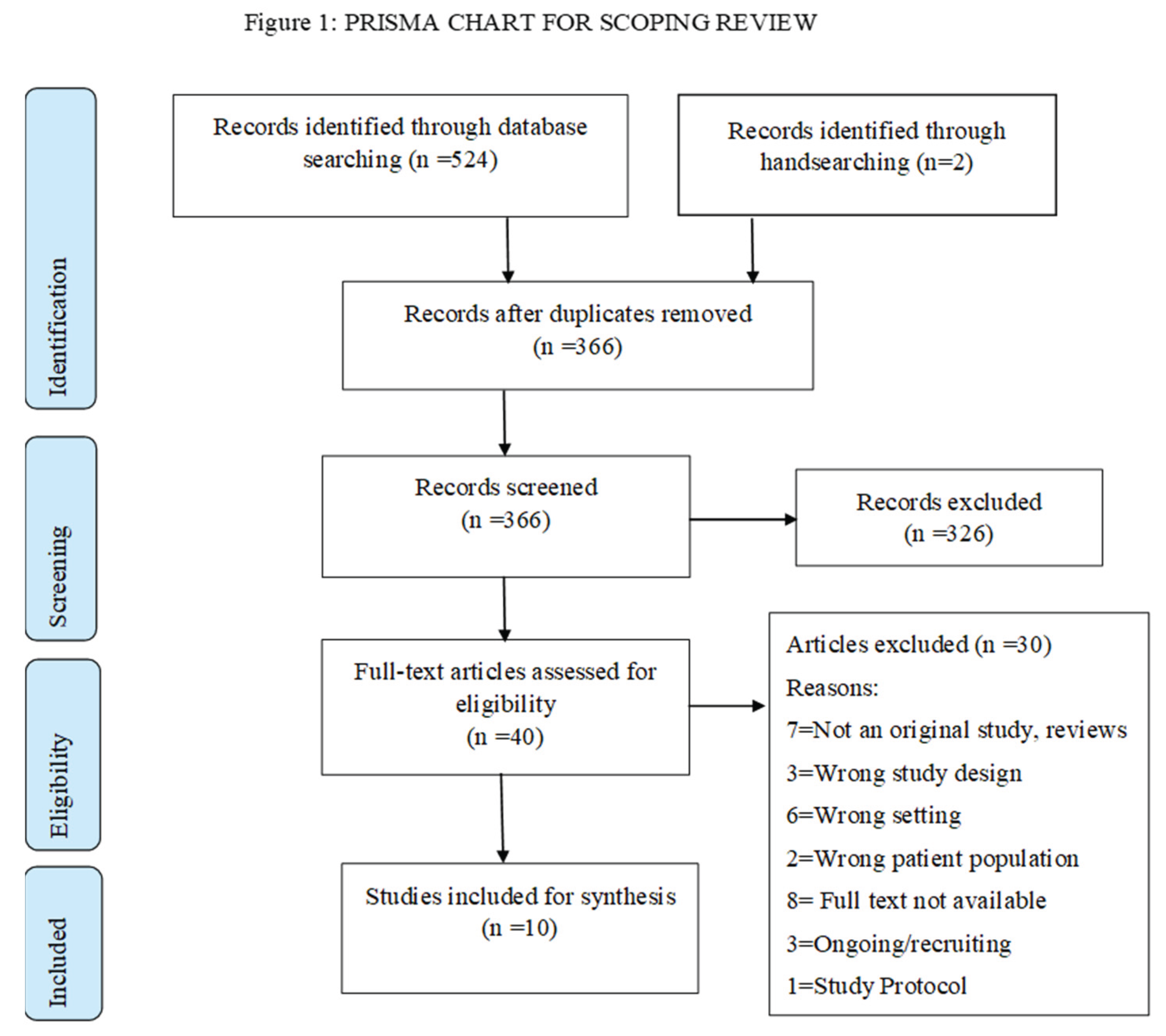
3.1. Study Characteristics
Half of the studies (n=5) were conducted in the United States [32,33,34,35,36] while the rest took effect in Iran, (n=1) [37], Hungary (n=1) [38] Germany (n=1) [39], China (n=1) [40], and the United Kingdom (n=1) [41] (Table 1). All studies included some sort of support intervention, including positive suggestions [34,35,38], relaxation techniques [32,36], spiritual and/or religious support [33,37], and psychotherapy based [ 39-41]. In general, the samples were primarily white and Christian.
Of the identified ten studies, the majority adopted a quasi-experimental pretest-posttest design (n=6) [33,34,35,36,37,40], three were randomized controlled trials (RCTs) [32,38,39], and one was a mixed methods study [41]. Of the studies with quasi experimental design only two studies used control groups [35,37]. The number of participants ranged from 26 to 76, and samples were mostly male (Table 1). The outcomes addressed included measures of effectiveness of interventions with regard to improving psychological well-being including anxiety, stress, pain, social support, depression, anxiety, delirium, Length of ICU stay, length of mechanical ventilation, feasibility and acceptability measures. Of the three RCTs, Heilmann et al. (2016) recruited 253 CABG patients, mostly male [39]. Bannon et al. (2020) recruited 16 neuro-ICU patients with similar male/female distribution [32]. Szilágyi et al., 2014 recruited 26 ICU patients requiring mechanical ventilation, mostly male [38]. RCTs focused on outcomes such as depression, anxiety, post-traumatic stress, Length of ICU stay, length of mechanical ventilation, and feasibility/acceptability. The only mixed methods study did not use a control group (Wade et al., 2018), and addressed the feasibility and acceptability of a stress management intervention in ICU patients [41]. The study recruited 127 patients and did not report on age and sex/gender of the participants.
3.2. Quality Appraisal of Included Studies
The results of quality appraisal of the included studies are demonstrated in Table 2. The studies exhibited a mixed level of quality. As expected, all quasi-experimental studies displayed a high risk of bias in terms of randomization, allocation concealment, outcome measures, and analysis. Furthermore, the absence of sufficient descriptions regarding the study approaches posed challenges in determining the overall quality of the included studies.
The majority of the articles did not provide information on the allocation method employed for assigning participants to either the intervention or control group, so selection bias cannot be excluded [33,34,35,36,37,40]. Only four studies effectively minimized internal threats to validity through randomization to group allocation [32,38,39,41]. Among these, only three RCT studies implemented measures to maintain allocation concealment [32,38,39]. All included studies furnished sufficient details regarding the intervention utilized and the characteristics of both the comparison and intervention groups. Additionally, all studies employed comparable follow-up durations for both groups. However, due to the inherent nature of the interventions, blinding of participants and/or personnel was not feasible, resulting in a high risk of performance bias across all studies.
All studies employed reliable outcome measures and evaluated important outcomes relevant to the study. Moreover, all studies utilized appropriate analysis methods and provided sufficient data for effect size calculation, with the exception of one study [41]. Only one study had sufficient power and reported effect size data [39]. However, the majority of studies (n=7) did not report estimates of effect size [32,33,34,36,40,41]. Additionally, two studies had inadequate sample sizes to detect any intervention effects [35,37]. In three studies (, not all participants were included in the analysis, and it remained unclear whether an intention-to-treat analysis was applied [32,35,39]. Upon analysis, only one study demonstrated poor internal validity [37], while another study exhibited limitations in terms of generalizability [34].
3.3. Types of Interventions
The identified interventions were based on positive suggestions [34,35,38], psychotherapy techniques [39,40,41] relaxation techniques [32,36], spiritual and/or religious support [33,37]. Each intervention differs in its approach and techniques, and no interventions have been replicated in this body of evidence.
Spiritual-religious based interventions, facilitated by chaplains or researchers, emphasize spiritual care, worship, and assessing spiritual needs, typically lasting from 25 minutes to 90 minutes. The Picture-guided spiritual care intervention (25 minutes; delivered once) involved chaplain-led sessions using communication cards to assess spiritual affiliation, emotions, and needs in conscious ICU patients requiring mechanical ventilation [33]. Similarly, another spiritual/ religious-based intervention delivered by researchers (60-90 minutes for 3 days) included caring presence instilling hope, encouraging generosity, strengthening personal relationships, and providing opportunities for worship and prayer in coronary care unit patients [37].
Positive suggestion-based interventions, administered by psychotherapists, nurses, study intensivists, ICU doulas or even delivered via pre-recorded messages through MP3 players, focused on building confidence, rapport, exploring fears, and normalizing ICU experiences, with sessions ranging from 5 to 30 minutes. Similarly, the Psychological Support Based on Positive Suggestions (PSBPS) intervention (5-12 minutes, once daily throughout the patient's ICU stay) involved physicians developing rapport and therapeutic touch with patients, addressing fears and normalizing the ICU experience, delivered by study intensivists [34,35]. It consisted of a debriefing with information on what to expect after transferring to a recovery ward, and opportunity to explore fears. Szilágyi et al. (2014)used pre-recorded text focused on promoting recovery and healing delivered via MP3 players and headphones to ventilated ICU patients (30-minute sessions, once daily throughout their ICU stay) [38].
Psychotherapy-based interventions often overlapped with other types of interventions, in that they included relaxation and/or information-delivery sessions. A psychotherapeutic intervention (15-30 minutes, 3 days/week) provided by a psychotherapist consisted of listening, positive attention, supportive psychotherapy, empathy, muscle and breath relaxation, and cognitive behavioural therapy [40]. The Provision Of Psychological support to People in Intensive care (POPPI) consisted of three stress support sessions and a relaxation and recovery program provided by trained staff [41] (Wade et al., 2018). Sessions started within 48 hours of Intensive care Psychological Assessment Tool (IPAT) screening and total three sessions of duration? were delivered. A psychotherapeutic intervention (30 minutes, once before CABG) by Heilmann et al. (2016) comprised open dialogue, relaxation exercises, and emotional support, provided by trained nurses one day prior to CABG [39]. This intervention also included information regarding surgery, postoperative care, pain management, and ICU stay, and emotional support.
Relaxation-based interventions, led by clinicians, study staff, or trained nurses, concentrate on stress management, breath control, coping skills, and psychosocial impact assessment, with sessions lasting from 20 to 30 minutes and occurring multiple times per week. The Recovering Together (20-30 minutes) included elements of cognitive behavioural therapy, dialectical behavioural therapy, and trauma-informed care [32]. Tangible facets of this intervention focused on deep breathing, meditation, self-care, stress management, and appropriate communication. Similar Guided virtual VR-based meditative Intervention, RelaxVR (5-20 minutes, 7 days), provided by study staff consisted of calm immersive scenes with voice-guided meditation that promoted breath control and relaxation [36].
3.3.1. Psychological Well-Being Outcomes
We narratively synthesized the results, and we calculated effect sizes, where pertinent data were available (Table 3).
Bannon et al. (2020) conducted a dyadic intervention, Recovering Together, for stroke patients and their caregivers who were at risk for chronic emotional distress such as depression, anxiety, and post-traumatic stress (PTS) (N=16; Intervention (I)=7 and Control (C)=9) [32]. Outcomes were assessed post intervention during ICU stay, and 3 months post discharge from ICU. The control group received minimally enhanced usual care, included an informational pamphlet on the stroke experience and post-stroke recovery for patients and their informal caregivers. Recovering Together showed evidence of being a feasible and acceptable intervention in reducing risk for chronic anxiety and post-traumatic stress in both stroke patients and caregivers during ICU. Within-group effect sizes demonstrated improvement in all emotional distress outcomes (decrease in symptoms of depression, anxiety, and post-traumatic stress) between baseline and post-test with medium to very large effect sizes in the ICU patients (anxiety, Cohen’s d (d)=-1.25, post-traumatic stress, d=-0.83, and depression, d=-0.42). Additionally, when compared with the control group, from baseline, post-intervention (during ICU) to 3 months, a general improvement in emotional distress for dyads in the intervention group and a general deterioration in symptoms for those in the control group was noted. Similarly, Ong et al. (2020) explored the effects of guided virtual reality-based meditative intervention on pain, sleep quality, affect, and delirium in surgical and trauma ICU patients [36]. The intervention showed statistically significant improvement in anxiety and depression symptoms after two sessions. Moreover, results of the patient questionnaires revealed that the intervention was comfortable, enjoyable and relaxing.
Yang et al. (2020) investigated the effect of in-person relaxation and support approach on sleep, depression, anxiety, and social support among patients with COVID-19 in an isolated ICU [40]. Pre-post-intervention comparisons demonstrated the potential of the intervention to significantly reduce depression and anxiety. Wade et al. (2018), through a patient interview, demonstrated that psychological support intervention by trained nurses can developed appropriate coping strategies in ICU patients (10 of 15 patients) [41]. Among 25 participants, stress measured through stress thermometer illustrated reduction of three points (IQR=1-5 points) in just 3 sessions, but the reported data are not appropriate for an effect size calculation. Heilmann et al. (2016) developed a 30 min intervention rooted in psychotherapy to provide emotional support for coronary artery bypass grafting (CABG) surgery patients in the ICU (N=253; I=139 and C=114) [39]. Significant decreases were only noted for State-Trait Operation Anxiety within the intervention group when compared with the control group. We calculated effect sizes of the intervention, based on reported data. We noted medium to very small effect size immediately after intervention (cognitive anxiety, d=-0.39, affective anxiety, d=-0.125 and VAS, d=-0.20). On postoperative day 5, the effect size for VAS was small (d=-0.28), and very small for affective anxiety (d=-0.125) and Cognitive anxiety (d=-0.17).
Elham et al. (2015) used spiritual and religious based interventions in ICU patients and showed the potential of spiritual-based interventions to significantly reduce anxiety during the ICU stay [37]. The study results indicated that the spiritual/religious intervention could enhance spiritual wellbeing and reduce State-anxiety and Trait-anxiety in the elderly admitted to CCU (Table 1) but reported data were not sufficient for an effect size calculation. Similarly, Berning et al. (2016) demonstrated that spiritual-based interventions can significantly reduce anxiety and stress during the ICU stay [33]. Patients reported an immediate reduction in anxiety post-intervention, and the outcome persisted even after the ICU discharge as testified by follow-up with the ICU survivors.
Tan et al., (2020) demonstrated that positive suggestions can reduce psychological distress in mechanically intubated patients, but the data were not adequate to calculate effect size [35]. Similarly, Karnatovskaia et al. (2021) determined that after an extensive training, doulas can effectively provide PSBPS to the ICU patients [34]. Though quantitative data were not collected, patient interviews and feedback strongly indicated that PSBPS offered profoundly reassuring support, thereby reducing ICU patients' distress.
3.3.2. Other Clinical Outcomes
Only three studies focused on clinical outcomes in ICU patients. Szilágyi et al. (2014) found significant reductions in both length of ICU Stay (LOS) and length of Mechanical Ventilation in ICU patients [38]. Effect sizes, calculated from study data, were very large for both LOS (d =1.26) and length of Mechanical Ventilation (d =1.46) compared to controls. From the available data, we calculated the effect size comparing the suggestion group versus the music group and found a medium to large effect size (LOS: d=0.58; length of Mechanical Ventilation: d=0.69). Yang et al. (2020) demonstrated the potential of in-person relaxation and support approaches to significantly improve sleep among patients with COVID-19 in an isolated ICU [40]. However, Ong et al. (2020) reported that guided virtual reality-based meditative intervention showed no significant improvement in pain, sleep and delirium scores in surgical and trauma ICU patients [36]. The reported data were not sufficient for effect size calculations.
3.3.3. Feasibility and Acceptability
Tan et al. (2020) and Karnatovskaia et al. (2021) explored the effectiveness of psychological support based on positive suggestions (PSBPS) intervention to reduce distress in the ICU patients [34,35]. Both identified that various stakeholders, including patients, families, and providers regarded the intervention as useful and effective. Tan et al., (2020) demonstrated efficacy and feasibility of PSBPS to reduce psychological distress in mechanically intubated patients [35]. Karnatovskaia et al. (2021) determined that after an extensive training, doulas can effectively provide PSBPS to the ICU patients [34].
Berning et al. (2016) confirmed that the spiritual-based interventions are feasible for ICU patients [33]. Furthermore, the patient interview confirmed that the intervention was well accepted and assisted patients deal with the unpredictability of their illness.
Wade et al. (2018) provided psychological support to ICU patients by delivering three stress support sessions and a relaxation and recovery program [41]. The Provision Of Psychological support to People in Intensive care (POPPI) intervention was administered by trained nurses. Additionally, follow-up interviews revealed that the stress support sessions were welcomed by intervention administrators, patients, and staff. Results from patient satisfaction questionnaire, determined that patients were highly satisfied and appreciated the intervention. Furthermore, nurses’ interviews testified that the training had raised awareness, changed staff thinking, and led to better unit environments.
4. Discussion
We attempted a synthesis of a very heterogenous body of research exploring the effects of psychosocial interventions during ICU hospitalization. Heterogeneity stemmed from the designs, types and delivery of interventions, and participant populations and characteristics. Overall, our analysis unveiled a scarcity of studies investigating psychosocial interventions in ICU patients, comprising only 3 randomized controlled trials, of which only one was adequately powered to explore effectiveness. With the majority of studies being quasi-experimental, of which four used no control group and two were feasibility studies, and with overall small group sizes, the internal validity of this body of evidence is generally low. Despite these shortcomings, the evidence reviewed supports that various psychological interventions, including positive suggestions, relaxation techniques, psychotherapy and spiritual and/or religious support can alleviate psychological sequelae, such as depression, anxiety, and PTS in ICU patients. There is limited evidence to support effects on sleep in ICU patients, as only two studies included this outcome, and only one study suggested an effext on ICU LOS and length of mechanical ventilation. Although few studies have assessed the feasibility and acceptability of interventions, evidence to date shows that psychological support interventions are feasible, well accepted and are associated with higher patient satisfaction. Additionally, a gender disparity in the samples was noted, with a predominant male participation. Moreover, the majority of participants in the identified studies were Caucasian and Christians; which raises the need to further explore the effectiveness and transferability of these results in diverse samples. A wide range of interventions was explored with great diversity in the way of delivery, including who delivered the interventions, and their duration, timing and frequency. There was no replication of interventions across studies, which may limit the validity of individual interventions.
Despite the methodological limitations noted, these findings are important, as stress may prolong recovery times and increase the risk of complications in critically ill patients [9,10,12]. Acknowledging the paramount effect of stress, the Society of Critical Care Medicine, advocates for exploring psychosocial interventions for alleviating ICU-related outcomes [42]. Strengthening coping mechanisms has the potential to alleviate the intensity of the stress response, interrupting the cascade of physiological and psychological responses that stem from the psychological burden of stress.
Our results align with studies exploring psychosocial interventions in different patient populations including ICU. Findings of a metanalysis of 26 RCTs suggests that positive suggestion techniques might be useful to alleviate anxiety in postoperative patients [43]. Another systematic review and metanalysis demonstrated positive psychological responses, such as optimism and positive affect are significantly associated with the health outcomes, and mortality in CABG patients [44].
Spirituality can help to transcend suffering, pain, distress, and despair. Our review demonstrated that providing opportunities for worship and prayer can help spiritual well-being of ICU patients and reduce anxiety. It has been proposed that spiritual care practices help facilitate meaning making out of the despair of illness [45,46,47]. Additionally, surveys [48] and reviews [49,50] in ICU patients, including post-cardiac arrest patients [51] have demonstrated that spirituality/religiosity plays a significant role in coping with crises and nurturing optimism. Despite the importance of addressing spiritual needs, spiritual care is not commonly incorporated into daily critical care practice [50], and it may often be considered part of end-of-life care [50,51,52,53].
Our review also indicates the dearth of evidence on psychosocial support interventions aimed at managing clinical outcomes such as delirium, pain, sleep, length of ICU stays in the ICU patients [36,40]. While the evidence supported the effectiveness of in-person relaxation and support approaches in enhancing sleep among isolated COVID-19 patients, there remains a scarcity of data concerning other crucial outcomes such as delirium, pain, and the duration of ICU stay. However, studies in other acute care populations have yielded promising results for patient survival both during hospitalization and after discharge through psychosocial support interventions [54,55]. Additionally, psychosocial interventions were found effective in enhancing overall quality of life when compared with conventional therapies in traumatic brain injury patients [56]. Moreover, a recent systematic review further supports the positive impact of psychosocial interventions, revealing beneficial effects on the quality of life, emotional distress, and existential distress in terminally ill patients [57].
Positive suggestion-based interventions seem to be an emerging approach. In our review, we identified one RCT and two feasibility studies on positive suggestions-based interventions. These studies support the effectiveness of positive suggestion-based interventions in improving clinical outcomes, including decreasing LOS, speeding weaning from mechanical ventilation, and improving chances of survival [38] and decreasing psychological distress [35]. Existing evidence also supports positive suggestions can diminish pain, decrease medication intake, improve chances of survival, and influence physiological factors, such as blood pressure during surgery [43,58,59,60,61].
Our review also highlights the need for a shift in current ICU practices to embrace holistic care that focuses on both the psychological and physical aspects of critical illness. This gap is, in part, a result of the absence of clinical practice guidelines addressing stress assessment and management [62]. The Canadian Standards of ICU nursing (2017) currently places a higher emphasis on physiological outcomes and comfort, often sidelining crucial psychological aspects of patient care [63]. In contrast, both the American Association of Colleges of Nursing (AACN, 2019) [64] and UK competency standards [65] appear to be more inclusive. The AACN standards, rooted in the synergy model, advocate for a holistic approach, placing significant emphasis on the psychological well-being of patients [64]. AACN guidelines recommend the provision of spiritual care to ICU patients; however, this remains limited to end-of-life needs [66]. Similarly, the UK competency standards adopt a comprehensive view that recognizes the intertwined nature of both physiological and psychological dimensions [65]. The European Federation of Critical Care Nurses specifies “patient comfort and psychological care” as an important competency, but provides no elaboration of the specific approaches [67]. There is a pressing need for these guidelines to align with a patient-centric approach to intensive care, emphasizing the profound impact of addressing psychological well-being on overall patient outcomes.
6. Limitations
The conclusions of this scoping review are limited by the quality of the individual papers underlying the process, as outlined earlier. In addition, we only focused on English publications and those published after 2009 introducing the potential to have excluded studies that might have otherwise met these inclusion criteria. Our focus on the last 15 years was meant to capture the most recent evidence and avoid pooling current studies with older ones which may represent very different contexts of care because since the context of care was different prior to publication of clinical practice guidelines regarding pain, agitation, and delirium in the ICU.
7. Conclusions
The review highlights the feasibility and positive outcomes associated with psychosocial interventions delivered during ICU stay, but also notable methodological limitations in the identified studies, with a dearth of full RCTs. Psychological support approaches include modalities such as positive suggestions, relaxation, and spiritual or religious support. We noted a critical gap in understanding the impact of psychosocial interventions on clinical outcomes such as delirium, pain, length of Mechanical Ventilation, and ICU LOS. The review raises concerns about the lack of diversity and representation in research participants, particularly regarding gender and cultural backgrounds. This points to the importance of ensuring that interventions are applicable and effective across diverse populations to promote inclusivity in critical care practices. The results emphasize the necessity of a holistic shift in ICU practices, advocating for the importance of recognizing and integrating the interconnected nature of physical and psychological well-being. The shift could involve integrating psychosocial interventions to routine patient care to provide more comprehensive and patient-centered care in the ICU setting. Therefore, there is a need for more comprehensive research to gather high quality evidence on the impact of these psychosocial interventions on the overall health and recovery of ICU patients.
Author Contributions
Conceptualization,; E.P.; Methodology, E.P.; Screening, E.P., K.V. and U.P. ; Data extraction, K.V. and U.P.; Formal analysis, E.P., K.V. and U.P; Investigation, E.P., K.V. and U.P; Validation, E.P., K.V. and U.P.; Resources, E.P.; Writing-original draft, E.P., K.V. and U.P; Writing-review and editing, E.P., K.V. and U.P.; Supervision, E.P.; All authors have read and agreed to the published version of the manuscript.
Funding
This research received no specific grant from any funding agency in the public, commercial, or not-for-profit sectors.
Institutional Review Board Statement
Not applicable.
Informed Consent Statement
Not applicable.
Conflicts of Interest
There is no conflict of interest to disclose.
Appendix A
Appendix A.1. Search Strategy (OVID/MEDLINE)
| SN | Searches | Results |
| 1 | (("Intensive care" or "critical care") adj3 (unit* or ward* or floor* or nurs*)).mp. | 530360 |
| 2 | "critical* ill*".mp. | 202608 |
| 3 | ICU.ti,ab. | 241335 |
| 4 | 1 or 2 or 3 | 718543 |
| 5 | patient*.mp. | 21576739 |
| 6 | (((Psychological* or mental* or emotion*) adj3 (stress or distress or pressure or strain or tension)) or anxiet* or anxiousness or worry or worrie* or nervous*).mp. | 3215392 |
| 7 | (((Psychosocial or spiritual* or religious or religion) adj3 (intervention* or support*)) or counsel* or "positive suggestion*" or "positive messag*" or mindfulness or meditat*).mp. | 687587 |
| 8 | 4 and 5 and 6 and 7 | 626 |
| 9 | (neonat* or p?ediatric* or child* or infant*).mp. | 8285783 |
| 10 | 8 not 9 | 444 |
| 11 | remove duplicates from 10 | 334 |
| 12 | 11 and 2009:2023.(sa_year). | 232 |
References
- Gil-Juliá, B. Ferrándiz-Sellés, M. D., Giménez-García, C., Castro-Calvo, J., & Ballester-Arnal, R. (2020). Psychological distress in critically ill patients: risk and protective factors. Revista de Psicopatología y Psicología Clínica, 25(2), 81. [CrossRef]
- Kusi-Appiah, E. Karanikola, M., Pant, U., Meghani, S., Kennedy, M., & Papathanassoglou, E. (2025). Disempowered Warriors: Insights on Psychological Responses of ICU Patients Through a Meta-Ethnography. Healthcare (Basel, Switzerland), 13(8), 894.
- Krampe, H. Denke, C., Gülden, J., Mauersberger, V.-M., Ehlen, L., Schönthaler, E., Wunderlich, M. M., Lütz, A., Balzer, F., Weiss, B., & Spies, C. D. (2021). Perceived severity of stressors in the intensive care unit: a systematic review and semi-quantitative analysis of the literature on the perspectives of patients, health care providers and relatives. Journal of Clinical Medicine, 10(17), 3928. [CrossRef]
- Boehm, L. M. Jones, A. C., Selim, A. A., Virdun, C., Garrard, C. F., Walden, R. L., Wesley Ely, E., & Hosie, A. (2021). Delirium-related distress in the ICU: a qualitative meta-synthesis of patient and family perspectives and experiences. International Journal of Nursing Studies, 122, 104030. [CrossRef]
- Gezginci, E., Goktas, S., & Orhan, B. N. (2020). The effects of environmental stressors in intensive care unit on anxiety and depression. Nursing in Critical Care, 27(1), 113–119. [CrossRef]
- Shdaifat, S. A., & Al Qadire, M. (2020). Anxiety and depression among patients admitted to intensive care. Nursing in Critical Care, 27(1), 106–112. [CrossRef]
- Kornienko, A. (2021). Intensive care unit environment and sleep. Critical Care Nursing Clinics of North America, 33(2), 121–129. [CrossRef]
- Medrzycka-Dabrowska, W. Lewandowska, K., Kwiecień-Jaguś, K., & Czyż-Szypenbajl, K. (2018). Sleep deprivation in intensive care unit – systematic review. Open Medicine, 13(1), 384–393. [CrossRef]
- Cuesta, J. M. & Singer, M. (2012). The stress response and critical illness: a review. Critical care medicine, 40(12), 3283–3289. [CrossRef]
- Mazeraud, A. Polito, A., Sivanandamoorthy, S., Porcher, R., Heming, N., Stoclin, A., Hissem, T., Antona, M., Blot, F., Gaillard, R., Chrétien, F., Annane, D., Bozza, F. A. B., Siami, S., Sharshar, T., & Groupe d’Explorations Neurologiques en Réanimation (GENER) (2020). Association Between Anxiety and New Organ Failure, Independently of Critical Illness Severity and Respiratory Status: A Prospective Multicentric Cohort Study. Critical care medicine, 48(10), 1471–1479. [CrossRef]
- Papathanassoglou, E. D. Giannakopoulou, M., Mpouzika, M., Bozas, E., & Karabinis, A. (2010). Potential effects of stress in critical illness through the role of stress neuropeptides. Nursing in critical care, 15(4), 204-216.
- Wernerman, J. Christopher, K. B., Annane, D., Casaer, M. P., Coopersmith, C. M., Deane, A. M., De Waele, E., Elke, G., Ichai, C., Karvellas, C. J., McClave, S. A., Oudemans-van Straaten, H. M., Rooyackers, O., Stapleton, R. D., Takala, J., van Zanten, A. R. H., Wischmeyer, P. E., Preiser, J. C., & Vincent, J. L. (2019). Metabolic support in the critically ill: a consensus of 19. Critical care (London, England), 23(1), 318. [CrossRef]
- Prescott, H. C. & Costa, D. K. (2018). Improving Long-Term Outcomes After Sepsis. Critical care clinics, 34(1), 175–188. [CrossRef]
- Castillo, M. I. Cooke, M., Macfarlane, B., & Aitken, L. M. (2016). Factors associated with anxiety in critically ill patients: A prospective observational cohort study. International journal of nursing studies, 60, 225–233. [CrossRef]
- Oberoi, V. Sekhon, A., & Sarangi, A. (2024). Management of post-extubation anxiety in the intensive care unit. The Southwest Respiratory and Critical Care Chronicles. [CrossRef]
- Orvelius, L. Teixeira-Pinto, A., Lobo, C., Costa-Pereira, A., & Granja, C. (2016). The role of memories on health-related quality of life after Intensive Care Unit Care: An unforgettable controversy? Patient Related Outcome Measures, 7, 63. [CrossRef]
- Yoshino, Y., Unoki, T., Sakuramoto, H., Ouchi, A., Hoshino, H., Matsuishi, Y., & Mizutani, T. (2021). Association between intensive care unit delirium and delusional memory after critical care in mechanically ventilated patients. Nursing Open, 8(3), 1436–1443. [CrossRef]
- Van der Merwe, E., Stroud, L., Sharp, G., Van Vuuren, N., Mosola, M., Fodo, T., & Paruk, F. (2024). Symptoms of anxiety, depression, and post-traumatic stress disorder 6 weeks and 6 months after ICU: Six out of 10 survivors affected. South African medical journal = Suid-Afrikaanse tydskrif vir geneeskunde, 114(7), e1988. [CrossRef]
- Gravante, F., Trotta, F., Latina, S., Simeone, S., Alvaro, R., Vellone, E., & Pucciarelli, G. (2024). Quality of life in ICU survivors and their relatives with post-intensive care syndrome: A systematic review. Nursing in critical care, 29(4), 807–823. [CrossRef]
- Lavolpe, S. Beretta, N., Bonaldi, S., Tronci, S., Albano, G., Bombardieri, E., & Merlo, P. (2024). Medium- and Long-Term Effects of COVID-19 in a Population of Patients Admitted to the Intensive Care Unit: Cognitive and Psychological Sequelae and Quality of Life Six Months and One Year after Discharge. Healthcare, 12. [CrossRef]
- Saeidi, M. Safaei, A., Sadat, Z., Abbasi, P., Sarcheshmeh, M. S., Dehghani, F., Tahrekhani, M., & Abdi, M. (2021). Prevalence of depression, anxiety and stress among patients discharged from critical care units. Journal of Critical Care Medicine, 7(2), 113–122. [CrossRef]
- Sareen, J. Olafson, K., Kredentser, M. S., Bienvenu, O. J., Blouw, M., Bolton, J. M., Logsetty, S., Chateau, D., Nie, Y., Bernstein, C. N., Afifi, T. O., Stein, M. B., Leslie, W. D., Katz, L. Y., Mota, N., El-Gabalawy, R., Sweatman, S., & Marrie, R. A. (2020). The 5-year incidence of mental disorders in a population-based ICU survivor cohort. Critical Care Medicine, 48(8). [CrossRef]
- Rousseau, A.-F. Prescott, H. C., Brett, S. J., Weiss, B., Azoulay, E., Creteur, J., Latronico, N., Hough, C. L., Weber-Carstens, S., Vincent, J.-L., & Preiser, J.-C. (2021). Long-term outcomes after critical illness: recent insights. Critical Care, 25(1). [CrossRef]
- Kawakami, D. Fujitani, S., Morimoto, T., Dote, H., Takita, M., Takaba, A., Hino, M., Nakamura, M., Irie, H., Adachi, T., Shibata, M., Kataoka, J., Korenaga, A., Yamashita, T., Okazaki, T., Okumura, M., & Tsunemitsu, T. (2021). Prevalence of post-intensive care syndrome among Japanese intensive care unit patients: a prospective, multicenter, observational J-PICS study. Critical care (London, England), 25(1), 69. [CrossRef]
- Marra, A. Pandharipande, P. P., Girard, T. D., Patel, M. B., Hughes, C. G., Jackson, J. C., Thompson, J. L., Chandrasekhar, R., Ely, E. W., & Brummel, N. E. (2018). Co-occurrence of post-intensive care syndrome problems among 406 survivors of critical illness*. Critical Care Medicine, 46(9), 1393–1401. [CrossRef]
- Heydon, E. Wibrow, B., Jacques, A., Sonawane, R., & Anstey, M. (2020). The needs of patients with post–intensive care syndrome: a prospective, observational study. Australian Critical Care, 33(2), 116–122. [CrossRef]
- Pant, U. Vyas, K., Meghani, S., Park, T., Norris, C. M., & Papathanassoglou, E. (2022). Screening tools for post-intensive care syndrome and post-traumatic symptoms in intensive care unit survivors: A scoping review. Australian critical care : official journal of the Confederation of Australian Critical Care Nurses, S1036-7314(22)00199-0. Advance online publication. [CrossRef]
- England, M. J. Butler, A. S., & Gonzalez, M. L. (2015). Psychosocial interventions for mental and substance use disorders: a framework for establishing evidence-based standards.
- Peters, M. D. J., Godfrey, C., McInerney, P., Khalil, H., Larsen, P., Marnie, C., Pollock, D., Tricco, A. C., & Munn, Z. (2022). Best practice guidance and reporting items for the development of scoping review protocols. JBI evidence synthesis, 20(4), 953–968. [CrossRef]
- Tricco, A. C. Lillie, E., Zarin, W., O'Brien, K. K., Colquhoun, H., Levac, D., Moher, D., Peters, M., Horsley, T., Weeks, L., Hempel, S., Akl, E. A., Chang, C., McGowan, J., Stewart, L., Hartling, L., Aldcroft, A., Wilson, M. G., Garritty, C., Lewin, S., … Straus, S. E. (2018). PRISMA Extension for Scoping Reviews (PRISMA-ScR): Checklist and Explanation. Annals of internal medicine, 169(7), 467–473. [CrossRef]
- National Institute for Health and Clinical Excellence (NICE) Checklist for quantitative studies (2012) https://www.nice.org.
- Bannon, S. Lester, E. G., Gates, M. V., McCurley, J., Lin, A., Rosand, J., & Vranceanu, A. M. (2020). Recovering together: building resiliency in dyads of stroke patients and their caregivers at risk for chronic emotional distress; a feasibility study. Pilot and feasibility studies, 6, 75. [CrossRef]
- Berning, J. N., Poor, A. D., Buckley, S. M., Patel, K. R., Lederer, D. J., Goldstein, N. E., Brodie, D., & Baldwin, M. R. (2016). A Novel Picture Guide to Improve Spiritual Care and Reduce Anxiety in Mechanically Ventilated Adults in the Intensive Care Unit. Annals of the American Thoracic Society, 13(8), 1333–1342.
- Karnatovskaia, L. V., Schultz, J. M., Niven, A. S., Steele, A. J., Baker, B. A., Philbrick, K. L., Del Valle, K. T., Johnson, K. R., Gajic, O., & Varga, K. (2021). System of Psychological Support Based on Positive Suggestions to the Critically Ill Using ICU Doulas. Critical care explorations, 3(4), e0403.
- Tan, Y., Gajic, O., Schulte, P. J., Clark, M. M., Philbrick, K. L., & Karnatovskaia, L. V. (2020). Feasibility of a Behavioral Intervention to Reduce Psychological Distress in Mechanically Ventilated Patients. The International journal of clinical and experimental hypnosis, 68(4), 419–432. [CrossRef]
- Ong, T. L. Ruppert, M. M., Akbar, M., Rashidi, P., Ozrazgat-Baslanti, T., Bihorac, A., & Suvajdzic, M. (2020). Improving the Intensive Care Patient Experience With Virtual Reality-A Feasibility Study. Critical care explorations, 2(6), e0122. [CrossRef]
- Elham, H. Hazrati, M., Momennasab, M., & Sareh, K. (2015). The effect of need-based spiritual/religious intervention on spiritual well-being and anxiety of elderly people. Holistic nursing practice, 29(3), 136–143. [CrossRef]
- K Szilágyi, A. Diószeghy, C., Fritúz, G., Gál, J., & Varga, K. (2014). Shortening the length of stay and mechanical ventilation time by using positive suggestions via MP3 players for ventilated patients. Interventional medicine & applied science, 6(1), 3–15. [CrossRef]
- Heilmann, C. Stotz, U., Burbaum, C., Feuchtinger, J., Leonhart, R., Siepe, M., Beyersdorf, F., & Fritzsche, K. (2016). Short-term intervention to reduce anxiety before coronary artery bypass surgery--a randomised controlled trial. Journal of clinical nursing, 25(3-4), 351–361. [CrossRef]
- Yang, X. Yang, X., Kumar, P., Cao, B., Ma, X., & Li, T. (2020). Social support and clinical improvement in COVID-19 positive patients in China. Nursing outlook, 68(6), 830–837. [CrossRef]
- Wade, D. Als, N., Bell, V., Brewin, C., D'Antoni, D., Harrison, D. A., Harvey, M., Harvey, S., Howell, D., Mouncey, P. R., Mythen, M., Richards-Belle, A., Smyth, D., Weinman, J., Welch, J., Whitman, C., Rowan, K. M., & POPPI investigators (2018). Providing psychological support to people in intensive care: development and feasibility study of a nurse-led intervention to prevent acute stress and long-term morbidity. BMJ open, 8(7), e021083. [CrossRef]
- Devlin, J. W. Skrobik, Y., Gélinas, C., Needham, D. M., Slooter, A. J. C., Pandharipande, P. P., Watson, P. L., Weinhouse, G. L., Nunnally, M. E., Rochwerg, B., Balas, M. C., van den Boogaard, M., Bosma, K. J., Brummel, N. E., Chanques, G., Denehy, L., Drouot, X., Fraser, G. L., Harris, J. E., Joffe, A. M., … Alhazzani, W. (2018). Clinical Practice Guidelines for the Prevention and Management of Pain, Agitation/Sedation, Delirium, Immobility, and Sleep Disruption in Adult Patients in the ICU. Critical care medicine, 46(9), e825–e873. [CrossRef]
- Kekecs, Z. Nagy, T., & Varga, K. (2014). The effectiveness of suggestive techniques in reducing postoperative side effects: a meta-analysis of randomized controlled trials. Anesthesia and analgesia, 119(6), 1407–1419. [CrossRef]
- DuBois, C. M. Lopez, O. V., Beale, E. E., Healy, B. C., Boehm, J. K., & Huffman, J. C. (2015). Relationships between positive psychological constructs and health outcomes in patients with cardiovascular disease: A systematic review. International journal of cardiology, 195, 265–280. [CrossRef]
- Ho, J. Q. Nguyen, C. D., Lopes, R., Ezeji-Okoye, S. C., & Kuschner, W. G. (2018). Spiritual Care in the Intensive Care Unit: A Narrative Review. Journal of intensive care medicine, 33(5), 279–287. [CrossRef]
- Puchalski, C. (2004). Spirituality in health: the role of spirituality in critical care. Critical care clinics, 20(3), 487–x. [CrossRef]
- Weiland S., A. (2010). Integrating spirituality into critical care: an APN perspective using Roy's adaptation model. Critical care nursing quarterly, 33(3), 282–291. [CrossRef]
- Aslakson, R. A. Kweku, J., Kinnison, M., Singh, S., Crowe, T. Y., 2nd, & AAHPM Writing Group (2017). Operationalizing the Measuring What Matters Spirituality Quality Metric in a Population of Hospitalized, Critically Ill Patients and Their Family Members. Journal of pain and symptom management, 53(3), 650–655. [CrossRef]
- Willemse, S., Smeets, W., van Leeuwen, E., Nielen-Rosier, T., Janssen, L., & Foudraine, N. (2020). Spiritual care in the intensive care unit: An integrative literature research. Journal of critical care, 57, 55–78. [CrossRef]
- Badanta, B. Rivilla-García, E., Lucchetti, G., & de Diego-Cordero, R. (2022). The influence of spirituality and religion on critical care nursing: An integrative review. Nursing in critical care, 27(3), 348–366. [CrossRef]
- Aristidou, M. Karanikola, M., Kusi-Appiah, E., Koutroubas, A., Pant, U., Vouzavali, F.,... & Papathanassoglou, E. (2023). The living experience of surviving out-of-hospital cardiac arrest and spiritual meaning making. Nursing open, 10(8), 5282-5292.
- Gordon, B. S. Keogh, M., Davidson, Z., Griffiths, S., Sharma, V., Marin, D., Mayer, S. A., & Dangayach, N. S. (2018). Addressing spirituality during critical illness: A review of current literature. Journal of critical care, 45, 76–81. [CrossRef]
- Choi, P. J. Curlin, F. A., & Cox, C. E. (2019). Addressing religion and spirituality in the intensive care unit: A survey of clinicians. Palliative & supportive care, 17(2), 159–164. [CrossRef]
- 54. Qin, D., Du, W., Sha, S., Parkinson, A., & Glasgow, N. (2019). Hospital psychosocial interventions for patients with brain functional impairment: A retrospective cohort study. International Journal of Mental Health Nursing, 28(5), 1152-1161–1161. https://doi-org.login.ezproxy.library.ualberta.ca/10.1111/inm.12627.
- Smith, T. B. Workman, C., Andrews, C., Barton, B., Cook, M., Layton, R., Morrey, A., Petersen, D., & Holt-Lunstad, J. (2021). Effects of psychosocial support interventions on survival in inpatient and outpatient healthcare settings: A meta-analysis of 106 randomized controlled trials.
- Ponsford, J., Lee, N. K., Wong, D. et al. (2016) Efficacy of motivational interviewing and cognitive behavioral therapy for anxiety and depression symptoms following traumatic brain injury. Psychological Medicine, 46(5), 1079–1090.
- Warth, M., Kessler, J., Koehler, F., Aguilar-Raab, C., Bardenheuer, H. J., & Ditzen, B. (2019). Brief psychosocial interventions improve quality of life of patients receiving palliative care: A systematic review and meta-analysis. PALLIATIVE MEDICINE, 33(3), 332–345. https://doi-org.login.ezproxy.library.ualberta.ca/10.1177/0269216318818011.
- Kekecs, Z. & Varga, K. (2013). Positive suggestion techniques in somatic medicine: A review of the empirical studies. Interventional medicine & applied science, 5(3), 101–111. [CrossRef]
- Schlanger, J., Fritúz, G., & Varga, K. (2013). Therapeutic suggestion helps to cut back on drug intake for mechanically ventilated patients in intensive care unit. Interventional medicine & applied science, 5(4), 145–152. [CrossRef]
- Szilágyi, A. K., Dioszeghy, C., Benczúr, L., & Varga, K. (2007). Effectiveness of psychological support based on positive suggestion with the ventilated patient. European Journal of Mental Health, 2(2), 147–170. [CrossRef]
- Varga, K. Varga, Z., & Fritúz, G. (2013). Psychological support based on positive suggestions in the treatment of a critically ill ICU patient - A case report. Interventional medicine & applied science, 5(4), 153–161. [CrossRef]
- Marra, A. Ely, E. W., Pandharipande, P. P., & Patel, M. B. (2017). The ABCDEF bundle in critical care. Critical care clinics, 33(2), 225-243.
- Canadian Association of Critical Care Nursing. Standards for Critical Care Nursing Practice (2017) (5th Edition). Retrived from https://caccn.ca/publications/standards-for-critical-care-nursing-practice/.
- American Association of Critical Care Nursing. AACN Scope and Standards for Progressive and Critical Care Nursing Practice (2019) Retrieved from https://www.aacn.
- Critical Care Networks Nurse Leads group - CC3N (2015) National Competency Framework for Adult Critical Care Nurses. Available at: http://www.cc3n.org.uk/competencyframework/4577977310.
- Davidson, J. E. Powers, K., Hedayat, K. M., Tieszen, M., Kon, A. A., Shepard, E., Spuhler, V., Todres, I. D., Levy, M., Barr, J., Ghandi, R., Hirsch, G., Armstrong, D., & American College of Critical Care Medicine Task Force 2004-2005, Society of Critical Care Medicine (2007). Clinical practice guidelines for support of the family in the patient-centered intensive care unit: American College of Critical Care Medicine Task Force 2004-2005. Critical care medicine, 35(2), 605–622. [CrossRef]
- European federation of Critical Care Nursing associations (EfCCNa), Competencies for European Critical Care Nurses (2013) https://www.efccna.org/images/stories/publication/competencies_cc.pdf?

Table 1.
Description and effectiveness of Psychosocial Interventions.
| Author (year, country) | Study Design | Aim of the study | Sample size and patient characteristics | Intervention details (delivery, length, frequency, duration) | Outcome variables and measurement tools | Analysis tools | Main findings | Study conclusions |
| Bannon et al. (2020, United States) [32] | RCT | “Measure feasibility and acceptability markers (primary outcomes) include ability to recruit and retain dyads, acceptability of randomization, credibility, and satisfaction.” |
Target population: Stroke patients and their caregivers (dyads) with at least one person (patient or caregiver) at risk of chronic emotional distress # of participants: 16 dyads from a neuro-ICU. 7 allocated to receive RT intervention; 9 allocated to receive MEUC. Mean age: Patients- 53.9 (± 17.4) years. Caregivers- 48.88 (± 10.62) years. Gender: Patients- 9 (56.3%) female. Caregivers- 12 (75.0%) female. Race: Patients- 14 (87.5%) White; 2 (12.5%) Asian. Caregivers- 13 (81.3%) White; 2 (12.5%) Asian; 1 (6.3%) identified as more than one race. |
Type of intervention: Dyadic intervention Intervention provided by: Unspecified clinician Specific approaches: RT intervention included elements of cognitive behavioural therapy, dialectical behavioural therapy, and trauma-informed care. Sessions covered deep breathing, meditation, self-care, stress management techniques, effective communication skills and the ability to manage change, and developing and adhering to new habits. Length: 20-30 minutes Frequency: 6 sessions Duration: From baseline (pre-test) to 6 weeks later (post-test) |
Outcome variables: Depression, anxiety, and post-traumatic stress (PTS) Measurement tools: Hospital Depression and Anxiety Scale (HADS-D, HADS-A), PTSD Checklist-Civilian Version (PCL-C), General Self-Efficacy Scale (GSE), Measure of Current Status Part A (MOCS-A), Cognitive and Affective Mindfulness Scale-Revised (CAMS), and Intimate Bond Measure (IBM). Others included Credibility and Expectancy Questionnaire (CEQS) and the Client Satisfaction Questionnaire (CSQ-3). CSQ-3 was measured at post-test. |
Cohen’s d for effect size | Participants receiving RT showed a decrease in symptoms of depression, anxiety, and PTS in patients (d = -0.41, -1.25, -0.83, respectively) and caregivers (d = -.63, -0.81, -0.98, respectively) from baseline to post-test. Participants who received only MEUC showed clinically significant increases in symptoms of depression, anxiety, and PTS in patients (d = 0.98, 0.44, 0.68, respectively) and in caregivers (d = 0.71, 0.48, 0.46, respectively). Resiliency variables (e.g., self-efficacy, mindfulness, perceived coping) showed small to large effect sizes (d = 0.07-0.85) in those who received the intervention but not in the control group from baseline to post-test. |
There is “promising evidence” that the RT intervention is a feasible and acceptable program for emotional distress in stroke patients and their caregivers when compared with MEUC. |
| Berning et al. (2016, United States) [33] | Quasi-experimental | “To determine the feasibility and measure the effects of chaplain-led picture-guided spiritual care for mechanically ventilated adults in the ICU.” |
Target population: “Mechanically ventilated adults in medical or surgical ICUs without delirium or dementia” # of participants: 50 patients in total. No control group identified in this study. Mean age: 59 (± 16) years Gender: 28 (56%) male Race: 25 (50%) White, 12 (24%) Hispanic, 9 (18%) Black, 4 (8%) Southeast Asian |
Type of intervention: Picture-guided spiritual care intervention Intervention provided by: Medical intensive care unit (MICU) chaplain Specific approaches: Spiritual care, in English or Spanish, that included illustrated communication cards to assess spiritual affiliation, emotions, and needs (including spiritual pain and a desired religious, spiritual, or nonspiritual intervention that a chaplain could provide). Length: 8.5 (5-13) minutes to complete four sections of communication card and 18 (11-25) minutes for chaplain to use the card and provide a specific spiritual intervention. Intervention lasted less than 25 minutes. Frequency: Not reported Duration: Not reported |
Outcome variables: Anxiety, stress Measurement tools: 100-mm Visual Analog Scales (VAS) |
Wilcoxon signed-rank test |
Pre-test vs. post-test: Mean VAS score = 64 (± 29) Vs 44 (± 28) (absolute reduction, P=0.002; relative reduction, P=0.001). Mean score change by 31%, -20; 95% CI, -33 to -7. Follow up (n=18) reported mean 49-point reduction in stress (95% CI, -72 to -24, P=0.002). Qualitative comments: “81% reported that they felt more capable of dealing with their hospitalization, 81% felt more at peace, 71% felt more connected with what is sacred, 96% would recommend chaplain-led picture-guided spiritual care to others, and 0% felt worse after receiving spiritual care.” |
“Chaplain-led picture-guided spiritual care is feasible among mechanically ventilated adults and shows potential for reducing anxiety during and stress after an ICU admission.” |
| Elham et al. (2015, Iran) [37] | Quasi-experimental | “To investigate the effects of a need-based spiritual/religious intervention on spiritual well-being (SWB) and anxiety of the elderly admitted to the coronary care unit (CCU) of Imam Reza Hospital in Lar, southern Iran.” |
Target population: Elderly patients admitted to the CCU # of participants: 66 patients in total with 33 patients each in the intervention group and control group Mean age: 68.86 (± 8.3) years Gender: 39 male, 27 females Race: Not reported |
Type of intervention: Spiritual- and religious-based intervention Intervention provided by: Researcher Specific approaches: Interventions included caring presence for 30 minutes, giving hope, encouraging generosity, strengthening personal relationships, providing them with opportunities for worship and prayer, assisting them for performing religious obligations such as ablution, hanging pictures of natural and relaxing landscapes on the walls of the ward, giving them Holy Quran and prayer books, providing them with Walkman audio players for listening to relaxing music, prayers, and Quran verses, and facilitating the patients’ visits with their family members and friends. The patients were also given small booklets prepared by the researcher that contained words of hope, generosity, and forgiveness from religious scholars. Length: 60-90 minutes Frequency: Every evening Duration: At least 3 consecutive days |
Outcome variables: SWB, anxiety Measurement tools: Spielberger State-Trait Anxiety Inventory (S-Anxiety, T-Anxiety), Spiritual Well-Being Scale (SWBS) |
Independent and paired t tests, Pearson correlation coefficient, chi-square test, and repeated-measures of analysis of variance |
Post-test (Intervention): SWB scores= 79.03 (± 10.95) vs 83.33 (± 9.43) (P=0.001) S-Anxiety scores= 58 vs 49 (p<0.001). Post-test (control): SWB scores= 80.06 (± 10.36) VS 81.03 (± 8.72) S-Anxiety scores=59 VS 58.5 Statistics: No significant difference was found between the 2 groups (intervention vs control) before and after the intervention for SWB scores (P = .049). Significant difference between intervention and control group for S-anxiety and T-anxiety (P < .001). |
Individuals with strong religious beliefs and/or spiritual coping strategies have high SWB. This study’s findings demonstrate a negative correlation between SWB and anxiety, and that a spiritual/religious intervention may work to increase SWB in older CCU patients. |
| Heilmann et al. (2016, Germany) [39] | RCT | “To evaluate an intervention with individualized information and emotional support before coronary artery bypass grafting (CABG) in a controlled randomized trial.” |
Target population: Patients scheduled for CABG # of participants: 253 CABG patients in total with 139 in the intervention group and 114 in the control group Mean age: 68 (± 10) years Gender: 208 (82.2%) male, 45 (17.8%) female Race: 238 (94.1%) participants of German nationality, 15 (5.9%) participants of other unspecified nationalities |
Type of intervention: Psychotherapeutic intervention that consisted of a dialogue with additional information regarding surgery, postoperative care, and emotional support. Intervention provided by: Trained nurse Specific approaches: Intervention included an open dialogue; a short relaxation exercise; acceptance of denied negative emotions; reinforcement of the patient’s confidence in the medical team and a positive surgery outcome; differentiation between patients demonstrating vigilance or cognitive avoidance; providing information about postoperative care, pain management, and ICU stay; and promoting emotional expression. Length: 30 minutes Frequency: Once Duration: One day prior to CABG |
Outcome variable: Anxiety Measurement tools: State-Trait Operation Anxiety (STOA-S, STOA-T), Visual Analog Scale (VAS) Evaluation timeline: T0- after giving informed consent and before randomization, T1- in the evening after the intervention, and T2- on postoperative day 5 |
Multivariate analysis of variance, ANOVAs for continuous variables, chi-square tests for categorical variables |
Intervention group: T0- Affective anxiety: M=10.19 (± 3.90). Cognitive anxiety: M=10.47 (± 3.57). VAS: M=3.53 (± 2.88). Trait anxiety: M=33.03 (± 8.35). T1- Affective anxiety: M=9.10 (± 3.34). Cognitive anxiety: M=9.09 (± 3.19). VAS: M=2.86 (± 2.50). Trait anxiety: Not reported. T2- Affective anxiety: M=7.97 (± 2.68). Cognitive anxiety: M=8.69 (± 2.82). VAS: M=1.01 (± 1.65). Trait anxiety: M=33.03 (± 8.35) Control group: T0- Affective anxiety: M=10.40 (± 3.48). Cognitive anxiety: M=11.26 (± 3.53). VAS: M=3.62 (± 2.81). Trait anxiety: M=35.19 (± 9.31). T1- Affective anxiety: M=10.08 (± 3.43). Cognitive anxiety: M=10.38 (± 3.47). VAS: M=3.39 (± 2.69). Trait anxiety: Not reported. T2- Affective anxiety: M=8.35 (± 3.34). Cognitive anxiety: M=9.29 (± 4.00). VAS: M=1.51 (± 2 1.88). Trait anxiety: Not reported. Statistics: Decreases in affective (F [1,299] = 14.284, p < 0.001) and cognitive anxiety (F [1,299] = 17.457, p < 0.001) in the intervention group were statistically significant (P<0.001), as were reductions in intervention VAS scores (F [1,299] = 12.207, p < 0.001). |
This particular intervention is effective at reducing pre- and postoperative anxiety in CABG patients, as opposed to providing them with routine information alone. |
| Karnatovskaia et al. (2021, United States) [34] | Quasi-experimental | “To train and implement a PSBPS program for the critically ill using doulas, and measure acceptance of this intervention through stakeholder feedback.” |
Target population: ICU patients # of participants: 43 critically ill patients in the intervention group. No control group identified in this study. Mean age: Median age of participants 67 (58-74) years Gender: 58% male Race: Not reported |
Type of intervention: In-hospital, PSBPS intervention Intervention provided by: Two trained ICU doulas with combined 15 years of experience Specific approaches: Doulas were administered a PSBPS training program that included a detailed orientation to the ICU; instruction on unit protocols, safety, infection control, and hygiene through online modules; instruction on using an online medical reference. They also received classroom instruction on suggestion training through recorded presentations. Doulas then role played with PSBPS and later applied it to patients in the ICU. A reviewer watched and evaluated their PSBPS skills before and after training. Qualitative stakeholder feedback was provided by a neutral third party. Length: Recorded presentations- 20-30 minutes each. Role-playing sessions: ~20 minutes. PSBPS intervention- Median of 20 minutes. Frequency: Once daily Duration: Median of 4 days for PSBPS intervention |
Outcome variables: Doula training effectiveness Measurement tools: Doula PSBPS evaluation grading rubric divided into ‘poor’, ‘good’, and ‘excellent’, qualitative questionnaires (open-ended questions) for stakeholder feedback |
Kirkpatrick model |
Doula Training Pre-training performance: Doula performance was mostly in the ‘good’ range following first standardized evaluation. Post-training performance: Doula performance was mostly ‘excellent’ after training sessions. Patient feedback: “93% (n=40) recalled a doula explaining what was happening to them, and 86% (n=37) found this comforting. 67% (n=29) remembered their hand being held; of those, 28 reported it as comforting. When asked what made them feel better while in the ICU, 79% (n=34) recalled specific aspects with themes and representative responses.” Family feedback: Comments from families included those about how the intervention was soothing, helpful, reassuring, and comforting. Nurse feedback: Thirty-two bedside nurses commented. Thirty-four percent found that positivity may not reflect reality, it may overstep nurses’ roles, intervention should be longer, and better coordination may be needed. Eighty-one percent found ICU doulas to be helpful. Major themes included the intervention being soothing/relaxing to the patient. |
Two doulas were successfully trained and were able to effectively provide PSBPS, as evidenced by the doulas’ graded progress and stakeholder feedback themes. The training was beneficial to the doulas themselves, and was also reported to be helpful by patients and families. |
| Szilagyi et al., 2014 [38] | RCT | “To investigate the effect of positive suggestions to ventilated patients in ICU via pre-recorded standard text delivered via the earphones and a simple MP3 player.” | Target population: Ventilated ICU patients # of participants: 26; Control: 6, Music: 6, Suggestion: 6, Rejector: 8 Mean age: 65.34 (16.69) years Gender: 26.92% (% Female Race: Not reported |
Type of intervention: pre-recorded structured text Intervention provided by: MP3 and headphones Specific approaches: The positive suggestion intervention involved pre-recorded messages delivered in a male voice. These messages were carefully designed to provide consistent, reassuring verbal cues that actively promote recovery and healing. Examples of the recorded suggestions include:
Length: throughout ICU stay Frequency: once daily Duration: 30 min |
Outcome variables: Length of mechanical ventilation Length of ICU stay Measurement tools: Not reported; presumably recorded from patient charts or the hospital's electronic medical records system Timing of assessment: before and after the intervention |
Independent samples t-test and analysis of variance |
Mean and SD Length of mechanical ventilation Unified Control = 232.02 (165.60) Music=135.33 (96.09) Suggestion =85.25 (34.92) Mean and SD Length of stay in ICU Unified Control=314.25(178.40) Music=187.75 (108.19) Suggestion=134.24 (73.33) Statistics: Huge effect size for Length of mechanical ventilation in positive suggestion group (d = 1.46, p < 0.06) compared to the control group Very large effect sizes for Length of ICU stay in positive suggestion group as compared to the control group (d = 1.26, p < 0.07) Post-hoc analysis results showed that the length of ICU stays (134.2 ± 73.3 vs. 314.2 ± 178.4 h) and the time spent on ventilator (85.2 ± 34.9 vs. 232.0 ± 165.6 h) were significantly shorter in the positive suggestion group compared to the unified control. |
Positive suggestions, delivered through a simple and accessible method like MP3 players, can be a valuable tool in improving patient outcomes in the ICU setting. |
| Tan et al. (2020, United States) [35] | Quasi-experimental | “To investigate the feasibility of intensivists delivering psychological support based on positive suggestions (PSBPS) to reduce intubated patients’ psychological distress.” |
Target population: Intubated patients with expected ICU stays of greater than 48 hours # of participants: 76 patients in total. Thirteen in the intervention group, and 63 in the control group. Mean age: 67 (57-72) years for the intervention group. 61 (53-70) years for the control group. Gender: 6 (46%) female in the intervention group. 29 (46%) female in the control group Race: Not reported |
Type of intervention: In-hospital, PSBPS intervention Intervention provided by: Three study intensivists Specific approaches: “(1) Physicians developed rapport with patients, (2) Once patient is off sedation and able to communicate, team gathered bidirectional connection by having patient follow simple directions and have the patient be more active in treatment, (3) A final debrief- the patient is informed of what to expect after transferring to a recovery ward, fears are explored, and ICU experience is normalized. Therapeutic touch is also utilized.” Length: Median of 7 (5-12) minutes Frequency: Once daily Duration: Every day of patient’s ICU stay. Median of 4 days (IQR 2-6) |
Outcome variables: Feasibility (primary outcome), anxiety, depression, stress Measurement tools: Hospital Anxiety and Depression Scale (HADS-A, HADS-D), Montreal Cognitive Assessment-Blind (MoCA-BLIND), Impact of Events Scale-Revised (IES-R) |
Wilcoxon signed-rank test, Pearson chi-square test, Fisher’s exact test, linear regression models |
Post-test (Intervention): MoCA-BLIND score = 16 (13 to 20). HADS-D score = 5 (4 to 9). HADS-A score = 6 (3 to 9). IES-R intrusion score = 0.9 (0.1 to 1.9). IES-R avoidance score = 1.1 (0.1 to 2.3). IES-R hyperarousal score = 1.3 (0.2 to 1.7). Post-test (Control): MoCA-BLIND score = 17 (15 to 19). HADS-D score = 6 (3 to 9). HADS-A score = 7 (5 to 11). IES-R intrusion score = 1.0 (0.5 to 1.9). IES-R avoidance score = 0.8 (0.3 to 1.4). IES-R hyperarousal score = 1.0 (0.5 to 2.0). Statistics: MoCA-BLIND <18 odds ratio 1.5(P=0.95). HADS-D ≥8 odds ratio 0.74(P=0.64). HADS-A ≥8 odds ratio 0.38(P=0.24). IES-R <1.6 odds ratio 1.04 (P=0.95). |
This intervention was feasible, as evidenced by the high completion rate, minimal session interruptions, absence of adverse events, and acceptance from patients and their family members. Positive suggestion interventions coupled with medical treatment may be an effective method of reducing psychological distress in mechanically intubated patients. A larger randomized study may be needed to confirm the efficacy of PSBPS. |
| Ong et al. (2020, United States) [36] | Quasi-experimental | “To evaluate the feasibility and efficacy of using meditative virtual reality (VR) to improve the hospital experience of ICU patients.” |
Target population: ICU patients from surgical and trauma ICUs # of participants: 46 patients in the intervention group. No control group identified in this study. Mean age: 50 (± 18) years Gender: 30 (65%) male Race: 8 (18%) Black, 36 (78%) White, 2 (4%) other unspecified ethnicities |
Type of intervention: Guided virtual VR-based meditative intervention Intervention provided by: Study staff Specific approaches: A VR system that “consisted of a smartphone placed in a Google Daydream (vr.google.com/daydream) headset and a pair of Bluetooth headphones”, collectively referred to as Digital Rehabilitation Environment Augmenting Medical System (DREAMS). ‘Google Spotlight Stories’ Pearl” (atap.google.com/spotlight-stories) was used to provide an orientation to VR, and ‘RelaxVR’ was also used to “provide patients with a calm immersive scene with voice-guided meditation that promoted breath control and relaxation”. Length: 5-20 minutes Frequency: Once daily Duration: 7 days |
Outcome variables: Pain, sleep quality, affect, and delirium state Measurement tools: Defense and Veterans Pain Rating Scale (DVPRS), Richards-Campbell Sleep Questionnaire (RCSQ), Hospital Anxiety and Depression Scale (HADS0, Confusion Assessment Method for the ICU (CAMS-ICU). Questionnaire also administered to collect qualitative comments. |
Paired t tests and mixed models |
Pain: Dosage and frequency of opioid medications decreased at a rate of 12.9%. (p > 0.05, 95% CI, 21.7–4.03) Sleep: RCSQ score improved by 4.56 (p > 0.05, 95% CI, 1.06–8.06). Affect: statistically significant decreases in anxiety (estimate = 2.17; p < 0.05, 95% CI, –4.23 to –0.106) and depression (estimate =-1.25, p >,0.05, -95% CI, –2.37 to –0.129) noted from before the first exposure to before the third exposure Delirium: 13 patients of total 46 were delirious at least 1 day during admission. Seven participants were delirious prior to study but recovered before enrolment and remained non-delirious. Six became delirious after DREAMS. Qualitative comments: Participants found DREAMS to be comfortable, enjoyable, and helpful for pain management. They expressed mixed feelings as to whether it helped them sleep better or not. Common themes included novelty of VR, emotionally evocative, relaxing, technical frustrations, and temporary effects. |
The use of meditative VR technology in the ICU was generally well-received by patients. The intervention improved patients’ experiences in the ICU by reducing anxiety and depression. |
| Wade et al. (2018, United Kingdom) [41] | Mixed Methods Study | To develop and test the feasibility of a psychological intervention to reduce acute stress and prevent future morbidity in critical care patients. |
Target population: ICU patients # of participants: Intervention feasibility study- 127 patients. Trial feasibility study- 86 patients. No control group identified in this study. Mean age: Not reported Gender: Not reported Race: Not reported |
Type of intervention: Psychological support Intervention provided by: Trained Provision Of Psychological support to People in Intensive care (POPPI) nurses Specific approaches: “Course materials were provided to train staff to create a therapeutic environment, to identify patients with acute stress, and to deliver three stress support sessions and a relaxation and recovery program”. Length: Median length of sessions 1 to 3 were 35, 30, and 30 minutes, respectively. Frequency: 44 patients received stress support sessions. 39 received 2 or 3 sessions and 5 received 1 session only. However, the intervention was designed to deliver 3 sessions per patient. Duration: Sessions started within 48 hours of Intensive care Psychological Assessment Tool (IPAT) screening and ideally completed the three sessions within one week. |
Outcome variables: Feasibility and acceptability, stress Measurement tools: Nurse and patient feasibility questionnaires, focus groups administered to nurses, “stress thermometers” on which patient’s reported their stress levels from 0-10 at the beginning and end of each stress support session, PTSD Symptom Severity Scale – Self-Report (PSS-SR), and the 10-Item Centre for Epidemiologic Studies Depression Scale (CES-D) |
Patient satisfaction questionnaires |
Intervention feasibility study: All 10 POPPI nurses rated the face-to-face course as ‘good’ with nine (90%) rating relevance to their new role as ‘good’. 14 (93%) patients rated their satisfaction with stress support sessions as ‘good’. Twelve (80%) rated the number and duration of sessions as ‘just right’. Ten (67%) patients found they learned good coping strategies from the program. Stress reduced by a median of 3 points (IQR 1-5 points) from the start of the first session to the end of the third session among the 25 patients who received all three sessions. Trial feasibility study: “Completeness of the primary outcome measure (PSS-SR) was very good. From 1054 fields, only 24 (2.3%) had missing data.” Qualitative comments: Nurses found that the stress support sessions were welcomed and rewarding by patients and staff. They reported that the training had raised awareness, changed staff thinking, and led to better unit environments. Patient feedback on the stress support sessions included “every hospital should have it”, “it seemed a life saver”, and “I hope POPPI will eventually be used in all ICUs”. |
The POPPI psychological intervention to reduce stress and prevent long-term morbidity for critical care patients was feasible, acceptable and ready for evaluation in a cRCT. |
| Yang et al. (2020, China) [40] | Quasi-experimental | “To explore the relationship between psychosocial support related factors and the mental health of COVID-19 positive patients.” |
Target population: COVID-19 positive patients admitted to an isolated ICU # of participants: 35 patients in the intervention group. No control group identified in this study. Mean age: 57.00 (± 13.44) years Gender: 21 (60%) male, 14 (40%) female Race: Not reported |
Type of intervention: Psychological, face-to-face intervention focusing on relaxation and positive support Intervention provided by: A trained psychotherapist and nurse Specific approaches: In-person interview to “evaluate the psychosocial impact of such an infectious disease on patients and their family members and close friends”, as well as a face-to-face intervention and online consulting. The face-to-face intervention included “listening, positive attention, supportive psychotherapy, empathy, muscle and breath relaxation, and cognitive behavioural therapy. Length: 15-30 minutes Frequency: 3x/week Duration: Not available |
Outcome variables: Sleep, depression, anxiety, and social support Measurement tools: Chinese version of the Pittsburgh Sleep Quality Index (PSQI), Patient Health Questionnaire (PHQ-9), Generalized Anxiety Disorder Assessment (GAD-7), Social Support Rate Scale (SSRS) |
ANOVA test, chi-square test, and linear regression models |
Pre-test vs. post-test: Mean PSQI: 11.20 (± 5.06) vs. 49.16 (± 31.27), p<0.0001 Mean PHQ-9 = 8.80 (± 4.26) vs 52.15 (± 42.35), p<0.0001 Mean GAD-7 score = 10.69 (± 5.62) vs 63.86 (± 42.62), p<0.0001). Mean SSRS score = 25.57 (± 4.60) vs 29.94 (± 3.15), P=0.046 Statistics: Improved sleep quality noted after intervention and was positively associated with improvement from COVID-19 (P=0.000) and better social support (P=0.046). |
“Physical and psychological well-being and sleep are affected by many social support related factors”. Administering psychological interventions to COVID-19 patients in countries outside of China may also prove beneficial. |
Table 2.
Appraisal of identified studies using the National Institute for Health and Clinical Excellence (NICE) Checklist.
Table 2.
Appraisal of identified studies using the National Institute for Health and Clinical Excellence (NICE) Checklist.
| Author and Date | Bannon et al. (2020)[32] | Berning et al. (2016)[33] | Elham et al. (2015)[37] | Heilmann et al. (2016)[39] | Karnatovskaia et al. (2021)[34] | Ong et al. (2020)[36] | Szilagyi et al. (2014) [38] | Tan et al. (2020) [35] | Wade et al. (2018)[41] | Yang et al. (2020)[40] |
| Is the source population or source area well described? | + | + | + | ++ | - | ++ | ++ | ++ | ++ | ++ |
| Is the eligible population or area representative of the source population or area? | ++ | ++ | ++ | ++ | - | ++ | ++ | ++ | ++ | + |
| Do the selected participants or areas represent the eligible population or area? | ++ | ++ | ++ | ++ | - | + | ++ | ++ | ++ | + |
| Was selection bias minimised? | ++ | NR | NR | ++ | NR | NR | ++ | - | + | NR |
| Were interventions (and comparisons) well described and appropriate? | ++ | ++ | + | ++ | ++ | + | ++ | ++ | + | + |
| Was the allocation concealed? | ++ | NR | NR | ++ | NA | NA | ++ | - | NR | NR |
| Were participants or investigators blind to exposure and comparison? | - | NA | NR | + | NA | NA | ++ | - | NR | NA |
| Was the exposure to the intervention and comparison adequate? | + | NA | ++ | + | NA | NA | ++ | + | + | NA |
| Was contamination acceptably low? | ++ | NA | ++ | ++ | NA | NA | ++ | ++ | NR | NA |
| Were other interventions similar in both groups? | ++ | NA | ++ | ++ | NA | NA | ++ | ++ | NA | NA |
| Were all participants accounted for at study conclusion? | - | ++ | - | - | ++ | NR | ++ | ++ | ++ | NR |
| Did the setting reflect standard Canadian practice? | ++ | ++ | ++ | ++ | ++ | ++ | ++ | ++ | ++ | + |
| Did the intervention or control comparison reflect standard Canadian practice? | ++ | ++ | ++ | + | + | ++ | ++ | ++ | ++ | ++ |
| Were outcome measures reliable? | + | + | + | + | + | + | ++ | + | + | + |
| Were all outcome measurements complete? | ++ | ++ | + | ++ | - | ++ | + | ++ | + | ++ |
| Were all important outcomes assessed? | + | + | + | + | + | + | + | + | + | + |
| Were outcomes relevant? | ++ | ++ | ++ | ++ | ++ | ++ | ++ | ++ | ++ | ++ |
| Were there similar follow-up times in exposure and comparison groups? | ++ | NA | ++ | ++ | NA | NA | NA | ++ | NA | NA |
| Was follow-up time meaningful? | + | ++ | + | + | ++ | ++ | NA | ++ | NR | + |
| Were exposure and comparison groups similar at baseline? If not, were these adjusted? | ++ | NA | ++ | ++ | NA | NA | ++ | ++ | ++ | NA |
| Was intention to treat (ITT) analysis conducted? | NR | NR | NR | NR | NA | NR | NR | NR | NR | NR |
| Was the study sufficiently powered to detect an intervention effect (if one exists)? | NR | NR | - | ++ | NR | NR | - | - | NR | NR |
| Were the estimates of effect size given or calculable? | NR | NR | NR | + | NR | NR | ++ | NR | NR | NR |
| Were the analytical methods appropriate? | ++ | + | + | ++ | + | + | ++ | + | - | + |
| Was the precision of intervention effects given or calculable? Were they meaningful? | ++ | + | + | ++ | NA | + | ++ | ++ | - | + |
| Are the study results internally valid (i.e., unbiased)? | + | + | - | ++ | + | + | ++ | + | + | + |
| Are the findings generalizable to the source population (i.e., externally valid)? | + | ++ | + | ++ | - | + | ++ | + | + | + |
++ the study has been designed or conducted in such a way as to minimise the risk of bias. + either the answer to the checklist question is not clear from the way the study is reported, or that the study may not have addressed all potential sources of bias for that particular aspect of study design. − significant sources of bias may persist. NR Not reported- study under review fails to report how they have (or might have) been considered. NA Not applicable- study design aspects that are not applicable given the study design under review.
Table 3.
Measures of effect of identified interventions.
| Author, year | Intervention | Psychological outcome | Effect size |
| |||
| Bannon et al., 2021[32] | Recovering Together | Anxiety PTS |
d=-1.25 d=-0.83 |
| Ong et al. (2020) [36] | virtual reality-based meditative intervention | Anxiety Depression |
inadequate data to calculate effect size |
| |||
| Yang et al. (2020) [40] | in-person relaxation and support | Depression Anxiety Social support |
inadequate data to calculate effect size |
| Wade et al. (2018) [41] | Psychological support | Stress Coping |
inadequate data to calculate effect size |
| Heilmann et al. (2016) [39] | psychotherapy to provide emotional support |
Immediately After intervention: cognitive anxiety affective anxiety VAS On postoperative day 5: VAS affective anxiety Cognitive anxiety |
d=-0.39 d=-0.125 d=-0.20 d=-0.28 d=-0.125 d=-0.17 |
| |||
| Elham et al. (2015) [37] | spiritual and religious based interventions | SWB S-anxiety T-anxiety |
inadequate data to calculate effect size |
| Berning et al. (2016) [33] | spiritual based interventions | Anxiety Stress |
inadequate data to calculate effect size |
| |||
| Tan et al., (2020) [35] | psychological suport based on positive suggestions | Anxiety Depression Stress |
inadequate data to calculate effect size |
| Karnatovskaia et al., 2021 [34] | Psychological Support Based on Positive Suggestions | Stress Coping |
inadequate data to calculate effect size |
Disclaimer/Publisher’s Note: The statements, opinions and data contained in all publications are solely those of the individual author(s) and contributor(s) and not of MDPI and/or the editor(s). MDPI and/or the editor(s) disclaim responsibility for any injury to people or property resulting from any ideas, methods, instructions or products referred to in the content. |
© 2025 by the authors. Licensee MDPI, Basel, Switzerland. This article is an open access article distributed under the terms and conditions of the Creative Commons Attribution (CC BY) license (http://creativecommons.org/licenses/by/4.0/).
Copyright: This open access article is published under a Creative Commons CC BY 4.0 license, which permit the free download, distribution, and reuse, provided that the author and preprint are cited in any reuse.


