

Submitted:
07 July 2025
Posted:
09 July 2025
You are already at the latest version
Abstract
This study examines Ethiopia’s road quality in general and digital development in particular, with an emphasis on how infrastructure development and digital logistics are integrated into the agriculture industry. Although the quality of roads and other transportation and logistics infrastructures is crucial for the nation's overall growth, little is known about their many aspects in the context of Ethiopia. Similarly, while digital technologies are reshaping supply chains globally, their implementation in low-income, agriculture-dependent economies remains underexplored. To address these gaps, the research employs descriptive analysis to examine the quality of roads across various dimensions. The study also utilizes principal component analysis to construct a digital development index and uses ordinary least squares (OLS) estimation of a linear regression model to identify its key determinants. The results show that roads, railroads, and ports are undeveloped because their quality falls short of the global standard. At the same time, air travel is a strategic and exceptional mode of transportation compared to other modes of transportation. The findings further indicate that access to electricity, mobile cellular subscriptions, and trade in ICT goods have a positive influence on digital progress, while fixed telephone usage and reliance on renewable energy act as constraints. Empirical evidence also suggests that the agricultural sector in Ethiopia is gradually adopting digital tools, including e-marketing, advisory platforms, and mobile finance services. However, gaps in infrastructure and institutional coordination continue to hinder large-scale implementation. The study contributes a dual-layered perspective that integrates quantitative modeling with contextual analysis, offering policy-relevant insights into digital transformation strategies and infrastructure development for emerging economies.
Keywords:
quality of roads
; digital logistics
; agricultural sector
; ICT development
; rthiopia
; infrastructure
; OLS estimation
1. Introduction
A key component of the environment that supports inclusive and long-term growth is transportation connectivity infrastructure, such as roads. Many emerging nations, particularly those in Africa, have large populations that are nonetheless isolated from local, regional, and international markets. Access to transportation infrastructure, including dependable roads and logistics, is essential for reducing poverty and promoting equitable economic growth. As of the late 1990s, Ethiopia's road system was in subpar condition. The government initiated the Road Sector Development Program (RSDP) in 1997, recognizing that the network's poor condition was hindering economic growth [1]. Strengthening institutional efficiency in road sector administration and improving road transport infrastructure and dependability are the goals of the RSDP [2]. The RSDP's investments in road infrastructure can help with structural information and job development [3].
Ethiopia, a country that relies heavily on agriculture for its livelihood, is among the African countries with the poorest road infrastructure. Approximately 85,880 km of roads may be mapped as a result of the first-ever thorough road inventory and quality study conducted by the Ethiopian government in 2015 [4]. However, Ethiopia urgently needs to adopt green design approaches to enhance the economic, social, and environmental performance of both new and existing structures. It is essential to prepare evaluation techniques for such constructions [5]. Road infrastructure is crucial for boosting agricultural output in agriculturally dependent nations like Ethiopia because it facilitates access to social and economic services, increases agrarian revenue, and creates productive jobs. Road networks and other transportation facilities affect the costs and service quality of international trade, which in turn impacts the competitiveness of agricultural export-import markets. On the other hand, these services are necessary for accessing market information and covering the costs of domestic transactions.
Ethiopia has a thriving tourism industry, a large livestock sector, and an export-oriented agriculture sector that produces commodities such as oilseeds and coffee. Nevertheless, the state of its roads is subpar, unpaved, and disconnected [6]. A declining trade is indicated by the road network's mean distance [7]. Consequently, businesses entering well-connected markets with road access tend to have larger start-ups than those in remote and less connected areas [8]. This suggests that attracting investors to operate multi-sector start-ups requires attractive transportation infrastructure. Ethiopia and other African nations have made improving road accessibility a top priority; yet, there are still many issues with the quality and coverage of the roads [9].
Poor road conditions in Ethiopia make it more difficult to get products to market and lower yearly income [10]. In contrast, well-designed rural road networks facilitate the efficient delivery of agricultural inputs and open up opportunities for products to reach markets. A significant barrier to Ethiopia's overall development has been the poor condition of the country's road transport system [6]. Agriculture and logistics are also impacted by road infrastructure. Road transport infrastructure and the agricultural industry have a good association, according to [11]. In East Africa, road transportation logistics are more expensive than in any other region globally. The nation's weak development has been largely attributed to inadequate roads, transportation, and ICT infrastructure.
Ethiopia utilizes a limited number of corridors for the import and export of goods, and due to laborious processes and inadequate road infrastructure, logistics services via these corridors are expensive and time-consuming [12]. Ethiopia is pursuing digitalization in order to attain universal prosperity, and the government is committed to integrating ICT into modern logistics and transportation. To increase production and reduce reliance on imports, agriculture and logistics were identified as strategic goals for 2021–2030. However, the logistics and transportation industry is still lagging in implementing cutting-edge technology like digital tracking, automation, and integrated supply chain systems [13].
Beyond employment generation, digital innovation serves as a mechanism for poverty reduction, inequality mitigation, and more efficient service delivery, aligning with the objectives of Agenda 2063 and the Sustainable Development Goals. In response to these imperatives, Ethiopia launched the Digital Ethiopia 2025 strategy in June 2020, outlining a framework for inclusive digital transformation in line with national reform agendas [14]. Within this broader vision, the National Logistics Strategy targets structural improvements in logistics operations, including the quality of the transportation infrastructure, such as roads, on a wide range of dimensions.
The expansion of Internet access, mobile communications, and ICT services is changing models of communication and interaction in various societies [15]. Following the subsequent transformation of the communication matrix [16], researchers have sought new solutions in both economic and sociological sciences, utilizing digital tools [17,18,19,20]. Within this transformation, the digitalization of logistics is gaining strategic relevance by enabling real-time information exchange and enhanced coordination among supply chain stakeholders. Digital logistics systems are based on unified ICT platforms that support advanced data analytics, automation, and integration across operations [21,22,23]. These capabilities improve regulatory compliance, facilitate trade through streamlined customs procedures, and reduce transaction costs. In the agricultural and food sectors, digital technologies also contribute to logistics efficiency through tools such as AI-driven risk management and digital trade finance instruments [24].
The practical implementation of development strategies in the digital era requires the widespread adoption of ICT. In 2020, Ethiopia enacted legislation on e-transactions to regulate and promote e-commerce, aiming to stimulate growth in the ICT sector. Although the law is not yet operational, the Job Creation Commission has introduced an innovation fund to support start-ups by linking them with potential investors. Despite these efforts, the ICT sector accounted for only 2% of GDP in 2021, which is below the regional average [25]. Given Ethiopia’s agricultural orientation, digital literacy and infrastructure readiness are critical for sectoral reform and economic modernization. While recent improvements in power and telecom infrastructure have increased digital access, Ethiopia still lags behind other East African countries. Strengthening agricultural productivity remains essential for poverty reduction and food security, particularly in the context of environmental and climate-related challenges.
Digital innovations in agriculture hold the potential to boost productivity while reducing negative environmental impacts across food system value chains. However, access to such technologies among Ethiopia’s smallholder farmers remains limited. Addressing this gap requires a transformative approach to agricultural development, underpinned by digital readiness and infrastructure capacity [26]. The intersection of digitalization and logistics is well established in scholarly research, highlighting the role of internet connectivity and ICT integration in enhancing logistics efficiency. As noted by [27], fixed broadband access and 4G network coverage are foundational to improving logistics performance. Nevertheless, the digital transformation of logistics service providers is a complex endeavor that requires strategic planning and phased implementation [28].
Building resilient agricultural supply chains is essential; however, their digital transformation is hindered by infrastructural limitations, such as inadequate internet connectivity and unreliable electricity in rural areas [29]. The expansion of the digital economy supports sustainable agricultural practices, particularly through increased engagement in digital markets, production technologies, and financial services – all of which positively influence the adoption of environmentally friendly farming methods [30]. Technological solutions, such as the Internet of Things (IoT), can address information delays in agricultural markets by enabling real-time data exchange [31]. Furthermore, the integration of blockchain with intelligent logistics enhances transparency and profitability in agricultural product distribution [32]. However, the effectiveness of digital logistics systems also depends on organizational factors, including workforce capacity, market demand, and the technological readiness of logistics firms [33]. In Ethiopia, the transportation and logistics sector plays a dual role, supporting both industrial development and agricultural value chains. It also facilitates greater integration into global trade networks. Technological adoption has the potential to increase the tradability of services and goods, while the digitalization of logistics and trade services can improve the efficiency and throughput of trade corridors [34].
While the quality of road infrastructure, digital logistics, and agricultural digitalization are widely studied in developed economies, there is a lack of empirical research on their intersection in low-income, agriculture-dependent countries such as Ethiopia. Although digital technologies are gradually reshaping agricultural markets in Ethiopia, there is still limited evidence on how these changes relate to the quality of road infrastructure and logistics development. Most studies focus either on infrastructure or on sectoral digitization in isolation, without exploring how qualities of roads, logistics, and agriculture interact in low-income, agriculture-driven settings. This study addresses the gap by examining the status of road infrastructure qualities and structural factors that shape digital uptake, and how these intersect with the realities of logistics systems in Ethiopia. The study intellectually integrates the quality of roads with logistics and agricultural sectors, focusing on digitalization. Using a mix of quantitative and contextual data, the analysis maps key national trends and localized responses to emerging technologies, offering a grounded look at early digital transformation where road infrastructure, connectivity, trade, and agriculture converge.
2. Materials and Methods
Ethiopia, the second most populous nation in Africa, is landlocked yet situated near the Gulf of Aden – an essential artery of international trade. However, its road development is still lagging behind international standards. As the country advances from an agrarian foundation toward a more industrialized economy, enhancing the quality of roads and logistics infrastructures has emerged as a key policy objective. During this transition, digitalization serves as a structural lever to improve economic efficiency, increase public sector revenues, and foster more equitable and inclusive growth trajectories [34].
In this regard, it seems optimal to use a complex hybrid-type metagraph, which enables the construction of patterns based on various feature systems [35]. However, the use of the emotivity system has improved the calculation of the human factor in planning logistical decisions, as indicated by researchers when considering other sociomorphic systems that are subject to high error due to the influence of emotions and the specifics of information perception [23]. To explore the quality of roads comprehensively, the study employs descriptive statistical analysis. On the other hand, to assess the level of digitalization in Ethiopia, specifically in relation to agricultural logistics, this study uses ordinary least squares (OLS) estimation of a linear regression model and descriptive statistical methods. The linear regression model represents a fundamental class of econometric tools employed to examine the relationship between a dependent variable and one or more explanatory variables. This model was selected due to its practical relevance and analytical clarity. In matrix notation, the model is expressed as:
y = Xβ + u
Where:
- y is an n × 1 vector of observations on the dependent variable,
- X is an n × (k + 1) matrix containing the observations of the independent variables (including the intercept),
- β is a (k + 1) × 1 vector of parameters representing the marginal effect of each independent variable,
- u is an n × 1 vector of error terms assumed to follow a normal distribution with zero mean and constant variance.
Here, n denotes the sample size and k is the number of explanatory variables included in the specification.
The model incorporates a range of variables, including ICT-related imports and exports, mobile and fixed broadband penetration, telephone subscription rates, internet usage, electricity availability, and the share of renewable energy consumption. Digital development index is computed using the method of principal component analysis. Principal component analysis is a statistical method used to create an index from a group of variables that are similar in the information that they provide. Data sources include the World Bank Development Index, reports from the International Telecommunication Union (ITU), World Economic Forum (WEF), and other publicly available datasets.
3. Results
3.1. Transport and Logistics Infrastructure
The quality of roads is one of the components of the Global Competitive Index, published by the World Economic Forum, and is expressed on a scale of 1 (low) to 7 (high). According to Figure 1, which shows the condition of roads and air transport infrastructure in Ethiopia, the most recent score for 2019 is 3.00 points, a decrease from 3.30 in 2018. In comparison, Ethiopia's road quality average score is 3.43 points, while the global average stands at 4.07 points. The results further highlight the ongoing decline in road quality. Ethiopia's road system is often underdeveloped and poorly maintained, leading to uneven surfaces that can cause damage to vehicles. Traffic congestion and accident risks are exacerbated by rapid urbanization and an increasing number of vehicles, placing a strain on the existing infrastructure.
Air transport is a highly strategic and significant source of transportation in Ethiopia due to the country’s topography, distance, and unique supply and demand dynamics. The quality of Ethiopian air travel is rated higher than the global average, with a score of 4.62 compared to the worldwide average of 4.55. Ethiopia's cargo system is well developed compared to other East African nations, and the industry is often referred to as a source of pride for Africa. Notwithstanding this advancement, problems persist in the form of high operating expenses resulting from rising gasoline prices, geopolitical concerns, and shifting macroeconomic policies due to a shortage of foreign funding.
The quality of railroad infrastructure is another crucial component of dependable logistical operations. Figure 2 displays the most recent value from 2019, which is 3.00 points, which is better than the 2.90 points from 2018. Ethiopia's average railroad quality score (2.17 points) is below the global average of 3.61 points. Every rail project in Ethiopia has a different level of railway infrastructure quality. Although the Addis Ababa to Djibouti Railway is regarded as reliable and contemporary, other railway lines and associated infrastructure are currently being developed or require improvements. Continuous improvement is being made in the areas of operational efficiency and maintenance procedures.
Port infrastructure quality is one of the most crucial aspects of transportation infrastructure for efficient and effective logistical operations. Ethiopia's port quality infrastructure also demonstrates that the most recent value, as of 2019, is 2.80 points, maintaining the same trend as in 2018. The average port infrastructure quality is 3.25 points, which is lower than the global average of 4.03 points (Figure 2). Because Ethiopia is landlocked and relies on its neighbors for access to maritime trade routes, national development initiatives have given high priority to the country's port infrastructure. The port of Djibouti, which has seen significant improvements to increase capacity and efficiency, handles the majority of Ethiopia's imports and exports.
3.2. ICT Infrastructure and Digital Penetration
The expansion of ICT within Ethiopia’s logistics and agricultural sectors remains closely tied to foundational infrastructure, exceptionally stable electricity supply, and internet access. While recent progress has been made, these systems still fall short in meeting population needs. By 2023, 4G coverage extended to roughly 35% of the population, and 5G deployment had begun in key urban areas. Yet, by 2022, only 19.4% of citizens were online, and electricity access had reached just 55.4%. These figures underscore enduring infrastructural challenges. The Grand Ethiopian Renaissance Dam, currently nearing completion, is expected to improve national energy availability significantly. Meanwhile, uptake of mobile networks, fixed broadband, and landline services has shown some improvement, though at a gradual pace. Key figures are presented in Table 1.
Table 1 lists several indicators that describe Ethiopia’s current level of digital infrastructure, such as electricity coverage, internet access, and the number of users with fixed broadband, landlines, or mobile connections. Most of these figures remain modest, pointing to clear infrastructure gaps. For instance, less than one-fifth of the population uses the internet, and fixed broadband is almost nonexistent. Mobile phone use is more common, but still not widespread enough to support large-scale digital integration. These limitations continue to slow the adoption of digital tools, especially in agriculture and logistics.
Meanwhile, digital technologies are becoming increasingly central to development strategies. They can help institutions operate more effectively, provide more people with access to economic opportunities, and enhance the delivery of essential services. Their impact extends across logistics operations, agricultural systems, and various government functions. In this analysis, a digital development index was created using principal component analysis, drawing on indicators such as internet penetration, fixed broadband and landline access, and mobile subscription density. As illustrated in Figure 3, the index remained negative until 2013, indicating systemic underperformance; however, a gradual upward trend has emerged since then.
Realizing long-term digital progress will require institutional coordination, strategic planning, and targeted investment in human capital, particularly in digital literacy among youth populations. Expanding mobile-based applications tailored to rural populations can further accelerate the adoption of inclusive digital services.
3.3. Determinants of Digital Development
To identify the key drivers of digital development, the study applied an ordinary least squares (OLS) estimation method. The results indicate that access to electricity, ICT goods imports, mobile cellular subscriptions, and ICT goods exports have a statistically significant positive impact on digital development. In contrast, fixed telephone subscriptions and reliance on renewable energy sources are negatively associated with digital progress. As presented in Table 2, a one-unit increase in ICT goods imports is associated with a 0.059–0.333-unit rise in the digital development index, depending on the model specification. Similarly, mobile cellular subscriptions contribute an estimated 0.018 unit increase per additional subscription per 100 inhabitants. Electricity availability appears to support digital advancement, with a 0.024-unit rise in the development index linked to each unit increase in access. By contrast, a greater use of fixed telephone lines and a higher share of renewable energy consumption are correlated with declines of 0.823 and 0.125 units, respectively. These results highlight the importance of investing in infrastructure and technologies that are tailored to local realities, as one-size-fits-all approaches are unlikely to support meaningful digital progress.
Table 2 presents the regression results, identifying the factors most closely associated with digital development in Ethiopia. The analysis suggests that greater involvement in ICT trade, through both imports and exports, along with higher mobile phone usage and better access to electricity, are all associated with improved digital performance. On the other hand, increased reliance on fixed telephone lines and renewable energy appears to have a negative relationship with digital progress, possibly reflecting outdated infrastructure or challenges during transitional phases. These patterns indicate areas where targeted investments in infrastructure and appropriate technologies could help enhance the country’s digital capacity. The model provides empirical evidence for targeted policy interventions designed to enhance digital capacity through infrastructure development and technology adoption.
4. Discussion
Access to social and administrative services is severely hindered by limited transportation connections [4], while road coverage and quality remain major concerns for African nations [9]. Ethiopia's varied topography, which includes steep areas and rocky landscapes, makes building more challenging and expensive, presenting significant engineering issues. Despite Ethiopia's efforts to improve its road systems, their condition remains below average globally, except for air transport. The quality and effectiveness of road projects are impacted not just by a lack of funding for road development but also by a lack of qualified engineers, technicians, and construction workers. Ethiopia's larger initiatives to update its logistical infrastructure, cut expenses, and boost the competitiveness of its road transport industry include the adoption of digital technologies. With the help of government programs, business sector investment, and technology developments, the adoption rate is steadily rising. Ethiopian road transportation is responding to this by implementing GPS and fleet monitoring systems, digital payment and e-transaction platforms, driver and customer mobile applications, warehouses, and inventory management software.
Through its cargo services, Ethiopian Airlines is a highly strategic airline that plays a crucial role in the logistics and transportation of both people and goods. The number of passengers using the airlines and overseas departures, as well as the amount of freight transported in millions of tons, have all increased significantly [6]. Being the first significant and well-known airline in Africa, Ethiopian air travel is of a quality that surpasses the international standard. Ethiopian air transport utilizes a range of digital logistics systems, including sophisticated cargo management tools that enable real-time tracking, booking, and documentation of freight shipments. Among the technical solutions that improve this industry's performance are automated booking and ticketing platforms, supply chain management software, and electronic data interchange.
The Ethiopian railway is a vital component of the nation's logistical and transportation infrastructure, supporting its economy and trade. The system is improving, with an emphasis on updating the existing infrastructure and constructing new lines to reduce freight travel times and enhance port accessibility significantly. Noise reduction, water resource management during construction and operation, skilled labour prices, project integration management, and land topography [36] are still problems. Several digital solutions are employed to enhance efficiency, safety, and dependability, including digital signalling and an integrated fuel supply system. Through the reduction of delivery times and logistical costs, a rail project that includes a new electric railway is expected to enhance the nation's foreign trade significantly.
The country is investing in a dry port to compensate for the lack of a seaport. Although it might be improved by expanding ICT infrastructures, training human resources, and reevaluating the cost of service and reliability, it is now operating at a restricted capacity [37]. Ethiopia's performance in port and railroad development lags behind the global average, despite some promising developments. However, it is believed that these industries will operate more effectively if they implement the current digital efforts.
The digital development of Ethiopia is an important factor contributing to improving the functionality and productivity of its logistics networks in terms of social economics and economic sociology [26], which shows parallels with other countries experiencing socio-economic pressures due to climate change [38] and the transformation of transport and communication solutions of national and international importance [39,40,41,42]. The government's decision to liberalize Ethio Telecom has been instrumental in expanding digital access nationwide. Complementing this, the national ICT policy emphasizes the integration of digital technologies across priority sectors, including agriculture, through the development of customized information systems and applications tailored to sectoral needs.
Given that agriculture remains the primary source of livelihood for a significant portion of the population, the government's commitment to digital transformation in this sector is evident through various initiatives. One such example is the Agriculture Commercialization Clusters program, which has introduced an e-marketing platform that connects consumers directly with local producers [43,44]. Real-time commodity pricing is also made available via digital boards operated by the Ethiopian Commodity Exchange Commission. Additional efforts include the National Market Information System, which aggregates crop data for stakeholders, and the EthioSIS initiative, focused on geospatial soil mapping and database development for smallholder farmers.
The private sector is increasingly contributing to the digitalization of rural areas, contributing to the development of transnational transport hubs [20]. Digital Green's FarmStack platform delivers advisory content on weather, soil, and market dynamics. Similarly, Yerras Gebeya facilitates livestock trade through electronic payment systems. Mobile money services – such as M-birr and Telebirr – are expanding financial inclusion by enabling payments for utilities and retail purchases. Platforms like Awesome Africa further support farmers by offering permaculture training in local languages [45].
The regulatory environment has opened up opportunities for new mobile finance providers. In 2020, Ethio Telecom received support from the National Bank of Ethiopia to allow international financial transactions. Safaricom Telecommunications Ethiopia, in collaboration with Green-Solution PLC, introduced “Lersha” – a platform offering smallholders integrated access to credit, insurance, mechanization, and farm inputs via mobile applications and agent networks [45]. Both Safaricom and Ethio Telecom are scaling their infrastructure through partnerships with firms like Ericsson, ZTE, and Huawei. Ethio Telecom has also launched the five-year Ethiopian Digital ID initiative (Fayda), aimed at enhancing economic opportunities and improving access to governmental and private sector services. This initiative is particularly vital for the most vulnerable groups while simultaneously fostering resilience.
To address infrastructural bottlenecks in last-mile logistics, the Ethiopian government is promoting rural electrification, the adoption of renewable energy, and community-based delivery models. Innovative approaches, including drone-based medical deliveries, mobile clinics, and solar-powered kiosks for electricity and internet, are being piloted in underserved areas. However, significant gaps remain, particularly in the cold chain infrastructure required for the safe distribution of perishable goods such as fresh produce and pharmaceuticals. Investment in both centralized and decentralized cold storage facilities, including reefer container services, is necessary. While dry ports are emerging across the country [46], their operational efficiency depends on sufficient private sector engagement and the deployment of integrated warehousing systems with temperature control capabilities.
5. Conclusion and Recommendations
This research explored the intersection of quality of transport infrastructures, digital infrastructures, institutional readiness, and agricultural logistics in the Ethiopian setting. The introductory section outlined transportation infrastructure, including the quality of roads, air transport, railroads, and ports, while exploring underdeveloped highway, railroad, and port facilities, particularly in terms of quality. The section also highlighted digital transformation as a key pathway toward economic modernization, while also noting the limited integration of digital logistics within the agricultural sector. The methodological approach combined ordinary least squares (OLS) regression with principal component analysis to evaluate both infrastructural capacity and the factors driving digital advancement. Findings from the analysis highlighted ICT trade, mobile connectivity, and electricity access as major enablers, while outdated systems and limited effectiveness of renewable energy emerged as persistent barriers.
What distinguishes this study is its integrated perspective: It combines descriptive statistical and content analyses of different dimensions (roads, air, railroads, and ports) of logistics and transportation infrastructures to assess their quality and digital adoption. While roads, railroads, and ports are expanding with limited quality, Ethiopian air transport outperforms the global average in terms of quality and adopts various advanced digital logistics technologies. The Ethiopian transportation and logistics sector is currently implementing digital solutions, including electronic data exchange and e-transactions, supply chain management software, and automated booking and ticketing platforms. The study also combines macro-level statistical analysis with sector-specific case insights into how digital tools are being adopted in Ethiopian agriculture. By combining statistical analysis with sector-specific insights, the study provides a comprehensive understanding of digital readiness and the practical applications of logistics technologies. Tools such as e-commerce platforms, mobile advisory services, and digital financial solutions are gradually improving connectivity and operational efficiency in rural settings. Ethiopia, a country rarely explored in digital logistics research, offers a unique context for addressing evidence gaps and formulating targeted policy measures to support sustainable digital growth in low-income economies.
The research assessed Ethiopia’s digital development landscape, identifying its core drivers and evaluating how logistics tools are applied within agriculture. Although improvements have been made in infrastructure, particularly in expanding mobile networks and electricity access, overall digital integration remains limited. The analysis shows that electricity availability, trade in ICT products, and mobile subscription growth are among the most influential contributors to digital advancement. Conversely, reliance on fixed telephone lines and renewable energy sources had a negative impact on digital progress.
Within the framework of digital logistics, the agricultural sector has initiated various digital tools and services, including e-marketing, digital finance, real-time market information, and platforms for soil and product management. These efforts signal a strong governmental commitment, but their sustainability depends on continued infrastructure development. To ensure long-term success, further investment in digital foundations is essential.
Policymakers and practitioners should also monitor emerging technologies, such as blockchain and the Internet of Things, which offer transformative potential for the transport and logistics sector. Future studies are encouraged to conduct more in-depth field-level assessments better to understand the responsiveness of stakeholders to digital interventions, as current data may not fully capture on-the-ground realities.
Informed Consent Statement
Not applicable.
Data Availabilty Statement
The original contributions presented in this study are included in the article. Further inquiries can be directed to the corresponding author.
Acknowledgement
The research is financed as part of the project “Development of a methodology for instrumental base formation for analysis and modeling of the spatial socio-economic development of systems based on internal reserves in the context of digitalization” (FSEG-2023-0008).
Conflict of interest
The authors declare no conflict of interest.
References
- Alder, S.; Croke, K.; Dehaut, A.; Marty, R.; Vaisey, A. The impact of Ethiopia’s road investment program on economic development and land use: Evidence from satellite data. Policy research working paper 10000, 2023. http://reproducibility.worldbank.org.
- UN (United Nations). Road safety performance review (Ethiopia). Geneva, 2020, eLSBN 978-92-1-005548-2.
- Fiorinin, M.; Sanfilippo, M. Roads and Job in Ethiopia. The World Bank Economic Review 2022, 36, 99–1020. [Google Scholar]
- Transport; ICT. Measuring Rural Access: Using New Technologies. Washington DC: World Bank, License: Creative Commons Attribution CC BY 3.0; 2016, 1-91.
- Anshebo, M.A.; Mengesha, W.J.; Sokido, D. Developing a green building assessment tool for Ethiopia. Heliyon. 2019, 8. e10569, 1–15. [CrossRef]
- Abduletif, A.A.; Neszmelyi, G.; Nagy, H. Role of transport infrastructure in the Ethiopian economy. Engineering for Rural Development 2024, 258–262. [Google Scholar] [CrossRef]
- Bogale, B.D. Road development and its impact in Ethiopia. JADS 2019, 8, 5–20. [Google Scholar] [CrossRef]
- Shiferaw, A.; Soderbom, M.; Siba, E.; Alemu, G. Road infrastructure and enterprises in Ethiopia. 2013, 1-43.
- Nagy, H.; Abdulkadr, A.A.; Neszmélyi, G.I. The Role of Transport, ICT and Power Infrastructure in the Ethiopian Economy. Ekonomika regiona / Economy of regions 2024, 20, 235–247. [Google Scholar] [CrossRef]
- Wudad, A.; Nasir, S.; Lameso, L. The impact of improved road networks on marketing of vegetables and households’ income in Dedo district, Oromia regional state, Ethiopia. Heliyon 2024, 8: 1-8. [CrossRef]
- Ogunleye, O.; Ajibola, A.; Enilolobo, O.; Shogunle, O. Influence of road transport infrastructure on agricultural sector development in Nigeria. Logistics & Sustainable Transport, 2018, 9, 39–50. [Google Scholar]
- FDRE (Federal Democratic Republic of Ethiopia). National Logistics Strategy, -Addis Ababa, Ethiopia. 2019; 1–100.
- UNECA (United Nations Economic Comisision for Africa). Gap Assessment of Logistics Digitalization in Ethiopia, Addis Ababa, Ethiopia, 2022, 1-100.
- ILO (International Labour Organization). Youth Employment Opportunities in the digital Economy in Ethiopia: Afar and Somali Regions, 2022, 1-64, ISBN: 9789220374733. www.ilo.org/publns.
- Laura, S.; Kerstin, S. Digitalization in Africa: Interdisciplinary Perspectives on Technology, Development, and Justice. IJDS 2018, 9, 1412–1420. [Google Scholar]
- Karabulatova, I.; Vildanov, Kh.; Zinchenko, A.; Vasilishina, E.; Vassilenko, A. Problems of transformation matrices modern multicultural identity of the person in the variability of the discourse of identity Electronic Information Society. Pertanika Journal of Social Science & Humanities, 2017, 25, 1-16. http://www.pertanika.upm.edu.my/Pertanika%20PAPERS/JSSH%20Vol.%2025%20(S)%20Jul.%202017/JSSH(S)-0376-2017.pdf. 2025. [Google Scholar]
- Capaday, C. From biology to physics and the unknown: What would it mean to understand consciousness? Academia Biology, 2025, 3. [CrossRef]
- Karabulatova, I.S. , Vorontsov, K.V. Digital linguistical migrationology: the possibilities of artificial intelligence in the study of migration processes. K: World Congress in real and virtual mode "West-East: crossing cultures", 2-6 October 2019, Japan, Kyoto Sange University, Scientific and practical materials of the 2nd world Congress in Japan 2019, Kyoto: Kyoto Sange, 2, 760-766.
- Karepova, S.G.; Karabulatova, I.S.; Novikov, V.S.; Klemovitsky, S.V.; Stratan, D.I.; Perova, A.E. New Approaches to the Development of Methodology of Strategic Community Planning. Mediterranean Journal of Social Science, 2015, 6, 357-364. http://www.mcser.org/journal/index.php/mjss/article/view/6831/6539.
- Ramachandran, V.; Ramalakshmi, R.; Srinivasan, S. An automated irrigation system for smart agriculture using the internet of things. In 2018 15th International Conference on Control, Automation, Robotics and Vision (ICARCV) 2018, Singapore.
- Chuev, I.N.; Panchenko, T.M.; Novikov, V.S.; Konnova, O.A.; Iraeva, N.G.; Karabulatova, I.S. Innovation and Integrated Structures of the Innovations in Modern Russia International Review of management and marketing, 2016, 6, 239-244. http://econjournals.com/index.php/irmm/article/view/1909/pdf.
- Li, J.; Wang, J. Digital twin-driven management strategies for logistics transportation systems. Sci. Rep. 2025, 15, 12186. [Google Scholar] [CrossRef] [PubMed]
- Talanov, M.; Karabulatova, I.S.; Erokhin, V.; Vallverdú, J. Sociomorphic Neuromodeling in Academic Emotionology as an Integration of Neurocognitive and Psycholinguistic Knowledge in Artificial Intelligence. Vestnik Volgogradskogo gosudarstvennogo universiteta. Seriya 2. Yazykoznanie [Science Journal of Volgograd State University. Linguistics], 2025, 24, 131-148. [CrossRef]
- Jouanjean, M. Digital Opportunities for Trade in the Agriculture and Food Sectors. OECD Food, Agriculture and Fisheries Papers 2019, 1-58. [CrossRef]
- Domingo, A. Ethiopia’s digital economy is blooming, but needs investment. 2020. https://ecdpm.org/work/ethiopias-digital-economy-blooming-needs-investment.
- Tamene, L.D.; Ashenafi, A. Digital Agriculture Profile: Ethiopia. Addis Ababa (Ethiopia): Alliance of Bioversity International and CIAT, 2022, 1-19.
- Moldabekova, A.; Philipp, R.; Reimers, H. Digital technologies for improving logistics performance of countries. Transport and Telecommunication 2021, 22, 207–266. [Google Scholar] [CrossRef]
- Cichosz, M.; Wallenburg, C.M.; Knemeyer, A.M. Digital transformation at logistics service providers : barriers, success factors and leading practices. International Journal of Logistics and Management 2020, 31, 209–238. [Google Scholar] [CrossRef]
- Keefe, D.M.S.; Jang, H.; Sur, J. Digitalization for agricultural supply chains resilience: Perspectives from Indonesia as an ASEAN member. Asian journal of Shipping and Logistics 2024, 40, 180–186. [Google Scholar] [CrossRef]
- Chunfang, Y.; Xing, J.; Changming, C.; Shiou, L.; Obuobi, B.; Yifeng, Z. Digital economy empowers sustainable agriculture : Implications for farmers’ adoption of ecological agricultural technologies. Ecological indicator 2024, 159, 1–15. [Google Scholar] [CrossRef]
- Ai, X.; Zhang, Y. Modeling analysis of intelligent logistics distribution path of agricultural products under Internet of Things environment. Springer International Publishing 2019, 279, 322–329. [Google Scholar] [CrossRef]
- Zheng, F.; Zhou, X. Sustainable model of agricultural product logistics integration based on intelligent blockchain technology. Sustainable Energy Technologies and Assessments 2023, 57, 1–8. [Google Scholar] [CrossRef]
- Loi, N.T.; Hoa, H.T.T.; Danh, N.T. Factors affecting the Development of a Logistics Service Chain for Agricultural Products in the Mekong Delta, Vietnam. Transportation Research Procedia 2024, 80, 127–136. [Google Scholar] [CrossRef]
- Harvey, M.H.; Pate, D.; Penterian, G.; Williams, M.; Wamole, A.; Mbugua, C.; Melly, L. Driving digital transformation of the economy in Ethiopia: Opportunities, policy reforms and the role of mobile. GSMA 2024, 1–56. [Google Scholar]
- Gapanyuk, Yu.E.; Terekhov, V.I.; Ivlev, V.Y.; Kaganov, Yu.T.; Karabulatova, I.S.; Oseledchik, M.B.; Semenov, D.V. Principles of Creating Hybrid Intelligent Information Systems Based on the Granular-Metagraph Approach. In: Samsonovich, A.V. and Liu, T. (eds). Biologically Inspired Cognitive Architectures 2023 - Proceedings of the 14th Annual Meeting of the BICA Society. Studies in Computational Intelligence 2024, 1130, Cham, Switzerland: Springer Nature. [Google Scholar] [CrossRef]
- Asnakew, A. Challenges and success factors of Railway construction in Ethiopia. Journal of Business and Administrative Studies 2016, 8: 1-32.
- Bekele, R. Determinants of throughput performance of Modjo dry por, Ethiopia. Journal of Business and Administration 2019, 11, 1–35. [Google Scholar]
- Pismennaya, E.E.; Karabulatova, I.S.; Ryazantsev, S.V.; Luk’yanets, A.S.; Manshin, R.V. Impact of Climate Change on Migration from Vietnam to Russia as a factor of Transformation of Geopolitical Relations. Mediterranean Journal of Social Science 2015, 6, 210–215. [Google Scholar] [CrossRef]
- Kaur, M.; Nand, P.; Rakesh, N.; Varshney, S. Role of IoT in Enhancing Smart Agriculture System. In: Singh, P.K., Polkowski, Z., Tanwar, S., Pandey, S.K., Matei, G., Pirvu, D. (eds) Innovations in Information and Communication Technologies (IICT-202). Advances in Science, Technology & Innovation. Springer, Cham. [CrossRef]
- Koryakovtseva, O.A.; Doronina, I.I.; Panchenko, T.M.; Karabulatova, I.S.; Abdullina, Z.M. Research of category “Motivation” as a basic tool of personnel management. International Review of Management and Marketing 2016, 6, 293-299, http://econjournals.com/index.php/irmm/article/view/1918/pdf.
- Saenko, N.R.; Sozinova, A.A.; Karabulatova, I.S.; Akhmetov, I.V.; Mamatelashvili, O.V.; Pismennaya, E.E. Research in Action Integrated Marketing Communications as the Elements of Information and Virtualization Market Relations. International Review of management and marketing, 2016, 6, 267-272. http://econjournals.com/index.php/irmm/article/view/1914/pdf.
- Tegegne, T.; Balcha, H.B.; Beyene, M. Internet of Things Technology for Agriculture in Ethiopia: A Review. In: Mekuria, F., Nigussie, E., Tegegne, T. (eds) Information and Communication Technology for Development for Africa. ICT4DA 2019. Communications in Computer and Information Science 2019, 1026. Springer, Cham. [CrossRef]
- Gupta, S.K. .; Thakur, P., Kumar, R., Eds.; Bharadwaj, P. IoT in Agriculture: A Review. In: Dhote, N.K., Kolhe, M.L., Rehman, M. (eds) Recent Evolutions in Energy, Drives and e-Vehicles. REEDEV 2022. Lecture Notes in Electrical Engineering 2024, 1162; Springer, Singapore. [Google Scholar] [CrossRef]
- Karabulatova, I.S.; Vykhrystyuk, M.S.; Dolzhenko, N.G.; Mychko, E.I.; Potmenskaya, E.V. The Use of Stable Expressions in Modern Economic Discourse as an Emotional Increase in the Potential Impact on Purchasing Power. Space and culture. India 2020, 283–292. [Google Scholar] [CrossRef]
- FAO.; ITU. Status of digital agriculture in 47 sub-Saharan African countries. 2022, 1-351, Rome. [CrossRef]
- TRAIDE. Logistics in Ethiopia: Facts, figures and business opportunities. 2020.
Figure 1.
Quality of road and air transport infrastructures.
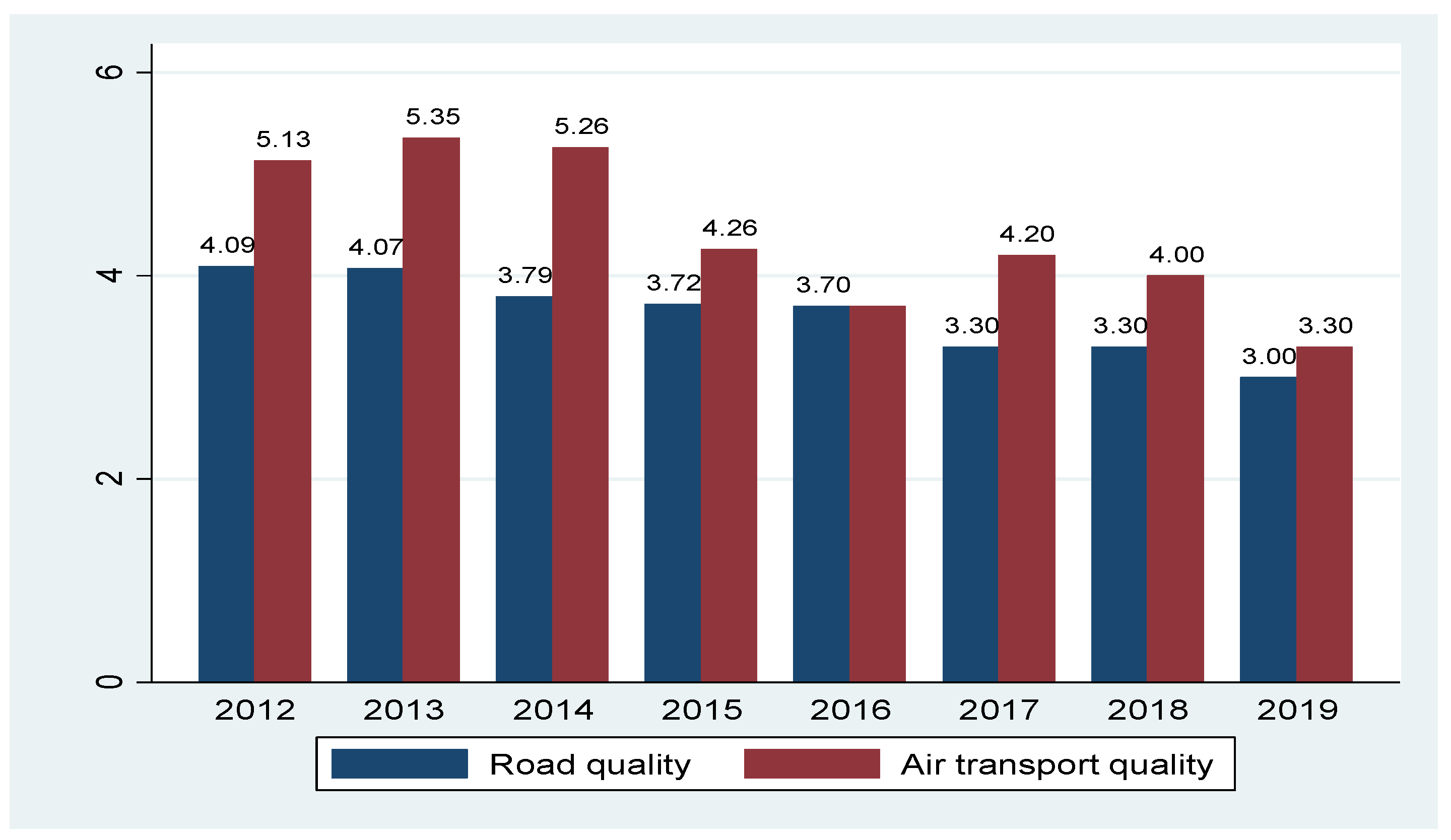
Figure 2.
Quality of railroad and port infrastructures.
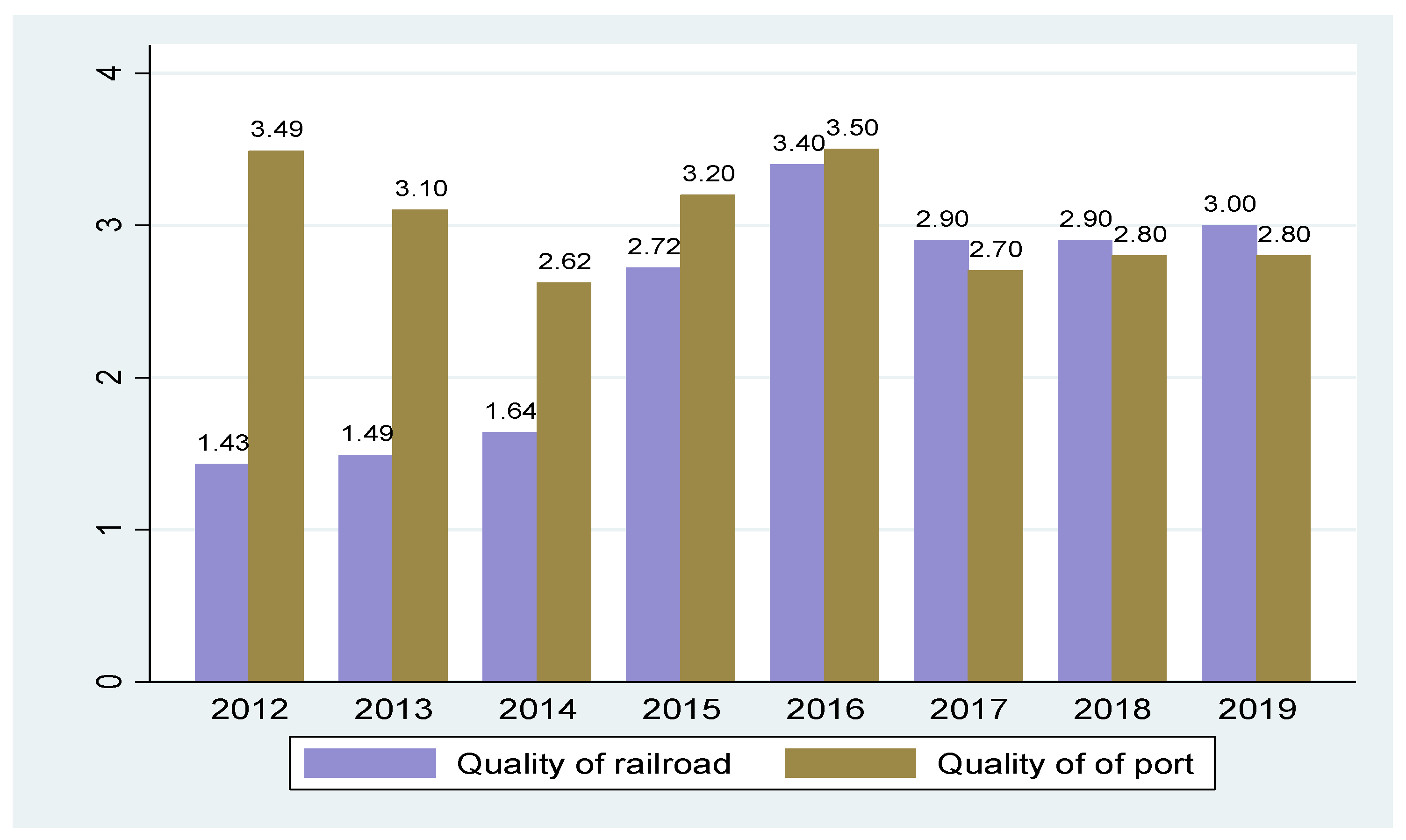
Figure 3.
Digital development index.
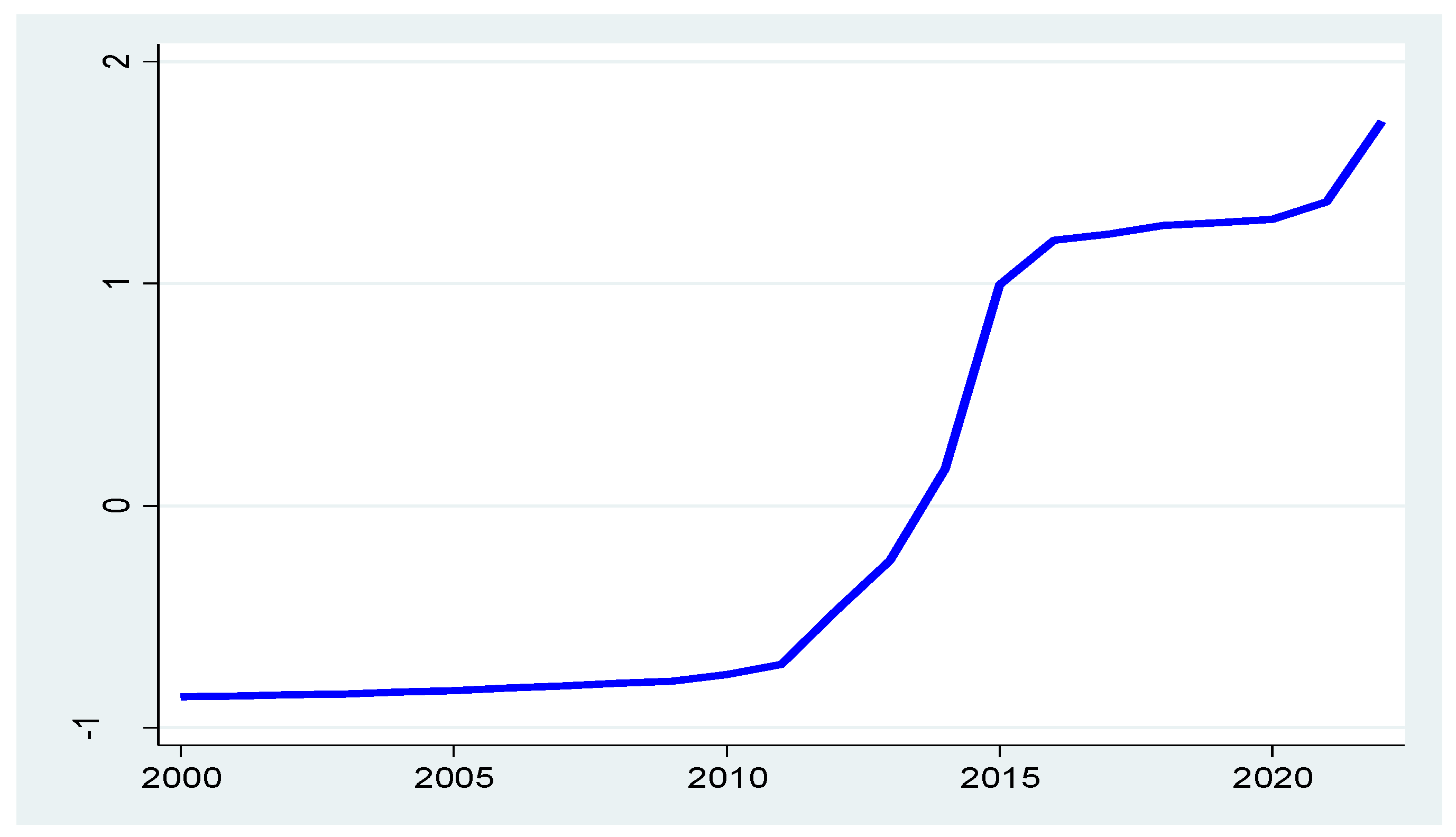

Table 1.
Infrastructures and digital penetration of the country.
| Variables | Mean | St. dev. | Min. | Max. |
|---|---|---|---|---|
| Individuals using the internet (% of population) | 6.449 | 7.483 | 0.015 | 19.400 |
| Access to electricity (% of population) | 29.013 | 14.680 | 10.20 | 55.40 |
| Fixed broadband subscription (per 100 inhabitants) | 0.152 | 0.813 | 0.001 | 0.523 |
| Fixed telephone subscription (per 100 inhabitants) | 0.814 | 0.2178 | 0.344 | 1.080 |
| Mobile access rate (subscriptions per 100 population) | 19.04 | 19.538 | 0.026 | 56.96 |
Source: Authors’ estimation.
Table 2.
Principal factors affecting Ethiopia’s digital development index (OLS estimation output).
| Variables | Coeff. | St. dev. | t | P-value |
|---|---|---|---|---|
| Fixed broadband subscription (per 100 inhabitants) | 0.315 | 0.541 | 0.58 | 0.570 |
| Fixed telephone subscription (per 100 inhabitants) | -0.823 | 0.280 | -2.94 | 0.010 |
| ICT good import (% of all goods import) | 0.059 | 0.030 | 1.96 | 0.068 |
| Mobile cellular subscription (per 100 inhabitants) | 0.018 | 0.009 | 1.94 | 0.071 |
| ICT good export (% of all goods export) | 0.333 | 0.099 | 3.35 | 0.004 |
| Access to electricity (% of population) | 0.024 | 0.010 | 2.35 | 0.033 |
| Renewable energy consumption (% of total energy) | -0.125 | 0.056 | -2.22 | 0.042 |
| Constant | 10.643 | 5.367 | 1.98 | 0.066 |
| Dependent variable: Digital development index R2 = 0.9732 R2adj = 0.9607 P > F =0.000 Significance levels: (1%), (5%) and (10%) | ||||
Source: Author’s estimation.
Disclaimer/Publisher’s Note: The statements, opinions and data contained in all publications are solely those of the individual author(s) and contributor(s) and not of MDPI and/or the editor(s). MDPI and/or the editor(s) disclaim responsibility for any injury to people or property resulting from any ideas, methods, instructions or products referred to in the content. |
© 2025 by the authors. Licensee MDPI, Basel, Switzerland. This article is an open access article distributed under the terms and conditions of the Creative Commons Attribution (CC BY) license (http://creativecommons.org/licenses/by/4.0/).
Copyright: This open access article is published under a Creative Commons CC BY 4.0 license, which permit the free download, distribution, and reuse, provided that the author and preprint are cited in any reuse.