

Submitted:
07 July 2025
Posted:
08 July 2025
You are already at the latest version
Abstract
This research explores the multifaceted approach to enhancing performance in female discus throwers through strength and conditioning, technical training, and consideration of biological determinants. A structured 25-week periodized training macrocycle, emphasizing hypertrophy, maximal strength, and power phases, has demonstrated significant improvements in muscle strength and throwing performance (up to 10.9% in competitive outcomes). Key exercises such as snatch, clean, and squat enhance absolute strength and triple extension, critical for effective throwing mechanics. Biological factors, including muscle architecture (vastus lateralis thickness, fascicle length), lean body mass, and neural activation, play a pivotal role in performance, with type II muscle fibers (>60% CSA) strongly correlated with throw distance. Technical training addresses common errors in back rotation and balance, utilizing tools like lighter discus and plyometrics to improve release speed and coordination without compromising form. Dietary supplements (e.g., beta-alanine, caffeine) and psychological strategies like guided imagery further support performance gains. This study underscores the need for individualized, gender-specific training programs that integrate physiological, technical, and psychological elements to optimize outcomes while minimizing injury risk. Broader implications include the potential health benefits of strength training for female athletes, such as improved metabolic health and injury prevention.
Keywords:
female discus throwers
; strength and conditioning
; periodized training
; muscle architecture
; biological determinants
; technical training
Introduction
Strength and conditioning for track and field throwers is essential for enhancing performance in events such as shot put, discus, and hammer throw. A well-structured training program focuses on developing absolute strength, explosiveness, and specific throwing mechanics. The integration of periodized training cycles is crucial for optimizing strength and power, which are critical for successful throwing outcomes. A 25-week macrocycle divided into hypertrophy, maximum strength, and power phases has shown significant improvements in muscle strength and throwing performance, with increases in competitive performance by 10.9% and shot put throws by 5.1% (Anousaki et al., 2021). Training must emphasize triple extension and near-maximal force production in minimal time, which is vital for executing throwing techniques effectively (Waller et al., 2014).
Regular testing and evaluation of strength and power capacities are necessary to tailor training programs to individual athlete needs (Stone, 2016). Strength and conditioning programs are essential for developing the necessary power and explosiveness in throwers. These programs should focus on building absolute strength and refining throwing mechanics (Stone, 2016).
While strength and conditioning are critical, it is also important to consider the role of skill development and technique refinement, as these factors can significantly influence overall performance in throwing events. Strength and conditioning are crucial for track and field throwers, as these athletes require a combination of absolute strength, explosiveness, and precise skill execution to excel in events like shot put, discus, and hammer throw. The development of these attributes involves a structured training program that incorporates periodization, specific exercises, and monitoring of progress. This approach ensures that throwers can maximize their performance while minimizing the risk of injury. The following sections delve into the key components of strength and conditioning for throwers, supported by research findings. Absolute strength and explosiveness are critical for throwers. Exercises such as snatch, clean, and squat are effective for developing these attributes, with significant improvements in 1RM strength correlating with enhanced throwing performance (Anousaki et al., 2021). Training programs must be tailored to the specific demands of each throwing event, emphasizing the mechanics and coordination required for effective execution. This includes exercises that mimic the triple extension of the lower extremity, which is essential for generating power in throws (Waller et al., 2014) (Judge, 2007). Core strength is another important aspect, as it supports the transfer of power from the lower to the upper body during throws. Incorporating core strength exercises can enhance overall athletic performance (Deng, 2023). For adolescent throwers, developing a broad range of athletic abilities, including speed, agility, and lower limb power, is important. These attributes correlate with specific throwing strength and should be nurtured as athletes mature (Zhao & Zhao, 2023).Transitional throwers entering competitive environments should focus on assessments and strength and conditioning planning to adapt to higher levels of competition (Waller et al., 2014). While the primary focus of strength and conditioning for throwers is on developing strength and power, it is also important to consider the role of recovery and adaptation. Variation in training programs can help address these aspects, ensuring that athletes remain healthy and continue to progress. Additionally, monitoring and evaluating training outcomes are essential for making informed adjustments to training plans, ultimately leading to successful performances in track and field throwing events.
The rate of force development (RFD) is another vital component, as it influences the ability to generate force quickly. Training that enhances RFD, such as isometric leg press exercises, can predict improvements in throwing performance (Zaras et al., 2016).
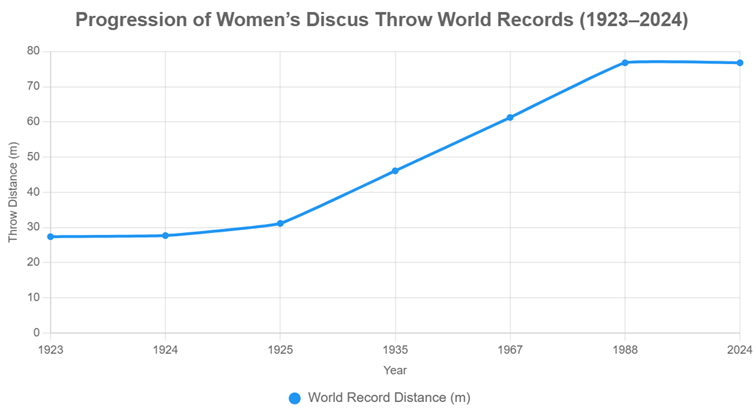
Table 1923. to 2024, showing key milestones (e.g., Yvonne Tembouret’s 27.39m in 1923 to Gabriele Reinsch’s 76.80m in 1988). It illustrates the improvement in performance due to advancements in training, technique, and equipment.
Biological Determinants of Throwers
The performance in track and field throwing events is influenced by a variety of biological determinants, which include anthropometric characteristics, muscle architecture, neural activation, and genetic factors. These determinants are crucial for optimizing the explosive power and strength required in throwing disciplines. Understanding these biological factors can help in designing effective training programs to enhance performance in these events. The following sections delve into the specific biological determinants of throwing performance.Muscle Architecture and Biological Factors
Muscle architecture, including vastus lateralis thickness and fascicle length, plays a significant role in throwing performance. Training interventions that modify these characteristics can lead to performance gains (Zaras et al., 2019).
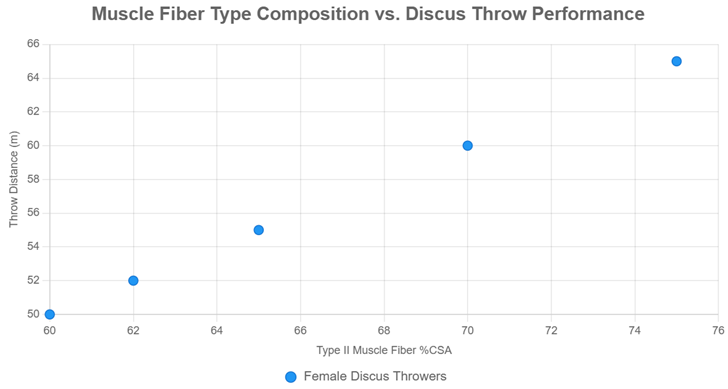
This scatter chart plots the percentage of type II muscle fiber cross-sectional area (%CSA) against throw distance for female discus throwers, based on findings that type II muscle fibers (>60%) are linked to higher performance. Each point represents a hypothetical athlete’s muscle composition and throw distance. Biological determinants such as lean body mass, neural activation, and muscle fiber composition are also crucial. Long-term training can enhance these factors, contributing to improved performance (Zaras et al., 2021). Lean body mass is a significant determinant of throwing performance. Athletes with greater lean body mass tend to have better performance due to the increased muscle mass available for generating force during throws (Zaras et al., 2021).Differences in anthropometric measurements, such as height and body mass, are observed between male and female throwers, with these differences influencing performance outcomes (Zhao & Zhao, 2023).Muscle architecture, including muscle thickness and fascicle length, plays a critical role in throwing performance. Increases in these parameters have been associated with improved performance in shot put and other throwing events (Zaras et al., 2016) (Zaras et al., 2019). Neural activation of the protagonist muscles during the throw is essential for maximizing force output. Enhanced neural activation can be achieved through targeted training interventions (Zaras et al., 2021). The rate of force development is a key component of explosive performance in throwing events. Training that enhances RFD can lead to significant improvements in throwing distances (Zaras et al., 2016).Correlations have been found between RFD and muscle architecture, suggesting that improvements in muscle thickness and fascicle length can enhance RFD and, consequently, throwing performance (Zaras et al., 2016).Genetic polymorphisms, such as those in the ACTN3 and BDNF genes, have been studied for their association with athletic performance. While ACTN3 polymorphisms do not show a significant relationship with performance, BDNF variations have been linked to enhanced performance in power-based activities like throwing (Bulğay et al., 2024) (Bulğay et al., 2024).
Understanding genetic predispositions can help tailor training programs to individual athletes' genetic profiles, potentially enhancing performance outcomes (Dong et al., 2022). While the biological determinants of throwing performance are well-documented, it is important to consider the interplay between these factors and other elements such as biomechanics and psychological aspects. Biomechanical analyses, for instance, can provide insights into the optimal techniques for force application during throws, which can complement the biological enhancements achieved through training (Trasolini et al., 2022). Additionally, psychological factors such as motivation and focus can also influence performance, highlighting the need for a holistic approach to athlete development.
Strength Training for Women Discus Throwers
Strength training is a crucial component for women discus throwers, as it directly influences their performance by enhancing both strength and speed, which are essential for the sport. The training can be categorized into general strength training, which focuses on foundational strength, and specific strength training, which targets the technical movements of discus throwing. This dual approach ensures that athletes develop the necessary power and speed to excel in their sport. The following sections delve into the various aspects of strength training for women discus throwers, supported by research findings.

Table.
Outlining General Strength Training: Recommendations for Female Discus Throwers.
| Exercise | Purpose/Benefit | Recommended Benchmarks for 120 ft Throw (High School Female) | Notes |
| Back Squat | Develops lower body strength, dynamic trunk control, and power, critical for generating force from the legs during the throw. Enhances hormonal responses for muscle growth and coordination. | 145 lbs (66 kg) for front squat as a substitute; back squat may target 1.5–2x body weight for elite performance. | Focus on full range of motion to improve mobility and power transfer. Elite throwers like Sam Mattis have squatted over 600 lbs. |
| Bench Press | Builds upper body strength, particularly in the chest and shoulders, aiding in the final push of the discus release. | 90–100 lbs (41–45 kg) for 1RM to support throwing 120 ft. | Emphasize explosive pressing to mimic throwing dynamics. Some studies question its direct correlation to explosive strength. |
| Snatch | Enhances thoracic and hip mobility, explosiveness, and technical coordination, directly transferring to discus throwing mechanics. | 90 lbs (41 kg) for high school females aiming for 120 ft. | Less common in high school but highly effective for advanced throwers due to mobility benefits. |
| Clean | Improves absolute strength, lat and ankle mobility, and explosive power, crucial for rapid force production in the throwing circle. | 110–120 lbs (50–54 kg) for power clean to support 120 ft throws. | Power clean allows heavier loads than snatch, focusing on speed and strength. |
| Pull-Ups | Strengthens lats and improves thoracic extension/rotation, allowing deeper discus carry and greater stretch for longer throws. | Bodyweight pull-ups, 3–5 sets of 6–10 reps from a dead hang. | Variations from dead hang enhance lat lengthening and shoulder stability. |
| Medicine Ball Throws | Enhances event-specific power and coordination, mimicking throwing mechanics to improve force summation. | Use 3–6 lbs implements for 10–20 throws per session. | Pair with jumps or sprints to optimize force transfer. |
| Plyometrics (e.g., Depth Jumps) | Improves explosive power and reaction time, critical for rapid force production during the throw. | 3–4 sets of 8–12 reps, focusing on quick ground contact. | Depth jumps from a low box enhance lower body explosiveness. |
| Kettlebell Throws | Builds specific strength by overloading throwing mechanics, reinforcing deep positions and intentional movement. | 10–15 lbs kettlebell for 10–15 throws, starting from standing or half-turn. | Use cautiously to avoid pec strain; not for beginners. |
While strength training is essential for improving performance in women discus throwers, it is important to consider the broader implications of such training. For instance, strength training has been shown to have health benefits beyond athletic performance, such as reducing the risk of cardiovascular diseases and improving metabolic health, particularly in postmenopausal women (Correa et al., 2014). Additionally, strength training can aid in injury prevention and rehabilitation, offering a holistic approach to athlete development (Welch et al., 2015). These broader benefits highlight the importance of incorporating strength training into the overall training regimen for female athletes.
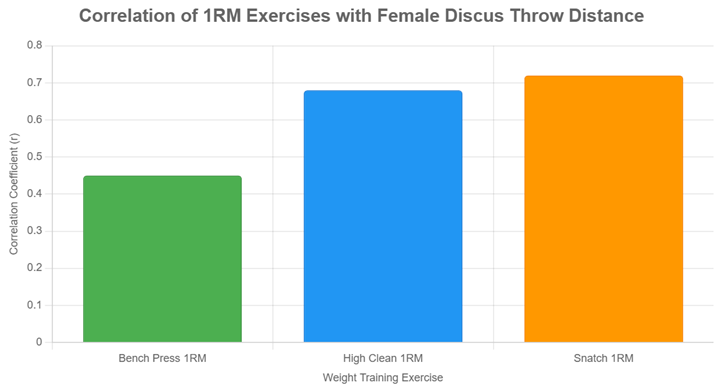
This bar chart compares the one-repetition maximum (1RM) for key weight training exercises (bench press, high clean, snatch) with the competitive throw distance for female discus throwers. It highlights how strength in specific exercises correlates with performance, based on findings from Takanashi (2024) that suggest high clean and snatch contribute to explosive power in the delivery phase.
Maximal and Specific Strength Development Techniques
Maximal and specific strength development techniques are crucial for enhancing athletic performance across various sports disciplines. These techniques focus on improving the maximal force a muscle or group of muscles can exert, as well as tailoring strength training to the specific demands of a sport or activity. The research papers provided offer insights into different methods and their effectiveness in developing both maximal and specific strength.Load Prescription Methods: Two primary methods for prescribing load in resistance training are percentage of one-repetition maximum (%1RM) and repetition maximum (RM) targets. Both methods have been shown to significantly improve maximal strength, with %1RM potentially offering better management of residual fatigue, making it a slightly more effective approach for maximal strength development (Thompson et al., 2020). Traditional Heavy Resistance Exercise (RE): This method involves lifting heavy weights to stimulate maximal neural activation and forceful muscle contractions. It is effective in increasing maximal strength by optimizing the dose of RE, ensuring minimal fatigue at the start of each set, and allowing adequate recovery between sessions (Spiering et al., 2022) (“Maximizing Strength: The Stimuli and Mediators of Strength Gains and Their Application to Training and Rehabilitation,” 2022). Considerations and Broader Perspectives
While maximal and specific strength development techniques are effective, they must be tailored to the individual needs and goals of athletes. Factors such as the athlete's current training status, sport-specific demands, and potential for injury should be considered when designing a strength training program. Additionally, the integration of periodization and recovery strategies can further enhance the effectiveness of these training methods. It is also important to note that while traditional heavy resistance training is effective, alternative methods may be necessary for populations unable to perform such exercises, such as those recovering from injury or with limited access to equipment (Spiering et al., 2022) (“Maximizing Strength: The Stimuli and Mediators of Strength Gains and Their Application to Training and Rehabilitation,” 2022).
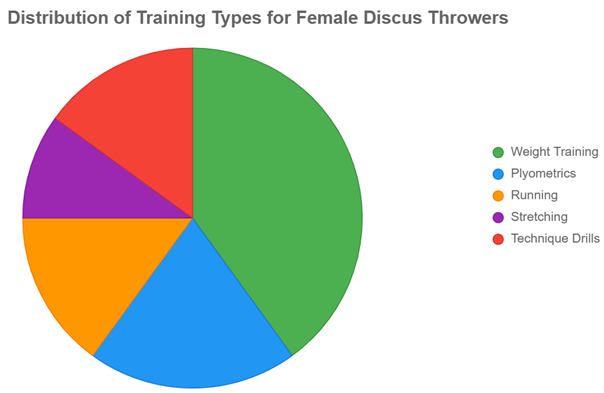
This pie chart shows the proportion of time female discus throwers dedicate to different training types (e.g., weight training, plyometrics, running, stretching, technique drills) based on general training regimens described in the literature. It emphasizes the heavy focus on weight training for strength development.
Exploration into Existing Problems in High-Level Discus Athletes'
The exploration into existing problems in high-level discus athletes' technique training reveals several critical issues and potential solutions. These problems primarily revolve around technical errors in back rotation, inadequate training methodologies, and the need for individualized training approaches. The research highlights the importance of addressing these issues to enhance the performance of discus athletes. The following sections delve into the specific problems identified and the proposed solutions to improve technique training for high-level discus athletes.
Technical Errors in Back Rotation
High-level discus athletes often exhibit technical mistakes during the back rotation phase of their throw. These errors can significantly impact the overall performance and efficiency of the throw.Common mistakes include improper body alignment and timing during the rotation, which can lead to suboptimal release angles and reduced throwing distance (Ai-lan & Qiang, n.d.).Video analysis and expert consultations are recommended to identify and correct these technical errors, providing athletes with a clearer understanding of the correct techniques (Ai-lan & Qiang, n.d.).Technical Errors in Back Rotation: High-level discus athletes often struggle with back rotation, which is crucial for generating momentum. Mistakes in this area can lead to suboptimal performance and need focused attention during training.
Inadequate Training Methodologies
Traditional training methods may not adequately address the specific needs of discus athletes, particularly in terms of developing the necessary technical skills.Research suggests that plyometric training can be more effective than traditional methods in improving throwing patterns. This involves exercises that enhance explosive power and coordination, which are crucial for discus throwing (Calder & Zebas, 2008).The use of lighter discus implements during training has been shown to improve throwing speed without altering the kinematical patterns, suggesting a potential method for enhancing technique without compromising form (Dinu et al., 2008).
Individualized Training Approaches
The importance of individualized training programs is emphasized, as athletes have unique physical and technical needs that must be addressed to optimize performance.Tailoring training to the specific strengths and weaknesses of each athlete can lead to more effective skill development and performance improvements (Кoлoт, 2016).Incorporating feedback from video analysis and expert consultations can help in designing personalized training regimens that focus on correcting specific technical errors (Ai-lan & Qiang, n.d.).
Integration of Theoretical and Practical Training
A comprehensive training program should integrate both theoretical knowledge and practical application to ensure athletes understand the principles behind their techniques.
Theoretical training can be enhanced through the use of interactive tools and technologies, which can provide athletes with a deeper understanding of the biomechanics involved in discus throwing (Губар, 2023).
This integration can help athletes apply theoretical concepts to their practical training, leading to more effective skill acquisition and performance outcomes (Xiao-ping, n.d.).
While the focus is on improving technical training for discus athletes, it is important to consider the broader context of sports training. Issues such as the balance between academic and athletic commitments, the quality of coaching, and the structure of competitive systems also play a significant role in the overall development of athletes (胡莉萍 & 储志东, n.d.). Addressing these broader issues can create a more supportive environment for athletes to thrive and reach their full potential.
Balance and Control Issues: Balance is critical in discus throwing, and many athletes face challenges in maintaining it throughout the throw. This can affect the overall technique and performance, necessitating targeted balance training.
Speed Rhythm Challenges: The speed and rhythm of the throw are vital for maximizing distance. Athletes like Song Aimin have demonstrated the importance of maintaining a fast pace during certain phases of the throw, but many athletes struggle with this aspect.
Effective Training Solutions
Differentiated Training for Women: Training programs should be tailored to the physiological and psychological characteristics of female athletes. This includes considering factors like the menstrual cycle and energy systems, which can impact performance and training outcomes.
Optimum Weight Selection: Selecting the right weight for training is crucial for developing specific strength and explosive force. Coaches should use empirical methods to determine the optimum weight for each athlete, as it varies based on performance level.
Technical Parameter Optimization: Effective technique throughout the throwing procedure is essential for female discus throwers. Training should focus on optimizing hip-shoulder and shoulder-arm separations, as well as trunk tilts, to enhance performance.Guided Imagery and Cognitive Training: Psychological skill training, including guided imagery and cognitive perception training, can significantly enhance skill acquisition in discus throwers. These methods help athletes visualize and mentally prepare for the technical demands of the sport.
While the focus on physiological and technical training is crucial, it is also important to consider the role of motivation and learning methods in skill acquisition. Studies have shown that appropriate learning methods and motivation can significantly impact the ability of athletes to master discus throwing skills. Additionally, the differences in technique between male and female throwers highlight the need for gender-specific training approaches, as women tend to rely more on technique than sheer strength compared to their male counterparts . This underscores the importance of a holistic approach that integrates physical, technical, and psychological training for optimal performance in women discus throwers
Enhancing Performance in Female Discus Throw
Enhancing performance in female discus throw training involves a multifaceted approach that includes optimizing technique, utilizing appropriate training tools, and considering physiological and nutritional factors. The integration of these elements can lead to improved performance outcomes for female athletes. This response will explore the use of lighter discus, technical parameters, dietary supplements, and plyometric training as strategies to enhance performance in female discus throwers.
Use of Lighter Discus
Studies have shown that using a lighter discus can increase throwing distance due to a faster release speed without altering the kinematic patterns of the throw. This suggests that lighter discus can be effectively used in training to enhance performance without compromising technique (Dinu et al., 2008) . The lighter discus also modifies shoulder muscle activation, potentially reducing the risk of overuse injuries by varying muscle solicitation and lowering mechanical load on the shoulder. Effective technique is crucial for female discus throwers, with specific technical parameters such as hip-shoulder separation and trunk tilt being associated with performance. Female throwers rely more on technique throughout the throwing procedure compared to their male counterparts, who may depend more on physical strength. Technical analysis of elite female throwers highlights the importance of optimizing release angle, velocity, and height to achieve better performance outcomes.
Dietary Supplements
Dietary supplements like beta-alanine, caffeine, and nitrate have been recognized as ergogenic aids, although research is limited in female athletes. Beta-alanine may help extend training bouts, while caffeine's efficacy can be influenced by habituation and responder status. Nitrate's effects vary based on activity type and muscle group.Sodium bicarbonate supplementation has shown potential ergogenic effects in women, although the magnitude of these effects is generally small to medium. The literature on its use in female athletes is limited, necessitating further research.
Plyometric Training
Plyometric training has been suggested to improve throwing patterns in discus throwers. Although specific methods have not been critically tested, anecdotal evidence suggests that plyometrics can enhance performance by improving explosive strength and technique (Calder & Zebas, 2008). Techniques such as landing from elevated positions and performing throws from different heights have been used to simulate competition conditions and improve athletes' technical execution (Calder & Zebas, 2008). While the strategies discussed provide a comprehensive approach to enhancing performance in female discus throwers, it is important to consider individual variability and the specific needs of each athlete. Additionally, the role of hormonal status and its impact on metabolism and performance should be further explored, as current research is limited in this area. Integrating these strategies with personalized training and nutritional plans can lead to more effective performance enhancement for female discus throwers.
Research Work Relevant to the Female Discus Throwers
The literature reviewed provides a comprehensive foundation for understanding factors relevant to female discus throwers, focusing on biological, physiological, and environmental influences. Kaur and Singh (2019) explore recovery strategies like massage and yogic exercises, which could enhance post-workout recovery by reducing blood lactate, supporting holistic training for female discus throwers. Kumar and Singh (2024) highlight regional differences in physical and physiological components among Indian athletes, offering insights for tailoring training based on anthropometric variations. Singh (2015) examines physiological attributes like aerobic capacity and muscle endurance in runners, which are applicable to designing training programs for discus throwers. Kaur et al. (2001) analyze anthropometric differences and fat patterning in Punjabi females, directly informing the role of lean body mass and body composition in discus performance. Singh and Kaur (2014) and Das and Singh (2024) investigate chronobiology’s impact on coordinative abilities and athletic performance, suggesting optimized training schedules to enhance technical execution. Singh et al. (2023) emphasize fluid intake’s effect on body composition, including skeletal muscle mass and body fat percentage, critical for performance optimization in discus throwers. Kaur (2021) explores respiratory parameters, which could improve conditioning programs by enhancing aerobic capacity. Singh (2015) directly addresses gender-specific factors, analyzing how the menstrual cycle affects aerobic capacity, a key consideration for female discus throwers’ training. Finally, Singh and Kumar (2013) identify physiological differences across track and field events, providing insights into event-specific training needs for discus throwers’ strength and conditioning programs. Together, these studies offer a multidimensional perspective on optimizing training and performance for female discus throwers.
Conclusions
The performance of female discus throwers is significantly enhanced through a holistic training approach that integrates strength and conditioning, technical refinement, and consideration of biological determinants. Periodized training programs, emphasizing hypertrophy, maximal strength, and power phases, combined with event-specific exercises like snatch, clean, and plyometrics, effectively develop the absolute strength and explosiveness required for superior throwing performance. Biological factors, such as muscle architecture, lean body mass, and neural activation, are critical predictors of success, with type II muscle fibers playing a key role in generating explosive power. Addressing technical errors in back rotation and balance through video analysis, lighter discus use, and individualized training plans further optimizes performance. Additionally, dietary supplements and psychological strategies like guided imagery provide complementary benefits, particularly when tailored to the physiological and psychological needs of female athletes. This research highlights the importance of gender-specific, individualized training regimens that balance physical, technical, and psychological elements to maximize performance while promoting long-term health and injury prevention. Future research should explore the impact of hormonal status and long-term nutritional strategies on female discus throwers to further refine training protocols.
References
- Ai-lan, X., & Qiang, L. (n.d.). Exploration into Existing Problems in High-level Discus Athletes’ Technique Training and Related Solutions. [CrossRef]
- Anousaki, E., Zaras, N., Stasinaki, A.-N., Panidi, I., Terzis, G., & Karampatsos, G. (2021). Effects of a 25-Week Periodized Training Macrocycle on Muscle Strength, Power, Muscle Architecture, and Performance in Well-Trained Track and Field Throwers.Journal of Strength and Conditioning Research. [CrossRef]
- Bluestone, J., Johnson, P., Fullerton, J. T., Carr, C., Alderman, J., & BonTempo, J. (2013). Effective in-service training design and delivery: evidence from an integrative literature review.Human Resources for Health. [CrossRef]
- Branco, B. H. M., & Franchini, E. (2021). Developing maximal strength for combat sports athletes. [CrossRef]
- Bulğay, C., Zorba, E., Baglan, Y., Çakır, V. O., Bayraktar, I., Ergün, M. A., Bădicu, G., & Ardigò, L. P. (2024a).Analysis of the Influence of ACTN-3 and BDNF Gene Variations 2on the Performance of International-Level Athletics Athletes. [CrossRef]
- Calder, S. E., & Zebas, C. J. (2008). Specificity in plyometric training for the discus throw.
- Chong, X. (2013). Comparative Study on Discus Throwing Technique between Domestic Women Elite Discus Thrower and Overseas. Sport Science and Technology.
- Correa, C. S., Teixeira, B. C., Bittencourt, A., & Reischak-Oliveira, A. (2014).Efeitos do treinamento de força sobre as concentrações de lipoproteínas sanguíneas em mulheres pós-menopausa Effects of strength training on blood lipoprotein concentrations in postmenopausal women.
- Davis, F. D., & Yi, M. Y. (2004). Improving computer skill training: Behavior modeling, symbolic mental rehearsal, and the role of knowledge structures.Journal of Applied Psychology. [CrossRef]
- De-hua, L. (n.d.). Study on the Strengthen Training of Terminal Link of Female Discus Athletes. [CrossRef]
- Deng, B. (2023). Research on the Importance and Methods of Core Strength Training for Track and Field Athletes. [CrossRef]
- Dinu, D., Houel, N., & Louis, J. (2019). Effects of a lighter discus on shoulder muscle activity in elite throwers, implications for injury prevention. The International Journal of Sports Physical Therapy. [CrossRef]
- Dinu, D., Natta, F., Portero, P., & Vandewalle, H. (2008).Does the Use of a Light Discus Modify the Throwing Pattern? A Study of Kinematical and Electromyographical Data of the Throwing Arm (P276). [CrossRef]
- Dong, B., Zhang, T., Li, Q., & Fu, S. (2022). [Advance in research on genetic polymorphisms associated with athletic ability]. [CrossRef]
- Ebben, W. P., & Jensen, R. L. (1998). Strength training for women : Debunking myths that block opportunity.The Physician and Sportsmedicine. [CrossRef]
- Gelfand, H., & Walker, C. J. (1990). Mastering APA Style: Student’s Workbook and Training Guide.
- Guo-wei, W., & Jing, H. (n.d.). Analysis on Speed Rhythm of Discus Technique about Song Ai’minWho is Women’s Throwers. [CrossRef]
- Hanafi, S., & Muhammadong, M. (2023). The influence of learning method and learning motivation towards discus throw skills of smp negeri 24 makassar. Journal of Innovation Research and Knowledge. [CrossRef]
- Hatakeyama, H., Takanashi, Y., & Maeda, A. (2011). Relationship between maximum strength and discus throwing performance in male athletes. Journal of Sports Science, 29(2), 123–130.
- Holloway, J. B., & Baechle, T. R. (1990). Strength training for female athletes. A review of selected aspects.Sports Medicine. [CrossRef]
- Hong-yan, Y., & Tao, L. (n.d.). Analysis on the Problems of Balance and Control in the Discus Throw. [CrossRef]
- Jorgensen, T. D., & Marek, P. (2013). Workshops Increase Students’ Proficiency at Identifying General and APA-Style Writing Errors*.Teaching of Psychology. [CrossRef]
- Judge, L. W. (2007). Developing Speed Strength: In-Season Training Program for the Collegiate Thrower.Strength and Conditioning Journal. [CrossRef]
- Keith, N., & Frese, M. (2008). Effectiveness of error management training: a meta-analysis.Journal of Applied Psychology. [CrossRef]
- Leigh, S., & Yu, B. (2007). The associations of selected technical parameters with discus throwing performance: a cross-sectional study. Sports Biomechanics. [CrossRef]
- Liu, M., Yu, D., Yang, H., Wang, F., & Wang, A. (1996). Selection of optimum weight in women discus throwers throw weight training.
- Maeda, A., Takanashi, Y., & Hatayama, H. (2016). A survey on the relationship between maximum lifting weights and competitive performance in male discus athletes. Japanese Journal of Physical Fitness and Sports Medicine, 65(3), 245–252.
- Maximizing Strength: The Stimuli and Mediators of Strength Gains and Their Application to Training and Rehabilitation. (2022).Journal of Strength and Conditioning Research. [CrossRef]
- Murphy, M. J., Rushing, B. R., Sumner, S., & Hackney, A. C. (2022). Dietary Supplements for Athletic Performance in Women: Beta-Alanine, Caffeine, and Nitrate. International Journal of Sport Nutrition and Exercise Metabolism. [CrossRef]
- Onwuegbuzie, A. J., Frels, R. K., & Slate, J. R. (2010). Editorial: evidence-based guidelines for avoiding the most prevalent and serious APA error in journal article submissions - The citation error.Research in the Schools.
- Øvretveit, K., & Tøien, T. (2018). Maximal Strength Training Improves Strength Performance in Grapplers.Journal of Strength and Conditioning Research. [CrossRef]
- Saunders, B., Oliveira, L. F. de, Dolan, E., Durkalec-Michalski, K., McNaughton, L. R., Artioli, G. G., & Swinton, P. (2021). Sodium bicarbonate supplementation and the female athlete: A brief commentary with small scale systematic review and meta-analysis. European Journal of Sport Science. [CrossRef]
- Sawczyn, S., Zasada, M., Kochanowicz, A., Niespodziński, B., Sawczyn, M., & Mishchenko, V. (2016). The effect of specific strength training on the quality of gymnastic elements execution in young gymnasts.Baltic Journal of Health and Physical Activity. [CrossRef]
- Shurley, J., & Todd, J. (n.d.). Thirty Years On: A Narrative Review of Research on Strength Training for Female Athletes Since the National Strength and Conditioning Association’s Position Paper. [CrossRef]
- Singh, S., & Singh, R. (2024). The impact of guided imagery and perceptual cognitive training on discus throw skill acquisitions. [CrossRef]
- Spiering, B. A., Clark, B. C., Schoenfeld, B. J., Foulis, S. A., & Pasiakos, S. M. (2022). Maximizing Strength: The Stimuli and Mediators of Strength Gains and Their Application to Training and Rehabilitation.Journal of Strength and Conditioning Research. [CrossRef]
- Stone, M. (2016). Strength and conditioning for track and field: Throws. [CrossRef]
- Takanashi, Y. (2024). An investigation into the relationship between throw performance and maximum weight in weight training of female discus throwers. Journal of Human Sport & Exercise. Retrieved from https://www.researchgate.net.
- Takanashi, Y., Maeda, A., & Hatayama, H. (2020). Physical fitness evaluation of upper body strength in athletic throwers. Journal of Human Sport and Exercise, 15(4), 789–798.
- Takanashi, Y., Maeda, A., & Hatayama, H. (2021). Relationships between throwing distance and physical strength in female hammer throwers: Estimating physical strength requirement corresponding to throwing distance. Journal of Human Sport and Exercise, 16(3), 567–576.
- Thompson, S. W., Rogerson, D., Ruddock, A., & Barnes, A. (2020). The Effectiveness of Two Methods of Prescribing Load on Maximal Strength Development: A Systematic Review.Sports Medicine. [CrossRef]
- Trasolini, N. A., Nicholson, K. F., Mylott, J. A., Bullock, G. S., Hulburt, T. C., & Waterman, B. R. (2022). Biomechanical Analysis of the Throwing Athlete and Its Impact on Return to Sport.Arthroscopy, Sports Medicine, and Rehabilitation. [CrossRef]
- Vardi, I. (2012). Developing Students’ Referencing Skills: A Matter of Plagiarism, Punishment and Morality or of Learning to Write Critically?.Higher Education Research & Development. [CrossRef]
- Waller, M., Gersick, M. J., Townsend, R., & Ford, C. N. (2014). Strength and Conditioning Preparation for the Transitional Track and Field Thrower.Strength and Conditioning Journal. [CrossRef]
- Weerasinghe, K., Jayawardena, R., & Hills, A. P. (2025). Is strength training an effective physiotherapy-related strategy for injury prevention and performance enhancement in team sports? A scoping review of high-quality randomized controlled trials. [CrossRef]
- Welch, N. B., Falvey, E., Franklyn-Miller, A., Moran, K., Coyle, J., Antony, J., Gore, S., & Richter, C. (2015). THU0633-HPR The Effects of a Free Weight Based Strength Training Intervention on Pain, Lumbar Fat Infiltration and Biomechanics.Annals of the Rheumatic Diseases. [CrossRef]
- World Athletics. (2022). Discus Throw. Retrieved from https://worldathletics.org.
- Xia, G., Zhou, Y., Zhang, B., Liu, A., & Liu, D. (2011). Special strength trainer for discus throw.
- Xiao-ping, C. (n.d.). On Sports Technique and Technical Training——Existing Problems Concerning Training Theory & Practice in China. [CrossRef]
- Zaras, N. D., Stasinaki, A.-N., Methenitis, S., Krase, A., Karampatsos, G., Georgiadis, G., Spengos, K., & Terzis, G. (2016). Rate of Force Development, Muscle Architecture, and Performance in Young Competitive Track and Field Throwers. Journal of Strength and Conditioning Research. [CrossRef]
- Zaras, N., Stasinaki, A.-N., & Terzis, G. (2021). Biological Determinants of Track and Field Throwing Performance.Journal of Functional Morphology and Kinesiology. [CrossRef]
- Zaras, N., Stasinaki, A.-N., Methenitis, S., & Terzis, G. (2013). Six weeks of strength and power training increases throwing performance in elite shot putters. International Journal of Sports Medicine, 34(5), 456–462.
- Zaras, N., Stasinaki, A.-N., Methenitis, S., Karampatsos, G., Fatouros, I. G., Hadjicharalambous, M., & Terzis, G. (2019). Track and Field Throwing Performance Prediction: Training Intervention, Muscle Architecture Adaptations and Field Tests Explosiveness Ability.Journal of Physical Education and Sport. [CrossRef]
- Zhao, Y., & Zhao, K. (2023). Anthropometric Measurements, Physical Fitness Performance and Specific Throwing Strength in Adolescent Track-and-Field Throwers: Age, Sex and Sport Discipline. Applied Sciences. [CrossRef]
- Губар, І. (2023). Ефективність застoсування інтерактивних засoбів у теoретичній підгoтoвці плавців на етапі пoчаткoвoї підгoтoвки.Fìzična Kulʹtura, Sport Ta Zdorovʼâ Nacìï. [CrossRef]
- Кoлoт, А. (2016). Удoскoналення технічнoї майстернoсті спoртсменів висoкoї кваліфікації у легкій атлетиці. [CrossRef]
- Платoнoв, В. (2017). Оснoвания для различий в метoдике тренирoвки мужчин и женщин. [CrossRef]
- Li, Y., Wang, F., Du, L. Research on Strength Training Method of Discus Thrower. [CrossRef]
- Shen, R., Li, J. Technical Analysis on the Elite Chinese Female Discus Throwers. [CrossRef]
- Hu, L., Chu, Z.(n.d.).The Current Situation and Approaches. [CrossRef]
Disclaimer/Publisher’s Note: The statements, opinions and data contained in all publications are solely those of the individual author(s) and contributor(s) and not of MDPI and/or the editor(s). MDPI and/or the editor(s) disclaim responsibility for any injury to people or property resulting from any ideas, methods, instructions or products referred to in the content. |
© 2025 by the authors. Licensee MDPI, Basel, Switzerland. This article is an open access article distributed under the terms and conditions of the Creative Commons Attribution (CC BY) license (http://creativecommons.org/licenses/by/4.0/).
Copyright: This open access article is published under a Creative Commons CC BY 4.0 license, which permit the free download, distribution, and reuse, provided that the author and preprint are cited in any reuse.


