

Submitted:
03 July 2025
Posted:
04 July 2025
You are already at the latest version
Abstract
The research was conducted between 2014 and 2024 at the Vokė Branch of the Institute of Agriculture, Lithuanian Research Centre for Agriculture and Forestry. Experimental plots were established on sandy loam soil with carbonaceous fluvio-glacial gravel eluviated substrate (IDp), classified as Haplic Luvisols (LVh) according to the FAO-UNESCO system. The study involved a comprehensive evaluation of a potato (Solanum tuberosum L.) collection consisting of 287 varieties and hybrids originating from major potato-producing regions, as well as breeding material developed in Lithuania. The analysis revealed a high level of genetic diversity within the collection. Varieties exhibited significant variation in morphological, physiological, immunological, and agronomic traits, both within and across maturity groups. This genetic diversity has been directly applied in Lithuanian potato breeding programmes. Hybridisation methods were employed using the genetic resources preserved in the national collection, with the primary aim of developing disease-resistant varieties possessing superior agronomic performance and culinary quality. In addition, the study assessed the resistance of Lithuanian potato varieties to Phytophthora infestans (late blight) under diverse pathogen populations and climatic conditions in both Lithuania and Ukraine. The findings contribute valuable insights for the selection of resistant genotypes in the context of climate change and evolving pathogen pressures.
Keywords:
breeding
; collection
; potato
; varieties
1. Introduction
The potato (Solanum tuberosum L.) is a perennial plant belonging to the nightshade family (Solanaceae) (Struiweng, 2007). The potato's origins are believed to be in the Andes, from where it was introduced into European diets in the sixteenth century (Rocha et al., 2003). The potato is considered a highly significant food crop on a global scale (Maga, 1994). Potatoes are the fourth most cultivated crop in the world after wheat, rice and maize (Vreugdenhil et al., 2007). The versatility of the potato is evidenced by its use as both human food and animal feed, as well as for seed tuber production and industrial applications. The food industry employs potatoes in the production of various food products, including crisps, chips, flakes, and canned potatoes. In contrast, the non-food industry utilizes potatoes for the production of starch, alcohol, and other by-products (Ríos et al., 2024).
Vokė Branch of the Institute of Agriculture of the Lithuanian Centre of Agrarian and Forestry is responsible for the breeding and primary seed production from meristem tissue programmes for potatoes. The gene bank of potato genetic resources is collected and stored here. The breeding department is responsible for the research on a collection of over 287 potato varieties and hybrids, selected from diverse global sources. Potato breeding represents a pivotal approach in cultivating robust varieties that exhibit robust resistance to adverse climatic conditions, diseases and pests (Razukas et al., 2008). The generation of high-quality potato seed and the development of high-yielding varieties are a testament to the efficacy of breeding programmes that have been in place for many years (Asakaviciute et al., 2009). In the context of variability, the influence of human and ecological factors on the breeding of new varieties is recognised as one of the most effective strategies for addressing quality, disease and ecological challenges (Brazinskiene et al., 2014; Asakaviciute et al., 2016).
A significant challenge confronting potato farmer is the prevalence of diseases and pests, which contribute to diminished yields. In conjunction with unfavorable meteorological conditions, these factors can result in a decline in yield of up to 10-20 tons per hectare. Potato blight, a disease caused by the oomycete Phytophthora infestans (Mont.) de Bary, is among the most economically damaging potato diseases (Schepers, 2000; Hansen et al., 2005). This disease has been particularly problematic in regions characterised by high relative humidity, cool nights and warm days in summer. The decline in foliage due to blighting results in a reduction of the surface area for photosynthesis, thereby lowering the potential yield (Rymuza et al., 2015). The resilience of P. infestans to current knowledge and practice indicates that this is a complex problem to resolve (Kroon et al., 2011). The issue of potato blight is a complex one, and it is a matter of global concern.
Potato blight, a disease caused by the fungus Phytophthora infestans (Mont.) de Bary, is one of the most devastating diseases affecting potato crops (Schepers 2000). It poses a significant threat in regions characterised by high relative humidity, cool nights and warm days during the summer months. Damaged potato foliage reduces the assimilation surface, resulting in reduced yield. The genetic basis of resistance to late blight is complex and multifaceted, involving the action of major R genes, as well as a yet to be fully elucidated number of genes that contribute to quantitative parameters of resistance (Asakaviciute et al., 2025). Solanum demissum has been observed to demonstrate the highest efficiency of polygenes (Ballvora et al., 2012). Resistance of potato varieties to Phytophthora infestans is one of the most significant breeding objectives. Potato varieties exhibiting relative resistance to Phytophthora infestans have been developed; however, their resistance can be compromised by alterations in the race composition of the pathogen. Furthermore, the utilisation of a restricted gene pool in the breeding process for potato late blight resistance renders the disease capable of affecting large groups of varieties concurrently in multiple years. According to Hansen et al. (2005), in Europe, varieties initially classified as resistant are heavily infected by the disease as a result of shifts in pathogen populations. The foundation of potato breeding entails the collection of initial material, its subsequent testing, and its utilisation in breeding programmes. The investigation and evaluation of Lithuanian potato varieties that demonstrate resistance to blight would serve as the foundation for the development of blight-resistant potato varieties.
The primary research focus of the Lithuanian potato breeding programme has been, and will continue to be in the near future, the selection of early- and main-crop immunopatogenes potatoes. The rationale behind this focus is rooted in the inherent resilience of these varieties to diseases and pests, a quality that renders them particularly well-suited for organic farming systems. A key objective of the present study was to investigate the potato genetic collection, to select genetically valuable genotypes and to introduce them into the breeding programme. The aim of this study was also to evaluate the resistance of different Lithuanian potato varieties to late blight under different pathogen populations and climatic conditions in Lithuania and Ukraine. The present study was conducted under the terms of Agreement No. 1 dated 24.01.2022 on creative cooperation between the Ukrainian Research Station of Plant Quarantine of the Institute of Plant Protection of the National Academy of Agrarian Sciences and the Voksky Branch of the Lithuanian Research Centre for Agriculture and Forestry.
2. Materials and Methods
2.1. Study of Potato Genetic Resources Collection in Lithuania
Research was performed on 287 potato cultivars and hybrids. Genetic potato material was collected from all over the world. Potato genetic collection trials were planted at the breeding department of the Vokė branch of the Institute of Agriculture of the Lithuanian Centre of Agrarian and Forestry during the period 2014–2024. The experimental plots were established on sandy loam on carbonaceous fluvial-glacial gravel eluviated soil (IDp), according to FAO-UNESCO classification Haplic Luvisols (LVh). The trials were performed on a soddy podzolic sandy loam soil (Haplic Luvisols (LVh)) in a crop rotation field. Soil natural fertility was medium: humus content up to 2.0 %, pHKCl 5.1–5.5, amount of available phosphorus – P2O5 180–240 mg kg-1 and of available potassium – K2O 150–190 mg kg-1. Potato varieties and seedlings were planted in the separate 4.9 m2 field plots. In every field plot there were 2 rows, the number of tubers – 20. Potato tubers were planted when the soil temperature had increased to 7–10oC. Planting was done by hand into hilled rows. Fertilization was local N90P90K90 during potato planting. Potato trial plot was twice hilled and harrowed before sprouting and twice hilled during potato plants growing. Fungicides against late blight were applied annually once during the growing season, insecticides against Colorado beetles and aphids were applied depending on their infestation level in the field. Potato trials were harvested by hand at the end of the growing period. Tubers were stored during the winter season in the potato storage with an air temperature of +2oC and air humidity of 80–90%.
The characteristics of potato plants have been recorded according to the BBCH scale (Bauer et al., 1988). This scale encompasses a multitude of over 50 parameters. The most significant of these are: the onset of sprouting, the period of plant exuberance, the flowering period, the colour of the flowers, the number of stems, the development of diseases on the plant, the onset of foliage destruction and the end of the vegetation period. The categorisation of potato varieties is based on their vegetative period, which is divided into five maturity groups: first early, second early, main crop, late and last late. The assessment of foliar resistance to bacterial, fungal and viral diseases was conducted during the flowering period through a visual evaluation. The quality traits of potato yield were determined by Razukas et al. (2008) and included total yield, marketing tuber yield, tuber number, tuber shape, eye depth, skin and flesh colour, dry matter content, cooking and technological traits.
2.2. Screening for Resistance to Potato Late Blight in Lithuania
Gene bank potato varieties and seedlings during vegetation period were tested for the resistance to diseases. The trials were set up in conformity with the local agricultural potato growing practices. Disease severity was measured by the scale approved and recommended by OEPP/EPPO (Schepers, 2000). One hundred plants, 100 plants from every plot i.e., were tested. The potato vine infection level was scored according to the attack: few plants with lesions, 1–2 lesions in a 10-m radius; 0.5-1-5 spots per plant; 1 – 5-10 spots per plant; 5 – about 50 spots per plant, or up to 1 in 10 leaflets lesions; 10 – about 10% of leaf area destroyed; up to 4 in 10 leaves destroyed; nearly every leaflet has lesions, plants still look normal; 25 – about 25% of leaf area destroyed; nearly every leaflet has lesions; plants remain normal; the field still looks green; 50 – about 50% of leaf destroyed; every plant with lesions; the field is still green but with brown spots; 75 – about 75% of leaf area destroyed; the field colour is between green and brown; 95 – only a few leaves left, but stems are still green; 100 – all leaves dead or dying. Late blight data obtained from the trial field were scored percentage: late blight spread was assessed, and the first early potato cultivar ’VB Venta’ was used as control.
Disease spread was calculated by the formula: P = n × 100 / N, where P is the spread of disease (%), n is the number of infected plants/tubers, and N is the number of checked infection-free and infected plants/tubers. Disease intensity was calculated using the following formula: R = ∑ (×) / N, where R is the disease intensity (%), ∑ (x) is the sum of the disease development in percent and the number of damaged plants/tubers in a certain percentile group, and N is the number of checked infection-free and infected plants/tubers.
2.3. Screening for Resistance to Potato Late Blight in Ukraina
The assessment of the resistance of potato varieties to late blight was carried out on a natural infectious background (Bychenkova, 1969; Golyachuk, Kosylovych, 2018). Late blight disease of potato leaves was carried out on plots of 50 m2, 100 bushes of each variant of the experiment were counted (25 bushes in four replications). The intensity of late blight disease was recorded on a 9-point scale (Methodological recommendations, 2002; Cherednychenko et al., 2021).
Field studies were conducted on a natural infectious background, where the most common race of late blight in Ukraine is 1.2.3.4.5.6+0.7.8.9.10.11 xyz. The first registration was carried out when single symptoms of the disease appeared on the tested material for each bush, the following ones - every 7 days until the potato tops died. The degree of infection was scored on a 9-point scale: 9-8, very high resistance (symptoms of infection absent); 7-6, relatively high resistance (infected tissue ranging from 10% to 25% surface and cut from tubers); 5-4, moderate resistance (infected from 25% to 50%); 3-2, low resistance (infected from 50% to 75%); and 1, very low resistance (infected more than 75%) (Cherednychenko et al., 2021; Asakaviciute et al., 2025).
The average resistance score is determined by summing the scores for each plant and dividing the sum by the number of records.
Disease spread was calculated by the formula: P = n × 100 / N, where P is the spread of disease (%), n is the number of infected plants/tubers, and N is the number of checked infection-free and infected plants/tubers. Disease intensity was calculated using the following formula: R = ∑ (×) / N, where R is the disease intensity (%), ∑ (x) is the sum of the disease development in percent and the number of damaged plants/tubers in a certain percentile group, and N is the number of checked infection-free and infected plants/tubers (Melnyk, 2016).
2.4. Statistical Data Analysis
Statistical analysis of the data was performed using a StatView ANOVA program. The obtained data were assessed by the method of dispersion analysis, employing the ANOVA (LSD0.05) statistical data processing software (Tarakanovas, 2002)
3. Results and Discussion
3.1. Results of the Survey of the Potato Genetic Resources Collection in Lithuania
One of the primary characteristics of crops is the length of the growing season. Research conducted during the potato growing season has resulted in a more efficient utilisation of the plant's potential within a specific geographical zone. The length of the day exerts a direct influence on the growing season and the yield of potato varieties. Potato varieties originating from South America are classified within the short day (13-14 h) geographical zone (Ríos et al, 2024). Consequently, the potato genebank collection is divided into five maturity groups. The experimental data collected indicates that the first group of early-maturing potatoes includes potato varieties with a growing time from sprouting to leaf death of 52-58 days in south-eastern Lithuania. A total of 49 varieties were allocated to this maturity group. The second group of early potatoes includes those with a growing period of 59-68 days. This group consists of 62 varieties. The primary maturity group encompasses potatoes with a growing period of 69-75 days, comprising 42 varieties. The late maturity group encompasses 20 varieties, with a growing period of 76-85 days. The late-maturing group has a growing period of 86-101 days and contains 27 varieties. A pivotal consideration in the context of hybrid potato breeding pertains to flowering and berry production. Empirical evidence demonstrates that contemporary potato varieties that deviate significantly from their progenitor varieties exhibit diminished berry production. In the past decade, 120 varieties have demonstrated a consistent flowering period, while only 67 varieties and hybrids have naturally ripened seed under field conditions without the need for any specific intervention. The primary factor contributing to the absence of berries and seeds is sterility. In certain instances, the onset of flowering was absent due to the failure of flowers to develop. The flowers underwent a reduction in size to 0.5-1 cm. In other cases, the phenomenon of phenotypic stamen sterility was observed. This phenomenon can be attributed to various factors, including unfavourable weather conditions, such as elevated air temperatures of 25-30°C during the potato flowering period. It is noteworthy that phenotypic sterility can be eliminated in a moist and cool medium. Under such conditions, potatoes exhibit robust flowering and seed production. Potato varieties exhibiting natural stamen sterility can be employed as mother plants in breeding practice. When hybrids are produced by crossing sterile varieties with fertile ones, a segregation into sterile and fertile varieties is observed. For varieties and hybrids that flower and produce berries, classical methods are employed. These methods can be employed in the laboratory setting for protoplast analysis, facilitating the transfer of genetic material. The Lithuanian potato genetic collection is predominantly comprised of tubers with light yellow skin and flesh colour. Within the Lithuanian potato genetic collection, 135 potato varieties exhibit light yellow skin colouration, while 122 of these varieties display light yellow flesh colouration. It is notable that light yellow tuber colour and flesh are particularly prevalent in potato tubers that demonstrate resistance to the Ro1 potato nematode pathotype. The shape, uniformity and eye depth of the tuber are among the most significant factors. Potato hybrids demonstrating substandard shape and uniformity during the breeding process are deemed to be of negligible agronomic value. A deterioration in tuber shape from uniform to irregular has been observed with increasing population age. It is further noted that older varieties exhibit a heightened susceptibility to virus infection, and their deviation from cultivar parameters is more pronounced in terms of plant and tuber shape. This phenomenon can be interpreted as an expression of entropy within the cultivated potato population.
The main crop varieties give the highest potato yield in Lithuania. There are no donors with resistance to late blight in this group. Genetic material from early and late maturing groups is used for breeding main crop mature potato varieties. Special methods have been used to avoid discrepancies in flowering time. Research in the Lithuanian potato gene bank has generated a considerable amount of data, on the basis of which all Lithuanian potato varieties have been bred: ‘VB Meda’ (‘Matilda’ x N 3093), ‘VB Aista’ (N 263 x N 476-9), ‘Goda’ (‘Ausonia’ x ‘Franci’), ‘VB Liepa’ (N 34/36 x ‘Pirmūnės’), ‘Mėta’ (‘Saggita’ x ‘Comtesa’), ‘Mirta’ (‘Fryla’ x No 17/6), ‘Nida’ (‘Amaryl’ x (‘Sagitta’ x ‘Olev’)), ‘Pirmūnės’ (‘Pepo’ x VIR), ‘VB Rasa’ (‘Cardinal’ x Viola’), ‘Vokė’ (‘Majestic’ x No 323), ‘Vilnia’ (‘Sagitta’ x ‘Neringa’), ‘Vaiva’ (‘Hanibal’ x ‘Anosta’), ‘VB Venta’ (‘Priekulu visagrie’ x ‘Pirmūnės’), ‘Vilija’ (‘Voltman’ x ‘Pepo’).
A significant amount of attention is dedicated to the disease and pest resistance of natural potato resources. Diseases such as wart disease, as well as nematodes and viruses, can be partially or completely eliminated by creating new potato varieties using genetic material with high resistance or immunity to one or another disease and pest. It is noteworthy that all potato varieties and hybrids in the genebank are immune to wart disease. A further 85 varieties have been identified as exhibiting resistance to the Ro1 potato nematode pathotype. Furthermore, when crossing varieties, if both parents are found to be resistant to this pest, the progeny hybrids are almost always immune. Conversely, if one of the parents is not immune, progeny hybrids exhibiting either a negative or positive response can be selected. Viruses and virus diseases pose a significant challenge to the potato industry. A significant challenge is the reduction in tuber yield and quality. It is notable that no potato varieties or hybrids exist that are entirely resistant to a range of viruses. It is a well-documented fact that all new potato varieties become infected with viruses during their growth period. Consequently, it is imperative to utilise primary breeding material that exhibits tolerance to virus diseases in breeding programmes. The development of virus infection in potato varieties lacking tolerance is rapid, resulting in plant degradation and an increased susceptibility to fungal and bacterial infections. This process often culminates in the demise of the plant. In contrast, plants demonstrating tolerance to virus infection exhibit only minor damage, which may not be discernible under optimal growth conditions. A notable example of a variety demonstrating this tolerance is 'Dietskosielskij'. The Lithuanian breeding programmed utilizes tolerant varieties from the gene bank. The achievement of tolerance to viruses in newly bred varieties can be accomplished by classical breeding methods.
The data pertaining to the quality of the selected Lithuanian potato varieties is presented in Figure 1. It is evident from the data that all varieties exhibited high seed potato yield, contingent on their genetic diversity in terms of features. The data on potato quality demonstrate that the quantity of starch is contingent on the genetic homogeneity of the potato variety and its designated purpose. The potato variety designated for the starch industry, 'VB Aista', demonstrated the highest starch yield. The starch content of this variety was found to be over 20.3 ± 0.97%, while earlier maturity varieties accumulated starch levels of up to 18%. The tuber number per plant was found to be contingent on the genetic characteristics inherent to each variety.
The variety 'Goda' produced the highest number of potato tubers. Early and maincrop varieties yielded tubers of a greater size than late maturity varieties. The quality of the potato was found to be contingent upon the specific potato growing period. The largest tubers were produced by the varieties 'VB Venta', 'Nida' and 'Goda'. The susceptibility of the varieties to diseases was found to be contingent upon their genetic lineage.
3.2. Evaluation and Selection of Potato Breeds from Lithuania That Are Immune to Phytophthora infestans (Mont) De Bary in Lithuania
Potato yields are known to decrease by 15-50% on an annual basis as a consequence of blight, and in years in which epiphytotic blight is present, yields can be reduced by up to 80% (Asakaviciute et al., 2017). The extent of the damage caused by blight is contingent on various factors, including the specific location of the potato crop, the prevailing growing conditions, the meteorological conditions during the growing season, the timing of the disease, the resistance of the specific variety to blight, and the extent and quality of protective measures implemented (Rymuza et al., 2015).
The surveys were conducted between 2014 and 2024 at the Vokė branch of LAMMC. Research on this disease is a major focus in order to develop new potato varieties with immunity to Phytophthora infestans, the causal agent of potato blight. Consequently, comprehensive studies are being conducted on the starting material for the selection of potato varieties and hybrids. The findings of these studies indicated that among the 14 Lithuanian potato varieties, 'Goda', 'VB Meda', 'Mirta' and 'Voke' exhibited the highest levels of resistance to blight (Figure 2).
In Lithuania, the most pernicious potato disease is late blight, Phytophthora infestans. The disease has been observed to decrease the area of photosynthesis in plant leaves and to destroy foliage during the process of tuberization. The impact of this virus on potato yield is significant, and during storage, it can lead to the development of different types of rots. Extensive testing of a range of potato varieties over a decade-long period has revealed that no variety exists that is fully resistant to Phytophthora infestans. The findings of this study indicated that potato varieties and hybrids belonging to the first early, second early and maincrop maturity groups exhibited low resistance to late blight.
In the context of long-term control, the efficacy of resistance breeding, predicated on a select number of "major resistance genes", appears to be waning. Consequently, a significant proportion of plant breeders now advocate cultivating varieties exhibiting "polygenic" or "field resistance" to the pathogen. These plants exhibit combinations of multiple "minor" genes, rather than a single dominant gene, which provide a degree of resistance but not complete immunity. Collectively, these genes impede the pathogen's proliferation and enable the plant to withstand infection (Kroon et al. 2011). There is a prevailing view that a multifaceted approach is necessary to assess cultivar susceptibility to late blight (Kroon et al., 2011). In the future, potato cultivars and hybrids from potato breeding programmes should be tested in both field conditions with natural late blight infections and in the laboratory under controlled conditions (Asakaviciute et al., 2025; Razukas et al., 2008). The analysis of late blight incidence facilitates the determination of disease development discrepancies not only among potato cultivars of varying susceptibility and maturity groups, but also year-to-year variations. The most significant factors influencing the progression of the disease include precipitation amount, average day temperature, and humidity from the onset of disease spread until the maximum injury point. The present study demonstrates that the development intensity of late blight in various potato cultivars is influenced by both the maturity group and the genetic and biological characteristics. The cultivars were divided into three groups according to their susceptibility to late blight: very susceptible (B1), medium susceptibility (B2), and medium resistance (B3). In the course of the investigation, the late varieties 'Vilnia' and 'Voke' exhibited the greatest resistance to late blight. During the investigation conducted between 2014 and 2024, potato foliage, plant apexes, stems and tubers exhibited signs of damage caused by Phytophthora infestans. The intensity of late blight spread was found to be contingent upon both the variety's earliness and its inherent characteristics. In early maturing varieties, the disease spread more extensively, while in main crop varieties, the spread was less pronounced. The Lithuanian potato varieties were grouped as follows: highly susceptible to late blight – 'VB Aista', 'Pirmunes', 'Meta', 'VB Liepa' and 'Vaiva'; moderately susceptible – 'VB Venta', 'Vilnia', 'VB Rasa', 'Nida' and 'Vilija'; moderately resistant – 'Goda', 'Voke', 'Mirta' and 'VB Meda'.
3.3. Evaluation and Selection of Potato Breeds from Lithuania That Are Immune to Phytophthora infestans (Mont) De Bary in Ukraina
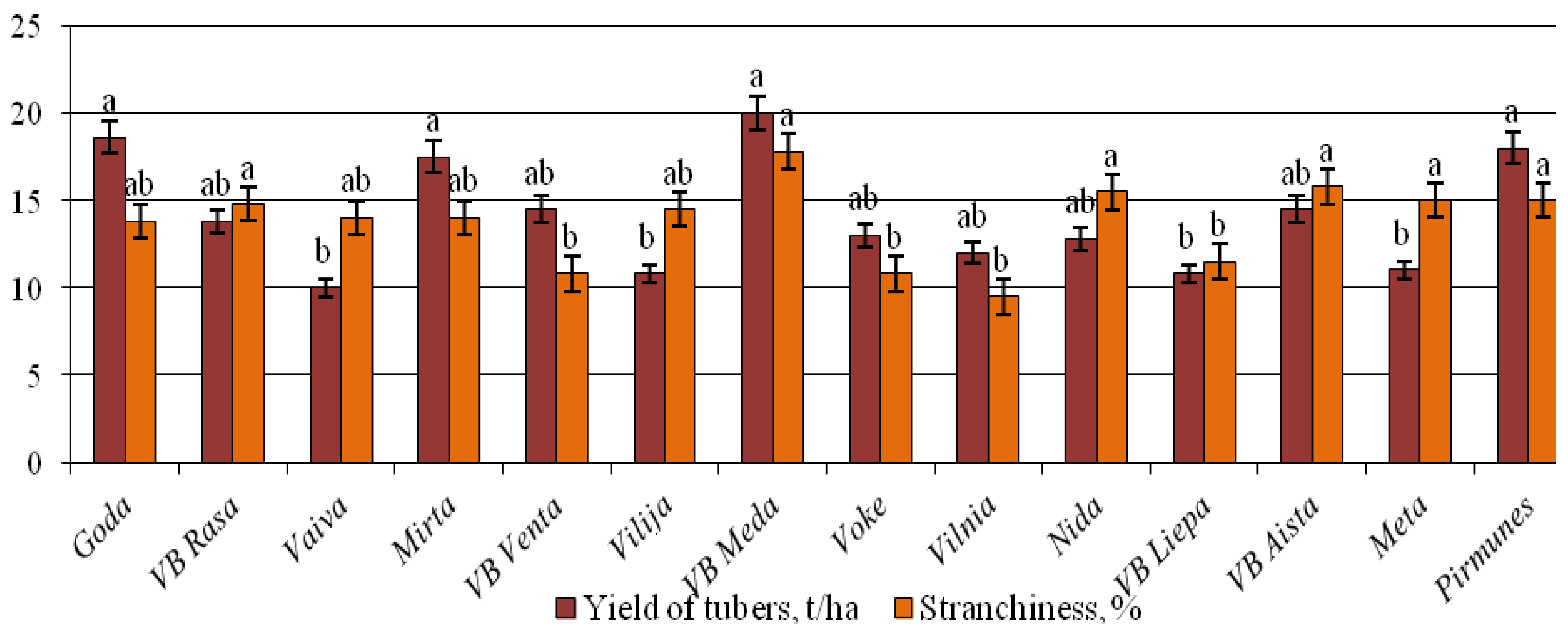
The present study is an outcome of research conducted at the Ukrainian Research Station of Plant Quarantine of the Institute of Plant Protection of the National Academy of Sciences of Ukraine on testing potato varieties of Lithuanian selection for resistance to late blight in 2019-2024 (Figure 3). Of the tested varieties, resistance to late blight (6-7 points) was noted in the following potato varieties: 'VB Meda', 'Goda', 'Mirta', with damage to the surface of stems and leaves recorded at up to 25%. In contrast, the varieties 'Vilnia', 'Voke', 'VB Rasa', 'Nida', 'Meta', 'Vilija', 'VB Aista', and 'VB Liepa' exhibited a damage percentage ranging from 25-50%, which corresponds to a 4-5 point rating on the scale of plant stability. The 'Pirmunes' variety exhibited 53% damage to the surface of leaves and stems. In the negative control ('Glazurnaya' variety), the damage to potato plants by late blight was 17% (6-7 points). In the positive control ('Nezabudka' variety), both in laboratory and field conditions, damage to leaves and stems was 76% (1 point), and affected tubers were immediately identified. The quality data for the Lithuanian potato varieties tested in Ukraine are shown in Figure 4. The results of this study demonstrate that the implementation of resistant and moderately resistant Lithuanian potato varieties in agricultural production in Ukraine is a viable proposition.
4. Conclusions
The following conclusions have been drawn from the research carried out in Lithuania on the collections of potato varieties and breeding lines: studies of the potato genebank provided important data on each variety and hybrid. The rich genetic material was then used in breeding work to produce local potato varieties and hybrid crosses for further breeding. The potato varieties were divided into five maturity groups: first early, second early, main crop, late and last late. The analysis revealed significant variations within and between these groups with respect to various characteristics, including but not limited to morphology, physiology, immunology, and agronomy. The potato tuber skin and flesh colour was found to be light yellow, and the tuber shape was found to be round, oval, round and oval long. It was observed that late maturing potato varieties exhibited higher levels of genetic resistance to late blight in comparison to early maturing varieties.
The following categorisation of Lithuanian potato varieties has been proposed: - Highly susceptible to late blight: 'VB Aista', 'Pirmunes', 'Meta', 'VB Liepa' and 'Vaiva'; - Moderately susceptible: 'VB Venta', 'Vilnia', 'VB Rasa', 'Nida' and 'Vilija'; - Moderately resistant: 'Goda', 'Voke', 'Mirta' and 'VB Meda'. Consequently, following research conducted at the Ukrainian Research Station of Plant Quarantine of the Institute of Plant Protection of the NAAS on the selection of potato varieties resistant to late blight in Ukraine, three varieties resistant to late blight ('VB Meda', 'Goda', 'Mirta') and eight varieties ('Vilnia', 'Voke', 'VB Rasa', 'Nida', 'Meta', 'Vilija', 'VB Aista', 'VB Liepa') moderately resistant to the disease were selected. It is recommended that these varieties be incorporated into agricultural production in Lithuania and Ukraine.
Authors’ Contributions
R.A., A.Z. and T.A. wrote the main manuscript text. Conceptualization, R.A., A.Z. and T.A., methodology and investigation, R.A. and A.Z., data curation and writing—original draft preparation, R.A., A.Z. and T.A., writing—review and editing, A.R. and R.A., visualization R.A. All authors read and approved the final manuscript.
Ethical Approval (for Researches Involving Animals or Humans)
Not applicable.
Conflicts of Interests
The authors declare that there are no conflicts of interest related to this article.
References
- Asakaviciute, R.; Kacergius, A.; Razukas, A. Breeding aspects of potato in Lithuania. Proceedings on applied botany, genetics and breeding 2016, 177, 122–129, (In Russ.). [Google Scholar] [CrossRef]
- Asakaviciute, R.; Kacergius, A.; Razukas, A. New Lithuanian potato varieties and their resistance to Phytophthora infestans (Mont.) de Bary. Bulg. J. Agric. Sci. 2017, 23, 107–112. https://www.agrojournal.org/23/01-15.pdf.
- Asakaviciute, R.; Razukas, A.; Jundulas, J. Susceptibility of new potato varieties to the potato late blight oomycete Phytophthota infestans (mont.) De Bary in Lithuania. Agrociencia 2009, 43, 625–633. http://www.redalyc.org/articulo.oa?id=30215549008.
- Asakaviciute, R.; Zelya, A.; Kacergius, A.; et al. Assessment of potato varieties of Lithuanian breeding resistance potato wart causative agents and late blight. Sci Rep 2025, 15, 5915. [Google Scholar] [CrossRef] [PubMed]
- Ballvora, A.; Ercolano, M.R.; Weib, J.; Meksem, K.; Bormann, C.A.; Oberhagemann, P.; Salamini, F.; Gebhardt, C. The R1 gene for potato resistance to late blight (Phytophthora infestans) belongs to the leucine zipper/NBS/LRR class of plant resistance genes. The Plant Journal 2012, 30, 361–371. [Google Scholar] [CrossRef] [PubMed]
- Bychenkova, A.A. Types of field resistance of potatoes to late blight. Proceedings of the 5th All-Union Conference on Plant Immunity. Kyiv 1969, 8, 42–47. [Google Scholar]
- Brazinskiene, V.; Asakaviciute, R.; Miezeliene, A.; Alencikiene, G.; Ivanauskas, L.; Jakstas, V.; Viskelis, P.; Razukas, A. Effect of farming systems on the yield, quality parameters and sensory properties of conventionally and organically grown potato (Solanum tuberosum L.) tubers. Food Chemistry 2014, 145, 903–909. [Google Scholar] [CrossRef] [PubMed]
- Cherednychenko, L.; Furdyha, M.; Sobran, V.; Suchkova, V. Assessment of resistance against late bligth of potato on leaves of newly created and original selection material of potato. Bulletin of Agricultural Science 2021, 99, 24–33, (in Ukrainian with English summary). [Google Scholar] [CrossRef]
- Golyachuk, Y.u.S.; Kosylovych, G.O. Genetic structure of populations of the pathogen of late blight of potatoes in the conditions of the Western Forest-Steppe of Ukraine. Bulletin of the Lviv National Agrarian University. Series: Agronomy 2018, 22, 217–221. [Google Scholar]
- Hansen, J.G.; Koppel, M.; Valskyte, A.; Turka, I.; Kapsa, J. Evaluation of foliar resistance in potato to Phytophthora infestans based on an international field trial network. Plant Pathology 2005, 54, 169–179. [Google Scholar] [CrossRef]
- Kroon, L.P.N.M.; Henk, B.; de Cock, A.W.M.; Govers, F. The Phytophthora Genus Anno. Phytopathology 2011, 102, 348–364. [Google Scholar] [CrossRef] [PubMed]
- Maga, J.A. Potato flavour. Food Review International 1994, 10, 1–48. [Google Scholar] [CrossRef]
- Melnyk, S.I. (2016) Methodology for conducting phytopathological studies during artificial infection of plants. Kyiv. 74 p.
- Methodological recommendations for conducting research with potatoes (2002). Nemishayev, 183 p.
- Razukas, A.; Jundulas, J.; Asakaviciute, R. Potato cultivars susceptibility to potato late blight (Phytophthora infestans). Appl. Ecol. Environ. Res. 2008, 6, 95–106. [Google Scholar] [CrossRef]
- Rymuza, K.; Radzka, E.; Lenartowicz, T. The effect of weather conditions onearly potato yields in east-central Poland. Communications in Biometry and Crop Science 2015, 10, 65–72. [Google Scholar]
- Ríos, D.; Devaux, A.; Ruiz de Galarreta, J.I. Ancient Potato Varieties of the Canary Islands: Their History, Diversity and Origin of the Potato in Europe. Potato Res 2024, 67, 963–994. [Google Scholar] [CrossRef]
- Rocha, A.M.C.N.; Coulon, E.C.; Morais, A.M.M.B. Effects of vacuum packaging on the physical quality of minimally processed potatoes. Food Service Technology 2003, 3, 81–88. [Google Scholar] [CrossRef]
- Schepers, H.T.A.M. The development and control of Phytophthora infestans in Europe in 1999. PAV-Special Report 2000, 6, 10–18. [Google Scholar]
- Struik, P.C. (2007) Above-ground and below-ground plant development. In: Potato Biology and Biotechnology- Advances and Perspectives (edited by D. Vreugdenhil, J. Bradshaw, C. Gebhardt, F. Govers, D.L. MacKerron, M.A. Taylor & H.A. Ross). Pp. 219–236. Oxford: Elsevier.
- Tarakanovas, P. Data transformation of biological experiments using a computer program ANOVA. Zemdirbyste-Agriculture 2002, 77, 170–180. [Google Scholar]
- Vreugdenhil, D.; Bradshaw, J.; Gebhardt, C.; et al. (2007). Potato Biology and Biotechnology – Advances and Perspectives. Oxford: Elsevier.
Figure 1.
Economical parameters characteristic of various Lithuanian potato varieties in Lithuania. Each value is the mean of three replicates ± standard error, LSD0.05 ˗ 2.141. (Voke branch, 2014-2024.
Figure 1.
Economical parameters characteristic of various Lithuanian potato varieties in Lithuania. Each value is the mean of three replicates ± standard error, LSD0.05 ˗ 2.141. (Voke branch, 2014-2024.
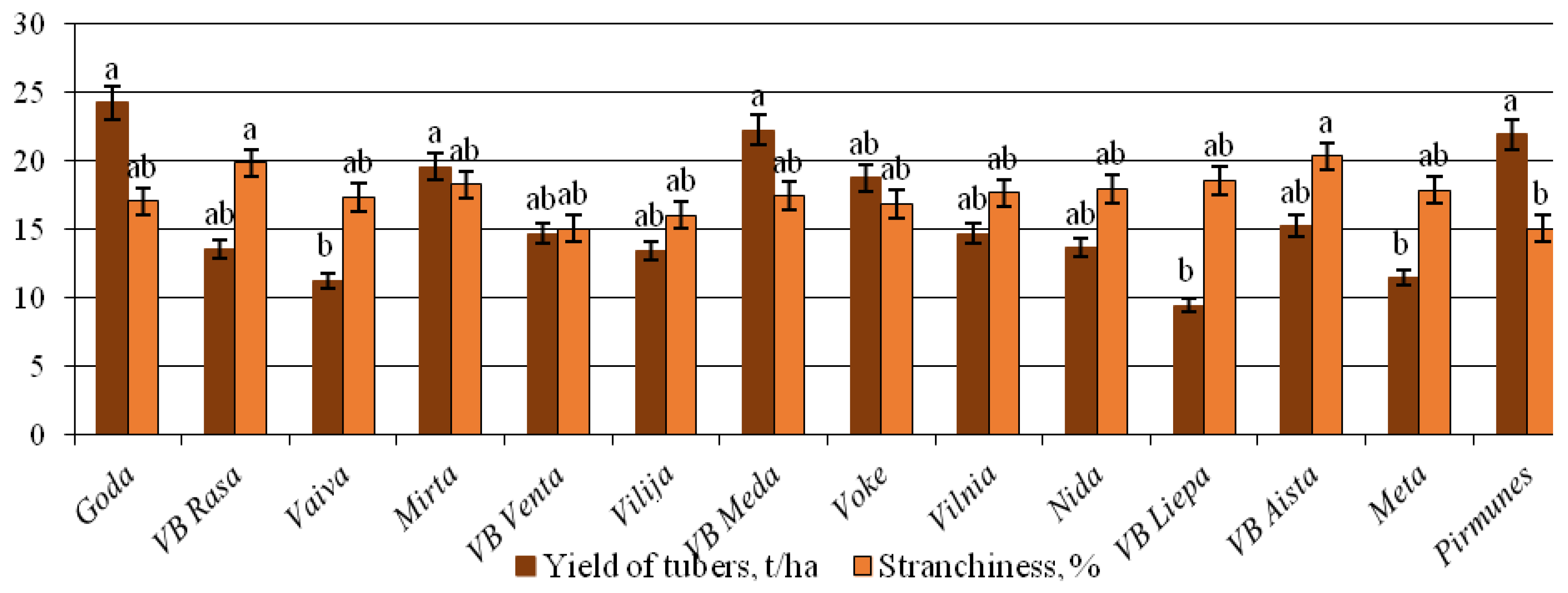
Figure 2.
Resistance of the foliage of Lithuanian potato varieties under natural infection pressure in Lithuania. Each value is the mean of three replicates ± standard error, LSD0.05 ˗ 3.287 (Voke branch, 2014-2024).
Figure 2.
Resistance of the foliage of Lithuanian potato varieties under natural infection pressure in Lithuania. Each value is the mean of three replicates ± standard error, LSD0.05 ˗ 3.287 (Voke branch, 2014-2024).
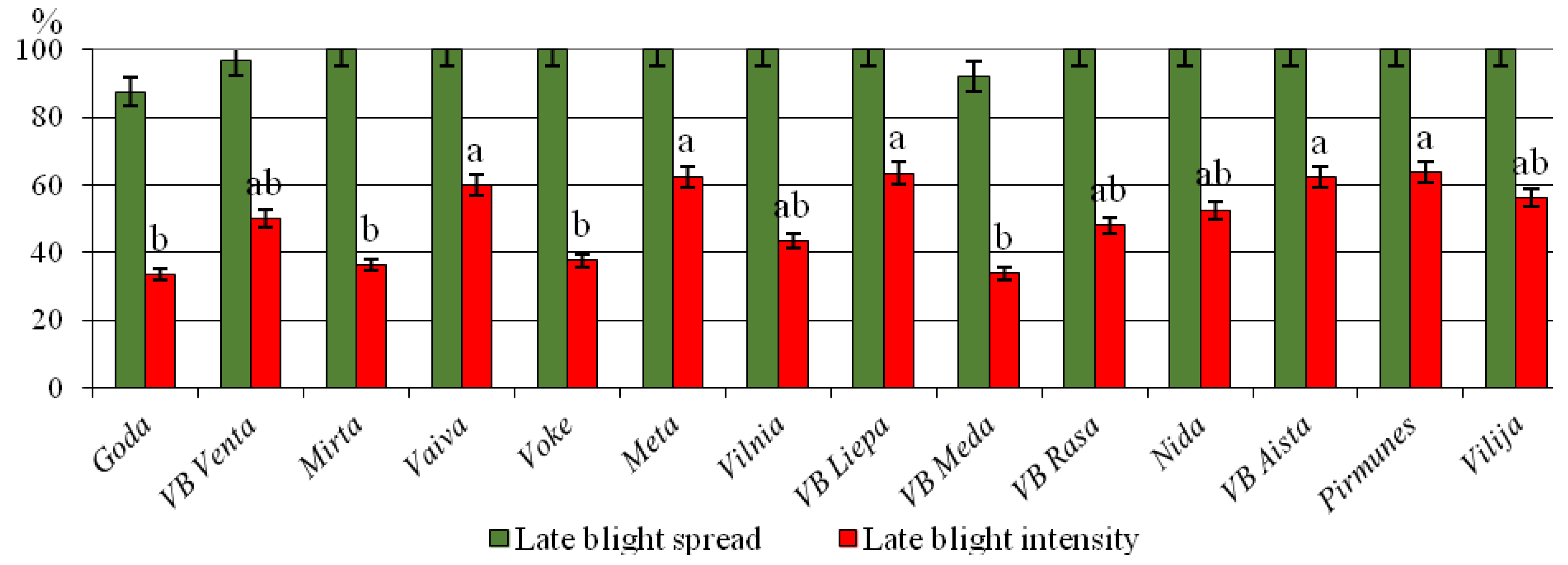
Figure 3.
Resistance of the foliage of Lithuanian potato varieties under natural infection pressure in Ukraine. Each value is the mean of three replicates ± standard error, positive control ‘Nezabudka’ and negative control ‘Hlazurna’, LSD0.05 ˗ 2.878 (UkrSRPQS IPP NAAS, 2019-2024).
Figure 3.
Resistance of the foliage of Lithuanian potato varieties under natural infection pressure in Ukraine. Each value is the mean of three replicates ± standard error, positive control ‘Nezabudka’ and negative control ‘Hlazurna’, LSD0.05 ˗ 2.878 (UkrSRPQS IPP NAAS, 2019-2024).
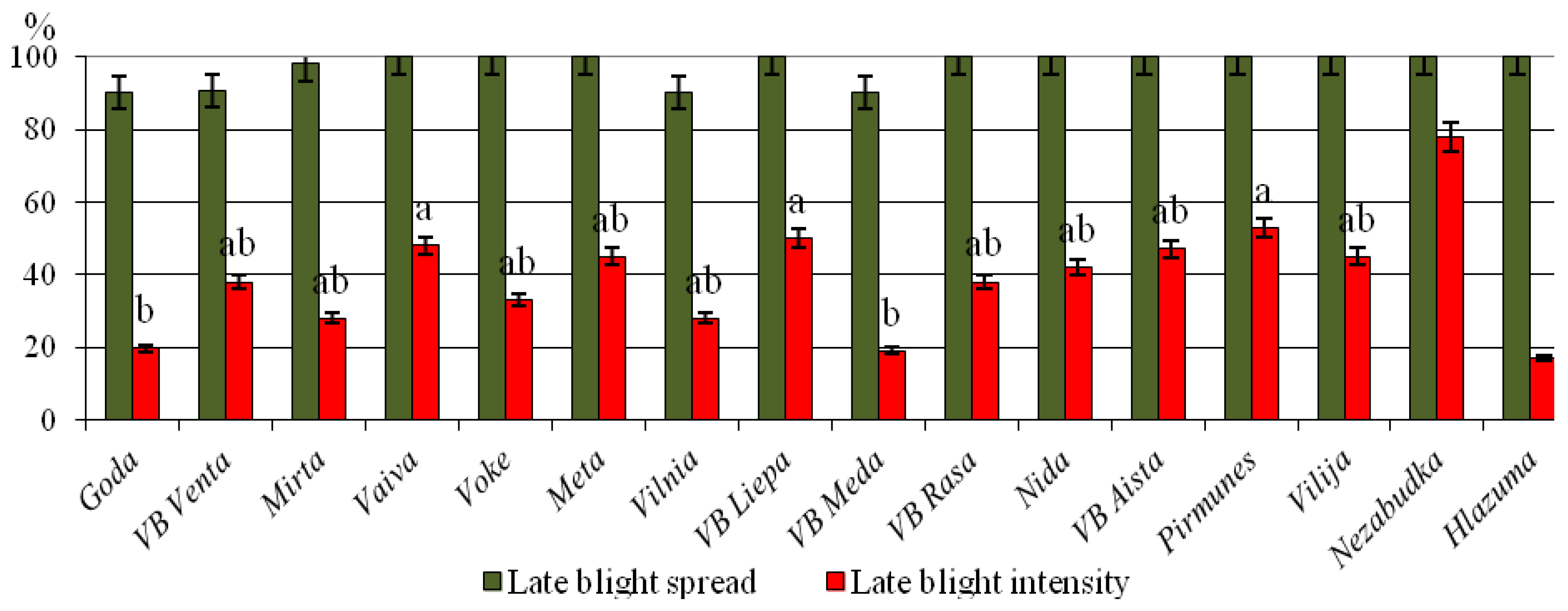
Figure 4.
Economical parameters characteristic of various Lithuanian potato varieties in Ukraine. Each value is the mean of three replicates ± standard error, LSD0.05 ˗ 1.947 (UkrSRPQS IPP, 2019-2024).
Figure 4.
Economical parameters characteristic of various Lithuanian potato varieties in Ukraine. Each value is the mean of three replicates ± standard error, LSD0.05 ˗ 1.947 (UkrSRPQS IPP, 2019-2024).
Disclaimer/Publisher’s Note: The statements, opinions and data contained in all publications are solely those of the individual author(s) and contributor(s) and not of MDPI and/or the editor(s). MDPI and/or the editor(s) disclaim responsibility for any injury to people or property resulting from any ideas, methods, instructions or products referred to in the content. |
© 2025 by the authors. Licensee MDPI, Basel, Switzerland. This article is an open access article distributed under the terms and conditions of the Creative Commons Attribution (CC BY) license (http://creativecommons.org/licenses/by/4.0/).
Copyright: This open access article is published under a Creative Commons CC BY 4.0 license, which permit the free download, distribution, and reuse, provided that the author and preprint are cited in any reuse.


