

Submitted:
03 July 2025
Posted:
04 July 2025
You are already at the latest version
Abstract
This paper examines the characteristics of agriculture in High Nature Value farmlands (HNVf) in Poland and assesses their capacity to implement key environmental measures under the 2023–2027 Common Agricultural Policy (CAP). Using spatial and statistical analyses at the municipal level, the study compares agricultural structures, production types, participation in eco-schemes, organic farming and agri-environment-climate measures under the current CAP framework. The delimitation of HNVf areas was based on EU methodology, focusing on the extent of agricultural production and the ecological value of the surrounding landscape. The results indicate that HNVf areas are predominantly located in regions with challenging natural conditions, a high share of permanent grasslands, and limited capacity to diversify crop structures. Farms in these areas show lower participation in eco-schemes compared to more intensive farming regions, suggesting that current instruments may not fully align with the specific needs of low-intensity systems. In contrast, higher levels of engagement were observed in organic farming and agri-environment-climate measures in HNVf. These findings highlight the need for better-adapted CAP instruments that reflect the ecological and economic realities of HNVf areas. Enhancing support mechanisms for these regions is essential to safeguard biodiversity, promote sustainable land use, and maintain the socio-environmental functions of rural landscapes.
Keywords:
High Nature Value farmlands (HNVf)
; Common Agricultural Policy
; sustainability
; environmental measures
; eco-schemes
; organic farming
; agro-environment-climate measures
1. Introduction
At global, European, and national levels, the growing awareness of the negative environmental effects of agriculture necessitates using farmland to preserve biodiversity and actively promote its growth. In halting the continued decline of biodiversity, agriculture operating in an environmentally sound manner plays a key role. Farmers, on the one hand, directly use and manage the natural environment [1] while, on the other, they are heavily dependent on it and therefore bear particular responsibility for its condition [2,3,4]. Nonetheless, around one-third of agricultural land worldwide is subject to at least moderate degradation due to erosion, compaction, pollution, saliniation, desertification, and the loss of organic matter—all of which are major drivers of biodiversity loss [5]. These processes also result in reduced productivity and economic losses in agriculture [6,7,8]. This is particularly concerning given that agriculture is increasingly viewed as a source of many public goods that society increasingly values [9,10,11,12]. At the same time, the biodiversity of agricultural ecosystems is one of the most significant public goods dependent on agriculture, and its existence and sustainability are largely shaped by farming practices [13,14,15,16,17,18]. To address the current degradation, remedial action is urgently needed, particularly in areas of high nature value that meet the criteria for High Nature Value farmlands (HNVf)—areas where extensive agricultural land use is associated with high biodiversity and the preservation of diverse landscapes [19,20]. An important feature of HNVf areas is their less favorable conditions for agricultural production [21], often characteried by permanent grasslands and proximity to watercourses, wetlands, wastelands and forests [22]. Despite these limitations, HNVf areas are critical for biodiversity conservation and the delivery of ecosystem services [23,24]. Extensive livestock grazing is particularly important in maintaining biodiversity in HNVf [25,26]. It should be noted that, in Europe, the concept of identifying these areas has been under development since the early 1990s, driven in part by the European Commission’s growing interest in biodiversity protection and the intention to preserve traditional, low-intensity farming practices across the EU [27,28,29,30].
Agricultural activity risks environmental degradation, including soil depletion, groundwater and surface water quality reduction and ultimately biodiversity loss. Research conducted worldwide demonstrates a consistent decline in biodiversity due to intensive agricultural production in recent decades [38,39]. By 2050, agriculture and food systems are projected to be responsible for approximately 70% of land biodiversity loss and 50% of freshwater biodiversity loss [40]. This decline reduces the capacity of ecosystems to provide essential services, including food production, nutrient and water re?cycling, and cultural and recreational benefits [41,42]. Biodiversity is also threatened by the gradual conversion of agricultural land to construction and infrastructure use. Therefore, protecting HNVf areas—those with particularly high biodiversity and environmental value—is essential to preserving the productive and ecological functions of rural areas and the ecosystem services they provide. HNVf areas are especially suited for conserving natural resources and biodiversity on agricultural land because of their natural characteristics and extensive agricultural use [43]. They serve multiple rural functions, including: production-supply function (providing food and raw materials), habitat (ecosystem) function (maintaining habitat parameters—especially water balance—for flora, fauna, birds and soil organisms), and a service function for society (recreation, leisure and education) [44,45].
HNVf areas with high environmental value have a unique role in protecting the natural heritage and biodiversity in rural contexts. On the one hand, they meet strict ecological criteria; on the other, their relatively extensive agricultural production minimizes environmental pressures [46]. Agriculture can enhance environmental quality when managed appropriately—with suitable crop selection and agronomic practices. One particularly important management practice on permanent grasslands is extensive grazing by livestock (notably cattle and horses), which acts as an ecological analogue to wild herbivores such as wild horses, deer, elk and bison [47]. The environmental benefits of HNVf areas can extend beyond their borders through synergistic effects with nearby protected areas, including national parks, landscape parks and buffer zones, wetlands, and Natura 2000 sites. Over time, HNVf areas may also positively influence neighbouring zones of intensive agriculture by mitigating their environmental impact.
Poland plays a key role in the protection of biodiversity at the European level, due to its vast and varied agricultural landscapes, many of which retain traditional farming features that are disappearing elsewhere in the EU. Polish farmland supports a high share of semi-natural habitats, permanent grasslands, and small-scale mosaic structures, which are vital for many species, including those listed under the EU Birds and Habitats Directives. Poland is home to significant populations of farmland birds and pollinators, whose decline has been less dramatic than in Western Europe, partly because of the persistence of low-intensity agriculture in eastern and southeastern regions. As such, Poland is recognized as one of the EU’s biodiversity hotspots, and its agricultural policy choices have a considerable impact on the success of EU-level conservation targets.
In Poland, the Institute of Soil Science and Plant Cultivation State Research Institute and the Institute of Agricultural and Food Economics-National Research Institute defined three current categories of HNVf areas in accordance with the European Commission guidelines from the Working Document Practices to Identify, Monitor and Assess HNV Farming in RDPs 2014–2020 in order to better shaping the CAP in the EU [31]. These categories included areas of moderate, high, and exceptionally high nature value. The scale of HNVf areas in Poland proved remarkable: those of moderate value covered 27.1%, high value 16%, and exceptionally high value 12.5% of total agricultural land [32,33,34]. Delimitation work on HNVf was carried out on behalf of the Ministry of Agriculture and Rural Development and the European Commission in order to better shape European agriculture policy.
To accurately interpret transformations in economic reality, contemporary economic theory, including in agriculture, should incorporate not only individual economic considerations but also environmental and social factors [35,36,37]. In preserving HNVf areas in good condition, this conundrum becomes particularly important. In these areas, it is essential to establish institutional frameworks that regulate and incentivize farmer behavior in line with societal expectations. In the EU, this is the role of the Common Agricultural Policy (CAP), revised periodically and becoming increasingly responsive to public demands for a stronger environmental orientation [99]. Environmental protection measures play a prominent role in the 2023–2027 EU CAP and contribute to the objectives of the European Green Deal [96,97]. These include eco-schemes under Pillar I of the CAP, and the measures for organic farming and agri-environment-climate (AEC) under Pillar II [54,55,56].
The present study aims to characterize agriculture and its inclination to implement key institutional environmental measures under the 2023-2027 CAP in areas of different HNVf saturation designated in Poland in order to better shape the European agricultural policy. Such analytical considerations of the importance of environmental measures of the 2023-2027 CAP in HNVf areas are, to date, largely absent from the international agricultural economics and policy literature. The study therefore fulfills a significant research gap in the international literature.
2. Materials and Methods
In Poland, the methodology used to delimitation HNVf areas was based on European Commission guidelines and the experiences of other EU countries in implementing them [48,49]. Diagram 1 presents regulations at the EU and Polish levels regarding HNVf.
This methodology was built on two core criteria. The first required the presence of rural areas with a high concentration of farms engaged in extensive agricultural production. The second concerned their proximity to ecologically valuable compensation sites. In the Polish context, areas meeting the first criterion are those with a high density of farms practicing extensive agriculture—characterized by low livestock density per hectare, a small share of permanent and horticultural crops in the total farmland area, a low proportion of cereals, and a significant presence of permanent grassland. In such systems, animals are primarily fed roughage. The second criterion, as defined by the European Commission, relates to the ecological quality of the surrounding natural environment. Areas considered ecologically valuable in this context include those offering critical soil, habitat and landscape features. These encompass national and scenic parks with buffer zones, Natura 2000 sites, permanent grasslands, organic or organic-derived soils, wetlands, regions with high farm fragmentation, and ecological corridors that facilitate the movement of animal species (Figure 1).
The listed environmental elements were evaluated and assigned weights proportional to their natural value. This evaluation was conducted by experts from leading scientific centers at workshop meetings organized by the Ministry of Agriculture and Rural Development and the European Commission, who defined 3 scenarios HNVf in Poland. The purpose of the neighborhood analysis was to define those elements of the environment whose presence alongside agricultural land is of greatest value for the protection of biodiversity in these areas. A neighborhood analysis was then conducted using a moving circular window with a 1 km radius, resulting in a layer with averaged maximum weights at a resolution of 100 x 100 m (1 ha). In Poland, there are currently three HNVf area scenarios for municipalities characterized by a high saturation of extensive agricultural production. These scenarios differ in average maximum natural value weights: 3.0–10.0, 3.5–10.0, and 4.0–10.0, corresponding to areas of average, high, and exceptionally high natural value, respectively (Figure 2 and Figure 3). The approach for establishing options for HNVf designation was also used by other EU countries in order to most effectively define agricultural areas with different values of HNVf (i.e., Germany, Italy, Ireland) [93,94,95].
The first step of the study was to identify the basic characteristics of agriculture in municipalities with a particularly high share of agricultural land covered by environmental measures in the first year of the EU CAP 2023–2027, compared with agriculture in other municipalities. The analysis considered municipalities with at least a 50% share of agricultural land under eco-schemes, and those with at least a 25% share of agricultural land under organic farming or agri-environment-climate measures. Municipalities were classified as follows:
with at least 50% of agricultural land located on farms participating in eco-schemes,
with at least 25% of agricultural land under organic farming measures,
with at least 25% of agricultural land covered by agri-environment-climate measures.
For these selected municipalities, we established the number of farms, the total area of farmland, the average farmland area per farm, the structure of farmland use, and the share of Areas with Natural and other specific Constraints (ANCs) in the total farmland area. In addition, the complexity of crop structure in these municipalities was assessed using the Shannon–Wiener index (S-W index).
Where:
pi - the share of the area of a given crop i - of this species (i=1) in the sown area,
lnpi - the natural logarithm of i - that share of a given plant species in the sown area,
s - sum of products of pi and lnpi
In the second step, we determined the participation of farmers in HNVf areas of varying natural values in implementing environmental measures under the 2023–2027 CAP. This participation was assessed in each case in municipalities with:
an exceptionally high share of HNVf areas (at least 75% of total agricultural land),
an average share of HNVf areas (25–75%), and
a low share of HNVf areas (less than 25%).
The number of beneficiary farms and their percentage share were determined for each of these three groups. Thirteen practices within five area-based eco-schemes were analysed, together with organic farming and agri-environment-climate measures (Table 1).
3. Results
3.1. Agriculture with Different Saturation of Environmental Measures Under the EU CAP 2023–2027 in Poland
Institutional environmental measures are fundamental to the EU 2023–2027 CAP. Under the current agricultural policy, a significant portion of the direct payments budget is allocated to environmental commitments that support practices aimed at protecting the natural environment [50]. These include eco-schemes in Pillar I of the EU CAP, which are mandatory for all Member States to offer, though their uptake by farmers is voluntary [51,52]. In this context, there is also considerable potential in Pillar II measures: organic farming and agri-environment-climate measures [53]. The characteristics of agriculture in areas with a particularly high share of eco-schemes, as well as organic and agri-environment-climate measures, were assessed at the municipality level in Poland in 2023—the first year of implementation of the current EU CAP (Figure 3, Figure 4 and Figure 5).
Compared to other municipalities, municipalities with a particularly high share of farmland covered by eco-schemes, organic farming, and agro-environmental measures were characterized by a higher average farmland area per farm (Table 2, Table 3 and Table 4).
Municipalities with a particularly high share of area covered by eco-schemes, compared to those with a high share of other environmental measures, were characterised by a different structure of agricultural land use. The former had a significantly higher share of arable land, while the latter had a higher share of permanent grassland in the overall agricultural land structure.
Additionally, municipalities with a high share of area covered by eco-schemes and organic farming had a higher S–W index compared to the comparison municipalities. This suggests a positive relationship between the analysed environmental measures and the degree of diversification in crop structure.
However, it should be noted that municipalities with a particularly high presence of eco-schemes generally had more favorable natural farming conditions, as indicated by a lower share of Areas with Natural or other specific constraints (ANCs). A less favorable situation was observed in municipalities with a high share of organic farming, where farming conditions were more difficult. However, these challenges did not significantly limit the diversity of crops grown.
A different pattern was evident in municipalities with a particularly high share of farmland covered by agri-environment-climate measures. These municipalities had a lower S–W index compared to others. It is important to emphasise that many of these municipalities were located in foothill and mountainous regions, where permanent grasslands dominate and conditions for arable farming are more challenging, due to low soil quality and a shorter growing season relative to other parts of the country. These conditions largely influenced the reduced number of crops cultivated, especially those requiring higher soil quality.
3.2. HNVf Areas Versus Implementation of Environmental Measures Under EU CAP 2023–2027
3.2.1. HNVf Areas Versus Eco-Scheme Measures
In the first year (2023) of the EU CAP 2023–2027, one third of Polish farms participated in eco-scheme measures (a similar situation occurred in 2024). From a geographical perspective, it should be highlighted that farms in regions with better farm structure and a higher level of agricultural development were more likely to participate in these measure. Figure 6 means the share of farms of eco-schemes beneficiaries in the total number of farms in the provinces in Poland. The more intense the color, the larger is the share of eco-scheme beneficiaries in the voivodeship.
This observation raises the question of the degree to which farms in areas with varying levels of HNVf saturation were inclined to implement eco-scheme practices under the EU CAP 2023–2027. The results show that in municipalities with a particularly high share of HNVf areas—regardless of their natural valuation—the share of farms implementing eco-scheme practices was the lowest, compared to other municipalities.
Nevertheless, in municipalities with average natural valuation, the eco-scheme practices of water retention on permanent grasslands and extensive use of permanent grasslands with appropriate stocking rates accounted for a notable share of total participation. Specifically, these practices represented 31.4% and 25.5% of all beneficiary farms for each practice in Poland, respectively.
In municipalities with a particularly large share of HNVf areas of high and exceptionally high natural value, the water retention practice also held significant importance. It was implemented in these areas by 16.5% and 11.4% of all farms in the country that benefitted from this measure, respectively (Figure 7, Figure 8 and Figure 9).
3.2.2. HNVf Areas Versus Organic Farming and Agri-Environment-Climate Measures
Farms implementing organic farming and agri-environment-climate measures contribute to the development of sustainable and highly biodiverse agricultural ecosystems. They also enhance agriculture’s resilience to the effects of climate change, while providing the public with safe food. Additionally, they generate aesthetic, recreational, and cultural benefits by preserving diverse landscapes, making rural areas more attractive to visitors and supporting the growth of agro-tourism [98].
In Poland, these measures are particularly common in the northern and western regions of the country. In addition, agro-environmental and climatic measures are also important in foothill and mountainous areas (Figure 10 and Figure 11).
In municipalities with an exceptionally high proportion of HNVf areas—regardless of their natural valuation—the share of beneficiaries of environmental measures was the lowest compared to the other municipalities. However, a noticeably higher number of beneficiary farms in these areas undertook agro-environment-climate measures (Figure 12, Figure 13 and Figure 14).
On the other hand, as shown in Figure 15, in municipalities with an exceptionally large share of HNVf areas, the total area covered by the analysed environmental measures exceeded 20% of the total agricultural land area. In contrast, in municipalities with a low share of HNVf (less than 25%), this figure was below 10%.
This indicates that in Poland, environmental measures play a significantly greater role in municipalities with a higher saturation of HNVf areas, particularly those with high and exceptionally high natural value.
4. Discussion
This study analyzed the characteristics of agriculture in HNVf areas in Poland and the capacity to implement key institutional environmental measures to protect the natural environment under the EU CAP 2023–2027. Managing HNVf areas requires integrated policy measures that support both environmental conservation and the economic sustainability of farmers. Current programs appear insufficient and require further refinement to effectively support farmers in these areas.
Results obtained by other researchers confirm that HNVf areas are essential in conserving agricultural biodiversity and ecosystems [61]. They are characterized by many permanent grasslands, extensive land use, and diverse landscape elements such as wetlands, mid-field woodlots, and watercourses. These areas often contain a mosaic of habitats, including semi-natural vegetation, hedgerows and small forests, contributing to landscape heterogeneity and biodiversity [62]. Studies show that the extensive agriculture practiced in these areas contributes to preserving plant and animal species diversity, including many species threatened with extinction at the European level. As Morelli and colleagues have demonstrated [63,64], bird species richness and specialist species are higher in HNVf areas than non-HNVf regions.
Research findings from other authors also highlight the challenges of maintaining traditional farming practices. In particular, HNVf areas are often located in regions with less favorable natural conditions, where agricultural activities are less profitable than in intensively farmed areas [65]. Low-intensity farming practices are often used in HNVf areas but are not economically viable without substantial support [66,67]. O’Rourke and Kramm [68] report that this often forces farmers to choose between intensification and land abandonment. Without adequate financial and institutional support, many farms may cease operation, paradoxically leading to landscape degradation and a loss of ecological value. Pardo et al. [21] and Jitea et al. [69] also identify intensification and abandonment as major threats to high nature value agricultural practices critical for biodiversity.
Without appropriate support, abandonment and natural succession may occur [70,71], along with a reduction in the cultural value of agricultural landscapes. This is a common phenomenon in many countries. For example, Swiss alpine pastures require subsidies to prevent underuse and ensure sustainable management [72]. Similarly, the Danish government uses the High Nature Value Agriculture Index to allocate subsidies to areas with high biodiversity value [73].
As mentioned, the EU has developed comprehensive policies to support high nature value agricultural land by integrating environmental priorities into agricultural practices. Although the EU has a structured and well-documented approach to environmentally sustainable agriculture, similar policies and practices are also found outside the EU. Countries such as Serbia and Moldova demonstrate high levels of environmental sustainability in agricultural practices [74], and global trends show a move toward more sustainable, environmentally friendly farming. As Taylor and Van Grieken [75] note, European countries, the U.S., and Australia have adopted programs combining information-based strategies and financial incentives to encourage more environmentally responsible farming.
Nonetheless, it is primarily in the EU that policies specifically target high nature value agricultural land through subsidies and agro-environmental schemes [76]. Examples include the designation of high nature value areas in Hungary [77], the creation of a national HNV agriculture indicator in Denmark, and the mapping of HNV forests in Ireland [78].
The analysis of farm participation in eco-schemes and environmental measures shows significant differences in adoption rates in HNVf areas. In the first year of the CAP 2023–2027, farms located in HNVf areas participated less frequently in eco-schemes than those in intensively farmed regions. This was partly due to farmers’ difficulties adapting to the complex administrative requirements of eco-schemes. Furthermore, the biodiversity-related benefits of eco-schemes are not always clear; only 5 of the 13 eco-schemes available in Poland (1.1; 1.5; 2; 3; 5) directly target biodiversity enhancement.
Managing HNVf areas is complex and requires specialized knowledge and practices not always supported by current policy frameworks [79]. Many eco-scheme practices are more suited to intensive farms, reducing incentives for HNVf farmers to adopt them. Moreover, the effectiveness of these practices is often questioned, as it varies by location and depends on regional environmental and land-use contexts [80]. The financial support offered through eco-schemes may also fall short of covering the costs associated with implementing environmentally beneficial practices in HNVf areas. As a result, farms in less favorable regions may face trade-offs between economic viability and environmental stewardship [81].
Our analysis shows that organic farming and agro-environment-climate measures are more widely adopted in HNVf areas. This is supported by findings from Pardo et al. [21], Bullock et al.[82], and Klaus et al. [83], who confirm that these measures are both more popular and more effective in high-conservation-value regions. Such practices align with biodiversity conservation and sustainable farming goals in low-intensity, high-ecological-value landscapes.
Our results suggest greater flexibility in designing CAP instruments for HNVf areas. Current eco-schemes and environmental measures do not fully reflect the specific needs of these regions. Pe’er et al.[84] argue that the ongoing decline in HNVf farmland reflects the inadequacy of current CAP instruments. Röder et al. [85] and Šumrada et al. [86] reached similar conclusions, showing that the CAP tools have often failed to effectively address the challenges of high-nature-value farmland. The new CAP implementation model gives Member States greater flexibility in tailoring instruments to their specific needs—flexibility that should be used to design more targeted measures for HNVf areas.
This could involve simplified application procedures and practices better suited to extensive land-use systems, as proposed by Czajkowski et al. [87]. Simplified certification procedures that reduce costs and improve compliance could also be beneficial [88]. In Greece, for example, collective agro-environmental schemes managed by organic cooperatives improve participation by streamlining applications and fostering peer motivation among farmers [89].
Research by Sun et al. [90] and Zieliński et al. [91] suggests that farmers in HNVf areas may lack awareness of the benefits of participating in environmental programmes or face challenges in implementing them. This was also confirmed in the study by Gębska et al. [92], who emphasized that farmers’ knowledge regarding sustainable agricultural production is highly heterogeneous and is conditioned by the specific type of agricultural activity undertaken. Similar findings by Chapman et al. [70] and Osawe and Curtis [71] highlight the importance of stronger financial and advisory support. Kamau, Gitau, and Benett [92] also concluded that access to advisory services, training and green markets significantly increases the likelihood of adopting organic farming practices.
HNVf areas in Poland are not homogeneous—they are found in lowland and mountainous regions, each with distinct characteristics. Studies show that diversification of sowing structure is lower in mountainous regions, where natural conditions are more challenging, limiting the ability to adapt to changing economic circumstances. As such, support policies should be more regionally differentiated, taking into account the unique characteristics of each area.
5. Conclusions
High Nature Value farmlands (HNVf) play a crucial role in conserving biodiversity within agricultural ecosystems; however, their maintenance poses significant challenges under the current agricultural policy framework. The analyses conducted allow for the formulation of several key conclusions:
- Municipalities with a particularly high share of HNVf land, regardless of its ecological value, exhibit a distinct land use structure compared to other areas. These municipalities are characterized by a significantly lower share of arable land and a higher proportion of permanent grasslands. This is largely due to natural constraints that limit agricultural potential.
- Challenging environmental conditions in HNVf areas, such as steep slopes, poor soil quality and shorter vegetation periods, limit the range of crops that can be cultivated profitably. As a result, these areas have lower levels of crop diversification, particularly in mountainous and sub-mountainous regions, as reflected by low Shannon–Wiener (S-W) indices for arable land.
- Municipalities with a high share of land under eco-schemes differ in land use structure from those with high involvement in organic farming or agro-environment-climate interventions. The former have a higher proportion of arable land and a lower share of permanent grasslands, indicating different production profiles and varying capacities to adopt specific environmental practices.
- A relatively small number of farms in Poland applied for eco-scheme payments in the first year of the new CAP. The uptake of specific eco-scheme practices was the lowest in municipalities with a high share of HNVf land, suggesting a mismatch between certain eco-scheme requirements and the conditions of HNVf farming systems.
- Environmental interventions (e.g., agro-environment-climate measures, organic farming) play a much more significant role in municipalities with high concentrations of HNVf land, particularly in areas of high or exceptional ecological value. In these municipalities, the total area covered by such interventions often exceeds 20% of the utilized agricultural area, compared to less than 10% in municipalities with a low HNVf presence (<25%).
- Municipalities with high uptake of environmental interventions also tend to have farms with larger average agricultural land areas, which may indicate greater capacity to implement voluntary practices supported under the CAP.
In conclusion, HNVf areas are critically important for biodiversity protection, yet their full potential remains underutilized due to the inadequate design of some policy instruments. In particular, eco-schemes should be more effectively tailored to the specific conditions of HNVf areas, following the example of existing agro-environmental and organic farming measures. Future CAP reforms should take these specific needs into account to ensure the long-term economic sustainability of HNVf farms and to enhance support mechanisms for pro-environmental practices. Without such adjustments, there is a risk of continued marginalization of these areas, leading to adverse environmental and social consequences.
There is therefore a pressing need for greater flexibility in the design of environmental measures to reflect the diversity of natural and economic conditions across regions.
Author Contributions
Conceptualization, M.Z., J.J; methodology, M.Z, J.J. software, M.Z, B.G., M.A. validation, M.Z., B.G., J.J., M.A., J.T. formal analysis, M.Z., B.G., J.J., M.A., J.T.; investigation, M.Z., B.G., J.J., M.A., J.T.; resources, M.Z., B.G., J.J., M.A., data curation, M.Z., B.G., J.J., M.A., J.T. writing—original draft preparation, M.Z., B.G., J.J., M.A., J.T., writing—review and editing, M.Z., B.G., J.J., J.T.; visualization, M.Z., B.G., J.J., M.A., J.T.; supervision, M.Z., B.G., J.J., M.A., J.T.; project administration, M.Z. B.G., J.J. All authors have read and agreed to the published version of the manuscript.
Funding
This research was funded by the Institute of Agricultural and Food Economics—National Research Institute, Poland; the Warsaw University of Life Sciences-SGGW, Poland; the Institute of Soil Science and Plant Cultivation, State Research Institute, Poland; the University of Warmia and Mazury, Poland.
Data Availability Statement
The data are available on request.
Conflicts of Interest
The authors declare no conflicts of interest.
References
- Morel, A.C.; Hirons, M.; Demissie, S.; Gonfa, T.; Mehrabi, Z.; Long, P.R.; Rifai, S.; Woldemariam Gole, T.; Mason, J.; McDermott, C.L.; Boyd, E.; Robinson, E.J.Z.; Malhi, Y.; Norris, K. The structures underpinning vulnerability: Examining landscape-society interactions in a smallholder coffee agroforestry system. Environ. Res. Lett 2019, 14, 075006. [Google Scholar] [CrossRef]
- Grzelak, A.; Stępień, S. Konsekwencje zmian klimatycznych dla rolnictwa-wybrane problemy. W: A Grzelak; A Sapa (red.), Agroekonomia w warunkach rynkowych. Problemy i wyzwania. Wydawnictwo Uniwersytetu Ekonomicznego w Poznaniu, 2010.
- Tilman, D.; Cassman, K.; Matson, P.A.; Naylor, R.; Polasky, S. Agricultural sustainability and intensive production practices. Nature 2002, 418, 671–677. [Google Scholar] [CrossRef] [PubMed]
- Bennett, E.M.; Baird, J.; Baulch, H.; Chaplin-Kramer, R.; Fraser, E.; Loring, Ph.; Morrison, P. , (…) Lapen, D. Chapter One - Ecosystem services and the resilience of agricultural landscapes. Adv. Ecol. Res. 2021, 64, 1–43. [Google Scholar] [CrossRef]
- FAO. 2022. The state of the world’s land and water resources for food and Agriculture 2021. Main Report. Food and Agriculture Organization of the United Nations. Rome.
- Stagnari, F.; Sumira, J.; Galieni, A.; Pisante, M. , Chapter 6 - Sustainable agricultural practices for water. In book: Water Stress and Crop plants: a Sustainable approach, 2016, 1, 75–86. [Google Scholar]
- Ayub, M.A.; Usman, M.; Faiz, T.; Umair, M.; ul Haq, M.A.; Rizwan, M.; Ali, S.; Zia ur Rehman, M. Restoration of Degraded Soil for Sustainable Agriculture. In Soil Health Restoration and Management; Springer: Singapore, 2019; pp. 31–81. [Google Scholar] [CrossRef]
- Wang, M.-X.; Liang, L.-N. ; Weast Siu Siu, Dan Fan, Hao-Ran Sun, Hui-Hui Zhao, Guang-Jie Zhou, Wen-Jun Wu. Loss accounting of environmental pollution within Pearl River Delta region, South China. Environmental Pollution 2019, 249, 676–685. [Google Scholar] [CrossRef] [PubMed]
- Abler, D. Multifunctionality, Agricultural Policy, and Environmental Policy. Agricultural and Resource Economics Review. 2004, 33, 8–17. [Google Scholar] [CrossRef]
- Daniłowska, A. Koncepcja dóbr publicznych a rolnictwo. Prace naukowe Uniwersytetu Ekonomicznego we Wrocławiu. Research Papers of Wrocław University of Economics 2014, 360. [Google Scholar] [CrossRef]
- Moruzzo, R.; Espinosa Diaz, S.; Granai, G.; Di Iacovo, F.; Riccioli, F. Living lab as support for co-creation of value: application to agro-biodiversity contracting solutions. Local Environment 2014, 1–14. [Google Scholar] [CrossRef]
- Drucker, A.G.; Pradel, W.; Scott, C.; Elmes, S.; Valero, K.G.A.; Zander, K.K. ;. High Public Good Values for Ecosystem Service Attributes of on-farm Quinoa Diversity Conservation in Peru. Hum Ecol 2024, 52, 67–79. [Google Scholar] [CrossRef]
- Thrupp, L.A. The Importance of Biodiversity in Agroecosystems. Journal of Crop Improvement 2004, 12, 315–337. [Google Scholar] [CrossRef]
- Kumar, Ch.; Kotra, V.; Kumar, N.; Singh, K.; Singh, A.K. Chapter 8 - Biodiversity and bioresources: impact of biodiversity loss on agricultural sustainability, Editor(s): Kripal Singh, Milton Cezar Ribeiro, Özgül Calicioglu, Biodiversity and Bioeconomy, 2024, 165-198. [CrossRef]
- Hailu, F. The role of agrobiodiversity and diverse causes of its losses and methods of conservation: A review. Food and Humanity 2025, 4, 100500. [Google Scholar] [CrossRef]
- Tenza-Peral, A.; Ripoll-Bosch, R.; Casasús, I.; Martín-Collado, D.; Bernués, A. Chapter 6 - Sustaining biodiversity and ecosystem services with agricultural production, Editor(s): Riccardo Accorsi, Rajeev Bhat, Sustainable Development and Pathways for Food Ecosystems, 2023, 129-146. [CrossRef]
- Arias-Navarro, C.; Baritz, R.; Jones, A. The state of soils in Europe. Publications Office of the European Union. 2024, https://data.europa.eu/doi/10.2760/7007291, JRC137600.
- Mouysset, L. Reconciling agriculture and biodiversity in European public policies: a bio-economic perspective. Reg Environ Change 2017, 17, 1421–1428. [Google Scholar] [CrossRef]
- Benedetti, Y. Trends in High Nature Value farmland studies: A systematic review. European Journal of Ecology 2017, 3, 19–32. [Google Scholar] [CrossRef]
- Gardi, C.; Visioli, G.; Conti, F.D.; Scotti, M.; Menta, C.; Bodini, A. High Nature Value Farmland: Assessment of Soil Organic Carbon in Europe. Frontiers in Environmental Science 2016, 4. [Google Scholar] [CrossRef]
- Pardo, I.; Zabalza, S.; Berastegi, A.; Ripoll-Bosch, R.; Astrain, C. Assessment of determinants of high nature value (HNV) farmland at plot scale in Western Pyrenees. Journal of Environmental Management 2024, 349, 119516. [Google Scholar] [CrossRef] [PubMed]
- Zomeni, M.; Martinou, A.F.; Stavrinides, M.C.; Vogiatzakis, I.N. High nature value farmlands: challenges in identification and interpretation using Cyprus as a case study. Nature Conservation 2018, 31, 53–70. [Google Scholar] [CrossRef]
- Buchadas, A.; Moreira, F.; McCracken, D.; Santos, J.L.; Lomba, A. Assessing the potential delivery of ecosystem services by farmlands under contrasting management intensities. Ecology and Society 2022, 27, 5. [Google Scholar] [CrossRef]
- Sullivan, C.A.; Finn, J.A.; Ó Huallacháin, D.; Green, S.; Matin, S.; Meredith, D.; Clifford, B.; Moran, J. The development of a national typology for High Nature Value farmland in Ireland based on farm-scale characteristics. Land Use Policy 2017, 67, 401–414. [Google Scholar] [CrossRef]
- Kampf, H. From domestication to de-domestication: managing of vegetation using large herbivores. Proceedings of the Sixth European Forum on Nature Conservation and Pastoralism 1998, 42–54. [Google Scholar]
- Tyburski, J. 2013. Dzika bioróżnorodność ekosystemów rolnych i metody jej ochrony. W: Biologiczna różnorodność ekosystemów rolnych oraz możliwości jej ochrony w gospodarstwach ekologicznych (red. Tyburski J. Kostrzewska M.), UWM w Olsztynie, 279-291.
- Baldock, D. Indicators for High Nature Value Farming Systems in Europe. W: F.M. Brouwer i J. R. Crabtree (Eds.), Environmental Indicators and Agricultural Policy. 1999, 121-135. CAB International. [CrossRef]
- Beaufoy, G. HNV Farming-Explaining the concept and interpreting EU and national policy commitments. Proceedings of the European Forum on Nature Conservation and Pastoralism, 2014, 1-15. http://www.efncp.org/download/EFNCP-HNV-farming-concept.pdf.
- Moran, J.; Byrne, D.; Carlier, J.; Dunford, B.; Finn, J.A.; Ó hUallacháin, D.; Sullivan, C.A. Management of high nature value farmland in the Republic of Ireland: 25 years are evolving toward locally adapted results-orientated solutions and payments. Ecology and Society 2021, 26, 20. [Google Scholar] [CrossRef]
- Paracchini, M.L.; Petersen, J.E.; Hoogeveen, Y.; Bamps, C.; Burfield, I.; Swaay, C. High Nature Value Farmland in Europe. An estimate of the distribution patterns on the basis of land cover and biodiversity data. Publications Office of the European Union. 2008. [CrossRef]
- European Commission (EC) The Working Document Practices to Identify, Monitor and Assess HNV Farming in RDPs 2014–2020 in order to better shaping the CAP in the EU https://ec.europa.eu/enrd/evaluation/publications/practices-identify-monitor-and-assess-hnv-farming-rdps-2014-2020_pl.html.
- Jadczyszyn, J.; Zieliński, M. Assessment of farms from High Nature Value Farmland areas in Poland. Annals of the Polish Association of Agricultural and Agribusiness Economists 2020, 22, 108–118. [Google Scholar] [CrossRef]
- Matyka, M. Ocena regionalnego zróżnicowania struktury zasiewów w kontekście oddziaływania na środowisko przyrodnicze. Roczniki Naukowe SERiA 2017, 19, 188–192. [Google Scholar] [CrossRef]
- Zieliński, M.; Jadczyszyn, J. Importance and challenges for agriculture from High Nature Value farmlands (HNVf) in Poland in the context of the provision of public goods under the European Green Deal. Economics and Environment 2022, 82, 194–219. [Google Scholar] [CrossRef]
- Gorynia, M. Nauki ekonomiczne a postulat interdyscyplinarności. W: S. Czaja i A. Graczyk (red.), Ekonomia i środowisko. Księga jubileuszowa. Profesora Bogusława Fiedora 2016, (s.122-130). Wydawnictwo Uniwersytetu Ekonomicznego we Wrocławiu.
- Wilkin, J. Nauka przekracza wszelkie granice, także w ekonomii. W: M. Gorynia (red.), Ewolucja nauk ekonomicznych. Jedność a różnorodność, relacje do innych nauk, problemy klasyfikacyjne 2019, (57-68). IRWiR PAN. https://publikacje.pan.pl/book/131636/ewolucja-nauk-ekonomicznych-jednosc-a-roznorodnosc-relacje-do-innych-nauk-problemy-klasyfikacyjne.
- Wuepper, D.; Bukchin-Peles, S.; Just, D.; Zilberman, D. Behavioral agricultural economics. Applied Economic Perspectives and Policy 2023, 45, 2094–2105. [Google Scholar] [CrossRef]
- Mäkeläinen, S.; Harlio, A.; Heikkinen, R.K.; Herzon, I.; Kuussaari, M.; Lepikkö, K.; Maier, A.; Seimola, T.; Tiainen, J.; Arponen, A. Coincidence of High Nature Value farmlands with bird and butterfly diversity. Agriculture, Ecosystems & Environment 2019, 269, 224–233. [Google Scholar] [CrossRef]
- Gil-Mendoza, L.G.; Ramírez-Albores, J.E.; Burgara-Estrella, A.J.; García-Hernández, J. Impacts of intensive agriculture on birds: a review. Agrociencia, 2024. [Google Scholar]
- Li, L.; Van der Werf, W.; Zhang, F. Crop Diversity and Sustainable Agriculture: Mechanisms, Designs and Applications. Front. Agr. Sci. Eng 2021, 8, 359–361. [Google Scholar] [CrossRef]
- Feledyn-Szewczyk, B. Wpływ systemów produkcji rolnej na bioróżnorodność i świadczenia ekosystemowe. W: Z badań nad rolnictwem społecznie zrównoważonym (24), J. St. Zegar (red.), Wyd. IERGŻ Warszawa, 2014, 109, 11–30.
- Maney, C.; Sassen, M.; Ken, G.E. ,. Are agricultural commodity production systems at risk from local biodiversity loss? Biol. Lett. 2024, 2020240283. [Google Scholar] [CrossRef]
- Andersen, E.; Baldock, D.; Bennett, H.; Beaufoy, G.; Bignal, E.; Brouwer, F. (…), Zervas, G.,. Developing a High Nature Value Farming Area Indicator. Internal Report for the European Environment Agency. 2003, IEEP.
- Power, A.G. Ecosystem services and agriculture: tradeoffs and synergies. Philosophical Transactions of the Royal Society B 2010, 365, 2959–2971. [Google Scholar] [CrossRef]
- Lomba, A.; Guerra, C.; Alonso, J.; Honrado, J.P.; Jongman, R.; McCracken, D. Mapping and monitoring High Nature Value farmlands: Challenges in European landscapes. Journal of Environmental Management 2014, 143, 140–150. [Google Scholar] [CrossRef] [PubMed]
- Overmars, K.P.; Helming, J.; van Zeijts, H.; Jansson, T.; Terluin, I. A modelling approach for the assessment of the effects of Common Agricultural Policy measures on farmland biodiversity in the EU27. J. Environ. Manage. 2013, 126, 132–141. [Google Scholar] [CrossRef] [PubMed]
- Veen, J. The ornithological values of grasslands in relation to modern dairy farming: a conflict. In: Agriculture and nature conservation in Central and Eastern Europe Countries. Proceedings of a seminar held in Dębe, 1996, Poland, 12-14 May 1996.
- Benzler, A. Drawing on national experience for identifying HNV farmland at European scale: HNV farmland monitoring in Germany. Expert workshop “Revising the JRC/EEA EU-level HNV Farmland methodology”. Vienna. 12th June 2017. https://projects.eionet.europa.eu/ecosystem-capital-accounting/library/hnv-expert-workshop-_-vienna-12-june-2017/03_benzler_hnv_germany/ download/en/1/03_Benzler_HNV_Germany.
- Hünig, C.; Benzler, A. Das Monitoring der Landwirtschaftsflachen mit hohem Naturwert in Deutchland. BfN-Skripten 476. Bundesamt für Naturschutz. 2017. [CrossRef]
- Zieliński, M.; Gołębiewska, B.; Adamski, M.; Sobierajewska, J.; Tyburski, J. Adaptation of eco-schemes to Polish agriculture in the first year of the EU CAP 2023-2027. Economics and Environment 2024, 89, 817. [Google Scholar] [CrossRef]
- Cagliero, R.; Vassallo, M.; Pierangeli, F.; Pupo D’Andrea, M.R.; Monteleone, A.; Camaioni, B.; Tarangioli, S. The Common Agricultural Policy 2023-2027. How Member States Implement the New Delivery Model? Italian Review of Agricultural Economics 2023, 78, 49–66. [Google Scholar] [CrossRef]
- Ziętara, W.; Mirkowska, Z. The Green Deal: Towards Organic Farming or Greening of Agriculture? Problems of Agricultural Economics, 2021, 368, 29–54. [Google Scholar] [CrossRef]
- Castillo-Diaz, F.J.; Belmonte-Urena, L.J.; Alvarez-Rodriguez, J.F.; Cachao-Ferre, F. 2024. Role of Sustainability and Circural Economy in Europe’s Common Agricultural Policy. In M.d.C. Valls Martinez & J.M. Santos-Jaen (Eds.), Environmentally Sustainable Production. Research for Sustainable Development, 9-84. Cham: Springer.
- EC. 2023a. Approved 28 CAP Strategic Plans (2023-2027). https://agriculture.ec.europa.eu/ document/download/ 7b3a0485-c335-4e1b-a53a-9fe3733ca48f_en ?filename=approved-28-cap-strategic-plans-2023-27.pdf.
- EP. 2023. Official Journal of the European Union. 2021. Regulation (EU) 2021/2115 of the European Parliament and of the council of 2 December 2021 establishing rules on support for strategic plans to be drawn up by Member States under the common agricultural policy (CAP Strategic Plans) and financed by the European Agricultural Guarantee Fund (EAGF) and by the European Agricultural Fund for Rural Development (EAFRD) and repealing Regulations (EU) No 1305/2013 and (EU) No 1307/2013. https://eur-lex.europa.eu/legal-content/EN/TXT/PDF/?uri=CELEX:32021R2115.
- EC. 2023b. Approved 28 CAP Strategic Plans (2023-2027). At a glance: France’s CAP Strategic Plan; European Commission (EC). 2017. Practices to identify. monitor and assess HNF farming in RDPs 2014-2020. https://ec.europa.eu/enrd/evaluation/publications/practices-identify-monitor-and-assess-hnv-farming-rdps-2014-2020_pl.html.
- Leduc, G.; Manevska-Tasevska, G.; Hansson, H.; Arndt, M.; Bakucs, Z.; Bohm, M.; Chitea, M.; Florian, V.; Luca, L.; Martikainen van Pham, H.; Rusu, M. How are ecological approaches justified in European rural development policy? Evidence from a content analysis of CAP and rural development discourses. Journal of Rural Studies 2021, 86. [Google Scholar] [CrossRef]
- European Environment Agency, 2022. Rethinking agriculture. Published 6 October 2022.
- Reed, M.S.; Moxey, A.; Prager, K.; Hanley, N.; Skates, J.; Bonn, A.; Evans, C.D.; Glenk, K.; Thomson, K. Improving the link between payments and the provision of ecosystem services in agri-environmental schemes. Ecosystem Services 2014, 9, 44–53. [Google Scholar] [CrossRef]
- Wiśniewski, Ł.L.; Rudnicki, R.; Chodkowska-Miszczuk, J. What non-natural factors are behind the underuse of EU CAP funds in areas with valuable habitats? Land Use Policy 2021, 108, 105574. [Google Scholar] [CrossRef]
- Lomba, A.; Strohbach, M.; Jerrentrup, J.S.; Dauber, J.; Klimek, S.; McCracken, D.I. Making the best of both worlds: Can high-resolution agricultural administrative data support the assessment of High Nature Value farmlands across Europe? Ecological Indicators 2017, 72, 118–130. [Google Scholar] [CrossRef]
- Makelainen, S.; Harlio, A.; Heikkinen, R.; Herzon, I.; Kuussaari, M.; Lepikko, K.; Maier, A.; Seimola, T.; Tiainen, J.; Arponen, A. Coincidence of High Nature Value farmlands with bird and butterfly diversity. Agriculture, Ecosystems and Environment 2019, 269, 224–233. [Google Scholar] [CrossRef]
- Morelli, F.; Girardello, M. Buntings (Emberizidae) as indicators of HNV of farmlands: a case of study in Central Italy. Ethology Ecology & Evolution 2014, 26, 405–412. [Google Scholar] [CrossRef]
- Morelli, F.; Jerzak, L.; Tryjanowski, P. Birds as useful indicators of high nature value (HNV) farmland in Central Italy. Ecological Indicators 2014, 38, 236–242. [Google Scholar] [CrossRef]
- Bernard, C.; Poux, X.; Herzon, I. (…) Vlahos, G. Innovation brokers in High Nature Value farming areas: a strategic approach to engage effective socioeconomic and agroecological dynamics. Ecology and Society 2023, 28, 20. [Google Scholar] [CrossRef]
- Ribeiro, P.F.; Nunes, L.C.; Beja, P.; Reino, L.; Santana, J.; Moreira, F.; Santos, J.L. A Spatially Explicit Choice Model to Assess the Impact of Conservation Policy on High Nature Value Farming Systems. Ecological Economics 2018, 145, 331–338. [Google Scholar] [CrossRef]
- Azeda, C.; Guiomar, N.; Godinho, S.; Medeiros, J.P.; Pinto-Correia, T. ,. The ambiguous role of agri-environment-climate measures in the safeguarding of High Nature Value Farming Systems: The case of the Montado in Portugal. Agriculture, Ecosystems & Environment 2021, 319, 107562. [Google Scholar] [CrossRef]
- O’Rourke, E.; Kramm, N. High nature value (HNV) farming and the management of upland diversity. A review. European Countryside 2012, 4, 116–133. [Google Scholar] [CrossRef]
- Jitea, M.I.; Mihai, V.C.; Arion, F.H.; Muresan, I.C.; Dumitras, D.E. Innovation Gaps and Barriers in Alternative Innovative Solutions for Sustainable High Nature Value Grasslands. Evidence from Romania. Agriculture 2021, 11, 235. [Google Scholar] [CrossRef]
- Chapman, M.; Satterfield, T.; Chan, K.M.A. When value conflicts are barriers: Can relational values help explain farmer participation in conservation incentive programs? Land Use Policy 2019, 82, 464–475. [Google Scholar] [CrossRef]
- Osawe, W.; Curtis, J. An assessment of farmers’ knowledge, attitudes and intentions towards water quality and pollution risk mitigation actions. Social Sciences & Humanities Open 2024, 9, 100858. [Google Scholar] [CrossRef]
- Baur, I.; Nax, H.H. Measures against the abandonment of common property summer pastures: experimental evidence from joint appropriation-provision games. Ecology and Society 2021, 26, 4. [Google Scholar] [CrossRef]
- Brunbjerg, A.K.; Bladt, J.; Brink, M.; Fredshavn, J.; Mikkelsen, P.; Moeslund, J.E.; Nygaard, B.; Skov, F.; Ejrnæs, R. Development and implementation of a high nature value (HNV) farming indicator for Denmark. Ecological Indicators 2016, 61, 274–281. [Google Scholar] [CrossRef]
- Guth, M.; Stępień, S.; Smędzik-Ambroży, K.; Matuszczak, A. Is small beautiful? Technical efficiency and environmental sustainability of small-scale family farms under the conditions of agricultural policy support. Journal of Rural Studies 2022, 89, 235–247. [Google Scholar] [CrossRef]
- Taylor, B.M.; Van Grieken, M. Local institutions and farmer participation in agri-environmental schemes. Journal of Rural Studies 2015, 37, 10–19. [Google Scholar] [CrossRef]
- Matin, S.; Sullivan, C.A.; Finn, J.A.; Ó hUallacháin, D.; Green, S.; Meredith, D.; Moran, J. Assessing the distribution and extent of High Nature Value farmland in the Republic of Ireland. Ecological Indicators 2020, 108, 105700. [Google Scholar] [CrossRef]
- Belényesi, M.B.; Podmaniczky, L. Delineation of High Nature Value areas in Hungary. Hungarian 2007, 5, 347–362. [Google Scholar]
- Ruas, S.; Finn, J.; Moran, J.; Carlier, J.; Doyle, M.; Ó hUallacháin, D. Estimated distribution of high nature value forest in the Republic of Ireland. Land Use Policy 2024, 145. [Google Scholar] [CrossRef]
- Torres-Miralles, M.; Jeanneret, P.; Lamminen, M.; Joly, F.; Dumont, B.; Tuomisto, H.; Herzon, I. High nature value farming systems in Europe: A dataset encompassing the environmental impact assessment of farms and extensive ruminant food products. Data in Brief 2025, 58, 111164. [Google Scholar] [CrossRef] [PubMed]
- Roilo, S.; Engler, J.O.; Václavík, T.; Cord, A.F. Landscape-level heterogeneity of agri-environment measures improves habitat suitability for farmland birds. ESA 2022, 33. [Google Scholar] [CrossRef]
- Ogawa, K.; Garrod, G.; Yagi, H. Sustainability strategies and stakeholder management for upland farming. Land Use Policy 2023, 131, 106707. [Google Scholar] [CrossRef]
- Bullock, J.M.; McCracken, M.E.; Bowes, M.J.; Chapman, R.E.; Graves, A.R.; Hinsley, S.A.; Hutchins, M.G.; Nowakowski, M.; Nicholls, D.J.E.; (…) Pywell, R.F. Does agri-environmental management enhance biodiversity and multiple ecosystem services?: A farm-scale experiment. Agriculture, Ecosystems & Environment 2021, 320, 107582. [Google Scholar] [CrossRef]
- Klaus, V.H.; Jehle, A.; Richter, F.; Buchmann, N.; Knop, E.; Lüscher, G. Additive effects of two agri-environmental schemes on plant diversity but not on productivity indicators in permanent grasslands in Switzerland. Journal of Environmental Management 2023, 348, 119416. [Google Scholar] [CrossRef] [PubMed]
- Pe’er, G.; Finn, J.A.; Díaz, M.; Birkenstock, M.; Lakner, S.; Röder, N. (…) Guyomard, H. How can the European Common Agricultural Policy help halt biodiversity loss? Recommendations by over 300 experts. Conservation Letters 2022, 15, e12901. [Google Scholar] [CrossRef]
- Röder, N.; Krämer, Ch.; Grajewski, R.; Lakner, S.; Matthews, A. What is the environmental potential of th; post-2022 common agricultural policy? Land Use Policy 2024, 144, 107219. [Google Scholar] [CrossRef]
- Šumrada, T.; Erjavec, E.; Šilc, U.; Žgajnar, J. Socio-Economic Viability of the High Nature Value Farmland under the CAP 2023–2027: The Case of a Sub-Mediterranean Region in Slovenia. Agriculture 2024, 14, 1699. [Google Scholar] [CrossRef]
- Czajkowski, M.; Zagórska, K.; Letki, N.; Tryjanowski, P.; Wąs, A. Drivers of farmers’ willingness to adopt extensive farming practices in a globally important bird area. Land Use Policy 2021, 107, 104223. [Google Scholar] [CrossRef]
- Urruth, L.M.; Braun Bassi, J.; Chemello, D. Policies to encourage agroforestry in the Southern Atlantic Forest. Land Use Policy 2022, 112, 105802. [Google Scholar] [CrossRef]
- Kalogiannidis, S.; Karafolas, S.; Chatzitheodoridis, F. The Key Role of Cooperatives in Sustainable Agriculture and Agrifood Security: Evidence from Greece. Sustainability, 2024, 16, 7202. [Google Scholar] [CrossRef]
- Sun, B.; Wang, X.; Luo, P.; Zhao, Y.; Rijal, M. Importance of Farmers’ Awareness on Ecological Revitalization to Promote Sustainable Development. Sustainability 2024, 16, 10134. [Google Scholar] [CrossRef]
- Zieliński, M.; Józwiak, W.; Żak, A.; Rokicki, T. Development of Eco-Schemes as an Important Environmental Measure in Areas Facing Natural or Other Specific Constraints Under the Common Agriculture Policy 2023–2027: Evidence from Poland. Sustainability 2025, 17, 2781. [Google Scholar] [CrossRef]
- Kamau, E.W.; Gitau, R.; Bett, H.K. Driving transformation: the role of institutions in shaping ecological farming adoption in Kiambu County, Kenya. Development in Practice. 2025, 35, 1–16. [Google Scholar] [CrossRef]
- Sullivan, C.; Moran, J. High nature value farmland management: Innovative approaches to sustainability of HNV grassland systems in Ireland. In Grassland Resources for Extensive Farming Systems in Marginal Lands: Major Drivers and Future Scenarios; CNR-ISPAAM: Sassari, Italy, 2017; p. 428. [Google Scholar]
- Trisorio, A.; Archinto, D. Monitoring biodiversity: Challenges in High Nature Value farming identification. Ital. Rev. Agric. Econ. 2019, 74, 43–52. [Google Scholar]
- Hünig, C.; Benzler, A. Das Monitoring der Landwirtschaftsflächen mit hohem Naturwert in Deutschland; Bundesamt für Naturschutz: Bonn, Germany, 2017. [Google Scholar]
- Wrzaszcz, W.; Prandecki, K. Rolnictwo a Zielony Ład. Zagadnienia Ekonomiki Rolnej. Problems of Agricultural Economics 2020, 365, 156–179. [Google Scholar] [CrossRef]
- Rosa, A.; Pawłowska, A.; Dudek, M. Eco-Scheme—Carbon Farming and Nutrient Management—A New Tool to Support Sustainable Agriculture in Poland. Sustainability 2025, 17, 5067. [Google Scholar] [CrossRef]
- Zieliński, M. 2024. Instytucje a rolnictwo na obszarach z ograniczeniami naturalnymi. IAFE NRI. http://ierigz.waw.pl/publikacje/studia-i-monografie/25634,7,3,0,nr-200-instytucje-a-rolnictwo-na-obszarach-z-ograniczeniami-naturalnymi.html.
- Sadłowski, A.; Wrzaszcz, W.; Smędzik-Ambroży, K.; Matras-Bolibok, A.; Budzyńska, A.; Angowski, M.; Mann, S. Direct Payments and Sustainable Agricultural Development—The Example of Poland. Sustainability 2021, 13, 13090. [Google Scholar] [CrossRef]
Diagram 1.
Regulations of the European Commission and Poland regarding the designation of HNVf areas.
Diagram 1.
Regulations of the European Commission and Poland regarding the designation of HNVf areas.
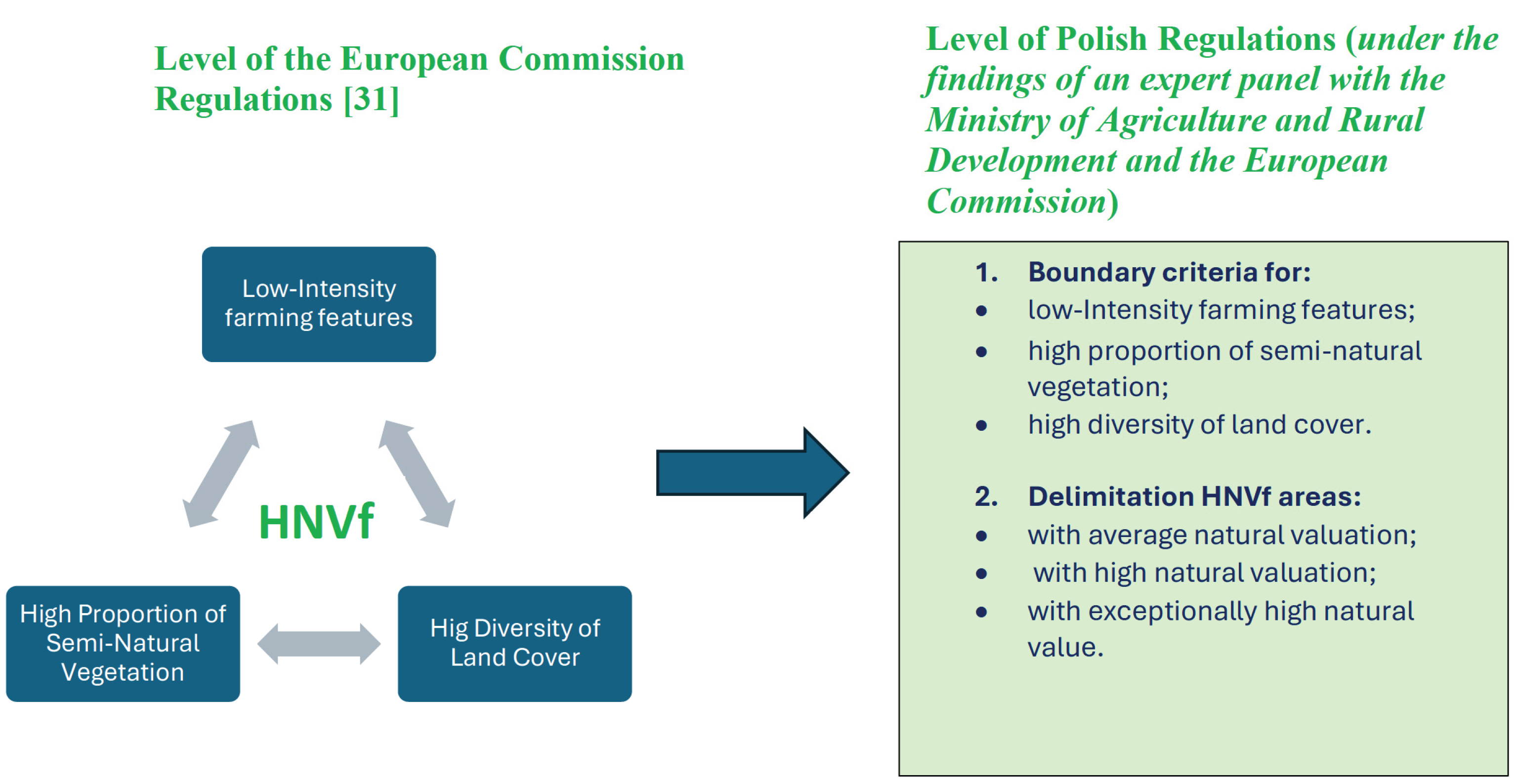
Figure 1.
Agricultural land with extensive production meeting the HNVf delimitation criteria. Source: own elaboration on the basis of EC guidelines [31].
Figure 1.
Agricultural land with extensive production meeting the HNVf delimitation criteria. Source: own elaboration on the basis of EC guidelines [31].
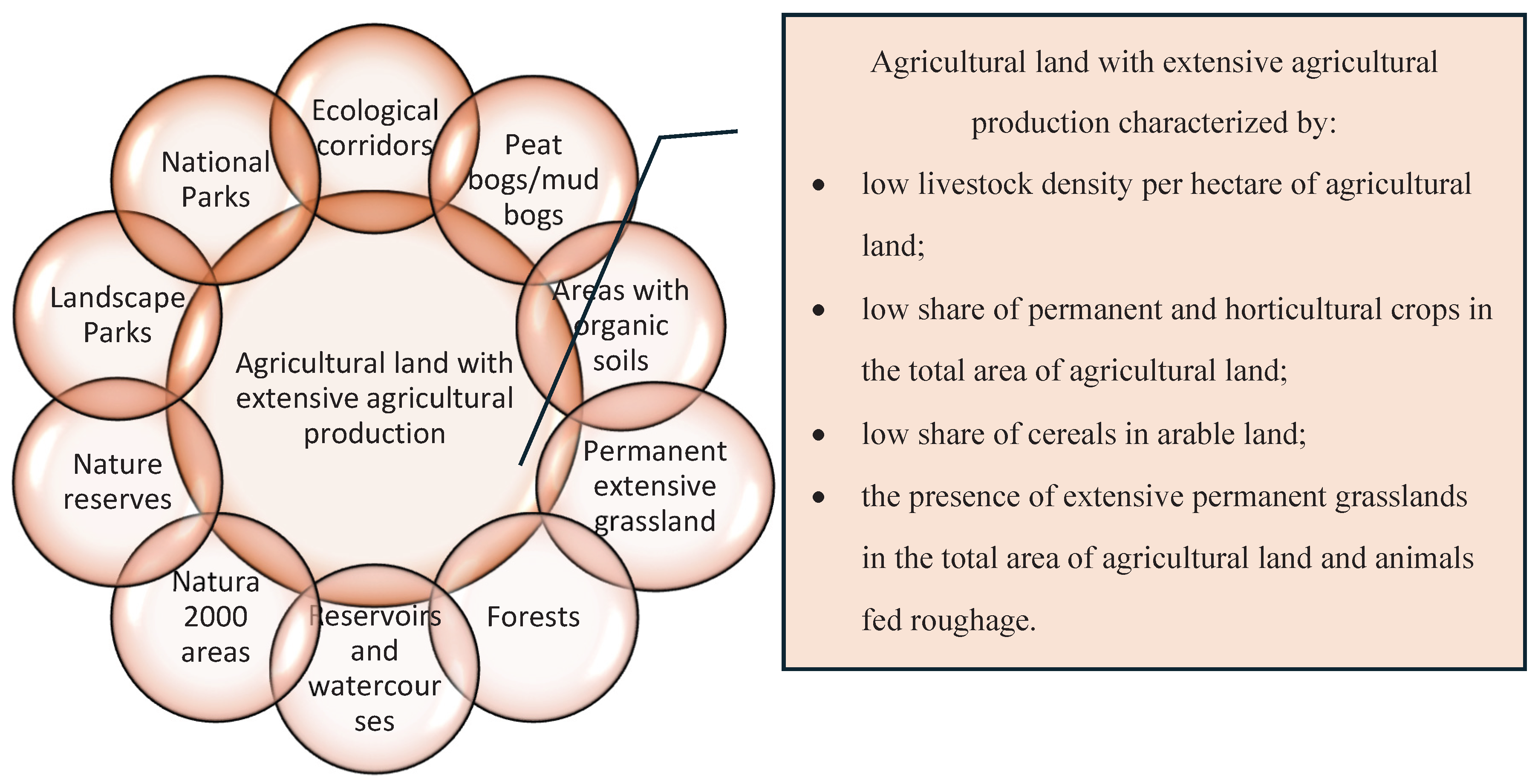
Figure 2.
Scenarios of HNVf areas according to their valuation: A) with average natural valuation; B) with high natural values; C) with exceptionally high natural values Source: own elaboration on the basis of EC guidelines [31].
Figure 2.
Scenarios of HNVf areas according to their valuation: A) with average natural valuation; B) with high natural values; C) with exceptionally high natural values Source: own elaboration on the basis of EC guidelines [31].
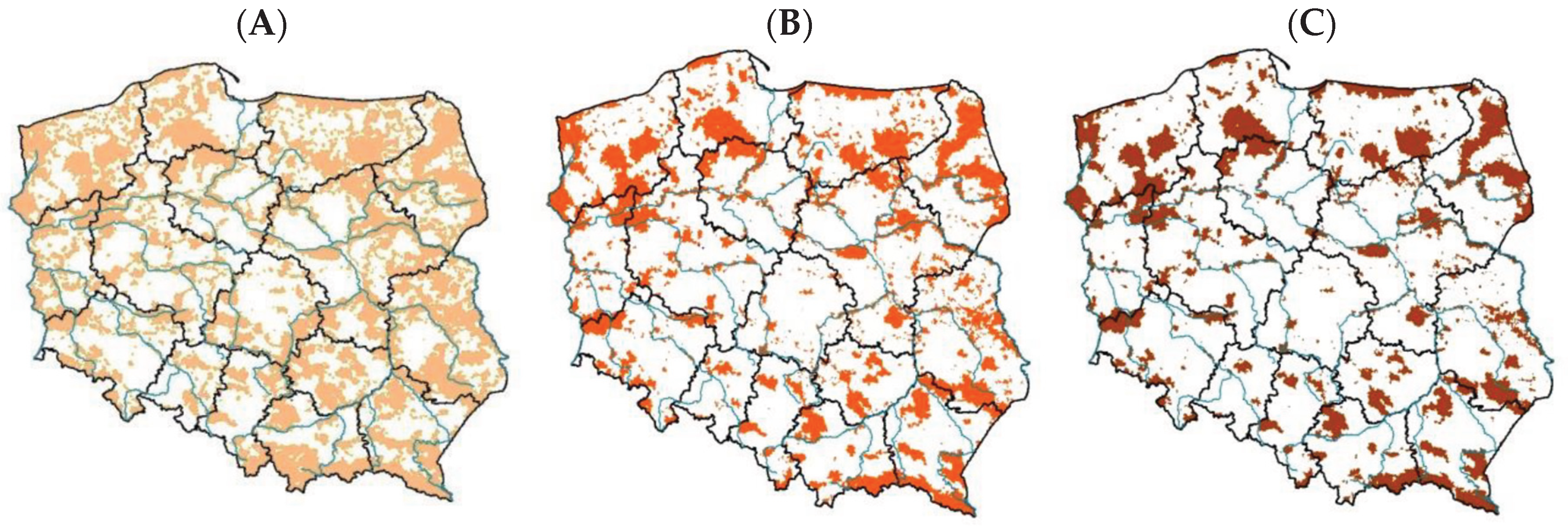
Figure 3.
Share of HNVf with exceptionally high natural value in total agricultural area in municipalities and examples of landscape with and without HNVf in Poland. Source: own elaboration on the basis of EC guidelines [31].
Figure 3.
Share of HNVf with exceptionally high natural value in total agricultural area in municipalities and examples of landscape with and without HNVf in Poland. Source: own elaboration on the basis of EC guidelines [31].
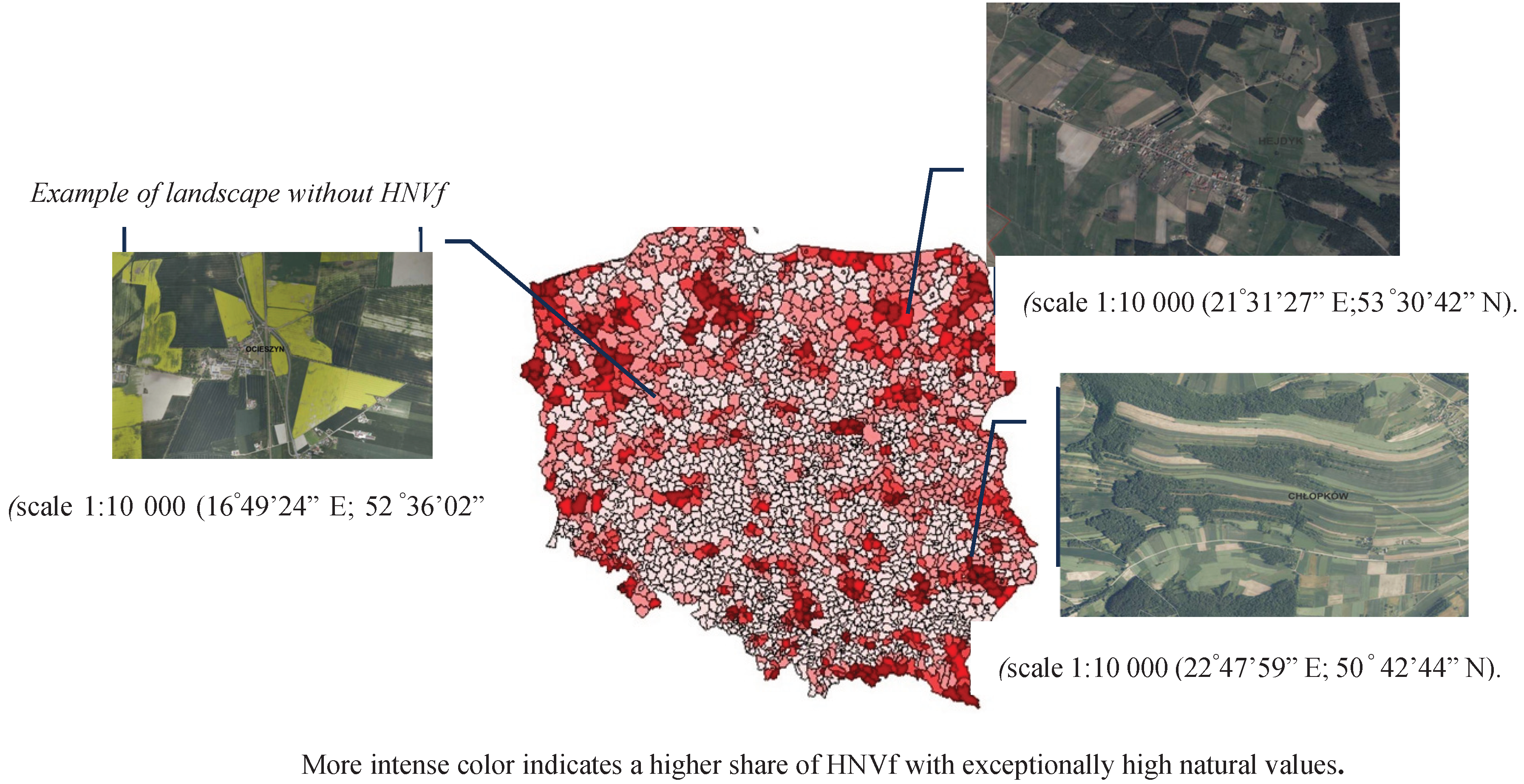
Figure 3.
Distribution of municipalities by share of UAA covered by eco-scheme measures in total, UAA in 2023. Source: own compilation based on ARMA data for 2023
Figure 3.
Distribution of municipalities by share of UAA covered by eco-scheme measures in total, UAA in 2023. Source: own compilation based on ARMA data for 2023
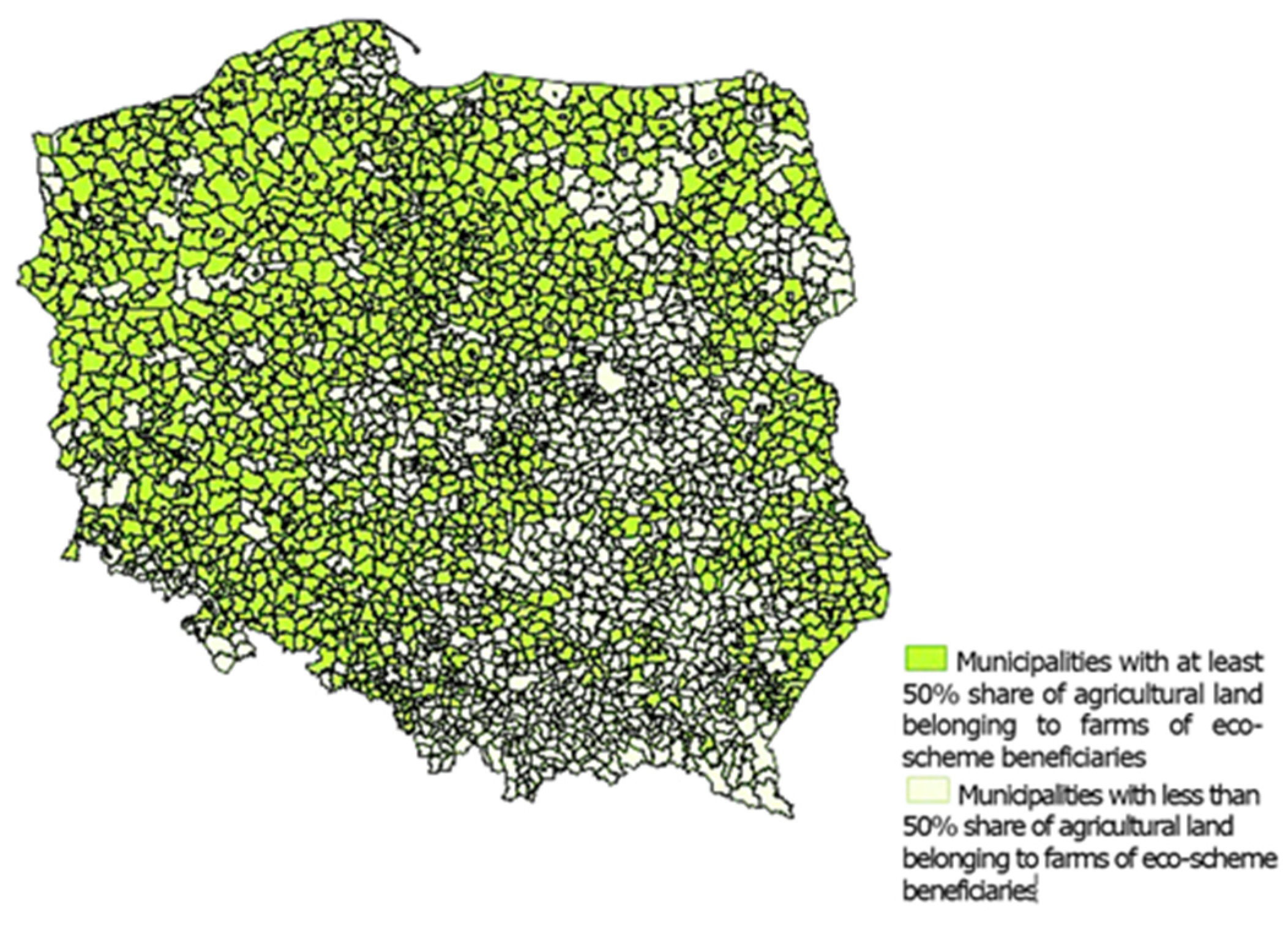
Figure 4.
Distribution of municipalities by share of UAA covered by organic farming measures in total, UAA in 2023. Source: own compilation based on ARMA data for 2023
Figure 4.
Distribution of municipalities by share of UAA covered by organic farming measures in total, UAA in 2023. Source: own compilation based on ARMA data for 2023
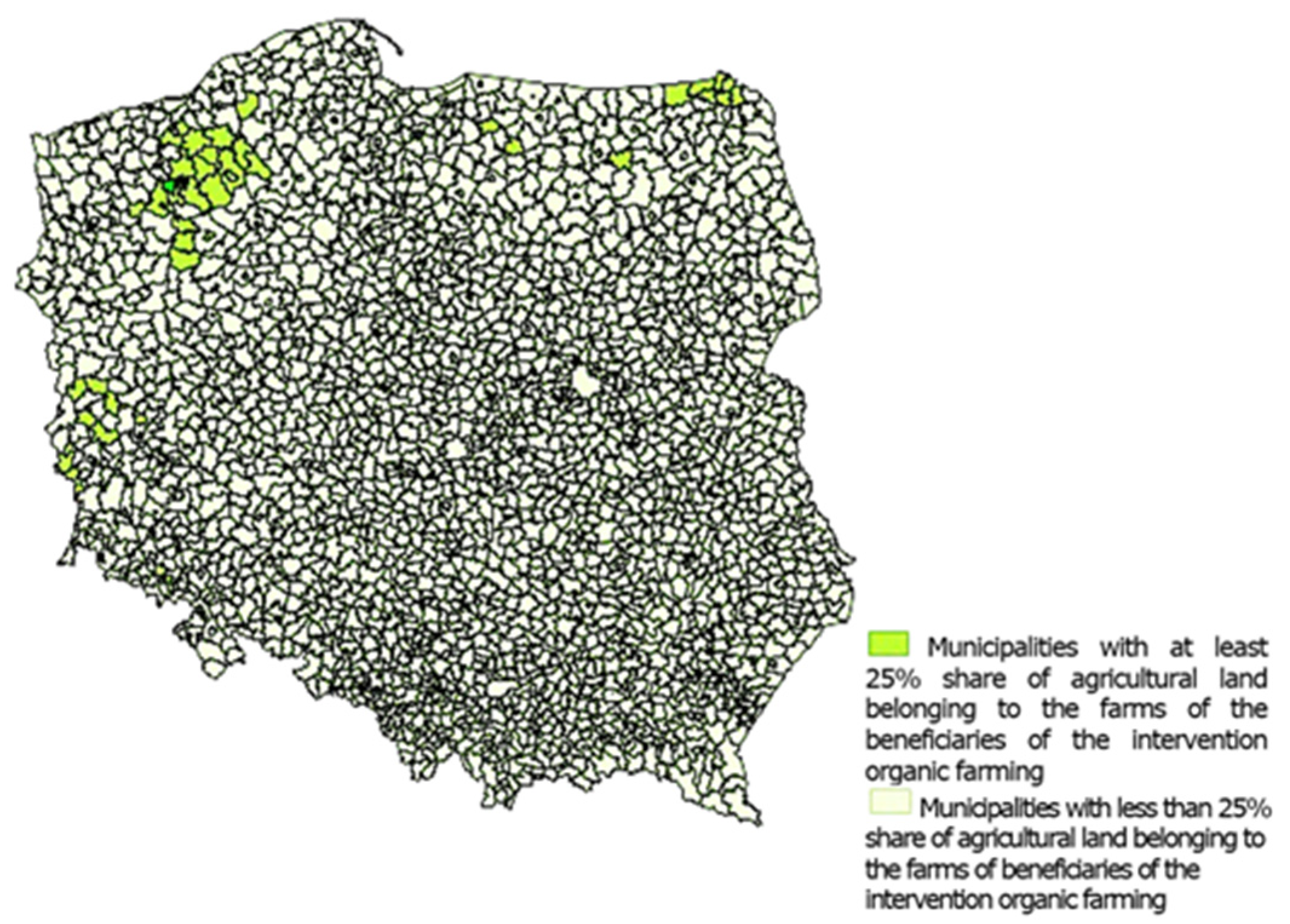
Figure 5.
Distribution of municipalities by share of UAA covered by agro-environmental climate measures in 2023. Source: own compilation based on ARMA data (2023).
Figure 5.
Distribution of municipalities by share of UAA covered by agro-environmental climate measures in 2023. Source: own compilation based on ARMA data (2023).
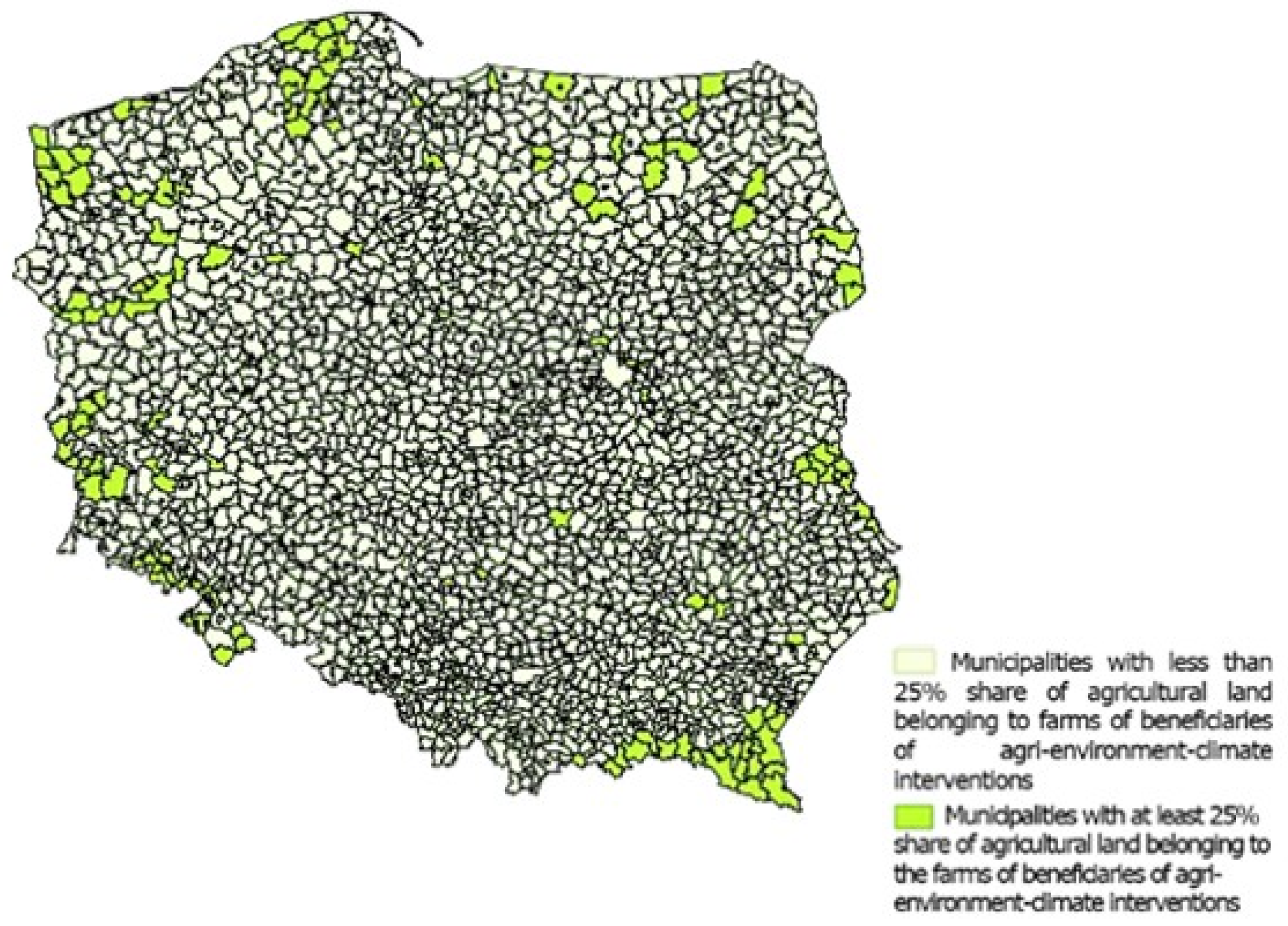
Figure 6.
Share of farms of eco-schemes beneficiaries against total farms by voivodeship in 2023. Source: own compilation based on ARMA (2023) and CSO (2022) data.
Figure 6.
Share of farms of eco-schemes beneficiaries against total farms by voivodeship in 2023. Source: own compilation based on ARMA (2023) and CSO (2022) data.
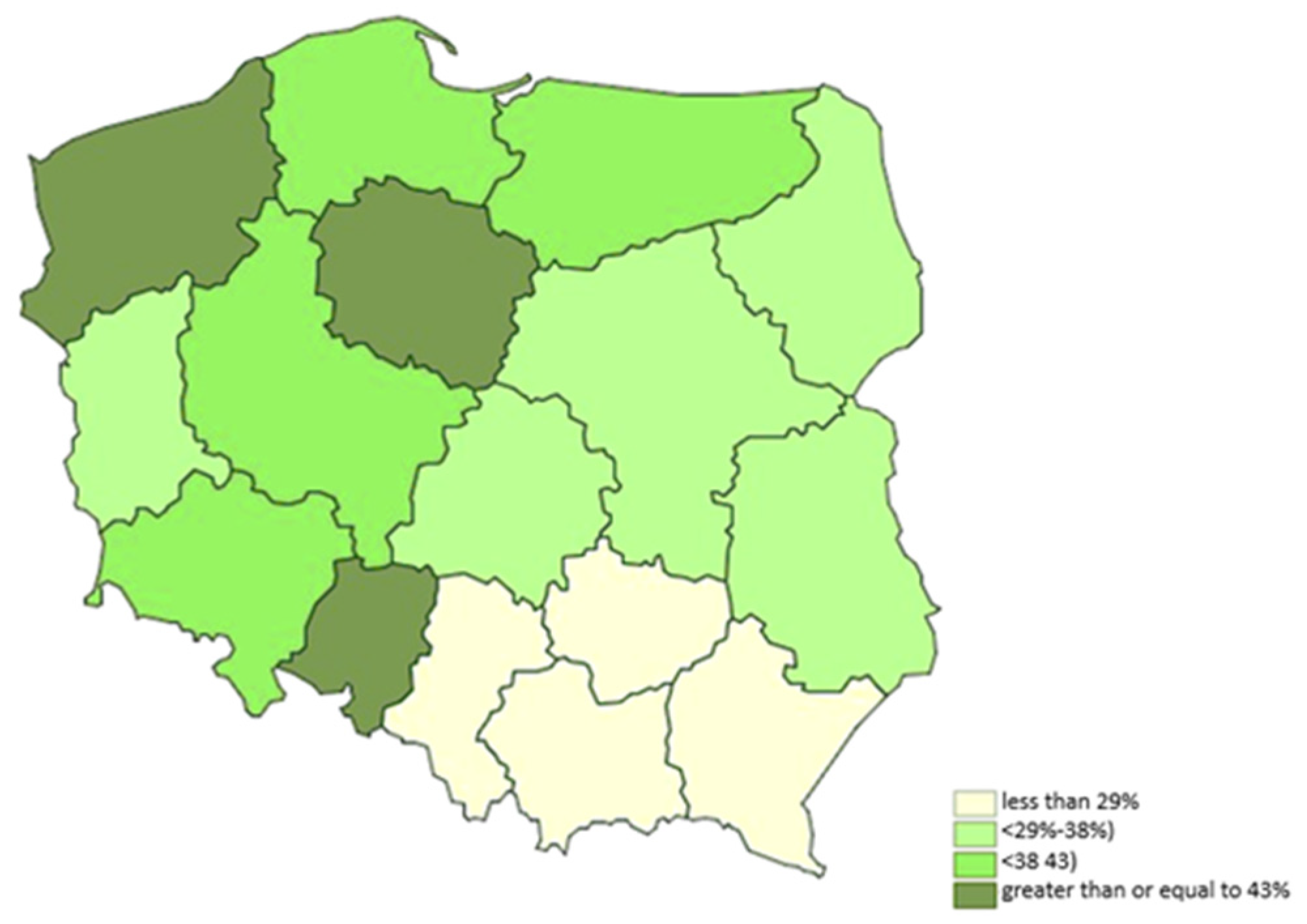
Figure 7.
Share of farms of beneficiaries of a given practice in municipalities differing in the share of HNVf areas with average high natural value in 2023. Source: own compilation based on ARMA data (2023).
Figure 7.
Share of farms of beneficiaries of a given practice in municipalities differing in the share of HNVf areas with average high natural value in 2023. Source: own compilation based on ARMA data (2023).
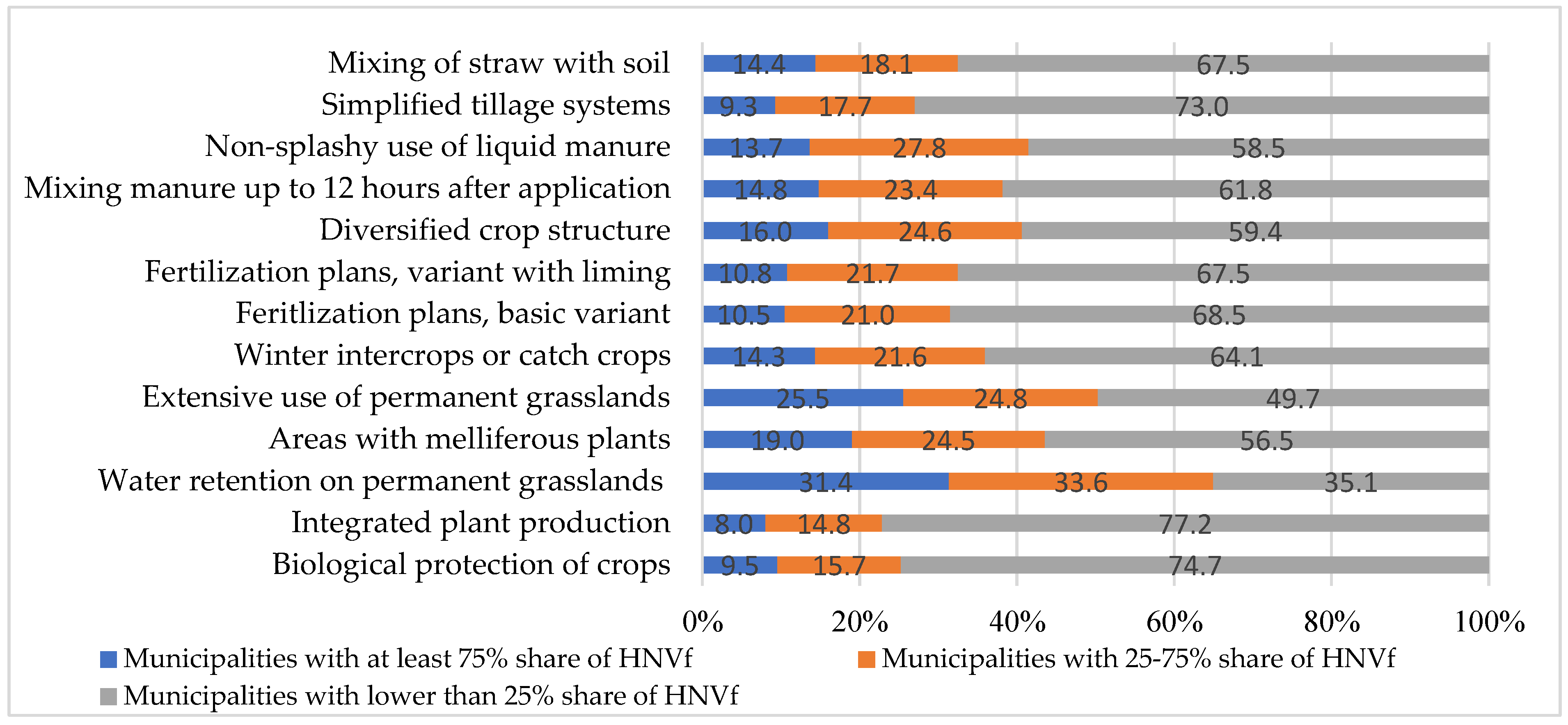
Figure 8.
Share of farms of beneficiaries of a given practice in municipalities differing in the share of HNVf areas with high natural value in 2023. Source: own compilation based on ARMA data (2023).
Figure 8.
Share of farms of beneficiaries of a given practice in municipalities differing in the share of HNVf areas with high natural value in 2023. Source: own compilation based on ARMA data (2023).
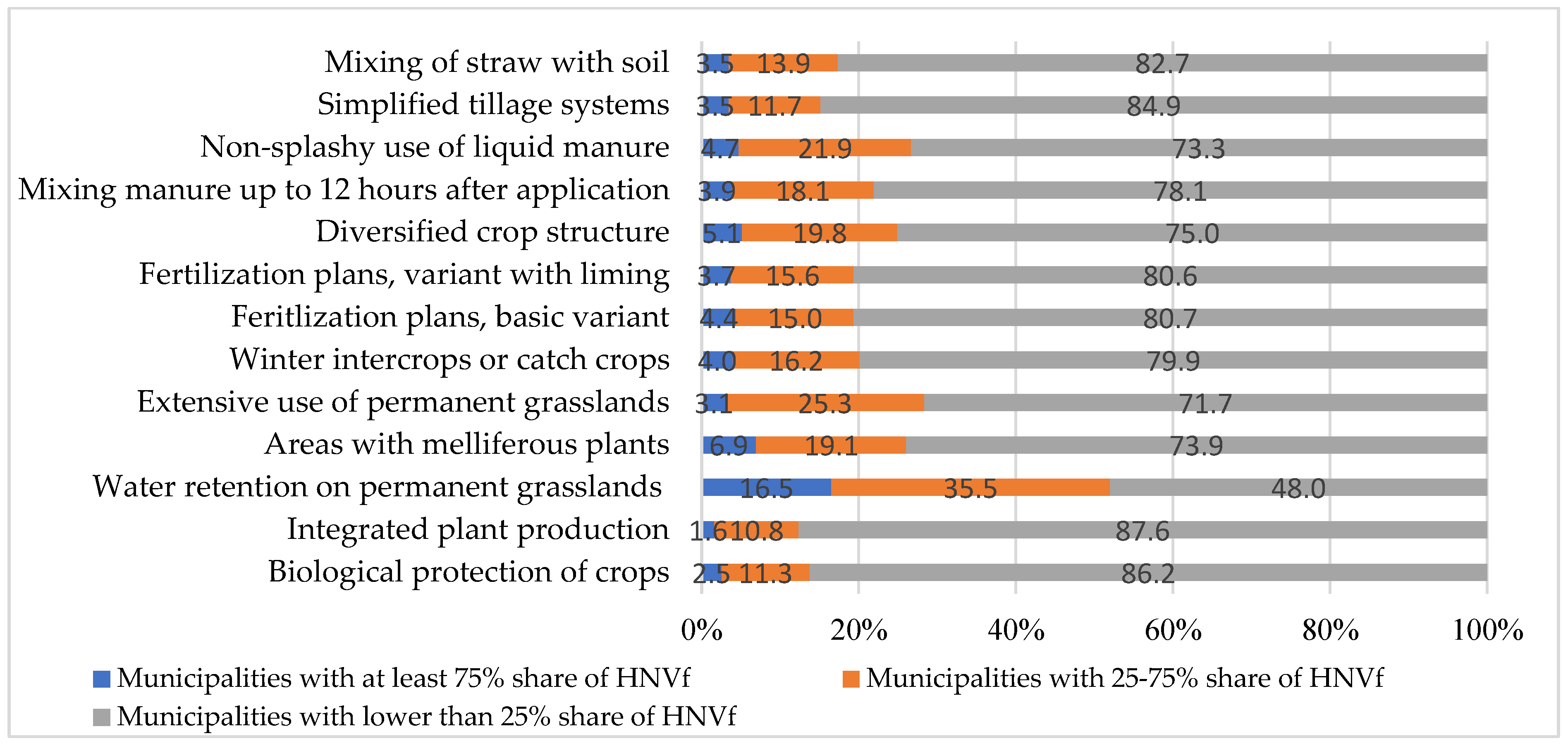
Figure 9.
Share of % of farms of beneficiaries of a given practice in municipalities differing in the share of HNVf areas with exceptionally high natural value in 2023. Source: own compilation based on ARMA data (2023).
Figure 9.
Share of % of farms of beneficiaries of a given practice in municipalities differing in the share of HNVf areas with exceptionally high natural value in 2023. Source: own compilation based on ARMA data (2023).
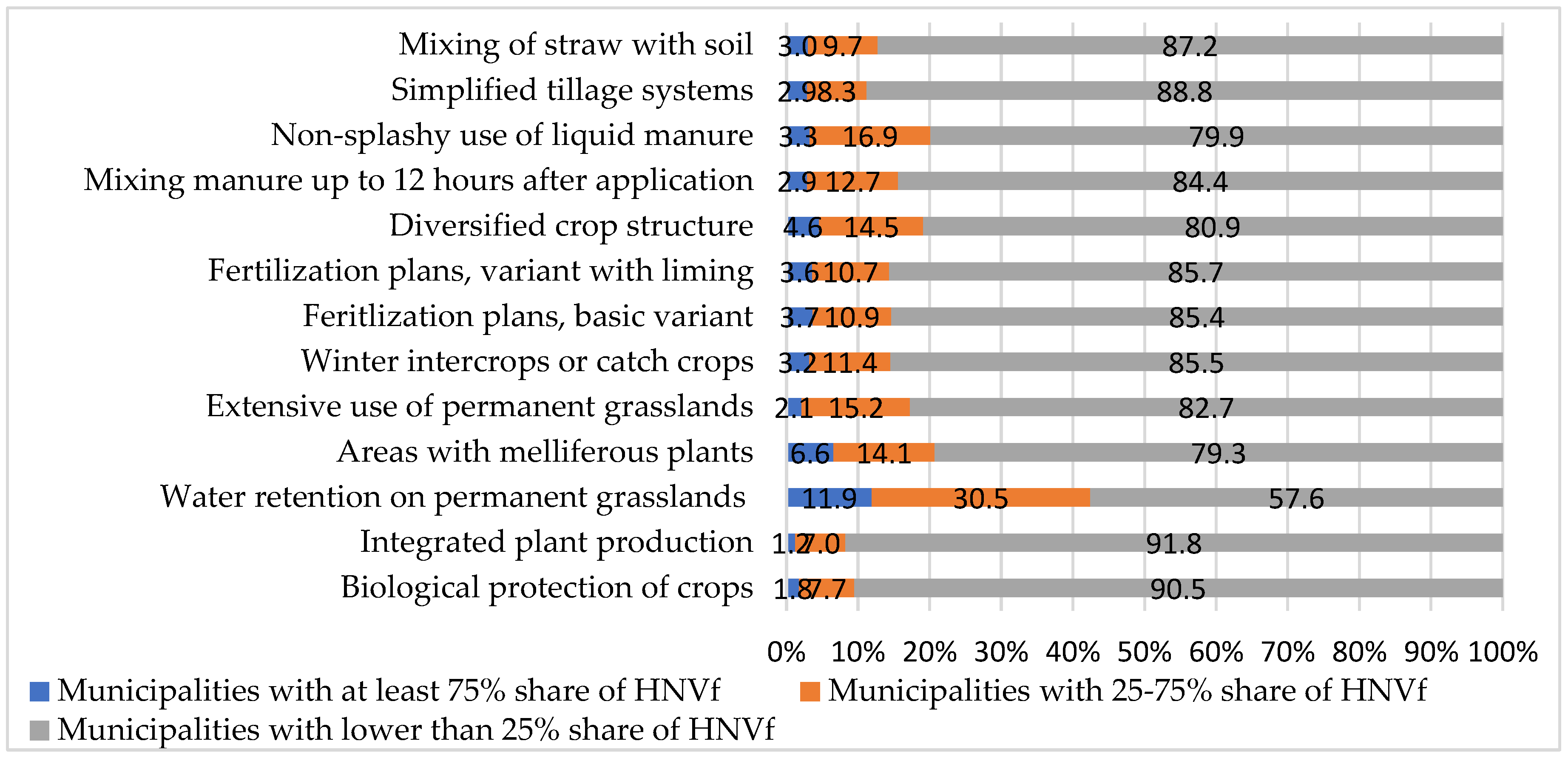
Figure 10.
Share of total area under organic and agro-environmental-climate measures in UAA in municipalities in Poland in 2023. Source: own compilation based on ARMA data (2023).
Figure 10.
Share of total area under organic and agro-environmental-climate measures in UAA in municipalities in Poland in 2023. Source: own compilation based on ARMA data (2023).
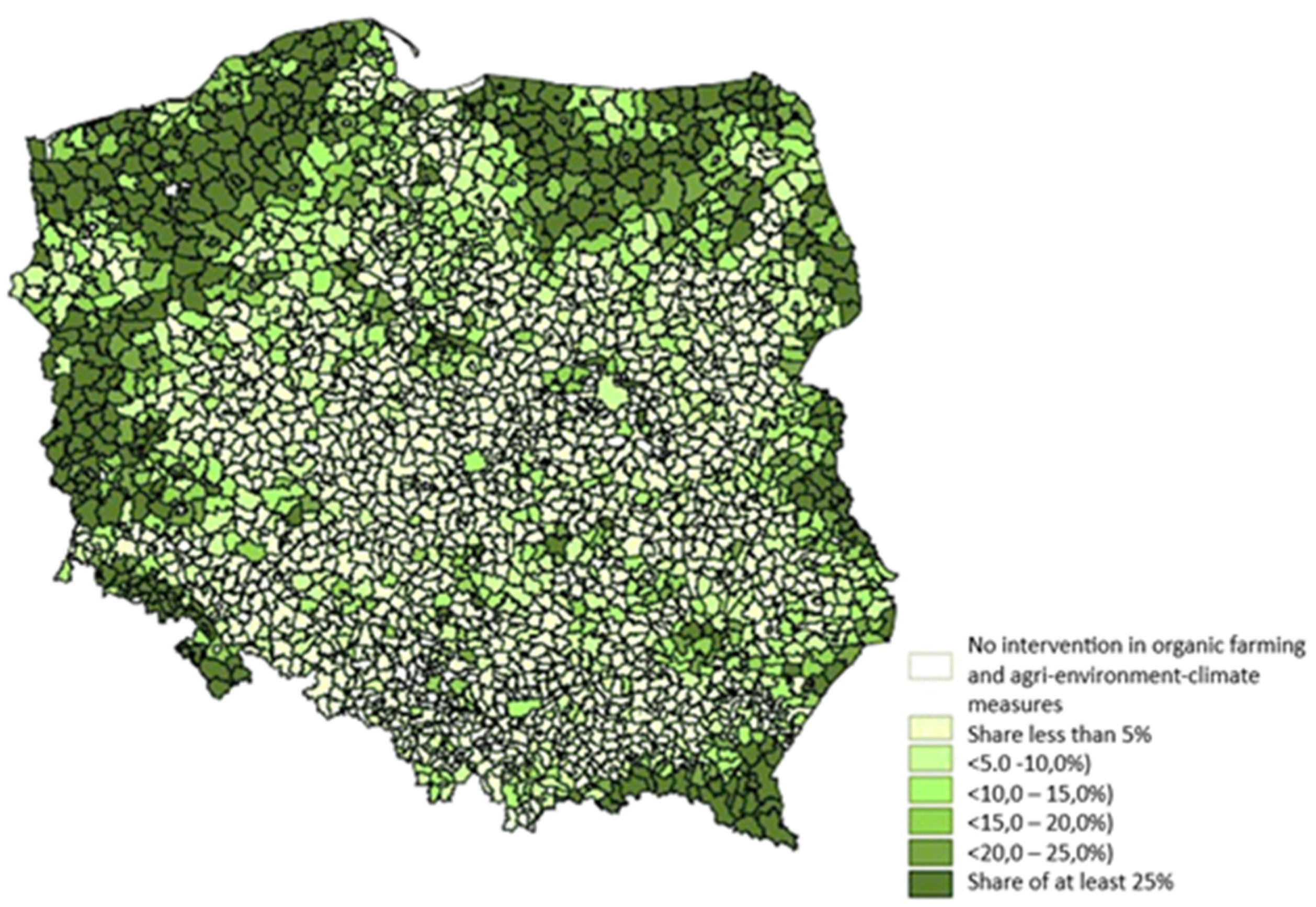
Figure 11.
Municipalities with mountain and foothill areas in Poland. Source: own compilation based on ISSPC SRI and IAFE NRI.
Figure 11.
Municipalities with mountain and foothill areas in Poland. Source: own compilation based on ISSPC SRI and IAFE NRI.
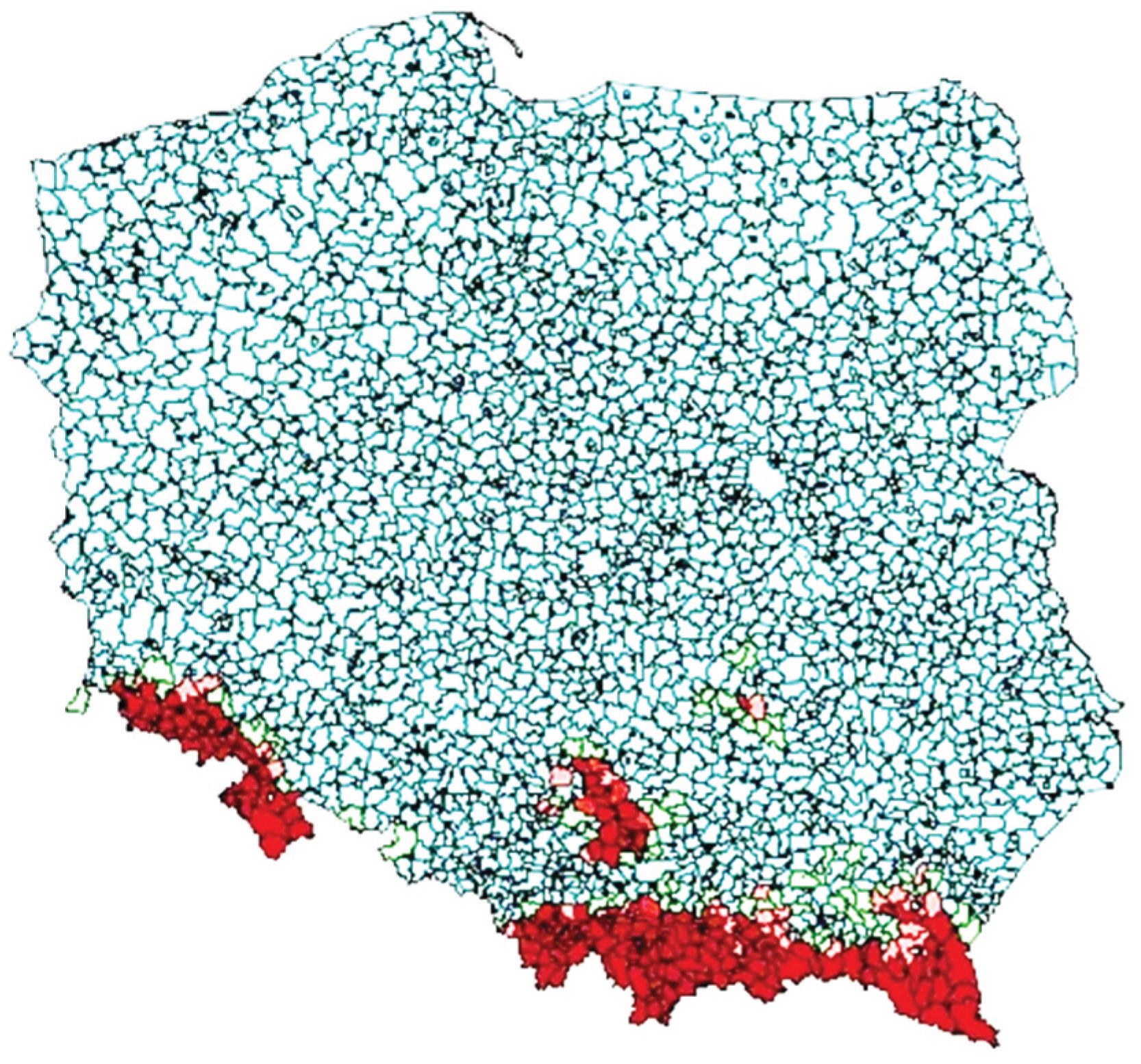
Figure 12.
Percentage of farms beneficiaries of organic farming or agro-environmental and climate measures in municipalities differs in the share of HNVf areas with average natural value in 2023. Source: own compilation based on ARMA data (2023).
Figure 12.
Percentage of farms beneficiaries of organic farming or agro-environmental and climate measures in municipalities differs in the share of HNVf areas with average natural value in 2023. Source: own compilation based on ARMA data (2023).
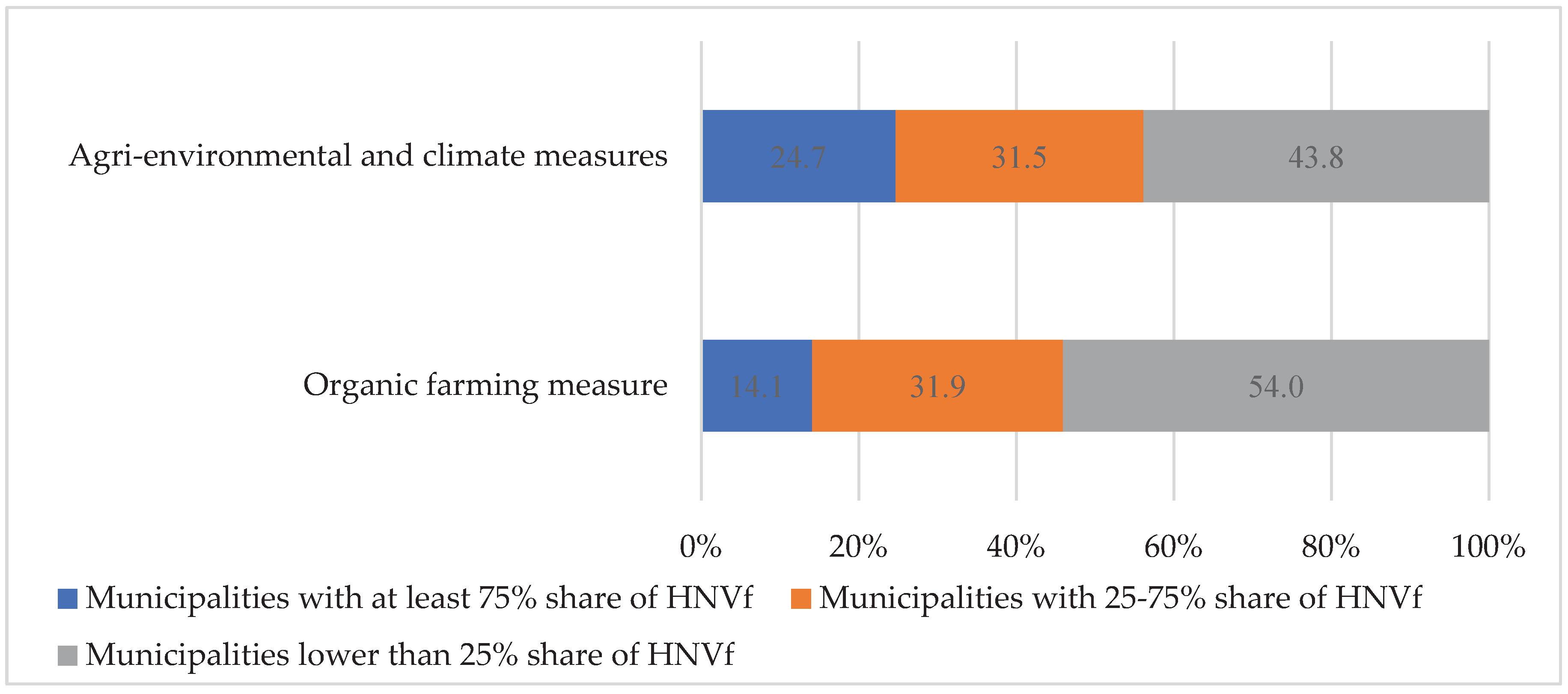
Figure 13.
Percentage of farms beneficiaries of organic farming or agro-environmental and climate measures in municipalities differing in the share of HNVf areas of high natural value in 2023. Source: own compilation based on ARMA data for 2023.
Figure 13.
Percentage of farms beneficiaries of organic farming or agro-environmental and climate measures in municipalities differing in the share of HNVf areas of high natural value in 2023. Source: own compilation based on ARMA data for 2023.
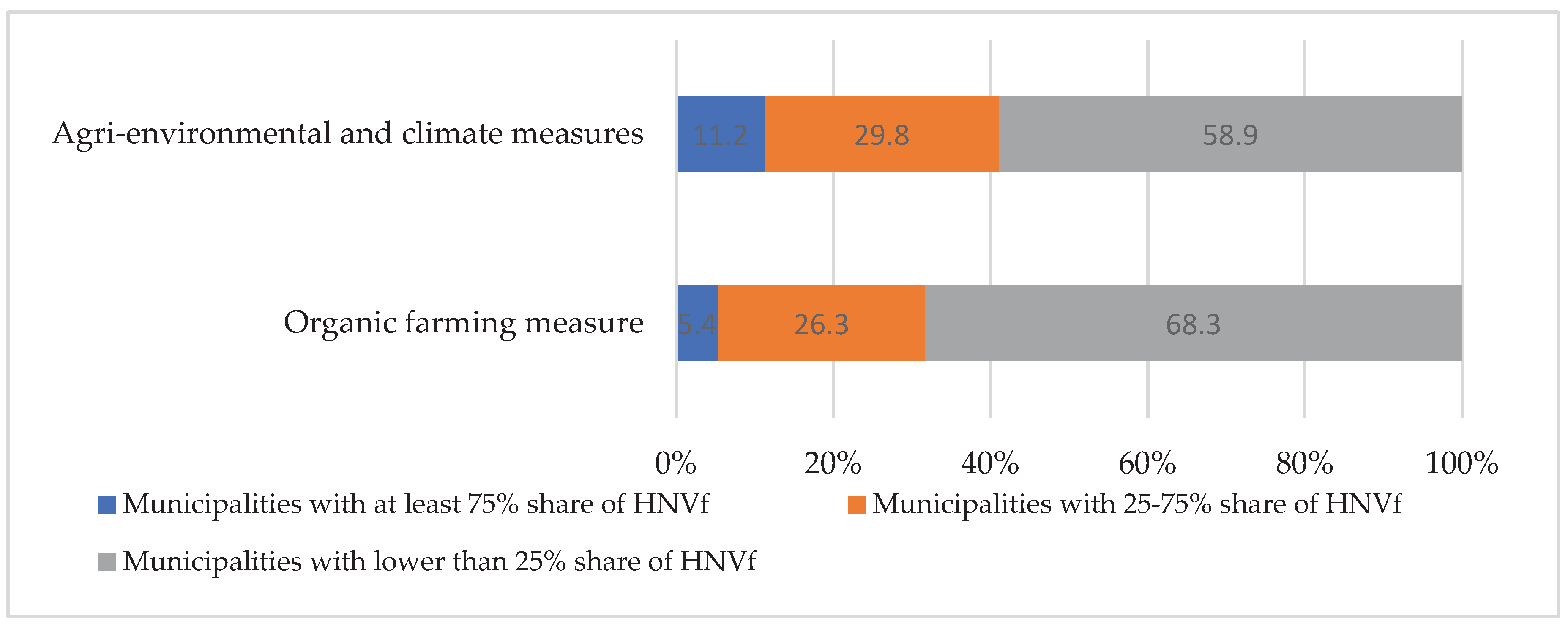
Figure 14.
Percentage of farms beneficiaries of organic farming or agro-environmental and climate measures with exceptionally high natural value in 2023. Source: own compilation based on ARMA data for 2023.
Figure 14.
Percentage of farms beneficiaries of organic farming or agro-environmental and climate measures with exceptionally high natural value in 2023. Source: own compilation based on ARMA data for 2023.
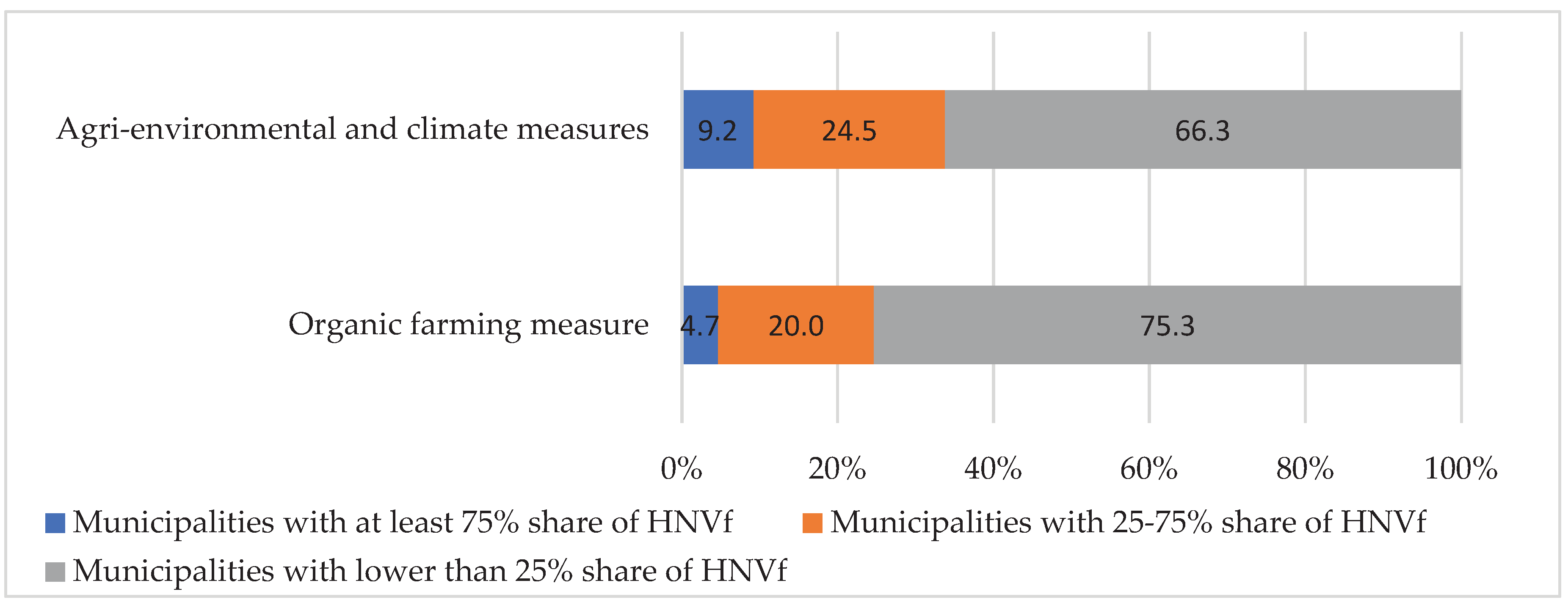
Figure 15.
Percentage of UAA under the combined measures of organic and agro-environmental climate measures in total UAA by municipalities with different shares and natural values in 2023. Source: own compilation based on ARMA data (2023).
Figure 15.
Percentage of UAA under the combined measures of organic and agro-environmental climate measures in total UAA by municipalities with different shares and natural values in 2023. Source: own compilation based on ARMA data (2023).
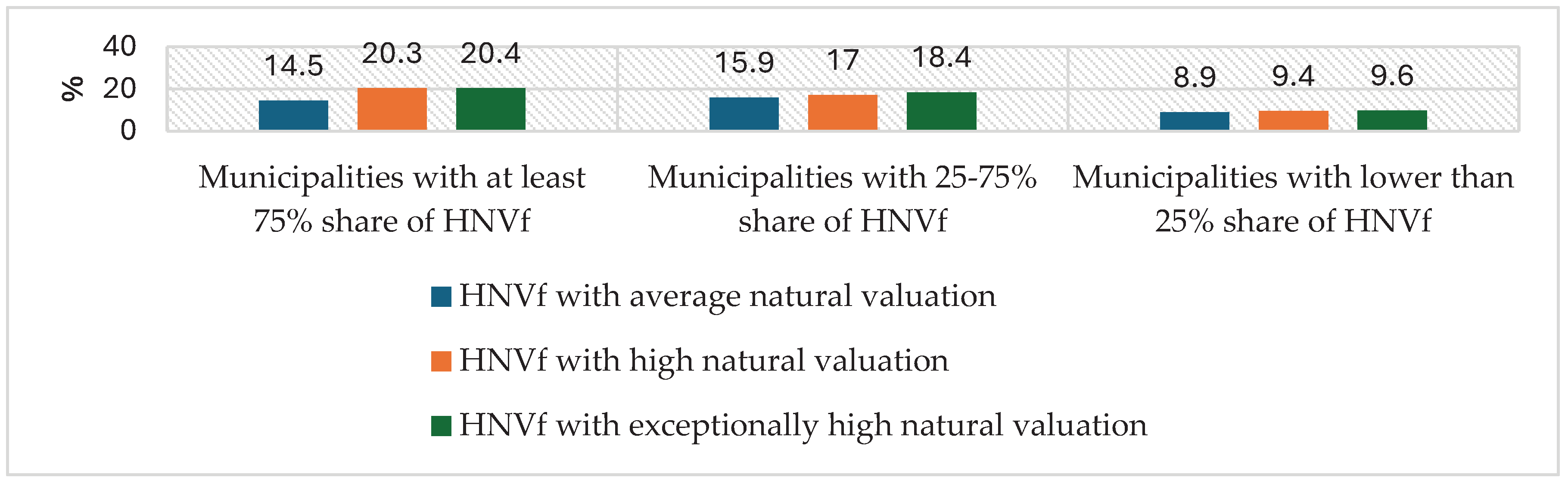

Table 1.
Analyzed environmental measures implemented in Polish agriculture in the first year of operation.
Table 1.
Analyzed environmental measures implemented in Polish agriculture in the first year of operation.
|
Eco-schemes/ practices |
1. Carbon agriculture and nutrient management | 1.1 Extensive use of permanent grassland with stocking rates 1.2 Winter intercrops or catch crops 1.3 Develop and adhere to a fertilisation plan (basic variant) 1.4 Develop and follow a fertiliser plan (variant with liming) 1.5 Diversified sowing structure 1.6 Mix manure on arable land within 12 hours of application 1.7 Application of natural liquid fertilisers by methods other than splashing 1.8 Simplified tillage systems 1.9 Mixing of straw with soil |
| 2. Areas with melliferous plants | ||
| 3. Water retention on permanent grassland | ||
| 4. Integrated plant production | ||
| 5. Biological protection of plants | ||
| Organic farming measures | ||
| Agro-environmental-climate measures | ||
Source: own elaboration.
Table 2.
Selected characteristics of agriculture in municipalities according to the share of farmland on the farms of eco-scheme beneficiaries in total farmland in 2023.
Table 2.
Selected characteristics of agriculture in municipalities according to the share of farmland on the farms of eco-scheme beneficiaries in total farmland in 2023.
| Specification | Municipalities with at least 50% share of agricultural land located on the farms of eco-scheme beneficiaries in the total area of agricultural land | Other municipalities |
|---|---|---|
| Average share of farmland on farms of eco-scheme beneficiaries in farmland by municipality (%) | 65,0 | 36,7 |
| Total number of farms (thousands) | 665,3 | 569,0 |
| Share of farms of eco-scheme beneficiaries in the total number of farms (%) | 45.8 | 21.7 |
| UAA (thousand hectares), including % share: | 9 950,9 | 4 144,0 |
| -arable land (%) | 85.2 | 66.6 |
| -permanent grassland (%) | 13.8 | 27.3 |
| -fixed assets (%) | 1.0 | 6.1 |
| Average farm area (ha) | 15,0 | 7,3 |
| Share of ANCs in total UAA (%) | 52.7 | 70.1 |
| S-W Index (points) | 2,42 | 2,29 |
Source: own compilation based on ARMA data (2023).
Table 3.
Selected characteristics of agriculture in municipalities according to the share of farmland on the farms of organic farming beneficiaries in total farmland in 2023.
Table 3.
Selected characteristics of agriculture in municipalities according to the share of farmland on the farms of organic farming beneficiaries in total farmland in 2023.
| Specification | Municipalities with at least 25% share of agricultural land under organic farming measure in total agricultural area | Other municipalities |
|---|---|---|
| Average share of farmland on the farms of beneficiaries of organic farming measures in total farmland by municipality (%) | 33.2 | 2.5 |
| Total number of farms (thousands) | 12,4 | 1 221,9 |
| Share of organic farming beneficiary farms in the total number of farms (%) | 25.8 | 1.3 |
| UAA (thousand ha), including % share: | 314,3 | 13 780,6 |
| -arable land (%) | 72.5 | 80.0 |
| -permanent grassland (%) | 25.8 | 17.6 |
| -fixed assets (%) | 1.7 | 2.4 |
| Average farm area (ha) | 25,3 | 11,3 |
| Share of ANCs in total UAA (%) | 92.3 | 58.8 |
| S-W Index (points) | 2,51 | 2,36 |
Source: own compilation based on ARMA data (2023).
Table 4.
Selected characteristics of agriculture in municipalities according to the share of farmland on the farms of beneficiaries of agri-environmental and climate measures in total farmland in 2023.
Table 4.
Selected characteristics of agriculture in municipalities according to the share of farmland on the farms of beneficiaries of agri-environmental and climate measures in total farmland in 2023.
| Specification | Municipalities with at least 25% share of agricultural land under agri-environmental-climate measures in the total area of agricultural land | Other municipalities |
|---|---|---|
| Average share of farmland on farms of beneficiaries of agri-environmental and climate measures in total farmland by municipality (%) | 36.2 | 6.4 |
| Total number offarms (thousands) | 48,0 | 1 186,3 |
| Share of farms of beneficiaries of agri-environmental and climate measures in the total number of farms (%) | 33.9 | 5.0 |
| UAA (thousand ha), including % share: | 750,0 | 13 344,9 |
| -arable land (%) | 51.2 | 81.3 |
| -permanent grassland (%) | 48.0 | 16.0 |
| -fixed assets (%) | 0.8 | 2.7 |
| Average farm area (ha) | 15,6 | 11,2 |
| Share of ANCs in total UAA (%) | 92.4 | 58.8 |
| S-W Index (points) | 2,28 | 2,37 |
Source: own compilation based on ARMA data (2023).
Disclaimer/Publisher’s Note: The statements, opinions and data contained in all publications are solely those of the individual author(s) and contributor(s) and not of MDPI and/or the editor(s). MDPI and/or the editor(s) disclaim responsibility for any injury to people or property resulting from any ideas, methods, instructions or products referred to in the content. |
© 2025 by the authors. Licensee MDPI, Basel, Switzerland. This article is an open access article distributed under the terms and conditions of the Creative Commons Attribution (CC BY) license (http://creativecommons.org/licenses/by/4.0/).
Copyright: This open access article is published under a Creative Commons CC BY 4.0 license, which permit the free download, distribution, and reuse, provided that the author and preprint are cited in any reuse.