

Submitted:
02 July 2025
Posted:
04 July 2025
You are already at the latest version
Abstract
Alpaca farming in the high Andean regions of Peru is a family activity of social, cultural, and economic importance. Some struggles for farmers include infectious, parasitic, and nutritional diseases. Among these, sarcocystosis does not have a medium- or long-term solution, with parasite prevalence dating back 3 decades. This study was conducted to determine the prevalence of sarcocystosis through visual examination and to determine the differences according to age, sex, and number of macrocysts. A visual examination of the cystic structures in different predisposing or susceptible areas, such as the cervical (neck), costal (intercostal muscles), and thigh muscles was performed to identify mac-roscopic cysts. A total of 1,361 alpacas were evaluated; of these, 410 were sarcocystosis -positive. The results revealed an overall prevalence of 30.12% and varried by age. Al-pacas with complete dentition, on average, had the highest parasitic load (192 macro-cysts) compared to those with deciduous dentition (43 macrocysts). Although the in-fection did not affect live weight, carcass weight or performance, the intercostal muscles had the highest cyst density. These findings confirm that sarcocystosis is an endemic disease in alpacas, with a heterogeneous distribution according to age groups but ho-mogeneous between sexes, and highlights the need to implement sustainable control strategies, especially in adult alpacas, where the parasitic load is critical.
Keywords:
prevalence
; macrocysts
; sarcocystosis
; age
; sex
1. Introduction
Sarcocystis is a parasitic disease of widespread distribution worldwide that affects various domestic animals, including South American camelids. The infection is caused by protozoa of the genus Sarcocystis, whose species and mechanisms vary depending on the host. Sarcocystis in South American camelids is caused by the coccidia Sarcocystis aucheniae and Sarcocystis lamacanis , both with an indirect predator-prey life cycle. The alpaca is the intermediate host where the parasite carries out its asexual reproduction, forming macro and micro cysts that can massively affect muscle fibers, both striated and cardiac [1]. The definitive host is the domestic and wild canine, where coccidia develop their sexual phase giving rise to the formation of thousands of sporocysts and oocysts, which are released sporulated along with the feces into the environment [2].
This disease is commonly known as (trichina or arrocillo) and constitutes a toxic zoonosis [3]. In Peru, S. aucheniae produces macroscopic cysts in the skeletal muscles of alpacas [4]. Alpaca farming in the high Andean regions of Peru constitutes a family activity of social, cultural and economic importance [5,6]. The production of alpaca meat has become very relevant due to its nutritional quality, since it has less fat and cholesterol compared to other sources of animal protein, which as caused an increase in consumption mainly in developed countries [5,7,8]. However, sarcocystosis significantly affects the weight gain of infected animals (-18.7 and -4.7 g/day), with mortality rate up to 60% [9]. Furthermore, the massive presence of macroscopic cysts in the muscles of animals destined for human consumption leads to the confiscation of carcasses and limits the commercialization of meat [10].
Macrocyst prevalences of 70–100% have been reported in all four South American camelid species across all alpaca-producing regions of the country. This clearly indicates the high levels of contamination of pastures with this parasite, which is aggravated by the close coexistence of dogs and the feeding of dogs with raw meat infected with this coccidia [3,11,12], and the low socioeconomic levels of the rural population. Alpaca production in the Macusani district is not fully developed due to the presence of parasitosis, which causes delays in production and reproduction parameters in alpacas. This is a consequence of the lack of interest and knowledge of alpaca producers who do not have access to specific information about the parasitic disease and delays all the normal physiological processes of alpacas. Furthermore, there are no studies that count cysts in alpaca carcasses and the effect they have on carcass performance. The objective of this study was to determine the prevalence of sarcocystosis by macrocyst count and to determine the relationship of infection with alpaca carcass weight.
2. Materials and Methods
2.1. Location
The research was carried out in several alpaca breeding sites, one of them is the Municipal Slaughterhouse of Macusani district, Carabaya Province, located in the northern part of the Puno Region (Figure 1), at an average altitude of 4345 meters above sea level, 14°04'07” South latitude and 70°25'53” West longitude. This area has a rainy and semi- frigid climate, with poor humidity in winter, where the maximum temperature is around 12°C and minimum temperatures are around 2°C in summer and -6.5°C in winter, with a rainfall of 636 mm [13].
2.2. Animals
The study population consisted of alpacas slaughtered at the municipal slaughterhouse in the district of Macusani, province of Carabaya, department of Puno. The sample size was determined using non-probability convenience sampling, working with the 1361 slaughtered alpacas. The animals were classified by age (DL: milk tooth, 2D: 2 teeth, 4D: 4 teeth, BLL: full mouth) and sex.
2.3. Methods
To determine the prevalence and count of macroscopic superficial cysts in the skeletal muscles of each carcass, the methodology described by FAO (2007) and Vásquez et al. (2012) [14,15] was adopted, which consists of a detailed visual examination of the cystic structures in the predisposing or susceptible areas of greater infection, such as the cervical region (neck), costal (intercostal muscles) and thigh muscles. This macroscopic approach is commonly used in the scientific literature due to its effectiveness in identifying visible cysts without the need for additional techniques such as microscopic analysis [16,17]. The inspection was carried out systematically and the presence of one or more macrocysts was considered positive (Figure 2), macrocyst identification was done as described by Decker (2018) [18] Figure 3 (forms A, B, C, D and E), while the absence of these structures was recorded as negative. The carcasses were classified according to the presence of Sarcocystis sp. macroscopic cysts, following the criteria established by different authors in previous studies [19]. In addition, a detailed record of each carcass was kept, specifying the location of the macrocysts.
To assess the impact of sarcocystosis on carcass yield, the live weight of each alpaca before slaughter and the carcass weight after slaughter were recorded using a digital scale with a sensitivity of 50 grams. This procedure is key to correlating the prevalence of infection with potential variations in meat yield, an aspect that has been documented in other studies on sarcocystosis in species of economic interest [17,20].
2.4. Statistical Analysis
To compare the prevalence of sarcocystosis by sex and class, the chi-square test of independence was used with a significance level of 0.05. To analyze quantitative data (such as cyst count and weights), measures of central tendency and dispersion were calculated. Prior to analysis, the data were transformed to meet the assumptions of normality. To compare the number of cysts by sex, the Student t test for independent samples was applied, while for comparisons by class, a completely randomized design (CRD) was used, and Tukey's test was used to compare means. Finally, weights were analyzed using a CRD with a 4 × 2 factorial arrangement and Tukey's test to compare means.
3. Results
3.1. Prevalence of Sarcocystis Aucheniae in Alpaca Carcasses
Of the 1,361 carcasses analyzed, 410 were positive for sarcocystosis, representing an overall prevalence of 30.12%. By sex, the prevalence was 29.95% in females and 30.33% in males, with no statistically significant differences (p>0.05), indicating a homogeneous distribution between both sexes. The lowest prevalence was recorded in alpacas with 4D and BLL, which presented similar prevalences. The confidence intervals were narrow, suggesting precision in the estimates (Table 1). These results suggest a possible influence of age or physiological development on parasite exposure, which was also reported in previous studies [17]. However, further analysis would be required to confirm this relationship. Differences between classes were significant (p < 0.05), according to the statistical analysis applied.
3.2. Sarcocystis Macrocyst Count in Alpaca Carcasses
All 410 selected animals tested positive with the molecular and serological diagnostic tests. The majority presented visible macrocysts in the muscle tissue. This group also included some animals that, although they did not show visible macrocysts , were positive at the molecular and serological level. The average number of macrocysts observed was 32.5 in female alpacas and 26.18 in males, and this difference was not statistically significant (p = 0.085). Similar trends were observed in previous studies in South American camelids [19]. Females had between 1 and 350 macrocysts, while males had between 1 and 154 macrocysts (Table 2).
Significant differences were observed in the average number of lesions between the different ages (Table 3). Alpacas with milk teeth (DL) had the lowest average (43 macrocysts), followed by 2-tooth alpacas (2D) with 53 macrocysts . In contrast, 4-tooth alpacas (4D) and those with complete dentition (BLL) showed notably higher averages, with 134 and 192 macrocysts respectively. These results align with those reported by Velásquez et al. (2019) [19] It should be noted that, although the minimum number of macrocysts recorded was 1 in all groups, the maximum value was 350 macrocysts (Table 3).
3.3. Live Weight, Carcass Weight, and Carcass Yield of Alpacas
Analysis of live weight, carcass weight, and carcass yield revealed that the presence of macrocysts did not significantly affect these parameters (p > 0.05), as no statistical differences were observed between sarcocystosis- positive and -negative alpacas (Table 4). However, BLL positive alpacas (Full Mouth) recorded the highest live weight (53.45 kg), while DL alpacas (milk teeth) together with 2D (2 teeth), presented the lowest values (p < 0.05). A similar pattern was observed in carcass weight, with BLL positive alpacas reaching the highest weight (27.80 kg), and DL negative the lowest (18.45 kg) (p < 0.05). No significant differences were found between age groups for carcass yield (p > 0.05), suggesting that conversion efficiency is not altered by age or infection.
The results obtained indicate that, although age influences live and carcass weight, possibly due to physiological development, the presence of Sarcocystis aucheniae macrocysts does not appear to significantly compromise alpaca performance. This suggests that the parasitic load does not significantly affect nutrient metabolism or muscle development at the stages evaluated. However, experimental studies have shown that Sarcocystis infections can reduce weight gain and fiber production in young alpacas, especially when the parasitic load is high [9].
4. Discussion
The data presented in Table 1 reveal that no statistically significant differences (p > 0.05) were identified in the prevalence of S. aucheniae between female and male alpacas. This lack of association between sex and the presence of macroscopic cysts coincides with the findings previously documented by Palomino (2013) [17] in Huancavelica, Peru, who reported prevalences of 31.23% in females and 33.67% in males, with no significant differences between the two groups. Analogous results were obtained by Velásquez et al. (2019) [19] in Puquio, Ayacucho region, where prevalences of 16.3% in females and 17.1% in males were observed, reinforcing the hypothesis of an equitable distribution of the infection based on sex. Likewise, Vizarreta & Huaylla (2023) [21], in a study carried out in the municipal slaughterhouse of Espinar, Cusco, reported prevalences of macroscopic sarcocystosis of 37.6% in male alpacas and 36.2% in females.
Taken together, these results suggest that sex is not a determining factor in susceptibility to S. aucheniae infection in alpacas. The absence of significant differences could be explained by the action of common ecological and epidemiological factors that affect males and females equally. Among these, the widespread contamination of pastures which can be attributed to the close interaction between South American camelids and domestic or wild canids, which act as definitive hosts of the parasite. This ecological dynamic generates constant and equitable exposure to both sexes. Additionally, traditional practices such as communal grazing, as well as the clandestine slaughter of adult animals, increase the likelihood of indiscriminate contact with sources of infection, perpetuating the parasite's life cycle in the production environment. The similarity in infection rates could also be linked to a comparable immune response between males and females, as suggested by Saeed et al. (2018) [12], which would contribute to the uniformity observed.
These results differ from those reported by Carhuapoma-Delacruz et al. (2024) [22] in muscle tissue in the localities of Huancavelica, Peru, where prevalences of 36.5% and 31.3% were recorded in alpacas and 39.0% and 37.0% in llamas, for males and females respectively. Additionally, Hidalgo-Pozo at al. (2021) [23] identified macrocysts of Sarcocystis spp . in slaughterhouses in Ecuador, reporting a differential prevalence according to sex: 58.82% in male carcasses versus 41.18% in females. Rooney et al. (2014) [24] demonstrated, in llamas, that females were significantly more likely to harbor macrocysts compared to males. This pattern was corroborated by Decker-Franco et al. (2018) [25], who, through visual inspection of carcasses, reported a prevalence of 85.7 % in females compared to 42.1 % in males. They attribute this greater vulnerability in females to physiological factors, particularly immunosuppression induced by gestational and birth stress, especially between 2.5 and 4.5 years of age, a critical period in which the immune response can be compromised, favoring the installation and development of the parasite.
These discrepancies between studies could be due to multiple factors, including differences in the methodology used (visual inspection vs. histological or molecular techniques), environmental conditions, handling practices, animal age, physiological status, and variations in environmental infection pressure. Therefore, it is essential to consider these variables when interpreting the influence of sex on the epidemiology of S aucheniae. Controlled studies with samples stratified by age and physiological status are recommended to more accurately elucidate the role that sex may play in the parasite's transmission dynamics.
The prevalence according to age was different than those reported by Velásquez et al. (2019) [19], in the municipal slaughterhouse of Puquio (Ayacucho, Peru) with prevalences of S. aucheniae infection in young (16.3%) and adult (16.9%) alpacas. However, Chirinos (2017) [26] reported in the municipal slaughterhouses of Nuñoa and Ayaviri a prevalence of 100% in animals of different ages. Also Vizarreta & Huaylla (2024) [21] showed a prevalence of 21.9% in young alpacas and 51.9 in adults in a municipal slaughterhouse in Espinar, Cusco. Romero et al. (2017) [27] reported the percentage of positive animals in llamas aged 2 years or older as 28.5% and under 2 years as 5.1%. A similar association between age and S. aucheniae infection was observed by Castro et al. (2004) [28], in a study carried out in Junín, Peru, where they evaluated the relationship between the age of alpacas and the presence of antibodies against Sarcocystis sp. The authors found a high overall seroprevalence (89.7%). Likewise, Rooney et al. (2014) [24] recorded prevalences of 19.9%, 28.4% and 90.4% in Bolivian llamas with 2 teeth, 4 teeth and a full mouth, respectively, demonstrating a significant by age. This indicates that age constitutes a risk factor for infection, with adult animals being more likely to have detectable macrocysts, due to their longer exposure to the parasite. This is explained by the fact that older animals have had more time to be exposed to the parasite. The high seropositivity could be influenced by the presence of domestic and wild canids in the area, which act as definitive hosts and maintain the continuous transmission of Sarcocystis sporocysts in the environment, favoring frequent reinfections and the persistence of the infection in the alpaca population.
Studies carried out in Ecuador by Hidalgo-Pozo at al. (2021) [23] report prevalences of 12.50% in young animals and 39.47% in adult alpaca carcasses. However, Wu et al. (2022) [29] Sarcocystis parasitosis can manifest from 3 and a half years of age, located mainly in muscle tissues such as the neck, arm, and leg. This explains the high prevalence observed in carcasses from animals 4 years of age or older, since the infection accumulates with age due to greater exposure to the parasite. Previous studies confirm that the probability of infection increases from the first year of life, reflected in a high seroprevalence in adult alpacas [28].
The biological explanation for this relationship is based on the fact that adult animals have been exposed for longer periods of time to infective sporocysts present in the environment, especially in endemic areas with a high density of definitive hosts, such as domestic and wild canids. This prolonged exposure facilitates the progressive accumulation of cysts in muscle tissue, which increases the parasitic load over time. Consequently, the evidence generated in this study reinforces the importance of considering age as a determining epidemiological factor in the dynamics of S. aucheniae infection in alpacas. This aspect should be integrated into the design of health control and management strategies, in order to reduce both the incidence and economic impact of this parasitic infection in South American.
The results obtained in the present study are comparable with those reported by López-Torres et al. (2015) [30] in the Huancavelica region, Peru, who identified microcysts of Sarcocystis lamacanis in alpacas between 3 and 5 years of age, with a parasitic load that ranged from 6.4 to a maximum of 130.3 microcysts per area analyzed. Similarly, Jiang et al. (2021) [31] reported the presence of Sarcocystis spp. in the cardiac tissue of alpacas in China, specifically in the myocardium, with a mean burden of 79.00 ± 4.58 sarcocysts per square centimeter. These authors also described that the cyst size varied between 36.48–204.41 × 31.32–102.01 μm (n = 70).
However, our results significantly exceed those reported by Fernandez-F et al. (2022) [32], who studied alpacas older than three years in the departments of Puno and Arequipa. In that study, microcysts were quantified in the heart tissue, finding an overall average of 4.6 cysts. Broken down by department, the average was 3.5 in Arequipa and 5.7 in Puno, which suggests a greater exposure of Puno alpacas to the S. lamacanis parasite, possibly occurring at an earlier period than animals in the other group. Consistently, Chirinos (2017) [26] also documented the presence of microcysts in alpacas aged 2 to 6 years, of both sexes, in the Puno region. In their study, maximum averages of up to 75 cysts were observed in the Nuñoa municipal slaughterhouse and 56 cysts in the Ayaviri slaughterhouse, which reinforces the hypothesis of a high endemicity of the parasite in that area.
The discrepancies analyzed here highlight the need for multicenter studies that integrate molecular characterization, environmental assessment, and socioeconomic analysis. Parasitic diversity in the Andes could be greater than documented, requiring massive sequencing techniques for elucidation. Furthermore, the implementation of predictive models for alpaca production would allow for the optimization of control strategies based on local epidemiological data. In summary, this study not only contributes to the understanding of sarcocystosis in South American camelids but also establishes a comparative framework for future research, underscoring the importance of interdisciplinary approaches that reconcile animal health, food safety, and economic sustainability in regions with high alpaca production.
The high prevalence and high counts, especially in adult animals, pose important considerations for the alpaca industry. S. aucheniae macrocysts not only represent an aesthetic problem that can affect the commercial acceptability of the meat, but they may also contain toxins that require specific treatments for their inactivation. Studies have shown that physical treatments such as cooking and baking at 80°C for 5 minutes, as well as prolonged freezing, can be effective for the sanitation of infected meat [10].
The high prevalence rates documented underscore the importance of sarcocystosis as a health problem in alpaca production and the need to implement comprehensive control strategies that consider the identified risk factors. These findings contribute significantly to the understanding of the epidemiology of S. aucheniae in South American camelids and provide a scientific basis for the development of more effective control programs and management strategies that optimize both animal health and food safety in the alpaca industry.
Sarcocystis aucheniae infection does not significantly affect live weight, carcass weight or yield (p > 0.05), coinciding with studies in camelid production systems under extensive management [12,33]. However, the differences observed between age groups (DL: 37.54 kg vs BLL: 53.45 kg) reflect growth patterns linked to physiological maturity, supported by longitudinal research in Australian and South American alpacas [33,34].
The absence of significant differences between BLL-positive and -negative alpacas (p = 0.793 in live weight) could be explained by the low pathogenicity of S. aucheniae in chronic stages. Experimental studies show that subclinical infections do not alter muscle protein synthesis in camelids [12], a hypothesis supported by Moré et al. (2016) [35] in models of nutritional homeostasis in ruminants. The metabolic compensation capacity observed in BLL-positive alpacas (53.45 kg) suggests efficiency in resource redistribution, even under parasitic load.
The preferential location of cysts in skeletal muscle (neck, back) does not compromise total muscle mass, according to histopathological studies as described by Smith et al. (2015) [33] where they observed that 79.1% of the carcass weight in adult alpacas corresponds to commercial cuts, regardless of infection. This stability suggests that cysts occupy interstitial space without causing atrophy. However, authors such as Chávez et al. (2008) [9] demonstrate the opposite effect of microscopic sarcocysts in young alpacas experimentally infected with sporocysts . Infected alpacas showed a decrease in body weight gain and hematocrit levels compared to control groups. High mortality (92%) was observed in alpacas infected with a high dose of sporocysts . Histological examination of the cardiac muscle revealed that microscopic sarcocysts were located only in myocytes and not in Purkinje cells, and did not cause any disruption in the conduction of electrical impulses through the myocardium [36].
Additionally, the absence of an effect on performance (50.57–51.32%) indicates that the infection does not alter nutrient digestibility. Castellaro et al. (1998) [34] demonstrated that alpacas in natural grazing maintained stable metabolic rates (±50 kcal/kg0.75/day), even with moderate parasitic loads.
Overall, these studies indicate that Sarcocystis spp. may be responsible for significant pathology in llamas and alpacas, although infection is usually subclinical or asymptomatic. Further studies are needed to understand the pathogenesis of sarcocystosis, both macroscopic and microscopic, and its impact on musculoskeletal and cardiac function, immunity, and productivity in camelids, especially in terms of animal welfare and economic importance [12]. Sarcocystosis does not compromise key production parameters in alpacas, but its management requires integrating age and health criteria. The stability of performance (51%) suggests physiological resilience, while age-specific differences between DL-BLL reinforce the importance of age management. Future research should prioritize predictive tools that balance performance and health quality, ensuring the sustainability of the camelid industry.
5. Conclusions
The overall prevalence of sarcocystosis in alpacas was 30.12%, with BLL alpacas presenting the highest macrocyst burden (192 on average), suggesting a progressive accumulation of the parasite with age. Furthermore, the presence of macrocysts did not affect live weight, carcass weight, or performance, although BLL alpacas (positive and negative) showed higher weights (53.45 kg vs. 37.54 kg in DL; 53.45 kg vs. 37.54 kg in DL). This indicates that, under conditions of subclinical infection, productivity is not compromised, but age remains the determining factor in productive performance.
Author Contributions
All the authors listed in this paper have contributed to the preparation and execution of this research. M.T.R and M.Q.: Methodology and Writing—Review and Editing; M.U., and H.R.: Methodology and Critical Reading; L.R. and E.D.: Data Curation, Formal Analysis, Writing—Review and Edit-ing; H.R., C.M., Y.Y. and A.C.: Conceptualisation, Methodology, Data Curation, Writ-ing—Review and Editing, Critical Reading, and Funding Acquisition; and C.M. and R.G.: Conceptual-ization, Methodology, Writing—Original Draft, Critical Reading, and Writing—Review and Edit-ing. All authors have read and agreed to the published version of the manuscript.
Funding
This research was funded by CONCYTEC through the PROCIENCIA program (ex-FONDECYT), under the framework of the “Proyectos de investigacion basica 2022-01” competition, according to agreement N° PE501077903-2022-PROCIENCIA.
Institutional Review Board Statement
This research was performed in strict accordance with the recommendations in the legal frame-work (Animal Welfare Law) for all Peruvian Public and Private Laboratories and Higher Education Institutions. Moreover, the study was conducted according to the guidelines of the Declaration of Helsinki and following the Code of Ethics for animal experiments as reflected in the ARRIVE guidelines available at http://www.nc3rs.org.uk/ARRIVEchecklist (Accessed on 7 July 2020). This study was approved by the Bioethics Committee for the use of animals at the Universidad Nacional del Altiplano—Puno—Perú (Approval Date: 22 October 2022, Code Number: CONSTANCIA DE ETICA N° 12-2022-FMVZ-UNA-PUNO)".
Informed Consent Statement
Not applicable.
Data Availability Statement
All data generated or analysed during this study are included in this article.
Acknowledgments
The authors would like to thank the Macusani District Municipality for providing access to the slaughterhouse to conduct this research.
Conflicts of Interest
The authors declare no conflicts of interest.
Abbreviations
The following abbreviations are used in this manuscript:
| S. aucheniae | Sarcocystis aucheniae |
| S. lamacanis | Sarcocystis lamacanis |
| DL | Baby tooth |
| 2D | Two teeth |
| 4D | Four teeth |
| BLL | Full mouth |
| kg | kilogram |
| LI | Lower Limit |
| LS | Upper Limit |
References
- Quiroz, H. Parasitologia y Enfermedades Parasitarias de Animales Domesticos.; Limusa, Ed.; Mexico, 2000;
- Leguía, G. Infección Experimental En Primates No Humanos (Saimiri Boliviensis) y Voluntarios Humanos Con Micro y Macroquistes de Sarcocystis de Alpacas. Rev Acad Peru Cienc Vet 2003, 4, 11–15. [Google Scholar]
- Lucas, J.R. Sarcocystis Spp. En El Perú. Peruvian J. Parasitolgy 2012, 20, 64–73. [Google Scholar]
- Medrano, G.; Hung, A.; Rubio, N. Detección Molecular Temprana de Sarcocystis En El Animal Vivo y Su Estudio Filogenético Basado En El Análisis Del Gen SSU rRNA En Alpacas En Perú. Mosaico Cient 2006, 3, 5–9. [Google Scholar]
- Huanca, W. Los Desafíos En El Manejo Reproductivo de Los Camélidos Sudamericanos The Challenges in Reproductive Management of South American Camelids. Arch. Latinoam. Prod. Anim. 2013, 21, 233–236. [Google Scholar]
- Vilá, B.; Arzamendia, Y. South American Camelids: Their Values and Contributions to People. Sustain. Sci. 2022, 17, 707–724. [Google Scholar] [CrossRef]
- Mamani-Linares, L.W.; Gallo, C.B. Meat Quality, Proximate Composition and Muscle Fatty Acid Profile of Young Llamas (Lama Glama) Supplemented with Hay or Concentrate during the Dry Season. Meat Sci. 2014, 96, 394–399. [Google Scholar] [CrossRef]
- Popova, T.; Tejeda, L.; Peñarrieta, J.M.; Smith, M.A.; Bush, R.D.; Hopkins, D.L. Meat of South American Camelids - Sensory Quality and Nutritional Composition. Meat Sci. 2021, 171, 108285. [Google Scholar] [CrossRef]
- Chávez, A.; Leyva V., V.; Panez L., S.; Ticona S., D.; García V, W.; Pezo C., D. Sarcocistiosis Y La Eficiencia Productiva De La Alpaca. Rev. Investig. Vet. Perú 2008, 19, 160–167. [Google Scholar] [CrossRef]
- Céspedes, C.; Vilca, M.; Ramos, D.; Sam, R.; Lucas, J. Saneamiento y Detoxificación de Carne de Alpaca (Vicugna Pacos) Con Sarcocistiosis Mediante Tratamientos Físicos y Químicos de Uso Doméstico. Rev Inv Vet Perú 2013, 24, 404–410. [Google Scholar]
- Beldomenico, P.M.; Uhart, M.; Bono, M.F.; Marull, C.; Baldi, R.; Peralta, J.L. Internal Parasites of Free-Ranging Guanacos from Patagonia. Vet. Parasitol. 2003, 118, 71–77. [Google Scholar] [CrossRef]
- Saeed, M.A.; Rashid, M.H.; Vaughan, J.; Jabbar, A. Sarcocystosis in South American Camelids: The State of Play Revisited. Parasit. Vectors 2018, 11, 1–11. [Google Scholar] [CrossRef] [PubMed]
- Servicio Nacional de Meteorología e Hidrología del Perú (SENAMHI) Climas del Perú: Mapa de Clasificación Climática - Servicio Nacional de Meteorología e Hidrología del Perú. Available online: https://www.gob.pe/institucion/senamhi/informes-publicaciones/2158106-climas-del-peru-mapa-de-clasificacion-climatica (accessed on 14 January 2024).
- Food and Agriculture Organization (FAO) Proyecto de Cooperación Técnica En Apoyo a La Crianza y Aprovechamiento de Los Camélidos Sudamericanos En La Región Andina TCP/RLA/2914. Situación Actual de Los Camélidos Sudamericanos En Perú; Food and Agriculture Organizatio, 2007;
- Vázquez, J.; Cedeño, M.; Collazo, M.; Jiménez, M.; Quintero, L.; Barletta, J. Folleto de Protozoología y Técnicas Parasitológicas. Rev. Electrónica Las Cienc. Médicas En Cienfuegos 2012, 10, 151–162. [Google Scholar]
- Leguía, G.; Santiago, B. Infectividad de quistes de Sarcocystis sp. en alpacas (Vicugna pacos) en una ganadería de la sierra central del Perú. Biotempo 2019, 16, 209–213. [Google Scholar] [CrossRef]
- Palomino, R. Prevalencia de Sarcocistiosis En Alpacas (Vicugna Pacos) Beneficiadas En El Camal de Pilpichaca, Huancavelica Años 2010 al 2012. 2013.
- Decker-Franco, C. Avances En El Conocimiento de La Sarcocistiosis de Camélidos Sudamericanos y Desarrollo de Herramientas Para Su Control. Trabajo de tesis para optar al título de Doctora de la Universidad de Buenos Aires, Argentina, 2018.
- Velásquez, L.; Soncco, J.; Valderrama, A. Sarcocystis aucheniae en camélidos sudamericanos y factores de riesgo en la provincia de Lucanas. Salud Tecnol. Vet. 2019, 7, 8–13. [Google Scholar] [CrossRef]
- Santiago, B.; Leguía, G. Prevalencia de Sarcocystis En Alpacas (Lama Pacos) y En Perros Pastores de Una Ganadería de La Sierra Central Del Perú. Biotempo 2018, 15, 59–62. [Google Scholar] [CrossRef]
- Vizarreta, M.; Huaylla, R. Prevalencia de Sarcocystiosis Macroscópica y Microscópica En Carcasa de Alpacas y Llamas Beneficiados En El Camal Municipal de Espinar, Universidad Nacional de San Antonio Abad del Cusco: Cusco Perú, 2023.
- Carhuapoma-Delacruz, V.; Jurado-Escobar, M.; Valencia-Mamani, N.; Castrejón Valdez, M.; Guillermo Sánchez-Araujo, V.; Virgilio Capcha-Huamaní, A.; Oscar Sánchez-Ramos, B.; Esparza, M. Infección por Sarcocystis aucheniae (Apicomplexa: Sarcocystidae) en tejido muscular de alpacas y llamas en Huancavelica, Perú. Rev. Cient. Fac. Vet. 2024, 34, 1–9. [Google Scholar] [CrossRef]
- Hidalgo-Pozo, J.; Yánez Ortiz, I.; Salazar Silva, R.; Mena Miño, L. Probabilidad de riesgo asociado a la presencia de macroquistes de Sarcocystis spp. en canales de camélidos sudamericanos domésticos en Ecuador. Ecuad. ES Calid. - Rev. Científica Ecuat. 2021, 8. [Google Scholar] [CrossRef]
- Rooney, A.L.; Limon, G.; Vides, H.; Cortez, A.; Guitian, J. Sarcocystis Spp. En Llamas ( Lama Glama ) En El Sur de Bolivia: Un Estudio Transversal de La Prevalencia, Factores de Riesgo y Pérdida de Ingresos Causados Por La Degradación de Las Canales. Prev. Vet. Med. 2014, 116, 296–304. [Google Scholar] [CrossRef]
- Decker-Franco, C.; Romero, S.; Ferrari, A.; Schnittger, L.; Florin-Christensen, M. Detection of Sarcocystis Aucheniae in Blood of Llama Using a Duplex Semi-Nested PCR Assay and Its Association with Cyst Infestation. Heliyon 2018, 4, e00928. [Google Scholar] [CrossRef]
- Chirinos, J. Frecuencia de Micro Quistes (Sarcocystis Lamacanis) Entre Las Fibras Musculares Cardíacas En Alpaca (Vicugna Pacos), Beneficiadas En Los Camales de Nuñoa y Ayaviri, Departamento de Puno, 2016. 2017.
- Romero, S.; Carletti, T.; Decker Franco, C.; Moré, G.; Schnittger, L.; Florin-Christensen, M. La Seropositividad a La Infección Por Sarcocystis En Llamas Se Correlaciona Con Las Prácticas de Cría. Vet. Parasitol. Reg. Stud. Rep. 2017, 10, 65–70. [Google Scholar] [CrossRef]
- Castro C., E.; Sam T., R.; López U., T.; González Z., A.; Silva I., M. Evaluación de La Edad Como Factor de Riesgo de Seropositividad a Sarcocystis Sp. En Alpacas. Rev. Investig. Vet. Perú 2004, 15, 83–86. [Google Scholar] [CrossRef]
- Wu, Z.; Sun, J.; Hu, J.; Song, J.; Deng, S.; Zhu, N.; Yang, Y.; Tao, J. Morphological and Molecular Characterization, and Demonstration of a Definitive Host, for Sarcocystis Masoni from an Alpaca (Vicugna Pacos) in China. Biology 2022, 11, 1016. [Google Scholar] [CrossRef] [PubMed]
- López-Torres Torres, B.; Espinoza, J.L.; Rodríguez Sánchez, J.A.; Barrios-Arpi, M.; Arroyo, G.; Rodríguez, A.; Revuelta Rueda, L. Correlaciones entre la infección por microquistes de S. lamacanis y CK-MB, Ast y LDH alpacas. Rev. Complut. Cienc. Vet. 2015, 9, 40–51. [Google Scholar] [CrossRef]
- Jiang, N.; Xin, S.; Zhu, N.; Yang, L.; Huang, W.; Hu, J.; Zhu, X.; Yang, Y. First Report of Sarcocystis Masoni in a Captive Alpaca (Vicugna Pacos) From China. Front. Vet. Sci. 2021, 8, 759252. [Google Scholar] [CrossRef]
- Fernandez-F, F.; Gutiérrez-A, R.; Pacheco-S, V.; Chirinos-T, J.; Lombardo, D.M.; Olivera, L.V.M.; Bernabe-Ortiz, J.C.; López-Casaperalta, P. Determinación de Microquistes de Sarcocystis Lamacanis En El Músculo Cardíaco de Alpacas ( Vicugna Pacos ) y Su Correlación Con La Troponina cTnI. Un Estudio Realizado En La Región Altoandina Del Sur Del Perú. Vet. Anim. Sci. 2022, 18, 100270. [Google Scholar] [CrossRef]
- Smith, M.A.; Bush, R.D.; Thomson, P.C.; Hopkins, D.L. Carcass Traits and Saleable Meat Yield of Alpacas (Vicugna Pacos) in Australia. Meat Sci. 2015, 107, 1–11. [Google Scholar] [CrossRef]
- Castellaro G., G.; García-Huidobro P de A, J.; Salinas, P. Alpaca Liveweight Variations and Fiber Production in Mediterranean Range of Chile. 51 1998. [Google Scholar] [CrossRef]
- Moré, G.; Regensburger, C.; Gos, M.L.; Pardini, L.; Verma, S.K.; Ctibor, J.; Serrano-Martínez, M.E.; Dubey, J.P.; Venturini, M.C. Sarcocystis Masoni, n. Sp. (Apicomplexa: Sarcocystidae), and Redescription of Sarcocystis Aucheniae from Llama (Lama Glama), Guanaco (Lama Guanicoe) and Alpaca (Vicugna Pacos). Parasitology 2016, 143, 617–626. [Google Scholar] [CrossRef]
- Bowler, B.; Grandez, R. Electrocardiographical Parameters in Alpacas Infected with Sarcocystis Lamacanis. Int J Appl Res Vet Med 2008, 6, 87–92. [Google Scholar]
Figure 1.
Ubication of the Municipal Slaughterhouse of Macusani district (red marker).
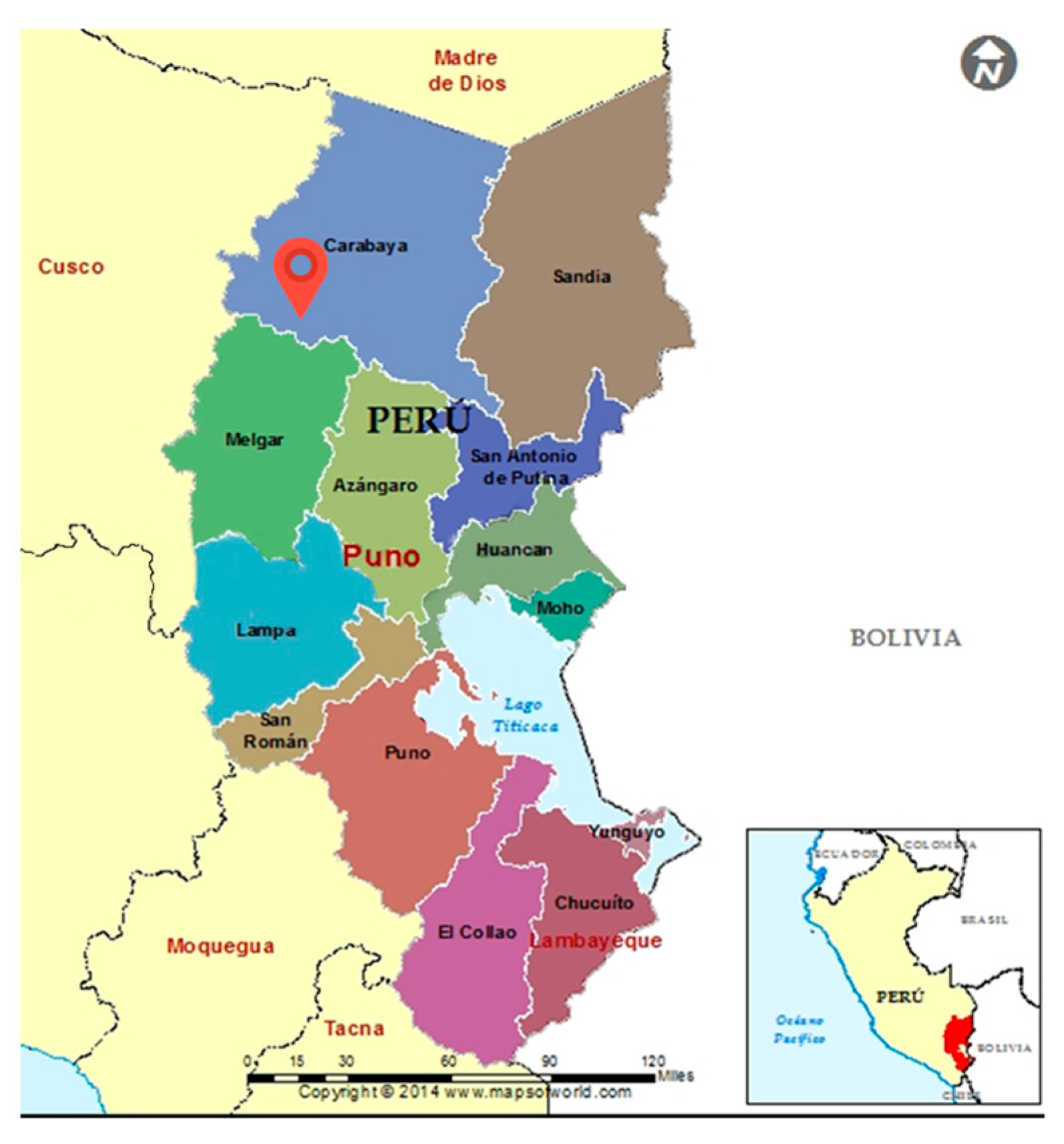
Figure 2.
Carcass with cysts of S. aucheniae in the intercostal muscles considered positive (red arrows).
Figure 2.
Carcass with cysts of S. aucheniae in the intercostal muscles considered positive (red arrows).
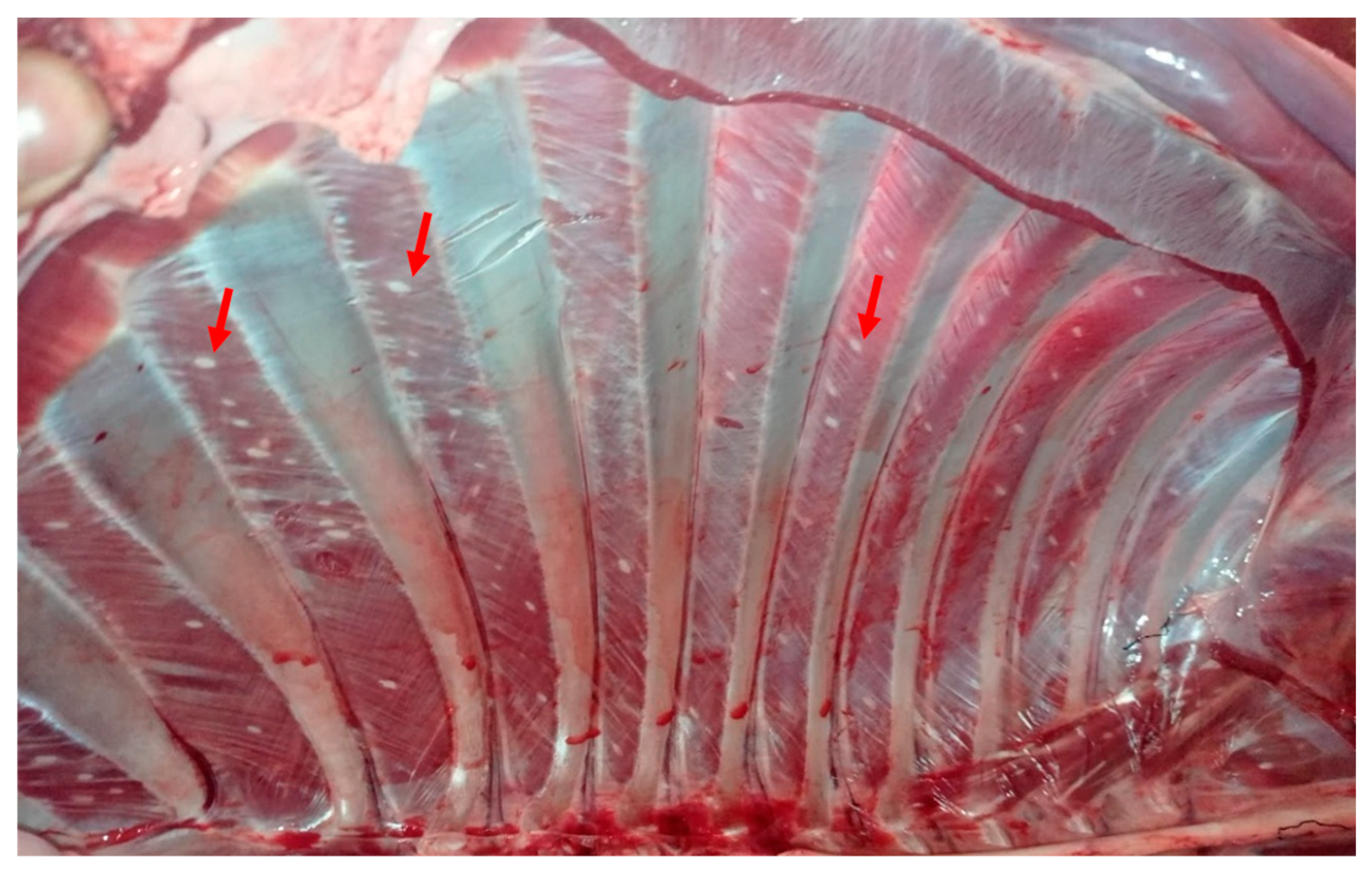
Figure 3.
Different morphologies and sizes of macroscopic cysts of S. aucheniae [18].
Figure 3.
Different morphologies and sizes of macroscopic cysts of S. aucheniae [18].
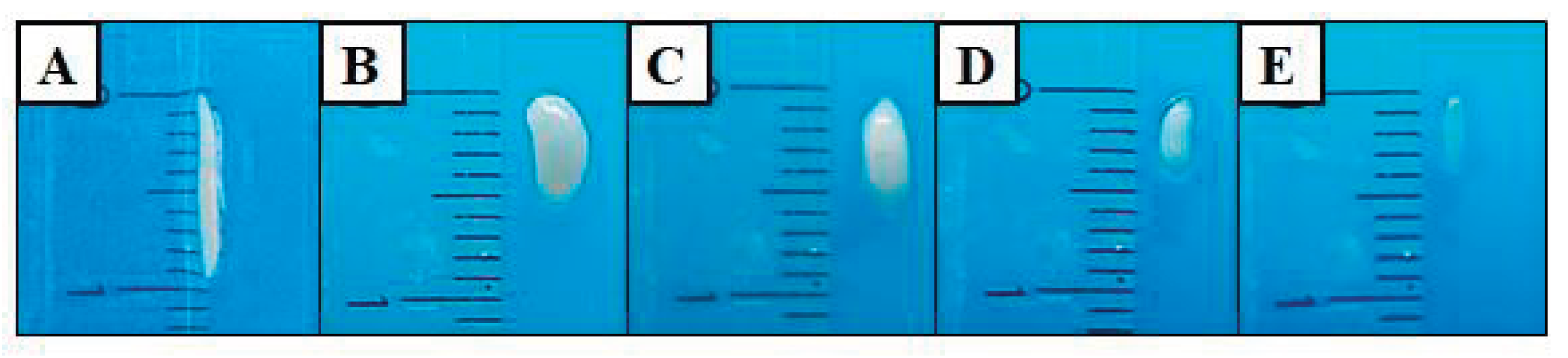

Table 1.
Prevalence of alpacas positive for Sarcocystis Aucheniae by sex and class.
| Sex | N | Positives | Prevalence | LI (95%) | LS (95%) |
| Female | 728 | 218 | 29.95a | 29.91 | 29.98 |
| Male | 633 | 192 | 30.33a | 30.30 | 30.37 |
| Total | 1361 | 410 | |||
| Class | |||||
| DL | 156 | 37 | 23.72a | 23.65 | 23.78 |
| 2D | 147 | 51 | 34.69a | 34.62 | 34.77 |
| 4D | 438 | 131 | 29.91a | 29.87 | 29.95 |
| BLL | 620 | 191 | 30.81a | 30.77 | 30.84 |
| Total | 1361 | 410 |
DL: Baby tooth, 2D: 2 teeth, 4D: 4 teeth, BLL: Full mouth; Prevalence (%) of Sarcocystis -positive alpacas aucheniae, by sex and dental class. Identical letters (a) in superscript indicate no significant differences (Chi-square test, p > 0.05). 95% confidence intervals (CI: lower limit, LS: upper limit). N: sample size.
Table 2.
Number of cysts in superficial muscle in the 410 animals positive by macroscopic diagnosis by sex.
Table 2.
Number of cysts in superficial muscle in the 410 animals positive by macroscopic diagnosis by sex.
| Sex | Average | Min | Max |
| Female | 32.50a | 1 | 350 |
| Male | 26.18a | 1 | 154 |
| Probability | 0.085 |
Values are expressed as mean ± standard error (SE). Identical letters (a) indicate no significant differences (Student 's t test for independent samples, p > 0.05).
Table 3.
Number of cysts in the 410 animals positive for macroscopic diagnosis by age group.
| Category | Average | Min | Max |
| DL | 43a | 1 | 49 |
| 2D | 53ab | 1 | 139 |
| 4D | 134b | 1 | 188 |
| BLL | 192 b | 1 | 350 |
| Probability | 0.046 |
Values are expressed as mean ± standard error. Different letters (a, b) indicate significant differences (p < 0.05) according to Tukey's test. DL: Baby tooth, 2D: 2 teeth, 4D: 4 teeth, BLL: Full mouth. Different letters in the same column denote significant differences (p < 0.05).
Table 4.
Effect of sarcocystosis on alpaca carcass weight and yield.
| Sarcocystosis | Live weight, kg | Carcass weight, kg | Carcass Yield, kg | |
| Negative | 45.09a | 23.22a | 51.32a | |
| Positive | 45.36a | 23.04a | 50.57a | |
| Probability | 0.793 | 0.763 | 0.584 | |
| Sarcocystosis | Age | |||
| Negative | DL | 37.54a | 18.45a | 49.12a |
| 2D | 44.54bc | 22.64bcd | 50.58a | |
| 4D | 49.95cd | 25.73d | 51.15a | |
| BLL | 48.32cd | 26.06d | 54.42a | |
| Positive | DL | 40.39ab | 19.58ab | 48.39a |
| 2D | 41.51ab | 20.93ab | 50.24a | |
| 4D | 46.08bc | 23.85cd | 51.66a | |
| BLL | 53.45d | 27.80d | 51.99a | |
| Probability | 0.001 | 0.026 | 0.088 |
Different letters (a, b, c, d) in the same column indicate significant differences (p < 0.05, Tukey's test), DL: Baby tooth, 2D: 2 teeth, 4D: 4 teeth, BLL: Full mouth.
Disclaimer/Publisher’s Note: The statements, opinions and data contained in all publications are solely those of the individual author(s) and contributor(s) and not of MDPI and/or the editor(s). MDPI and/or the editor(s) disclaim responsibility for any injury to people or property resulting from any ideas, methods, instructions or products referred to in the content. |
© 2025 by the authors. Licensee MDPI, Basel, Switzerland. This article is an open access article distributed under the terms and conditions of the Creative Commons Attribution (CC BY) license (http://creativecommons.org/licenses/by/4.0/).
Copyright: This open access article is published under a Creative Commons CC BY 4.0 license, which permit the free download, distribution, and reuse, provided that the author and preprint are cited in any reuse.


