
Submitted:
30 June 2025
Posted:
30 June 2025
You are already at the latest version
Abstract
This study explores the organizational and technological barriers that hinder the effective integration of AI-driven marketing strategies in the FMCG sector, with a particular focus on social media campaigns. Drawing on a mixed-methods approach—including 20 expert interviews and a survey of 372 marketing professionals—the research examines how these barriers influence key performance indicators such as reach and engagement, while accounting for differences in company size. The findings highlight that AI-driven content personalization significantly enhances marketing outcomes, yet its effectiveness is constrained by persistent challenges including poor data quality, lack of algorithmic transparency, bias in audience segmentation, and limited real-time adaptability. In addition to these technological obstacles, the study identifies organizational-level barriers, such as insufficient internal capabilities, delayed model updates, and a lack of proactive AI system tuning, which collectively reduce campaign agility and responsiveness. Key recommendations emphasize the need for AI-human collaboration, real-time data integration, and explainable AI frameworks to support trust and performance optimization. The study offers both theoretical contributions and actionable insights for marketing professionals, emphasizing that successful AI deployment requires not only advanced tools, but also supportive organizational structures and continuous adaptation.
Keywords:
Packaging design
; Priming
; Confirmation bias
; Brand trust
; Purchase intention
; Consumer cognition
; Visual communication
; Structural equation modeling
; Belief congruence
; Dual-process theory
Munich Business School, 61 Elsenheimerstraße, 80687 Munich, Germany; yana.visionfactory@gmail.com; Tel.: +49-15155865171
1. Introduction
Over the past few decades, the rapid pace of digitalization has transformed how companies — particularly in the Fast-Moving Consumer Goods (FMCG) industry — market their products (Cioppi et al., 2023). With the boom of social media, brands are actively engaging consumers through digital platforms, changing their advertising campaign strategies in line with the new digital market. One of the central components driving this process is marketing powered by artificial intelligence, which offers advertisers the ability to accurately reach the intended audience, tailor content, and automate advertising campaign management (Haleem et al., 2022).
Social media marketing (SMM), enabled by artificial intelligence (AI), facilitates the harvesting and analysis of large volumes of data, user behavior targeting, dynamic content generation, and advertisement automation (Saheb et al., 2024). The machine learning algorithms embedded in social media platforms allow brands to identify their potential audience, analyze their needs, and provide them with suitable advertising instantaneously (Taherdoost, 2023). These capabilities are especially important for fast-moving consumer goods (FMCG) companies that have used general advertising for a long time and are striving for greater marketing efficiency in the highly competitive market. Consequently, AI-controlled marketing becomes more than just a short-term trend, but rather an strategic necessity for FMCG companies.
The scope of AI in automation and personalization surpasses all expectations. De Bruyn et al. (2020) argue that these marketing techniques facilitate the prediction of industry trends and consumer analysis. For instance, algorithms are able to analyze trending discussion subjects, recommend the most effective content formats, and monitor shifts in users’ attention. Indeed, these capabilities are especially important for the Fast-Moving Consumer Goods (FMCG) companies operating under conditions of short product life cycles and volatile consumer preferences (Vieceli & Shaw, 2010). With the help of AI-based marketing technologies, brands can more readily adapt to shifts in audience behavior, significantly improving the effectiveness of advertising campaigns.
Although there are many advantages, AI implementation in FMCG marketing remains understudied. A number of companies struggle with the integration of AI into their business processes, lack the required skills, and find it challenging to evaluate the results (Volkmar et al., 2022). Thus, further research is needed on the role that AI plays in social media marketing, which includes a holistic assessment and analysis of available models for its use.
This research analyzes the growing gap concerning the use of AI in marketing within the FMCG sector. There is an existing body of research on the role of AI in digital marketing, but research on its impact on commercial advertising in fast-moving consumer goods is limited. The present study seeks to address this by assessing the role of AI in automating the processes of reach and engagement as well as the primary difficulties encountered by marketers when utilizing AI. This raises the question: What are the key technological and organizational challenges in implementing AI-driven social media marketing strategies for FMCG brands, and how do these challenges affect marketing performance indicators such as engagement, reach, and conversion?
2. Literature Review
2.1. The Strategic Role of AI in FMCG Marketing
The integration of AI into social media marketing has significantly transformed the FMCG sector. It enables extensive data processing, real-time adjustments to campaigns, and improved engagement through personalized content. AI is at the heart of FMCG marketing, thanks to its predictive analytics, decision-making capabilities, and content automation, making it a vital asset for businesses aiming to maintain a competitive edge (Khamoushi, 2024; Patil et al., 2024; Kopalle et al., 2021). With consumer preferences constantly shifting, utilizing AI is essential for ensuring that marketing strategies stay relevant and responsive to changing market conditions (Huang & Rust, 2021; Davenport et al., 2019).
Understanding consumer behavior in the FMCG sector is greatly enhanced by AI-powered data analytics, which helps optimize marketing strategies. AI tools such as Google Analytics, Sprinklr, and IBM Watson leverage machine learning algorithms to analyze past data and predict campaign performance, consumer behavior, and optimal content distribution (Chintalapati & Pandey, 2021; Hermann & Puntoni, 2024). These predictive capabilities are aligned with consumer behavior theories, illustrating how historical purchasing patterns and interactions can guide future marketing decisions (Wang, 2024; Kim et al., 2023). By systematically processing extensive datasets, AI enables companies such as Unilever and PepsiCo to allocate marketing budgets more efficiently, ensuring that resources are directed toward the most pertinent audiences at optimal times (Adams, 2025; PepsiCo, n.d.).
However, while predictive analytics supports strategic marketing allocations, it also presents a critical limitation—its responsiveness to real-time market changes (Jamarani et al., 2024; Adesina et al., 2024). Research indicates that AI models must perpetually update their learning parameters to maintain relevance in an environment where consumer preferences are shaped by sociocultural trends, economic fluctuations, and emerging technologies (Yohe, 2023; Tao et al., 2024). The challenge, therefore, goes beyond merely examining past behaviors and involves leveraging AI-driven dynamic modeling to predict and adapt to unexpected changes in consumer sentiment. This requires a continuous feedback loop where AI systems improve their forecasts based on new consumer interactions, thereby increasing the flexibility of marketing campaigns (Van Chau & He, 2024; Feng & Chen, 2022).
2.2. Emotional and Behavioral Drivers: AI’s Influence on Consumer Engagement
Building on this adaptability, AI-powered sentiment analysis tools have become indispensable in the FMCG industry, offering real-time insights into consumer perceptions. By employing advanced natural language processing (NLP) techniques, these tools systematically examine social media conversations, customer reviews, and engagement metrics to assess brand sentiment and detect emerging trends (Xu et al., 2022; Rodríguez-Ibánez et al., 2023). This enables brands to pinpoint both positive feedback and potential risks.
Research indicates that brands employing AI for sentiment analysis can proactively adjust their marketing strategies, ensuring their messaging resonates with the current emotions and attitudes of consumers (Alantari et al., 2021). This approach aligns with emotional marketing theories, which highlight how crucial emotional connections are between consumers and brands for fostering long-term loyalty and engagement. The theories in question — such as the Affect Infusion Model (Forgas, 1995) and Emotional Branding Theory (Gobé, 2001) — suggest that our purchasing choices are often influenced by more than just rational thought (Pluta-Olearnik & Szulga, 2022). They emphasize that emotional responses — and how well we resonate with a brand’s identity and messaging — can significantly impact our decisions. This alignment is explained by the fact that emotional marketing theories view emotions as a key trigger of consumer behavior, and the use of AI to analyze and adapt to the emotional context of the audience enables brands to operate within these theoretical principles most effectively. By using AI for sentiment monitoring, brands can not only react to what consumers are saying but also anticipate changes, enabling proactive marketing strategies (Liu-Thompkins et al., 2022). Incorporating AI into sentiment monitoring allows brands to detect even the slightest changes in consumer emotions, preferences, and expectations — often before these feelings are clearly articulated (Thiab et al., 2023; Mao et al., 2024; Giannakis et al., 2020).
2.3. Personalization at Scale: AI Tools and Theoretical Foundations
In parallel, AI significantly enhances personalization in FMCG marketing, particularly through content automation (Verma et al., 2021). AI-powered platforms like DALL-E and Canva AI enable the production of customized visual content that appeals to specific market segments. These innovations are consistent with digital personalization theories, which highlight how targeted content can boost consumer engagement by catering to individual preferences and behaviors. According to these theories, a personalized approach is believed to enhance perceived relevance of messages and strengthen the feeling of individual attention from the brand. For instance, the Perceived Relevance Model (Tam & Ho, 2005) suggests that consumers find personalized content to be the most useful and meaningful. Similarly, the Customer-Brand Relationship Quality Theory (Smit et al., 2007) argues that personalization plays a key role in developing a stronger emotional bond between the brand and the consumer. Our research highlights the value of dynamic personalization, which utilizes real-time data to enable deeper interactions.
2.4. FMCG-Specific Challenges in AI Adoption
Artificial intelligence (AI) is being used in a variety of industries, but its role in marketing fast-moving consumer goods (FMCG) involves several unique hurdles. Rapid product life cycles, intense competition, and large advertising budgets create a challenging environment. In contrast to the business-to-business (B2B), automotive, and luxury sectors - where the purchasing process is slower and allows for long-term brand development - FMCG marketing requires a more immediate and ongoing strategy to keep consumers interested and drive sales. The significance of AI-driven marketing in this domain is underscored by the need for rapid adjustments to advertising strategies and highly dynamic consumer engagement (Alipour et al., 2024).
This need for a quick response becomes especially relevant given the short product life cycle in the FMCG sector. A major aspect of FMCG marketing is the short lifespan of its products, which necessitates AI solutions that are both nimble and quick to react to shifts in consumer demand (Tarallo et al., 2019). Unlike industries, such as technology and luxury goods, which rely on long-term forecasts based on historical data, FMCG thrives in a highly volatile environment (Huang et al., 2008; Muth et al., 2024; Abolghasemi et al., 2020). Consumer preferences can be influenced by seasonal changes, viral trends, and social media, making it essential to respond swiftly and accurately (Dinh & Lee, 2024). In response, AI analytics tools detect changes in consumer purchasing behavior within hours, allowing marketers to adjust their strategies in real time (Kumar et al., 2024). For instance, social media monitoring tools use AI to spot emerging viral trends and modify advertising campaigns, even during their execution (Saheb et al., 2024).
Following the need for rapid adaptation, AI is also transforming the approach to resource management in FMCG marketing by optimizing budget allocation and increasing investment efficiency (Luzon et al., 2021). Unlike the B2B and pharmaceutical sectors, where AI is mainly used to build long-term client relationships, FMCG advertising is more transactional and demands immediate results. AI-powered automated programmatic advertising keeps campaigns running around the clock, adjusting in real time based on engagement and sales data (Häglund & Björklund, 2024; Haleem et al., 2022). Additionally, AI-driven A/B testing allows brands to identify the most effective ads, dynamically reallocating budgets to maximize ROI (Gao et al., 2023). Furthermore, AI-enabled dynamic pricing adjusts promotions and discounts in real time, responding to changes in customer demand and competitor actions (Yang et al., 2020). These real-time pricing strategies have been proven to significantly boost consumer engagement and increase the likelihood of purchases (Yang et al., 2020; Haleem et al., 2022; Gao et al., 2023).
2.5. Real-Time Adaptability and Performance Optimization
Moreover, impulse purchases play a significant role in FMCG, requiring AI systems to consider not only rational but also emotional factors in consumer behavior (Rodrigues et al., 2021; Lopes et al., 2024). AI-driven recommendation systems go beyond traditional data analysis by focusing on emotional triggers that prompt immediate purchases (Y. Gao & Liang, 2025). Through the application of artificial intelligence in neuromarketing, brands are able to evaluate consumer emotions and subconscious responses, providing deeper insights into the determinants of purchasing behavior (Yadav, 2024; Phutela et al., 2022). Insights from neuromarketing and the exploration of emotional triggers provide a solid foundation for developing tools that effectively engage consumers. AI-enhanced interactive content—such as gamification elements, AR filters, and virtual influencers—along with contextual targeting, boosts audience interaction and engagement (Beyari et al., 2024; Anupama & Rosita, 2024).
2.6. Emotional Triggers and Omnichannel Experience
The effectiveness of AI is evident not only in the digital space but also in offline communication through omnichannel marketing strategies. Retail convergence and omnichannel marketing are essential strategies that help FMCG brands stand out from digital-first industries, such as SaaS and fintech (Razak, 2023; F. S. Rodrigues & Coelho, 2021). Therefore, AI plays a crucial role in bridging digital marketing efforts and in-store experiences, making the customer journey more efficient. With the help of AI-driven geo-targeting and beacon technology, personalized in-store promotions can be created, ensuring that products are available in retail locations just as customers see the ads (Gao & Liu, 2022; Durdević et al., 2022). Moreover, AI-enabled chatbots and voice commerce platforms further enhance cross-platform interactions, providing a smooth and engaging customer experience across various touchpoints (Sidlauskiene et al., 2023; Huseynov, 2023).
Thus, the application of AI in various aspects of FMCG marketing— ranging from dynamic pricing and programmatic advertising to sentiment analysis and omnichannel personalization—illustrates the crucial role of artificial intelligence in managing the complexities of this fast-moving industry (Kasaraneni, 2022; Huang & Rust, 2021; Singh et al., 2023). As AI continues to advance, companies must find a balance between automation and human-focused marketing, ensuring that technological progress enhances rather than replaces consumer-brand relationships (Petrescu & Krishen, 2023).
3. Research Methodologies
3.1. Research Design
This study employs a mixed methods approach, combining qualitative research consisting of interviews and quantitative research with surveys to validate key findings from qualitative research on a larger sample. This method ensures that both industry knowledge and data - based analysis are utilized.
3.2. Sampling and Data Collection
To obtain adequate perspectives from the industry, 20 semi-structured interviews were conducted across three stakeholder groups. At this point, the study reached data saturation, where the last few interviews did not significantly shift participant responses, and answer repetition became quite common. Furthermore, according to methodological theory (for instance, Guest et al. 2006), a sample of 12-20 interviews is acceptable for analysis when answers begin to be redundant. The focus was on professionals with a more holistic view of AI strategies:
- Mid-senior marketing professionals (N=10) – experts with more than five years of experience who build digital marketing strategies and supervise the spending and results of digital marketing and other activities.
- Senior marketing executives (N=5) – managers who are responsible for business strategy and the application of AI in the company’s marketing and long-term digital strategy within the FMCG sector.
- AI and digital marketing consultants (N=5) – consultants in specialized marketing and AI firms that provide insights into how AI is used and best practices from other sectors.
The interviews were focused on AI adoption challenges, benefits of adoption, and integration plans. Open coding was performed with themes that were observable, such as challenges in AI implementation, expected advantages, and different methods of integration. Laying these themes then condensed the more detailed ones into larger sets that pertained to strategic decision - making and the less practical ones to these themes, such as hindrances to actual implementation and the impact of the adoption of AI. The application of the coding process provided a logical analysis of qualitative information within the set parameters of the research questions of the study.
In addition to the qualitative interviews, a questionnaire was administered to 372 social media marketers in the FMCG sector. The sample included marketers from FMCG companies located in both developed and emerging markets. In particular, participants came from Western Europe (Germany, France, UK, Netherlands), North America (USA, Canada), Asia (China, Japan, South Korea), and Latin America (Brazil, Mexico). This approach enables us to consider differences in levels of digital maturity, access to AI technologies, and application of AI in marketing. The purpose of this questionnaire was to measure how marketing professionals believe that AI-based tools impact the outcomes of social media marketing, specifically in terms of the AI's influence on the reach, engagement, conversion, and targeting of the ads. The questionnaire included both open-ended questions and Likert scale items that addressed AI’s role in content optimization, how it affects KPIs, and what marketers encounter during AI adoption.
3.3. Data Analysis Techniques
In order to understand how technological and organizational challenges affect crucial marketing performance indicators such as Reach and Engagement, the study employed correlation and multiple linear regression analyses. These approaches established a basis for assessing the impact of significant AI-related issues, such as low data quality, a lack of transparency in algorithms, algorithmic bias, and delayed responses to trends.
Following this, factor analysis was conducted to identify underlying structural barriers to AI integration in marketing workflows that respondents may not have directly expressed. This strategy helped uncover more profound, interconnected limitations that play a role in the surface-level challenges identified in the regression analysis.
To further explore the timing challenges of these barriers—especially delays in AI systems' reactions to new social media trends—variance decomposition and Bayesian modeling were applied. These techniques provided a more detailed understanding of how data update cycles and algorithm adaptability affect decision-making in real-time.
In parallel, logistic regression was applied to evaluate the reputational risks associated with algorithmic bias. This is especially pertinent in the context of automated audience segmentation, where biased results can lead to adverse consumer reactions.
Finally, the relationship between company size and perceived effectiveness of AI through chi-square analysis was explored, providing insights into whether organizational scale plays a moderating role in the challenges and outcomes of AI adoption in social media marketing.
4. Research Findings
4.1. Key Challenges Impacting Marketing KPIs in AI-driven strategies adoption
The regression analysis indicated that the main challenges in implementing AI-driven marketing do not stem from algorithmic limitations, but rather from the structural and organizational environment in which such tools are applied. Most notably, poor data quality emerged as the strongest barrier to campaign effectiveness, showing a significant negative impact on both reach and engagement metrics (R² = 0.68, p < 0.01). This is especially critical in the FMCG industry, where shifting consumer preferences require fast and precise targeting. When data is outdated, fragmented, or inaccurately labeled, AI systems struggle to deliver relevant content — resulting in missed engagement opportunities and inefficient use of resources.
Insights from the interviews further reinforce this pattern. A senior executive at a European FMCG company observed: “Our AI platform looked great on paper, but the underlying datasets were messy — with duplicate entries and outdated signals, our targeting completely missed the mark.” Similarly, a consultant working in emerging markets pointed out that many firms rely heavily on third-party data providers, whose slow delivery often undermines AI’s ability to execute micro-targeted campaigns effectively.
After data quality, algorithmic transparency emerged as the second strongest predictor of performance decline (R² = 0.63, p < 0.01). Nearly 80% of survey participants voiced concerns about the opaque nature of content recommendation systems, noting difficulties in understanding how ad placements are ranked or how performance scores are calculated. This lack of clarity hampers informed decision-making — especially when it comes to budgeting and evaluating KPIs — and contributes to persistent managerial skepticism about the real value of AI tools.
While algorithmic bias showed somewhat lower explanatory power (R² = 0.50, p < 0.05), it still emerged as a critical issue — particularly in terms of ethics and brand reputation. When left unchecked, automated audience segmentation often led to the exclusion of minority groups or the reinforcement of harmful stereotypes. This, in turn, triggered public backlash and undermined trust in campaign messaging. As one respondent reflected: “We only realized we were missing entire demographics after the social media criticism started rolling in. The AI didn’t catch it — because it had never been trained to.”
Taken together, these findings highlight that the effectiveness of AI in marketing depends not only on the technology itself, but also on how well organizations are prepared to support it. Successful implementation demands more than just advanced algorithms — it requires clean, adaptive data systems and transparent decision-making processes. These are precisely the elements that many FMCG firms — particularly small and medium-sized ones — still struggle to develop.

Table 1.
Correlation analysis of the impact of AI-related challenges on marketing metrics.
| Variable | Reach | Engagement | P-value | R² |
| Low Data Quality | -0.82 | -0.78 | <0.01 | 0.68 |
| Lack of Algorithmic transparency | -0.79 | -0.74 | <0.01 | 0.63 |
| Slow Reaction in adoption to trends | -0.75 |
-0.70 | <0.01 |
0.58 |
| Algorithmic Bias | -0.68 | -0.65 | <0.05 | 0.50 |
4.2. Latent barriers to AI-driven strategies integration
To better understand the structural challenges slowing down AI adoption in FMCG marketing, we conducted a factor analysis. The results revealed three closely linked but distinct underlying barriers: delays in updating models (loading = 0.71), limited integration of real-time data (0.66), and insufficient proactive tuning of AI systems by marketing teams (0.58). These patterns suggest a broader misalignment — not between firms and AI technology itself, but between AI capabilities and the organizational routines needed to keep them effective in a fast-moving market environment.
The most critical barrier identified — delays in updating AI models — highlights a core weakness in how adaptable these systems really are. In fast-moving marketing contexts like FMCG, consumer preferences can shift in a matter of hours or days. When models are not retrained frequently enough, they keep optimizing for outdated behaviors, leading to poor targeting and off-timed messaging. As one interviewee put it, “Our AI was still pushing back-to-school content while everyone had already moved on to Halloween.” This quote reflects the strategic downside of lagging model updates, especially in campaigns where timing and trend relevance are key.
The second key barrier — limited integration of real-time data — points to an ongoing infrastructure gap. Many firms, especially mid-sized players in the FMCG space, still lack the back-end systems needed to process live data from various consumer touchpoints in a timely and usable way. This limitation not only slows down decision-making but also interrupts the feedback loops required for effective predictive AI. As one digital strategist noted, “By the time the data reaches our model, the trend is already over — we’re reacting instead of anticipating.” These delays compromise one of AI’s main strengths: its ability to stay ahead of emerging patterns rather than simply respond to them.
The third key barrier — a lack of proactive AI tuning — reflects behavioral and managerial inertia more than a technical limitation. In many cases, marketing teams treat AI as a fixed tool rather than a system that needs regular calibration. Over time, this leads to algorithmic drift: as consumer behavior changes, models become less accurate, but no retraining protocols are triggered. This “set-it-and-forget-it” approach points to a broader issue — gaps in AI literacy and a lack of ownership within marketing functions. As one AI consultant put it, “Most marketing teams still treat AI like a vending machine — you push a button and expect it to work the same every time”.
Overall, these structural barriers point to a clear conclusion: adopting AI tools is only part of the equation. For FMCG firms to unlock real value, they also need the internal capabilities to adapt and fine-tune these systems in real time. Without ongoing investment in automated retraining, closer collaboration between IT and marketing, and continuous oversight of model performance, AI solutions risk becoming outdated before they can make a meaningful impact.
Beyond the practical implications, this study also contributes to theory by introducing the concept of AI operational responsiveness — an organization’s ability to continuously update, personalize, and recalibrate AI systems in line with fast-changing market signals. By validating the multidimensional nature of structural barriers, the findings expand current understandings of what effective AI implementation requires in high-velocity business environments.
Table 2.
Factors, influencing efficiency of AI adoption.
| Factor | Factor load | Mean | SD | Explained variance percentage (%). | p-value |
| Delays in models updates | 0.71 | 4.2 | 1.1 | 24.3% | <0.01 |
| Limited integration with real-time data | 0.66 | 3.8 | 1.3 | 19.5% | <0.05 |
| Lack of proactive AI configuration | 0.58 | 3.5 | 1.4 | 16.8% | <0.05 |
| Lack of trained Personnel | 0.52 | 3.2 | 1.5 | 14.2% | <0.05 |
| Difficulty integrating with existing systems | 0.61 | 3.7 | 1.2 | 18.0% | <0.05 |
4.3. Responsiveness to Trends: Temporal Challenges
To further explore the temporal limitations of AI systems in FMCG marketing, variance decomposition analysis was applied. As shown in Table 3, the main driver behind delayed trend prediction was an overdependence on historical data, which explained 62% of the variance in prediction errors (p < 0.01). This points to a deeper issue with conventional machine learning approaches: models trained on past behavior often struggle to identify emerging trends that have not yet appeared in the data.
This issue is particularly relevant in the FMCG space, where market signals often come from fast-moving and unstructured sources — such as viral TikTok trends, influencer mentions, or user-generated memes. These signals typically fall outside traditional datasets and change too quickly to be captured by batch-trained models. As one strategist put it, “The model still thinks Halloween is coming, but consumers are already onto Black Friday — it’s always behind.”
The lack of real-time data integration and dynamic feedback loops makes the issue even more severe, explaining 20% and 18% of the observed variance, respectively. In practical terms, this means that even when a new trend starts to emerge, AI models may miss it — simply because they do not receive live behavioral updates or retrain quickly enough. This delays response and challenges a key promise of AI in marketing: the idea that it can spot and act on micro-trends faster than humans.
To explore whether real-time updating could improve performance, we ran a Bayesian simulation. As shown in Table 4, firms using AI models with real-time updates reduced trend lag by an average of 55% (p < 0.01). In contrast, campaigns without such capabilities showed only a minimal reduction (5%, p = 0.09).
4.4. Algorithmic Bias and Consumer Sentiment
In addition to technical and operational challenges, this study also points to an important ethical concern: algorithmic bias in audience segmentation. Around 70% of survey participants expressed worry that AI-driven targeting tends to favor certain demographic groups while excluding others — particularly those that are already underrepresented. This issue was most common in companies that rely fully on AI systems for segmentation, without human review or adjustment.
Logistic regression analysis confirms this trend. As shown in Table 5, firms that used fully automated AI segmentation were 2.3 times more likely to face negative consumer reactions (OR = 2.3, p < 0.05) compared to those using hybrid or manual approaches. Even partial automation was linked to increased risk (OR = 1.5, p = 0.07), suggesting that introducing AI into the segmentation process — even in small doses — raises the likelihood of reputational backlash.
These results suggest that fully automated segmentation models often miss important cultural cues, language differences, or behavioral exceptions — all of which matter in global FMCG campaigns targeting diverse audiences. Without that contextual awareness, algorithms tend to overfit to dominant patterns in the data, which can unintentionally reinforce existing inequalities. One marketing lead shared, “Our AI kept targeting only young urban males. It ignored rural consumers entirely — even though they represent a huge part of our revenue.”
The reputational risks from these blind spots can be serious. In today’s digital environment, where consumers are increasingly aware of fairness and representation, biased ad delivery isn’t just ineffective — it can damage a brand. People may perceive exclusionary targeting as intentional, even if it’s just the result of opaque algorithmic logic. That perception of unfairness can erode brand trust and loyalty, especially in FMCG contexts where buying decisions are frequent and habit-driven.
Encouragingly, the data also point to a clear path forward. Hybrid segmentation strategies — where marketers retain control over final targeting decisions — significantly reduce the risk of backlash related to algorithmic bias. These findings support recent research highlighting the importance of human-in-the-loop design and algorithm auditing in ethically sensitive marketing. Rather than relying entirely on automation, companies can benefit from feedback loops that combine machine learning efficiency with human oversight.
4.5. Organizational Scale and Perceptions of AI
Qualitative data from interviews provide explanatory depth. Respondents from smaller firms often pointed to weak data infrastructure, a lack of in-house AI skills, and limited budgets for retraining as major hurdles. As one startup founder put it: “We’d love to use advanced AI, but we don’t even have proper CRM data — it’s all in Excel files.” In contrast, participants from larger companies described well-established AI pipelines, dedicated data science teams, and automated monitoring as part of their standard operations.
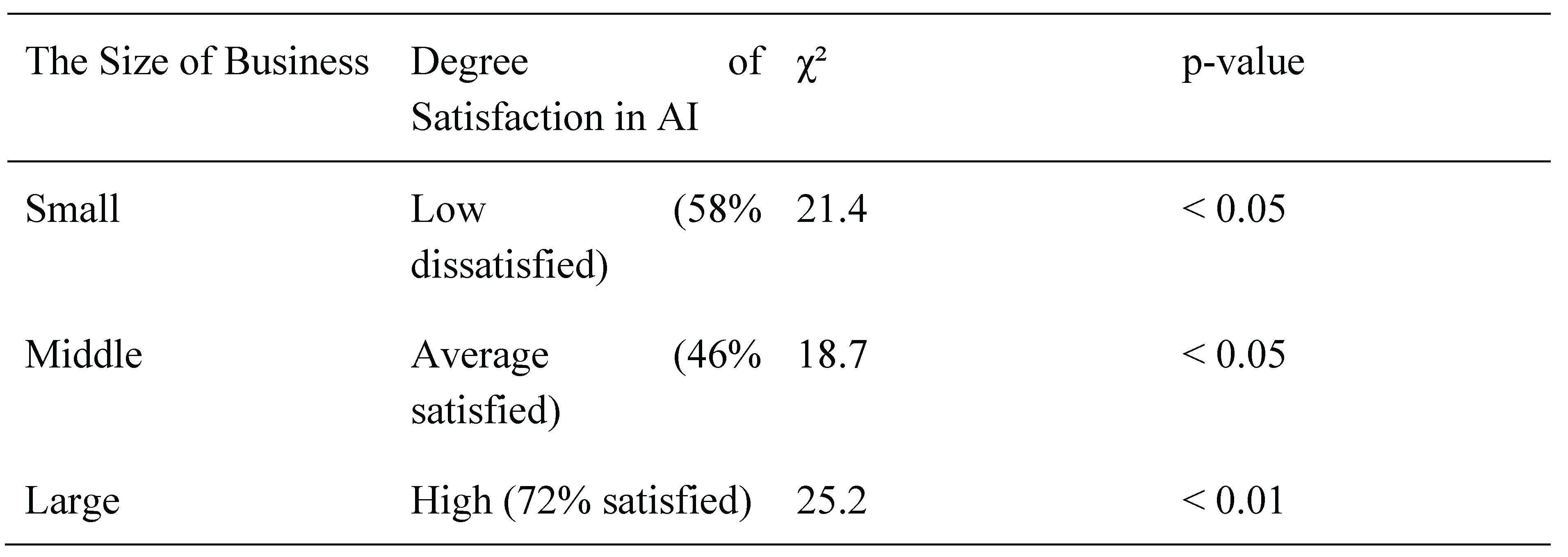
This divide is also reflected in the quantitative results. As shown in Table 6, satisfaction with AI tools increases significantly with company size: 72% of respondents from large firms reported being satisfied with their AI implementation, compared to only 46% in mid-sized firms and just 42% in small businesses (χ² = 21.4, p < 0.05). The relationship is statistically significant, reinforcing the idea that organizational resources and scale shape not only the adoption of AI, but also its perceived value.
These findings suggest that success with AI isn’t just about having the technology — it depends heavily on organizational readiness and digital maturity. Larger firms benefit from both data volume and internal capabilities, while smaller firms often remain constrained by legacy systems and fragmented workflows.
Importantly, this points to company size as a moderating factor in AI outcomes. The same model may perform very differently in an SME versus a multinational — not because of flaws in the algorithm, but because of the surrounding infrastructure and support. This reframes AI not as a plug-and-play solution, but as a strategic capability shaped by the organizational context in which it operates.
5. Discussion
5.1. Theoretical contributions
This study deepens our understanding of how AI functions in FMCG marketing by combining insights from technological, organizational, and behavioral perspectives. It builds on previous research showing that data quality and algorithmic transparency are central to AI effectiveness. While scholars like Huang and Rust (2020) and Saheb et al. (2024) have discussed the technical complexity and opacity of machine learning tools in marketing, our findings offer empirical support: poor data quality emerged as the most significant barrier to campaign performance (R² = 0.68, p < 0.01). By emphasizing data quality as a core issue, this research helps explain when AI enhances — and when it hinders — consumer engagement.
Beyond this, the study expands current thinking on AI adaptability by introducing trend responsiveness as a measurable construct. Drawing on the work of Tao et al. (2024) and Van Chau and He (2024), who highlight the importance of real-time learning in fast-moving digital environments, we show that 62% of AI's failure to predict emerging social media trends can be traced to its dependence on historical data. Bayesian analysis also reveals that firms using real-time updating models experience 55% fewer delays in adjusting their campaigns. These findings shift the view of adaptability from a “nice to have” feature to a critical driver of AI performance in dynamic sectors like FMCG.
Our factor analysis identified three underlying barriers to effective AI use: delays in model updates, limited real-time data integration, and a lack of proactive system tuning. Together, these issues account for a substantial share of the variance in AI underperformance. Based on these findings, we introduce the concept of AI operational responsiveness — the ability of an organization to continuously update, fine-tune, and align AI tools with changing market conditions. The concept of AI operational responsiveness developed in this study can be theoretically anchored in the dynamic capabilities framework (Teece, 2007), which emphasizes an organization’s ability to adapt and reconfigure resources in rapidly changing environments. However, our construct goes beyond technical capability alone. It also captures the behavioral and infrastructural readiness needed to keep AI systems effective in fast-moving environments. In doing so, it builds on earlier work on AI maturity (e.g., Davenport et al., 2019) by offering a more multidimensional and actionable view. Rather than treating AI deployment as a one-time setup, AI operational responsiveness highlights the ongoing process of adaptation — connecting strategic marketing goals with the realities of dynamic technology management. Furthermore, the findings align with the absorptive capacity theory (Zahra & George, 2002), especially in the realm of real-time data integration and model retraining. Organizations that successfully capture and respond to external signals—such as feedback from engagement or shifts in sentiment—show both transformative and exploitative capabilities. This understanding positions AI operational responsiveness as a socio-technical skill that is deeply rooted in organizational learning and knowledge adaptation, effectively linking technological implementation with strategic
Beyond the temporal aspects of AI, this study also explores its role in emotional marketing by introducing the concept of algorithmic emotional responsiveness — the capacity of AI systems to detect, interpret, and respond to consumers’ emotional states in real time. Traditional frameworks like the Affect Infusion Model (Forgas, 1995) and Emotional Branding (Gobé, 2001) emphasize human interpretation and delivery of emotion in brand communication.Our findings suggest that AI-driven tools — such as sentiment analysis and dynamic personalization — are increasingly acting as intermediaries in emotional exchanges between brands and consumers. Unlike manual approaches, algorithmic responsiveness can operate at scale and speed, allowing brands to adjust their messaging based on subtle shifts in audience mood. This technological mediation changes the emotional feedback loop, pointing to the need for a new understanding of emotional marketing as not only a human-led process, but a hybrid system involving both emotional sensing and machine-guided adaptation.
Another important theoretical contribution of this study lies in how it addresses algorithmic bias within the broader context of ethical marketing. While researchers like Jim et al. (2024) and Khare et al. (2023) have raised concerns about the reputational risks of AI-driven discrimination, our findings add quantitative weight to those concerns. Specifically, we show that companies relying entirely on AI for audience segmentation are 2.3 times more likely to face negative consumer reactions due to biased targeting. This moves the conversation from theory to evidence, highlighting the behavioral consequences of algorithmic exclusion. It also challenges the idea that segmentation is just a technical task — instead, it positions it as a strategic issue tied to brand equity and consumer fairness. By showing the benefits of hybrid models that combine algorithmic efficiency with human judgment, the study adds depth to ongoing discussions about responsible automation and inclusive marketing practices.
Equally important is the organizational lens applied to AI adoption. Although Davenport et al. (2019) and Chen et al. (2020) discuss resource disparities affecting smaller firms’ ability to adopt AI, our chi-square analysis demonstrates a statistically significant relationship between company size and dissatisfaction with AI outcomes (χ² = 21.4, p < 0.05). Smaller firms report higher discontent primarily due to inadequate data infrastructure and limited access to technical expertise. These findings position organizational scale as a moderating variable in AI performance theory, supporting earlier arguments by Mukhopadhyay et al. (2024) and Casidy et al. (2022) that AI success cannot be universalized across all business types without accounting for structural readiness.
Thus, beyond confirming existing concerns regarding AI adoption in marketing, this study introduces two distinct contributions. First, it conceptualizes and empirically measures “trend responsiveness” as a performance-critical capability of AI in the FMCG context, differentiating between static and real-time learning models. Second, it positions organizational scale—specifically company size—as a moderating variable that determines AI efficacy, drawing attention to structural inequalities in access to AI infrastructure across firms. These contributions extend current theory on AI-based marketing from a purely technological lens to a more integrated socio-technical framework.
Lastly, the study contributes to personalization theory by empirically confirming the performance-enhancing role of AI-driven customization. Echoing earlier work by Verma et al. (2021) and Smit et al. (2007), our findings reveal that AI accounts for up to 72% of the variability in engagement, supporting the idea that relevance plays a major role in user interaction. At the same time, our results suggest that strong performance depends not just on what content is delivered, but how quickly and transparently it’s done. This adds nuance to traditional personalization models, which often treat engagement as a direct outcome of targeting. By viewing personalization as not only about content relevance, but also about algorithmic responsiveness and explainability, we offer a more detailed way to understand how consumers interact with AI-powered brand experiences. Rather than proposing a predefined theoretical model, this study builds new conceptual understanding from empirical patterns, contributing to an emerging socio-technical view of AI in marketing.
5.2. Practical Implications
For marketers in the FMCG sector looking to improve campaign performance with AI, data quality needs to be treated as a core marketing concern — not just a technical issue handled behind the scenes. Our findings show that strong data integrity has a direct impact on both reach and engagement. While earlier studies (e.g., Huang & Rust, 2020; Saheb et al., 2024) have emphasized the role of data in enabling AI’s predictive and personalization functions, our results go further: without clean, regularly updated datasets, even the most advanced models struggle to perform. To address this, marketing teams should prioritize investments in infrastructure that supports real-time data updates, error handling, and transparent audience segmentation. In addition, using explainable AI tools — like IBM’s AI Fairness 360 or Google’s What-If Tool — can help build internal trust and support better cross-functional decisions (Xu et al., 2022).
Marketers should also consider building segmentation strategies that combine algorithmic speed with human judgment — especially in campaigns involving emotional or cultural sensitivity. Emotional branding research has shown that affective cues often shape consumer choices more strongly than purely functional ones (Pluta-Olearnik & Szulga, 2022), and our findings support this. Campaigns tend to perform better when marketers stay involved in shaping the message, ensuring it aligns with social context and brand values. Instead of aiming for full automation, brands may benefit more from hybrid approaches — where AI provides data-driven insights, but final decisions are refined by people who understand the nuances of their audience.
We also found that campaigns using AI systems with real-time learning capabilities delivered stronger engagement — supporting earlier research on the importance of responsiveness in AI-powered marketing (Tao et al., 2024; Van Chau & He, 2024). For marketing teams, this means investing in platforms that offer dynamic feedback integration, automated A/B testing, and flexible budget adjustments throughout the campaign. These features are especially valuable in the FMCG sector, where timing and relevance are closely linked, and opportunities to engage consumers often emerge — and disappear — quickly.
Building on personalization research that highlights the importance of perceived individual attention (Tam & Ho, 2005; Smit et al., 2007), we recommend that marketers integrate sentiment analysis and behavioral signals into their personalization strategies. This helps ensure that content feels not just relevant, but also empathetic and sensitive to the consumer’s context. Tuning personalized content to reflect emotional tone can strengthen brand relationships — especially in competitive FMCG categories, where loyalty depends on more than just price or convenience.
Finally, our findings show that AI adoption needs to fit the scale and structure of the organization. Larger firms often have the resources to build in-house AI teams and governance systems. In contrast, small and mid-sized companies may benefit more from shared data platforms or cloud-based tools that are easier to scale (Hermann & Puntoni, 2024). Regardless of size, one thing is clear: AI’s impact on marketing performance doesn’t depend only on the technology itself, but on how well it’s integrated into a company’s broader strategy — including ethical standards, agility, and cross-team collaboration.
6. Conclusion
6.1. Summary of Key Findings
The findings reveal that poor data quality, limited algorithmic transparency, and delayed system adaptation are not isolated technical issues, but reflect deeper structural challenges in how AI is governed and maintained. These limitations are especially critical in fast-paced sectors like FMCG, where timing and personalization directly affect campaign outcomes.
A key contribution of this study is the conceptualization of AI operational responsiveness—the organization’s ability to continuously adapt, retrain, and recalibrate AI systems in alignment with evolving consumer signals. Companies that treat AI as a static, one-time deployment are more likely to experience drift, performance decay, and consumer disengagement. Conversely, firms that maintain dynamic feedback loops, real-time data streams, and hybrid oversight models demonstrate stronger marketing outcomes.
The research also highlights the ethical and reputational risks of algorithmic bias, especially when audience segmentation is fully automated. The data show that hybrid models combining machine efficiency with human sensitivity are significantly more effective in avoiding exclusionary targeting and preserving brand trust.
Importantly, company size emerges as a moderating factor. Smaller firms, often lacking in data infrastructure and internal capabilities, face greater obstacles to effective implementation. This points to a broader digital divide that must be acknowledged in both academic theory and industry practice.
Ultimately, this study reframes AI-driven marketing not as a question of whether firms adopt AI, but how intelligently, ethically, and responsively they do so. AI marketing in the FMCG sector requires not just advanced tools but a readiness to adapt, a willingness to govern with transparency, and a strategic alignment between technology and organizational capability.
6.2. Limitations and Future Research Directions
While this study contributes to our understanding of AI adoption in FMCG marketing, it also opens up several avenues for future research. At first, there is a need to further develop the concept of AI operational responsiveness. Although the current work introduces this construct and supports it through both factor analysis and case study insights, additional research is necessary to refine its definition and measurement. In particular, scholars could work toward building a robust scale by identifying and validating key dimensions—such as the frequency of data updates, retraining cycles for AI models, mechanisms for cross-functional coordination, and the integration of feedback loops. Establishing a reliable, psychometrically sound scale would allow researchers to assess the maturity of adaptive AI implementation across different organizational contexts.
In addition, future research should seek to unpack the causal mechanisms that link AI capabilities to specific marketing outcomes over time. Given that this study is based on cross-sectional data, it does not allow for strong inferences about temporal dynamics. Longitudinal studies would be well-suited to examining how features like real-time responsiveness, explainability, or ethical oversight in AI systems influence consumer engagement and brand performance throughout various stages of a marketing campaign. Such research could also reveal whether certain AI-driven effects emerge gradually or accumulate over time—an increasingly important consideration in digital settings where consumers continuously learn and adapt.
Another promising direction involves a closer examination of the human–AI interface in marketing decision-making. There is growing interest in how hybrid governance models function in practice, as well as how marketers’ digital literacy and trust in AI influence their use of these tools. Future studies could also delve into the psychological impacts of AI-assisted decisions within marketing teams—particularly in ethically sensitive areas like audience targeting or emotional tone calibration.
Finally, future investigations should explore how AI adoption interacts with broader firm-level capabilities. Factors such as marketing agility, organizational learning, and leadership support may play a moderating role, helping to explain why the same AI tools produce varying outcomes across firms. Building theory in this space could benefit from established perspectives, including dynamic capabilities, the resource-based view, and marketing capability frameworks. Theory development in this area could draw on dynamic capability theory, resource-based views, or marketing capability frameworks, linking AI adoption to broader questions of competitive advantage.
Funding Statement: This research received no external funding. The author declares that no funding was received for conducting this study or for the preparation of this manuscript.
Acknowledgments
I would like to express my sincere gratitude to Professor Ekaterina Buzulukova for her guidance throughout the development of this research. I am also thankful for the constructive feedback provided through the Taylor & Francis peer review support service, which helped strengthen the clarity and focus of the manuscript.
Declaration of Interest Statement: The author declares that there are no known competing financial interests or personal relationships that could have appeared to influence the work reported in this paper.
Appendix A: Ethics
This research was conducted independently and without affiliation to any academic or research institution. As such, formal review and approval by an Institutional Review Board (IRB) or equivalent ethics committee was not obtained. Nonetheless, the study adhered to the ethical standards outlined in the Belmont Report and the Declaration of Helsinki.
**Respect for Persons**
Participants were fully informed about the nature and goals of the study, the voluntary nature of participation, and their right to withdraw at any time without penalty. Informed consent was obtained prior to participation. Written consent was secured for the survey portion, and verbal consent was documented for interviews.
**Beneficence**
The study involved minimal risk. The questions posed during both the survey and interviews did not include sensitive or invasive topics. Steps were taken to ensure anonymity and data confidentiality. All identifying information was excluded from transcripts, notes, and analyses.
**Justice**
Participants were recruited based on their relevance to the research questions. No vulnerable populations were targeted or included. The goal of the research is to contribute to advertising practices that are more responsive to consumer perspectives, which benefits both industry and the public.
No online behavioral data, network traffic, passwords, or social media data were collected. All data were gathered directly from consenting adults and stored securely.
References
- Abolghasemi, M., Beh, E., Tarr, G., & Gerlach, R. (2020). Demand forecasting in supply chain: The impact of demand volatility in the presence of promotion. Computers & Industrial Engineering, 142, 106380. [CrossRef]
- Adams, P. (2025, March 19). How Unilever’s AI marketing bets are increasing production efficiency. Marketing Dive. Retrieved from https://www.marketingdive.com/news/unilever-ai-marketing-bets-halve-production-costs-double-speed/742913/. Accessed February 5, 2025.
- Adesina, N. a. A., Iyelolu, N. T. V., & Paul, N. P. O. (2024). Leveraging predictive analytics for strategic decision-making: Enhancing business performance through data-driven insights. World Journal of Advanced Research and Reviews, 22(3), 1927–1934. [CrossRef]
- Alantari, H. J., Currim, I. S., Deng, Y., & Singh, S. (2021). An empirical comparison of machine learning methods for text-based sentiment analysis of online consumer reviews. International Journal of Research in Marketing, 39(1), 1–19. [CrossRef]
- Alipour, P., Gallegos, E. E., & Sridhar, S. (2024). AI-Driven Marketing Personalization: Deploying convolutional neural networks to decode consumer behavior. International Journal of Human-Computer Interaction, 1–19. [CrossRef]
- Anupama, T., & Rosita, S. (2024). Neuromarketing insights enhanced by artificial Intelligence. ComFin Research, 12(2), 24–28. [CrossRef]
- Beyari, H., Hashem, T. N., & Alrusain, O. (2024). Neuromarketing: Understanding the effect of emotion and memory on consumer behavior by mediating the role of artificial intelligence and customers’ digital experience. Journal of Project Management, 9(4), 323–336. [CrossRef]
- Casidy, R., Mohan, M., & Nyadzayo, M. (2022). Integrating B2B and B2C research to explain industrial buyer behavior. Industrial Marketing Management, 106, 267–269. [CrossRef]
- Chintalapati, S., & Pandey, S. K. (2021). Artificial intelligence in marketing: A systematic literature review. International Journal of Market Research, 64(1), 38–68. [CrossRef]
- Cioppi, M., Curina, I., Francioni, B., & Savelli, E. (2023). Digital transformation and marketing: a systematic and thematic literature review. Italian Journal of Marketing, 2023(2), 207–288. [CrossRef]
- Davenport, T., Guha, A., Grewal, D., & Bressgott, T. (2019). How artificial intelligence will change the future of marketing. Journal of the Academy of Marketing Science, 48(1), 24–42. [CrossRef]
- De Bruyn, A., Viswanathan, V., Beh, Y. S., Brock, J. K., & Von Wangenheim, F. (2020). Artificial intelligence and Marketing: Pitfalls and opportunities. Journal of Interactive Marketing, 51(1), 91–105. [CrossRef]
- Dinh, T. C. T., & Lee, Y. (2024). COBRAs and virality: viral campaign values on consumer behaviour. Humanities and Social Sciences Communications, 11(1). [CrossRef]
- Dr. Vijay Wagh, & Dr. G. Ramesh. (2024). A Study on The Role of AI in Hyper-Personalization Marketing of FMCG Products. Economic Sciences, 20(2), 267-278. [CrossRef]
- Durdević, N., Labus, A., Barać, D., Radenković, M., & Despotović-Zrakić, M. (2022). An approach to assessing shopper acceptance of beacon triggered promotions in smart retail. Sustainability, 14(6), 3256. [CrossRef]
- retail. Sustainability, 14(6), 3256. [CrossRef]
- Forgas, J. P. (1995). Mood and judgment: The affect infusion model (AIM). Psychological Bulletin, 117(1), 39–66. [CrossRef]
- Gao, Y., & Liu, H. (2022). Artificial intelligence-enabled personalization in interactive marketing: a customer journey perspective. Journal of Research in Interactive Marketing, 17(5), 663–680. [CrossRef]
- Gao, B., Wang, Y., Xie, H., Hu, Y., & Hu, Y. (2023). Artificial intelligence in advertising: advancements, challenges, and ethical considerations in targeting, personalization, content creation, and ad optimization. SAGE Open, 13(4). [CrossRef]
- Gao, Y., & Liang, J. (2025). The impact of AI-Powered Try-On technology on online consumers’ impulsive buying intention: the moderating role of brand trust. Sustainability, 17(7), 2789. [CrossRef]
- Giannakis, M., Dubey, R., Yan, S., Spanaki, K., & Papadopoulos, T. (2020). Social media and sensemaking patterns in new product development: demystifying the customer sentiment. Annals of Operations Research, 308(1–2), 145–175. [CrossRef]
- Gobé, M. (2009). Emotional branding: The new paradigm for connecting brands to people (2nd ed.). Allworth Press.
- Guest, G., Bunce, A., & Johnson, L. (2005). How many interviews are enough? Field Methods, 18(1), 59–82. [CrossRef]
- Haleem, A., Javaid, M., Qadri, M. A., Singh, R. P., & Suman, R. (2022). Artificial intelligence (AI) applications for marketing: A literature-based study. International Journal of Intelligent Networks, 3, 119–132. [CrossRef]
- Huang, M., Chang, P., & Chou, Y. (2008). Demand forecasting and smoothing capacity planning for products with high random demand volatility. International Journal of Production Research, 46(12), 3223–3239. [CrossRef]
- Huang, M., & Rust, R. T. (2020). A strategic framework for artificial intelligence in marketing. Journal of the Academy of Marketing Science, 49(1), 30–50. [CrossRef]
- Hermann, E., & Puntoni, S. (2024). Artificial intelligence and consumer behavior: From predictive to generative AI. Journal of Business Research, 180, 114720. [CrossRef]
- Häglund, E., & Björklund, J. (2024). AI-Driven Contextual Advertising: toward relevant messaging without personal data. Journal of Current Issues & Research in Advertising, 45(3), 301–319. [CrossRef]
- Huseynov, F. (2023). Chatbots in digital marketing. In A. Khosrow-Pour (Ed.), Advances in marketing, customer relationship management, and e-services (pp. 46–72). IGI Global. [CrossRef]
- Jamarani, A., Haddadi, S., Sarvizadeh, R., Kashani, M. H., Akbari, M., & Moradi, S. (2024b). Big data and predictive analytics: A sytematic review of applications. Artificial Intelligence Review, 57(7). [CrossRef]
- Jim, J. R., Talukder, M. a. R., Malakar, P., Kabir, M. M., Nur, K., & Mridha, M. (2024). Recent advancements and challenges of NLP-based sentiment analysis: A state-of-the-art review. Natural Language Processing Journal, 6, 100059. [CrossRef]
- Kasaraneni, R. K. (2022). AI-powered customer sentiment analysis for enhancing retail marketing strategies and customer engagement. Australian Journal of Machine Learning Research & Applications, 2(1).
- Khamoushi, E. (2024). AI in Food Marketing from Personalized Recommendations to Predictive Analytics: Comparing Traditional Advertising Techniques with AI-Driven Strategies. arXiv (Cornell University). [CrossRef]
- Khare, S. K., Blanes-Vidal, V., Nadimi, E. S., & Acharya, U. R. (2023). Emotion recognition and artificial intelligence: A systematic review (2014–2023) and research recommendations. Information Fusion, 102, 102019. [CrossRef]
- Kim, S., Shin, W., & Kim, H. (2023). Predicting online customer purchase: The integration of customer characteristics and browsing patterns. Decision Support Systems, 177, 114105. [CrossRef]
- Kopalle, P. K., Gangwar, M., Kaplan, A., Ramachandran, D., Reinartz, W., & Rindfleisch, A. (2021). Examining artificial intelligence (AI) technologies in marketing via a global lens: Current trends and future research opportunities. International Journal of Research in Marketing, 39(2), 522–540. [CrossRef]
- Liu-Thompkins, Y., Okazaki, S. & Li, H. (2022). Artificial empathy in marketing interactions: Bridging the human-AI gap in affective and social customer experience. Journal Of The Academy Of Marketing Science, 50(6), 1198–1218. [CrossRef]
- Lopes, J. M., Silva, L. F., & Massano-Cardoso, I. (2024). AI meets the shopper: Psychosocial factors in ease of use and their effect on E-Commerce purchase intention. Behavioral Sciences, 14(7), 616. [CrossRef]
- Luzon, Y., Pinchover, R., & Khmelnitsky, E. (2021). Dynamic budget allocation for social media advertising campaigns: optimization and learning. European Journal of Operational Research, 299(1), 223–234. [CrossRef]
- Mukhopadhyay, S., Singh, R. K. & Jain, T. (2024). Developing artificial intelligence enabled Marketing 4.0 framework: an Industry 4.0 perspective. Qualitative Market Research An International Journal, 27(5), 841–865. [CrossRef]
- Muth, M., Lingenfelder, M., & Nufer, G. (2024). The application of machine learning for demand prediction under macroeconomic volatility: a systematic literature review. Management Review Quarterly. [CrossRef]
- PepsiCo. (n.d.). Artificial intelligence at PepsiCo. PepsiCo. Retrieved from https://www.pepsico.com/our-stories/story/artificial-intelligence-at-pepsico. Accessed April 5, 2025.
- Petrescu, M., & Krishen, A. S. (2023). Hybrid intelligence: human–AI collaboration in marketing analytics. Journal of Marketing Analytics, 11(3), 263–274. [CrossRef]
- Phutela, N., P, A., Sreevathsan, K., & Krupa, B. N. (2022). Intelligent analysis of EEG signals to assess consumer decisions: A Study on Neuromarketing. arXiv (Cornell University). [CrossRef]
- Pluta-Olearnik, M., & Szulga, P. (2022). The importance of emotions in consumer purchase decisions — a neuromarketing approach. Marketing of Scientific and Research Organizations, 44(2), 87–104. [CrossRef]
- Razak, N. I. (2023). Omnichannel Marketing: Connecting Consumer Experiences from Online to Offline. Jurnal Ilmiah Multidisiplin Indonesia (JIM-ID), 2(02), 89–95. [CrossRef]
- Rodríguez-Ibánez, M., Casánez-Ventura, A., Castejón-Mateos, F., & Cuenca-Jiménez, P. (2023). A review on sentiment analysis from social media platforms. Expert Systems With Applications, 223, 119862. [CrossRef]
- Rodrigues, R. I., Lopes, P. & Varela, M. (2021). Factors Affecting Impulse Buying Behavior of Consumers. Frontiers in Psychology, 12. [CrossRef]
- Rodrigues, F. S., & Coelho, A. I. (2021). Omnichannel in FMCG: Digitally enhancing retail Consumer journey. In Smart innovation, systems and technologies (pp. 375–388). [CrossRef]
- Saheb, T., Sidaoui, M., & Schmarzo, B. (2024). Convergence of Artificial Intelligence with Social Media: A Bibliometric & Qualitative Analysis. Telematics and Informatics Reports, 14, 100146. [CrossRef]
- Sidlauskiene, J., Joye, Y., & Auruskeviciene, V. (2023). AI-based chatbots in conversational commerce and their effects on product and price perceptions. Electronic Markets, 33(1). [CrossRef]
- Singh, J., Singh, S., & Yadav, R. (2023). A systematic review on AI in marketing: Personalization of advertising campaigns and impact on customer satisfaction. ResearchGate.https://www.researchgate.net/publication/387165913_A_Systematic_Review_on_AI_in_Marketing_Personalization_of_Advertising_Campaigns_and_Impact_on_Customer_Satisfaction.
- Smit, E., Bronner, F., & Tolboom, M. (2007). Brand relationship quality and its value for personal contact. Journal of Business Research, 60(6), 627–633. [CrossRef]
- Taherdoost, H. (2023). Enhancing Social Media Platforms with Machine Learning Algorithms and Neural Networks. Algorithms, 16(6), 271. [CrossRef]
- Tam, K. Y., & Ho, S. Y. (2005). Web Personalization as a Persuasion Strategy: An elaboration likelihood model perspective. Information Systems Research, 16(3), 271–291. [CrossRef]
- Tarallo, E., Akabane, G. K., Shimabukuro, C. I., Mello, J., & Amancio, D. (2019). Machine Learning in Predicting Demand for Fast-Moving Consumer Goods: An Exploratory research. IFAC-PapersOnLine, 52(13), 737–742. [CrossRef]
- Teece, D. J. (2007). Explicating dynamic capabilities: the nature and microfoundations of (sustainable) enterprise performance. Strategic Management Journal, 28(13), 1319–1350. [CrossRef]
- Thiab, A., Alawneh, L., & Al-Smadi, M. (2023). Contextual emotion detection using ensemble deep learning. Computer Speech & Language, 86, 101604. [CrossRef]
- Van Chau, D., & He, J. (2024, January 14). Machine Learning Innovations for Proactive Customer Behavior Prediction: A Strategic tool for Dynamic Market adaptation. https://journals.sagescience.org/index.php/ssraml/article/view/162.
- Verma, S., Sharma, R., Deb, S., & Maitra, D. (2021). Artificial intelligence in marketing: Systematic review and future research direction. International Journal of Information Management Data Insights, 1(1), 100002. [CrossRef]
- Vieceli, J., & Shaw, R. N. (2010). Brand salience for fast-moving consumer goods: An empirically based model. Journal of Marketing Management, 26(13–14), 1218–1238. [CrossRef]
- Volkmar, G., Fischer, P. M., & Reinecke, S. (2022). Artificial Intelligence and Machine Learning: Exploring drivers, barriers, and future developments in marketing management. Journal of Business Research, 149, 599–614. [CrossRef]
- Wang, R. (2024). Predictive Analytics in Consumer Behavior Forecasting: A Literature review. Advances in Economics Management and Political Sciences, 106(1), 34–41. [CrossRef]
- Xu, Q. A., Chang, V., & Jayne, C. (2022). A systematic review of social media-based sentiment analysis: Emerging trends and challenges. Decision Analytics Journal, 3, 100073. [CrossRef]
- Yadav, T. (2024). AI in Neuromarketing: Understanding Consumer Emotions and Behavior through Machine Learning. International Journal for Multidisciplinary Research, 6(5). [CrossRef]
- Yang, Y., Lee, Y., & Chen, P. (2020). Competitive Demand Learning: a Data-Driven Pricing Algorithm. arXiv (Cornell University). https://doi.org/10.48550/arxiv.2008.05195.
- Yohe, K. A. (2023). Towards global, Socio-Economic, and culturally aware recommender systems. arXiv (Cornell University). https://doi.org/10.48550/arxiv.2312.05805.
- Zahra, S. A., & George, G. (2002). Absorptive Capacity: a review, reconceptualization, and extension. Academy of Management Review, 27(2), 185–203. [CrossRef]
Table 3.
Reasons of delays in AI-driven trends predictions.
| Reason | Explained variance ratio (%) | p-value | Confidence Interval (95%) | Standard Error (SE) |
| Dependence on historical data | 62% | <0.01 | 58% - 66% | 2.5% |
| Limited feedback mechanisms | 18% | 0.03 | 15% - 21% | 1.8% |
| Lack of real-time data | 20% | 0.02 | 17% - 23% | 2.1% |
Table 4.
Bayesian forecasts of the impact of real-time updates on reducing trend lag.
| Factor | Effect (%) | p-value | Confidence Interval (95%) | Standard Error (SE) |
| Campaigns with real-time AI models | 55% | <0.01 | 52% - 58% | 2.3% |
| Campaigns without real-time AI models | 5% | 0.09 | 2% - 8% | 3.1% |
Table 5.
Influence of AI-based segmentation on consumer responses.
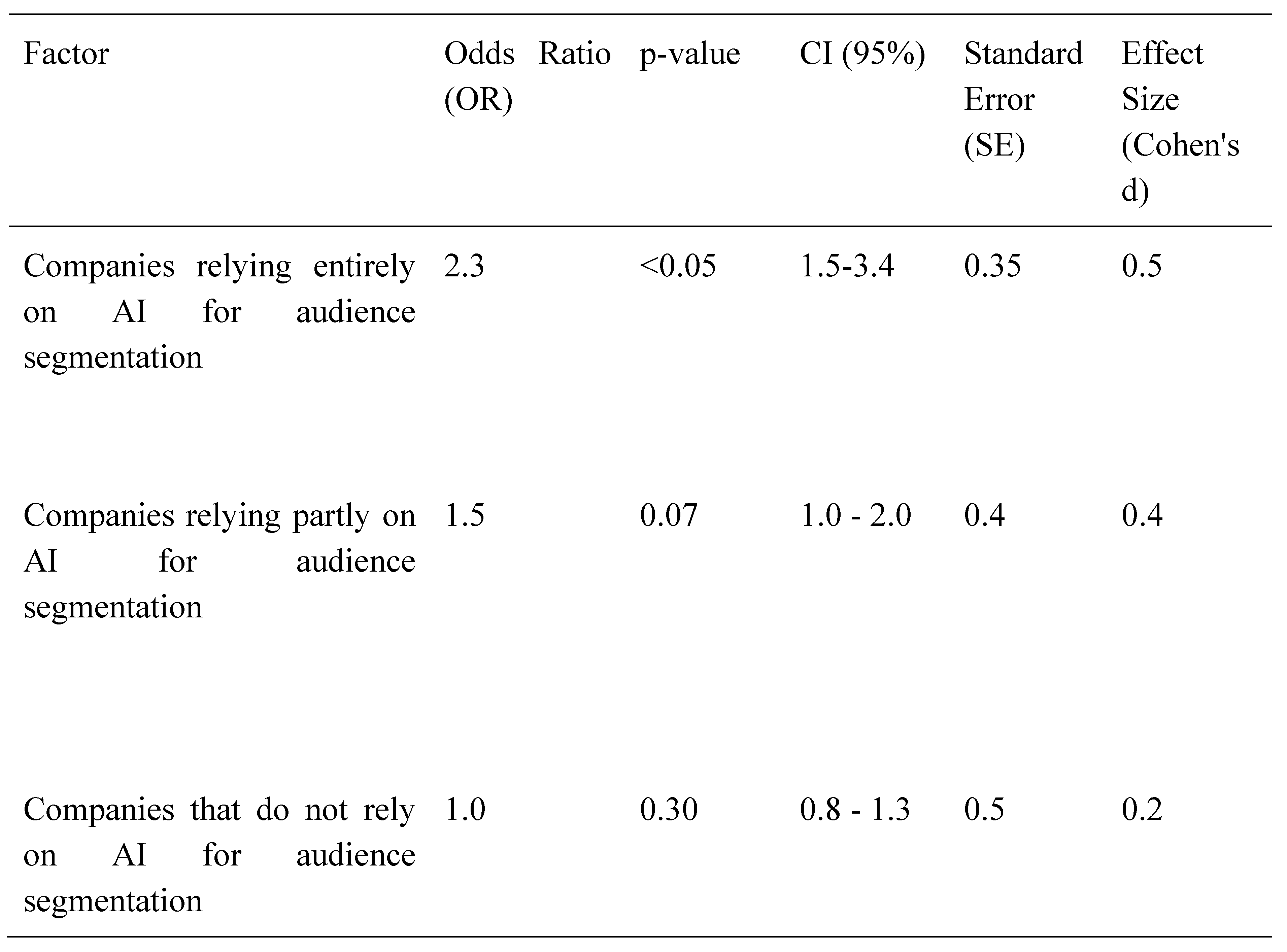
Table 6.
The relationship between company size and satisfaction in AI.
Disclaimer/Publisher’s Note: The statements, opinions and data contained in all publications are solely those of the individual author(s) and contributor(s) and not of MDPI and/or the editor(s). MDPI and/or the editor(s) disclaim responsibility for any injury to people or property resulting from any ideas, methods, instructions or products referred to in the content. |
© 2025 by the authors. Licensee MDPI, Basel, Switzerland. This article is an open access article distributed under the terms and conditions of the Creative Commons Attribution (CC BY) license (http://creativecommons.org/licenses/by/4.0/).
Copyright: This open access article is published under a Creative Commons CC BY 4.0 license, which permit the free download, distribution, and reuse, provided that the author and preprint are cited in any reuse.


