

Submitted:
29 June 2025
Posted:
30 June 2025
You are already at the latest version
Abstract
Agent-based models (ABMs) are increasingly used to study supply chain (SC) systems due to their capacity to capture decentralised behaviour, heterogeneity, and emergent dynamics. However, the mere use of agent-based simulation platforms does not necessarily imply that the models fully exploit the agent-based paradigm. This study investigates the extent to which ABMs applied to SC contexts make meaningful use of agents, based on behavioural, interactional, and systemic criteria. A systematic and thorough review of 58 academic contributions was conducted, focusing on six analytical parameters: context and objectives, justification for adopting ABMs, simulated entities, nature of interactions, system dynamics, and final classification. A central distinction is introduced between the so-called Green and Red Flag models, where the former are coherent implementations of agent-based simulation, while the latter fall short of its essential features. Further nuance is provided by two subtypes of Green Flag models: those featuring cognitively evolved agents and those based on simple interacting entities that give rise to emergent dynamics. Since the results reveal that many SC models labelled as “agent-based” lack key characteristics (such as inter-agent influence or system-level evolution) to justify the use of ABM, the pa-per provides conceptual tools to aid in distinguish between representational and functionally justified agent-based approaches. In addition, it offers both a theoretical framework and a practical evaluation guide to support the development of future models and to foster critical analysis within the field.
Keywords:
Agent-based simulation
; Supply Chain Modelling
; Discrete-event simulation
; Hybrid simulation
; Active and Passive Agent
1. Introduction
In today’s highly competitive and globalized economy, the effective design and efficient management of Supply Chains (SCs) have emerged as critical determinants of organizational success [1]. As markets grow increasingly interconnected and customer expectations continue to rise, the ability to effectively coordinate and optimize supply chain operations has emerged as a critical strategic advantage [2,3]. Also, over the past decades, SCs have undergone significant transformations, becoming more expansive and complex [4]. These changes have been driven by various factors, including the growing emphasis on environmental sustainability, which gained momentum in the last decade [5], and the recent wave of disruptions, ranging from the global pandemic to geopolitical tensions, which have underscored the fragility and interdependence of modern SCs [6,7].
To address these challenges, a wide array of tools and methodologies have been developed to support the design, planning, and optimization of SCs. These include mathematical programming, heuristic and metaheuristic algorithms, digital twins, and machine learning techniques [8]. Among the available tools, simulation plays a central role and has proven to be a particularly powerful, enabling researchers and practitioners to model dynamic behaviours, test scenarios, and evaluate performance under uncertainty without disrupting real-world operations [9]. Specifically, over the past decade, Agent-Based Simulation (ABS) has been steadily gaining traction. This simulation paradigm is based on a collection of autonomous agents (such as suppliers, manufacturers or customers) that operate independently, pursuing local objectives, but that can interact dynamically with other agents and the environment based on predefined rules [9]. This decentralized modelling approach is particularly well-suited for systems characterized by heterogeneity, distributed control, and non-linear interactions and it enables the emergence of complex system behaviours from simple interaction rules. For these reasons, the choice to simulate SCs is a particularly compelling and effective one, whose trend over time can also be attributed to several technical factors [10].
However, in some cases, models developed using the ABS paradigm do not explicitly require such approach, as the dynamics of the simulated system do not necessitate the definition of active agents and could be more appropriately handled using simpler event-based systems or system dynamics models. In other words, while many models employ agents, it is not always clear whether the agent-based approach is necessary or merely a convenient design choice. Although this concern, namely the potential misuse of Agent Based Models (ABMs), has been frequently raised in the literature (see for example [11,12,13]), there are no studies that precisely quantified how frequently this issue occurs, especially in the SC domain. Even if the literature offers several comprehensive reviews and frameworks for ABS in SC contexts, none of them has systematically investigated whether and to what extent the use of ABS is essential to accurately represent the dynamics of a given SC model. It is therefore evident that a significant gap remains open in the literature in this regard.
To address this gap, the present paper pursues the following objectives: (i) propose a set of guidelines for classifying ABMs found in the literature; (ii) categorize these models into two clusters, that we refer to as Green Flag and Red Flag, based on the necessity of using ABS; and (iii) to assess the extent to which existing ABMs fall into these categories, thereby evaluating whether ABS was essential or optional in each case.
The remainder of the paper is organised as follows. Section 2 provides the necessary background on simulation approaches within SC modelling. Section 3 outlines the key elements of our methodology, and the criteria used for classification. Section 4 introduces the analytical framework built around agent autonomy, interaction, and system evolution. Section 5 offers illustrative examples to clarify the application of this framework. Section 6 presents and discusses the main findings. Finally, the paper concludes with a summary of key insights and suggestions for future developments.
2. Background
Global and complex SCs, with both their strengths and weaknesses, are the net that drive economic systems. [14,15]. The traditional economic focus of Supply Chain Management (SCM) has broadened to also encompass environmental, and social sustainability considerations within inter-organizational business systems [16]. Environmental influences and social factors modify SC systems, which in turn “react” or “adapt” to these socio-environmental changes. Therefore, the overall sustainability of economic systems ends up being dependent upon the complex interplay of SCs on several dimensions from microscopic (intra-organizational), to mesoscopic (inter-organizational) and to macroscopic (industry - or sector wide aggregate) level [17]. These complex interactions have long led to look at supply networks as complex and adaptive systems [18]. For these reasons, simulation methods offer several advantages over other formal modelling approaches, such as multi-criteria decision-making and mathematical programming, as effective and practical analytical tools for supply chain design and optimization [19,20].
Several simulation approaches are available, each with distinct characteristics and preferred applications. Monte Carlo simulation is widely used for probabilistic analysis and risk assessment by generating random samples to model uncertainty [21]. Discrete-Event Simulation (DES) focuses on systems where state changes occur at discrete points in time, making it suitable for modelling queuing systems and logistics operations [22]. System Dynamics (SD) captures feedback loops and time delays in complex systems, often at an aggregate level [23].
In SCM research, these methods have been used to study different problems, such as, identification and control of inventory levels, costs management, SC network design and facility location, and, notably, coordination mechanisms in the context of SC dynamics [24]. Readers can refer to [25] for a general review on discrete event simulation and system dynamics implementations in the SC domain, and to [26] and [27] for a comprehensive analysis of the development of multi-agent systems in SC applications.
However, when modelling a SC as a collection of autonomous members who interact with and influence each other, learn from their experiences, adapt their behaviours to better suit to their environment, and when the objective is to study patterns, structures, and behaviours emerging through the agent interactions, ABS (often also labelled as multiagent system approach or multiagent simulation) is a primary modelling solution to cope with this kind of complexity [28]. In ABS, in fact, the core modelling element is the agent and its associated behaviours, which influence not only its own actions but also those of other agents and the environment [29,30]. More precisely, indeed, a typical agent-based model consists of three elements [31]: (i) a set of agents with their attributes and behaviours; (ii) a set of agent relationships and methods of interaction (how and with whom agents interact); and (iii) the agents’ environment.
Even if there is no universally accepted definition of agents in the literature, the property of autonomy appears to be their most important defining feature. Therefore, agents should exhibit specific behaviours and be equipped with dedicated decision-making mechanisms, enabling them to make autonomous decisions in response to the situations they encounter, without relying on external control [31]. In that regard, agents could be active, with their actions aiming to achieve their internal goals, or passive, reacting to other agents and the environment. Agent’s actions may be a direct intervention, a communication with other agents, or further reasoning. Moreover, agents possess mechanisms that adapt their behaviours, at a single and collective level, in response to accumulated experiences or learning by leveraging some form of memory [32,33]. In case of learning, theories of learning become important and machine learning algorithms may be leveraged for recognizing patterns in data [34].
Modelling agent relationships and interactions involves defining how agents are connected (i.e., the model’s topology) and specifying the dynamics that govern their interactions [29]. In agent-based systems, by nature decentralized, each agent typically has access only to local information, which is acquired through interactions with neighbouring agents. An agent’s neighbourhood can generally be represented as a network of nodes (agents) and links (relationships), and agents within a model may interact according to one or multiple topological structures.
In ABMs, the environment plays a crucial role as it may constrain agent actions in contending for space, acquiring resources and so on [30]. The environment may simply provide the agent with information about its spatial location with respect to the other agents, or with a richer set of geographic information. However, more sophisticated environmental models can be used to model the agents’ environment to provide point location-specific data [31]. It is worth highlighting here that many of these applications involve hybrid simulation, that is, a modelling approach that combines two or more of techniques [35].
Since its origins, agent-based modelling has seen a variety of applications over a wide range of disciplines from physical sciences to social science, from biology to business, and finance. ABM has seen many applications in the SC domain, and several have been the authors that tried to systematize these applications in appropriate literature reviews. As [36] synthetically, yet very optimistically, points out, the next generation of ABMs in SCM will be all of the following: (i) distributed; (ii) dynamic; (iii) intelligent; (iv) integrated; (v) responsive; (vi) reactive; (vii) cooperative; (viii) interactive; (ix) anytime; (x) complete; (xi) reconfigurable; (xii) general; (xiii) adaptable and (xiv) backwards compatible.
Reference [11] introduced a service-oriented framework for collaborative SCs, and it included practical applications and case studies that demonstrated the effectiveness of the proposed framework. Similarly, [32] proposed a framework integrating ABS with simulation-based optimization, thus allowing for a more dynamic and realistic representation of SC entities. This framework also emphasized how individual agents pursue their local objectives while also interacting with one another to achieve broader, holistic goals. Furthermore, [37] provided a state-of-the-art survey on ABS for risk management in SC, and this classification helps to understand the various approaches and methodologies used in the field. The review [33] offered a multi-level classification of ABS applications in logistics and SC research. It introduced a multi-level classification framework to systematically categorize the reviewed publications, and it helped to understand the various applications and issues related to ABS. Also, the research highlighted the different behaviours and capabilities of agents in ABS, such as their ability to learn and adapt, and it also assessed the maturity of various ABS applications, categorizing them from conceptual proposals to field experiments. Lastly, other reviews investigated the contribution of ABS to SCs in various industry sectors as the relevant case of agri-food [14,38]. As of this literature review, to the best of Authors’ knowledge, no previous study explicitly addressed the issue of evaluating the proper use of the ABS approach, especially in the SC domain.
3. Method
The dataset underpinning this study was developed through a structured process that combined insights from prior research with an updated literature review, ensuring both continuity and comprehensiveness. The specific methodology is outlined in the following sub sections.
3.1. Dataset Construction
The dataset was built by systematically applying the following steps.
- Prior Research. The first input originates from the dataset used in our previous review [39], which consisted of 25 articles.
- Updated Search. The second source was obtained by extending the original query, to broader the coverage period from February up to the end of 2024. This update resulted in an additional 85 contributions.
- Data Set Refining. The combined pool of 110 articles was then refined to ensure the quality and robustness of the analysis. Specifically, we decided to include only works published in peer-reviewed scientific journals, that are generally subject to stricter review standards, ensuring higher quality. Moreover, due to the greater space typically allowed in journal publications, the models and methodologies are usually described in more detail and with greater clarity. This level of detail is essential for applying the classification framework introduced in the following section. Brief or superficial descriptions, which are more common in conference papers, would not provide sufficient information to support a robust and reliable classification process. This exclusion criterion led to the removal of 49 articles from the initial dataset.
- In Depth Analysis. Each of the remaining articles was examined in depth, to analyse the structure and substance of the simulation models, with particular focus on agent behaviours and modelling choices. During this phase, three additional articles were removed as they addressed operations modelling rather than SC systems. The final dataset comprises 58 peer-reviewed journal articles, each subjected to a systematic classification. The classification framework and methodology are outlined in the following section.
3.2. Classification Parameters
In this study, we systematically examined all contributions included in the dataset, with the aim of capturing and comparing the core characteristics of each ABM model across a set of defined analytical dimensions. This structured approach enabled a consistent and replicable evaluation process across all models considered. Table 1 summarises the five descriptive parameters extracted from the analysis of each article: the model’s context and objectives, the justification for adopting agent-based simulation, the types of simulated entities, the nature of interactions, and the presence of system dynamics.
As summarised in Table 1, our analysis considered a range of model features, including domain context, modelling rationale, agent types, interaction mechanisms, and the presence of system-level dynamics. The first three parameters are descriptive in nature, while the final two are more technical. These latter dimensions enabled us to distinguish between models that fully exploit the agent-based paradigm and those that adopt agent-based elements in ways that could have been equally reproduced through conventional DES or SD logic. The former are classified as Green Flag models, while the latter fall under the Red Flag category.
In this regard we recall that, as clearly stated in Section 1, this distinction is not intended as a critique of the models themselves, but rather as a neutral assessment of whether the agent-based approach was applied in a conceptually appropriate and technically justified manner. It is a classification based on the appropriateness or the adequacy of the ABS to the reproduced SC and does not depend, in any way, neither on the complexity nor on the quality of the obtained results. Indeed, we believe that, even if ABS is not strictly requested to soundly reproduce a supply chain, the result remains valid, but the work could have been streamlined. For example, if there are no interaction effects and no evolved agents, the agents are essentially just reacting to stimuli, which are, in fact, discrete events. In this case, they become functionally equivalent to DES objects, and the core idea of system evolution is lost. In such cases, the use of ABS makes the model more difficult to interpret and makes it harder to convey the actual objective. One modelling approach leads the reader to expect insights into system dynamics, while the other focuses on global system performance, without emphasizing any evolutionary aspects.
In the following section, we examine each of these components in greater depth. We define the conceptual boundaries that differentiate operational flows from meaningful interactions, explain the conditions under which system evolution is considered significant, and articulate our rationale for classifying a model as Green or Red Flag based on these dimensions.
4. Guidelines for the Interpretation of the Classification Method
In this section, we articulate the theoretical and operational rationale underpinning our classification method. While in [39] we introduced a distinction between active and passive agents, we now refine and expand this evaluation using a triadic structure. This includes agent autonomy [31], interaction dynamics [29], and system evolution [40], three pillars that we consider essential for determining whether a model meaningfully leverages the agent-based paradigm. Collectively, the three dimensions provide a coherent evaluative framework that informs, and ultimately justifies, the Green/Red Flag classification introduced in the subsequent section. It is also important to note that the classification criteria used to label the analysed models as Green or Red Flag are not novel; rather, they reflect the fundamental characteristics commonly used in the literature to define agent-based models. This choice was a deliberate and strategic decision that we made based on two main considerations. First, we aimed to rely on reference criteria that are widely recognized and consolidated in the literature to ensure both clarity and methodological soundness. Second, we sought to strike a balance between two competing goals: increasing the granularity of the analysis by introducing more specific and detailed criteria related to model structure and behaviour, versus preserving the interpretability and practical feasibility of the classification. Indeed, pushing for higher specificity would have significantly reduced the robustness of the results or, in some cases, made the classification process unmanageable. All in one, the key contribution and novelty of our works lies in the rigorous formalization of when ABS is necessary and soundly used, and not in any technical innovation.
4.1. Degree of Agent Decision-Making Autonomy
With active agent we refer to an autonomous object, which can make independent decisions, adapt over time, and interact meaningfully with other agents of the surrounding environment. These agents are dynamic, heterogeneous, and capable of both initiating and responding to stimuli. For the agent to be considered active, the answer to this question must be affirmative: “Does the agent’s behaviour evolve over time in response to the environment or the actions of other agents?”
This concept is illustrated in Figure 1, which conveys the core idea of an active agent whose behaviour is both dynamic and guided by goal-oriented reasoning, formally defined through a utility function. Conversely, a passive agent operates in a deterministic way and although its responses may vary in terms of quantity or timing (e.g., producing or ordering more), the underlying decision-making approaches remain fixed and predictable. Such actions occur solely in response to external stimuli, without genuine adaptation or learning.
4.2. Nature of Inter-Agent Interactions
Before exploring the interaction-related criteria of the classification framework, we begin by clarifying the distinction between what we refer to as “mere operational flows” and “genuine inter-agent interactions”. We then explain why the presence of inter-agent interaction is essential for a model to fully exploit ABM potential.
4.2.1. Mere Operational Flows vs. Agents Interactions and Responsiveness
With operational flows in a SC we refer to mechanical exchanges (e.g., delivery of goods, issuance of orders or inventory movements) that occur regardless of agent cognition, intention, or responsiveness. These flows are embedded within the environment or programmed as fixed procedures, i.e., they are just structural mechanics rather than meaningful social or economic interactions among the agents. For instance, if a “consumer agent” issues a purchase order to a “producer agent” and the producer responds by simply executing a pre-defined routine, no true interaction is taking place. Interaction, instead, implies an active response triggered by the behaviour of other agents, that not only operate within the same environment, but actively perceive, and respond to one another’s behaviours. A possible genuine interaction is that of a producer that readjusts its operations (e.g., by increasing batch size, reallocating resources, etc.) as a consequence of the observed consumer demand, In light of this, in our classification, purely operational flows were not considered as real inter-agent interactions.
4.2.2. Direct Interactions
Agent interactions can be categorized as either direct or indirect. Direct interactions include negotiation, dynamic adaptation to the actions of others, and responses based on the observed state of other agents. These interactions are characterized by a fundamental question: “Is there a direct exchange of material or information between two or more distinct agents, driven by their utility functions or procedural logic, that produces a tangible effect on at least one of them?”. A graphical exemplification of this concept is provided by Figure 2, where each node corresponds to a geographic area populated by consumer agents exhibiting distinct behaviours. Within each node, agents interact directly with one another through decision-driven exchanges, depicted here as dialogue bubbles.
Agents communicate, react to peer influence and/or influence, and adjust their own decisions based on the attitudes, signals, or states of other agents living in the same area. As a practical example, consider a grid representing an urban area in which a logistics operator is responsible for waste collection. Green agents represent virtuous citizens who sort their waste and dispose of it properly, whereas red agents represent those who only engage in unsorted waste disposal. In this scenario each citizen observes the behaviour of his or her neighbours and communicate with them, potentially readapting, either positively or negatively his or her behaviour, as a result of these interactions.
4.2.3. Indirect Interactions
An indirect interaction occurs when the action of one agent influences the decision-making of another without explicit communication or targeted behaviour. In these cases, agents may be unaware of each other’s presence, yet their decisions are shaped by shared environmental state variables, emergent collective dynamics, or feedback mechanisms operating at the system level. Therefore, the influence is mediated through the environment, rather than occurring via deliberate inter-agent messaging or mutual recognition. In terms of SC modelling, these interactions are particularly relevant where agents respond to emergent global signals, such as price shifts, congestion, stock levels, or regional scarcity. To sum, the defining feature of indirect interactions can be captured by the following question: “Is there an indirect flow of material or information between two or more different agents, based on their decision rules or utility function, that is conveyed by a third (mostly collective) entity, such as external environmental conditions or system-level variables?”. This is exemplified in Figure 3, that extend the scenario depicted in Figure 2. Agents within each node have already interacted directly, and this has led to the emergence of a predominant behavioural pattern (e.g., red or green). Once established, this dominance triggers a system-level propagation effect (represented by colour-coded concentric ripples) that influences surrounding nodes, without requiring further direct inter-agent communication.
Returning to the example of waste disposal, the external or “third entity” that influences citizens’ behaviour can either be the surrounding environment (e.g., over-flowing bins, a general perception of neglect and decay, lack of cleanliness, etc.) or regulatory authorities (such as municipalities or regional governments), which may introduce incentives or penalties informed by the historical average behaviour of citizens.
4.3. System Evolution over Time
Another key feature of an ABM, typical but not limited to the models involving Active Agents (see Section 4.1), is the ability to generate system-level evolution over time. Unlike models in which outcomes are predefined or merely the result of aggregated parameters, ABMs enable emergent phenomena to arise from decentralized decision-making, local interactions, and dynamic feedback mechanisms This evolution is not externally imposed but emerges endogenously from the interplay of agent behaviours: as agents interact, adapt, and respond to both peers and environmental stimuli, the system progressively evolves. Over time, these micro-level processes give rise to macro-level patterns, structural transformations, and shifts in dominant behavioural regimes, which collectively characterize the systemic reconfiguration of the simulated environment. This principle is exemplified in Figure 4, which depicts a simplified scenario in which the system evolves from an initially mixed configuration (time t) to a more homogeneous behavioural state (time t + n). In this case, agents are companies competing in the same market niche and based on their strategic decisions and operative actions, market conditions rapidly evolve from an initial state of oligopoly to one of monopoly.
It is important to note that systemic evolution is not confined to ABMs involving active agents. As further discussed in the next section, under specific conditions, even models composed solely of passive agents may display non-trivial and unforeseen dynamics. Anyhow, this type of evolution cannot be traced back to a single agent’s action or to an externally defined rule: it is not encoded in advance in the model but rather emerges unpredictably as the result of recursive interactions and adaptation within the system.
5. Green and Red Flag Model
As anticipated in the previous sections, from this point onward, articles that meet our criteria for an appropriate and coherent use of agent-base paradigm in the context of SC modelling will be labelled as Green Flag, while those that do not will be labelled as Red Flag. To support this classification, we developed a simple, yet robust scheme grounded in the fundamental characteristics of agents introduced in Section 4. Its main characteristics are discussed in the following sub-sections.
5.1. The Green Flag – Red Flag Categorization Scheme
The framework is intentionally designed to be both generic and easy to apply, making it suitable for use beyond the SC domain. Its main structure is exemplified in Table 2. As it can be seen, the baseline requirement for a model to be labelled as Green Flag, is that (i) the model includes interaction among agents, whether direct or indirect. Without interactions, in fact, agents behave in isolation, and the system cannot exhibit meaningful emergent behaviour. Provided this condition is met, the model will be classified as Green Flag if at least one of the following criteria is satisfied: (ii) the model includes at least two active agents (iii) the model includes one or no active agents, but it exhibits a non-trivial and unpredictable system evolution over time.
Evidently, condition (ii) does not exclude condition (iii); in fact, when the model includes a reasonably large number of active agents, it is highly likely that the system will exhibit a distinct evolutionary pattern over a sufficiently long-time horizon. Relatively to condition (iii), if criterion (i) is satisfied, given the near-exclusive presence of passive agents, interactions can only occur indirectly. Nevertheless, the high number of agents may give rise to a form of collective intelligence that emerges gradually because of system-level evolution.
This classification, therefore, suggests a dichotomy between the two different types of Green Flag models. At one end of the spectrum we can find models satisfying conditions (i) and (ii). These are referred to as “Active Agent Models”, a label that emphasizes their ability to capture decentralized reasoning, goal-oriented behaviour, and micro-level decision-making. At the other end we find models that fulfil conditions (i) and (iii) and that, therefore, we decided to label as “Emergent Colony Dynamics”. These models leverage agent-based logic to simulate population-level effects that emerge from the interactions of minimally autonomous, or even passive agents. Evidently, many models may fall somewhere in between these two extremes, whereas models that incorporate all three features are classified as “Full Spectrum Models”.
5.2. Contextualization of the Classification Scheme
For the sake of clarity, and to contextualize the proposed classification scheme, in this Section we examine three studies that perfectly match with the previously defined categories: one classified as Red Flag, and two as Green Flag, each positioned at opposite ends of the classification spectrum. Each article will be briefly summarized and evaluated according to the classification scheme introduced earlier. Lastly, we will present an excerpt of the classification table (Table 3) generated after analysing all 58 contributions.
5.2.1. Active Agents - Green Flag Model
Contribution [41] investigates how technical assistance initiatives by buying firms and regulatory inspections influence suppliers’ corporate social responsibility (CSR) performance. The model involves three types of agents, namely, buyers, suppliers, and regulatory authorities, each one characterized by heterogeneous attributes such as risk preferences, internal states, and context-sensitive decision rules. Suppliers are further defined by their absorptive capacity, which determines their ability to internalize and act upon the technical assistance they receive. The model accurately reproduces the decision-making process by which buyers assess whether to provide assistance based on their perception of a supplier’s CSR level and anticipated regulatory risks, while regulators perform periodic inspections and impose penalties according to a dynamic CSR threshold. In doing so, the model effectively captures the complex interplay between regulatory oversight, buyer strategies, and supplier compliance in a multi-period supply chain context. What distinguish this model is its dynamic feedback architecture. Agents do not operate according to fixed rules; instead, their behaviour adapts in response to experience, regulatory pressure, and the perceived trustworthiness of their partners. These changes are driven by cost–risk trade-offs that agents evaluate at every time step, leading to emergent, system-wide patterns of either trust reinforcement or erosion. Although agent interactions are not implemented in a direct or explicit way, the model integrates several forms of indirect interactions (e.g., perceptual feedback, institutional influence, and reputation dynamics) that shape agents’ adaptive responses and drive the long-term evolution of the system.
In light of these features, [41] clearly satisfies condition (i) presence of indirect interactions, as well as condition (ii) inclusion of active agents. For these reasons, it is classified as a “Green Flag” model of the “Active Agent” type.
5.2.2. Emergent Colony Dynamics – Green Flag Model
Contribution [42] explores how public debate, and public concern can trigger sociotechnical innovations in food supply chains, using the Dutch pork sector as a case study. Key actors, such as activist and moderate Non Governative Organizations (NGO), consumers, retailers, and producers are identified, and their roles in shaping public opinion and institutional responses are reproduced in an agent-based simulation that models opinion dynamics among heterogeneous stakeholders. All agents are modelled as relatively simple entities with limited internal states (e.g., opinion, uncertainty, openness). However, their indirect interactions, mediated by media and NGOs, give rise to complex, path-dependent transformations at the system level. For instance, it is shown that, under certain conditions, a turning point in public discourse can be reached, shifting the system toward widespread adoption of animal welfare practices. While the agents themselves do not exhibit cognitive sophistication, the collective behaviour of the system evolves dynamically, showing clear hallmarks of emergent complexity.
Therefore, although [42] does not satisfy condition (iii), as it does not incorporate active agents, it clearly fulfils both condition (i) and (ii), since the ABS leverages indirect interactions and exhibits unpredictable evolution over time. Given this, the model qualifies as a Green Flag and, while it may not represent a perfect archetype, it is the closest representative (within our dataset) of what we define as Emergent Colony Dynamics.
5.2.3. A Red Flag Model
Contribution [43] presents a novel approach for optimizing supply chain ordering management, by combining ABM with reinforcement learning (RL). It models a four-echelon SC, including retailer, distributor, manufacturer, and supplier, where each agent makes weekly decisions based on its local state and demand, which is non-stationary. The merits of the paper are undeniable, as it introduces a novel and intelligent simulation-based optimization framework, and enables the definition of near-optimal ordering policies that contribute to stabilizing inventory levels under fluctuating demand. Nonetheless, [43] is classified as a Red-Flag model because the nature of the agents included in the simulation fail to meet our inclusion criteria. Specifically, agents lack meaningful autonomy, interactivity, and adaptive capacity in relation to the system they inhabit. Firstly, their behaviour is constrained to static rule-based policies, with no evidence of social or systemic adaptation. The integration of Q-learning into individual agent decision-making is, in practice, a reinforcement of local optimisation rather than agent-level learning in a broader sense. In addition, agents are optimised in isolation, with their policies shaped only by internal cost functions and inventory states, rather than by the evolving behaviour or performance of other agents in the network. Secondly, there is a complete absence of interactions and influence between agents. They only respond to system events without any other strategies or actions. For these reasons, the agents in this model function more as independent optimisation units than as autonomous, socially situated entities. The absence of system-aware adaptation, interactive decision-making, and behavioral complexity suggests that the model could just as effectively have been implemented using a standard discrete-event simulation or a similar approach.
Finally, it is worth noting that this article clearly demonstrates that a Red-Flag classification does not imply a “poor model,” but rather reflects a limited suitability of ABM for the specific case under study.
6. Results & Discussion
All 58 papers were thoroughly read and analysed in detail, in accordance with the classification method described in Section 3 and the Green Flag - Red Flag categorization approach introduced in Section 5. Specifically, the review process involved a total of four researchers. The group was divided into two subgroups, each assigned to review half of the papers. Within each subgroup, the researchers independently analysed and classified the articles. In cases where discrepancies emerged, the “uncertain” papers were also reviewed by the two remaining researchers, followed by a collective discussion. If, even after discussion, a unanimous agreement could not be achieved (a fact that occurred only once) a majority decision was adopted. Although no formal inter-rater agreement metric was employed, we believe that this multi-stage procedure offers a sufficiently robust and reliable framework, consistent with the overall goals of the study.
For the sake of clarity, Table 3 and Table 4 present a subset of the classification results, limited to the three use cases discussed in Section 5. The complete article list, description, and classification table is available via the doi provided in the “Data Availability Statement” following the conclusions. Please note that, for the sake of readability and due to space constraints, the table text has been shortened (compared to the extended version) without compromising its clarity or content quality.
6.1. Green vs Red: Models Divison
The application of the categorization approach led to the identification of 37 Red Flag and 21 Green Flag articles. As shown in Table 5, the Green Flag ones were further grouped into the three categories (namely Active Agent Model, Emergent Colony dynamics and Full Spectrum), as detailed in Section 5.
The following subsections provide a more detailed analysis of this initial categorization and highlight the most insightful outcomes of the analysis.
6.2. Timeline, Simulation Techniques and Sectors
Figure 5, Figure 6 and Figure 7 show the distribution of Red and Green Flag articles over time, across sectors, and by the type of simulation employed. What is particularly interesting is the almost constant coexistence of Red and Green Flag models, with a proportion that has remained roughly stable over the years. This suggests that the use of non-essential ABS models has been a recurring feature, at least in simulations related to the SC. Only in recent years (i.e., 2020 to 2024) the proportion of Green Models appear to be increasing, possibly indicating a better understanding of ABM implications and perhaps reflecting a growing need to consider end-customer behaviour as an essential element in designing resilient SCs. However, this is merely a tentative interpretation of the figure. If such a trend exists, it appears to be limited to the most recent years, and the available data are not enough to support any robust statistical inference.
To better understand how methodological choices relate to this classification, Figure 6 provides a breakdown of the models by simulation technique. Specifically, it displays a sunburst chart illustrating the distribution of Red and Green Flag models across three simulation types: ABS, DES, and Hybrid. The inner ring represents the simulation categories, while the outer ring shows the proportion of Red and Green Flag models within each category.
As the inner ring indicates, most of the works, 71% of the total, are pure ABS; also, as the outer ring indicates, within this group Red Flag models prevail being around 58.55 of the total (i.e., 24/(24 + 17)). This imbalance in favour of Red Flag models becomes even more pronounced, around 78.5%, in case of hybrid models integrating ABS and other simulation approaches. This fact further highlights that ABS is rarely leveraged to its full potential and that many times it has been employed only by convention, since agents were used even in simulation scenarios that could be more parsimoniously implemented using DES or even SD approaches. This tendency may be partly explained by the widespread availability of multi-paradigm simulation software, such as AnyLogic, which allows for the implementation of different modelling approaches within a unified framework, often encouraging the adoption of agent-based solutions even when they are not strictly required. Unfortunately, it was not possible to accurately quantify the software used for each model or to make meaningful comparisons across programming languages, as only a small fraction of articles included even partial access to the source code.
Excluding sectors characterized by a very low sample sizes, the predominance of Red Flag models over Green Flag ones is evident even when stratifying the data by sector, as clearly shown by Figure 7. The imbalance is particularly evident in the manufacturing sector, which also accounts for the largest number of studies (i.e., a total of 21 contributions of which 16 labelled as Red flag and the other 5 as Green flag). This is less surprising, as DES simulation is typically associated with production-level applications, making the improper use of DES somewhat expected in this field. The only exception to this trend can be traced in the agricultural sector, where Green Flag models appear proportionally more frequent (6 on a total of 10 contributions), reflecting the inherent suitability of this domain for decentralized and adaptive modelling approaches. Although the sample size does not allow to make statistical inferences, this may be due to the complex, distributed nature of agricultural systems, where agent interactions and local decision-making play a fundamental role in shaping system behaviour.
6.3. Inter-Agent Interactions
This sub section focuses on the nature of inter-agent interactions that provides a strong proxy for assessing the depth and granularity of the modelling approach. As expected, and as clearly demonstrated by Figure 8, most Red Flag models exhibit either no interactions or rely exclusively on indirect effects, such as shared environmental cues. Only a limited number of Red Flag studies make use of direct and/or indirect interactions; yet they were not labelled as Green Flag due to their failure to meet requirements (i) and (ii), as defined in Section 5.
Conversely, Green Flag models display a broader and more nuanced spectrum: many incorporate both direct and indirect interactions, reinforcing the idea that intentional agent influence, whether peer-to-peer or system-mediated, is a key component of robust ABS implementations in SC contexts.
6.4. Declared Motivations for Using ABS
In this paragraph, we provide a last analysis made considering the second classification parameter of Table 1, that is the “Motivation for ABS” given by the authors. Specifically, Figure 9 shows the level of coherence between the stated motivation and the implemented model, for both Green and Red Flag cases. Note that, in this context, we define the degree of coherence as the alignment between the Authors’ stated motivations for employing ABS and the actual features of the implemented models. For instance, in case of a Green Flag, High coherence indicates that both the model’s structure and its operating logic perfectly match the declared need for agent-based dynamics. Conversely, a low coherence indicate that the authors’ descriptions understated the actual complexity or features of the implemented model. For Red Flag papers, coherence is defined in a specular manner, so that low coherence reflects situations where the authors overstated the model’s features relative to what was actually implemented. In this regard, we would like to point out that the assessment of the coherence levels was conducted following a procedure like the one described at the beginning of Section 6. Specifically, the evaluation was carried out by the same panel of four experts, using a consensus-based approach. Each expert independently reviewed the materials, and any disagreements were resolved through discussion, ensuring consistency and methodological alignment across the entire analysis.
As expected, the level of coherence is very high for Green Flag models; the authors had a clear understanding of the need to implement a DES model and they supported their choices with conceptually strong justifications, such as the need to capture decentralised decision-making or emergent dynamics. The situation is reversed for Red Flag papers, where a consistent mismatch can be observed between the stated motivations and the features implemented in the models. Many studies present highly articulated motivations that, however, are not reflected in the simulation model they propose. This indicates that the declared intention does not always translate into a model that effectively leverages the core features of ABS and further suggests that the conceptual distinction between DES and ABS is not always clearly articulated in research practice.
To conclude this section, we want to make it clear that our analysis does not aim to judge the quality or usefulness of these models, but rather to reflect on whether the agent-based paradigm is being conceptually and operationally exploited. The findings highlight a disconnect that is often more methodological than intentional, underscoring the need for clearer alignment between modelling goals, declared motivations, and simulation architecture.
7. Conclusions & Future Developments
In this work, we analysed a total of 58 studies employing ABM within the domain of SC modelling. Our primary objective, as stated by the third research question, was to determine whether ABS is being used to its full potential, a concern that was already highlighted in the literature, but for which no quantitative response has been offered so far. To this end, and in response to research questions (i) and (ii), we developed an original taxonomy that enables practitioners to classify ABM based on three core technical dimensions: the internal functioning of agents, the nature of their interactions, and the capacity for system-level evolution over time. Models that genuinely required an agent-based approach to capture the described SC dynamics were labelled as Green Flags, while those whose behaviour could be replicated using more traditional paradigms were labelled as Red Flags.
7.1. Main Findings
Somehow unexpectedly, only 36% of the models qualified as Green Flags. Particularly, the absence of meaningful interaction among agents emerged as the most frequent reason for exclusion. Notably, Red Flag models, despite often being complex and well-structured, could have been entirely replicated using DES or other simulation approach, without any meaningful loss in behavioural fidelity. Even among the Green Flag models, only a third met all criteria for Full Spectrum ABS. The remainder either lacked a clear evolutionary dynamic or featured reactive agents with fixed decision rules. This pattern may reflect a broader methodological inertia, as authors familiar with ABS may continue to apply the paradigm even in contexts where it is not strictly necessary. This impression is reinforced by the number of Red Flag models that were accompanied by conceptually sound justifications yet misaligned with the implemented simulation architecture. The growing availability of hybrid simulation platforms, which allow for the definition of “agents” that behave more like event-driven components, may also blur methodological boundaries and contribute to conceptual ambiguity.
7.2. Possible Implications for Contributors and Developers
Although designed to assess the percentage of SC related works that appropriately use the ABS technique, the Green - Red Flag classification framework seeks to provide conceptual clarity by distinguishing between authentically agent-based models and those that merely adopt the label without substantively engaging with the paradigm. It offers a structured lens through which scholars and model developers can critically evaluate the use of ABS, paving the way for more rigorous, transparent, and meaningful simulation practices. In particular, the framework can be used prospectively, guiding developers during the early stages of model design. By prompting key questions, such as whether agents with utility functions are needed, whether non-trivial agent interactions are expected, or whether the model seeks to explore emergent scenario evolution, it helps determine whether ABS is truly warranted for the problem at hand. Furthermore, insights into the proper implementation of ABS can be drawn by examining the characteristics of Green Flag models, as detailed in the complete classification table provided in the online supplementary material. This table also offers a broad overview of the existing body of ABS applications in the supply chain domain, thereby providing a useful point of reference for situating one’s own work within the current research landscape.
7.3. Limitations of the Research
Despite the rigour of our classification framework, several challenges emerged during its application. The considerable heterogeneity of the models often made consistent classification difficult, with several borderline cases involving ambiguous dynamics or loosely defined agent interactions. In many instances, crucial information about agent behaviour and system evolution was only partially described or entirely absent, requiring us to infer structural features from indirect textual cues. The lack of source code or pseudocode further limited our ability to validate assumptions or reconstruct simulation logic. Moreover, the nature of SCs may not always lend itself naturally to “pure” ABS. For this reason, some models were deemed acceptable as Green Flags despite limited reconfigurability, provided they incorporated rich behavioural logic and plausible inter-agent influence.
7.4. Future Works
Although originally conceived for the SC domain, our classification scheme could be extended to other contexts. Indeed, the agent classification parameters have been intentionally defined in a generic manner, as they directly refer to fundamental characteristics of agents, regardless of the specific domain in which they are applied. Therefore, future research could be made to extend the classification framework to other emergent domain, such as the urban mobility, where ABS is highly adopted. This would allow for the exploration of whether the insights obtained in the present study also hold in different settings and would allow for a broader validation of our criteria and may reveal domain-specific modelling patterns or pitfalls.
Another possible direction for future works could be to either extend the framework with a more granular typology or introduce formal metrics and validation criteria to make the classification process less subjective and more robust. However, such modifications are not straightforward and may entail certain risks. Indeed, given the wide heterogeneity of the models proposed in the literature, it is not always possible to identify common technical elements. Moreover, as the level of granularity increases, so does the amount of information required for classification, information that is often not available in the article itself unless the authors have made their simulation code publicly accessible. As a result, excessive granularity could significantly reduce the number of classifiable articles, potentially undermining the usefulness of the entire approach. This is certainly an aspect that requires careful consideration.
Author Contributions
This information will be provided in the next stage.
Funding
This research was funded by the European Union and the Italian Ministry of University and Research through the project SusTex: Sustainable Textile, Id 2022X2788M, Grant number D53D23011410006.
Data Availability Statement
The analyzed dataset is available at the following DOI: 10.17632/yfx4f9f6fb.1
Originality Statement
The present manuscript is an expanded version of a previous conference paper, but more than 50% of this manuscript is completely new material.
Conflicts of Interest
The authors declare no conflicts of interest.
References
- Moroni, F.; Viola, A.; Gallo, M.; Romagnoli, G.; Zammori, F. Do We Really Need Simulation for a Transition Towards Circular Supply Chain Management? A Possible Answer from Scientific Literature. 2024; 414–428. [Google Scholar] [CrossRef]
- Wang, F.; Wu, D.; Yu, H.; Shen, H.; Zhao, Y. Understanding the role of big data analytics for coordination of electronic retail service supply chain. Journal of Enterprise Information Management 2022, 35, 1392–1408. [Google Scholar] [CrossRef]
- Romagnoli, G.; Moroni, F.; Mercogliano, N.; Zammori, F. Mapping Simulation Trends in Supply Chain Management: A Structured Literature Review. IFIP Adv Inf Commun Technol, 2025.
- Kazancoglu, I.; Ozbiltekin-Pala, M.; Mangla, S.K.; Kazancoglu, Y.; Role of flexibility, F.J. , agility and responsiveness for sustainable supply chain resilience during COVID-19. J Clean Prod 2022, 362, 132431. [Google Scholar] [CrossRef]
- Jaehn, F. Sustainable Operations. Eur J Oper Res 2016, 253, 243–264. [Google Scholar] [CrossRef]
- Choi, T.Y.; Dooley, K.J.; Rungtusanatham, M. Supply networks and complex adaptive systems: control versus emergence. Journal of Operations Management 2001, 19, 351–366. [Google Scholar] [CrossRef]
- Ji, G.; Solari, F.; Lysova, N.; Romagnoli, G.; Montanari, R.; Bottani, E. Insights from 20 Years (2004–2023) of Supply Chain Disruption Research: Trends and Future Directions Based on a Bibliometric Analysis. Sustainability 2024, 16, 7530. [Google Scholar] [CrossRef]
- Solari, F.; Bottani, E.; Romagnoli, G. Sustainable Logistics and Supply Chain Management in the Post-COVID-19 Era: Future Challenges and Challenging Futures. Sustainability 2025, 17, 1772. [Google Scholar] [CrossRef]
- Mercogliano, N.; Zammori, F.; Castellano, D.; Romagnoli, G. Assessing the Effect of Citizens’ Behaviour in Textile Waste Separate Collection: An Agent-based Simulation Model. In Proceedings of the International Conference on Modeling and Applied Simulation, MAS; vol. 2024-September, 2024. [CrossRef]
- Bemthuis, R.H.; Lazarova-Molnar, S. Towards integrating process mining with agent-based modeling and simulation: State of the art and outlook. Expert Syst Appl 2025, 281, 127571. [Google Scholar] [CrossRef]
- Dorigatti, M.; Guarnaschelli, A.; Chiotti, O.; Salomone, H.E. A service-oriented framework for agent-based simulations of collaborative supply chains. Comput Ind 2016, 83, 92–107. [Google Scholar] [CrossRef]
- Jennings, N.R.; Sycara, K.; Wooldridge, M. A Roadmap of Agent Research and Development. Auton Agent Multi Agent Syst 1998, 1, 7–38. [Google Scholar] [CrossRef]
- Labarthe, O.; Espinasse, B.; Ferrarini, A.; Montreuil, B. Toward a methodological framework for agent-based modelling and simulation of supply chains in a mass customization context. Simul Model Pract Theory 2007, 15, 113–136. [Google Scholar] [CrossRef]
- Utomo, D.S.; Onggo, B.S.; Eldridge, S. Applications of agent-based modelling and simulation in the agri-food supply chains. European Journal of Operational Research 2018, 269, 794–805. [Google Scholar] [CrossRef]
- Seuring, S.; Müller, M. From a literature review to a conceptual framework for sustainable supply chain management. J Clean Prod 2008, 16, 1699–1710. [Google Scholar] [CrossRef]
- Guchhait, R.; Sarkar, B. A decision-making problem for product outsourcing with flexible production under a global supply chain management. Int J Prod Econ 2024, 272, 109230. [Google Scholar] [CrossRef]
- Duan, H.; Zhang, Y.; Huang, Z. Production line location strategy for foreign manufacturer when selling in a market lag behind in manufacturing. Comput Ind Eng 2024, 198, 110678. [Google Scholar] [CrossRef]
- Jaehn, F. Sustainable Operations. Eur J Oper Res 2016, 253, 243–264. [Google Scholar] [CrossRef]
- Choi, T.Y.; Dooley, K.J.; Rungtusanatham, M. Supply networks and complex adaptive systems: Control versus emergence. Journal of Operations Management 2001, 19, 351–366. [Google Scholar] [CrossRef]
- Chan, H.K.; Chan, F.T.S. A review of coordination studies in the context of supply chain dynamics. Int J Prod Res 2010, 48, 2793–2819. [Google Scholar] [CrossRef]
- Bianco, D.; Marenna, E.; Loffredo, F.; Quarto, M.; Di Vito, V.; Federico, L. Monte Carlo Simulations in Aviation Contrail Study: A Review. Applied Sciences 2022, 12, 5885. [Google Scholar] [CrossRef]
- Banks, J.; Carson, J.S.; Nelson, B.L.; Nicol, D.M. Discrete-Event System Simulation. Prentice-Hall, 2010. Available online: https://experts.illinois.edu/en/publications/discrete-event-system-simulation-2 (accessed on 30 May 2025).
- Gallo, M.; Moroni, F.; Popolo, V.; Romagnoli, G. An Association Analysis of Digital Technologies in Circular Economy Scenarios. 2024; 398–413. [Google Scholar] [CrossRef]
- Nilsson, F.; Darley, V. On complex adaptive systems and agent-based modeling for improving decision-making in manufacturing and logistics settings: Experiences from a packaging company. Int. J. Oper. Prod. Manag. 2006, 26, 1351–1373. [Google Scholar] [CrossRef]
- Tako, A.A.; Robinson, S. The application of discrete event simulation and system dynamics in the logistics and supply chain context. Decis Support Syst 2012, 52, 802–815. [Google Scholar] [CrossRef]
- Dominguez, R.; Cannella, S. Insights on multi-agent systems applications for supply chain management. Sustainability 2020, 12, 1935. [Google Scholar] [CrossRef]
- Lee, J.H.; Kim, C.O. Multi-agent systems applications in manufacturing systems and supply chain management: A review paper. Int J Prod Res 2008, 46, 233–265. [Google Scholar] [CrossRef]
- Kleijnen, J.P.C. Supply chain simulation tools and techniques: a survey. International Journal of Simulation and Process Modelling 2005, 1, 82–89. [Google Scholar] [CrossRef]
- Macal, C.M. Everything you need to know about agent-based modelling and simulation. Journal of Simulation 2016, 10, 144–156. [Google Scholar] [CrossRef]
- Bodine, E.N.; Panoff, R.M.; Voit, E.O.; Weisstein, A.E. Agent-Based Modeling and Simulation in Mathematics and Biology Education. Bull Math Biol 2020, 82, 101. [Google Scholar] [CrossRef]
- MacAl, C.M.; North, M.J. Tutorial on agent-based modelling and simulation. Journal of Simulation 2010, 4, 151–162. [Google Scholar] [CrossRef]
- Aslam, T.; Ng, A. Agent-based simulation and simulation-based optimisation for supply chain management. In Enterprise Networks and Logistics for Agile Manufacturing; Springer: London, 2010; pp. 227–247. [Google Scholar] [CrossRef]
- Clausen, U.; Brueggenolte, M.; Kirberg, M.; Besenfelder, C.; Poeting, M.; Gueller, M. Agent-Based Simulation in Logistics and Supply Chain Research: Literature Review and Analysis. In Lecture Notes in Logistics; Springer Science and Business Media B.V., 2019; pp. 45–59. [Google Scholar] [CrossRef]
- Xu, L.; Mak, S.; Minaricova, M.; Brintrup, A. On implementing autonomous supply chains: A multi-agent system approach. Comput Ind 2024, 161, 104120. [Google Scholar] [CrossRef]
- Brailsford, S.C.; Eldabi, T.; Kunc, M.; Mustafee, N.; Osorio, A.F. Hybrid simulation modelling in operational research: A state-of-the-art review. Eur J Oper Res 2019, 278, 721–737. [Google Scholar] [CrossRef]
- Fox, M.S.; Barbuceanu, M.; Teigen, R. Agent-oriented supply-chain management. International Journal of Flexible Manufacturing Systems 2000, 12, 165–188. [Google Scholar] [CrossRef]
- Chen, X.; Ong, Y.S.; Tan, P.S.; Zhang, N.S.; Li, Z. Agent-based modeling and simulation for supply chain risk management - A survey of the state-ofthe- Art. 2013 IEEE International Conference on Systems, Man, and Cybernetics, SMC 2013, Jan. 2013; pp. 1294–1299. [Google Scholar] [CrossRef]
- Alonso-Adame, A.; Van Meensel, J.; Marchand, F.; Van Passel, S.; Farahbakhsh, S. Sustainability transitions in agri-food systems through the lens of agent-based modeling: a systematic review. Sustainability Science 2024, 1–18. [Google Scholar] [CrossRef]
- Zammori, F.; Moroni, F.; Viola, A. Supply Chains modelling with Agent Based Simulation: a methodological exploration of agent types and their interactions. 2024. [Google Scholar] [CrossRef]
- Bonabeau, E. Predicting the unpredictable. Harv Bus Rev 2002, 80, 109. Available online: https://www.scopus.com/record/display.uri?eid=2-s2.0-0036511934&origin=resultslist&sort=cp-f&src=s&sot=b&sdt=b&s=%28TITLE-ABS-KEY%28%22Predicting+the+unpredictable%22%29+AND+AUTH%28%22Bonabeau%22%29%29&sessionSearchId=d39510b3953c9f7ef462499a699cc852 (accessed on 27 May 2025).
- Tong, X.; Chen, J.; Zhu, Q.; Cheng, T.C.E. Technical assistance, inspection regime, and corporate social responsibility performance: A behavioural perspective. Int J Prod Econ 2018, 206, 59–69. [Google Scholar] [CrossRef]
- Buurma, J.; Hennen, W.; Verwaart, T. How social unrest started innovations in a food supply chain. JASSS 2017, 20. [Google Scholar] [CrossRef]
- Mortazavi, A.; Khamseh, A.A.; Azimi, P. Designing of an intelligent self-adaptive model for supply chain ordering management system. Eng Appl Artif Intell 2015, 37, 207–220. [Google Scholar] [CrossRef]
- Ma, K.; Wang, L.; Chen, Y. A collaborative cloud service platform for realizing sustainable make-to-order apparel supply chain. Sustainability (Switzerland) 2018, 10, 11. [Google Scholar] [CrossRef]
- Fikar, C. A decision support system to investigate food losses in e-grocery deliveries. Comput Ind Eng 2018, 117, 282–290. [Google Scholar] [CrossRef]
- Robinson, S.; Dimitriou, S.; Kotiadis, K. Addressing the sample size problem in behavioural operational research: Simulating the newsvendor problem. Journal of the Operational Research Society 2017, 68, 253–268. [Google Scholar] [CrossRef]
- Naghavi, S.; Karbasi, A.; Kakhki, M.D. Agent based modelling of milk and its productions supply chain and bullwhip effect phenomena (Case Study: Kerman). International Journal of Supply and Operations Management 2020, 7, 279–294. [Google Scholar] [CrossRef]
- Labelle, A.; Frayret, J.M. Agent-based model for end-of-life product flow analysis. Resources 2018, 7, 42. [Google Scholar] [CrossRef]
- Elkamel, M.; Rabelo, L.; Sarmiento, A.T. Agent-Based Simulation and Micro Supply Chain of the Food–Energy–Water Nexus for Collaborating Urban Farms and the Incorporation of a Community Microgrid Based on Renewable Energy. Energies (Basel) 2023, 16. [Google Scholar] [CrossRef]
- Namazov, M.; Matsiuk, V.; Bulgakova, I.; Nikolaienko, I.; Vernyhora, R. Agent-based simulation model of multimodal iron ore concentrate transportation. Machinery and Energetics 2023, 14, 46–56. [Google Scholar] [CrossRef]
- Behdani, B.; Lukszo, Z.; Srinivasan, R. Agent-oriented simulation framework for handling disruptions in chemical supply chains. Comput Chem Eng 2019, 122, 306–325. [Google Scholar] [CrossRef]
- Barbosa, C.; Malarranha, C.; Azevedo, A.; Carvalho, A.; Barbosa-Póvoa, A. A hybrid simulation approach applied in sustainability performance assessment in make-to-order supply chains: The case of a commercial aircraft manufacturer. Journal of Simulation 2023, 17, 32–57. [Google Scholar] [CrossRef]
- Cannella, S.; Di Mauro, C.; Dominguez, R.; Ancarani, A.; Schupp, F. An exploratory study of risk aversion in supply chain dynamics via human experiment and agent-based simulation. Int J Prod Res 2019, 57, 985–999. [Google Scholar] [CrossRef]
- Lohmer, J.; Bugert, N.; Lasch, R. Analysis of resilience strategies and ripple effect in blockchain-coordinated supply chains: An agent-based simulation study. Int J Prod Econ 2020, 228, 107882. [Google Scholar] [CrossRef]
- Medini, K.; Rabénasolo, B. Analysis of the performance of supply chains configurations using multi-agent systems. International Journal of Logistics Research and Applications 2014, 17, 441–458. [Google Scholar] [CrossRef]
- Castrellon, J.P.; et al. Assessing the eco-efficiency benefits of empty container repositioning strategies via dry ports. Transp Res D Transp Environ 2023, 120, 103778. [Google Scholar] [CrossRef]
- Barbosa, C.; Azevedo, A. Assessing the impact of performance determinants in complex MTO/ETO supply chains through an extended hybrid modelling approach. Int J Prod Res 2019, 57, 3577–3597. [Google Scholar] [CrossRef]
- Holzfeind, T.; Kanzian, C.; Gronalt, M. Challenging agent-based simulation for forest operations to optimize the European cable yarding and transport supply chain. International Journal of Forest Engineering 2021, 32, 77–90. [Google Scholar] [CrossRef]
- Yu, Y.; Cao, R.Q.; Schniederjans, D. Cloud computing and its impact on service level: a multi-agent simulation model. Int J Prod Res 2017, 55, 4341–4353. [Google Scholar] [CrossRef]
- Lehner, R.; Elbert, R. Cross-actor pallet exchange platform for collaboration in circular supply chains. International Journal of Logistics Management 2023, 34, 772–799. [Google Scholar] [CrossRef]
- Suh, E.S. Cross-docking assessment and optimization using multi-agent co-simulation: a case study. Flex Serv Manuf J 2014, 27, 115–133. [Google Scholar] [CrossRef]
- Riese, J.; Fasel, H.; Pannok, M.; Lier, S. Decentralized production concepts for bio-based polymers - implications for supply chains, costs, and the carbon footprint. Sustain Prod Consum 2024, 46, 460–475. [Google Scholar] [CrossRef]
- Zhu, A.; Han, Y.; Liu, H. Effects of adaptive cooperation among heterogeneous manufacturers on supply chain viability under fluctuating demand in post-COVID-19 era: an agent-based simulation. Int J Prod Res 2024, 62, 1162–1188. [Google Scholar] [CrossRef]
- Vempiliyath, T.; Thakur, M.; Hargaden, V. Development of a hybrid simulation framework for the production planning process in the atlantic salmon supply chain. Agriculture (Switzerland) 2021, 11, 907. [Google Scholar] [CrossRef]
- Kummer, Y.; et al. Facilitating Resilience during an African Swine Fever Outbreak in the Austrian Pork Supply Chain through Hybrid Simulation Modelling. Agriculture (Switzerland) 2022, 12, 352. [Google Scholar] [CrossRef]
- Uhlmann, I.R.; Zanella, R.M.; Frazzon, E.M. Hybrid flow shop rescheduling for contract manufacturing services. Int J Prod Res 2022, 60, 1069–1085. [Google Scholar] [CrossRef]
- Krejci, C.C. Hybrid simulation modeling for humanitarian relief chain coordination. Journal of Humanitarian Logistics and Supply Chain Management 2015, 5, 325–347. [Google Scholar] [CrossRef]
- Xu, X.; Rodgers, M.D.; (Grace) Guo, W. Hybrid simulation models for spare parts supply chain considering 3D printing capabilities. J Manuf Syst 2021, 59, 272–282. [Google Scholar] [CrossRef]
- Tama, I.P.; Hardiningtyas, D.; Sudiarno, A.; Larasati, A.; Nugroho, W.S. identifying the influence of land logistic driver cognitive energy impact on supply chain performance through agent-based simulation. Eastern-European Journal of Enterprise Technologies 2024, 2, 6–13. [Google Scholar] [CrossRef]
- Cramer, F.; Fikar, C. Investigating crowd logistics platform operations for local food distribution. International Journal of Retail and Distribution Management 2024, 52, 836–855. [Google Scholar] [CrossRef]
- Abualkhair, H.; Lodree, E.J.; Davis, L.B. Managing volunteer convergence at disaster relief centers. Int J Prod Econ 2020, 220, 107399. [Google Scholar] [CrossRef]
- Ma, R.; Yang, T. Manufacturer’s channel strategy in live streaming E-commerce supply chain. Managerial and Decision Economics 2024, 45, 2087–2107. [Google Scholar] [CrossRef]
- Bounadi, N.; Boussalia, S.R.; Bellaouar, A. Optimizing Algerian Company’s Delivery Fleet with Agent_Based Model in Anylogic. Transport and Telecommunication 2023, 24, 434–442. [Google Scholar] [CrossRef]
- Shevchenko, A.; Pagell, M.; Lévesque, M.; Johnston, D. Preventing supplier non-conformance: extending the agency theory perspective. International Journal of Operations and Production Management 2020, 40, 315–340. [Google Scholar] [CrossRef]
- Sahay, N.; Ierapetritou, M.; Wassick, J. Synchronous and asynchronous decision making strategies in supply chains. Comput Chem Eng 2014, 71, 116–129. [Google Scholar] [CrossRef]
- Lieder, M.; Asif, F.M.A.; Rashid, A.; Mihelič, A.; Kotnik, S. Towards circular economy implementation in manufacturing systems using a multi-method simulation approach to link design and business strategy. International Journal of Advanced Manufacturing Technology 2017, 93, 1953–1970. [Google Scholar] [CrossRef]
- Kim, S.; Kim, S.; Kiniry, J.R. Two-phase simulation-based location-allocation optimization of biomass storage distribution. Simul Model Pract Theory 2018, 86, 155–168. [Google Scholar] [CrossRef]
- Strmenik, K.; Wall, F.; Mitsch, C.; Mödritscher, G. Volume allocation in multi-sourcing: effects of the quantity–quality trade-off. Cent Eur J Oper Res 2021, 29, 753–771. [Google Scholar] [CrossRef]
- Nguyen, T.T.B. Which Node of Supply Chain Suffers Mostly to Disruption in the Pandemic? Journal of Distribution Science 2021, 19, 59–68. [Google Scholar] [CrossRef]
- Coetsee, L.; Bean, W.L. A multi-method simulation model to investigate the impact of sunflower seed segregation on silos. Simul Model Pract Theory 2024, 132, 102897. [Google Scholar] [CrossRef]
- Dogan, I.; Güner, A.R. A reinforcement learning approach to competitive ordering and pricing problem. Expert Syst 2015, 32, 39–48. [Google Scholar] [CrossRef]
- Ge, H.; Gray, R.; Nolan, J. Agricultural supply chain optimization and complexity: A comparison of analytic vs simulated solutions and policies. Int J Prod Econ 2015, 159, 208–220. [Google Scholar] [CrossRef]
- Zhang, H.P. An agent-based simulation model for supply chain collaborative technological innovation diffusion. International Journal of Simulation Modelling 2015, 14, 313–324. [Google Scholar] [CrossRef]
- Ge, H.; Nolan, J.; Gray, R. Identifying strategies to mitigate handling risks in the canadian grain supply chain. Canadian Journal of Agricultural Economics 2015, 63, 101–128. [Google Scholar] [CrossRef]
- Taghikhah, F.; Voinov, A.; Shukla, N.; Filatova, T.; Anufriev, M. Integrated modeling of extended agro-food supply chains: A systems approach. Eur J Oper Res 2021, 288, 852–868. [Google Scholar] [CrossRef]
- Luévano, A.N.; Barrientos, A.H.; Valverde, N.K. A Hybrid Modelling Framework for E-Commerce Supply Chain Simulation: Complex Adaptive Systems Perspective. Informatica (Slovenia) 2023, 47, 159–172. [Google Scholar] [CrossRef]
- Tang, Y.; Tao, Y.; Li, Y. Collection policy analysis for retired electric vehicle batteries through agent-based simulation. J Clean Prod 2023, 382, 135269. [Google Scholar] [CrossRef]
- van Heeswijk, W.J.A.; Mes, M.R.K.; Schutten, J.M.J.; Zijm, W.H.M. Evaluating Urban Logistics Schemes Using Agent-based Simulation. Transportation Science 2020, 54, 651–675. [Google Scholar] [CrossRef]
- Sha, M.; Srinivasan, R. Fleet sizing in chemical supply chains using agent-based simulation. Comput Chem Eng 2016, 84, 180–198. [Google Scholar] [CrossRef]
- Upton, E.; Nuttall, W.J. Fuel panics: Insights from spatial agent-based simulation. IEEE Transactions on Intelligent Transportation Systems 2014, 15, 1499–1509. [Google Scholar] [CrossRef]
- Mittal, A.; Krejci, C.C. A hybrid simulation modeling framework for regional food hubs. Journal of Simulation 2019, 13, 28–43. [Google Scholar] [CrossRef]
- Castillo, V.E.; Mollenkopf, D.A.; Bell, J.E.; Esper, T.L. Designing technology for on-demand delivery: The effect of customer tipping on crowdsourced driver behavior and last mile performance. Journal of Operations Management 2022, 68, 424–453. [Google Scholar] [CrossRef]
- Zhao, K.; Zuo, Z.; Blackhurst, J.V. Modelling supply chain adaptation for disruptions: An empirically grounded complex adaptive systems approach. Journal of Operations Management 2019, 65, 190–212. [Google Scholar] [CrossRef]
- Tong, X.; Lai, K.H.; Zhu, Q.; Zhao, S.; Chen, J.; Cheng, T.C.E. Multinational enterprise buyers’ choices for extending corporate social responsibility practices to suppliers in emerging countries: A multi-method study. Journal of Operations Management 2018, 63, 25–43. [Google Scholar] [CrossRef]
- Huang, J.; Song, J. Optimal inventory control with sequential online auction in agriculture supply chain: an agent-based simulation optimisation approach. Int J Prod Res 2018, 56, 2322–2338. [Google Scholar] [CrossRef]
- Scholz, J.; Breitwieser, F.; Mandl, P. Simulating the forest fuel market as a socio-ecological system with spatial agent-based methods: A case study in Carinthia, Austria. Nat Resour Model 2021, 34, e12291. [Google Scholar] [CrossRef]
- Inoue, Y.; Takenaka, T.; Kurumatani, K. Sustainability of service intermediary platform ecosystems: Analysis and simulation of Japanese hotel booking platform-based markets. Sustainability (Switzerland) 2019, 11, 4563. [Google Scholar] [CrossRef]
- Backs, S.; Jahnke, H.; Lüpke, L.; Stücken, M.; Stummer, C. Traditional versus fast fashion supply chains in the apparel industry: an agent-based simulation approach. Ann Oper Res 2021, 305, 487–512. [Google Scholar] [CrossRef]
Figure 1.
Key features of an Active Agent.
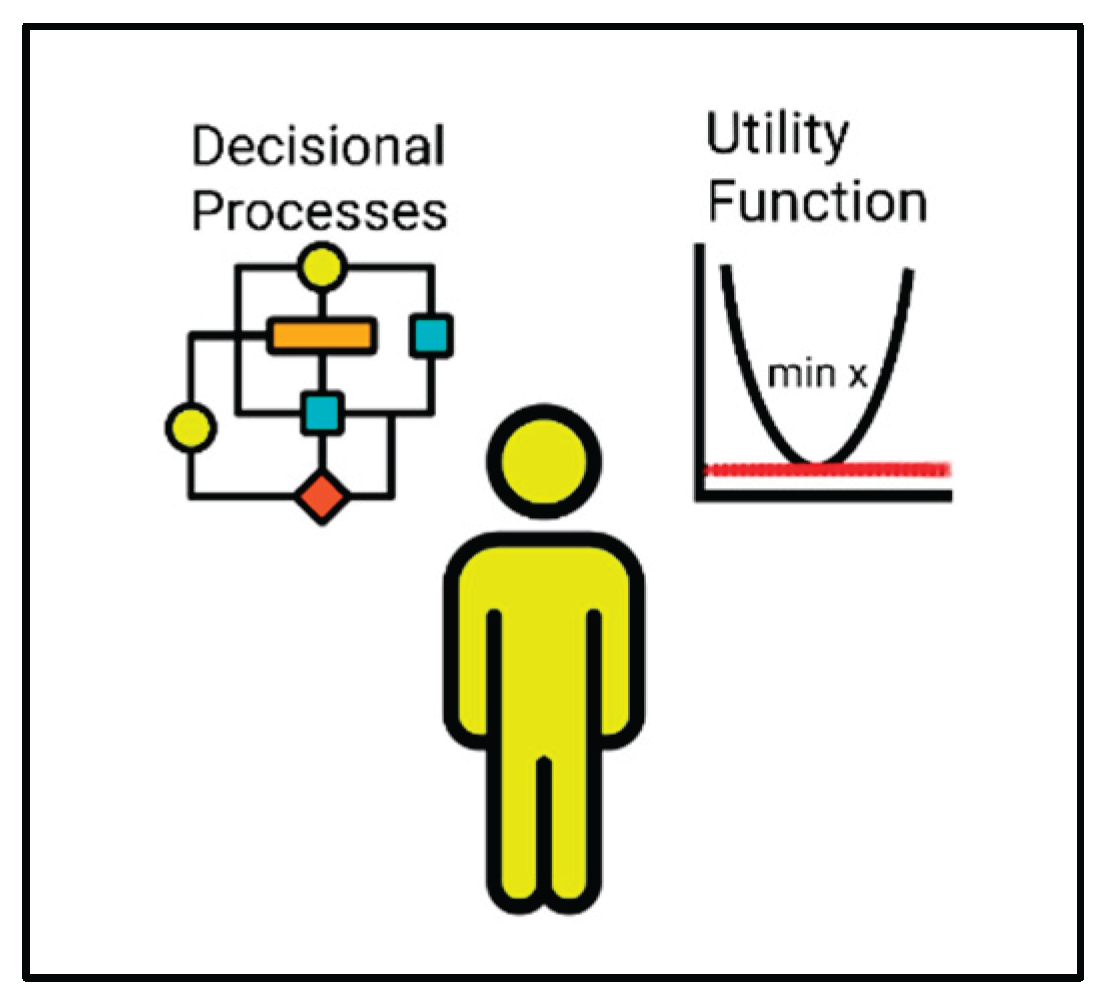
Figure 2.
An example of direct interactions, based on peer dialogue and internal rules.
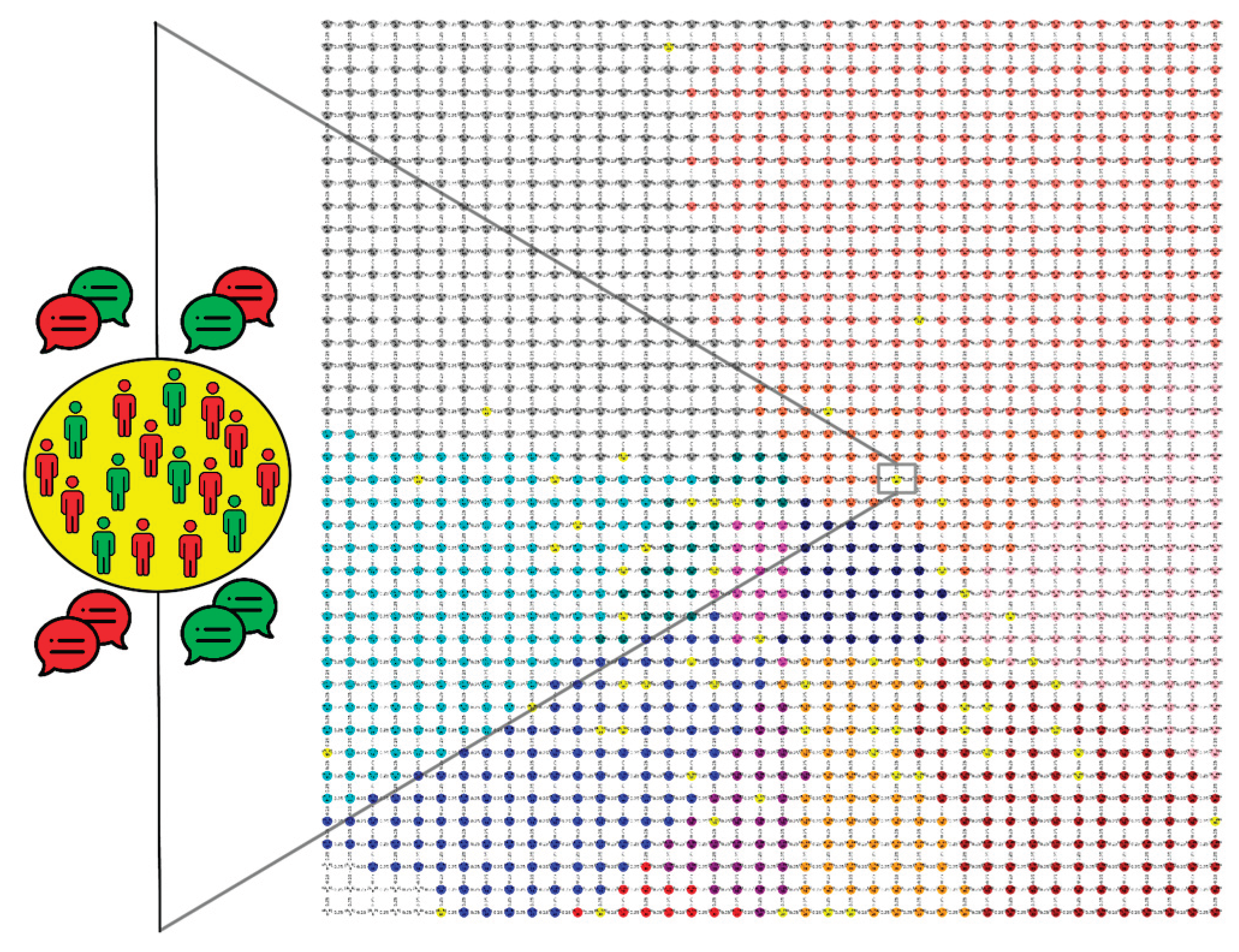
Figure 3.
An example of indirect interactions triggered by predominant behavioural patterns.
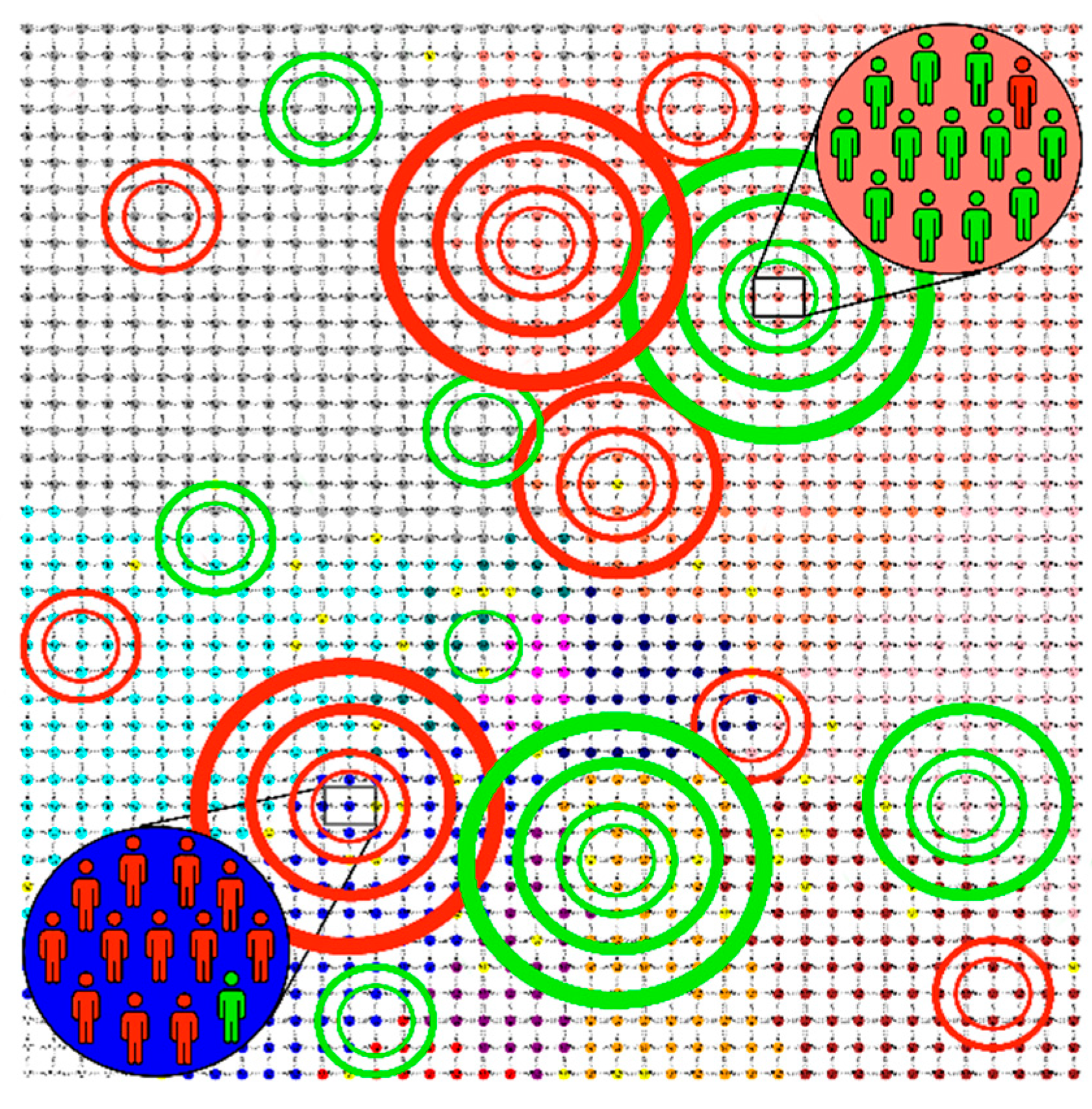
Figure 4.
An example of system evolution, driven by market competition over time.
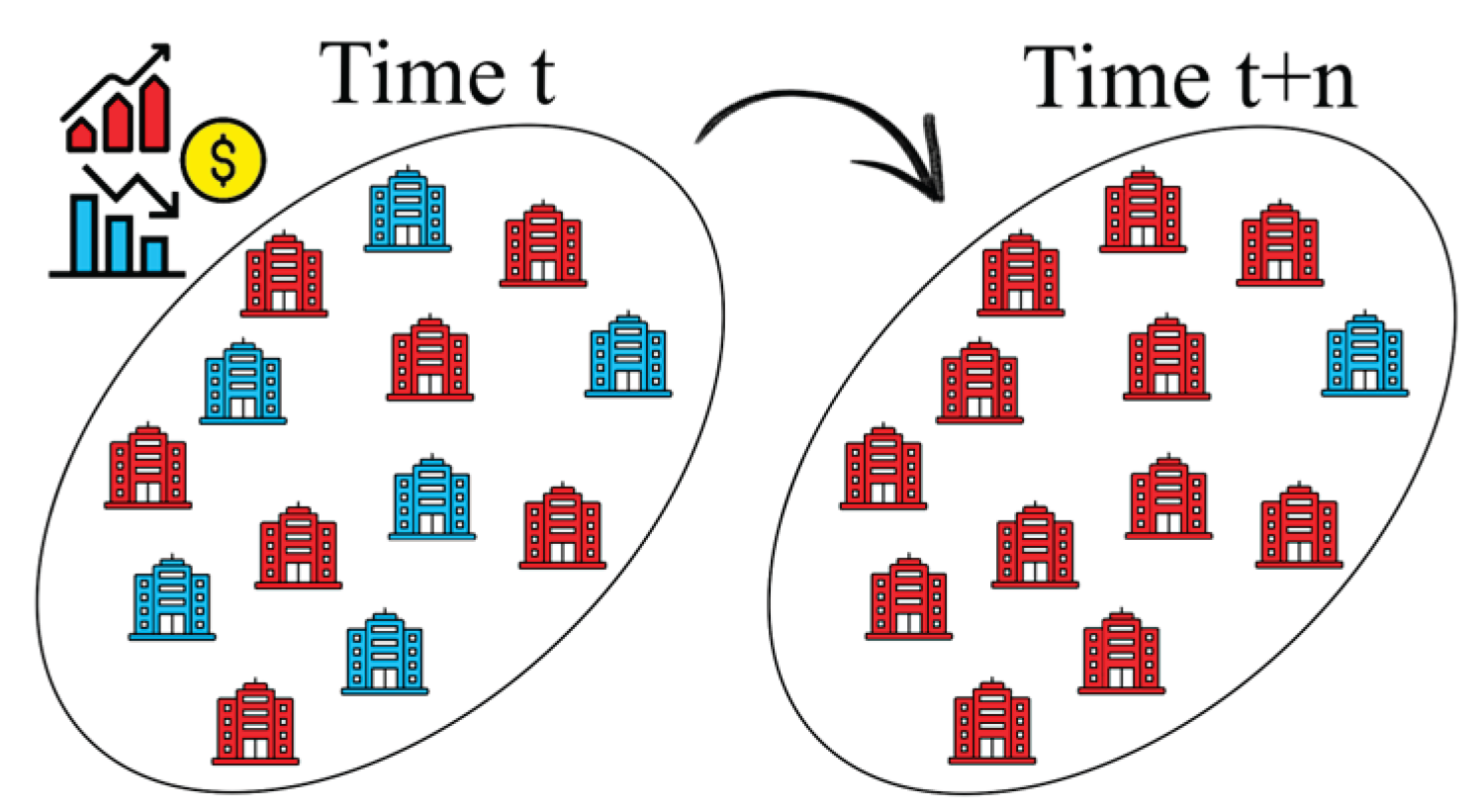
Figure 5.
Temporal trends of Green and Red Flag models.
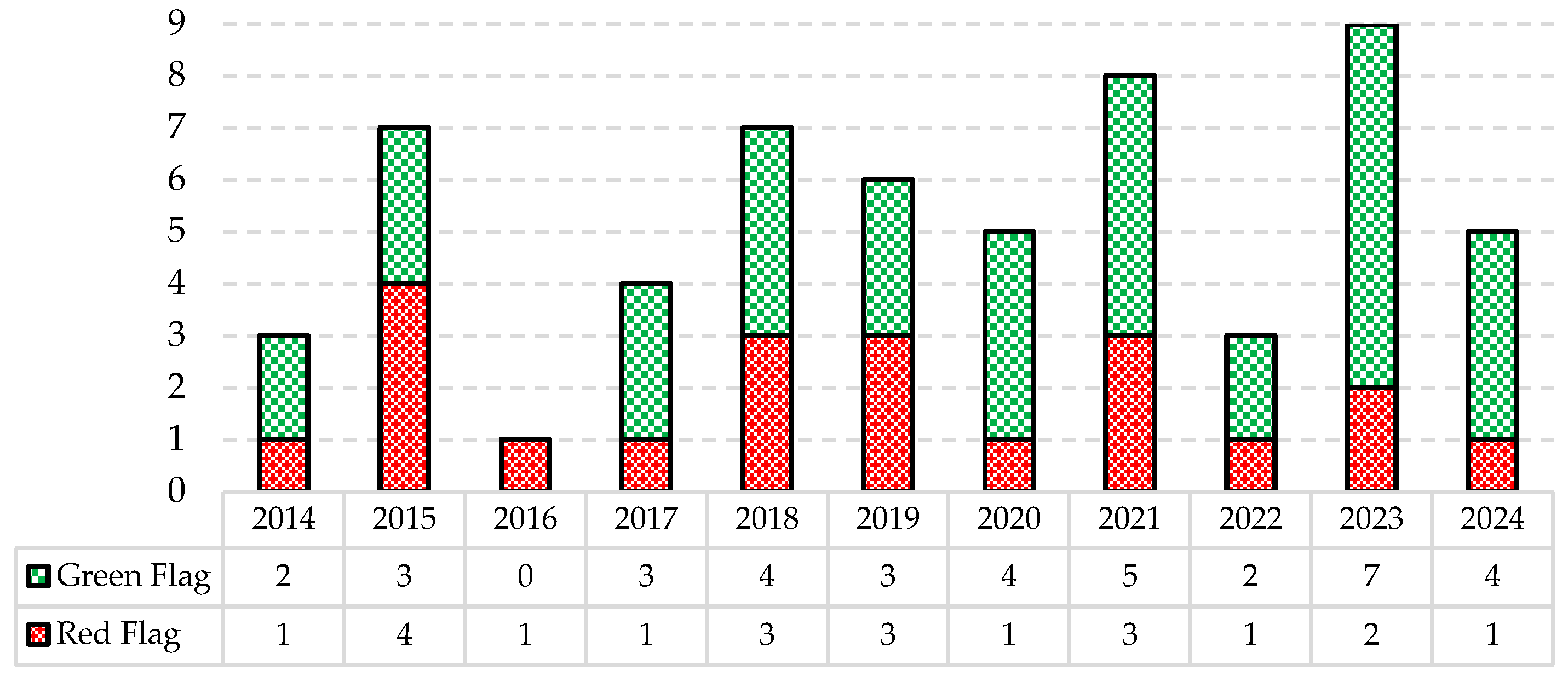
Figure 6.
Distribution of different modelling techniques.
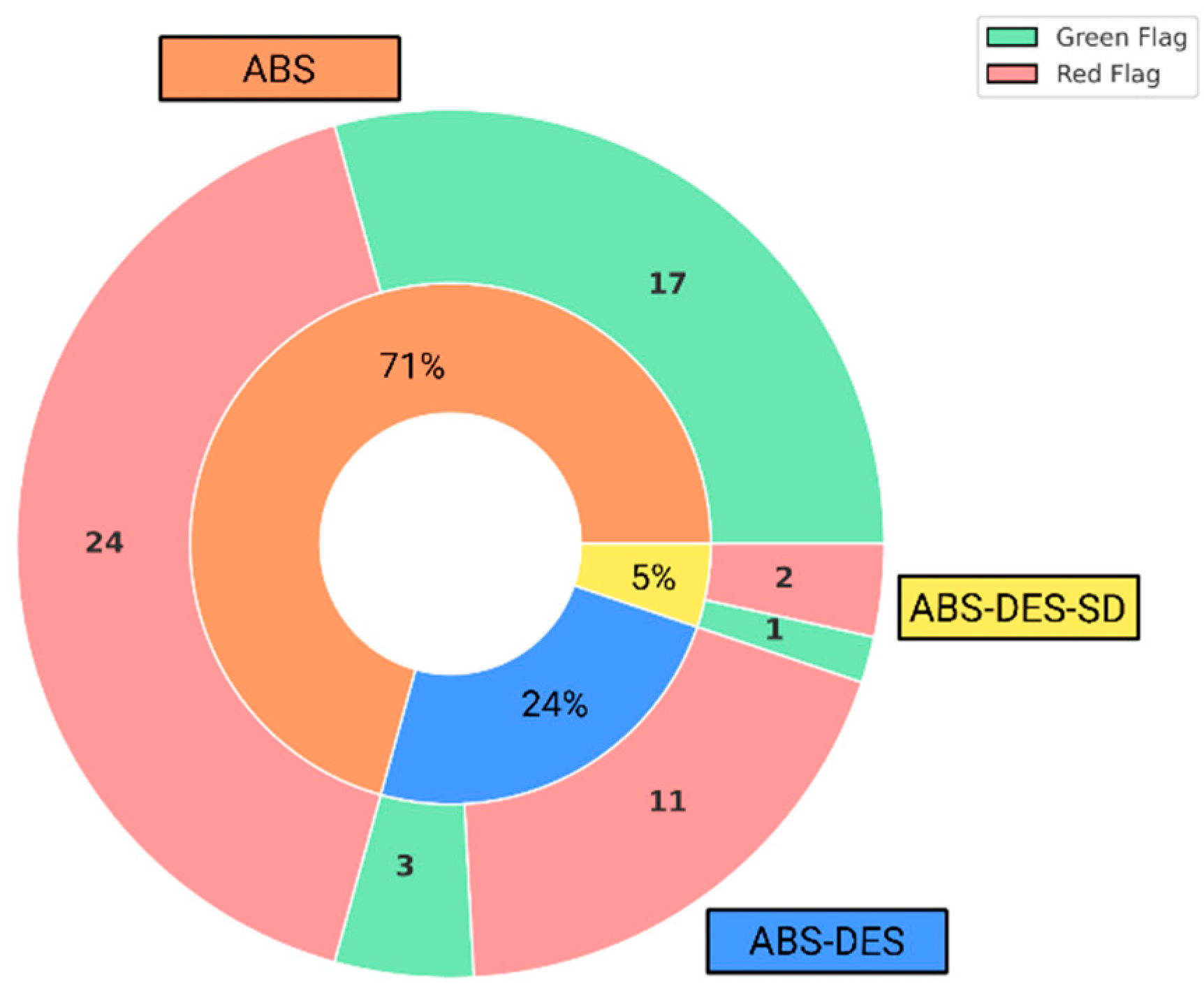
Figure 7.
Green and Red Flag models through Industrial Sectors.
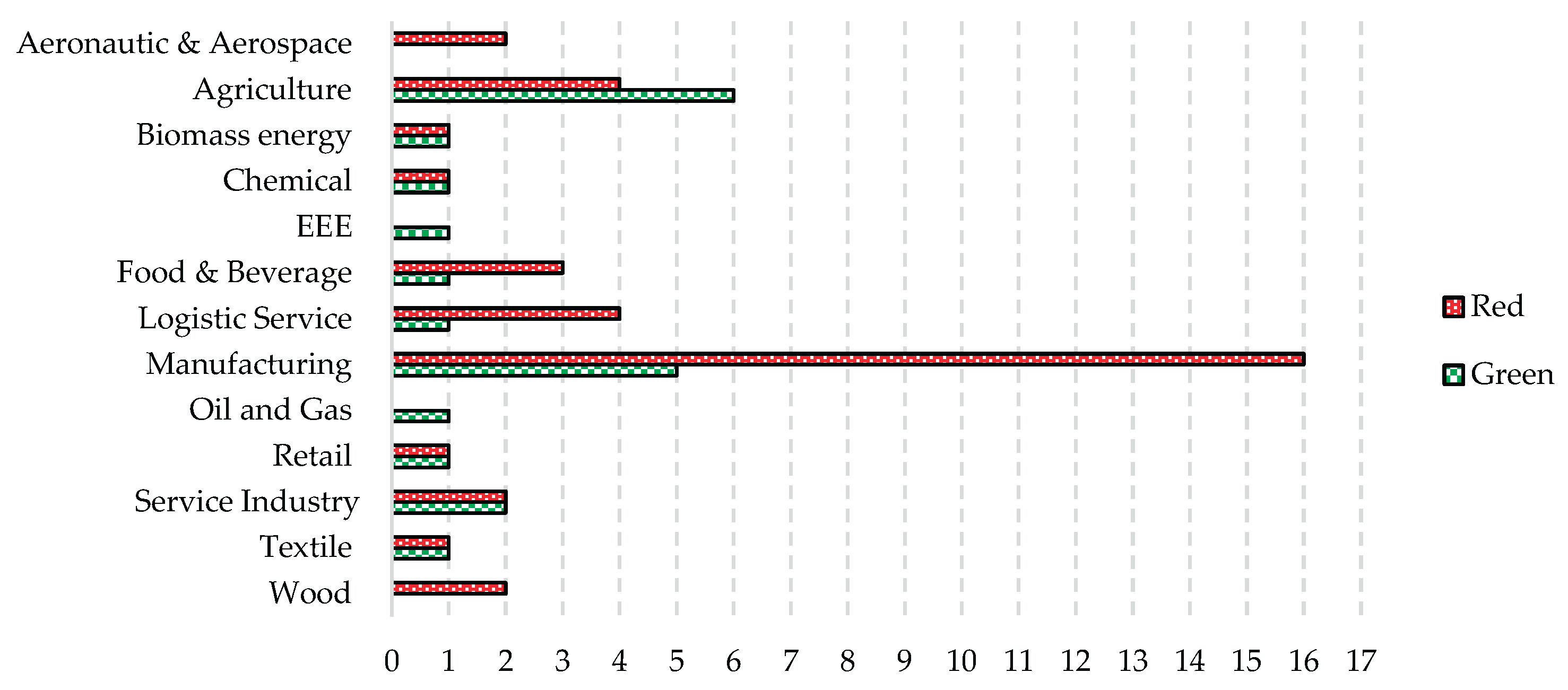
Figure 8.
Interactions within models.
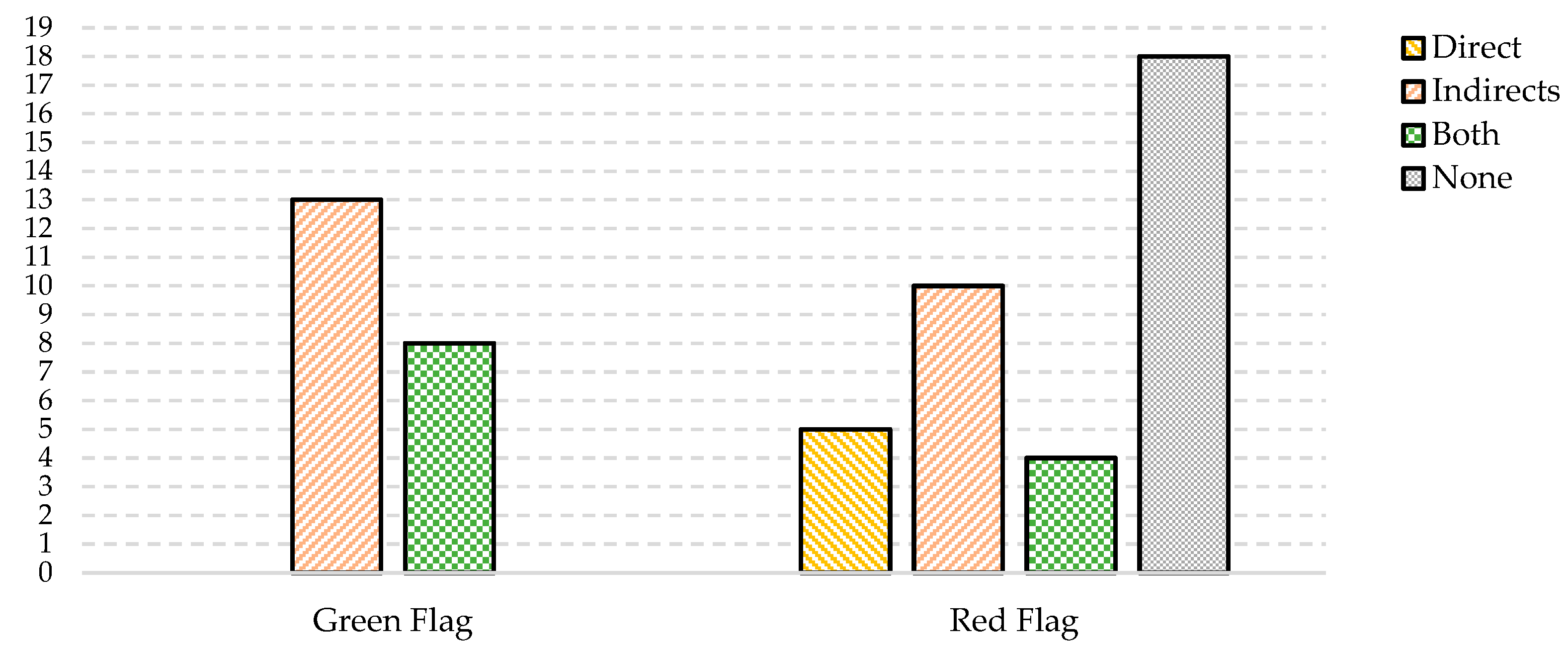
Figure 9.
Degree of Coherence between authors’ justifications and simulation model.
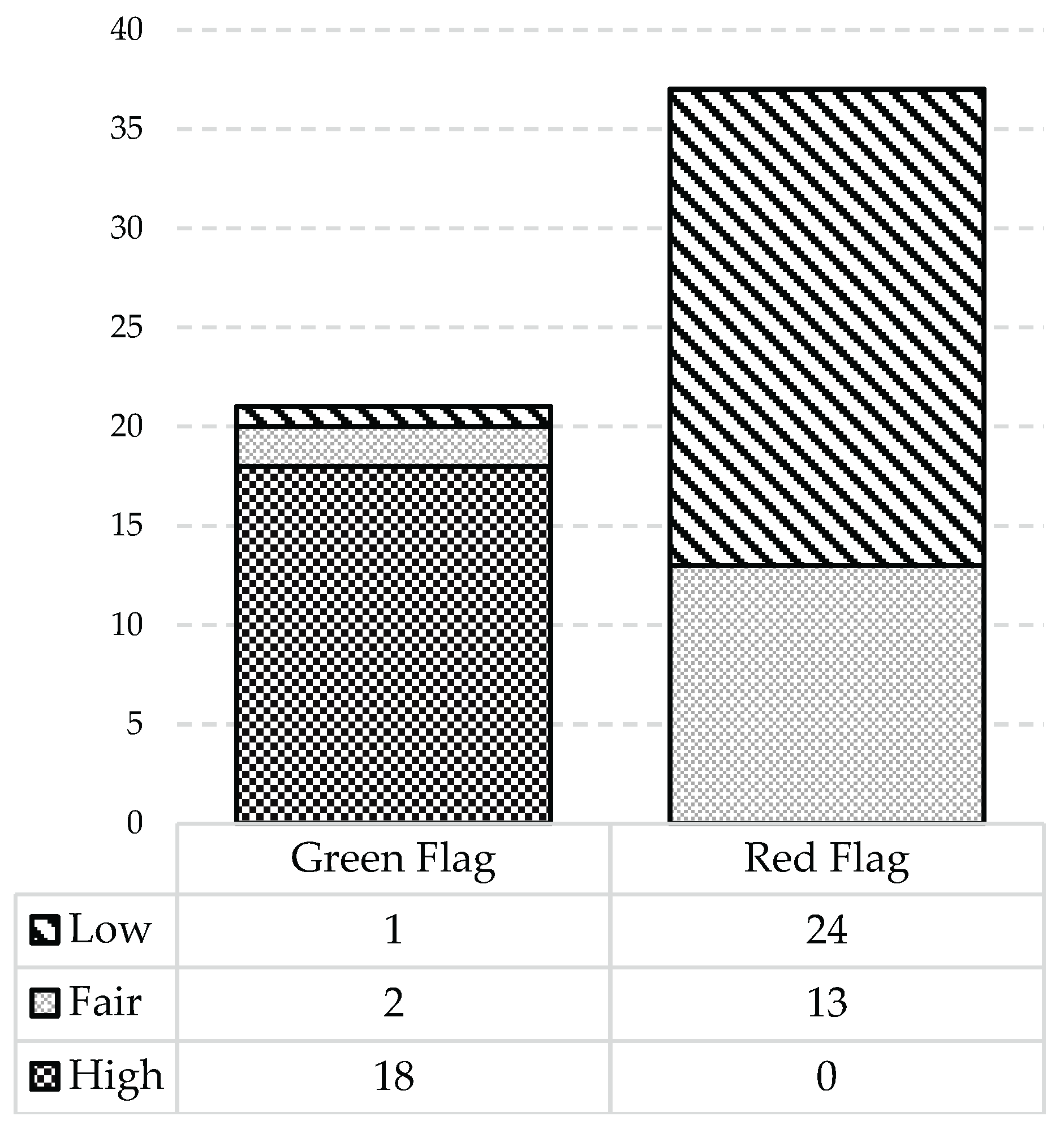

Table 1.
Overview of applied classification criteria.
| PARAMETER | DESCRIPTION |
|---|---|
| Context and Objectives | The application domain and the specific goals for which the ABM was developed (e.g., decision support, policy testing, behavioural exploration). |
| Justification for ABS | The rationale provided by the authors for adopting an agent-based approach, including reference to complexity, decentralisation, or adaptiveness. |
| Simulation Objects | The entities modelled as agents in the simulation (e.g., firms, consumers, logistics nodes), including their role and level of autonomy. |
| System Evolution over Time | Evidence of system-level evolution over time, driven by agent behaviour and interaction; includes structural shifts, convergence, or emergent patterns. |
| Type of Interactions | The presence and nature of interactions among agents: whether agents influence each other explicitly (directly) or through shared environmental variables (indirectly). |
Table 2.
Minimum criteria for classifying an ABS model as a Green Flag (see also [36]).
Table 2.
Minimum criteria for classifying an ABS model as a Green Flag (see also [36]).
| CONDITION | DESCRIPTION | GREEN FLAG ELIGIBILITY |
|---|---|---|
| (i) Interaction | Presence of direct or indirect interactions among agents. | Mandatory |
| (ii) Two or more Active Agents | At least two agents show autonomy, adaptivity, or goal-oriented logic. | Sufficient if (i) is met |
| (iii) System Evolution | System dynamics change over time due to agent behaviours. | Alternative to (ii), if (i) is met |
Table 3.
An extract of the “Article list, description, and classification” table, limited to the two Green Flag models described in Section 5.2.
Table 3.
An extract of the “Article list, description, and classification” table, limited to the two Green Flag models described in Section 5.2.
| Ref. | Ind. Sector |
Context and Objectives | Justification for ABS | Simulation Objects | System Evolution | Interactions Type |
|---|---|---|---|---|---|---|
| [41] | Manufacturing |
Corporate social responsibility issues within buyer-supplier relationship. The study examines how technical assistance (TA) programs initiated by buyers influence the CSR performance of suppliers within a regulatory environment characterized by periodic inspections. It introduces a dynamic, multi-period model of buyer –supplier regulator interactions, accounting for risk preferences, bounded rationality, and uncertainty. The core objective is to evaluate how these behavioural and institutional mechanisms drive CSR improvements or deterioration over time, offering insights for both corporate strategy and regulatory policy design. |
The authors use a multi-agent simulation to model how buyers and suppliers adapt to inspections, penalties, and technical assistance. ABS is justified by the need to capture heterogeneous risk preferences, bounded rationality, and temporal learning within a SC. The framework supports sequential, contingent decision-making (e.g., delivering TA, upgrading CSR practices, reacting to regulatory thresholds), across multiple periods, which would be analytically intractable. |
1) Buyer agents. Each buyer is linked to a single supplier and decides whether to offer technical assistance (TA) based on the supplier’s perceived CSR level and its own risk preference. These decisions are dynamically updated in response to regulatory inspections or past TA outcomes. 2) Supplier agents. Based on their current CSR level, risk preference, and absorptive capacity, suppliers choose whether to upgrade or downgrade their CSR practices in response to buyer incentives and the perceived probability of inspection. 3) Regulator agent. An exogenous actor that conducts random inspections, penalizes underperforming suppliers, and periodically adjusts CSR thresholds. It indirectly influences buyer and supplier behavior through deterrence effects. |
The system operates through repeated three-phase cycles: (1) Decision phase. Buyers and suppliers make CSR-related choices based on risk–cost trade-offs. (2) Inspection phase. The regulator performs inspections and applies penalties when CSR thresholds are not met. (3) Update phase. CSR levels and buyer perceptions are revised based on observed outcomes. Across multiple iterations, adaptive behaviors emerge; for example, opportunistic CSR downgrades by suppliers following inspections, or increased TA investments by risk-averse buyers under heightened regulatory pressure. |
Buyer–Supplier. Interact through the provision of technical assistance (TA) and updates to supplier reputation, influenced by CSR performance and the supplier’s absorptive capacity. Supplier–Regulator. Suppliers are subject to inspections, with penalties applied when CSR thresholds are not met. Buyer–Regulator. Buyers are indirectly affected through the performance of their suppliers, primarily via reputational risks. Although interactions are indirect and state-dependent, they shape agent behavior over time through feedback loops driven by the gap between perceived and actual CSR levels. |
| [42] | Agriculture |
Food Supply Chains; Animal Welfare in Pork Production This study explores how public debates, particularly around animal welfare in Dutch pork production, influence the adoption of sociotechnical innovations in food supply chains. Combining dramaturgical analysis with agent-based simulation, it examines how stakeholder interactions and media-driven events shape societal norms and drive structural change. The aims are twofold: (1) to validate hypothesized behavioural dynamics from content and discourse analysis, and (2) to explore how shifts in public opinion and SC practices might have unfolded under alternative behavioural or external event scenarios. |
The authors justify ABS as the appropriate tool to capture the heterogeneous, adaptive behaviours of consumers, producers, retailers, and NGOs engaged in public discourse on food ethics. ABS effectively models opinion dynamics and emergent change, reflecting how bottom-up interactions and external shocks (e.g., media events) can drive long-term transformations in production practices. It enables micro-level reasoning, evolving feedback, and patterns of opinion convergence or divergence critical to understanding policy-relevant transitions. |
Four main agent classes, segmented into subtypes are adopted. Consumers (8 types). Defined by their orientation (e.g., price or welfare-sensitive) and responsiveness to media events. They form opinions through interactions with NGOs, peers, and retailers. Producers (5 types). Represent farmers with varying balances of economic and ethical concerns, influenced by peer interactions, the producers’ organization, and retail demand. Retailers (4 types). Ranging from passive to proactive, capable of adjusting supply chain standards in response to market signals and NGO pressure. NGOs (3 types). Include one activist NGO (with fixed welfare stance), one moderate NGO (with flexible position), and a producers’ organization (risk-averse but adaptable). All agents’ behaviours are governed by bounded-confidence opinion dynamics equations with asymmetric thresholds. |
The simulation runs in weekly time steps over a ten-year period. Agents exchange opinions shaped by their social networks and sporadic media events, which may increase receptiveness to opposing views. As certain stakeholder clusters align (e.g., moderate NGO and a proactive retailer), critical tipping points can emerge, triggering system-wide shifts toward animal-friendly production practices. In their absence, the system may instead exhibit opinion polarisation or stagnation. By testing hundreds of parameter configurations, the simulation highlights the fragile conditions under which meaningful systemic change can unfold. |
Consumers ↔ NGOs. Exchange narratives and cues, with media events enhancing consumer responsiveness. Consumers ↔ Consumers. Peer interactions drive gradual opinion shifts or reinforcement. Consumers ↔ Retailers. Feedback loops influence retailer behaviour and responsiveness. Retailers ↔ Producers. Retailers demand more ethical practices, prompting producer adaptation. Producers ↔ Producers’ Organisation. Norm adoption shaped through internal alignment and peer influence. NGOs ↔ Retailers/Producers. Exert pressure, propose compromises, or lead advocacy efforts. All interactions follow structured yet probabilistic opinion convergence, with asymmetric susceptibility reflecting real-world biases and power imbalances. |
Table 4.
An extract of the “Article list, description, and classification”, limited to the Red Flag models described in Section 5.2.
Table 4.
An extract of the “Article list, description, and classification”, limited to the Red Flag models described in Section 5.2.
| Ref. | Ind. Sector |
Context and Objectives | Justification for ABS | Simulation Objects | System Evolution | Interactions Type |
|---|---|---|---|---|---|---|
| [43] | Wood |
Wood SC The study examines how energy price fluctuations impact the bullwhip effect in the wood extraction supply chain. It introduces a simulation-based optimization framework that integrates ABM with reinforcement learning, to model and optimize order management policies across a four-echelon supply chain under non-stationary demand conditions. |
The authors used AnyLogic for modelling, justifying their choice by highlighting its agent-based paradigm, where system components are represented as autonomous, self-organizing agents capable of decision-making and communication. T These agents operate based on defined rules, making ABS well-suited for capturing the non-linear dynamics of complex systems. |
Four agent types are used. Retailer agent. Manages customer demand while accounting for inventory levels, as well as order-related setup, maintenance, and transportation costs. Distributor agent. Processes weekly orders from the retailer, either fulfilling them immediately or recording them as backorders until the next inventory replenishment. Manufacturer agent. Receives weekly orders from the distributor and manages both raw material and finished goods inventories. It seeks to fulfill orders while avoiding backorder penalties, making it the most complex agent in the simulation. Supplier agent. Supplies raw materials and components. It processes weekly orders based on current inventory levels, fulfilling requests when possible or incurring penalties for unfulfilled orders. |
The model simulates the flow of goods by tracking inventory levels and order dynamics, while optimizing transport routes to balance supply and demand across the supply chain. System evolution is absent, as the objective is to obtain near-optimal replenishment policy under non-stationary-demand and using the Q-Learning algorithm. |
Interactions are purely procedural. Agents adjust inventories and order quantities in response to upstream and downstream signals, without explicit coordination mechanisms. There is no negotiation, messaging, or direct agent-to-agent influence beyond standard material and information flows typical of supply chains. Coordination emerges solely from isolated reinforcement learning processes, shaped by shared environmental constraints such as holding costs, delivery delays, and backorder penalties. Agent behavior is thus reactive and system-driven, rather than socially or strategically interactive |
Disclaimer/Publisher’s Note: The statements, opinions and data contained in all publications are solely those of the individual author(s) and contributor(s) and not of MDPI and/or the editor(s). MDPI and/or the editor(s) disclaim responsibility for any injury to people or property resulting from any ideas, methods, instructions or products referred to in the content. |
© 2025 by the authors. Licensee MDPI, Basel, Switzerland. This article is an open access article distributed under the terms and conditions of the Creative Commons Attribution (CC BY) license (http://creativecommons.org/licenses/by/4.0/).
Copyright: This open access article is published under a Creative Commons CC BY 4.0 license, which permit the free download, distribution, and reuse, provided that the author and preprint are cited in any reuse.


