

Submitted:
25 June 2025
Posted:
26 June 2025
You are already at the latest version
Abstract
Approximately 590,000 km2 of rangelands were severely affected by drought, leading to a significant decline in rangeland productivity and an increase in livestock mortality across South Africa. This study aimed to understand variability in grazing capacities and stocking rates regarding land tenure, long-term grazing capacity norms, field surveys, and farmer perceptions under and post-drought conditions in the three biomes in South Africa. In-person interviews and field surveys were conducted with 85 farmers; Grassland (n=25), Savanna (n=35), and Nama Karoo (n=30) biomes during a drought period were interviewed, and vegetation condition was surveyed after a drought period. Grazing capacity did not differ significantly across land tenure systems in the Savanna biomes (p>0.05), but significant differences were found in the Grassland and Nama-Karoo biomes (p< 0.05). Over >60% of farmers in the Nama-Karoo biome rated their rangeland condition as poor due to the drought, and field surveys showed that grazing capacities were four times lower than the national recommended grazing capacity norm. The study concluded that the Department of Agriculture should adopt flexible, climate-responsive grazing capacity guidelines since the current and fixed grazing capacity norms do not account for the sharp decline in grazing capacity during drought.
Keywords:
climate change
; practice theory
; land tenure
; Savanna
; stocking rate
; Nama Karoo
1. Introduction
Climate change has been affecting the productivity and quality of rangelands in arid and semi-arid regions worldwide for the last several decades [1]. Projections by the Intergovernmental Panel on Climate Change (IPCC) indicate that mean annual rainfall may decline by 5% by 2035, and temperature increase of up to 5.4°C by 2100 and 2.1°C by 2065 in southern Africa [2]. In South Africa, mean annual temperatures have increased by at least 1.5 times the observed global average of 0.65°C over the past five decades and extreme rainfall events and droughts have increased in frequency [3]. These changes in rainfall and temperatures poses a serious threat to ecosystems and food security [4].
Drought affects rangelands as it limits its ability to support herbivore populations and life in general [5]. Drought reduces soil moisture availability, which directly limits plant growth and regeneration, leading to a decline in net primary production [6] . This, in turn, compromises forage availability and quality for grazing animals [7]. Over prolonged periods, drought can lead to shifts in plant community composition, often favoring unpalatable and drought-tolerant species over palatable species [8]. Such shifts reduce the nutritional value of rangelands and can affect the long-term carrying capacity for livestock [7]. In extreme cases, plant mortality and soil degradation become prevalent, further diminishing rangeland condition and slowing recovery even when rainfall returns to normal levels [8] .
In South Africa, several biomes including Grassland, Savanna, and the Nama-Karoo, which are the three largest biomes in the country, provide the main fodder source for the national cattle and small-stock herds as well as for wildlife [9]. These biomes are, however, increasingly coming under pressure from climate change induced droughts, erratic rainfall and extreme temperature [10]. South African rangelands, particularly those in the Eastern, Western and Northern Cape provinces, experienced a severe multi year drought, from 2015 through to early 2020 affecting approximately 590, 000 km2 of rangelands, which mostly are in the Karoo biomes [11,12]. Between 2014 and 2016, drought significantly affected the Savanna and Grassland biomes in which provinces such as Limpopo, North West, Free State and Kwa-Zulu Natal recorded substantial rainfall deficits and vegetation stress [13]. The theoretical understanding of grazing capacity-involving drought in rangelands must therefore be contextualized within individual biomes, considering both ecological thresholds and socio-economic drivers [14,15].
Farmers and/ or livestock-owners are known to use local and indigenous knowledge in decision-making regarding the utilization of rangelands, and managing drought [15]. Generations of experience have equipped them with a deep understating of the land, seasonal cycles, and seasonal cues that signal drought[16]. This knowledge is crucial for managing their resources and adapting to climate variations. For example, many livestock farmers monitor vegetation condition, soil health, animal behavior, and rainfall patterns to anticipate droughts [17]. Based on the observations, farmers develop traditional practices such as seasonal grazing rotation, resting of overgrazed areas, and selective use of species-rich pastures to maintain rangeland productivity [18]. In regions such as the Eastern Cape and Limpopo provinces, herders assess grazing capacity not through quantitative measurements but by monitoring changes in forage quality and livestock performance, such as weight gain or milk production [5]. Elders often serve as custodians of this knowledge, guiding community decisions on herd size, mobility, and grazing schedules. Such indigenous systems emphasize flexibility and responsiveness to environmental variability, contributing to ecological sustainability in semi-arid environments [19]. Therefore, integrating these local insights with scientific rangeland assessments can enhance the accuracy and cultural relevance of grazing management strategies [20].
Managing rangelands might become more difficult for livestock farmers as the frequency and intensity of droughts are forecasted to increase [21,22]. Drought negatively affects rangelands, regardless of their condition, but its impacts are amplified if poor rangeland conditions prevailed prior to the drought. Managing rangelands prior, during and after droughts involves a multi-faceted approach, which includes monitoring resources, adjusting livestock use, and implementing adaptive management strategies [23,24].
The Grazing Capacity Norms in South Africa through Agricultural Resources Act (CARA), 1983 (Act No. 43 of 1983) (Government notice R.1048 on 25 May 1984) and amended in 2017 [25] set the legal limits for the number of animals that could be kept per unit area in the different biomes. The Grazing Capacity Norms (GCNs) maps were developed using a combination of ecological data, geographic information systems (GIS), remote sensing, and field-based observations, to show grazing capacities (measured in Large Stock Units or LSU, equivalent to a 450kg cow) a specific area of rangelands can sustainably support [25]. However, The CARA Act is not effectively enforced, limiting its intended impact on sustainable land and rangeland management. Currently, the grazing capacity guidelines issued by government department are broad spatial scales and may not accurately reflect local conditions at the farm level [26] . As a result, farmers and land managers who rely solely on these generalized norms may either underutilize or overexploit their land resources. Furthermore, climate change is expected to lead to greater drought severity, which threaten the effectiveness of the grazing capacity norms [27].
As rangelands vary in space and time, livestock farmers have their own views on grazing capacities. In additional, land tenure also affects the number of animals that a farmer can keep, and tenure has been found to impact the conditions of the rangeland [27]. Land tenure; also play a crucial role in how farmers and/ or landowners cope with drought and other climate-related stressors, [28,29]. Secure and clearly defined land tenure often encourages farmers and/ or landowners to invest in sustainable grazing practices, as they have long-term incentives to maintain land productivity [30,31] . In contrast, insecure tenure systems where regulatory oversight or traditional governance is weak can lead to overstocking and rangeland degradation [32]. Therefore, the link between land tenure, grazing capacity and rangeland condition is context-specific and mandated by socio-economic, institutional and ecological factors [33] . Tenure systems that align user incentives with long-term sustainability goals, supported by appropriate policy and monitoring tools [34] are essential for effective rangeland management.
1.1. Theoretical Framework
Practice theory; provide a theoretical understanding of how a generalised set of rules (e.g. broad and fixed grazing capacities and variable environment) might be inadequate to explain the variations within and how local realities provide more accurate understanding of the spatial and temporal variations [35]. Furthermore, practice theory provides a useful lens for understanding the dynamic interplay between ecological processes, management practices, and human decision-making, acknowledging that rangelands are dynamic and adapting to various influences over time and across different locations [23]. Practice theory emphasizes the embedded nature of actions such as historical experience, cultural identity, and social learning contribute to how individuals and groups engage in activities, make decisions, and create meaning [35].
In the context of South African rangelands, for example, farmers often respond to drought not through abrupt changes, but through adaptive practices. These practices include herd mobility, adapting stocking rates, negotiated access to grazing commons, or altering livestock composition, which are sustained and modified over time [36,37] . These practices are not purely individual but are shaped by institutions (e.g. customary authorities), social networks, and material infrastructures like boreholes and fences [20]. By focusing on what people do, Practice Theory reveals how resilience emerges from the continuity and adaptability of daily activities under stress, rather than from externally imposed interventions [38]. This approach complements ecological and technical perspectives by highlighting the social fabric and agency underlying drought management in semi-arid rangelands [39].
The aim of the study was to understand differences in rangeland condition, and grazing capacities and stocking rates in terms of grazing capacity norms, field surveys and farmer perceptions and practices under and after drought conditions in the three biomes namely Grassland, Savanna and Nama-Karoo of South Africa. The effect of land tenure on grazing capacity was also investigated. The objectives of the study were to (i) assess the perceptions of farmers on rangeland condition and types of degradations that occur on their farms, and (ii) assess the grazing capacities across the different tenure systems, (iii) assess rangeland condition across the three biomes and (IV)). Lastly to compare four grazing variables ((a) farmer’s perceived grazing capacity (b) current stocking rates (c) calculated grazing capacities from rangeland assessment, and (d) Department recommended long-term grazing capacity norms within the framework of practice theory to argue the applicability of broad scale and fixed grazing capacities in variables rangelands.
2. Materials and Methods
2.1. Study Areas
South Africa spreads over 122 million ha with approximately 75% considered rangelands [40]. The country comprises of several biomes thus having a wide range of climate, vegetation and management regimes [41]. In this study, we used the biome classification developed by the South African National Biodiversity Institute (SANBI) [42]. South Africa has nine biomes: Fynbos, Succulent Karoo, Desert, Nama-Karoo, Grassland, Savanna, Albany Thicket, Indian Ocean Coastal Belt, and Forest. However, for this study we focused on the three namely: Grassland, Savanna, and Nama-Karoo (Figure 1).
Figure 1.
A map of South Africa showing the research sites in the three different biomes and provinces (WC=Western Cape, NC=Northern Cape, EC = Eastern Cape, FS=Free State, LIM= Limpopo, GT=Gauteng, MP=Mpumalanga, KZN=Kwa-Zulu Natal, NW=North West).
Figure 1.
A map of South Africa showing the research sites in the three different biomes and provinces (WC=Western Cape, NC=Northern Cape, EC = Eastern Cape, FS=Free State, LIM= Limpopo, GT=Gauteng, MP=Mpumalanga, KZN=Kwa-Zulu Natal, NW=North West).

These are the largest biomes and represent 85% of available rangelands in South Africa (DALLRD, National Veld Management Strategy, 2025). The number of survey sites in these biomes were Savanna (n=35), Grassland (20) and Nama-Karoo (30), with a total of 85 sites. These biomes range from arid, in the west, to humid subtropical in the north and east, while much of the central part of southern Africa is classified as semi-arid and the southwest as the Mediterranean [43]. South Africa receives winter rainfall in the south-western part and summer rainfall in other parts of the country [42,43]).
The savanna biome is used extensively as rangelands for livestock and game farming and conserving wildlife [44]. The biome is characterised by continuous grass layers and distinct trees and/ or shrubs [45]. The ratio of the two life forms, grasses to trees, varies considerably among savanna vegetation types [46]. Savannas receive rainfall in summer and differ greatly across the region, from about 235 to 1000 mm per year [47]. The savanna biome in South Africa experienced a severe drought, particularly in the southern Kalahari, affecting vegetation and animal numbers [48]. The 2014-2020 drought in the southern Kalahari was the longest and most intense drought recorded which caused extensive diebacks of plants and high animal mortalities[49]. The 2014-2016 drought in the Hluhluwe-iMfolozi Park in KwaZulu-Natal caused changes in woody, and grasses biomass and cover decreased [50] . Therefore, different types of Savannas experienced different levels of drought intensity and duration before the surveys were conducted.
The Grassland biome contains 73 vegetation types with a very high diversity, and endemism of plant and animal species [51]. Both C4 and C3 grasses dominate throughout the biome [43]. Grasslands are the most productive vegetation in terms of agriculture in South Africa [52]. The annual rainfall for grassland areas ranges from 400 – 1200mmyr-1 and altitude ranges from sea level to >3300m [53]. During the 2015/2016 drought, Grasslands in South Africa experienced the strongest summer drought since 1921, which saw significantly reduced annual rainfall [54]. For instances, areas like the Grasslands of KwaZulu-Natal Province received 194 mm of rainfall per year during that period, which is much lower than mean annual rainfall for the province of 650mm [55].
The Nama Karoo vegetation is mostly dominated by perennial dwarf shrubs and some being succulent, with geophytes , perennial or annual grasses and herbs of varying abundance [56]. In the Nama-Karoo, sheep is the dominant animal species [57]. The 2014- 2020 multi-year drought in this biome was the worse in living memory, where the biome experienced significantly reduced rainfall compared to its typical average. While the specific values may vary by location within the biome, annual rainfall in the Nama-Karoo typically ranges between 100 and 500 mm, averaging around 200 mm [57]. During the drought period, rainfall fell well below average, potentially only 100 mm or less [58].
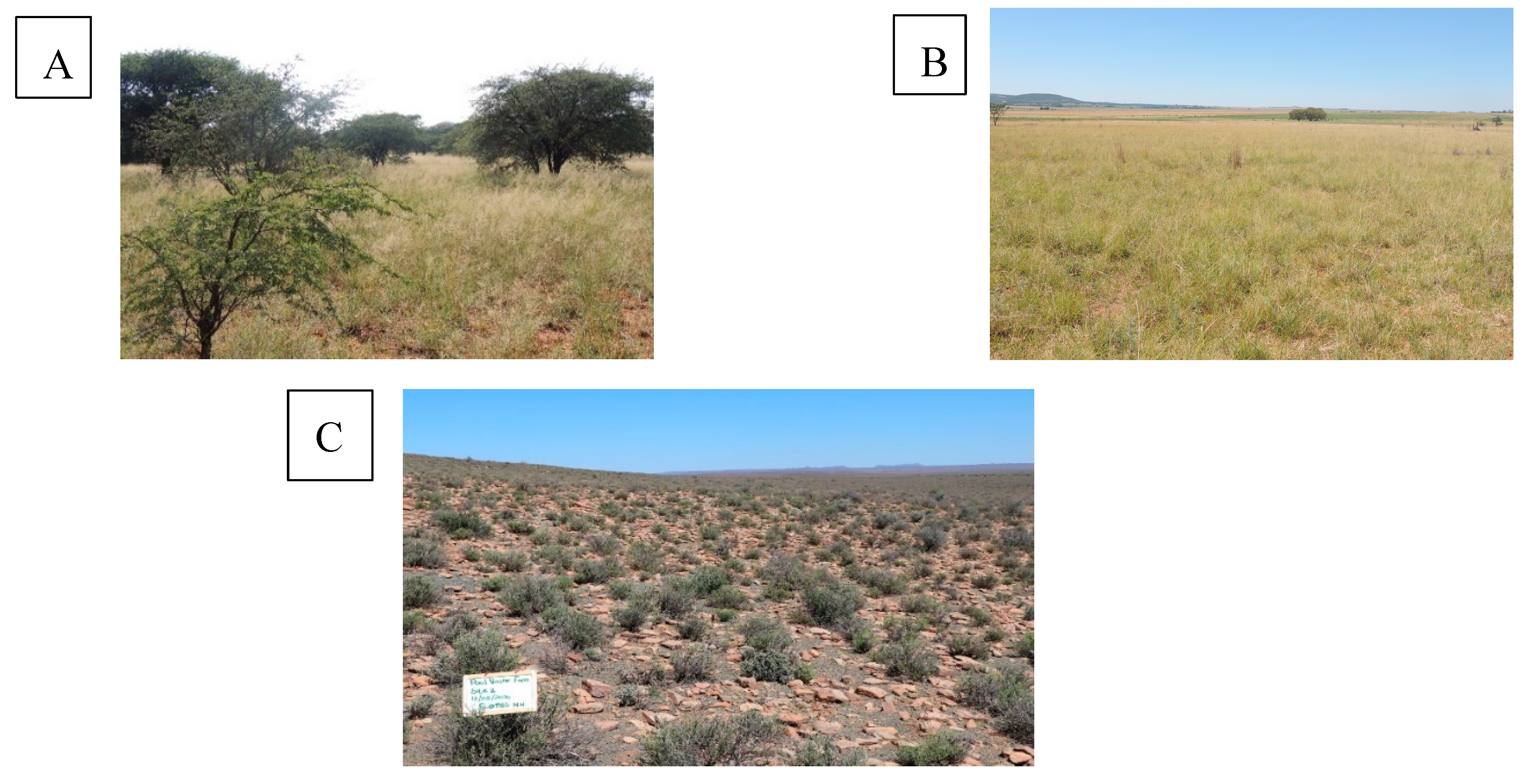
Figure 2.
Landscape and vegetation images of each of the three biomes: A) Savanna biome; B) Grassland biome
and C) Nama-Karoo biome.
Figure 2.
Landscape and vegetation images of each of the three biomes: A) Savanna biome; B) Grassland biome
and C) Nama-Karoo biome.
2.2. Data Collection
2.2.1. Farmer Surveys
In-person, interviews were conducted with 85 farmers in the different rangeland areas across the three biomes in South Africa. The selection process involved multiple stakeholders (i.e. agricultural extension officers, researchers, retired scientists, etc.) who were working closely with the farmers in the respective provinces. These stakeholders were provided with a criteria and identified the champion farmers in their region. A champion farmer is referred to as “a passionate farmer who keeps multi-generation livestock and possesses adaptive rangeland management knowledge and skills, which they have developed through trial and error over time, and are resilient to various shocks” [59]. The farmers interviewed represented different livestock farming enterprises (large and small stock) and the different production systems (small-scale and commercial) and land tenure systems (private, communal, land reform with/without a title deed).
Before the commencement of the interviews, the background of the project and the aim of the interview was explained to the farmers after which the farmer gave their voluntary consent to be interviewed by signing a consent form. Thus, the Protection of Personal Information (POPIA) Act 4 of 2013 [60] was followed to ensure anonymity of the respondents (Ethics Reference Number: HS20/10/27). The study was conducted from January 2020 to December 2022.
Farmers were interviewed using a semi-structured questionnaire consisting of questions relating to 1) their perception on the condition of their rangelands; 2) their current grazing capacity and current stocking rate; 3) their views on the long-term grazing capacity norms of their area and; 4) types of degradation that occurs on their farms.
2.2.2. Rangeland Condition Assessment
The rangeland condition score was determined using the Ecological Index Method (EIM) as described in van [61]. The EIM comprises the identification of grasses, typically at 1 m intervals, with each species being categorised into an ecological group based on its ecological characteristics (as outlined by [62]). At each study site, line transects of 300m (Savanna and Grassland) and 250m (Nama-Karoo) were laid at different points to determine the plant species composition. One plant species at or nearest to the pointer (spike) was identified and recorded. If the pointer or spike hit the ground, the nearest plant was identified and recorded. The ecological category and corresponding multiplier for each identified grass species were used to calculate rangeland condition score [62]. The top 10 most abundant plant species formed part of the overall plant species composition at each surveyed site.
2.2.3. Grazing Capacity
The grazing capacity of the selected sites in the Savanna and Grassland biomes was calculated using the [61], using the following formula.
GC = (-0.03) + (0.00289) (X1) + (X2- 419.7) (0.000633)
GC = Grazing capacity in large animal units per hectare.
X1 = Rangeland condition score as a percentage of a benchmark site’s rangeland condition score.
X2 = Mean annual rainfall (mm).
Grazing capacity for the Nama-Karoo selected sites was calculated using the method developed for Karoo rangelands by [63]. The cover value (%) for each plant species per line transect is multiplied by the “objective grazing index value” for that plant species [63] to obtain a rangeland condition score. The sum of the rangeland condition scores is then used to calculate the grazing capacity for each transect using the formula: [550/sum (cover × index)] × 7.14. The 550 is the benchmark rangeland condition index, and 7.14 is a factor describing the linear relationship between grazing capacity for the site in hectares per large stock unit (ha LSU−1) and rangeland condition scores [58,63].
Grazing capacity using four different metrics were assessed as follows:
(i) Perceived Grazing Capacity (GC) = the farmer’s own perception of the farm’s grazing capacity based on his local ecological and farming knowledge. This was done using a semi-structured questionnaire.
(ii), Actual stocking rate of the land = the stocking rate the farmer is applying on the farm. This was determined through the questionnaire by considering the number of livestock the famers owns and the size of the farm/farming area.
(iii) Assessed GC= the grazing capacity derived from the rangeland condition assessment (see above for formulas used), and
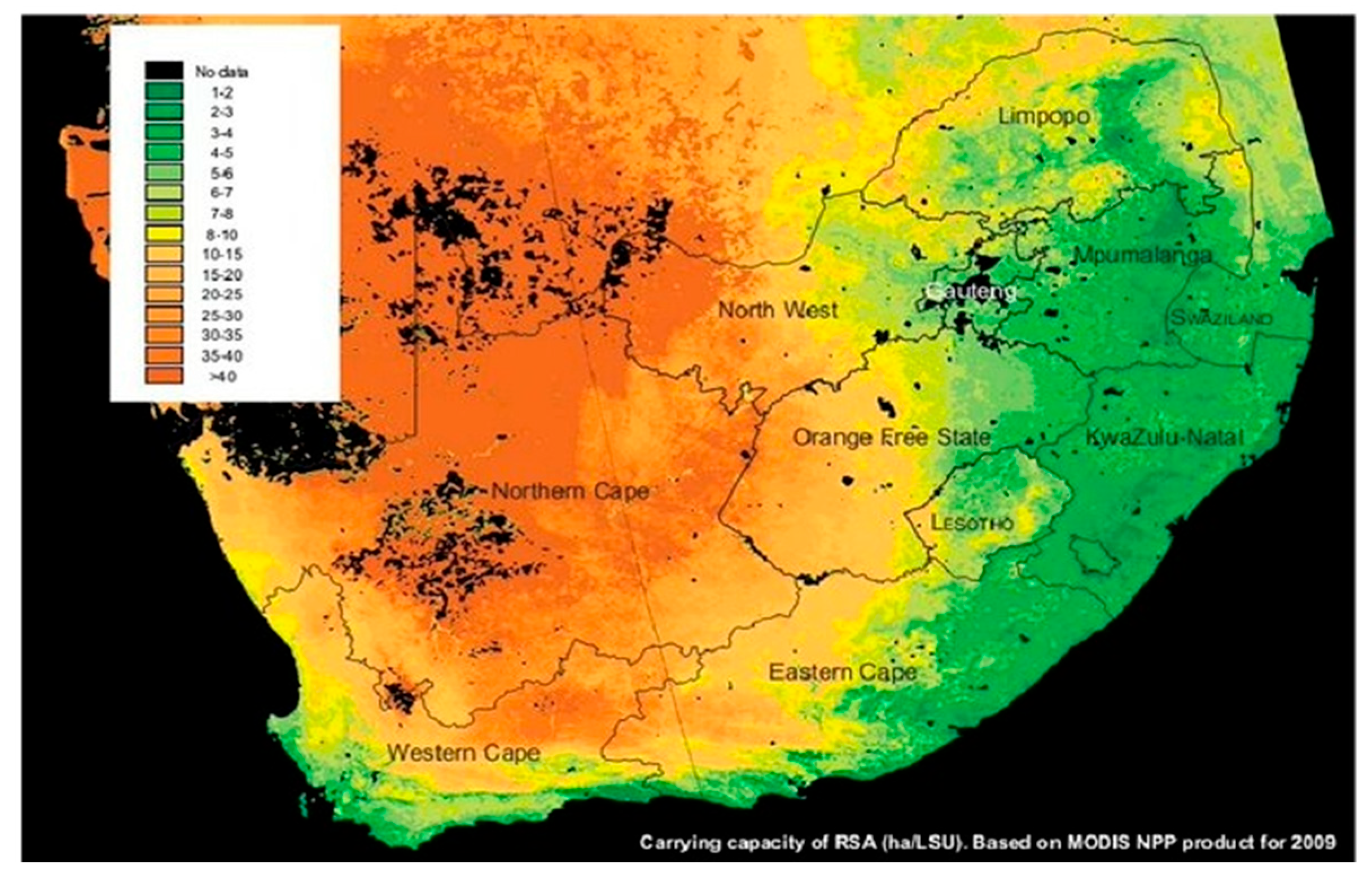
(iv) The long-term GC norm= the department grazing capacity norms for the area according to the government [25]. (Figure 3).
Figure 3.
Livestock grazing capacity (ha/LSU) map of South Africa [25].
Figure 3.
Livestock grazing capacity (ha/LSU) map of South Africa [25].
2.3. Data Analysis
The rangeland condition parameters data was subjected to an analysis of variance (ANOVA). The Shapiro-Wilk’s test was performed on the standardized residuals to test for deviations from normality [64]. In cases where significant deviation from normality was observed and due to skewness, outliers were removed until it was normal or symmetrically distributed [65]. Student's t-LSDs (Least significant differences) were calculated at a 5% significance level to compare means of significant source effects. The above analyses were performed using SAS version 9.4 statistical software [66] were performed using SAS version 9.4 statistical software [66].
3. Results
3.1. Farmers Perceptions on Rangeland Condition
Based on their judgments and experiences, when the farmers were asked about the current condition of their rangelands, the results varied widely within the three biomes (Table 1). In the Grassland biome, 50% of the farmers perceived their rangeland condition as good, while 35% rated as poor. In contrast, the savanna biome was predominantly rated as moderate (57.1%). The majority (>60%) of the farmers in the Nama-Karoo rated their rangelands to be in bad condition, while only 10% rating it as good. The again, surveying for the Nama-Karoo was done during the drought.
In terms of the type of degradation, loss of vegetation cover (67%) and biomass decline (65%) were the most cited across all the biomes that affect the perceived rangeland condition. In the grassland biome, over >90% of the farmers indicated loss of vegetation cover. In the savanna biome, biomass decline was reported the highest (>70%) followed by bush encroachment. In the Nama-Karoo, loss of vegetation cover (>80%) followed by plant species change from palatable to unpalatable (60%) as the highest rangeland degradation challenges faced by livestock farmers.
Across all the biomes, 68% of the farmers agree with the long-term grazing capacity norms prescribed by the Department of Agriculture (DoA). While 32% of the farmers did not agree with the grazing capacity norms mostly stating reasons such as long-term experience and generational knowledge of their rangelands, which often contradicts the prescribed norms. Some of other stated reasons were that regulations are not consistently enforced or that there is no clear incentive or support to comply, and economic pressure, expressing that the norms are impractical and unaffordable to follow.
3.2. Plant Species Composition
The results for the most dominant 10 plant species in the three biomes are presented in Table 2. In the Grassland biome, all the dominating plants were grasses, with Eragrostis chloromelas (30.37%), followed by Themeda triandra (20.73%). In the savanna biome, all the dominating plants were also grasses, with Digitaria eriantha (30%), followed by Melinis repens (24.8%) as the most abundant species. In the Nama-Karoo biome, plant species composition was made up of grasses and shrubs, which is typical of the Karoo. The most abundant species was Stipagrostis obtuse (grass) (34%) followed by Pentzia incana (shrub) (27%) with high and moderate grazing value, respectively.
3.3. Rangeland Condition Scores and Comparisons of the Grazing Capacities for the Different Biomes
In the Grassland biome, all the three land tenure systems had a similar rangeland condition score (±52%) which indicates moderate conditions across and no significant differences (p<0.05). In the Savanna biome, communal and land reform tenures had similar rangeland condition scores (±51%) which indicate moderate condition and private tenure had good rangeland score (±63%), however, no significant differences were found between the land tenures (p<0.05). In the Nama-Karoo, rangeland condition score for communal was very poor (19%), and significantly different (p>0.05) from land reform and private which had poor rangeland condition (±35 %) (Figure 4).
3.4. Grazing Capacities for the Different Tenure Systems in the Different Biomes
The grazing capacities (ha/LSU) assessed in the field across the different tenure systems (Communal, Land Reform and Private) were compared within the three biomes: Grassland (A), Savanna (B) and Nama-Karoo (C) (Figure 5). In the Grassland biome, the Department of Agriculture grazing capacity norm was significantly less than the assessed grazing capacity under communal tenure (p<0.05). There were no significant differences between land tenure types in terms of grazing capacities in the savanna biome (p>0.05). In the Nama-Karoo, assessed grazing capacity was significantly different between land tenures (p<0.05). The lack of significant differences among tenure systems within the Savanna biome suggests that land tenure type did not influence grazing capacity.
There were no significant differences within the Grassland and Savanna biome between the grazing capacities in each biome (p>0.05) (Table 3). However, there were significant difference observed in the Nama-Karoo biome (p<0.05). The farmers, current (the actual stocking rate at the time based on animal numbers) and department grazing capacities were not significantly different for the grassland and savanna biomes but assessed-grazing capacity was different from the three. In the Nama-Karoo, one Large Stock unit (LSU) requires grazing capacity of 116ha/LSU, which is four-fold lower than what the department recommends.
4. Discussion
One way of studying the condition of rangelands is through interviewing farmers/ landowners who have knowledge of their rangeland ecosystem [68]. This can be combined with ecological approaches to assess rangelands, enhancing our understanding of ecosystem functioning and aiding in the development of grazing capacities for different vegetation types [69]. Our results showed that the rangeland conditions in the grassland and savanna biomes are generally perceived to be moderate to good condition by the farmers. This is irrespective of the fact that the two biomes received a drought a few years prior [70]. This thus indicate according to the farmers, both biomes displayed ecosystem resilience, and they bounced back to long term average conditions. However, it should also be noted that the duration of the drought event might have been short enough for vegetation to recover, following substantial rain. It might also be that effective rangeland management practices implemented by these champion farmers likely also contributed significantly to the observed recovery and overall resilience of the rangelands.
In contrast, the Nama-Karoo biome had the highest proportion (>60%) of farmers rating their rangeland condition as poor with only 10% rating it as good. The timing of the fieldwork, which coincided with a drought period, likely influenced this negative perception as found in other cases [12,71]. It is known that drought significantly reduces rangeland condition due to high plant mortality and reduction in forage quality [58].
The loss of vegetation cover and decline in biomass are the leading degradation indicators across all the biomes. These findings align with global studies on rangeland degradation [72,73], which indicate declining vegetation cover as one of the leading issues. Although, climate is a key driver of vegetation change, when combined with poor rangeland management practices such as overgrazing, this can lead to reduction in vegetation cover and increasing mortality in vulnerable species [74]. The loss of vegetation cover is particularly concerning especially in a country like South Africa, where large portions of the country fall within semi-arid and arid climatic zones. In such environment, vegetation recovery is slow due to the limited and variable rainfall, further accelerating land degradation and declines in rangeland productivity [75].
In general, grasses species dominated the plant compositions in both the grassland and savanna biomes, with species from the Poaceae family- such as Eragrostis chloromelas and Digitaria eriantha- being particularly common. These grasses are well adapted to seasonal rainfall patterns and grazing pressures typical of mesic to semi-arid environments [76]. In contrast, the Nama-Karoo biome had a more heterogeneous vegetation structure, comprising a mix of drought-tolerant grasses and woody shrubs, including species such as Stipagrostis obtusa, Pentzia incana, and Ruschia spinosa. This mixed composition is a typical characteristic of arid region, where low and erratic rainfall, coupled with high evapotranspiration, promotes the dominance of xerophytic shrubs alongside sparse grass cover [77,78].
In general, results further show that more than >60% of the champion farmers follow the grazing capacity norms as set out by the Department of Agriculture (DoA), suggesting a relatively high level of compliance and awareness of sustainable rangeland management practices in these biomes. Similar findings were reported by [79], who found that over 50% of the land reform livestock farmers in the Bloemfontein Grassland follow the grazing capacity norms recommended by the DoA. These findings suggest that most champion farmers recognize the importance of sustainable grazing management [24], even though compliance with these norms are strongly influenced by economic and climatic constrains [80].
Although it is often assumed that communal tenure system are associated with poor rangeland management practices such as overgrazing, the results of this study challenges this generalization and the tenets of “the tragedy of the Commons” paradigm [81]. Across the Grassland and Savanna biomes, there were no statistically significant differences in Farmer GC, Current SR and Assessed GC between tenure systems (communal, land reform, and private). Only the recommended Department grazing capacity was significantly different in the grassland under communal. For instance, in the grassland and savanna biomes, communal farms achieved similar grazing capacity outcomes to private farms, suggesting that some communal systems are capable of maintaining acceptable grazing conditions when management practices are appropriate [82]. This also means, that champion livestock farmers across biomes and land tenures share similar principles and attributes [24], hence similarities in grazing capacities.
The results on the land tenure indicates that multiple tenure systems can support sustainable rangeland outcomes when matched with suitable management strategies. These findings support arguments by authors such as [83] and [5], who contend that communal systems are not inherently unsustainable, and that outcomes are context-dependent and influenced by local institutions, collective action, and adaptive practices.
Interestingly, in the Nama-Karoo biome, our findings reveal that the assessed grazing capacity is lower than other three grazing capacity indices. The assessed grazing capacity was four-fold lower than the recommend grazing capacity norm of the Department of Agriculture. Given that the fieldwork for this study was in drought period, it shows from the assessed grazing capacity that droughts significantly affected the grazing capacity of the Nama-Karoo biome, a semi-arid region characterized by low rainfall and shrubland vegetation [84]. This impact is primarily due to reduced vegetation cover (which was highlighted one of the degradation issues facing the biome), leading to a decline in forage available for livestock [85]. Champion farmers in the Nama-Karoo stock their farms less than the recommended Department grazing capacity norms, which is a good indication as these limit chances of long-term ecological consequences, including vegetation change and degradation, and soil erosion [86].
The grassland and savanna biomes received moderate and good rangeland condition scores across the different tenure systems, whereas the Nama-Karoo biome had poor rangeland condition scores across the three tenures. This variation in rangeland condition scores was expected, as these biomes are very different in terms of vegetation structure, climate and drought susceptibility. A study in the savanna biome near Kuruman revealed that communal farms stocking rates were similar to those of commercial farms [87]. This suggest that although the communal areas might not have proper infrastructure including fences and water points, they have good grazing practices which involve tacit and formalised technical knowledge that can be described and modelled [82]. Moreover, the grassland and savanna ecosystems are dominated by species that are better adapted to recover from grazing and episodic drought events, thereby enhancing forage availability and maintaining rangeland condition [88,89] . According to [70], rangelands in the grassland and savanna exhibit a high degree of resilience to drought due to factors like evolutionary adaptations, plant functional types, and grazing management practices. While severe droughts can impact these ecosystems, many have the capacity to recover, although recovery times can vary.
5. Conclusion
The study concluded that rangeland conditions across the Grassland, Savanna and Nama-Karoo highlights significant variability in grazing capacities driven by differences perceptions, actual stocking rates, vegetation patterns and grazing management practices. These differences underscore the complexity of managing variable rangelands, where ecological and socio-economic factors intersect to shape land-use outcomes. Consequently, region-specific monitoring and adaptive management strategies are essential to ensure sustainable grazing practices and the long-term resilience of these rangeland ecosystems
About >60% of champion farmers still follow the long-term grazing capacity norms set by Department of Agriculture, despite economic and climatic constraints that may limit full compliance to these norms. This is because champion farmers share similar principles and attributes [59] . However, changing conditions is placing more pressure on these farmers to follow these norms. Furthermore, the most prevalent degradation indicators including the loss of cover and biomass decline underline the urgent need for improved rangeland management strategies, including adaptive grazing systems.
Drought, have significantly affected rangeland productivity. Prolonged periods of below-average rainfall reduce soil moisture availability, which directly limits plant growth, reduces biomass accumulation, and can lead to plant mortality. Drought conditions often result in the decline of palatable and productive species, favoring the proliferation of drought-tolerant, unpalatable, or invasive species, thereby reducing forage quality for livestock. These shifts not only compromise the ecological integrity of rangelands but also threaten the livelihoods of communities dependent on the rangelands as it reduces grazing capacities.
Given the high inter-annual variability in rainfall, differences in perceptions based on local knowledge, and vegetation productivity characteristic of arid regions, it is recommended that the Department of Agriculture adopt flexible grazing capacity ranges in their guidelines. These ranges should be responsive to prevailing climatic conditions, particularly drought, rather than relying on fixed grazing capacity values that may not reflect temporal fluctuations in forage availability. It should also be revised frequently to make provision for recurrent changes in factors that determine the Grazing Capacity of an area. Therefore, research should prioritise long-term monitoring of the drivers of Grazing Capacity such as drought, livestock impacts, and livestock practices.
Author Contributions
Conceptualization, N.L.L, I.M.S, T.J.T and A.E.; methodology, N.L.L, I.M.S, H.T.P and C.F.C.; software, N.L.L and I.M.S.; validation, N.L.L, I.M.S, T.J.T and A.E.; formal analysis, N.L.L, I.M.S, T.J.T, H.T.P and A.E.; investigation, N.L.L.; resources, I.M.S and T.J.T.; data curation, N.L.L.; writing—original draft preparation, N.L.L writing—review and editing, IMS, T.J.T, H.T.P and A.E.; visualization, N.L.L.; supervision, I.M.S, T.J.T and A.E.; project administration, N.L.L and I.M.S.; funding acquisition, T.J.T. All authors have read and agreed to the published version of the manuscript.
Funding
This research was funded by the Thuthuka Research Grant from the National Research Foundation (grant no. TTK230207673406), the Department of Agriculture, Land Reform and Rural Development (DALRRD), and the Research and Technology Fund of the National Research Foundation (grant no. UID 135457).
Data Availability Statement
Data for this study is kept for privacy issues as it includes detailed location of where the farms are located.
Acknowledgments
The Authors would like to acknowledge the project interns and the farmers in the various regions for their consistent interest and support throughout the study. Acknowledgment is also due to Mr Eric Mathebula for the advice on the data analysis.
Conflicts of Interest
The authors declare no conflict of interest.
References
- Cevher, C.; Ataseven, Y.; Coskun-Cevher, S. Farmers’ Desire to Make Changes in Their Agricultural Branches in the First Wave of COVID-19 Pandemic Restrictions: The Example of Türkiye. Tarim Bilimleri Dergisi 2025, 31, 110–125. [CrossRef]
- Nondlazi, B.X.; Mantlana, B.K.; Naidoo, S.; Ramoelo, A. Unveiling the Power Duo: Agriculture and Social Science Take Center Stage in the Evolution of Climate Change Adaptation Research in South Africa. Oxford Open Climate Change 2025, 5. [CrossRef]
- Ziervogel, G.; New, M.; Archer van Garderen, E.; Midgley, G.; Taylor, A.; Hamann, R.; Stuart-Hill, S.; Myers, J.; Warburton, M. Climate Change Impacts and Adaptation in South Africa. Wiley Interdiscip Rev Clim Change 2014, 5, 605–620. [CrossRef]
- Vetter, S.; Goodall, V.L.; Alcock, R. Effect of Drought on Communal Livestock Farmers in KwaZulu-Natal, South Africa. Afr J Range Forage Sci 2020, 37, 93–106. [CrossRef]
- Behnke, H.; Scoones, I. Rethinking Range Ecology: Implications for Rangeland Management in Africa; 1992;
- Irob, K.; Blaum, N.; Weiss-Aparicio, A.; Hauptfleisch, M.; Hering, R.; Uiseb, K.; Tietjen, B. Savanna Resilience to Droughts Increases with the Proportion of Browsing Wild Herbivores and Plant Functional Diversity. Journal of Applied Ecology 2023, 60, 251–262. [CrossRef]
- Mbatha, K.R.; Ward, D. Using Faecal Profiling to Assess the Effects of Different Management Types on Diet Quality in Semi-Arid Savanna. Afr J Range Forage Sci 2006, 23, 29–38. [CrossRef]
- du Toit, J.C.O.; Ramaswiela, T.; Pauw, M.J.; O’Connor, T.G. Interactions of Grazing and Rainfall on Vegetation at Grootfontein in the Eastern Karoo§. Afr J Range Forage Sci 2018, 35, 267–276. [CrossRef]
- Palmer, A.R.; Ainslie, A. Arid Rangeland Production Systems of Southern Africa; 2006;
- Marumbwa, F.M.; Cho, M.A.; Chirwa, P.W. Geospatial Analysis of Meteorological Drought Impact on Southern Africa Biomes. Int J Remote Sens 2021, 42, 2155–2173. [CrossRef]
- Chikoore, H.; Jury, M.R. South African Drought, Deconstructed. Weather Clim Extrem 2021, 33. [CrossRef]
- Archer, E.; du Toit, J.; Engelbrecht, C.; Hoffman, M.T.; Landman, W.; Malherbe, J.; Stern, M. The 2015-19 Multi Year Drought in the Eastern Cape, South Africa: It’s Evolution and Impacts on Agriculture. J Arid Environ 2022, 196. [CrossRef]
- Masupha, T.E.; Moeletsi, M.E.; Tsubo, M. Prospects of an Agricultural Drought Early Warning System in South Africa. International Journal of Disaster Risk Reduction 2021, 66.
- Alary, V.; Lasseur, J.; Frija, A.; Gautier, D. Assessing the Sustainability of Livestock Socio-Ecosystems in the Drylands through a Set of Indicators. Agric Syst 2022, 198.
- Nkuba, M.R.; Chanda, R.; Mmopelwa, G.; Mangheni, M.N.; Lesolle, D.; Adedoyin, A.; Mujuni, G. Determinants of Pastoralists’ Use of Indigenous Knowledge and Scientific Forecasts in Rwenzori Region, Western Uganda. Clim Serv 2021, 23. [CrossRef]
- Motsumi, M.M.; Nemakonde, L.D. Indigenous Early Warning Indicators for Improving Natural Hazard Predictions. Jàmbá Journal of Disaster Risk Studies 2025, 17. [CrossRef]
- Mapara, J. Indigenous Ways of Disaster Preparedness in Zimbabwe: Lessons from Living Heritage; 2009;
- Oba, G.; Kotile, D.G. Assessments of Landscape Level Degradation in Southern Ethiopia: Pastoralists versus Ecologists. Land Degrad Dev 2001, 12, 461–475. [CrossRef]
- Tenza, A.; Martínez-Fernández, J.; Pérez-Ibarra, I.; Giménez, A. Sustainability of Small-Scale Social-Ecological Systems in Arid Environments: Trade-off and Synergies of Global and Regional Changes. Sustain Sci 2019, 14, 791–807. [CrossRef]
- Reed, M.S.; Dougill, A.J.; Baker, T.R. Participatory Indicator Development: What Can Ecologists and Local Communities Learn from Each Other? Ecological Applications 2008, 18, 1253–1269. [CrossRef]
- Breshears, D.D.; Knapp, A.K.; Law, D.J.; Smith, M.D.; Twidwell, D.; Wonkka, C.L. Rangeland Responses to Predicted Increases in Drought Extremity. Rangelands 2016, 38, 191–196. [CrossRef]
- Martínez-Valderrama, J.; Ibáñez, J.; Ibáñez, M.A.; Alcalá, F.J.; Sanjuán, M.E.; Ruiz, A.; del Barrio, G. Assessing the Sensitivity of a Mediterranean Commercial Rangeland to Droughts under Climate Change Scenarios by Means of a Multidisciplinary Integrated Model. Agric Syst 2021, 187. [CrossRef]
- Derner, J.D.; Augustine, D.J. Adaptive Management for Drought on Rangelands. Rangelands 2016, 38, 211–215. [CrossRef]
- Letsoalo, N.; Samuels, I.; Cupido, C.; Ntombela, K.; Finca, A.; Foster, J.; Tjelele, J.; Knight, R. Coping and Adapting to Drought in Semi-Arid Karoo Rangelands: Key Lessons from Livestock Farmers. J Arid Environ 2023, 219. [CrossRef]
- Department of Agriculture, F. and F. (DAFF) Draft policy on the preservation and development of agricultural land; 2017;
- Accatino, F.; Ward, D.; Wiegand, K.; De Michele, C. Carrying Capacity in Arid Rangelands during Droughts: The Role of Temporal and Spatial Thresholds. Animal 2017, 11, 309–317. [CrossRef]
- Mokhesengoane, T.E.; Van der Westhuizen, H.C.; Van Niekerk, J.A. Stocking Rate of Extensive Land-Reform Livestock Farmers during 2018/2019 Drought: Bloemfontein Grassland Biome Case Study. South African Journal of Agricultural Extension 2021, 49, 15–25. [CrossRef]
- Ajefu, J.B.; Abiona, O. The Mitigating Impact of Land Tenure Security on Drought-Induced Food Insecurity: Evidence from Rural Malawi. Journal of Development Studies 2020, 56, 2169–2193. [CrossRef]
- Murken, L.; Krähnert, K.; Van Den Broek, K.; Adriko, J.;; Gornott, C. The Role of Tenure Security in Farmers’ Decision-Making on Investment in Improved Seeds: Insights from Mental Models.. [CrossRef]
- Gebremedhin, B.; Swinton, S.M. Agricultural Economics Investment in Soil Conservation in Northern Ethiopia: The Role of Land Tenure Security and Public Programs. Agricultural Economics 2003, 29, 69–84. [CrossRef]
- Place, F. Land Tenure and Agricultural Productivity in Africa: A Comparative Analysis of the Economics Literature and Recent Policy Strategies and Reforms. World Dev 2009, 37, 1326–1336. [CrossRef]
- Toulmin, C. Securing Land and Property Rights in Sub-Saharan Africa: The Role of Local Institutions. Land use policy 2009, 26, 10–19. [CrossRef]
- Boshoff; Micayla Modelling of Normal and Extended Lactation for Milk, Fat and Protein Yields of New Zealand Dairy Goats; 2023;
- Reed, M.S.; Stringer, L.C.; Dougill, A.J.; Perkins, J.S.; Atlhopheng, J.R.; Mulale, K.; Favretto, N. Reorienting Land Degradation towards Sustainable Land Management: Linking Sustainable Livelihoods with Ecosystem Services in Rangeland Systems. J Environ Manage 2015, 151, 472–485. [CrossRef]
- RSchatzki, T.; Knorr Cetina, K.; von Savigny, E. The Practice Turn in Contemporary Theory; 2001;
- Samuels, M.I.; Allsopp, N.; Knight, R.S. Patterns of Resource Use by Livestock during and after Drought on the Commons of Namaqualand, South Africa. J Arid Environ 2007, 70, 728–739. [CrossRef]
- Dougill, A.J.; Fraser, E.D.G.; Reed, M.S. Anticipating Vulnerability to Climate Change in Dryland Pastoral Systems: Using Dynamic Systems Models for the Kalahari; and Society, 2010; Vol. 15;.
- Piperca, S.; Floricel, S. Understanding Project Resilience: Designed, Cultivated or Emergent? International Journal of Project Management 2023, 41. [CrossRef]
- Smith, K.H.; Knutson, C.; Svoboda, M.; Smith, K.H.;; Knutson, C.; The Cascading and Compounding Impacts of Drought; 2023;
- Meza, I.; Eyshi Rezaei, E.; Siebert, S.; Ghazaryan, G.; Nouri, H.; Dubovyk, O.; Gerdener, H.; Herbert, C.; Kusche, J.; Popat, E.; et al. Drought Risk for Agricultural Systems in South Africa: Drivers, Spatial Patterns, and Implications for Drought Risk Management. Science of the Total Environment 2021, 799. [CrossRef]
- DaviddMRichardsonn, J.; TsungaiiAZengeyaaEditors, J. Invading Nature Springer Series in Invasion Ecology 14 Biological Invasions in South Africa;
- Rutherford, M.C.; Mucina, L.; Powrie, L.W. Biomes and Bioregions of Southern Africa;
- Thavhana, M.P.; Hickler, T.; Urban, M.; Heckel, K.; Forrest, M. Dynamics and Drivers of Net Primary Production (NPP) in Southern Africa Based on Estimates from Earth Observation and Process-Based Dynamic Vegetation Modelling. In; 2024; pp. 759–786.
- O. E. Kgosikoma Bush Encroachment in Relation to Rangeland Management Systems and Environmental Conditions in Kalahari Ecosystem of Botswana. AFRICAN Journal of Agricultural Reseearch 2012, 7. [CrossRef]
- Pule, H.T.; Tjelele, J.T.; Tedder, M.J. Post-Fire Soil Nutrient Dynamics in Seriphium Plumosum L. Encroached Semi-Arid Grassland of Gauteng Province, South Africa. Agriculture (Switzerland) 2023, 13. [CrossRef]
- Higgins, S.I.; Bond, W.J.; Trollope, W.S.W. Fire, Resprouting and Variability: A Recipe for Grass-Tree Coexistence in Savanna. Journal of Ecology 2000, 88, 213–229. [CrossRef]
- Sankaran, M. Droughts and the Ecological Future of Tropical Savanna Vegetation. Journal of Ecology 2019, 107, 1531–1549.
- Smit, M.; Malan, P.; Smit, N.; Deacon, F. Response of Herbaceous Vegetation in the Southern Kalahari Following a Prolonged Drought. J Arid Environ 2024, 222. [CrossRef]
- Rao Kolusu, S.; Shamsudduha, M.; Todd, M.C.; Taylor, R.G.; Seddon, D.; Kashaigili, J.J.; Ebrahim, G.Y.; Cuthbert, M.O.; Sorensen, J.P.R.; Villholth, K.G.; et al. The El Niño Event of 2015-2016: Climate Anomalies and Their Impact on Groundwater Resources in East and Southern Africa. Hydrol Earth Syst Sci 2019, 23, 1751–1762. [CrossRef]
- Abbas, H.A.; Bond, W.J.; Midgley, J.J. The Worst Drought in 50 Years in a South African Savannah: Limited Impact on Vegetation. Afr J Ecol 2019, 57, 490–499. [CrossRef]
- van Wilgen, B.W.; Reyers, B.; Le Maitre, D.C.; Richardson, D.M.; Schonegevel, L. A Biome-Scale Assessment of the Impact of Invasive Alien Plants on Ecosystem Services in South Africa. J Environ Manage 2008, 89, 336–349. [CrossRef]
- O’Connor, T.G. Influence of Land Use on Plant Community Composition and Diversity in Highland Sourveld Grassland in the Southern Drakensberg, South Africa. Journal of Applied Ecology 2005, 42, 975–988.
- Egoh, B.N.; Reyers, B.; Rouget, M.; Richardson, D.M. Identifying Priority Areas for Ecosystem Service Management in South African Grasslands. J Environ Manage 2011, 92, 1642–1650. [CrossRef]
- Monyela, B. Over South Africa; 2015;
- Ndlovu, M.; Clulow, A.D.; Savage, M.J.; Nhamo, L.; Magidi, J.; Mabhaudhi, T. An Assessment of the Impacts of Climate Variability and Change in Kwazulu-Natal Province, South Africa. Atmosphere (Basel) 2021, 12. [CrossRef]
- Mucina, L.; Rutherford, M.C.; Powrie, L.W.; Rutherford, M.C.; Powrie, L.W.; Gerber, J.; Bezuidenhout, H.; Sieben, E.J.J.; Cilliers, S.S.; Johann Du Preez, P.; et al. Inland Azonal Vegetation;
- du Toit, J.C.O.; O’Connor, T.G.; Van den Berg, L. Photographic Evidence of Fire-Induced Shifts from Dwarf-Shrub- to Grass-Dominated Vegetation in Nama-Karoo. South African Journal of Botany 2015, 101, 148–152. [CrossRef]
- Milton, S.J.; Petersen, H.; Nampa, G.; van der Merwe, H.; Henschel, J.R. Drought as a Driver of Vegetation Change in Succulent Karoo Rangelands, South Africa. Afr J Range Forage Sci 2023, 40, 181–195. [CrossRef]
- Letsoalo, N.L.; Samuels, I.M.; Tjelele, J.T.; Ntombela, K.P.; Clement, C.F.; Foster, J.; Zondani, T.; Finca, A.; Engelbrecht, A. Journal of Agricultural Extension and Rural Development Understanding the Attributes and Knowledge to Achieve Sustainable Farming in South African Rangelands: Learning from “Champion” Livestock Farmers. 17, 10–20. [CrossRef]
- Government Gazette Republic Of South Africa Parliament Government Gazette Republic Of South Africa Parliament Of The Republic Of South Africa Therefore Enacts, As Follows:-Contents of Act; 2013;
- Snyman, H.A.; Fouche, H.J. Production and Water-Use Efficiency of Semi-Arid Grasslands of South Africa as Affected by Veld Condition and Ra~nfall;
- Kirkman, K.P. Book Review. South African Journal of Botany 2012, 80, 122–123. [CrossRef]
- DU TOIT DU TOIT, Petrus Cornelis Vermeulen Development Of A Model To Estimate Grazing Index Values For Karoo Plant Species; 1996;
- Shapiro, S.S.; Wilk, M.B. Biometrika Trust An Analysis of Variance Test for Normality (Complete Samples); 1965; Vol. 52;.
- Glass, G. V; Peckham, P.D.; Sanders, J.R. Consequences of Failure to Meet Assumptions Underlying the Fixed Effects Analyses of Variance and Covariance;
- SAS Statistical Analysis System, Statistical Methods. SAS Institute Inc., Cary, NC. 1999.
- Letsoalo, N.L. Rangeland Management Practices among Emerging Livestock Farmers in Gauteng Province, South Africa; 2019;
- Abule, E.; Snyman, H.A.; Smit, G.N. Rangeland Evaluation in the Middle Awash Valley of Ethiopia: I. Herbaceous Vegetation Cover. J Arid Environ 2007, 70, 253–271. [CrossRef]
- Tefera, S.; Snyman, H.A.; Smit, G.N. Rangeland Dynamics of Southern Ethiopia: (2). Assessment of Woody Vegetation Structure in Relation to Land Use and Distance from Water in Semi-Arid Borana Rangelands. J Environ Manage 2007, 85, 443–452. [CrossRef]
- Scheiter, S.; Kumar, D.; Pfeiffer, M.; Langan, L. Modeling Drought Mortality and Resilience of Savannas and Forests in Tropical Asia. Ecol Modell 2024, 494. [CrossRef]
- Walker, C.; Milton, S.J.; O’Connor, T.G.; Maguire, J.M.; Dean, W.R.J. Drivers and Trajectories of Social and Ecological Change in the Karoo, South Africa§. Afr J Range Forage Sci 2018, 35, 157–177.
- Geißler, K.; Blaum, N.; von Maltitz, G.P.; Smith, T.; Bookhagen, B.; Wanke, H.; Hipondoka, M.; Hamunyelae, E.; Lohmann, D.; Lüdtke, D.U.; et al. Biodiversity and Ecosystem Functions in Southern African Savanna Rangelands: Threats, Impacts and Solutions. In; 2024; pp. 407–438.
- Wilkinson, S.N.; Hancock, G.J.; Bartley, R.; Hawdon, A.A.; Keen, R.J. Using Sediment Tracing to Assess Processes and Spatial Patterns of Erosion in Grazed Rangelands, Burdekin River Basin, Australia. Agric Ecosyst Environ 2013, 180, 90–102. [CrossRef]
- Pillay, T.; Ward, D. Experimental Drought Suppresses Grass Productivity and Passive Warming Promotes Tree Sapling Performance: Insights from African Savanna Species. Acta Oecologica 2022, 114. [CrossRef]
- Reed, M.S.; Dougill, A.J. Participatory Selection Process for Indicators of Rangeland Condition in the Kalahari. Geographical Journal 2002, 168, 224–234. [CrossRef]
- O’Connor, T.G. Long-Term Response of an Herbaceous Sward to Reduced Grazing Pressure and Rainfall Variability in a Semi-Arid South African Savanna. Afr J Range Forage Sci 2015, 32, 261–270. [CrossRef]
- Milton, S.J.; Richard, W.; Dean, J.; Du Plessis, M.A.; Roy, W. A Conceptual Model of Arid Rangeland Degradation; 1994; Vol. 44;.
- Desmet, P.G.; Cowling, R.M. Biodiversity, Habitat and Range-Size Aspects of a Flora from a Winter-Rainfall Desert in North-Western Namaqualand, South Africa; 1999; Vol. 142;.
- Mokhesengoane, T.E.; Van der Westhuizen, H.C.; Van Niekerk, J.A. Stocking Rate of Extensive Land-Reform Livestock Farmers during 2018/2019 Drought: Bloemfontein Grassland Biome Case Study. South African Journal of Agricultural Extension 2021, 49, 15–25. [CrossRef]
- Vetter, S. Rangelands at Equilibrium and Non-Equilibrium: Recent Developments in the Debate. J Arid Environ 2005, 62, 321–341. [CrossRef]
- Garrett Hardin The Tragedy of the Commons; 1st Edition.; Routledge, 2000;
- Allsopp, N.; Laurent, C.; Debeaudoin, L.M.C.; Igshaan Samuels, M. Environmental Perceptions and Practices of Livestock Keepers on the Namaqualand Commons Challenge Conventional Rangeland Management. J Arid Environ 2007, 70, 740–754. [CrossRef]
- Scoones, I. Exploiting Heterogeneity: Habitat Use by Cattle in Dryland Zimbabwe; 1995; Vol. 29;.
- Milton, S.J.; Petersen, H.; Nampa, G.; van der Merwe, H.; Henschel, J.R. Drought as a Driver of Vegetation Change in Succulent Karoo Rangelands, South Africa. Afr J Range Forage Sci 2023, 40, 181–195. [CrossRef]
- Milton, S.J.; Dean, W.R.J. Anthropogenic Impacts and Implications for Ecological Restoration in the Karoo, South Africa. Anthropocene 2021, 36.
- Todd, S.W.; Timm Hoffman, M. A Fence Line in Time Demonstrates Grazing-Induced Vegetation Shifts and Dynamics in the Semiarid Succulent Karoo. Ecological Applications 2009, 19, 1897–1908. [CrossRef]
- Sandhage-Hofmann, A.; Kotzé, E.; van Delden, L.; Dominiak, M.; Fouché, H.J.; van der Westhuizen, H.C.; Oomen, R.J.; du Preez, C.C.; Amelung, W. Rangeland Management Effects on Soil Properties in the Savanna Biome, South Africa: A Case Study along Grazing Gradients in Communal and Commercial Farms. J Arid Environ 2015, 120, 14–25. [CrossRef]
- Kotzé, E. Response of Soil Properties to Rangeland Use In Grassland And Savanna Biomes Of South Africa; 1993;
- Wu, K.; Xu, W.; Yang, W. Short-Term Grazing Exclusion Does Not Effectively Restore Degraded Rangeland in the Junggar Desert of Xinjiang, China. Grassl Sci 2021, 67, 118–127. [CrossRef]
Figure 4.
The average rangeland condition scores (%) across sites in the different tenure systems (Communal, Land Reform and Private) compared within the three biomes: Grassland (A), Savanna (B) and Nama-Karoo (C). The error bars indicate to standard error.
Figure 4.
The average rangeland condition scores (%) across sites in the different tenure systems (Communal, Land Reform and Private) compared within the three biomes: Grassland (A), Savanna (B) and Nama-Karoo (C). The error bars indicate to standard error.
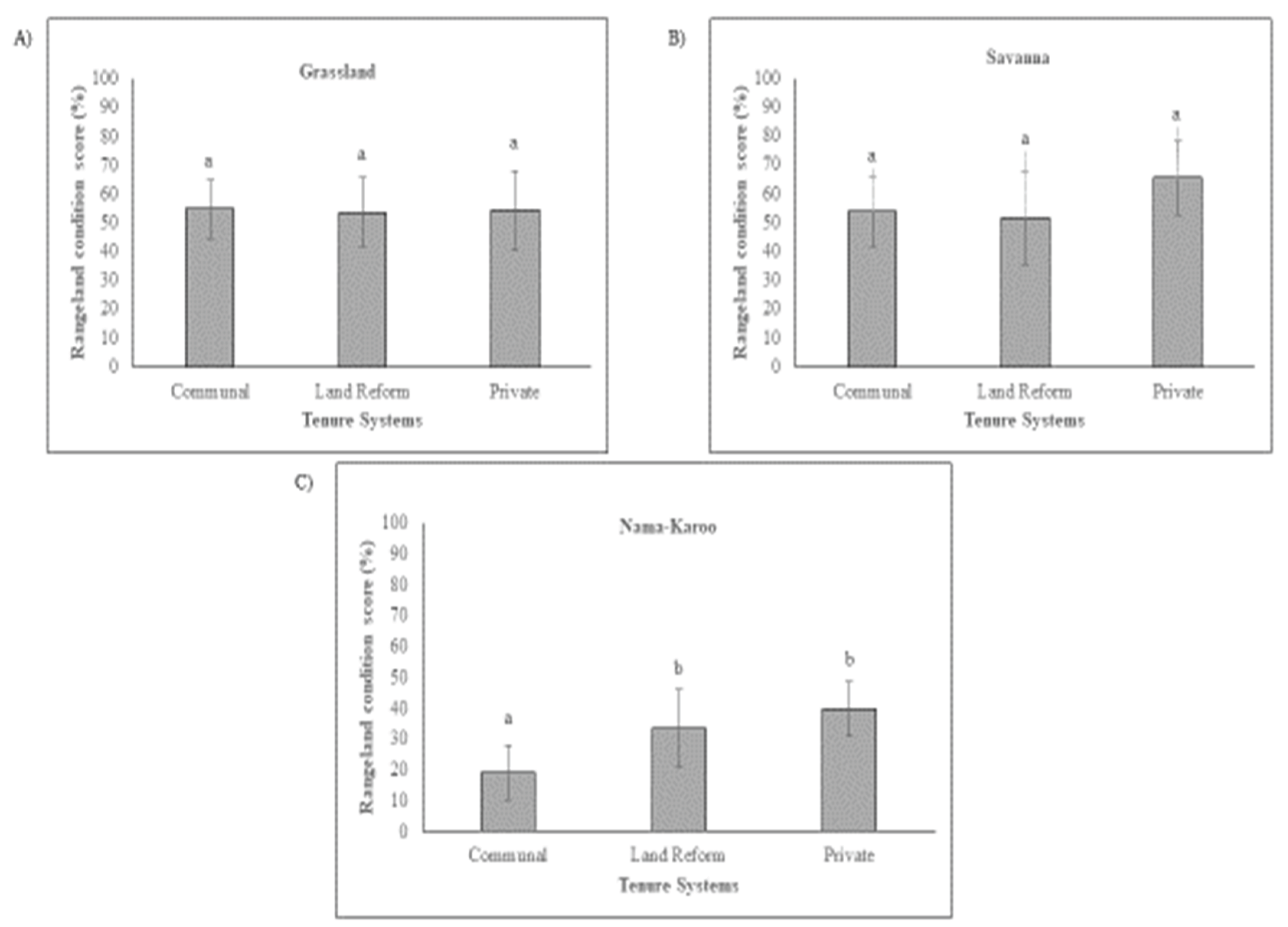
Figure 5.
The average grazing capacities (ha/LSU) across sites in the different tenure systems (Communal, Land Reform and Private) compared within the three biomes: Grassland (A), Savanna (B) and Nama-Karoo (C). The error bars indicate to standard error.
Figure 5.
The average grazing capacities (ha/LSU) across sites in the different tenure systems (Communal, Land Reform and Private) compared within the three biomes: Grassland (A), Savanna (B) and Nama-Karoo (C). The error bars indicate to standard error.
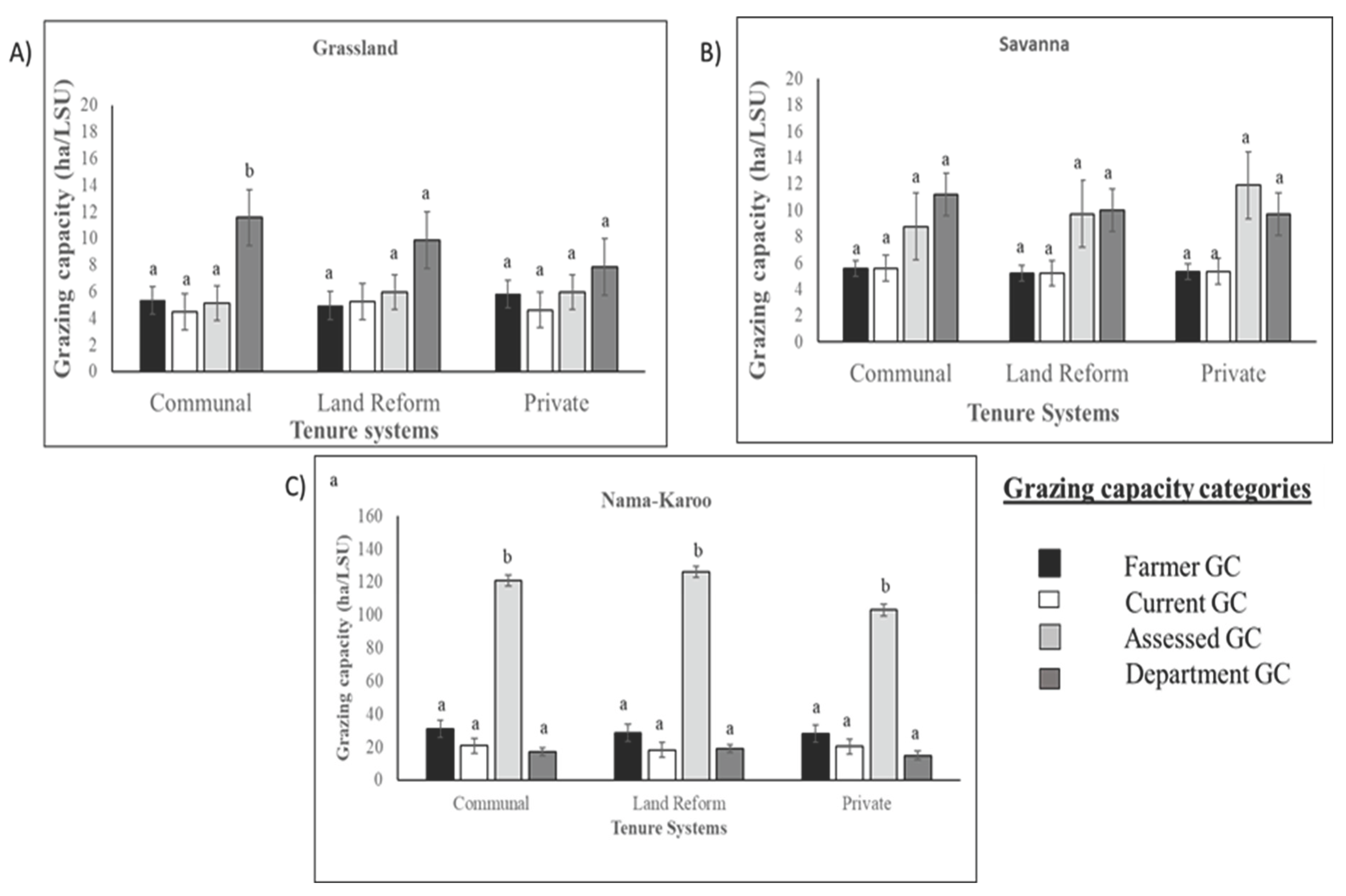

Table 1.
(A) Farmers’ perception on the rangeland condition, their view on the long-term grazing capacity norms of their area and the types of land degradation occur on their farms.
Table 1.
(A) Farmers’ perception on the rangeland condition, their view on the long-term grazing capacity norms of their area and the types of land degradation occur on their farms.
| Parameter | Biome | ||
|---|---|---|---|
| Grassland (n=20) |
Savanna (n=35) |
Nama-Karoo (n=30) |
|
| Perception on Rangeland Condition | |||
| Good (%) | 50.0 | 28.6 | 10.0 |
| Moderate (%) | 15.0 | 57.1 | 23.33 |
| Bad (%) | 35.0 | 14.3 | 66.67 |
| Agreement with Long-term Grazing Capacity Norms | |||
| Yes (%) | 75.0 | 71.43 | 60.0 |
| No (%) | 25.0 | 28.57 | 40.0 |
| Type of Land Degradation | |||
| Soil erosion (%) | 25.0 | 5.71 | 33.33 |
| Loss of vegetation cover (%) | 90.0 | 28.57 | 83.33 |
| Bush encroachment (%) | 25.0 | 57.14 | 16.67 |
| Plant species change (%) | 50.0 | 51.43 | 60.0 |
| Biomass decline (%) | 75.0 | 71.43 | 51.43 |
Table 2.
Plant species composition for the A) Grassland, B) Savanna and C) Nama-Karoo. Plant species and plant characteristics (life form, family, palatability (following [67] and abundance)).
Table 2.
Plant species composition for the A) Grassland, B) Savanna and C) Nama-Karoo. Plant species and plant characteristics (life form, family, palatability (following [67] and abundance)).
| Biome | Plant Species | Life Form | Family | Palatability | Abundance (%) |
|---|---|---|---|---|---|
| Grassland | Eragrostis chloromelas Steud. | Grass | Poaceae | Moderate | 30.37 |
| Themeda triandra Forssk. | Grass | Poaceae | High | 20.73 | |
| Eragrostis plana Nees | Grass | Poaceae | Low | 12.10 | |
| Eragrostis curvula (Schrad.) Nees | Grass | Poaceae | High | 8.41 | |
| Cynodon dactylon (L.) Pers. | Grass | Poaceae | High | 7.12 | |
| Tristachya leucothrix Trin. ex Nees | Grass | Poaceae | Moderate | 6.92 | |
| Elionurus muticus (Spreng.) Kunth | Grass | Poaceae | Low | 5.68 | |
| Seteria sphacelata var. sphacelata | Grass | Poaceae | High | 5.51 | |
| Heteropogon contortus (L.) Roem. & Schult. | Grass | Poaceae | Moderate | 4.25 | |
| Aristida congesta Roem. & Schult. subsp. congesta | Grass | Poaceae | Low | 1.65 | |
| Savanna | Digitaria eriantha Steud. | Grass | Poaceae | High | 30.00 |
| Melinis repens (Willd.) Zizka subsp. repens | Grass | Poaceae | 24.80 | ||
| Aristida congesta Roem. & Schult. subsp. congesta | Grass | Poaceae | Low | 21.40 | |
| Themeda triandra Forssk. | Grass | Poaceae | High | 15.60 | |
| Cynodon dactylon (L.) Pers. | Grass | Poaceae | High | 14.80 | |
| Megathyrsus maximus (Jacq.) | Grass | Poaceae | High | 10.21 | |
| Hyparrhenia hirta (L.) Stapf | Grass | Poaceae | Low | 8.80 | |
| Cymbopogon pospischilii (K.Schum.) C.E.Hubb | Grass | Poaceae | Low | 7.52 | |
| Heteropogon contortus (L.) Roem. & Schult. | Grass | Poaceae | Moderate | 6.90 | |
| Trachypogon spicatus (L.f.) Kuntze | Grass | Poaceae | Low | 5.41 | |
| Nama-Karoo | Stipagrostis obtusa (Delile) Nees | Grass | Poaceae | High | 34.6 |
| Pentzia incana (Thunb.) Kuntze | Shrub | Asteraceae | Moderate | 27.6 | |
| Eragrostis chloromelas Steud. | Grass | Poaceae | Moderate | 15.2 | |
| Ruschia spinosa (L.) Dehn. | Shrub | Aizoaceae | Moderate | 10.8 | |
| Tragus berteronianus Schult. | Grass | Poaceae | Low | 7.8 | |
| Aristida congesta Roem. & Schult. subsp. congesta | Grass | Poaceae | Low | 6.9 | |
| Eragrostis curvula (Schrad.) Nees | Grass | Poaceae | High | 6.4 | |
| Asparagus burchellii Baker | Shrub | Asparagaceae | Low | 5.6 | |
| Stipagrostis ciliata var. capensis | Grass | Poaceae | High | 4.5 | |
| Galenia fruticosa (L.f.) Sond. | Shrub | Aizoaceae | Moderate | 3.9 |
Table 3.
The comparison of the four grazing capacities indices within each biome. Values are mean ± standard error. Different superscripts (a, b) indicate statistically significant differences. GC=Grazing capacity.
Table 3.
The comparison of the four grazing capacities indices within each biome. Values are mean ± standard error. Different superscripts (a, b) indicate statistically significant differences. GC=Grazing capacity.
| Biome | Farmer GC | Current SR | Assessed GC | Department GC |
|---|---|---|---|---|
| Grassland | 5.26 ± 0.37ᵃ | 4.87 ± 0.47ᵃ | 6.53 ± 0.97ᵃ | 10.15 ± 0.79ᵃ |
| Savanna | 6.35 ± 0.77ᵃ | 6.37 ± 0.69ᵃ | 9.75 ± 0.95ᵃ | 10.50 ± 0.60ᵃ |
| Nama-Karoo | 30.7 ± 2.36a | 19.90 ± 1.98a | 116.3± 6.13ᵇ | 30.1 ± 0.93a |
Disclaimer/Publisher’s Note: The statements, opinions and data contained in all publications are solely those of the individual author(s) and contributor(s) and not of MDPI and/or the editor(s). MDPI and/or the editor(s) disclaim responsibility for any injury to people or property resulting from any ideas, methods, instructions or products referred to in the content. |
© 2025 by the authors. Licensee MDPI, Basel, Switzerland. This article is an open access article distributed under the terms and conditions of the Creative Commons Attribution (CC BY) license (http://creativecommons.org/licenses/by/4.0/).
Copyright: This open access article is published under a Creative Commons CC BY 4.0 license, which permit the free download, distribution, and reuse, provided that the author and preprint are cited in any reuse.