

Submitted:
23 June 2025
Posted:
25 June 2025
You are already at the latest version
Abstract
Despite overparenting being considered a critical factor associated with offspring’s mental health, the existing research on this topic has yielded inconsistent results. The current study aimed to examine the relationship between overparenting and various mental health outcomes, such as anxiety, depression, life satisfaction, and subjective well-being, through an analysis of effect size. Furthermore, potential moderators, including age, gender, information informants, study design, and cultural factors, were also examined. A total of 44 studies (N = 21,607) were identified in the meta-analysis, with 34 studies examining anxiety, 32 studies examining depression, 13 studies examining life satisfaction, and three studies examining subjective well-being. The results revealed a positive yet small association between overparenting and mental health indicators (ranxiety = .16, rdepression = .20, rlife satisfaction = .09, ps < .001), except for subjective well-being (rsubjective well-being = .09, p > .001). Moderator analyses showed that the high heterogeneity across studies was explained by culture, parents’ gender, and age group. These findings emphasize that overparenting is linked to mental health issues, particularly anxiety and depression. This study also suggests that heterogeneity should be considered for future clinical interventions and parenting-based educational programs.
Keywords:
mental health
; overparenting
; depression
; anxiety
; meta-analysis
1. Introduction
Mental health disorders are a leading contributor to the global burden of disease, significantly impacting both mortality and daily functioning (WHO, 2022). As their prevalence continues to rise, research concerning the influencing factors of mental health disorders is also increasing (Wainberg et al., 2017). Among these, parenting practices—particularly overparenting—have garnered growing attention as a potentially significant influence on offspring’s mental health. A clearer understanding of this relationship is essential for informing effective prevention and intervention strategies.
Overparenting, also known as helicopter parenting, refers to excessive control, protection, and involvement in offspring’s lives, often motivated by parental concern for mental health (Segrin et al., 2012). While this parenting style may stem from good intentions, it can hinder children’s autonomy and psychological development, thereby compromising their mental health (Evans & Karl, 2022). Empirical studies have documented both negative and positive associations between overparenting and offspring’s mental health, mainly focused on the negative aspect of mental health, but the findings have been inconsistent. From a theoretical perspective, the Dual-Factor Model of Mental Health emphasizes the importance of examining both psychopathological symptoms (e.g., depression, anxiety) and positive indicators (e.g., life satisfaction, subjective well-being) to gain a more comprehensive understanding of mental health outcomes.
To clarify the nature of the association between overparenting and mental health, the present study conducts a meta-analysis examining the relationship between overparenting and four key indicators of mental health: anxiety, depression, life satisfaction, and subjective well-being. Drawing on a systematic review of existing literature, this meta-analysis also aims to generate evidence-based recommendations for family-based interventions targeting adolescent mental health. In doing so, the study offers a theoretical and empirical foundation for personalized clinical treatment strategies and more effective mental health promotion.
1.1. Overparenting and Offspring’s Mental Health
Overparenting—often referred to as helicopter parenting—describes a parenting style characterized by heightened control, overprotection, and intrusion, typically stemming from parental concern and love (Segrin et al., 2012; Evans & Karl, 2022). Despite these positive intentions, concerns have emerged regarding its potential impact on offspring’s development, particularly in terms of psychological well-being. As overparenting becomes increasingly prevalent in modern parenting cultures, understanding its implications for offspring’s mental health is critical (Padilla-Walker & Nelson, 2012; Leung & Shek, 2024).
Several empirical studies have found that overparenting is negatively associated with offspring’s mental health outcomes, such as elevated anxiety, depressive symptoms, and emotional distress (LeMoyne & Buchanan, 2011; Schiffrin et al., 2014; Reed et al., 2016; Darlow et al., 2017; Kouros et al., 2017). Theoretically, Self-Determination Theory (Ryan & Deci, 2000) posits that the satisfaction of basic psychological needs—such as autonomy, competence, and relatedness—is essential for mental health (Ryan & Deci, 2017). Overparenting may thwart autonomy by limiting children’s decision-making and problem-solving experiences. Similarly, Separation-Individuation Theory (Grotevant & Cooper, 1986) suggests that excessive parental control disrupts the normative process through which adolescents establish independence from their parents, thereby increasing their vulnerability to psychological distress (Ratcliff, 2020).
However, not all studies have found negative consequences of overparenting. Some evidence suggests that neutral or even beneficial effects on mental health may exist (Fingerman et al., 2012; Kwon et al., 2016; Lee & Kang, 2018). For example, research conducted in East Asian contexts has found that higher levels of parental involvement, even when perceived as overparenting, are associated with lower depressive symptoms and greater life satisfaction (Lee & Kang, 2018; Kwon et al., 2016). In these cultural contexts, parental overinvolvement may be interpreted as a form of familial support or interdependence rather than intrusion. Likewise, Fingerman et al. (2012) found that strong parent–child support under overparenting conditions was linked to improved well-being in adult children. These findings highlight the significance of cultural interpretations in influencing the psychological outcomes of parenting behaviors.
Despite the growing body of research on overparenting, existing reviews and meta-analyses have primarily focused on its negative psychological consequences, particularly internalizing problems (Zhang & Ji, 2023). Furthermore, the meta-analyses have excluded Chinese literature and have solely focused on negative indicators of mental health, overlooking positive indicators such as subjective well-being and life satisfaction. Notably, the Dual-Factor Model of Mental Health (Greenspoon & Saklofske, 2001) emphasizes the importance of assessing both negative (e.g., anxiety, depression) and positive (e.g., life satisfaction, well-being) indicators to fully understand mental health outcomes. Therefore, a systematic meta-analysis combining overparenting with positive and negative aspects of mental health needs to be further examined.
1.2. Potential Moderators of Associations Between Overparenting and Mental Health
Certain studies have suggested that overparenting negatively impacts mental health (LeMoyne & Buchanan, 2011; Schiffrin et al., 2014; Darlow et al., 2017; Kouros et al., 2017). Other researchers have proposed that overparenting may yield positive or neutral outcomes regarding mental health (Kwon et al., 2016; Padilla-Walker & Nelson, 2012; Segrin et al., 2012). Previous researchers have proposed that individual differences in moderating variables could influence the relationship between overparenting and mental health.
First, the gender of the offspring and parents has been proposed as a potential mediator in this relationship. For instance, studies have shown that paternal overparenting has a positive correlation with adolescents’ life satisfaction. Maternal overparenting positively correlates with adolescents’ anxiety and depression (Leung, 2020). Furthermore, high levels of overparenting have been linked to lower levels of happiness in women (Kouros et al., 2017). One study found that maternal helicopter parenting was associated with excessive interpersonal sensitivity in daughters and lower levels of interpersonal sensitivity in sons. In contrast, paternal helicopter parenting was associated with more negative outcomes, regardless of the child’s gender (Rousseau & Scharf, 2015). However, it remains unclear whether differences in child or parent gender impact the relation between overparenting and positive aspects of mental health, particularly the effect of child gender differences on overparenting and life satisfaction.
Second, the distinction between the individualistic culture predominant in the West and the collectivist culture prevalent in the East may lead to varying associations between overparenting and mental health, particularly in East Asia, where overparenting could be linked to both negative and positive mental health (Lee & Kang, 2018). A prior cross-cultural investigation found that overparenting is correlated with reduced subjective well-being among American and Chinese students (Hong, 2020). Some researchers have examined the relationship between overparenting and academic achievement among American and Korean college students, finding cultural differences in their findings (Jung et al., 2019, 2020). Therefore, further exploration is warranted to determine whether cultural background serves as a moderating factor in the relationship between overparenting and mental health.
Moreover, age group may significantly influence the relationship between overparenting and mental health. Leung pointed out that the age of children is one of the factors that influence overparenting (Leung, 2020). Most prior studies examining the associations between overparenting and mental health have focused on adults, particularly emerging adults (Cui et al., 2019; Ratcliff, 2020). In contrast, a few studies have been conducted on children or adolescents (Segrin et al., 2012; Cui et al., 2020). Consequently, it remains unclear whether age moderates the relationship between overparenting and mental health. This study primarily aims to explore potential differences in the effects of overparenting on children’s mental health across various age groups. Other moderating variables that warrant exploration in this study include the information provider and the study design.
1.3. The Present Study
The present meta-analysis systematically examines the relationship between overparenting and both negative (depression, anxiety) and positive (subjective well-being, life satisfaction) mental health outcomes. It also examines potential moderators, including offspring and parent gender, age, cultural background, and study design. Given the existing evidence and aims of the current study, we hypothesized that overparenting is linked with indicators of mental health, varied by the moderators mentioned. By integrating findings across diverse cultural contexts and methodological variations, this study aims to provide a more nuanced understanding of the impact of overparenting on offspring’s mental health and inform future intervention and prevention efforts.
2. Method
2.1. Search Procedure and Selection Steps
Search procedure. We identified relevant journal articles and academic papers across various electronic databases, including PsycINFO, PsycArticles, Scopus, Google Scholar, Web of Science, ProQuest, and Chinese databases such as CNKI and WanFang.
Studies published from 2003 to October 2023 were included in the literature search using Google Scholar, which included the top 100 articles deemed most relevant according to previous studies (Zhang & Ji, 2023). We used specific search terms as follows to search the title and abstract of the article: (overparenting* OR over-parenting* OR helicopter parenting* OR overinvolvement* OR overhelp* OR hyper-parenting* OR overprotect parenting* OR “intent* parent* OR hover* OR tiger parent* OR overcontrol* OR excessive parent* OR excessive involve* OR excessive assist* OR excessive help*) AND (mental health * OR depression * OR depression symptoms* OR anxiety* OR internalizing problems* OR life satisfaction* OR subjective well-being*).
Inclusion criteria. Articles were included if they:(a) assessed parental overparenting or helicopter parenting; (b) assessed mental health, including depressive symptoms, anxiety, life satisfaction, and subjective well-being; (c) full texts were sourced from peer-reviewed English journals and Chinese journals; (d) All participants were required to be healthy; (e) results indicate effect size indicators.
Selection steps. PRISMA flow diagram (see Figure 1) illustrating the study selection steps. A total of 3,779 articles were identified through database searches. After removing 1,171 duplicates, 2,608 articles were screened by title and abstract, which was conducted by two coders. Of these, 2,382 articles were excluded due to irrelevance. The full texts of 226 articles were reviewed for eligibility, and 182 were excluded for the following reasons: non-healthy samples (n = 5), non-quantitative design (n = 14), lack of measures of overparenting or mental health (n = 92), absence of effect size data (n = 12), duplication publications (n = 21), and inaccessible full texts (n = 37). Ultimately, 44 articles met the inclusion criteria and were included in the final analysis.
2.2. Coding of the Studies
Each study was coded using a detailed coding scheme. All studies included in the meta-analysis were identified with an asterisk in the references section. The specific coded information for each study included categorical variables such as country, offspring’s gender (male, female, or both), parental gender (father, mother, or both), informants of overparenting and mental health (offspring-report, parent-report), study design (cross-sectional or longitudinal), culture (non-Western, Western belonging to America, or Western but not America), age group (children, adolescents, or adults).
2.3. Data Analysis
The Pearson correlation coefficient (r) was used to examine the relationship between overparenting and mental health variables such as depression, anxiety, life satisfaction, and subjective well-being. Utilizing the Comprehensive Meta-Analysis software version 3.3, r values from reported test statistics were calculated. Subsequently, the Pearson correlation coefficient r was converted to Fisher’s z correlations, ensuring a normal distribution of the sample for further analysis. Finally, we converted the Fisher’s z correlations back to Pearson correlation coefficients r to represent our research results (Borenstein et al., 2021).
The data analysis comprised several key components, including heterogeneity testing of the meta-analysis, publication bias testing, main effect testing, moderating effect testing, and sensitivity analysis. Subgroup analysis was employed for categorical moderating variables. Given that our primary study was considered a random sample of the study population, a random-effects model was deemed appropriate for the meta-analysis (Hedges & Vevae, 1998). Publication bias can significantly impact the outcomes of meta-analysis; therefore, this study employed various methods to assess and address this bias. Funnel plots and Egger’s regression test were used to evaluate publication bias (Schulzke, 2021). In instances where studies exhibited a high risk of publication bias, the trim-and-fill method was employed for bias correction (Fernández-Castilla et al., 2021).
3. Results
3.1. Descriptive Statistics
A total of 44 studies were included in the current meta-analysis. Among these, 34 studies reported 64 effect sizes for the associations between overparenting and anxiety (N = 37,872; Mage = 17.61, SD = 3.56), with participants’ age ranging from 12.63 to 24.3 years. 32 studies provided 65 effect size for depression (N = 31,855; Mage = 20.98, SD = 2.97; age range = 12.63-24.88 years). 13 studies reported 36 effect size for life satisfaction (N = 17,293; Mage = 22.97, SD = 2.39; age range = 19.34-25 years), and three studies reported four effect size for subjective well-being (N = 1,687; Mage = 18.15, SD = 2.71; age range = 16.59-21.28 years). Most studies were conducted in the United States (49.45%) and employed a cross-sectional design (83.33%). On average, 65% of participants were female. Approximately 79.44% did not distinguish between maternal and paternal overparenting. Regarding the age groups, most studies (85.56%) included a sample of emerging adults, and 14.44% of studies used a sample of adolescents. Table 1 presents a detailed summary of study characteristics.
3.2. Meta-Analysis of Overparenting and Indicators of Mental Health
The overall effect size indicating the association between overparenting and depression was found to be significant (r = .20, 95% CI [.17, .24], p < .001), suggesting that a higher level of overparenting is linked with increased depression. Sensitivity analysis revealed that upon removal of any sample, the combined effect size fluctuated between 0.19 and 0.21, with no change in significance, indicating high stability in the estimated results of the meta-analysis. Examination of the funnel plot and the Egger test (p = .932) did not reveal any evidence of publication bias (see Table 2 and Supplemental Figure S1). Moderator analysis results, as presented in Supplemental Table S1, indicate no significant moderation effects of variables except for the age group, which yielded significant results (k = 65, r = .138, 95% CI [.114, .163], p < .001).
Results showed that a significant positive but minor effect of overparenting and anxiety was found (r = .16, 95% CI [.13, .19], p < .001), suggesting that a higher level of overparenting is associated with increased anxiety. Sensitivity analysis revealed high stability in the estimated results of the meta-analysis. Examination of the funnel plot (see Supplemental Figure S2) and the Egger test (p = .003) indicated publication bias. The trim-and-fill method was employed to address publication bias, resulting in the inclusion of 11 virtual studies. The combined effect size remained statistically insignificant, and no reversal was observed, indicating the robustness of the combined effect size (r = .19, 95%CI [.16, .23], p < .001). Moderator analyses showed that (see Supplemental Table S2) no significant moderation effects of all variables except for parental gender and offspring’s age group. Specifically, maternal overparenting showed a stronger link to anxiety than paternal or both. Age-group analysis revealed that the association was strongest in adults (r = 0.175, 95% CI [0.160, 0.189]), followed by adolescents’ overparenting (r = 0.113, 95% CI [0.099, 0.126]), highlighting age-related differences in the relationship between overparenting and anxiety.
The results showed a significant but small effect of overparenting on life satisfaction (r = .09, 95% CI [.038, .133], p < .001), with high stability of the result through sensitivity analysis and no publication bias (Egger test p = .100) (see Supplemental Figure S3). Moderator analysis showed that (see Supplemental Table S3) no significant effects of all variables. However, culture significantly moderated the relationship: non-Western cultural contexts showed a positive association (r = .15, 95% CI [.123, .174]), while Western, but not American, cultural contexts and the American context showed nonsignificant or negative associations. Additionally, the moderation test for offspring’s age yielded significant results, with a trend toward stronger associations in older age groups.
The meta-analysis found no significant association between overparenting and subjective well-being (r = -.01, 95% CI [-.122, .097], p > .001), with stable results through sensitivity analysis despite publication bias (Egger test, p = .007) (also see Supplemental Figure S4). The moderator analysis results, presented in Supplemental Table S4, revealed no significant effects for any of the variables.
4. Discussion
This meta-analysis systematically examined the association between overparenting and various mental health outcomes, including depression, anxiety, life satisfaction, and subjective well-being, based on studies published from 2003 to 2023. The findings suggest that overparenting is positively associated with both negative (depression, anxiety) and, to a lesser extent, positive (life satisfaction, subjective well-being) mental health indicators. Notably, age and culture emerged as significant moderators in these associations, offering new insights into the understanding of the relationship between overparenting and mental health, providing theoretical implications for parent-child relationships, and the intervention of mental health disorders.
4.1. Associations Between Overparenting and Mental Health
The current meta-analysis revealed a small but significant positive correlation between overparenting and various mental health indicators, including depression, anxiety, and life satisfaction. This finding aligns with prior studies conducted in East Asian contexts, such as South Korea, where overparenting is sometimes associated with favorable psychological outcomes (Lee & Kang, 2018; Urone et al., 2024). Despite its modest magnitude, this result contrasts with several U.S.-based studies that report detrimental effects of overparenting on mental health (Darlow et al., 2017), highlighting the nuanced and potentially culturally contingent nature of overparenting. These differences underscore the need to interpret overparenting not solely as a risk factor, but as a contextually embedded parenting behavior that may have both adaptive and maladaptive consequences.
Consistent with prior research, overparenting was significantly and positively associated with depressive symptoms (LeMoyne & Buchanan, 2011; Schiffrin et al., 2014; Darlow et al., 2017). This association may be attributed to the undermining of autonomy caused by excessive parental control, which can evoke feelings of helplessness and emotional distress (Filippello et al., 2018; Perez et al., 2020). Similarly, overparenting was positively correlated with anxiety, reinforcing findings from earlier studies (Jiao & Segrin, 2023). These results are theoretically supported by Self-Determination Theory (Ryan & Deci, 2017), which posits that autonomy, competence, and relatedness are essential for psychological well-being. When these needs are thwarted by intrusive parenting, children may experience elevated stress and anxiety. Interestingly, our findings contradict a recent meta-analysis that reported a negative association between overparenting and anxiety (Zhang & Ji, 2023), suggesting that more research is needed to clarify this inconsistency.
The relationship between overparenting and life satisfaction was also positive, though the effect size was small. This finding diverges from several U.S.-based studies, which report that overparenting diminishes life satisfaction (LeMoyne & Buchanan, 2011; Padilla-Walker & Nelson, 2012). However, it aligns with research conducted in collectivist cultures, where close parental involvement is more culturally accepted (Cheung & Pomerantz, 2015; Lee & Kang, 2018). In such settings, parental overinvolvement may be interpreted as warmth and support rather than intrusion, which can enhance psychological well-being. However, the association between overparenting and subjective well-being was found to be non-significant, which contrasts with prior research indicating a negative impact (Schiffrin et al., 2014; Kouros et al., 2017). This discrepancy may be due to limited sample size, measurement inconsistencies, or cross-cultural variation in the conceptualization of well-being. Future studies should explore these dimensions using more culturally sensitive and psychometrically robust tools.
In sum, the findings reveal a complex pattern in the relationship between overparenting and offspring mental health. While overparenting is associated with increased levels of depression and anxiety—possibly due to thwarted autonomy—it also appears to have a weak but positive association with life satisfaction, particularly in collectivist contexts. These mixed results highlight the importance of considering cultural context, developmental stage, and children’s subjective interpretations when evaluating the psychological impact of overparenting. Moreover, the non-significant findings regarding subjective well-being point to potential measurement issues or underexplored moderating variables. By adopting a dual-factor perspective, this study offers a more balanced and comprehensive understanding of mental health outcomes, laying the groundwork for future culturally informed intervention strategies.
4.2. Moderators of Associations Between Overparenting and Mental Health
The results of this meta-analysis indicate that multiple variables—including age group, cultural context, parental gender, study design and offspring’s gender—significantly moderate the association between overparenting and offspring mental health. These findings expand upon previous research and challenge prior meta-analyses that reported no significant moderation effects, particularly with respect to age group and culture (e.g., Zhang & Ji, 2023). The identification of these moderators highlights the need for more contextually informed approaches when examining the impact of overparenting.
Age group emerged as a significant moderator in the relationship between overparenting and both depression and anxiety. Contrary to previous meta-analyses reporting no age-related moderation (Zhang & Ji, 2023), our findings suggest that the psychological impact of overparenting becomes more pronounced with increasing age. This may reflect developmental shifts in autonomy needs: as children grow older, they increasingly seek independence (Szwedo et al., 2017), and intrusive parental behaviors may be more likely to generate psychological distress (Lim & Kim, 2025). These findings underscore the importance of implementing age-sensitive parenting strategies and interventions, particularly during adolescence and emerging adulthood, when autonomy is a developmentally salient aspect.
Parental gender also moderated the relationship between overparenting and psychological outcomes. Maternal overparenting was more strongly associated with offspring anxiety and depression than paternal overparenting, consistent with previous findings (Leung, 2020; Zhang & Ji, 2023). One possible explanation is that mothers tend to be more involved in day-to-day caregiving, which may increase both the frequency and salience of overparenting behaviors (Patock-Peckham & Morgan-Lopez, 2009). This heightened exposure could make children more sensitive to maternal overinvolvement, thereby amplifying its psychological effects.
Additionally, culture significantly moderates the association between overparenting and life satisfaction. Consistent with previous research, children raised in Eastern cultures, which emphasize filial piety, may perceive greater affection and warmth from their parents compared with those in Western cultures, which prioritize individualism (Lee & Kang, 2018).
In summary, the present meta-analysis identifies several key moderators—age group, culture, parental gender—that shape the relationship between overparenting and mental health outcomes. These moderators highlight the contextual variability of overparenting’s psychological consequences, emphasizing that its effects are not universally negative or positive, but instead depend on the developmental, cultural, and familial context. Understanding these moderators provides critical insights for tailoring parenting interventions and promoting culturally and developmentally appropriate mental health strategies.
4.4. Limitations and Future Directions
Despite its contributions, this study has limitations. First, the limited number of studies on subjective well-being and the exclusion of gray literature may limit the generalizability of the findings. Second, insufficient reporting on demographic variables weakens the robustness of moderation analysis. Third, the overreliance on self-reported measures may introduce recall bias. Future research should employ diverse methodologies, including observational and longitudinal designs, to better establish causality and reduce method bias. Finally, given the cultural differences in parenting norms and their implications for mental health, cross-cultural and dimensional studies on overparenting are needed to advance both theoretical and intervention efforts.
5. Conclusion
To our knowledge, the current study is the first systematic examination of overparenting and its positive and negative indicators of mental health. The findings revealed that overparenting has a double-edged sword impact on mental health, which depends on the offspring’s age, parental gender, and cultural background. This study broadens the scope of mental health indicators and provides a comprehensive understanding of the associations between overparenting and mental health. Additionally, the implications for promoting parenting-based interventional programs for mental health disorders in the future are supported.
Supplementary Materials
The following supporting information can be downloaded at the website of this paper posted on Preprints.org. Supplementary materials associated with this article can be found in the online version at https://osf.io/8ad4g/files/osfstorage
References
- Ahmed, F.L.; Mingay, D. (2023). Relationship between helicopter parenting and psychological wellbeing in college students. International Journal of Social Research & Innovation, 7(1), 73. [CrossRef]
- Borenstein, M.; Hedges, L.V.; Higgins, J.P.; Rothstein, H.R. (2021). Introduction to meta-analysis. John Wiley & Sons. [CrossRef]
- *Borges, D.; Portugal, A.; Magalhães, E.; Sotero, L.; Lamela, D.; Prioste, A. (2019). Helicopter Parenting Instrument: Estudos Psicométricos Iniciais com Adultos Emergentes. Revista Iberoamericana de Diagncstico y Evaluacicn Psicolcgica. 53: 33–48. [CrossRef]
- *Cardoso Garcia, R.; Pedroso de Lima, M.; Carona, C. (2022). The Relation Between Helicopter Parenting and Satisfaction with Life in Emerging Adults Living with Their Parents: The Moderating Role of Gender and Age Group. Central European Journal of Paediatrics. 18(2): 150–160. [CrossRef]
- *Carone, N.; Gartrell, N.K.; Rothblum, E.D.; Koh, A.S.; Bos, H.M.W. (2022). Helicopter parenting, emotional avoidant coping, mental health, and homophobic stigmatization among emerging adult offspring of lesbian parents. Journal of Family Psychology. 36(7):1205–1215. [CrossRef]
- Cheung, C.S.S.; Pomerantz, E.M. (2015). Value development underlies the benefits of parents’ involvement in children’s learning: A longitudinal investigation in the United States and China. Journal of Educational Psychology, 107(1), 309. [CrossRef]
- *Chen, Y.W. (2022). Effects of parental education anxiety on adolescents’ mental health: evidence from cross-sectional and longitudinal studies (Unpublished master’s thesis). Jiangxi Normal University.
- *Cook, E.C. (2020). Understanding the Associations between Helicopter Parenting and Emerging Adults’ Adjustment. Journal of Child & Family Studies. 29(7):1899–1913. [CrossRef]
- Cui, M.; Allen, J.W.; Fincham, F.D.; May, R.W.; Love, H. (2019). Helicopter Parenting, Self-regulatory Processes, and Alcohol Use among Female College Students. Journal of Adult Development, 26(2), 97–104. [CrossRef]
- Cui, M.; Hong, P.; Jiao, C. (2022). Overparenting and emerging adult development: A systematic review. Emerging Adulthood. 10(5):1076–1094. [CrossRef]
- *Darlow, V.; Norvilitis, J.; Schuetze, P. (2017). The Relationship between Helicopter Parenting and Adjustment to College. Journal of Child & Family Studies. 26(8): 2291–2298. [CrossRef]
- Evans, R.; Karl, K.A. (2022). Is helicopter parenting stifling moral courage and promoting moral disengagement? Implications for the training and development of millennial managers. Management Research Review, 45(5), 700–714. [CrossRef]
- Fernández-Castilla, B.; Declercq, L.; Jamshidi, L.; Beretvas, S.N.; Onghena, P.; Van den Noortgate, W. (2021). Detecting selection bias in meta-analyses with multiple outcomes: A simulation study. Journal of Experimental Education, 89(1), 125–144. [CrossRef]
- *Flower, A.T. (2021). The effects of helicopter parenting in emerging adulthood: An investigation of the roles of involvement and perceived intrusiveness. Honors Theses. 315.
- Filippello, P.; Harrington, N.; Costa, S.; Buzzai, C.; Sorrenti, L. (2018). Perceived parental psychological control and school learned helplessness: The role of frustration intolerance as a mediator factor. School Psychology International, 39(4), 360–377. [CrossRef]
- Fingerman, K.L.; Cheng, Y.; Wesselmann, E.D.; Zarit, S.; Furstenberg, F.; Birditt, K.S. (2012). Helicopter Parents and landing pad Kids: Intense parental support of grown children. Journal of Marriage and Family, 74(4), 880–896. [CrossRef]
- *Gao, W.; Hou, Y.; Hao, S.; Yu, A. (2023). Helicopter Parenting and Emotional Problems in Chinese Emerging Adults: Are There Cross-lagged Effects and the Mediations of Autonomy? Journal of Youth and Adolescence. 52(2):393-405. [CrossRef]
- Grotevant, H.D.; Cooper, C.R. (1986). Individuation in family relationships: A perspective on individual differences in the development of identity and role-taking skill in adolescence. Human Development. 29(2), 82–100. [CrossRef]
- Greenspoon, P.J.; Saklofske, D.H. (2001). Toward an Integration of Subjective Well-Being and Psychopathology. Social Indicators Research, 54(1), 81–108. [CrossRef]
- Hedges, L.V.; Vevea, J.L. (1998). Fixed- and random-effects models in meta-analysis. Psychological Methods, 3(4), 486–504. [CrossRef]
- Hong, P. (2021). A Cross-Cultural Perspective on Overparenting and Emerging Adults’ Well-Being (Doctoral dissertation). The Florida State University. Retrieved from https://www.proquest.com/dissertations-theses/cross-cultural-perspective-on-overparenting/docview/2546939390/se-2.
- *Hong, P.; Cui, M. (2020). Helicopter parenting and college students’ psychological maladjustment: The role of self-control and living arrangement. Journal of Child and Family Studies. 29: 338-347. [CrossRef]
- * Hong, P.; CuiM. (2023). Overparenting and psychological well-being of emerging adult children in the United States and China. Family Relations. 72(5): 2852-2868. [CrossRef]
- Hong, M.H.; Doh, H.S. (2018). Effects of helicopter parenting on depression in female emerging adults: Examining the mediating role of adaptive and maladaptive perfectionism. Korean Journal of Child Studies, 39(6), 143–158. [CrossRef]
- * Howard, A.L.; Alexander, S.M.; Dunn, L.C. (2022). Helicopter Parenting is Unrelated to Student Success and Well-Being: A Latent profile analysis of perceived parenting and academic motivation during the transition to university. Emerging Adulthood, 10(1), 197–211. [CrossRef]
- *Jiao, J. (2022). I came through you and belong not to you: Overparenting, attachment, autonomy, and mental health in emerging adulthood (Doctoral dissertation). The University of Arizona. Retrieved from https://www.proquest.com/openview/c6a265b46e9066847621d3a010c3d5bc/1?pq-origsite=gscholar&cbl=18750&diss=y.
- *Jiao, J.; Segrin, C. (2021). Parent–Emerging-Adult-Child Attachment and Overparenting. Family Relations. 70(3):859–865. [CrossRef]
- *Jiao, J.; Segrin, C. (2023). Moderating the Association Between Overparenting and Mental Health: Open Family Communication and Emerging Adult Children’s Trait Autonomy. Journal of Child & Family Studies. 32(3):652–662. [CrossRef]
- Jung, E.; Hwang, W.; Kim, S.; Sin, H.; Zhang, Y.; Zhao, Z. (2019). Relationships among helicopter parenting, self-efficacy, and academic outcome in American and South Korean college students. Journal of Family Issues. 40(18):2849–2870. [CrossRef]
- *Jung, E.; Hwang, W.; Kim, S.; Sin, H.; Zhao, Z.; Zhang, Y.; Park, J.H. (2020). Helicopter parenting, autonomy support, and student wellbeing in the United States and South Korea. Journal of Child and Family Studies. 29:358-373. [CrossRef]
- *Kouros, C.; Pruitt, M.; Ekas, N.; Kiriaki, R.; Sunderland, M. (2017). Helicopter Parenting, Autonomy Support, and College Students’ Mental Health and Well-being: The Moderating Role of Sex and Ethnicity. Journal of Child & Family Studies. 26(3):939–949. [CrossRef]
- *Kwon, K.-A.; Yoo, G.; Bingham, G. (2016). Helicopter Parenting in Emerging Adulthood: Support or Barrier for Korean College Students’ Mental health? Journal of Child & Family Studies. 25(1):136–145. [CrossRef]
- *Lee, J.; Kang, S. (2018). Perceived Helicopter Parenting and Korean Emerging Adults’ Mental Health: The Mediational Role of Parent-Child Affection and Pressure from Parental Career Expectations. Journal of Child & Family Studies. 27(11):3672–3686. [CrossRef]
- LeMoyne, T.; Buchanan, T. (2011). Does “hovering” matter? Helicopter parenting and its effect on well-being. Sociological Spectrum. 31(4):399–418. [CrossRef]
- *Leung, J.T. (2020). Too much of a good thing: Perceived overparenting and wellbeing of Chinese adolescents in Hong Kong. Child Indicators Research. 13(5):1791-1809. [CrossRef]
- *Leung, J.T.Y. (2021). Overparenting, parent-child conflict and anxiety among Chinese adolescents: A cross-lagged panel study. International Journal of Environmental Research and Public Health. 18(22):11887. [CrossRef]
- Leung, J.T.; Shek, D.T. (2024). Overparenting and psychological wellbeing among Chinese adolescents: Findings based on latent growth modeling. Journal of Research on Adolescence, 34(3), 871-883. [CrossRef]
- Lim, J.; Kim, S. (2025). The differential impact of neglectful and Intrusive parenting behavior on adolescents’ relationships with peers and Teachers using longitudinal data: Mediating effects of depression and social withdrawal. Child Psychiatry & Human Development, 56(2), 1-11. [CrossRef]
- *Love, H.N. (2020). Overparenting: Measurement, Profiles, and Associations with Emerging Adults’ Mental Health (Doctoral dissertation). The Florida State University. Retrieved from https://www.proquest.com/openview/97392e1856150f29f1d95230092a40e2/1?pq-origsite=gscholar&cbl=18750&diss=y.
- *Love, H.; Cui, M.; Allen, J.W.; Fincham, F.D.; May, R.W. (2020). Helicopter parenting and female university students’ anxiety: does parents’ gender matter? Families, Relationships and Societies, 9(3), 417-430. [CrossRef]
- *Min-Hwa Hong & Hyun-Sim Doh. (2018). Effects of helicopter parenting on depression in female emerging adults: Examining the mediating role of adaptive and maladaptive perfectionism. Korean Journal of Child Studies. 39(6):143-158. [CrossRef]
- *Moilanen, K.L.; Lynn Manuel, M. (2019). Helicopter parenting and adjustment outcomes in young adulthood: A consideration of the mediating roles of mastery and self-regulation. Journal of Child and Family Studies. 28(8):2145–2158. [CrossRef]
- Padilla-Walker, L.M.; Nelson, L.J. (2012). Black hawk down?: Establishing helicopter parenting as a distinct construct from other forms of parental control during emerging adulthood. Journal of Adolescence. 35(5):1177–1190. [CrossRef]
- *Padilla-Walker, L.M.; Son, D.; Nelson, L.J. (2021). Profiles of helicopter parenting, parental warmth, and psychological control during emerging adulthood. Emerging Adulthood. 9(2): 132–144. [CrossRef]
- Patock-Peckham, J.A.; Morgan-Lopez, A.A. (2009). The gender specific mediational pathways between parenting styles, neuroticism, pathological reasons for drinking, and alcohol-related problems in emerging adulthood. Addictive Behaviors. 34(3):312–315. [CrossRef]
- *Pautler Lindsey, R. (2017). Helicopter Parenting of College Students (Masters Theses). Eastern Illinois University. https://thekeep.eiu.edu/theses/2749.
- *Perez, C.M. (2019). Overparenting, Emotional Distress, and Subjective Well-Being: Facets of Emotional Distress Tolerance as Mediators (Doctoral dissertation). Southern Mississippi University. https://aquila.usm.edu/dissertations/1608.
- *Perez, C.M.; Nicholson, B.C.; Dahlen, E.R.; Leuty, M.E. (2020). Overparenting and emerging adults’ mental health: The mediating role of emotional distress tolerance. Journal of Child and Family Studies. 29(2):374–381. [CrossRef]
- *Pistella, J.; Izzo, F.; Isolani, S.; Ioverno, S.; Baiocco, R. (2020). Helicopter mothers and helicopter fathers: Italian adaptation and validation of the Helicopter Parenting Instrument. Psychology Hub. 37(1):37-46. [CrossRef]
- *Ratcliff, M.A. (2020). Validation of helicopter parenting: An examination of measures and psychological outcomes (Doctoral dissertation). University of La Verne. Retrieved from https://www.proquest.com/dissertations-theses/validation-helicopter-parenting-examination/docview/2447265316/se-2.
- *Reed, K.; Duncan, J.M.; Lucier-Greer, M.; Fixelle, C.; Ferraro, A.J. (2016). Helicopter parenting and emerging adult self-efficacy: Implications for mental and physical health. Journal of Child and Family Studies. 25:3136-3149. [CrossRef]
- *Rote, W.M.; Olmo, M.; Feliscar, L.; Jambon, M.M.; Ball, C.L.; Smetana, J.G. (2020). Helicopter parenting and perceived overcontrol by emerging adults: A family-level profile analysis. Journal of Child and Family Studies. 29:3153-3168. [CrossRef]
- Ryan, R.M.; Deci, E.L. (2017). Self-determination theory: Basic psychological needs in motivation, development, and wellness. The Guilford Press. [CrossRef]
- Ryan, R.M.; Deci, E.L. (2000). Self-determination theory and the facilitation of intrinsic motivation, social development, and well-being. The American psychologist, 55(1), 68–78. [CrossRef]
- Rousseau, S.; Scharf, M. (2015). “I will guide you” The indirect link between overparenting and young adults’ adjustment. Psychiatry research, 228(3), 826–834. [CrossRef]
- Schulzke, S. (2021). Assessment of Publication Bias. In: Patole, S. (eds) Principles and Practice of Systematic Reviews and Meta-Analysis. Springer, Cham. [CrossRef]
- *Schiffrin, H.H.; Erchull, M.J.; Sendrick, E.; Yost, J.C.; Power, V.; Saldanha, E.R. (2019). The effects of maternal and paternal helicopter parenting on the self-determination and well-being of emerging adults. Journal of Child and Family Studies. 28: 3346-3359. [CrossRef]
- *Schiffrin, H.H.; Liss, M.; Miles-McLean, H.; Geary, K.A.; Erchull, M.J.; Tashner, T. (2014). Helping or hovering? The effects of helicopter parenting on college students’ well-being. Journal of Child and Family studies, 23, 548-557. [CrossRef]
- *Segrin, C.; Jiao, J.; Wang, J. (2022). Indirect Effects of Overparenting and Family Communication Patterns on Mental Health of Emerging Adults in China and the United States. Journal of Adult Development. 29(3):205–217. [CrossRef]
- Segrin, C.; Woszidlo, A.; Givertz, M.; Bauer, A.; Murphy, M.T. (2012). The association between overparenting, Parent-Child communication, and entitlement and adaptive traits in adult children. Family Relations, 61(2), 237–252. [CrossRef]
- *Segrin, C.; Woszidlo, A.; Givertz, M.; Montgomery, N. (2013). Parent and Child Traits Associated with Overparenting. Journal of Social and Clinical Psychology, 32(6), 569–595. [CrossRef]
- *Seki, T.; Haktanir, A.; Şimşir Gökalp, Z. (2023). The mediating role of resilience in the relationship between helicopter parenting and several indicators of mental health among emerging adults. Journal of Community Psychology. 51(3):1394-1407. [CrossRef]
- * Stout, A.E. (2023). Exploring the Associations Between Helicopter Parenting and First-Year College Student’s Mental Health and Academic Outcomes (Master’s thesis, The Ohio State University). OhioLINK Electronic Theses and Dissertations Center. http://rave.ohiolink.edu/etdc/view?acc_num=osu1681893433671612.
- Szwedo, D.E.; Hessel, E.T.; Loeb, E.L.; Hafen, C.A.; Allen, J.P. (2017). Adolescent support seeking as a path to adult functional independence. Developmental Psychology, 53(5), 949. [CrossRef]
- Urone, C.; Verdi, C.; Iacono, C.L.; Miano, P. (2024). Dealing with Overparenting: Developmental Outcomes in Emerging Adults Exposed to Overprotection and Overcontrol. Trends in Psychology, 1-26. [CrossRef]
- Vigdal, J.S.; Brønnick, K.K. (2022). A systematic review of helicopter parenting and its relationship with anxiety and depression. Frontiers in Psychology. 13: 872-981. [CrossRef]
- Wainberg, M.L.; Scorza, P.; Shultz, J.M.; Helpman, L.; Mootz, J.J.; Johnson, K.A.;... & Arbuckle, M.R. (2017). Challenges and opportunities in global mental health: a research-to-practice perspective. Current Psychiatry Reports, 19, 1-10.
- *Wang, J.; Lai, R.; Yang, A.; Yang, M.; Guo, Y. (2021). Helicopter parenting and depressive level among non-clinical Chinese college students: A moderated mediation model. Journal of Affective Disorders. 295:522–529. [CrossRef]
- *Wang, X.Y.; Liu, S.H.; Wu, X.C. (2023). The relationship between adolescent depression and parental over-education, parent-child conflict and developmental differences. Applied Psychology. (01):71-79. [CrossRef]
- *Wenze, S.J.; Pohoryles, A.B.; DeCicco, J.M. (2019). Helicopter Parenting and Emotion Regulation in US College Students. Psi Chi Journal of Psychological Research. 24(4):274–283. [CrossRef]
- World Health Organization. (2022). WHO manual on sugar-sweetened beverage taxation policies to promote healthy diets. World Health Organization.
- Zhang, Q.; Ji, W. (2023). Overparenting and offspring depression, anxiety, and internalizing symptoms: A meta-analysis. Development and Psychopathology, 36(3), 1307–1322. [CrossRef]
- *Zienty, L.; Nordling, D.J. (2018). Fathers are helping, mothers are hovering: Differential effects of helicopter parenting in college first-year students. Celebration of Learning. https://digitalcommons.augustana.edu/celebrationoflearning/2018/posters/19.
Figure 1.
The PRISMA flow chart was used to systematically review the relationship between overparenting and mental health.
Figure 1.
The PRISMA flow chart was used to systematically review the relationship between overparenting and mental health.
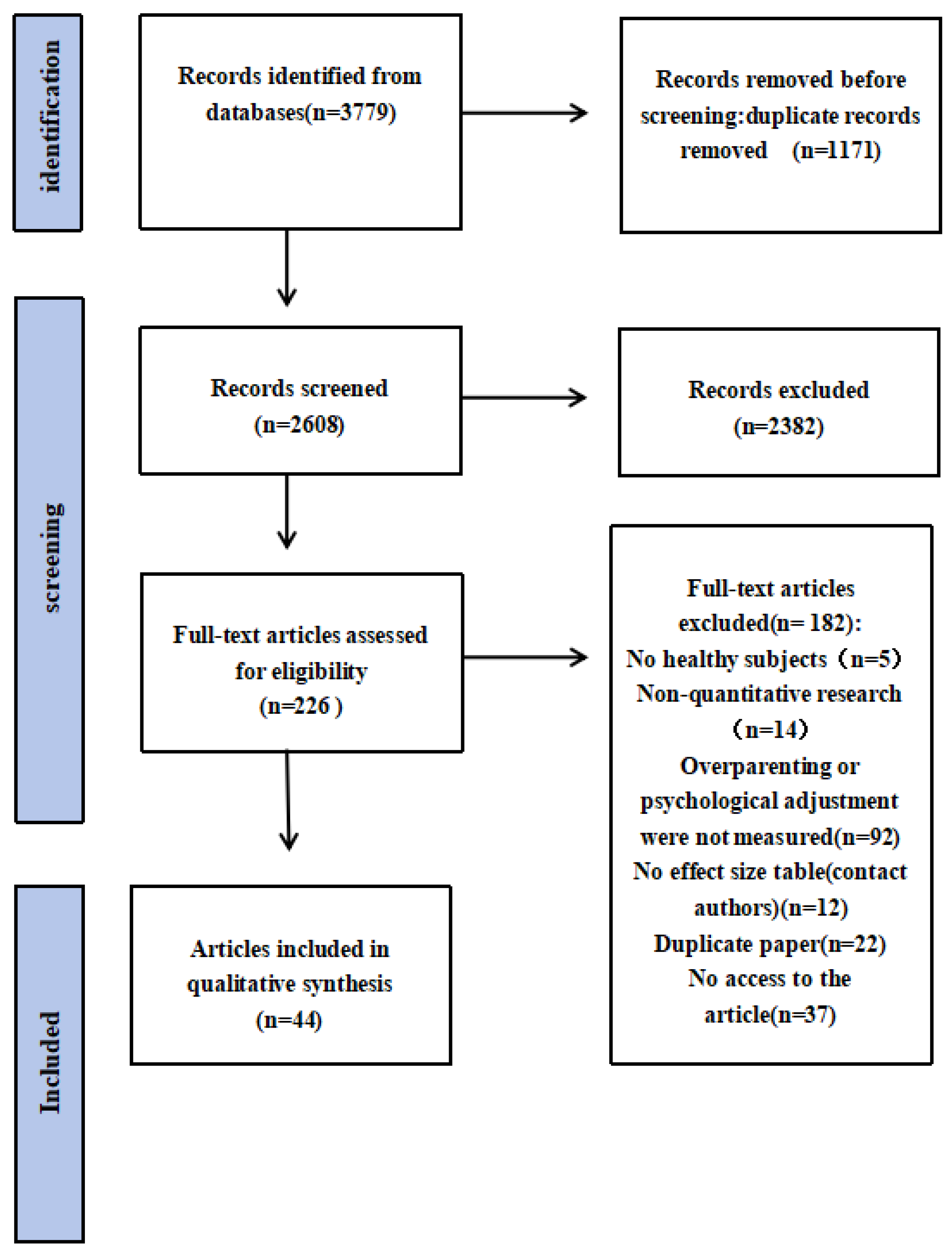

Table 1.
Demographic characteristics of studies.
| First author and year | N | Country | Cultures | Design | Parental gender | Percent of female | Age group | Average age of offspring |
Informants |
| Ahmed (2023) | 71 | Maldives | NW | C | Both | 70% | adult | N/A | offspring |
| Borges (2019) | 187 | Portugal | N-A W | C | Both | 64.70% | adult | 21.20 | offspring |
| Carone (2022) | 76 | USA | W | L | Mother | 48.68% | adult | 25 | offspring |
| Chen (2022) | 623 | China | NW | C | Both | 45.75% | adolescent | 16.04 | Both |
| Cook (2020) | 637 | USA | W | C | Both | 67% | adult | 20.03 | offspring |
| Darlow (2017) | 294 | USA | W | C | Both | 81.97% | adult | 20.54 | offspring |
| Flower (2021) | 194 | USA | W | C | Both | 64.95% | adult | N/A | offspring |
| Gao (2023) | 418 | China | NW | L | Both | 80.1% | adult | 18.71 | offspring |
| Garcia (2022) | 173 | Portugal | N-A W | C | Both | 69.40% | adult | 23.08 | offspring |
| Hong (2018) | 305 | Korea | NW | C | Both | 100% | adult | 21.94 | offspring |
| Hong (2020) | 432 | USA | W | C | Both | 89.60% | adult | 20.21 | offspring |
| Hong (2023) | 414; 612 | USA; China | W; NW | C | Both | 92%; 69% | adult | 20.38; 20.21 | offspring |
| Howard (2022) | 460 | Canada | N-A W | C | Both | 43.91% | adult | 18.33 | offspring |
| Jiao (2021) | 213 pairs | USA | W | C | Both | 65.80% | adult | 20.63 | Both |
| Jiao (2022) | 412 | USA | W | L | Both | 60.40% | adult | 24.3 | Both |
| Jiao (2023) | 442 | USA | W | C | Both | 68.10% | adult | 20.28 | offspring |
| Jung (2020) | 215;171 | USA; Korea | W; NW | C | Mother | N/A | adult | 19.61; 21.95 | offspring |
| Kouros (2017) | 118 | USA | W | C | Both | 83.10% | adult | 19.82 | offspring |
| Kwon (2016) | 412 | USA | W | C | Both | 50.70% | adult | 21.28 | offspring |
| Lee (2018) | 562 | Korea | NW | C | Both | 47.86% | adult | 24.88 | offspring |
| Leung (2020) | 1735 | China | NW | C | Both | 47.40% | child | 12.63 | offspring |
| Leung (2021) | 1074 | China | NW | L | Both | 46.80% | adolescent | 12.66 | offspring |
| Love (2020) | 473 | USA | W | C | Both | N/A | adult | 19.78 | offspring |
| Love (2020) | 539 | USA | W | C | Both | 92.50% | adult | 20.18 | offspring |
| Moilanen (2019) | 302 | USA | W | C | Both | 64.90% | adult | 21.57 | offspring |
| Padilla-Walker (2021) | 458 | USA | W | L | Both | 51% | adult | 19 | offspring |
| Pautler (2017) | 87 | USA | W | C | Mother | 63% | adult | N/A | offspring |
| Perez (2019) | 313 | USA | W | C | Both | 82.40% | adult | 19.55 | Both |
| Perez (2020) | 360 | USA | W | C | Both | 83.60% | adult | 19.93 | offspring |
| Pistella (2020) | 602 | Italian | N-A W | C | Both | 59% | adolescent | 16.59 | offspring |
| Ratcliff (2020) | 158 | USA | W | C | Mother | 74.7% | adult | 20.28 | offspring |
| Reed (2016) | 461 | USA | W | C | Mother | 80.80% | adult | 19.66 | offspring |
| Rote (2020) | 282 | USA | W | C | Both | 71% | adult | 19.87 | offspring |
| Schiffrin (2014) | 297 | USA | W | C | Mother | 88% | adult | 19.34 | offspring |
| Schiffrin (2019) | 446 | USA | W | C | Both | 73.10% | adult | 19.59 | offspring |
| Segrin (2013) | 653 pairs | USA | W | C | Both | 81% | adult | 20.03 | Both |
| Segrin (2022) | 282;281 | USA; China | W; NW | C | Both | 62.1%;71.9% | adult | 20.67;19.83 | offspring |
| Seki (2023) | 402 | Turkey | NW | C | Both | 82.10% | adult | 21.31 | offspring |
| Stout (2023) | 120 | USA | W | C | Both | 59.20% | adult | N/A | offspring |
| Wang (2021) | 648 | China | NW | C | Both | 50.30% | adult | 21 | offspring |
| Wang (2023) | 2041 | China | NW | C | Both | 52.60% | adolescent | 14.11±2.42 | offspring |
| Wenze (2019) | 104 | USA | W | C | Mother | 77.88% | adult | 19.15 | offspring |
| Zienty (2018) | 156 | USA | W | C | Both | 71.15% | adult | N/A | offspring |
Note. C = cross-sectional; L = longitudinal. N/A = not available; W=Western belonging to America; NW=non-Western; N-A W= Western but not America.
Table 2.
Results of heterogeneity and publication bias.
| Relationships | k | r | Heterogeneity Test | Publication Bias Test | |||||
| N | Q | df | I2 | Egger’s intercept | SE | 95%CI | |||
| depression | 65 | 31855 | 0.20 | 768.78 ** | 64 | 91.67% | -0.12 | 1.42 | [-2.97, 2.72] |
| anxiety | 34 | 37872 | 0.16 | 719.05** | 63 | 91.24% | 3.80 | 1.24 | [1.31, 6.28] |
| life satisfaction | 13 | 17293 | 0.09 | 315.83** | 35 | 90.05% | -5.03 | 2.98 | [-11.08, 1.02] |
| subjective well-being | 3 | 1687 | -.01 | 13.36 | 3 | 77.54% | -5.59 | 0.49 | [-7.68, -3.49] |
Disclaimer/Publisher’s Note: The statements, opinions and data contained in all publications are solely those of the individual author(s) and contributor(s) and not of MDPI and/or the editor(s). MDPI and/or the editor(s) disclaim responsibility for any injury to people or property resulting from any ideas, methods, instructions or products referred to in the content. |
© 2025 by the authors. Licensee MDPI, Basel, Switzerland. This article is an open access article distributed under the terms and conditions of the Creative Commons Attribution (CC BY) license (http://creativecommons.org/licenses/by/4.0/).
Copyright: This open access article is published under a Creative Commons CC BY 4.0 license, which permit the free download, distribution, and reuse, provided that the author and preprint are cited in any reuse.