

Submitted:
10 June 2025
Posted:
11 June 2025
You are already at the latest version
Abstract
Traditionally, formal education has favored boys, while girls, in the past, were relegated to the domestic sphere. This has been the case for centuries, without considering the possible specific cognitive needs of girls, which have been ignored. In Western countries, this has generated significant educational problems, especially in the learning of more technical subjects, with which girls not only do not identify, but often exclude themselves with the excuse that "it is not for them" (i.e., they tend to display a strong stereotype, a false belief, regarding these disciplines). The consequences have not been long in coming. Currently, in many Western countries, the low percentage of women in technical careers (such as Physics, Engineering, and Computing Science) is alarming. Is it possible to change stereotypes? This article addresses this complex issue, placing particular emphasis on the learning of spatial abilities, so important in all STEM careers (i.e., Science, Technology, Engineering, and Mathematics). The study concludes with examples of other stereotypes (mainly cultural) that have been eliminated or significantly reduced thanks to virtual reality (VR) and the help of artificial intelligence (AI). Could the same be done in the spatial domain?
Keywords:
gender gap
; spatial abilities
; STEM disciplines
; girls
; adolescence
; stereotypes
; interventions
; new technologies
1. Introduction: The Current Situation
There are many academic skills that require considerable practice for students to develop adequately [1,2]. Two of these, both crucial, are reading comprehension and spatial abilities (the latter now well recognized for their importance in the STEM disciplines -Science, Technology, Engineering, and Mathematics [3,4,5]). At least in Western countries, in the first case, reading comprehension, girls tend to be better than boys; while in the second case, spatial abilities, the opposite is true, boys tend to be better than girls [1,6,7]. However, the time devoted to these skills in the school curriculum often varies greatly. Too much attention is paid to reading comprehension (which clearly benefits boys) and too little to spatial abilities (which clearly disadvantages girls). Spatial abilities probably contributes to important problems, such as the well-known gender gap in STEM careers (especially in PECs -Physics, Computer Science, and Engineering [8,9]), which so many countries are struggling to reduce or eliminate. Multiple studies have shown that there are many variables that can intervene in these differences between boys and girls (sociocultural as well as biological), that become evident from a very early age and several hypotheses have attempted to explain them. The most plausible one places the reason in our ancestors: their organization in hunter-gatherer societies has been decisive. Because of this, men excel in orientation and navigation skills, which are necessary for hunting, while women excel in limited space skills, related to food gathering and care of offspring. Let us bear in mind that our brains are practically identical to those of our ancestors who hunted and gathered [10,11]. Fortunately, it has been shown that spatial abilities can be learned, just like any other skill [5]. Moreover, it is relevant to note that traditionally, in boys’ games, but not in girls’ games, these abilities were often practiced, thus further increasing the imbalance between boys and girls in these skills. In fact, many authors consider the lack of childhood training of girls in spatial abilities to be one of the main reasons for their underrepresentation in STEM disciplines by the time they reach university in Western countries. What can be done to remedy this situation?
It has been suggested [12] that since the school curriculum is already overloaded, it is important to consider other possibilities for practicing spatial abilities and spatial thinking, like 3D computer games and other extracurricular options, both in real life and also virtually. Games have an enormous learning power and those based on new tecnologies are especially important for the future ([13,14]. For a recent review of research that has been carried out on digital game-based education, see [15]. For example, it has been shown that playing Tetris (a digital game that consists of fitting falling pieces together to complete a wall without leaving gaps), favors brain plasticity in girls [16]. Other studies with Tetris [17] have shown large improvements in mental rotation, using various types of tests, which were maintained for several months. This study [17] argued that with the help of experience, education, and proper training, success in spatial performance is within the reach of everyone, regardless of age and gender. The authors advocate video game training as an effective method to achieve this goal. In fact, many works have shown that a wide range of games (mainly 3D games presented in any format), can reduce gender differences in spatial cognition [18,19,20,21,22]. Other important, but less well known, interventions to improve spatial abilities, as well as spatial thinking, include physical exercise, such as motor coordination training programmes (for a review in children and adolescents, see [23]), creative dance training [24,25], design education [26], and spatial language [27], among others.
The present article addresses the beneficial effects that games and new technologies, such as the metaverse and artificial intelligence (AI), could have on the learning of spatial abilities, taking into account the World Health Organization’s [28] recommendation not to expose children to screens before the age of 2 (as well as trying to avoid mobile screens, such as phones and tablets, before the age of 6). It has been argued that it is crucial to keep up with new applications and technologies in order to create novel approaches to the spatial domain that can be a useful tool, starting from primary education! [29,30,31], which is the period in which the norms, values, motivations and expectations of the society in which children grow up are internalized [32], and when stereotypes can already be measured in all their crudeness (for a review, see [33]). What do experts, especially women, think about the gender gap in the spatial domain?
2. The Importance of Expert Testimony
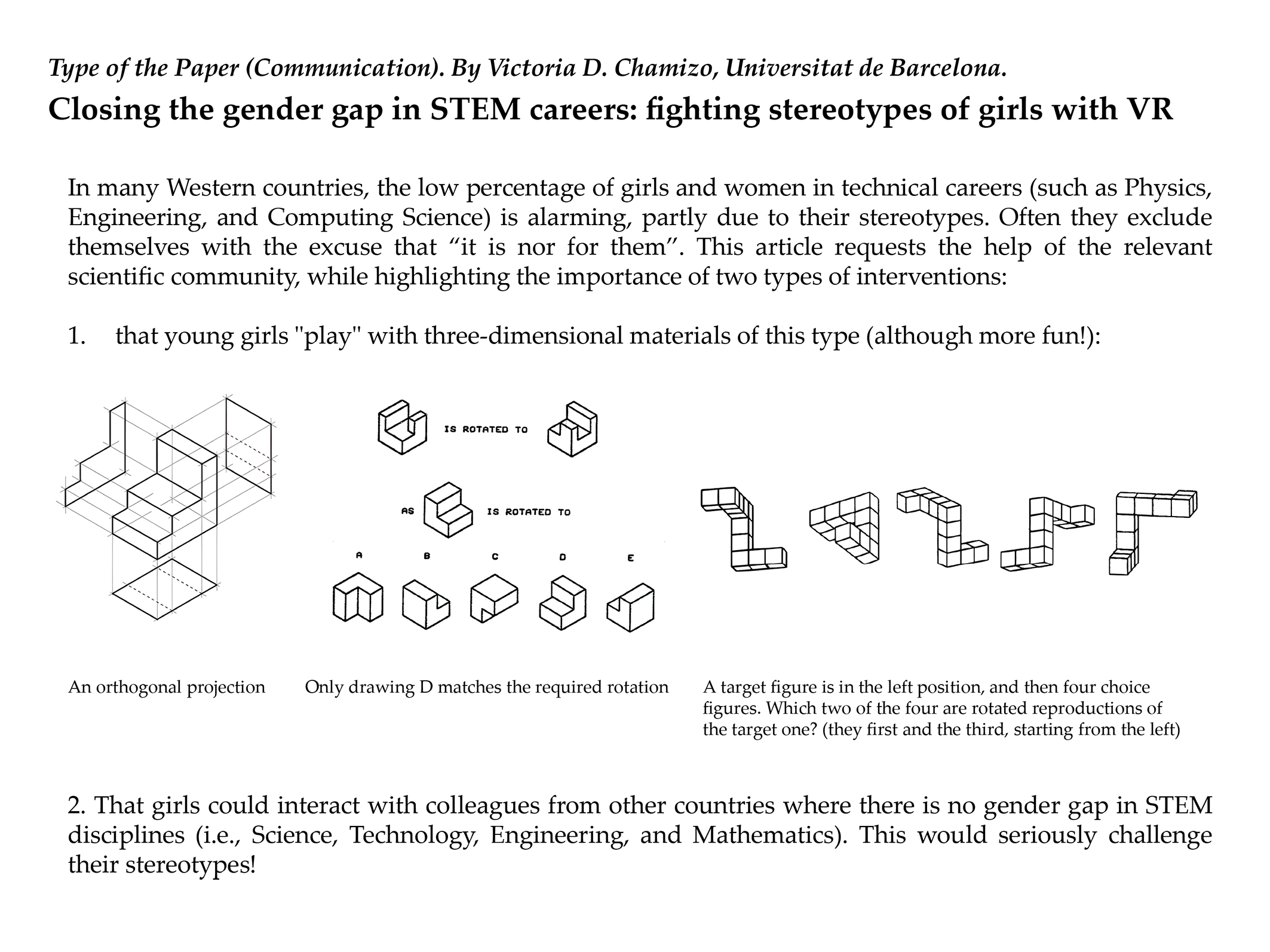
Few testimonials are as impressive as the one given by Sheryl Sorby in her 2014 ‘TEDx’ talk entitled Recruiting Women to Science, Technology, Engineering and Mathematics (https://www.youtube.com/watch?v=cJZIhl28HFI). In this lecture, Sorby explains with great frankness her successful passage through the various stages of her education, until she entered college and enrolled in engineering, a STEM career. It was then that, for the first time in her life, she had big problems with a drawing subject in which she had to do orthogonal projections (see Figure 1). She couldn’t believe what was happening to her! Especially since it was something that came easily to most of her male classmates...... With effort, she was able to overcome his problem.
An orthogonal projection is a system of representation by which an object, which is in space, is drawn, or “projected”, onto a plane, or two [34]. Looking at Figure 1, given the elevation, profile and plane of an object, one tries to mentally picture it in the three-dimensional object depicted in the centre of the figure. In other words, one has moved from a two-dimensional representation (width and height) to a three-dimensional one (width, height and depth). Particularly useful for orthogonal projections is an ability that psychologists call spatial visualization, which is the ability to mentally represent, manipulate, and rotate objects in three dimensions.
The story of Sheryl Sorby, currently professor emeritus at Ohio State University, is exemplary, which makes her testimony especially valuable and enlightening. Her powerful lecture ends with practical advice for parents and educators about the activities and toys that suit their children (especially those that suit their daughters): encourage architectural games with blocks; involve girls in practical spatial tasks; manipulate, build and draw 3D objects; play 3D video games; use maps, not GPS, on field trips... Just as important, according to her, is to always keep in mind the power of expectations and tell girls that they can learn these skills just like they learn anything else.... How different Sheryl Sorby’s comments in this TED Talk might have been if she had been taught early engineering experiences, right from primary school! (for an excellent book about early engineering experiences see [35]). This volume [35] highlights the great curiosity and eagerness to experiment that infants have with the world around them, circumstances that unfortunately are not exploited to carry out engineering experiments. The book provides empirical evidence of what can be achieved by applying engineering experiences in early childhood, emphasising the fact that this fundamental discipline can no longer be ignored in elementary school curricula. But carrying out these experiences is not a simple matter, and much work is needed [36]. This work [36] urgently recommends joining forces and partnerships to develop innovative pedagogical frameworks -a challenge!
Sorby’s TED talk is a real lesson in realism that should give us all pause. What is the reason for these differences between boys and girls in Western countries? According to her (WEPAN, July 19, 2021, https://www.wepan.org/), “It’s not a question of skills, but of opportunity. Boys are more likely than girls to play with Legos as children, or to use 3D computer games, or to attend hands-on shop classes, and it’s those kinds of activities that provide practice in taking things apart and putting them back together, the kinds of activities that help a person develop their 3D spatial abilities.” Sorby has devoted much of her professional life to developing and testing teaching materials (for a few examples see [37,38,39,40]) aimed at helping students develop spatial abilities, especially future female engineers. Her excellent exercises aimed at spatial visualisation and mental rotation are particularly noteworthy [39]. Sorby is the founder of the educational consulting firm Higher Education Services (HES), which works to advance space research and training worldwide (https://www.higheredservices.org/).
3. Spatial Abilities and Mental Rotation Tests
Spatial abilities play an important role in many aspects of STEM learning [41]. They are involved in multiple cognitive and behavioural activities and include a wide range of tasks (from paper-and-pencil tests to real-world navigation). But unfortunately, there is no agreement among researchers on either its number or the way to measure them. This implies that there is no orderly account of the available material that could help teachers in their work to assess possible problems [42]. Despite the existing differences between the different spatial tasks, it has been found that they are often correlated, so that improvement in one spatial task positively affects the others (for reviews, see [5,43]). In Western countries, in general, boys outperform girls in these abilities and the differences increase with age, to the detriment of girls (for several monographs with numerous examples, see [44,45,46,47,48]). Surprisingly, this is not the case in other countries, where girls may equal or surpass boys in spatial abilities and in STEM disciplines [1,6,7,49].
The most common test to measure spatial abilities is mental rotation, the measurement of which became popular in the 1970s [50,51,52], especially the speed of mental rotation. There are numerous variations of this test, both in terms of the stimuli presented (three-dimensional geometric shapes, letters, hands, numbers, various objects... all with different orientations) and in terms of how they are presented and exactly what the participants are asked to do. A material widely used is the Purdue Spatial Visualization Tests: Visualization of Rotations (PSVT:R), developed by Guay [51] an example of which is presented in Figure 2. According to Guay, this example requires several steps: 1. study how the object on the top line of the question rotates, 2. mentally imagine what the object shown on the middle line of the question looks like when rotated in exactly the same way, and 3. select from among the five drawings (A, B, C, D, or E) presented on the bottom line of the question the one that matches the rotated object on the middle line. In the example above only drawing D matches the required rotation.
Another test widely used is the Mental Rotation Test, developed by Vandenberg and Kuse [52] (see Figure 3). In this case, there is a target figure in the left position, followed by four choice figures. The task is to indicate which two of the four choice figures are rotated reproductions of the figure on the left. The correct answers are the first and the third (starting from the left).
It is in these tests, mental rotation tests, that the largest gender differences have been observed, even at very early ages [53]. However, it is striking that when the time factor is removed, the performance differences between men and women tend to disappear [54,55]. This has led to open questioning of these tests, as they appear to involve factors other than mental rotation: like cultural differences, educational background, and individual cognitive styles [56,57]. For a critical review see [58]. In summary, although these mental rotation tests are still considered particularly useful for measuring spatial visualisation, it is now openly acknowledged that they need to be revised to take into account the various factors that influence them.
4. Fighting STEM Stereotypes in Adolescence
Adolescence, which roughly covers the period between the ages of 10 and 18, has often been described as a time of ‘storm and stress’, a time of change, renewal and growth, when problems come to a head. The reasons for this have ranged from developmental considerations to hormones and accumulated life stresses [59,60,61]. During adolescence boys and girls need, above all, to define their identity, which must be coherent with their abilities and desires. Adolescence is a period in which young people discover how they want to direct their lives, and where boys and girls appear to be less dependent on their parents, while their dependence and intimacy on friends and “influencers” increases. At this stage of maturation social rewards (such as congratulations for a task well done) are very important, as it is critical for young people, who are very impulsive and sensitive, not to experience social rejection. Moreover, the opinion of one’s close group of friends is crucial. This is known as “groupism” [60]. It will be difficult to change a teenager’s mind if the close friendship group doesn’t do so [61,62]. This susceptibility to group influence and social influence in general decreases with age [63]. Likewise, the impact of influencers, and especially that of online social platforms, is currently worrying, as it can affect their mental health and well-being. In fact, both positive and negative effects have been observed [64].
Multiple studies have addressed the issue of gender equality at this stage of life, where it is crucial to challenge deeply entrenched gender roles such as attitudes and false beliefs or stereotypes. A typical example relates to career options, which perpetuate a gender gap in which girls are more likely to go into traditionally female fields such as health, primary education and domestic roles (HEED), while boys are attracted to male domains such as science, technology, engineering and mathematics (STEM) [65,66,67,68,69]. This is particularly surprising given that girls‘mathematical performance is often higher than boys’ [70].
Today it is known that spatial and mathematical abilities are deeply related, and that both can be fostered through practice. In the PISA reports, Space and Shape is a component of ‘Mathematical Literacy’ and its contents are spatial in nature (such as geometry, spatial visualisation, measurement and algebra). The results in the PISA reports [6,7] (see also [1]) show a large discrepancy between countries in this section of mathematics, In Western countries, boys tend to do better than girls in Space and Shape in adolescence. What is the reason for this difference? Recent work [71] suggests that this gender gap in STEM studies begins to consolidate in adolescence, with boys being clearly better at spatial abilities. Specifically, the study [71] showed that spatial abilities around the age of 15 could predict STEM career choice at university (after accounting for multiple cognitive and motivational mechanisms). However, other authors emphasise the importance of the different preferences observed in adolescents. Girls prefer career options that involve working with other people, while boys are more inclined towards jobs that involve working with things [72,73] ─and this favours more technical options (such as PEC careers). In addition, it has been openly stated that, at least in part, it is a question of mindset, which is often reproduced at home, in advertising and in marketing [74,75,76]. This mindset has been shown to influence not only young people’s future career choices, but also the scores they achieve in different subjects during primary and secondary school, depending on whether the subjects are seen as more or less masculine or feminine. For example, in the sentence “mathematics and science are things of men”, the stereotype that mathematics and science require ‘masculine’ skills is present, leading to a feeling of ‘not belonging’ in girls, which alienates them from these subjects (for an excellent recent review see [33]). In this respect, it has also been found that boys tend to manifest more positive attitudes towards the study of science, technology, engineering and mathematics, while girls manifest lower self-confidence and self-efficacy, which is not observed in childhood [70]. Undoubtedly, in Western countries, several factors must be contributing to the gender gap in STEM studies (especially in PEC careers).
Although stereotypes can be observed even in early childhood [77,78] and changing them is no easy task, fortunately there are interventions that can go a long way towards correcting them. Because the most critical period for identity exploration is the pre-adolescent stage (approximately 9-12 years), where self-concept and stereotypes become most important [16], working on mathematical and spatial abilities with girls in this complex period is crucial [79]. To this end, multiple interventions have been carried out aimed at increasing girls’ self-esteem and low mathematical self-concept, as well as to reduce anxiety problems, like spatial anxiety [80,81,82].
In addition, other interventions have also been shown to have a positive effect reducing STEM stereotypes. For example, in working with boys, some interventions have demonstrated a change in stereotypes, at least in the short to medium term, by counteracting negative messages about girls’ STEM abilities [83]. But because it is difficult to sustain these changes in the long term, the appropriateness of these interventions has been questioned [66]. What other approaches could help reduce stereotypes in the long term at these difficult ages?
5. Could New Technologies Close Stereotypes and the Gender Gap in STEM Careers?
We are currently in a period of unprecedented digital innovation, which requires educators to be well prepared to meet these challenges as well as the opportunities they present, even in primary school! [84,85,86,87]. It has been stated that VR could revolutionise our lives [88], including education, although this technology has not yet been widely adopted in classrooms partly due to the high cost of VR headsets and other equipment. In VR, the concept of immersion or presence, the illusion of ‘being there’, is crucial (for a review, see [89]). This paper [88] argues that VR can be seen as a promising tool for enhancing learning, education and training, with great potential to work on a range of skills. In addition, prices have now come down, allowing many educational institutions (as well as individuals) to explore the world of virtual reality from personal devices [90,91,92]. Adverse health effects are also a concern when using VR. Excessive use can cause a variety of problems, such as dizziness, eyestrain, nausea, postural instability and disorientation [64,93]. Of course, this is especially important with children and requires great care.
A noteworthy aspect in primary education is the importance of parasocial relationships (i.e., relationships with fictional characters such as cartoon characters and dolls), which have been shown to be very beneficial for learning (for a review, see [94]). For example, a study of three experiments [84], conducted with children aged 4-6 years, examined children’s mathematical learning from a game with a smart doll. In all three experiments, children’s parasocial relationships and mathematical conversation with the smart doll predicted faster and more accurate mathematical responses during a virtual game, as indeed they did. These results demonstrate that children’s parasocial relationships and parasocial interactions in their play with smart dolls can foster mathematical learning. As the authors claim, this study seem to suggest that parasocial relationships and parasocial interactions with intelligent characters open new frontiers for 21st century learning in primary schools.
In the previous section (5. Fighting STEM stereotypes in adolesce), the problems of insecurity and low self-esteem in the spatial domain that often accompany Western pre-adolescent and adolescent girls were mentioned. It is a period in which many girls exclude themselves from STEM careers, and in particular, from PECS (Physics, Engineering, and Computer Science), often using the excuse that these are not careers “for them.” This is where new technologies could be of enormous help, partly thanks to intercultural exchange. In fact, international exchanges and cooperation have become common with the rise of globalization. For instance, today there are VR/AR/MR networks, as well as other technical developments, which can be particularly appropriate during these years to overcome these false beliefs. These networks allow for agile communication and collaboration on a global scale and could, with the help of a simultaneous translator, contribute to overcome stereotypes in Western countries. The reason lies in the importance of face-to-face communication with colleagues of the same age, with girls from other countries where they are the ones outperforming boys in the Space and Form section of the PISA [6,7] reports (i.e., girls outperforming boys in STEM disciplines). This experience may initially cause what is called cognitive dissonance [95], a psychological discomfort, as what they will see and hear will be the opposite of their own beliefs and stereotypes. That unpleasant feeling will be the beginning of change. If girls from Western countries could easily converse and interact with their peers from these other countries, and then discuss these experiences with each other, as a group, they would probably not only be very surprised, but they will also come to accept that they have false beliefs. In this experience, the teacher’s intervention could be crucial to arbitrate the dialogue between the two sides, encouraging deep reflection, fostering debate, with its many nuances, and critically assessing and analysing the different opinions. In this ‘adventure’, greater parental involvement would be advisable [96], giving their daughters confidence not only to change their minds, but also to increase their self-esteem. Would this be possible?
Recent research [97,98,99,100,101,102,103] on cultural stereotypes and intercultural competence shows that this is not only possible, but that the results can be very good. Most of this work is supported by interactive 360-degree video technology together with AI −an artificial intelligence-based translation tool. For example, in this study [100], which addressed cross-cultural stereotypes between China and Indonesia students, a simultaneous and interactive multi-user interaction was used. The results showed a clear reduction of stereotypes. The authors highlighted the effectiveness of this intercultural learning activity in redefining students’ cultural perspectives. In it, 360-degree video technology proved to be a practical and easy-to-use medium for intercultural education. These findings provide an important benchmark for addressing other types of stereotypes through virtual reality and new technologies, such as AI. Is our technology ready to make this a widespread and low-cost reality in the space domain, to overcome the problems of stereotyping of girls in Western countries, and are parents and educators ready for this change?
6. Discussion
In this article we have focused on understanding sex and gender differences in primary and secondary education with respect to spatial skills [10,11,104], which are so important in all STEM disciplines, especially in PEC careers. A review of the literature shows that educational researchers have often overlooked several factors related to the interaction between our developmental history, cultural and occupational gender norms, and girls’ desire to study or pursue certain subjects, among other things. This statement leads to the conclusion that the educational system, at least in Western countries, must consider not only gender equality in childhood and adolescence, but also the different needs these students may have. A task that has not yet been achieved! The differences between boys and girls in the spatial domain, traditionally ignored, must be recognized and addressed (both inside and outside of school) if we truly want all students to have the same opportunities when they reach university.
Humans live in an environment full of stimuli, but the brain can only process a few of them. What do we pay attention to when solving spatial tasks? −this question is important because without attention, other more complex processes, such as learning and memory, cannot take place. Are there differences between men and women? It has been shown that when solving a spatial task that allows for multiple solutions (i.e., as one spatial and one non-spatial), men and women tend to solve the task differently (this also occurs in other mammals). Males seem more likely to use geometric information (such as angles, cardinal points and distances), while females tend to use landmarks (which are prominent objects: a specific building, a sculpture, a park, etc.). Therefore, in men, we speak of orientation or Euclidean strategies (which are hippocampal-dependent navigation strategies), and in women, of topographical or landmark-based strategies (which are non-hippocampal strategies, mainly based on the caudate nucleus). Thus, different brain regions seem to support different ways of solving spatial tasks. This could be a reminiscence of our hunter-gatherer past, which has generated different predispositions or preferences in men and women [105]. But today we know that these different preferences or predispositions are not fixed, but highly malleable [5], as is the brain, due to experience, especially in childhood and adolescence [106,107,108,109].
Whatever the reason for the differences between boys and girls (and men and women) in solving spatial tasks, there are well-controlled studies that demonstrate them. To what extent does it matter if males and females use different strategies to solve spatial tasks if they solve them correctly? Are some navigation strategies better than others? Recent research shows that the answer to this question is yes: some navigation strategies seem to be more beneficial than others. Let’s look at an example related to Alzheimer’s disease (AD), which is much more common in women than in men. In fact, women account for two-thirds of AD cases [110,111,112,113]. It has been shown [114,115] that the spatial problem-solving and navigational strategies that both men and women use more frequently may be crucial in both the propensity to develop AD and the ability to slow its development once it has appeared. Today it is known that a well-developed hippocampus helps prevent Alzheimer’s disease. It has been shown [115] that the continued use of hippocampal-dependent navigation strategies (in the case of men) increases hippocampal grey matter, while in contrast, when using non-hippocampal-dependent strategies, such as the caudate nucleus (in the case of women), the gray matter of this structure increases at the expense of that of the hippocampus! −that is, the gray matter of the hippocampus decreases. Consequently, it has been argued [116] that a reduced hippocampus may be one of the reasons for the high incidence of women with AD.
Given the brain’s malleability, especially in childhood, the previous example highlights the importance of girls practicing hippocampal-dependent spatial tasks and navigation strategies, which will also have other consequences, such as narrowing the gender gap in STEM disciplines. Future research will need to clarify many unresolved issues, emphasizing the importance of early intervention.
7. Conclusions
Early intervention is crucial to eradicate the gender gap in STEM disciplines, so pronounced in adolescence. Efforts are required in this regard. Game-based digital learning interventions are a possible solution (for reviews see [117,118]). These games can be fun and highly motivating. In addition, the opportunity for adolescent girls to communicate directly with their peers in other countries where this gender gap does not exist seems crucial. This type of intervention, free and accessible to all, is urgently needed. The future of our young women is at stake! The purpose of this article has been to make this request to the relevant scientific community.
Funding
This research received no external funding.
Acknowledgments
The author would like to thank Elisabet Gimeno for her excellent technical assistance in the preparation of this article, as well as DeepL.com (free version).
Conflicts of Interest
The author declares no conflicts of interest.
References
- Reilly, D.; Neumann, D.L.; Andrews, G. Investigating Gender Differences in Mathematics and Science: Results from the 2011 Trends in Mathematics and Science Survey. Res. Sci. Educ. 2019, 49, 25–50. [Google Scholar] [CrossRef]
- Reilly, D. Gender differences in educational achievement and learning outcomes. In International Encyclopedia of Education, 4th ed.; Robert J. Tierney, Fazal Rizvi, Kadriye Ercikan, Eds.; Elsevier Science, 2023; Vol. 6, pp. 399-408. [CrossRef]
- Wai, J. , Lubinski, D.; Benbow, C.P. Spatial ability for STEM domains: Aligning over 50 years of cumulative psychological knowledge solidifies its importance. J. Educ. Psychol. 2009, 101, 817–835. [Google Scholar] [CrossRef]
- Shea, D.L.; Lubinski, D.; Benbow, C.P. Importance of Assessing Spatial Ability in Intellectually Talented Young Adolescents: A 20-Year Longitudinal Study. J. Educ. Psychol. 2001, 93, 604–614. [Google Scholar] [CrossRef]
- Uttal, D.H.; Meadow, N.G.; Tipton, E.; Hand, L.L.; Alden, A.R.; Warren, C.; Newcombe, N.S. The Malleability of Spatial Skills: A Meta-Analysis of Training Studies. Psychol. Bull. 2013, 139, 352–402. [Google Scholar] [CrossRef] [PubMed]
- OECD, PISA 2012 Results: What Students Know and Can Do –Student Performance in Mathematics, Reading and Science. PISA OECD Publishing: Paris, France, 2014; Volume I. [CrossRef]
- OECD, PISA 2022 Results: The State of Learning and Equity in Education. PISA OECD Publishing: Paris, France, 2023; Volume I. [CrossRef]
- Cheryan, S.; Ziegler, S.A.; Montoya, A.K.; Jiang, L. Why Are Some STEM Fields More Gender Balanced than Others? Psychol. Bull. 2017, 143, 1–35. [Google Scholar] [CrossRef] [PubMed]
- Su, R.; Rounds, J. All STEM fields are not created equal: People and things interests explain gender disparities across STEM fields. Front. Psychol. 2025. [Google Scholar] [CrossRef] [PubMed]
- Kimura, D. Sex and cognition. The MIT Press: Cambridge, MA, USA, 1999. [CrossRef]
- Mackintosh, N.J. IQ and human intelligence. Oxford University Press: Oxford, UK, 2011 (2nd ed). ISBN: 9780199585595.
- National Research Council. Learning to Think Spatially. The National Academies Press: Washington, DC, USA, 2006. [CrossRef]
- Bokhove, C.; Redhead, E.S. Building digital cube houses to improve mental rotation skills. IJMEST 2025. [Google Scholar] [CrossRef]
- Albarracín, L.; Hernàndez-Sabaté, A.; Gorgorió, N. Designing levels of a video game to promote spatial thinking. IJMEST 2021, 53, 3138–3150. [Google Scholar] [CrossRef]
- Liu, J.; Shadiev, R.A. Review of empirical research on game-based digital citizenship education. Educ Inf Technol 2025. [Google Scholar] [CrossRef]
- Haier, R.J.; Karama, S. , Leyba, L.; Jung, R.E. MRI assessment of cortical thickness and functional activity changes in adolescent girls following three months of practice on a visual-spatial task. BMC Research Notes 2009, 2, 174. [Google Scholar] [CrossRef] [PubMed]
- Terlecki, M.S.; Newcombe, N.S.; Little, M. Durable and Generalized Effects of Spatial Experience on Mental Rotation: Gender Differences in Growth Patterns. Applied Cognitive Psychology 2008, 22, 996–1013. [Google Scholar] [CrossRef]
- Cherney, I.D. Mom, let me play more computer games: They improve my mental rotation skills. Sex Roles, 2008, 59, 776–786. [Google Scholar] [CrossRef]
- Feng, J.; Spence, I.; Pratt, J. Playing an action video game reduces gender differences in spatial cognition. Psychological Science 2007, 18, 850–855. [Google Scholar] [CrossRef] [PubMed]
- Hawes, Z.; Moss, J.; Caswell, B.; Poliszczuk, D. Effects of mental rotation training on children’s spatial and mathematics performance: A randomized controlled study. Trends in Neuroscience and Education 2015, 4, 60–68. [Google Scholar] [CrossRef]
- Roberts, J.; Bell, M. Sex differences on a computerized mental rotation task disappear with computer familiarization. Perceptual and Motor Skills 2000, 91, 1027–1034. [Google Scholar] [CrossRef]
- Xu, S.; Song, Y.; Liu, J. The Development of Spatial Cognition and Its Malleability Assessed in Mass Population via a Mobile Game. Psychological Science 2023, 34, 345–357. [Google Scholar] [CrossRef]
- Morawietz, C.; Muehlbauer, T. Effects of Physical Exercise Interventions on Spatial Orientation in Children and Adolescents: A Systematic Scoping Review. Front. Sports Act. Living 2021, 3, 664640. [Google Scholar] [CrossRef]
- Jansen, P.; Richter, S. Effects of a one-hour creative dance training on mental rotation performance in primary school aged children. Int. J. Learn. Teach. Educ. Res. 2015, 13, 49–57. e-ISSN: 1694-2116.
- Jansen, P.; Kellner, J.; Rieder, C. The Improvement of Mental Rotation Performance in Second Graders after Creative Dance Training. Creative Education 2013, 4, 418–422. [Google Scholar] [CrossRef]
- Tank, K.M.; et al. Engineering in early elementary classrooms through the integration of high-quality Literature, design, and STEM+C content. In Early Engineering Learning, Early Mathematics Learning and Development, L. English; T. Moore, Eds., Springer: Brisbane, QLD, Australia, 2024; pp. 175–201. [CrossRef]
- Georges, C.; Cornu, V.; Schiltz, C. The importance of spatial language for early numerical development in preschool: Going beyond verbal number skills. PLoS One 2023, 29; 18(9), e0292291. [CrossRef]
- WHO, “Guidelines on physical activity, sedentary behaviour and sleep for children under 5 years of age”, 2019. ISBN: 9789241550536, available in https://www.who.int/publications/i/item/9789241550536.
- Figueiredo, M.; Mafalda, R.; Kamensky, A. Virtual Reality as an Educational Tool for Elementary School. In Proceedings of IDEAS 2019, L. Pereira; J. Carvalho; P. Krus; M. Klofsten; V. De Negri, Eds.; Springer Nature, 2021; Volume 198, pp. 261-267. [CrossRef]
- Supli, A.A.; Yan, X. Exploring the effectiveness of augmented reality in enhancing spatial reasoning skills: A study on mental rotation, spatial orientation, and spatial visualization in primary school students. Educ Inf Technol 2024, 29, 351–374. [Google Scholar] [CrossRef]
- Walstra, K.A.; Cronje, J.; Vandeyar, T. A Review of Virtual Reality from Primary School Teachers’ Perspectives. EJEL 2023, 22, 01–11. [Google Scholar] [CrossRef]
- Gómez Escribá, D.; Pérez Gómez, C.; Puchol Forés, B., Coor. Matildes. Les grans oblidades de la història de la ciència (Matildes. The great forgotten in the history of science). Xarrad/Aps Llibres: Valencia, Spain, 2025. ISBN: 978-84-9133-757-7.
- Miller, D.; Lauer, J.E.; Tanenbaum, C.; Burr, L. The development of children’s gender stereotypes about STEM and verbal abilities: A preregistered meta-analytic review of 98 studies. Psychol. Bull. 2024, 150, 1363–1396. [Google Scholar] [CrossRef] [PubMed]
- Mattila P. Geometry of Sets and Measures in Euclidean Spaces: Fractals and Rectifiability. Cambridge University Press: Cambridge, UK, 1995. ISBN 0 521 46576 1.
- English, L.; Moore. T., Eds. Early Engineering Learning, Early Mathematics Learning and Development; Springer: Brisbane, QLD, Australia, 2020. ISBN 978-981-10-8620-5.
- Bufasi, E.; Lin, T.J.; Benedicic, U.; Westerhof, M.; Mishra, R.; Namsone, D.; Dudareva, I.; Sorby, S.; Gumaelius, L.; Klapwijk, R.M.; Spandaw, J.; Bowe, B.; O’Kane, C.; Duffy, G.; Pagkratidou, M.; Buckley, J. Addressing the complexity of spatial teaching: a narrative review of barriers and enablers. Front. Educ. 2024, 9, 1306189. [Google Scholar] [CrossRef]
- Sorby, S.; Veurink, N.; Streiner, S. Does spatial skills instruction improve STEM outcomes? The answer is ‘yes’. Learn. Individ. Differ. 2018, 67, 209–222. [Google Scholar] [CrossRef]
- Lane, D.; Sorby, S. Bridging the gap: blending spatial skills instruction into a technology teacher preparation programme. Int J Technol Des Ed. 2022, 32, 2195–2215. [Google Scholar] [CrossRef]
- Sorby, S. A. Educational research in developing 3-d spatial skills for engineering students. IJSE(A) 2009, 31, 459–480. [Google Scholar] [CrossRef]
- Sorby, S. A.; Baartmans, B. J. The Development and Assessment of a Course for Enhancing the 3-D Spatial Visualization Skills of First Year Engineering Students. JEE 2020, 89, 301–307. [Google Scholar] [CrossRef]
- Duffy, G.; Buckley, J; Sorby, S. Editorial: Spatial ability in STEM learning. Front. Educ. 2025, 10, 1602013. [CrossRef]
- Uttal, D.H.; McKee, K.; Simms, N.; Hegarty, M.; Newcombe, N.S. How Can We Best Assess Spatial Skills? Practical and Conceptual Challenges. Journal of Intelligence 2024, 12: 8. [CrossRef]
- Voyer, D.; Voyer, S.; Bryden, M.P. Magnitude of sex differences in spatial abilities: A meta-analysis and consideration of critical variables. Psychol. Bull. 1995, 117, 250–270. [Google Scholar] [CrossRef]
- Khine, M.S., Ed. Visual-spatial Ability in STEM Education. Transforming Research into Practice. Springer Nature: Cham, Switzerland AG, 2017. ISBN 978-3-319-44385-0.
- Castro-Alonso, J.C., Ed. Visuospatial Processing for Education in Health and Natural Sciences. Springer Nature: Cham, Switzerland AG, 2019. ISBN 978-3-030-20968-1.
- Ishikawa, T.; Newcombe. N.S. Why spatial is special in education, learning, and everyday activities. Cogn Res Princ Implic. 2021, 23, 6, 20. [CrossRef]
- Chamizo, V.D.; Bourdin, P.; Mendez-Lopez, M.; Santamaria, J.J. Editorial: From paper and pencil tasks to virtual reality interventions: improving spatial abilities in girls and women. Front. Virtual Real. 2023, 4, 1286689. https://www.frontiersin.org/articles/10.3389/frvir.2023.1286689/full. [CrossRef]
- Piccardi, L.; Nori, R; Cimadevilla, J.M.; Kozhevnikov, M. The Contribution of Internal and External Factors to Human Spatial Navigation. Brain Sci. 2024, 14, 585. [CrossRef]
- Reilly, D.; Hurem, A. Designing equitable STEM education: guidelines for parents, educators, and policy-makers to reduce gender/racial achievement gaps. International Encyclopedia of Education, 4th edition. Elsevier: Oxford, UK, 2023; pp. 334-343. [CrossRef]
- Shepard, R.N.; Metzler, J. Mental Rotation of Three-Dimensional Objects. Science 1971, 171, 701–703. [Google Scholar] [CrossRef]
- Guay, R. Purdue Spatial Visualization Test; Purdue Research Foundation: West Lafayette, IN, USA, 1976. [Google Scholar]
- Vandenberg, S.G.; Kuse, A.R. Mental Rotations, a Group Test of Three-Dimensional Spatial Visualization. Percept. Mot. Skills 1978, 47, 599–604. [Google Scholar] [CrossRef] [PubMed]
- Johnson, S.P.; Moore, D.S. Spatial Thinking in Infancy: Origins and Development of Mental Rotation between 3 and 10 Months of Age. Cogn. Res. Princ. Implic. 2020, 5, 10. [Google Scholar] [CrossRef] [PubMed]
- Hegarty, M. Ability and Sex Differences in Spatial Thinking: What Does the Mental Rotation Test Really Measure? Psychon. Rev. 2018, 25, 1212–1219. [Google Scholar] [CrossRef] [PubMed]
- Voyer, D.; Saint-Aubin, J.; Altman, K.; Doyle, R.A. Sex Differences in Tests of Mental Rotation: Direct Manipulation of Strategies With Eye-Tracking. J Exp Psychol Human 2020, 46, 871–889. [Google Scholar] [CrossRef] [PubMed]
- Fisher, M. L.; Meredith, T.; Gray, M. Sex differences in mental rotation ability are a consequence of procedure and artificiality of stimuli. Evolutionary Psychological Science 2018, 4, 124–133. [Google Scholar] [CrossRef]
- McNea, M.; Cole, R.; Tanner, D.; Lane, D. Cognitive Perspectives on Perceived Spatial Ability in STEM. In Spatial Cognition XIII. Spatial Cognition 2024. Lecture Notes in Computer Science; M. Živković; J. Buckley; M. Pagkratidou; G. Duffy, Eds; Springer: Cham, Switzerland, 2024; Volume 14756, pp 66–78. [CrossRef]
- Bartlett, K.A.; Camba, J.D. Gender differences in spatial ability: A critical review. Educational Psychology Review 2023, 35, 8. [Google Scholar] [CrossRef]
- Steinberg, L.; Silverberg, S. B. The vicissitudes of autonomy in early adolescence. Child Development 1986, 57, 841–851. [Google Scholar] [CrossRef] [PubMed]
- Bueno, D. El cerebro del adolescente, 3rd ed. [The adolescent brain]. Grijalbo: Barcelona, Spain, 2022. ISBN: 978-84-253-6135-7.
- Brown, B.B.; Bakken, J.P.; Ameringer, S.W.; Mahon, S.D. A comprehensive conceptualization of the peer influence process in adolescence. In Understanding peer influence in children and adolescence; M. J. Prinstein; K. A. Dodge, eds.; The Guilford Press: New York, US, 2008, pp. 17–44. ISBN: 978-1-59385-397-6.
- Dishion, T.J.; Tipsord, J.M. Peer contagion in child and adolescent social and emotional development. Annu Rev Psychol. 2011, 62, 189–214. [Google Scholar] [CrossRef]
- Klein, R.L. Age, sex, and task difficulty as predictors of social conformity. J Gerontol. 1972, 27, 229–36. [Google Scholar] [CrossRef]
- Tekinbaş, K.S.; Madison, E.T.; Adame, A.; Schueller, S.M.; Khan, F.R. Youth, Mental Health, and the Metaverse: Reviewing the Literature. Connected Learning Alliance: Irvine, CA, US, 2023. https://clalliance.org/publications/youth-mental-health-and-the-metaverse-reviewing-the-literature.
- Pasupathi, M. Age differences in response to conformity pressure for emotional and nonemotional material. Psychology and Aging 1999, 14, 170–174. [Google Scholar] [CrossRef]
- Silvers, J.A.; McRae, K.; Gabrieli, J.D.; Gross, J.J.; Remy, K.A.; Ochsner, K.N. Age-related differences in emotional reactivity, regulation, and rejection sensitivity in adolescence. Emotion 2012, 12, 1235-47. [Google Scholar] [CrossRef] [PubMed]
- Eagly, A.H.; Koenig, A.M. The vicious cycle linking stereotypes and social roles. Current Directions 2021, 30, 343–350. [Google Scholar] [CrossRef]
- Iacoviello, V.; Valsecchi, G.; Vétois, M.; et al. Reducing the gender gap on adolescents’ interest in study fields: The impact of perceived changes in ingroup gender norms and gender prototypicality. Soc Psychol Educ 2024, 27, 1043–1063. [Google Scholar] [CrossRef] [PubMed]
- Telzer, E.H.; Dai, J.; Capella, J.J.; Sobrino, M.; Garrett, S.L. Challenging stereotypes of teens: Reframing adolescence as window of opportunity. Am Psychol. 2022, 77, 1067–1081. [Google Scholar] [CrossRef] [PubMed]
- Qu, Y. Stereotypes of adolescence: Cultural differences, consequences, and intervention. Child Dev. Perspect. 2023, 17, 136–141. [Google Scholar] [CrossRef]
- Tian, J.; Ren, K.; Newcombe, N.S.; Weinraub, M.; Vandell, D.L.; Gunderson, E.A. Tracing the origins of the STEM gender gap: The contribution of childhood spatial skills. Dev Sci. 2023, 26, e13302. [Google Scholar] [CrossRef]
- Escobar, M.; Majewski, H.M.; Qazi, M.; Rawajfih, Y. Self-efficacy in STEM. In International Encyclopedia of Education, 4th ed.; Robert J. Tierney, Fazal Rizvi, Kadriye Ercikan, Eds.; Elsevier Science, 2023, pp. 388-394. ISBN 9780128186299. [CrossRef]
- Su, R.; Rounds, J.; Armstrong, P. I. Men and things, women and people: a meta-analysis of sex differences in interests. Psychol. Bull. 2009, 135, 859–884. [Google Scholar] [CrossRef] [PubMed]
- Su, R.; Rounds, J. All STEM Fields are Not Created Equal: People and Things Interests Explain Gender Disparities Across STEM Fields. In The underrepresentation of women in science: International and Cross-Disciplinary Evidence and Debate; Frontiers Media: Lausanne, Switzerland, 2015. [CrossRef]
- Valtorta, R.R.; Baldissarri, C.; Raguso, G.; D’Ecclesiis, G.; Volpato, C. Gender stereotypes and sexualization in Italian children’s television advertisements. Sexuality & Culture 2023, 27, 1625–1645. [Google Scholar] [CrossRef]
- Fine, C.; Rush, E. “Why does all the girls have to buy pink stuff?” the ethics and science of the gendered toy marketing debate. J. Bus. Ethics 2018, 149, 769–784. [Google Scholar] [CrossRef]
- Bian, L.; Leslie, S-J.; Cimpian, A. Gender stereotypes about intelectual ability emerge early and influence children’s interests. Science 2017, 355, 389–391. [CrossRef]
- Moè, A. Mental rotation and mathematics: Gender-stereotyped beliefs and relationships in primary school children. Learn. Individ. Differ. 2018, 61, 172–180. [Google Scholar] [CrossRef]
- Girelli, L. What does gender has to do with math? Complex questions require complex answers. J Neurosci Res. 2023, 101, 679–688. [Google Scholar] [CrossRef] [PubMed]
- Lennon-Maslin, M.; Quaiser-Pohl, C.; Wickord, L-C. Beyond numbers: the role of mathematics self-concept and spatial anxiety in shaping mental rotation performance and STEM preferences in primary education. Front. Educ. 2024, 9, 1300598. [CrossRef]
- Zhao, F.; Zhang, Y.; Alterman, V.; Zhang, B.; Yu, G. Can math-gender stereotypes be reduced? A theory-based intervention program with adolescent girls. Curr. Psychol. 2018, 37, 612–624. [Google Scholar] [CrossRef]
- Spinner, L.; Tenenbaum, H. R.; Cameron, L.; Wallinheimo, A-S. A school-based intervention to reduce gender-stereotyping. Sch. Psychol. Int. 2021, 42, 422-449. [CrossRef]
- Cyr, E.N.; Kroeper, K.M.; Bergsieker, H.B.; Dennehy, T.C.; Logel, C.; et al. Girls are good at STEM: Opening minds and providing evidence reduces boys’ stereotyping of girls’ STEM ability. Child Dev. 2024, 95, 636–647. [Google Scholar] [CrossRef] [PubMed]
- Calvert, S.L.; Putnam, M.M.; Aguiar, N.R.; Ryan, R.M.; Wright, C.A.; Liu, Y.H.A.; Barba, E. Young Children’s Mathematical Learning From Intelligent Characters. Child Dev. 2020, 91, 1491–1508. [Google Scholar] [CrossRef]
- Calvert, J.; Hume, M. Improving student learning outcomes using narrative virtual reality as pre-training. Virtual Reality 2023, 27, 2633–2648. [Google Scholar] [CrossRef]
- Xu, X. Talking with machines: Can conversational technologies serve as children’s social partners? SRCD 2023, 17, 53–58. [Google Scholar] [CrossRef]
- Zou, D.; Xie, H.; Kohnke, L. Navigating the Future: Establishing a Framework for Educators’ Pedagogic Artificial Intelligence Competence. EJED 2025, 60, e70117. [Google Scholar] [CrossRef]
- Slater, M.; Sanchez-Vives, M.V. Enhancing Our Lives with Immersive Virtual Reality. Front. Robot. AI 2016, 3. [CrossRef]
- Marougkas, A.; Troussas, C.; Krouska, A.; et al. How personalized and effective is immersive virtual reality in education? A systematic literature review for the last decade. Multimed Tools Appl. 2024, 83, 18185–18233. [Google Scholar] [CrossRef]
- Alsop, T. (2024) Virtual reality (VR) headset average price in the United States from 2018 to 2028. Retrieved from https://www.statista.com/forecasts/1338404/vr-headset-average-price-united-states.
- Kumar, L.; Tanveer, Q.; Kumar, V.; Javaid, M.; Haleem, A. Developing low cost 3 D printer. Int. J. Appl. Sci. Eng. Res. 2016, 5, 433–447. [Google Scholar] [CrossRef]
- Rendón-Medina, M.A.; Andrade-Delgado, L.; Telich-Tarriba, J.E.; Fuente-Del-Campo, A.; Altamirano-Arcos, C.A. Dimensional Error in Rapid Prototyping with Open Source Software and Low-cost 3D-printer. Plast Reconstr Surg Glob Open. 2018, 25, 6, e1646. [CrossRef]
- Lundin, R.M.; Yeap, Y.; Menkes, D.B. Adverse effects of virtual and augmented reality interventions in psychiatry: systematic review, JMIR Ment. Health 2023, 10, e43240. [Google Scholar] [CrossRef]
- Pérez-Marín, D.A. Review of the Practical Applications of Pedagogic Conversational Agents to Be Used in School and University Classrooms. Digital 2021, 1, 18–33. [Google Scholar] [CrossRef]
- Harmon-Jones, E.; Mills, J. An introduction to cognitive dissonance theory and an overview of current perspectives on the theory. In Cognitive dissonance: Reexamining a pivotal theory in psychology, 2nd ed.; E. Harmon-Jones, Ed.; American Psychological Association: Washington, DC, US, 2019, pp. 3–24. [CrossRef]
- Livingstone, S.; Blum-Ross, A. Parents’ Role in Supporting, Brokering or Impeding Their Children’s Connected Learning and Media Literacy. Cultural Science Journal 2019, 11, pp. 68–77. [CrossRef]
- Liu, N.; Zhang, Y.B. Warranting theory, stereotypes, and intercultural communication: US Americans’ perceptions of a target Chinese on Facebook. IJIR 2020, 77, 83–94. [Google Scholar] [CrossRef]
- Li, C.; Ip, H.H.S.; Wong, Y.M.; Lam, W. S. An empirical study on using virtual reality for enhancing the youth’s intercultural sensitivity in Hong Kong. JCAL 2020, 36, 625–635. https://publons.com/publon/10.1111/jcal.12432. [CrossRef]
- Shadiev, R.; Wang, X.; Chen, X.; Gayevskaya, E.; Borisov, N. Research on the impact of the learning activity supported by 360-degree video and translation technologies on cross-cultural knowledge and attitudes development. Educ Inf Technol 2024, 29, 7759–7791. [Google Scholar] [CrossRef]
- Shadiev, R.; Chen, X.; Reynolds, B.L.; Song, Y.; Altinay, F. Facilitating cognitive development and addressing stereotypes with a cross-cultural learning activity supported by interactive 360-degree video technology. BJET 2024, 55, 2668–2696. [Google Scholar] [CrossRef]
- Shadiev, R.; Dang, C.; Sintawati, W.; Yi, S.; Huang, Y. M. Facilitating information literacy and intercultural competence development through the VR Tour production learning activity. ETR&D 2023, 71, 2507–2537. [Google Scholar] [CrossRef]
- Xu, J.; Li, Y.; Shadiev, R.; Li, C. College students’ use behavior of generative AI and its influencing factors under the unified theory of acceptance and use of technology model. Educ Inf Technol 2025. [Google Scholar] [CrossRef]
- Yeh, H.C.; Tseng, S.S.; Heng, L. Enhancing EFL students’ intracultural learning through virtual reality. Interact. Learn. Environ. 2020, 30, 1609–1618. [Google Scholar] [CrossRef]
- Halpern, D. F. Sex differences in cognitive abilities, 4ª ed.; Lawrence Erlbaum: NJ, US. 2012. ISBN 978-I-84872-940-7.
- Chamizo, V.D.; Rodrigo, T. Spatial orientation. In Encyclopedia of Animal Cognition and Behavior; J. Vonk, T. K. Shackelford, Eds.; Springer: Cham, Switzerland AG. [CrossRef]
- Schaefer, N.; et al. The malleable brain: plasticity of neural circuits and behavior - a review from students to students. J Neurochem. 2017, 142, 790–811. [Google Scholar] [CrossRef]
- Sweatt, J.D. Neural plasticity and behavior - sixty years of conceptual advances. J Neurochem. 2016, 139, 2, 179-199. [CrossRef]
- Cantor, P.; Osher, D.; Berg, J.; Steyer,; L. Rose, T. Malleability, plasticity, and individuality: How children learn and develop in context. Appl. Dev. Sci. 2019, 23, 307-337. [CrossRef]
- Laube, C.; van den Bos, W.; Fandakova, Y. The relationship between pubertal hormones and brain plasticity: Implications for cognitive training in adolescence. Dev. Cogn. Neurosci. 2020, 42, 100753. [Google Scholar] [CrossRef]
- Li, R.; Singh, M. Sex differences in cognitive impairment and Alzheimer’s disease. Front Neuroendocrynol. 2014, 35, 3, 385-403. [CrossRef]
- Bourzac, K. Why women experience Alzheimer’s disease differently from men. Nature 2025, 640, S14–S17. [Google Scholar] [CrossRef] [PubMed]
- Moutinho, S. Women twice as likely to develop Alzheimer’s disease as men —but scientists do not know why. Nat. Med. 2025, 31, 704–707. [Google Scholar] [CrossRef] [PubMed]
- Subramaniapillai, S.; Almey, A.; Rajah, M. N.; Einstein, G. Sex and gender differences in cognitive and brain reserve: Implications for Alzheimer’s disease in women. Front Neuroendocrinol. 2021, 60, 100879. [Google Scholar] [CrossRef] [PubMed]
- Dahmani, L.; Bohbot, V.D. Dissociable contributions of the prefrontal cortex to hippocampus- and caudate nucleus-dependent virtual navigation strategies. Neurobiol Learn Mem. 2015, 117, 42–50. [Google Scholar] [CrossRef] [PubMed]
- Sodums, D.J.; Bohbot, V.D. Negative correlation between grey matter in the hippocampus and caudate nucleus in healthy aging. Hippocampus 2020, 30, 892–908. [Google Scholar] [CrossRef]
- Dahmani, L.; Idriss, M.; Konishi, K.; West, G.L.; Bohbot, V.D. Considering environmental factors, navigation strategies, and age. Front. Virtual Real. 2023, 4, 1166364. [Google Scholar] [CrossRef]
- Behnamnia, N.; Kamsin, A.; Hayati, S. Impact of Digital Game-Based Learning on STEM education in Primary Schools: A meta-analysis of learning approaches. Innoeduca 2024, 10, 113–140. [Google Scholar] [CrossRef]
- Wang, L.H.; Chen, B.; Hwang, G.J.; Guan, J.Q.; Wang, Y.Q. Effects of digital game-based STEM education on students’ learning achievement: a meta-analysis. IJ STEM Ed. 2022, 9, 26. [Google Scholar] [CrossRef]
Figure 1.
Example of orthogonal projection.
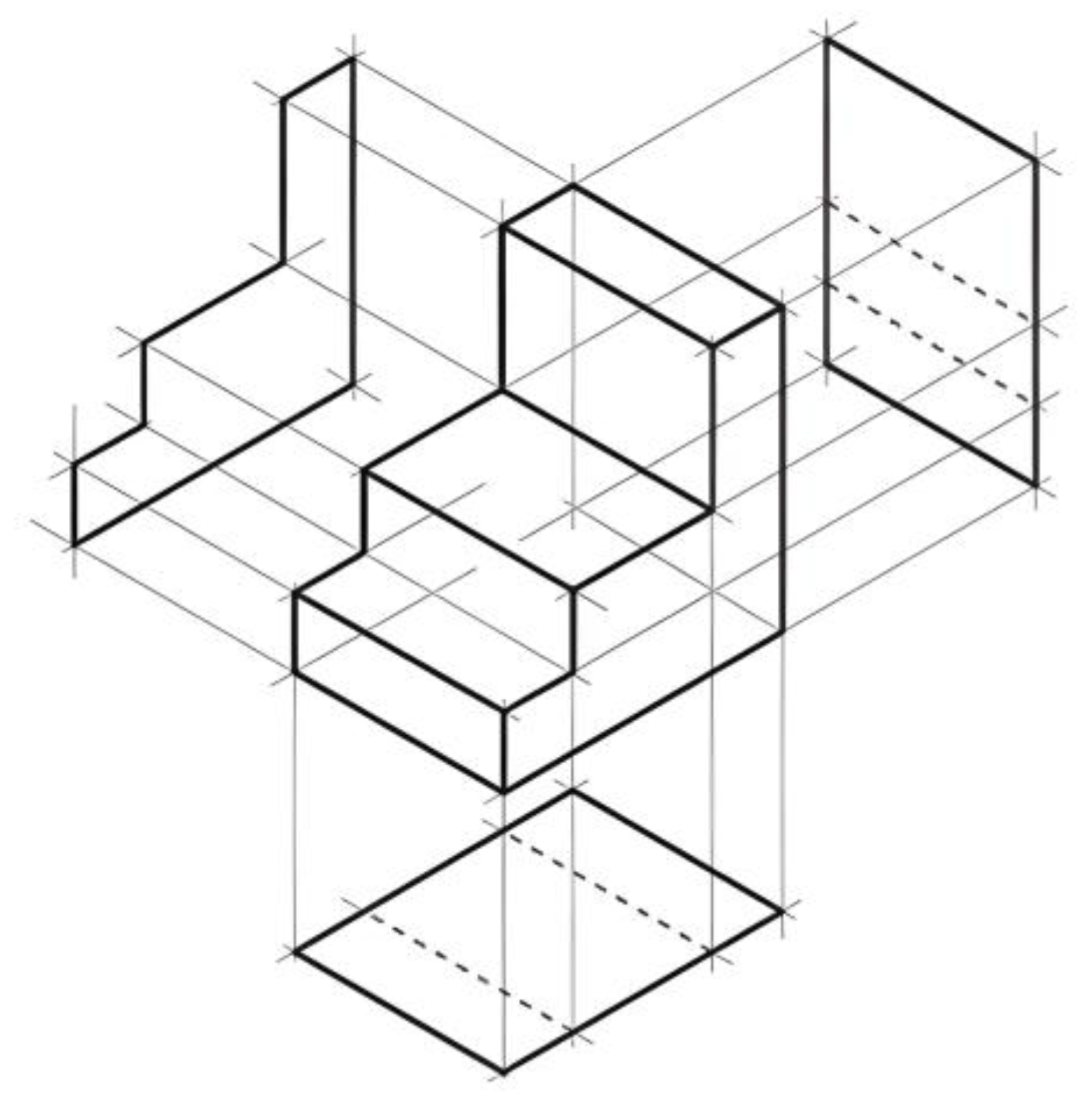
Figure 2.
Purdue Spatial Visualization Test [51].
Figure 2.
Purdue Spatial Visualization Test [51].
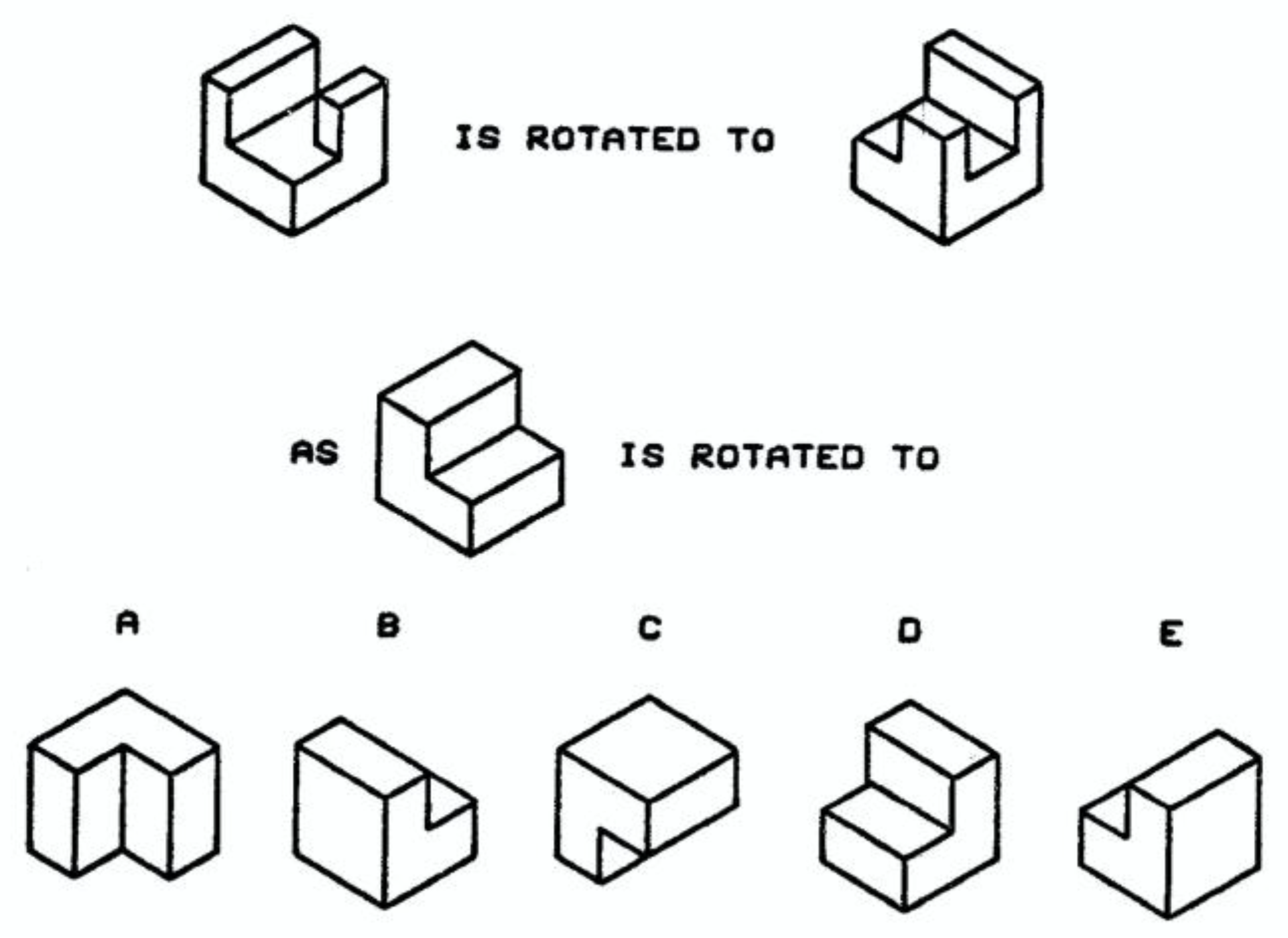
Figure 3.
Mental Rotation Test [52].
Figure 3.
Mental Rotation Test [52].

Disclaimer/Publisher’s Note: The statements, opinions and data contained in all publications are solely those of the individual author(s) and contributor(s) and not of MDPI and/or the editor(s). MDPI and/or the editor(s) disclaim responsibility for any injury to people or property resulting from any ideas, methods, instructions or products referred to in the content. |
© 2025 by the authors. Licensee MDPI, Basel, Switzerland. This article is an open access article distributed under the terms and conditions of the Creative Commons Attribution (CC BY) license (http://creativecommons.org/licenses/by/4.0/).
Copyright: This open access article is published under a Creative Commons CC BY 4.0 license, which permit the free download, distribution, and reuse, provided that the author and preprint are cited in any reuse.


