
Submitted:
04 June 2025
Posted:
04 June 2025
You are already at the latest version
Abstract
This study proposes the introduction of a deflection-based criterion for barrel support brackets to ensure the structural stability of large fire shutters installed in large-scale buildings such as logistics facilities. While the current extended application method in BS EN 15269 evaluates the structural adequacy of the barrel primarily based on stress analysis, this research aims to establish a more reliable design guideline by additionally considering the deflection of barrel support brackets, which may become structurally vulnerable under high-temperature conditions. To achieve this, the bracket was modeled as a cantilever beam, and deflection equations were applied. The deflection and stress were analyzed for various rectangular hollow section sizes. Furthermore, support capacities at ambient temperature and at 700°C were compared, and regression analysis was conducted to assess the accuracy and error rates associated with different deflection limits (L/180 to L/480). The results indicate that setting the deflection limit to L/180 yields the most favorable outcome in terms of structural safety and error minimization across most conditions. It is expected that the adoption of deflection criteria for barrel support brackets in the design of large fire shutters will contribute significantly to preventing fire spread and ensuring structural safety.
Keywords:
Amount of Deflection
; BS EN 15269
; Extended Application
; Logistics Facilities
; Large Scale Fire Sutter
; Regression Analysis
1. Introduction
In recent years, the demand for logistics facilities has significantly increased due to the rapid growth of e-commerce. In particular, the construction of large-scale logistics centers has accelerated following the COVID-19 pandemic, as non-face-to-face consumption culture became more prevalent. These logistics facilities contribute to improving the efficiency of supply chains by enabling the effective storage and distribution of goods [1].
However, due to their structural characteristics, logistics facilities entail substantial risks in the event of a fire. Most logistics facilities are designed with high ceilings and large open spaces, where various types of combustible materials are densely stored. As a result, flashover can occur in a short period after ignition, increasing the potential for the fire to escalate into a large-scale disaster [2].
To mitigate these risks, both active fire protection and passive fire protection (PFP) systems must be reinforced. Among PFP measures, fire shutters play a critical role in compartmentalizing large spaces and preventing fire spread. Nevertheless, the current evaluation criteria for fire shutters are not clearly defined, and in logistics facilities with high ceilings, there are additional difficulties in applying fire detectors. Therefore, there is an increasing demand for improved fire shutter performance itself, and it is urgent to establish performance evaluation methods that reflect the unique characteristics of logistics facilities [3,4,5].
Accordingly, this study investigates the characteristics of fire spread in logistics facilities and the importance of fire compartmentation to derive the specific features of fire shutters. A new calculation method is proposed by introducing a deflection limit approach to the extended application of large fire shutters. This approach is expected to enhance the structural safety of fire shutters and contribute to reducing fire damage in logistics facilities by reinforcing compartmentalization.
This paper is structured as follows. Section 2 describes in detail the fire characteristics observed in logistics facilities, the importance of fire compartmentation, and the role of fire shutters, including a review of the extended application concept. In addition, it discusses potential issues that may arise during the extended application of large fire shutters and proposes a new analytical approach to address these issues. Section 3 validates the proposed deflection-based formula through a comparative analysis with the conventional extended application method and employs regression analysis to verify the reliability of the proposed formula by applying optimal deflection limits. Section 4 discusses the results and limitations of this study. Finally, Section 5 summarizes the conclusions and contributions of this research.
2. Importance of Fire Compartmentation According to the Fire Characteristics of Logistics Facilities and Problems with Existing Extended Application Methods
2.1. Fire Characteristics of Logistics Facilities and Performance of Fire Shutters
logistics facilities are increasingly becoming larger and more complex, evolving beyond simple storage functions to include packaging and processing operations. In such facilities, rails are often installed to enhance internal logistics and work efficiency, and refrigeration or freezing systems are added to distribute temperature-sensitive goods. As a result, certain fire compartmentation and fire protection standards have been relaxed. These logistics facilities typically have external walls that are vulnerable to fire and store large quantities of goods in rack systems. The densely packed goods on racks increase the fire load and lead to deep-seated fires, making early fire detection and suppression difficult [1,6].
As shown in Figure 1, logistics facilities are characterized by tall ceilings and high-density vertical storage using racks, which leads to a high fuel load within large interior spaces. This creates an environment that is vulnerable to fire and carries a high potential risk. Furthermore, the complex and enclosed structural layout of logistics facilities hinders firefighting and evacuation. In addition, the polyurethane foam commonly used as a cladding material accelerates explosive combustion, generating large amounts of gas and residual vapors, and contributes to the occurrence of flashover and rapid flame spread [7,8,9,10].
According to statistical data from the National Fire Protection Association (NFPA), an average of 1,450 logistics facilities fires occurred annually in the United States between 2016 and 2020. Globally, logistics facilities fires continue to occur consistently. Figure 2 illustrates the structural differences between logistics facilities and general buildings, including large-volume centralized storage, tall ceilings with wide open spaces, the installation of large-scale equipment, and specific storage structures and configurations. To mitigate the fire risks inherent to logistics facilities, continuous research is being conducted to enhance fire protection measures and fire safety performance [10,11,12,13,14].
Fire safety standards can be broadly divided into Active Fire Protection (AFP) and Passive Fire Protection (PFP). AFP refers to systems such as sprinklers and detectors, which aim to suppress or control fire growth in the affected area. PFP, on the other hand, includes fire doors, fire shutters, and fire-resistant structural components, designed to prevent the transmission of flames, heat, and high-temperature gases between adjacent fire compartments. Both AFP and PFP are essential for ensuring building fire safety, and optimal fire safety performance can only be achieved when both systems function effectively [15].
Due to the large spaces, high ceilings, and specific storage configurations of logistics facilities, it is often difficult to achieve optimal AFP performance. Therefore, it is necessary to reinforce PFP measures. In logistics facilities, PFP elements such as fire doors, fire shutters, and firestop systems are typically used to establish fire compartments, among which fire shutters play a central role [16].
Fire shutters are fire protection devices that automatically close in response to heat and smoke during a fire, serving as an alternative to fire-rated walls when it is not feasible to install such walls. Fire shutters can be categorized into steel fire shutters and fabric screen fire shutters, depending on the shutter curtain material. Before installation, fire shutters are tested for fire resistance, typically using a vertical furnace. However, since the standard vertical furnace has a limited size of 3 m x 3 m, concerns arise regarding the reliability of performance evaluations for fire shutters that exceed this size.
As buildings with high ceilings and large interior volumes such as logistics facilities become more common, the use of large fire shutters is increasing. These larger shutters are expected to undergo greater deformation or performance degradation during fires compared to smaller components, highlighting the need for new evaluation and management approaches. However, major fire resistance standards (BS 476-22, 1987; AS 1530, 1994; ISO 3008, 2007; ISO 834, 2017; NFPA 252, 2017; ASTM E-119, 2019, etc.) currently only allow for scaled-down fire resistance tests due to limitations in furnace size, and full-scale performance evaluations are not yet widely adopted [18].
Meanwhile, under the British and European standard BS EN 15269, the concept of Extended Application is introduced. This method enables performance evaluation of large fire shutters—scaled-up versions of the tested component—through engineering calculations based on fire resistance tests of smaller specimens, without conducting full-scale fire tests. BS EN standards distinguish between steel and screen-type fire shutters, and for the latter, additional small-scale fire resistance testing is required. The detailed methodology is outlined in BS EN 15269-10 and BS EN 15269-11.
2.2. Issues in Performance Evaluation of Existing Large Fire Shutters and Proposal for Incorporating Deflection Criteria
In principle, the Extended Application outlined in BS EN 15269 evaluates the performance of large fire shutters by calculating the stress on structural members within the load path, based on the shutter box configuration supported by the building structure.
As illustrated in Figure 3 and Table 1, the barrel (a) located at the top of the fire shutter is responsible for unwinding the steel curtain during a fire event. Under normal conditions, the shutter curtain is rolled up around the barrel. When a fire occurs, the barrel rotates to lower the shutter curtain. The barrel is fixed to a shaft (f), which is supported by end plates (b). The shaft is driven by a motor, and the motor’s rotation is transmitted to the barrel. The shutter curtain, wound around the barrel, descends along guide rails that are fixed to the wall through guide fixing angles (e). The guide rails control the vertical movement of the curtain and must have sufficient depth and clearance to prevent the steel or fabric curtain from disengaging due to deformation caused by temperature changes or wind pressure. The barrel, shaft, and motor are collectively referred to as the upper assembly, which is supported by the barrel support bracket and the end plate bracket that are connected to the building structure.
The structural load path of the fire shutter follows this sequence:
Shutter curtain→ Barrel→ Shaft→ Shaft cup/support→ End plate→ End plate bracket→ Building structure
The Extended Application method specified in BS EN 15269 evaluates the structural performance of large fire shutters by analyzing the stresses on each member within this load path, considering the configuration of the shutter box supported by the structure. Material properties such as the modulus of elasticity required for structural calculations must be determined based on the temperature conditions of the load-bearing components during the fire resistance test and in accordance with EN 1993-1-2. In Extended Application, it is generally assumed that the maximum stress experienced by the tested specimen during fire resistance testing defines the allowable limit stress for the large fire shutter.
Although BS EN 15269 provides methodologies for extending the application of fire shutters with different fire resistance durations, this study assumes a consistent fire resistance duration across all shutters [19,20,21].
Both steel fire shutters and screen-type fire shutters fundamentally evaluate stress values by considering the characteristics of the structural members within the load path. This evaluation generally involves the calculation of bending stress and deflection in the barrel, the analysis of stress on the barrel support bracket, the shaft, and the end plate. For screen-type fire shutters, an additional test is required to account for the unique material properties of the screen fabric, which differentiates them from steel shutters.
In the analysis of the barrel’s stress and deformation, it is assumed that the weight of the shutter curtain is uniformly distributed along the barrel and that both ends of the barrel are simply supported. Under these assumptions, the bending stress (σB) in the barrel can be calculated using Equation (1), while the deflection (σB) can be derived using Equation (2):
In these equations, refers to the weight of the barrel assembly in newtons (), and is the length of the barrel in millimeters (). The term represents the section modulus of the barrel (), while denotes the modulus of elasticity (), and is the moment of inertia of the barrel’s cross-section ().
By calculating the bending stress in the barrel, it becomes possible to evaluate the structural performance of large fire shutters under extended application conditions. The deflection value calculated from Equation (2) can also be used to assess whether the barrel’s sag would interfere with the shutter box case, thereby determining the necessity of installing such a case.
The barrel support bracket is an additional structural component designed to restrict barrel deflection during a fire. In high-temperature environments where deflection of the shutter assembly is anticipated, the bracket, as illustrated in Figure 4, provides support for both the barrel and the shutter box case.
Both the Type -1 and Type -2 are commonly used configurations, typically comprising a basic shutter box case reinforced with additional rectangular hollow sections. Type -1 represents the standard configuration, while Type -2 is selectively used at the discretion of the contractor. In the absence of a barrel support bracket, all loads are transferred directly to the structural wall through the end plate bracket.
When a single barrel support bracket is used, it must be capable of supporting at least 62.5% of the total weight of the barrel. If two support brackets are used, each must be able to support at least 31.25% of the barrel’s weight. A maximum of two barrel support brackets may be installed. In cases where only one bracket is used, it should be placed at the location of maximum barrel deflection. When two brackets are used, the distance between them must be at least 20% of the barrel length, and they should be symmetrically positioned on either side of the point of maximum deflection.
In the barrel support bracket calculation section, the required support capacity Wr1, the imposed load Wr2, and the self-weight of the case hood Wr3 are determined using Equations (3), (4), and (5), respectively. Subsequently, the total supportable load Wrtotal is computed using Equation (6), and the necessity of installing a barrel support bracket is assessed using the criterion in Equation (7):
In these equations, is the moment of inertia of the barrel support bracket (mm4), is the maximum allowable stress of the bracket material (N/mm2), and n is the number of support brackets. The parameter a represents the distance from the shaft center to the fixed end of the bracket (mm), while y is the distance from the centroid of the bracket cross-section to the point of maximum stress (mm). The variable b denotes the length of the support bracket (mm), and is the cross-sectional area of the bracket (mm2). Additionally, is the case thickness (mm), and is the length of the case (mm).
For standard-sized fire shutters, the deflection of the barrel is typically negligible, and the installation of a barrel support bracket is not essential. However, as shown in Figure 5, even after a 3 m × 3 m fire resistance test, noticeable deflection of the barrel and the bracket can be observed following a two-hour exposure. In shutters of this size, performance evaluation can be completed through direct fire resistance testing without the need for the Extended Application procedure. In contrast, for shutters with dimensions exceeding 10 m × 6 m, significantly greater stresses are introduced due to the larger surface area, and consideration of the elastic modulus of steel becomes increasingly important. The resulting barrel deflection also becomes more pronounced, thereby increasing the structural significance of the barrel support bracket in large-scale fire shutters.
Like the barrel, the barrel support bracket is also made of steel and is susceptible to deflection under high-temperature conditions. Table 2 presents the strength reduction factors of steel according to temperature. At temperatures exceeding 700 °C, the modulus of elasticity drops to 0.130, indicating a high vulnerability to deformation, a strong likelihood of continued deflection, and minimal elastic recovery [22].
Although BS EN standards consider the stress and deflection of the barrel, they only account for the stress in the barrel support bracket—despite it being made of the same steel material—without imposing any specific limitation on deflection. The barrel support bracket plays a critical role in supporting the barrel under elevated temperatures and alleviating the load transfer to the end plate. In high-temperature fire scenarios such as those occurring in logistics facilities, fire shutters are primarily intended to form effective fire compartments. However, as the barrel collapses under heat, the central portion—where deflection is the greatest—may develop an opening, thereby compromising the compartmentation function of the shutter.
Barrel support brackets, which are essential for preventing barrel collapse, exhibit varying deflection and stress values depending on the specifications of the rectangular steel tube used and the specific design of the bracket itself. Therefore, it is considered that by accounting for both deflection and stress based on the steel tube configuration used in the barrel support bracket, the structural integrity of the fire shutter can be preserved, and potential collapse can be effectively prevented.
2.3. Stress Analysis Incorporating Deflection Compared to the Conventional Calculation Method
Accordingly, this study compares numerical results between the conventional formula used in BS EN 15269—which considers only the stress on the barrel—and a newly applied formula that incorporates deflection in order to ensure the structural safety of barrel support brackets, which play a critical role in fire shutters.
As illustrated in Figure 3, the barrel support bracket is fixed at one end and free at the other, redistributing the applied load to the fixed point. This configuration generates moment and stress, exhibiting the same structural behavior as a cantilever beam in structural engineering [23]. The deflection of a cantilever can be calculated using Equation (8):
where P is the applied load, L is the length of the cantilever, E is the modulus of elasticity of alloy steel, and I is the moment of inertia. In structural engineering, to ensure serviceability and safety, design limits are typically imposed on deflection, expressed in the form of L/n [24].
Table 4 shows the deflection limits proposed by the International Code Council, where the allowable deflection ratios n is specified according to different structural conditions [25].
In general, deflection is limited by the inequality , and using Equation (8), the allowable load can be rearranged as . From this, the maximum allowable load is defined as .
By aligning this expression with the previously defined Equation (3), the final equation for the support capacity of the bracket, considering the deflection limit, is derived as Equation (9):
Here, , the modulus of elasticity, is a material-specific property of the steel tube used in the barrel support bracket and is subject to variation under elevated temperatures. The value of , the moment of inertia, differs depending on the cross-sectional geometry of the steel tube used in the bracket.
3. Comparison of Deflection by Bracket Type and Optimal Deflection Design through Regression Analysis
As shown in Figure 3, the general configurations of barrel support brackets can be categorized into Type - 1 and Type - 2, and the corresponding stress and deflection were analyzed based on the steel tube specifications used for each bracket type. The modulus of elasticity was also differentiated by ambient and fire conditions. Using a vertical furnace fire resistance test, the temperatures of Barrel Support Bracket were measured, as illustrated in Figure 6. In the vertical furnace test, as illustrated in Figure 7, the internal furnace temperature increased to 1050 °C, and the barrel support bracket experienced a peak temperature of approximately 980 °C. Therefore, 700 °C was set as the threshold, beyond which the modulus of elasticity becomes negligible.
To compare the stress and deflection of the barrel support brackets, large fire shutters were modeled based on specifications typically applied in actual large-scale logistics facilities. Figure 8 shows the models used: (a) was modeled as Type (a), and (b) as Type (b). The weight of the barrel was estimated to be 20.11 kN.
Based on expert consultation, a deflection limit of L/200 was initially applied, considering the long-term load bearing characteristics of barrel support brackets. The modulus of elasticity at Ambient temperature was taken as 205000 , and at 700 °C, it was reduced to 26650 .
3.1. Comparison of Stress and Deflection at Ambient Temperature and 700 °C in Type - 1
As shown in Table 4, specification numbers were assigned based on the x- and y-axis dimensions of the rectangular hollow sections used in the barrel support brackets. Using these specification numbers, the stress and deflection of the barrel support brackets were calculated based on Equation (3) and Equation (9), and the results are presented in Figure 9(a) for ambient conditions and Figure 9(b) for fire conditions (700 °C).
In the case of Type - 1 under ambient conditions, the stress and deflection values represent the limit of load-bearing capacities of the barrel support brackets for each rectangular hollow section specification. The design allowable capacity was determined based on the BS EN guidelines, where 62.5% of the barrel assembly weight (20.11 kN) corresponds to 12.57 kN when one barrel support bracket is used, and 31.25%, or 6.28 kN, when two brackets are used. These represent the structural limits that must be met by the bracket depending on the number of supports.
The current calculation method in BS EN 15269 considers only the load on the barrel when evaluating the barrel support brackets. As shown in Figure 9(a), up to specification No. 24, the support capacity calculated considering deflection is smaller than that calculated based on stress. From specification No. 25 onward, the deflection-based capacity becomes greater than the stress-based capacity. This suggests that structural evaluations considering only stress for barrel support brackets could be potentially unsafe when deflection is not accounted for.
In Figure 9(a), when one barrel support bracket is installed, specification No. 17, which shows a stress-based capacity of 13.05 kN, appears to be suitable. However, when deflection is also considered, at least specification No. 19 is required, where the stress-based and deflection-based load-bearing capacities are 16.36 kN and 14.48 kN, respectively—both exceeding 12.57 kN—indicating structural safety.
When two barrel support brackets are installed, specification No. 10 appears adequate under stress-only consideration, with a stress-based capacity of 6.63 kN. However, when deflection is also considered, at least specification No. 12 is required, with corresponding stress-based and deflection-based load-bearing capacities of 11.48 kN and 7.63 kN, respectively, both exceeding the required 6.28 kN, and therefore structurally safe.
In the case of Figure 9(b), under fire conditions (700 °C), the maximum allowable support capacity per rectangular hollow section was 13.8 kN based on stress and 8.71 kN based on deflection. Compared to ambient conditions, the support capacity for specification No. 29 was significantly lower. At 700 °C, deflection-based support capacities were lower than stress-based ones for all specifications. This indicates that under fire conditions, deflection becomes the more critical factor in evaluating the structural safety of barrel support brackets.
Furthermore, for rectangular hollow section specifications No. 23 and No. 24, when two barrel support brackets are installed, the brackets appear structurally sound when only stress is considered. However, when deflection is taken into account, the brackets may not sufficiently support the barrel, indicating a risk of structural collapse.
At 700 °C, when only one barrel support bracket is used, no specification up to No. 29 can support 62.5% of the barrel weight based on deflection capacity, making it essential to install two barrel support brackets. When two brackets are installed, structural stability is first secured from specifications No. 28 and No. 29.
These findings suggest that, under fire conditions, none of the rectangular hollow section specifications up to No. 29 can ensure structural stability with a single barrel support bracket when both stress and deflection are considered. This highlights the increasing importance of incorporating barrel support brackets in fire safety design.
3.2. Comparison of Stress and Deflection at Ambient Temperature and 700 °C in Type - 2
As with Table 4, specification numbers were assigned based on the x- and y-axis dimensions of the rectangular hollow sections used in the barrel support brackets. For each specification, the stress and deflection of the brackets were calculated using Equation (3) and Equation (9), with results presented under ambient conditions in Figure 10(a) and under fire conditions (700 °C) in Figure 10(b).
In Figure 10(a), when one barrel support bracket is installed, specification No. 11 appears structurally suitable when considering stress only, with a bracket load-bearing capacity of 14.54 kN. However, when deflection is considered, specification No. 10, with a capacity of 12.56 kN, is deemed appropriate. When both stress and deflection are considered, specification No. 11 provides a stress-based capacity of 14.54 kN and deflection-based capacity of 16.07 kN, both of which exceed the design allowable capacity of 12.57 kN, thereby indicating structural adequacy.
For the installation of two barrel support brackets, specification No. 7 satisfies the stress-based requirement with a capacity of 6.83 kN. However, specification No. 8, offering capacities of 8.90 kN based on stress and 7.85 kN based on deflection, exceeds the design threshold of 6.28 kN and can thus be regarded as structurally safe.
In the case of Figure 10(b), under fire conditions (700 °C), when one barrel support bracket is installed, specification No. 23 appears sufficient based on stress only, with a load-bearing capacity of 13.52 kN. However, when deflection is considered, specification No. 24, with a deflection-based capacity of 13.03 kN, is more appropriate. When both factors are considered, specification No. 24 provides a stress-based capacity of 15.63 kN and a deflection-based capacity of 13.03 kN, both exceeding the required threshold of 12.57 kN, thereby indicating structurally safe.
For configurations using two brackets, specification No. 20 appears adequate based on stress alone, with a capacity of 7.51 kN. When deflection is included, the minimum sufficient specification is No. 21, with stress and deflection capacities of 8.27 kN and 6.89 kN, respectively—both exceeding the required 6.28 kN threshold.
When comparing Figure 9(a) and Figure 10(a), the highest bracket load-bearing capacities were observed in specification No. 29. For Type - 1, the stress-based and deflection-based capacities were 60.23 kN and 67.01 kN, respectively, while for Type - 2, the corresponding values were 99.86 kN and 184.2 kN. Both the stress and deflection load-bearing capacities of Type - 2 exceeded those of Type - 1, indicating that Type - 2 provides better structural safety.
3.3. Application of Optimal Deflection Limits through Regression Analysis
As shown in Table 3, the allowable deflection limits vary from L/120 to L/360 depending on the characteristics of each structural member or environmental condition. In Section 3.2, a deflection limit of L/200 was applied to compare the support capacity calculated based on the conventional stress formula of the barrel support bracket.
The deflection limit of L/200 was established through expert consultation with a structural engineer, who advised that a limit of 1/200 is appropriate. To determine the optimal deflection limit for the barrel support bracket, regression analysis was conducted.
To evaluate the accuracy of the deflection limits, this study employed the Mean Absolute Error (MAE) and Mean Absolute Percentage Error (MAPE), defined by the following formulas [27,28]:
Equation (10) represents the formula used to calculate MAE. By applying this metric, the error between the support capacities of barrel support brackets derived from stress-based calculations () and those from deflection-based calculations () can be quantitatively assessed.
The percentage error between these two values is expressed using MAPE, as shown in Equation (11). Equation (12) defines Accuracy, which serves as the inverse measure of MAPE and indicates how closely the stress-based and deflection-based load-bearing capacities align. For the purpose of proposing optimal deflection limits, was set as the load-bearing capacity calculated at deflection limits of L/180, L/200, L/240, L/360, and L/480. MAE, MAPE, and Accuracy were calculated for each case under the following conditions: Type - 1 at ambient temperature, Type – 1 at under fire conditions, Type - 2 at ambient temperature, and Type – 2 at under fire conditions.
Figure 11(a, b) presents the MAE, MAPE, and Accuracy values for Type - 1, calculated under ambient temperature and 700 °C conditions, based on the modulus of elasticity corresponding to each temperature and various deflection limits: L/180, L/200, L/240, L/360, and L/480. And Figure 11(c, d) illustrates the same parameters for Type - 2, using the respective modulus of elasticity values at ambient and high-temperature conditions.
In Figure 11(a), under ambient temperature for Type - 1, L/180 achieved an Accuracy of 77.576%, which is approximately 4% higher than that of L/200 (73.409%). In contrast, the Accuracy values for L/240, L/360, and L/480 were 63.816%, 42.544%, and 31.908%, respectively lower than that of L/200. The MAPE increased sequentially from L/180 to L/480 as follows: 22.424%, 26.59%, 36.183%, 57.455%, and 68.091%. The MAE values were calculated as 2.556 kN (L/180), 9.457 kN (L/200), 3.81 kN (L/240), 8.151 kN (L/360), and 10.321 kN (L/480). These results confirm that under ambient conditions, L/180 offers superior performance in terms of MAE, MAPE, and Accuracy compared to L/200.
In Figure 11(b), under fire conditions for Type - 1, L/180 showed an Accuracy of 48.284%, which is approximately 7% higher than the 42.988% observed at L/200. Accuracy values for L/240, L/360, and L/480 were 36.213%, 24.142%, and 18.106%, respectively, all lower than L/200. The MAPE values increased in the following order: 51.715% (L/180), 57.011% (L/200), 63.786% (L/240), 75.857% (L/360), and 81.893% (L/480). The corresponding MAE values were 1.599 kN, 1.821 kN, 2.163 kN, 2.727 kN, and 3.009 kN. Thus, under fire conditions, L/180 again proved to be superior to L/200 in all evaluation metrics.
In Figure 11(c), for Type - 2 under ambient temperature, L/240 achieved the highest Accuracy at 74.196%, slightly outperforming L/200 at 73.409%. However, the Accuracy values for L/180, L/360, and L/480 were 47.312%, 30.175%, and 47.099%, respectively, all lower than L/200. The MAPE values were 47.312%, 26.59%, 25.803%, 30.175%, and 47.099% for L/180 to L/480. The MAE values were 20.068 kN, 9.457 kN, 9.05 kN, 4.53 kN, and 10.01 kN, respectively. These results suggest that under ambient conditions for Type (b), L/240 offers slightly better performance than L/200.
In Figure 11(d), for Type - 2 under fire conditions, L/180 achieved an Accuracy of 74.892%, which is over 13% higher than L/200 at 61.381%. Accuracy values for L/240, L/360, and L/480 were 60.037%, 40.025%, and 30.018%, all lower than L/200. MAPE values increased from L/180 to L/480 as follows: 25.107%, 38.618%, 39.962%, 59.974%, and 69.981%. The corresponding MAE values were 0.994 kN, 1.681 kN, 1.74 kN, 3.291 kN, and 4.066 kN. Therefore, under fire conditions for Type - 2, L/180 outperformed L/200 in terms of MAE, MAPE, and Accuracy.
Taken together, Figure 11(a–d) demonstrate that, compared to L/200, the L/180 deflection limit offers better performance in MAE, MAPE, and Accuracy for all scenarios—except for Type - 2 under ambient conditions, where L/240 showed slightly better results.
4. Discussion
The central contribution of this study is its empirical demonstration that the current Extended Application methodology—limited to considering only the stress of the barrel—is insufficient, and that deflection of the barrel support bracket must also be included as a criterion for evaluating structural stability. In particular, the quantitative assessment of the reduction in modulus of elasticity at elevated temperatures (700 °C) and its impact on bracket capacity shows that a purely stress-based evaluation may significantly underestimate structural risk.
Experimental and numerical results revealed that deflection-based support capacities were frequently lower than those calculated from stress-based methods. This indicates that the potential for structural collapse due to excessive deflection is greater than what conventional evaluation methods suggest. Notably, the Type - 2 bracket configuration demonstrated superior load-bearing capacity compared to Type - 1, emphasizing the importance of bracket geometry in structural design.
Furthermore, the regression analysis of various deflection limits showed that L/180 achieved the highest accuracy and the lowest error. This finding suggests that a more conservative deflection limit than the commonly used L/200 may be more appropriate for large-scale fire shutters. By accounting not only for static loads but also for temperature-dependent material property changes, long-term load application, and full-scale installation conditions, this study offers a foundation for improving the limitations of current EN standards and advancing the Extended Application methodology.
Lastly, although the findings presented here are based on numerical calculations and regression analysis, further experimental validation under real-scale fire conditions—as well as complementary simulation studies using tools such as MIDAS—will be essential. Such follow-up work will contribute to the development of more reliable structural design standards.
5. Conclusions
This study proposes the application of deflection-based evaluation for barrel support brackets in Extended Application assessments of large fire shutters, which are a key element of Passive Fire Protection in large-scale buildings such as logistics facilities.
By examining the characteristics of logistics facilities, the fire behavior specific to such buildings was analyzed, and a comparative review of Active and Passive Fire Protection systems was conducted. Among passive systems, the fire shutter was explored in depth, and performance evaluation methods under conditions where full-scale fire testing is not feasible were discussed based on the Extended Application approach.
Within the Extended Application framework, it was proposed that the structural evaluation of barrel support brackets should include deflection-based support capacity, in addition to the stress-based assessment of the barrel. To compare the support capacities based on barrel stress and bracket deflection, the cantilever beam deflection equation was applied using the dimensions of the rectangular hollow sections used in the brackets.
A deflection limit of L/200 was initially adopted, and both ambient and elevated temperature conditions (700 °C) were assumed. Bracket types were categorized as Type - 1 and Type - 2, and the corresponding stress and deflection capacities were calculated and compared. For each case, suitable rectangular hollow section specifications that satisfy structural safety under fire conditions were identified.
To propose an optimal deflection limit, regression analysis was conducted. MAE, MAPE, and Accuracy were calculated for deflection limits of L/180, L/200, L/240, L/360, and L/480. The results indicate that deflection limits between L/180 and L/200 are the most appropriate.
These conclusions affirm the validity of incorporating deflection-based support capacity when evaluating the structural performance of fire shutters in large-scale facilities. Based on this study, continued research—both numerical and experimental—will be necessary to ensure structural safety and improve the design criteria for fire shutters.
Author Contributions
Conceptualization, J.S. and H.L.; methodology, J.S. and H.L.; software, J.S.; validation, J.S.; formal analysis, H.L.; writing—original draft preparation, J.S.; writing—review and editing, J.S., D.K., H.H, S.L., S.J. and H.L.; supervision, H.L.; All authors have read and agreed to the published version of the manuscript.
Funding
This research was supported by a grant (RS-2022-00156237) from the Korea 1131
Institutional Review Board Statement
Not applicable.
Informed Consent Statement
Not applicable.
Data Availability Statement
All data generated or analyzed during this study are included in this. Published article.
Conflicts of Interest
The authors declare no conflicts of interest. The funders had no role in the design of the study; in the collection, analyses, or interpretation of data; in the writing of the manuscript; or in the decision to publish the results.
References
- Han, S.W. Characteristics & Fire Hazard Analysis of Logistics Warehouse and a Study on the Optimal Fire Detection Method - Focusing on the Air Sampling Detector -. 2023, Master’s thesis, Gachon University Graduate School of Industrial Environment. Seongnam, South Korea.
- You, H.J. A Study on the Fire Risk Analysis and Fire Fighting System of Large Logistis Warehouse. 2020, Master’s thesis, Gachon University Graduate School of Industrial Environment. Seongnam, South Korea.
- Kim, B.H. A Study on the Application of the Fire Shutter Detector according to the Height of the Ceiling in Warehouse. 2018, Master’s thesis, Seoul National University of Science and Technology.
- Causes and Safety Measures of Fire Accidents at Construction Sites; Standard Guidelines for Performance-Based Design Assessment of Fire Protection Facilities. Korea National Fire Agency, Seoul, Korea, 2023.
- Lee, S. B, Seo, H.W, Kim, D.H, Lee, G.Y. Study on Fire Load and Duration of Fire in Logistics Facilities. Journal of the Korea Society of Hazard Mitigation 2023, 23, 177–185. [Google Scholar] [CrossRef]
- Jung, T.H.; Park, S.H.; Kim, H.K. (2008). “A study on enhancing institutionalization on the fire analysis of the warehouse at Icheon City.” Proceedings of 2008 Spring Annual Conference of the Korean Institute of Fire Science and Engineering, pp. 80–84.
- Kim, M.S. A Study on the Fire Simulation of Refrigerated Warehouse for the Analysis of the Relationship between Oxygen Concentration and Fire Risk. 2023, Master’s thesis, Gachon University.
- Lee, Y.W. A Study on Performance Criteria for Fire Compartment and Fire Door. 2017, Master’s thesis, University of Korea.
- Lee, J.G.; Min, S.H. A Study on the Operational Characteristics and Adaptability of Sprinkler Systems in Frozen Warehouses. Journal of the Society of Disaster Information 2025, 21, 300–309. [Google Scholar]
- An, B.K.; Kim, W.H.; Yang, S.J.; Ham, E.G. A study on the improvement of field activity for firemen in sandwich panel warehouse. Journal of the Society of Disaster Information 2020, 16, 421–429. [Google Scholar]
- Han, H.S. Methodology for Predicting Fire Growth Curves Using Combustibles Based on Fire Risk Classification of Commodities in Rack Storage Warehouse. 2025, Doctoral thesis, Daejeon University, Daejeon, South Korea.
- Campbell, R. Warehouse Structure Fires. National Fire Protection Association NFPA, Research, Data and Analytics Division: Quincy, MA, USA, 2022.
- Nadile, L. The problem with big. National Fire Protection Association NFPA - 192 - Journal (March/April 2009), Quincy, MA, USA. 2009.
- Harrington, JL. Lessons learned from understanding warehouse fires. Fire Protection Engineering, Winter. 2006.
- Seo, H.W. A Study on the Standard Improvement of the Firestop System installed in the Penetration within the Fire Separating Element. 2020, Doctoral thesis, University of Seoul.
- Lee, E.C. Case Analysis of Warehouse Fire by Fire Dynamic Simulation. 2012, Master’s thesis. Chungbuk National University Graduate School of Industry.
- Ministry of Land, Infrastructure and Transport (MOLIT). Standards for Automatic Fire Shutters and Fire Doors, Article 2(2). MOLIT Notification No. 2019-592, Sejong, Korea, 2019.
- Woo. Y.J. A Suggested Method for Performance Evaluation of Large Scale Fireproof Shutters. Journal of the Korea Society of Hazard Mitigation 2020, 20, 111–116. [Google Scholar] [CrossRef]
- BS EN 15269-10: Extended Application of Test Results for Fire Resistance and/or Smoke Control for Door, Shutter and Openable Window Assemblies—Part 10: Fire Resistance for Steel Hinged and Pivoted Doorsets. BSI, London, UK, 2011.
- BS EN 15269-11: Extended Application of Test Results for Fire Resistance and/or Smoke Control for Door, Shutter and Openable Window Assemblies—Part 11: Fire Resistance for Rolling Shutters. BSI, London, UK, 2018.
- EN 1993-1-2: Eurocode 3: Design of Steel Structures—Part 1-2: General Rules—Structural Fire Design. CEN, Brussels, Belgium, 2005.
- Kim, S.Y.; Chu, D.S.; Lee, H.D.; Shin, K.J. Mechanical Properties of Structural Steel at Elevated Temperature. Journal of Korean Society of Steel Construction 2018, 30, 257–264. [Google Scholar] [CrossRef]
- Daw, T. A, Daw, A.M.(2020).”Stress and Deflection Analysis of Cantilever Mean by Numerically”. International Journal of Inovative Science and Research Technology. no. 5, Issue 4, pp.
- Ministry of Land, Infrastructure and Transport (MOLIT). Standards of Structural Design for Buildings. MOLIT Notification No. 2016-317, Sejong, Korea, 2016.
- International cod council. International Building code 2015, USA, 2014.
- KS D 3568: Hot-rolled Structural Rectangular Hollow Sections of Non-alloy and Fine Grain Steels. Korean Agency for Technology and Standards, Eumseong, Korea, 2023.
- Lee, H.J.; Shon, J.G. Non-Integral AC Capacitor Voltage Calculation Method for Shunt Hybrid Active Power Filter. IEEE Access 2023, 11, 67968–67978. [Google Scholar] [CrossRef]
- Lee, J.W.; Park, K.J.; Cho, J.T.; Kim, J.Y.; Son, S.Y. Novel monitoring system for low-voltage DC distribution network using deep-learning-based disaggregation. IEEE Access 2020, 8, 185266–185273. [Google Scholar] [CrossRef]
- are solely those of the individual author(s) and contributor(s) and not of MDPI and/or the editor(s). MDPI and/or the editor(s) disclaim responsibility for any injury to people or property resulting from any ideas, methods, instructions or products referred to in the content.
Figure 1.
Schematic overview and characteristics of typical logistics facilities.
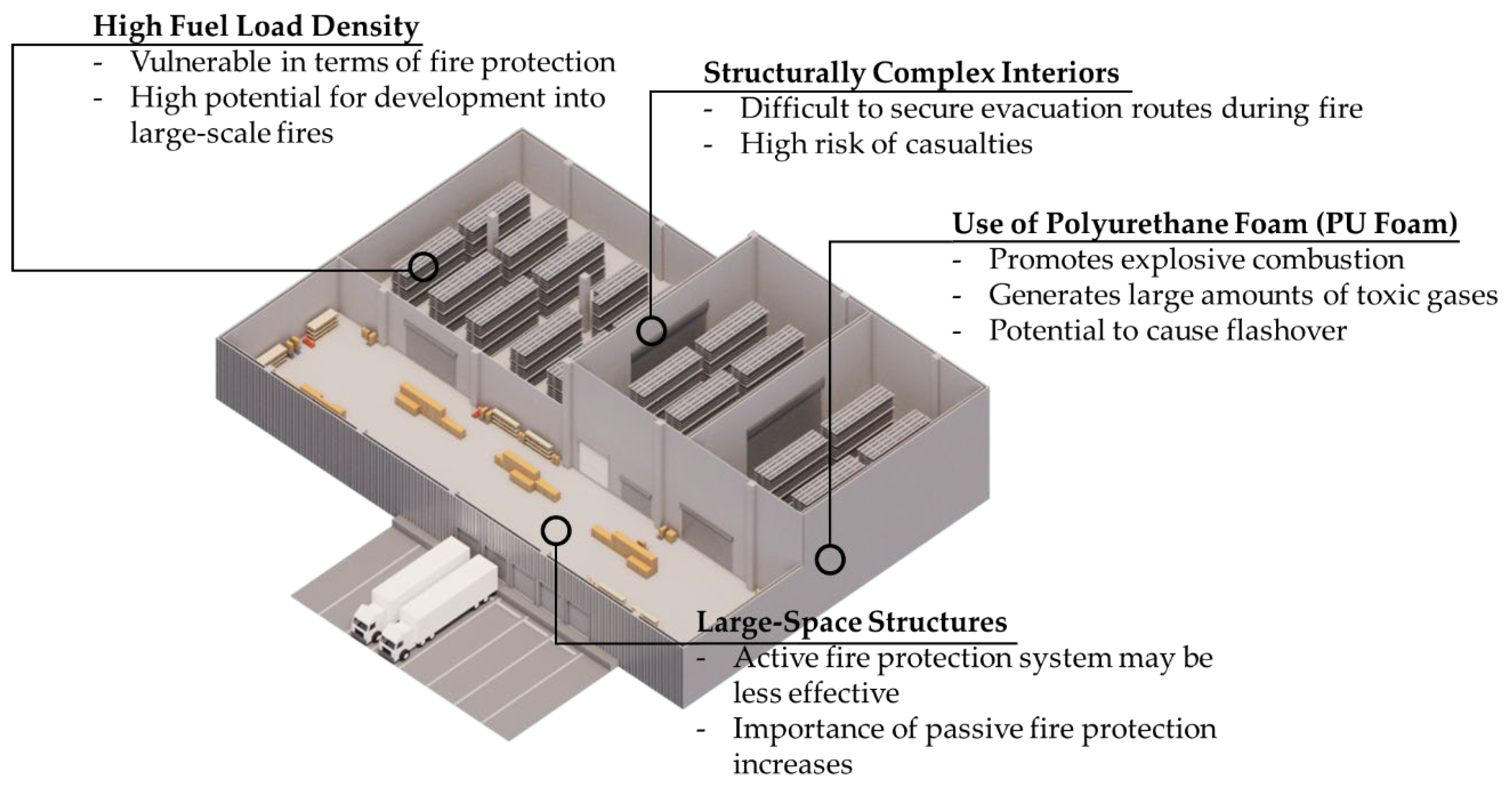
Figure 2.
Conceptual diagram illustrating the differences between logistics facilities and general buildings based on spatial characteristics.
Figure 2.
Conceptual diagram illustrating the differences between logistics facilities and general buildings based on spatial characteristics.
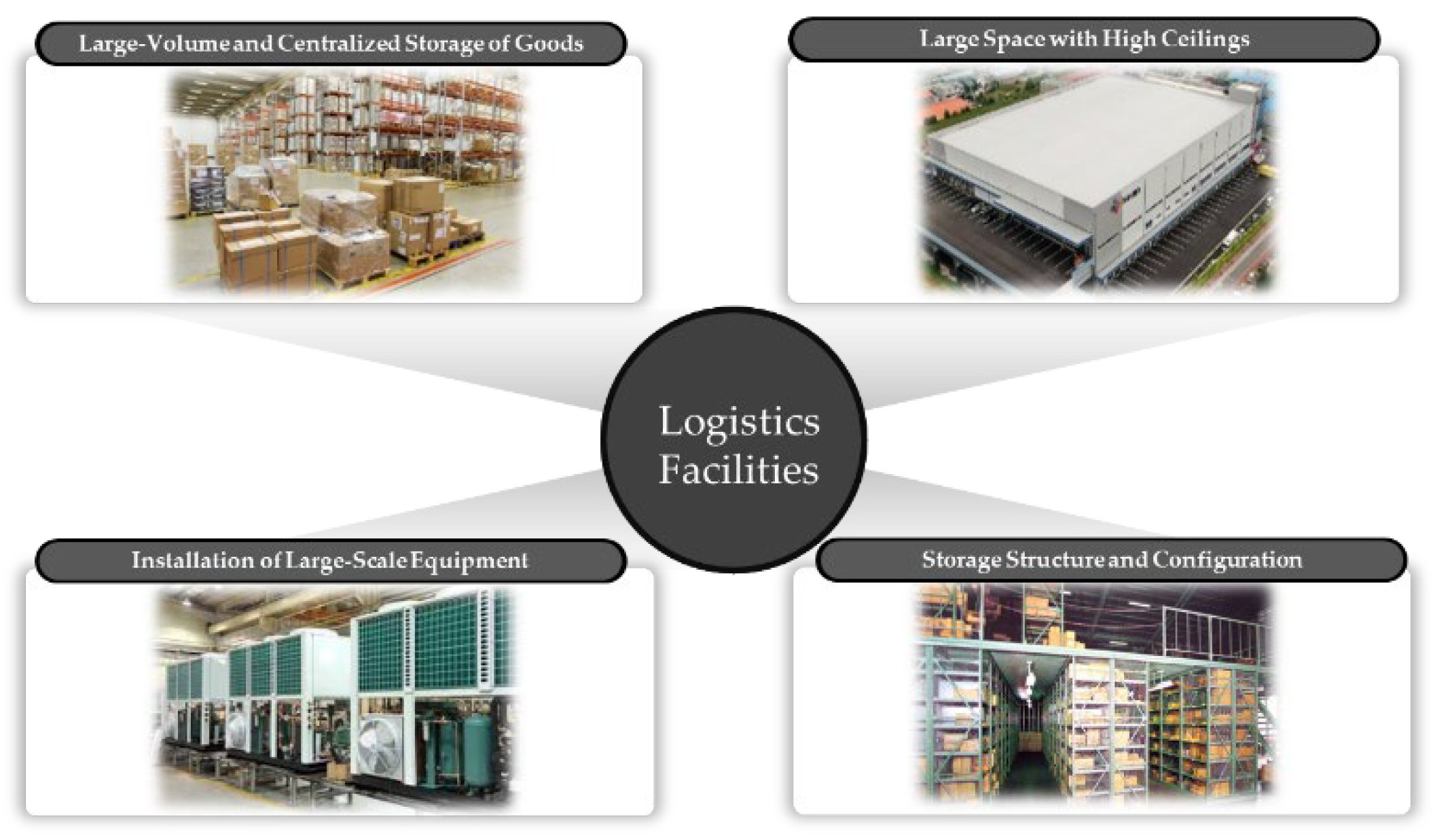
Figure 3.
Conceptual diagrams of a fire shutter: (a) front view; (b) side view; (c) plan view.
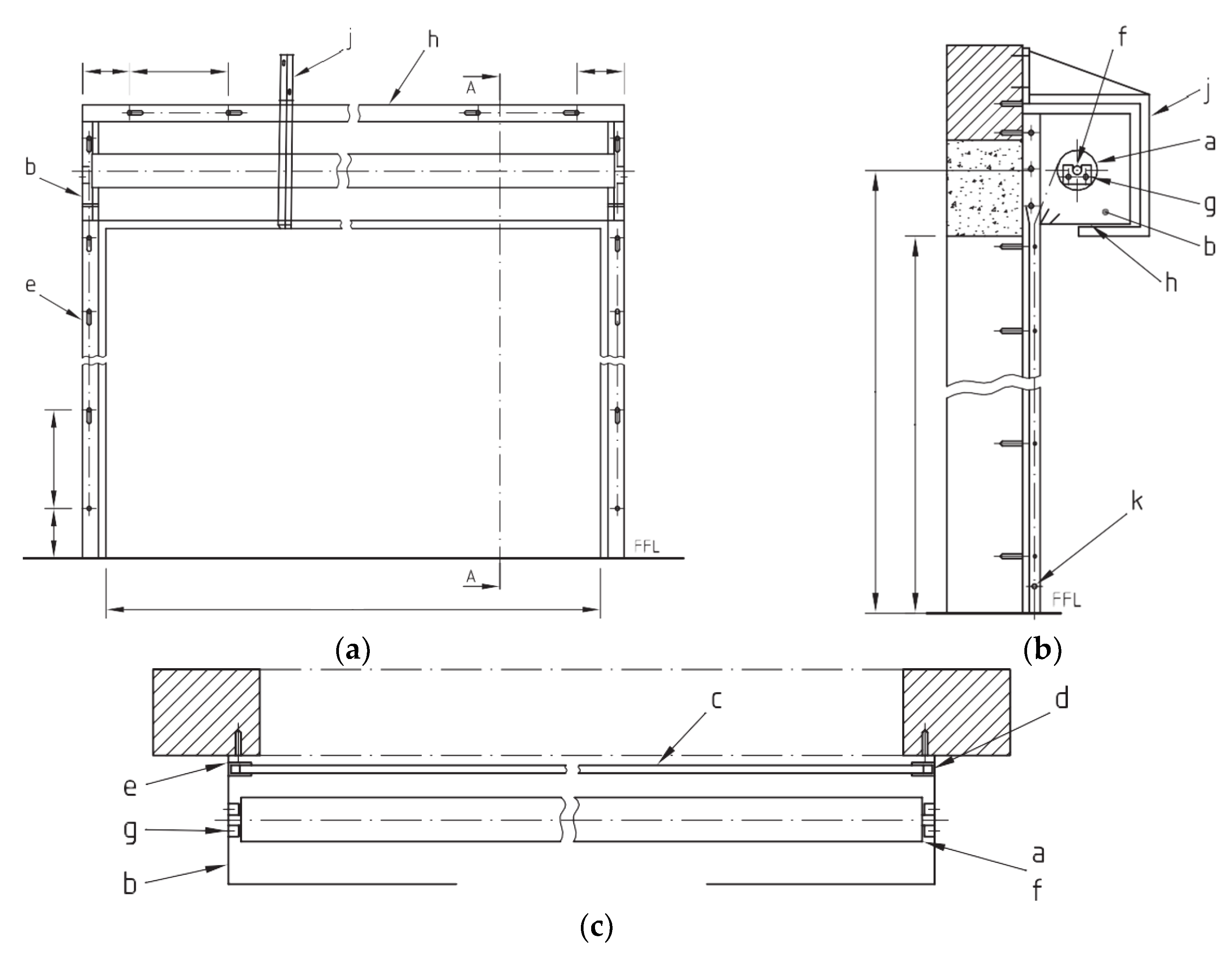
Figure 4.
Typical configurations of barrel support brackets: (a) Barrel Support Bracket Type - 1; (b) Barrel Support Bracket Type - 2.
Figure 4.
Typical configurations of barrel support brackets: (a) Barrel Support Bracket Type - 1; (b) Barrel Support Bracket Type - 2.
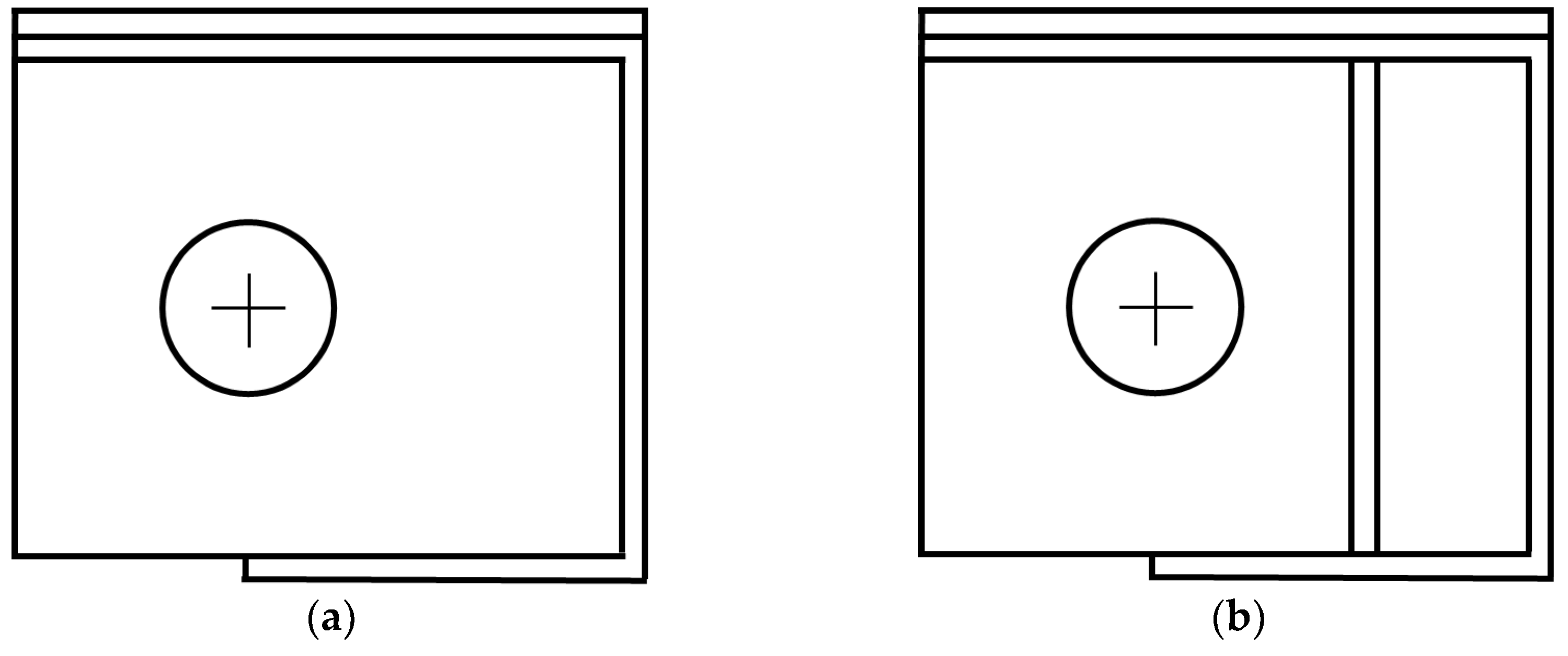
Figure 5.
Deflection of barrel and barrel support bracket after fire resistance test: (a) immediately after fire resistance test; (b) after 24 hours.
Figure 5.
Deflection of barrel and barrel support bracket after fire resistance test: (a) immediately after fire resistance test; (b) after 24 hours.
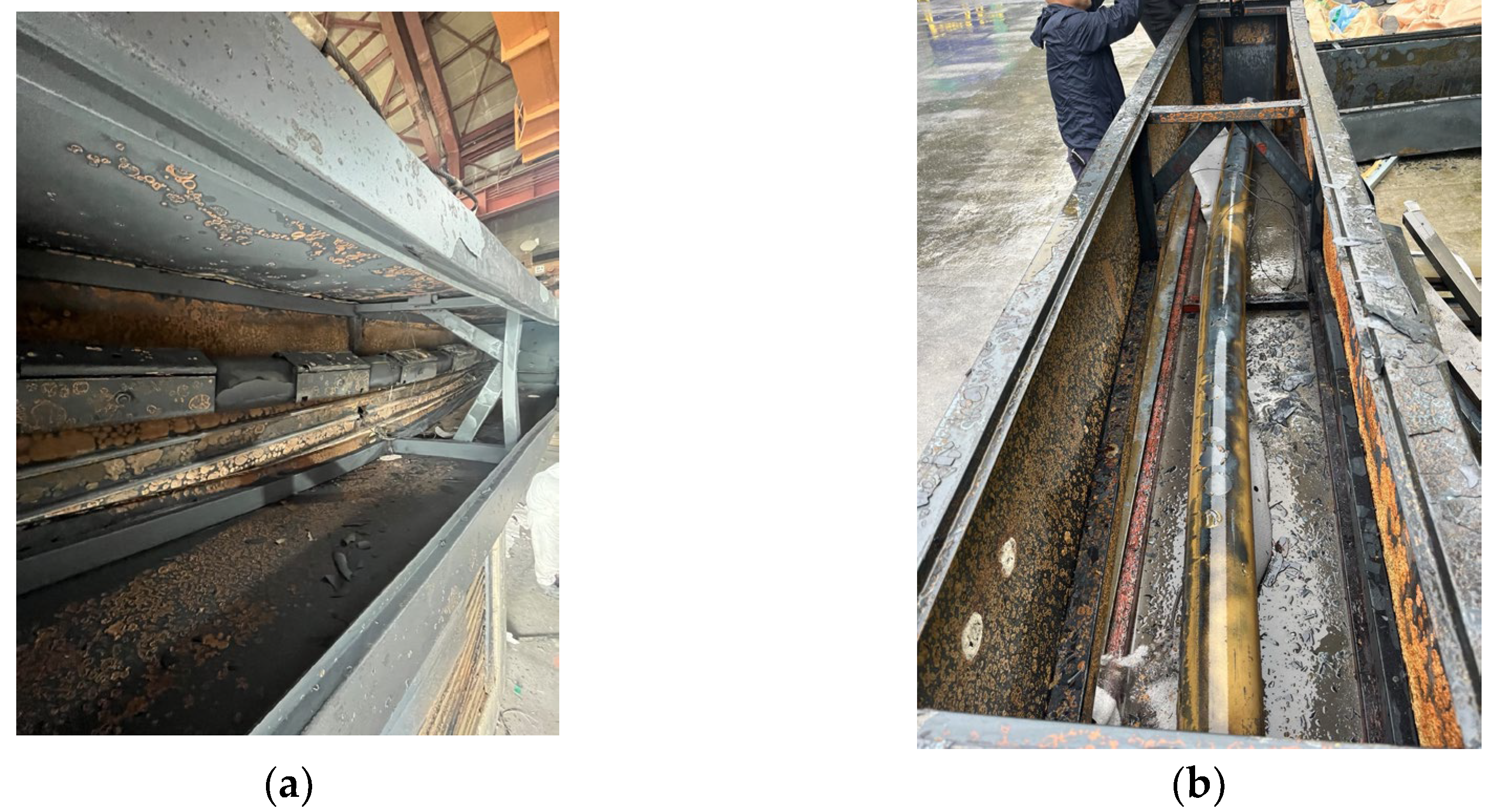
Figure 6.
Fire resistance test of fire shutter using 3 m × 3 m vertical furnace: (a) before testing; (b) after testing.
Figure 6.
Fire resistance test of fire shutter using 3 m × 3 m vertical furnace: (a) before testing; (b) after testing.
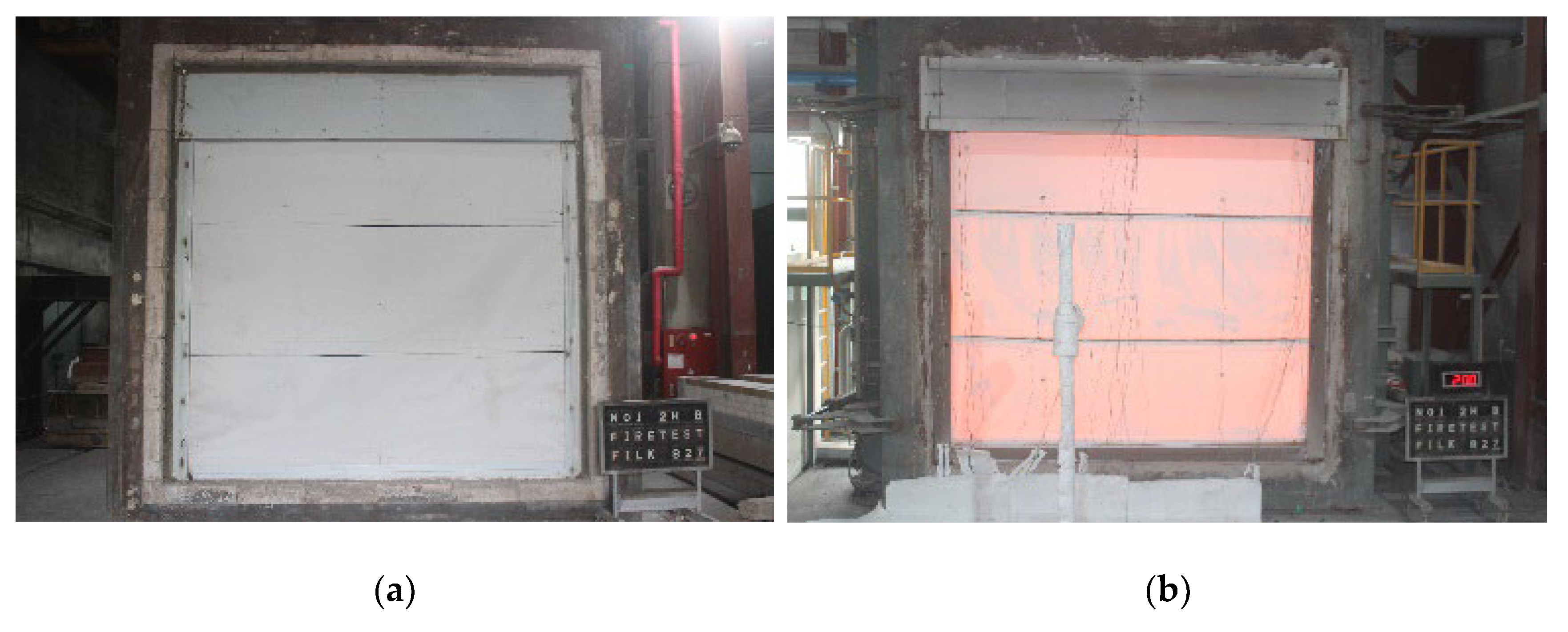
Figure 7.
Comparison of the temperature of the barrel support bracket and furnace interior measured during the fire resistance test using a vertical furnace.
Figure 7.
Comparison of the temperature of the barrel support bracket and furnace interior measured during the fire resistance test using a vertical furnace.
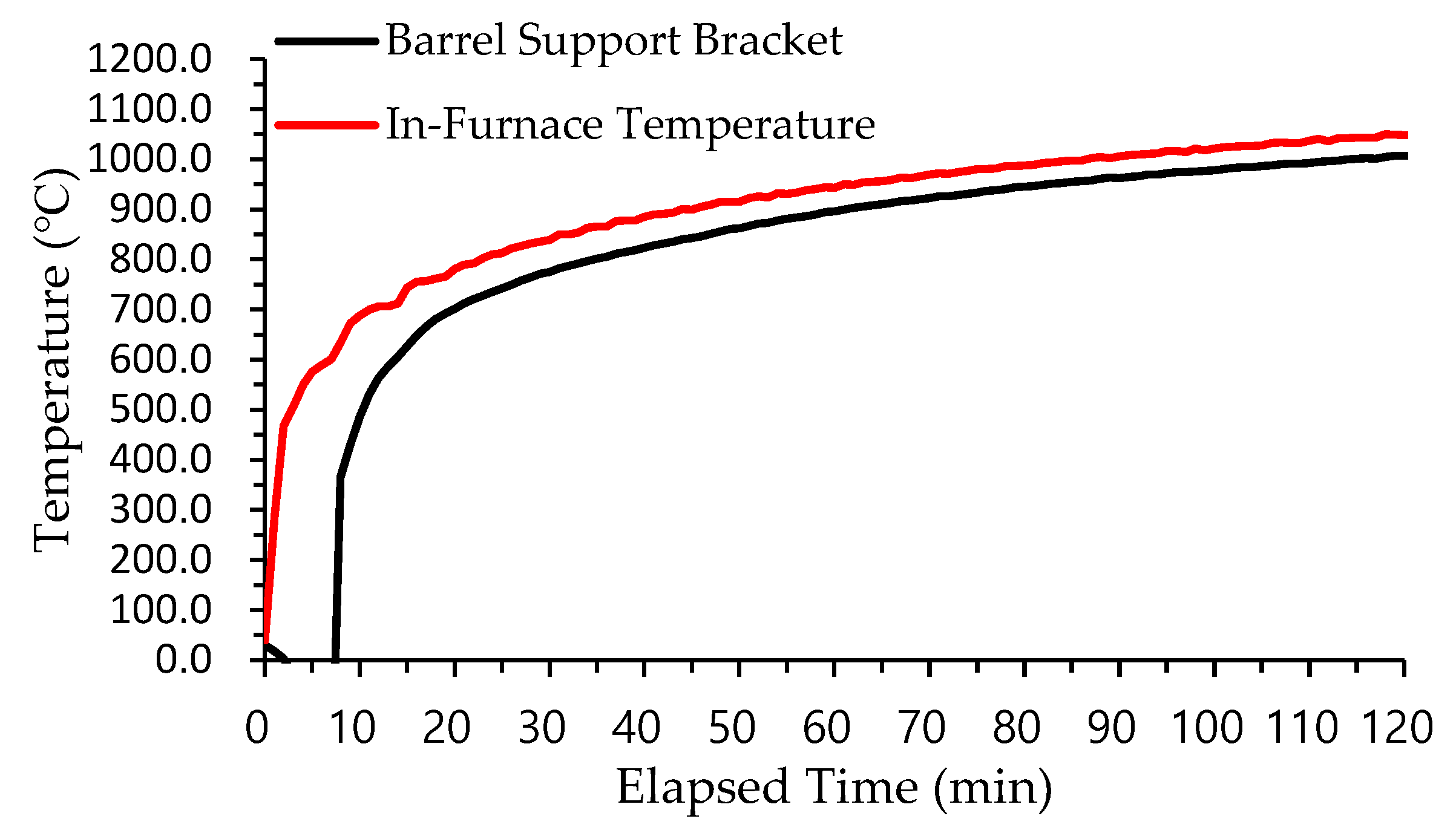
Figure 8.
Detailed specifications of large fire shutters by type: (a) Barrel Support Bracket Type - 1; (b) Barrel Support Bracket Type - 2.
Figure 8.
Detailed specifications of large fire shutters by type: (a) Barrel Support Bracket Type - 1; (b) Barrel Support Bracket Type - 2.
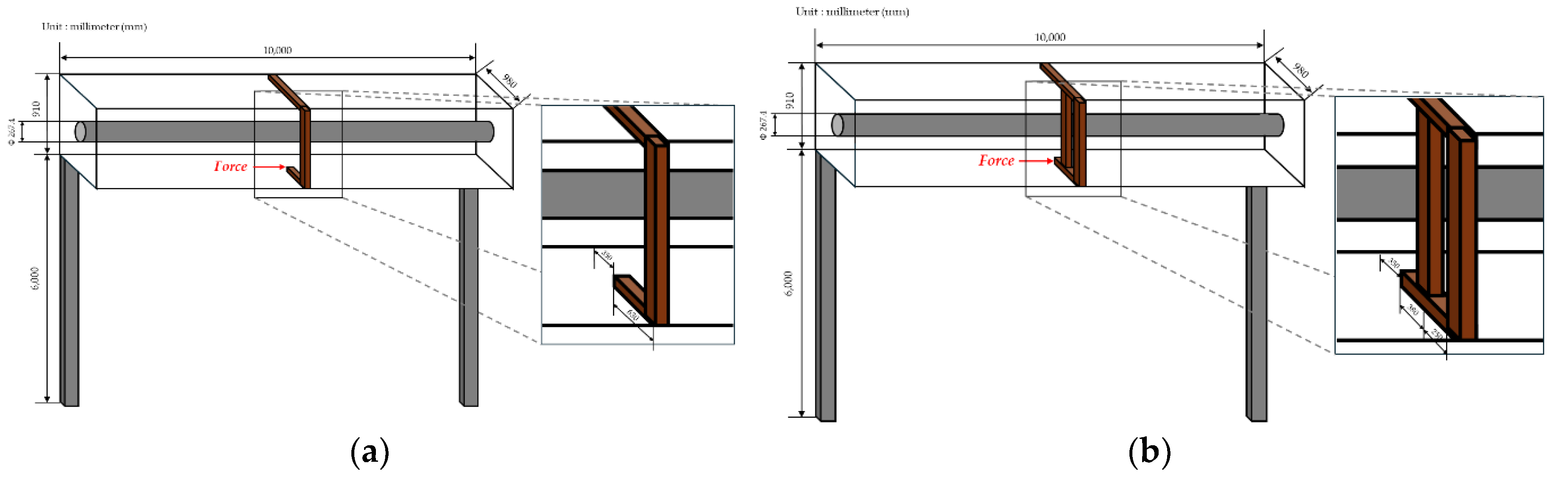
Figure 9.
Support capacity calculated based on stress and deflection: (a) Type - 1 at ambient temperature; (b) Type - 1 at under fire conditions (700 °C).
Figure 9.
Support capacity calculated based on stress and deflection: (a) Type - 1 at ambient temperature; (b) Type - 1 at under fire conditions (700 °C).
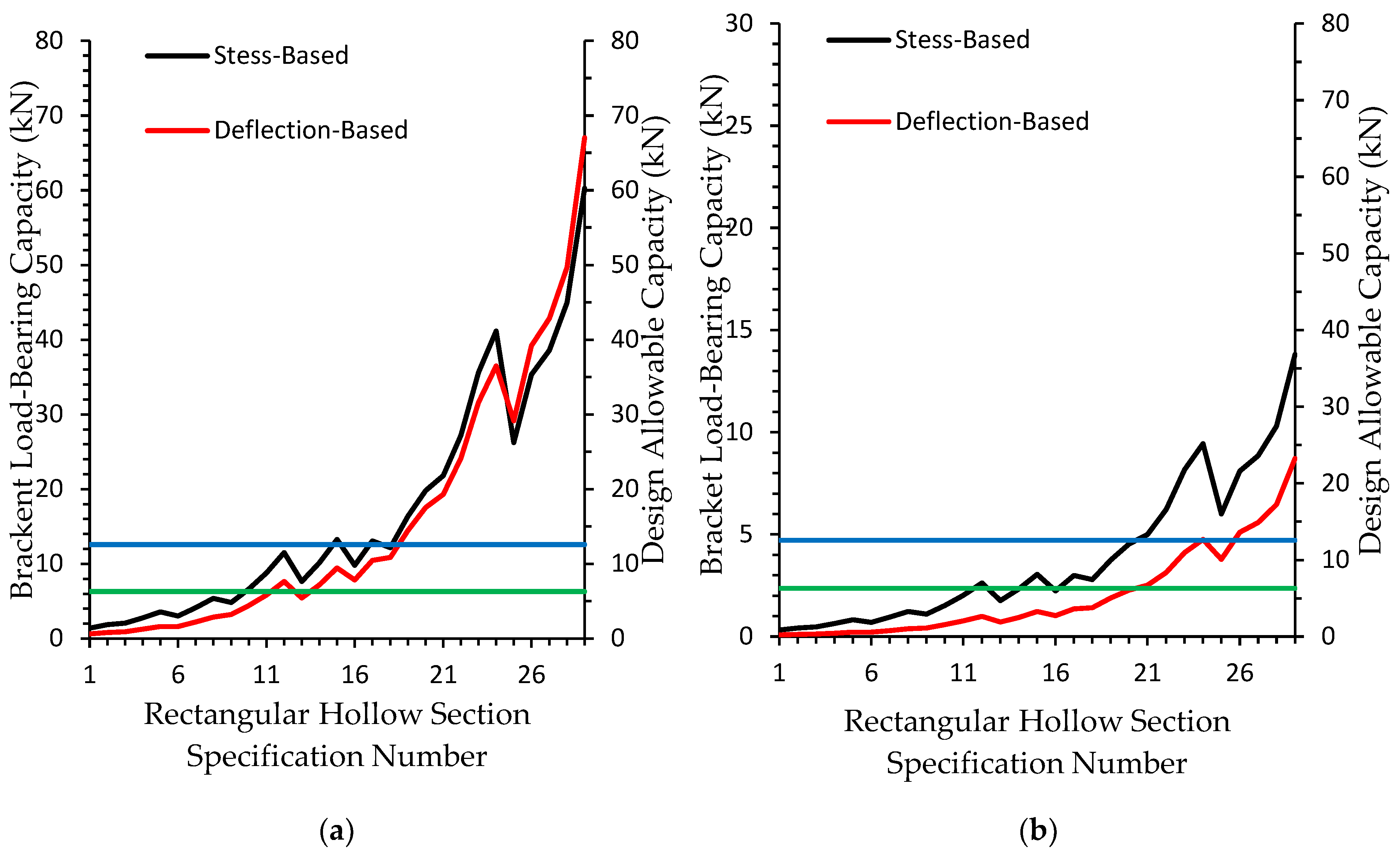
Figure 10.
Support capacity calculated based on stress and deflection: (a) Type - 2 at ambient temperature; (b) Type - 2 at under fire conditions (700 °C).
Figure 10.
Support capacity calculated based on stress and deflection: (a) Type - 2 at ambient temperature; (b) Type - 2 at under fire conditions (700 °C).
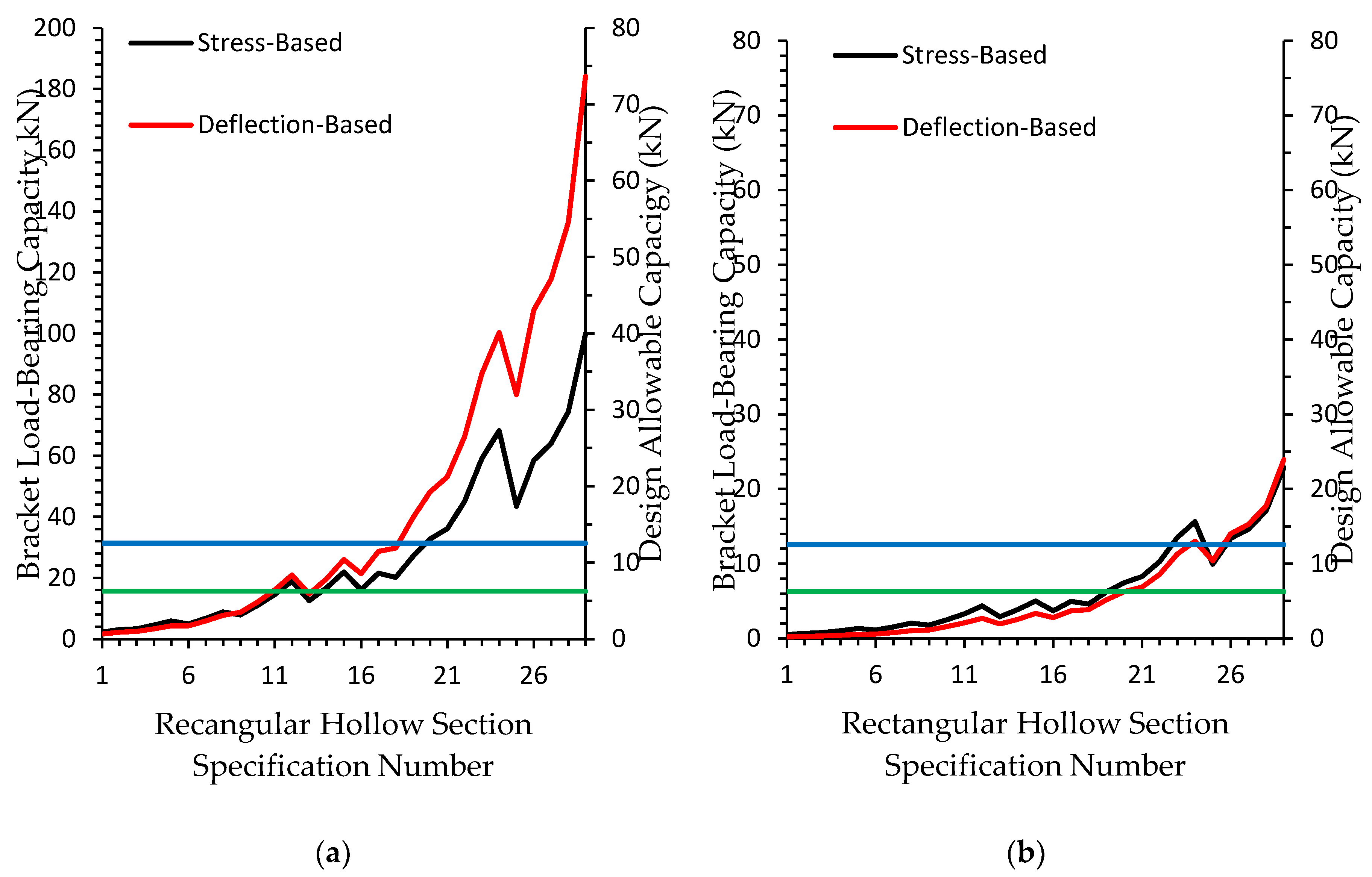
Figure 11.
MAE, MAPE, and Accuracy results for different deflection limits: (a) Type - 1 at ambient temperature; (b) Type - 1 at 700 °C; (c) Type - 2 at ambient temperature; (d) Type - 2 at 700 °C.
Figure 11.
MAE, MAPE, and Accuracy results for different deflection limits: (a) Type - 1 at ambient temperature; (b) Type - 1 at 700 °C; (c) Type - 2 at ambient temperature; (d) Type - 2 at 700 °C.
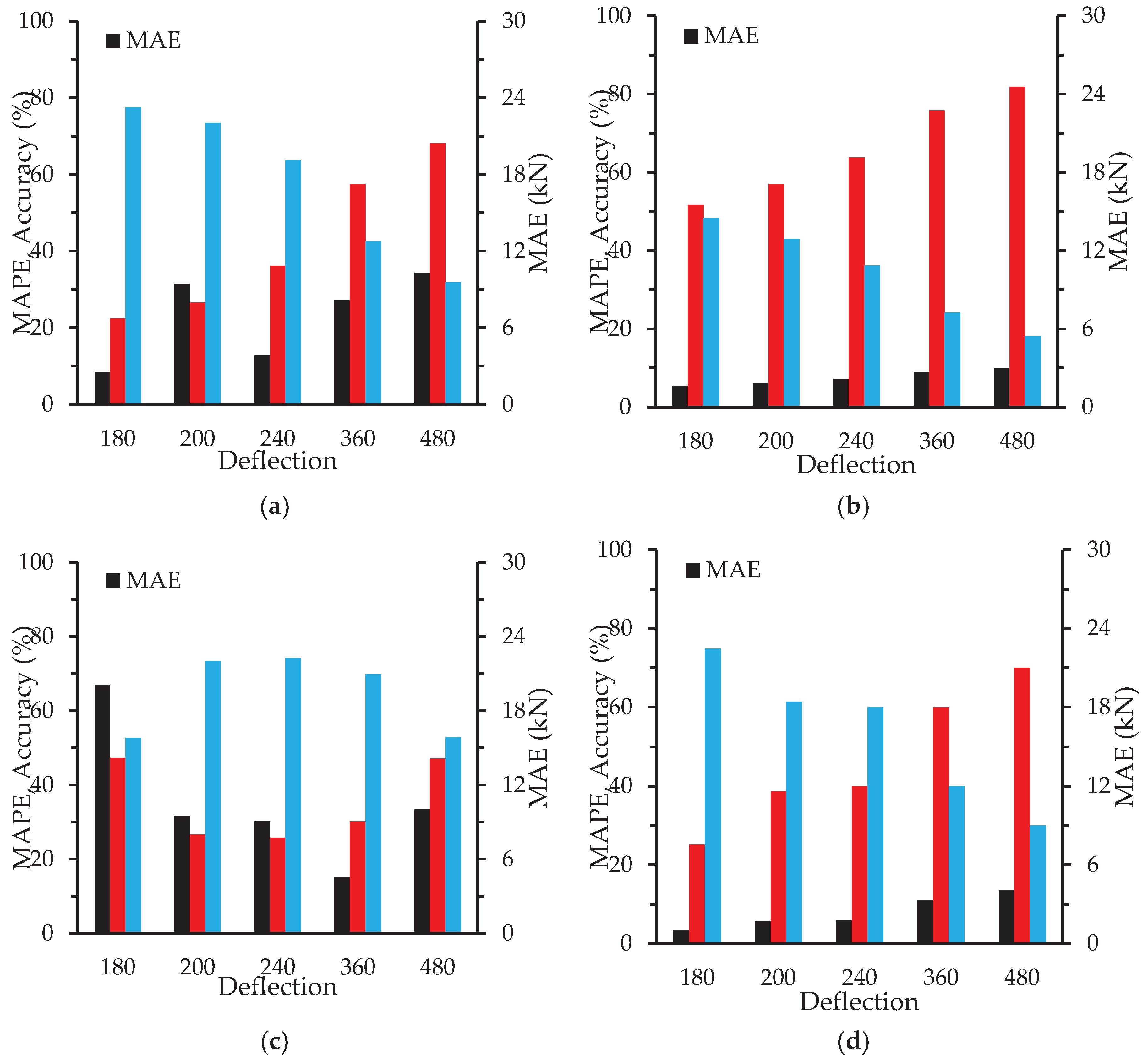

Table 1.
Component names of the fire shutter.
| Component Names | ||
|---|---|---|
| a : Barrel | b : End Plate/Bracket | c : Curtain |
| d : Guide g : Shaft Cup/Support k : Bottom rail |
e : Guide Fixing Angle h : Coil Casing/Hood |
f : Shaft j : Barrel Support Bracket |
Table 2.
Linear elastic range and effective yield strength according to temperature.
| Reduction Factors | ||
|---|---|---|
| Steel Temperature ɵa |
Linear Elastic Range kE, ɵ = Ea, ɵ / Ea |
Effective Yield Strength K y, ɵ = f y, ɵ / fy (f u, ɵ / f y, ɵ)* |
| 20 ℃ | 1.000 | 1.000 (1.25) |
| 100 ℃ | 1.000 | 1.000 (1.25) |
| 200 ℃ | 0.900 | 1.000 (1.25) |
| 300 ℃ | 0.800 | 1.000 (1.25) |
| 400 ℃ | 0.700 | 1.000 (1.00) |
| 500 ℃ | 0.600 | 0.780 (1.00) |
| 600 ℃ | 0.310 | 0.470 (1.00) |
| 700 ℃ | 0.130 | 0.230 (1.00) |
| 800 ℃ | 0.090 | 0.110 (1.00) |
| 900 ℃ | 0.0675 | 0.060 (1.00) |
| 1000 ℃ | 0.0450 | 0.040 (1.00) |
| 1100 ℃ | 0.0225 | 0.020 (1.00) |
| 1200 ℃ | 0.0000 | 0.000 (1.00) |
* When ɵa ≤ 300℃, f u, ɵ = 1.25 fy , When 300℃ ≤ ɵa < 400 ℃, f u, ɵ / f y, ɵ = 2-0.0025 ɵa , When ɵa > 400℃, f au, ɵ= 1.25 f ay, ɵ.
Table 3.
Deflection limits based on L, S or W, and D+L depending on construction type.
| Construction | Live Load | Snow or Wind Load | Dead + Live Load |
|---|---|---|---|
| Roof Members Supporting Plaster or Stucco Ceiling Supporting Non-Plaster Ceiling Not Supporting Ceiling Floor Members |
|||
| //360 //240 //180 |
//360 //240 //180 |
//240 //180 //120 |
|
| //360 | - | //240 | |
| Exterior Walls With Plaster or Stucco Finishes With Other Brittle Finishes With Flexible Finishes |
|||
| - - - |
//360 //240 //120 |
- - - |
|
| Interior Partition With Plaster or Stucco Finishes With Other Brittle Finishes With Flexible Finishes Farm Buildings Greenhouses |
|||
| //360 //240 //120 - - |
- - - - - |
- - - //180 //120 |
Table 4.
Area moment of inertia and section modulus by rectangular hollow section specification.
| Rectangular Hollow Section Specification Number | Side Length A×B, mm |
Thickness mm |
Area moment of Inertia Ix, Iy, cm4 |
Section Modulus Zx, Zy, cm3 |
|---|---|---|---|---|
| 1 | 50×30 | 1.6 | 7.96, 6.3 | 3.18, 2.4 |
| 2 | 50×30 | 2.3 | 10.6, 4.7 | 4.25, 3.17 |
| 3 | 50×50 | 1.6 | 11.7 | 4.68 |
| 4 | 50×50 | 2.3 | 15.9 | 6.34 |
| 5 | 50×50 | 3.2 | 20.4 | 8.16 |
| 6 | 60×60 | 1.6 | 20.7 | 6.89 |
| 7 | 60×60 | 2.3 | 28.3 | 9.44 |
| 8 | 60×60 | 3.2 | 36.9 | 12.3 |
| 9 | 75×75 | 1.6 | 41.3 | 11 |
| 10 | 75×75 | 2.3 | 57.1 | 15.2 |
| 11 | 75×75 | 3.2 | 75.5 | 20.1 |
| 12 | 75×75 | 4.5 | 98.6 | 26.3 |
| 13 | 80×80 | 2.3 | 69.9 | 17.5 |
| 14 | 80×80 | 3.2 | 92.7 | 23.2 |
| 15 | 80×80 | 4.5 | 122 | 30.4 |
| 16 | 90×90 | 2.3 | 101 | 22.4 |
| 17 | 90×90 | 3.2 | 135 | 29.9 |
| 18 | 100×100 | 2.3 | 140 | 27.9 |
| 19 | 100×100 | 3.2 | 187 | 37.5 |
| 20 | 100×100 | 4 | 226 | 45.3 |
| 21 | 100×100 | 4.5 | 249 | 49.9 |
| 22 | 100×100 | 6 | 311 | 62.3 |
| 23 | 100×100 | 9 | 408 | 81.6 |
| 24 | 100×100 | 12 | 471 | 94.3 |
| 25 | 125×125 | 3.2 | 376 | 60.1 |
| 26 | 125×125 | 4.5 | 506 | 80.9 |
| 27 | 125×125 | 5 | 553 | 88.4 |
| 28 | 125×125 | 6 | 641 | 103 |
| 29 | 125×125 | 9 | 865 | 138 |
Disclaimer/Publisher’s Note: The statements, opinions and data contained in all publications are solely those of the individual author(s) and contributor(s) and not of MDPI and/or the editor(s). MDPI and/or the editor(s) disclaim responsibility for any injury to people or property resulting from any ideas, methods, instructions or products referred to in the content. |
© 2025 by the authors. Licensee MDPI, Basel, Switzerland. This article is an open access article distributed under the terms and conditions of the Creative Commons Attribution (CC BY) license (http://creativecommons.org/licenses/by/4.0/).
Copyright: This open access article is published under a Creative Commons CC BY 4.0 license, which permit the free download, distribution, and reuse, provided that the author and preprint are cited in any reuse.


