

Submitted:
03 June 2025
Posted:
04 June 2025
You are already at the latest version
Abstract
Ancient grains, including wild rice, millet, fonio, teff, quinoa, amaranth, and sorghum, have re-emerged as vital dietary components due to their rich nutrient profiles and broad spectrum of health-promoting bioactive compounds. This review synthesizes current evidence on the nutritional composition, phytochemical contents, and functional prop-erties of these crops, highlighting their roles in disease prevention and maintaining physiologic functions of the organs. These grains are notable sources of dietary fiber, resistant starch, high-quality plant proteins, essential vitamins and minerals, and diverse bioactives such as phenolic acids, flavonoids, phytosterols, betalains and others. Their consumption is associated with antioxidant, anti-inflammatory, antidiabetic, cardiopro-tective, and immunomodulatory effects, hence, suitable for specialized diets, such as plant-based and low-glycemic regimens. Increasingly, ancient grains are incorporated into functional food formulations, from bakery products and beverages to fermented foods and snacks, driven by consumer demand for clean-label, sustainable, and nutrient-dense options. However, challenges in processing, scalability, and product standardization limit broader adoption. This review discusses their current applications, processing innova-tions, and market trends. It also identifies key challenges and outlines future research directions, emphasizing the need for further clinical validation, improved bioavailability assessments, and targeted promotion of underutilized indigenous grains to support sustainable food systems and equitable nutrition worldwide.
Keywords:
ancient grains
; functional foods
; bioactive compounds
; chronic disease prevention
; dietary fiber
; nutraceuticals
; sustainable food systems
; underutilized cereals
1. Introduction
Ancient grains encompass a diverse group of cereal and pseudocereal crops that have undergone minimal modification through modern breeding techniques. In contrast to modern grains, which are often selectively bred for traits like high yield, uniformity, and processing efficiency, ancient grains have largely retained their original genetic composition [1]. They are typically consumed in whole or minimally processed forms, thereby preserving the bran, germ, and endosperm. This structural integrity contributes to their superior nutritional quality, characterized by higher levels of dietary fiber, essential micronutrients, and a broad array of bioactive phytochemicals [1].
Notable ancient cereals include early domesticated wheat species such as einkorn (Triticum monococcum), emmer (Triticum dicoccum), spelt (Triticum spelta), and khorasan wheat (commercially known as KAMUT®). Other significant grains, such as millet, sorghum, and teff, serve as dietary staples in many African and Asian regions and are renowned for their resilience to environmental stressors, including drought, heat, and poor soil conditions [2]. Pseudocereals such as quinoa, amaranth, and buckwheat, although taxonomically distinct from true cereals, are often included under the umbrella of ancient grains due to their comparable nutritional profiles and historical roles in traditional diets [3]. These pseudocereals have gained popularity among health-conscious consumers, especially for plant-based dietary preferences.
Limited genetic manipulation and reliance on traditional agronomic practices directly contribute to the enhanced nutrient density of ancient grains. Compared to modern wheat and other staple cereals, these grains typically contain higher concentrations of protein, dietary fiber, and vital micronutrients such as magnesium, iron, and zinc. Moreover, they are rich sources of diverse phytochemicals, including polyphenols, flavonoids, and saponins, which provide various health benefits, such as improved metabolic health, reduced oxidative stress, and anti-inflammatory effects [4,5,6] (see Table 1).
Beyond their nutritional benefits, ancient grains are increasingly playing a pivotal role in promoting environmentally sustainable agriculture. Many of these crops are inherently well-adapted to marginal soils and variable climatic conditions, and their cultivation generally requires fewer external inputs such as synthetic fertilizers and pesticides. As such, they align well with climate-resilient, low-input farming systems and contribute significantly to sustainable food production practices [3,5].
Culturally, ancient grains have played foundational roles in the diets of civilizations across the globe for millennia. Their continued use supports the preservation of culinary heritage, strengthens food sovereignty, and fosters dietary diversification. Reintroducing these grains into contemporary food systems not only broadens the nutritional landscape, but also addresses pressing global challenges such as malnutrition, food insecurity, and the erosion of traditional food knowledge [5,7,8].
Given the growing demand for nutrient-dense, health-promoting ingredients, ancient grains have garnered significant attention as promising candidates for the development of functional foods. Their unique combination of nutritional richness, diverse bioactive constituents, and profound cultural relevance offers fertile ground for innovation in both public health nutrition and sustainable agri-food systems. However, despite increased scientific interest, comprehensive syntheses that critically evaluate their full nutraceutical potential remain limited.
This review aims to provide an integrative assessment of the nutritional, functional, and cultural dimensions of ancient grain cereals and pseudocereals. Specifically, we have examined their macronutrient and micronutrient composition, characterized their health-promoting bioactive compounds, and explored their documented or potential roles in disease prevention and health promotion. We have further discussed their traditional dietary uses, contemporary applications in the development of functional foods, and emerging market trends. Finally, we have highlighted key challenges and opportunities for incorporating ancient grains into sustainable, health-supportive food systems while identifying directions for future research and policy development.
2. Historical, Cultural, and Indigenous Significance
Ancient grain cereals have sustained human populations for millennia, remaining integral to the food systems, traditional knowledge, and cultural identities of Indigenous and local communities worldwide (Figure 1). Far beyond their nutritional value, these grains are deeply embedded in agricultural rituals, social traditions, ecological stewardship, and community resilience. Their cultivation reflects deep-rooted Indigenous ecological knowledge systems that emphasize biodiversity, sustainability, and the harmonious relationship between people and the land. As contemporary interest in resilient and culturally inclusive food systems grows, understanding the cultural and historical significance of these grains is essential for informing sustainable agricultural and nutritional strategies.
2.1. Traditional Uses in Diverse Cultures
The continued cultivation and use of ancient grains are deeply rooted in specific cultural contexts, where they often serve ceremonial, symbolic, and medicinal purposes in addition to being dietary staples.
In North America, wild rice (Zizania spp.) has long held significant cultural and spiritual importance for Indigenous Peoples, particularly the Anishinaabe. It features prominently in seasonal traditions, ceremonies, and community feasts [9]. Traditionally harvested from natural lakes using ancestral methods, wild rice embodies Indigenous ecological stewardship and provides a nutrient-rich food source high in protein, fiber, and polyphenols. While increasing demand in recent decades has led to the domestication of Zizania palustris as a cultivated crop in Minnesota and California [10], wild rice remains genetically diverse and culturally emblematic, with growing attention directed toward conservation and inclusive stewardship practices. Nutritionally, wild rice is high in protein, fiber, and B vitamins (thiamin, riboflavin, niacin), while its dark-hued seed coat, rich in polyphenols, contributes to both its resilience and antioxidant potential [11].
In South Asia and sub-Saharan Africa, millets such as finger millet (Eleusine coracana), pearl millet (Pennisetum glaucum), and foxtail millet (Setaria italica) have served as staple crops for millennia, particularly in arid and semi-arid regions [12]. Valued for their drought tolerance, low input requirements, and adaptability to poor soils, millets play a central role in food security and cultural identity. In India, millets are closely tied to rituals, festivals, and community meals, particularly in regions such as Karnataka, Rajasthan, and Nagaland [13]. Their high content of fiber, protein, iron, and antioxidants has renewed global interest in millets as climate-resilient and nutritionally dense foods.
Focusing on northeastern India, traditional rice landraces remain essential to Indigenous food systems. A recent study identified 42 commonly consumed Indigenous foods among the Khasi people of Meghalaya, including six traditional rice varieties [14]. This study revealed that one variety, Kba-khawlieh (Oryza sativa), exhibited superior nutritional attributes, with high protein (8.79 g/100 g), dietary fiber, iron, zinc, calcium, and thiamine levels that were markedly higher than those found in widely cultivated hybrid varieties [14]. These findings underscore the latent potential of Indigenous grains to address micronutrient deficiencies.
In sub-Saharan Africa, sorghum and pearl millet remain vital components of rural diets, particularly in areas vulnerable to food insecurity and noncommunicable diseases. Sorghum contains slowly digesting starches, polyphenols, tannins, and 3-deoxyanthocyanidins that support glycemic regulation, gut health, and anti-inflammatory activity [15]. Similarly, pearl millet is a rich source of dietary fiber, essential fatty acids, and micronutrients such as iron, magnesium, and zinc and has been associated with antihypertensive and antioxidative properties [16].
In East Africa, teff (Eragrostis tef), native to Ethiopia, is one of the oldest cultivated cereals. It forms the base of injera, a fermented flatbread central to Ethiopian cuisine and religious observance [17,18]. Teff cultivation dates back over 3,000 years, and communities still manage it using ancestral practices. Its tiny seeds offer high levels of iron, calcium, and resistant starch, making it increasingly popular as a functional food globally [17,18].
In Central and South America, amaranth (Amaranthus spp.) and quinoa (Chenopodium quinoa) boast long histories of cultivation among Indigenous civilizations such as the Aztecs and Incas [19]. Amaranth was traditionally used in religious offerings and community rituals and has re-emerged in modern diets due to its exceptional protein quality, squalene content, and bioactive peptides [20]. Quinoa, revered as "the mother grain," is integral to Andean cosmology and agricultural systems. It thrives in high-altitude, low-nutrient soils and is rich in complete protein, essential minerals, and antioxidant compounds, such as flavonoids and saponins, contributing to its reputation as a functional superfood [21].
Despite their health-promoting attributes and deep cultural roots, the consumption of many Indigenous grains has declined globally due to urbanization, the encroachment of ultra-processed foods, and the erosion of traditional food systems. This nutritional transition has been accompanied by rising incidents of diet-related noncommunicable diseases, underscoring that renewing interest in ancient grains is not merely a matter of cultural preservation, but also a public health imperative.
2.2. Agricultural Resilience, Sustainability, and Food Sovereignty
The resurgence of ancient grain cereals is driven by their potential to address current challenges in global agriculture, including climate change, land degradation, biodiversity loss, and nutritional insecurity. Their genetic diversity, adaptability to marginal environments, and superior nutritional profiles make them invaluable components of sustainable food systems.
Ancient grains, such as einkorn, emmer, spelt, teff, quinoa, and millets, retain a broad genetic diversity that enhances their resilience to various biotic and abiotic stresses, including pests, drought, and poor soil conditions. These traits are often diminished in modern cereal breeding [3,5]. Their ecological adaptability, exemplified by the drought tolerance of millets and the natural regeneration of wild rice in aquatic habitats, makes them well-suited for sustainable agriculture. Moreover, their integration into diversified cropping systems supports agroecological goals by reducing chemical inputs, enhancing soil health, fostering biodiversity, and promoting long-term land stewardship [22,23].
From a nutritional standpoint, many ancient grains offer high concentrations of protein, fiber, essential micronutrients (such as iron, calcium, magnesium, and zinc), and a broad spectrum of phytochemicals with antioxidant properties [5,24]. These characteristics inherently support dietary diversity and help address widespread micronutrient deficiencies, particularly in low-income and food-insecure regions.
Most importantly, the revival of ancient grain systems significantly contributes to food sovereignty, which is the right of communities to define their own food systems and agricultural practices. By cultivating culturally significant, locally adapted crops, Indigenous and smallholder farmers reinforce traditional knowledge systems, build local economies, and assert agency over their food production [25,26]. These grains serve not only as dietary staples but also as symbols of resistance to industrialized agriculture and tools for reclaiming culinary heritage.
Therefore, ancient grains offer a holistic approach to improving agricultural resilience, ecological sustainability, cultural continuity, and nutritional well-being. Their resurgence represents a convergence of tradition and innovation, providing a powerful means of preserving ancestral knowledge while addressing the urgent challenges of the 21st-century food system.
3. Nutritional Value and Dietary Applications
Ancient grains are increasingly recognized not only for their profound historical and cultural significance, but also for their dense nutritional profiles and functional dietary properties. These grains, often cultivated using traditional agricultural methods, typically undergo less processing, thereby retaining most of their original nutrient and phytochemical contents. Compared to modern refined grains, ancient cereals such as fonio, teff, millet, wild rice, pigmented rice, and Andean grains like quinoa and kañiwa are notably rich in essential nutrients, bioactive compounds, and dietary fibers. This section examines their detailed nutritional characteristics and diverse roles in modern and specialized diets, highlighting their significant potential applications in preventing malnutrition and managing diet-related chronic diseases (Figure 2).
3.1. Macronutrient and Micronutrient Composition
Ancient grains offer superior nutritional density compared to many modern cereal crops. They feature high levels of complex carbohydrates, high-quality proteins, dietary fiber, unsaturated fatty acids, and key micronutrients [27,28,29,30]. For instance, wild rice contains more protein, B vitamins (B1 and B2), and vitamin E than white rice, along with high concentrations of phenolic acids and flavonoids, compounds with antioxidant and gut-modulating functions [31]. The nutrient composition of wild rice can vary significantly depending on its geographic origin. Chinese cultivars are richer in iron, thiamin, riboflavin, and vitamin E, whereas North American varieties exhibit higher levels of methionine and zinc [32]. Similarly, Indian aromatic rice landraces demonstrate high levels of carbohydrates, protein, essential minerals (e.g., Zn, Fe, Ca), and unsaturated fatty acids [33]. African indigenous grains, such as fonio, pearl millet, teff, and native rice varieties, consistently outperform non-indigenous grains in nutrient density scores, exhibiting higher concentrations of critical micronutrients, including iron, calcium, and zinc, which are exceptionally vital for populations at risk of micronutrient deficiencies [34]. Furthermore, Australian native grains contain significantly higher levels of protein (four times more than brown rice), zinc, iron, calcium, and total phenolics, indicating their relevance in modern, nutrient-rich diets [35].
3.2. Dietary Fiber, Protein Quality, Low Glycemic Index
The high fiber content and inherently low glycemic index (GI) of many ancient grains are particularly relevant to metabolic health. Whole grain varieties of pigmented rice, landrace wheat, and traditional cereals provide higher levels of resistant starch and various types of dietary fiber than refined grains, contributing to improved satiety, delayed gastric emptying, and consequently, lower postprandial glucose levels [36,37]. Specific examples include Indian Indigenous rice cultivars such as 'Kataribhog’ and ‘Dubarikomal,' which retain high levels of resistant starch and antioxidant-rich pigmentation even after cooking, making them suitable for diabetes-friendly diets [37,38]. Additionally, incorporating Australian Gomeroi native grains into flour blends significantly reduces glycemic response, offering a culturally relevant strategy for addressing diet-induced hyperglycemia among Indigenous populations [39]. Beyond glycemic control, Andean grains such as quinoa, kañiwa, and kiwicha are notable for their complete protein profiles, providing all essential amino acids, making them ideal for individuals with certain dietary concerns. Quinoa-based formulations, in particular, exhibit the highest protein content and favorable amino acid profiles [40], which supports their widespread use in the development of functional foods and specialized nutrition.
3.3. Role in Specialized Diets
Ancient grains align exceptionally well with the needs of various specialized diets, offering nutrient-dense, plant-based options for individuals managing chronic conditions or adhering to specific dietary restrictions. At the same time, the presence of resistant starch and a low glycemic index (GI) support diabetes management. For instance, traditional rice cultivars with low GI and high fiber content have been proposed as therapeutic foods for type 2 diabetes, particularly among populations such as Aboriginal Australians, who experience disproportionate rates of metabolic diseases [39]. Similarly, incorporating Australian native grains into culturally relevant dietary patterns holds substantial potential for supporting nutrition-sensitive interventions and promoting dietary equity in Indigenous communities [35]. Moreover, vegetarian and vegan diets significantly benefit from the high-quality proteins in Andean grains, which provide all essential amino acids and compare favorably to those found in animal proteins. These grains effectively enhance protein intake in plant-based diets, supporting muscle function and overall health [40], and help address common concerns regarding essential amino acid intakes in vegan populations.
3.4. Potential in Addressing Malnutrition and Diet-Related Chronic Diseases
The comprehensive nutrient richness and bioactive content of ancient grains position them as promising tools in tackling the dual burdens of malnutrition and chronic disease globally. In regions affected by "hidden hunger," the strategic inclusion of ancient grains in dietary approaches can effectively address key micronutrient deficiencies. Fonio and teff, for instance, have been identified among 909 African indigenous foods as having superior nutritional density, particularly in critical nutrients such as iron, zinc, and dietary fiber [34]. Reintroducing nutrient-rich cereals such as wild rice and native Australian grains into modern diets could also significantly support the prevention of chronic diseases, including metabolic-associated (non-alcoholic) fatty liver disease, insulin resistance, and systemic inflammation [31,35]. These grains not only provide essential nutrients, but also contain potent phytochemicals with anti-inflammatory and antioxidant functions, thereby reinforcing their classification as functional foods. However, extensive processing can significantly diminish the health benefits of ancient grains. For instance, thermal and mechanical treatments, including milling and refining, have been shown to reduce the levels of B- vitamins, vitamin E, and overall antioxidant activity [41]. Thus, promoting whole grain consumption and minimal processing is essential to preserve their intrinsic health-promoting properties and maximize their dietary impact.
4. Bioactive Compounds and Antioxidant Potential
Ancient and pigmented grain cereals increasingly demonstrate their rich phytochemical composition and associated health benefits. These grains, including quinoa, amaranth, spelt, emmer, Khorasan wheat, millet, and pigmented rice varieties, are dense sources of diverse bioactive compounds such as phenolic acids, flavonoids, anthocyanins, carotenoids, saponins, and phytosterols. In combination with dietary fibers and other nutrients, these phytochemicals exhibit potent antioxidant, anti-inflammatory, immunomodulatory, and cardioprotective activities. Through the modulation of oxidative stress and inflammatory pathways, ancient grains may significantly contribute to the prevention and management of various noncommunicable chronic diseases, including cardiovascular disorders, diabetes, obesity, and neurodegenerative conditions [42,43,44].
4.1. Phenolic Compounds, Flavonoids, Saponins, Phytosterols, and Other Bioactives
Ancient grains are notable for their complex profile of phytochemicals, particularly polyphenols, flavonoids, and saponins. Quinoa (Chenopodium quinoa), kañiwa (Chenopodium pallidicaule), and kiwicha (Amaranthus caudatus) contain high levels of flavonoids, including quercetin, kaempferol, and isorhamnetin. Concentrations of these phytochemicals in quinoa and kañiwa can exceed those found in some berries, including lingonberries [29,40,45]. Although kiwicha notably lacks flavonoids, it is rich in betalains, pigments with demonstrated antioxidant and anticancer activity [46].
Pigmented rice varieties, such as black, red, and brown rice, are especially rich in phenolic acids (e.g., ferulic acid, protocatechuic acid), anthocyanins, and carotenoids. Black rice exhibits high concentrations of these compounds, contributing to its dark pigmentation and superior antioxidant and cytoprotective properties [47,48,49]. Most of these bioactives are localized in the bran layer, explaining their significant decline during polishing [50].
Ancient wheat species, such as spelt, emmer, and Khorasan wheat, also contain high levels of phenolic acids, surpassing modern wheat in total polyphenol content and demonstrating more potent anti-inflammatory effects [27,30]. These grains are also valuable sources of essential minerals, including zinc, iron, and magnesium.
Metabolomic profiling of traditional Indian rice varieties, such as Karunguruvai, Chinnar, and Kichili samba, has revealed a broad spectrum of over 100 phytochemicals. These include benzenes, terpenoids (e.g., sugiol, 1,4-cineole), steroids, tocopherols, tocotrienols, phytosterols (e.g., β-sitosterol), and essential fatty acids such as omega-3 and omega-6 fatty acids [51]. These compounds exhibit diverse bioactivities, including anti-inflammatory, antimicrobial, antioxidant, and lipid-lowering effects. Additionally, γ-oryzanol, a compound abundant in rice bran, has been associated with cholesterol-lowering and immune-enhancing properties [52,53].
4.2. Antioxidant, Anti-inflammatory, and Immunomodulatory Properties
The high content of phenolic compounds, flavonoids, and essential minerals in ancient grains primarily mediates their potent antioxidant and immunomodulatory potential. These bioactives act through multiple mechanisms, including direct scavenging of reactive oxygen species (ROS) and reactive nitrogen species (RNS), upregulation of endogenous antioxidant enzymes, and modulation of key signaling pathways such as AMP-activated protein kinase (AMPK) and peroxisome proliferator-activated receptor (PPAR) pathways [49].
For instance, black rice extract has been shown to significantly reduce intracellular ROS levels, enhance membrane integrity, and extend lifespan in yeast models [48]. Its anthocyanins, particularly cyanidin-3-glucoside, have been shown to suppress pro-inflammatory cytokines, such as TNF-α (tumor necrosis factor-alpha) and IL-6 (interleukin-6) [47]. Similarly, ancient wheat varieties such as spelt and Khorasan wheat reduce oxidative damage by lowering IL-8 secretion and inhibiting ROS production in vitro [30].
Minerals such as zinc, selenium, and magnesium, abundant in black oats, spelt, and emmer, further support antioxidant defense systems and immune responses by serving as cofactors for crucial enzymes like superoxide dismutase, catalase, and glutathione peroxidase [54]. In addition, terpenoids like squalene and sugiol, identified in traditional rice varieties, exhibit anti-inflammatory, antimicrobial, and immunostimulatory properties, further enhancing the therapeutic potential of these grains [51].
Wild rice, recognized by the U.S. Food and Drug Administration (FDA) as a whole grain in 2006, also possesses strong antioxidant and anti-inflammatory properties. Its polyphenolic-rich profile has been associated with reductions in cholesterol, inflammation, and oxidative stress in animal models [55,56,57,58,59], and emerging evidence from ongoing human studies suggests similar beneficial effects.
4.3. Health-Promoting Effects
The synergistic interactions between phytochemicals, dietary fibers, and micronutrients in ancient grains underpin a broad range of health benefits. Their regular consumption could improve cardiovascular, metabolic, gastrointestinal, and immune health. For instance, wild rice has demonstrated cholesterol-lowering effects, increased fecal cholesterol excretion, and attenuation of atherosclerotic lesions in animal models [56,57,58,59], with additional benefits to insulin sensitivity attributed to its magnesium content [60].
Pigmented rice varieties modulate lipid metabolism, reduce adipogenesis, and enhance glycemic control through the activation of AMPK and PPAR pathways [49,61]. Traditional medicinal uses of red and black rice in Asian cultures include the management of anemia, diabetes, and kidney disorders. These effects are supported by their content of amino acids such as lysine, arginine, tryptophan, and glutamine, which are involved in immune regulation, protein synthesis, and metabolic homeostasis [47].
Phenolic compounds not absorbed in the upper gastrointestinal tract reach the colon, where the gut microbiota transforms them into bioactive metabolites with local antioxidant, anti-inflammatory, and chemopreventive properties [62]. This gut-mediated bioconversion may further contribute to systemic health effects.
Thus, the application of ancient grains in various food products, such as breads, cereals, and snack items, represents a viable strategy for developing functional foods. Baked products made from einkorn, Khorasan, and spelt wheat have demonstrated greater antioxidant activity than those from modern wheat, particularly when enriched with herbs such as rosemary [63], suggesting the significant potential of these grains in health-oriented dietary interventions.
5. Ancient Grains in Functional Food Development
Ancient grains, including sorghum, millet, barley, spelt, emmer, einkorn, teff, quinoa, amaranth, and chia, are gaining significant recognition as nutritionally rich and functionally versatile ingredients for developing health-promoting food products. Unlike highly refined modern grains, these ancient cereals and pseudocereals undergo minimal processing, thereby retaining their natural fiber, essential micronutrients, and valuable phytochemicals. Their rich composition of phenolic compounds, flavonoids, resistant starch, and essential fatty acids contributes to their demonstrated antioxidant, anti-inflammatory, cardioprotective, and antidiabetic effects [30,42,45,61]. Furthermore, their inherent resilience to environmental stress, lower input requirements, and adaptability to marginal lands underscore their substantial value in promoting sustainable agriculture and resilient food systems.
The incorporation of ancient grains into functional foods is primarily driven by growing consumer demand for plant-based, and clean-label products with scientifically supported health benefits [64,65]. These grains support metabolic health through their low glycemic index, slow-digesting carbohydrates, and enzyme-inhibitory activities (e.g., α-amylase and α-glucosidase), which collectively aid in blood glucose regulation. Their suitability for individuals with certain dietary sensitivity, combined with their rich content of dietary fiber, minerals (e.g., calcium, magnesium, and iron), and bioactive compounds, positions them as strategic components in formulating functional foods aimed at preventing or managing chronic conditions such as cardiovascular disease, type 2 diabetes, obesity, and gut dysbiosis [20,50,66].
5.1. Applications in Food Product Formulation
Ancient grains have found diverse applications in modern food systems owing to their nutritional quality, functional versatility, and compatibility with health-oriented formulations. They are used across multiple product categories, including bakery goods, beverages, fermented foods, and functional snacks.
Bakery Products: Grains such as spelt, einkorn, emmer, barley, Kamut®, and corn are widely incorporated into bread, flatbreads, cookies, and crackers to enhance protein content, dietary fiber, and micronutrient density. Techniques such as germination and sourdough fermentation are frequently employed to improve dough rheology, enhance sensory attributes, and increase the bioavailability of minerals by reducing antinutritional factors, including phytic acid and tannins. However, their typically lower gluten content and unique starch profiles can influence dough behavior and shelf-life stability, necessitating careful formulation adjustments [27,67,68].
Beverages: Increasingly, ancient grains are being used in the formulation of functional beverages, including oat-based milk alternatives, quinoa-based products, and rice-based alternatives, as well as barley tea and fermented drinks. These beverages often contain bioactive peptides, dietary fiber, and polyphenols, contributing to antioxidant, antihypertensive, and digestive health benefits [69,70].
Fermented Foods: The fermentation of pseudocereals, such as quinoa and amaranth, using lactic acid bacteria significantly enhances digestibility, reduces antinutritional compounds, and supports the development of probiotic-enriched foods. These fermented products are particularly attractive to consumers seeking lactose-free, and gut-friendly dietary options [71,72,73].
Snacks and Functional Innovations: Ancient grains and upcycled ingredients, such as brewers' spent grains and cowpea flour, are utilized in high-protein, high-fiber snacks, and functional bars. These products cater to consumer interest in nutrient-dense, sustainable foods while promoting satiety and metabolic health. Their use also aligns with zero-waste production strategies and contributes to the development of circular food economies [74].
5.2. Challenges in Processing and Commercialization
Despite their promising health and sustainability attributes, the large-scale adoption of ancient grains in functional food development is hindered by several technological, agronomic, and economic constraints.
Technological Barriers: Ancient grains differ from conventional wheat in kernel structure, protein composition, and starch characteristics. These differences can significantly affect water absorption (adsorption?), dough elasticity, product texture, and shelf-life stability. Consequently, processing methods such as fermentation, drying, and milling must be meticulously optimized to maintain both nutritional quality and sensory appeal [67,75].
Product Stability: Formulating products enriched with polyphenols, fiber, and various bioactive compounds can lead to challenges, including flavor deterioration, textural changes, and discoloration during storage. Proper control of moisture, pH, and temperature during both processing and storage is critical to ensure product stability and consumer acceptance [71].
Agronomic and Economic Constraints: Many ancient grains typically yield less per hectare than modern cereal crops and are often cultivated in small-scale or traditional farming systems. Their limited availability and higher production costs significantly affect scalability, pricing, and consistent supply for commercial use [76]. Additionally, the lack of standardized processing protocols and limited consumer familiarity with some grains further constrain their broader market penetration [68,75].
5.3. Consumer Perceptions and Market Trends
Consumer awareness of the health and environmental benefits associated with ancient grains has grown significantly, profoundly influencing market dynamics and product innovation.
Health and Wellness Positioning: Ancient grains are perceived as wholesome, nutrient-dense, and beneficial for promoting gut health, enhancing immunity, and preventing chronic diseases. Their high fiber content particularly appeal to individuals with specific dietary concerns or those adopting plant-based or whole-food diets [70].
Sustainability and Ethical Appeal: These grains are often cultivated using traditional, low-input methods that preserve biodiversity and reduce reliance on chemical inputs. Consumers are increasingly associating ancient grains with environmentally responsible and ethically sourced foods, thereby reinforcing their attractiveness in the sustainable food market [68,75].
Market Growth and Innovation: The global functional food market continues to expand robustly, particularly in areas such as clean-label, organic, and plant-based foods. Ancient grains play a central role in product innovation, offering both inherent nutritional benefits and significant marketing value through "heritage grain" branding. For example, chia seeds are highly valued for their omega-3 fatty acids, soluble fiber, and antioxidant content, which contribute to their inclusion in a wide range of functional foods [77].
5.4. Successful Product Innovations
Numerous commercial food products have successfully integrated ancient grains, unequivocally demonstrating their versatility and market potential [76,78]. These innovations encompass breakfast cereals, bread, snack bars, non-dairy beverages, and fermented products, catering to a diverse range of dietary needs and preferences. For instance, the use of sprouted millet and quinoa in breakfast cereals enhances nutrient bioavailability, while probiotic-rich amaranth-based yogurts provide targeted gut health benefits [79,80]. Furthermore, upcycled barley and sorghum are being utilized in sustainable snack formulations that effectively reduce food waste and promote circular economy principles [76,81].
Collectively, these examples underscore the practical applications of ancient grains in contemporary functional food systems and their strong alignment with growing consumer demand for health, sustainability, and dietary inclusivity.
6. Conclusions and Future Perspectives
Ancient grains, such as wild rice, millet, fonio, teff, quinoa, and sorghum, represent a nutritionally superior and functionally versatile group of cereals with deep cultural roots and growing relevance in contemporary health-promoting diets. As highlighted in this review, these grains provide substantial amounts of dietary fiber, resistant starch, essential amino acids, vitamins, minerals, and a rich array of bioactive phytochemicals, including phenolic acids, flavonoids, phytosterols, and betalains. Their demonstrated antioxidant, anti-inflammatory, antidiabetic, cardioprotective, and immunomodulatory properties underscore their significant value in the prevention and management of various chronic noncommunicable diseases, such as cardiovascular disease, type 2 diabetes, and metabolic syndrome (Figure 2).
The strategic integration of ancient grains into national dietary guidelines, school feeding programs, and commercial functional foods could significantly advance public health nutrition while simultaneously promoting dietary diversity. Their low glycemic response further enhance their suitability for individuals with metabolic health concerns. However, achieving broader adoption necessitates overcoming persistent challenges related to processing complexities, ensuring product stability, fostering wider consumer acceptance, and enhancing supply chain scalability.
To fully harness the immense potential of ancient grains, future research must prioritize robust human clinical trials to definitively substantiate health claims, alongside efforts towards compositional standardization and comprehensive assessments of nutrient bioavailability. Innovations in food processing and product development are also essential to improve palatability and enhance competitiveness in the market. Furthermore, effective policies that support the conservation, sustainable cultivation, and valorization of underutilized indigenous grains, particularly in Africa, Asia, and Latin America, are crucial for enhancing agrobiodiversity, strengthening local economies, and promoting truly sustainable food systems. By thoughtfully reconnecting traditional food knowledge with cutting-edge nutritional science, ancient grains offer a compelling and practical path toward healthier, more resilient, and culturally inclusive diets for a global population.
Author Contributions
JJA and MHM conceived the idea. DS, RKB, BE, HK, and JJA performed the literature search, extracted the relevant information, wrote, and revised the manuscript. JJA and MHM supervised the work. RKB, BE, and contributed equally to the preparation of the manuscript and their author position is based on the alphabetic orders of their family names. All authors have read and agreed to the published version of the manuscript.
Funding
This research received no external funding.
Data Availability Statement
Data sharing is not applicable to this article as no new data were created or analyzed in this study
Acknowledgments
We thank Mr. Khuong Le for his support in the laboratory and for his useful administrative and technical support.
Conflicts of Interest
The authors declare no conflicts of interest.
Abbreviations
The following abbreviations are used in this manuscript:
| AMPK | AMP-activated protein kinase |
| FDA | U.S. Food and Drug Administration |
| GI | glycemic index |
| IL-6 | interleukin-6 |
| PPAR | Peroxisome proliferator-activated receptor |
| RNS | reactive nitrogen species |
| ROS | reactive oxygen species |
| TNF-α | tumor necrosis factor-alpha |
| Zn, Fe, Ca | Zinc, iron, calcium |
References
- Longin, C.F.H.; Wurschum, T. Back to the Future - Tapping into Ancient Grains for Food Diversity. Trends Plant Sci. 2016, 21, 731–737. [Google Scholar] [CrossRef] [PubMed]
- Wang, Y.; Chen, G.; Zeng, F.; Han, Z.; Qiu, C.W.; Zeng, M.; Yang, Z.; Xu, F.; Wu, D.; Deng, F.; et al. Molecular evidence for adaptive evolution of drought tolerance in wild cereals. New Phytol 2023, 237, 497–514. [Google Scholar] [CrossRef] [PubMed]
- Cheng, A. Review: Shaping a sustainable food future by rediscovering long-forgotten ancient grains. Plant Sci. 2018, 269, 136–142. [Google Scholar] [CrossRef]
- Dragicevic, V.; Simic, M.; Kandic Raftery, V.; Vukadinovic, J.; Dodevska, M.; Durovic, S.; Brankov, M. Screening of Nutritionally Important Components in Standard and Ancient Cereals. Foods 2024, 13, 4116. [Google Scholar] [CrossRef]
- Majzoobi, M.; Jafarzadeh, S.; Teimouri, S.; Ghasemlou, M.; Hadidi, M.; Brennan, C.S. The Role of Ancient Grains in Alleviating Hunger and Malnutrition. Foods 2023, 12, 2213. [Google Scholar] [CrossRef]
- Dinu, M.; Whittaker, A.; Pagliai, G.; Benedettelli, S.; Sofi, F. Ancient wheat species and human health: Biochemical and clinical implications. J Nutr Biochem 2018, 52, 1–9. [Google Scholar] [CrossRef] [PubMed]
- Kaur, S.; Kaur, G.; Kumari, A.; Ghosh, A.; Singh, G.; Bhardwaj, R.; Kumar, A.; Riar, A. Resurrecting forgotten crops: Food-based products from potential underutilized crops a path to nutritional security and diversity. Future Foods 2025, 11, 100585–100585. [Google Scholar] [CrossRef]
- Valenzuela Zamudio, F.; Rojas Herrera, R.; Segura Campos, M.R. Unlocking the potential of amaranth, chia, and quinoa to alleviate the food crisis: a review. Curr Opin Food Sci 2024, 57, 101149–101149. [Google Scholar] [CrossRef]
- Lorenz, K. Wild rice: the Indian's staple and the white man's delicacy. Crit Rev Food Sci Nutr 1981, 15, 281–319. [Google Scholar] [CrossRef]
- McGilp, L.; Castell-Miller, C.; Haas, M.; Millas, R.; Kimball, J. Northern Wild Rice (Zizania palustris L.) breeding, genetics, and conservation. Crop Sci. 2023, 63, 1904–1933. [Google Scholar] [CrossRef]
- Yu, X.; Chu, M.; Chu, C.; Du, Y.; Shi, J.; Liu, X.; Liu, Y.; Zhang, H.; Zhang, Z.; Yan, N. Wild rice (Zizania spp.): A review of its nutritional constituents, phytochemicals, antioxidant activities, and health-promoting effects. Food Chem. 2020, 331, 127293. [Google Scholar] [CrossRef] [PubMed]
- Ankita; Seth, U. Millets in India: exploring historical significance, cultural heritage and ethnic foods. J Ethn Foods 2025, 12. [Google Scholar] [CrossRef]
- Yadav, O.P.; Singh, D.V.; Kumari, V.; Prasad, M.; Seni, S.; Singh, R.K.; Sood, S.; Kant, L.; Rao, B.D.; Madhusudhana, R.; et al. Production and cultivation dynamics of millets in India. Crop Sci. 2024. [Google Scholar] [CrossRef]
- Chyne, D.A.L.; Ananthan, R.; Longvah, T. Food compositional analysis of Indigenous foods consumed by the Khasi of Meghalaya, North-East India. J Food Compos Anal 2019, 77, 91–100. [Google Scholar] [CrossRef]
- de Morais Cardoso, L.; Pinheiro, S.S.; Martino, H.S.; Pinheiro-Sant'Ana, H.M. Sorghum (Sorghum bicolor L.): Nutrients, bioactive compounds, and potential impact on human health. Crit Rev Food Sci Nutr 2017, 57, 372–390. [Google Scholar] [CrossRef]
- Kesa, H.; Tchuenchieu Kamgain, A.D.; Kwazi Zuma, M.; Mbhenyane, X. Knowledge, Perception and Consumption of Indigenous Foods in Gauteng Region, South Africa. Int. J. Environ. Res. Public Health 2023, 20. [Google Scholar] [CrossRef]
- Melaku, T.A. Evaluation of Proximate Composition and Sensory Quality Acceptability of Ethiopian Flat Bread (Injera) Prepared from Composite Flour, Blend of Maize, Teff and Sorghum. Int J Food Eng Technol 2020, 4. [Google Scholar] [CrossRef]
- Neela, S.; Fanta, S.W. Injera (An Ethnic, Traditional Staple Food of Ethiopia): A review on Traditional Practice to Scientific Developments. J Ethn Foods 2020, 7. [Google Scholar] [CrossRef]
- Orona-Tamayo, D.; Valverde, M.E.; Paredes-Lopez, O. Bioactive peptides from selected latin american food crops - A nutraceutical and molecular approach. Crit Rev Food Sci Nutr 2019, 59, 1949–1975. [Google Scholar] [CrossRef]
- Jan, N.; Hussain, S.Z.; Naseer, B.; Bhat, T.A. Amaranth and quinoa as potential nutraceuticals: A review of anti-nutritional factors, health benefits and their applications in food, medicinal and cosmetic sectors. Food Chem X 2023, 18, 100687. [Google Scholar] [CrossRef]
- Chavan, S.M.; Khadatkar, A.; Hasan, M.; Ahmad, D.; Kumar, V.; Jain, N.K. Quinoa (Chenopodium quinoa Willd.): Paving the way towards nutraceuticals and value-added products for sustainable development and nutritional security. Appl Food Res 2025, 5. [Google Scholar] [CrossRef]
- Bencze, S.; Makádi, M.; Aranyos, T.J.; Földi, M.; Hertelendy, P.; Mikó, P.; Bosi, S.; Negri, L.; Drexler, D. Re-Introduction of Ancient Wheat Cultivars into Organic Agriculture—Emmer and Einkorn Cultivation Experiences under Marginal Conditions. Sustainability 2020, 12. [Google Scholar] [CrossRef]
- Johansson, E.; Prieto-Linde, M.L.; Larsson, H. Locally Adapted and Organically Grown Landrace and Ancient Spring Cereals-A Unique Source of Minerals in the Human Diet. Foods 2021, 10, 393–393. [Google Scholar] [CrossRef] [PubMed]
- Poutanen, K.S.; Karlund, A.O.; Gomez-Gallego, C.; Johansson, D.P.; Scheers, N.M.; Marklinder, I.M.; Eriksen, A.K.; Silventoinen, P.C.; Nordlund, E.; Sozer, N.; et al. Grains - a major source of sustainable protein for health. Nutr. Rev. 2022, 80, 1648–1663. [Google Scholar] [CrossRef]
- Raheem, D.; Dayoub, M.; Birech, R.; Nakiyemba, A. The Contribution of Cereal Grains to Food Security and Sustainability in Africa: Potential Application of UAV in Ghana, Nigeria, Uganda, and Namibia. Urban Sci 2021, 5, 8. [Google Scholar] [CrossRef]
- Mapfumo, P.; Mtambanengwe, F.; Chikowo, R. Building on indigenous knowledge to strengthen the capacity of smallholder farming communities to adapt to climate change and variability in southern Africa. Clim Dev 2015, 8, 72–82. [Google Scholar] [CrossRef]
- Angioloni, A.; Collar, C. Nutritional and functional added value of oat, Kamut, spelt, rye and buckwheat versus common wheat in breadmaking. J Sci Food Agric 2011, 91, 1283–1292. [Google Scholar] [CrossRef]
- Mougiou, N.; Didos, S.; Bouzouka, I.; Theodorakopoulou, A.; Kornaros, M.; Mylonas, I.; Argiriou, A. Valorizing Traditional Greek Wheat Varieties: Phylogenetic Profile and Biochemical Analysis of Their Nutritional Value. Agronomy 2023, 13, 2703–2703. [Google Scholar] [CrossRef]
- Repo-Carrasco-Valencia, R.; Acevedo de La Cruz, A.; Icochea Alvarez, J.C.; Kallio, H. Chemical and functional characterization of Kaniwa (Chenopodium pallidicaule) grain, extrudate and bran. Plant Foods Hum. Nutr. 2009, 64, 94–101. [Google Scholar] [CrossRef]
- Valli, V.; Taccari, A.; Di Nunzio, M.; Danesi, F.; Bordoni, A. Health benefits of ancient grains. Comparison among bread made with ancient, heritage and modern grain flours in human cultured cells. Food Res Int 2018, 107, 206–215. [Google Scholar] [CrossRef]
- Hou, X.D.; Yan, N.; Du, Y.M.; Liang, H.; Zhang, Z.F.; Yuan, X.L. Consumption of Wild Rice (Zizania latifolia) Prevents Metabolic Associated Fatty Liver Disease through the Modulation of the Gut Microbiota in Mice Model. Int. J. Mol. Sci. 2020, 21. [Google Scholar] [CrossRef] [PubMed]
- Zhai, C.K.; Lu, C.M.; Zhang, X.Q.; Sun, G.J.; Lorenz, K.J. Comparative Study on Nutritional Value of Chinese and North American Wild Rice. J Food Compos Anal 2001, 14, 371–382. [Google Scholar] [CrossRef]
- Verma, D.K.; Srivastav, P.P. Proximate Composition, Mineral Content and Fatty Acids Analyses of Aromatic and Non-Aromatic Indian Rice. Rice Sci 2017, 24, 21–31. [Google Scholar] [CrossRef]
- Lara-Arevalo, J.; Laar, A.; Chaparro, M.P.; Drewnowski, A. Nutrient-Dense African Indigenous Vegetables and Grains in the FAO Food Composition Table for Western Africa (WAFCT) Identified Using Nutrient-Rich Food (NRF) Scores. Nutrients 2024, 16, 2985–2985. [Google Scholar] [CrossRef]
- Birch, J.; Benkendorff, K.; Liu, L.; Luke, H. The nutritional composition of Australian native grains used by First Nations people and their re-emergence for human health and sustainable food systems. Front Sustain Food Syst 2023, 7. [Google Scholar] [CrossRef]
- Di Francesco, A.; Cunsolo, V.; Saletti, R.; Svensson, B.; Muccilli, V.; De Vita, P.; Foti, S. Quantitative Label-Free Comparison of the Metabolic Protein Fraction in Old and Modern Italian Wheat Genotypes by a Shotgun Approach. Molecules 2021, 26, 2596–2596. [Google Scholar] [CrossRef]
- Mondal, D.; Kantamraju, P.; Jha, S.; Sundarrao, G.S.; Bhowmik, A.; Chakdar, H.; Mandal, S.; Sahana, N.; Roy, B.; Bhattacharya, P.M.; et al. Evaluation of indigenous aromatic rice cultivars from sub-Himalayan Terai region of India for nutritional attributes and blast resistance. Sci. Rep. 2021, 11, 4786. [Google Scholar] [CrossRef] [PubMed]
- Bhat, F.M.; Riar, C.S. Effect of composition, granular morphology and crystalline structure on the pasting, textural, thermal and sensory characteristics of traditional rice cultivars. Food Chem. 2019, 280, 303–309. [Google Scholar] [CrossRef]
- Pour, T.; Binge, H.; Cross, R.; Moore, K.; Pattison, A.; Brand-Miller, J.; Atkinson, F.; Bell-Anderson, K. Australian native grain reduces blood glucose response and Glycemic Index. Proc Nutr Soc 2024, 83, E48–E48. [Google Scholar] [CrossRef]
- Repo-Carrasco-Valencia, R.; Basilio-Atencio, J.; Luna-Mercado, G.I.; Pilco-Quesada, S.; Vidaurre-Ruiz, J. Andean Ancient Grains: Nutritional Value and Novel Uses. 2022.
- Van Boxstael, F.; Aerts, H.; Linssen, S.; Latre, J.; Christiaens, A.; Haesaert, G.; Dierickx, I.; Brusselle, J.; De Keyzer, W. A comparison of the nutritional value of Einkorn, Emmer, Khorasan and modern wheat: whole grains, processed in bread, and population-level intake implications. J Sci Food Agric 2020, 100, 4108–4118. [Google Scholar] [CrossRef]
- Magi, C.E.; Rasero, L.; Mannucci, E.; Bonaccorsi, G.; Ranaldi, F.; Pazzagli, L.; Faraoni, P.; Mulinacci, N.; Bambi, S.; Longobucco, Y.; et al. Use of ancient grains for the management of diabetes mellitus: A systematic review and meta-analysis. Nutr. Metab. Cardiovasc. Dis. 2024, 34, 1110–1128. [Google Scholar] [CrossRef]
- Ms Wolever, T.; Rahn, M.; Dioum, E.; Spruill, S.E.; Ezatagha, A.; Campbell, J.E.; Jenkins, A.L.; Chu, Y. An Oat beta-Glucan Beverage Reduces LDL Cholesterol and Cardiovascular Disease Risk in Men and Women with Borderline High Cholesterol: A Double-Blind, Randomized, Controlled Clinical Trial. J Nutr 2021, 151, 2655–2666. [Google Scholar] [CrossRef] [PubMed]
- Sereni, A.; Cesari, F.; Gori, A.M.; Maggini, N.; Marcucci, R.; Casini, A.; Sofi, F. Cardiovascular benefits from ancient grain bread consumption: findings from a double-blinded randomized crossover intervention trial. Int J Food Sci Nutr 2017, 68, 97–103. [Google Scholar] [CrossRef] [PubMed]
- Repo-Carrasco-Valencia, R.; Hellström, J.K.; Pihlava, J.M.; Mattila, P.H. Flavonoids and other phenolic compounds in Andean indigenous grains: Quinoa (Chenopodium quinoa), kañiwa (Chenopodium pallidicaule) and kiwicha (Amaranthus caudatus). Food Chem. 2010, 120, 128–133. [Google Scholar] [CrossRef]
- Madadi, E.; Mazloum-Ravasan, S.; Yu, J.S.; Ha, J.W.; Hamishehkar, H.; Kim, K.H. Therapeutic Application of Betalains: A Review. Plants (Basel) 2020, 9, 1219–1219. [Google Scholar] [CrossRef]
- Tyagi, A.; Lim, M.J.; Kim, N.H.; Barathikannan, K.; Vijayalakshmi, S.; Elahi, F.; Ham, H.J.; Oh, D.H. Quantification of Amino Acids, Phenolic Compounds Profiling from Nine Rice Varieties and Their Antioxidant Potential. Antioxidants (Basel) 2022, 11. [Google Scholar] [CrossRef]
- Sunthonkun, P.; Palajai, R.; Somboon, P.; Suan, C.L.; Ungsurangsri, M.; Soontorngun, N. Life-span extension by pigmented rice bran in the model yeast Saccharomyces cerevisiae. Sci. Rep. 2019, 9, 18061. [Google Scholar] [CrossRef]
- Zhu, J.; Wang, R.; Zhang, Y.; Lu, Y.; Cai, S.; Xiong, Q. Metabolomics Reveals Antioxidant Metabolites in Colored Rice Grains. Metabolites 2024, 14. [Google Scholar] [CrossRef]
- Kodape, A.; Kodape, A.; Desai, R. Rice bran: Nutritional value, health benefits, and global implications for aflatoxin mitigation, cancer, diabetes, and diarrhea prevention. Food Chem. 2025, 464, 141749. [Google Scholar] [CrossRef]
- Udhaya Nandhini, D.; Venkatesan, S.; Senthilraja, K.; Janaki, P.; Prabha, B.; Sangamithra, S.; Vaishnavi, S.J.; Meena, S.; Balakrishnan, N.; Raveendran, M.; et al. Metabolomic analysis for disclosing nutritional and therapeutic prospective of traditional rice cultivars of Cauvery deltaic region, India. Front Nutr 2023, 10, 1254624. [Google Scholar] [CrossRef]
- Shin, S.Y.; Kim, H.W.; Jang, H.H.; Hwang, Y.J.; Choe, J.S.; Lim, Y.; Kim, J.B.; Lee, Y.H. gamma-Oryzanol-Rich Black Rice Bran Extract Enhances the Innate Immune Response. J. Med. Food 2017, 20, 855–863. [Google Scholar] [CrossRef]
- Berger, A.; Rein, D.; Schafer, A.; Monnard, I.; Gremaud, G.; Lambelet, P.; Bertoli, C. Similar cholesterol-lowering properties of rice bran oil, with varied gamma-oryzanol, in mildly hypercholesterolemic men. Eur. J. Nutr. 2005, 44, 163–173. [Google Scholar] [CrossRef]
- Benedetti, S.; Primiterra, M.; Tagliamonte, M.C.; Carnevali, A.; Gianotti, A.; Bordoni, A.; Canestrari, F. Counteraction of oxidative damage in the rat liver by an ancient grain (Kamut brand khorasan wheat). Nutrition 2012, 28, 436–441. [Google Scholar] [CrossRef]
- Surendiran, G.; Alsaif, M.; Kapourchali, F.R.; Moghadasian, M.H. Nutritional constituents and health benefits of wild rice (Zizania spp.). Nutr. Rev. 2014, 72, 227–236. [Google Scholar] [CrossRef]
- Surendiran, G.; Goh, C.; Le, K.; Zhao, Z.; Askarian, F.; Othman, R.; Nicholson, T.; Moghadasian, P.; Wang, Y.J.; Aliani, M.; et al. Wild rice (Zizania palustris L.) prevents atherogenesis in LDL receptor knockout mice. Atherosclerosis 2013, 230, 284–292. [Google Scholar] [CrossRef]
- Moghadasian, M.H.; Alsaif, M.; Le, K.; Gangadaran, S.; Masisi, K.; Beta, T.; Shen, G.X. Combination effects of wild rice and phytosterols on prevention of atherosclerosis in LDL receptor knockout mice. J Nutr Biochem 2016, 33, 128–135. [Google Scholar] [CrossRef]
- Moghadasian, M.H.; Kaur, R.; Kostal, K.; Joshi, A.A.; Molaei, M.; Le, K.; Fischer, G.; Bonomini, F.; Favero, G.; Rezzani, R.; et al. Anti-Atherosclerotic Properties of Wild Rice in Low-Density Lipoprotein Receptor Knockout Mice: The Gut Microbiome, Cytokines, and Metabolomics Study. Nutrients 2019, 11. [Google Scholar] [CrossRef]
- Moghadasian, M.H.; Zhao, R.; Ghazawwi, N.; Le, K.; Apea-Bah, F.B.; Beta, T.; Shen, G.X. Inhibitory Effects of North American Wild Rice on Monocyte Adhesion and Inflammatory Modulators in Low-Density Lipoprotein Receptor-Knockout Mice. J Agric Food Chem 2017, 65, 9054–9060. [Google Scholar] [CrossRef]
- Han, S.; Zhang, H.; Qin, L.; Zhai, C. Effects of dietary carbohydrate replaced with wild rice (Zizania latifolia (Griseb) Turcz) on insulin resistance in rats fed with a high-fat/cholesterol diet. Nutrients 2013, 5, 552–564. [Google Scholar] [CrossRef]
- Zhao, M.; Zhai, L.; Tang, Q.; Ren, J.; Zhou, S.; Wang, H.; Yun, Y.; Yang, Q.; Yan, X.; Xing, F.; et al. Comparative Metabolic Profiling of Different Colored Rice Grains Reveals the Distribution of Major Active Compounds and Key Secondary Metabolites in Green Rice. Foods 2024, 13. [Google Scholar] [CrossRef]
- Melini, V.; Acquistucci, R. Health-Promoting Compounds in Pigmented Thai and Wild Rice. Foods 2017, 6. [Google Scholar] [CrossRef]
- Sik, B.; Lakatos, E.; Márkus, A.; Székelyhidi, R. Determination of the health-protective effect of ancient cereals and one possibility of increasing their functionality. Cereal Res Commun 2023, 52, 247–253. [Google Scholar] [CrossRef]
- Cao, Y.; Miao, L. Consumer perception of clean food labels. Br. Food J. 2022, 125, 433–448. [Google Scholar] [CrossRef]
- Khairuddin, M.A.N.; Lasekan, O. Gluten-Free Cereal Products and Beverages: A Review of Their Health Benefits in the Last Five Years. Foods 2021, 10, 2523–2523. [Google Scholar] [CrossRef]
- Carroccio, A.; Celano, G.; Cottone, C.; Di Sclafani, G.; Vannini, L.; D'Alcamo, A.; Vacca, M.; Calabrese, F.M.; Mansueto, P.; Soresi, M.; et al. WHOLE-meal ancient wheat-based diet: Effect on metabolic parameters and microbiota. Dig. Liver Dis. 2021, 53, 1412–1421. [Google Scholar] [CrossRef]
- Badia-Olmos, C.; Sanchez-Garcia, J.; Laguna, L.; Zuniga, E.; Monika Haros, C.; Maria Andres, A.; Tarrega, A. Flours from fermented lentil and quinoa grains as ingredients with new techno-functional properties. Food Res Int 2024, 177, 113915. [Google Scholar] [CrossRef]
- Rifky, M.; Dissanayake, K.; Maksumova, D.; Shosalimova, S.; Shokirov, A.; Jesfar, M.; Zokirov, K.; Samadiy, M. Incorporation of barley and corn flour as a functional ingredients in bakery products: Review. E3S Web of Conf. 2024, 537, 10024. [Google Scholar] [CrossRef]
- Patra, M.; Bashir, O.; Amin, T.; Wani, A.W.; Shams, R.; Chaudhary, K.S.; Mirza, A.A.; Manzoor, S. A comprehensive review on functional beverages from cereal grains-characterization of nutraceutical potential, processing technologies and product types. Heliyon 2023, 9, e16804. [Google Scholar] [CrossRef]
- Xiong, Y.; Zhang, P.; Warner, R.D.; Shen, S.; Fang, Z. Cereal grain-based functional beverages: from cereal grain bioactive phytochemicals to beverage processing technologies, health benefits and product features. Crit Rev Food Sci Nutr 2022, 62, 2404–2431. [Google Scholar] [CrossRef]
- Charalampopoulos, D.; Wang, R.; Pandiella, S.S.; Webb, C. Application of cereals and cereal components in functional foods: a review. Int. J. Food Microbiol. 2002, 79, 131–141. [Google Scholar] [CrossRef]
- Petrova, P.; Petrov, K. Lactic Acid Fermentation of Cereals and Pseudocereals: Ancient Nutritional Biotechnologies with Modern Applications. Nutrients 2020, 12, 1118. [Google Scholar] [CrossRef]
- Rollan, G.C.; Gerez, C.L.; LeBlanc, J.G. Lactic Fermentation as a Strategy to Improve the Nutritional and Functional Values of Pseudocereals. Front Nutr 2019, 6, 98. [Google Scholar] [CrossRef]
- Oyedeji, A.B.; Wu, J. Food-based uses of brewers spent grains: Current applications and future possibilities. Food Biosci 2023, 54, 102774. [Google Scholar] [CrossRef]
- Boukid, F.; Folloni, S.; Sforza, S.; Vittadini, E.; Prandi, B. Current Trends in Ancient Grains-Based Foodstuffs: Insights into Nutritional Aspects and Technological Applications. Compr Rev Food Sci Food Saf 2018, 17, 123–136. [Google Scholar] [CrossRef]
- Stefoska-Needham, A.; Tapsell, L. Considerations for progressing a mainstream position for sorghum, a potentially sustainable cereal crop, for food product innovation pipelines. Trends Food Sci. Technol. 2020, 97, 249–253. [Google Scholar] [CrossRef]
- Muñoz, L.A.; Cobos, A.; Diaz, O.; Aguilera, J.M. Chia Seed (Salvia hispanica): An Ancient Grain and a New Functional Food. Food Rev. Int. 2013, 29, 394–408. [Google Scholar] [CrossRef]
- Li, H.; Zhu, F.; Li, G. Beverages developed from pseudocereals (quinoa, buckwheat, and amaranth): Nutritional and functional properties. Compr Rev Food Sci Food Saf 2025, 24, e70081. [Google Scholar] [CrossRef]
- Acheampong, R.; Osei Tutu, C.; Amissah, J.G.N.; Danquah, A.O.; Saalia, F.K. Physicochemical and sensory characteristics of a breakfast cereal made from sprouted finger millet-maize composite flour. Cogent Food Agric 2024, 10. [Google Scholar] [CrossRef]
- Habib, H.; Kumar, A.; Amin, T.; Bhat, T.A.; Aziz, N.; Rasane, P.; Ercisli, S.; Singh, J. Process optimization, growth kinetics, and antioxidant activity of germinated buckwheat and amaranth-based yogurt mimic. Food Chem. 2024, 457, 140138. [Google Scholar] [CrossRef]
- Rudra, S.G.; Jakhar, N.; Nishad, J.; Saini, N.; Sen, S.; Bhardhwaj, R.; Jaiswal, S.; Suneja, P.; Singh, S.; Kaur, C. Extrusion Conditions and Antioxidant Properties of Sorghum, Barley and Horse Gram Based Snack. Vegetos 2015, 28. [Google Scholar] [CrossRef]
- Rajagopalan, V.R.; Manickam, S.; Muthurajan, R. A Comparative Metabolomic Analysis Reveals the Nutritional and Therapeutic Potential of Grains of the Traditional Rice Variety Mappillai Samba. Plants (Basel) 2022, 11. [Google Scholar] [CrossRef] [PubMed]
- Qiu, Y.; Liu, Q.; Beta, T. Antioxidant activity of commercial wild rice and identification of flavonoid compounds in active fractions. J Agric Food Chem 2009, 57, 7543–7551. [Google Scholar] [CrossRef]
- Ghasemzadeh, A.; Karbalaii, M.T.; Jaafar, H.Z.E.; Rahmat, A. Phytochemical constituents, antioxidant activity, and antiproliferative properties of black, red, and brown rice bran. Chem. Cent. J. 2018, 12, 17. [Google Scholar] [CrossRef]
- Wisetkomolmat, J.; Arjin, C.; Satsook, A.; Seel-Audom, M.; Ruksiriwanich, W.; Prom, U.T.C.; Sringarm, K. Comparative Analysis of Nutritional Components and Phytochemical Attributes of Selected Thai Rice Bran. Front Nutr 2022, 9, 833730. [Google Scholar] [CrossRef]
Figure 1.
Global origins and distribution of ancient grains with functional food potential. This map illustrates the geographical origins and historical dissemination of key ancient grains, including quinoa, amaranth, millet, sorghum, teff, fonio, spelt, emmer, einkorn, wild rice, etc. These grains have been cultivated for millennia across regions such as the Fertile Crescent, sub-Saharan Africa, East Asia, Europe, and the Americas.
Figure 1.
Global origins and distribution of ancient grains with functional food potential. This map illustrates the geographical origins and historical dissemination of key ancient grains, including quinoa, amaranth, millet, sorghum, teff, fonio, spelt, emmer, einkorn, wild rice, etc. These grains have been cultivated for millennia across regions such as the Fertile Crescent, sub-Saharan Africa, East Asia, Europe, and the Americas.
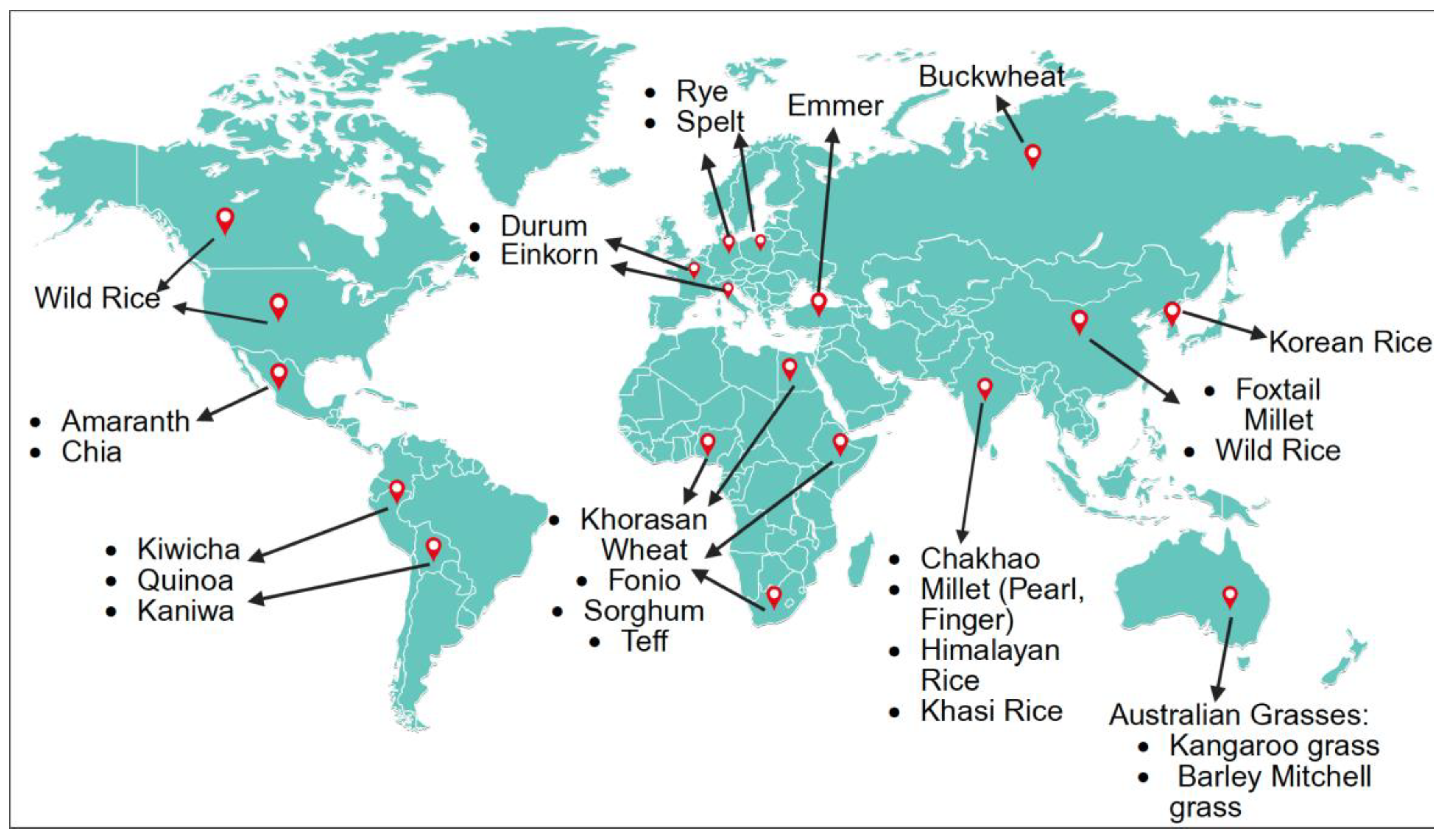
Figure 2.
Some key ancient grains, their constituent bioactives and functional properties. This schematic highlight selected ancient grains, such as quinoa, amaranth, millet, sorghum, and teff, and their associated bioactive constituents, including phenolic acids, flavonoids, dietary fibers, and essential amino acids. These compounds contribute to various health-promoting properties, such as antioxidant activity, anti-inflammatory effects, and glycemic regulation.
Figure 2.
Some key ancient grains, their constituent bioactives and functional properties. This schematic highlight selected ancient grains, such as quinoa, amaranth, millet, sorghum, and teff, and their associated bioactive constituents, including phenolic acids, flavonoids, dietary fibers, and essential amino acids. These compounds contribute to various health-promoting properties, such as antioxidant activity, anti-inflammatory effects, and glycemic regulation.
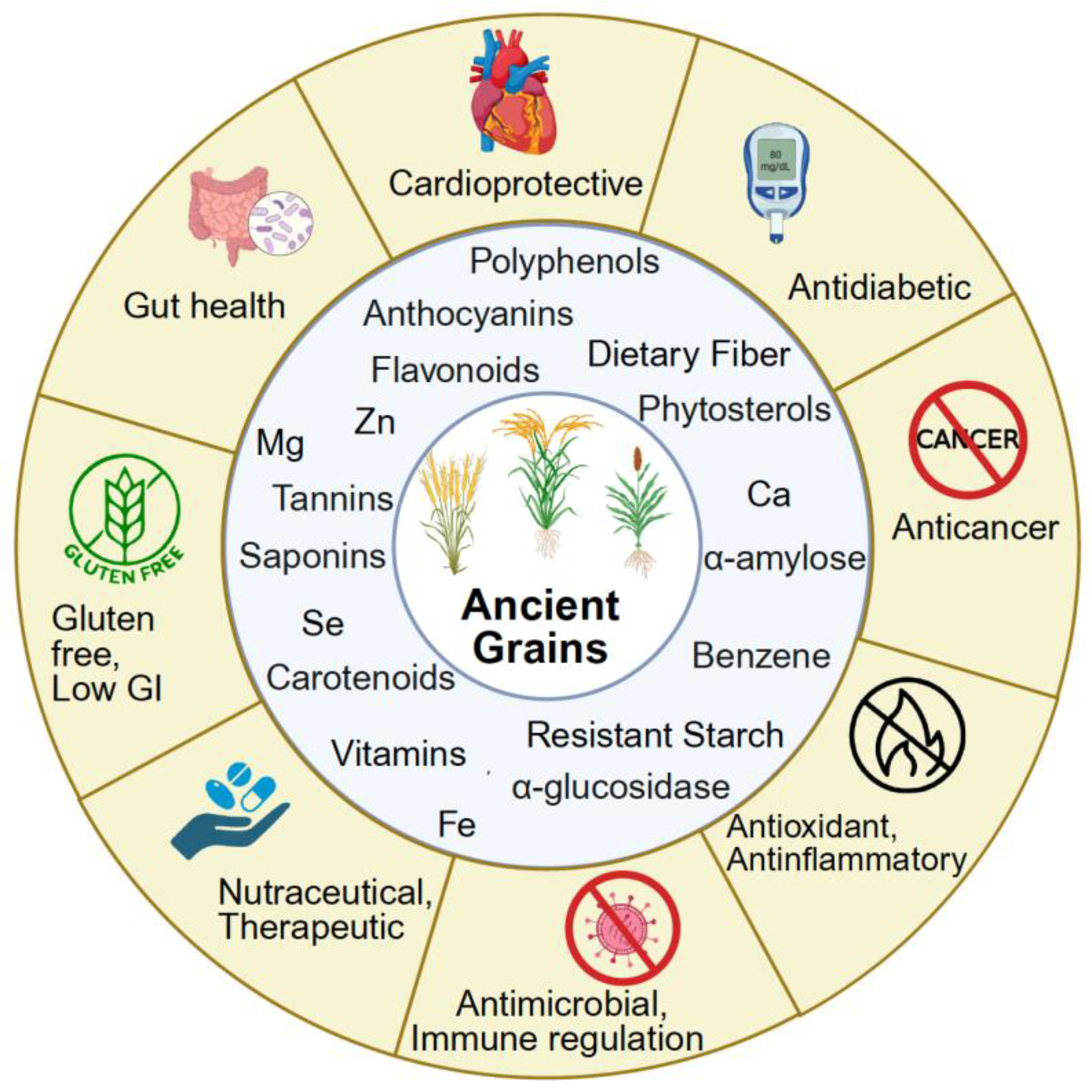

Table 1.
Summary of Selected Ancient Grains and Their Nutritional-Bioactive Profiles and Health Benefits.
Table 1.
Summary of Selected Ancient Grains and Their Nutritional-Bioactive Profiles and Health Benefits.
| Grain Type | Notable Nutrients/Bioactives | Documented/Proposed Health Benefits | Selected References |
|---|---|---|---|
| Traditional Red and Pigmented Rice (e.g., Mappillai Samba, Chakhao, YZ6H) | Phenolic acids, flavonoids, tocopherols, phytosterols, squalene, anthocyanins, vitamins, minerals | Antioxidant, anti-inflammatory, anticancer, antihypercholesterolemic, neuroprotective | [37,49,82] |
| Wild Rice (Zizania spp.) | Protein, fiber, vitamins B/E, minerals (Fe, Zn, Mg), phenolics, phytosterols, γ-oryzanol | Anti-atherogenic, antidiabetic, hypocholesterolemic, metabolic and gut health benefits | [56,58,60,83] |
| Australian Native Grains | Protein, polyunsaturated fatty acids, phenolics, Ca, Fe, Zn, Mg | Glycemic control, cardiovascular and metabolic health, antioxidant, and anti-inflammatory | [35,39] |
| Indigenous and Aromatic Rice (India, Khasi, Himalaya) | Protein, resistant starch, fiber, iron, zinc, phenolics, aroma compounds | Low GI, antioxidant, digestive and metabolic benefits, ethnomedicinal value | [14,33,38] |
| Thai and Korean Pigmented Rice Bran | Anthocyanins, flavonoids, tocopherols, γ-oryzanol, fatty acids | Antioxidant, anti-obesity, antidiabetic, immune-modulatory | [47,84,85] |
| Teff, Fonio, Sorghum, Pearl Millet (African Grains) | Iron, zinc, calcium, vitamin A, B12, fiber, polyphenols | Combat malnutrition, manage NCDs, promote dietary diversity and food security | [16,34] |
| Kañiwa, Quinoa, Kiwicha (Andean Grains) | Protein, essential amino acids, fiber, phenolics, flavonoids, betalains | Antioxidant, anti-inflammatory, anticancer, colon health | [29,45] |
| Ancient Wheats (Einkorn, Emmer, Khorasan, Spelt) | Protein, fiber, polyphenols, minerals (Zn, Fe, Mg), MUFA, tocopherols | Antioxidant, anti-inflammatory, gut health, higher nutritional density than modern wheat | [28,30,41] |
| Oats, Buckwheat, Rye | β-glucans, resistant starch, phenolics, minerals | Glycemic control, cholesterol-lowering, antioxidant and cardiovascular health | [27] |
Abbreviations: GI, glycemic index; NCDs, noncommunicable diseases; MUFA, Monounsaturated fatty acids.
Disclaimer/Publisher’s Note: The statements, opinions and data contained in all publications are solely those of the individual author(s) and contributor(s) and not of MDPI and/or the editor(s). MDPI and/or the editor(s) disclaim responsibility for any injury to people or property resulting from any ideas, methods, instructions or products referred to in the content. |
© 2025 by the authors. Licensee MDPI, Basel, Switzerland. This article is an open access article distributed under the terms and conditions of the Creative Commons Attribution (CC BY) license (http://creativecommons.org/licenses/by/4.0/).
Copyright: This open access article is published under a Creative Commons CC BY 4.0 license, which permit the free download, distribution, and reuse, provided that the author and preprint are cited in any reuse.