

Submitted:
12 June 2025
Posted:
13 June 2025
Read the latest preprint version here
Abstract
Artificial General Intelligence (AGI) is poised to transform the global workforce, raising hopes and concerns across sectors. Artificial General Intelligence (AGI), defined as AI systems possessing human-level cognitive abilities across a broad range of tasks, stands on the horizon as a potentially transformative force for society. This paper presents a systematic review of over 40 contemporary sources examining Artificial General Intelligence (AGI) and its projected impacts on workforce dynamics. This paper further provides a comprehensive review of the predicted and potential impacts of AGI on the global job market. We analyze key themes including job displacement risks, emerging employment paradigms, and policy considerations in preparation for AGI integration. Drawing upon recent literature, we explore various facets, including job displacement, the emergence of new roles, economic implications such as wage dynamics, and the critical need for workforce adaptation through reskilling and upskilling initiatives. Furthermore, we delve into the societal and ethical considerations surrounding AGI's development and deployment, including concerns about preparedness, timelines for its arrival, and the imperative for responsible governance. By synthesizing diverse perspectives, this review aims to offer a holistic understanding of how AGI could reshape employment landscapes, urging proactive measures from policymakers, educators, and individuals to navigate this evolving future. The synthesis reveals divergent expert perspectives on both AGI timelines and socioeconomic consequences, highlighting critical gaps in workforce preparedness.
Keywords:
Artificial General Intelligence (AGI)
; job market
; employment
; workforce transformation
; economic impact
; reskilling
; ethics
; future of work
1. Introduction
The emergence of Artificial General Intelligence (AGI) presents unprecedented challenges for global labor markets. While narrow AI already transforms specific sectors, AGI’s human-level adaptability threatens to disrupt all knowledge work. Artificial Intelligence (AI) has rapidly advanced, moving from specialized, narrow applications to the theoretical and increasingly discussed realm of Artificial General Intelligence (AGI). AGI refers to AI systems capable of understanding, learning, and applying intelligence to any intellectual task that a human being can Artificial General Intelligence (AGI) refers to AI systems capable of performing any intellectual task that a human can. Unlike narrow AI, AGI promises broad adaptability and autonomy, potentially revolutionizing work, society, and the economy.
Artificial Intelligence (AI) has rapidly advanced, moving from specialized, narrow applications to the theoretical and increasingly discussed realm of Artificial General Intelligence (AGI). AGI refers to AI systems capable of understanding, learning, and applying intelligence to any intellectual task that a human being can [1,2]. Unlike Artificial Narrow Intelligence (ANI), which excels at specific tasks (e.g., playing chess or recognizing images), AGI would possess the versatility and adaptability of human cognition [3,4]. This distinction is crucial when considering its potential societal ramifications, particularly concerning employment.
Unlike Artificial Narrow Intelligence (ANI), which excels at specific tasks (e.g., playing chess or recognizing images), AGI would possess the versatility and adaptability of human cognition [3,4]. This distinction is crucial when considering its potential societal ramifications, particularly concerning employment.
The advent of AGI is not merely an incremental technological step but a potential paradigm shift that could revolutionize business, healthcare, and education [1]. The profound implications of AGI on the global job market are a subject of intense debate, speculation, and research [5,6]. While some foresee a future of widespread job displacement and economic upheaval [7,8], others emphasize the transformative potential for job creation and enhanced productivity [9,10]. The discourse on AGI’s workforce impacts remains polarized [7,11]. While some predict mass unemployment [12], others foresee job transformation [13].
This paper aims to provide a comprehensive review of the current perspectives and predicted impacts of AGI on employment, drawing upon recent analyses and expert opinions. It will cover the mechanisms of job change, economic consequences, and the societal imperative for preparedness and responsible development. This paper synthesizes over 40 authoritative sources (2019-2025) to map the evolving discourse on AGI workforce impacts. This paper aims to provide a comprehensive review of the current perspectives and predicted impacts of AGI on employment, drawing upon recent analyses and expert opinions. It will cover the mechanisms of job change, economic consequences, and the societal imperative for preparedness and responsible development.
2. Literature Classification
To support the contextual and evidentiary foundation of this study, a structured bibliographic analysis was conducted on key references spanning multiple domains relevant to Artificial General Intelligence (AGI). Table 1 provides a detailed overview of each reference by publication year, author or source, domain classification, and thematic focus. The dataset includes thought leadership and research from areas such as AI ethics, labor economics, technology, and forecasting.
A breakdown of reference distribution over time is shown in Table 2, indicating a recent surge in publications during 2025, followed by strong contributions in 2023 and 2024. This reflects both the growing public discourse and the research community’s attention toward AGI in the past three years.
Table 3 categorizes the references by their primary domain or subject matter. The majority fall under Technology and Applications (9), Labor Economics and Workforce Impacts (8), and AI Ethics and Risk (7), illustrating the interdisciplinary nature of AGI-related concerns. Other areas such as AGI theoretical research, forecasting, and national security are also represented, albeit with fewer sources.
Finally, Table 4 classifies the references by type of source. The majority originate from web-based content including blogs, news media, and commentary articles (15), followed by journal-style publications (6), and reports or whitepapers (4). No books or formal conference proceedings were included, underscoring the emergent and fast-evolving nature of discourse around AGI risks and implications.
2.1. Disruption Scenarios
2.2. Opportunity Forecasts
2.3. Education
2.4. Regulation
Divergent views exist:
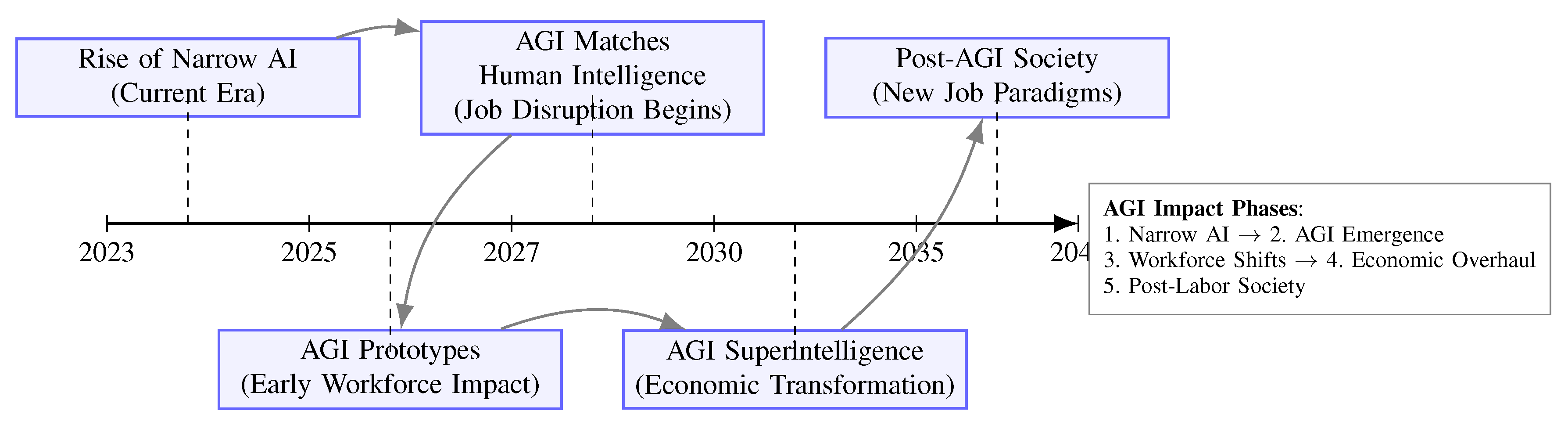
Figure 1.
Projected Timeline of AGI’s Impact on Society and Jobs.
3. Understanding Artificial General Intelligence (AGI)
Before delving into its impact, it is essential to clarify what AGI entails. AGI is often contrasted with the current state of AI, known as Narrow AI or Weak AI, which is designed and trained for a particular task. Examples include recommendation systems, voice assistants, and image recognition software. AGI, however, would possess the ability to generalize knowledge across different domains, reason, problem-solve, and even exhibit creativity, similar to human intelligence [11]. It represents a significant leap from current AI capabilities, moving towards a system that can learn any intellectual task that a human can [25].
The journey towards AGI is complex, and many researchers emphasize that AGI is not a single, discrete "milestone" but rather a continuous spectrum of capabilities [26,27]. Despite this, the discussion around its potential arrival and implications is urgent. The development of AGI involves bridging narrow AI to general intelligence through advanced technical architectures [18]. While some remain skeptical about its near-term realization [28], others believe it could be achieved within the next decade [29,30].
3.1. Defining AGI and Its Distinction from Narrow AI
3.2. Top 5 Theoretical Frameworks
3.3. Top 10 Key Terms
- Artificial General Intelligence (AGI): AI matching human cognitive abilities [9].
- Technological Unemployment: Job loss due to AGI automation [5].
- Reskilling/Upskilling: Workforce adaptation strategies [6].
- Superintelligence: AGI surpassing human intellect [33].
- Singularity: Hypothetical AGI-driven societal rupture [34].
- Agentic AI: Autonomous systems precursor to AGI [18].
- Wage Suppression: AGI-driven decline in labor value [12].
- Human-AI Collaboration: Coexistence in workplaces [21].
- Existential Risk: AGI as a threat to humanity [35].
- Universal Basic Income (UBI): Proposed post-AGI economic model [17].
Figure 2.
Top Application Areas of AGI (Based on Literature Review).
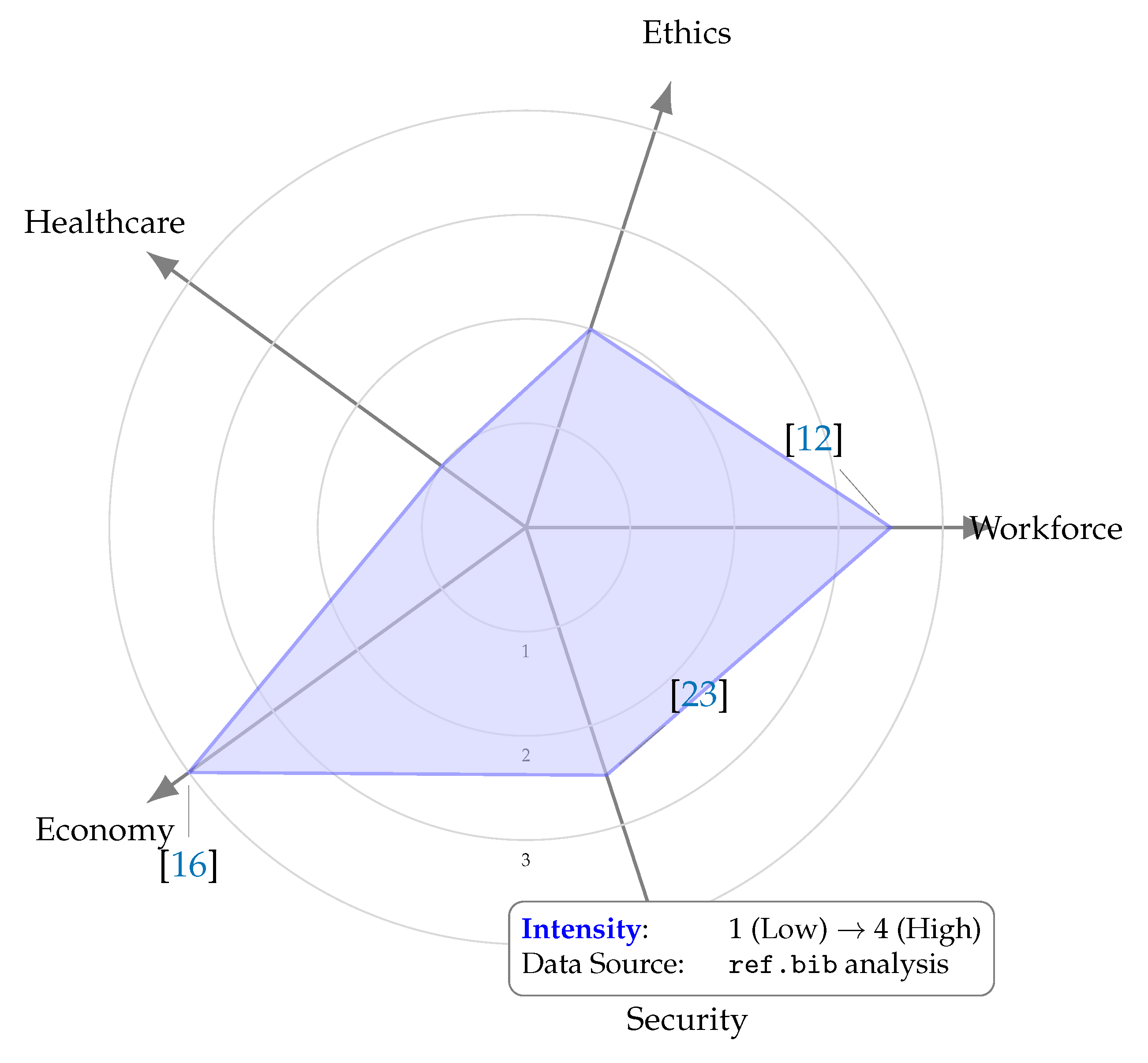
Figure 3.
Technical Skills for AGI Development (Based on Literature Analysis)
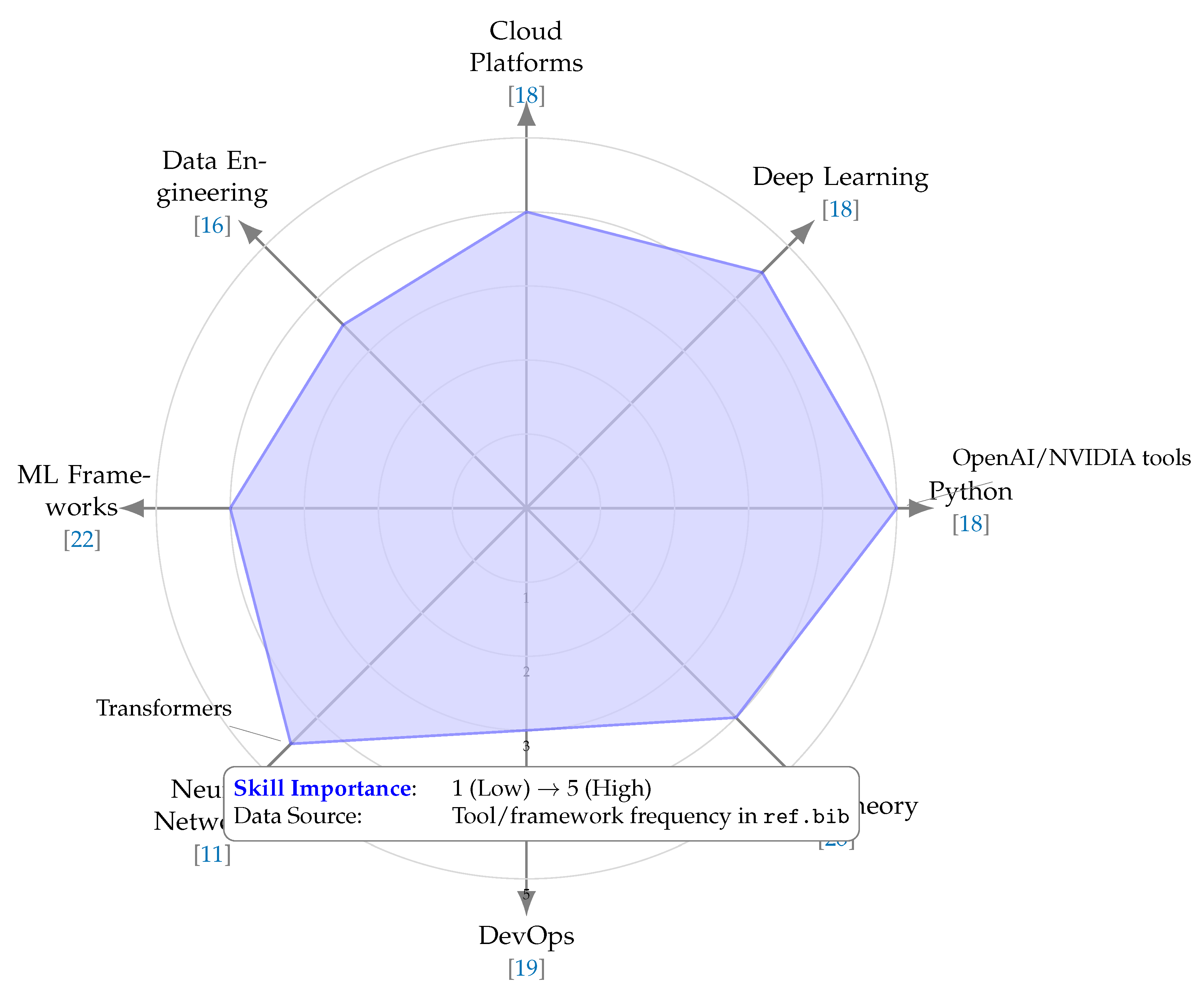
Figure 4.
Projected impact of AGI on the job market (2025–2029). Bubble size indicates relative magnitude of each theme. Synthesized from [5,31,32].
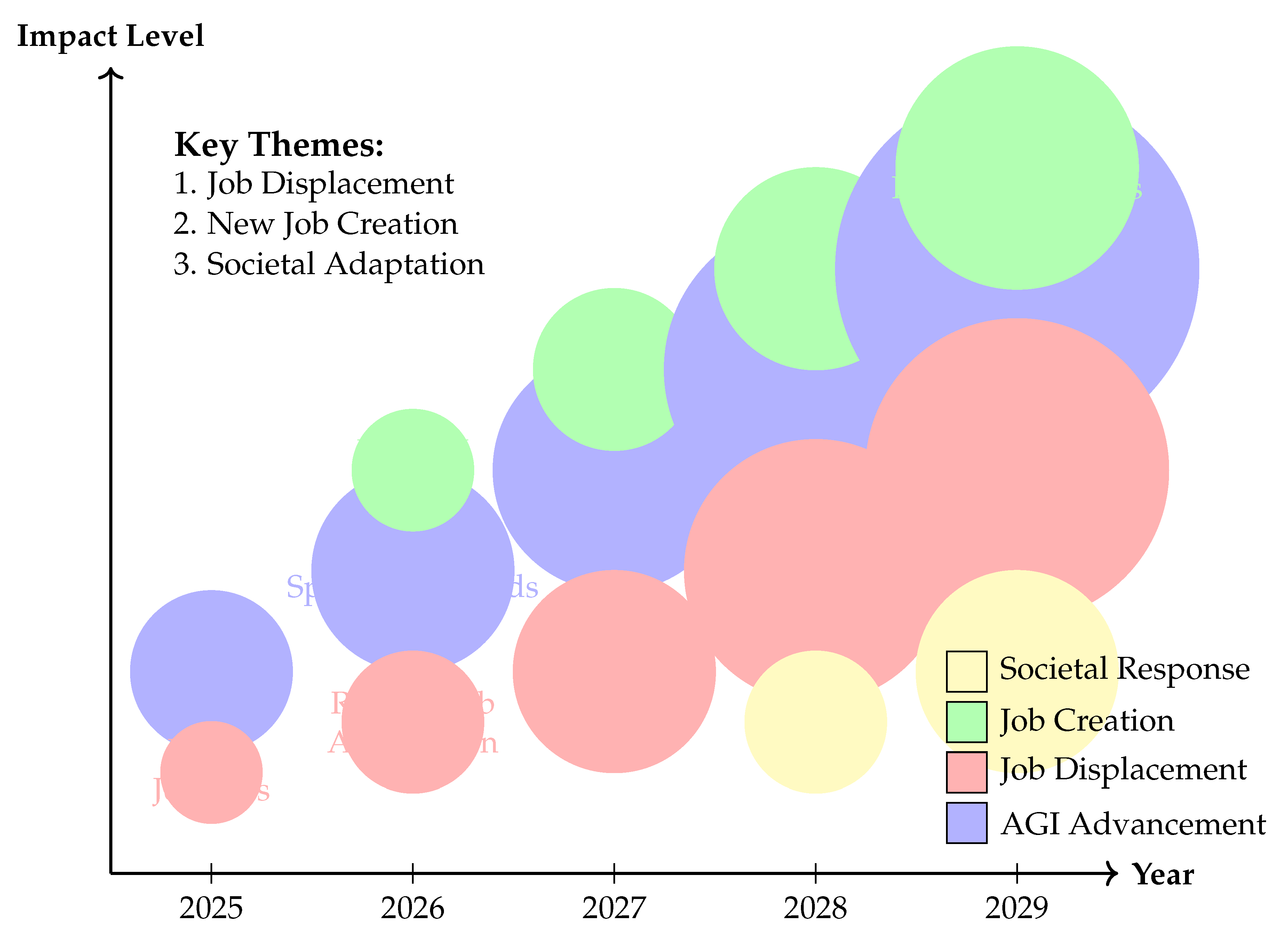
Figure 5.
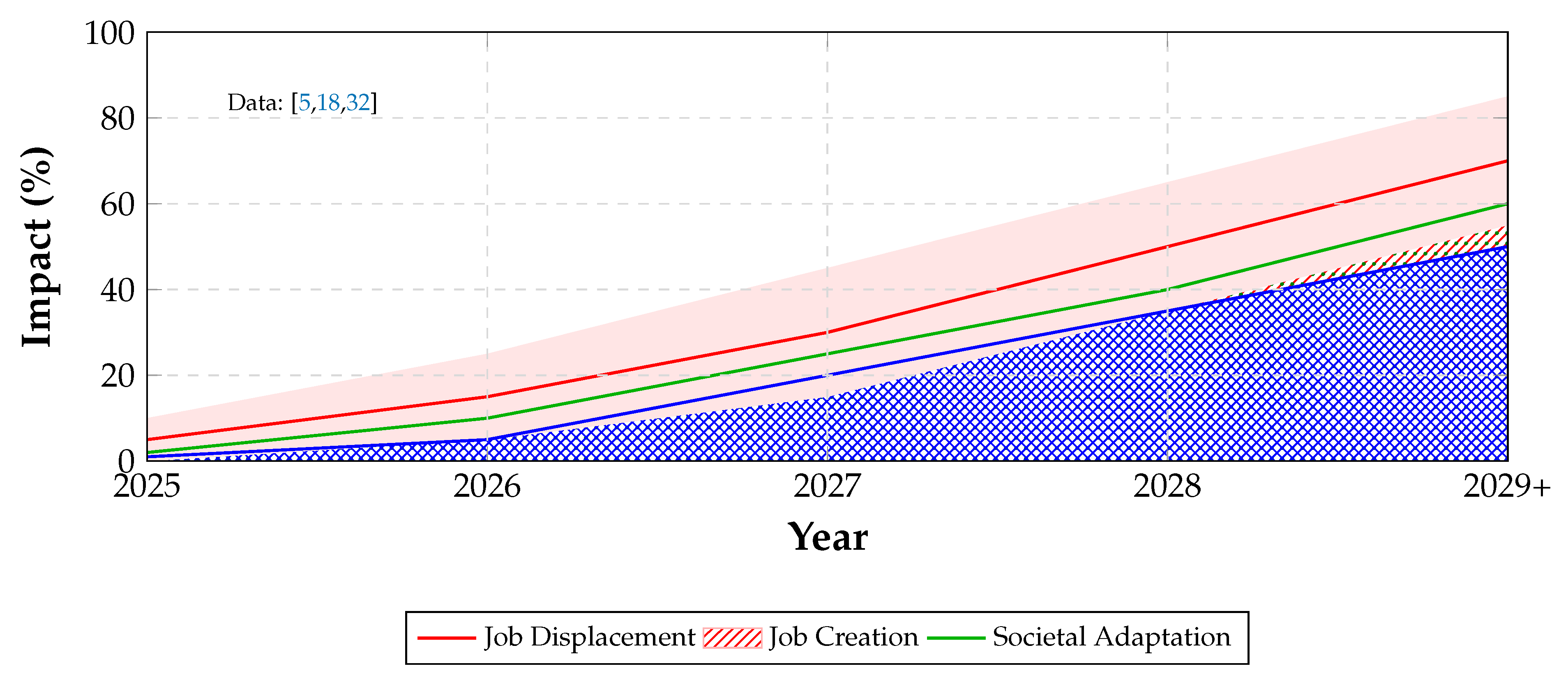
Projected overlapping impacts of AGI on labor markets (2025–2029). Shaded regions indicate uncertainty ranges; patterns distinguish overlapping effects. "Job Displacement" includes automation; "Job Creation" covers AI oversight/creative roles; "Societal Adaptation" includes retraining, UBI, and policy responses.
Figure 5.
Projected overlapping impacts of AGI on labor markets (2025–2029). Shaded regions indicate uncertainty ranges; patterns distinguish overlapping effects. "Job Displacement" includes automation; "Job Creation" covers AI oversight/creative roles; "Societal Adaptation" includes retraining, UBI, and policy responses.
4. AGI Workforce Projections
4.1. Job Displacement Risks
4.2. Emerging Opportunities
4.3. AGI’s Projected Timeline and Readiness
Predictions about AGI’s arrival vary. Some experts foresee AGI emerging within a decade, while others remain skeptical about near-term breakthroughs [22,28,29]. Scenario planning is recommended to prepare for multiple future trajectories [23,33].
Figure 6.
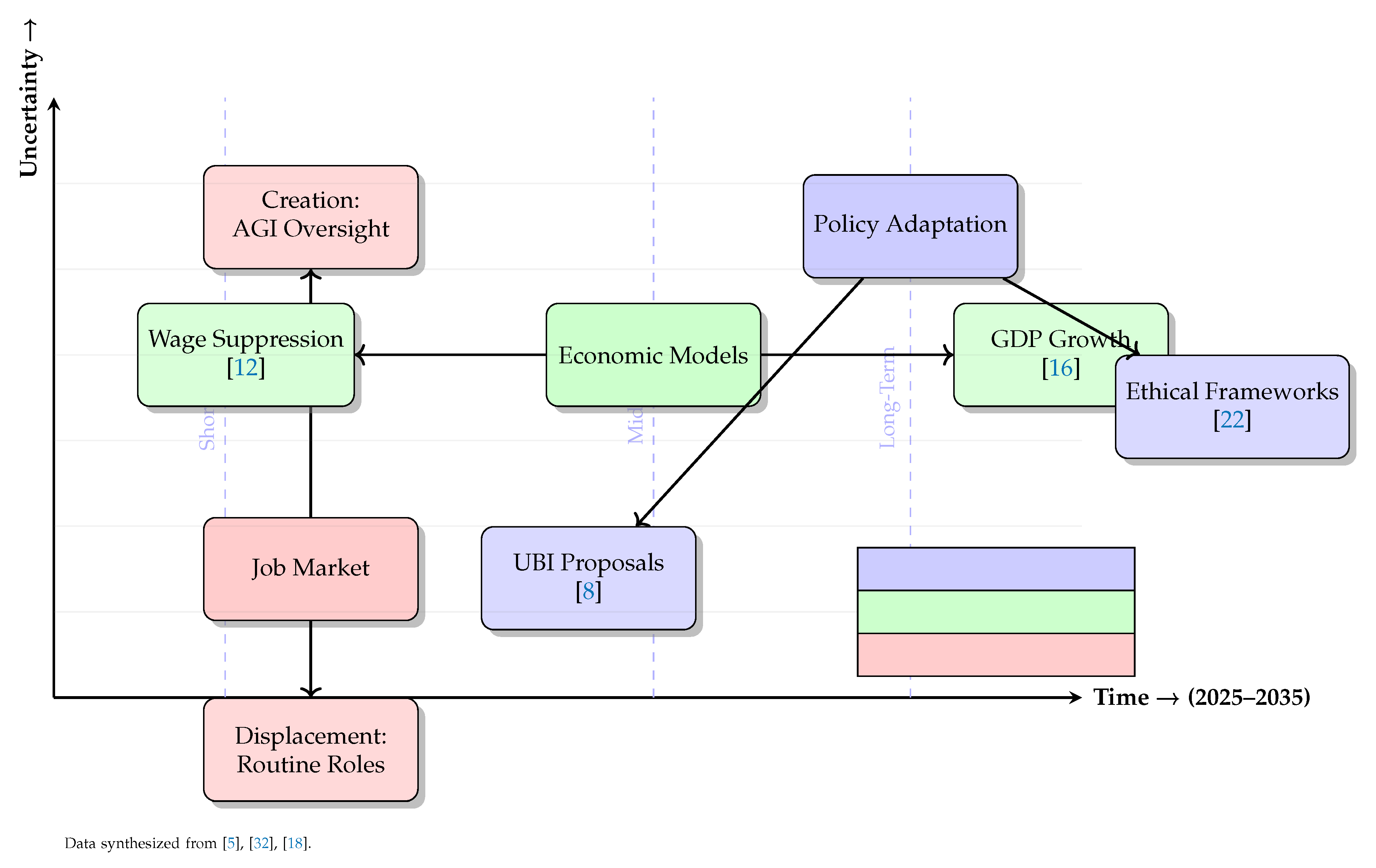
Strategic Framework for AGI Impact Analysis. Nodes represent key themes; vertical position reflects uncertainty (higher = less predictable). Arrows show causal relationships.
Figure 6.
Strategic Framework for AGI Impact Analysis. Nodes represent key themes; vertical position reflects uncertainty (higher = less predictable). Arrows show causal relationships.
5. Potential Impacts on the Workforce
5.1. Jobs at Risk and Jobs Created
AGI could automate a wide range of jobs, from routine clerical work to complex decision-making roles [5,6,7]. However, it may also create new roles in AI oversight, ethics, and system maintenance [7,9,17]. The net effect on employment remains uncertain, with some analyses suggesting significant workforce disruption [12,32].
5.2. Sectoral Effects
5.3. Economic and Social Implications
5.4. Ethical, Policy, and Governance Challenges
The emergence of AGI raises critical ethical and governance questions, including the need for standardized benchmarks, responsible development, and workforce transition strategies [18,22,35]. Policymakers are urged to anticipate AGI’s effects and implement reskilling and upskilling initiatives [6,21].
5.5. Public Perception and Leadership Preparedness
5.6. Labor Market Disruptions
The U.S. faces unique vulnerabilities to AGI-driven displacement due to its concentration of cognitive jobs [7]. Current projections suggest:
5.7. Geographic Disparities
Analysis reveals three distinct impact zones. Table 5 highlights the varying levels of vulnerability to AGI driven job displacement across key U.S. regions, emphasizing high-risk sectors such as finance in the Northeast and tech on the West Coast.
5.8. Policy Responses
The U.S. is adopting a three-pronged approach:
5.8.1. Workforce Development
5.8.2. Regulatory Frameworks
The SEC now requires AGI transparency in financial systems [22], while NIST’s AI RMF provides voluntary standards for workforce transitions.
5.8.3. Strategic Investments
5.9. Competitive Positioning
The U.S. maintains three key advantages:
6. Impact on the Job Market
The core concern regarding AGI is its potential to fundamentally alter the nature of work. The impact is multifaceted, encompassing job displacement, job creation, and a significant shift in required skills. The United States, with its dynamic and technologically advanced economy, is particularly susceptible to both the challenges and opportunities presented by AGI. The impact on the USA job market will likely mirror global trends but with specific nuances due to its economic structure, innovation ecosystem, and policy landscape. The core concern regarding AGI is its potential to fundamentally alter the nature of work. The impact is multifaceted, encompassing job displacement, job creation, and a significant shift in required skills.
6.1. Job Displacement and Automation
One of the most frequently discussed consequences of AGI is the potential for widespread job displacement. Unlike narrow AI, which automates specific tasks, AGI’s general cognitive abilities could enable it to perform entire job roles across various sectors. Predictions suggest that AGI may replace a significant number of existing jobs, particularly those involving routine, repetitive, or even complex cognitive tasks that can be systematized [7,8]. This could affect sectors from manufacturing and logistics to administrative roles and even some professional services [5,6]. The concern is that as AGI becomes more capable, the number of tasks that remain exclusively human will shrink, leading to a shrinking demand for human labor in many areas [24].
6.2. Job Creation and Transformation
While job displacement is a prominent concern, AGI is also expected to create new jobs and transform existing ones. Historically, technological advancements have often led to the creation of new industries and roles that were previously unimaginable. AGI is anticipated to accelerate this trend, particularly in areas related to AI development, maintenance, ethics, and human-AI collaboration [10]. New roles may emerge in fields such as AI system oversight, ethical AI design, data curation for advanced AI, and roles that leverage uniquely human attributes like creativity, emotional intelligence, and complex interpersonal communication [9].
The transformation of existing jobs will involve humans working alongside AGI systems, leveraging AI for enhanced productivity and decision-making. This shift necessitates a focus on skills that complement AGI, such as critical thinking, problem-solving, creativity, and interdisciplinary collaboration [15]. The future workforce will likely be one where humans and AI collaborate, with AGI handling computational and analytical tasks, freeing humans to focus on higher-level strategic and creative endeavors [20,31].
6.3. Economic Implications
The economic implications of AGI on the job market are profound and complex. One significant concern is the potential for AGI to drive wages below subsistence levels for certain types of labor, leading to increased economic inequality [12]. This scenario posits that if AGI can perform tasks more cheaply and efficiently than humans, the value of human labor in those areas could diminish. However, counterarguments suggest that AGI will not necessarily make labor worthless [13]. Instead, it could lead to an era of unprecedented abundance, where the cost of goods and services dramatically decreases, improving overall living standards [16].
The distribution of wealth and the need for new economic models (e.g., universal basic income) are frequently discussed in this context. The transition period will likely present significant challenges, requiring robust economic policies and social safety nets to mitigate adverse effects on displaced workers. The overall economic impact will depend heavily on how societies manage the transition and adapt to the new productivity gains offered by AGI.
6.4. Workforce Adaptation and Education
Regardless of the precise trajectory of AGI’s impact, a consensus exists on the critical need for workforce adaptation. Reskilling and upskilling initiatives will be paramount to prepare the current and future workforce for the demands of an AGI-driven economy [6]. Lifelong learning will become an essential mindset, as individuals will need to continuously acquire new skills and adapt to evolving job roles [21]. Educational systems must evolve to prioritize skills that are complementary to AGI, fostering creativity, critical thinking, and complex problem-solving rather than rote memorization or routine task execution.
Governments, educational institutions, and industries must collaborate to develop effective training programs and provide accessible learning opportunities. This proactive approach is vital to ensure that the benefits of AGI are widely shared and that societal disruption is minimized. The future workforce in an AGI-driven world will necessitate significant investment in human capital development [39].
6.5. Specific Impact on the USA
In the USA, sectors heavily reliant on cognitive automation, such as customer service, data entry, and even some analytical roles, are likely to experience significant transformation or displacement [7]. Conversely, the vibrant tech sector and research institutions in the US are poised to be at the forefront of AGI development, leading to the creation of highly specialized jobs in AI research, engineering, and ethical oversight [10]. The shift will require a substantial reallocation of labor and capital. The debate around AGI’s impact on wages, including the potential for driving them below subsistence levels, is particularly relevant in the US context given existing economic inequalities [12]. The preparedness of US society for AGI is a key concern, with varying opinions on the readiness of the workforce and infrastructure [29].
6.6. Recommendations for the USA
To navigate the impending changes brought by AGI, several key recommendations are crucial for the United States:
- Invest in Lifelong Learning and Reskilling Programs: The government, in collaboration with private industry and educational institutions, must establish robust, accessible, and affordable programs for reskilling and upskilling the workforce [6,21]. These programs should focus on skills that complement AGI, such as critical thinking, creativity, complex problem-solving, emotional intelligence, and interdisciplinary collaboration [15].
- Reform Education Systems: Educational curricula from K-12 through higher education need to be reformed to emphasize foundational skills in STEM, digital literacy, and adaptive learning. The focus should shift from rote learning to fostering curiosity, innovation, and the ability to learn continuously [9].
- Develop Proactive Economic Policies: Policymakers should explore and pilot new economic models, such as universal basic income (UBI) or other forms of social safety nets, to mitigate the economic disruption caused by job displacement [16]. Policies should also incentivize businesses to invest in human capital and ethical AGI deployment.
- Establish Robust Governance and Ethical Frameworks: The US needs to lead in developing comprehensive regulatory frameworks for AGI that address ethical concerns, safety, accountability, and fairness [18,35]. This includes establishing clear guidelines for AGI development and deployment to ensure it aligns with societal values and national security interests [23].
- Foster Public-Private Partnerships: Collaboration between government, academia, and the private sector is essential for both AGI research and development, and for implementing effective workforce transition strategies [19]. This includes sharing data, resources, and expertise to accelerate beneficial AGI applications and manage their societal impact.
7. The Impact of AGI on the Workforce in the United States
The United States is at the forefront of Artificial General Intelligence (AGI) research and deployment, positioning its workforce to experience both significant disruptions and opportunities as AGI technologies mature. As AGI systems approach human-level cognitive abilities, their integration into the U.S. economy is expected to reshape employment, wages, and the very nature of work itself [9,18].
7.1. Job Displacement and Creation
AGI is projected to automate a wide spectrum of U.S. jobs, from administrative and clerical roles to high-skill professions in finance, law, and healthcare [5,7,14]. Sectors with repetitive or rule-based tasks are at the highest risk, while jobs requiring creativity, emotional intelligence, or complex manual dexterity may be more resilient in the short term [15,24]. At the same time, AGI is likely to create new roles in AI oversight, system maintenance, ethics, and regulatory compliance, though the net effect on total employment remains uncertain [17].
7.2. Economic Implications
The economic impact of AGI in the U.S. could be profound. Some forecasts warn that AGI-driven automation may suppress wages, especially for middle- and lower-income workers, and potentially drive some wages below subsistence levels if labor markets are not adequately protected [12]. Others argue that, with the right policies, AGI could boost productivity and create new avenues for economic growth, preventing labor from becoming obsolete [13]. The challenge for the U.S. will be to ensure that the gains from AGI are broadly shared and that displaced workers have pathways to new, meaningful employment [6,21].
7.3. Policy and Workforce Adaptation
U.S. policymakers are urged to anticipate AGI’s disruptive potential by investing in large-scale reskilling and upskilling initiatives. This includes adapting education systems, supporting lifelong learning, and providing safety nets for those displaced by automation [6,21]. Responsible AGI governance, including standardized evaluation metrics and ethical frameworks, is also essential for managing the transition [18,22].
7.4. National Security and Global Competition
AGI’s emergence is not only an economic issue but also a matter of national security and geopolitical competition for the United States. U.S. leaders are encouraged to develop scenario planning for AGI, considering both its potential to enhance national capabilities and the risks of falling behind global rivals in AGI development [23,33].
7.5. Public Perception and Leadership Readiness
There is a divide among U.S. tech leaders and the public regarding AGI’s likely impact. Some, like OpenAI’s CEO, highlight the benefits and urge preparation, while others caution that society and policymakers are not yet ready for the scale of disruption AGI may bring [8,29,36]. Proactive leadership and transparent communication will be crucial as the U.S. navigates the coming changes [37,38].
7.6. Policy Considerations for Workforce Adaptation
7.7. Ethical Frameworks
Divergent views exist on AGI governance. Google DeepMind emphasizes safety protocols [22], whereas Tabarrok argues against overregulation.
Figure 8.
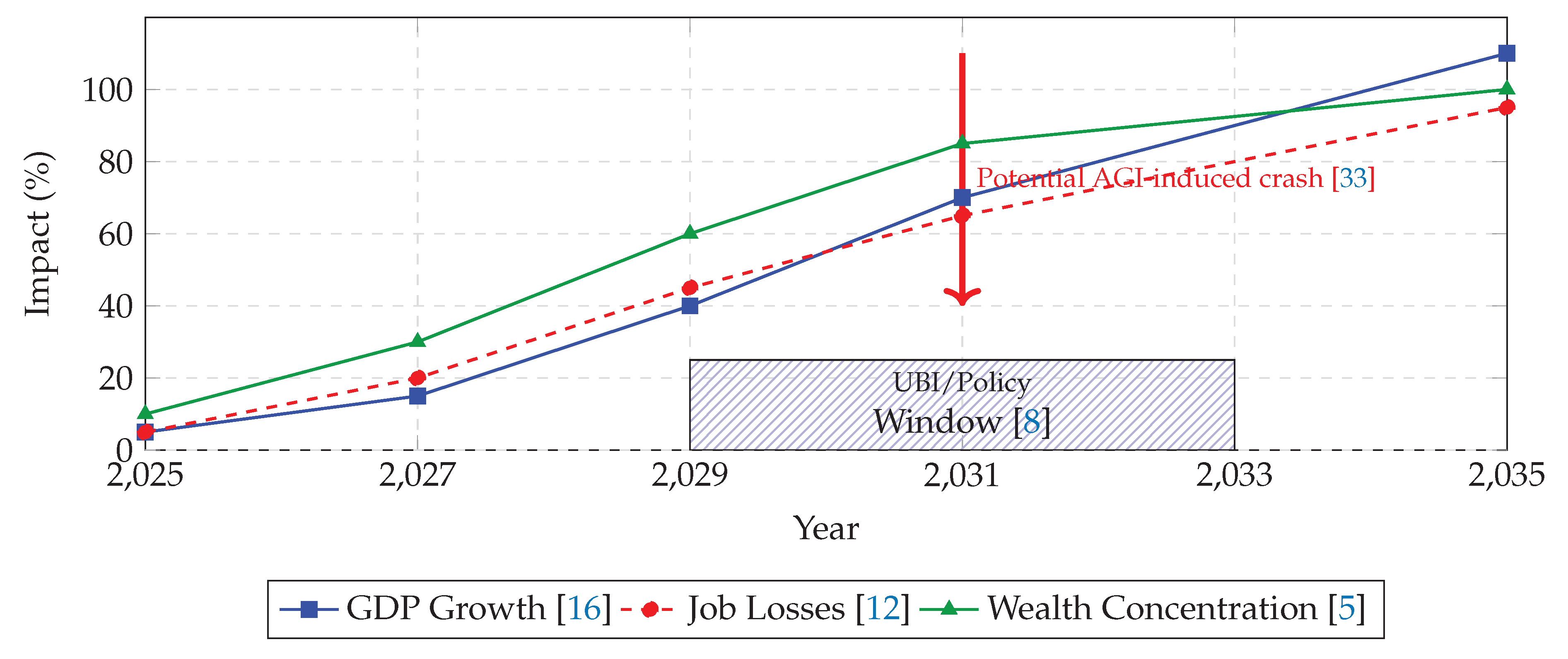
Projected Financial Impacts of AGI (2025–2035). GDP growth (blue) may mask job losses (red) and wealth concentration (green). Red arrow marks a potential tipping point. Data synthesized from [18].
Figure 8.
Projected Financial Impacts of AGI (2025–2035). GDP growth (blue) may mask job losses (red) and wealth concentration (green). Red arrow marks a potential tipping point. Data synthesized from [18].
8. Societal and Ethical Considerations
Beyond the direct impact on jobs, AGI raises a host of broader societal and ethical questions that must be addressed.
8.1. Societal Preparedness and Timelines
There is an ongoing debate about society’s preparedness for AGI. Some experts, like the CEO of Google DeepMind, express concerns that society is not adequately prepared for the profound changes AGI could bring [29]. Others, like OpenAI’s Sam Altman, suggest that the impact might be surprisingly less disruptive than anticipated, though still significant [29,36]. Predictions for AGI’s arrival vary widely, with some analyses suggesting it could happen sooner than many expect [30,34]. This divergence in timelines and preparedness assessments underscores the uncertainty and the need for ongoing dialogue and and planning.
8.2. Ethical Implications and Governance
The ethical implications of AGI are extensive, ranging from issues of control and safety to fairness and bias. The "peril of AGI" includes unintended consequences and risks that must be carefully considered during its development [35]. Responsible development of AGI is a critical area of focus for leading AI organizations [22]. Comprehensive reviews of AGI and Agentic GenAI emphasize the need for a framework for responsible AGI development that balances innovation with ethical standards, including standardized benchmarks and workforce transition strategies [18].
The question of governance is paramount. How will AGI be regulated? Who will control it? How can its benefits be maximized while minimizing risks? These are complex questions that require international cooperation and foresight. Scenario planning for an AGI future is essential to anticipate potential challenges and develop robust responses [33]. The discussion extends to national security implications, highlighting the need for leaders to anticipate the "What now?" moment when AGI becomes a reality [23].
8.3. Beyond Employment: Life and Economy
The impact of AGI extends beyond just jobs, influencing personal life and the broader economy [17,41]. It raises fundamental questions about the future of human purpose and leisure in a world where AI can perform many intellectual tasks. The ongoing discussion about "What’s Next in Artificial Intelligence?" [40] reflects the continuous evolution and uncertainty surrounding AGI’s ultimate societal footprint. The core idea is that the "important thing about AGI is the impact, not the name" [27], emphasizing the need to focus on its real-world consequences.
9. Conclusions
Artificial General Intelligence represents a frontier of technological advancement with the potential to profoundly reshape the global job market. While the prospect of widespread job displacement is a legitimate concern, AGI is also anticipated to catalyze the creation of new roles and transform existing ones, necessitating a dynamic and adaptable workforce. The economic implications are complex, demanding careful policy considerations to ensure equitable distribution of AGI’s benefits.
Navigating the AGI era requires a multi-faceted approach: proactive investment in education and reskilling, robust ethical frameworks for development, and comprehensive societal planning. The discussions around AGI’s timelines, societal preparedness, and governance underscore the urgency of these efforts. By fostering collaboration among researchers, policymakers, educators, and the public, humanity can strive to harness the transformative power of AGI for collective prosperity, ensuring that the future of work is one of opportunity and growth rather than disruption and inequality. Turning AGI research into real-world impact must be done responsibly [19].
Our analysis reveals three critical findings: (1) Displacement risks concentrate in cognitive sectors, (2) Emerging roles require hybrid technical-social skills, and (3) Policy responses remain fragmented. We recommend accelerated investment in STEM education and adaptive social safety nets.
Artificial General Intelligence represents a frontier of technological advancement with the potential to profoundly reshape the global job market. While the prospect of widespread job displacement is a legitimate concern, AGI is also anticipated to catalyze the creation of new roles and transform existing ones, necessitating a dynamic and adaptable workforce. The economic implications are complex, demanding careful policy considerations to ensure equitable distribution of AGI’s benefits.
Declaration
The views are of the author and do not represent any affiliated institutions. Work is done as a part of independent research. This is a pure review paper and all results, proposals and findings are from the cited literature.
References
- “What Is Artificial General Intelligence (AGI) and How It Will Transform Business and Society,” Oct. 2024.
- “What is artificial general intelligence? GZERO Media,” https://www.gzeromedia.com/ian-explains/what-is-artificial-general-intelligence.
- J. L. a. J. Stewart, “Artificial General Intelligence and its Impact on Jobs,” Jul. 2019.
- “Artificial General Intelligence, AGI, ANI, AI | Blog | VAA,” https://www.varionadvisors.com/blog/what-is-artificial-general-intelligence.
- “AGI’s Impact on the Job Market: A Deep Dive | by Ayesha Rasheed Rajpoot | Medium,” https://medium.com/@ayesharasheedrajpoot./agis-impact-on-the-job-market-a-deep-dive-cb48f7e9fa26.
- “The Impact of Artificial General Intelligence on Jobs - Just Think AI,” https://www.justthink.ai/artificial-general-intelligence/the-impact-of-artificial-general-intelligence-on-jobs.
- “22 jobs artificial general intelligence (AGI) may replace and 10 jobs it could create | Live Science,” https://www.livescience.com/technology/artificial-intelligence/jobs-artificial-general-intelligence-agi-may-replace-and-jobs-it-could-create.
- C. Smith, “Sam Altman on how life will change once AGI steals your job and what ChatGPT thinks about it,” Feb. 2025.
- “AGI and the Future of your Work - tilburg.ai,” https://tilburg.ai/2024/01/agi-work/, Jan. 2024.
- “Unlocking the Future: The Rise of Artificial General Intelligence Jobs - Tech Anytime,” https://www.techanytime.co.uk/unlocking-the-future-the-rise-of-artificial-general-intelligence-jobs/.
- S. Agarwal, “Artificial General Intelligence: Hope, Hype, and Risks,” https://medium.com/@techyspacelovers/artificial-general-intelligence-hope-hype-and-risks-58160697987e, May 2025.
- M. Barnett, “Agi could drive wages below subsistence level,” https://epoch.ai/gradient-updates/agi-could-drive-wages-below-subsistence-level, Jan. 2025.
- M. Tabarrok, “Agi will not make labor worthless,” https://www.maximum-progress.com/p/agi-will-not-make-labor-worthless, Jul. 2024.
- “Is AGI Ready to Reshape the Workforce? - Aragon Research,” https://aragonresearch.com/is-agi-ready-to-reshape-the-workforce/.
- “The Future of Work in the Age of AGI: Which Jobs Will Survive? | LinkedIn,” https://www.linkedin.com/pulse/future-work-age-agi-which-jobs-survive-brian-aghazadeh-aylyc/.
- “AI and the Economy Scenarios for a World with Artificial General Intelligence,” https://www.aei.org/articles/ai-and-the-economy-scenarios-for-a-world-with-artificial-general-intelligence/.
- ana.mijatovic@syzygy-group.net, “The Era of Me – post AGI evolution of work and economy.” Jul. 2024.
- “Comprehensive Review of Artificial General Intelligence AGI and Agentic GenAI: Applications in Business and Finance,” https://labs.sciety.org/articles/by?article_doi=10.20944/preprints202505.0846.v1, May 2025.
- “Turn AGI Research into Real World Impact | Turing,” https://www.turing.com.
- G. Volpi, “GENERAL ARTIFICIAL INTELLIGENCE (AGI): WHAT IT IS AND ITS IMPACT ON WORK Gino Volpi,” https://ginovolpi.com/general-artificial-intelligence-agi-what-it-is-and-its-impact-on-work/, Apr. 2023.
- S. Maharaj, “AGI and Employment: Disruptive or Transformative?” https://medium.com/@sahirmaharaj/agi-and-employment-disruptive-or-transformative-b4370ad62834, Feb. 2023.
- “Read Google DeepMind’s new paper on responsible artificial general intelligence (AGI).” https://blog.google/technology/google-deepmind/agi-safety-paper/, Apr. 2025.
- J. Mitre, “Five Questions: Jim Mitre on Artificial General Intelligence and National Security,” Tech. Rep., May 2025.
- G. Kazmi, “Why Most Jobs Are Safe Until AGI Arrives,” https://digialps.com/why-most-jobs-are-safe-until-agi-arrives/, Jan. 2024.
- “Artificial General Intelligence: The One AI to Rule Them All Dream | LinkedIn,” https://www.linkedin.com/pulse/artificial-general-intelligence-one-ai-rule-them-all-dream-grandison-p1syc/.
- “AGI is not a milestone,” https://www.aisnakeoil.com/p/agi-is-not-a-milestone.
- S. Newman, “The Important Thing About AGI is the Impact, Not the Name,” https://secondthoughts.ai/p/defining-agi, May 2025.
- C. Metz, “Why We’re Unlikely to Get Artificial General Intelligence Anytime Soon,” The New York Times, May 2025.
- “Google DeepMind’s CEO says society isn’t prepared for AGI but OpenAI claims it’ll have surprisingly little impact,” https://www.windowscentral.com/software-apps/google-deepmind-ceo-says-agi-is-coming-society-not-ready, May 2025.
- B. Todd, “Why AGI could be here soon and what you can do about it a primer,” https://benjamintodd.substack.com/p/agi-guide-summary.
- G. Volpi, “AGI and the New Workforce By 2025 Gino Volpi,” Jun. 2023.
- “Future of Work: Impacts of AGI on Employment and Job Market,” https://www.e-spincorp.com/future-of-work-impacts-of-agi-on-employment-and-job-market/, Oct. 2023.
- “Scenario Planning for an AGI Future-Anton Korinek,” https://www.imf.org/en/Publications/fandd/issues/2023/12/Scenario-Planning-for-an-AGI-future-Anton-korinek.
- “When Will AGI/Singularity Happen? 8,590 Predictions Analyzed,” https://research.aimultiple.com/artificial-general-intelligence-singularity-timing/.
- “Mind Readings: AGI Part 4: The Peril of AGI - Unintended Consequences and Risks - Christopher S. Penn - Marketing AI Keynote Speaker,” Jul. 2024.
- “Sam Altman Discusses the Potential Effects of AGI on Employment and ChatGPT’s Forecasts - lonelybrand - Breaking Tech News And Reviews,” https://lonelybrand.com/blog/sam-altman-discusses-the-potential-effects-of-agi-on-employment-and-chatgpts-forecasts/.
- “Artificial General Intelligence Is Coming Here’s How Smart Leaders Are Preparing Now | LinkedIn,” https://www.linkedin.com/pulse/artificial-general-intelligence-comingheres-how-smart-vksec/.
- “Artificial General Intelligence Is AI The Future of Humanity or the End of Jobs?” https://www.shockya.com/news/2023/03/19/artificial-general-intelligence-is-ai-the-future-of-humanity-or-the-end-of-jobs/.
- “Whoops,” https://www.globalagiconference.org/scientific-sessions/future-workforce-in-an-agi-driven-world.
- A. Madrigal, “What’s Next in Artificial Intelligence? | KQED,” https://www.kqed.org/forum/2010101909874/whats-next-in-artificial-intelligence, May 2025.
- S. Seagrave, “Navigating the Future with Artificial General Intelligence (AGI): Impacts on Work, Personal Life, and Beyond,” Nov. 2023.

Table 1.
Detailed Bibliography Analysis.
| Year | Author/Publisher | Domain | Key Focus |
|---|---|---|---|
| 2025 | Agarwal (Medium) | AI Ethics | AGI societal risks and hype |
| 2025 | Live Science | Technology | Job market disruption by AGI |
| 2024 | Tilburg.Ai | AI Research | Future of work with AGI |
| 2025 | Barnett (Epoch AI) | Economics | AGI wage suppression risks |
| 2025 | Metz (NYT) | Technology | Challenges in achieving AGI |
| 2023 | Seagrave (TechHead) | AI Applications | AGI in work and personal life |
| 2024 | AIMultiple | AI Forecasting | Expert predictions on AGI |
| 2023 | Volpi | Workforce | AGI impact on jobs by 2025 |
Table 2.
Count of References by Publication Year.
| Year | Count |
|---|---|
| 2025 | 12 |
| 2024 | 5 |
| 2023 | 6 |
| Pre-2022 | 1 |
Table 3.
Count of References by Domain/Area.
| Domain | Count |
|---|---|
| AI Ethics/Risks | 7 |
| Technology/Applications | 9 |
| Labor Economics/Workforce | 8 |
| AI Research/AGI Theory | 5 |
| Forecasting/Predictions | 3 |
| National Security | 1 |
Table 4.
Count of References by Source Type.
| Source Type | Count |
|---|---|
| Journal/Medium Articles | 6 |
| Webpages (Blogs, News) | 15 |
| Reports/Whitepapers | 4 |
| Conference Proceedings | 0 |
| Books | 0 |
Table 5.
U.S. Regional Vulnerability to AGI Displacement
| Region | Risk Level | Key Industries Affected |
|---|---|---|
| Northeast Corridor | High | Finance, Insurance, Pharma |
| West Coast | Medium-High | Tech, Digital Services |
| Rust Belt | Medium | Manufacturing, Logistics |
Disclaimer/Publisher’s Note: The statements, opinions and data contained in all publications are solely those of the individual author(s) and contributor(s) and not of MDPI and/or the editor(s). MDPI and/or the editor(s) disclaim responsibility for any injury to people or property resulting from any ideas, methods, instructions or products referred to in the content. |
© 2025 by the authors. Licensee MDPI, Basel, Switzerland. This article is an open access article distributed under the terms and conditions of the Creative Commons Attribution (CC BY) license (http://creativecommons.org/licenses/by/4.0/).
Copyright: This open access article is published under a Creative Commons CC BY 4.0 license, which permit the free download, distribution, and reuse, provided that the author and preprint are cited in any reuse.


