

Submitted:
31 May 2025
Posted:
02 June 2025
You are already at the latest version
Abstract
The increasing use of Global Positioning System (GPS) tools reshapes nature-based recreational practices. While previous research has examined the role of GPS technologies in outdoor recreation, limited attention has been given to the specific factors driving GPS use in nature-based settings such as natural parks. This case study examines the socio-demographic, behavioural, motivational and experiential factors influencing GPS use among visitors to the Capçaleres del Ter i del Freser Natural Park (Catalonia, Spain). A structured visitor survey (n = 999) was conducted over a one-year period, A hierarchical binary logistic regression model was applied to evaluate the explanatory contribution of four sequential variable blocks. The results showed that the behavioural factors (i.e. physical activity intensity), emerged as the strongest predictor of GPS use. Additionally, the final model demonstrated that visitors who were younger, engaged in higher-intensity physical activities, motivated by health-related goals, undertook longer routes, and reported more positive experiences were significantly more likely to use GPS tools during their visit. These findings highlight the need to adapt communication strategies to diverse visitor profiles and leverage volunteered geographic information (VGI) for improved visitor monitoring, flow management, and adaptive conservation planning.
Keywords:
GPS use
; outdoor recreation
; protected areas
; visitor profiling
; volunteered geographic information
Introduction
Recent Transformations in Outdoor Recreation: Growth, Diversification, and Emerging Management Challenges
Nature-based tourism has undergone rapid and sustained growth in recent years, establishing itself as a major segment of the global tourism industry (Line & Costen, 2017; Nautiyal et al., 2023; World Bank, 2022). This expansion has occurred alongside a growing engagement in outdoor recreation (Winter et al., 2020). In Spain, hiking and mountaineering are among the most widely practiced physical activities, closely associated with the enjoyment of natural environments and the pursuit of personal well-being (Ministerio de Cultura y Deporte, 2015, 2021, 2022). However, the COVID-19 pandemic marked a turning point in social and territorial dynamics, significantly transforming mobility and leisure patterns (Romagosa, 2020). Several case studies from different countries conducted during the relaxation phase of mobility restrictions documented a growing interest in domestic travel and visits to nearby natural areas (Fredman & Margaryan, 2020; Landry et al., 2020; Panzer-Krause, 2022; Wendt et al., 2022). As a result of these shifts, Spain experienced an increase in sustainable and proximity-orientated forms of tourism, with a focus on nearby and less crowded destinations (Romagosa, 2020). This change has led to increased use of natural environments (Dorado et al., 2022; Montaña Segura, 2021), particularly those located close to places of residence (Múgica et al., 2021; Romagosa, 2020).
The need for contact with nature is widely recognised as an essential dimension of human experience, particularly within urban and digitalised contexts (Kazdin & Vidal-González, 2021; Wolf & Wohlfart, 2014). In the context of increasingly urban lifestyles, interaction with natural environments addresses an emerging need for reconnection with nature (Granero & Baena, 2010; Martínez Manchón et al., 2023). Considering historical, sociocultural, and scientific perspectives, this relationship is associated with psychological, physical, and social benefits (Kazdin & Vidal-González, 2021). Contact with natural areas contributes to improved well-being and reinforces their attractiveness as recreational destinations (Houge Mackenzie & Hodge, 2020; Houge Mackenzie et al., 2021; Wolf & Wohlfart, 2014). Furthermore, such contact can strengthen environmental connection by fostering emotional and identity bonds with the natural environment (Houge Mackenzie & Hodge, 2020; Houge Mackenzie et al., 2021; Kazdin & Vidal-González, 2021; Martínez Manchón et al., 2023; Múgica et al., 2021).
The increase in visitors, partially driven by the need to connect with nature, has generated growing pressure on natural areas (Farías-Torbidoni & Monserrat, 2014; Múgica et al., 2021; Pickering et al., 2018). Simultaneously, the explosion in recreational demand and the diversification of activities pose new challenges for the management of protected areas, particularly in ecologically fragile environments or those characterised by complex topography (Farías-Torbidoni & Barić, 2019; Múgica et al., 2021). Key concepts such as adaptive planning and visitor flow management are becoming increasingly relevant to ensure the sustainability of public use (Farías-Torbidoni & Monserrat, 2014; Múgica et al., 2021). Achieving a balance between conservation and recreation is a fundamental principle in the integrated management of protected areas (Farías-Torbidoni & Monserrat, 2014; Mulero Mendigorri, 2017).
Within this context, growth and diversification in the use of natural areas have unfolded within a broader process of increasing digitalisation, which is profoundly reshaping the ways in which people plan, experience, and interpret their visits.
The Impact of Digitalisation on Visitor Behaviour and Management in Protected Natural Areas
Nature-based tourism, traditionally analogue, is undergoing a rapid digitalisation process (Nautiyal et al., 2023). Incorporating digital technologies into nature-based tourism introduces dynamics that, in some cases, transcend traditional planning and governance frameworks (Fredman & Margaryan, 2020). Digitalisation is transforming the way people plan, develop, and share their outdoor activities, generating observable effects on their behavioural patterns (Arts et al., 2021; Barros et al., 2019; Mangold et al., 2024; Schwietering et al., 2024; Zink et al., 2022). In particular, the adoption and effects derived from the use of these technologies vary according to the type of experience and the phase of the visit (before, during, and after) (Nautiyal et al., 2023; Terrades-Daroqui et al., 2024; Schwietering et al., 2024). In other words, the integration of technology into outdoor recreation is neither homogeneous nor fully understood at present (Arts et al., 2021; Schwietering et al., 2024;).
In practice, the use of mobile apps and other digital technologies, such as handheld GPS devices, has enriched both individual planning and visitor management in natural areas (Mangold et al., 2024; Schwietering et al., 2024). These tools not only enhance the visitor experience but also, depending on their use, can support safer planning of recreational activities and optimise visitor flow control, both key aspects for the sustainability of protected areas. From the visitor’s perspective, these tools offer functionalities such as navigation, orientation, contextual information, and physical monitoring, allowing for increased user safety, comfort, and confidence (Anderson & Jones, 2019; Anderson et al., 2017; Terrades-Daroqui et al., 2024; Vidal-Matzanke et al., 2023). Furthermore, digital media can encourage visits to protected areas and enrich nature experiences (Leung et al., 2018; Zink et al., 2024), as these tools are becoming true prescribers, given the number of possibilities they offer the user when selecting a route. Within this framework, concepts such as recreation metrification become relevant in nature tourism, as these digital tools allow visitors to quantify their physical performance (Berbeka et al., 2023), record their journeys, and transform their experience into data (Arts et al., 2021; Carter et al. 2018). These practices are increasingly supported by the acceptable accuracy of current mobile applications and activity trackers (Laranjo et al., 2021). This logic of self-assessment and behavioural optimisation has been linked to broader trends in the digitalisation of leisure (Hills & Thomas, 2019).
In parallel, the digital visitor transforms their own experience and becomes both a consumer and a generator of volunteered geographic information (VGI). This type of data has been increasingly recognised as a valuable tool for monitoring recreation dynamics, inform visitor management strategies, and support both strategic and operational decision-making in protected areas (Pickering et al., 2018; Farías-Torbidoni & Monserrat, 2014; Múgica et al., 2021). Empirical studies based on GPS tracks from platforms such as Wikiloc, Strava or Komoot have demonstrated the potential of these data sources to identify usage hotspots, assess spatial behaviour, and support adaptive management decisions (Astaburuaga et al., 2022; Barros et al., 2019; Costa et al., 2024; Norman & Pickering, 2017; Zink et al., 2022; Zink et al., 2024). Recent studies highlight the value of VGI platforms as a complementary source for monitoring land use and supporting planning processes, offering low-cost and wide-coverage alternatives (Astaburuaga et al., 2022; Campelo & Nogueira Mendes, 2016; Norman & Pickering, 2017; Teles da Mota & Pickering, 2020).
From a management perspective, digitisation poses opportunities for monitoring and analysis in protected areas, but also carries risks associated with privacy and overexposure of sensitive areas (Costa et al., 2024; Mangold et al., 2024; Schwietering et al., 2023; Zink et al., 2024). Likewise, effects derived from the circulation of biased representations of the territory have been identified, which can induce misinformation or reinforce hegemonic tourism narratives (Astaburuaga et al., 2022; Zink et al., 2022). However, Mangold et al. (2024) argue that the increasing reliance on digital tools by visitors could ultimately diminish the effectiveness of conventional management strategies.
The uneven adoption of these technologies underscores the need for a deeper understanding of the diversity of visitor profiles, motivations, and behaviours, laying the groundwork for rethinking traditional management models.
Visitor Diversity, Motivations, and Digital Technology Adoption in Protected Natural Areas
Visitors to protected areas show a wide variety of motivations, behaviours, attitudes, and uses of technology, as documented in both Spanish and international contexts. Profiles may vary according to age, gender, educational level, and membership of associations (Barić et al., 2016; Dorado & Farías-Torbidoni, 2024; Farías-Torbidoni & Montserrat, 2014; Farías-Torbidoni et al., 2023; Farías-Torbidoni et al., 2024; Granero et al., 2008; Martín-Talavera & Mediavilla-Saldaña, 2020; Pérez-Luque et al., 2018; Rejón-Guardia et al., 2017; Sánchez-Sanz et al., 2019). Motivations to visit these environments include contact with nature, well-being, relaxation, personal achievement, learning, social relationships, independence, personal development, and engagement in cultural activities (Barić et al., 2015; Farías-Torbidoni, 2011; Farías-Torbidoni et al., 2023; Gaffar, 2019; Geiger et al., 2023; Kim et al., 2015; Rejón-Guardia et al., 2017; Sánchez-Sanz et al., 2019). Furthermore, factors such as prior experience and level of experience distinguish novices from experienced visitors, reflected in differences in knowledge, skills, participation, and commitment to practice (Kim & Song, 2017; Kim et al., 2023). Similarly, the physical intensity of activity differentiates between those seeking tranquillity and those who prefer demanding challenges (Barić et al., 2016; Farías-Torbidoni et al., 2018; Farías-Torbidoni et al., 2023; Rejón-Guardia et al., 2017). In general, use profiles vary depending on the practice group and the specific characteristics of the visit, such as frequency, duration, prior planning, or type of accommodation (Barić et al., 2016; Farías-Torbidoni, 2011; Farías-Torbidoni & Montserrat, 2014; Farías-Torbidoni et al., 2018; Farías-Torbidoni et al., 2023; Geiger et al., 2023). Furthermore, personal values, subjective well-being, and knowledge of the environment significantly influence how nature is experienced (Farías-Torbidoni, 2011; Kim et al., 2015; Próchniak, 2022).
This diversity of profiles is also reflected in the use of mobile technologies, which vary according to both the characteristics of the visitors themselves (Nautiyal et al., 2023) and the type of natural area in which recreational activities take place (Farías-Torbidoni et al., 2023). Although some use technology to plan, record, or share their experience, others reject it, perceiving it as an interference with the authenticity of the environment (Anderson & Jones, 2019; Nautiyal et al., 2023). In general, the use of such technologies is motivated by the need for a sense of safety, control, social connection or well-being, while adoption is influenced by factors such as age, education, experience, or access to digital technologies and connectivity (Adam, 2019; Anderson et al., 2017; Miller et al., 2021; Nautiyal et al., 2023; Schwietering et al., 2024).
Differences in visitor profiles, motivations, and behaviours help explain the varying patterns of use of digital technology in natural areas. Although outdoor and adventure activities are widely recognised for their positive effects on health and well-being, a full understanding of these benefits requires approaches that are sensitive to contextual and individual differences. This highlights the need to adapt activities and intervention models to this diversity, as well as to rethink management approaches in protected areas to ensure their effective contribution to human well-being (Sharma-Brymer et al., 2025).
Given this context, there is a clear need to delve deeper into the factors that explain and predict the use of digital technologies by visitors to natural areas, a topic that remains underexplored in recent academic literature. Understanding these patterns enables the characterisation of contemporary recreational dynamics while informing key variables for sustainable planning and management in protected areas.
To address this gap, the purpose of this study is to examine the individual factors that predict the use of GPS digital tools among visitors to the Capçaleres del Ter i del Freser Natural Park. It specifically aims (i) to analyse how different sets of variables (sociodemographic, behavioural, motivational, and experiential) predict GPS digital tools usage among visitors, and (ii) to identify which individual variables are the most significant predictors of GPS digital tools adoption. To address these aims, two specific research questions are posed.
- -
- Which of the sequentially included variable blocks—sociodemographic, behavioural, motivational, or experiential—exerts the strongest impact on GPS use among visitors?
- -
- Which specific sociodemographic, behavioural, motivational, and experiential variables significantly influence the likelihood of GPS use among park visitors?
Materials and Methods
Case Study
This study was carried out in the Capçaleres del Ter i del Freser Natural Park, located in the eastern Pyrenees, within the county of Ripollès (Catalonia, Spain). Officially designated in 2015 by the Catalan government, the park spans approximately 14,500 hectares (35,830 acres). It encompasses some of the highest peaks in the Catalan Pyrenees, such as Bastiments, Puigmal, and Pic de l’Infern, and includes the headwaters of the Ter and Freser rivers, which have significant ecological and hydrological value.
Classified as a Category V Protected Landscape (Dudley, 2008), the park features a mosaic of alpine and subalpine habitats with high biodiversity, including species and ecosystems of great ecological importance. It also preserves a rich cultural heritage related to traditional land uses, such as pastoralism, transhumance, and vernacular architecture. The park also holds symbolic significance for the history of Catalan hiking, as it forms part of the core territory where the excursionist movement first emerged in the late nineteenth century (Andreu et al., 1995).
In addition to its ecological and cultural values, the park supports a wide range of recreational uses through a well-established network of trails, shelters, and facilities that accommodate activities such as hiking and mountaineering. In 2021, it recorded an estimated 258,755 ±10% visitors (Farías-Torbidoni et al., 2022), reflecting its growing popularity and relevance as a recreational destination. This natural park, characterised by complex topography and high levels of recreational use, provides an ideal context to examine visitor experiences, including the use of navigation technologies such as GPS in relation to individual and contextual factors.
Data Collection and Procedure
The fieldwork was conducted between June 2021 and May 2022. The data collection period covered all four seasons and included both weekdays and weekends. Specifically, surveys were carried out at 11 access points in the park (Figure 1), selected based on technical criteria, previous fieldwork experience, and exploratory interviews with recurrent users. These locations corresponded to the main entrance areas and recreational areas within the park.
To ensure representativeness, the sampling days were distributed to reflect both spatial and seasonal variations in visitor use. In total, 113 fieldwork days were completed, resulting in 999 valid questionnaires. The response rate was approximately 97%, indicating a high level of participation. Data were collected on site using a face-to-face approach by trained field technicians. Visitors were randomly approached as they exited or passed through the sampling areas, with priority given to those who had completed their visit. In the case of groups, only one adult per group was surveyed, selected at random.
Regarding the timing of interviews, they were conducted during peak visitor hours, between 9:00 AM and 5:00 PM in spring and summer, and between 9:00 AM to 3:00 PM in autumn and winter. Individuals under 18 years of age were excluded from the sample, and measures were taken to avoid surveying the same person more than once during the study period.
The sampling strategy aimed to achieve a minimum of 90 questionnaires per sector and per season, ensuring a sampling error of ±10% at a 95% confidence level. Finally, all participants were informed about the voluntary nature of their participation and the confidentiality of their responses. The study was carried out according to the Declaration of Helsinki, and the protocol was approved by the Ethics Committee for Clinical Research of the Catalan Sports Council (09/2019/CEICEGC) and carried out according to the ethical standards of the University of Lleida and the Government of Catalonia [3 April 2019].
Instrument Design
The survey instrument was developed to systematically collect data in five key dimensions related to visitor behaviour and perceptions. Specifically, its design was informed by previous instruments applied in similar studies (Farías-Torbidoni & Montserrat, 2014; Farías-Torbidoni et al., 2018; Farías-Torbidoni et al., 2019), and it was refined through a pilot test with a small group of visitors to ensure clarity and relevance. The final version included five thematic sections: (i) sociodemographic characteristics, (ii) recreational activities undertaken during the visit, (iii) motivations to visit the park, (iv) use of digital navigation tools, and (v) overall visitor satisfaction. The questionnaire was available in Catalan and Spanish to accommodate linguistic diversity among visitors.
Sociodemographic information included gender, age, education level, employment status, frequency of visits, and whether the respondents were first-time or repeat visitors.
Recreational activities were recorded using a predefined list of options: staying near the entrance, recreational hiking, hiking, and mountaineering. Furthermore, respondents also specified their main activity, understood here as the more physically demanding among those performed, and indicated its duration in minutes.
Motivations to visit the park were evaluated through a series of predefined statements related to the appreciation, physical activity, and health of nature (e.g., discovering new places, enjoying landscapes, or improving well-being). Each statement was rated on a 5-point Likert scale, from 1 (not important at all) to 5 (very important).
The use of navigation technology was explored by asking visitors if they had used any digital tools during their visit. For this study, the use of GPS tools was broadly defined as the use of any digital navigation technology, including smartphone applications, smartwatches, or handheld GPS devices.
Finally, overall satisfaction with the visit was measured using a 5-point Likert scale, from 1 (very dissatisfied) to 5 (very satisfied).
Data Analysis
Data analysis was performed using IBM SPSS Statistics 23. Descriptive statistics were used to reveal the sample’s basic sociodemographic and visit characteristics. A Principal Component Analysis (PCA) with varimax rotation was performed on eight motivational variables and identify the underlying motivational constructs. The Kaiser-Meyer-Olkin (KMO) test and the Bartlett’s test of Sphericity supported the data suitability for factor analysis. Components with eigenvalues greater than 1 were retained. Factor loadings above .50 were established as a threshold (Pallant, 2013). Internal consistency was evaluated using Cronbach Alpha (α); values above 0.7 are considered acceptable (Nunnally & Bernstein, 1994; Tavakol & Dennick, 2011).
Subsequently, to classify the intensity of physical activities, responses were grouped according to the 2024 Adult Compendium of Physical Activities (Herrmann et al., 2024). Activities were categorised into three intensity levels based on their Metabolic Equivalent of Task (MET) values, following standard thresholds established by the American College of Sports Medicine (ACSM, 2018): Sedentary/Light (MET ≤ 1.5), including casual walking or staying near the entrance; Moderate (MET 3.0–5.9), such as recreational hiking; and Vigorous (MET ≥ 6.0), which includes more physically demanding activities such as hiking and mountaineering. The classification was based on the main activity reported by each participant.
Finally, to examine the key predictors of GPS use during visits to the park, which represents the central behavioural outcome of this study, a hierarchical binary logistic regression analysis was conducted. The outcome variable was coded dichotomously (GPS use: yes = 1; no = 0). Predictor variables were grouped and entered into four sequential blocks: sociodemographic (Block 1), behavioural (Block 2), motivational (Block 3), and experiential (Block 4). Independent ordinal variables were recoded as dummy variables. Multicollinearity diagnostics were assessed through Variance Inflation Factor (VIF) and Tolerance values derived from a linear regression model using the same predictors (Hair et al., 2010; Pallant, 2013). All VIF values were below 2, and tolerance values exceeded 0.4, indicating no risk of multicollinearity among predictor variables. Odds ratios (Exp(β)) with 95% confidence intervals were reported to support interpretability. Model performance was evaluated using the Hosmer-Lemeshow goodness-of-fit test in conjunction with Nagelkerke R². Significance was set at p < .05 for all statistical tests.
Results
Descriptive Analysis
The study population consisted of visitors to the Capçaleres del Ter i del Freser Natural Park who engaged in recreational activities, including remaining near the entrance, recreational walking, hiking, and mountaineering. Most of the visitors were from the Catalonia region (97.8%). The gender distribution was relatively balanced, with 49.2% identified as male, 43.6% as female, and 7.1% as non-binary. The mean age of the participants was 43.5 years. The majority had a university degree (59.3%) and were employed (88.3%).
Most of the participants were also repeat visitors (75.3%). On average, participants spent more than three hours engaged in physical activity within the park (SD = 272.32).
Furthermore, 25.6% reported using GPS tools during their visit, mainly through smartphones and smartwatches. The most used applications were Wikiloc and Strava, mainly for the purposes of following and/or recording routes.
Overall, visit satisfaction was high, with a mean score of 4.69 (SD = 0.56) (Table 1).
Visitor Motivation: Principal Component Analysis
To identify the key underlying motivational factors among park visitors, a principal component analysis (PCA) with varimax rotation was conducted on eight items related to their motivation for visiting the park. The result of Bartlett’s sphericity test was significant (χ² (28) = 2103.70, p < .001), and the Kaiser-Meyer-Olkin (KMO) measure of sampling adequacy was 0.804, indicating meritorious adequacy for factor analysis (Pallant, 2013). The PCA extracted two factors with eigenvalues greater than 1, which together explaining 57.7% of the total variance (Table 2). All factor loadings were above .50, and no cross-loadings were observed, which supports the clarity and interpretability of the constructs. The internal consistency for both factors was satisfactory, with Cronbach’s alpha values exceeding 0.7. The first factor explained 40.25% of the total variance and was labelled “Nature and Curiosity Motivation“. This factor reflects intrinsic visitors’ motives such as curiosity, exploration, and appreciation for the natural environment. The second factor, “Physical activity and Health Motivation” explained 17.40% of the total variance, representing goal-directed motives centred on physical activity and well-being.
MET Classification
According to the 2024 Adult Compendium of Physical Activities (Herrmann et al. (2024), visitors were classified into three groups based on the intensity of the activities they reported participating in (Table 3). The first group consisted of individuals who gathered around entrance points, engaging primarily in casual walking with minimal physical activity. This group accounted for 4.6% of the total sample. According to the Compendium, this type of activity corresponds to light/sedentary MET values (≤1.5 MET). The second group consisted of visitors who participated in low-impact, steady-state recreational hiking (32.5%), which falls within a moderate MET range (3.0 –5.9). The third and largest group included two types of activities: hiking and mountaineering. Based on the MET standards, these activities are classified as vigorous (≥6.0), depending on elevation gain and effort. Collectively, the vigorous group represented 62.8% of the total sample.
Hierarchical Binary Logistic Regression
A hierarchical binary logistic regression analysis was performed using a four-block approach to examine the extent to which sociodemographic, behavioural, motivational, and experiential variables influenced the likelihood of GPS use among visitors to the Capçaleres del Ter i del Freser Natural Park (Table 4). The predictors were introduced sequentially to assess their incremental contribution to explaining GPS digital tools usage.
In the first block (baseline), sociodemographic characteristics such as gender, age, employment status, and education level were entered into the model. The results revealed the model’s statistical significance χ²(5) = 36.47, p < .001, explained 5.3% of the variance in GPS use (Nagelkerke R² = 0.053). The second block included two behavioural variables: physical activity intensity (MET) and duration of activity participation (i.e., minutes). This step significantly improved the model’s explanatory power Δχ² = 104.89, p < .001, increasing Nagelkerke R² to 0.194. In the third block, two underlying motivation factors, “Nature and Curiosity Motivation” and “Physical and Health Motivation”, were added. The model again showed a statistically significant improvement Δχ² = 34.18, p < .001, with Nagelkerke R² increasing to 0.237. The final block included the overall experience measured by satisfaction with the park visit. The complete model was statistically significant, χ²(10) = 179.81, p < .001, and accounted for 24.2% of the variance in GPS usage (Nagelkerke R² = 0.242).
In the final model, five predictors emerged as statistically significant (Table 5). Age was negatively associated with GPS use (B = -0.024, p < .001, Exp (β) = 0.976), indicating that older individuals were consistently less likely to use GPS. Physical activity intensity (MET) was the strongest positive predictor; each one-unit increase in MET level was associated with more than a threefold increase in the odds of GPS use (B = 1.218, p < .001, Exp (β) = 3.379). The factor “Physical and Health Motivation” also had a significant impact on GPS usage, indicating that individuals motivated by physical activity and health enhancement were considerably more likely to utilize GPS (B = .568, p < .001, Exp (β) = 1.765). Moreover, the duration of the activity, measured in minutes, had a statistically significant but moderate effect on GPS usage as well, suggesting that longer activity sessions slightly increased the odds of GPS use (B = .001, p = .027, Exp (β) = 1.001). Finally, satisfaction with the park experience was positively correlated with GPS adoption, showing that those visitors who were more satisfied with their experience were more likely to use GPS.
Discussion
This section discusses the results of this study, examining both the relative explanatory power of sociodemographic, behavioural, motivational, and experiential variable blocks, and the specific predictors that significantly influenced GPS use among park visitors.
Which of the Sequentially Included Variable Blocks—Sociodemographic, Behavioural, Motivational, or Experiential—Exerts the Strongest Impact on GPS Use Among Visitors?
Sociodemographic variables showed a limited ability to explain GPS use, highlighting the need for broader analytical frameworks. Gender, age, education, and employment have often been used to outline general visitor profiles. However, these variables do not adequately reflect technology-related behaviours in recreational contexts. Although such profiles have been described in previous studies (Dorado & Farías-Torbidoni, 2024; Farías-Torbidoni & Monserrat, 2014; Martín-Talavera & Mediavilla-Saldaña, 2020; Rejón-Guardia et al., 2017), they provide only limited information on more complex behavioural dynamics. Conversely, motivational and behavioural factors provide stronger information, particularly in relation to physical activity and sedentary behaviour (Farías-Torbidoni & Barić, 2019; Farías-Torbidoni & Barić, 2020; Farías-Torbidoni et al., 2018). Activity-based segmentation has also been shown to be more effective than sociodemographic approaches (Barić et al., 2016). The need for more robust, theory-driven models of visitor behaviour has been increasingly emphasised in recent literature (Fredman & Margaryan, 2020).
Given that sociodemographic variables have demonstrated limited predictive power, more attention has shifted toward behavioural and experiential factors as key influences on GPS use in protected natural areas. Among these, behavioural indicators related to physical activity emerged as particularly relevant. These findings underscore the role of activity patterns in shaping how visitors adopt digital navigation tools, especially those engaged in more physically demanding forms of recreation. Such technologies can improve the recreational experience, especially in more complex activities (Anderson et al., 2017; Miller et al., 2021).
Furthermore, motivational factors made a substantial contribution to explanatory strength, highlighting the importance of personal goals and perceived benefits in shaping their engagement with GPS technology during recreational activities. These findings are consistent with prior studies that emphasise the importance of including broader psychological variables in visitor behaviour analyses in protected natural areas (Farías-Torbidoni & Barić, 2019; Farías-Torbidoni et al., 2018).
Additionally, experiential variable (satisfaction) plays a complementary role in interpreting GPS use, even if it is less influential than other variables. In our model, satisfaction showed a modest but significant effect, suggesting that a positive recreational experience may foster greater openness to using digital navigation tools. Previous research supports this view, showing that satisfaction is shaped more by perceived personal benefits, such as relaxation, autonomy, and immersion in nature, than by functional or service-related aspects of the visit (Arabatzis & Grigoroudis, 2010; Chhetri et al., 2004; Crilley et al., 2012). When visitors perceive that digital technologies enhance these experiential dimensions by supporting organisation, safety, or enjoyment, they may be more inclined to incorporate them into their visits, particularly those with active or self-directed profiles (Nautiyal et al., 2023; Anderson et al., 2017). From this perspective, satisfaction provides a subjective but meaningful contribution to understanding GPS use in protected natural areas.
Although the model identifies key predictors, its general explanatory capacity remains moderate, reflecting the complexity of visitor interaction with technology in protected natural areas. Understanding visitor behaviour requires broader conceptual frameworks that move beyond isolated variables (Fredman & Margaryan, 2020). Traditional sociodemographic and motivational indicators offer only a partial view of recreational practices in these contexts (Farías-Torbidoni et al., 2023). In line with this, research grounded in diverse theoretical models has drawn attention to the psychological mechanisms that influence technology adoption. Studies applying the Technology Acceptance Model (TAM) consistently point to perceived usefulness and ease of use as the core determinants of adoption (Cho et al., 2020). Research informed by the Unified Theory of Acceptance and Use of Technology 2 (UTAUT2) highlights the importance of satisfaction and trust in maintaining user engagement (Hu & Lee, 2025). Spatial ability, wayfinding efficiency, and perceived accuracy shape the intentions to adopt GPS-based technologies (Zeng et al., 2022).
Even if behavioural variables have not been central in previous work, methodological challenges such as device heterogeneity and digital familiarity have been highlighted in the literature (Miyasaka et al., 2018). The present findings confirm these perspectives. While behavioural factors and motivation significantly predicted GPS use, other variables, such as sociodemographic factors, did not show a significant effect. This contrast reinforces the idea that broader frameworks are needed to explain the adoption of technology.
Which Specific Sociodemographic, Behavioural, Motivational, and Experiential Variables Significantly Influence the Likelihood of GPS Use Among Park Visitors?
The findings of the final model revealed that, among the sociodemographic variables, age was the only one to show a significant and negative association with GPS use, indicating that older visitors are less likely to adopt these tools during their visit. The observed generational gap in GPS use aligns with existing findings in the tourism literature, which consistently report age-related differences in the adoption of digital tools. Lower participation rates among older tourists in GPS-based studies have been attributed to a reduced familiarity with mobile technologies (Miyasaka et al., 2018). This pattern is consistent with larger trends, such as Informe Mobile 2021. España y Mundo, which shows that mobile app usage steadily declines with age (Ditrendia, 2021). Younger generations, particularly millennials and Gen Z, tend to incorporate mobile devices seamlessly into their routines, which facilitates the use of such tools in nature-based tourism (Nautiyal et al., 2023). However, this same group may also face a tension between the desire to disconnect, and the practical benefits offered by digital technologies (Clark et al., 2021). Broader theoretical perspectives suggest that the adoption of technology in recreational contexts is shaped by both individual traits and contextual conditions (Adam, 2019; Wang et al., 2012). The use of technology in outdoor environments can be understood as a negotiation between perceived benefits, personal values, and environmental context, where age can influence how this balance is achieved (Arts et al., 2021).
Unlike sociodemographic factors, behavioural variables, such as intensity and duration of recreational activity, emerged as stronger predictors of GPS use. Among all variables included in the model, intensity, measured by the Metabolic Equivalent of Task (MET), was the most robust predictor of the adoption of GPS technology. This finding is consistent with previous research showing that physically demanding outdoor activities are more frequently associated with the use of GPS tracking tools and can also generate greater health and well-being benefits (Wolf & Wohlfart, 2014). In activities such as mountain hiking, trekking, or mountaineering, GPS devices help manage distance, elevation, and pace. These tools enable safer and more autonomous experiences in complex natural environments. These practices reflect a broader trend of outdoor recreation metrification, where monitoring and personal improvement are integrated into a cultural logic of self-efficacy and behavioural optimisation (Arts et al., 2021; Carter et al., 2018).
Furthermore, visitors engaged in more physically demanding activities, such as mountaineering or intense hiking, tend to exhibit different behaviour patterns, including greater planning, autonomy, and goal orientation (Dorado & Farías-Torbidoni, 2024). However, in our study, the level of physical demand was associated with a greater use of digital tools, particularly for navigation, safety, and performance monitoring. Recent studies have found that these traits are common in physically active visitors and are related to greater integration of digital tools into their recreational practices (Terrades-Daroqui et al., 2024; Vidal-Matzanke et al., 2023). In peri-urban parks, similar associations have been observed, where higher levels of physical activity correlate with a more intensive use of mobile technologies (Farías-Torbidoni et al., 2023). These findings help explain why physically active visitors adopt GPS not only as a practical aid, but as a core component of their recreational experience.
Motivations related to physical activity and personal well-being also emerged as significant predictors of GPS use in protected natural areas. In the final model, this motivational factor showed a statistically significant association with the adoption of digital tools, particularly among visitors with the goals of staying active, participating in sports, or improving their health during their visit. This finding contributes to the growing body of research highlighting the role of health- and performance-orientated motivations in shaping outdoor recreation behaviour (Farías-Torbidoni & Barić, 2019; Farías-Torbidoni & Barić , 2020). In line with this, achievement-related goals have been identified as a key motivational dimension in outdoor recreation (Gaffar et al., 2019). This goal-orientated profile was associated with a greater tendency to adopt GPS. In this context, mobile applications that offer personalised feedback can reinforce motivation, strengthen perceived control, and improve behavioural adherence (Aznar Díaz et al., 2019). Qualitative research has shown that hikers frequently use mobile apps to increase safety, autonomy, and enjoyment, without compromising their sense of connection to nature (Anderson & Jones, 2019).
Moreover, several studies have examined how specific features of mobile apps support these motivational patterns. Apps that include tracking and customisation features have been shown to positively influence physical activity levels (Laranjo et al., 2021). Similarly, mobile fitness apps are often used for autonomous purposes, such as self-monitoring and improving training efficiency, particularly among students, as suggested by research grounded in self-determination theory (Berbeka et al., 2023). This motivational profile is aligned with users who prioritise independence and performance, which may increase the likelihood of adopting GPS tools during recreational activities. Although experienced outdoor users tend to critically assess technology, they generally accept it when it enhances their overall experience (Arts et al., 2021). Taken together, these findings reinforce the importance of personal goals and perceived benefits as psychological drivers of GPS adoption in nature-based tourism.
Closely related to this motivational profile is the duration of activity, which also plays a role in predicting GPS use. Although its explanatory weight was more moderate, our findings suggest that longer excursions, such as full-day excursions or extended routes, require more thorough planning and real-time monitoring, which encourages the use of GPS. More specialised hikers tend to stay longer in natural areas and make more intensive use of technical equipment, especially in demanding environments (Kim & Song, 2017). In this context, GPS tools can be considered part of the technical equipment used by these visitors for orientation, route management, and safety. A higher prevalence of GPS use has also been observed among experienced hikers and those with federative affiliation (Vidal-Matzanke et al., 2023). These tools are valued for their functionality, as well as their role in supporting autonomy and adaptability during longer or more complex excursions. This idea is further supported by research showing that mobile technologies offer real-time flexibility, allowing users to adapt their routes to physical, logistic, or environmental conditions (Arts et al., 2021).
Finally, in addition to its practical benefits, the subjective quality of the experience also contributes to explaining the adoption of GPS technologies, as reflected in the positive, but more limited, effect of visitor satisfaction. A positive recreational experience can foster a greater willingness to integrate digital tools that complement interaction with the environment. From a socio-ecological perspective, protected natural areas are conceived as dynamic systems, where visitor perceptions, emotions, and behaviours interact with and help shape the ecosystem itself (Cumming & Allen, 2017). Within this framework, GPS technologies serve a functional purpose and can also contribute to building an emotional connection with the environment by allowing more meaningful and personalised exploration. When digital tools are perceived to enhance these experiential elements, through improved organisation, safety, or enjoyment, visitors may be more inclined to use them, a trend also observed in studies on outdoor app usage (Anderson & Jones, 2019; Arts et al., 2021).
This is reflected in how some visitors use GPS to enhance their recreational activities. Some visitors view GPS as a practical aid and a means of enriching their recreational experience. For example, it helps them discover new routes, record activity data, and share their journeys. In the context of increasingly digitised natural environments, the issue is no longer whether technology should be used. Rather, the question becomes how to integrate it in meaningful and thoughtful ways. Research suggests that when mobile technologies are applied with pedagogical or reflexive intent, they can foster deeper experiential learning and a stronger connection with nature (Hills & Thomas, 2020; van Kraalingen, 2021). Platforms based on VGI data reflect user behaviour and actively participate in the discursive construction of landscapes, reinforcing particular values, narratives, and visual preferences associated with protected areas (Astaburuaga et al., 2022). These tools have also been shown to mediate action and shape the psychological and symbolic dimensions of the tourism experience (Wang et al., 2012).
Practical Implications for Protected Area Managers and Developers of Outdoor Digital Tools
This study provides useful guidance for adapting digital strategies to specific user profiles in protected natural areas. In particular, the findings highlight the relevance of integrating digital tools into recreational experiences that appeal to younger and physically active visitors with performance-driven motivations. This pattern reflects recent trends in nature-based tourism, where digital technologies are increasingly embedded in outdoor practices (Nautiyal et al., 2023). These users tend to incorporate mobile technologies to enhance their recreational experience, particularly when tools support planning, navigation, or activity tracking, while preserving a sense of immersion in the natural environment (Clark et al., 2021).
For park managers, these insights underscore the potential of digital tools not only as visitor aids, but also as instruments to support management goals. Features such as automated messages about weather alerts, trail conditions, or temporary restrictions can improve visitor safety and reinforce compliance. In this context, the integration of spatial data becomes especially relevant for conservation planning (Pickering et al., 2018).
Furthermore, geographic information and data from social media platforms have shown value in identifying spatial and temporal patterns of use (Norman and Pickering, 2017; Teles da Mota and Pickering, 2020). Outdoor activity apps can also help detect heavily used areas, emerging trends, or changes in visitor flow, providing essential input for infrastructure planning and safety protocols (Campelo and Nogueira Mendes, 2016; Costa et al., 2024; Zink et al., 2024). To ensure continued effectiveness, digital strategies must be regularly reviewed through user engagement metrics, behavioural data, and environmental indicators (Zink et al., 2024; Schwietering et al., 2024).
A particularly illustrative case is the German initiative Digitize the Planet, which seeks to standardise and distribute protected area regulations through georeferenced systems. Its collaboration with OpenStreetMap demonstrates how this kind of integration can deliver targeted, location-specific messages, improving communication between park authorities and visitors (Nationale Naturlandschaften e. V., 2023; Mangold et al., 2024). Recent studies also suggest that reaching visitors early in the planning process can be especially effective in promoting environmental awareness and encouraging responsible behaviour (Schwietering et al., 2024).
For application developers, these findings point to the importance of motivational design. Features such as themed routes, badges, or progress milestones can enrich the experience of physically active users and promote sustained engagement. Tools that incorporate self-monitoring and personalised feedback have been associated with higher levels of physical activity and more consistent outdoor behaviour (Laranjo et al., 2021; Xu et al., 2022). In protected areas, these same characteristics can contribute to visitor motivation, strengthen the memory of the experience and support repeat visitation (Aznar Díaz et al., 2019).
Ultimately, technology in protected natural areas should be a means of supporting broader goals such as education, conservation, and well-being. As digital tools become more integrated into outdoor recreation, they are reshaping the ways in which nature is accessed, experienced, and governed (Arts et al., 2021; Mangold et al., 2024; Miller et al., 2021). When thoughtfully developed and contextually sensitive, these tools can help promote responsible recreation and reinforce the ecological values that protected areas aim to preserve.
Conclusions
This study identified the individual factors that significantly influence the use of GPS tools in protected natural areas. The results show that the behavioural and motivational variables offer greater explanatory power than the sociodemographic characteristics. GPS adoption was significantly higher among visitors engaged in vigorous physical activity, those with health-orientated motivations, and those undertaking longer excursions. In contrast, older visitors showed a lower tendency to use GPS, indicating a generational gap in digital engagement. Visitor satisfaction also showed a modest but positive association with GPS use.
These findings suggest that GPS use is most common among younger, physically active visitors with performance-orientated goals. This profile reflects a broader trend toward the metrification of outdoor recreation, where digital tools are integrated into the recreational experience. Recognising this pattern provides opportunities to adapt management strategies to specific user profiles.
From a practical perspective, the results have implications for the sustainable management of protected areas. Identifying which visitor segments are more likely to engage with digital tools can inform the development of targeted communication strategies and behaviour-based interventions. Furthermore, the widespread use of applications such as Wikiloc highlights the potential of volunteered geographic information (VGI) to monitor visitor flows, support adaptive management, and improve planning processes.
Overall, this study provides a clearer understanding of visitor profiling by highlighting the importance of behavioural and motivational factors, which appear to be stronger predictors of digital tool adoption than traditional sociodemographic characteristics. These findings can inform more flexible and effective management strategies that support both responsible recreation and the conservation goals of the protected area.
Future research could examine how digital practices influence spatial behaviour, how visitors interact with VGI platforms, and how these technologies affect the overall experience of nature.
Generalisability Issues and Study Limitations
This study was carried out in a single high-mountain protected area in the Catalan Pyrenees. The specific environmental characteristics, recreational infrastructure, and management approach of the park may limit the generalisability of the findings to other protected areas, particularly those with different terrain conditions or more diverse recreational profiles.
Cultural and technological contexts can also influence visitor behaviour. Differences in access to digital tools, levels of digital literacy, and local attitudes toward planning and safety can shape how visitors interact with GPS tools in other protected environments.
Although the sample included some diversity, most of the participants were hikers or mountaineers, reflecting the physical characteristics and predominant use patterns of the park.
Seasonal variation was considered in the sampling design, but the study does not account for interannual changes, extreme weather events, or broader temporal trends in technology adoption. As the digital infrastructure and user practices continue to evolve, GPS use may vary over time and in different sociocultural and ecological contexts.
Another limitation concerns the lack of differentiation between GPS devices. The motivations and behaviours associated with smartphone applications may differ from those related to handheld GPS units. Future studies should explore these distinctions to better understand user preferences and technology adoption patterns.
Despite these limitations, the study provides valuable insight into how individual motivations and behaviours influence GPS use in protected natural areas, underscoring the need to expand this line of inquiry to a broader range of contexts.
Author Contributions
For research articles with several authors, a short paragraph specifying their individual contributions must be provided. The following statements should be used: Conceptualization, E.I.F., D.B. and S.H.; methodology, E.I.F. and D.B..; formal analysis, D.B.; investigation, E.I.F. and S.H.; resources, E.I.F..; data curation, D.B..; writing—original draft preparation, S.H..; writing—review and editing, S.H., E.I.F. and D.B.; visualization, E.I.F.; supervision, E.I.F.; project administration, S.H.; funding acquisition E.I.F. All authors have read and agreed to the published version of the manuscript.
Funding
This project was supported by Department of Climate Action, Food and Rural Agenda of the Generalitat de Catalunya, Ter i Freser Natural Park and INEFC.
Institutional Review Board Statement
The study was conducted in accordance with the Declaration of Helsinki and approved by Ethics Committee for Clinical Research of the Catalan Sports Council (Comitè d’Ètica d’Investigacions Clíniques de l’Administració Esportiva de Catalunya) (protocol code 09/2019/CEICEGC on 3rd of April 2019).
Informed Consent Statement
Informed consent was obtained from all subjects involved in the study.
Data Availability Statement
The data presented in this study are available on request from the corresponding author. These data are not publicly available due to institutional and legal restrictions, as they are the property of the Capçaleres del Ter i del Freser Natural Park and were collected within the framework of a publicly funded collaboration.
Acknowledgments
This publication was made with the support of National Institute of Physical Education of Catalonia (INEFC) – University of Lleida.
Conflicts of Interest
The authors declare no conflicts of interest.
Abbreviations
The following abbreviations are used in this manuscript:
| ACSM | American College of Sports Medicine |
| GPS | Global Positioning System |
| KMO | Kaiser-Meyer-Olkin |
| MET | Metabolic Equivalent of Task |
| PCA | Principal Component Analysis |
| SPSS | Statistical Package for the Social Sciences |
| TAM | Technology Acceptance Model |
| UTAUT2 | Unified Theory of Acceptance and Use of Technology 2 |
| VGI | Volunteered Geographic Information |
| VIF | Variance Inflation Factor |
References
- Adam, I. (2019). Digital leisure engagement and concerns among inbound tourists in Ghana. Journal of Outdoor Recreation and Tourism, 26, 13–22. [CrossRef]
- American College of Sports Medicine. (2018). ACSM’s guidelines for exercise testing and prescription (10th ed.). Wolters Kluwer.
- Anderson, Z., & Jones, M. D. (2019). Mobile computing and well-being in the outdoors. Adjunct Proceedings of the 2019 ACM International Joint Conference on Pervasive and Ubiquitous Computing and Proceedings of the 2019 ACM International Symposium on Wearable Computers, 1154–1157. [CrossRef]
- Anderson, Z., Lusk, C., & Jones, M. D. (2017). Towards understanding hikers’ technology preferences. Proceedings of the 2017 ACM International Joint Conference on Pervasive and Ubiquitous Computing and Proceedings of the 2017 ACM International Symposium on Wearable Computers, 11–15. [CrossRef]
- Andreu, E., Lagardera, F., & Rovira, G. (1995). El excursionismo catalán y los deportes de montaña. Apunts. Educación Física y Deportes, (41), 80–86. https://revista-apunts.com/el-excursionismo-catalan-y-los-deportes-de-montana/.
- Arabatzis, G., & Grigoroudis, E. (2010). Visitors’ satisfaction, perceptions and gap analysis: The case of Dadia–Lefkimi–Souflion National Park. Forest Policy and Economics, 12(3), 163–172. [CrossRef]
- Arts, I., Fischer, A., Duckett, D., & Van der Wal, R. (2021). Information technology and the optimisation of experience – The role of mobile devices and social media in human-nature interactions. Geoforum, 122, 55–62. [CrossRef]
- Astaburuaga, J., Martin, M. E., Leszczynski, A., & Gaillard, J. C. (2022). Maps, volunteered geographic information (VGI) and the spatio-discursive construction of nature. Digital Geography and Society, 3, 100029. [CrossRef]
- Aznar Díaz, I., Cáceres Reche, M. P., Trujillo Torres, J. M., & Romero Rodríguez, J. M. (2019). Impacto de las apps móviles en la actividad física: un meta-análisis (Impact of mobile apps on physical activity: A meta-analysis). Retos, 36, 52–57. [CrossRef]
- Barić, D., Anić, P., & Macías Bedoya, A. (2016). Segmenting protected area visitors by activities: A case study in Paklenica National Park, Croatia. European Journal of Tourism Research, 13, 103–121. [CrossRef]
- Barić, D. , Anić, P., Tončić, M., & Bedoya, A. M. (2015). Exploring visitors’ desired benefits in Paklenica National Park, Croatia: Development, validation and management implications of measurement instrument. Journal of Outdoor Recreation and Tourism, 12, 59-63. [CrossRef]
- Barros, C., Moya-Gómez, B., & Gutiérrez, J. (2019). Using geotagged photographs and GPS tracks from social networks to analyse visitor behaviour in national parks. Current Issues in Tourism, 23(10), 1291-1310. [CrossRef]
- Berbeka, J., Borodako, K., Rudnicki, M., & Łapczyński, M. (2023). The role of mobile fitness applications in student leisure activities. Journal of Leisure Research, 54(5), 519-538. [CrossRef]
- Campelo, M. B., & Nogueira Mendes, R. M. (2016). Comparing webshare services to assess mountain bike use in protected areas. Journal of Outdoor Recreation and Tourism, 15, 82–88. [CrossRef]
- Carter, S., Green, J., & Speed, E. (2018). Digital technologies and the biomedicalisation of everyday activities: The case of walking and cycling. Sociology Compass, 12(3), e12572. [CrossRef]
- Chhetri, P., Arrowsmith, C., & Jackson, M. (2004). Determining hiking experiences in nature-based tourist destinations. Tourism Management, 25(1), 31–43. [CrossRef]
- Cho, H., Chi, C., & Chiu, W. (2020). Understanding sustained usage of health and fitness apps: Incorporating the technology acceptance model with the investment model. Technology in Society, 63, 101429. [CrossRef]
- Clark, C., Nyaupane, G. P., & Lichterman, A. (2021). Comparison between millennials’ and providers’ perceptions of technology use in a nature-based tourism context. Current Issues in Tourism, 25(13), 2086–2089. [CrossRef]
- Costa, J., Gomes, A., Stokes, M., & Saraiva, M. (2024). Recreational use of protected areas: spatiotemporal insights from the Wikiloc mobile app. Current Issues in Tourism, 27(22), 3978–3998. [CrossRef]
- Crilley, G., Weber, D., & Taplin, R. (2012). Predicting visitor satisfaction in parks: Comparing the value of personal benefit attainment and service levels in Kakadu National Park, Australia. Visitor Studies, 15(2), 217–237. [CrossRef]
- Cumming, G. S., & Allen, C. R. (2017). Protected areas as social-ecological systems: Perspectives from resilience and social-ecological systems theory. Ecological Applications, 27(6), 1709–1717. [CrossRef]
- Ditrendia. (2021). Informe Mobile 2021 España y mundo: Digital marketing trends. Recuperado de https://bit.ly/3ynmn9M.
- Dorado, V., & Farías-Torbidoni, E. I. (2024). Perfil del practicante de montañismo en Espacios Naturales Protegidos de España. Apunts Educación Física y Deportes, 155, 59-74. [CrossRef]
- Dorado, V., Farías-Torbidoni, E.-I., & Morera, S. (2022). Propuesta metodológica 360a para la evaluación de la masificación en cimas de montaña. Un caso de estudio. Pirineos, 177, e070-e070. [CrossRef]
- Dudley, N. (Ed.). (2008). Guidelines for applying protected area management categories. Gland, Switzerland: IUCN. [CrossRef]
- Farías-Torbidoni, E. I. (2011). Managing for Recreational Experience Opportunities: The Case of Hikers in Protected Areas in Catalonia, Spain. Environmental Management, 47(3), 482-496. [CrossRef]
- Farías-Torbidoni, E. I., & Monserrat, S. (2014). Los visitantes del Parc Natural de l’Alt Pirineu y la práctica de actividades recreativo-deportivas. Una propuesta de segmentación. Pirineos, 169, e005. [CrossRef]
- Farías-Torbidoni, E. I., & Barić, D. (2019). Make them move: Understanding visitors’ sedentary behavior in protected natural areas using activity-choice segmentation. Journal of Physical Activity and Health 16(12), 1129-1137. [CrossRef]
- Farías-Torbidoni, E. I., & Barić, D. (2020). The economic impact of tourism on protected natural areas: Examining the influence of physical activity intensity on visitors’ spending levels. eco.mont – Journal on Protected Mountain Areas Research and Management, 12(2), 22–29. [CrossRef]
- Farías-Torbidoni, E. I., Dorado, V., Hamza, S., Ulloa, M., & Moscoso, D. (2023). Deportes de naturaleza, desarrollo rural y espacios naturales protegidos. En D. Moscoso Sánchez & R. Sánchez García (Eds.), Sociología del deporte (pp. 213-226). Dykinson. [CrossRef]
- Farías-Torbidoni, E. I., Monserrat-Revillo, S., & Soler-Prat, S. (2024). Comparing the gendered nature of visits, recreation and physical activities in two Catalan (Spain) protected natural areas: Natural and peri-urban parks. Journal of Sport & Tourism, 28(4), 173-196. [CrossRef]
- Farías-Torbidoni, E. I., Morera Carbonell, S., Dorado Martínez, V., & Nogueira Mendes, R. (2022). L’ús públic al Parc Natural de les Capçaleres del Ter i del Freser: Afluència, freqüentació i caracterització dels visitants. Generalitat de Catalunya, Departament d’Acció Climàtica, Alimentació i Agenda Rural.
- Farías-Torbidoni, E., Barić, D., & Mas-Alòs, S. (2018). Assessing the influence of visitors’ sociodemographic and trip characteristics on physical activity intensities in Alt Pirineu Natural Park, Spain. Journal of Physical Activity and Health, 15(8), 572-580. [CrossRef]
- Fredman, P., & Margaryan, L. (2020). 20 years of Nordic nature-based tourism research: A review and future research agenda. Scandinavian Journal of Hospitality and Tourism, 21(1), 14–25. [CrossRef]
- Gaffar, V., Yuniawati, Y., & Ridwanudin, O. (2019). A study of outdoor recreation motivation and activity preferences. Journal of Southwest Jiaotong University, 54(3). [CrossRef]
- Geiger, K., Sers, S., Buday, L., & Wäsche, H. (2023). Why hikers hike: an analysis of motives for hiking. Journal of Sport & Tourism, 27(4), 315–329. [CrossRef]
- Granero Gallego, A. (2010). La búsqueda de la naturaleza como compensación del nuevo estilo de vida urbano. Journal of Sport and Health Research, 2(1), 17-25.
- Granero Gallegos, A., Ruiz Juan, F., García Montes, M. E., Baena Extremera, A., & Gómez López, M. (2008). Análisis del perfil sociodemográfico de senderistas y ciclistas que recorren el Camino de Santiago. Retos. Nuevas tendencias en Educación Física, Deporte y Recreación, 13, 56-59.
- Hair, J. F., Black, W. C., Babin, B. J., & Anderson, R. E. (2010). Multivariate Data Analysis. Vectors. [CrossRef]
- Herrmann, S. D., Willis, E. A., Ainsworth, B. E., Barreira, T. V., Hastert, M., Kracht, C. L., Schuna Jr., J. M., Cai, Z., Quan, M., Tudor-Locke, C., Whitt-Glover, M. C., & Jacobs, D. R. Jr. (2024). 2024 Adult Compendium of Physical Activities: A third update of the energy costs of human activities. Journal of Sport and Health Science, 13(1), 6–12. [CrossRef]
- Hills, D., & Thomas, G. (2019). Digital technology and outdoor experiential learning. Journal of Adventure Education and Outdoor Learning, 20(2), 155–169. [CrossRef]
- Houge Mackenzie, S., & Hodge, K. (2020). Adventure recreation and subjective well-being: A conceptual framework. Leisure Studies, 39(1), 26-40. [CrossRef]
- Houge Mackenzie, S., Hodge, K., & Filep, S. (2021). How does adventure sport tourism enhance well-being? A conceptual model. Tourism Recreation Research, 48(1), 3-16. [CrossRef]
- Hu, F., & Lee, K. (2025). The impact of perceived usefulness, ease of use, trust, and usage attitude on the intention to maintain engagement in AR/VR sports: An exploration of the technology acceptance framework. Journal of Asian Scientific Research, 15(1), 1–10. [CrossRef]
- Kazdin, A. E., & Vidal González, P. (2021). Contact with Nature as Essential to the Human Experience: Reflections on Pandemic Confinement. Nature and Culture, 16(2), 67–85. [CrossRef]
- Kim, H., & Song, H. (2017). Measuring hiking specialization and identification of latent profiles of hikers. Landscape and Ecological Engineering, 13(1), 59–68. [CrossRef]
- Kim, H., Lee, S., Uysal, M., Kim, J., & Ahn, K. (2015). Nature-based tourism: Motivation and subjective well-being. Journal of Travel & Tourism Marketing, 32(S1), S76–S96. [CrossRef]
- Kim, J., Lee, Y., Kil, N., Pitas, N. A., & Hwang, S. (2023). Exploring the Relationships Across Recreation Specialization, Leisure Satisfaction, and Happiness: The Case of Korean Hikers. Leisure Sciences, 1–19. [CrossRef]
- Landry, C. E., Bergstrom, J., Salazar, J., & Turner, D. (2020). How Has the COVID-19 Pandemic Affected Outdoor Recreation in the U.S.? A Revealed Preference Approach. Applied Economic Perspectives and Policy, 43(1), 443-457. [CrossRef]
- Laranjo, L., Ding, D., Heleno, B., Kocaballi, B., Quiroz, J. C., . . . Bates, D. W. (2021). Do smartphone applications and activity trackers increase physical activity in adults? Systematic review, meta-analysis and metaregression. British Journal of Sports Medicine, 55(8), 422–432. [CrossRef]
- Leung, Y. F., Spenceley, A., Hvenegaard, G., Buckley, R., & Groves, C. (2018). Tourism and visitor management in protected areas: Guidelines for sustainability (Vol. 27). Gland, Switzerland: IUCN. https://portals.iucn.org/library/sites/library/files/documents/PAG-027-En.pdf.
- Line, N. D., & Costen, W. M. (2017). Nature-Based Tourism Destinations: A Dyadic Approach. Journal of Hospitality & Tourism Research, 41(3), 278-300. [CrossRef]
- Mangold, M., Schwietering, A., Zink, J., Steinbauer, M. J., & Heurich, M. (2024). The digitalization of outdoor recreation: Global perspectives on the opportunities and challenges for protected area management. Journal of Environmental Management, 120, 120108. [CrossRef]
- Martínez Manchón, F.A., Vidal-González, P., Martín Rodríguez, M., & Šimunić, A. (2023). La Escala del Contacto con la Naturaleza (ECN): Una herramienta para medir el contacto directo con el medio natural. Revista de Educación Ambiental y Sostenibilidad, 5(2), 2102. [CrossRef]
- Martín-Talavera, L., & Mediavilla-Saldaña, L. (2020). Diferencias de género en el perfil y los hábitos de practicantes de actividades en el medio natural. [Gender differences in the profile and habits of practitioners of outdoor activities]. Retos, 38, 713-718. [CrossRef]
- Miller, A., Maples, J., & Bradley, M. (2021). Demographic differences in hiker cellular technology use in backcountry areas in Montana’s Custer Gallatin National Forest. Journal of Emerging Sport Studies, 6. [CrossRef]
- Ministerio de Cultura y Deporte (2015). Encuesta de hábitos deportivos 2015. Recuperado de https://shorturl.at/BO0ZP.
- Ministerio de Cultura y Deporte (2021). Encuesta de hábitos deportivos 2020. Recuperado de https://shorturl.at/9Hznk.
- Ministerio de Cultura y Deporte. (2022). Encuesta de Hábitos Deportivos en España 2022: Resultados detallados. Recuperado de https://shorturl.at/gxJA6.
- Miyasaka, T., Oba, A., Akasaka, M., & Tsuchiya, T. (2018). Sampling limitations in using tourists’ mobile phones for GPS-based visitor monitoring. Journal of Leisure Research, 49(3–5), 298–310. [CrossRef]
- Montaña Segura (2021). Encuestas 2021 a senderistas en el Pirineo Aragonés. Recuperado de https://bit.ly/3ROrfvi.
- Múgica, M., Martínez, C., Puertas, J., García, D., Muñoz, M., Gómez-Limón, J., & Atauri, J. (2021). EUROPARC-España Anuario 2020 del estado de las áreas protegidas en España. Ed. Fundación Fernando González Bernáldez. https://redeuroparc.org/wp-content/uploads/2022/01/anuario2020finalweb.pdf.
- Mulero Mendigorri, A. (2017). Territorio y áreas protegidas en España y Portugal: Dos modelos de intervención en una geografía compartida. Boletín de la Asociación de Geógrafos Españoles, 74. [CrossRef]
- Nationale Naturlandschaften e. V. (2023). Paths to the digital future. Paper presented at the EUROPARC Conference 2023, Leeuwarden, The Netherlands. https://shorturl.at/hRn9X.
- Nautiyal, R., Polus, R., Tripathi, A., & Shaheer, I. (2023). “To use or not to use”: Mobile technology in nature-based tourism experience. Journal of Outdoor Recreation and Tourism, 43, 100667. [CrossRef]
- Norman, P., & Pickering, C. M. (2017). Using volunteered geographic information to assess park visitation: Comparing three online platforms. Applied Geography, 89, 163–172. [CrossRef]
- Nunnally, J. C. C., & Bernstein, I. (1994). Psychometric Theory. 1978 (3rd ed.). New York: McGraw-Hill.
- Pallant, J. F. (2013). SPSS survival manual: a step by step guide to data analysis using IBM SPSS (4th ed.). Crows Nest, NSW: Allen & Unwin. [CrossRef]
- Panzer-Krause, S. (2022). Rural Tourism in and after the COVID-19 Era: “Revenge Travel” or Chance for a Degrowth-Oriented Restart? Cases from Ireland and Germany. Tourism and Hospitality, 3(2), 399-415. [CrossRef]
- Pérez, P., & Luque, P. (2018). Análisis del perfil de los usuarios-visitantes del medio natural en España 2017-2018. Federación Española de Deportes de Montaña y Escalada.
- Pickering, C. Pickering, C., Rossi, S. D., Hernando, A., & Barros, A. (2018). Current knowledge and future research directions for the monitoring and management of visitors in recreational and protected areas. Journal of Outdoor Recreation and Tourism, 21, 10-18. [CrossRef]
- Próchniak, P. (2022). Profiles of Wellbeing in Soft and Hard Mountain Hikers. International Journal of Environmental Research and Public Health, 19(12), 7429. [CrossRef]
- Rejón-Guardia, F., García-Sastre, M. A., & Alemany-Hormaech, M. (2017). Hikers as cultural tourists: Differences between hard and soft behaviours. Anatolia, 29(2), 267–277. [CrossRef]
- Romagosa, F. (2020). The COVID-19 crisis: Opportunities for sustainable and proximity tourism. Tourism Geographies, 22(3), 690-694. [CrossRef]
- Sánchez Sanz, V., Martos García, D., Capsi Martí, J., & Vidal Matzanke, A. (2019). Aspectos sociales del fenómeno senderista en España: caracterización del practicante. Revista Española de Educación Física y Deportes -REEFD-, LXXI(426), 234–241. https://riucv.ucv.es/handle/20.500.12466/1492.
- Schwietering, A., Steinbauer, M., Mangold, M., Sand, M., & Audorff, V. (2024). Digitalization of planning and navigating recreational outdoor activities. German Journal of Exercise and Sport Research, 54, 107–114. [CrossRef]
- Sharma-Brymer, V., Brymer, E., & Loynes, C. (2025). Collective action for health and wellbeing benefits from human–nature relationships. Journal of Adventure Education and Outdoor Learning, 25(1), 1-8. [CrossRef]
- Tavakol, M., & Dennick, R. (2011). Making sense of Cronbach ’ s alpha. International Journal of Medical Education, 2, 53–55. [CrossRef]
- Teles Da Mota, V., & Pickering, C. (2020). Using social media to assess nature-based tourism: Current research and future trends. Journal of Outdoor Recreation and Tourism, 30, 100295. [CrossRef]
- Terrades-Daroqui, J., Sánchez-Rodríguez, A., & Vidal-González, P. (2024). Use of Digital Technologies for Hiking : A Quantitative Study of Four Spanish Protected Areas. Routledge Handbook of Mobile Technology, Social Media and the Outdoors, 192–204. [CrossRef]
- van Kraalingen, I. (2021). A systematized review of the use of mobile technology in outdoor learning. Journal of Adventure Education and Outdoor Learning, 23(3), 203–221. [CrossRef]
- Vidal-Matzanke, A., Terrades-Daroqui, J., & Moscoso-Sánchez, D. J. (2023). Dispositivos electrónicos, APPS, Códigos QR, RRSS… La digitalización del senderismo. El caso de Andalucía. Sociología del Deporte, 4(2). [CrossRef]
- Wang, D., Park, S., & Fesenmaier, D. R. (2012). The role of smartphones in mediating the touristic experience. Journal of Travel Research, 51(4), 371–387. [CrossRef]
- Wendt, M., Sæþórsdóttir, A. D., & Waage, E. R. H. (2022). A Break from Overtourism: Domestic Tourists Reclaiming Nature during the COVID-19 Pandemic. Tourism and Hospitality, 3(3), 788-802. [CrossRef]
- Winter, P. L., Selin, S., Cerveny, L., & Bricker, K. (2019). Outdoor Recreation, Nature-Based Tourism, and Sustainability. Sustainability, 12(1), 81. [CrossRef]
- Wolf, I. D., & Wohlfart, T. (2014). Walking, hiking and running in parks: A multidisciplinary assessment of health and well-being benefits. Landscape and Urban Planning, 130, 89-103. [CrossRef]
- World Bank. (2022). Tools and resources for nature-based tourism (2nd ed.). World Bank Group. https://www.worldbank.org/en/programs/global-wildlife-program.
- Xu, L. Xu, L., Shi, H., Shen, M., Ni, Y., Zhang, X., Pang, Y., Yu, T., Lian, X., Yu, T., Yang, X., & Li, F. (2022). The Effects of mHealth-Based Gamification Interventions on Participation in Physical Activity: Systematic Review. JMIR mHealth and uHealth, 10(2), e27794. [CrossRef]
- Zeng, Z., Chen, P.-J., Xiao, X., Liu, P., & Zhang, J. (2022). The mediating and moderating effects on the intention to use navigation apps. Journal of Hospitality and Tourism Technology, 13(5), 972–991. [CrossRef]
- Zink, J., Mangold, M., Porst, F., Steinbauer, M., & Heurich, M. (2024). Towards a digital ranger: Using data from outdoor platforms to detect rule violations in protected areas and improve visitor management. Journal of Outdoor Recreation and Tourism, 48, 100835. [CrossRef]
- Zink, J., Porst, F., Leibl, F., & Heurich, M. (2022). Digitalisierung in Erholungsnutzung und Outdoorsport als Herausforderung. Naturschutz und Landschaftsplanung, 54, 20–29. [CrossRef]
Figure 1.
Study area and access points to the Capçaleres del Ter i del Freser Natural Park.
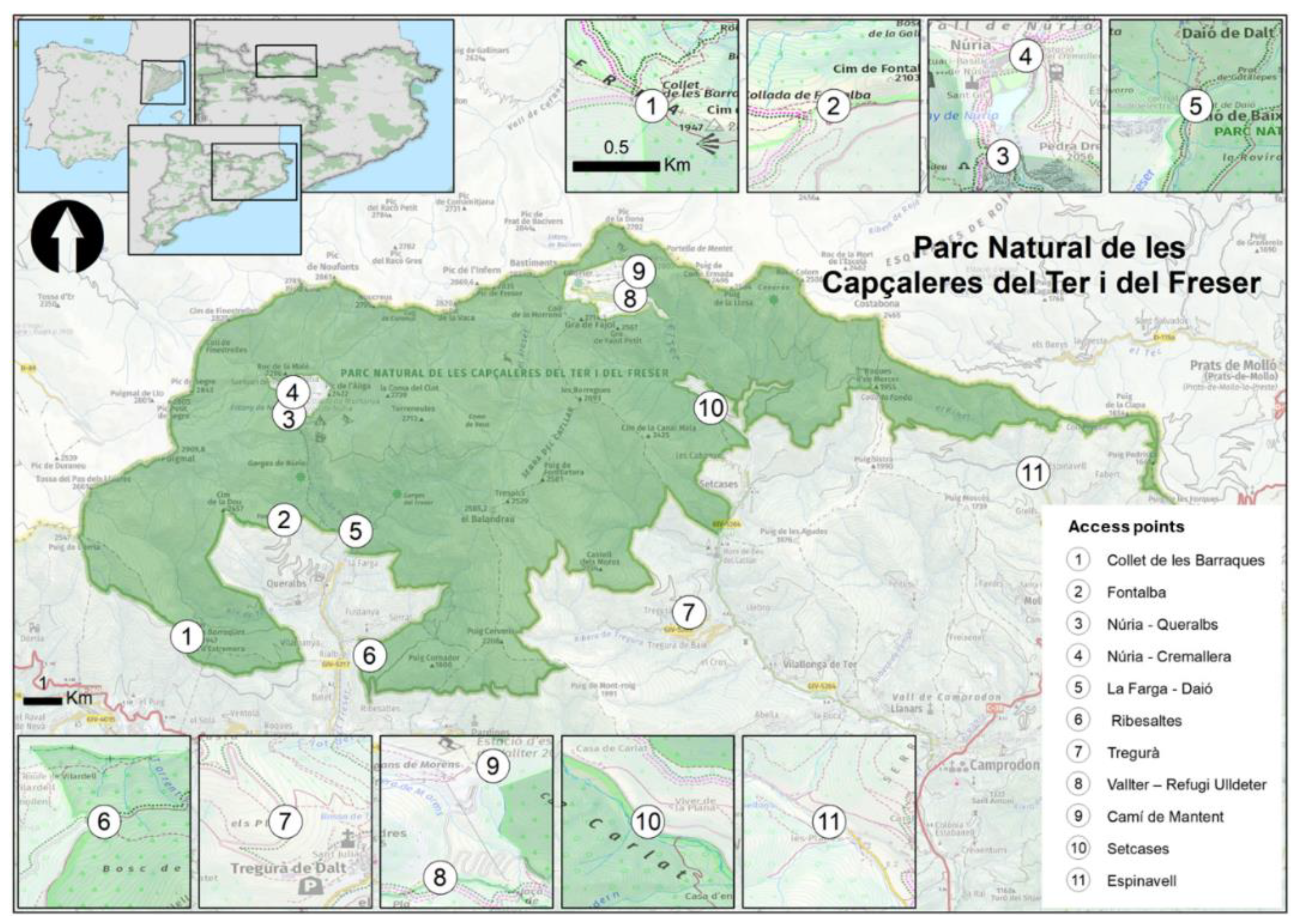

Table 1.
Descriptive statistics of the total sample: Sociodemographics, trip characteristics, in-park activities, trip motives, GPS use, and visit satisfaction (N = 999).
Table 1.
Descriptive statistics of the total sample: Sociodemographics, trip characteristics, in-park activities, trip motives, GPS use, and visit satisfaction (N = 999).
| Sample characteristics | M | SD | % |
|---|---|---|---|
| Sociodemographics Place of residence Catalonia region No Catalonia region Gender Male Female Non-binary Age 18-25 26-35 36-45 46-55 56-65 +65 Education level No university degree University degree Employment status Employed Unemployed |
43.5 |
13.26 |
97.8 2.2 49.2 43.6 7.1 8.8 20.5 28.0 24.3 11.7 6.6 40.7 59.3 88.3 11.7 |
| Trip characteristics Frequency of the visit First-time visitors Repeat visitors |
24.7 75.3 |
||
| In-park Physical Activity Duration of activity (min) |
232.54 |
272.32 |
|
| GPS use Use of GPS tools Yes No Type of GPS used Smartphone Smartwatch Handheld GPS Combination of Two GPS Devices* Type of apps used Wikiloc Strava Oruxmaps Combination of Wikiloc & others Others GPS functions used Follow a track Record a track Follow and record track |
25.6 74.4 49.6 32.8 9.0 8.6 66.2 11.5 3.4 6.1 12.8 42.9 21.9 35.2 |
||
| Visit satisfaction | 4.69 | 0.56 |
Note. *Includes combinations such as smartphone and smartwatch, smartphone and handheld GPS, or smartwatch and handheld GPS.
Table 2.
Principal Component Analysis: Results of the Varimax-Rotated solution for visitor motivation factors.
Table 2.
Principal Component Analysis: Results of the Varimax-Rotated solution for visitor motivation factors.
| Principal components | Factor loading | Eigen value |
Explained variance (%) | Reliability coefficient (α) |
| Factor 1: Nature and Curiosity Motivation | 3,22 | 40,25 | .752 | |
| To discover new places | .768 | |||
| To enjoy new experiences | .758 | |||
| To learn more about the natural environment | .748 | |||
| To visit the park itself | .667 | |||
| Factor 2: Physical and Health Motivation | 1,392 | 17,40 | .728 | |
| To practice a specific sport | .845 | |||
| To engage in physical activity or sport | .844 | |||
| To visit a particular trail/area | .606 | |||
| To improve general health (bio-psycho-social) | .554 |
Table 3.
MET Classification of Visitor Activities Based on the 2024 Adult Compendium of Physical Activities.
Table 3.
MET Classification of Visitor Activities Based on the 2024 Adult Compendium of Physical Activities.
| Total sample | |||||
|---|---|---|---|---|---|
| Reported activities | N | % | CODE | MET | Grouping category |
| Activities near the entrance | 45 | 4.6 | 09100 | 1.5 | Sedentary/Light (4.6%) |
| Recreational hiking | 325 | 32.5 | 17082 | 5.3 | Moderate (32.5%) |
| Hiking | 337 | 33.7 | 17035 | 7.0 | Vigorous (62.8%) |
| Mountaineering | 291 | 29.1 | 15533 | 8.0 |
Table 4.
Hierarchical Binary Logistic Regression: Incremental Contribution of Predictor Blocks to GPS Use.
Table 4.
Hierarchical Binary Logistic Regression: Incremental Contribution of Predictor Blocks to GPS Use.
| Block | Variables added | Nagelkerke R² | Model χ² | ΔR² | p-value |
|---|---|---|---|---|---|
| 1 (Baseline) | Sociodemographic | 0.053 | 36.47 | - | < .001 |
| 2 | + Activity characteristics | 0.194 | 104.89 | +0.141 | < .001 |
| 3 | + Motivation | 0.237 | 34.18 | +0.043 | < .001 |
| 4 (Final) | + Overall experience | 0.242 | 4.27 | +0.005 | .039 |
Table 5.
Logistic regression: The results of the final block.
| Variables | GPS use | ||
| Exp (β) | 95% C.I.for Exp(β) | p | |
| Sociodemographic | |||
| Gender (ref: male) | |||
| Female | 1.10 | .61 -2.02 | n.s. |
| Non-binary | .71 | .39-1.31 | n.s |
| Age | .98 | .96-0.99 | >.001 |
| Education level (ref. university degree) | .78 | .44-1.36 | n.s. |
| Employment status (ref. employed) | .68 | .39-0.16 | n.s. |
| Activity characteristics | |||
| Physical activity intensity (MET) | 3.38 | 2.21-5.18 | >.001 |
| Duration of activity (min) | 1.00 | 1.00-1.01 | .027 |
| Motivation | |||
| Nature and Curiosity | 1.07 | 0.89-1.30 | n.s. |
| Physical activity and Health | 1.77 | 1.37-2.27 | >.001 |
| Overall experience | |||
| Satisfaction | 1.41 | 1.01-1.97 | .045 |
Disclaimer/Publisher’s Note: The statements, opinions and data contained in all publications are solely those of the individual author(s) and contributor(s) and not of MDPI and/or the editor(s). MDPI and/or the editor(s) disclaim responsibility for any injury to people or property resulting from any ideas, methods, instructions or products referred to in the content. |
© 2025 by the authors. Licensee MDPI, Basel, Switzerland. This article is an open access article distributed under the terms and conditions of the Creative Commons Attribution (CC BY) license (http://creativecommons.org/licenses/by/4.0/).
Copyright: This open access article is published under a Creative Commons CC BY 4.0 license, which permit the free download, distribution, and reuse, provided that the author and preprint are cited in any reuse.