

Submitted:
30 May 2025
Posted:
30 May 2025
Read the latest preprint version here
Abstract
People who eat grains and cereals will get sick. For many human diseases, prevention is more important than cure. Food Medicine approach can achieve nutrition security and improve health. Among food and dietary, reasonable intake of dietary polyphenols is better than medication. The benefit of polyphenols in food for treatment and prevention of disorder has attracted widespread attention in the medical scientific community. Mounting evidence showed that moderate consumption of food polyphenols can ameliorate human health, especially reduce the occurrence of many elderly diseases. Metabolic homeostasis and orderly gene expression are key characteristics of health. The homeostasis of human life is first manifested by biophysical stability represented by stressors. Polyphenols play a hormesis role in the human body, and moderate doses of polyphenols and their combinations can improve human health and longevity. The human life homeostasis is secondly characterized by the balance of carbohydrate and protein metabolism. Polyphenols can regulate the sugar metabolism steady state represented by glucose, as well as the protein metabolism steady state represented by protein autophagy. Finally, polyphenols can also regulate human gene expression, especially epigenetic homeostasis. Developing functional foods with specific combinations of polyphenol content for different age groups and patients is a key goal for future polyphenolic dietary nourishing supplements and medicines. This article elucidates the biophysical, biochemical, and molecular biological mechanisms by which food polyphenols promote health from the perspectives of human metabolic homeostasis and epigenetic regulation of gene expression.
Keywords:
Food polyphenols
; metabolic homeostasis
; gene expression
; epigenetics
; human health
Introduction
Human beings have been battling with various diseases penetrating the entire history of humanity. Healthy diet plays a protective defining role for many human diseases. In today's world, the increase in life expectancy and the decrease in birth rates in high income countries have resulted population aging. The decline in quality of life due to aging disorders and the increase in healthcare expenditures have increased the social and economic burden.
Therefore, the treatment and prevention of age related diseases, especially aging disorders, are particularly urgent. It has been now widely believed that treating aging as a whole, rather than only a pathologies, may be a more impacting strategy to tackle aging related disorders and extend the healthy lifespan of older adults. Polyphenols are secondary metabolites of plants, widely found in foods such as coffee, tea, fruits, vegetables, and wine, which can significantly reduce the risk of many aging diseases in older adults[1,2].
Human aging is a natural process, accompanied by many clinical chronic diseases, such as diabetes, obesity, osteoporosis, arteriosclerosis, cognitive decline, dementia, disability, hepatitis, cardiovascular disease, Parkinson's and Alzheimer's. Since the long onset time, and the lack of reliable therapies and early diagnosis approaches, prevention of elderly diseases is particularly prominence. Although the mechanism of disease resistance and anti-aging of dietary polyphenols has been widely reported in the literature, most of them focus on pharmacological, pathological, clinical, and model animal analysis. The equilibrium of intrinsic life activities represented by oxidative stress, hormesis stress and the maintenance of homeostasis of human metabolism represented by carbohydrate and protein metabolism, are hallmarks of human health[3].
Increasing evidence suggests that gene expression does not operate in isolation, but rather forms a vast and complex information processing network composed of interacting genes, proteins, small molecules[4,5]. In humans, these self organizing gene expression networks have specialized functional modules that collaborate and interact through reciprocal on or off to adapt to constantly changing external or internal conditions.
The network medicine framework indicates the molecular interactions between polyphenol proteins, as well as the cluster of polyphenol protein targets in specific adjacent regions of human interactomes, and the network proximity between polyphenols and genes or proteins, predicting the therapeutic effect of polyphenol molecules[1]. This mutual feedback interaction coordinates information transmission, thereby promoting a person's healthy and longevity, and adapting to moderate stress.
Here, this article takes the metabolic homeostasis and gene expression regulation as the perspectives, focusing on the discussion and elucidation of the biophysics biochemical and molecular biological mechanisms of polyphenol therapy and prevention of disorders.
Food Polyphenols Rescue the Altered Biophysics and Biochemical Homeostasis
2.1. Polyphenols Hormesis Effects
Hormesis refers to any process in cells or organisms, characterized by biphasic responses to increasing exposure to stress conditions or substance stressors[6,7]. Usually, any stressors within low or moderate doses stimulation zone are beneficial for biological responses, while cell catastrophic damage or apparent toxic occurs at higher doses. Plant polyphenols produced by plants to protect themselves from pests such as bacteria, fungi, and insects, are toxic to these pests, but compared to the maximum dose used in experiments on plants to date, this toxicity has not appeared in mammalians.
However, polyphenols act as stressors on mammalian cells, resulting in the activation of various cellular defense systems achieved controlling the redox environment, protein equilibrium and metabolic homeostasis, inflammatory responses, thereby making cells more resistant to subsequent toxic stimuli[8,9,10][Figure 1]. As regarding us people, hormesis, for examples, the influences of exercise well illustrate the exercise, in which constant and irreversible hurt to skeletal muscle caused oxidative stress lead to increased muscle mass, cardiovascular function, and antioxidant capacity[11]. Furthermore, the optimal hormetic dose concentration responses for luteolin on cell viability of human endothelial is approximately 5000 μM, over 25000 μM causing toxicity[12,13]. In addition to plant polyphenols, including alcohol, most stressors also include physical factors and lifestyle factors, possibly mild oxidative stress, and low dose ultraviolet radiation. Polyphenol hormesis effects contribute to cells restoring physiological homeostasis.
2.2 Polyphenols Regulate Redox Homeostasis Status
The free radical theory of organism aging is one of the most widely recognized theories, which holds that the damage of DNA, protein and lipid caused by excessive free radicals, reactive oxygen species (ROS) and reactive nitrogen in cells is the key factor determining the aging of organisms[14]. Under the homeostasis of organism, the production and quenching of free ROS are in balance, which is beneficial for organism to maintain physiological functions. In the conditions of aging, excessive fatigue, psychological anxiety, depression and pathology, excessive production of human ROS will destroy this balance, and oxidative stress and the resulting oxidative damage occurs[15].
It has been proved that polyphenol compounds can regulate the redox status by reacting with ROS in a stoichiometric manner to form stabilized radicals, following abstraction of hydrogen. First of all, polyphenols directly scavenge ROS because of the existence of phenolic hydroxyl groups on their molecules. Polyphenols possess antioxidant activity by reacting with ROS to form stabilised radicals and eliminate ROS by neutralizing the free radicals. The immediate antioxidant effect of polyphenols consists in neutralizing free radicals through transferring electrons or hydrogen atoms, and reducing the formation of metal dependent hydroxyl radicals via chelation mechanisms.
The capacity of polyphenols to eliminate ROS depends on the number and location of hydroxyl groups, substituents, and glycosylation of phytochemical molecules[16]. Secondly, polyphenols can play an antioxidant role by regulating the production and activity of endogenous antioxidants and antioxidant enzymes[17].
Third, the antioxidant effect of polyphenols can directly or indirectly prevent mitochondrial dysfunction. Fourth, polyphenols may enhance cell antioxidant activity by regulating Nrf2 (Nuclear factor erythroid 2-related factor 2) mediated pathway. Nrf2 is a major transcription factor of many antioxidants and antioxidant enzymes. From insects to humans, Nrf2 is structurally and functionally conservative[18]. Finally, new evidence suggests that polyphenols can antagonize reactive oxygen species by regulating ncRNA[19][Table 1].
2.3. Polyphenols Modulate Protein Homeostasis
Protein homeostasis, also known as proteostasis, is crucial for human life. Protein homeostasis is a strictly controlled biochemical process that achieves protein balance through different mechanisms of protein degradation and synthesis, and its homeostasis process is essential for a healthy lifespan. The proteostasis network requires coordinated action with molecular chaperones and ubiquitin proteasome systems, as well as several types of cellular autophagy, endoplasmic reticulum, and lysosomal cell structures.
Recent evidence implies that the unique role of autophagy is to clear aberrant aggregated proteins keeping protein homeostasis. Interestingly, both oxidative stress and autophagy metabolic pathways interact with target of rapamycin complex 1 (mTORC1) which is an autophagy inhibitor, and AMP activated protein kinase (AMPK) that is an autophagy inducer[20]. In response to acute stress, for example, when starvation or elevated temperatures and physical exercise, excessive ROS interacts with AMPK, following that phosphorylation and activation of tuberous sclerosis complex1/2(TSC ), suppressing mTORC.
As a consequence, typical autophagy pathway, the autophagy inducer, Unc-51 like autophagy activating kinase-1 complex(ULK1), is phosphorylated and activated, transferring to the endoplasmic reticulum for phosphorylation of essential autophagy regulatory protein Beclin-1 [21]. ULK1 translocation and phosphorylation of beclin 1 induce the formation of phosphatidylinositol-3-hydroxy kinase-III (PI3K-III) complex through a cascade reaction, which recruits autophagy related proteins (ATGs) associated with autophagosome formation. Subsequently, the autophagosome membrane assisted by LC3 begins to extend, and LC3-I conjugated with several ATGs and phosphatidylethanolamines to generate lipid, glycosylation, and/or ubiquitination active forms, namely LC3-II, an autophagy marker, which incorporated into the autophagosome[Figure 2]. Eventually, autophagosomes fuse with lysosomes to form autolysosomes, allowing for the degradation and removal of long lived and/or damaged organelles and protein aggregates.
A growing body of evidence demonstrates that activation of autophagy could extend the lifespan of diverse organisms. As above mentioned, other mechanisms that trigger protein homeostasis or maintaining proteostasis involve ubiquitin proteasomal systemm (UPS), molecular chaperones, and in particular the heat shock proteins (HSPs). The protein homeostasis network comprises mechanisms that allow for the accumulation of damaged proteins but must be controlled for the resulting toxicity, ensuring that cellular proteostasis is maintained within strictly regulated pathways of synthesis, folding, conformation, and degradation. In this sense, the system that removes damaged proteins, UPS, central l proteolytic machinery of cells, and the autophagy lysosome system that mediates organelle and large aggregate renewal, are mainly responsible for protein homeostasis[Figure 2].
Many age related diseases and ageing processes are accompanied by uninterrupted UPS dysregulation and autophagy disorders, which prevent the proteostasis system from degrading misfolded proteins, resulting in the accumulation and aggregation of these proteins and ultimately ageing. Molecular chaperones, especially HSPs, are the main line of defense to counteract protein misfolding and subsequent protein deposition, which recognize hydrophobic regions of proteins and promote their refolding or transfer to UPS or autophagy systems. As age increases, proteostasis networks may induce pathological ageing through the accumulation of abnormal proteins, which is a common feature of many oncology, neurodegenerative, metabolic, and cardiovascular diseases[Figure 2].
Many food polyphenols can reduce the aggregation of proteins/peptides implicated in metabolic and neurodegenerative diseases, and can improve the clearance of misfolded proteins by regulating the activity of the proteostasis network. Statistical optimization of Alzheimer's disease revealed that among 17 polyphenols, 10 ligands exhibited drug likeness nature,desirable pharmacokinetic parameters, and low toxicity [22]. Polyphenols consist of various subclasses such as phenolic acids, lignans, tannins, stilbene, hydroxybenzoic acid, hydroxycinnamic acid, and flavonoids, which compounds, as individual entities or combinations, can be used to treat Alzheimer's disease [23]. Several polyphenols, resveratrol in mouse testicles, kaempferol in human cervical cancer KB cell lines, and gallic acid in autophagy of colon cancer cells, enhance autophagy and apoptosis by inhibiting the PI3K/AKT/mTOR pathway [24,25,26].
Resveratrol activates the molecular chaperone Hsp70 in cultured cells, inducing anti-inflammatory response in mouse cells[27]. Curcumins and green tea catechins have been shown to significantly increase the expression of Bax and Caspase 3 pro-apoptotic genes, downregulate the expression of Bcl2 genes[28,29][Table 2][Figure 2].
2.4. Polyphenols Regulate Glucose Metabolism Homeostasis
Glucose metabolism are closely related to human health. The concentration of human blood glucose, especially postprandial blood glucose, is the most important indicator of health. To prevent or ameliorate glucose metabolism disorders, dietary polyphenols have become relevant in regulating glucose and/or lipid metabolism, starch digestibility and absorption homeostasis in humans [30].
Plant polyphenols regulate glucose metabolism by several mechanisms such as reducing gut carbohydrate digestion and glucose absorption, stimulating pancreatic βcells to secret insulin, modulating liver glucose release, activating insulin sensitive tissues in terms of insulin receptors, and glucose uptake. Clinical and animal trials have shown that in patients with chronic cardiovascular diseases and diabetes, and oxidative stress caused by NADPH oxidase are often the direct main causes of postprandial hyperglycemia. It has been proved that polyphenols oleuropein aglycone (OLE) and hydroxytyrosol (HT) in participants modulate hepatic antioxidant enzymes and mitigate NADPH oxidase oxidative stress associated with liver parameters, and bone, joint, and cognitive health[31].
A study on patients with obesity or diabetes reported a correlation between high fat diet and the increase of intestinal derived bacterial lipopolysaccharide (LPS) circulation level, that modification may represent an important activation step of systemic postprandial oxidative stress, and intestinal derived bacterial lipopolysaccharide is responsible for restoring the expression level of anti-inflammatory factor,promoting changes in the composition of the microbiota, increasing the population of the community of beneficial microorganisms [32,33]. Data reports suggest that the consumption of extra virgin olive oil is associated with the down regulation of NADPH oxidase derived oxidative stress, indicating that extra virgin olive oil(EVOO) can lower postprandial blood glucose in patients by reducing postprandial intestinal derived bacterial LPS[34].
Reports indicate that quercetin, myricetin, luteolin, epigallocatechin-3-gallate (EGCG), and resveratrol have inhibitory effects on intestinal carbohydrate digestive enzymes , α-amylase and α-glucosidase, resulting in suppression of postprandial hyperglycemia[35,36,37,38]. Studies have shown that food polyphenols such as tannic acid, quercetin, and myricetin are used to inhibit glucose transporters2 (GLUT2) in cultured intestinal cells, lowering glucose absorption[39,40,41].
In addition, it has been reported that the in vitro catechins of green tea, anthocyanins of grape, bitter melon, EVOO, and black beans play a role in the process mediated by glucose transporters4 (GLUT4) in skeletal muscle cells enhancing insulin mediated glucose uptake[42,43,44,45,46].
Generally, inflammation, saturated fatty acids (SFA), tumor necrosis factor α(TNFα), nuclear factor κ B (NF kB) and c-Jun N-terminal kinase (JNK1/2) pro-inflammatory cytokines are the reason of insulin resistance (IR), easy to cause postprandial hyperglycemia[47].
On the other hand, under conditions of postprandial hyperglycemia, insulin activates the phosphatidylinositol 3-kinase (PI3K)/Akt, AMPK pathway, mediating the the translocation of GLUT pools, glucose transporter storage vesicles (GSV) , in liver and muscle cells to the plasma membrane through insulin receptors (IRS), enhancing blood glucose absorption and reducing postprandial hyperglycemia[48,49]. Dietary polyphenols antioxidant and anti-inflammatory properties can prevent ROS mediated pancreatic β cell damage, consequentially preventing and/or improve IR and glucose intolerance.
It is worth noting that the activation of NF-kB/JNK1/2 pro-inflammatory cytokines inhibits the PI3K/Akt pathway, causing hyperglycemia and glucose intolerance or insulin resistance (IR)[50].
3. Polyphenols Regulate Gene Expression
3.1. Food Polyphenols Activate Antioxidant Protection Vitagene Signaling Pathways.
Cytoprotective genes also known as vitagenes that encode proteins involving cellular redox homeostasis, such as the heme-oxygenase-1(HO-1), Hsp70, sirtuins system, and thioredoxin/thioredoxin reductase[51,52]. Polyphenols can evoke cytoprotective genes at multiple levels. All these cell protective vitagene genes can be transcriptionally regulated by the nuclear factor erythroid 2 related factor 2 (Nrf2), which is a key transcription effector that activates a wide range of cytoprotective genes[53]. Nrf2 induces mild stress response through routine transient activity, providing a healthy physiological equilibrium state and prolonging lifespan in different cell and animal models.
However, long term chronic stimulation of Nrf2 in clinical practice may lead to pathophysiological events, so Nrf2 signaling can be considered as a hormone like pathway which is defined as any process in cells or organisms characterized by a biphasic response to increasing exposure to stress conditions or substances stressors. More and more evidences indicate that plant polyphenols activate effective two phases responses , leading to the expression of various Nrf2 dependent antioxidant vitagenes , that effects represent a powerful tool that supports the redox homeostasis under stress conditions and supports the hypothesis that the beneficial properties of polyphenols act through adaptive stress response life sustaining genes[54,55].
3.2. Food Polyphenols Modulate Genomic Stability
Aging and increasing cell division frequency lead to accumulation of genomic instability, genomic damage, and double of somatic mutations[56,57]. Genomic instability has caused many diseases dominated by middle-aged and elderly people, such as cancer, cardiovascular disease, diabetes, chronic obstructive pulmonary disease, stroke, chronic kidney disease, atherosclerosis, osteoporosis,sarcopenia,Alzheimer's disease, Parkinson's disease. Good dietary habits are crucial for maintaining genomic stability. It is well known, diet polyphenols plays a key role in nucleotide synthesis and DNA replication, maintaining DNA methylation and chromosomal stability, preventing DNA oxidation, and recognizing and repairing DNA damage[58].
For example, polyphenols curcumin, EGCG, resveratrol, and quercetin have been shown to decrease DNA damage levels and stimulate DNA damage responses, including the regulation sensors, transducers, and mediators[59]. In this context, it has been proven that resveratrol can upregulate genomic stability of mouse embryonic fibroblasts, protecting cells from mutations in the ARF/p53 pathway. There are also studies indicating that anthocyanins and their microbial metabolites can enhance the expression of DNA repair genes and activate ATM(Ataxia-telangiectasia mutated proteins) and ATR(Ataxia telangiectasia and Rad3-related protein) proteins.
In this regard, the protective effect of polyphenols on genomic instability is evident. These results can be achieved through different mechanisms, such as preventing oxidative damage in DNA, down regulation of DNA double strand breaks and the formation of DNA abnormal modification, giving compounds a promising roles in modulation of pathology or aging hallmarks biomarkers. Telomere shortening is a well known aging mechanism, and with each generation of cells, the efficiency of telomere replication decreases over time, leading to a significant shortening of the region until the critical length is reached[60,61].
The shortens of telomere length leads to genomic instability, which impairs cell cycle function, senescence, and apoptosis, resulting in health harm. At Currently, the use of polyphenols has been widely studied in order to improve telomerase activity, maintain telomere length, and extend lifespan[62]. It has been speculated that polyphenols can effectively prevent telomere shortening based on their antioxidant and anti-inflammatory abilities. The impact of diet on telomere functions show that dietary polyphenol antioxidant activity is an important factor in determining telomere length status. In this sense, studies have shown that in a Mediterranean diet rich in olive oil, leukocyte telomere length can be significantly improved in individuals[63]. In addition, according to descriptions, polyphenols, proanthocyanidins and procyanidins, found in grape seed extracts with recognized antioxidant and anti-inflammatory potential can lower cell apoptosis and prevent reactive oxygen species induced chromosomal damage in human lymphocytes[64].
Furthermore, studies have shown that EGCG and quercetin can prevent myocardial cell apoptosis by preventing telomere shortening and Recombinant Telomeric Repeat Binding Factor 2 (TERF2) expression loss, attributed to the potential antioxidant compounds of these polyphenols [65,66]. A cross study involving men and women suggested that green tea consumption may be protective against telomere shortening reflecting Physiological aging whereas coffee or soft drink consumption may not[67][Table 4].
3.3. Food Polyphenols Improve Epigenetic Function
Environmental factors often regulate gene expression through epigenetic modifications, which mainly include DNA methylation, histone acetylation, methylation, phosphorylation, ubiquitination, and so on. Abnormal changes in epigenetic modifications of human life activities influence the onset and progression of diseases, which are considered fundamental characteristics of different types of cancer, neurodegenerative diseases, metabolic disorders, and skeletal and skeletal diseases.
In principle, drugs reverse the aberrant expression of epigenetic genes,and in this regard, drugs with inhibitory activity against DNA methyltransferase (DNMT) and histone deacetylase (HDAC) have achieved promising results in the treatment of cancer[68]. In recent years, most studies have shown that epigenetic diets, such as several polyphenols, including curcumin, resveratrol, and reportedly catechins, are able to affect NF-kB by modulating the activity of HDACs and DNMTs, and chromatin remodeling [69,70]. Recent studies have provided large amount of data to support the significant impact of plant polyphenols on DNA methylation levels and activity through direct or indirect modifications.
The plant polyphenol genistein in soybeans reduces DNMT activity, forms complexes with it, activates tumor suppressor genes, and may have important implications for cancer prevention and therapy[71]. There is data indicating that resveratrol and quercetin have been shown to have antitumor effects on cancer prevention and treatment, either alone or in combination with other chemotherapeutic drugs, by regulating the histone proteins stability, and DNA methyltransferases (DNMTs) activities[72,73,74,75]. In addition, EGCG obtained from green tea has a remarkable positive effect on the DNMT activity of cancer cells in many tissues and organs of the human body [76]. EGCG not only modifies DNA methylation, but also interferes with HDAC and histone acetyltransferases (HATs) activities. Quercetin, as a HAT inhibitor, inhibits HAT and HDAC activity in human endothelial cells[77]. Previous research has shown that polyphenol diallyl disulfide (DADS) in garlic is a major component that significantly influences histone deacetylases (HDACs) activity and gene expression regulation in human colorectal cancer cell lines Caco-2 and HT-29[78][Table 5].
4. Perspectives
In the past two decades, there has been a significant increase interest in dietary replacement drugs, especially natural products rich in polyphenols, to improve human health and well being. The health problems induced by aging are complex and certainly influenced by dietary habits and genetic background. Considering the tremendous efforts made by researchers in studying the mechanisms of beneficial effects of polyphenols, this review is quite narrow. However, we highlight the evidence of biophysics, biochemical and genetic gene expression regulation, which may provide new insights into the health and dietary effects of polyphenols. Although the application of polyphenols in disease prevention has been proven promising in various model organism based studies, the safety and potential health benefits of their long-term use in humans are still uncertain.
It should be noted that a food may contain at least a few or even hundreds of polyphenols. Some diets, such as the Mediterranean diet, with multiple polyphenol rich foods, together contain about 300 different polyphenols[79,80,81]. Future, to investigate the combination of multiple polyphenols or polyphenol rich foods as polyphenols may have synergistic or additive beneficial effects.
We come into contact with polyphenols from birth, and breast milk contains antioxidant phytochemicals, carotenoids, and polyphenols, both of which derive from the mother's diet[82,83,84]. When it comes to polyphenols, people often consider their antioxidant effects in the human body. However, increasing evidence suggests that due to low bioavailability and fast metabolism of polyphenols, their antioxidant activity in in vivo is much lower than in vitro. Therefore, the continuous daily intake of polyphenols throughout the entire life cycle of the human body can be explained as' chemical training '.
The hormesis effect of polyphenols is actually a form of chemical training, consistent with other training phenomena such as sunbathing, exercise, alcohol consumption, and mental stress, all of which are related to the concept of stimulating and protecting the homeostasis of life. However, the underlying contribution of polyphenol triggered hormesis to its health promotion and disease prevention remains to be further addressed.
Polyphenols enhance cell resistance to stress and senescence, making them an attractive foundation for developing and utilizing novel antioxidants and potential anti-aging agents. However, when dealing with natural or synthetic polyphenol antioxidants, the first consideration should be the significant differences in chemical structure and mode of action on oxidative stress among polyphenols with different structural and functional moieties. Moreover, based on the hormesis biphasic effect characteristic, polyphenols can act as pro oxidants at high doses, which is harmful to humans.
Obesity is related to metabolic disorders of glucose metabolism, and dietary polyphenols show some potential for further development. Throughout the holistic biological anti obesity activities, dietary polyphenols have been demonstrated to stimulate cellular uptake of glucose by increasing insulin sensitivity in the insulin dependent pathway. At the level of biochemistry and biophysics homeostasis, dietary polyphenols also affect lipid metabolism by limiting lipid absorption in the diet, which is not discussed in this article due to length limitations.
In this summary, we reviewed the role of polyphenols in modulating autophagy in various aging neurodegenerative pathologies such as AD, PD. Evidence has revealed that polyphenols can regulate autophagy by modulating crucial autophagy proteins such as beclin-1, LC3 I and II and also act via the mTOR, AMPK, SIRT-1 pathways. In addition, evidence also indicates that ameliorating autophagy processes by polyphenols inhibits neuroinflammation and oxidative stress and upgrades the motor functions and memory in neurodegenerative diseases. However, more researches are deeded to support the use of polyphenols as nutritional products in modulating.
Polyphenolic factors in food and diet may contribute to epigenetic changes, and in some cases are likely to reverse abnormal epigenetic states, restore and maintain human health. Here, we propose a polyphenolic "epigenetic diet" combination recommendation, which focuses on consuming products that can stimulate beneficial epigenetic modifications, including increasing the consumption of fruits, vegetables, and the dietary components described in this article. Nutrigenomics involves studying how genes and dietary polyphenols interact to reveal how people achieve healthy phenotypes based on genetic and nutrition induced DNA and chromatin alterations, while the field of nutriepigenomics involves the lifelong reshaping of our epigenome by nutritional factors[85,86].
5. Conclusions
Polyphenols are not only present in vegetable and grain foods, but also the most important and attractive nutritional components in food, beverage, and fruit wine. Overall, from the perspectives of biochemistry and molecular biology, a plethora of evidence emphasizes the effectiveness of dietary polyphenols in treating illness related to disease progression and preventing aging. The primary benefit of consuming diet rich in polyphenols attributes to their antioxidant properties, with a consequent reduction antioxidative stress closely related to tissue aging.
In recent years, a large number of studies have increasingly supported the positive results of population surveys and clinical trials, which not only reveal to some extent the antioxidant protection mechanisms of polyphenols for health, but also record the molecular basis and cellular correlation of health effects at the level of protein homeostasis/glucose metabolism homeostasis/epigenetic gene expression regulation in organisms.
In this sense, although the molecular mechanism data of polyphenols improving human health in this article is still limited, it is of great significance to provide clues for how plant polyphenols produce so many heterogeneous effects at the cellular level. In summary, an increasing interest in the nutritional pharmacology development of plant polyphenols or their molecular scaffolds, which suggests an understanding of the molecular/cellular determinants of beneficial effects of these molecules in the near future, as well as their potential applications pharmacokinetics and pharmacodynamics, will increase.
References
- Sara Zumerle , Miles Sarill, Miriam Saponaro, Manuel Colucci, Liliana Contu, Edoardo Lazzarini, Roberta Sartori1, Camilla Pezzini, Anna Rinaldi, Anna Scanu, Jacopo Sgrignani, Patrizia Locatelli, Marianna Sabbadin, Aurora Valdata, Daniela Brina, Isabella Giacomini, Beatrice Rizzo, Alessandra Pierantoni, Saman Sharifi, Silvia Bressan, Claudia Altomare, Yulia Goshovska, Chiara Giraudo, Roberto Luisetto, Luca Iaccarino, Cristina Torcasio, Simone Mosole, Emiliano Pasquini, Andrea Rinaldi, Laura Pellegrini, Gregorio Peron, Matteo Fassan, Stefano Masiero, Andrea Maria Giori, Stefano Dall’Acqua, Johan Auwerx, Pietro Cippà, Andrea Cavalli, Marco Bolis, Marco Sandri, Lucio Barile, Monica Montopoli & Andrea Alimonti. Targeting senescence induced by age or chemotherapy with a polyphenol rich natural extract improves longevity and healthspan in mice. Nature Aging 2024, 4(9):1231-1248. [CrossRef]
- Naheed Akhtar, Amna Jabbar Siddiqui, Muhammad Ramzan, Jalal Uddin , Mufarreh Asmari.
- Hesham R. El-Seedi and Syed Ghulam Musharraf. Investigation of Pharmacologically Important Polyphenolic Secondary Metabolites in Plant-based Food Samples Using HPLC-DAD. Plants 2024, 13: 1311. [CrossRef]
- Barry Halliwell. Understanding mechanisms of antioxidant action in health and disease. Nature Reviews Molecular Cell Biology 2024(1), 25: 13–33. [CrossRef]
- Benjamin Fair, Carlos F Buen Abad Najar, Junxing Zhao, Stephanie Lozano, Austin Reilly, Gabriela Mossian, Jonathan P Staley, Jingxin Wang, Yang I Li. Global impact of unproductive splicing on human gene expression. Nature genetics 2024(9), 56: 1851-1861. [CrossRef]
- Coral Del Val, Elisa Díaz de la Guardia-Bolívar, Igor Zwir, Pashupati P Mishra, Alberto Mesa, Ramiro Salas, Guillermo F Poblete, Gabriel de Erausquin, Emma Raitoharju, Mika Kähönen, Olli Raitakari, Liisa Keltikangas-Järvinen, Terho Lehtimäki, Claude Robert Cloninger. Gene expression networks regulated by human personality. Molecular psychiatry 2024(7), 129: 2241-2260. [CrossRef]
- Akira Murakami.Impact of hormesis to deepen our understanding of the mechanisms underlying the bioactivities of polyphenols. Current Opinion in Biotechnology 2024, 86, 103074. [CrossRef]
- Akira Murakami. Novel mechanisms underlying bioactivities of polyphenols via hormesis.Current Opinion in Toxicology 2022, 30: 100337. [CrossRef]
- N. Sulaimani, M.J. Houghton, M.P. Bonham1 and G. Williamson. Effect of dietary polyphenols on chronobiology in mammalian cells in vitro. Proceedings of the Nutrition Society 2024, 83 (OCE1), E134. [CrossRef]
- Hui-Min Liu, Ming-Yan Cheng, Meng-Han Xun, Zhi-Wei Zhao, Yun Zhang, Wei Tang, Jun Cheng, Jia Ni, Wei Wang. Possible Mechanisms of Oxidative Stress-Induced Skin Cellular Senescence, Inflammation, and Cancer and the Therapeutic Potential of Plant Polyphenols. International Journal of Molecular Sciences 2023,24: 3755. [CrossRef]
- Tong Zheng, Donna F. Bielinski, Derek R. Fisher, Jianyi Zhang and Barbara Shukitt-Hale.
- Protective Effects of a Polyphenol-Rich Blueberry Extract on Adult Human Neural Progenitor Cells. Molecules 2022, 27: 6152.
- Ronny Lesmana, Cynthia Parameswari, Gabriela Fernanda Mandagi, Julianne Fay Wahyudi, Noah Jefferson Permana, Putri Teesa Radhiyanti, Julia Windi Gunadi. The Role of Exercise-Induced Reactive Oxygen Species (ROS) Hormesis in Aging: Friend or Foe. Cellular physiology and biochemistry: international journal of experimental cellular physiology, biochemistry, and pharmacology 2022(6),56: 692-706.
- Abbasi N., Akhavan M.M., Rohbar-Roshandel N., Shafiei M. The effects of low and high concentrations of luteolin on cultured human endothelial cells under normal and glucotoxic conditions: Involvement of integrin-linked kinase and cyclooxygenase-2. Phytotherapy research 2014, 28: 1301–1307. [CrossRef]
- Abbasi N., Khosravi A., Aidy A., Shafiei M. Biphasic response to luteolin in G-osteobalst-like cells under high glucose-induced oxidative stress. Iranian Journal of Medical Sciences 2016, 41: 118–125.
- Yasser Fakri Mustafa. Harmful Free Radicals in Aging: A Narrative Review of Their Detrimental Effects on Health. Indian journal of clinical biochemistry : IJCB. 2024(2),39:154-167. [CrossRef]
- Silvia Dossena and Angela Marin. Oxidative Stress and Antioxidants in Aging. Antioxidants 2024(11),13: 1288. [CrossRef]
- Luo Jing, Si Hongwei, Jia Zhenquan and LiuDongmin. Dietary Anti-Aging Polyphenols and Potential Mechanisms. Antioxidants. 2021, 10: 283. [CrossRef]
- Joy I Obeme-Nmom, Raliat O Abioye, Samanta S Reyes Flores, Chibuike C Udenigwe. Regulation of redox enzymes by nutraceuticals: a review of the roles of antioxidant polyphenols and peptides. Food & function. 2024(22), 15:10956-10980. [CrossRef]
- Srinivasaragavan Divyajanani, Kannan Harithpriya, Kumar Ganesan and Kunka Mohanram Ramkumar. Dietary Polyphenols Remodel DNA Methylation Patterns of NRF2 in Chronic Disease 2023,15: 3347. [CrossRef]
- Liang Zhang, Qingzheng Kang, Mengxiao Kang, Suwei Jiang, Feng Yang, Jun Gong, Gaozhi Ou, Song Wang. Regulation of main ncRNAs by Polyphenols: A Novel Anticancer Therapeutic Approach. Phytomedicine 2023,120: 155072. [CrossRef]
- Arthur J. Chu. Quarter-Century Explorations of Bioactive Polyphenols: Diverse Health Benefits. Frontiers in bioscience (Landmark edition) 2022,27(4): 134. [CrossRef]
- Vichitra Chandrasekaran, Tousif Ahmed Hediyal, Nikhilesh Anand, Pavan Heggadadevanakote Kendaganna, Vasavi Rakesh Gorantla, Arehally M Mahalakshmi, Ruchika Kaul Ghanekar, Jian Yang, Meena Kishore Sakharkar, Saravana Babu Chidambaram. Polyphenols, Autophagy and Neurodegenerative Diseases: A Review. Biomolecules 2023(8):1196. [CrossRef]
- Arunkumar Subramanian, T. Tamilanban, Vetriselvan Subramaniyan, Mahendran Sekar, Vipin Kumar, Ashok Kumar Janakiraman, Saminathan Kayarohanam. Establishing network pharmacology between natural polyphenols and Alzheimer’s disease using bioinformatic tools – An advancement in Alzheimer’s research. Toxicology Reports 2024,13: 101715. [CrossRef]
- Tharsius Raja William Raja, Veeramuthu Duraipandiyan, Savarimuthu Ignacimuthu, Udaiyappan Janakiraman, Soosaimanickam Maria Packiam. Role of Polyphenols in alleviating Alzheimer's disease: A Review. Current medicinal chemistry 2023,30:4032-4047. [CrossRef]
- Liu Chaoying, Wang Ye, Li Dahong, Li Tongbiao, Wang Mingcheng, Zhou Zhiwen, Jin Qianyi, Li Enzhong. Effects of resveratrol on hydrogen peroxide-pyroptosis, apoptosis, and autophagy. Journal of Biotech Research 2024,16: 334-344.
- Eun-Young Choi, Eun-Ji Han, Su-Ji Jeon, Sang-Woo Lee, Jun-Mo Moon, Soo-Hyun Jung, Young-Seok Park, Byung-Kwon Park, Byeong-Soo Kim, Sang-Ki Kim, Ji-Youn Jung. Kaempferol Inhibits Cervical Cancer Cells by Inducing Apoptosis and Autophagy via Inactivation of the PI3K/AKT/mTOR Signaling Pathway. Anticancer research 2024(7),44: 2961-2972.
- Jie Shao, Lin Yang, Zhichao Jin, Yanmin Bao, Jiawen He, Q. H. Le, Ponnurengam Malliappan Sivakumar, Mao Wang, Ruiping Wang. Antiproliferative Effect of Gallic Acid is Mediated via Mitochondrial- or ER-Stress-Induced Apoptosis and Canonical Autophagy in HT-29 Cells. Journal of Chemistry 2024(1): 7139556.
- Xiaoqin Li, Zhaojun Meng, Xiaolan He, Jiawei Wang, Lin Yang, Zongping Fang. Resveratrol attenuates neuroinflammation and alleviates emotional dysfunction in mice with sepsis-associated encephalopathy through promoting chaperone-mediated autophagy (CMA)]. Chinese journal of cellular and molecular immunology 2024(6),40: 481-487.
- Alaee Sanaz, Khodabandeh Zahra, Dara Mahintaj, Hosseini Elham, Sharma Mona. Curcumin mitigates acrylamide-induced ovarian antioxidant disruption and apoptosis in female Balb/c mice: A comprehensive study on gene and protein expressions. Food Science & Nutrition 2024(6),12: 2048-7177. [CrossRef]
- Joseph Ndacyayisenga, Festus M. Tolo, Fred Wamunyokoli, Esther N. Maina. Effects of tea catechin extracts from BB35 and purple (TRFK 306) tea clones on the gene expression of Egfr, App, Bcl2, Dnmt, Casp3, Hif1a, Gadd45b and Psmb5 genes involved in triple negative breast cancer diseases: In silico and in vitro study. Informatics in Medicine Unlocked. 2024,46: 101469. [CrossRef]
- Saleha Alqarni, Mashael Alsebai, Batool Adal Alsaigh, Abeer Sayer Alrashedy, Israa Talal Albahrani, Albandri Yousef Aljohar, Amjad Obaid Alazmi. Do polyphenols affect body fat and/or glucose metabolism? Frontiers in Nutrition. 2024, 11: 1376508. [CrossRef]
- Oleg Frumuzachi, Laura Ioana Gavrilaș, Dan Cristian Vodnar, Sascha Rohn, Andrei Mocan. Systemic Health Effects of Oleuropein and Hydroxytyrosol Supplementation: A Systematic Review of Randomized Controlled Trials. Antioxidants (Basel, Switzerland) 2024(9),13: 1040. [CrossRef]
- Harimalala Ranaivo, Zhengxiao Zhang, Maud Alligier, Laurie Van Den Berghe, Monique Sothier, Stéphanie Lambert-Porcheron, Nathalie Feugier, Charlotte Cuerq, Christelle Machon, Audrey Neyrinck, Benjamin Seethaler, Julie Rodriguez, Martin Roumain, Gullio Muccioli, Véronique Maquet, Martine Laville, Stephan Bischoff, Jens Walter, Nathalie Delzenne, Julie-Anne Nazare. Chitin-Glucan Supplementation Altered Gut Microbiota and Improved Postprandial Metabolism in Subjects at Cardiometabolic Risk. Current Developments in Nutrition 2022(Suppl 1),6: 331. [CrossRef]
- Xueni Zhang, Lei Jiang, Cankun Xie, Yidi Mo, Zihao Zhang, Shengxia Xu, Xiaoping Guo, Ke Xing, Yina Wang, Zhijian Su.The Recombinant Lactobacillus Strains with the Surface-Displayed Expression of Amuc_1100 Ameliorate Obesity in High-Fat Diet-Fed Adult Mice. Bioengineering (Basel, Switzerland)2024(6),11: 574. [CrossRef]
- Garcia-Serrano S, Ho-Plagaro A, Santiago-Fernandez C, Rodríguez-Díaz C, Martín-Reyes F, Valdes S, Moreno-Ruiz FJ, Lopez-Gómez C, García-Fuentes E, Rodríguez-Pacheco F. An Isolated Dose of Extra-Virgin Olive Oil Produces a Better Postprandial Gut Hormone Response, Lipidic, and Anti-Inflammatory Profile that Sunflower Oil: Effect of Morbid besity. Molecular nutrition & food research 2021(22),65: e2100071. [CrossRef]
- Yajuan Qin, Xiaoai Chen, Fei Xu, Kexue Zhu, Ping Wang, Yutong Zhang, Yanjun Zhang. Pectin enhances the inhibition of α-amylase via the mixture of rutin and quercetin. International Journal of Biological Macromolecules. 2025, 285: 138251. [CrossRef]
- Luzhe Zheng, Zhanzhan Wang, Bo Zhang, Lulu Yan, Pengfei Wang, Chao Zhao, Jun Wang, Yun Wang, Heizhao Lin, Lihua Qiu, Chuanpeng Zhou. Rhodiola rosea L. improved intestinal digestive enzyme activities, inflammatory response, barrier and microbiota dysbiosis in Lateolabrax maculatus juveniles fed with high-carbohydrate diets. Fish & Shellfish Immunology 2024,146: 109362. [CrossRef]
- Manan Kothari, Karthika Kannan, Revathy Sahadevan, Sruthi Vijaya Retnakumar, Camille Chauvin, Jagadeesh Bayry, Sushabhan Sadhukhan. Lipophilic derivatives of EGCG as potent α-amylase and α-glucosidase inhibitors ameliorating oxidative stress and inflammation. Bioorganic chemistry 2024,153: 107786. [CrossRef]
- Rizliya Visvanathan, Dang Truong Le, Sushil Dhital, Topul Rali, Rohan A Davis, Gary Williamson.Inhibition of Human Salivary and Pancreatic α-Amylase by Resveratrol Oligomers. Journal of medicinal chemistry 2024(21),67: 18753-18763. [CrossRef]
- Ji Wang, Jianyu Qu, Sha Liu, Qiurong Xu, Xiaowen Li, Yuanyuan Zhu, Xiangyan Liu, Jine Yi, Zhihang Yuan, Peng Huang, Yulong Yin, Lixin Wen, Jing Wu. Tannic Acid Ameliorates Systemic Glucose and Lipid Metabolic Impairment Induced by Low-Dose T-2 Toxin Exposure. Journal of agricultural and food chemistry 2023(33),71: 12574-12586. [CrossRef]
- Aysegül Tura, Viktoria Herfs, Tjorge Maaßen, Huaxin Zuo, Siranush Vardanyan, Michelle Prasuhn, Mahdy Ranjbar, Vinodh Kakkassery, Salvatore Grisanti.Quercetin Impairs the Growth of Uveal Melanoma Cells by Interfering with Glucose Uptake and Metabolism. International journal of molecular sciences 2024(8),25: 4292. [CrossRef]
- Mihai Babotă, Oleg Frumuzachi, Corneliu Tanase, Andrei Mocan. Efficacy of Myricetin Supplementation on Glucose and Lipid Metabolism: A Systematic Review and Meta-Analysis of In Vivo Mice Studies.Nutrients 2024(21),16: 3730. [CrossRef]
- Aoi Ito, Yuji Matsui, Masao Takeshita, Mitsuhiro Katashima, Chiho Goto, Kiyonori Kuriki. Gut microbiota-mediated associations of green tea and catechin intakes with glucose metabolism in individuals without type 2 diabetes mellitus: a four-season observational study with mediation analysis. Archives of microbiology 2023(5),205: 191. [CrossRef]
- Rohit Dutt, Pooja Mathur, Sweta Kamboj, Rohit Kamboj, Kumar Guarve, Shikha Kamboj, Rudrakash, Tanu Devi, Prerna Sharma. Anthocyanins as Nutraceuticals. Anthocyanins: Pharmacology and Nutraceutical Importance 2024: 48-67. [CrossRef]
- Abhinav Kakuturu, Heeyun Choi, Leah G Noe, Brianna N Scherer, Bikram Sharma, Bilon Khambu, Bhupal P Bhetwal.Bitter melon extract suppresses metastatic breast cancer cells (MCF-7 cells) growth possibly by hindering glucose uptake. microPublication biology 2023, 2023: 2578-9430. [CrossRef]
- Mahmoud Gamal, Mohamed A Awad, Azizeh Shadidizaji, Marwa A Ibrahim, Magdy A Ghoneim, Mohamad Warda. In vivo and In silico Insights into the Anti-Diabetic Efficacy of EVOO and Hydroxytyrosol in a Rat Model.The Journal of Nutritional Biochemistry 2024,135: 109775. [CrossRef]
- Luis Mojica1, Andrea Susana Ramos-Lopez, Oscar Abel Sánchez-Velázquez, Armando Gómez-Ojeda, Claudia Luevano-Contreras. Black bean (Phaseolus vulgaris L.) protein hydrolysates reduce acute postprandial glucose levels in adults with prediabetes and normal glucose tolerance. Journal of Functional Foods 2024,112: 105927. [CrossRef]
- Ryusei Uchio, Chinatsu Okuda-Hanafusa, Haruka Sakaguchi, Ryosuke Saji, Koutarou Muroyama, Shinji Murosaki, Yoshihiro Yamamoto, Yoshitaka Hirose. Curcuma longa extract reduces serum inflammatory markers and postprandial hyperglycemia in healthy but borderline participants with overweight and glycemia in the normal/prediabetes range: a randomized, double-blind, and placebo-controlled trial. Frontiers in nutrition 2024,11: 1324196. [CrossRef]
- Soto-Covasich J, Reyes-Farias M, Torres RF, Vásquez K, Duarte L, Quezada J, Jimenez P, Pino MT, Garcia-Nannig L, Mercado L, Garcia-Diaz DF. A polyphenol-rich Calafate (Berberis microphylla) extract rescues glucose tolerance in mice fed with cafeteria diet. J Funct Foods. 2020, 67: 103856. [CrossRef]
- Xia T, Duan W, Zhang Z, Fang B, Zhang B, Xu B, de la Cruz CBV, El-Seedi H, Simal-Gandara J, Wang S, Wang M. Polyphenol-rich extract of Zhenjiang aromatic vinegar ameliorates high glucose-induced insulin resistance by regulating JNKIRS-1 and PI3K/Akt signaling pathways. Food Chemistry 2021, 335: 127513. [CrossRef]
- Huaying Huang, Heye Chen, Yu Yao& …Xueyong Lou. Branched-chain amino acids supplementation induces insulin resistance and pro-inflammatory macrophage polarization via INFGR1/JAK1/STAT1 signal pathway. Molecular Medicine 2024(1), 30: 1528-3658.Ahmed Abdelbaset-Ismail, Katarzyna Brzezniakiewicz-Janus, Arjun Thapa, Janina Ratajczak, Magda Kucia, Mariusz Z Ratajczak. Pineal Gland Hormone Melatonin Inhibits Migration of Hematopoietic Stem/Progenitor Cells (HSPCs) by Downregulating Nlrp3 Inflammasome and Upregulating Heme Oxygenase-1 (HO-1) Activity. Stem cell reviews and reports 2024(1),20: 237-246. [CrossRef]
- Lokanath Mishra, Monalisa Mishra. Ribose-induced advanced glycation end products reduce the lifespan in Drosophila melanogaster by changing the redox state and down-regulating the Sirtuin genes. Biogerontology 2024(1),26: 28. [CrossRef]
- Arghadip Das, Sanchari Bhattacharya, Junaid Jibran Jawed. Enzymatically Digested Garlic Waste Conserved Most of Its Polyphenols and Contributed to Nrf2 Activation: Bio-accessibility. [CrossRef]
- Bioactivity, Gene Expression, and Genotoxicity Analysis. Waste and Biomass Valorization. 2024, 15: 4671–4698.
- Scuto M, Trovato Salinaro A, Caligiuri, Ontario ML, Greco V, Sciuto N, Crea R, Calabrese EJ, Rizzolio F, Canzonieri V, Calabrese V. Redox modulation of vitagenes via plant polyphenols and vitamin D: Novel insights for chemoprevention and therapeutic interventions based on organoid technology. Mechanisms of ageing and development 2021,199: 111551. [CrossRef]
- Maria Scuto, Maria Laura Ontario, Angela Trovato Salinaro, Isabella Caligiuri, Francesco Rampulla, Vincenzo Zimbone, Sergio Modafferi, Flavio Rizzolio, Vincenzo Canzonieri, Edward J Calabrese, Vittorio Calabrese. Redox modulation by plant polyphenols targeting vitagenes for chemoprevention and therapy: Relevance to novel anti-cancer interventions and mini-brain organoid technology. Free radical biology & medicine 2022,179: 59-75. [CrossRef]
- Lucía López-Gil, Amparo Pascual-Ahuir, Markus Proft. Genomic Instability and Epigenetic Changes during Aging. International journal of molecular sciences 2023(18),24: 14279. [CrossRef]
- Zeming Wu, Jing Qu, Guang-Hui Liu. Roles of chromatin and genome instability in cellular senescence and their relevance to ageing and related diseases. Nature Reviews Molecular Cell Biology 2024(12),125: 979-1000. [CrossRef]
- Cao Yu, Lu Jianying, Wang Han, Wang Xu, Ni Juan. Effects of curcumin and soy isoflavones on genomic instability of human colon cells NCM460 and SW620. Cellular and Molecular Biology, 2023, 69(1): 36-43. [CrossRef]
- Proshkina E., Shaposhnikov M., Moskalev A. Genome-Protecting Compounds as Potential Geroprotectors. International journal of molecular sciences. 2020, 21: 4484. [CrossRef]
- Rossiello F., Jurk D. Telomere dysfunction in ageing and age-related diseases. Nature 2022, 24: 135–147. [CrossRef]
- Stefania D'Angelo. Diet and Aging: The Role of Polyphenol-Rich Diets in Slow Down the Shortening of Telomeres: A Review. Antioxidants (Basel, Switzerland) 2023(12),12: 2086. [CrossRef]
- Stella Baliou, Petros Ioannou, Miruna-Maria Apetroaei, Elena Vakonaki, Persefoni Fragkiadaki, Evangelos Kirithras, Manolis N Tzatzarakis, Andreea Letitia Arsene, Anca Oana Docea, Aristides Tsatsakis. The Impact of the Mediterranean Diet on Telomere Biology: Implications for Disease Management-A Narrative Review. Nutrients 2024(15),16: 2525. [CrossRef]
- Gomez-Delgado F., Delgado-Lista J., Lopez-Moreno J., Rangel-Zuñiga O.A., Alcala-Diaz J.F., Leon-Acuña A., Corina A., Yubero-Serrano E., Torres-Peña J.D., Camargo A., et al. Telomerase RNA component genetic variants interact with the mediterranean diet modifying the inflammatory status and its relationship with aging: CORDIOPREV Study. JOURNALS OF GERONTOLOGY SERIES A-BIOLOGICAL SCIENCES AND MEDICAL SCIENCES. 2018, 73: 327–332.
- Qixia Xu, Qiang Fu, Zi Li, Hanxin Liu, Ying Wang , Xu Lin, Ruikun He, Xuguang Zhang, Zhenyu Ju, Judith Campisi, James L. Kirkland and Yu Sun . The flavonoid procyanidin C1 has senotherapeutic activity and increases lifespan in mice. Nature Metabolism 2021, 3(11): 1706–1726. [CrossRef]
- Jia Y, Mao Q, Yang J, Du N, Zhu Y, Min W. Epigallocatechin-3-Gallate Protects Human Skin Fibroblasts from Ultraviolet a Induced Photoaging. Clinical, Cosmetic and Investigational Dermatology. 2023,16: 149-159. [CrossRef]
- Aikaterini E Mantadaki, Stella Baliou, Manolis Linardakis, Elena Vakonaki, Manolis N Tzatzarakis, Aristides Tsatsakis, Emmanouil K Symvoulakis. Quercetin Intake and Absolute Telomere Length in Patients with Type 2 Diabetes Mellitus: Novel Findings from a Randomized Controlled Before-and-After Study. Pharmaceuticals (Basel, Switzerland) 2024(9),17: 1136. [CrossRef]
- Inhae Sohn, Chol Shin, Inkyung Baik. Associations of green tea, coffee, and soft drink consumption with longitudinal changes in leukocyte telomere length. Scientific Reports 2023(1),13: 1-7. [CrossRef]
- Dwivedi Lalitaa, Jaiswal Aishwaryab, Punia Reenub, Kumar R Sureshd, Yim Dongsoole, Rajamani Paulraja, Singh Rana P. Decursin Inhibits Expression and Nuclear Localization of DNMT and HDAC, and Suppresses the Growth and Survival of Prostate Cancer Cells. Asia Pacific Journal of Cancer Biology 2024(3),9: 271-281. [CrossRef]
- Xing Lu, Ziwei Wang, Yu Zhang, Ti Meng, Xuehua Chen, Rongmiao Yuan, Bing Liu, Huan He, Xin Ding, Silong Zhang. A curcumin-based HDACs inhibitor for targeted sonodynamic therapy of breast cancer. International journal of biological macromolecules. 2024,138616. [CrossRef]
- Beatriz Silva Urias, Aline Renata Pavan, Gabriela Ribeiro Albuquerque, Igor Muccilo Prokopczyk, Tânia Mara Ferreira Alves, Thais Regina Ferreira de Melo, Geraldo Rodrigues Sartori, João Hermínio Martins da Silva, Chung Man Chin, Jean Leandro Dos Santos. Optimization of Resveratrol Used as a Scaffold to Design Histone Deacetylase (HDAC-1 and HDAC-2) Inhibitors. Pharmaceuticals (Basel, Switzerland) 2022(10),15: 1260. [CrossRef]
- Manvi Sharma, Trygve O Tollefsbol. Combinatorial epigenetic mechanisms of sulforaphane, genistein and sodium butyrate in breast cancer inhibition. Experimental cell research 2022(1),416: 113160. [CrossRef]
- Peramaiyan Rajendran, Salaheldin Abdelraouf Abdelsalam, Kaviyarasi Renu, Vishnupriya Veeraraghavan, Rebai Ben Ammar, Emad A Ahmed. Polyphenols as Potent Epigenetics Agents for Cancer. International journal of molecular sciences 2022(19), 123: 11712. [CrossRef]
- Wojciech Pawłowski, Miłosz Caban, Urszula Lewandowska. Cancer Prevention and Treatment with Polyphenols: Type IV Collagenase-Mediated Mechanisms. Cancers 2024(18), 16: 3193. [CrossRef]
- Sajjad Tezerji, Hamid abdolazimi, Azadeh Fallah, Behrouz Talaei. The effect of resveratrol and quercetin intervention on azoxymethane-induced colon cancer in Rats model. Clinical Nutrition Open Science 2022,45: 91-102. [CrossRef]
- Nadir Mustafa Qadir Nanakali, Parisa Maleki Dana, Fatemeh Sadoughi, Zatollah Asemi, Mehran Sharifi, Reza Asemi, Bahman Yousefi. The role of dietary polyphenols in alternating DNA methylation in cancer. Critical Reviews in Food Science and Nutrition 2023(33),63: 12256-12269. [CrossRef]
- Anshu Agarwal, Vikash Kansal, Humaira Farooqi, Ram Prasad, Vijay Kumar Singh. Epigallocatechin Gallate (EGCG), an Active Phenolic Compound of Green Tea, Inhibits Tumor Growth of Head and Neck Cancer Cells by Targeting DNA Hypermethylation. Biomedicines 2023(3),11: 789. [CrossRef]
- Maria Vrânceanu, Damiano Galimberti, Roxana Banc, Ovidiu Dragoş, Anamaria Cozma-Petruţ, Simona-Codruţa Hegheş, Oliviu Voştinaru, Magdalena Cuciureanu, Carmina Mariana Stroia, Doina Miere, Lorena Filip. The Anticancer Potential of Plant-Derived Nutraceuticals via the Modulation of Gene Expression. Plants (Basel, Switzerland) 2022(19),11: 2524. [CrossRef]
- Kaavya Gunasekaran, Bala Murali Krishna Vasamsetti, Priyadharshini Thangavelu, Karthi Natesan, Bonaventure Mujyambere, Viswanathan Sundaram, Rama Jayaraj, Yeon-Jun Kim, Suja Samiappan, Jae-Won Choi. Cytotoxic Effects of Nanoliposomal Cisplatin and Diallyl Disulfide on Breast Cancer and Lung Cancer Cell Lines. Biomedicines 2023,11: 1021. [CrossRef]
- Vassallo V., Stellavato A., Finamore R., Giuliano M. T., Toro G., Iolascon G., Schiraldi C. Polyphenols from Mediterranean herbs as bioactive molecules for improving human health. FEBS OPEN BIO. 2024,14: 170.
- Inés Domínguez-López, Camila Arancibia-Riveros, María Marhuenda-Muñoz, Anna Tresserra-Rimbau, Estefanía Toledo, Montserrat Fitó, Emilio Ros, Ramon Estruch, Rosa M Lamuela-Raventós. Association of microbiota polyphenols with cardiovascular health in the context of a Mediterranean diet. Food research international (Ottawa, Ont.). 2023,165: 112499. [CrossRef]
- Lucia Potenza, Roberta Saltarelli, Francesco Palma, Laura Di Patria, Giosuè Annibalini, Sabrina Burattini, Pietro Gobbi, Laura Valentini, Giovanni Caprioli, Agnese Santanatoglia, Sauro Vittori, Elena Barbieri. Morphological Characterization, Polyphenolic Profile, and Bioactive Properties of Limoncella, an Ancient Mediterranean Variety of Sweet Citrus. Biomolecules 2024(10),14: 1275. [CrossRef]
- Sabrina Berger, Ian Oesterle, Kolawole I Ayeni, Chibundu N Ezekiel, Annette ompel, Benedikt Warth. Polyphenol exposure of mothers and infants assessed by LC-MS/MS based biomonitoring in breast milk. Analytical and bioanalytical chemistry 2024(7),416: 1759-1774. [CrossRef]
- Sonia Zhan-Dai, Blanca Grases-Pintó, Rosa M Lamuela-Raventós, Margarida astell, Francisco J Pérez-Cano, Anna Vallverdú-Queralt, Maria José Rodríguez-Lagunas. Exploring the Impact of Extra Virgin Olive Oil on Maternal Immune System and Breast Milk Composition in Rats. Nutrients 2024(11),16: 1785. [CrossRef]
- Jimena Ríos, Viviana Valero-Jara, Samanta Thomas-Valdés. Phytochemicals in breast milk and their benefits for infants. Critical reviews in food science and nutrition 2022(25),62: 6821-6836. [CrossRef]
- Ruonan Yan, Chi-Tang Ho, Yanan Liu, Shengnan Zhan, Zufang Wu, Xin Zhang. The modulatory effect of oolong tea polyphenols on intestinal flora and hypothalamus gene expression in a circadian rhythm disturbance mouse model. Food Science and Human Wellness 2024, 13: 748-764. [CrossRef]
- Tobias Goris and Annett Braune. Genomics and physiology of Catenibacillus, human gut bacteria capable of polyphenol C-deglycosylation and flavonoid degradation. Microbial Genomics 2024, 10: 001245. [CrossRef]
Figure 1.
Polyphels biphasic dose hormesis response feature to stressful stimuli.
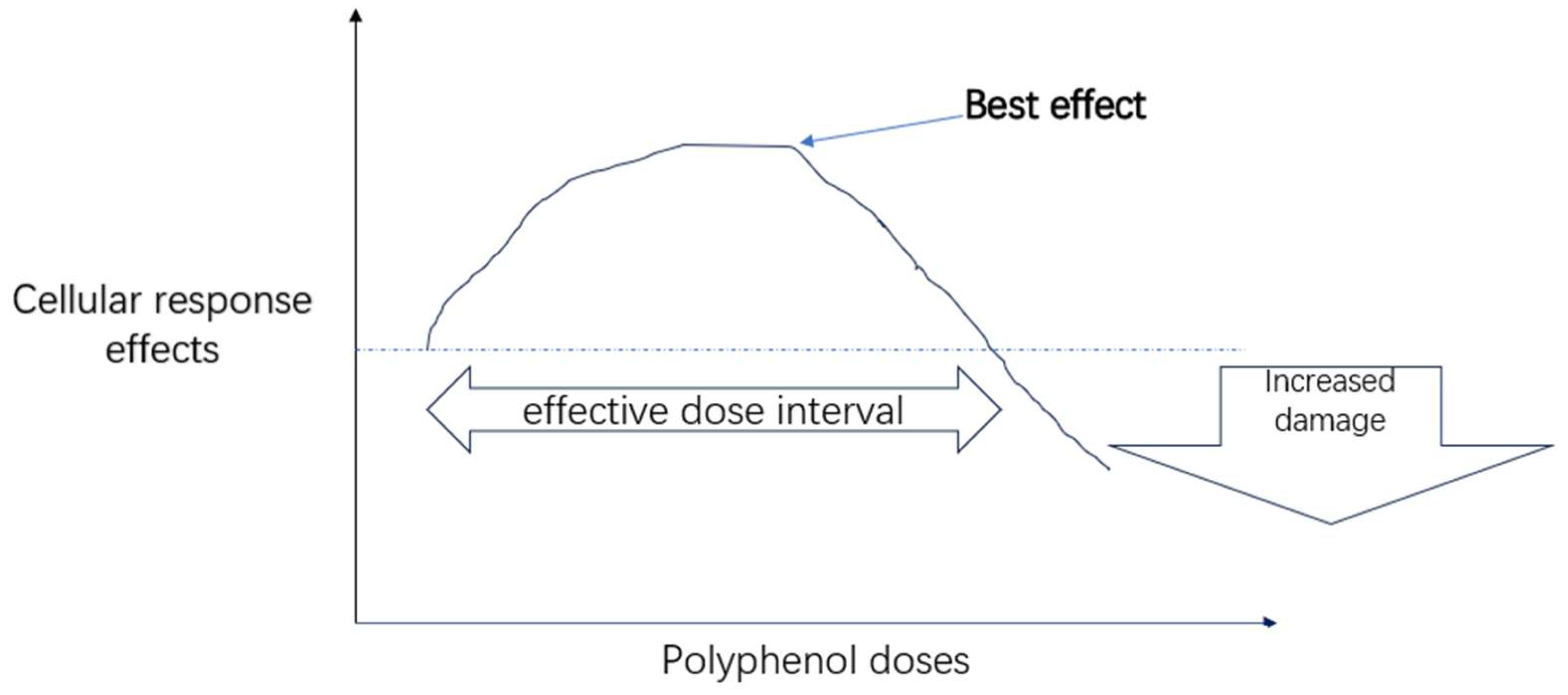
Figure 2.
Diagram of cellular maintaining protein homeostasis.
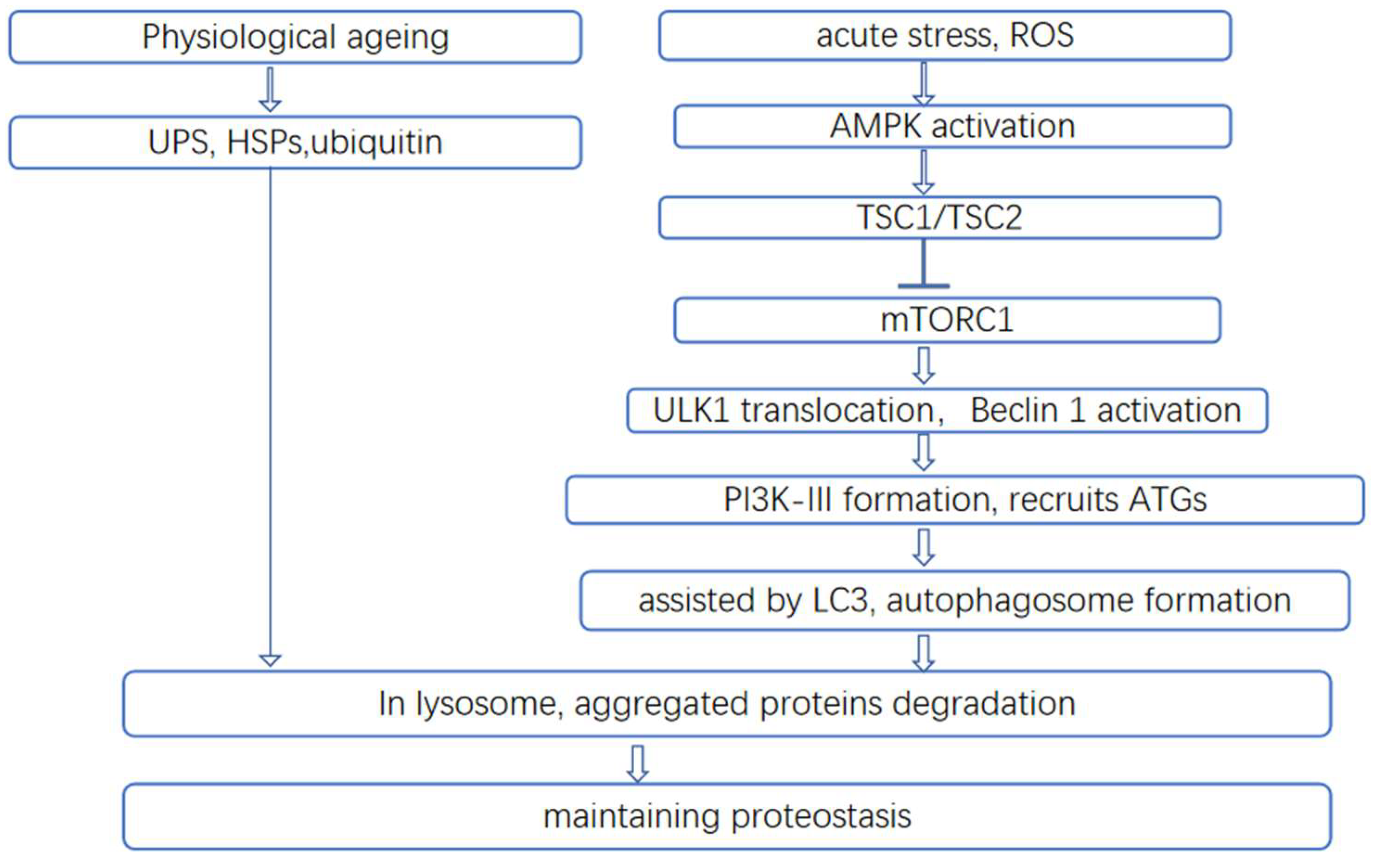
Figure 3.
Schematic representation of the maine glucose metabolic pathways influenced by plant polyphenols. Activated pathways↑ ; Inactivated pathways↓.
Figure 3.
Schematic representation of the maine glucose metabolic pathways influenced by plant polyphenols. Activated pathways↑ ; Inactivated pathways↓.
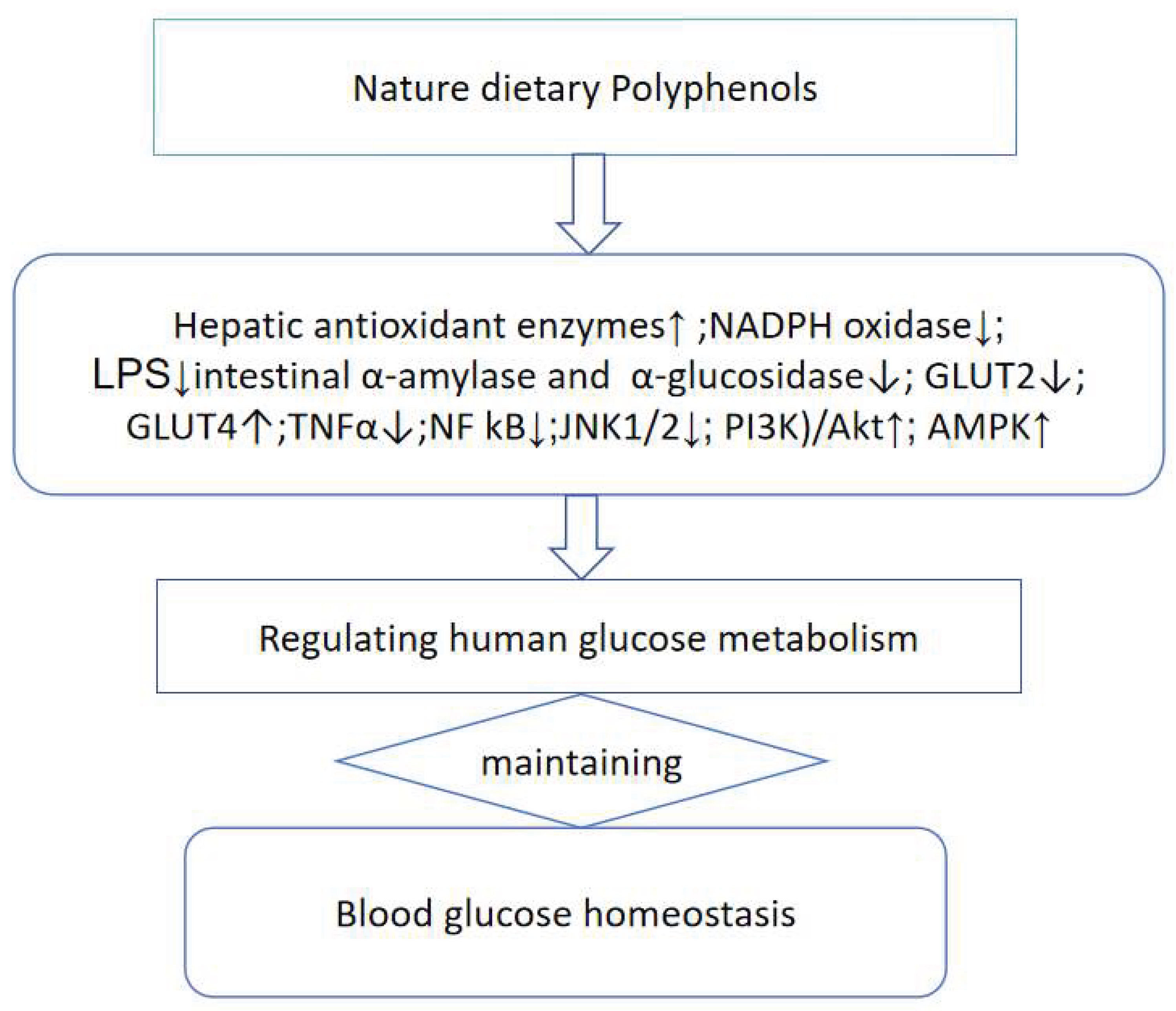

Table 1.
|A list of the main effects of polyphenols on redox homeostasis.
| Number | Mechanisms |
| 1 | Polyphenols directly scavenge ROS, because of the presence of phenolic hydroxyl groups on polyphenols molecules[14,16,17]. |
| 2 | Polyphenols exert antioxidant activity by regulating endogenous antioxidant enzymes[16,17]. |
| 3 | Polyphenols directly or indirectly protect mitochondrial dysfunction through antioxidant roles[16,17]. |
| 4 | polyphenols enhance cellular antioxidant activity via regulating Nrf2-mediated pathway[18]. |
| 5 | Polyphenols counteract ROS via regulating mircoRNAs[19]. |
| 6 | Polyphenols reduce the formation of metal dependent 锦hydroxyl radicals by chelation action[14,16,17]. |
Table 2.
|The main mechanisms of polyphenols modulating protein homeostasis. Activated pathways:↑; Inactivated pathway↓.
Table 2.
|The main mechanisms of polyphenols modulating protein homeostasis. Activated pathways:↑; Inactivated pathway↓.
| Polyphenols | Function mechanism |
| Hydroxytyrosol, olivine glycoside | AMPK↑; inhibiting mTOR1↓[20,21,23,24]. |
| Resveratrol, kaempferol, and gallic acid | PI3K/AKT/mTORe↓[24,25,26]. |
| Resveratrol | Hsp70↑[27]. |
| Resveratrol | Aβ↓[22,25,26,27]. |
| Curcumins ,green tea | Hsp↑[28,29]. |
Table 3.
|Polyphenols activity in protection of blood glucose homeostasis. Activated pathways:↑; Inactivated pathway↓; positive effect:+.
Table 3.
|Polyphenols activity in protection of blood glucose homeostasis. Activated pathways:↑; Inactivated pathway↓; positive effect:+.
| Polyphenols | Enhancing blood glucose absorption | Reducing postprandial hyperglycemia. |
| oleuropein aglycone (OLE), hydroxytyrosol (HT) | NADH oxidase↓[31] | + |
| extra virgin olive oil(EVOO) | NADH oxidase↓,derived bacterial lipopolysaccharide↓[32,33,34] | + |
| quercetin, myricetin, luteolin, epigallocatechin-3-gallate (EGCG), resveratrol | α-amylase and α-glucosidase↓[35,36,37,38] | + |
| tannic acid, quercetin, , myricetin | GLUT2↓[39,40,41] | + |
| catechins of green tea, anthocyanins of grape seeds, bitter melon, extra virgin olive oil, black beans | glucose transporters(GLUT4)↑[42,43,44,45] | + |
Table 4.
|The main impacts of polyphenols on genomic instability :Activated pathways:↑; Inactivated pathway↓.
Table 4.
|The main impacts of polyphenols on genomic instability :Activated pathways:↑; Inactivated pathway↓.
| Polyphenols | Models | Main effects |
| resveratrol | mouse embryonic fibroblasts | ARF/p53↑ |
| proanthocyanidins and procyanidins | human lymphocytes | antioxidant and anti-inflammatory ↑; apoptosis↓ |
| EGCG and quercetin | myocardial cell | telomere shortening ↓ |
Table 5.
|The main mechanisms of polyphenols modulating epigenetic function. Activated pathways:↑; Inactivated pathway↓.
Table 5.
|The main mechanisms of polyphenols modulating epigenetic function. Activated pathways:↑; Inactivated pathway↓.
| Polyphenols | Function mechanism, target of action. |
| curcumin, resveratrol, and catechins. | HDACs and DNMTs[68,69,70] |
| genistein | DNMTs↓[71]. |
| Resveratrol | PGC1α/SIRT1/AMPK, DNMT [72,73,74,75] |
| EGCG | DNMTs↓, HDAC, HATs[76]. |
| Quercetin | HAT and HDAC↓[77]. |
| DADS | HDACs[78] |
Disclaimer/Publisher’s Note: The statements, opinions and data contained in all publications are solely those of the individual author(s) and contributor(s) and not of MDPI and/or the editor(s). MDPI and/or the editor(s) disclaim responsibility for any injury to people or property resulting from any ideas, methods, instructions or products referred to in the content. |
© 2025 by the authors. Licensee MDPI, Basel, Switzerland. This article is an open access article distributed under the terms and conditions of the Creative Commons Attribution (CC BY) license (http://creativecommons.org/licenses/by/4.0/).
Copyright: This open access article is published under a Creative Commons CC BY 4.0 license, which permit the free download, distribution, and reuse, provided that the author and preprint are cited in any reuse.