

Submitted:
28 May 2025
Posted:
29 May 2025
You are already at the latest version
Abstract
Autism spectrum disorders (ASDs) are complex illnesses of largely unknown etiology with lifelong neurodevelopmental consequences. The global prevalence of au-tism has increased twentyfold to thirtyfold since the earliest epidemiologic observa-tions were reported in the late 1960s and early D1970s. Recent reports agree on the as-sociation of ASD with the modification of the microbiome (dysbiosis), which raises the possible role of external factors. Our study aimed to identify antibiotic classes that might be associated with the prevalence of ASD in 30 European countries through the possible modification of the intestinal microbiome. Statistical comparison was made between the average yearly consumption of different antibiotic classes (1997-2020) and the number of individuals living with ASD estimated for 2023/100000 population in 30 European countries, and the results were statistically analyzed. Tetracycline (J01A) showed significant positive (promoting) association with the prevalence of ASD (Pearson r: 0.373, p: 0.043. OR: 1.312, CI95%: 0.995-1.791, p: 0.065) and nar-row-spectrum, beta-lactamase resistant penicillin (J01CF) (Pearson r: 0.524, p: 0.003, OR: 3.240, CI95%: 1.710-8.853, p: 0.004, Kruskal-Wallis p: 0.032, post hoc test p: 0.027). Mild, negative (inhibitory) association was observed with broad-spectrum, be-ta-lactamase sensitive penicillin (J01CA) (Pearson r: -0.278, p: 0.157, OR: 0.808, CI95%: 0.649-0.957, p: 0.028) and narrow-spectrum, beta-lactamase-sensitive penicillin (J01CE) (OR: 0.725, CI95%: 0.543-0.885, p: 0,009). Our findings strongly support the animal experiments when penicillin V-exposed newborn mice developed "autism-like" behavior.
Keywords:
autism spectrum disorder (ASD)
; microbiome
; antibiotics
; penicillin
; tetracycline
; gutbrain axis (GBA)
1. Introduction
Autism spectrum disorder (ASD), which was first described by Karner (1942), is a neurodevelopmental disease characterized by deficits in social communication and the presence of restricted interests and repetitive behaviors [1]. Its recent, pandemic-like spread is alarming, and it has become a public health issue. According to the Centers for Disease Control and Prevention (CDC) report in 2018, the ASD prevalence among children by 8 years has been estimated as 16.8/ 1000 (1:56) with more boys (26.6/ 1000 boys) than girls (6.6/ 1000 girls), which means a 150% increase from 2000 to 2014 [2]. The World’s prevalence of ASD has increased several-fold since the first epidemiological observations in the past 50 years and has reached the level of 1-2% of all children by 2000. The reasons for the increase could not be clearly stated, but researchers agree that better diagnostic criteria and some external factors might play a role [2].
The pandemic of autism is rapidly spreading, and by now, 1 in 56 children has a chance to develop autism. We are still unable to identify any suitable reason for this ailment, despite several associations with different conditions being suspected as potential causative agents [3,4]. Genetic mechanisms are considered for approximately 10–20% of ASD cases [5,6]. It was observed that vancomycin treatment alleviated the symptoms of ASD, suggesting a role for certain clostridial bacteria [7,8,9]. The abundance of Clostridium bolte in autism prompted speculation about the use of developing a vaccine against this pathogen [10]. Desulfivibrio was also suspected as an etiological agent in autism [11]. Several publications support the role of intestinal bacteria [12,13], transvaginal ultrasonography [14], conjugate vaccines [15], and the accumulation of insulin-like growth factors [16] as causative agents. Other reasons leading to autism were also discussed in the literature [17]. A few of the latest proposal includes the role of electromagnetic frequency and radiofrequency radiation exposures (EMF/RFR) [18]. Tylenol/Augmentin and pesticide combined are also suspected [19]. New publications suggest that the peripheral immune system plays an important role in normal neuronal function [20,21,22].
ASD comprises a collection of neuro-developmental disorders, starting in early childhood and characterized by pervasive behavioral deficits and social interaction [23]. The International Classification of Diseases and the Diagnostic Statistical Manual state that the ASD group includes childhood autism, atypical autism, Asperger’s syndrome, disintegrative disorders, and Rett syndrome. ASD is considered genetically and phenotypically as a heterogeneous group of symptoms with various severity, symptomatology, and outcome [24]. All manifestations are considered serious, devastating manifestations regarding the outcome and co-morbidity, which bear down on the affected families, society, and the health care systems alike. The overlap between autism and childhood obesity indicates that autistic patients are obese as well. Recent publications in increasing numbers indicate the role of microbiome alteration (dysbiosis) in autism. Experiments proved that fecal samples from autistic children, when injected into germ-free mice, produce similar symptoms [25,26].
In ASD cases, the balance between the pro-inflammatory bacteria (clostridia and desulfivibrio) and the anti-inflammatory bacteria (bifidobacteria) was destabilized even before the symptoms of ASD occurred. This imbalance results in the so-called “leaky gut” syndrome, and through the more porous epithelial membrane, toxins produced by the microbes can easily enter the circulation, which may affect the brain and the development of ASD [27,28]. The alteration of the intestinal microbial taxa in ASD cases is repeatedly reported as the reduction of Firmicutes and an increase in the number of Bacteroidetes [29].
Other investigators observed the relative abundance of other bacteria, like clostridia, Caloramator, Alistipes, Sarcina, Akkermansia, Lactobacillus, enterobacteriaceae, and sutterellaceae [30,31,32,33,34], and the reduction in the abundance of Bifidobacteria, Desulfovibrio, Coprococcus, veillonellaceae, and prevotellaare species [8]. The pathogenetic process of ASD might be associated with the overgrowth or the reduction of different species, like Clostridium, which develops particularly with the use of antibiotics [11,35,36,37,38,39].
The presence of an altered microbiome (dysbiosis) in ASD is well documented, and its possible role in the development of ASD has also been reported (see above references). It has been hypothesized that antibiotic exposure to the microbiome might produce “ASD-promoting” dysbiosis in the mother or the early modification of the gut microbiome in infancy, which might facilitate the development of ASD through the action of different mediator molecules involving the gut-brain axis (GBA) [40].
In utero exposure to the anticonvulsant valproic acid (VPA) in mice leads to developmental and behavioral deficits in offspring that are similar to ASD [41]. The role of two microbiota-derived host metabolites, p-cresol sulfate and 4-ethylphenyl sulfate, has been reported to contribute to the development of ASD in patients and animal experiments alike. They are produced by certain microbial taxa, such as p-cresol and 4-ethylphenol, which are generated through aromatic acid fermentation by several commensal bacteria, most frequently by the Clostridioides genus, which is often detected in the microbiome of ASD patients. The metabolites, after entering the bloodstream, cross the blood-brain barrier and enter the central nervous system, probably through the microglial cells. They affect neuroinflammation and microglial phagocytosis [42].
Epidemiological studies indicated that early-life antibiotic exposure can augment the risk of neurodevelopmental disorders later in life [43,44].
We aimed to identify the use of antibiotic classes that might show a statistical association with the prevalence of ASD in 30 European countries, probably initiating ASD-related dysbiosis and hence triggering the development of ASD.
2. Hypothesis
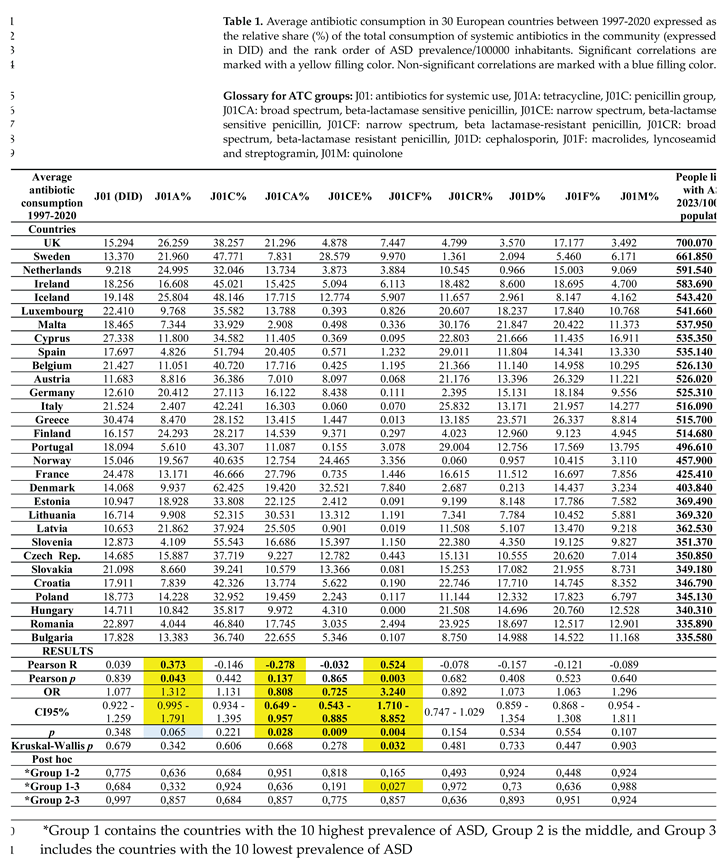
The average consumption of systemic antibiotics in the community (1997-2020) varies between 30.474 DID (Defined Daily Dose/ 1000 Inhabitants/ Day) in Greece, and 9.218 DID in the Netherlands (Table 1.), which indicates an over 3-fold difference in the consumption. Similarly, the relative share of the different antibiotic classes used in the European countries of the total antibiotic consumption in the community (J01) is very different. The highest relative share of tetracycline (J01CA) consumption is recorded in the UK (26.259%), while the lowest is in Spain (2.407%), indicating an over 10-fold difference. Similarly, the highest consumption share of beta-lactamase-resistant penicillin (J01F) is the highest in Sweden (9.970%), and the lowest is in Greece (0.013%), which indicates a 766.9-fold difference. Different classes of antibiotics might induce different dysbiosis and trigger the production of diverse molecular products, which are leaking into the circulation and might “augment” or “inhibit” the development of ASD. In this context, “augmentation” means that higher consumption of a given class of antibiotics might statistically positively correlate with the prevalence of a certain disease (e.g., ASD), and “inhibition” means that the relatively higher consumption of a certain class of antibiotics is related to lower prevalence.
We have aimed to identify antibiotic classes that might “augment” or “inhibit” the development of ASD-related dysbiosis and hence the prevalence of ASD.
3. Results
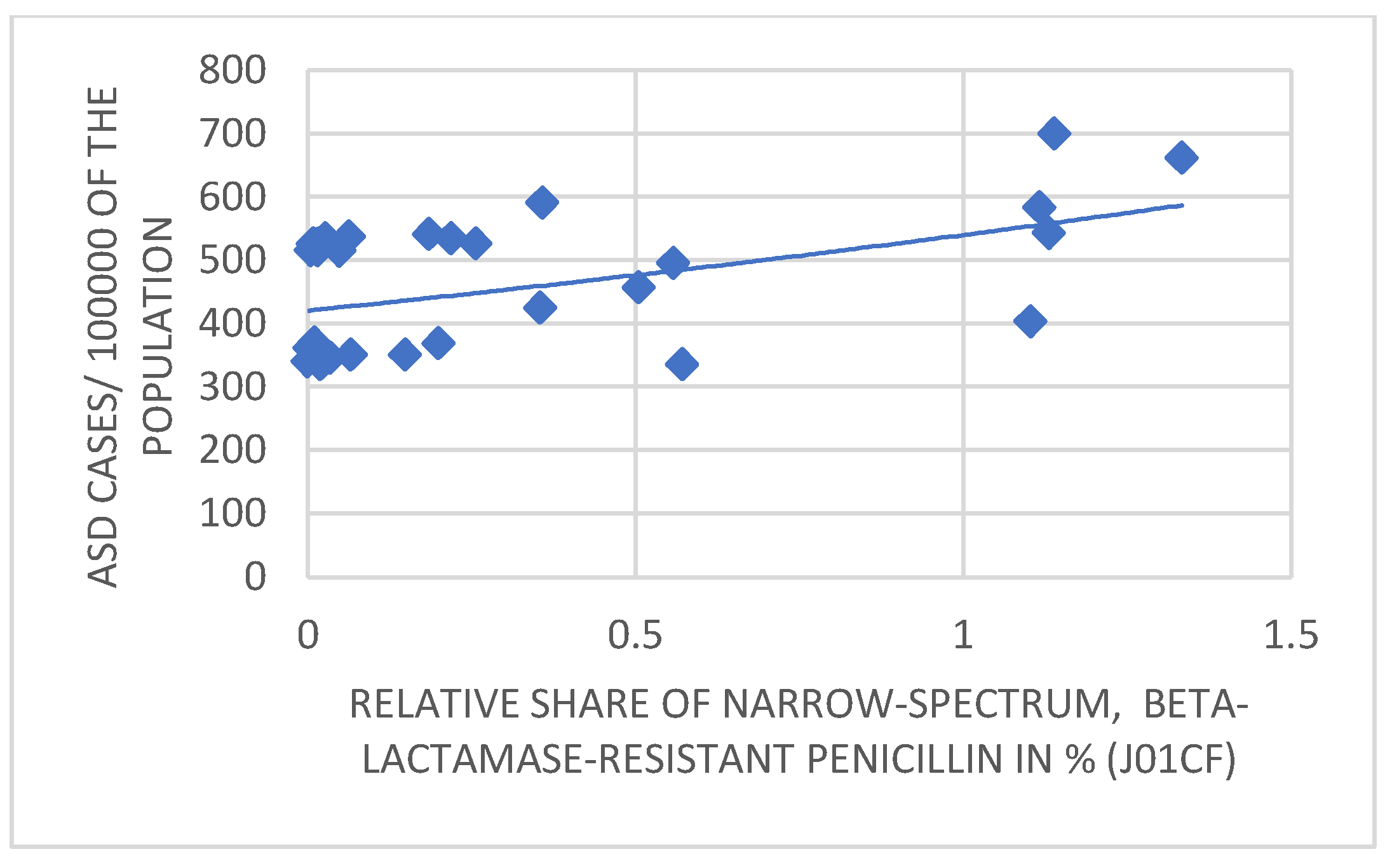
Tetracycline (J01A) usage indicated a significant positive (promoting) association with the prevalence of ASD (Pearson r: 0.373, p: 0.043. OR: 1.312, CI95%: 0.995-1.791, p: 0.065) and narrow-spectrum, beta-lactamase resistant penicillin (J01CF) (Pearson r: 0.524, p: 0.003, OR: 3.240, CI95%: 1.710-8.853, p: 0.004, Kruskal-Wallis p: 0.032). Mild, negative (inhibitory) association was observed with broad-spectrum, beta-lactamase sensitive penicillin (J01CA) (Pearson r: -0.278, p: 0.157, OR: 0.808, CI95%: 0649-0957, p: 0.028) and narrow-spectrum, beta-lactamase-sensitive penicillin (J01CE) (OR: 0.725, CI95%: 0.543-0.885, p: 0,009). Our comparative analyses indicated a significant, positive correlation between the consumption of tetracycline and the prevalence of ASD (Figure 1 and Figure 2). The highest rate of ASD and the highest tetracycline consumption, together with the second highest consumption of narrow-spectrum, beta-lactamase-resistant penicillin (J01CF), is reported from the UK. Similarly, Sweden records the highest consumption of narrow-spectrum, beta-lactamase-resistant penicillin (J01CF), the fifth place on the tetracycline consumption rank order, and second place on the ASD prevalence list (Table 1).
Figure 1.
A significant positive association was observed between ASD prevalence and the consumption of tetracycline.
Figure 1.
A significant positive association was observed between ASD prevalence and the consumption of tetracycline.
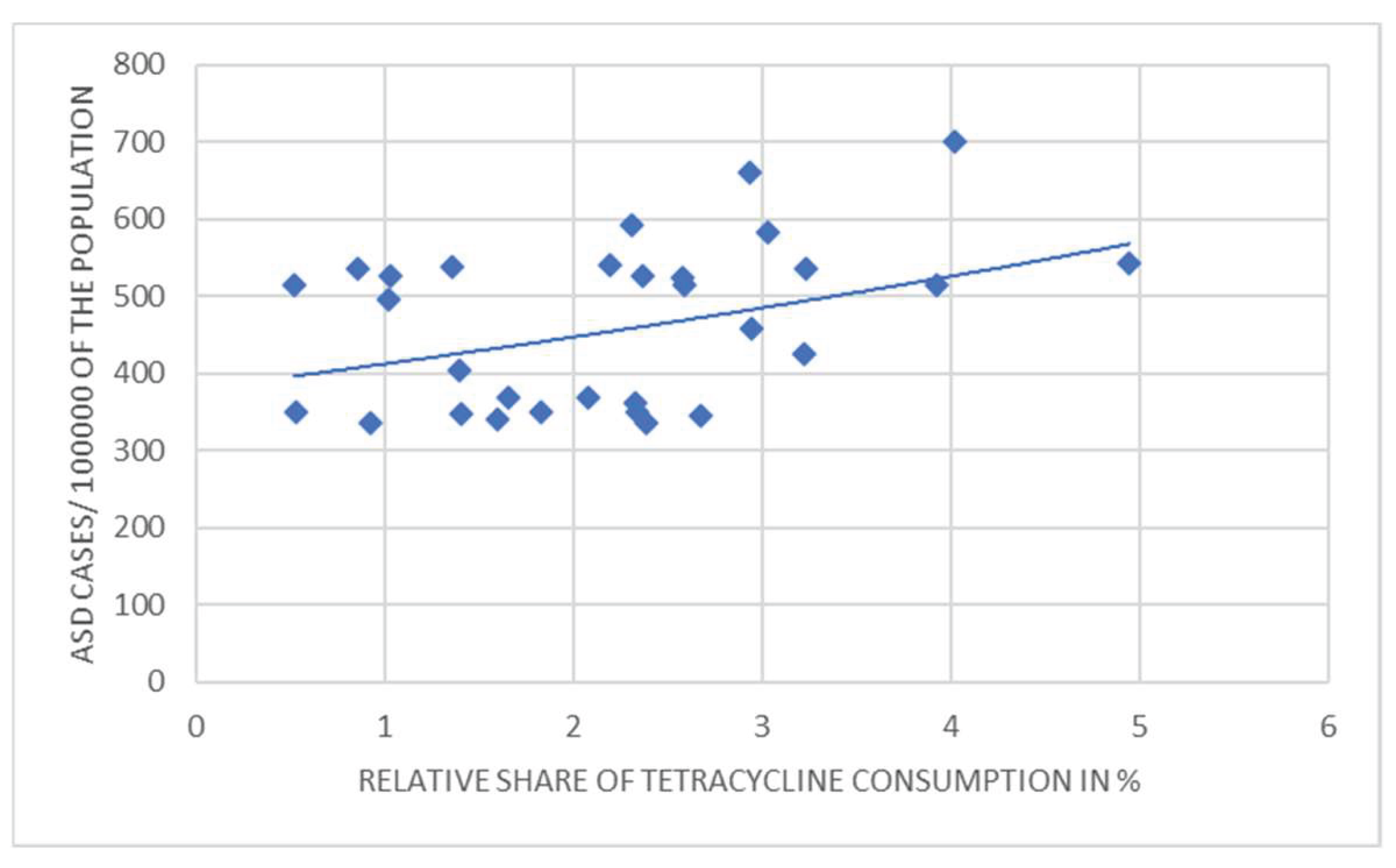
Figure 2.
A significant, positive association was observed between ASD prevalence and the consumption of narrow-spectrum, beta-lactamase-resistant penicillin (J01CF).
Figure 2.
A significant, positive association was observed between ASD prevalence and the consumption of narrow-spectrum, beta-lactamase-resistant penicillin (J01CF).
4. Discussion
An increasing trend of neurodevelopmental diseases, including ASD, attention-deficit/hyperactivity disorder (ADHD), and learning disabilities, has been reported in the past few decades. Early life is crucial for the appropriate neurodevelopmental processes, but external/internal agents might interfere with it. It has been reported that the incidence of ASD increased significantly over time, especially among toddlers and preschool children, but also in older age groups [45]. Recent publications (cited above) agree on the principal role of certain gut bacteria in the development of autism, particularly of clostridia species. This theory was supported by the fact that vancomycin ameliorated the symptoms of autism. Still, it returned after the cessation of antibiotic treatment, probably indicating that after temporarily suppressing the clostridial species, the appropriate balance of the gut flora was not restored [46]. A large cohort study including over half a million newborn babies reported that among those who were exposed to prenatal (maternal) antibiotics (29.8%), ASD developed in 1.5% of the observed children, which indicated a slightly higher risk for developing ASD in the perinatal antibiotic exposure group, particularly in the first and second trimester [47]. The intrauterine development of the brain is a critical period and is particularly sensitive to external stimuli coming from the surrounding environment, which interfere with the normal development of the central nervous system (CNS). The alteration of the prenatal environment, particularly the exposure to maternal drug intake, like antibiotics, might trigger neurodevelopmental changes, which lead to the development of neurodevelopmental disorders (NDDs). To prevent the most frequent streptococcal infections in pregnancy, antibiotics, particularly penicillin, are prescribed as prophylactic, which might interfere with the intrauterine development of the CNS [48]. The role of the microbial taxa composition populating the intestine and acting through the gut-brain axis (GBA) is not fully elucidated and probably includes several factors and mechanisms. The microbial colonization of the fetal/newborn intestine mainly originates from the mother. Antibiotics prescribed as prevention for maternal infections are mostly penicillin against suspected streptococcal infections, which might change the composition of the maternal microbial flora along with the milk composition when antibiotics are used during lactation and influence the microbial flora of the newborns [49]. Epidemiological studies indicated the association between maternal infections during pregnancy and the probability of developing NDDs in the offspring [50]. Infections of the newborn treated with antibiotics can induce long-lasting modification of brain development, probably through the GBA [51,52]. The previous use of antibiotics in children with NDDs was also reported [53]. Antibiotic consumption in childhood and adolescence showed association with mental disturbances in adults, particularly schizophrenia and affective disorders, which may be mediated by effects of infections/inflammation on the brain, triggered by the alterations of the microbial taxa, genetics, or other factors [54]. It has been reported that children receiving antibiotics in their first year of life had more behavioral difficulties and more symptoms of depression at follow-up [55]. Similarly, ADHD risk increase was observed in those exposed to 4 or more antibiotic courses or a duration longer than 3 weeks in their first year of life [56]. Twin studies from the Netherlands and Sweden indicated that the use of antibiotics during the early life of 0 and 2 years increased the risk of ADHD and ASD; however, the importance of the familial environment and the genetic influence in the etiology of NDDs also must be considered [57]. A major meta-analysis on the association between early exposure to antibiotics and ASD did not indicate any significant increase in ASD in the antibiotic exposure group [58], but they did not separate the antibiotic classes. It might be concluded that antibiotics, as major disruptors of the microbiome, can change the composition and the abundance of different microbial taxa and, hence, the composition of the microbiome-derived molecules as well. The altered molecules, acting through the GBA, interfere with the normal neurodevelopmental mechanisms, ending up in neurodevelopmental abnormalities, including ASD. Several reports indicate that the gut microbiota plays a crucial role in the bidirectional communication between the gut and the brain suggesting that the gut microbial taxa may influence neural development, and neurotransmission, which affect behavior, contributing to the pathogenesis and/or progression of many neurodevelopmental, neuropsychiatric, and neurological conditions [59]. A recent review of the literature (2021) summarizes the role of the microbiome in different diseases like depression, anxiety, schizophrenia, autism spectrum disorders, Parkinson's disease, migraine, and epilepsy [59]. Alteration of the microbiome is followed by the appropriate response from the CNS. Signals, arising from the microbiome as mediator molecules produced by different microbial taxa, are transmitted via the afferent spinal and vagal sensory nerves, and they include polysynaptic entrances to higher areas of the CNS, such as the hypothalamus and limbic forebrain (60). In an experimental model, when germ-free mice have been colonized with a microbiome from ASD individuals, the hallmarks of autistic behaviors developed, and the brains of mice colonized with ASD microbiota display alternative splicing of ASD-relevant genes. It appears that the gut microbiota regulates behaviors in mice via the production of neuroactive metabolites, suggesting that gut-brain connections contribute to the pathophysiology of ASD [61].
The ASD-related altered microbiome, when transferred to mice (fecal microbial transfer, FMT), is capable of inducing ASD-like behavior changes in the experimental animals [62]. Similarly, fecal microbial transfer (FMT) has dramatically ameliorated the symptoms of ASD [62,63,64,65]. A study by Kang et al. applied extensive FMT treatment to 18 autistic children of 7-16 years who were diagnosed by the Autism Diagnostic Interview-Revised (ADI-R) with moderate to severe gastrointestinal problems. After maintaining the FMT treatment for 8 weeks, they observed significant amelioration of the ASD-related symptoms, including gastroenteric symptoms as well [66]. Sporadic observations indicated that extended antibiotic treatment could ameliorate the symptoms of autism, probably suppressing the proliferation of ASD-related microbial taxa. According to a report, five autistic children who were suffering from Lyme disease were treated with amoxicillin and azithromycin, and the symptoms of ASD were ameliorated [67]. A case report indicated the rapid improvement of ASD after introducing vancomycin treatment, which returned after stopping the use of vancomycin [68]. In an animal model (male Wistar rats), ASD-like behavioral symptoms had been induced either by using an antibiotic cocktail or valproic acid (VPA). They observed that by adding a probiotic mixture to the antibiotic-treated group and the VPA-treated group, the symptoms of ASD-like behavior attenuated both the antibiotics and the VPA-generated antisocial behavioral symptoms [69]. The initial development and maturation of the neonatal microbiome are largely determined by maternal–offspring exchanges of microbiota, which indicates that a dysbiotic maternal microbiome might also populate the newborn intestine [70]. Several researchers consider the importance of biochemical changes observed early in the newborn, such as the depressed level of insulin-like growth factor-1 (IGF-1) in the neurodevelopmental period, in the development of ASD. This observation leads to early diagnosis and probable intervention in the prevention of dysconnectivity. According to Steinmann [71], the process of developing ASD could be preventable even before irreversible psychosocial changes develop. It might be concluded that the biochemical changes observed in ASD are probably triggered by the altered microbiome induced by certain antibiotics. Reports on the association between autism and antibiotics are controversial. Some observations indicate a specific association between prenatal exposure to antibiotics and autism [72], while others found some beneficial effects of perinatal antibiotic use [73]. Controversy might arise from the fact that different antibiotic classes induce different dysbiosis, which either promotes or inhibits the development of ASD-related dysbiosis. In animal experiments, when newborn mice were exposed to low-dose penicillin, profound changes in the intestinal microbiota were observed, which might be implicated in the perturbance of neurodevelopmental and neuropsychiatric pathways. Significant effects were observed in different areas of the brain (frontal cortex, amygdala gene, etc.). Linkage was observed between the specific microbial taxa and the early-life expression of particularly affected genes [74]. The results derived from animal models [75] strongly support our observations, as we have detected the possible association between the consumption of the narrow-spectrum, beta-lactamase-resistant penicillin (J01CF) and the prevalence of autism, together with tetracycline (J01A), which might induce developmental difficulties in the brain, resulting in ASD. Group B Streptococcus (GBS) remains the most common cause of neonatal early-onset sepsis among term infants and a significant cause of late-onset sepsis among both term and preterm infants, and penicillin is frequently used for prophylaxis [76]. As far as pregnant women, newborn babies, and infants are not taking any tetracycline compound because of its contraindication, it could be suspected that tetracycline might have arrived from environmental antibiotic pollution or the women were exposed to tetracycline before being pregnant, which triggered the ASD-related dysbiosis. Tetracycline is widely used in humans and agriculture, mixed with animal fodder. More than 70% of the drug is excreted in an active form in the urine and feces and pollutes the environment. Due to its overuse and weak ability to degrade, it has become a serious threat to the environment. Tetracycline can accumulate in the food chain, and it can influence the composition of the human microbial taxa [77]. It might be concluded that higher consumption could result in higher environmental pollution. Several reports indicate that the risk of developing ASD is associated with ongoing inflammatory changes during pregnancy, which are followed by the alteration of the gut flora with the capability to induce T17 cells and promote the risk for neurodevelopmental syndromes in the offspring of pregnant mothers with infections or auto-inflammatory disorders [78,79,80,81,82]. The gut microbiota permanently interacts with the immune system. Children suffering from ASD experience GI symptoms, an imbalance observed in a propensity to impaired gut barrier function, which may contribute to their symptoms and clinical outcome [83]. Several researchers have observed immune dysregulation in ASD cases by modifying circulating and brain cytokines, chemokines, and several other inflammatory molecules. The abnormal distribution of different leukocyte subtypes, like inflammatory cytokines (i.e., interferon (IFN)-γ, IL-1β, IL-6, IL-12, tumor necrosis factor (TNF)-α), has been observed, which might be associated with the symptoms and severity of the ASD [84]. The microbiome's bacterial composition influences the nerve cells' development from the fetus to adulthood as it affects neural stem cell differentiation, the migration of immature neurons, axons, dendritic growth, and synapse formation [85]. The observation of the altered microbiome in ASD patients has prompted researchers to focus attention on reconstructing "normal" microbiomes with diet, antibiotics, prebiotics, probiotics, and FMT as therapeutic approaches [86]. Those attempts with prebiotics, probiotics, and symbiotics have yielded some results in ameliorating the symptoms of ASD by modifying the gut flora and the metabolic activity of children with ASD. Probiotic treatment increases the abundance of Lactobacillus, and prebiotic treatment augments the relative abundance of Bifidobacterium, but decreases the abundance of Lachnoclostridium. According to reports, changes in microbial metabolism were observed with the increasing short-chain fatty acid and reduced ammonium level [86]. According to another meta-analysis of the literature dealing with the possible beneficial effects of probiotics, the beneficial effects of probiotics are not confirmed. Combining prebiotics and symbiotic treatment has demonstrated some benefits for behavioral abnormalities, but the most promising intervention is FMT, even if the reports are scarce [87,88].A prominent autism stool metagenomics analysis, including stool samples from 247 children (99 with autism), found limited direct autism associations. Only Romboutsia timonensis was the specific taxa associated with autism diagnosis. This Australian metagenomics study reported negligible direct associations between ASD diagnosis and the gut microbiome. It indicated that ASD-related restricted interests are associated with a less-diverse diet, which results in reduced microbial taxonomic diversity and looser stool consistency. The study concluded that microbiome differences in ASD may reflect dietary preferences that are related to diagnostic features, and the microbial diversity itself could not be considered a driving force in the development of ASD [89]. Fecal samples from autistic children showed a higher abundance of Roseburia and Candida genera, and lower abundance of Dialister, Bilophila, Veillonella, Streptococcus, Coprococcus, and Prevotella genera (90).
5. Materials and Methods
To evaluate the above hypothesis, antibiotic consumption pattern databases were compared to the autism (ASD) prevalence in countries with people living with autism/ 100000 population in 30 European countries estimated for 2023 (https://www.theworldranking.com/statistics/178/global-comparison-of-autism-rates/). (Accessed on 30. Jan. 2025)
Average yearly antibiotic consumption was calculated from the publicly available antibiotic databases of 30 European countries (ECDC yearly reports) for 1997-2020 (accessed: 12 01 2023).
Based on the Anatomical Therapeutic Chemical classification system (ATC), the average yearly consumption of the total systemic antibiotics (J01) has been calculated and expressed in Defined Daily Dose/1000 Inhabitants/ Day (DID). The consumption of major antibiotic classes covering 94% of antibiotic use in the community at ATC levels two and three was calculated as a relative share of the total amount of systemic antibiotics (J01) and expressed in percentage (%). Antibiotic classes included: tetracycline (J01A), penicillin (J01C), broad-spectrum, beta-lactamase sensitive penicillin (J01CA), narrow spectrum, beta-lactamase sensitive penicillin (J01CE), narrow spectrum, beta-lactamase resistant penicillin (J01CF), broad-spectrum, beta-lactamase resistant combination penicillin (J01CR), cephalosporin (J01D), macrolide and lincosamides, streptogramins (J01F), and quinolone (J01M) expressed in percentage of the total amount.
Statistics: Pearson's correlation was used to estimate the correlation between antibiotic consumption and the prevalence of ASD. A significant correlation (positive/negative) was considered when p values were ≤ 0.05. A non-significant correlation was estimated when the p-values fell between 0.051 and 0.09. Positive (supportive) and negative (inhibiting) significant correlations were considered and evaluated. Logistic regression analysis was performed to determine the odds ratio (OR, CI 95%) for each antibiotic class. To confirm our results, we have performed the more advanced Kruskal-Wallis test (non-parametric version of ANOVA analysis) to determine the statistically significant differences among the three groups formed by country ranking. Group one contained the countries with the 10 highest ranking ASD prevalence, the second group contained the middle 10 countries and the third group contained the 10 countries with the lowest prevalence of ASD. Post hoc multiple testing was performed comparing the three groups of country ranking. Statistical results were recorded and featured in Table 1. Scatter diagrams were plotted to demonstrate the association (positive/negative) between the prevalence of autism and the average usage of narrow-spectrum, beta-lactamase resistant penicillin (J01CF) and tetracycline (J01A), (Figure 1 and Figure 2).
6. Conclusions
There is a considerable body of knowledge regarding the association between ASD and early exposure (maternal/fetal, newborn) to antibiotics. Human observational studies [91] and animal experiments [92] indicated that narrow-spectrum penicillin produces perturbance of the microbiome with the reduction of Lactobacillus and the proliferation of non-E. coli gram-negative species. Our comparative analyses of antibiotic consumption in 30 European countries indicated that certain classes of antibiotics, like tetracycline (J01A) and methicillin-resistant narrow-spectrum penicillin (J01CF), might alter the microbiome in newborns or the maternal microbiome during pregnancy, which favors the development of ASD. Animal models (mice) indicated that applying a low dose of Penicillin V induced a more robust behavioral abnormalities response than a cocktail of broad-spectrum antibiotics [93]. Tetracycline reduces the abundance of Bacteroides fragilis, bifidobacteria, lactobacilli, and enterococcus spp., and increases the abundance of lactose-fermenting enterobacteriaceae. A Swedish population study [94] indicated that penicillin is the most frequently prescribed antibiotic for pregnant women and infants. A significant association was observed between the prevalence of autism and antibiotic exposure during pregnancy and early childhood. This observation is in accord with the high consumption ratio of penicillin and the high prevalence of autism [95]. A large meta-analysis of the literature [96] on the association of maternal antibiotic exposure and the attention-deficit/hyperactivity disorder of children indicated a significant relationship. Still, no similar association was observed with post-partum antibiotic intake. The authors emphasize the heterogeneity of the publications included in the study. Other large cohort studies did not observe any association between antibiotic use and autism [97], although they did not separate the use of different classes of antibiotics and the relationship with the development of autism. Because several external exposures are considered possible factors in the development of ASD, including dysbiosis [98], convincing evidence emerged in the relevant literature supporting the crucial role of an altered microbiome [99], which might develop as a result of antibiotic exposure. Reports using FMT in ASD patients have found that oral administration of lyophilized FMT is an effective and safe treatment for children with ASD. FMT could improve GI, ASD related symptoms, and sleep disturbances, and alter the gut bacterial and fungal microbiota composition in children with ASD. A more extensive, updated publication on the burden of ASD is presented in a recent publication [100].
Limitations of our study: Our results could not be interpreted at the individual level; only statistical correlations and concordance could be established. However, a firm statistical correlation between tetracycline and penicillin consumption and ASD was estimated. As shown in the scatter diagrams, this might indicate a possible association between maternal tetracycline/penicillin (dysbiosis) consumption and autism.
Strength of our study: To our knowledge, our study is the first one comparing the consumption of different antibiotic classes and the prevalence of ASD in European countries. The results of our comparative analysis are in full accord with previous reports and animal experiments indicating the possible role of certain antibiotics, even low-dose penicillin applied to intrauterine, or newborn mice, in the development of autism-like behavior.
Author Contributions
Lajos Bogár: Supervision, Validation, Writing – review & editing. Gergely Márovics: Formal Analysis, Methodology, Writing – review & editing. Márton Németh: Data curation, Writing – review & editing. Tamás Tényi: Funding acquisition, Resources, Writing – review & editing. Gábor Ternák: Conceptualization, Investigation, Writing – original draft.
Funding
TT was supported by the FIKP-IV and TINL projects.
Institutional Review Board Statement
Not applicable for studies not involving humans or animals.
Informed Consent Statement
Not applicable.
Data Availability Statement
Publicly available databases were compared as indicated in the Materials and Methods, and are available to all the authors.
Conflicts of Interest
The authors declare that the research was conducted in the absence of any commercial or financial relationships that could be construed as a potential conflict of interest
References
- Ziats CA, Patterson WG, Friez M. Syndromic Autism Revisited: Review of the Literature and Lessons Learned. Pediatr Neurol. 2021, 114:21-25. [CrossRef]
- Baio J, Wiggins L, Christensen DL, Maenner MJ, Daniels J, Warren Z,. Prevalence of Autism Spectrum Disorder Among Children Aged 8 Years - Autism and Developmental Disabilities Monitoring Network, 11 Sites, United States, 2014. MMWR Surveill Summ. 2018, 67:1-23. [CrossRef]
- Rapin I, Tuchman RF. Autism: definition, neurobiology, screening, diagnosis. Pediatr Clin North Am. 2008, 55:1129-46. [CrossRef]
- Kočovská E, Fernell E, Billstedt E, Minnis H, Gillberg C. Vitamin D and autism: clinical review. ResDev Disabil. 2012, 33:1541-50. [CrossRef]
- Rylaarsdam L, Guemez-Gamboa A. Genetic Causes and Modifiers of Autism Spectrum Disorder. Front Cell Neurosci. 2019, 20;13:385. [CrossRef]
- Abrahams BS, Geschwind DH. Advances in autism genetics: on the threshold of a new neurobiology. Nat Rev Genet. 2008, 9:341-55. [CrossRef]
- Finegold SM, Downes J, Summanen PH. Microbiology of regressive autism. Anaerobe. 2012, 18:260-2. [CrossRef]
- Finegold SM. (2011) State of the art; microbiology in health and disease. Intestinal bacterial flora in autism. Anaerobe. 2011, 17:367-8. [CrossRef]
- Finegold SM. Therapy and epidemiology of autism--clostridial spores as key elements. Med Hypotheses, 2008, 70:508-11. [CrossRef]
- Pequegnat B, Sagermann M, Valliani M, Toh M, Chow H, Allen-Vercoe E, et al. A vaccine and diagnostic target for Clostridium bolteae, an autism-associated bacterium. Vaccine. 2013, 31:2787-90. [CrossRef]
- Finegold SM. Desulfovibrio species are potentially important in regressive autism. Med Hypotheses, 2011, 77:270-4. [CrossRef]
- Heberling CA, Dhurjati PS, Sasser M. Hypothesis for a systems connectivity model of Autism Spectrum Disorder pathogenesis: links to gut bacteria, oxidative stress, and intestinal permeability. Med Hypotheses. 2013 80:264-70. [CrossRef]
- Zafeiriou DI, Ververi A, Vargiami E. Childhood autism and associated comorbidities. Brain Dev. 2007, 29:257-72. [CrossRef]
- Webb SJ, Mourad PD. Prenatal Ultrasonography and the Incidence of Autism Spectrum Disorder. JAMA Pediatr. 2018, 172:319-320. [CrossRef]
- Richmond BJ. Hypothesis: conjugate vaccines may predispose children to autism spectrum disorders. Med Hypotheses. 2011, 77:940-7. [CrossRef]
- Steinman G, Mankuta D. Insulin-like growth factor and the etiology of autism. Med Hypotheses. 2013, 80:475-80. [CrossRef]
- Odent M. (2010) Autism and anorexia nervosa: Two facets of the same disease? Med Hypotheses. 75(1):79-81. [CrossRef]
- Herbert MR, Sage C. Autism and EMF? Plausibility of a pathophysiological link part II. Pathophysiology. 2013, 20:211-34. [CrossRef]
- Good P. Evidence the U.S. autism epidemic initiated by acetaminophen (Tylenol) is aggravated by oral antibiotic amoxicillin/clavulanate (Augmentin) and now exponentially by herbicide glyphosate (Roundup). Clin Nutr ESPEN. 2018, 23:171-183. [CrossRef]
- Marchezan J. Editorial: Autism Spectrum Disorder and Autoimmune Diseases: A Pathway in Common? J Am Acad Child Adolesc Psychiatry. 2019, 58:481-483. [CrossRef]
- Gottfried C, Bambini-Junior V, Francis F, Riesgo R, Savino W. The Impact of Neuroimmune Alterations in Autism Spectrum Disorder. Front Psychiatry, 2015, 6:121. [CrossRef]
- Mead J, Ashwood P. Evidence supporting an altered immune response in ASD. Immunol Lett. 2015, 163:49-55. [CrossRef]
- Wing L. The autistic spectrum. Lancet. 1997, 350:1761-6. [CrossRef]
- Caronna EB, Milunsky JM, Tager-Flusberg H. Autism spectrum disorders: clinical and research frontiers. Arch Dis Child. 2008, 93:518-23. [CrossRef]
- Phillips KL, Schieve LA, Visser S, Boulet S, Sharma AJ, Kogan MD, et al Prevalence and impact of unhealthy weight in a national sample of US adolescents with autism and other learning and behavioral disabilities. Matern Child Health J. 2014, 18:1964-75. [CrossRef]
- Sharon G, Cruz NJ, Kang DW, Gandal MJ, Wang B, Kim YM, et al Human Gut Microbiota from Autism Spectrum Disorder Promote Behavioral Symptoms in Mice. Cell. 2019, 30:1600-1618.e17. [CrossRef]
- Nagaraju K, Sudeep KS, Kurhekar MP. A cellular automaton model to find the risk of developing autism through gut-mediated effects. Comput Biol Med. 2019, 110:207-217. [CrossRef]
- Weston B, Fogal B, Cook D, Dhurjati P. An agent-based modeling framework for evaluating hypotheses on risks for developing autism: effects of the gut microbial environment. Med Hypotheses. 2015, 84:395-401. [CrossRef]
- Finegold SM, Dowd SE, Gontcharova V, Liu C, Henley KE, Wolcott RD, et al 3rd. Pyrosequencing study of fecal microflora of autistic and control children. Anaerobe. 2010, 16:444-53. [CrossRef]
- De Angelis M, Piccolo M, Vannini L, Siragusa S, De Giacomo A, Serrazzanetti DI, et al Fecal microbiota and metabolome of children with autism and pervasive developmental disorder not otherwise specified. PLoS One. 2013, 8:e76993. [CrossRef]
- Finegold SM, Molitoris D, Song Y, Liu C, Vaisanen ML, Bolte E, et al Gastrointestinal microflora studies in late-onset autism. Clin Infect Dis. 2002, 35(Suppl 1):S6-S16. [CrossRef]
- Wang L, Christophersen CT, Sorich MJ, Gerber JP, Angley MT, Conlon MA. Elevated fecal short chain fatty acid and ammonia concentrations in children with autism spectrum disorder. Dig Dis Sci. 2012, 57:2096-102. [CrossRef]
- Parracho HM, Bingham MO, Gibson GR, McCartney AL. Differences between the gut microflora of children with autistic spectrum disorders and that of healthy children. J Med Microbiol. 2005, 54:987- 991. [CrossRef]
- Andreo-Martínez P, García-Martínez N, Sánchez-Samper EP, Martínez-González AE. An approach to gut microbiota profile in children with autism spectrum disorder. Environ Microbiol Rep. 2020, 12:115-135. [CrossRef]
- S.M. Bolte ER. Autism and Clostridium tetani. Med Hypotheses. 1998, 51:133-44. [CrossRef]
- Tomova A, Husarova V, Lakatosova S, Bakos J, Vlkova B, Babinska K, et al Gastrointestinal microbiota in children with autism in Slovakia. Physiol Behav. 2015, 138:179-87. [CrossRef]
- De Angelis M, Francavilla R, Piccolo M, De Giacomo A, Gobbetti M. Autism spectrum disorders and intestinal microbiota. Gut Microbes. 2015, 6:207-13. [CrossRef]
- Persico AM, Napolioni V. Urinary p-cresol in autism spectrum disorder. Neurotoxicol Teratol. 2013, 36:82-90. [CrossRef]
- Macfabe DF. Short-chain fatty acid fermentation products of the gut microbiome: implications in autism spectrum disorders. Microb Ecol Health Dis. 2012, 24;23. [CrossRef]
- Cryan JF, O'Riordan KJ, Cowan CSM, Sandhu KV, Bastiaanssen TFS, Boehme M, et al The Microbiota- Gut-Brain Axis. Physiol Rev. 2019, 99:1877-2013. [CrossRef]
- Roullet FI, Wollaston L, Decatanzaro D, Foster JA. Behavioral and molecular changes in the mouse in response to prenatal exposure to the anti-epileptic drug valproic acid. Neuroscience. 2010, 170:514-22. [CrossRef]
- Zheng Y, Bek MK, Prince NZ, Peralta Marzal LN, Garssen J, Perez Pardo P, Kraneveld AD. The Role of Bacterial-Derived Aromatic Amino Acids Metabolites Relevant in Autism Spectrum Disorders: A Comprehensive Review. Front Neurosci. 2021, 15:738220. [CrossRef]
- Atladóttir HÓ, Henriksen TB, Schendel DE, Parner ET. Autism after infection, febrile episodes, and antibiotic use during pregnancy: an exploratory study. Pediatrics. 2012 130(6):e1447-54. [CrossRef]
- Niehus, R., and Lord, C. Early medical history of children with autism spectrum disorders. J. Dev. Behav. Pediatr. 2006, 2(Suppl.), S120–S127. [CrossRef]
- Davidovitch M, Slobodin O, Weisskopf MG, Rotem RS. Age-Specific Time Trends in Incidence Rates of Autism Spectrum Disorder Following Adaptation of DSM-5 and Other ASD-Related Regulatory Changes in Israel. Autism Res. 2020, 13:1893-1901. [CrossRef]
- Sandler RH, Finegold SM, Bolte ER, Buchanan CP, Maxwell AP, Väisänen ML, et al Short-term benefit from oral vancomycin treatment of regressive-onset autism. J Child Neurol. 2000, 15:429-35. [CrossRef]
- Nitschke AS, do Valle HA, Vallance BA, Bickford C, Ip A, Lanphear N, Lanphear B, Weikum W, Oberlander TF, Hanley GE. Association between prenatal antibiotic exposure and autism spectrum disorder among term births: A population-based cohort study. Paediatr Perinat Epidemiol. 2023 Aug;37(6):516-526. [CrossRef]
- Diamanti T, Prete R, Battista N, Corsetti A, De Jaco A. Exposure to Antibiotics and Neurodevelopmental Disorders: Could Probiotics Modulate the Gut-Brain Axis? Antibiotics (Basel). 2022 Dec 7;11(12):1767. [CrossRef]
- Hermansson H, Kumar H, Collado MC, Salminen S, Isolauri E, Rautava S. Breast Milk Microbiota Is Shaped by Mode of Delivery and Intrapartum Antibiotic Exposure. Front Nutr. 2019 Feb 4;6:4. [CrossRef]
- Kenyon, S.; Pike, K.; Jones, D.R.; Brocklehurst, P.; Marlow, N.; Salt, A.; Taylor, D.J. Childhood outcomes after prescription of antibiotics to pregnant women with spontaneous preterm labor: 7-year follow-up of the ORACLE II trial. Lancet 2008, 372, 1319–1327.
- Duong QA, Pittet LF, Curtis N, Zimmermann P. Antibiotic exposure and adverse long-term health outcomes in children: A systematic review and meta-analysis. J Infect. 2022 85, 213-300. [CrossRef]
- Volker E, Tessier C, Rodriguez N, Yager J, Kozyrskyj A. Pathways of atopic disease and neurodevelopmental impairment: assessing the evidence for infant antibiotics. Expert Rev Clin Immunol. 2022, 18, 901-922. [CrossRef]
- Fallon J. Could one of the most widely prescribed antibiotics, amoxicillin/clavulanate "augmentin," be a risk factor for autism? Med Hypotheses. 2005, 64, 312-5. [CrossRef]
- Köhler O, Petersen L, Mors O, Mortensen PB, Yolken RH, Gasse C, Benros ME. Infections and exposure to anti-infective agents and the risk of severe mental disorders: a nationwide study. Acta Psychiatr Scand. 2017, 135, 97-105. [CrossRef]
- Slykerman, R.F.; Thompson, J. Waldie, K.E.; Murphy, R. Wall, C. Mitchell, E.A. Antibiotics in the first year of life and subsequent neurocognitive outcomes. Acta Paediatr. 2017, 106, 87–94.
- Hamad AF, Alessi-Severini S, Mahmud SM, Brownell M, Kuo IF. Antibiotic Exposure in the First Year of Life and the Risk of Attention-Deficit/Hyperactivity Disorder: A Population-Based Cohort Study. Am J Epidemiol. 2019, 188, 1923-1931. [CrossRef]
- Slob EMA, Brew BK, Vijverberg SJH, Dijs T, van Beijsterveldt CEM, Koppelman GH et al, Early-life antibiotic use and risk of attention-deficit hyperactivity disorder and autism spectrum disorder: results of a discordant twin study. Int J Epidemiol. 2021 50, 475-484. [CrossRef]
- Łukasik J, Patro-Gołąb B, Horvath A, Baron R, Szajewska H; SAWANTI Working Group. Early Life Exposure to Antibiotics and Autism Spectrum Disorders: A Systematic Review. J Autism Dev Disord. 2019. 49, 3866-3876. [CrossRef]
- Socała K, Doboszewska U, Szopa A, Serefko A, Włodarczyk M, Zielińska A, et al, The role of microbiota-gut-brain axis in neuropsychiatric and neurological disorders. Pharmacol Res. 2021, 172:105840. [CrossRef]
- Cryan JF, O'Riordan KJ, Cowan CSM, Sandhu KV, Bastiaanssen TFS, Boehme M, et al, The Microbiota-Gut-Brain Axis. Physiol Rev. 2019, 99, 1877-2013. [CrossRef]
- Sharon G, Cruz NJ, Kang DW, Gandal MJ, Wang B, Kim YM, Zink EM, et al, Human Gut Microbiota from Autism Spectrum Disorder Promote Behavioral Symptoms in Mice. Cell. 2019, 177, 1600- 1618.e17. [CrossRef]
- Żebrowska P, Łaczmańska I, Łaczmański Ł. Future Directions in Reducing Gastrointestinal Disorders in Children With ASD Using Fecal Microbiota Transplantation. Front Cell Infect Microbiol. 2021, 11:630052. [CrossRef]
- Abuaish S, Al-Otaibi NM, Aabed K, Abujamel TS, Alzahrani SA, Alotaibi SM, et al The Efficacy of Fecal Transplantation and Bifidobacterium Supplementation in Ameliorating Propionic Acid- Induced Behavioral and Biochemical Autistic Features in Juvenile Male Rats. J Mol Neurosci. 2022, 72, 372-381. [CrossRef]
- Johnson D, Letchumanan V, Thurairajasingam S, Lee LH. A Revolutionizing Approach to Autism Spectrum Disorder Using the Microbiome. Nutrients. 2020, 12, 1983. [CrossRef]
- Mueller NT, Bakacs E, Combellick J, Grigoryan Z, Dominguez-Bello MG. The infant microbiome development: mom matters. Trends Mol Med. 2015, 21, 109-17. [CrossRef]
- Kang DW, Adams JB, Gregory AC, Borody T, Chittick L, Fasano A, et al Microbiota Transfer Therapy alters gut ecosystem and improves gastrointestinal and autism symptoms: an open-label study. Microbiome. 2017, 5, 10. [CrossRef]
- Kuhn M, Grave S, Bransfield R, Harris S. Long-term antibiotic therapy may be an effective treatment for children co-morbid with Lyme disease and autism spectrum disorder. Med Hypotheses. 2012, 78, 606-15. [CrossRef]
- Rodakis J. An n=1 case report of a child with autism improving on antibiotics and a father's quest to understand what it may mean. Microb Ecol Health Dis. 2015 26:26382. [CrossRef]
- Mintál K, Tóth A, Hormay E, Kovács A, László K, Bufa A, et al Novel probiotic treatment of autism spectrum disorder associated social behavioral symptoms in two rodent models. Sci Rep. 2022, 12, 5399. [CrossRef]
- Mueller NT, Bakacs E, Combellick J, Grigoryan Z, Dominguez-Bello MG. The infant microbiome development: mom matters. Trends Mol Med. 2015, 21:109-17. [CrossRef]
- Steinman G. The putative etiology and prevention of autism. Prog Mol Biol Transl Sci. 2020, 173:1-34. [CrossRef]
- Hamad AF, Alessi-Severini S, Mahmud SM, Brownell M, Kuo IF. Prenatal antibiotics exposure and the risk of autism spectrum disorders: A population-based cohort study. PLoS One. 2019, 14:e0221921. [CrossRef]
- Abelson N, Meiri G, Solomon S, Flusser H, Michaelovski A, Dinstein I, et al Association Between Antenatal Antimicrobial Therapy and Autism Spectrum Disorder-A Nested Case-Control Study. Front Psychiatry. 2021, 12, 771232. [CrossRef]
- Volkova A, Ruggles K, Schulfer A, Gao Z, Ginsberg SD, Blaser MJ. Effects of early-life penicillin exposure on the gut microbiome and frontal cortex and amygdala gene expression. Science, 2021, 24, 102797. [CrossRef]
- Leclercq S, Mian FM, Stanisz AM, Bindels LB, Cambier E, Ben-Amram H, et al. Low-dose penicillin in early life induces long-term changes in murine gut microbiota, brain cytokines and behavior. Nat Commun. 2017, 8,15062. [CrossRef]
- Dhudasia MB, Flannery DD, Pfeifer MR, Puopolo KM. (2021) Updated Guidance: Prevention and Management of Perinatal Group B Streptococcus Infection. Neoreviews. 2021, (3):e177-e188. [CrossRef]
- Amangelsin Y, Semenova Y, Dadar M, Aljofan M, Bjørklund G. The Impact of Tetracycline Pollution on the Aquatic Environment and Removal Strategies. Antibiotics (Basel). 2023, 12, 440. [CrossRef]
- Lee BK, Magnusson C, Gardner RM, Blomström Å, Newschaffer CJ, Burstyn I, et al Maternal hospitalization with infection during pregnancy and risk of autism spectrum disorders. Brain Behav Immun. 2015, 44, 100-5. [CrossRef]
- Brown AS, Sourander A, Hinkka-Yli-Salomäki S, McKeague IW, Sundvall J, Surcel HM. Elevated maternal C-reactive protein and autism in a national birth cohort. Mol Psychiatry. 2014, 19, 259-64. [CrossRef]
- Atladóttir HO, Thorsen P, Østergaard L, Schendel DE, Lemcke S, Abdallah M, et al Maternal infection requiring hospitalization during pregnancy and autism spectrum disorders. J Autism Dev Disord. 2010, 40, 1423-30. [CrossRef]
- Choi GB, Yim YS, Wong H, Kim S, Kim H, Kim SV, et al. The maternal interleukin-17a pathway in mice promotes autism-like phenotypes in offspring. Science, 2016, 26;351, 933-9. [CrossRef]
- Kim S, Kim H, Yim YS, Ha S, Atarashi K, Tan TG, et al Maternal gut bacteria promote neurodevelopmental abnormalities in mouse offspring. Nature, 2017, 28;549(7673):528-532. [CrossRef]
- Rose DR, Yang H, Serena G, Sturgeon C, Ma B, Careaga M, et al, Differential immune responses and microbiota profiles in children with autism spectrum disorders and co-morbid gastrointestinal symptoms. Brain Behav Immun. 2018, 70, 354-368. [CrossRef]
- Vuong HE, Hsiao EY. Emerging Roles for the Gut Microbiome in Autism Spectrum Disorder. Biol Psychiatry. 2017, 81, 411-423. [CrossRef]
- Liu F, Li J, Wu F, Zheng H, Peng Q, Zhou H. Altered composition and function of intestinal microbiota in autism spectrum disorders: a systematic review. Transl Psychiatry. 2019, 9, 43. [CrossRef]
- Liu J, Wan GB, Huang MS, Agyapong G, Zou TL, Zhang XY, Liu YW, Song YQ, Tsai YC, Kong XJ. Probiotic Therapy for Treating Behavioral and Gastrointestinal Symptoms in Autism Spectrum Disorder: A Systematic Review of Clinical Trials. Curr Med Sci. 2019, 39, 173-184. [CrossRef]
- Duque ALRF, Demarqui FM, Santoni MM, Zanelli CF, Adorno MAT, Milenkovic D, et al, Effect of probiotic, prebiotic, and synbiotic on the gut microbiota of autistic children using an in vitro gut microbiome model. Food Res Int. 2021, 149:110657. [CrossRef]
- Tan Q, Orsso CE, Deehan EC, Kung JY, Tun HM, Wine E, et al, Probiotics, prebiotics, synbiotics, and fecal microbiota transplantation in the treatment of behavioral symptoms of autism spectrum disorder: A systematic review. Autism Res. 2021, 14, 1820-1836. [CrossRef]
- Yap CX, Henders AK, Alvares GA, Wood DLA, Krause L, Tyson GW, et al Autism-related dietary preferences mediate autism-gut microbiome associations. Cell. 2021 Nov 24;184(24):5916-5931.e17. [CrossRef]
- Andreo-Martínez P, García-Martínez N, Sánchez-Samper EP, Martínez-González AE. An approach to gut microbiota profile in children with autism spectrum disorder. Environ Microbiol Rep. 2020 Apr;12(2):115-135. [CrossRef]
- Karin Rystedt, Petra Edquist, Christian G Giske, Katarina Hedin, Mia Tyrstrup, Gunilla Skoog Ståhlgren, et al, Effects of penicillin V on the fecal microbiota in patients with pharyngotonsillitis— an observational study, JAC-Antimicrobial Resistance, Volume 5, Issue 1, February 2023, dlad006. [CrossRef]
- O'Connor R, Moloney GM, Fulling C, O'Riordan KJ, Fitzgerald P, Bastiaanssen TFS, et al. Maternal antibiotic administration during a critical developmental window has enduring neurobehavioural effects in offspring mice. Behav Brain Res. 2021, 404:113156. [CrossRef]
- Njotto LL, Simin J, Fornes R, Odsbu I, Mussche I, Callens S, et al. Maternal and Early-Life Exposure to Antibiotics and the Risk of Autism and Attention-Deficit Hyperactivity Disorder in Childhood: a Swedish Population-Based Cohort Study. Drug Saf. 2023, 46, 467-478. [CrossRef]
- Jaroszewski J, Mamun N, Czaja K. Bidirectional Interaction between Tetracyclines and Gut Microbiome. Antibiotics (Basel). 2023, 12(9):1438. [CrossRef]
- Ai Y, Zhao J, Shi J, Zhu TT. Antibiotic exposure and childhood attention-deficit/hyperactivity disorder: systematic review and meta-analysis. Psychopharmacology (Berl). 2021 238(11):3055- 3062. [CrossRef]
- Choi A, Lee H, Jeong HE, Lee SY, Kwon JS, Han JY, et al. Association between exposure to antibiotics during pregnancy or early infancy and risk of autism spectrum disorder, intellectual disorder, language disorder, and epilepsy in children: population-based cohort study. BMJ. 2024 May 22;385:e076885. [CrossRef]
- Love C, Sominsky L, O'Hely M, Berk M, Vuillermin P, Dawson SL. Prenatal environmental risk factors for autism spectrum disorder and their potential mechanisms. BMC Med. 2024, 16;22(1):393. [CrossRef]
- Di Gesù CM, Buffington SA. The early life exposome and autism risk: a role for the maternal microbiome? Gut Microbes. 2024 16(1):2385117. [CrossRef]
- Li Y, Xiao P, Cao R, Le J, Xu Q, Xiao F, Ye L, Wang X, Wang Y, Zhang T. Effects and microbiota changes following oral lyophilized fecal microbiota transplantation in children with autism spectrum disorder. Front Pediatr. 2024, 9;12:1369823. [CrossRef]
- Global Burden of Disease Study 2021 Autism Spectrum Collaborators. The global epidemiology and health burden of the autism spectrum: findings from the Global Burden of Disease Study 2021. Lancet Psyducts referred to in the content.
Disclaimer/Publisher’s Note: The statements, opinions and data contained in all publications are solely those of the individual author(s) and contributor(s) and not of MDPI and/or the editor(s). MDPI and/or the editor(s) disclaim responsibility for any injury to people or property resulting from any ideas, methods, instructions or products referred to in the content. |
© 2025 by the authors. Licensee MDPI, Basel, Switzerland. This article is an open access article distributed under the terms and conditions of the Creative Commons Attribution (CC BY) license (http://creativecommons.org/licenses/by/4.0/).
Copyright: This open access article is published under a Creative Commons CC BY 4.0 license, which permit the free download, distribution, and reuse, provided that the author and preprint are cited in any reuse.


