

Submitted:
26 May 2025
Posted:
29 May 2025
You are already at the latest version
Abstract
The article examines the impact of stabilizing ingredients on the quality indicators and freezing dynamics of free water in whey ice cream based on liquid hydrolyzed concentrate of demineralized whey. The stabilization system Cremodan SI 320 (0.6%) reduced freezing point compared to the control sample without stabilizers, and demonstrated a positive effect on the quality of ice cream. β-glucan from oats (0.25–0.5%) has the greatest effect on reducing the freezing point and increasing the overrun and resistance to melting. β-glucan from yeast (0.25–0.5%) results in an increase in the freezing point of the product, accompanied by a reduction in the resistance to melting after one week of storage compared to the stabilization system. A study of the recrystallization process in ice cream samples revealed that the Cremodan SI 320 maintains ice crystal size at 20.50±0.77 μm for a period of one week, while the control sample without stabilizers exhibited a diameter of 25.01±1.06 μm. β-glucan from oats (0.25–0.5%) demonstrated a tendency to increase in ice crystals during the storage of ice cream up to one month, from 16.31±0.15 μm to 20.01±0.72 μm. The sample containing 0.25% yeast β-glucan exhibited the formation of the smallest ice crystals (8.49±0.37 μm on the first day) and subsequent minimal growth to 9.52±0.16 μm after one month.
Keywords:
ice cream
; liquid whey concentrate
; freezing point
; recrystallization
; ice crystals
; microscopy
; overrun
; oat β-glucan
; yeast β-glucan
; stabilizing system
1. Introduction
Ice cream is a complex colloidal system, the texture and stability of which are in-fluenced by various factors, including the presence of structural stabilizers (proteins and polysaccharides) that can affect the freezing point and prevent the growth of ice crystals during low-temperature processing and long-term storage [1,2]. Whey ice cream, made from fresh whey or its processed products, has a chemical composition that is signifi-cantly different from the traditional types of this product (10–16% fat). The high content of lactose and free water, low content of solids, especially fat and protein, leads to in-stability of quality indicators of whey ice cream during storage.
At the previous stage of the study, the technology of ice cream based on liquid concentrates of demineralized whey was substantiated and their interaction with whey protein isolate was studied, which contributes to additional binding of free water and corresponding improvement of sensory properties of the finished product [3,4]. However, the possibility of replacing stabilizing systems containing hydrocolloids and chemically modified emulsifiers with natural polyfunctional ingredients, which have foaming, emulsifying and stabilizing properties and can positively influence the phys-icochemical properties of ice cream, including the dynamics of ice formation during storage, has not been investigated.
It is well known that the physicochemical properties of ice cream determine its thermodynamic stability [5]. The phenomenon of recrystallization, which occurs during storage of ice cream at low temperatures, leads to a gradual increase in the average size of ice crystals and a concomitant decrease in product quality [6]. To limit the excessive growth of ice crystals, proteins [7,8], polysaccharides [9] or their mixes [10], and com-positions of mono- and disaccharides [11,12] are used in various types of ice cream. Polysaccharides are considered to be the most commercially available and tested for cryoprotection in food [13]. The functions of carrageenan’s can be considered the most studied in ice cream technology [14,15,16]. However, interest in other polysaccharides is also growing. β-glucans are rapidly gaining popularity in the food industry, but their potential functions in ice cream and frozen dessert technology have not been widely studied. The functional and technological properties of β-glucans in ice cream depend on their origin, degree of purification, and interaction with recipe components [17,18]. Most studies in ice cream have focused on the use of oat and barley β-glucans, which increase the viscosity of ice cream mixes, resistance to melting, and limit ice crystal growth [19,20,21]. However, their use in whey ice cream technology, especially based on liquid hydrolyzed whey concentrates, has not been investigated.
It may be equally interesting to study the effect of yeast β-glucans on the dynamics of ice formation in ice cream. Most studies focus on the biological functions of yeast β-glucans, such as immunity enhancement, antioxidant capacity, and inhibition of the growth of pathogenic microflora [22]. Tomczyńska-Mleko et al. [23] reported a syner-gistic effect found between β-glucan from yeast and κ-carrageenan from the stabilization system, leading to the formation of a stable gel network in whey mixes. However, there are no data on the ability of β-glucan from yeast to ensure the stability of ice cream during storage.
It is also worth noting certain contradictions in the explanation of the mechanisms of action of polysaccharides [24]. In general, the influence of food hydrocolloids on the processes of free water recrystallization in ice cream depends on their component composition, technological processing, degree of purification and mass fraction. Therefore, we set out to investigate the effect of β-glucans from oats and yeast on the formation and growth of ice crystals in ice cream based on a liquid concentrate of hydrolyzed whey. For this purpose, in the first step, the main physicochemical parameters of the ice cream were determined and, in the second step, the size of the ice crystals was studied during 1 month of storage of ice cream samples with β-glucans.
2. Materials and Methods
2.1. Raw Materials
Whey powder with the degree of demineralization of 90% (Herkules, MLEKOVITA, High Mazovia, Poland), enzyme preparation lactase (β-D-galactosidase) with the activity of 5000 NLU/g (GODO-YNL2, Danisko, Denmark), activated starter L. acidophilus LYO 50 DCU-S (Danisko, Denmark) and water were used for preparation of liquid hydrolyzed concentrate of demineralized whey with the solids content of 40%. Water, white sugar, vanillin, stabilizing system Cremodan SI 320 (Danisco A/S, Denmark), whey protein isolate 90% (SPOMLEK, Radzyń Podlaski, Poland) were used for ice cream production. Highly soluble β-glucan (1-3, 1-4) extracted from oats with a purity of 72% (Grupa Feniks 2050, Ćmielów, Poland) and β-glucan from yeast Saccharomyces cerevisiae with a purity of 70% (GOLDCELL, Biorigin, Sao Paulo, Brazil) were chosen as natural stabilizing ingredients.
The content of whey protein isolate (3%) was determined at the preliminary stage of the study as such that in combination with liquid hydrolyzed whey concentrate ensures the formation of satisfactory quality indicators [4]. The content of the stabilizing system at 0.6% was used in accordance with the manufacturer's recommendations for low-fat ice cream technology, and β-glucans were used in accordance with the available data in the scientific literature on their use in ice cream technology [19,20,23].
The formulations of the experimental ice cream samples are given in Table 1.
2.2. Ice Cream Production
The starter was activated in ultra-pasteurized skimmed milk at 38–42°C to pH 5.4–5.2. Liquid whey concentrate with a solids content of 40% was obtained by reconstitution of demineralized whey powder in water at 40–45°C. The whey concentrate was filtered, pasteurized at 85–88 °C for 3–5 min, cooled to 40–43 °C, and β-D-galactosidase and starter L. acidophilus were added sequentially. Enzymolysis was carried out for 10 hours until the degree of lactose hydrolysis was at least 95%. The technology of liquid hydrolyzed concentrates is described in the work of Mykhalevych et al. [25].
For ice cream production, a mix of dry ingredients (Table 1) was added to water (40–45 °C) with stirring and combined with liquid whey concentrate. The resulting mixes were filtered through a filter with holes up to 1 mm before pasteurization. Heat treatment was performed at 83–87 °C for 5 min and homogenized at 12.0±2.5 MPa using a laboratory homogenizer-disperser 15M-8TA "Lab Homogenizer & Sub-Micron Disperser" (GAULIN CORPORATION, Massachusetts, USA). The homogenized mixes were cooled to 38–42°C and 3% activated starter was added. Fermentation was continued until pH 5.25–5.10, followed by cooling to 2–6°C, addition of vanillin, and aging for 12 h. The matured mixes were frozen in a freezer FPM-3,5/380-50 "Elbrus-400" (JSC ROSS, Kharkiv, Ukraine). In the first stage of freezing, the mix was cooled in a cooling cylinder (volume – 7 L) to –1 °C at a speed of rotation of the scraper stirrer of 4.5 s-1 for 120 s. In the second stage, the mix was frozen and whipped at a speed of rotation of 9 s-1 for 180 s to a temperature of –5.0±0.5 °C. The ice cream samples (3 kg for each sample) were hardened and stored in a Caravell A/S freezer (Løgstrup, Denmark) at –18±1 °C for 1 month. To ensure the reliability of the results, ice cream samples of the same chemical composition were prepared 3 times.
2.3. Methods
2.3.1. Chemical Composition and Physicochemical Properties
The solids content was determined by the arbitration method upon drying the samples at 105°C, the protein content by the Kjeldahl method, the fat content by the Gerber method, the carbohydrate content by the Bertrand method, and the lactose content by the accelerated method of Teles et al. [26]. The monosaccharides content (galactose and glucose) was calculated as the difference between the initial lactose content and the residual after enzymolysis. The freezing point was measured using a Marcel osm 3000 osmometer (Marcel, Waldenburg, Poland) with an accuracy of 0.002 °C.
The ice cream overrun (%) was determined by the weight method and calculated using the formula [27]:
where M1 is the mass of a glass with the mix before freezing, g; M2 is the mass of a glass with ice cream after freezing, g.
O = (M1 – M2 / M2) × 100,
The resistance to melting (time of the first drop) was determined in samples of hardened ice cream (35×50 mm), which were placed on a grid (d = 95 mm, 5×5 mm holes, 0.5 mm wire thickness) and kept at an ambient temperature of 22 °C.
2.3.2. Analysis of Ice Crystals
Samples were taken from the ice cream at a minimum of 3 different places and at a distance of 3 cm from the ice cream surface. The samples were placed on a glass coverslip using a spatula and covered with a coverslip placed on top of the sample. The process of recrystallization of free water in ice cream was studied by taking images of ice crystals using a microscope Olympus BX53 with a cooling system Linkam LTS420 (measuring temperature range from –196 °C to –420 °C) and a digital camera Olympus SC50. Images were processed using software NIS Elements D (version 5.30.00, Nikon, Tokyo, Japan). For each sample, 300 to 500 crystals were labeled, and the area, equivalent diameter, and standard deviation were calculated using NIS Elements D Imaging (version 5.30.00, Nikon). The method has been reported in works related to the study of ice cream [16,28].
2.3.3. Statistical Processing
The frequency distribution of crystal size was calculated using macro data analysis in Microsoft Excel 2019. The relative frequency of each class interval was calculated as the number of crystals in that class (class frequency) divided by the total number of crystals and expressed as a percentage. The X50 parameter was analyzed as the average diameter (DA) for 50% of the crystals in the sample. Analysis of variance (ANOVA) was performed using software STATISTICA 13.1. The significance of the test was set at α = 0.05. Data are expressed as mean with standard deviation (±SD), and differences between groups were evaluated using Tukey's HSD test.
3. Results and Discussion
3.1. Chemical Composition and Physicochemical Parameters
The chemical composition of the experimental samples differs significantly from traditional ice cream (Table 2). Due to the use of liquid hydrolyzed whey concentrate as a base and whey protein isolate, the characteristics of low-fat whey ice cream are within the range corresponding to full-fat ice cream analogues (10–18% fat) in terms of solids content (42.05–42.61%) [29]. Protein content of whey concentrate-based ice cream is classified as protein-enriched (5.98–6.09% protein) [30]. The carbohydrate part of the product is represented by lactose (0.72–0.78%) and its hydrolysis products (32.30–32.39%), which can also have a different impact on the freezing process of free water.
In the production of ice cream, controlling the freezing point is important to achieve the desired product texture [31]. In particular, this is essential in order to prevent the formation of large ice crystals. Structure stabilizers influence the freezing point indirectly by additionally binding free water, which leads to an increase in the solution concentration of low molecular weight compounds. In these circumstances, the three-dimensional grid is also reinforced, which disrupts the process of ice crystal formation by affecting the orderly arrangement of water molecules (Table 3).
The freezing point of the control sample of ice cream without stabilizers (C) indicates the natural behavior of ice cream when the mix is frozen. Under such conditions, ice crystals are able to form relatively freely, which can potentially lead to the formation of a coarse crystalline structure due to the formation of large ice crystals [32]. The SS sample containing 0.6% Cremodan SI 320 shows a positive trend in terms of freezing point reduction. Similar results have been reported in other studies examining the impact of commercial stabilizing systems in ice cream [28,33]. Conversely, certain scientists posit that a decrease in freezing point of up to 0.5°C is insufficient to significantly inhibit recrystallization in ice cream [34]. This claim will be discussed in the following section on ice formation dynamics in ice cream.
The use of oat β-glucan (0.25–0.5%) has been demonstrated to reduce the freezing point most effectively, with an increase in the content of this polysaccharide resulting in a further enhancement of this effect. A slightly different trend is demonstrated by β-glucan from yeast, which has been observed to increase the freezing point compared to the control sample. Yeast-derived β-glucan is a polysaccharide with hydrophilic properties [35] that exhibits a somewhat distinct structure. Similar to oat β-glucan, yeast-derived β-glucan interacts with water molecules to form hydrated networks, but β-glucans from cereals have an increased ability to bind free water [36].
However, it is our contention that the principal distinction in behavior between yeast and oat β-glucan in ice cream is attributable to their disparate molecular structures and properties. Yeast β-glucan is a linear polymer constituted of (1,3)-β-D-glucopyranose units. It possesses a relatively high molecular weight and a highly branched structure, which enables it to form a network of hydrogen bonds with water molecules [37]. This network disrupts the formation of ice crystals in ice cream, making it more difficult for them to grow and giving the ice cream a smoother texture. As a result, yeast β-glucan can lower the freezing point of ice cream, making it less icy and more scoopable. In contrast, oat β-glucan is a shorter, more linear polymer composed of (1,4)- β-D-glucopyranose units. Oat β-glucan has a lower molecular weight than yeast β-glucan and a less branched structure [37,38]. In ice cream, oat β-glucan tends to aggregate with itself and form larger particles, which can actually increase the freezing point of the mixture. This is because these particles can act as nucleation sites for ice crystal growth, promoting the formation of larger ice crystals that give ice cream an icy texture. It is important to note that statements regarding the mechanisms of action of β-glucans on the freezing point and water state in ice cream require further research.
The freezing point of traditional ice creams typically ranges between ‒3.6 °C and ‒2.4 °C [39]. Consequently, it can be posited that the capability of yeast β-glucans to form stable gels in aqueous solutions also enhances their effectiveness in stabilizing ice cream, as demonstrated by the observed freezing point [40].
The composition of the ice cream also plays an important role in reducing the freezing point. The high content of solids (42.05–42.24%), in particular monosaccharides and protein (5.98–6.09%), also indirectly affects the reduction of the freezing point by binding free water. Scientists have noted that the presence of monosaccharides in ice cream typically results in a depression of the freezing point [41,42]. The hydrolysis products, monosaccharides (glucose and galactose), have a higher solubility than lactose [43]. This is due to the presence of numerous strongly polar hydroxyl groups in their molecules, which are capable of forming more hydrogen bonds than lactose [44,45]. Given that the monosaccharide content is significantly higher than in traditional ice cream, this also has an impact on the reduction in freezing point. Khaliduzzaman et al. [46] reported a freezing point range of –2.06°C to –3.47°C with an increase in the solids from 35.58% to 36.42% and the simultaneous replacement of sugar with honey (up to 18%), which contains monosaccharides, specifically glucose and fructose. The obtained freezing point ranges indicate that these ice cream samples can be classified as food systems with a strong three-dimensional network, which is capable of resisting the formation of large ice crystals.
With regard to the resistance to melting and overrun of ice cream, it should be noted that the values in question are also influenced by the chemical composition of the ice cream, in particular the content of fat, proteins, and stabilizers [1]. Oat β-glucan's higher solubility and capacity to create a more viscous and stable solution render it more effective in trapping and stabilizing air bubbles [47,48], resulting in an increase in overrun up to 81.52–83.12%. The formation of a more uniform texture and the stabilization of the ice cream structure may potentially slow down the melting process of ice cream. The viscosity of ice cream mixes with oat β-glucan and the degree of stabilization of the air phase indirectly affect the resistance to melting. Conversely, yeast β-glucan may not be as effective in stabilizing air bubbles, which results in slightly lower overrun values of 76.74–77.39%. Aljewicz et al. [19] reported that the use of 1% oat β-glucan resulted in an overrun of 73.45%, while Abdel-Haleem and Awad [49] found that 0.4% barley β-glucan increased the overrun to 60.15%. The discrepancy in the outcomes can be attributed to the varying chemical compositions of ice cream, the degree of purification of additives, and the specific contents utilized in the study.
Additionally, β-glucan derived from yeast has been demonstrated to enhance the viscosity of ice cream mixes [50]. Nevertheless, its impact on resistance to melting is less pronounced in comparison to oat β-glucan. On the first day of storage, an increase in resistance to melting was observed for both samples containing oat β-glucan (from 24.01 min to 27.95–29.12 min), and the sample containing yeast β-glucan (from 24.26 min to 25.81 min). The incorporation of 0.25–0.5% of oat β-glucan and 0.5% of yeast β-glucan resulted in a more pronounced enhancement in the resistance to melting compared to the stabilization system. During the storage period, the resistance to melting for all samples exhibited an increase. This effect of yeast β-glucan can be attributed to the fact that it does not engage in the same level of interaction as oat β-glucan with other ice cream components that contribute to the melting resistance. In contrast to oat β-glucan, which is known for its pseudoplastic behavior in dairy systems and can result in excessive product density, yeast β-glucan forms a gel network with moderate strength [51,52].
3.3. Microscopy Analysis
Measurement of ice crystal size in the ice cream samples shows significant (p ≤ 0.05) differences in their growth pattern depending on the stabilizer used (Table 3). The control sample (C), which contained no stabilizing ingredients, showed an increase in ice crystal size from 18.50 μm on first day to 27.50 μm after one month of storage (Table 3, Figure 1). This trend is consistent with the tendency of ice crystals to grow and coalesce over time in the absence of stabilizers, resulting in a coarser texture of frozen foods [53].

Table 3.
Dynamics of ice crystal growth in ice cream during 1 month of storage .
| Sample | Time of storage | Minimum diameter of ice crystals (μm) | Maximum diameter of ice crystals (μm) | Average value of ice crystal diameter (μm) |
| С | 24h | 9.18a±0.12 | 28.26a±0.70 | 18.50a±1.21 |
| 1W | 12.23b±0.03 | 35.37b±0.89 | 25.01b±1.06 | |
| 1M | 13.33c±0.14 | 37.39c±0.52 | 27.50c±0.78 | |
| 0,6%SS | 24h | 5.64a±0.22 | 30.32a±0.46 | 15.80a±0.67 |
| 1W | 10.60b±0.11 | 35.71b±0.35 | 20.50b±0.77 | |
| 1M | 16.72c±0.47 | 43.84c±0.60 | 32.15c±1.18 | |
| 0,25%OBG | 24h | 5.32a±0.12 | 28.31a±0.42 | 18.74a±0.04 |
| 1W | 7.27b±0.02 | 30.07b ±0.65 | 19.29b±0.50 | |
| 1M | 8.03c±0.05 | 36.60c±1.05 | 20.01b±0.72 | |
| 0,5%OBG | 24h | 6.35a±0.19 | 19.81a±0.28 | 11.38a±0.17 |
| 1W | 8.35b±0.16 | 27.59b±0.89 | 12.71b±0.16 | |
| 1M | 9.52c±0.12 | 30.55c±0.71 | 16.31c±0.15 | |
| 0,25%YBG | 24h | 4.54a±0.03 | 15.33a±0.41 | 8.49a±0.37 |
| 1W | 4.68b±0.02 | 16.51a±0.64 | 9.26b ± 0.12 | |
| 1M | 4.73b±0.04 | 17.19b±0.31 | 9.52b±0.16 | |
| 0,5%YBG | 24h | 5.32a±0.19 | 15.99a±0.50 | 10.24a ±0.02 |
| 1W | 5.45a±0.09 | 19.31b±0.98 | 10.52a±0.49 | |
| 1M | 7.08b±0.18 | 20.72c±0.52 | 11.08b±0.20 |
Note: C - control sample of ice cream without stabilizing ingredients; 0.6%SS - control sample of ice cream containing an additional 0.6% of stabilizing system Cremodan SI 320; 0.25%OBG - sample of ice cream containing 0.25% of β-glucan from oats; 0.5%OBG - ice cream sample containing 0.5% β-glucan from oats; 0.25%YBG - ice cream sample containing 0.25% β-glucan from yeast; 0.5%YBG - ice cream sample containing 0.5% β-glucan from yeast. 24h - 24 hours of ice cream storage, 1W - 1 week of ice cream storage, 1M - 1 month of ice cream storage. a–c — mean values denoted (according to storage time within the group) in the columns by different letters are statistically significantly different at p ≤ 0.05.
The SS sample containing 0.6% of the stabilizing system initially had a smaller ice crystal size (15.80 μm after 24 hours) than the control sample (Table 3). However, during storage there was a significant (p ≤ 0.05) increase in size to 32.15 μm (Table 3, Figure 1). This indicates that Cremodan SI 320 provides only initial stabilization and that its further efficacy decreases with prolonged storage. Although the scientific literature has reported the ability of commercial stabilizers and their mixes to provide a long-term effect in inhibiting the recrystallization of free water [54,55] some scientists consider that stabilizers do not significantly affect the initial crystal size distribution [56]. Similarly, stabilizers do not significantly affect ice crystal growth during freezing and hardening, but do affect ice recrystallization and may reduce the rate of ice crystal growth during cold storage. Of course, these properties can vary depending on the composition of the stabilizing system, the mass fraction of the additive, and the component composition of the ice cream.
The incorporation of β-glucan derived from oats and yeast has a pronounced impact on the formation and growth of ice crystals in comparison to the control ice cream and the sample containing the stabilization system. The ice cream with 0.25% oat β-glucan exhibited an initial ice crystal size comparable to that of the control, yet during the storage period, the dynamics of their growth were observed to be slower, resulting in an average ice crystal size of 20.01 μm (Table 3). An increase in the concentration of oat β-glucan to 0.5% enhanced the inhibitory effect on the formation of ice crystals (11.38 μm after 24 h) and their further growth (16.31 μm after one month) (Table 3, Figure 1). However, the highest stabilization effect (p ≤ 0.05) was observed when using β-glucan from yeast. In the sample with 0.25% yeast β-glucan, the smallest ice crystals were formed (8.49 μm), followed by a minimal increase to 9.52 μm after one month (Table 3, Figure 1). Similarly, the sample with 0.5% yeast β-glucan exhibited a slight increase in ice crystals from 10.24 μm to 11.08 μm over the same period (Table 3, Figure 1). The high efficiency of yeast β-glucan in inhibiting the growth of ice crystals can be explained by its ability to form a more stable gel network, which is able to more effectively limit water mobility and recrystallization due to the presence of branched (1-6) chains.
Due to their increased water binding capacity, β-glucans are able to capture more free water molecules, which reduces the number of ice crystals formed and their further growth. Oat β-glucan forms a viscous solution that reduces the mobility of free water and the potential for large ice crystals to form. Yeast β-glucan forms a more stable gel network in the ice cream matrix and limits water mobility even more effectively. This stability is particularly useful for preventing the recrystallization of free water during long periods of ice cream storage.
The differences between oat and yeast β-glucans in their ability to inhibit ice crystal formation and growth in ice cream may also be due to the fact that partial degradation of β-glucan may occur during freezing due to loss of solubility resulting from the formation of insoluble aggregates [57].
Low-temperature processing, such as repeated freezing and defrosting, can reduce the molecular weight, solubility and/or extractability of β-glucans from cereals. The reason is that freezing cannot inactivate the activity of β-glucanas enzymes responsible for breaking down β-glucan into low molecular weight fragments [58,59]. That is why temperature fluctuations during the production and storage of ice cream are undesirable for oat β-glucan, which can increase its destruction and, accordingly, reduce the ability to inhibit the recrystallization process. The behavior of β-glucan from cereals during freezing at low temperatures has been mainly studied in dough and bakery products [60,61], which is why further study of its mechanisms of action at low temperatures and during long-term storage of ice cream is a promising area.
The efficacy of β-glucan from yeast in limiting the growth of ice crystals is also subject to influence from processing, particularly pressure homogenization. Thammakiti et al. [60] investigated the impact of homogenization on the chemical composition, viscosity, and functional characteristics of β-glucan derived from the yeast Saccharomyces cerevisiae. The findings of this study indicated that the β-glucan preparation obtained following homogenization of yeast cells exhibited a higher β-glucan content and apparent viscosity. Homogenization was observed to result in cell wall fragmentation and enhanced release of β-glucan from yeast cells.
In the context of gel-forming properties of polysaccharides, it is important to recognize the pivotal role of the network structure of the gel in the effective stabilization of ice crystals. The gel-like network formed by oat β-glucan effectively retains water, but the stability of this network over time may be less robust than that of yeast β-glucan. The network formed by yeast β-glucan is more stable and resistant, thereby providing the greatest inhibition of ice crystal growth. It can be reasonably assumed that this network structure will prove more effective in maintaining smaller ice crystal sizes during long-term storage.
The analysis of photographs of ice crystals in ice cream during storage corroborates the identified patterns of free water recrystallization in the presence of various stabilizing agents (Figure 2). In the sample of ice cream without stabilizers, the formed ice crystals on the first day are relatively small and evenly distributed (Figure 2, A). However, after a week of storage, the ice crystals became larger and acquired an irregular shape (Figure 2, B). After a month, free water recrystallization and crystal growth into agglomerates occurred (Figure 2, C). The Cremodan SI 320 stabilization system ensured the formation of evenly distributed ice crystals (Figure 2, D), which remained relatively small during the first week of storage (Figure 2, E). However, after one-month, significant growth (p ≤ 0.05) and agglomeration of ice crystals was observed (Figure 2, F).
The incorporation of 0.25% oat β-glucan ensures the formation of uniform, small ice crystals (Figure 2, G). These crystals exhibit a controlled tendency to increase and grow throughout the entire shelf life (Figure 2, H, I). An increase in the content of oat β-glucan to 0.5% results in a more pronounced stabilization effect, as evidenced by the formation of smaller and more uniform ice crystals that impart a smooth texture to the product (Figure 2, J, K, and L). Nevertheless, the utilization of β-glucan derived from yeast (0.25–0.5%) ensures the formation of the smallest ice crystals and their uniform distribution within the ice cream matrix. Even after a period of one month, the crystals exhibit only a slight increase in size (Figure 2, O, R). This substantiates the pronounced and long-term stabilizing effect of yeast β-glucan.
The scientific data presented in the article on the comparison of freezing point and patterns of free water recrystallization in ice cream samples with different stabilizing ingredients expand the knowledge about the role of stabilizers in forming the texture and increasing the stability of ice cream during storage. A significant role of the type and amount of structure stabilizer on the recrystallization of free water in ice cream during storage for 1 month was demonstrated.
Understanding these results from a scientific point of view makes it possible to substantiate the formulation of ice cream to meet consumer expectations for a smooth and creamy texture. Further research is needed to investigate the mechanisms of action of β-glucans at low temperatures during longer shelf life of ice cream.
4. Conclusions
Stabilizing ingredients have different effects on the physicochemical properties of ice cream and the water freezing process. The use of the commercial stabilizer Cremodan SI 320 reduces the freezing point and has a significant effect on stabilizing the ice cream structure during the first week.
Oat beta-glucan lowers the freezing point most significantly due to additional stabilization of air bubbles and increases the overrun and resistance to melting for all ice cream samples. By reducing the mobility of free water, oat β-glucan contributes to the formation of a fine crystalline structure of ice cream during the first week of storage and slows down the recrystallization process.
Yeast β-glucan increases the freezing point and provides slightly lower values of overrun and resistance to melting than oat β-glucan. However, its pronounced ability to form and maintain a stable gel network compensates for this and ensures effective inhibition of ice crystals during ice cream storage for 1 month.
Author Contributions
Conceptualization, A.M. and G.P.; methodology, A.M.; software, M.K., A.K.-D.; validation, A.Z.-P. and M.B.-O.; formal analysis, M.B.-O.; investigation, A.K-D., A.M. and M.B.-O.; resources, M.B.-O.; data curation, A.Z-P., A.K.-D.; writing—original draft preparation, A.M.; writing—review and editing, M.B.-O, G.P..; visualization, A.K.-D.; supervision, G.P.; project administration, M.B.-O.; funding acquisition, M.K.
Funding
This research received no external funding.
Institutional Review Board Statement
Not applicable.
Informed Consent Statement
Not applicable.
Data Availability Statement
Data is contained within the article.
Conflicts of Interest
The authors declare no conflicts of interest.
References
- Syed, Q. A.; Anwar, S.; Shukat, R.; Zahoor, T. Effects of different ingredients on texture of ice cream. J Nutr Health Food Eng. 2018, 8, 422–435. [CrossRef]
- Aliabbasi, N.; Emam-Djomeh, Z. Application of nanotechnology in dairy desserts and ice cream formulation with the emphasize on textural, rheological, antimicrobial, and sensory properties. eFood, 2024, 5, e170. [CrossRef]
- Shevchenko, O.; Mykhalevych, A.; Polischuk, G.; Buniowska-Olejnik, M.; Bass, O.; Bandura, U. Technological functions of hydrolyzed whey concentrate in ice cream. Ukr. Food J. 2022, 11, 498–517. [CrossRef]
- Mykhalevych, A.; Buniowska-Olejnik, M.; Polishchuk, G.; Puchalski, C.; Kamińska-Dwórznicka, A.; Berthold-Pluta, A. The Influence of Whey Protein Isolate on the Quality Indicators of Acidophilic Ice Cream Based on Liquid Concentrates of Demineralized Whey. Foods 2024, 13, 170. [CrossRef]
- Markowska, J.; Tyfa, A.; Drabent, A.; Stępniak, A. The Physicochemical Properties and Melting Behavior of Ice Cream Fortified with Multimineral Preparation from Red Algae. Foods 2023, 12, 4481. [CrossRef]
- Sharqawy, M. H.; Goff, H. D. Effect of temperature variation on ice cream recrystallization during freezer defrost cycles. Journal of Food Engineering 2022, 335, 111188. [CrossRef]
- Lomolino, G., Zannoni, S., Zabara, A., Da Lio, M., & De Iseppi, A. Ice recrystallisation and melting in ice cream with different proteins levels and subjected to thermal fluctuation. International Dairy Journal 2020, 100, 104557. [CrossRef]
- Liu, Y.; Liu, A.; Liu, L.; Kan, Z.; Wang, W. The relationship between water-holding capacities of soybean–whey mixed protein and ice crystal size for ice cream. Journal of Food Process Engineering 2021, 44, e13723. [CrossRef]
- Kot, A.; Jakubczyk, E.; Kamińska-Dwórznicka, A. The Effectiveness of Combination Stabilizers and Ultrasound Homogenization in Milk Ice Cream Production. Appl. Sci. 2023, 13, 7561. [CrossRef]
- Yan, L., Yu, D., Liu, R., Jia, Y., Zhang, M., Wu, T., & Sui, W. Microstructure and meltdown properties of low-fat ice cream: Effects of microparticulated soy protein hydrolysate/xanthan gum (MSPH/XG) ratio and freezing time. Journal of Food Engineering 2021, 291, 110291. [CrossRef]
- Tvorogova, A. A.; Landikhovskaya, A. V.; Kazakova, N. V.; Zakirova, R. R.; Pivtsaeva, M. M. Scientific and practical aspects of trehalose contain in ice cream without sucrose. IOP Conference Series: Earth and Environmental Science 2021, 640, 052017. [CrossRef]
- Landikhovskaya, A. V.; Tvorogova, A. A.; Kazakova, N. V.; Gursky, I. A. The effect of trehalose on dispersion of ice crystals and consistency of low-fat ice cream. Food Processing: Techniques and Technology 2020, 50, 450–459. [CrossRef]
- Sun, X.; Wu, Y.; Song, Z.; Chen, X. A review of natural polysaccharides for food cryoprotection: Ice crystals inhibition and cryo-stabilization. Bioactive Carbohydrates and Dietary Fibre 2022, 27, 100291. [CrossRef]
- Xu, H., Gao, Z., Huang, M., Fan, Q., Cui, L., Xie, P., Liu, L.; Guan, X.; Jin, J.; Jin, Q.; Wang, X. Static stability of partially crystalline emulsions stabilized by milk proteins: Effects of κ-carrageenan, λ-carrageenan, ι-carrageenan, and their blends. Food Hydrocolloids 2024, 147, 109387. [CrossRef]
- Míšková, Z.; Salek, R. N.; Křenková, B.; Kůrová, V.; Němečková, I.; Pachlová, V.; Buňka, F. The effect of κ-and ι-carrageenan concentrations on the viscoelastic and sensory properties of cream desserts during storage. LWT 2021, 145, 111539. [CrossRef]
- Kamińska-Dwórznicka, A.; Janczewska-Dupczyk, A.; Kot, A.; Łaba, S.; Samborska, K. The impact of ι-and κ-carrageenan addition on freezing process and ice crystals structure of strawberry sorbet frozen by various methods. Journal of food science 2020, 85, 50–56. [CrossRef]
- Mykhalevych, A.; Polishchuk, G.; Nassar, K.; Osmak, T.; Buniowska-Olejnik, M. β-Glucan as a Techno-Functional Ingredient in Dairy and Milk-Based Products—A Review. Molecules 2022, 27, 6313. [CrossRef]
- Mishra, N. Cereal β Glucan as a Functional Ingredient. In Innovations in Food Technology; Springer, Singapore, 2020; pp. 109–122. [CrossRef]
- Aljewicz, M.; Florczuk, A.; Dabrowska, A. Influence of β-glucan structures and contents on the functional properties of low-fat ice cream during storage. Pol. J. Food Nutr. Sci. 2020, 70, 233–240. [CrossRef]
- Buniowska-Olejnik, M.; Mykhalevych, A.; Polishchuk, G.; Sapiga, V.; Znamirowska-Piotrowska, A.; Kot, A.; Kamińska-Dwórznicka, A. Study of Water Freezing in Low-Fat Milky Ice Cream with Oat β-Glucan and Its Influence on Quality Indicators. Molecules 2023, 28, 2924. [CrossRef]
- Shibani, F.; Asadollahi, S.; Eshaghi, M. The effect of beta-glucan as a fat substitute on the sensory and physico-chemical properties of low-fat ice cream. Journal of Food Safety and Processing 2021, 1, 71–84.
- Şengül, M.; Ufuk, S. Therapeutic and functional properties of beta-glucan, and its effects on health. Eurasian Journal of Food Science and Technology 2022, 6, 29–41.
- Tomczyńska-Mleko, M.; Mykhalevych, A.; Sapiga, V.; Polishchuk, G.; Terpiłowski, K.; Mleko, S.; Sołowiej, B.G.; Pérez-Huertas, S. Influence of Plant-Based Structuring Ingredients on Physicochemical Properties of Whey Ice Creams. Appl. Sci. 2024, 14, 2465. [CrossRef]
- Sun, X., Guo, R., Zhan, T., Kou, Y., Ma, X., Song, H., Zhou, W.; Song, L.; Zhang, H.; Xie, F.; Yuan, C.; Song, Z.; Wu, Y. Retarding ice recrystallization by tamarind seed polysaccharide: Investigation in ice cream mixes and insights from molecular dynamics simulation. Food Hydrocolloids 2024, 149, 109579. [CrossRef]
- Mykhalevych, A.; Moiseyeva, L.; Polishchuk, G.; Bandura, U. Determining patterns of lactose hydrolysis in liquid concentrates of demineralized whey. Eastern-European Journal of Enterprise Technologies, 2024, 6, 24–32. [CrossRef]
- Teles F. F.; Young C. K.; Stull J. W. A method for rapid determination of lactose. Journal of Dairy Science 1978, 61, 506–508. [CrossRef]
- Muse, M.R.; Hartel, R.W. Ice cream structural elements that affect melting rate and hardness. J. Dairy Sci. 2004, 87, 1–10. [CrossRef]
- Kamińska-Dwórznicka, A.; Łaba, S.; Jakubczyk, E. The effects of selected stabilizers addition on physical properties and changes in crystal structure of whey ice cream. LWT 2022, 154, 112841. [CrossRef]
- Romulo, A.; Meindrawan, B. Effect of Dairy and Non-Dairy Ingredients on the Physical Characteristic of Ice Cream. IOP Conf. Ser. Earth Environ. Sci. 2021, 794, 012145. [CrossRef]
- Regulation (EC) No 1924/2006 of the European Parliament and of the Council of 20 December 2006 on nutrition and health claims made on foods.
- Rout, P.; Saha, S. Rheology of ice cream: From fundamentals to applications. Innovations in Agriculture 2023, 6, 01–01.
- Goff, H. D. Ice cream. In Lipid Technologies and Applications; Routledge: New York, USA, 2018; pp. 329–355.
- Góral, M.; Kozłowicz, K.; Pankiewicz, U.; Góral, D.; Kluza, F.; Wójtowicz, A. Impact of stabilizers on the freezing process, and physicochemical and organoleptic properties of coconut milk-based ice cream. LWT 2018, 92, 516–522. [CrossRef]
- Fuangpaiboon, N.; Kijroongrojana, K. Sensorial and physical properties of coconut-milk ice cream modified with fat replacers. Maejo International Journal of Science and Technology 2017, 11, 133.
- Guleria, P.; Kumari, S.; Dangi, N. β-glucan: health benefits and role in food industry-a review. Int. J. Enhanc. Res. Sci. Technol. Eng 2015, 4, 3–7.
- Suchecka, D.; Gromadzka-Ostrowska, J.; Żyła, E.; Harasym, J. P.; Oczkowski, M. Selected physiological activities and health promoting properties of cereal beta-glucans. A review. Journal of Animal and Feed Sciences 2017, 26, 183–191. [CrossRef]
- Sammalisto, S., Mäkelä-Salmi, N., Wang, Y., Coda, R., & Katina, K. (2024). Potential of microbial and cereal β-glucans as hydrocolloids in gluten-free oat baking. Lwt, 191, 115678.
- Frank, J., Sundberg, B., Kamal-Eldin, A., Åman, P., & Vessby, B. (2004). Yeast-leavened oat breads with high or low molecular weight β-glucan do not differ in their effects on blood concentrations of lipids, insulin, or glucose in humans. The Journal of nutrition, 134(6), 1384-1388.
- Das, N.; Hooda, A. Chemistry and Different Aspects of Ice Cream. In The Chemistry of Milk and Milk Products; Apple Academic Press: New York, USA, 2023; pp. 65–86.
- Raikos, V.; Grant, S. B.; Hayes, H.; Ranawana, V. Use of β-glucan from spent brewer's yeast as a thickener in skimmed yogurt: Physicochemical, textural, and structural properties related to sensory perception. Journal of dairy science 2018, 101, 5821–5831. [CrossRef]
- Abbasi, S.; Saeedabadian, A. Influences of lactose hydrolysis of milk and sugar reduction on some physical properties of ice cream. J Food Sci Technol 2015, 52, 367–374. [CrossRef]
- Skryplonek, K.; Gomes, D.; Viegas, J.; Pereira, C.; Henriques, M. Lactose-free frozen yogurt: Production and characteristics. Acta Scientiarum Polonorum Technologia Alimentaria 2017, 16, 171–179. [CrossRef]
- Dutra Rosolen, M.; Gennari, A.; Volpato, G.; Volken de Souza, C. F. Lactose Hydrolysis in Milk and Dairy Whey Using Microbial β-Galactosidases. Enzyme Res. 2015, 2015, 806240. [CrossRef]
- Majore, K.; Ciprovica, I. Sensory Assessment of Bi-Enzymatic-Treated Glucose-Galactose Syrup. Fermentation 2023, 9, 136. [CrossRef]
- Suzuki, T. The hydration of glucose: the local configurations in sugar–water hydrogen bonds. Phys. Chem. Chem. Phys. 2008,10, 96–105. [CrossRef]
- Khaliduzzaman; Siddiqui, A. A.; Islam, M. M.; Easdani, M.; Bhuiyan, M. H. R. Effect of Honey on Freezing Point and Acceptability of Ice Cream. Bangladesh Res. Pub. J. 2012, 7, 355–360.
- Karp, S.; Wyrwisz, J.; Kurek, M. A. Comparative analysis of the physical properties of o/w emulsions stabilised by cereal β-glucan and other stabilisers. International journal of biological macromolecules 2019, 132, 236–243. [CrossRef]
- Sapiga, V.; Polischuk, G.; Buniowska, M.; Shevchenko, I.; Osmak, T. Polyfunctional Properties of Oat β-Glucan in the Composition of Milk-Vegetable Ice Cream. Ukr. Food J. 2021, 10, 691–702. [CrossRef]
- Abdel-Haleem, A.M.; Awad, R.A. Some quality attributes of low fat ice cream substituted with hulless barley flour and barley ß-glucan. J. Food Sci. Technol. 2015, 52, 6425–6434. [CrossRef]
- Mejri, W.; Bornaz, S.; Sahli, A. Formulation of non-fat yogurt with β-glucan from spen brewer’s yeast. J. Hyg. Eng. Des. 2014, 8, 163–173.
- Khorshidian, N.; Yousefi, M.; Shadnoush, M.; Mortazavian, A. M. An overview of β-glucan functionality in dairy products. Current Nutrition & Food Science 2018, 14, 280–292.
- Zhang, H., Xiong, Y., Bakry, A. M., Xiong, S., Yin, T., Zhang, B., Huang, J.; Liu, Z.; Huang, Q. Effect of yeast β-glucan on gel properties, spatial structure and sensory characteristics of silver carp surimi. Food Hydrocolloids 2019, 88, 256–264. [CrossRef]
- Krishna, K. P.; Rasco, B. A.; Juming, T.; Sablani, S. S. State/Phase Transitions, Ice Recrystallization, and Quality Changes in Frozen Foods Subjected to Temperature Fluctuations. Food Engineering Reviews 2020, 12, 421–451.
- 52. Demir, Ş.; Arslan, S. The effects of select stabilizers addition on physicochemical, textural, microstructural and sensory properties of ice cream. Food Measure 2023, 17, 1119–1131. [CrossRef]
- Bahramparvar, M.; Tehrani, M. M. Application and Functions of Stabilizers in Ice Cream. Food Reviews International 2011, 27, 389–407.
- Ndoye, F. T.; Alvarez, G. Characterization of ice recrystallization in ice cream during storage using the focused beam reflectance measurement. Journal of food engineering 2015, 148, 24–34. [CrossRef]
- Gamel, T. H.; Badali, K.; Tosh, S. M. Changes of β-glucan physicochemical characteristics in frozen and freeze dried oat bran bread and porridge. Journal of Cereal Science 2013, 58, 104–109.
- Ames, N.; Storsley, J.; Tosh, S. Effects of processing on physicochemical properties and efficacy of β-glucan from oat and barley. Cereal Foods World 2015, 60, 4–8. [CrossRef]
- Ames, N.; Tosh, S. Validating the health benefits of barley foods: Effect of processing on physiological properties of beta-glucan in test foods. Proceedings of the 2011 AACCI Annual Meeting Abstracts, Cereal Foods World (Supplement Online), Palm Springs, CA, USA, 16–19 October 2011; A28.
- Lan-Pidhainy, X.; Brummer, Y.; Tosh, S.M.; Wolever, T.M.; Wood, P.J. Reducing beta-glucan solubility in oat bran muffins by freeze-thaw treatment attenuates its hypoglycemic effect. Cereal Chem. 2007, 84, 512–517. [CrossRef]
- Andrzej, K. M.; Małgorzata, M.; Sabina, K.; Horbańczuk, O. K.; Rodak, E. Application of rich in β-glucan flours and preparations in bread baked from frozen dough. Food Science and Technology International 2020, 26, 53-64. [CrossRef]
- Thammakiti, S.; Suphantharika, M.; Phaesuwan, T.; Verduyn, C. Preparation of spent brewer’s yeast β-glucans for potential applications in the food industry. Int. J. Food Sci. Technol. 2004, 39, 21–29. [CrossRef]
Figure 1.
Distribution of ice crystals in whey ice cream samples after different storage periods: ((A) 24 hours, (B) 1 week (1 W) and (C) 1 month (1 M)): C - control sample of ice cream without stabilizing ingredients; 0.6%CC - control sample of ice cream containing an additional 0.6% of the stabilizing system Cremodan SI 320; 0.25%OBG - sample of ice cream containing 0. 25% β-glucan from oats; 0.5%OBG - ice cream sample containing 0.5% β-glucan from oats; 0.25%YBG - ice cream sample containing 0.25% β-glucan from yeast; 0.5%YBG - ice cream sample containing 0.5% β-glucan from yeast.
Figure 1.
Distribution of ice crystals in whey ice cream samples after different storage periods: ((A) 24 hours, (B) 1 week (1 W) and (C) 1 month (1 M)): C - control sample of ice cream without stabilizing ingredients; 0.6%CC - control sample of ice cream containing an additional 0.6% of the stabilizing system Cremodan SI 320; 0.25%OBG - sample of ice cream containing 0. 25% β-glucan from oats; 0.5%OBG - ice cream sample containing 0.5% β-glucan from oats; 0.25%YBG - ice cream sample containing 0.25% β-glucan from yeast; 0.5%YBG - ice cream sample containing 0.5% β-glucan from yeast.
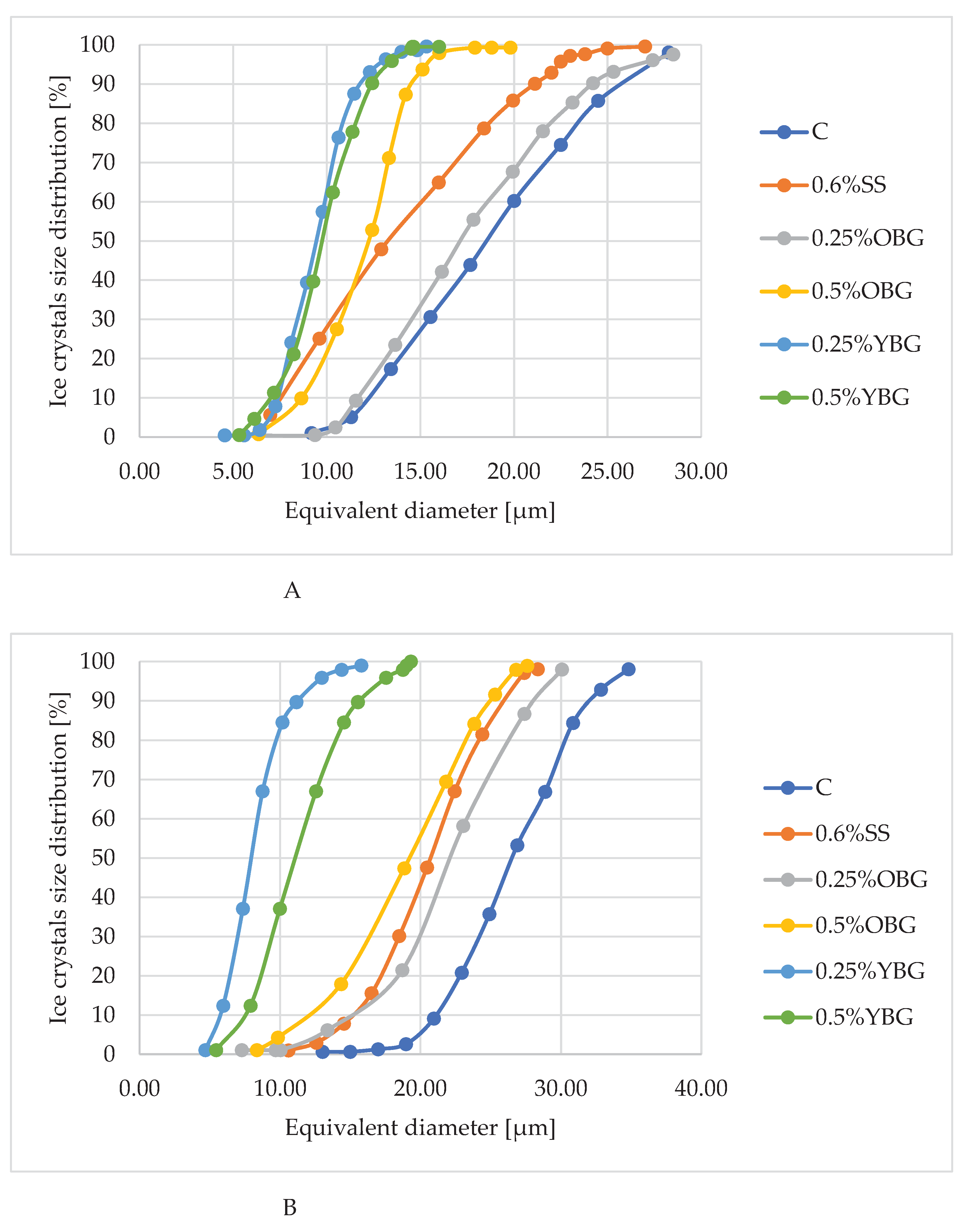
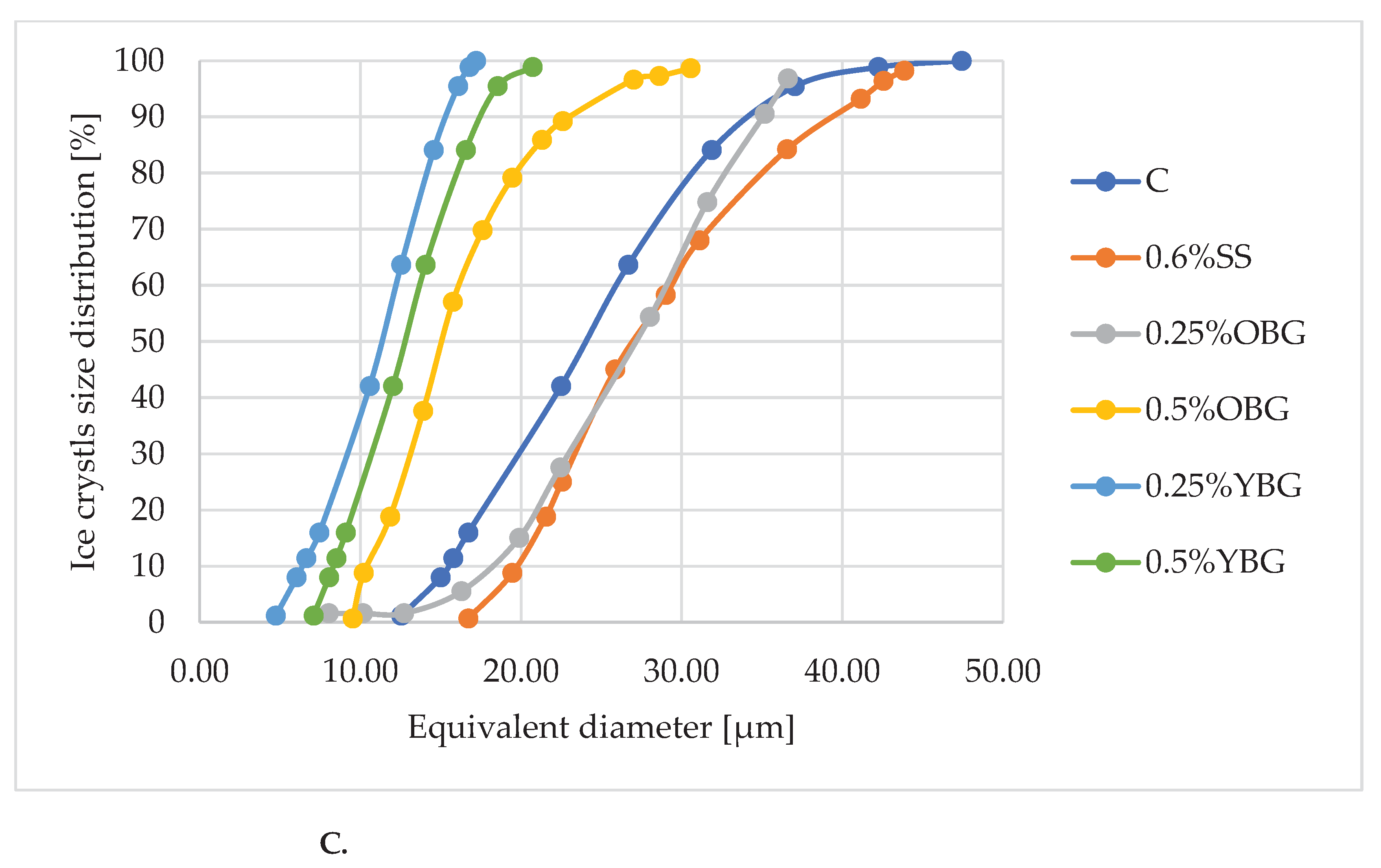
Figure 2.
Photographs of ice crystals in whey ice cream samples after different storage periods (24 h (A, D, G, J, M, P), 1 W (B, E, H, K, N, Q), 1 M (C, F, I, L, O, R): (A-C) control ice cream sample without stabilizing ingredients; (D-F) control ice cream sample containing 0.6% of the Cremodan SI 320 stabilizing system; (G-I) ice cream sample containing 0.25% of β-glucan from oats; (J-L) ice cream sample containing 0.5% β-glucan from oats; (M-O) ice cream sample containing 0.25% β-glucan from yeast; (P-R) ice cream sample containing 0.5% β-glucan from yeast.
Figure 2.
Photographs of ice crystals in whey ice cream samples after different storage periods (24 h (A, D, G, J, M, P), 1 W (B, E, H, K, N, Q), 1 M (C, F, I, L, O, R): (A-C) control ice cream sample without stabilizing ingredients; (D-F) control ice cream sample containing 0.6% of the Cremodan SI 320 stabilizing system; (G-I) ice cream sample containing 0.25% of β-glucan from oats; (J-L) ice cream sample containing 0.5% β-glucan from oats; (M-O) ice cream sample containing 0.25% β-glucan from yeast; (P-R) ice cream sample containing 0.5% β-glucan from yeast.
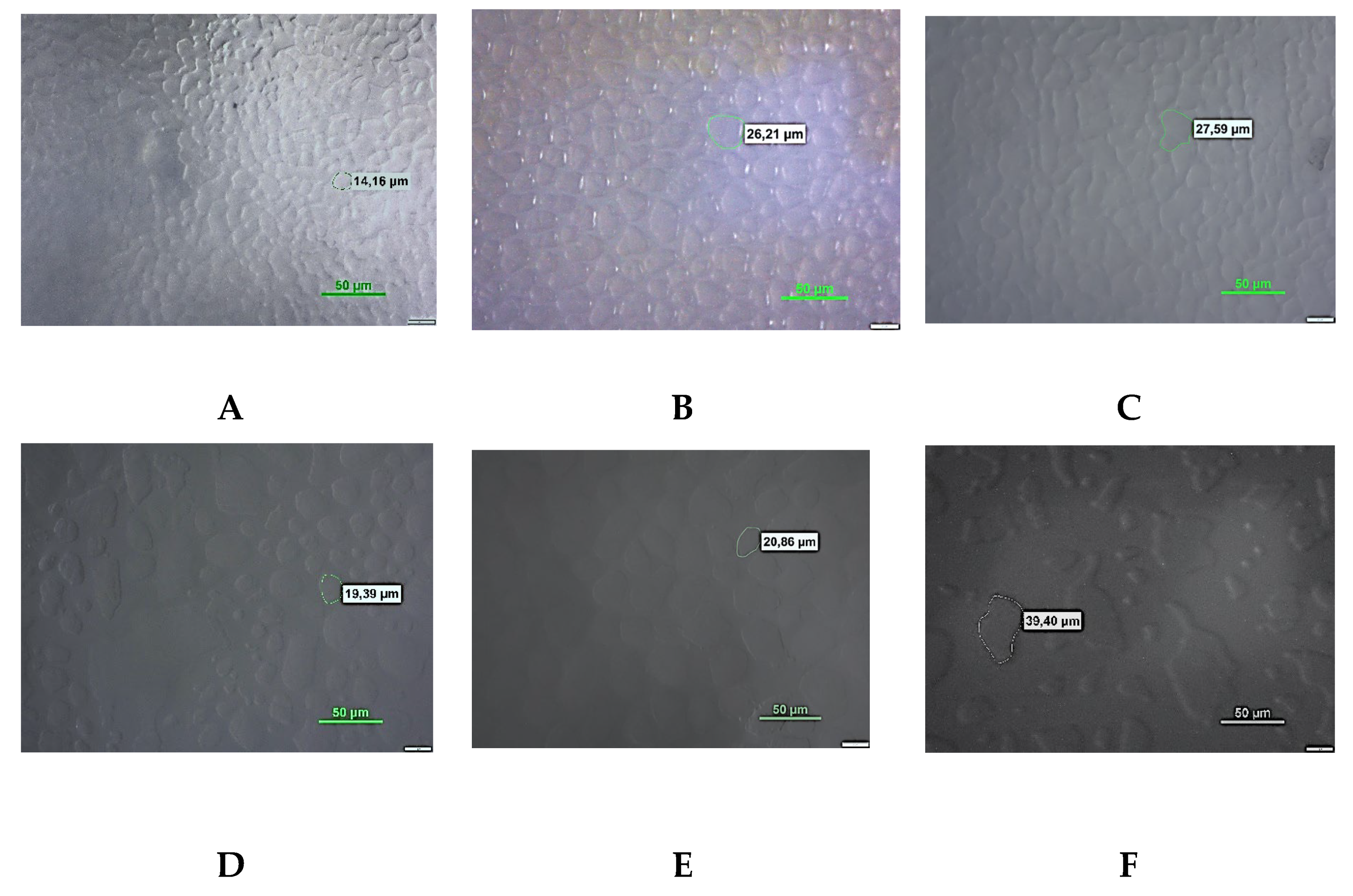
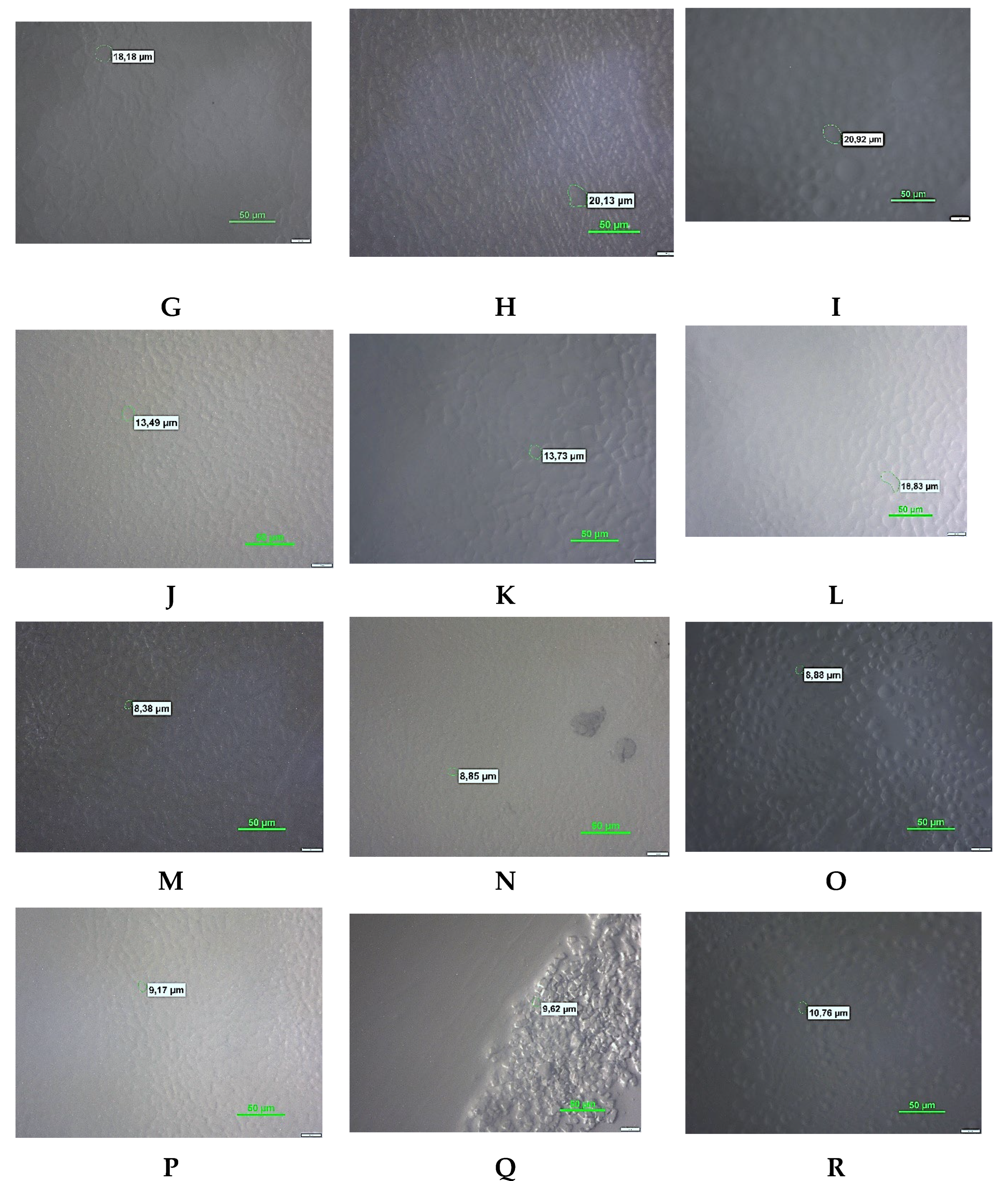
Table 1.
Formulations of the experimental samples of whey ice cream.
| Ingredients, % | Labeling of ice cream samples | |||||
| C | 0.6%SS | 0.25%OBG | 0.5%OBG | 0.25%YBG | 0.5%YBG | |
| Liquid hydrolyzed concentrate of demineralized whey | 75.0 | 75.0 | 75.0 | 75.0 | 75.0 | 75.0 |
| White sugar | 9.0 | 9.0 | 9.0 | 9.0 | 9.0 | 9.0 |
| Whey protein isolate | 3.0 | 3.0 | 3.0 | 3.0 | 3.0 | 3.0 |
| Stabilization system | – | 0.6 | – | – | – | – |
| β-glucan from oats | – | – | 0.25 | 0.5 | – | – |
| β-glucan from yeast | – | – | – | – | 0.25 | 0.5 |
| Activated starter | 3.0 | 3.0 | 3.0 | 3.0 | 3.0 | 3.0 |
| Vanillin | 0.1 | 0.1 | 0.1 | 0.1 | 0.1 | 0.1 |
| Water | 9.9 | 9.3 | 9.65 | 9.4 | 9.65 | 9.4 |
| Total | 100.0 | 100.0 | 100.0 | 100.0 | 100.0 | 100.0 |
Note: C - control sample of ice cream without stabilizing ingredients; 0.6%SS - control sample of ice cream containing an additional 0.6% of stabilizing system Cremodan SI 320; 0.25%OBG - sample of ice cream containing 0.25% of β-glucan from oats; 0.5%OBG - ice cream sample containing 0.5% β-glucan from oats; 0.25%YBG - ice cream sample containing 0.25% β-glucan from yeast; 0.5%YBG - ice cream sample containing 0.5% β-glucan from yeast.
Table 2.
Chemical composition of ice cream.
| Sample | Solids, % | Protein, % | Fat, % | Сarbohydrates, % | Lactose, % | Monosaccharides, % |
|---|---|---|---|---|---|---|
| C | 42.05a±0.91 | 6.05a±0.05 | 0.32a±0.01 | 33.08a±0.95 | 0.73a±0.05 | 32,35a±0.09 |
| 0.6%SS | 42.61a±1.02 | 6.01a±0.02 | 0.73e±0.02 | 33.05a±1.24 | 0.75a±0.02 | 32,30a±0.11 |
| 0.25%OBG | 42.28a±0.67 | 6.09a±0.06 | 0.37c±0.01 | 33.11a±1.00 | 0.72a±0.05 | 32,39a±0.05 |
| 0.5%OBG | 42.50a±0.95 | 6.03a±0.01 | 0.40d±0.02 | 33.12a±0.98 | 0.75a±0.03 | 32,37a±0.32 |
| 0.25%YBG | 42.33a±1.12 | 5.98a±0.05 | 0.35b±0.01 | 33.14a±1.05 | 0.78b±0.01 | 32,36a±0.10 |
| 0.5%YBG | 42.24a±1.04 | 6.01a±0.03 | 0.39d±0.01 | 33.09a±1.32 | 0.76a±0.06 | 32,33a±0.13 |
Note: C - control sample of ice cream without stabilizing ingredients; 0.6%SS - control sample of ice cream containing an additional 0.6% of stabilizing system Cremodan SI 320; 0.25%OBG - sample of ice cream containing 0.25% of β-glucan from oats; 0.5%OBG - ice cream sample containing 0.5% β-glucan from oats; 0.25%YBG - ice cream sample containing 0.25% β-glucan from yeast; 0.5%YBG - ice cream sample containing 0.5% β-glucan from yeast. a–e—mean values denoted in columns by different letters differ statistically significantly at p ≤ 0.05.
Table 3.
Physicochemical characteristics of mixes and ice cream.
| Sample | Freezing point, °C | Overrun, % | Resistance to melting, min | ||
| 24h | 1T | 1M | |||
| C | –4.222b ± 0.14 | 69.08a±2.55 | 24.01ab±1.15 | 24.32a±0.64 | 24.58a±0.23 |
| 0.6%SS | –4.688b ± 0.03 | 75.25b±1.82 | 25.42b±0.57 | 26.12b±0.44 | 27.03b±0.80 |
| 0.25%OBG | –5.108c ± 0.25 | 81.52d±3.24 | 27.95c±0.46 | 28.53c±0.97 | 29.96c±1.09 |
| 0.5%OBG | –6.040d ± 0.18 | 83.12d±2.61 | 29.12d±0.84 | 29.87c±0.65 | 31.05d±1.37 |
| 0.25%YBG | –3.888a ± 0.07 | 77.39b±2.48 | 24.26a±0.53 | 24.58a±0.38 | 25.61a±0.94 |
| 0.5%YBG | –3.846a ± 0.02a | 76.74b±2.04 | 25.81ab±1.20 | 26.07b±0.31 | 26.50b±0.72 |
Note: C - control sample of ice cream without stabilizing ingredients; 0.6%SS - control sample of ice cream containing an additional 0.6% of stabilizing system Cremodan SI 320; 0.25%OBG - sample of ice cream containing 0.25% of β-glucan from oats; 0.5%OBG - ice cream sample containing 0.5% β-glucan from oats; 0.25%YBG - ice cream sample containing 0.25% β-glucan from yeast; 0.5%YBG - ice cream sample containing 0.5% β-glucan from yeast. 24h - 24 hours of ice cream storage, 1W - 1 week of ice cream storage, 1M - 1 month of ice cream storage. a–d—mean values denoted in columns by different letters differ statistically significantly at p ≤ 0.05.
Disclaimer/Publisher’s Note: The statements, opinions and data contained in all publications are solely those of the individual author(s) and contributor(s) and not of MDPI and/or the editor(s). MDPI and/or the editor(s) disclaim responsibility for any injury to people or property resulting from any ideas, methods, instructions or products referred to in the content. |
© 2025 by the authors. Licensee MDPI, Basel, Switzerland. This article is an open access article distributed under the terms and conditions of the Creative Commons Attribution (CC BY) license (http://creativecommons.org/licenses/by/4.0/).
Copyright: This open access article is published under a Creative Commons CC BY 4.0 license, which permit the free download, distribution, and reuse, provided that the author and preprint are cited in any reuse.


