
Submitted:
27 May 2025
Posted:
28 May 2025
You are already at the latest version
Abstract
Background: Blue Zones (BZs), such as Ikaria and Sardinia, are known for exceptional longevity and a high prevalence of centenarians. While genetics, lifestyle, and diet contribute, variations in lifespan within BZs suggest additional environmental factors. This study explores the role of natural background radiation and the dietary intake of radiation-stressed plants, which are enriched in bioactive secondary metabolites. These compounds are hypothesized to support healthy aging and serve as molecular templates for antisenolytic drug development targeting senescent cells and age-related diseases. Methods: We examined regional variations in natural radiation exposure in Ikaria and Sardinia and their correlation with longevity. Particular focus was given to radiation-induced stress in plants, which stimulates the production of secondary metabolites with antioxidant, anti-inflammatory, and radioprotective properties. Using the AQVN/EIIP electronic descriptor model, we assessed the molecular characteristics of key metabolites for their potential anti-aging effects and protection against radiation-induced damage. Results: Our results reveal a positive association between elevated natural radiation and increased survival rates in specific BZ populations. Radiation-stressed plants exhibited increased synthesis of metabolites with features consistent with known senescence modulators. Additionally, the accumulation of manganese (Mn) in these plants—and its proposed role in activating the anti-aging protein klotho—suggests a nutritional link to extended lifespan. Conclusions: This study highlights how natural radiation and hormetic plant responses may contribute to longevity in BZs. Radiation-stressed plant metabolites may offer both dietary and therapeutic potential for promoting healthy aging and inspire future anti-senolytic strategies.
Keywords:
Plant metabolites
; Aging
; hormesis
; longevity
; blue Zones
1. Introduction
The Western world is undergoing a notable demographic change as its population continues to age. The United Nations estimates that the global population of individuals aged 60 and older will more than double by 2050, reaching 2.1 billion [1]. As this aging trend accelerates, there is a growing emphasis on promoting healthy aging, which entails preserving both physical and mental well-being and productivity as people grow older.
In recent years, a key area of focus has been the investigation of factors that contribute to healthy aging, particularly in regions known as Blue Zones. The concept of "Blue Zones" (BZ) refers to five geographic regions around the world where people live significantly longer than the global average, often surpassing 90 or even 100 years of age [2]. These regions—Okinawa in Japan, Sardinia in Italy, Nicoya in Costa Rica, Icaria in Greece, and Loma Linda in California—have been the subject of intense research by demographers, scientists, and health experts seeking to understand the factors that contribute to the remarkable longevity of their inhabitants. The term BZ was coined by author and researcher Dan Buettner, who, along with National Geographic and other scientific partners, identified these regions during a study aimed at discovering the lifestyle and environmental factors that promote long, healthy lives [2]. One of the most fascinating findings is that despite the diverse cultures, geographies, and diets of these regions, they share some common characteristics that appear to enhance longevity. Since the life conditions on BZ islands are rather harsh, many must have left these island and few newcomers arrived to dilute the natives, such that the phenomenon of longevity could be observed. Thus, the selection of genetic and/or epigenetic variants cannot be excluded.
In the case of Ikaria and Sardinia, two well-known BZ, researchers have uncovered a paradox. Although these islands are celebrated for their high incidence of centenarians, not all parts of the islands exhibit the same exceptional longevity. This phenomenon has raised questions about the underlying causes of these differences. In Ikaria, certain parts of the island report significantly higher numbers of nonagenarians and centenarians compared to others parts, despite of a probably similar genetic background, comparable diets and ways of life [3,4]. Similarly, in Sardinia, for instance, longevity is concentrated in the mountainous central part of the island, while other areas show more typical life expectancy despite similar lifestyles and genetic backgrounds [5].
This paradox—where two groups within the same geographic region display vastly different lifespans despite sharing environmental, cultural, and genetic factors—points to additional, yet unidentified variables influencing longevity. One factor we explore here is natural radiation exposure [3,4]. For instance, parts of Ikaria are known to have different levels of environmental radiation, which has been linked to stimulating certain biological responses in people or in their food that could potentially influence longevity. Again, the region in Sardinia where longevity is highest is also hotspot for environmental radiation [6].
Our investigation aims to explore these discrepancies by identifying factors that could explain why some groups within these islands achieve exceptional longevity while others do not. This could be due to direct hormesis effects on humans or on their live food (e.g., locally growing plants that are locally consumed) which adapted to radiation by the synthesis of radiation-protective secondary metabolites. We chose to examine the impact of environmental factors, such as radiation exposure, and the role of plants growing in radiation-stressed environments, which may boost their nutritional and protective properties. Additionally, we shall seek for molecular mechanisms influenced by these environmental and nutritional factors that may contribute to the extraordinary longevity observed in the populations of Ikaria and Sardinia.
By integrating these insights, we hope to shed light on this paradox and contribute to a deeper understanding of longevity, particularly in the context of BZ like Ikaria and Sardinia. Our analysis may provide valuable lessons for extending human healthy lifespans, not only in these regions but also in populations around the world. Understanding these dynamics may help identify key factors that can be adapted or emulated in other settings, offering broader implications for aging research and public health initiatives focused on healthy longevity.
Here, with the knowledge of SOS response in bacteria (ref MR) and of existence of small chemical anti-oxidant chaperones protecting proteins from oxidation damage and accounting for extreme radiation resistance of some bacterial species, we focus on identification of health-protective hormetic metabolites from radiation-stressed plants.
2. Materials and Methods
2.1. AQVN/EIIP Concept
Intermolecular interactions in biological systems typically follow tree primary stages: (i) specific long-range interactions among the molecules, (ii) fitting the specific interactions to form particular complexes with specific cellular functions, or eventually (iii) the formation of chemical bonds between those molecules. Initially, long-range forces, effective over distances exceeding 1000 Ǻ, guide the interactions between molecules, enhancing the likelihood of productive encounters [7]. These forces affect the frequency of productive collisions between molecules before a complex or chemical bond forms. The molecular regions involved in the reaction must be positioned close enough—around 2 Ǻ apart—and the relevant atoms must be correctly oriented for the reaction to proceed. This is crucial because the molecular recognition and binding process involves weak non-covalent forces like van der Waals interactions, hydrogen bonds, and ionic forces. As a result, stereochemical complementarity is necessary for this second step.
It has been proposed that valence electron count and electron-ion interaction potential (EIIP), which reflect a fundamental energy aspect of valence electrons, are key parameter impacting long-range interactions in biological molecules [8]. A simplified equation, derived from the "general model pseudopotential," allows the calculation of EIIP values for organic molecules [9,10]:
where Z∗ denotes the average quasivalence number (AQVN), calculated as:
W=0.25Z⋅sin(1.04πZ∗)/2π
Z* = Σm niZi/N
Here, Zi is the valence number of the i-th atomic component, ni the number of atoms of that component, m the number of atomic types in the molecule, and N the total atom count. The EIIP values, derived from these formulas, are expressed in Rydbergs (Ry).
We previously showed that 90.5% of 4,5010,644 compounds randomly selected from the PubChem database (http://pubchem.ncbi.nlm.nih.gov) display EIIP and AQVN values within (0.00 – 0.10 Ry) and (2.4 – 3.2) ranges, respectively [11]. This domain of the EIIP/AQVN space, encompassing the majority of known chemical compounds, was referred as the “basic chemical space” (BCS) [11]. The domains to the left of BCS (n+) and to the right of BCS (n-) encompass 4.3% and 5.3% of analyzed compounds from PubChem, respectively. Compounds located within the domain n+ have electron-donor properties and compounds in the domain n- are electron-acceptors [11].
2.2. Informational Spectrum Method (ISM)
The Informational Spectrum Method (ISM) employs a model based on the primary structure of proteins by assigning EIIP values to each amino acid (see Table 1) [11]. This numerical sequence, representing a protein's primary structure, undergoes discrete Fourier transformation:
where x(m)x(m)x(m) is the m-th element of the sequence, NNN the total sequence length, and X(n) the Fourier transformation coefficients. These coefficients encompass the signal's amplitude, phase, and frequency, with the complete information retained through the amplitude and phase spectra. For protein analysis, the energy density spectrum is particularly relevant [11], expressed as:
X(n) = x(m)e-j(2/N)nm, n = 1, 2, ..., N/
S(n) = X(n)X*(n) = |X(n)|2, n = 1, 2, ..., N/2
Points in this sequence are equidistant with a spacing of d=1. The spectrum’s highest frequency is F=0.5, independent of sequence length, but resolution varies inversely with sequence length, being 1/N. Thus, the n-th point of the spectral function corresponds to frequency f(n) = nf = n/N, allowing the original amino acid sequence to be transformed into an informational spectrum (IS) of frequencies and their amplitudes.
The IS frequencies reveal structural motifs with specific physicochemical characteristics vital to a protein's biological role. For proteins with similar biological or biochemical functions, the ISM identifies specific code/frequency pairs associated with their functional or interactive properties. Cross-spectrum or consensus informational spectrum (CIS) analysis highlights shared informational traits among sequences, using:
where S(i,j) denotes the j-th element of the i-th power spectrum, and C(j) the j-th element of the CIS. Peak frequencies in the CIS point to common features across analyzed sequences, with a signal-to-noise (S/N) ratio indicating the prominence of each peak. When distinct peak frequencies in a CIS calculated from proteins with varying primary structures emerge, this suggests shared functional or interactive properties.
C(j) = ∏S(i,j)
3. Results
3.1. Environmental Radiation
3.1.1. Ikaria
The study on environmental radiation and longevity in Ikaria provides intriguing insights into the potential impact of natural radiation on human lifespan [3,4]. Ikaria, an island in the eastern Aegean Sea, is divided into two main geological regions: the eastern part, consisting largely of metamorphosed sedimentary formations with low natural radioactivity, and the western part, dominated by granite formations with medium to high levels of radioactivity. Measurements of surface natural radioactivity identified three distinct areas of radiation exposure on the island, with annual dose equivalents ranging from 0.20 to 3.31 mSv per year. The western and west-north parts of the island have medium to high levels of gamma radiation, primarily due to radium-226. In this area of island the indoor radon concentrations are as high as 583 Bq/m³ [5]. The eastern part has significantly lower radiation levels [4].
Key findings from demographic data collected by the National Statistical Service of Greece (NSSG) reveal significant differences in longevity based on these geographic distinctions [3,4]. Areas with higher environmental radiation showed significantly better survival rates and a higher percentage of elderly people aged 90 and above, especially in men. The survival rates were almost 88% higher for men and 4% higher for women in the high-radiation areas compared to the low-radiation regions [3,4]. Participants from high-radiation areas had similar clinical and lifestyle characteristics to those from low-radiation areas [3,4].
3.1.2. Sardinia
In Sardinia, the population is geographically divided into two groups based on longevity, despite minimal differences in commonly monitored markers [6]. These groups are located in distinct areas of the island: the BZ in the mountainous inner region, where male longevity is particularly pronounced, and the rest of the island, where longevity levels are similar to those in other parts of Italy. The BZ, comprising 192 municipalities, shows an Extreme Longevity Index (ELI) of 21.8 per ten thousand, while the remaining 185 municipalities have an ELI of 10.3 per ten thousand.
While nutritional variables showed no significant differences between the two groups, overall caloric intake and nutritional quality were similar across Sardinia. This indicates that dietary factors were not the primary drivers of the observed differences in longevity.
The authors of the study pointed out physical activity as a possible factor responsible for the variation in longevity between these two populations [6]. The long-lived population is pastoral, with shepherds as the primary occupation, while the rest of the island is more agricultural. Shepherds, who engage in continuous, moderate physical activity, typically live in more rugged terrains, with an average slope of 15.2% compared to 11.5% in other areas. This physical activity, which includes walking long distances on steep paths, is associated with increased energy expenditure and better cardiovascular fitness, contributing to longer lifespan. However, it is important to note that there is no evidence that pastoral populations living in rugged terrains in other European countries or worldwide have an extended lifespan, despite the increased physical activity.
The search for a key factor influencing the variation in longevity among Sardinian populations continues, as physical activity alone does not fully account for the observed differences. The region of Sardinia with a long-lived population overlaps with the part of the island with the highest levels of radon [13]. Nuoro and Ogliastra are the provinces in Sardinia that are widely affected by the problem of indoor radon [14]. The radon situation in Nuoro, the capital of this province, was studied through measurements in schoolrooms [15]. The highest recorded radon concentration in this study was 952.8 Bq/m³. This level exceeds both the European Commission's recommended reference level of 300 Bq/m³ for indoor spaces (Directive 2013/59/Euratom) and of Italy's highest acceptable radon concentration of 500 Bq/m³ in workplaces (Legislative Decree 241/2000). The concentration observed is almost double the Italian workplace limit. This high radon level was linked to the geological composition of the area, particularly the presence of granite and tonalithic granodiorite. Of note is that Nuoro and Ogliastra provincials are the core of the Sardinian BZ. This suggests that, similar to Ikaria, radiation could be an important factor contributing to the longevity of populations living in areas with increased natural radiation.
On the other hand, natural radiation, particularly exposure to radon gas, is recognized as a primary risk factor for lung cancer. Radon, a radioactive gas naturally emitted from the decay of uranium in soil, rocks, and water, can accumulate in indoor environments such as homes and workplaces, especially in regions with high geological radon levels. Long-term exposure to radon and its decay products can lead to lung cancer, with the risk being especially high for smokers.
The implication of connection between radiation and longevity, particularly in BZ like Ikaria and Sardinia, must be approached with nuance, given the established risks of radiation, such as radon exposure. According to the World Health Organization (WHO), radon is the second leading cause of lung cancer globally, accounting for up to 14% of cases. The WHO recommends that radon levels in homes should remain below 100 Bq/m³ to minimize health risks, and elevated levels should prompt remediation. Therefore, regions with naturally high radon levels face a higher risk of lung cancer and other radiation-related diseases.
This evidence underscores a key point: natural radiation alone cannot fully explain the extended lifespan of populations in BZ. Harmful effects of high radiation levels, such as increased cancer risks, are well documented. However, the longevity observed in Ikaria and Sardinia suggests that moderate levels of natural radiation may act in a synergistic manner with other health-promoting factors to contribute to longer lifespan.
3.2. Nutrition
Among the features of BZ inhabitants, described in the literature, their eating habits hold a prominent place. Each BZ has a distinct food culture shaped by local history, geography, and resources. Ikarians eat a variation of the Mediterranean diet, with lots of fruits and vegetables, whole grains, beans, potatoes, and olive oil [16,17]. Nutrition habits of Sardinians also are similar to the Mediterranean diet, meaning it is rich in whole grains, fruit and vegetables, and legumes. Healthy fats like olive oil take preference over saturated fats like butter and meat is consumed only in moderation [18].
The Mediterranean diet, rich in minimally processed plant foods, is apparently linked to a reduced risk of chronic diseases and increased life expectancy [19]. Clinical trials show that its benefits in the prevention of cardiovascular disease, type 2 diabetes, atrial fibrillation, and breast cancer. The diet's positive effects likely result from five key adaptations: (a) lowering lipid levels, (b) protecting against oxidative stress, inflammation, and platelet aggregation, (c) modifying hormones and growth factors linked to cancer, (d) inhibiting nutrient-sensing pathways through amino acid restriction, and (e) promoting gut microbiota to produce health-boosting metabolites [19].
While the Mediterranean diet is renowned for its health benefits and is widely followed in Mediterranean countries, it does not appear to be a key factor in the extreme longevity observed in Blue Zones (BZ). Although this diet is linked to reduced risks of chronic diseases, such as cardiovascular disease, cancer and diabetes, and supports overall well-being, data suggest that it cannot fully explain the extended lifespans seen in BZ populations. This highlights the possibility that other factors may play a more significant role in promoting longevity in BZ regions.
The diet of populations in BZ like Ikaria and Sardinia is predominantly plant-based, relying almost exclusively on vegetables and fruits that are grown locally within the BZ regions. What sets these plants apart from those cultivated outside of BZ is their exposure to environmental stress, particularly radiation stress. This environmental challenge triggers a unique response in the plants: the synthesis of secondary metabolites. These compounds are part of the plants’ natural defense mechanisms against radiation thus contributing to plants resilience.
Secondary metabolites, which include carotenoids, polyphenols, flavonoids, and terpenes, are known for their potent antioxidant, anti-inflammatory, and protective properties [20]. When consumed as part of the local diet, these stressed plants potentially confer greater health benefits to the people living in BZs. The abundance of these bioactive compounds may contribute not only to the prevention of age-related diseases and extraordinary longevity.
This dietary pattern, centered on locally grown, radiation-stressed plants, suggests that this unique environmental conditions and the resulting plant biochemistry in BZs could be a factor in promoting the remarkable lifespan of their inhabitants, eventually complementing some other lifestyle and genetic factors characteristic of these regions.
3.3. Plants Secondary Metabolites and Their Impact on Health and Longevity
To select secondary metabolites that are essential for protection against natural radiation in Blue Zones (BZs), we analyzed phytochemicals proven to be radioprotective. In Ref. [21], 41 phytochemicals with radiation protective properties were reviewed, of which 19 are secondary metabolites (Table 1). We compared the electronic properties, represented by parameters AQVN and EIIP, of the compounds in Table 1 with 2,853 plant secondary metabolites from the PSC database [22] (Supplementary Table S1). The results in Figure 1 show that 63% of the compounds from Table 2 function as electron acceptors or electron donors, compared to only 37% of the secondary metabolites from the PSC database with similar properties. This suggests that these plant metabolites that are radiation protective could not only mitigate the harmful effects of radiation by scavenging free radicals but also repair molecular oxido-reductive defects caused by radiation in biological macromolecules. This aligns with the concept of electronic biology proposed by Albert Szent-Györgyi, where electron donors and acceptors play a key role in correcting oxido-reductive damage by adding or removing electrons from the conductive bands of biological macromolecules, thereby restoring their function and stability [23]. Their molecular features and redox-modulating capacity suggest a pharmacophore potential, making them attractive scaffolds for the design of next-generation anti-aging and antisenolytic drugs.
From a pharmacological perspective, these compounds may serve as leads for drug development aimed at modulating cellular stress responses, DNA repair, or epigenetic regulation. Their ability to mimic or enhance endogenous protective mechanisms positions them as valuable candidates for therapeutic applications targeting age-related diseases and senescent cell clearance.
Alterations in DNA methylation patterns play a key role in epigenetic aging by affecting gene expression without changing the DNA sequence. As we age, DNA methylation patterns change: there is a progressive loss of methylation sites in DNA creating a noise in gene expression, but the correlation with biological aging is due to the gain of methylation (gene silencing) at particular sites in the genome [24]. Silencing of genes involved in cell repair should promote aging.
In long-lived people from Blue Zones, it's possible that their DNA methylation patterns remain more stable or favor gene expression that supports longevity. This could help maintain healthier aging processes compared to others. To further understand the longevity observed in Blue Zones, it is essential to investigate the possible role of secondary metabolites found in the local diets. These bioactive compounds, such as polyphenols and flavonoids, commonly present in plant-based foods, may play a crucial role in modulating DNA methylation by protecting DNA methylation/demethylation proteins from oxidation. Secondary metabolites have been shown to exhibit antioxidant, anti-inflammatory, and epigenetic regulatory effects, potentially influencing the methylation patterns that control gene expression. By maintaining proper methylation balance, these compounds could help suppress harmful methylation changes associated with aging, thereby promoting healthier aging and longevity. Studying the interaction between these dietary components and DNA methylation in Blue Zone populations could offer valuable insights into natural strategies for controlling the aging process and preventing age-related diseases.
DNA methyltransferases (DNMTs) play a key role in epigenetic aging by regulating DNA methylation, a critical process for controlling gene expression. DNMT1 is responsible for maintaining existing methylation patterns after DNA replication, ensuring the preservation of established gene expression profiles. DNMT3 enzymes, on the other hand, facilitate de novo methylation, establishing new methylation marks on unmethylated DNA. This dynamic control by DNMTs can influence age-related changes in gene expression, with alterations in their activity contributing to the aging process through aberrant methylation patterns [24].
The ISM analysis revealed that the primary structures of proteins interacting with quercetin—a predominant secondary metabolite in plants exposed to radiation—encode information corresponding to the IS frequency F(0.289) [25]. Cross-spectral analysis between quercetin methyltransferases and human DNA methyltransferases (DNMTs) showed a strong peak at frequency F(0.289) for DNMT3A, indicating a high probability of interaction. DNMT1A also exhibited a peak, though of lower intensity, suggesting weaker binding affinity, while DNMT3B showed minimal spectral overlap, indicating a low likelihood of interaction (Figure 2). These findings suggest that quercetin may act as a selective modulator of epigenetic aging, primarily through its interaction with DNMT3A, and to a lesser extent with DNMT1A, highlighting its potential role in influencing age-related epigenetic regulation.
Environmental radiation leads to an overproduction of reactive oxygen species (ROS) in plants, which can damage proteins, membrane lipids, carbohydrates, and DNA. Manganese (Mn) accumulation helps plants boost their tolerance to this stress by inducing Mn superoxide dismutase at the transcriptional level to combat ROS and activating Mn-dependent proteins to preserve cellular integrity [26]. Additionally, a positive correlation has been observed between serum Mn levels and serum protein klotho, a well-known anti-aging marker [27]. This suggests that consuming plants rich in Mn, grown in areas with environmental radiation, may contribute to the longevity of people living in BZs like Ikaria and Sardinia.
4. Discussion
This paper underscores the importance of naturally evolved mechanisms of biological robustness activated or induced by stress such as radiation. The discovery in bacteria of cellular SOS response to stress became a paradigm that encompasses also the hormesis, which is the induction of high radiation-resistance and chrono-resistance (longevity) by exposure to mild stress.
Plants excel in evolution of intricate SOS response-like mechanisms to draught (dehydration), UV light and parasite attacks because they cannot run away from danger – the only option is to resist. When the stress is frequent or continuous (such as natural radiation) then hormesis becomes continuous, i.e., constitutive. For example, bacteria such as Deinococcus radiodurans and Arthrobacter agilis, and small invertebrate animals such as Bdelloid rotifers (refs) are constitutively extremely radiation resistant by virtue of producing high levels of small antioxidant chemical chaperones (SAOCC) extremely efficient in protecting proteins against oxidative damage. Since oxidative protein damage appears as the root cause of aging-like phenotypes and of cell death (K&R, 2010; 2013; 2019), it was shown that SAOCC account for extreme biological robustness. SAOCC-like molecules from radiation-stressed plants might be the elusive “longevity molecules” that make healthy centenarians, and also the Holy Grail of healthy longevity for the entire human population? This paper sets the stage for a research project of identification and testing of radiation-induced secondary metabolites (SAOCC-like chemicals) in vegetables that are typical human food in Blue Zones
Limitations
While this study leverages data from peer-reviewed sources available in PubMed to explore the potential links between natural radiation, plant metabolites, and longevity in Blue Zones (BZs), it is essential to acknowledge certain limitations inherent in longevity research. First, questions have been raised regarding the accuracy of age records in BZs, as the verification of centenarian status may be challenged by inconsistent or incomplete historical documentation, particularly in remote areas. Although our study relies on validated demographic data from previous studies, potential discrepancies in age reporting remain a consideration that could affect the interpretation of longevity patterns in these regions. Additionally, while lifestyle, environmental, and genetic factors are considered collectively, the observational nature of Blue Zone research does not allow for controlled experimentation, limiting causal inference. Future studies would benefit from more comprehensive, longitudinal data collection, including rigorous validation of age records and systematic analysis of environmental exposures, to provide further clarity on the relationship between BZ environmental factors and human longevity.
5. Conclusions
The findings of this study provide a new perspective on the potential role of natural radiation and plant-based diets in promoting longevity, particularly in BZ like Ikaria and Sardinia. The evidence suggests that environmental radiation, while traditionally viewed as a risk factor for health, may act as a hormetic stressor that triggers protective biological responses in both plants and humans. In particular, the consumption of plants rich in radioprotective secondary metabolites may help mitigate the harmful effects of radiation and support healthy aging.
However, while these findings are intriguing, further research is needed to fully understand the molecular mechanisms underlying the observed link between natural radiation, plant metabolites, and longevity. Future studies should focus on elucidating the specific pathways through which radiation-stressed plants and their bioactive compounds influence human health, as well as exploring the potential for dietary interventions based on these findings to promote healthy aging in other populations. Moreover, the identification of specific bioactive compounds from radiation-stressed plants opens new avenues for pharmacological innovation. These naturally occurring molecules could serve as templates for developing antisenolytic drugs designed to selectively target and eliminate senescent cells or rejuvenate tissue function.
In conclusion, the unique environmental and dietary conditions in BZ offer valuable insights into the factors that contribute to exceptional longevity. By integrating knowledge of environmental radiation, plant biochemistry, and human health, we can develop new strategies for promoting healthy aging and extending lifespan in populations around the world.
Supplementary Materials
The following supporting information can be downloaded at the website of this paper posted on Preprints.org. Table S1: Plant secondary metabolites.
Author Contributions
V.V.: conceptualization, methodology, writing-review and editing; M.V.: validation, formal analysis, data curation, writing-original draft preparation. All authors have read and agreed to the published version of the manuscript.
Funding
This research received no external funding.
Data Availability Statement
The original contributions presented in this study are included in the article/supplementary material. Further inquiries can be directed to the corresponding author(s).
Conflicts of Interest
The authors declare no conflicts of interest.
References
- WHO’s work on the UN Decade of Healthy Ageing (2021-2030). Available online: https://www.who.int/initiatives/decade-of-healthy-ageing (accessed on 10 May 2025).
- Buettner, D.; Skemp, S. Blue Zones: Lessons From the World's Longest Lived; Am J Lifestyle Med. 2016, 10,318-321.
- Chrysohoou, C.; Pitsavos, C.; Lazaros, G.; Skoumas, J.; Stefanadis, C. Ikaria study. Greece. in N.A. Pachana (ed.), Encyclopedia of Geropsychology, Springer Science+Business Media Singapore. 2016.
- Chrysohoou, C.; Panagiotakos, D.B.; Pitsavos, C.; Bassiakos, Y.; Lazaros, G.; Tousoulis, D.; Stefanadis, C. Exposure to low environmental radiation and longevity. Insights from the Ikaria Study. Int J Cardiol. 2013, 169,e97-e98. [CrossRef]
- Pappas, E., Karaiskos, P., Angelopoulos, A., Apostolakis, A., Baras, P., Rozaki-Mavrouli, H., Trabidou, G. and Sakelliou, L. Indoor radiation measurements in Greece. Radiat. Prot. Dosim. 1999, 82,307–312. [CrossRef]
- Pes, G.M.; Tolu, F.; Poulain, M.; Errigo, A.; Pietrobelli, A., Battistini, N.C.; Maioli, M. Lifestyle and nutrition related to male longevity in Sardinia: An ecological study. Nutrition, Metabolism & Cardiovascular Diseases. 2013, 23,212-219. [CrossRef]
- Lechelon, M.; Meriguet, T.; Gori, M.; Ruffenach, S.; Nardecchia, I.; Floriani, E.; Coquillat, D, et al. Experimental evidence for long-distance electrodynamic intermolecular forces. Sci Adv. 2022, 8(7),eabl5855. [CrossRef]
- Veljkovic, V. A theoretical approach to preselection of carcinogens and chemical carcinogenesis. Gordon & Breach: New York, 1980.
- Veljkovic, V.; Slavic, I. Simple general-model pseudopotential. Phys. Rev. Lett. 1972, 29,105-107. [CrossRef]
- Veljkovic, V. The dependence of the Fermi energy on the atomic number. Phys. Lett. 1973, 45A,41-42.
- Veljkovic, V.; Glisic, S.; Perovic, V.; Veljkovic, V. The role of long-range intermolecular interactions in discovery of new drugs. Expert Opin Drug Discover. 2011, 6,1263-1270. [CrossRef]
- Veljkovic, V.; Cosic, I.; Dimitrijevic, B.; Lalovic, D. Is it possible to analyze DNA and protein sequence by the method of digital signal processing?, IEEE Trans. 1985, BME-32,337-341. [CrossRef]
- Bustaffa, E.; Cappai, M.; Curzio, O.; Dettori, I.; Loi, N.; Nurchis, P.; Sanna, A.; Serra, G.; Sirigu, E.; Tidore, M.; Bianchi, F. The role of risk communication in radon mapping, risk assessment and mitigation activities in Sardinia (Italy). Adv Geosci. 2022, 57,49-61. [CrossRef]
- Estrato della mappa del radon in Sardegna. Available online: https://radon360.it/mappa-del-radon-in-italia/mappa-del-radon-in-sardegna (accessed on 9 May 2025).
- Azara, A.; Dettori, M.; Castiglia, P.; Piana, A.; Durando, P.; Parodi, V.; Salis, G.; Saderi, L.; Sotgiu, G. Indoor Radon Exposure in Italian Schools. Int J Environ Res Public Health. 2018, 15,749-757. [CrossRef]
- Pes, G.M.; Dore, M.P.; Tsofliou, F.; Poulain, M. Diet and longevity in the Blue Zones: A set-and-forget issue? Maturitas https://pubmed.ncbi.nlm.nih.gov/?term=%22Maturitas%22%5Bjour%5D&sort=date&sort_order=deschttps://www.ncbi.nlm.nih.gov/nlmcatalog?term=%22Maturitas%22%5BTitle+Abbreviation%5Dhttps://pubmed.ncbi.nlm.nih.gov/35780634/2022:164:31-37.
- Pieroni, A.; Morini, G.; Piochi, M.; Sulaiman, N.; Kalle, R.; Haq, SM.; Devecchi, A.; Franceschini, C.; Zocchi, DM.; Migliavada, R, et al. Bitter Is Better: Wild Greens Used in the Blue Zone of Ikaria, Greece. Nutrients. 2023, 15,3242-3264.
- Pes, G.M.; Poulain, M.; Errigo, A.; Dore, M.P. Evolution of the Dietary Patterns across Nutrition Transition in the Sardinian Longevity Blue Zone and Association with Health Indicators in the Oldest Old. Nutrients. 2021, 13,1495-1507. [CrossRef]
- Tosti, V.; Bertozzi, B.; Fontana, L. Health Benefits of the Mediterranean Diet: Metabolic and Molecular Mechanisms. J Gerontol A Biol Sci Med Sci. 2018, 73,318-326.
- Abid, Ali, Khan, M.M. Plant Secondary Metabolites for Human Health. Discovery Publishing House Pvt Ltd. 2021.
- Jit, B.P.; Pattnaik, S.; AryaR.; Dash, R.; Sahoo, S.S.; Pradhan, B.; Bhuyan, P.P.; Behera, P.K.; Jena, M.; Sharma, A.; , Agrawala, P.K.; Behera, R.K. Phytochemicals: A potential next generation agent for radioprotection. Phytomedicine. 2022, 106,154188.
- PSC database. Available online: http://pscdb.appsbio.utalca.cl/viewSearch/index.php (accessed on 5 May 2025).
- Szent-Györgyi, A. The living state and cancer. Proc Natl Acad Sci U S A. 1977, 74,2844-2847.
- Raj, K.; Horvath, S. DNA methylation-based biomarkers and the epigenetic clock theory of ageing. Nature Rev Genetics. 2018, 19,371–384. [CrossRef]
- Veljkovic, V.; Glisic, S.; Perovic, V.; Veljkovic, N.; Nicolson, GL. Pomegranate (Punica granatum): a natural source for the development of therapeutic compositions of food supplements with anticancer activities based on electron acceptor molecular characteristics. Functional Foods Health Disease. 2016, 6,769-787.
- Ye, Y.; Medina-Velo, I.A.; Cota-Ruiz, K.; Moreno-Olivas, F.; Gardea-Torresdey, JL. Can abiotic stresses in plants be alleviated by manganese nanoparticles or compounds? Ecotox Environ Safety. 2019, 184,109671.
- Guan, G.; Cai, J.; Zheng, S.; Xiang, Y.; Xia, S.; Zhang, Y.; Shi, J.; Wang, J. Association between serum manganese and serum klotho in a 40–80-year-old American population from NHANES 2011–2016. Front. Aging. 2023, 4,1120823. [CrossRef]
Figure 1.
Distribution of plant secondary metabolites in the AQVN/EIIP space, (a) Metabolites from the PSC database, (b) Metabolites from Table 1. Metabolites with electron donor, electron acceptor, and neutral properties are labeled as n⁺, n⁻, and n⁰, respectively.
Figure 1.
Distribution of plant secondary metabolites in the AQVN/EIIP space, (a) Metabolites from the PSC database, (b) Metabolites from Table 1. Metabolites with electron donor, electron acceptor, and neutral properties are labeled as n⁺, n⁻, and n⁰, respectively.
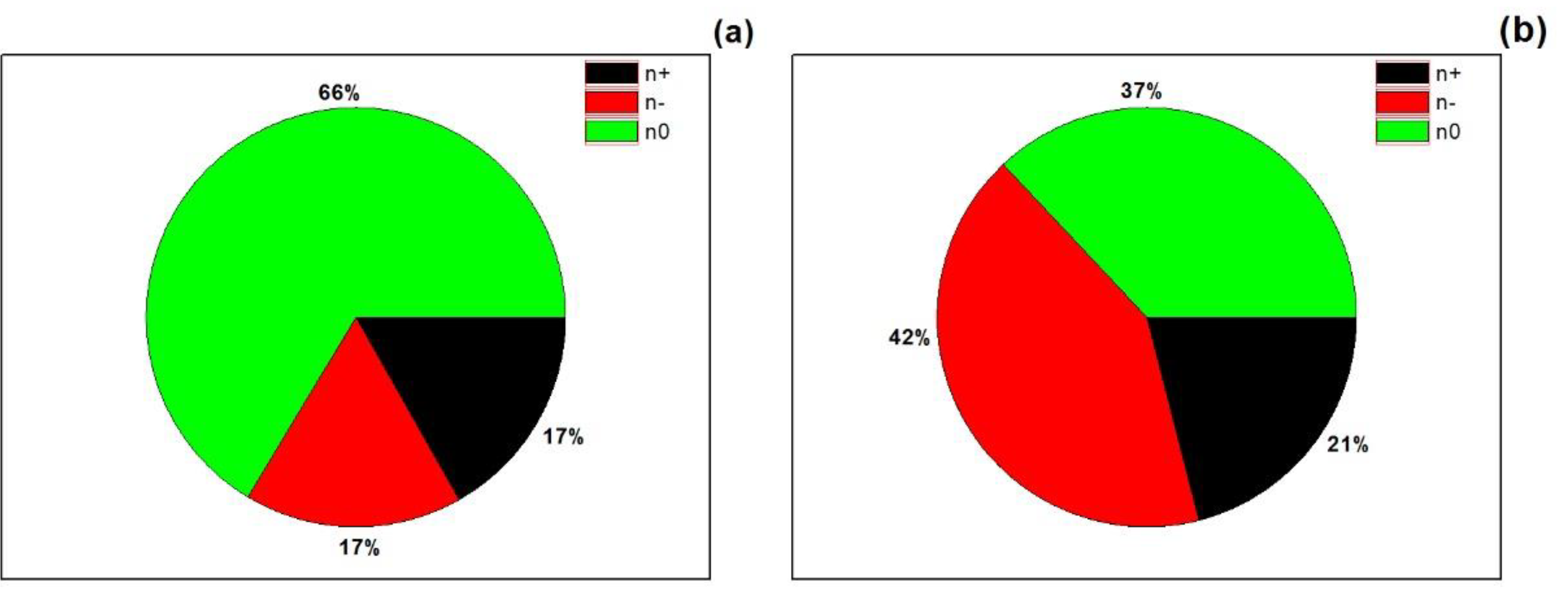
Figure 2.
Cross-spectrum between four quercetin 3-O-methyltransferases and human DNA methyltransferases: (a) DNMT3A, (b) DNMT1A and (c) DNMT3B.
Figure 2.
Cross-spectrum between four quercetin 3-O-methyltransferases and human DNA methyltransferases: (a) DNMT3A, (b) DNMT1A and (c) DNMT3B.
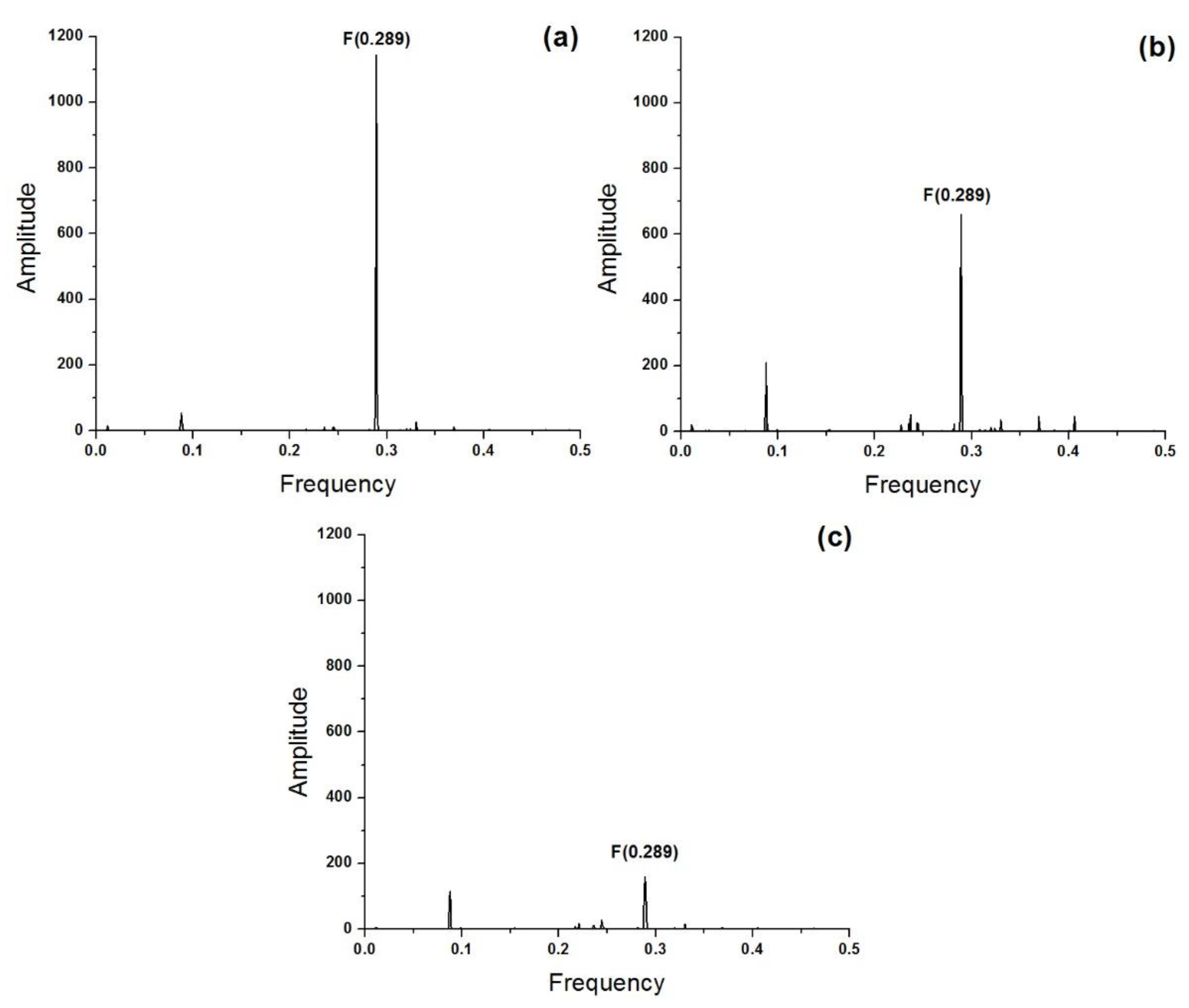

Table 1.
The electron-ion interaction potential (EIIP) used to encode amino acids.
| Amino acid | EIIP [Ry] |
|---|---|
| Leu | 0 |
| Ile | 0 |
| Asn | 0.0036 |
| Gly | 0.005 |
| Glu | 0.0057 |
| Val | 0.0058 |
| Pro | 0.0198 |
| His | 0.0242 |
| Lys | 0.0371 |
| Ala | 0.0373 |
| Tyr | 0.0516 |
| Trp | 0.0548 |
| Gln | 0.0761 |
| Met | 0.0823 |
| Ser | 0.0829 |
| Cys | 0.0829 |
| Thr | 0.0941 |
| Phe | 0.0946 |
| Arg | 0.0959 |
| Asp | 0.1263 |
Table 2.
Plant secondary metabolites with radiation protection properties [21].
Table 2.
Plant secondary metabolites with radiation protection properties [21].
| Compound | Formula | AQVN | EIIP |
|---|---|---|---|
| Apigenin 2 | C15H10O5 | 3.333 | 0.1319 |
| ß-Carotene 1 | C40H56 | 2.25 | 0.0784 |
| Curcumin 1 | C21H20O6 | 2.299 | 0.0359 |
| Eugenol 3 | C10H12O2 | 2.978 | 0.0359 |
| Ferulic Acid 3 | C10H10O4 | 3.083 | 0.0742 |
| Hesperidin 3 | C28H34O15 | 3.065 | 0.0678 |
| Lycopene 1 | C40H56 | 2.25 | 0.0784 |
| Mangiferin 2 | C19H18O11 | 3.333 | 0.1319 |
| Naringin 3 | C27H32O14 | 3.068 | 0.069 |
| Orientin 2 | C21H20O11 | 3.269 | 0.1237 |
| Quercetin 2 | C15H10O7 | 3.5 | 0.126 |
| Resveratrol 3 | C14H12O3 | 2.966 | 0.0308 |
| Rutin 2 | C27H30O16 | 3.206 | 0.1105 |
| Vanillin 3 | C8H8O3 | 3.053 | 0.0634 |
| Genistein 2 | C15H10O5 | 3.333 | 0.1319 |
| Allicin 3 | C6H10OS2 | 2.737 | 0.0506 |
| Ursolic Acid 1 | C30H48O3 | 2.296 | 0.0858 |
| Silymarin 2 | C25H22O10 | 3.193 | 0.1074 |
| Myricetin 2 | C15H10O8 | 3.576 | 0.11 |
1 Electron donors (n+); 2 Electron acceptors (n-); 3 Neutral (n0).
Disclaimer/Publisher’s Note: The statements, opinions and data contained in all publications are solely those of the individual author(s) and contributor(s) and not of MDPI and/or the editor(s). MDPI and/or the editor(s) disclaim responsibility for any injury to people or property resulting from any ideas, methods, instructions or products referred to in the content. |
© 2025 by the authors. Licensee MDPI, Basel, Switzerland. This article is an open access article distributed under the terms and conditions of the Creative Commons Attribution (CC BY) license (http://creativecommons.org/licenses/by/4.0/).
Copyright: This open access article is published under a Creative Commons CC BY 4.0 license, which permit the free download, distribution, and reuse, provided that the author and preprint are cited in any reuse.