

Submitted:
21 May 2025
Posted:
23 May 2025
You are already at the latest version
Abstract
European strategies are increasingly pushing for the optimisation of building energy performance, a goal that demands structured, in-depth knowledge of the existing built heritage. In this scenario, digitalisation emerges as a key enabler, offering the opportunity to consolidate critical building lifecycle information through the progressive development of a Digital Building Logbook. Central to this process are openBIM models, which go beyond traditional geometric representations by introducing a semantic framework that integrates 3D geometry, spatial relationships, and descriptive data, making the logic of the asset visible and queryable. This study presents a systematic methodology to link data from Energy Performance Certificates, structured in eXtensible Markup Language, with the Industry Foundation Classes standard. The proposed workflow includes a detailed analysis of data formats, classification of energy-related information, and the mapping of correlations, whether through existing standards or custom Property Sets. The methodology is validated through the Italian case study, with data integration tested via visual programming. Looking ahead, the workflow will be automated to support the development of a visualiser capable of integrating both energy and Building Information Model domains. In doing so, representation evolves from a static tool into a dynamic interface for managing and analysing information, expanding the potential of digital drawing to describe, interrogate, and simulate the energy behaviour of the built environment.
Keywords:
openBIM
; building information modelling
; digital building logbook
; energy performance certificate
; Attestato di Prestazione Energetica
; IFC mapping
; GEEDI
; energy services
1. Introduction
1.1. Background and Motivation
Digital technologies are increasingly finding applications in the Architecture, Engineering, Construction and Operations (AECO) sector for the design, construction, operation and maintenance of infrastructure and buildings. By leveraging digital tools such as Building Information Modeling (BIM), Internet of Things (IoT) and Digital Twins (DT), stakeholders can optimise energy efficiency [1,2], extend the lifespan of structures [3,4], and enhance sustainability [5,6]. These aspects are vital when considering the environmental impact of the construction industry. In fact, the building sector is among the largest contributors to global resource consumption in terms of energy consumption [7,8] and greenhouse gas emissions [9,10,11]. In 2022, buildings have been estimated to be responsible for 37% of global CO2 emissions [12] and nearly one-third of total final energy consumption [13]. Additionally, studies estimate that approximately 75% of the existing building stock exhibits low energy efficiency, and projections indicate that over 85% of the buildings currently in use will remain operational by 2050 [14]. Consequently, the built environment represents a key sector for substantially reducing energy demand and carbon emissions, emphasising the imperative for large-scale renovation and implementing energy-efficient retrofitting strategies. In Europe, through the Green Deal, the so-called Renovation Wave and the Energy Performance Building Directive (EPBD), particular attention has been paid to both the concepts of sustainability and technological innovation [15], which are considered vital for both the development of digitisation and the ecological transition. The first [16], focuses on smart technologies [17] and big data [18] to achieve climate neutrality by 2050. The second [19], aims to accelerate building renovation by integrating IoT [20] and Digital Twin [21] to improve efficiency. The third [22], promotes the use of digital solutions, such as the Digital Building Logbook (DBL) [23], Building Renovation Passport (BRP) [24] and Smart Readiness Indicator [25], to monitor and optimise the energy performance of buildings. Despite the emphasis on the importance of new technologies for the sustainable development of the construction sector, the fragmented nature of the industry [26,27], which necessitates the participation of multiple stakeholders at various stages of a building’s lifecycle, and the challenges related to data interoperability [28] can be a limitation for digitalisation processes. In this context, the DBL can provide concrete support to overcome these challenges. Indeed, according to the definition provided by the European Union in 2020, [29] DBL is “a common repository for all relevant building data. It facilitates transparency, trust, informed decision making and information sharing within the construction sector, among building owners and occupants, financial institutions and public authorities”. It is considered a dynamic register in that the information within it can be updated as the actual state of the building object changes, e.g. because of renovations, maintenance, changes of ownership or other interventions. According to a survey conducted by the European Commission [30], 83% of participants identified access to information as the primary benefit of using a DBL. By adopting a structured approach, DBLs not only optimise data organisation and accessibility [31] but also streamline construction procedures [32], with an even more significant impact on building maintenance and renovation [33], where accurate information management is crucial. Furthermore, adopting DBLs fosters better collaboration among stakeholders [34] by facilitating transparent and secure data exchange and informed decision-making throughout the various phases of the building lifecycle [35]. This leads to an improvement in operational and administrative efficiency [36], enhancing regulatory compliance. Among all the data that can be collected and managed within the DBL, sources agree [29,37] on the importance of collecting and integrating Energy Performance Certificates (EPC) as they are able not only to define the energy and performance characteristics of buildings but also the general characteristics of architectural and systems. EPCs play a key role in promoting the energy efficiency improvements needed for the ecological transition of the building sector. As standardised tools for assessing and communicating the energy performance of buildings, they provide valuable information on the building stock [38,39] and can support decision-making processes regarding renovation strategies [40,41]. Integrating EPCs with digital solutions, such as the DBL and the BRP, enhances their effectiveness by enabling continuous monitoring and facilitating the transition towards a more sustainable approach. In this context, several EU-funded projects have been developed in recent years, such as iBRoad, X-Tendo and ALDREN [42,43,44]. The integrative, cooperative, and synergistic process proposed by DBL optimises information flows and data quality and enables a range of functionalities, enhancing decision-making processes, efficiency, and transparency. Among these, the automatic integration of data from BIM models is considered one of the most important [29]. Through BIM, it is possible to develop parametric three-dimensional models capable of collecting, managing, and enhancing information related to every aspect of a project throughout the entire lifecycle of the asset [45]. Its potential is also demonstrated by the variety and diversity of data types that can be shared within BIM models, as it can possess geometric or non-geometric attributes and collect functional, semantic, or topological information [46]. To enable interoperability between systems and among various stakeholders, innovative methodologies known as openBIM have been emerging and becoming increasingly structured in recent years [47]. These methodologies are based on open standards, like Industry Foundation Classes (IFC), that facilitate the sharing of geometric entities and associated information. Initially introduced by the International Alliance for Interoperability (IAI), now renamed buildingSMART [48], IFC was developed to facilitate synergy between different software and stakeholders in the construction sector, enhancing collaboration and efficiency throughout a building’s lifecycle. Today, it is the most effective means of BIM data exchange and has been internationally recognised and registered by ISO, with ISO 16739:2013 and subsequent versions, and by the EU BIM Task Group in 2017 [49] as an open, non-proprietary, and vendor-neutral file format. If the EPC is an important data source for energy data, IFC can represent a rich data source for everything related to the building, from its architectural, structural, and technological components. Integrating energy data and documents with openBIM models helps address challenges of energy efficiency, informed decision-making, and interoperability within the DBL paradigm. In the research strand outlined, the Gestione Energetica degli Edifici attraverso processi di Data analysis e building Information modelling (GEEDI) project, founded by the Italian National Recovery and Resilience Plan (PNRR), aims to create a platform of digital services to support energy requalification and management activities. In addition to advanced tools for energy mapping, benchmarking, and simulation of retrofit interventions, GEEDI analyses the possibility of consulting data from Energy Performance Certificates through OpenBIM models, as will be described in this contribution.
1.2. Literature Review
The use of the IFC format in building renovation has been extensively explored in the literature, especially for its role in supporting energy simulation analyses. IFC is often adopted for its high interoperability [50,51,52], enabling the transfer of parametric models to specialise platforms for energy performance simulation. This capability facilitates the assessment of various improvement scenarios, allowing for the optimisation of intervention strategies based on advanced simulations [53]. One of the key aspects of IFC is its semantic structure, which supports integration with optimisation algorithms and methodologies [54], enhancing the generation of Building Energy Models (BEM). Several studies have demonstrated how IFC can be used to model building elements with increasing Levels Of Detail (LOD), from single components [55] to complex systems [56,57] and space boundary definitions [58,59,60,61,62]. However, despite continuous efforts to expand its domains and specifications by releasing new schema versions [63], the IFC standard still shows some limitations due to the complexity of data management and representation in buildings and infrastructures. In [64,65], to overcome these limitations, it is proposed to extend the BIM model thanks to existing mechanisms in the data model, such as user Property Sets (PSETs). The IfcPropertySet mechanism allows users to attach additional attributes and extensions to any element without modifying the standard, offering significant flexibility. In [66], this methodology is applied in the energy domain, focusing on integrating energy simulation results into BIM models through a "BEM-to-BIM" approach. Moreover, recent efforts across European countries to harmonise their energy performance certification strategies [67], alongside the growing digitalisation of certification data in machine-readable formats such as eXtensible Markup Language (XML) [68], have opened new opportunities. Rather than being a language, this data format defines a set of rules that enable users to create custom markup languages tailored to specific data exchange needs [69]. This flexibility has established XML as a widely adopted standard for transmitting, storing, and managing EPC-related energy data across European countries. In Greece, the national EPC database, overseen by the Ministry of Environment and Energy and operated by CRES, relies on XML files for data storage [70]. Similarly, Slovenia's central EPC registry, managed by the Ministry of Infrastructure (MZI), provides publicly accessible EPC data in an open and structured format [71]. In Croatia, the XML plays a crucial role in facilitating the import of calculated energy performance indicators and building characteristics into the central registry, managed by the Ministry of Physical Planning and Construction, allowing smooth interoperability with EPC calculation software [72]. In Hungary, a national central database managed by LECHNER (previously named VATI), acting on behalf of the Ministry of Interior, supports a pre-defined XML format [73]. In Austria, particularly in the county of Salzburg, EPCs are stored in the ZEUS database, where multiple data files, including XML, accompany each certificate to ensure data integrity and compatibility with the energy performance calculation software [74]. In Spain, EPCs are managed at the regional level, with each certificate containing over 180 data [75], which are stored in the EPC register in XML format to ensure standardised data collection and interoperability [76]. A similar decentralised approach is found in Italy, where EPCs are also managed at the regional level, with two XML file versions available, developed by the "Software-house" Advisory Group of CTI (Comitato Termotecnico Italiano) in collaboration with several Regions [77]. These structured datasets can now be integrated into regulatory databases and DBL [78] and directly within BIM environments, enhancing the interoperability and usability of energy-related information throughout the building lifecycle.
1.3. Significance of the Study
This research provides a significant contribution to the growing body of literature on openBIM by introducing an original methodology for integrating and consulting energy certification data through openBIM models. The study addresses key technical and methodological challenges at the intersection of energy performance analysis and digital building representation, offering both theoretical insight and practical tools.
The main contributions of the study are:
- Scalable data integration: proposing a replicable methodology for enriching IFC files with external data sources, specifically those from EPCs.
- Cross-domain interoperability: bridging the gap between BIM-based information and energy-related data to foster a unified and coherent digital representation.
- Semantic enhancement of openBIM: analysing the semantics of IFC models to improve interoperability and ensure consistent representation of energy characteristics.
- Data quality assessment: comparing EPC data with both the physical and analytical models of the building to evaluate accuracy and reliability.
- Technical gap resolution: addressing the current limitations of energy software, particularly the lack of support for exporting IFC files enriched with energy data.
- To achieve these outcomes, the study is structured around a series of targeted objectives:
- Identify correlations between the EPC XML schema and the IFC data structure.
- Quantify the degree of alignment between EPC parameters and existing IFC standards.
- Develop a mapping strategy for non-standard parameters through custom PSETs.
- Validate the methodology using a real-world case study based on Italian EPC data.
Test data transfer and consistency using a visual programming language in a preliminary workflow.
Figure 1 visually summarises the proposed framework, illustrating the connection between the DBL, EPC data, and openBIM models. The paper is structured as follows: Section 2 details the methodological and technical foundations of EPC and IFC integration; Section 3 presents the method's application through a case study, focusing on the Italian XML schema; Section 4 discusses the main findings, implications, and directions for future work; and Section 5 concludes with a synthesis of the study's contributions.
2. Materials and Methods
The proposed methodology enables the integration of EPC data into openBIM models using IFC standard, enhancing interoperability and data exchange within the BIM ecosystem. This approach is applicable to any EPC schema; however, automation of the integration process is feasible if the data is available in a machine-readable format, such as XML. When an XML Schema Definition (XSD) is available, it serves as a fundamental reference for interpreting the data structure and organization. The XSD facilitates the systematic extraction and mapping of relevant EPC attributes to their corresponding IFC representations, ensuring accuracy and scalability in the integration process.
The proposed methodology, outlined in Figure 2 and detailed in the following sections, consists of several key steps:
- EPC Data Analysis: partitioning EPC data into clusters to improve the efficiency of IFC mapping. This approach ensures better alignment and interoperability between energy performance data and openBIM workflows, facilitating seamless BIM integration.
- IFC Mapping Definition: aligning EPC data with the IFC framework to ensure interoperability and efficient data exchange. It addresses discrepancies by using a hybrid approach of international and regional standards, enabling fluent integration of energy performance data into BIM systems.
- Data Integration: enriching IFC entity attributes within a BIM environment using EPC data, mapping and transferring values from the EPC to corresponding parameters, and creating the necessary PSETs for proper IFC model export.
- Testing and Validation: verifying the proposed methodology by applying it to the Italian EPC. The process involved clustering EPC data, mapping the APE XML to IFC attributes, and enriching the BIM model with energy performance information. This last part will be further elaborated in Section 3. Results.
2.1. EPC Data Analysis
The EPC covers a broad spectrum of data across various domains, and these data do not always adhere to a classification system that is optimized for seamless integration with the IFC framework. In fact, EPC data are primarily designed to support specific requirements rather than interoperability with openBIM standards. They provide a comprehensive assessment of a building's energy performance, including factors such as energy consumption, insulation, heating, and cooling efficiency, and overall sustainability. On the other hand, the IFC standard, primarily focuses on the digital representation of building components, systems, and their relationships within a construction project lifecycle [79]. A systematic classification approach is needed to facilitate the transformation of EPC data into an IFC-compliant structure. By grouping relevant data logically and systematically, it becomes possible to ensure that the energy performance metrics are effectively integrated into the building model, enabling a more coherent representation of both the physical and energy-related attributes. Furthermore, specific data and metadata do not consistently integrate into the default IFC structure, due to incompatibility or misalignment with the openBIM methodology. As a result, these data points may require further refinement and adaptation to ensure proper incorporation into the BIM model, preserving its integrity and functionality. When integration is not feasible, such data will be excluded from the mapping process. Additionally, some data may be deemed irrelevant or non-essential to the specific context and, therefore, excluded. This phase of analysis and categorization is essential for streamlining the process, ensuring that only the most relevant and impactful data are retained. By systematically filtering out less pertinent information, this step helps focus on the key aspects of a building's energy performance and characteristics, ultimately enhancing the quality and efficiency of the integration process. To address these issues, nine distinct data clusters have been identified to categorize EPC data systematically and facilitate IFC mapping. These clusters are designed to group related information logically and enhance data interoperability. The identified clusters are as follows:
- Building Identification: Fundamental details about the building, such as information related to geolocation (geographic coordinates, address, cadastral data), building intended use and properties.
- Qualitative Data: Descriptive information about the building, including typology, construction characteristics and year of construction or renovation.
- Quantitative Data: Encompasses numerical parameters such as surface areas, volumes, and other physical dimensions.
- Energy Data: Focuses on energy-related parameters including, for example, energy demand, primary energy consumption, renewable energy contributions, and CO₂ emissions.
- System Data: Covers details about building systems considered in the calculation of energy performance, such as heating, cooling, ventilation, domestic hot water production, lighting, and the transportation of goods or people.
- Certificate Data: Includes metadata about the EPC itself, such as the certification type, validity period, issuing authority, and regulatory framework under which the certification was conducted.
- Upgrade Data: Contains recommendations for energy efficiency improvements, including suggested retrofitting measures.
- Certifier Data: Provides information about the entity or professional responsible for issuing the EPC, including credentials, accreditation details, and contact information.
- Excluded Data: Captures elements that are either redundant or unsuitable for direct IFC mapping.
Organizing EPC data into these structured clusters makes the IFC mapping process more efficient and coherent. As depicted in Figure 3, the proposed classification methodology serves as a foundational step toward bridging the gap between energy certification records and openBIM workflows. It facilitates better alignment and interoperability, ensuring a smoother integration of energy performance data into the BIM model.
2.2. IFC Mapping Definition
To achieve the integration of energy performance data within the IFC standard, it is necessary to explore and establish correspondences between the EPC and the buildingSMART standards [80]. This involves a systematic mapping of relevant data elements from both standards to create a framework that enables seamless data exchange and interoperability within BIM environments. Establishing a detailed mapping (Figure 4) between the EPC and IFC standards requires identifying commonalities and discrepancies between the data structures of both. This involves not only aligning the attributes related to energy performance with their corresponding attribute within the IFC model but also ensuring that the data remains consistent and valid across different software platforms.
Techniques such as semantic mapping [81,82] and interoperability standards [83] must be employed to enable this integration effectively. This will ensure that the EPC data can be interpreted and utilised within the IFC framework, ultimately creating a cohesive system for managing both the architectural and energy-related aspects of buildings. Initially, it’s necessary to examine the specifications of each IFC version [84] to understand the differences and evolutions in concepts and data structures, to identify common areas and potential discrepancies. However, due to the highly specific nature of the EPC data, which is both tied to national standards and specific calculation methods, which vary significantly across countries [85], it is not always possible to map all the elements directly to the IFC standard. This makes it challenging to find exact counterparts in the global IFC standard, as it is designed to be broadly applicable but may not cover all regional specifics. If the specifications provided by the buildingSmart standard are not sufficient to map the elements of the EPC, a flexible and adaptable approach is required. In many cases, it becomes necessary to map EPC elements by creating and mapping custom properties. The primary objective of this phase is to establish an updated and coherent reference framework that promotes convergence toward shared standards. The first step is determining which "IFC Class" the new attributes should be associated with. For instance, properties related to the site area are assigned to IfcSite, those concerning the building to IfcBuilding, and those related to technological systems and installations to IfcSystem. Understanding this aspect is essential as it establishes the hierarchical framework and context for the mapped data. Once the appropriate entity is established, the next step is identifying the corresponding PSET. The "Pset_Xxx" naming convention is used for standard sets. Furthermore, any user-defined PSETs may be included, with the condition that their Name attribute does not begin with the "Pset_" prefix [86]. The “Attribute name” identifies the specific attribute within the PSET being referenced. It serves as a label that pinpoints the exact data point. The "Property Type" elaborates on the kind of property being described. This could relate to physical dimensions, material specifications, or performance criteria, helping to clarify what aspect of the element is being discussed. The next field, the "Data Type", involves classifying the type of attribute, known as IfcValue. This classification can include simple data types, the IfcSimpleValue, such as integers (IfcInteger), real numbers (IfcReal), text (IfcText), unique identifiers (IfcIdentifier), dates (IfcDate), or Boolean values (IfcBoolean). Additionally, it may involve measurement-related values, such as IfcMeasureValue, which defines basic measurement units according to ISO 10303-41:1992 [87], or IfcDerivedMeasureValue, which represents a category of derived measurement values, which are not part of the fundamental units of measurement but are derived from operations on them. This approach ensures that critical information is accurately represented while maintaining international and national standards consistency. Lastly, the "Attribute Description" offers a detailed explanation of the attribute's purpose and relevance. This description is vital for human users to understand the context and application of the data point, enabling effective communication and collaboration across disciplines.
This workflow (Figure 5) facilitates the seamless integration of the new attributes into the established framework, maintaining compatibility and consistency with the existing standards. By aligning with the available codifications and structures, the new PSETs can support the overall goal of interoperability while ensuring that the new attributes are appropriately categorized and accessible within the IFC model.
2.3. Data Integration
The methodology illustrated in Figure 6 proposes a systematic workflow for automatically integrating EPC data into IFC files. It operates through a series of interconnected stages to enrich the BIM model consistently. This automated process is designed to minimize manual interventions, ensure precision, and enhance the efficiency of data integration. The first step involves extracting the information contained in the IFC Mapping. This analysis is crucial as it identifies which attributes have been mapped and which have been excluded. This step establishes a foundation for identifying relevant attributes that enrich the IFC file. Once the attributes are selected, the algorithm extracts their specifications automatically, laying the groundwork for subsequent operations. The next phase involves extracting the specifications and data directly from the EPC. The extraction process is straightforward and efficient if the EPC is available in a machine-readable format, such as XML. XML files are structured to allow easy parsing and data retrieval, facilitating automatic synchronization into the BIM environment. However, if the EPC is not available in a machine-readable format, it becomes necessary to extract the elements and their corresponding values manually. These elements and values must then be organized into a machine-readable format, such as a .csv file. This ensures that even non-structured data can be incorporated effectively into the automated workflow. With the attributes identified and the data extracted from the EPC, the workflow proceeds to the automatic generation of IFC attributes within the BIM environment. This step involves categorizing the attributes by type to streamline the creation of parameters. Subsequently, a rigorous filtering process is implemented to exclude all IFC attributes that lack corresponding values in the EPC, as well as to remove unnecessary PSETs. In fact, in this algorithm, it was decided not to generate IFC attributes unless the EPC values them. This filtering process ensures that the resulting IFC file is both accurate and efficient, containing only the attributes that add value to the BIM model. Following the categorization and filtering of attributes, the next phase involves selecting or generating IFC attributes. In some cases, the BIM environment may already contain certain IFC attributes that adhere to BuildingSMART standards. If these attributes are present, they can be selected for use. If they are not present, it becomes necessary to create them. This step may also involve the creation of new custom PSETs, which must be linked to the relevant attributes to ensure a coherent and accurate IFC exportation. Creating custom PSETs is essential for accommodating unique data requirements and ensuring that all relevant information is captured in the IFC file. Once the IFC attributes are identified and verified, the algorithm proceeds with assigning values extracted from the EPC to the corresponding IFC attributes. This function is crucial as it establishes a direct link between the EPC data and the IFC model, ensuring the data is accurately and contextually integrated. Finally, the enriched IFC file is exported and made available for use on various platforms. It is essential to verify that the attributes are correctly exported, ensuring they are connected to their respective PSETs through appropriate export properties. This verification process is crucial to maintaining the data's integrity and coherence, guaranteeing that all information is accurately represented and functional within different BIM environments. In conclusion, the methodology described offers a systematic and detailed approach to integrating EPC data into BIM models. Following this workflow, one can enhance the quality and utility of IFC files, making them more informative and functional for a wide range of analytical and project applications. This process not only facilitates the management of energy performance data but also contributes to the creation of more robust and comprehensive BIM models.
3. Results
The proposed methodology was tested by applying it to the Italian EPC, Attestato di Prestazione Energetica (APE). In Italy, the XSD for energy certification is available in two different versions, each characterized by a different level of detail [77]. The first version (v.12) is a simplified format that includes only the information in the Energy Performance Certificate, following the national standard. The second (v.5) is a more comprehensive format, which not only integrates the EPC data but also provides additional details on building characteristics as input data, along with intermediate and final calculation results as output data. The management of the EPC is delegated to individual regions, which have the autonomy to define operational methods for collecting and managing energy data. Consequently, each region can decide which version of the XML schema to adopt for collecting and storing EPC-related information. An analysis of the choices made by different local administrations [88] reveals that version v.12 is the most widely used nationwide. In fact, out of a total of twenty regions, twelve have decided to adopt the simplified format for managing APEs. To test the methodological workflow proposed in this study, version v.12 (Figure 7) of the XML schema was selected. The decision was motivated by the fact that this version is the most widespread and, therefore, representative of the operational reality of the energy certification sector in Italy. Moreover, choosing the simplified version allows for verifying the effectiveness of the developed methodology in a widely used context, facilitating its large-scale application. Another advantage of this choice lies in the structure of the XSD v.5 itself, which includes all the data present in version v.12. This means that any future evolution of the methodological system towards integration with the extended version would be facilitated, ensuring continuity and consistency in the management of building energy information.
3.1. EPC Data Analysis
The standard simplified format of the APE consists of 15 main element clusters (Figure 8). The elements that make up the clusters belong to different domains, which are not always aligned with the cluster to which they belong.
This issue is clearly seen in the "general data" cluster within the APE XSD schema. This elements group aggregates various types of information that, while useful for EPC reporting, do not necessarily belong to a single logical category when transitioning to IFC. For instance, this cluster includes multidisciplinary information about the building's geographical position, climatic data such as the climate zone, basic information like the year of construction, quantitative parameters such as heated and cooled surface areas and building volumes, specification of which energy services are included in the EPC calculation (such as heating, cooling, ventilation, lighting, and transportation of goods or people) and administrative information related to the EPC itself. The results of the APE data analysis are presented in Figure 9, divided into the nine clusters described in Section 2.1. Several elements were excluded from the analysis as they were duplicated or unsuitable for implementation in the IFC format. For example, the APE schemas contain some unit specifications as separate attributes and references to external files, such as photographic documentation of the certified building unit.
3.2. IFC Mapping Definition
Following the methodology illustrated in Figure 5, the first phase involved identifying potential correspondences between the data elements contained in the Italian EPC and the IFC standard defined by buildingSMART. However, as shown in Figure 10, it became immediately evident that these correspondences were extremely limited. This limitation is primarily due to the national specificity of many data fields, which are closely tied to Italy’s regulatory framework and calculation conventions for energy performance [89], as well as to other administrative domains such as the national land registry. Another critical factor lies in the structure of the APE XSD schema v.12 format itself, which associates most of its data to the overall building, the site, or to entire systems, rather than to specific, localized elements. While newer versions of the IFC schema, specifically IFC 4 [90] and IFC 4.3 [91], have expanded the domain coverage for energy-related information, the available attributes remain primarily oriented toward discrete, object-specific elements rather than system-wide or context-based data. At the national level, various custom IFC property definitions have already been adopted in Italy to accommodate local regulatory needs. These so-called national custom mappings are typically tailored to reflect the structure and semantics of region-specific data, particularly in the energy domain. The Public Land Agency (Agenzia del Demanio, ADM) and the Italian National Agency for New Technologies, Energy and Sustainable Economic Development (ENEA) have developed independent IFC codifications as reference frameworks. The ADM mapping [92] includes elements partially related to energy performance, whereas the ENEA codification [93] focuses entirely on the energy domain. Both initiatives adopt methodologies grounded in open, non-proprietary standards, ensuring alignment with national regulations and fostering interoperability across platforms and disciplines. Integrating EPC data with such existing specifications is strongly recommended, as it enhances interoperability between software tools and project stakeholders. This alignment facilitates a smoother data exchange and helps maintain consistency throughout the BIM process. In cases where national custom mappings are followed, the recommended approach is to map new attributes to existing PSETs wherever possible. When such mappings do not exist, new PSETs should be proposed, adhering closely to established naming conventions and semantic structures to ensure compatibility and future extensibility.
As shown in Figure 11, the mapping of entity reveals that almost half of the APE elements are associated with the IfcBuilding entity. This indicates that much of the information in the APE pertains to the overall characteristics and attributes of the building, such as geometry, construction year, building use, and global performance indicators. One-quarter of the IFC attributes are associated with the IfcSystem entity, confirming the critical role of building systems in energy performance certification. A smaller share (6%) of the data points relates to IfcSite, capturing location-specific aspects such as geographic information and context-related variables, which are relevant for determining the building’s environmental conditions. The 5% of the information corresponds to the IfcActor entity, as it relates to the roles and responsibilities of stakeholders involved in the energy certification process. This includes data about the energy certifier, such as their identification and qualifications. Roughly 10% of the elements are related to the EPC certificate, including metadata and technical information.
This schematic representation, shown in Figure 12, provides a detailed characterization of the IFC attributes within the APE XSD schema (v.12). The innermost ring illustrates the data clusters identified through the clustering methodology outlined in Figure 3. The intermediate ring maps the clusters to the corresponding PSETs, offering a structured view of how attributes are grouped within the IFC data model. Finally, the outermost ring displays the data types associated with each attribute, enabling a comprehensive overview of their technical specification. The cluster-based organization reveals its usefulness in guiding the definition and refinement of PSETs. This is particularly evident in the cluster encompassing energy-related data, systems, and the energy performance certificate, where the alignment between clustered data and corresponding PSETs is consistent. In contrast, the cluster associated with building administration exhibits a lower degree of internal consistency. This fact reflects the broader heterogeneity of administrative data, which often includes diverse types of information that are more difficult to unify under a single semantic or functional theme.
3.3. Data Integration
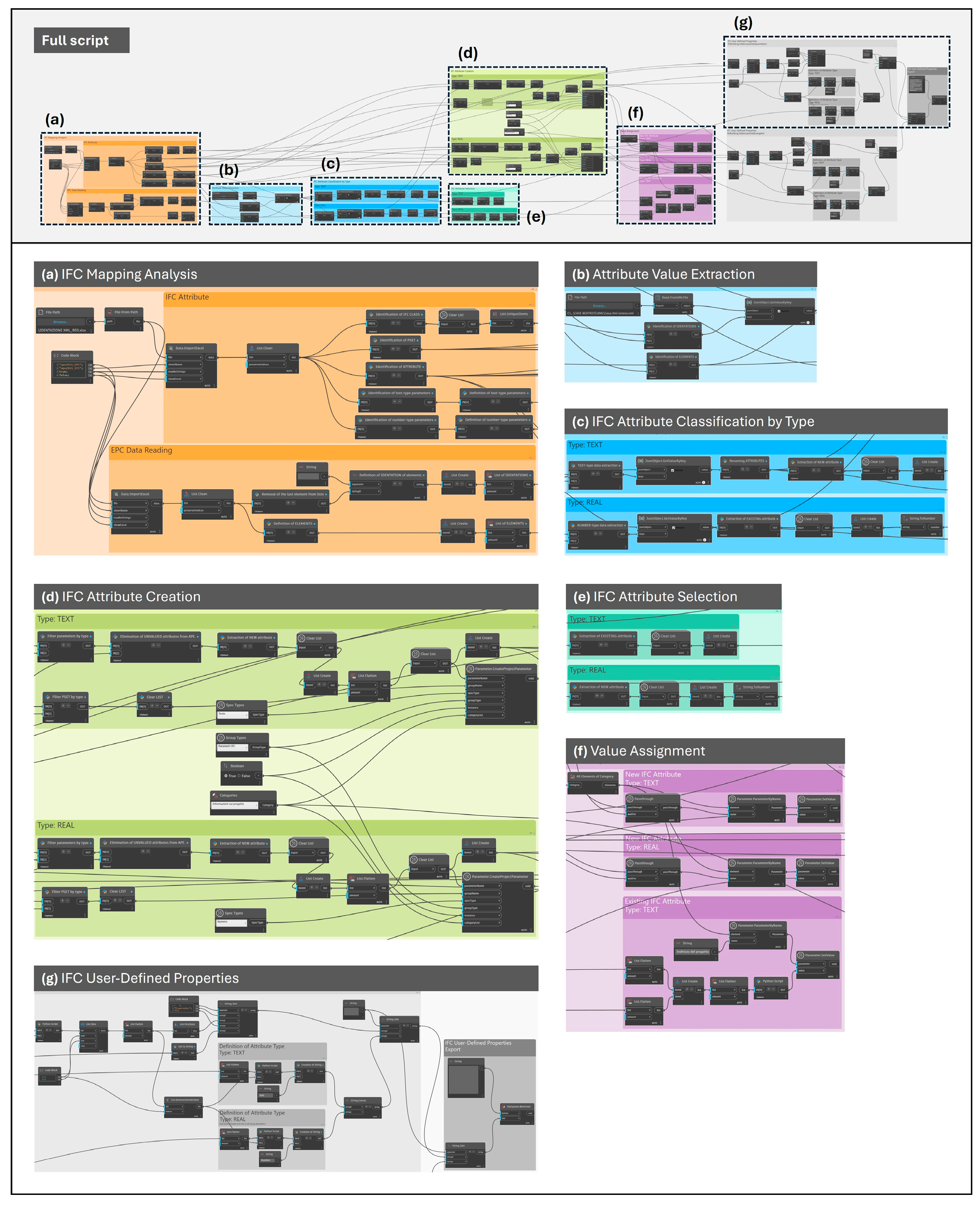
In order to evaluate the effectiveness of the methodology outlined in Figure 6, which focuses on integrating EPC data into the BIM environment, a custom workflow was developed within Revit, leveraging the advanced capabilities of Dynamo [94] for data manipulation and automation. Through Visual Programming Language (VPL) [95], entities can be automatically identified, their respective attributes can be determined or created and subsequently enriched based on the data provided in the certificate. Specifically, the implementation was carried out using Revit 2024 in conjunction with Dynamo version 2.18.1. An external package called JsonData 2.0.2 was utilized to manage the loading and handling of the APE file in XML format. Several Python script nodes were developed to parse the XML file and extract the necessary data to manage the lists efficiently.
The process was tested using the class IfcBuilding, as it emerged from the mapping as the entity with the highest number of associated attributes. Furthermore, data types were restricted to text and number, which were selected as representative categories for the analysis. The algorithm (Figure 13) began with reading two input files: the XML file (v.12) containing the EPC data and the IFC Mapping file, which served as a reference for establishing the semantic correspondence between the energy data and the IFC properties. The mapping file extracted relevant IFC classes, PSETs, and associated attribute names during the IFC Mapping analysis phase. The XML elements corresponding to the mapped attributes were identified during the EPC Data Reading phase. This enabled extracting relevant data from the EPC document in the subsequent Attribute Value Extraction phase. Once the mapped elements were located within the XML, the corresponding energy performance values were retrieved for integration. To support accurate and automated parameter creation, the IFC Attribute Classification by Type phase involved organizing all attributes based on their data type. This allowed unmapped or incompatible attributes to be excluded and ensured data integrity. Where required, semantic adjustments were made, especially in cases where EPC values used incompatible formats (e.g., unsignedByte). These values were converted into formats semantically consistent with the BIM data model. The IFC Attribute Creation phase focused on filtering out mapped attributes that were unpopulated in the EPC. New IFC parameters were created accordingly. Simultaneously, the IFC Attribute Selection phase involved identifying and selecting IFC attributes already present in the Revit model, such as the building address, to avoid redundancy and maintain coherence between existing and imported data. Following this, the Value Assignment phase was carried out, where both newly created and pre-existing IFC attributes were populated with the corresponding values extracted from the EPC. This step finalized the semantic and numerical enrichment of the BIM model. To ensure the proper export of all newly defined IFC parameters, the final IFC User-Defined Properties phase involved the creation of a .txt file. This file defines custom export rules, enabling all added parameters to be correctly recognized during IFC export, by openBIM and interoperability standards and allowing each attribute to be associated with its corresponding PSET and type.
4. Discussion
This study's results demonstrate the proposed methodology's effectiveness in integrating Energy Performance Certificates data into BIM workflows, with a specific focus on mapping XML data into the IFC format. The method's effectiveness has been validated through an Italian EPC case study.
4.1. Findings
One of the primary challenges encountered was the structural mismatch between EPC data and the IFC schema, a disparity further compounded by the national specificity of EPC formats, as observed in the Italian context. Nevertheless, the findings demonstrate that this complexity can be managed through a structured and systematic approach that effectively integrates EPC data within BIM models. The workflow adopted, encompassing data analysis, classification, and mapping, including using custom Property Sets where needed, proved capable of aligning the two domains. Automation of the mapping and attribute creation processes facilitated efficient and consistent data transfer into the BIM environment. This integration ensured that energy performance data and architectural information could coexist within a unified digital model, enhancing both the accuracy and manageability of energy-related data across the building lifecycle. The study further highlights that, despite the technical and regulatory barriers to EPC–IFC integration, a rigorous data mapping methodology can overcome these obstacles. The proposed approach supports the operational use of EPC data within BIM environments and contributes to advancing data interoperability and information management in digital construction.
Concerning the Digital Building Logbook, integrating EPC data into BIM models is a key contribution to the long-term documentation, monitoring, and evolution of building performance. The DBL, as defined in the literature, is conceived as a dynamic repository that evolves alongside changes in building operation, energy use, and maintenance over time. The methodology developed aligns with this framework, enabling EPC data to be systematically linked to BIM models via IFC mapping and data integration processes. In particular, the implementation within the Revit–Dynamo environment allows for automated data transfer from EPC documents to BIM models, thereby facilitating the creation of a continuously updatable digital record of a building’s energy performance. This approach supports the development of a DBL that serves as a reliable and evolving information source for building managers, energy auditors, and other stakeholders. Overall, the study offers a practical contribution toward bridging the gap between static EPC data and dynamic BIM-based models. It enables the generation of semantically enriched, interoperable datasets essential for effective energy management in the built environment.
The integration process between EPC and IFC is helpful for a wide range of stakeholders involved in the management, design, and regulation of building stock. The main target groups and their benefits are listed below:
- Designers: direct access to certified energy data within the BIM model, proper when upgrading, energy diagnosis or designing improvements.
- Energy auditors and energy certifiers: possibility to automate the reading, analysis and verification of EPC data via the BIM model, enabling cross-checking with geometric and plant data.
- Facility managers and building managers: centralised and updatable access to energy and building data is useful for planning maintenance and performance monitoring.
- Public bodies and regulatory authorities: Facilitation of regulatory control, transparency and comparability of data for public or incentive-based buildings.
- BIM and energy software producers: possibility to develop more interoperable and intelligent tools capable of managing information flows between BIM models and energy databases.
- Researchers and academics: new study scenarios on semantic interoperability for building lifecycle management and creating a digital twin.
4.2. Future Works
Future research and development efforts should advance along several key directions. First, a more in-depth investigation is required by considering the second version of the APE XSD (v.5) which represents a more comprehensive format. In this context, it will be crucial to investigate the correlation of energy data with specific building elements at the object level, particularly regarding the association of EPC parameters with discrete IFC entities. While current efforts have primarily focused integrating aggregated or zone-level data, further refinement is needed to map energy information directly onto individual building components such as walls, floors, roofs, and openings. This will require precisely aligning element typologies and classification systems across the EPC and IFC schemas. In parallel, greater attention must be devoted to system-level components, including HVAC elements, distribution networks, and control circuits. The representation and differentiation of mechanical systems, particularly when multiple systems coexist within the same thermal zone, present unique data structure and interoperability challenges. Mapping these components semantically within openBIM frameworks will be essential to ensure accurate simulation, monitoring, and management of building energy performance.
Future developments should also consider the following directions:
- Cross-standard harmonisation: Developing ontologies or translation layers to facilitate interoperability between national EPC schemas and international IFC standards.
- User interface development: Creating user-friendly visualisation and query tools for stakeholders (designers, auditors, facility managers) to interact dynamically with integrated energy-BIM models.
- Automation and AI-assisted mapping: Leveraging machine learning techniques to automate data recognition, classification, and assignment in complex BIM models.
- Integration with monitoring systems: Linking the static data from EPCs with real-time building monitoring systems to support continuous performance tracking within the DBL.
- Scalability and cloud implementation: Ensuring that the proposed methodology is scalable across large datasets and can be deployed within cloud-based DBL platforms for public or institutional use.
By addressing these areas, future research will strengthen the semantic interoperability between energy and BIM domains and contribute to a more intelligent, responsive, and sustainable digital representation of the built environment.
5. Conclusions
This research underscores the critical importance of data interoperability in establishing a centralized repository capable of harmonizing and automating the integration of heterogeneous data formats, which aligns with the objectives of DBL. Through the GEEDI project, this approach is explored within the energy domain, focusing on the integration of data derived from XML schemas and IFC models. Nevertheless, the proposed methodological framework is designed to be scalable and transferable across different contexts and disciplines. By tackling key challenges related to data accessibility and expanding its applicability, the framework offers a robust foundation for enhancing multidisciplinary analyses of the building stock.
Author Contributions
For research articles with several authors, a short paragraph specifying their individual contributions must be provided. The following statements should be used “Conceptualization, F.M.U.; methodology, F.M.U. and E.S.; software, E.S.; validation, F.M.U. and E.S.; formal analysis, F.M.U. and E.S.; investigation, F.M.U. and E.S.; writing—original draft preparation, E.S.; writing—review and editing, F.M.U.; visualization, E.S.; supervision, F.M.U.; project administration, F.M.U.; funding acquisition, F.M.U. All authors have read and agreed to the published version of the manuscript.
Funding
This research was funded by the GEEDI project and received funding from the European Union Next-GenerationEU (National Recovery and Resilience Plan–NRRP) within the NODES project (Digital and Sustainable North-West), Spoke 4: Digital and Sustainable Mountain, grant n. ECS00000036.
Conflicts of Interest
The authors declare no conflicts of interest. The funders had no role in the design of the study, in the collection, analysis, or interpretation of data, in the writing of the manuscript, or in the decision to publish the results.
Abbreviations
The following abbreviations are used in this manuscript:
| AECO | Architecture, Engineering, Construction and Operations |
| ADM | Agenzia del Demanio |
| ALDREN | Alliance for Deep RENovation in Buildings |
| APE | Attestato di Prestazione Energetica |
| BEM | Building Energy Modeling |
| BIM | Building Information Modeling |
| BRP | Building Renovation Passport |
| CTI | Comitato Termotecnico Italiano |
| DBL | Digital Building Logbook |
| DT | Digital Twin |
| EPBD | Energy Performance Building Directive |
| EPgl,ren | Renewable Global Energy Performance index |
| EPgl,nren | Non-Renewable Global Energy Performance index |
| EPC | Energy Performance Certificate |
| IBRoad | Individual building renovation roadmaps |
| IFC | Industry Foundation Classes |
| IoT | Internet of Things |
| LOD | Levels Of Detail |
| nZEB | nearly Zero Energy Building |
| PSET | Property Set |
| VPL | Visual Programming Language |
| XML | eXtensible Markup Language |
| XSD | XML Schema Definition |
References
- Alhammad, M.; Eames, M.; Vinai, R. Enhancing Building Energy Efficiency through Building Information Modeling (BIM) and Building Energy Modeling (BEM) Integration: A Systematic Review. Buildings 2024, 14, 581. [CrossRef]
- Bortolini, R.; Rodrigues, R.; Alavi, H.; Vecchia, L.F.D.; Forcada, N. Digital Twins’ Applications for Building Energy Efficiency: A Review. Energies 2022, 15, 7002. [CrossRef]
- Heaton, J.; Parlikad, A.K.; Schooling, J. Design and development of BIM models to support operations and maintenance. Comput. Ind. 2019, 111, 172-186. [CrossRef]
- Abideen, D.K.; Yunusa-Kaltungo, A.; Manu, P.; Cheung, C. A systematic review of the extent to which BIM is integrated into operation and maintenance. Sustainability 2022, 14(14), 8692. [CrossRef]
- Carvalho, J.P.; Bragança, L.; Mateus, R. Optimising building sustainability assessment using BIM. Autom. Constr. 2019, 102, 170-182. [CrossRef]
- Zhuang, D.; Zhang, X.; Lu, Y.; Wang, C.; Jin, X.; Zhou, X.; Shi, X. A performance data integrated BIM framework for building life-cycle energy efficiency and environmental optimization design. Autom. Constr. 2021, 127, 103712. [CrossRef]
- Pérez-Lombard, L.; Ortiz, J.; Pout, C. A review on buildings energy consumption information. Energy Build. 2008, 40, 394-398. [CrossRef]
- International Energy Agency (IEA). Energy Efficiency; IEA Publications: Paris, France, 2024. Available online: https://www.iea.org/reports/energy-efficiency-2024 (accessed on 06 03 2025).
- Ibn-Mohammed, T.; Greenough, R.; Taylor, S.; Ozawa-Meida, L.; Acquaye, A. Operational vs. embodied emissions in buildings - A review of current trends. Energy Build. 2013, 66, 232-245. [CrossRef]
- Cabeza, L.F.; Bai, Q.; Bertoldi, P.; Kihila, J.M.; Lucena, A.F.P.; Mata, É.; Mirasgedis, S.; Novikova, A.; Saheb, Y. Buildings. In IPCC, 2022: Climate Change 2022: Mitigation of Climate Change. Contribution of Working Group III to the Sixth Assessment Report of the Intergovernmental Panel on Climate Change; Shukla, P.R., Skea, J., Slade, R., Al Khourdajie, A., van Diemen, R., McCollum, D., Pathak, M., Some, S., Vyas, P., Fradera, R., Belkacemi, M., Hasija, A., Lisboa, G., Luz, S., Malley, J., Eds.; Cambridge University Press: Cambridge, United Kingdom and New York, New York, USA, 2023; pp. 953-1048. [CrossRef]
- Intergovernmental Panel on Climate Change (IPCC). Climate Change 2023: Synthesis Report (Full Volume) Contribution of Working Groups I, II and III to the Sixth Assessment Report of the Intergovernmental Panel on Climate Change; IPCC: Geneva, Switzerland, 2023. [CrossRef]
- United Nations Environment Programme (UNEP). Global Status Report for Buildings and Construction: Beyond foundations: Mainstreaming sustainable solutions to cut emissions from buildings sector; UNEP: Nairobi, Kenya, 2024. [CrossRef]
- International Energy Agency (IEA); International Renewable Energy Agency (IRENA); UN Climate Change High-Level Champions (HLCs). Breakthrough Agenda Report 2023; IEA Publications: Paris, France, 2023. Available online: https://www.iea.org/reports/breakthrough-agenda-report-2023 (accessed on 06 03 2025).
- European Environment Agency (EEA). Buildings and construction. Available online: https://www.eea.europa.eu/en/topics/in-depth/buildings-and-construction (accessed on 06 03 2025).
- Stefanis, C.; Stavropoulos, A.; Stavropoulou, E.; Tsigalou, C.; Constantinidis, T.C.; Bezirtzoglou, E. A Spotlight on Environmental Sustainability in View of the European Green Deal. Sustainability 2024, 16, 4654. [CrossRef]
- European Commission. The European Green Deal; COM/2019/640 final; Brussels, Belgium, 2019. Available online: https://eur-lex.europa.eu/legal-content/EN/TXT/?qid=1588580774040&uri=CELEX%3A52019DC0640 (accessed on 06 03 2025).
- Hainsch, K.; Löffler, K.; Burandt, T.; Auer, H.; Del Granado, P.C.; Pisciella, P.; Zwickl-Bernhard, S. Energy transition scenarios: What policies, societal attitudes, and technology developments will realize the EU Green Deal?. Energy 2022, 239, 122067. [CrossRef]
- Gailhofer, P.; Herold, A.; Schemmel, J.P.; Scherf, C.S.; de Stebelski, C.U.; Köhler, A.R.; Braungardt, S. The role of artificial intelligence in the European green deal; European Parliament, Directorate-General for Internal Policies of the Union: Luxembourg, Belgium, 2021. [CrossRef]
- European Commission. A Renovation Wave for Europe - greening our buildings, creating jobs, improving lives; COM/2020/662 final; Brussels, Belgium, 2020. Available online: https://eur-lex.europa.eu/legal-content/EN/TXT/?uri=CELEX:52020DC0662 (accessed on 06 03 2025).
- Altohami, A.B.A.; Haron, N.A.; Ales@Alias, A.H.; Law, T.H. Investigating Approaches of Integrating BIM, IoT, and Facility Management for Renovating Existing Buildings: A Review. Sustainability 2021, 13, 3930. [CrossRef]
- Lauria, M.; Azzalin, M. Digital Twin Approach in Buildings: Future Challenges via a Critical Literature Review. Buildings 2024, 14, 376. [CrossRef]
- European Parliament and of the Council. Directive (EU) 2024/1275 of the European Parliament and of the Council of 24 April 2024 on the energy performance of buildings (recast); PE/102/2023/REV/1; Strasbourg, France, 2024. Available online: https://eur-lex.europa.eu/legal-content/EN/TXT/?uri=OJ:L_202401275&pk_keyword=Energy&pk_content=Directive (accessed on 06 03 2025).
- Alonso, R.; Olivadese, R.; Ibba, A.; Recupero, D.R. Towards the definition of a European Digital Building Logbook: A survey. Heliyon 2023, 9. [CrossRef]
- Volt, J.; Fabbri, M.; Zuhaib, S.; Wouters, P. Technical study on the possible introduction of optional building renovation passports – Final report; Publications Office of the European Union: Brussels, Belgium, 2020. Available online: https://data.europa.eu/doi/10.2833/760324 (accessed on 06 03 2025).
- Verbeke, S.; Aerts, D.; Reynders, G.; Ma, Y.; Waide, P. Final report on the technical support to the development of a smart readiness indicator for buildings – Summary, Publications Office of the European Union: Brussels, Belgium, 2020. [CrossRef]
- Nawi, M.N.M.; Baluch, N.; Bahauddin, A.Y. Impact of Fragmentation Issue in Construction Industry: An Overview. In Proceedings of Building Surveying, Facilities Management and Engineering Conference (BSFMEC 2014), Perak, Malaysia, 27 August 2014. [CrossRef]
- Riazi, S.R.M.; Zainuddin, M.F.; Nawi, M.N.M.; Musa, S.; Lee, A. A critical review of fragmentation issues in the construction industry. JTDE 2020. 12, 1510-1521. Available online: https://salford-repository.worktribe.com/output/1357982 (accessed on 06 03 2025).
- European Construction Sector Observatory (ECSO). Digitalisation in the construction sector; Analytical Report, 2021. Available online: https://ec.europa.eu/docsroom/documents/45547 (accessed on 06 03 2025).
- Volt, J.; Toth, Z.; Glicker, J.; De Groote, M.; Borragán, G.; De Regel, S.; Dourlens-Quaranta, S.; Carbonari, G. Definition of the digital building logbook – Report 1 of the study on the development of a European Union framework for buildings' digital logbook; Publications Office of the European Union: Brussels, Belgium, 2020. Available online: https://data.europa.eu/doi/10.2826/480977.
- Carbonari, G.; Ricci, M.; Dourlens-Quaranta, S.; Calderoni, M.; Loureiro, T.; Sterling, R.; Glicker, J.; Toth, Z.; Volt, J.; De Groote, M.; Borragán, G.; Paduart, A.; De Regel, S. Building logbook state of play – Report 2 of the study on the development of a European Union framework for buildings' digital logbook; Publications Office of the European Union: Brussels, Belgium, 2020. Doi: https://data.europa.eu/doi/10.2826/519144.
- Malinovec Puček, M.; Khoja, A.; Bazzan, E.; Gyuris, P. A data structure for digital building logbooks: Achieving energy efficiency, sustainability, and smartness in buildings across the EU. Buildings 2023, 13, 1082. [CrossRef]
- Mêda, P.; Hjelseth, E.; Calvetti, D.; de Sousa, H. Data templates and digital building logbooks boosting digital twin in construction. In Proceedings of the 38th International Conference of CIB W78, Luxembourg, LU, 11-15 October 2021. Available online: https://itc.scix.net/pdfs/w78-2021-paper-068.pdf (accessed on 06 03 2025).
- Signorini, M.; Dejaco, M.C.; Lupica Spagnolo, S. The Evolution of Digital Building Logbook: Exploring Building Information Gathering Systems to Boost Building Maintenance and Renovation. Appl. Sci. 2025, 15, 1-19. [CrossRef]
- Dourlens-Quaranta, S.; Carbonar, G.; De Groote, M.; Borragán, G.; De Regel, S.; Toth, Z.; Volt, J.; Glicker, J.; Lodigiani, A.; Calderoni, M.; Loureiro, T.; Sterling, R.; Vandevelde, B.; Spirinckx, C.; Kondratenko, I.; Rajagopalan, N.; Rapf, O. Study on the development of a European Union framework for digital building logbooks – Final report; Publications Office of the European Union: Brussels, Belgium, 2021. [CrossRef]
- Hwang, S.A. Digital Building Logbooks and Stakeholder Mapping: A Cross-Sectoral Approach to Data Collection and Sharing. In 2024 European Conference on Computing in Construction, Chania, Crete, Greece, 14-17 July 2024. Available online: https://ec-3.org/publications/conference/paper/?id=EC32024_169 (accessed on 06 03 2025).
- Mêda, P.; Fauth, J.; Schranz, C.; Sousa, H.; Urban, H. Twinning the path of digital building permits and digital building logbooks - Diagnosis and challenges. Dev. Built Environ. 2024, 20, 100573. [CrossRef]
- Androutsopoulos, A.; Bololia, M.; Polychroni, E.; Urbanz, T.; Maia, I. Energy Performance Certificates (EPCs) Potential Linkage with Digital Building Logbooks and Building Renovation Passports, ePANCEA Project; CRES: Pikermi Attiki, Greece, 2021. [CrossRef]
- Pagliaro, F.; Hugony, F.; Zanghirella, F.; Basili, R.; Misceo, M.; Colasuonno, L.; Del Fatto, V. Assessing building energy performance and energy policy impact through the combined analysis of EPC data – The Italian case study of SIAPE. Energy Policy, 2021, 159, 112609. [CrossRef]
- Arcipowska, A.; Anagnostopoulos, F.; Mariottini, F.; Kunkel, S. Energy Performance Certificates across the EU. A Mapping of National Approaches; Building Performance Institute Europe: Brussels, BE, 2014. Available online: https://www.bpie.eu/publication/energy-performance-certificates-across-the-eu/# (accessed on 06 03 2025).
- Charalambides, A.G.; Maxoulis, C.N.; Kyriacou, O.; Blakeley, E.; Frances, L.S. The impact of Energy Performance Certificates on building deep energy renovation targets. Int. J. Sustain. Energy, 2018, 38, 1–12. [CrossRef]
- Gupta, R.; Gregg, M. Targeting and modelling urban energy retrofits using a city-scale energy mapping approach. J. Clean. Prod., 2018, 174, 401-412. [CrossRef]
- iBRoad2EPC Project Homepage. Available online: https://ibroad-project.eu/ (accessed on 06 03 2025).
- ALDREN Project Homepage. Available online: https://aldren.eu/ (accessed on 06 03 2025).
- X-tendo Project Homepage. Available online: https://x-tendo.eu/ (accessed on 06 03 2025).
- ISO 19650-1:2018; Organization and digitization of information about buildings and civil engineering works, including building information modelling (BIM) — Information management using building information modelling. Part 1: Concepts and principles. BSI: London, UK, 2018.
- Schlueter, A.; Thesseling, F. Building information model based energy/exergy performance assessment in early design stages. Autom. Constr. 2009, 18, 153-163. [CrossRef]
- Jiang, S., Jiang, L., Han, Y., Wu, Z.; Wang, N. OpenBIM: An enabling solution for information interoperability. Appl. Sci. 2019, 9, 5358. [CrossRef]
- buildingSmart International Homepage. Available online: https://www.buildingsmart.org/ (accessed on 06 03 2025).
- EU BIM Task Group. Handbook for the Introduction of Building Information Modelling by the European Public Sector; EU BIM Task Group: Bruxelles, Belgium, 2017. Available online: https://eubim.eu/handbook/ (accessed on 06 03 2025).
- Ahn K.-U.; Kim Y.-J.; Park C.-S.; Kim I.; Lee K. BIM interface for full vs. semi-automated building energy simulation. Energy Build. 2014, 68, 671-678. [CrossRef]
- Ramaji, I.J.; Messner, J.I.; Mostavi, E. IFC-Based BIM-to-BEM Model Transformation. J. Comput. Civ. Eng. 2020, 34. [CrossRef]
- Porsani G.B.; de Lersundi K.D.V.; Gutiérrez A.S.-O.; Bandera C. F. Interoperability between Building Information Modelling (BIM) and Building Energy Model (BEM). Appl. Sci. 2021, 11, 2167. [CrossRef]
- Mulero-Palencia S.; Álvarez-Díaz S.; Andrés-Chicote M. Machine Learning for the Improvement of Deep Renovation Building Projects Using As-Built BIM Models. Sustainability 2021, 13, 6576. [CrossRef]
- Forth, K.; Borrmann, A. Semantic enrichment for BIM-based building energy performance simulations using semantic textual similarity and fine-tuning multilingual LLM. J. Build. Eng. 2024, 95, 110312. [CrossRef]
- Kim H.; Shen Z.; Kim I.; Kim K.; Stumpf A.; Yu J. BIM IFC information mapping to building energy analysis (BEA) model with manually extended material information. Autom. Constr. 2016, 68, 183-193. [CrossRef]
- Torregrosa-Jaime B.; Martínez P.J.; González B.; Payá-Ballester G. Modelling of a Variable Refrigerant Flow System in EnergyPlus for Building Energy Simulation in an Open Building Information Modelling Environment. Energies 2019, 12, 22;. [CrossRef]
- Li, H.; Zhang, J. Improving IFC-Based Interoperability between BIM and BEM Using Invariant Signatures of HVAC Objects. J. Comput. Civ. Eng. 2023, 37. [CrossRef]
- Rose, C. M.; Bazjanac, V. An Algorithm to generate space boundaries for building energy simulation. Eng. Comput. 2015, 31, 271–280. [CrossRef]
- Chen, Q.; Harmanci, Y.E.; Ou, Y.; de Soto, B.G. Robust IFC Files to Improve Information Exchange: An Application for Thermal Energy Simulation. In Proceedings of The Ninth International Structural Engineering and Construction Conference - Resilient Structures and Sustainable Construction, Valencia, Spain, 24-29 July 2017. Available online: https://www.isec-society.org/ISEC_PRESS/ISEC_09/pdf/AAE-4.pdf (accessed on 06 03 2025).
- Ying, H.; Lee, S. A rule-based system to automatically validate IFC second-level space boundaries for building energy analysis. Autom. Constr. 2021, 127, 103724. [CrossRef]
- Richter, V.E.; Syndicus, M; Frisch, J; van Treeck, C; Huertas, D.B.; Sanchez-Garcia, D. Extending the IFC-Based bim2sim Framework to Improve the Accessibility of Thermal Comfort Analysis Considering Future Climate Scenarios. Appl. Sci. 2023, 13, 12478. [CrossRef]
- Kiavarz, H.; Jadidi, M.; Rajabifard, A.; Sohn, G. An Automated Space-Based Graph Generation Framework for Building Energy Consumption Estimation. Buildings 2023, 13, 350. [CrossRef]
- buildingSmart International - IFC Specifications Database. Available online: https://technical.buildingsmart.org/standards/ifc/ifc-schema-specifications/ (accessed on 06 03 2025).
- El Asmi E.; Robert S.; Haas B.; Zreik K. A standardized approach to BIM and energy simulation connection. IJDST 2015, 21, 59-82. Available online: https://cea.hal.science/cea-01847290v1 (accessed on 06 03 2025).
- Fenz, S.; Bergmayr, J.; Plattner, N.; Chávez-Feria, S.; Poveda-Villalón, M.; Giannakis, G. Integration of building material databases for IFC-based building performance analysis. In Proceedings of the 38th International Symposium on Automation and Robotics in Construction (ISARC 2021), Dubai, United Arab Emirates, 2-4 November 2021. [CrossRef]
- Morini, M.; Caffari, F.; Calabrese, N.; Centi, G. A BIM-Based Approach to Energy Analysis of Existing Buildings in the Italian Context. In Proceedings of the International Conference on Technological Imagination in the Green and Digital Transition (CONF.ITECH 2022), Rome, Italy, 30 June-2 July 2022. [CrossRef]
- Sesana, M.M.; Salvalai, G.; Della Valle, N.; Melica, G.; Bertoldi, P. Towards harmonising energy performance certificate indicators in Europe. J. Build. Eng. 2024, 95, 110323. [CrossRef]
- World Wide Web Consortium (W3C). Extensible markup language (XML) 1.1 (Second Edition); W3C Recommendation: 2006. Available online: https://www.w3.org/TR/xml11/ (accessed on 06 03 2025).
- Meneghello, M. XML (extensible Markup Language)—The New Language of Data Exchange. J. Spat. Sci. 2001, 30, 51-57. [CrossRef]
- Maia, I.E.N.; Themeßl, N.J.; Kranzl, L. Description of current Energy Performance Certificates (EPCs) related policy framework in implementing countries; TU Wien: Vienna, AU, 2021. Available online: https://epanacea.eu/?sdm_process_download=1&download_id=2670 (accessed on 06 03 2025).
- Costa, G.; Sicilia, A. D1.2 – Framework for the next generation of EPC schemes. TIMEPAC, 2022. https://timepac.eu/wp-content/uploads/2022/10/TIMEPAC_D1.2_20220531_proof_read.pdf (accessed on 06 03 2025).
- Škoro, N. M. Cost-effective and smart system monitoring for EPC; CA EPBD, 2023. Available online: https://www.ca-epbd.eu/Media/638373627114800416/06-CCT3_Factsheets-Cost-effective-and-smart-system-monitoring-for-EPC.pdf (accessed on 06 03 2025).
- Arcipowska, A.; Anagnostopoulos, F.; Mariottini, F.; Kunkel, S. Energy Performance Certificates across the EU; Buildings Performance Institute Europe (BPIE): Brussels, Belgium, 2014. Available online: https://bpie.eu/wp-content/uploads/2015/10/Energy-Performance-Certificates-EPC-across-the-EU.-A-mapping-of-national-approaches-2014.pdf (accessed on 06 03 2025).
- Prieler M., Leeb M., Reiter T. Characteristics of a database for energy performance certificates. Energy Procedia 2017, 132, 1000–1005. [CrossRef]
- Ruggieri G., Maduta C., Melica G. Progress on the implementation of Energy Performance Certificates in EU; JRC135473; Publications Office of the European Union, Luxembourg, LU, 2023. [CrossRef]
- Visor CTE_XML - Informe energético del edificio en formato XML. Available online: https://visorxml.codigotecnico.org/ (accessed on 06 03 2025).
- CTI - Comitato Termotecnico Italiano. Standard XML per l’Attestato di Prestazione Energetica (APE). Available online: https://www.cti2000.eu/standard-xml/ (accessed on 06 03 2025).
- Gómez-Gil, M.; Sesana, M.M.; Salvalai, G.; Espinosa- Fernández, A.; López-Mesa, B. The Digital Building Logbook as a gateway linked to existing national data sources: The cases of Spain and Italy. J. Build. Eng. 2023, 63(A), 105461. [CrossRef]
- Lange, H.; Johansen, A.; Kjærgaard, M.B. Evaluation of the opportunities and limitations of using IFC models as source of building metadata. In Proceedings of the 5th Conference on Systems for Built Environments (BuildSys), Shenzhen, China, 7-8 November 2018. [CrossRef]
- buildingSmart International – Industry Foundation Classes (IFC). Available online: https://www.buildingsmart.org/standards/bsi-standards/industry-foundation-classes/ (accessed on 06 03 2025).
- Sani, M.J.; Musliman, I.A.; Abdul Rahman, A. IFC To CityGML Conversion Algorithm Based on Geometry and Semantic Mapping. In Proceedings of Joint International Conference Geospatial Asia-Europe 2021 and GeoAdvances 2021, online, 5-6 October 2021. [CrossRef]
- Ji, Y.; Wang, Y.; Wei, Y.; Wang, J.; Yan, W. An ontology-based rule mapping approach for integrating IFC and CityGML. Trans. GIS. 2024, 28, 675-696. [CrossRef]
- Yu, Y.; Kim, S.; Jeon, H.; Koo, B. A Systematic Review of the Trends and Advances in IFC Schema Extensions for BIM Interoperability. Appl. Sci. 2023, 13, 12560. [CrossRef]
- buildingSmart International – Release Notes. Available online: https://technical.buildingsmart.org/standards/ifc/ifc-schema-specifications/ifc-release-notes/ (accessed on 06 03 2025).
- Sayfikar, M.; Jenkins, D.P. Energy performance certificate calculation methodologies across Europe and accommodating new performance indicators. Build. Serv. Eng. Res. Technol. 2025, 46, 45-59. [CrossRef]
- buildingSmart International – IfcPropertySet definition. Available online: https://standards.buildingsmart.org/IFC/DEV/IFC4_2/FINAL/HTML/schema/ifckernel/lexical/ifcpropertyset.htm (accessed on 06 03 2025).
- ISO 10303-41:1992; Industrial automation systems and integration - Product data representation and exchange. Part 41: Integrated generic resource: Fundamentals of product description and support. BSI: London, United Kingdom, 1992.
- ACCA Software - APE: catasti energetici regionali. Available online: https://www.acca.it/ape-catasto-regionale (accessed on 06 03 2025).
- D.M. 26 giugno 2015. Allegato 1 - Criteri generali e requisiti delle prestazioni energetiche degli edifici. https://www.gazzettaufficiale.it/do/atto/serie_generale/caricaPdf?cdimg=15A0519800100010110001&dgu=2015-07-15&art.dataPubblicazioneGazzetta=2015-07-15&art.codiceRedazionale=15A05198&art.num=1&art.tiposerie=SG (accessed on 06 03 2025).
- buildingSmart International – IFC4_ADD2_TC1 - 4.0.2.1 [Official]. Available online: https://standards.buildingsmart.org/IFC/RELEASE/IFC4/ADD2_TC1/HTML/ (accessed on 06 03 2025).
- buildingSmart International – IFC 4.3.2.20250327 (IFC4X3_ADD2). Available online: https://ifc43-docs.standards.buildingsmart.org/ (accessed on 06 03 2025).
- Agenzia del Demanio. BIMMS – Method Statement Process. LINEE GUIDA Produzione Informativa BIM; ADM: Rome, Italy, 2021. Available online: https://www.agenziademanio.it/export/sites/demanio/download/documentigare_2021_1bis/210319_DRC_Allegato-6-BIMMS-Method-Statement-Process-LINEE-GUIDA-Produzione-I....pdf (accessed on 06 03 2025).
- Centi, G.; Morini, M. Linee guida per la diagnosi energetica degli edifici con metodologia BIM; Report RdS/PTR2021/111; Ministero della Transizione Ecologica – ENEA: 2021. Available online: https://www2.enea.it/it/Ricerca_sviluppo/documenti/ricerca-di-sistema-elettrico/adp-mise-enea-2019-2021/tecnologie-efficienza-risparmio-edifici/report-rds_ptr_2021_111.pdf (accessed on 06 03 2025).
- The Dynamo Primer - What is Visual Programming?. Available online: https://primer.dynamobim.org/01_Introduction/1-1_what_is_visual_programming.html (accessed on 06 03 2025).
- Idrees, M.; Aslam, F. A Comprehensive Survey and Analysis of Diverse Visual Programming Languages. VTSE 2022, 10(2), 47-60. [CrossRef]
Figure 1.
Connection between the DBL, EPC data, and openBIM models.
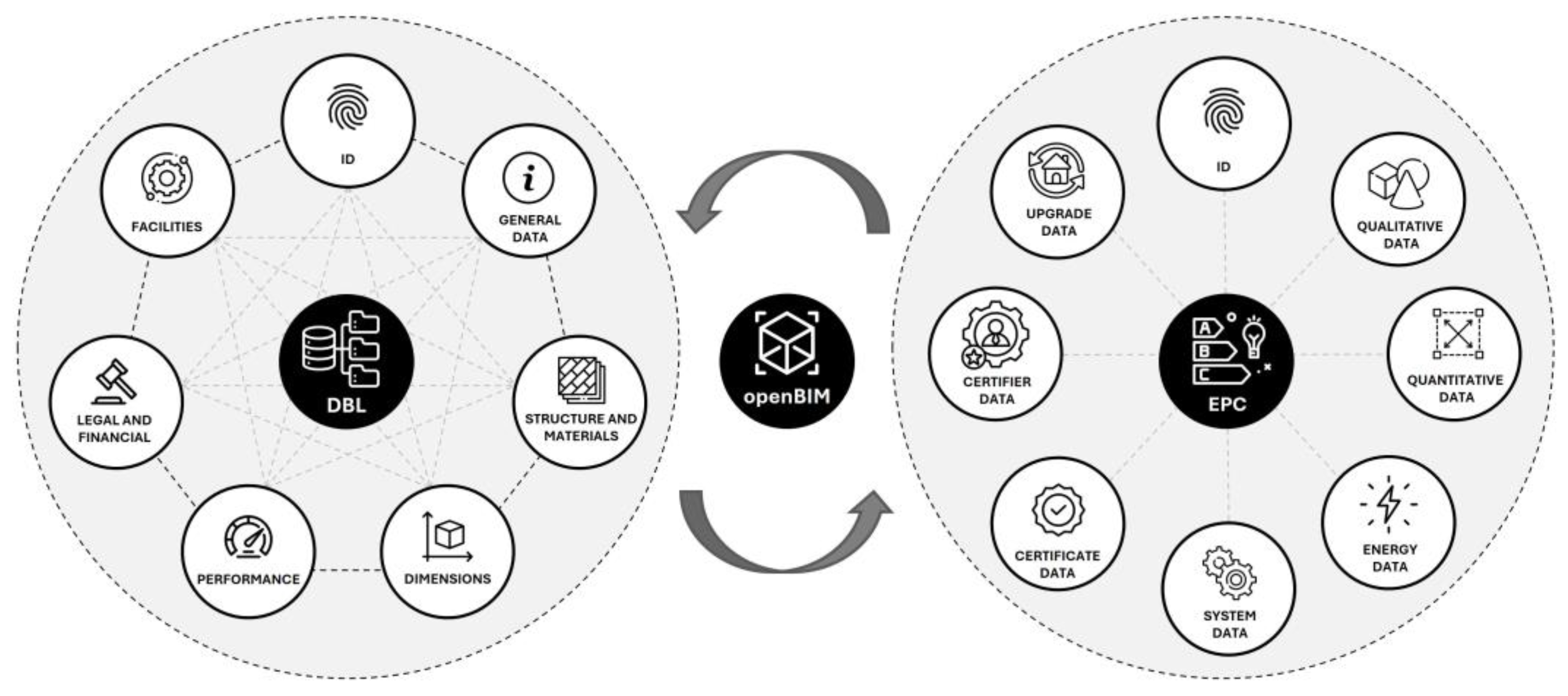
Figure 2.
Methodology schema.

Figure 3.
Workflow for the EPC data clustering.
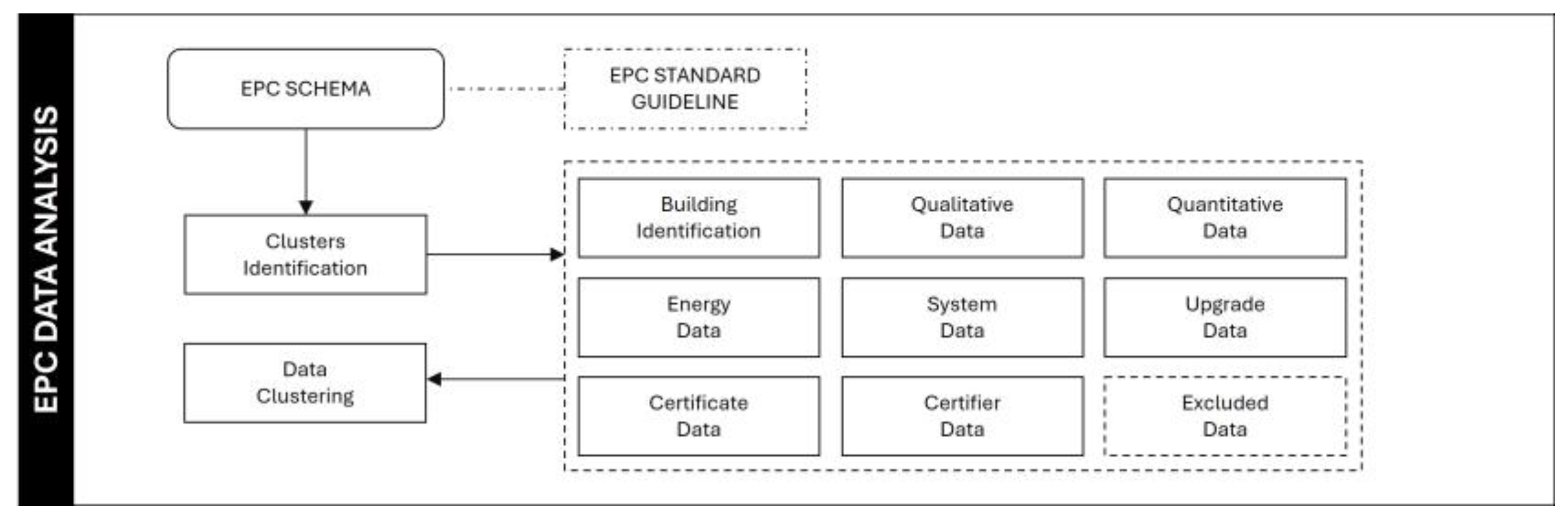
Figure 4.
IFC Mapping structure.

Figure 5.
Workflow for the IFC Mapping definition.
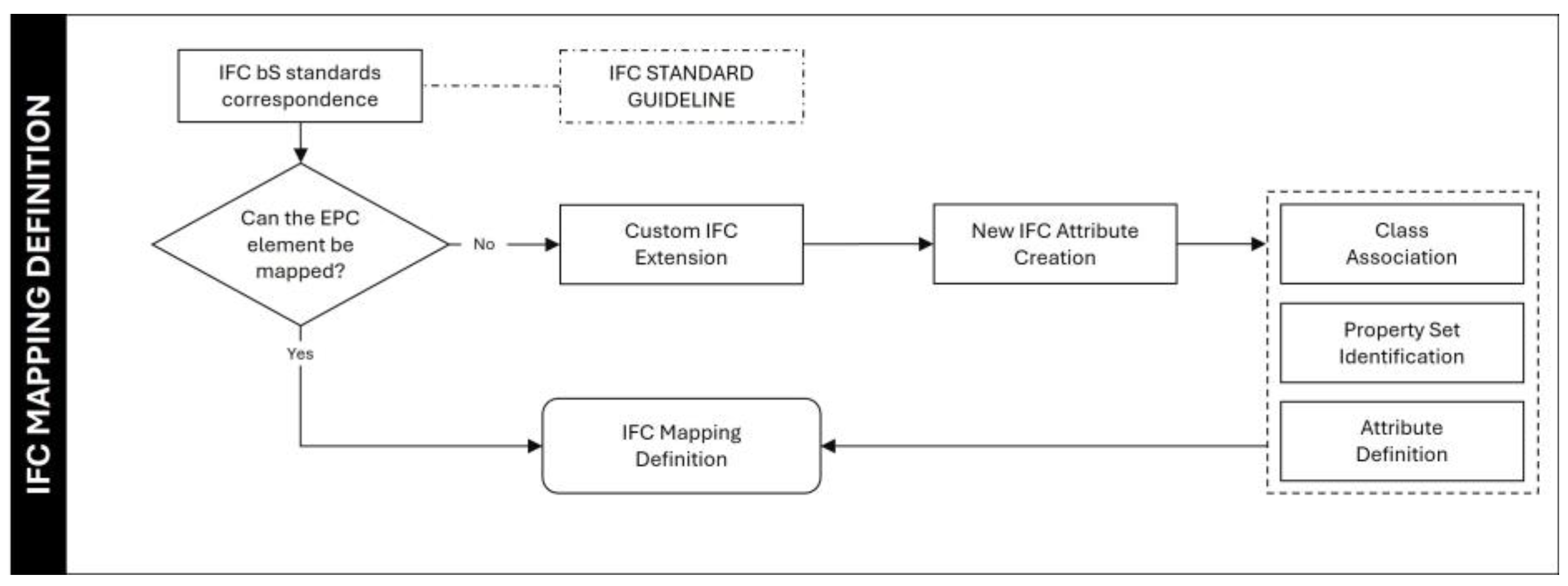
Figure 6.
Workflow for the data integration.
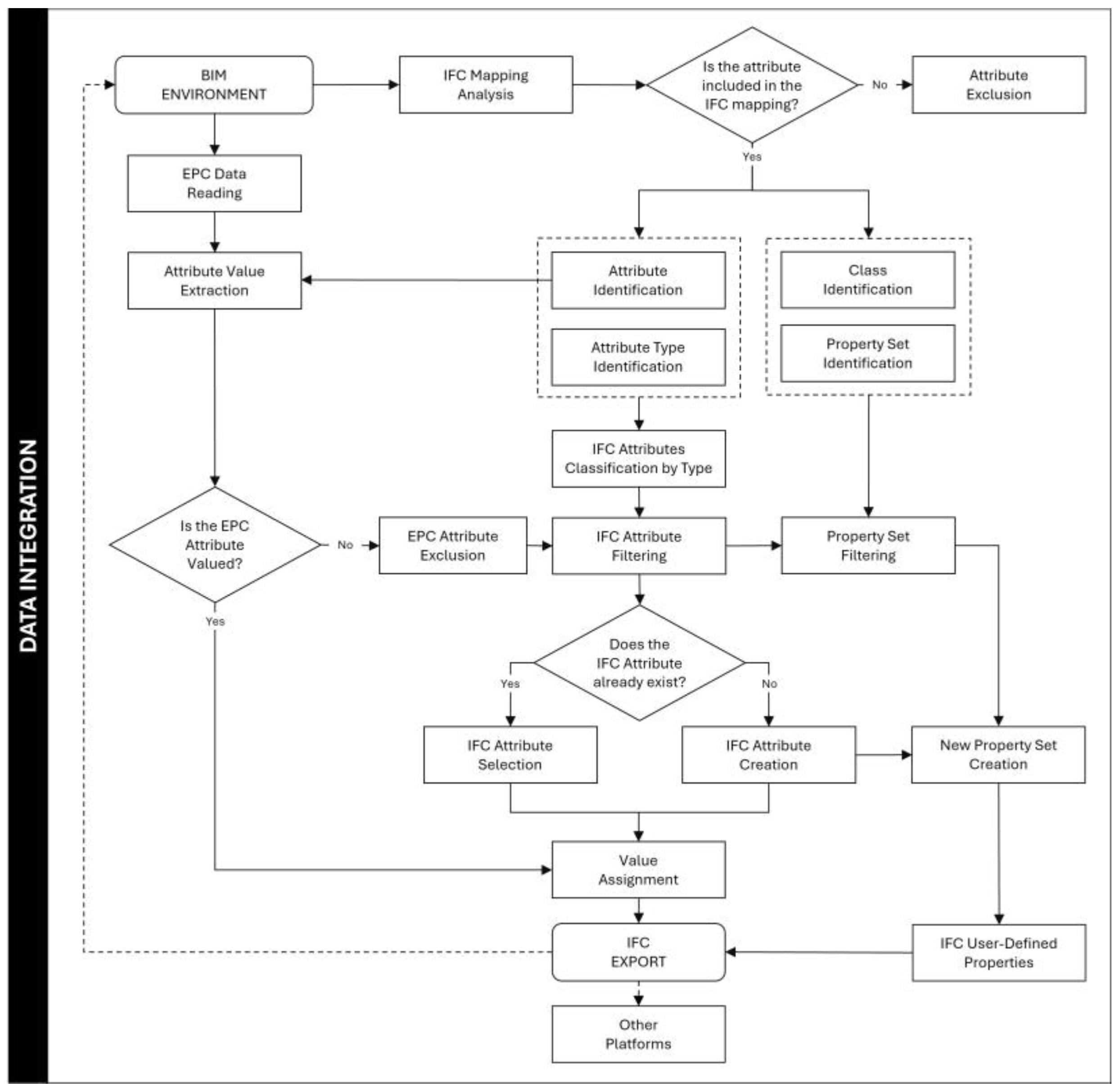
Figure 7.
Representation of the APE XSD schema (v.12).
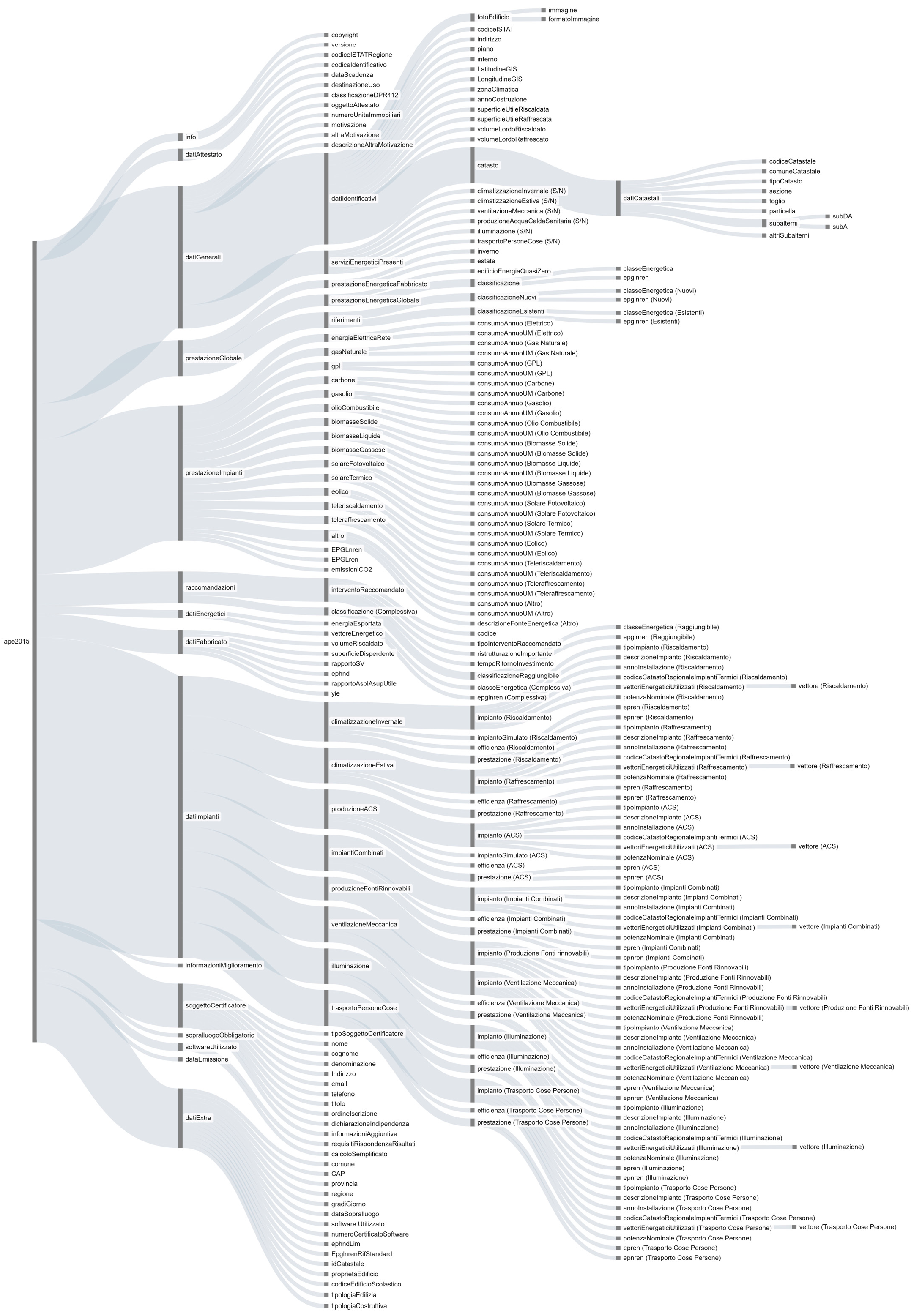
Figure 8.
APE XSD schema (v.12) data analysis.
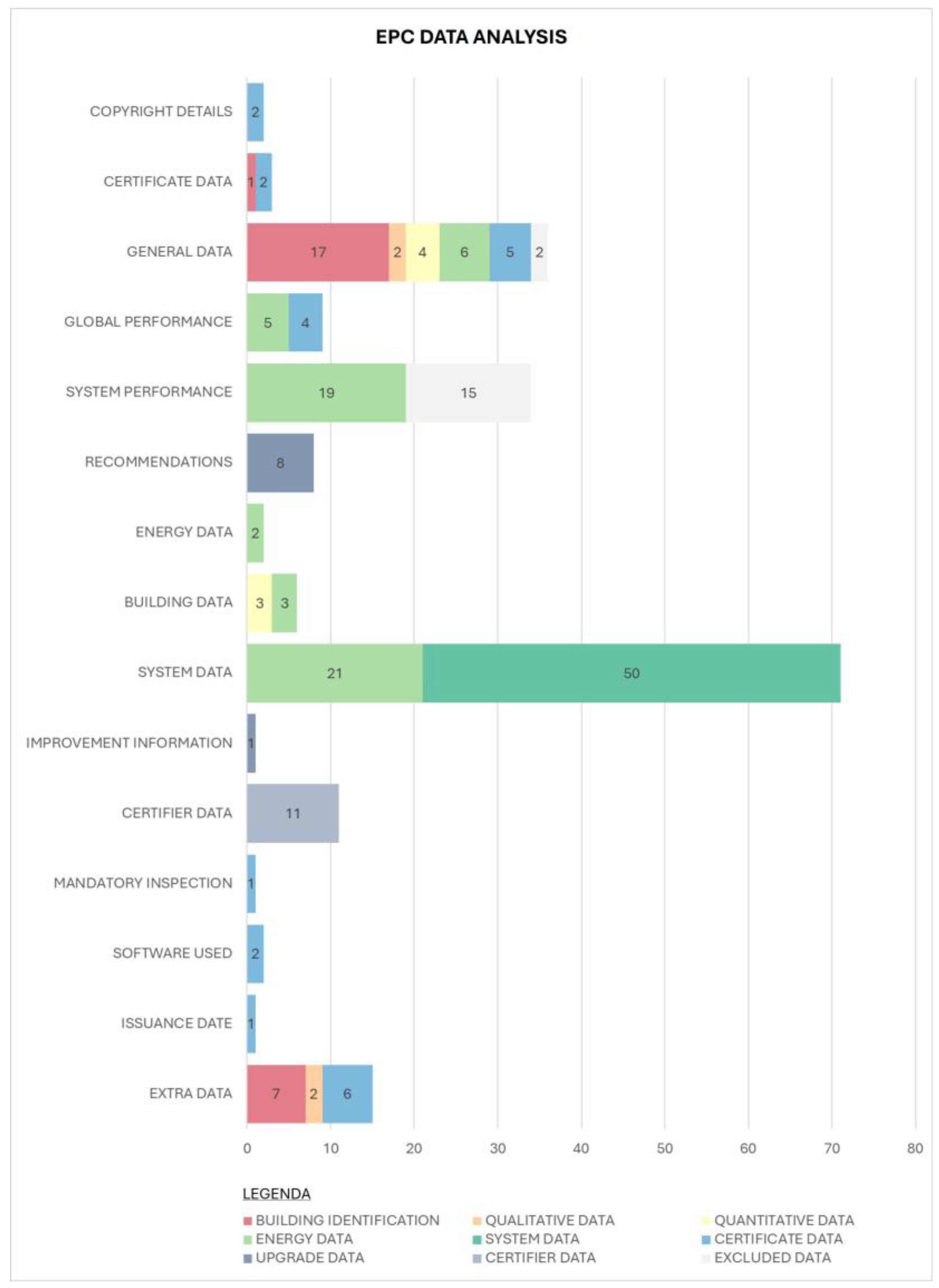
Figure 9.
Cluster-based representation of the APE XSD schema (v.12).
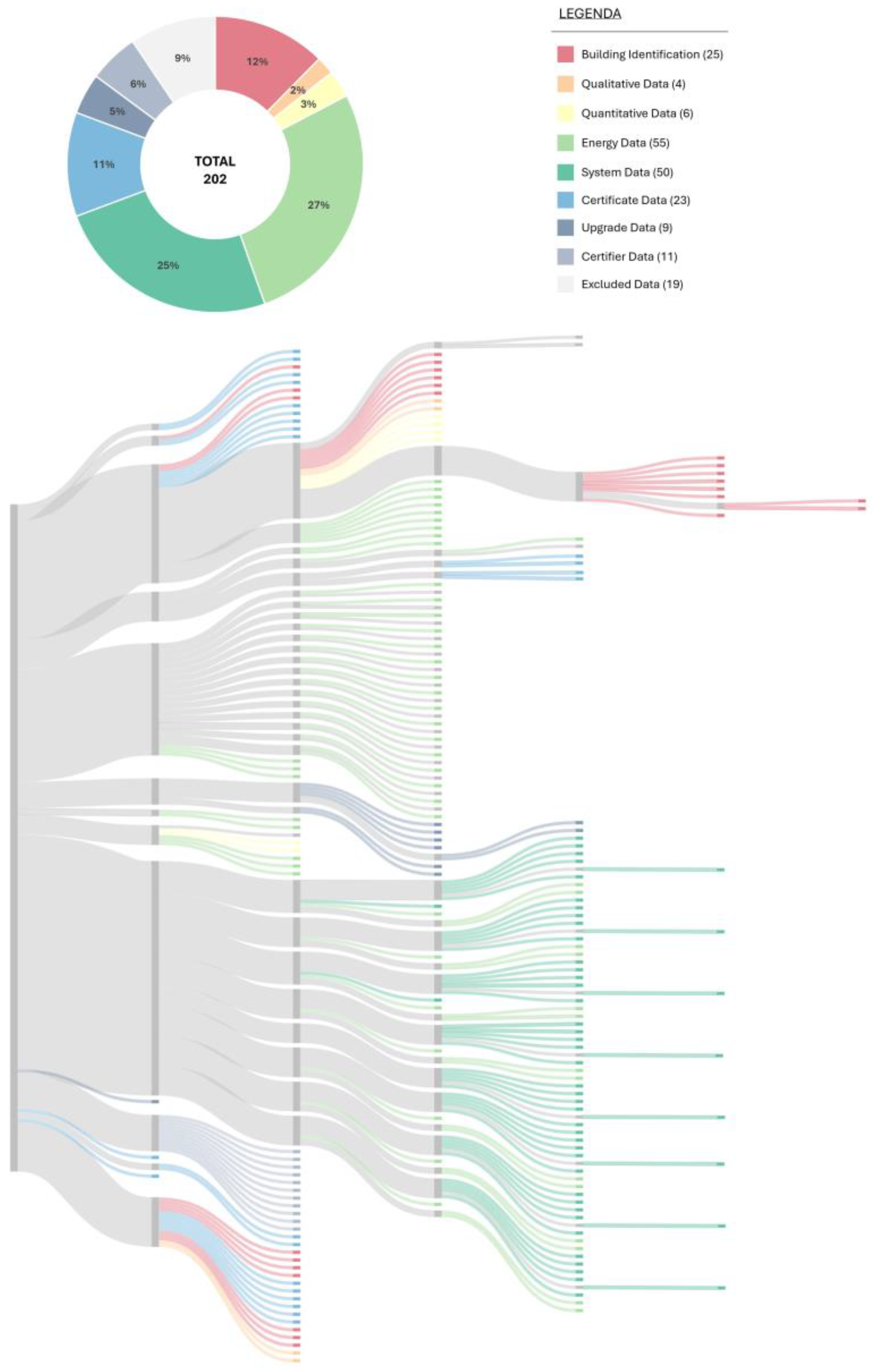
Figure 10.
APE XSD schema (v.12) with corresponding IFC standards.
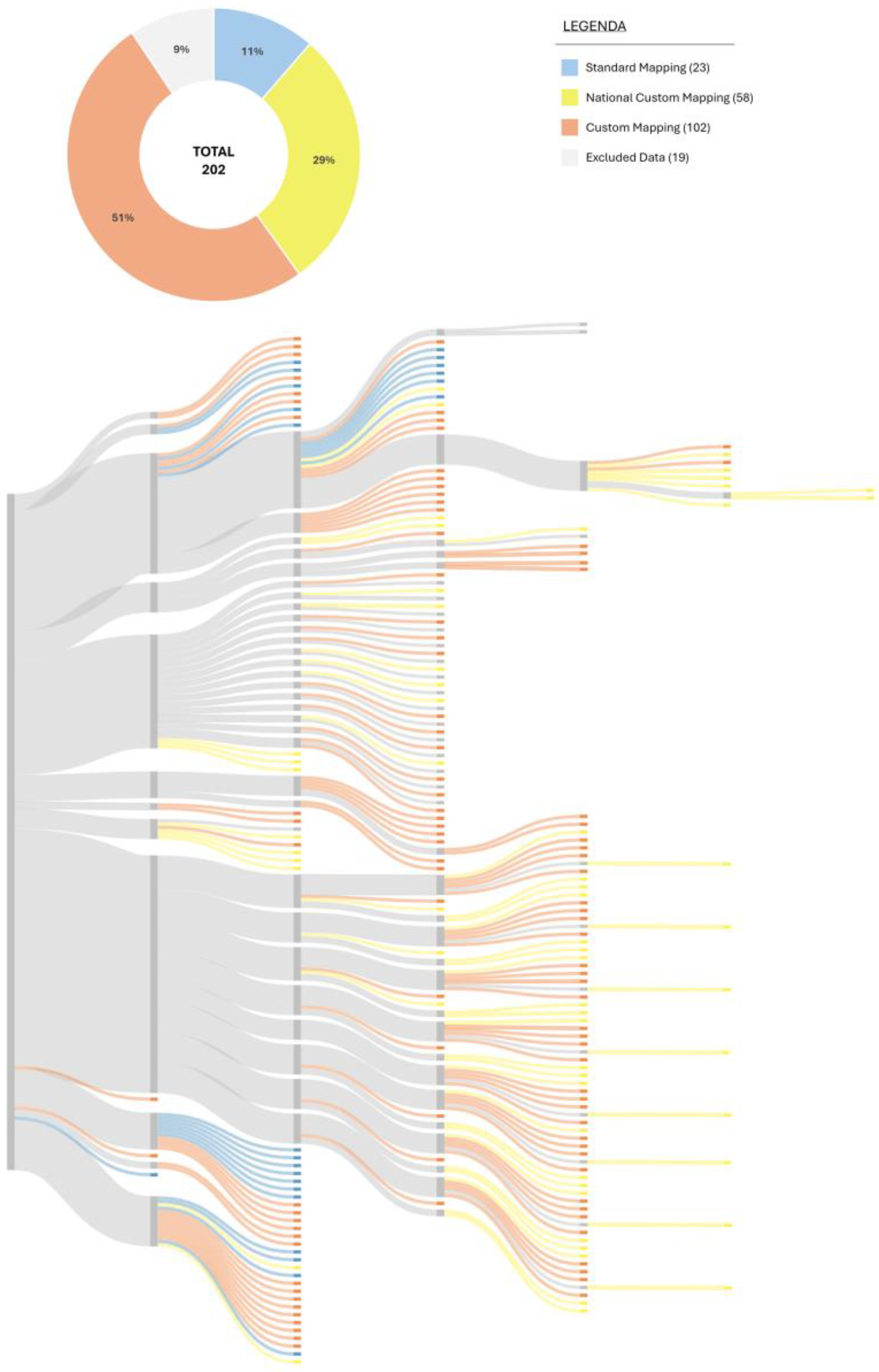
Figure 11.
APE XSD schema (v.12) with mapped IFC entities.
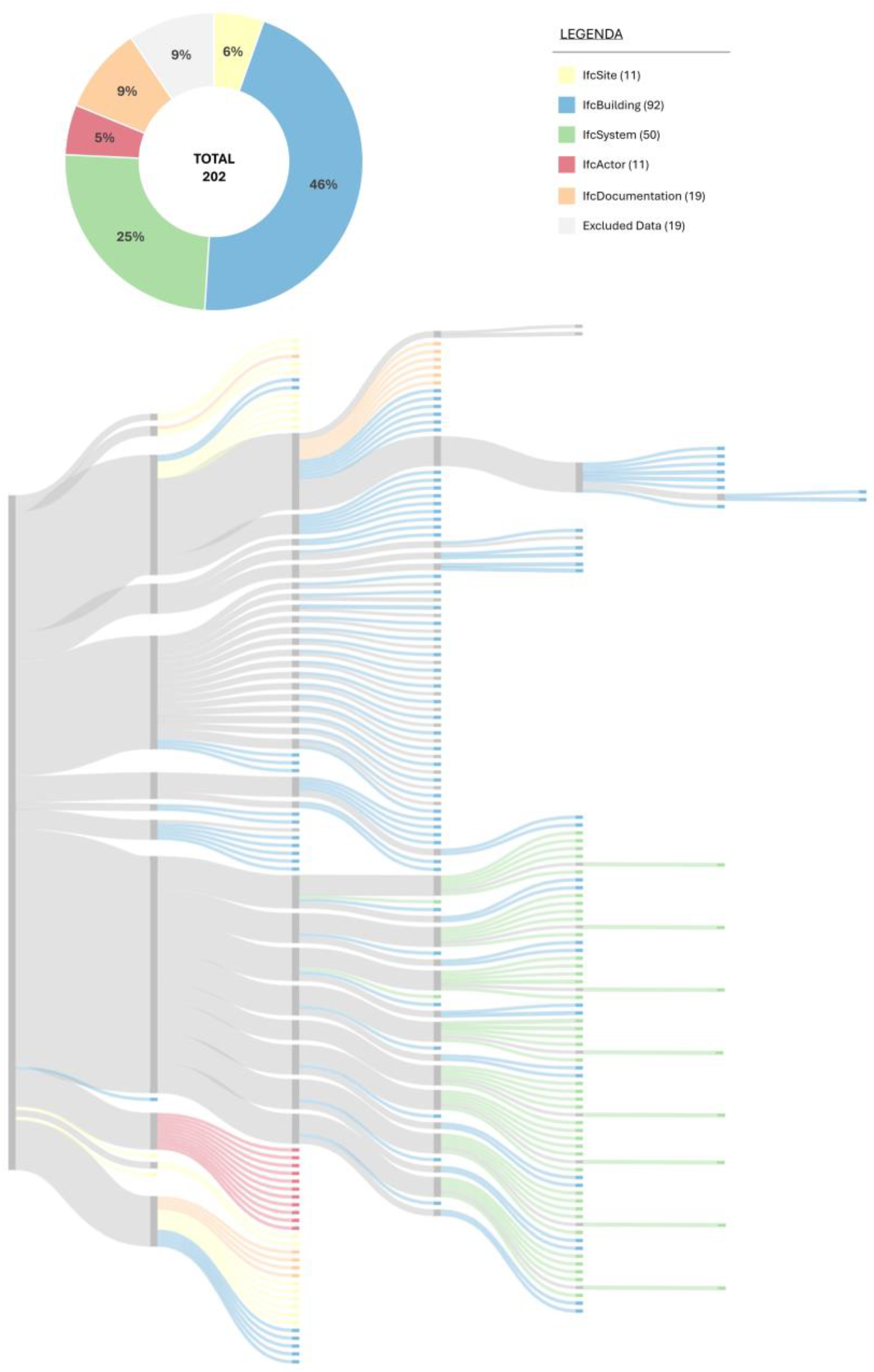
Figure 12.
Schematic representation of the APE XSD schema (v.12), showing clustered IFC attributes, corresponding Property Sets (PSETs), and associated data types.
Figure 12.
Schematic representation of the APE XSD schema (v.12), showing clustered IFC attributes, corresponding Property Sets (PSETs), and associated data types.
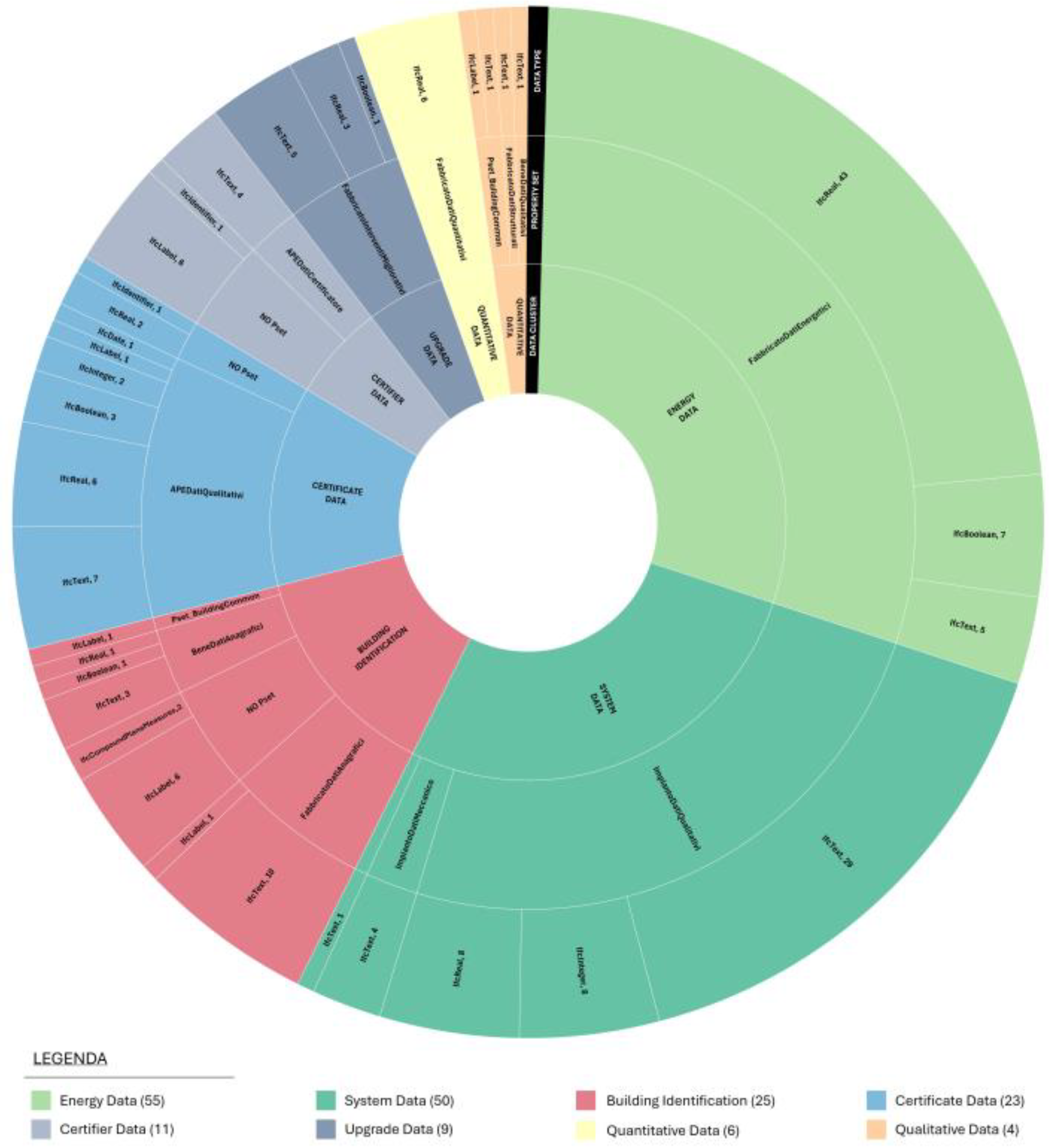
Figure 13.
Dynamo script for the automated integration of data from EPC into BIM environment.
Disclaimer/Publisher’s Note: The statements, opinions and data contained in all publications are solely those of the individual author(s) and contributor(s) and not of MDPI and/or the editor(s). MDPI and/or the editor(s) disclaim responsibility for any injury to people or property resulting from any ideas, methods, instructions or products referred to in the content. |
© 2025 by the authors. Licensee MDPI, Basel, Switzerland. This article is an open access article distributed under the terms and conditions of the Creative Commons Attribution (CC BY) license (http://creativecommons.org/licenses/by/4.0/).
Copyright: This open access article is published under a Creative Commons CC BY 4.0 license, which permit the free download, distribution, and reuse, provided that the author and preprint are cited in any reuse.