

Submitted:
19 May 2025
Posted:
20 May 2025
You are already at the latest version
Abstract
Background: International migration is a growing global phenomenon involving diverse groups, such as labor migrants, international marriage migrants, refugees, and interna-tional students. International migrants face unique mental health challenges influenced by adversities such as social isolation and limited access to mental health services. This study aims to employ bibliometric analysis to identify prominent research themes and the latest research trends in this field.
Methods: Literature on the mental health of international migrants published until Octo-ber 2024 was searched using the Web of Science database. The search terms included (‘In-ternational migrants’ OR ‘migrant workers’ OR ‘international students’ OR ‘refugees’ OR ‘asylum seekers’ OR ‘smuggled migrants’) AND ‘mental health’. VOSviewer was used to conduct bibliometric analysis, focusing on co-authorship patterns, keyword co-occurrence, and citation networks.
Results: Over the past four decades, research on the mental health of international mi-grants has grown substantially, with major migration destinations such as the United States, Europe, and Australia playing prominent roles in this field. ‘Post-traumatic stress disorder (PTSD)’ was the most frequent keyword in publications, with strong links to ‘trauma’ and ‘depression’. In recent years, with the impact of global socioenvironmental changes and emergencies such as COVID-19, the research focus has gradually shifted to-wards social support, service accessibility, and cultural adaptation.
Conclusions: International migration is a far-reaching global phenomenon, and address-ing the mental health of migrant populations is essential for advancing public health, so-cial cohesion, and sustainable development. This study provides the first bibliometric overview of research in this domain, mapping its thematic evolution and collaborative structure. The findings offer valuable insights into the field's development and may sup-port future interdisciplinary collaboration and the formulation of culturally informed, ev-idence-based approaches in migrant mental health.
Keywords:
mental health
; international migrants
; bibliometric analysis
1. Introduction
According to United Nation’s International Organization for Migration (IOM), an international migrant is any individual who is moving or has moved away from their habitual place of residence across borders, regardless of their legal status, motives for migration, voluntariness, or duration of stay. Consequently, the term ‘international migrant’ is extensive in scope, encompassing labor migrants, family reunification migrants, refugees, asylum seekers, individuals migrating due to environmental or climate-related factors, and international students, among other diverse groups [1]. According to the World Migration Report 2024, as of 2022, there were approximately 281 million international migrants globally, constituting 3.6% of the world’s total population, and this trend continues to rise [2].
Alongside the increase in global migration, mental health has become a critical concern for international migrants. The 2022 World Report on the Health of Refugees and Migrants by the World Health Organization (WHO) highlighted that international migrants face a range of mental health challenges, including anxiety, depression, and post-traumatic stress disorder (PTSD), which often occur at higher rates than those among the local populations of host countries [3]. The report indicated that international migrants’ mental health is influenced by various factors such as adversities encountered during migration, social isolation, and instability of legal status, all of which can contribute to the development of mental health disorders [4]. Additionally, international migrants often encounter barriers when seeking mental health services, such as limited awareness of available services, language difficulties, and concerns about social exclusion, which further exacerbate their mental health risks [5]. Mental health disorders have detrimental effects on daily life, social participation, and career development [6,7].
Although growing attention is being paid to the mental health issues of migrants, including mental health assessments, intervention strategies, and policy impacts, most studies have primarily focused on identifying psychological disorders in migrants, with less emphasis on exploring effective intervention measures and treatment options [4,8]. Moreover, although there are some quantitative analyses of the literature on immigrant health, the comprehensive and systematic review of the research development in the field of immigrant mental health is still limited. In the 2022 World Report, WHO further emphasized the necessity of multidisciplinary interventions for the mental health needs of migrant populations [9,10]. To better understand the current state of research, map research trends and directions, and provide theoretical guidance for future research and clinical practice in related disciplines, it is necessary to conduct a comprehensive review and synthesis of the existing literature.
Bibliometrics is a discipline that studies the quantity and characteristics of literature. It evaluates the output and dynamics of academic research through a quantitative analysis of the production, citation, and influence of the literature [11]. It is generally used to identify research hotspots in disciplines, analyze research collaboration networks, and track the evolution of research trends [12]. The unique strength of bibliometrics is its ability to provide data support and reveal key factors that influence the development of research topics. By analyzing frequently cited literature and author networks, bibliometrics provides researchers and policymakers with insights to better understand and plan future research directions and facilitates interdisciplinary collaboration [13,14].
This study employs bibliometric methods to systematically analyze the global body of literature on international migrants' mental health. Its purpose is to clarify key research domains, thematic trends, and patterns of scientific collaboration over the past four decades. The analysis aims to provide an evidence-based overview to support future interdisciplinary research, promote mental health equity, and inform policy and practice. Specifically, the study addresses the following questions: What have been the primary areas of focus in migrant mental health research? What trends and hotspots have emerged? Which international collaborations and knowledge networks can be identified? And what research gaps or challenges require further exploration?
2. Materials and Methods
2.1. Data Collection
The Web of Science (WoS) database was used to retrieve relevant articles. The Web of Science is an extensive international academic database containing authoritative information [15]. It contains a variety of information for bibliometric research, including the article title, author, agency, country or region, year of publication, and keywords. It provides reliable data for bibliometric analyses in mental health research [16].
The literature search was conducted for articles published up to October 2024. To search for publications that were closest matches, a search strategy was established based on each component of the definition of international migrants and with reference to published review literature [17,18,19,20,21]. The following search string was used: (‘international migrants’ OR ‘migrant workers’ OR ‘international students’ OR ‘refugees’ OR ‘asylum seekers’ OR ‘smuggled migrants’) AND ‘mental health’. Papers were selected according to the inclusion criteria, and relevant information was extracted. This study included all articles with abstracts and excluded news, congresses, and letters to the editor. Data were exported in the CSV format for further analysis.
2.2. Data Analysis and Visualisation Maps
This study utilized a bibliometric analysis to systematically evaluate global scholarly output on the mental health of international migrants. Bibliometric analysis is a set of methods employed to quantitatively analyze academic literature by applying mathematical and statistical tools [22]. This method provides a comprehensive understanding of the research trends, networks, and major thematic areas related to the mental health of various immigrant groups.
The VOSviewer package (version 1.6.20.0) was used for comprehensive bibliometric analysis, which was divided into several components. The analysis of countries, regions, and research institutions elucidated the global networks of research collaboration as well as their impact and contributions. Co-author analysis mapped the network of collaboration between authors, whereas co-occurrence analysis examined the prevalence of topic keywords in selected articles. We investigated citation relationships through citation analysis to determine the impact of articles. We also conducted a co-citation analysis to understand subject similarities based on mutual citations. Finally, the application of two standard weight attributes, ‘link attribute’ and ‘total link strength attribute’ [23], provided nuanced insights into the relationships and salience of individual nodes in a network.
3. Results
3.1. Publication Output
A total of 6,240 publications were analyzed in this study. The research output began with a single paper in 1983 and escalated to 100 by 2010, marking the first instance of more than 100 publications in a single year. Since then, there has been a gradual increase in the number of publications each year, particularly in the last decade, with a steady growth trend in the number of annual publications on the subject (Figure 1). The highest number of publications was recorded in 2021, with 770. Among the 6,240 publications on the mental health of international migrants, the top ten research fields are shown in Figure 2. Psychiatry ranked first with 1863 publications, followed by 1630 publications in public environmental occupations, 565 in clinical psychology, 401 in multidisciplinary psychology, and 370 in social work. The 5th through 10th were medicine general internal, demographics, health policy services, environmental sciences, and ethnic studies.
3.2. Distribution and Co-Authorship of Countries and Regions
Based on the search results, 6240 publications were obtained from 142 countries and regions. As shown in Table 1, the United States had the largest number of publications (2096/6240), followed by Australia (851/6240), and the United Kingdom (778/6240). Figure 3 shows the locations of the 142 countries and regions that published research on the mental health of international migrants. A co-authorship analysis of countries and regions reflected their relationship with the degree of collaboration in the field. Larger nodes represent more productive countries and regions. The thickness and length of the links between nodes represent cooperative relationships between countries and regions. The 142 countries and regions from the seven collaboration clusters are distinguished by different colors.
3.3. Distribution and Co-Authorship of Organisations
According to the search results, 5581 research organisations have contributed to research on the mental health of international migrants. Table 2 presents the 10 most productive organisations in related research. The University of New South Wales (161 publications) ranked first among all the identified organisations, followed by Toronto University (142 publications), Melbourne University (137 publications), Karolinska Institutet (133 publications), and McGill University (127 publications). Co-authorship analysis was performed using the VOSviewer to display a visualisation network map of organisations in international migrants’ mental health research. The links between institutions were determined by the number of co-authored publications, each of which published at least five papers and formed 14 clusters. These clusters are shown in Figure 4.
3.4. Distribution of Source Journals
Table 3A lists the top 10 journals that published research on this topic. The International Journal of Environmental Research and Public Health published the most articles (189/6240), followed by the Journal of Immigrant and Minority Health (172/6240) and BMC Public Health (131/6240). The top 10 journals published 1125 publications, accounting for 18.02% of all publications in this study.

Table 3A.
Top 10 journals that cited research on mental health of international migrants.
| Rank | Academic Journals | Country | Categories | Citation | Publication |
| 1 | JAMA-Journal of the American Medical Association |
United States |
MEDICINE, GENERAL & INTERNAL | 6,487 | 21 |
| 2 | The Journal of Nervous and Mental Disease |
United States | PSYCHIATRY CLINICAL NEUROLOGY |
5,271 | 80 |
| 3 | Social Science & Medicine | United Kingdom | PUBLIC, ENVIRONMENTAL & OCCUPATIONAL HEALTH SOCIAL SCIENCES BIOMEDICAL |
4,742 | 70 |
| 4 | Journal of Immigrant and Minority Health |
United States | PUBLIC, ENVIRONMENTAL & OCCUPATIONAL HEALTH | 4,433 | 172 |
| 5 | International Journal of Environmental Research and Public Health |
Switzerland | PUBLIC, ENVIRONMENTAL & OCCUPATIONAL HEALTH | 3,070 | 189 |
| 6 | Social Psychiatry and Psychiatric Epidemiology |
Germany | PSYCHIATRY | 3,048 | 68 |
| 7 | BMC Public Health | United Kingdom | MEDICINE | 2,753 | 131 |
| 8 | BMC Psychiatry | United Kingdom | PSYCHIATRY | 2,417 | 83 |
| 9 | Transcultural Psychiatry | United Kingdom | PSYCHIATRY ANTHROPOLOGY |
2,404 | 114 |
| 10 | American Journal of Orthopsychiatry |
United States | SOCIAL WORK | 2,155 | 52 |
We also performed citation analysis of the journals; the highest number of citations was found in JAMA-Journal of the American Medical Association (6487 citations), followed by The Journal of Nervous and Mental Disease (5271 citations), and Social Science & Medicine (4742 citations). Table 3B lists the top 10 journals with most citations on the subject.
Table 3B.
Top 10 academic journals that published research on mental health of international migrants.
Table 3B.
Top 10 academic journals that published research on mental health of international migrants.
| Rank | Academic Journals | Country | Categories | Publication | Citation |
| 1 | International Journal of Environmental Research and Public Health | Switzerland | PUBLIC, ENVIRONMENTAL & OCCUPATIONAL HEALTH | 189 | 3,070 |
| 2 | Journal of Immigrant and Minority Health | United States | PUBLIC, ENVIRONMENTAL OCCUPATIONAL HEALTH |
172 | 4,433 |
| 3 | BMC Public Health | United Kingdom | MEDICINE | 131 | 2,753 |
| 4 | Transcultural Psychiatry | United Kingdom | PSYCHIATRY ANTHROPOLOGY |
114 | 2,404 |
| 5 | PloS One | United States | MULTIDISCIPLINARY | 98 | 1,678 |
| 6 | European Journal of Psych traumatology | United Kingdom | PSYCHIATRY PSYCHOLOGY, CLINICAL |
92 | 2,053 |
| 7 | International Journal of Social Psychiatry |
United Kingdom | PSYCHIATRY | 85 | 1,615 |
| 8 | BMC Psychiatry | United Kingdom | PSYCHIATRY | 83 | 2,417 |
| 9 | Frontiers in Psychiatry | Switzerland | PSYCHIATRY | 81 | 1,480 |
| 10 | The Journal of Nervous and Mental Disease |
United States | PSYCHIATRY CLINICAL NEUROLOGY |
80 | 5,271 |
3.5. Distribution and Co-Authorship of Authors
Table 4 presents the top 10 most productive authors in research on the mental health of international migrants. Angela Nickerson (73 publications) from the School of Psychology at the University of New South Wales, Australia, has published the most articles in this field, ranking first, followed by Richard A. Bryant (66 publications) and Derrick Silove (56 publications). Based on the analysis of citations, Derrick Silove (3762) ranked first, while Richard A. Bryant (3618) and Zachary Steel (3048) secured the second and third positions, respectively. These clusters are shown in Figure 5.
3.6. Co-Occurrence Analysis of Top Keywords and Themes
VOSviewer was employed to extract and cluster the top 200 keywords, excluding the search terms such as ‘mental health’, ‘international migrants’ OR ‘migrant workers’ OR ‘international students’ OR ‘refugees’ OR ‘asylum seekers’ OR ‘smuggled migrants’. Table 5 displays the frequencies and link strengths of the top 10 keywords, with ‘PTSD (Post-Traumatic Stress Disorder)’, ‘trauma’, and ‘depression’ emerging as the most frequently occurring terms.
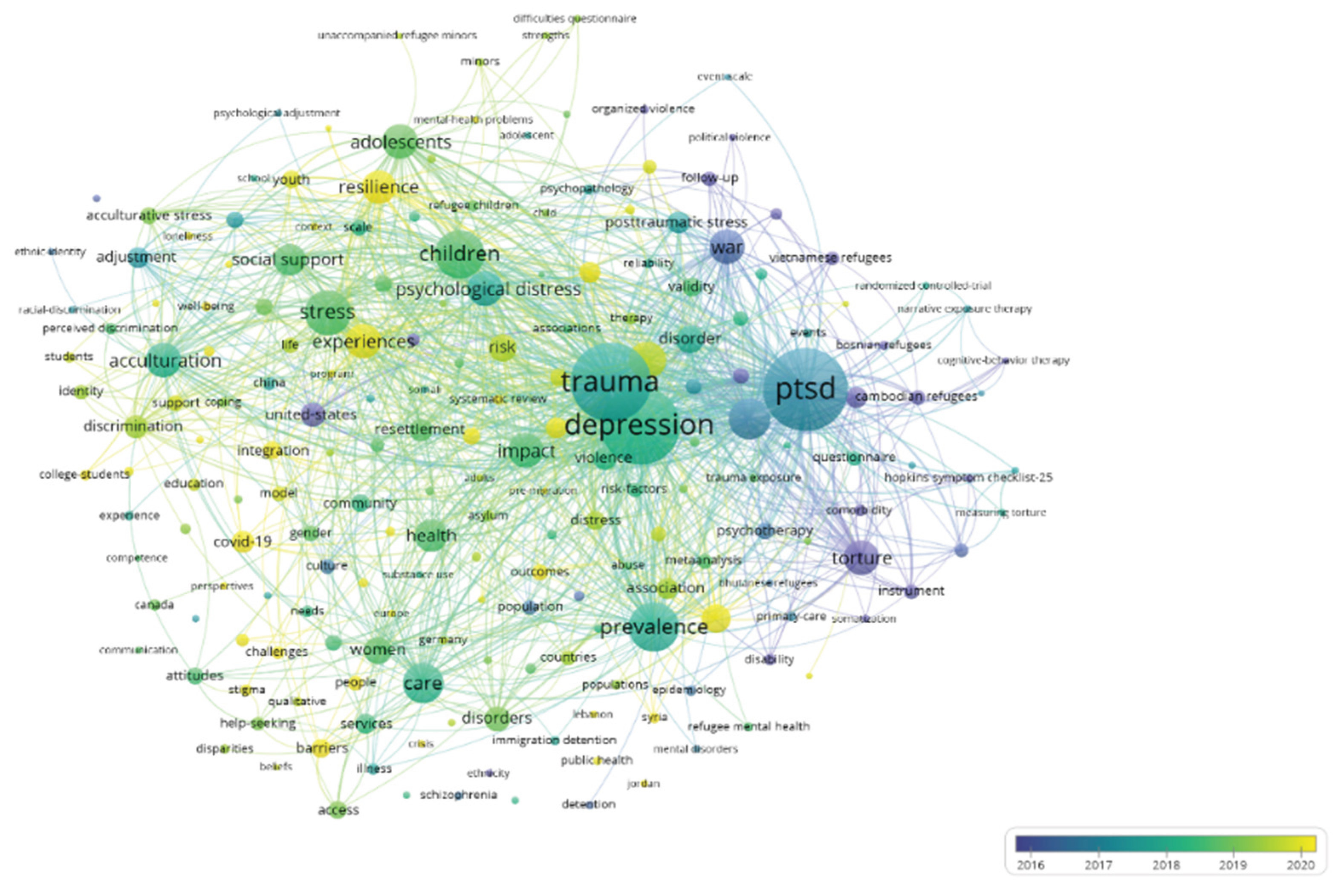
As shown in Figure 6A, we used VOSviewer to build a visualization network map of the 200 keywords in four clusters with co-occurrence: Cluster 1 (red), Cluster 2 (green), Cluster 3 (blue), and Cluster 4 (yellow). The node label is the keyword and the node size represents its frequency. Links connecting two nodes represent a co-occurring relationship between the keywords. The frequency of occurrence was analyzed based on the average publication year. Figure 6B shows a network map of trending topics according to the keywords used until 2024. Circles near dark blue indicate keywords that were popular earlier (around 2016) and circles closer to bright yellow indicate recently (post-2020) popular keywords.
Figure 6A.
Co-occurrence analysis of top keywords.
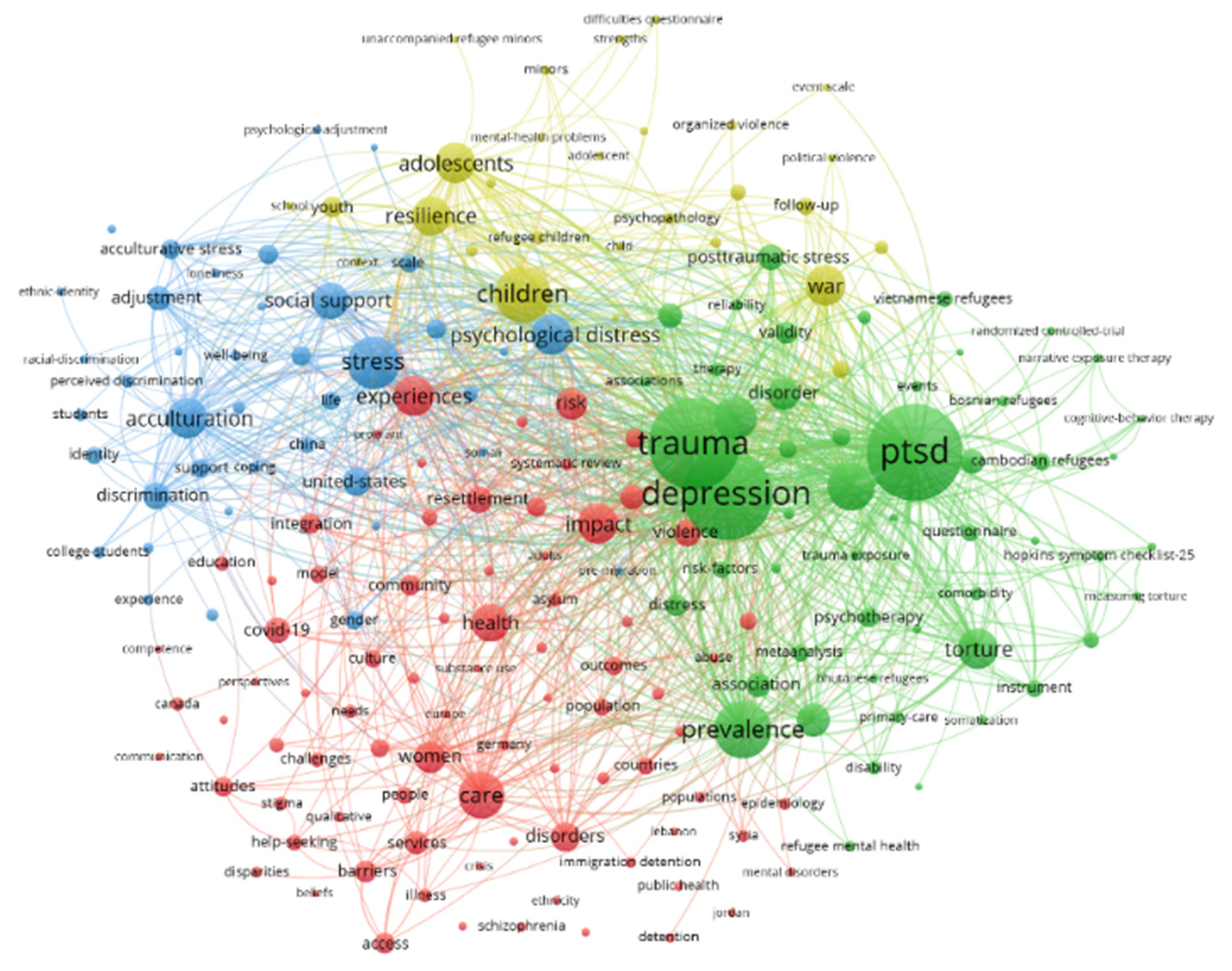
Figure 6B.
Network map of the trend topics according to keywords.
4. Discussion
This study systematically gathered and analyzed bibliometric data pertaining to research on the mental health of international migrants. The analysis delineated prevailing research trends and identified contributing countries, institutions, authors, and relevant keywords associated with the mental health of this population. To our knowledge, this is the first bibliometric analysis of publications on international migrants’ mental health. Previous studies have largely examined clinical or sociological aspects of migrant mental health without quantitatively mapping the field’s structural development or evolution. By providing a visualized overview of intellectual structure and thematic trajectories, this study fills a significant gap in literature.
Since the first independent research paper was published in 1983, research on international migrants’ mental health has continued to grow over the past 40 years. Particularly in the last five years, research results in this field have shown explosive growth, and the number of papers published every year has exceeded 500, indicating a rapid development trend in this field. In addition, multiple disciplines such as psychiatry, public environmental professions, psychology, and social work are actively participating in research in this field, promoting a multidisciplinary perspective and a more comprehensive understanding of the mental health of international migrants.
According to co-authors of the countries’ network map, it reveals the global collaborative nature of the research on the mental health of international migrants: The United States and Australia, as prominent immigrant-receiving nations, lead international research efforts in this field. Europe has the largest number of immigrants [2]. In recent years, European countries have accepted large numbers of refugees based on humanitarian considerations, European countries, with Britain and Germany as centers, formed a close cooperation network on mental health of immigrants [24]. Asian countries such as Japan and South Korea reflects the growing emphasis on international migration, especially in the areas of labor migration and cross-border marriages [26,27,28]. This is closely related to the region's aging population and low fertility rate. Meanwhile, developing countries in Africa and Asia have contributed through collaborative research partnerships, offering critical insights and data on migrants' countries of origin. These contributions are essential for building a globally comprehensive understanding of migrant mental health, as psychological challenges often stem from their pre-migration environment and experiences [2].
The organizations that were most active in studying the mental health of international migrants were aligned with the core countries of the studies. These highly productive institutions are located in countries with active research, have formed relatively independent and closely linked research networks in their regions and are leading trends in international migrant mental health research. By analyzing the distribution and co-authorship of authors, some authors with large nodes and middle locations, showed high output and influence in the field. The multiple color-differentiated clusters of collaborations represent different research teams and topics. These multicenter collaborations indicate that the study of the mental health of international migrants has evolved into multiple research directions, each centered on a different core author. Visually, the connections between different clusters were relatively loose. This structure reflects the limited cooperation between different groups in the study of international migrants’ mental health, which may also mean that there is still room for further integration of the field at a multi-team, multi-regional depth.
Mapping a network of common keywords by analyzing their frequency of common keywords in several publications helps determine the internal structure and trends of mental health research on international migrants. By analyzing the co-occurrence of the top 200 keywords, four clusters were established and analyzed as follows.
Cluster 1 (red) mainly focuses on the risk factors experienced by migrants during migration and after settlement and their impact on mental health, particularly the role of violence, gender factors, and epidemics. Violence and traumatic events are more common among migrants, particularly refugees, and these experiences have a significant negative impact on their mental health [29]. Pandemics such as COVID-19 have exacerbated mental health issues among migrant groups, with many migrants facing additional mental health challenges due to lockdowns, social isolation, and economic pressures [30,31].
Cluster 2 (green) focuses on the psychological disorders of migrants and refugees due to traumatic events, such as political conflict, war, violence, and abuse, and their interventions. Migrants, particularly refugees, often experience severe psychological trauma, leading to high rates of PTSD, depression, anxiety, and other mental disorders [32]. The research in this cluster focused on the development and validation of reliable measurement tools to assess the mental health status of migrants and refugees and how effective interventions can improve their mental health of migrants and refugees. It reflects an ongoing effort to build standardized, trauma-informed approaches to mental health care in displaced contexts.
The core theme of Cluster 3 (blue) was acculturation and psychological stress, focusing on the challenges that migrants face when adapting to new cultural and social environments. Immigrants may face language barriers, cultural conflict, racial discrimination and social exclusion in their new environment, which together constitute acculturative stress [33,34]. Research in this cluster attempts to reveal how immigrants cope with acculturative stress, such as seeking social support, problem-solving, and emotional regulation to facilitate successful integration.
Cluster 4 (yellow) focuses on the mental health and adjustment of migrant and refugee children and adolescents. Children and adolescents are more vulnerable to migration than adults and may be more profoundly affected by traumatic events such as war and family separation [35]. The research in this cluster focuses on the mental resilience of children and adolescents and explores how multilevel supportive environments (such as family, school, and community) can help improve the mental resilience of these groups and promote mental health and social integration.
Research on the mental health of international migrants has undergone a notable shift over the past four decades—from an early focus on traumatic events and psychological disorders to a multidimensional, multi-context comprehensive study. While initial studies focused on traumatic events and their psychological effects, in recent years particularly with the impact of changes in the global social environment and emergencies (such as war and COVID-19), studies have paid more attention to the acculturation, social exclusion, and social integration of migrants in the new environment and have gradually focused on the difficulties of immigrants in accessing mental health services and the important role of social support systems in mental health. This shift highlights the field’s increasing responsiveness to real-world challenges and the need for culturally and contextually informed approaches. Importantly, these evolving priorities strongly align with the World Health Organization’s strategic recommendations for promoting migrant mental health, including the integration of services into primary care, the development of community-based support systems, the reduction of structural and linguistic barriers, and the promotion of equitable access to culturally appropriate care [9]. The rising emphasis on accessibility, inclusivity, and interdisciplinary collaboration highlights the field’s movement toward more actionable and policy-relevant research.
Despite its contributions, this study has several limitations. First, it relied on a single database — Web of Science (WOS) for data collection. Although WOS is a comprehensive and large-scale, multidiscipline platform, relevant literature from other databases may have been omitted [36]. Second, more than 95% of the literature analyzed in this study was published in English, which reflects the dominance of WOS literature in English but may also lead to language bias, ignoring research published in other languages. Moreover, bibliometrics analysis mainly adopts quantitative methods and does not evaluate the quality of literature [22]. As such, variations in study quality may affect the interpretability and reliability of the findings. Future research should consider integrating multiple databases and expanding coverage to include regional and multilingual sources. Incorporating systematic quality assessment frameworks would also enhance the robustness and scientific value of bibliometric analyses. Nonetheless, the present study provides a valuable evidence base for identifying knowledge gaps and guiding future interdisciplinary and policy-relevant research in migrant mental health.
5. Conclusions
International migration is a far-reaching global phenomenon and an important driver of sustainable development [5]. Addressing the mental health needs of international migrants is not only of key significance to the improvement of global public health but is also related to social stability and development. This study underscores the importance of expanding access to mental health services, developing culturally responsive interventions, and designing support strategies tailored to the needs of vulnerable subgroups. Future research should prioritize improving access to mental health services, developing culturally adaptive interventions, and promoting multidisciplinary collaboration to support vulnerable migrant populations through innovative, evidence-based strategies. Enhancing the breadth and depth of research in migrant mental health is essential for advancing health equity and supporting inclusive, globally informed policy and practice.
Author Contributions
Lei Han and Minye Jung conceived and designed the study. Lei Han performed data collection, analysis, visualization, and drafted the initial manuscript. Seunghui Jung, Seongwon Kim, and Yunjeong Eom contributed to the data analysis, interpretation of the results, and reviewed the manuscript. Minye Jung supervised the entire research process, provided critical revisions, and approved the final manuscript. All authors have read and approved the final version of the manuscript.
Funding
This research received no specific grant from any funding agency in the public, commercial, or not-for-profit sectors.
Institutional Review Board Statement
Not applicable. This study did not involve any human participants or personal data.
Informed Consent Statement
Not applicable. This study did not involve any human participants or personal data.
Data Availability Statement
The data that support the findings of this study were retrieved from the Web of Science Core Collection. Access to this database requires a subscription and is not publicly available. However, the search strategy, keywords, and analysis procedures are detailed within the Methods section of the manuscript to allow replication.
Acknowledgments
During the preparation of this manuscript, the authors used ChatGPT (OpenAI, Mar. 2024 version) for the purposes of improving the clarity and grammar of English expressions and generating draft visualizations for Figure 1 and Figure 2 in the “Publication Output” section. The authors have reviewed and edited the output and take full responsibility for the content of this publication.
Conflicts of Interest
The authors declare no conflicts of interest.
Abbreviations
The following abbreviations are used in this manuscript:
| PTSD | Post-traumatic stress disorder |
| WHO | the World Health Organization |
| IOM | International Organization for Migration |
| CSV | Comma-Separated Values |
| COVID-19 | Coronavirus Disease 2019 |
References
- Sironi A, Bauloz C, Emmanuel M: Glossary on Migration (International Migration Law, No. 34). International Organization for Migration (IOM), Geneva Retrieved from: https://publications iom int/books/international-migration-law-ndeg34-glossary-migration 2019.
- McAuliffe M, Oucho LA: World Migration Report 2024, 2024(1): e00033.
- Organization WH: World report on the health of refugees and migrants: summary: World Health Organization; 2022.
- Uphoff E, Robertson L, Cabieses B, Villalón FJ, Purgato M, Churchill R, Barbui C: An overview of systematic reviews on mental health promotion, prevention, and treatment of common mental disorders for refugees, asylum seekers, and internally displaced persons. Cochrane Database of Systematic Reviews 2020(9).
- McAuliffe M, Triandafyllidou A: Word migration report 2022. 2021.
- Webber M, Fendt-Newlin M: A review of social participation interventions for people with mental health problems. Social psychiatry and psychiatric epidemiology 2017, 52:369-380.
- Pinheiro M, Ivandic I, Razzouk D: The economic impact of mental disorders and mental health problems in the workplace. Mental health economics: the costs and benefits of psychiatric care 2017:415-430.
- Alegría M, Álvarez K, DiMarzio K: Immigration and mental health. Current epidemiology reports 2017, 4:145-155.
- Pant S, Eder B, Vračar A, Mosca D, Orcutt M: WHO’s global action plan to promote the health of refugees and migrants. BMJ. 2019;366: l5313.
- Organization WH: World report on the health of refugees and migrants. In. Geneva; 2022.
- Xie L, Chen Z, Wang H, Zheng C, Jiang J: Bibliometric and visualized analysis of scientific publications on atlantoaxial spine surgery based on Web of Science and VOSviewer. World neurosurgery 2020, 137:435-442. e434.
- Aria M, Cuccurullo C: bibliometrix: An R-tool for comprehensive science mapping analysis. Journal of informetrics 2017, 11(4):959-975.
- Luo F, Li RYM, Crabbe MJC, Pu R: Economic development and construction safety research: A bibliometrics approach. Safety science 2022, 145:105519.
- Zupic I, Čater T: Bibliometric methods in management and organization. Organizational research methods 2015, 18(3):429-472.
- Falagas ME, Pitsouni EI, Malietzis GA, Pappas G: Comparison of PubMed, Scopus, web of science, and Google scholar: strengths and weaknesses. The FASEB journal 2008, 22(2):338-342.
- Royle P, Waugh N: A simplified search strategy for identifying randomised controlled trials for systematic reviews of health care interventions: a comparison with more exhaustive strategies. BMC Medical Research Methodology 2005, 5:1-7.
- Scott HM, Havercamp SM: Systematic review of health promotion programs focused on behavioral changes for people with intellectual disability. Intellectual and developmental disabilities 2016, 54(1):63-76.
- Barghadouch A, Kristiansen M, Jervelund SS, Hjern A, Montgomery E, Norredam M: Refugee children have fewer contacts to psychiatric healthcare services: an analysis of a subset of refugee children compared to Danish-born peers. Social Psychiatry and Psychiatric Epidemiology 2016, 51:1125-1136.
- Sweileh WM, Wickramage K, Pottie K, Hui C, Roberts B, Sawalha AF, Zyoud SH: Bibliometric analysis of global migration health research in peer-reviewed literature (2000–2016). BMC public health 2018, 18:1-18.
- Kang S-Y, Kim I, Kim W: Differential patterns of healthcare service use among Chinese and Korean immigrant elders. Journal of Immigrant and Minority Health 2016, 18:1455-1461.
- Stan S: Transnational healthcare practices of Romanian migrants in Ireland: Inequalities of access and the privatisation of healthcare services in Europe. Social Science & Medicine 2015, 124:346-355.
- Donthu N, Kumar S, Mukherjee D, Pandey N, Lim WM: How to conduct a bibliometric analysis: An overview and guidelines. Journal of business research 2021, 133:285-296.
- Yu Y, Li Y, Zhang Z, Gu Z, Zhong H, Zha Q, Yang L, Zhu C, Chen E: A bibliometric analysis using VOSviewer of publications on COVID-19. Annals of translational medicine 2020, 8(13).
- Lebano A, Hamed S, Bradby H, Gil-Salmerón A, Durá-Ferrandis E, Garcés-Ferrer J, Azzedine F, Riza E, Karnaki P, Zota D: Migrants’ and refugees’ health status and healthcare in Europe: a scoping literature review. BMC public health 2020, 20:1-22.
- Minas H, Kakuma R, Too LS, Vayani H, Orapeleng S, Prasad-Ildes R, Turner G, Procter N, Oehm D: Mental health research and evaluation in multicultural Australia: developing a culture of inclusion. International journal of mental health systems 2013, 7:1-25.
- Chung EA: Immigrant incorporation in East Asian democracies: Cambridge University Press; 2020.
- Chung C, Kim K, Piper N: Marriage migration in Southeast and East Asia revisited through a migration-development nexus lens. In., vol. 48: Taylor & Francis; 2016: 463-472.
- Kim K: Cross-border marriages in South Korea and the challenges of rising multiculturalism. International Migration 2017, 55(3):74-88.
- Organization WH: Mental health of refugees and migrants: risk and protective factors and access to care: World Health Organization; 2023.
- Alarcão V, Candeias P, Stefanovska-Petkovska M, Neves J, Pintassilgo S, Machado FL, Santos O, Virgolino A, Santos RR, Heitor MJ: Insights from the EQUALS4COVID19 study on migrant mental health in Portugal: a cross-sectional mixed-methods approach. BMC Public Health 2024, 24(1):2023.
- Camara C, Surkan PJ, Van Der Waerden J, Tortelli A, Downes N, Vuillermoz C, Melchior M: COVID-19-related mental health difficulties among marginalised populations: A literature review. Global Mental Health 2023, 10: e2.
- Charlson F, van Ommeren M, Flaxman A, Cornett J, Whiteford H, Saxena S: New WHO prevalence estimates of mental disorders in conflict settings: a systematic review and meta-analysis. The Lancet 2019, 394(10194):240-248.
- Lueck K, Wilson M: Acculturative stress in Asian immigrants: The impact of social and linguistic factors. International Journal of Intercultural Relations 2010, 34(1):47-57.
- Baeza-Rivera MJ, Salazar-Fernández C, Manríquez-Robles D, Salinas-Oñate N, Smith-Castro V: Acculturative stress, perceived social support, and mental health: The mediating effect of negative emotions associated with discrimination. International Journal of Environmental Research and Public Health 2022, 19(24):16522.
- Lerias D, Ziaian T, Miller E, Arthur N, Augoustinos M, Pir T: The Role of Acculturative Stress on the Mental Health of Immigrant Youth: A Scoping Literature Review. Community Mental Health Journal 2024:1-30.
- Singh VK, Singh P, Karmakar M, Leta J, Mayr P: The journal coverage of Web of Science, Scopus and Dimensions: A comparative analysis. Scientometrics 2021, 126:5113-5142.
Figure 1.
Number of published articles on mental health of international migrants by year.
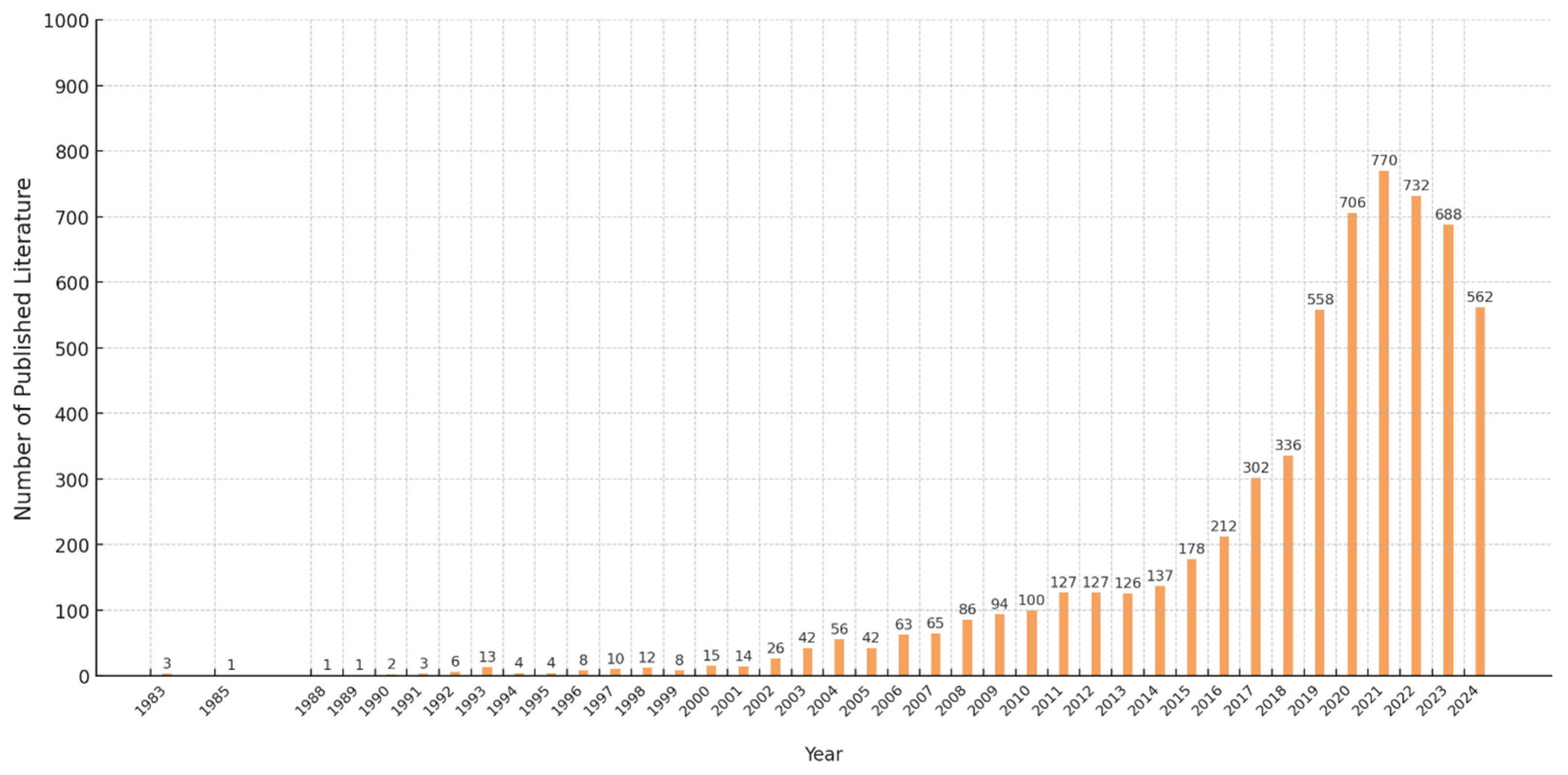
Figure 2.
Figure 2. Top 10 research areas on the mental health of international migrants.
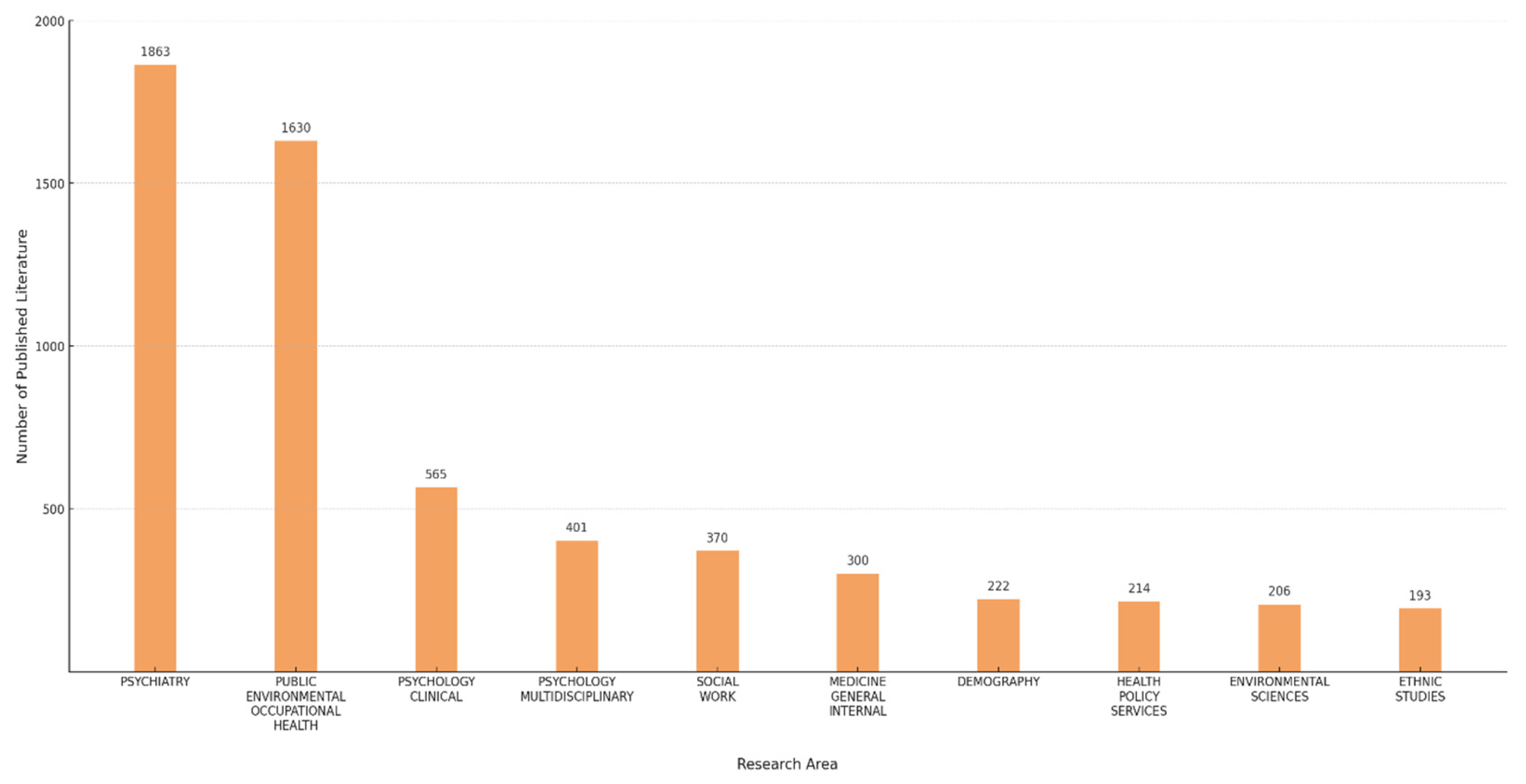
Figure 3.
Top 10 research areas on mental health of international migrants.
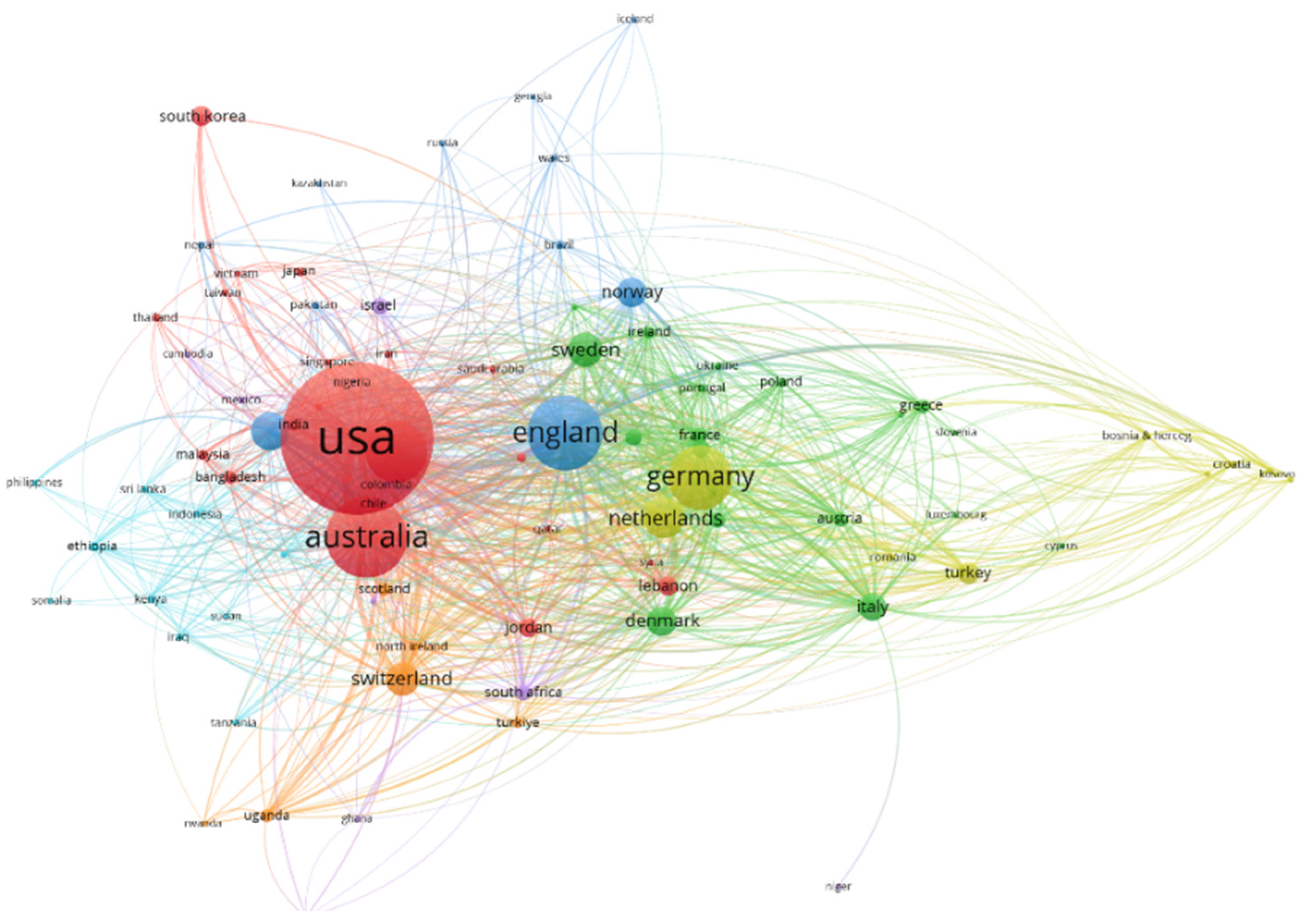
Figure 4.
Distribution and co-authorship of organizations.
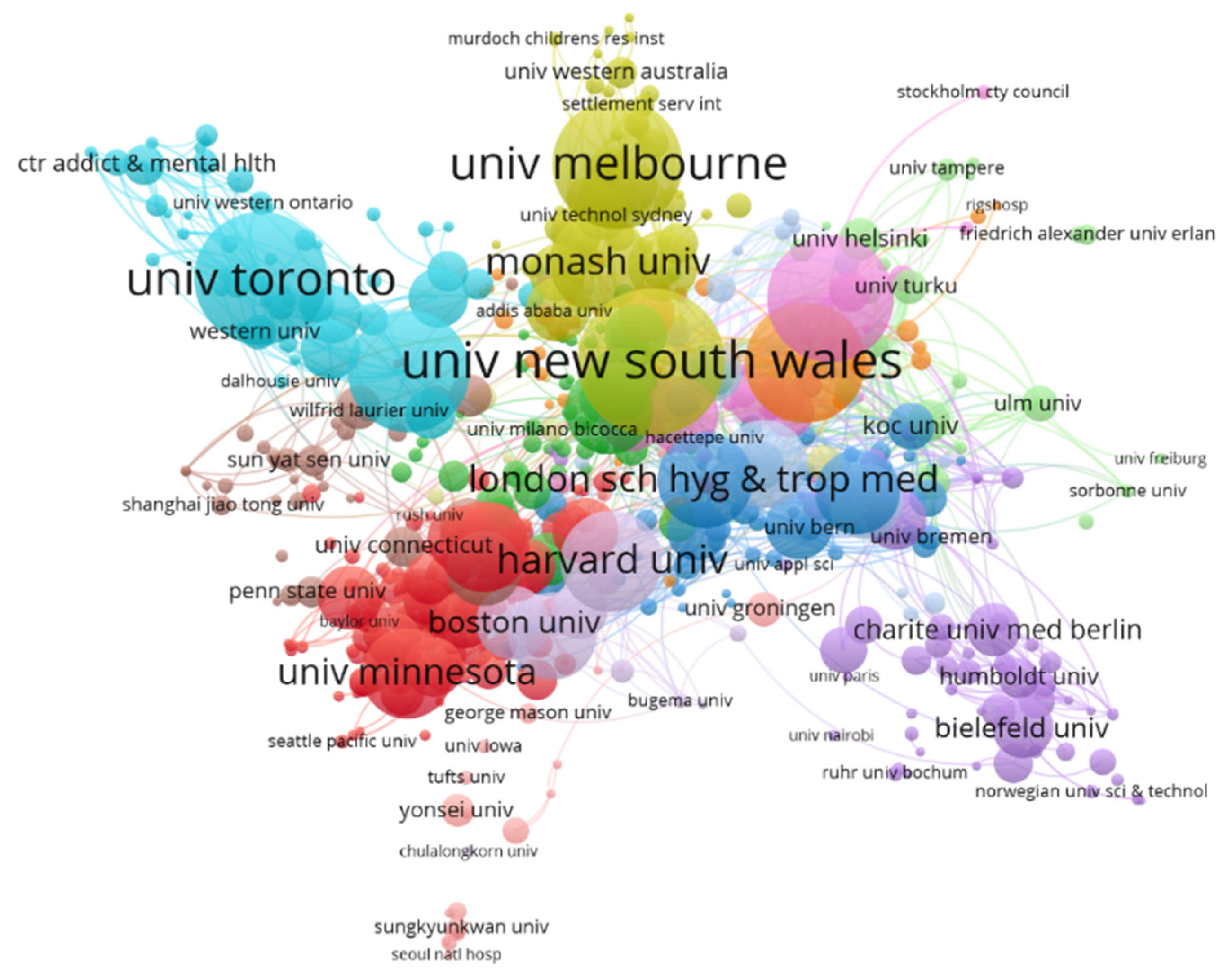
Figure 5.
Distribution and co-authorship of authors.
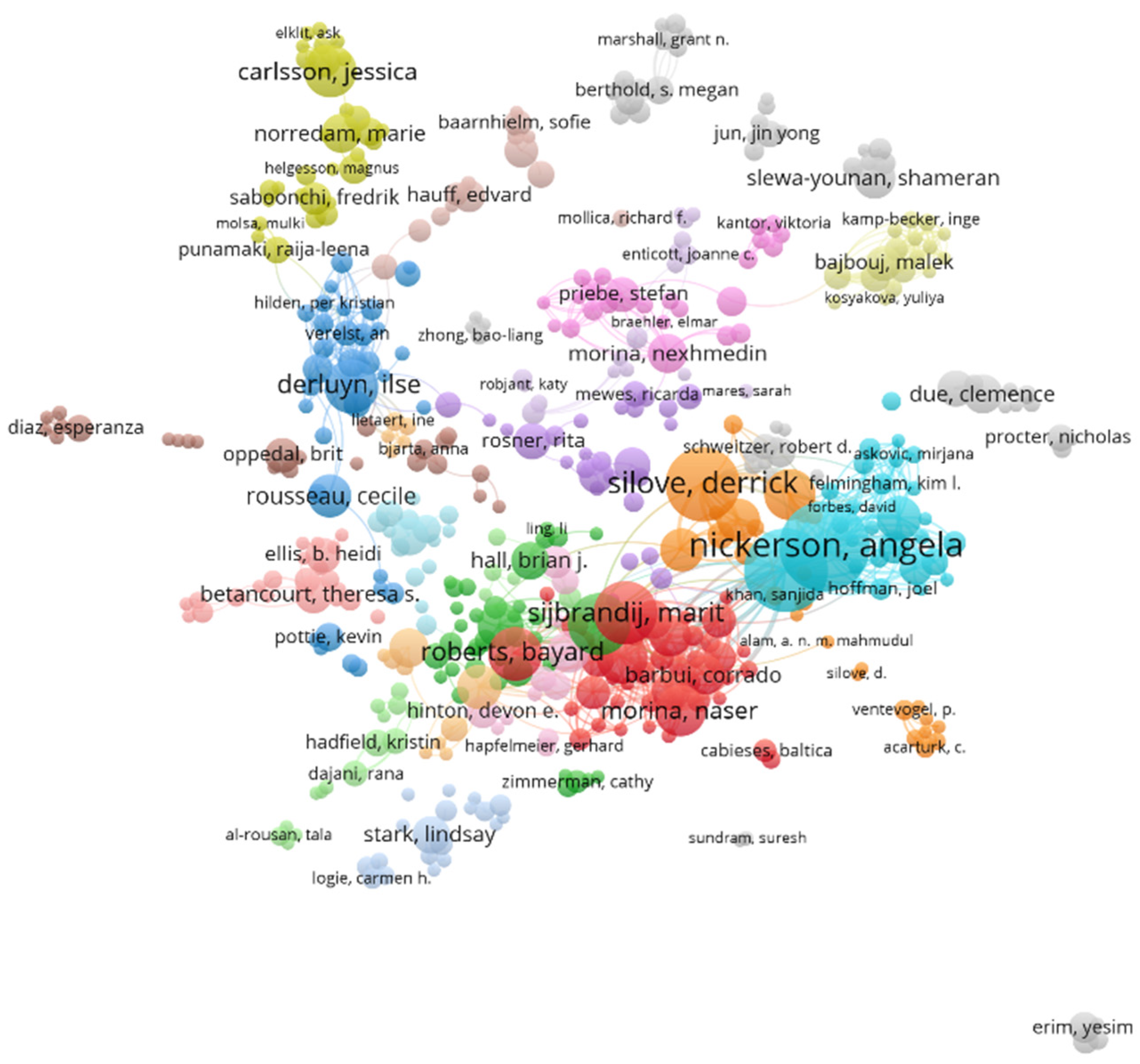
Table 1.
Top 10 countries and regions that conducted research on mental health of international migrants.
Table 1.
Top 10 countries and regions that conducted research on mental health of international migrants.
| Rank | Countries and regions |
Number of publications |
Citation |
Total link strength |
| 1 | United States | 2,096 | 54,356 | 1,393 |
| 2 | Australia | 851 | 24,521 | 730 |
| 3 | United Kingdom | 778 | 21,040 | 1,227 |
| 4 | Germany | 625 | 10,551 | 707 |
| 5 | Canada | 580 | 13,856 | 408 |
| 6 | Netherlands | 338 | 10,228 | 759 |
| 7 | P.R. China | 297 | 6,353 | 287 |
| 8 | Sweden | 259 | 5,179 | 336 |
| 9 | Switzerland | 245 | 7,520 | 562 |
| 10 | Denmark | 215 | 4,826 | 372 |
Table 2.
Top 5 organisations that conducted research on mental health of international migrants.
| Rank | Organisations | Country | Publication | Citation | Total link strength |
| 1 | University of New South Wales | Australia | 161 | 3,471 | 492 |
| 2 | Toronto University | Canada | 142 | 3,899 | 341 |
| 3 | Melbourne University | Australia | 137 | 4,260 | 291 |
| 4 | Karolinska Institutet | Sweden | 133 | 2,609 | 273 |
| 5 | McGill University | Canada | 127 | 4,331 | 188 |
Table 4.
Top 10 most productive authors in research on mental health of international migrants.
| Rank | Authors | Countries/Regions | Publication | Citation |
| 1 | Nickerson, Angela | Australia | 73 | 2,824 |
| 2 | Bryant, Richard A. | Australia | 66 | 3,618 |
| 3 | Silove, Derrick | Australia | 56 | 3,762 |
| 4 | Sijbrandij, Marit | Netherlands | 44 | 606 |
| 5 | Ventevogel, Peter | Switzerland | 43 | 1,361 |
| 6 | Derluyn, Ilse | Belgium | 35 | 934 |
| 7 | Roberts, Bayard | United Kingdom | 35 | 1,202 |
| 8 | Carlsson, Jessica | Danmark | 34 | 504 |
| 9 | Cuijpers, Pim | Netherlands | 33 | 465 |
| 10 | Morina, Naser | Switzerland | 33 | 977 |
Table 5.
Top 10 research keywords on mental health of international migrants.
| Rank | Keywords | Occurrences | Total linkstrength |
| 1 | PTSD | 1,466 | 8,057 |
| 2 | trauma | 1,352 | 7,282 |
| 3 | depression | 1,324 | 7,429 |
| 4 | prevalence | 692 | 3,752 |
| 5 | children | 689 | 3,792 |
| 6 | stress | 613 | 3,064 |
| 7 | symptoms | 537 | 3,224 |
| 8 | Care | 516 | 2,200 |
| 9 | anxiety | 458 | 2,713 |
| 10 | acculturation | 433 | 2,332 |
Disclaimer/Publisher’s Note: The statements, opinions and data contained in all publications are solely those of the individual author(s) and contributor(s) and not of MDPI and/or the editor(s). MDPI and/or the editor(s) disclaim responsibility for any injury to people or property resulting from any ideas, methods, instructions or products referred to in the content. |
© 2025 by the authors. Licensee MDPI, Basel, Switzerland. This article is an open access article distributed under the terms and conditions of the Creative Commons Attribution (CC BY) license (http://creativecommons.org/licenses/by/4.0/).
Copyright: This open access article is published under a Creative Commons CC BY 4.0 license, which permit the free download, distribution, and reuse, provided that the author and preprint are cited in any reuse.


