
Submitted:
19 May 2025
Posted:
19 May 2025
You are already at the latest version
Abstract
In an increasingly digital world, establishing digital trust is imperative for effective governance, inclusive growth, and sustained digital transformation. As India advances toward a technology-driven society, addressing challenges such as data privacy, cybersecurity, algorithmic bias, and ethical AI is critical, especially for protecting first-time and vulnerable digital users. This paper advocates for the creation of a Digital Trust Certification framework, a strategic policy tool to ensure secure, ethical, and transparent digital practices across both public and private sectors. Anchored in global best practices and customized for India’s socio-technical environment, the certification will enhance user confidence, support compliance with emerging data protection laws, and strengthen India’s leadership in the global digital economy. By institutionalizing trust as a measurable standard, this initiative will bridge the gap between regulatory frameworks and citizen participation, reinforcing public trust and enabling a resilient, future-ready digital ecosystem aligned with India’s vision for digital empowerment and inclusive development.
Keywords:
digital trust
; e-governance
; blockchain
; digital ethics
; digital trust certification
; digital identity
; digital trust mark
1. Introduction
In the rapidly evolving digital age, trust is no longer just a social virtue, it has become an essential foundation for the functioning of economies, societies, and governments. Known as digital trust, it refers to the confidence that users, organizations, and governments place in the ability of digital systems to operate securely, reliably, ethically, and transparently [1,2]. As digital technologies penetrate every corner of human activity, from commerce and communication to governance and healthcare, ensuring that these systems inspire trust is critical. Digital trust empowers people to interact online, share data, access services, and conduct transactions with the assurance that their rights, privacy, and interests are safeguarded [3].
The relevance of digital trust has grown alongside the global expansion of the digital economy. Technological advances such as cloud computing, artificial intelligence, the Internet of Things, and mobile services have revolutionized how people work, shop, learn, and engage with public institutions. Every digital interaction today, whether entering credit card details into an app, accessing medical records through a patient portal, or logging into a government website, relies on a baseline of trust. When that trust is absent, individuals become hesitant to engage digitally. This hesitancy can lead to slower adoption of innovations, inefficiencies in public service delivery, and ultimately, a loss of potential economic and social benefits [4].
Public awareness of digital risks has increased dramatically in recent years. High-profile data breaches, the spread of online misinformation, unethical applications of artificial intelligence, and concerns about surveillance have all contributed to a more cautious and discerning user base [5]. Citizens are now asking critical questions: How is my data being used? Who has access to it? Can I control what is shared? These concerns have placed pressure on both public and private sector organizations to go beyond traditional data security measures. They must demonstrate a comprehensive commitment to responsible data handling, transparency, and ethical technology use. In this environment, digital trust must be built deliberately and systematically, it cannot be treated as an afterthought [6].
Governments, in particular, face unique challenges and responsibilities when it comes to earning and sustaining digital trust. As they digitize services such as tax filing, social security, healthcare, and legal records, they must ensure that systems are not only efficient but also trustworthy. Citizens must feel confident that their information is protected, that decisions made using algorithms are fair and explainable, and that they have avenues for redress when issues arise. In this context, digital trust becomes a cornerstone of effective e-governance. E-governance, defined as the use of digital technologies to improve the delivery and accessibility of public services, is only successful when people are willing to use it, and that willingness depends heavily on trust.
Secure digital identity systems, for example, allow users to verify themselves online to access government services. But if these systems are prone to breaches or misuse, public confidence can quickly erode. Similarly, when governments use artificial intelligence to make decisions about benefits, education, or employment, citizens need transparency into how those decisions are made and assurance that there is human oversight. Without these safeguards, digital tools can inadvertently exclude, discriminate, or harm the very people they aim to serve. Hence, trust must be embedded not only in the technology itself but also in the policies, laws, and ethical frameworks that govern its use.
The benefits of building digital trust extend far beyond the individual. When people trust digital systems, they are more likely to use them, which in turn allows governments to reach more citizens, deliver services more efficiently, and gather better data for informed decision-making. In the private sector, companies that demonstrate trustworthy practices enjoy stronger customer loyalty, improved brand reputation, and better compliance with increasingly complex data protection regulations [7]. On a broader scale, digital trust enables cross-border collaboration, supports secure digital trade, and promotes innovation ecosystems that are resilient and inclusive.
Creating an environment of digital trust involves several interconnected elements. First and foremost, data privacy and protection must be prioritized. Users should have clarity on what data is collected, how it is stored, and what it is used for, and they should have meaningful control over these choices. Cybersecurity is equally crucial, ensuring that digital platforms are protected from threats such as hacking, data loss, and identity theft. Transparency is another key factor; organizations and governments must be open about the systems they use, especially when those systems involve automation or machine learning. Ethical technology development, inclusive access, and digital literacy also play significant roles in fostering an ecosystem where trust can flourish.
Looking ahead, the importance of digital trust will only intensify. As emerging technologies like blockchain, quantum computing, and AI continue to reshape societies, they will present new risks and opportunities. Governments and institutions must respond with forward-looking policies that embed trust into digital systems by design. This includes adopting transparent regulatory frameworks, investing in secure infrastructure, encouraging public participation in technology governance, and fostering digital environments that are ethical, inclusive, and resilient [8].
In brief, digital trust is the invisible yet indispensable thread that connects people to the digital services they rely on, as shown in Figure 1. It is the foundation upon which digital economies thrive and digital democracies flourish. Whether it is enabling a small business to reach new customers, a student to attend virtual classes, or a citizen to access vital public services, trust must be present for the digital world to function effectively. Building and maintaining this trust is not a one-time task but an ongoing commitment, one that lies at the heart of a secure, equitable, and future-ready digital society.
2. Navigating the Landscape: Challenges and Opportunities
2.1. Challenges and Risks in Building Digital Trust
While the momentum for digital transformation is accelerating globally, establishing, and sustaining digital trust, especially in the domain of e-governance, remains a complex and multifaceted challenge. Trust, once lost, is hard to rebuild. Below are the key barriers that must be addressed holistically to ensure digital systems are not only efficient, but also secure, ethical, and inclusive. The challenges that need to be addressed are shown in Figure 2.
a. Cybersecurity Threats: Government platforms are increasingly targeted by sophisticated cyberattacks, including ransomware, phishing, and large-scale data breaches. Such incidents not only compromise sensitive citizen data but also erode the public’s faith in the state’s ability to protect their digital identity. A single vulnerability in public infrastructure can trigger a cascading loss of trust across services, making cyber resilience a cornerstone of digital trust [9].
b. Privacy Concerns: One of the most persistent obstacles to trust is the opacity surrounding data practices. Many digital governance platforms fail to communicate clearly how personal data is collected, processed, stored, or shared. This lack of transparency leads to widespread fears of surveillance, profiling, and misuse of information, especially when data is handled without informed consent or independent oversight [10].
c. Ethical Risks of AI: The integration of AI into public services, whether for welfare targeting, predictive policing, or automated healthcare triage, raises serious ethical questions. Without mechanisms for algorithmic transparency, auditability, and human oversight, AI systems risk reinforcing societal biases and making opaque decisions that affect lives. When citizens cannot understand or challenge automated decisions, the legitimacy of digital governance suffers [11].
d. Digital Divide: Despite growing connectivity, millions of people in rural, remote, or marginalized communities remain on the wrong side of the digital divide. Poor access to devices, unstable internet, or limited digital literacy often exclude citizens from essential e-services. Unless digital systems are designed with inclusivity and accessibility at their core, technology may inadvertently deepen inequalities rather than bridge them [12].
e. Fragmented Legal and Regulatory Frameworks: Disparate and sometimes conflicting laws across jurisdictions, especially on data protection, digital identity, and cross-border data flows, create confusion and undermine systemic trust. Without harmonized frameworks, digital platforms struggle to ensure consistent protections for users, and citizens may feel uncertain about their rights in digital spaces. Interoperability and regulatory coherence are vital for building trust at scale [13].
f. Lack of Citizen Awareness: A significant number of users engage with digital public services without fully understanding how these systems function or what rights and protections they hold. This lack of awareness leads to disengagement, suspicion, and low adoption. Building digital trust requires more than secure systems, it requires informed users. Civic education and digital literacy initiatives must be embedded within digital policy implementation to cultivate a culture of trust and accountability [12].
2.2. The Future of Trust-Driven E-Governance
As we move deeper into the digital age, the future of e-governance will be fundamentally shaped by “trust by design”, an approach where trustworthiness is not retrofitted, but architected into the very foundation of public digital infrastructure. In this vision of governance, technology is not merely efficient, it is transparent, ethical, inclusive, and accountable. To achieve this, a new paradigm of trust must emerge, built on six foundational pillars that will define the next generation of digital public services:
a. AI Governance and Explainability: Artificial Intelligence will increasingly drive public service delivery, from welfare allocation and smart policing to predictive healthcare and digital adjudication. But as algorithms influence decisions that affect citizens’ lives, public trust will hinge on explainability and fairness. Future-ready e-governance will institutionalize “human-in-the-loop” models, where critical decisions are supervised or co-evaluated by humans. Algorithmic decisions will be required to meet standards of transparency, auditability, and recourse, ensuring that AI operates not as an opaque authority, but as an accountable tool aligned with democratic values [14].
b. Digital Sovereignty and Data Empowerment: The future of digital governance will center on citizen empowerment through data rights. Individuals will no longer be passive data subjects but active participants in the data economy. Inspired by India’s pioneering Data Empowerment and Protection Architecture (DEPA), governance systems will evolve to allow consent-driven, purpose-specific data sharing across services, giving users control, portability, and visibility over how their data is used. This model of digital sovereignty will not only enhance trust but also enable responsible innovation and data-driven policy responsiveness [12].
c. Interoperable Digital Identity Ecosystems: As mobility and service needs transcend geographies, trusted digital identity systems must become interoperable, both nationally and globally. Federated identity architectures will allow citizens to access services seamlessly across states, sectors, and borders, whether for accessing healthcare in another state, transferring academic credentials, or receiving welfare in a new city. Through global coalitions and mutual recognition protocols, India has the opportunity to lead in building a globally portable, privacy-preserving digital identity system, a key enabler of frictionless governance in the 21st century [15].
d. Blockchain and Decentralized Trust Models: Emerging technologies like blockchain will play a critical role in enhancing the integrity of public records, whether for land registries, procurement audits, or benefit disbursements. Immutable, verifiable, and transparent, blockchain systems can dramatically reduce fraud and corruption, while Decentralized Identifiers (DIDs) offer a next-generation model of identity where individuals retain control without relying on a single central authority. This shift from centralized trust to distributed trust can redefine how citizens interact with the state, making governance more resilient, secure, and participatory [8].
e. Personalization Without Surveillance: Governments will increasingly use data analytics and AI to personalize public services, ensuring that interventions are timely, targeted, and effective. However, this must be achieved without slipping into surveillance. The future lies in privacy-preserving technologies, such as federated learning and differential privacy, that enable personalization without compromising individual anonymity. Citizens will receive tailored benefits and information, but their data dignity and consent boundaries will be sacrosanct [13].
f. Public Participation and Co-Creation: Perhaps the most profound evolution will be the shift from digital delivery to democratic co-creation. Trust will not be built solely through back-end security or front-end usability, but through genuine public participation. Civic tech platforms, citizen feedback loops, and open-source digital governance will allow people to shape the very services they use. This will create a feedback-rich, citizen-centric governance model where technology is not imposed, but co-designed, fostering lasting trust and legitimacy [6].
3. Global Perspectives on Digital Trust Frameworks
Digital trust is a critical factor in the success and adoption of technology worldwide, yet it varies greatly depending on a country’s regulatory approach, digital infrastructure, and public attitudes toward privacy and security. In some regions, digital trust is built through strong institutional frameworks that enforce strict data protection laws, ensure transparency in data handling, and promote secure digital identities. These areas often have a well-established culture of digital literacy and public awareness, contributing to higher confidence in online platforms, digital services, and government technologies. Citizens are more likely to engage with digital tools when they feel their personal information is protected and their digital rights are respected.
Conversely, in places where regulations are weak, inconsistently enforced, or lag behind technological advancements, digital trust tends to be lower. Users may be more hesitant to adopt digital services due to concerns about data misuse, surveillance, or cyber threats. In such environments, a lack of accountability and insufficient user protections can erode confidence and slow down digital transformation. Building digital trust in these areas requires a combination of regulatory reform, investment in cybersecurity, public education, and corporate responsibility. Across the world, the level of digital trust continues to shape how societies interact with and benefit from technology.
The key initiatives taken by some countries are described and shown below in Figure 3.
- United States
The United States is actively strengthening digital trust through comprehensive cybersecurity strategies, privacy frameworks, and trusted digital identity initiatives [13]. The National Institute of Standards and Technology (NIST) plays a central role by offering frameworks like the Cybersecurity Framework and the Privacy Framework, guiding both public and private sectors in secure digital practices. Additionally, federal efforts like Login.gov aim to streamline secure user authentication across government services. Recent executive orders have also emphasized the responsible use of artificial intelligence, requiring transparency, risk mitigation, and ethical standards. Furthermore, agencies such as the Cybersecurity and Infrastructure Security Agency (CISA) work closely with industries to protect national digital infrastructure. Although the U.S. lacks a unified federal privacy law, states like California have introduced strong data privacy regulations (e.g., CCPA). Combined, these measures contribute to growing trust in digital government and commerce while encouraging innovation across sectors.
- United Kingdom
The United Kingdom is focused on creating a safe and user-friendly digital environment where trust is central to all services. A major step has been the development of a Digital Identity and Attributes Trust Framework [15], which sets standards for how organizations handle user identities securely. This complements initiatives like GOV.UK Verify and a planned “trust mark” system to verify approved digital ID providers. The Information Commissioner’s Office (ICO) serves as a watchdog for privacy rights, enforcing the UK’s version of GDPR and holding organizations accountable. The UK also promotes responsible AI development through its AI white papers and Ethics Framework, encouraging transparency and fairness. From banking and healthcare to tax and social services, the UK is unifying access through secure “single sign-on” systems, helping to reduce fraud and improve citizen confidence. The government is actively engaging both industry and the public to build lasting digital trust.
- Estonia
- nia
Estonia is widely regarded as the global leader in digital trust and e-governance. Nearly every public service is available online, from voting and tax filing to medical records and business registration. The backbone of this trust is Estonia’s digital identity system, which provides citizens and residents with secure authentication via ID cards, mobile ID, and Smart-ID. The X-Road platform allows public and private organizations to exchange data securely and transparently [16], without central storage, ensuring privacy and control for users. Estonia was also the first country to introduce e-Residency, allowing non-residents to start and manage EU-based businesses online. What sets Estonia apart is its data embassies, secure backup servers in other countries, ensuring uninterrupted digital governance even during crises. Transparent data logs, robust cybersecurity, and blockchain-based systems all contribute to an environment where digital trust is not just an ambition, it’s a daily reality.
- Singapore
Singapore is one of Asia’s frontrunners in building a secure and trusted digital ecosystem. Its success lies in a strong national commitment to cybersecurity, data governance, and digital identity. The widely used SingPass system enables residents to access over 2,000 services, from taxes to healthcare, with a single, secure login. Singapore’s Trusted Data Sharing Framework promotes ethical and secure exchange of data between organizations, balancing innovation with privacy. The Personal Data Protection Act (PDPA) provides clear rules on data collection, consent, and user rights, making businesses more accountable. In the realm of artificial intelligence, the government launched a Model AI Governance Framework [17], one of the first of its kind globally, emphasizing explainability, fairness, and human-centric design. Managed by agencies like GovTech and IMDA, Singapore’s “trust-by-design” approach integrates security and ethics into all public services. It continues to lead by example in shaping a trustworthy digital future in the region.
- Australia
- lia
Australia is actively advancing digital trust through robust frameworks focused on privacy, security, and consumer rights. The Consumer Data Right (CDR) gives individuals greater control over their personal data, allowing them to decide which organizations can access it, particularly in the banking, energy, and telecommunications sectors. The Digital Identity Framework is a key initiative [18], aiming to provide citizens with a secure, unified method of accessing government and private-sector services online. This framework is designed with a focus on user consent, privacy, and transparency. Additionally, Australia’s Privacy Act is being reformed to keep pace with rapidly changing technology and better protect individuals’ rights. The Australian Cyber Security Centre (ACSC) works to protect the nation’s digital infrastructure and advises both government and businesses on cyber threats. Australia's approach emphasizes consumer trust, data protection, and a cooperative effort between the government and industry to enhance digital security.
- Russia
- sia
Russia has been making significant strides in digital trust, but its approach is often centered on state control and data sovereignty. The Federal Law on Personal Data requires strict regulations around the collection and storage of citizens' data, mandating that data about Russian citizens must be stored on Russian servers. This data localization law aims to increase national security and maintain control over personal data. Russia’s government is also focusing on digital identity and has launched the Unified Identification and Authentication System (ESIA) to enable citizens to securely access government services online. Additionally, cybersecurity is a high priority, with Russia investing heavily in its Information Security Doctrine to safeguard critical digital infrastructure from foreign threats. Despite concerns over privacy and surveillance, Russia continues to develop frameworks for secure digital interactions, with an emphasis on national security and control over data flows.
- China
- ina
China is developing its own framework for digital trust, driven by state-led digital infrastructure, strong cybersecurity laws, and emerging technology governance. At the center of this strategy is the Cybersecurity Law of 2017, which mandates strict data handling, network security, and personal information protection. In 2021, China introduced the Personal Information Protection Law (PIPL), often compared to Europe’s GDPR, which gives individuals more control over how their data is collected and used. China also promotes digital identity through its national ID system, widely integrated into apps and online services. A notable yet controversial component is its Social Credit System, designed to evaluate trustworthiness in economic and social behavior, raising ethical and privacy debates. Despite concerns around surveillance, China is investing heavily in trusted blockchain standards, AI ethics frameworks, and data localization policies to enhance digital trust in commerce and governance while maintaining strong state oversight.
- Japan
Japan has taken significant steps to promote digital trust as part of its broader digital transformation agenda. Central to this initiative is the Digital Agency, established in 2021 to lead efforts in creating a secure, user-friendly digital infrastructure. The agency emphasizes transparency, data protection, and interoperability to build public confidence in digital services. Japan's approach includes strengthening cybersecurity, implementing rigorous data governance standards, and fostering public-private partnerships to advance innovation responsibly. The government is also aligning its policies with global standards, ensuring cross-border data flows remain secure and trusted. Initiatives like the Trusted Web framework aim to provide a decentralized and verifiable internet environment, emphasizing user control over personal data. Through these efforts, Japan seeks to enhance both domestic and international trust in digital platforms, supporting its vision of a digitally inclusive society that balances innovation with security and ethics [19].
- Switzerland
The Swiss Digital Trust Initiative, led by the Swiss Digital Initiative (SDI), aims to promote transparency, accountability, and ethical standards in the digital space. Its flagship effort is the Swiss Digital Trust Label, launched in 2022 [20], which certifies digital services based on criteria such as data protection, security, reliability, and fair user interaction. Developed with input from academia, business, and civil society, the label helps users identify trustworthy digital services and encourages organizations to embed responsible practices into their design. Backed by institutions like EPFL and global partners, Switzerland positions itself as a pioneer in fostering digital trust through a neutral, user-focused, and globally applicable framework. The initiative strengthens public confidence while supporting innovation rooted in ethical governance.
- Brazil
Brazil promotes digital trust primarily through its data protection law, the Lei Geral de Proteção de Dados (LGPD), which came into effect in 2020 [21]. Modeled after the EU’s GDPR, the LGPD regulates the collection, processing, and storage of personal data by public and private entities. It emphasizes user consent, data minimization, and the right to access and correct personal information. The Autoridade Nacional de Proteção de Dados (ANPD) oversees compliance and enforcement. Brazil’s framework enhances transparency and user rights, fostering trust in digital services. Additionally, Brazil is investing in digital identity systems and cybersecurity strategies to improve service delivery and reduce fraud. These efforts collectively aim to create a safer and more accountable digital environment for citizens and businesses.
4. Role of International Organizations in Advancing Digital Trust
At the global level, many institutions are recognizing the critical role of trust in digital transformation.While individual countries implement national strategies to foster digital trust, international cooperation is equally important. It includes guiding principles for data protection, digital identity, responsible AI, and cross-border data flows. Their collective efforts highlight a growing consensus: that digital trust is not just a national priority but a global imperative. Global organizations help harmonize standards, share best practices, and offer policy guidance. Here's how some leading bodies contribute:
The United Nations (UN) Global Digital Compact, part of its Roadmap for Digital Cooperation, emphasizes the creation of a safe, inclusive digital world. It highlights digital trust as essential for sustainable development, advocating for universal digital identity, ethical AI, data privacy, and inclusive governance [7].
World Economic Forum (WE) Global Digital Trust Framework provides a blueprint for ethical technology use, accountability in AI, and cross-sector cooperation. It promotes “trust by design,” ensuring digital systems are secure, inclusive, and responsive from the outset [6].
Organisation for Economic Co-operation and Development (OECD) offers a Digital Government Policy Framework, helping governments implement trustworthy, transparent, and citizen-centered digital services. Its AI principles focused on robustness, human-centeredness, and transparency, guide ethical tech adoption globally [3].
European Union (EU) has been a pioneer in shaping global data trust norms. The General Data Protection Regulation (GDPR) sets a gold standard for data protection and citizen rights. Its eIDAS Regulation facilitates trusted electronic identification and authentication across borders [4].
World Bank through its ID4D (Identification for Development) initiative, the World Bank supports countries in building secure, inclusive, and trusted digital ID systems that underpin access to essential public services [22].
These organizations ensure that digital trust is not only a national asset but a shared global commitment.
5. India’s Digital Trust Readiness: Progress and Potential
In India, a country with over 1.4 billion citizens, the shift towards digital systems is crucial for fostering economic growth, improving governance, and enhancing social inclusion. However, the digital transformation of the nation comes with its own challenges, with digital trust being at the forefront of these concerns.
The growing reliance on digital infrastructure, from government platforms offering public services to private companies providing digital payments, makes it imperative for the nation to prioritize building and maintaining this trust. Only when citizens, businesses, and other stakeholders feel assured that their data is safe and that systems operate fairly and transparently will the digital ecosystem in India thrive.
India's ambition of becoming a leading global player in the digital economy is inextricably linked to building digital trust. From online transactions to government services, every digital interaction in the country hinges on trust. The advent of initiatives like Digital India, Aadhaar, Unified Payments Interface (UPI), and e-governance platforms has revolutionized how Indians engage with the digital world. However, these services and innovations can only succeed if they earn the trust of their users [23,24,25].
India’s digital transformation is occurring in a context where a large portion of the population has limited experience with technology. Digital literacy remains a significant challenge in many parts of the country, particularly in rural and underserved areas. For millions of people to embrace digital services, they must feel confident that their information is being handled securely and that their interactions with these platforms are reliable.
5.1. Foundational Initiatives Driving Trust-Enabled Public Services
Several initiatives have been launched by the Indian government to lay the foundation for digital trust. These initiatives aim to create a secure and transparent digital environment, safeguard privacy, and build confidence in the country's digital infrastructure. Below are some key efforts contributing to this cause:
Digital India Programme: Launched in 2015, the Digital India Programme is one of the most ambitious government initiatives aimed at transforming India into a digitally empowered society. The initiative aims to improve the nation’s digital infrastructure, increase internet penetration, and enable greater access to digital services for every citizen [23]. Through Digital India, the government has set out to create a more inclusive digital ecosystem, providing access to online services such as e-governance, digital payments, and telemedicine.
By improving digital infrastructure, Digital India enhances access to services for remote and rural populations, ultimately boosting citizen engagement in the digital sphere. The growing reach of digital literacy initiatives under Digital India is helping to bridge the digital divide by equipping citizens with the knowledge and skills to use technology safely and effectively. However, to maintain digital trust, this initiative must also address concerns around data security, privacy, and the integrity of digital platforms.
Aadhaar and Digital Identity: One of India’s most significant innovations in digital governance is the Aadhaar program. Aadhaar is a biometric-based identification system that provides a unique 12-digit identity number to every resident of India [24]. It is linked to various public services, from welfare benefits to financial inclusion initiatives. Aadhaar’s widespread adoption has led to significant improvements in transparency and efficiency in delivering government services, reducing fraud, and ensuring that the benefits reach the right people.
Despite its advantages, Aadhaar has faced significant concerns regarding data privacy, security, and surveillance. Recognizing these concerns, the Indian government has implemented measures to enhance security and protect personal data. For example, the Aadhaar Act provides safeguards on data collection and processing, with guidelines on ensuring the system’s integrity. The Supreme Court of India also ruled that Aadhaar cannot be made mandatory for services like private companies or banking, emphasizing the need for voluntary consent in certain contexts.
Digital Payments: India’s rapid adoption of digital payments has been one of the country’s greatest successes in the digital era. The Unified Payments Interface (UPI) is a revolutionary system that allows users to make real-time payments directly between bank accounts, without the need for intermediaries. UPI has been instrumental in bringing millions of Indians into the digital economy, simplifying payments for everything from utility bills to merchant transactions [25].
UPI’s success can largely be attributed to its security features. Payments made through UPI are encrypted, reducing the risk of fraud and providing users with confidence that their financial transactions are secure. Additionally, the government’s Pradhan Mantri Jan Dhan Yojana (PMJDY), which promotes financial inclusion, ensures that even underserved communities have access to digital financial services.
By strengthening India’s digital payments infrastructure, UPI is helping build a culture of digital trust. For these systems to remain effective and trusted, they must continually evolve to address emerging cybersecurity threats, consumer rights, and data protection issues.
Digital Personal Data Protection Act (DPDP): Responding to evolving concerns around data privacy, the Indian government enacted the Digital Personal Data Protection Act (DPDP) in 2023. Building on the earlier draft of the Personal Data Protection Bill (PDPB) and drawing inspiration from global standards like the EU’s GDPR, the DPDP Act seeks to regulate personal data processing and empower individuals with greater control over how their data is collected, used, and shared [10].
The DPDP Act sets out clear obligations for organizations, mandating lawful, transparent, and fair processing of personal data. It also establishes the Data Protection Board to adjudicate disputes and enforce compliance. While the Act relaxes earlier data localization requirements, it retains significant penalties for violations, emphasizing the protection of individual rights and enhancing accountability in digital ecosystems.
The implementation of the DPDP Act marks a critical advancement in India's digital governance landscape, aiming to build greater public trust and foster a safer, more secure digital environment for all citizens.
National Cyber Security Policy (NCSP): As India digitizes its economy and government services, the threat landscape also becomes more complex. With the increase in cyberattacks, data breaches, and online fraud, cybersecurity has emerged as a key concern. The Indian government has taken steps to address these challenges through NCSP, which lays out a strategic vision for securing the country’s digital assets and building cyber resilience.
National Critical Information Infrastructure Protection Centre (NCIIPC): It is responsible for securing India’s Critical Information Infrastructure (CII). It aims to protect sectors vital to national security and economic stability, such as power, telecommunications, banking, and transportation, from cyber threats. NCIIPC focuses on raising awareness, implementing security practices, and responding to incidents. The agency works with stakeholders through initiatives like vulnerability disclosure programs and cybersecurity exercises to ensure the resilience of India’s critical sectors against cyber disruptions.
Indian Computer Emergency Response Team (CERT-In): It is the national agency responsible for coordinating responses to cybersecurity incidents in India. Operating under the Ministry of Electronics and Information Technology (MeitY), CERT-In's primary functions include collecting, analysing, and disseminating information on cyber incidents; issuing alerts and advisories; and providing emergency measures for handling cybersecurity threats. It also coordinates cyber incident response activities and issues guidelines to enhance information security practices across the country. CERT-In plays a crucial role in strengthening the security defences of the Indian cyber community and promoting cybersecurity awareness among users and organizations. [9]
Ethical Use of Artificial Intelligence (AI): As India increasingly adopts Artificial Intelligence (AI) to improve governance, businesses, and public services, the ethical implications of AI and automation must be carefully considered. AI-driven systems, from automated decision-making to facial recognition, can significantly impact people's lives. If left unchecked, they may lead to discrimination, privacy violations, or unfair outcomes.
India’s National Strategy for Artificial Intelligence (NSAI), launched by NITI Aayog, provides a roadmap for the ethical and responsible use of AI [14]. The strategy emphasizes transparency, accountability, and explain ability in AI systems. Ensuring that AI algorithms are fair, transparent, and free from biases is crucial for building trust, particularly in sectors such as healthcare, education, and law enforcement.
5.2. Strategic Pathways for India’s Digital Trust Evolution
India’s journey towards fostering digital trust is promising but still faces several challenges. Digital literacy remains low in many regions, and there is a need for continued awareness campaigns to educate citizens about online security practices. Additionally, while digital identity systems like Aadhaar have proven effective in reducing fraud, concerns about surveillance and privacy violations continue to surface.
The regulatory framework surrounding data protection, cybersecurity, and emerging technologies must evolve in tandem with the country’s digital ambitions. India must also continue to invest in infrastructure to bridge the digital divide, ensuring that citizens across urban and rural areas can access secure and trustworthy digital services.
6. Digital Trust Certification
As India accelerates its digital transformation, the absence of clear, credible signals of trust continues to limit the full potential of technology-led growth. Despite growing connectivity and access, widespread concerns around privacy, cybersecurity, algorithmic fairness, and regulatory compliance persist—especially among first-time and vulnerable users. To address these gaps, there is an urgent need for a Digital Trust Certification framework that can independently validate whether platforms uphold high standards of security, ethics, transparency, and user rights. Such a certification would not only reassure users but also incentivize responsible innovation, support regulatory enforcement, and enhance India's standing in global digital markets. In essence, certification can bridge the critical trust gap between digital services and their users.
6.1. Key Drivers for Digital Trust Certification:
a. Building User ConfidenceMany users, especially in rural and semi-urban areas, remain skeptical of digital platforms due to fears of data misuse, fraud, and surveillance. Certification can serve as a visible sign of trust, ensuring users that the platform adheres to high standards of privacy, transparency, and safety.
b. Responding to Cyber ThreatsWith one of the world’s largest online populations, India faces rising cybersecurity risks. Certification would incentivize digital platforms to adopt advanced security protocols and privacy-by-design practices, helping build a more resilient ecosystem [13].
c. Ensuring Ethical AI DeploymentAs AI becomes integral to governance, healthcare, and financial services, there is growing concern about bias, explainability, and algorithmic accountability. Certification can help ensure AI systems are transparent, fair, and aligned with ethical norms [14].
d. Bridging Policy and PracticeIndia’s evolving regulatory landscape led by initiatives like the DPDP Act [10], demands real-world accountability. Certification would offer a structured mechanism for signaling compliance with data protection laws and ethical standards.
e. Enhancing Global CredibilityTo compete in data-sensitive international markets, Indian platforms must demonstrate adherence to global trust norms. Certification can position India as a leader in ethical digital practices, opening doors to cross-border collaboration and trade [26].
6.2. Operational Blueprint for Certification Implementation
a. Framework Development: A robust Digital Trust Certification must begin with a future-ready, multi-dimensional framework that reflects the evolving complexities of the digital ecosystem. This framework would evaluate platforms against five critical pillars: security, ensuring state-of-the-art encryption, proactive threat detection, and incident response protocols; privacy, emphasizing consent-based data practices and data minimization; transparency, including clear disclosures of data usage, algorithmic explainability, and decision-making traceability; ethics, assessing inclusivity, fairness, and efforts to eliminate bias through routine audits; and user empowerment, which would encompass easy access to personal data, intuitive privacy settings, and a responsive grievance redressal system. Drawing inspiration from international models like the EU’s Digital Services Act and the OECD AI Principles, India’s framework could set a precedent for trust-centric digital governance in the Global South [14].
b. Certification Process: Participation in the certification would be voluntary at the outset, open to both private and public digital platforms. Applicants would undergo a structured audit conducted by an independent, autonomous body, either a specialized agency or a public-private consortium, with expertise in cybersecurity, data ethics, and legal compliance. To promote clarity and market competitiveness, platforms could be awarded tiered certification levels, such as Bronze, Silver, and Gold, indicating their degree of compliance. These levels would function similarly to LEED, a globally recognized green building certification system developed by the U.S. Green Building Council (USGBC). The ratings in architecture or B-Corp certification in business, signaling to users and investors alike a commitment to responsible digital practices.
c. Ongoing Compliance: To remain credible, the certification system must go beyond a one-time stamp of approval. Each certification would come with a validity period (e.g., 12–24 months), after which re-certification would be mandatory. Real-time AI-driven monitoring systems could be deployed to identify potential violations or lapses in compliance, ensuring continuous alignment with trust principles. Additionally, a transparent penalty and appeal mechanism would maintain accountability. This adaptive model allows the certification to evolve with emerging technologies and threats, avoiding obsolescence.
d. User Awareness: Public trust can only be built if users recognize and understand the value of the certification. Certified platforms would prominently display a “Digital Trust Mark”, recognizable symbol that communicates credibility and compliance briefly. This mark could even be dynamic, displaying the certification level and expiration date. To ensure widespread recognition, government and civil society could run nationwide digital literacy campaigns, using social media, schools, and public service announcements to explain the trust mark’s meaning. Over time, this trust mark could influence user behavior, encouraging people to choose certified platforms just as they might opt for food products with FSSAI or organic labels.
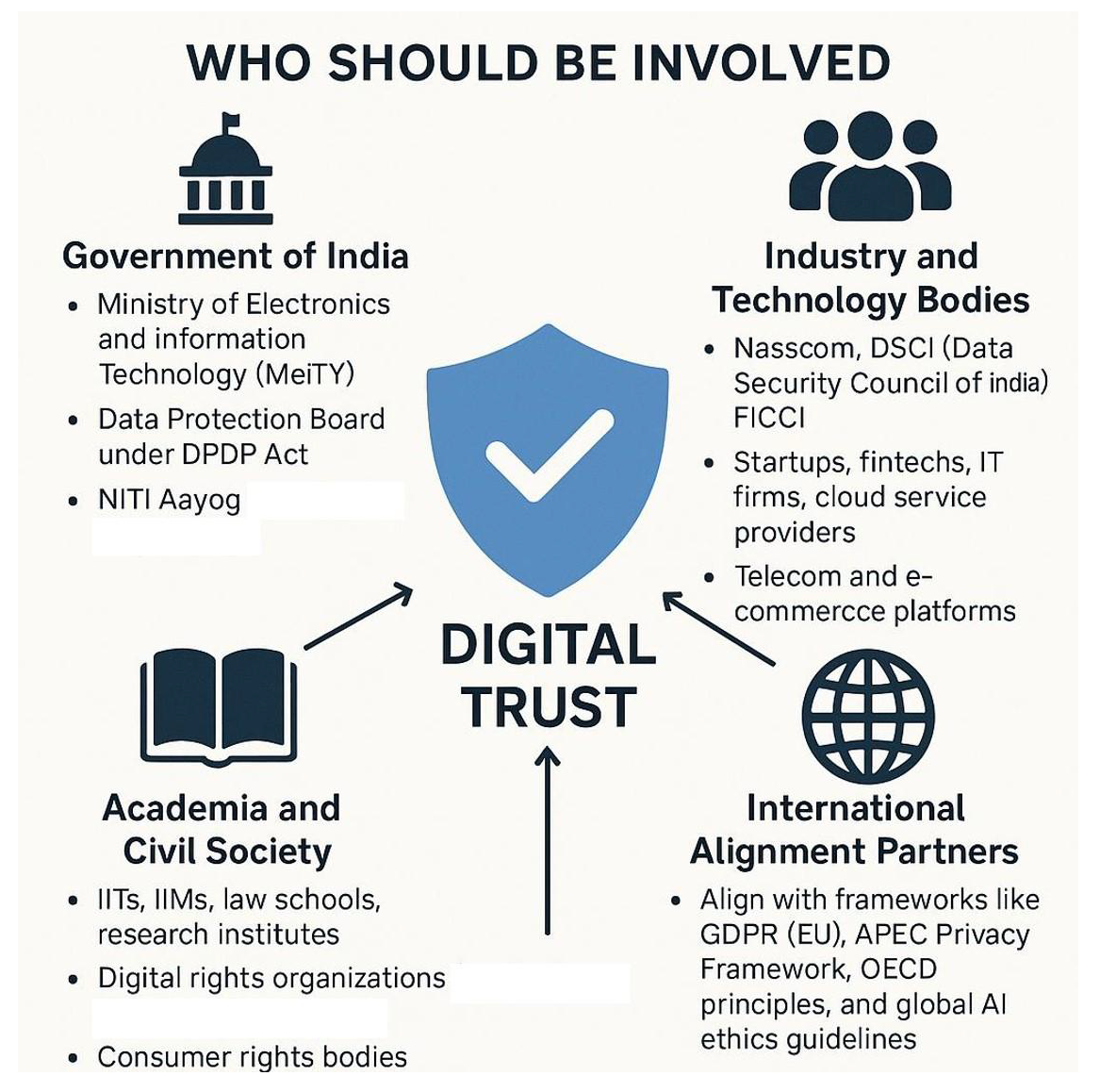
A digital trust ecosystem involving multiple stakeholders is proposed and shown in Figure 4.
6.3. Unlocking the Transformative Impact of Digital Certification
The implementation of a Digital Trust Certification in India holds the promise of reshaping the nation’s digital landscape, empowering citizens, strengthening governance, and catalyzing innovation-driven growth. At its core, this initiative would instill confidence among users, particularly first-time and vulnerable adopters, such as those in rural areas, senior citizens, and individuals with limited digital literacy, who often refrain from engaging with digital services due to fears of surveillance, fraud, and data misuse. A visible, verifiable certification would signal that platforms uphold the highest standards of security, privacy, and ethical conduct, thereby creating a trust-first ecosystem.
For the public sector, the Digital Trust Mark would serve as a bold testament to the government’s commitment to ethical digital transformation. Flagship platforms like DigiLocker, eSanjeevani, UMANG, and Direct Benefit Transfer portals could dramatically increase public participation if citizens are assured their data is safe, consent is respected, and grievances are addressed transparently. Trust is not merely a value, it is an enabler of inclusion, participation, and digital equity. A national certification framework would bridge the gap between regulatory ambition and citizen adoption, aligning deeply with India’s vision of “Digital for All.”
From an industry perspective, the certification would establish “trust-by-design” as a new standard of excellence, moving beyond compliance to cultivate a culture of responsible innovation. Much like green certifications transformed sustainability into a market advantage, a Digital Trust Certification could serve as a differentiator for ethical and future-ready enterprises. Startups and tech leaders who embrace trust as a core design principle will not only gain public goodwill but also enjoy enhanced investor confidence.
The broader economic implications are equally significant. Increased digital trust can unleash the full potential of high-impact sectors such as fintech, healthtech, edtech, and AI, where adoption often hinges on users’ willingness to share sensitive data. A trustworthy environment invites experimentation, accelerates user acquisition, and fosters ethical innovation at scale.
Furthermore, as India continues to assert its leadership in the global digital economy, aligning its certification framework with international trust standards, such as GDPR, the OECD AI principles, and the G7’s Data Free Flow with Trust (DFFT) initiative, would enhance its digital credibility on the world stage [19]. Certified Indian platforms would be better equipped to meet cross-border regulatory requirements, expand into compliance-sensitive markets like the European Union, and form deeper global partnerships. In doing so, India would not just participate in, but lead the global dialogue on digital trust, ethics, and governance.
In sum, a well-architected Digital Trust Certification system has the power to transform India into a beacon of trustworthy digital innovation, setting a global precedent for how democracies can balance technological advancement with public confidence. This is not just a policy tool, it is a strategic imperative for India’s digital century.
7. Conclusion
This paper proposes a Digital Trust Certification framework as a strategic tool to enhance security, transparency, and ethical governance in India’s rapidly growing digital ecosystem. Designed to evaluate digital platforms across key pillars, data privacy, cybersecurity, ethical AI, transparency, and user empowerment. This certification would provide a visible trust mark that signals compliance with high standards and builds user confidence.
The proposed idea directly supports India’s digital inclusion goals, especially by addressing the trust deficit among vulnerable users in rural and semi-urban areas. It also strengthens regulatory alignment by complementing the Digital Personal Data Protection Act and sectoral policies, translating legal obligations into user-facing assurance. For the government, it ensures greater public participation in e-governance by making digital services feel safe and accountable.
On the global stage, the certification would boost India’s digital credibility, enabling Indian platforms to meet cross-border data and privacy standards, and opening doors to international markets. Most importantly, it fosters a “trust-by-design” culture, one that positions India not only as a digital innovator, but as a global leader in ethical, inclusive, and responsible technology. By institutionalizing trust, India can ensure its digital future is not just powerful, but trusted, equitable, and enduring.
Declaration
This article draws upon information available in the public domain. The perspectives presented reflect the author's independent understanding of emerging digital technologies, their associated challenges, and their relevance within the Indian context.
References
- TechTarget. What is Digital Trust? https://www.techtarget.com.
- Defining, Establishing and Measuring Digital Trust, ISACA Journal, Vol. 1, (2023). https://www.isaca.org/-/media/files/isacadp/project/isaca/articles/journal/2023/volume-1.
- OECD. (2022). Digital Government Policy Framework. https://www.oecd.org/gov/digital-government.
- European Commission. (2016). General Data Protection Regulation (GDPR). https://gdpr.eu.
- Wired. (2019). We need to build up 'digital trust' in tech. https://www.wired.com.
- World Economic Forum. (2021). Global Digital Trust Framework. https://www.weforum.org.
- United Nations. (2021). Global Digital Compact. https://www.un.org/en/content/digital-cooperation-roadmap.
- Deloitte. (2022). Four tech innovations to enable digital trust. https://www2.deloitte.com.
- CERT-In. (2023). Cyber Security Guidelines. https://www.cert-in.org.in.
- Ministry of Electronics and Information Technology (MeitY), Government of India. (2022). Digital Personal Data Protection Bill. https://www.meity.gov.in/content/digital-personal-data-protection-bill-2022.
- DigiCert. (2022). Survey: Importance of Digital Trust in Business Outcomes. https://www.digicert.com.
- DEPA (Data Empowerment and Protection Architecture). https://niti.gov.in.
- NIST. (2020). Privacy Framework. National Institute of Standards and Technology. https://www.nist.gov/privacy-framework.
- NITI Aayog. (2018). National Strategy for Artificial Intelligence. https://www.niti.gov.in.
- UK Digital Identity and Attributes Trust Framework. GOV.UK. https://www.gov.uk/guidance.
- Estonian Information System Authority. (2020). X-Road and Digital Governance. https://www.ria.ee.
- Singapore Model AI Governance Framework. InfoComm Media Development Authority. https://www.imda.gov.sg.
- Australia Digital Identity Framework. (2021). Government of Australia. https://www.digitalidentity.gov.au.
- Japan Digital Agency. (2022). Trusted Web Framework. https://www.digital.go.jp.
- Swiss Digital Trust Label. (2022). Swiss Digital Initiative. https://www.swiss-digital-initiative.org.
- Brazil LGPD - Lei Geral de Protecao de Dados. https://www.gov.br.
- World Bank. (2020). ID4D Initiative. https://id4d.worldbank.org.
- Digital India Programme. https://www.digitalindia.gov.in.
- Aadhaar and UIDAI. https://uidai.gov.in.
- IndiaStack Initiative. https://www.indiastack.org.
- Digital Public Goods Alliance. https://digitalpublicgoods.net.
Figure 1.
Foundations for a secure, ethical, and user first digital world.
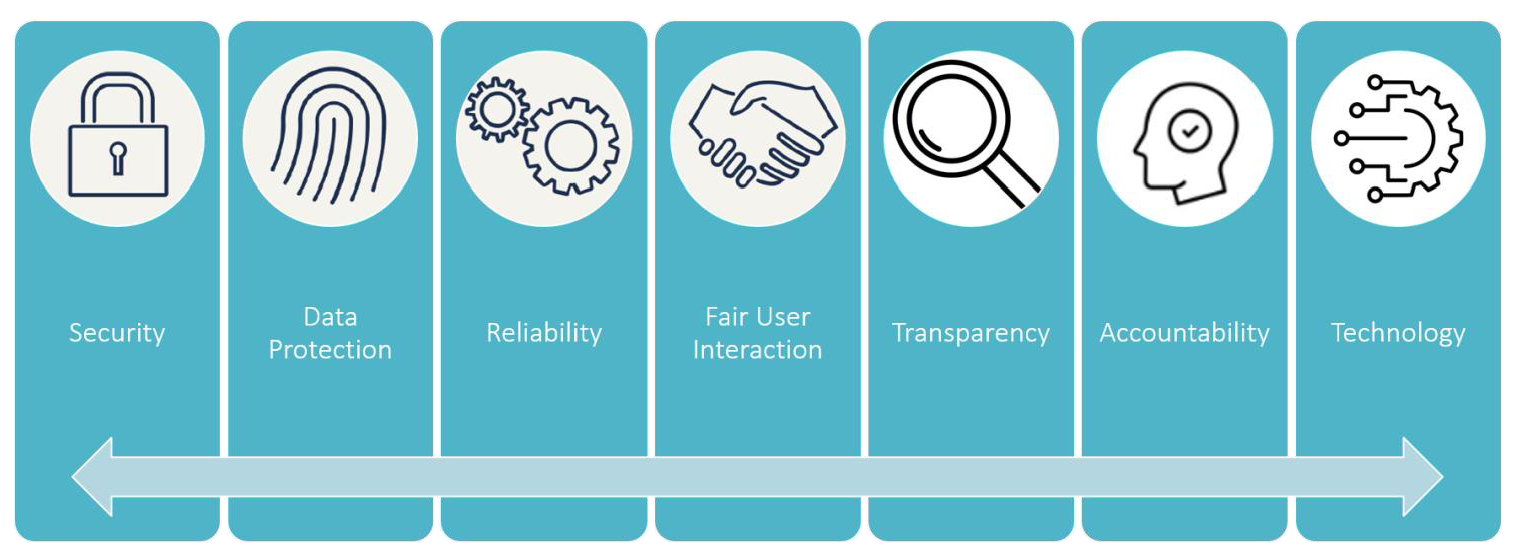
Figure 2.
Challenges and Risks in Building Digital Trust.
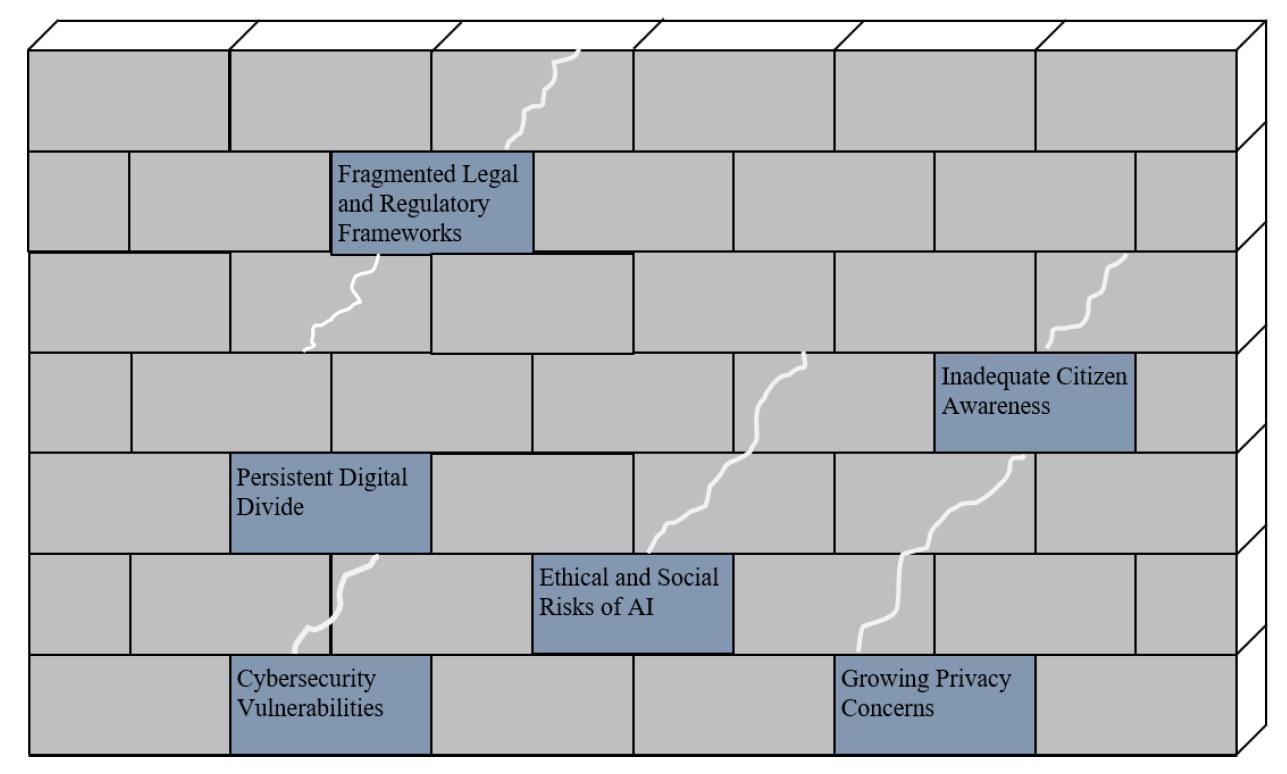
Figure 3.
Global digital trust initiatives.
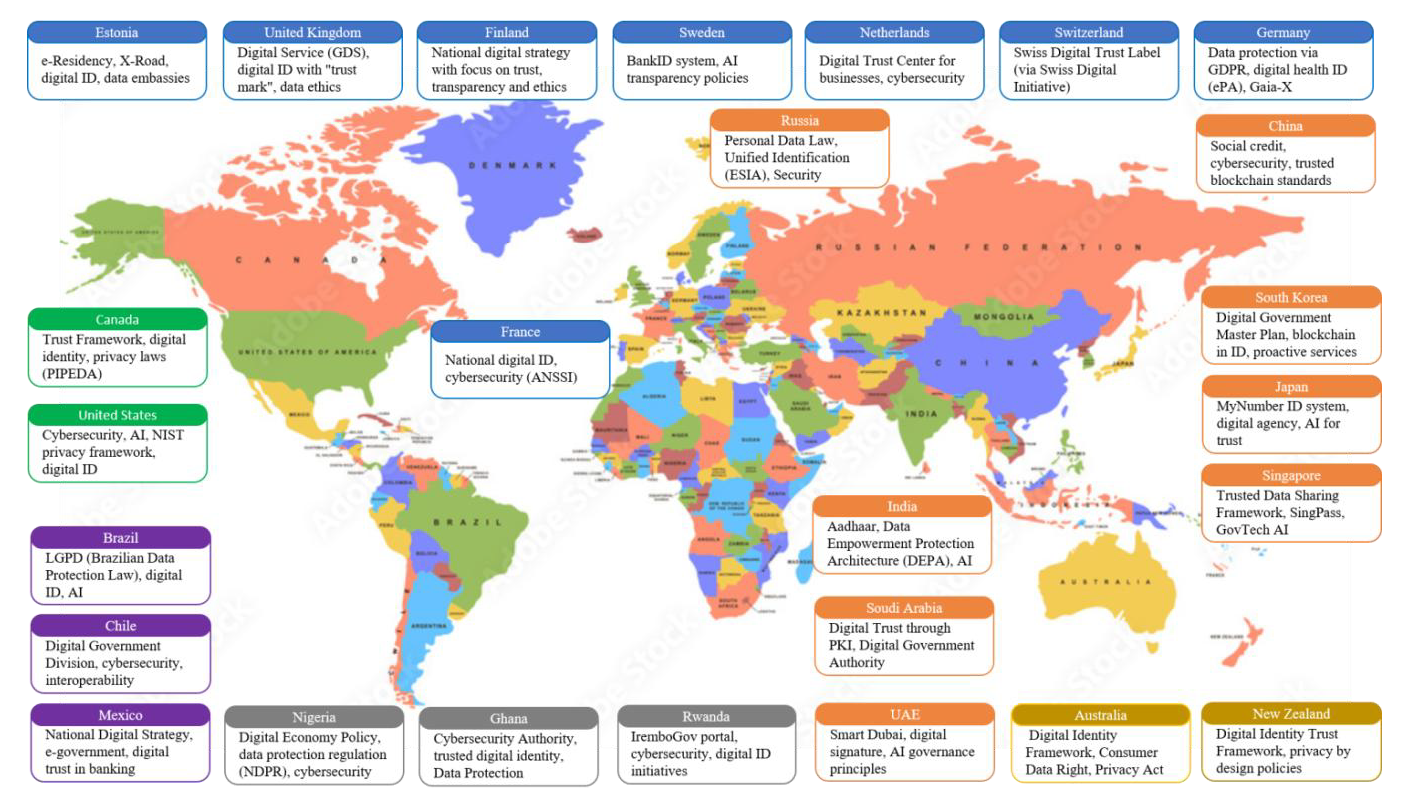
Figure 4.
Stakeholders in digital trust ecosystem.
Disclaimer/Publisher’s Note: The statements, opinions and data contained in all publications are solely those of the individual author(s) and contributor(s) and not of MDPI and/or the editor(s). MDPI and/or the editor(s) disclaim responsibility for any injury to people or property resulting from any ideas, methods, instructions or products referred to in the content. |
© 2025 by the authors. Licensee MDPI, Basel, Switzerland. This article is an open access article distributed under the terms and conditions of the Creative Commons Attribution (CC BY) license (http://creativecommons.org/licenses/by/4.0/).
Copyright: This open access article is published under a Creative Commons CC BY 4.0 license, which permit the free download, distribution, and reuse, provided that the author and preprint are cited in any reuse.


