
Submitted:
18 May 2025
Posted:
19 May 2025
You are already at the latest version
Abstract
This study explores the integration of artificial intelligence (AI), specifically deep learning (DL), into instructional effect assessment for international sports communication education. The study employed DL algorithms to construct an instructional effect assessment model. Data were collected from students’ learning activities, cleaned, standardized, and transformed into usable formats. Relevant features, such as study habits, knowledge mastery, and interaction metrics, were extracted and selected for model training. Comparative analysis with traditional models, such as linear regression and decision trees, highlighted the advantages of DL in achieving faster convergence and lower prediction error. The findings showed that the DL model could accurately predict instructional outcomes and provide personalized feedback to educators, facilitating data-driven improvements in teaching strategies. Additionally, the integration of AI into curriculum design enabled a holistic learning experience, combining theoretical knowledge, practical skills, and cultural literacy. This research contributes to bridging gaps in interdisciplinary education by modernizing assessment methods and curriculum frameworks through AI highlighting the transformative potential of AI in modernizing interdisciplinary education, particularly in complex fields such as international sports communication. Future research should focus on hybrid AI models, expanding datasets for generalizability, and addressing ethical challenges to ensure the responsible application of AI in education.
Keywords:
Artificial intelligence
; International sports communication
; Curriculum system
; Instructional effect
; Assessment model
1. Introduction
In the wave of science and technology in the 21st century, artificial intelligence (AI) is gradually infiltrating every corner of people's lives with its unique charm and unlimited potential [1,2]. In the realm of education, AI has introduced revolutionary possibilities, such as personalized learning, intelligent content delivery, and data-driven instructional methods, thereby reshaping traditional pedagogical practices [3]. Nevertheless, they have yet to be fully mined in terms of interdisciplinary domains like international sports communication, which is the convergence of studies of sports and communication theory and global cultural exchange [4]. In today's connected world, international sports communication is increasingly becoming an important matter. The other purpose is to spread sports-related information and promote international cultural understanding and cooperation. In an age filled with sports diplomacy, this field is crucial [5,6]. Although significant, these challenges exist within the current curriculum and instruction emphasis in this domain. In the traditional approaches, there is a lack of adaptability to globalization trends and the exploitation of cutting-edge technologies, such as AI, in improving teaching and learning outcomes. Therefore, the hardly restrictive development of graduates with innovative capabilities and international perspectives that will make them competent to thrive in an evolving global context is hampered [6,7].
The intricacy of integrating athletics, communication, and international relations leads to fragmented curricula that are unable to provide cohesive learning experiences [8]. Furthermore, standard assessment methods such as standard tests and subjective feedback are insufficient in evaluating the variegated range of skills necessary for this interdisciplinary work [9]. The lack of such systematic, data-driven evaluation frameworks hinders instructional progress and quantification of educational impact. AI is an advanced technical means for the simulation of intelligent human behavior, rapid data processing, precise push of information, and wide knowledge mining [10,11]. AI is also useful to help teachers modify the course content and train new teaching strategies, and also offers more personalized and more efficient learning to students in the international sports communication course [12]. In this study, we want to see a new road to build an international sports communication curriculum system and instruction effect evaluation with AI. This paper aims to analyze the potential application of AI technology and the real use of AI technology in the international sports communication curriculum system from several dimensions, including curriculum objectives setting, curriculum content design, instructional method innovation, and assessment system construction. Concurrently, the deep learning (DL) algorithm will be implemented and scientifically assessed to analyze the instructional effect for the in-depth application of AI in the field of international sports communication education.
This paper addresses these pressing issues through a proposal for a comprehensive curriculum system for international sports communication that features AI-driven instructional support and assessment. First, this study contributes dually by enriching the theoretical and practical foundations of international sports communication education via the integration of AI into curriculum design and assessment. It also offers a scalable, data-driven framework to improve instruction quality, realize personalized learning, and graduate with global and innovative competencies. This research ultimately further improves international sports communication education by modernizing and aiding LE with the use of AI in higher education. This study bridges the gap between technological innovation and pedagogical practice and provides important ways to construct more adaptive and inclusive education systems.
2. Materials and Methods
Traditional methods of assessing instructional effectiveness relied on subjective measures such as test scores and questionnaires, which made it challenging to comprehensively and objectively reflect students' learning status and teachers' instructional performance [13,14]. With the advancement of educational informatization, large volumes of data, including learning behavior data and interaction data, were generated during the teaching process. These data contained rich information that required deep exploration and utilization. Instructional effect assessment models based on DL leveraged these extensive datasets and complex algorithmic models to automatically uncover patterns in the teaching process, providing a scientific and objective foundation for evaluating instructional effectiveness [15,16].
As a branch of machine learning, DL's core principle involves simulating the learning processes of the human brain through the construction of deep neural network models, enabling nonlinear mapping and feature extraction of complex data. In the context of instructional effect assessment, DL technology was applied to several key areas [17]. First, it facilitated the recognition of students' behavioral patterns by analyzing their learning behavior data, thereby identifying distinct learning styles and habits. Second, it enabled the prediction of knowledge mastery by using students' historical learning data and performance information to forecast their future understanding of the subject matter. Finally, it supported the generation of feedback on instructional effectiveness, offering personalized teaching recommendations to educators based on the assessment results. The instructional effect assessment model of international sports communication courses based on DL is shown in Figure 1.
Let denote the input information at time and the output information at time. Then, the state of a neuron is represented as:
With the synaptic delay, as the neuron threshold, representing the weight from to of neurons, and as the transfer function, if order corresponds to unit time, then:
The subscripts of input and output signify the diversity of modes in the neuron model, enabling us to leverage this model property to address various problems based on different requirements. The neuronal input at a time is formulated as follows:
Regarding the aforementioned formula, neurons are effective solely when. Upon simplification, the neuron model transforms into:
First, various types of data generated during the teaching process were collected. These included students’ learning behavior data (such as click streams, learning duration, and homework completion), interactive data (such as classroom discussions and online question-and-answer sessions), and exam results. These data were then cleaned, denoised, and standardized to ensure their quality and usability. From the preprocessed data, features relevant to instructional effect assessment were extracted. These features included aspects such as students’ study habits (e.g., study frequency and study periods), knowledge mastery (e.g., accuracy rates and error types), and interaction metrics (e.g., discussion activity and question quality). Feature selection techniques were applied to identify the key features that significantly impacted the assessment results. The DL algorithm was then utilized to construct the assessment model, and the extracted feature data were used to train the model. During the training process, the accuracy and generalization ability of the model were enhanced by adjusting model parameters and optimizing the algorithms. Additionally, the stability and reliability of the model were evaluated through cross-validation. Once each index assessment was completed according to the assessment system’s criteria, the original index data matrix was standardized and transformed to finalize the entire instructional effect assessment process. Given samples for assessment and assessment indexes, the original data matrix undergoes standardization and transformation as follows:
Where denotes the sample average of the index, and represents the sample standard deviation of the index. Following standardized transformation, each sample data exhibits a mean of 0 and a variance of 1. By considering the variables in the assessment model, the membership vector of each index is ascertained through statistical methods, with reference to the quantitative indicators of the teaching assessment index system of the international sports communication curriculum. To mitigate overfitting during model training, the initial maximum depth of each regression tree is set to a small value. The updating step size determines the convergence speed of the model. In this article, three parameters, denoted as , are selected through parameter enumeration and assessed using cross-validation. The combination with the highest assessment score is chosen as the final model parameter value, with the assessment standard being goodness of fit:
Where represents the goodness of fit, denotes the number of samples, is the actual value of samples, and is the predicted value of samples. signifies the average value of prediction, and a value closer to 1 indicates a better-fitting effect.
3. Results
The data is preprocessed to ensure its quality and consistency before the experiment begins. Data outlier removal is an important link in data preprocessing. Outliers, also known as outliers, refer to data points that are significantly different from most other data points. Measurement errors, data input errors, or other abnormal factors may cause these abnormal values. If left untreated, outliers may interfere with the training process of the model, resulting in the model being unable to accurately learn the inherent laws of the data. In this study, a statistical method is used to remove outliers from data, as shown in Figure 2.
Using the preprocessed data, the designed instructional effect assessment model is trained. In the training process, the DL algorithm is adopted, and the network weights are optimized by iteration so that the model can gradually learn the inherent laws and characteristics of data. A variety of algorithms are used for comparative experiments to assess the model's performance. Specifically, the traditional linear regression model and decision tree model are selected as the comparison algorithms and compared with the DL model in this article. Their performance is assessed by calculating their prediction errors on the same data set. The details of several algorithm errors are shown in Figure 3.
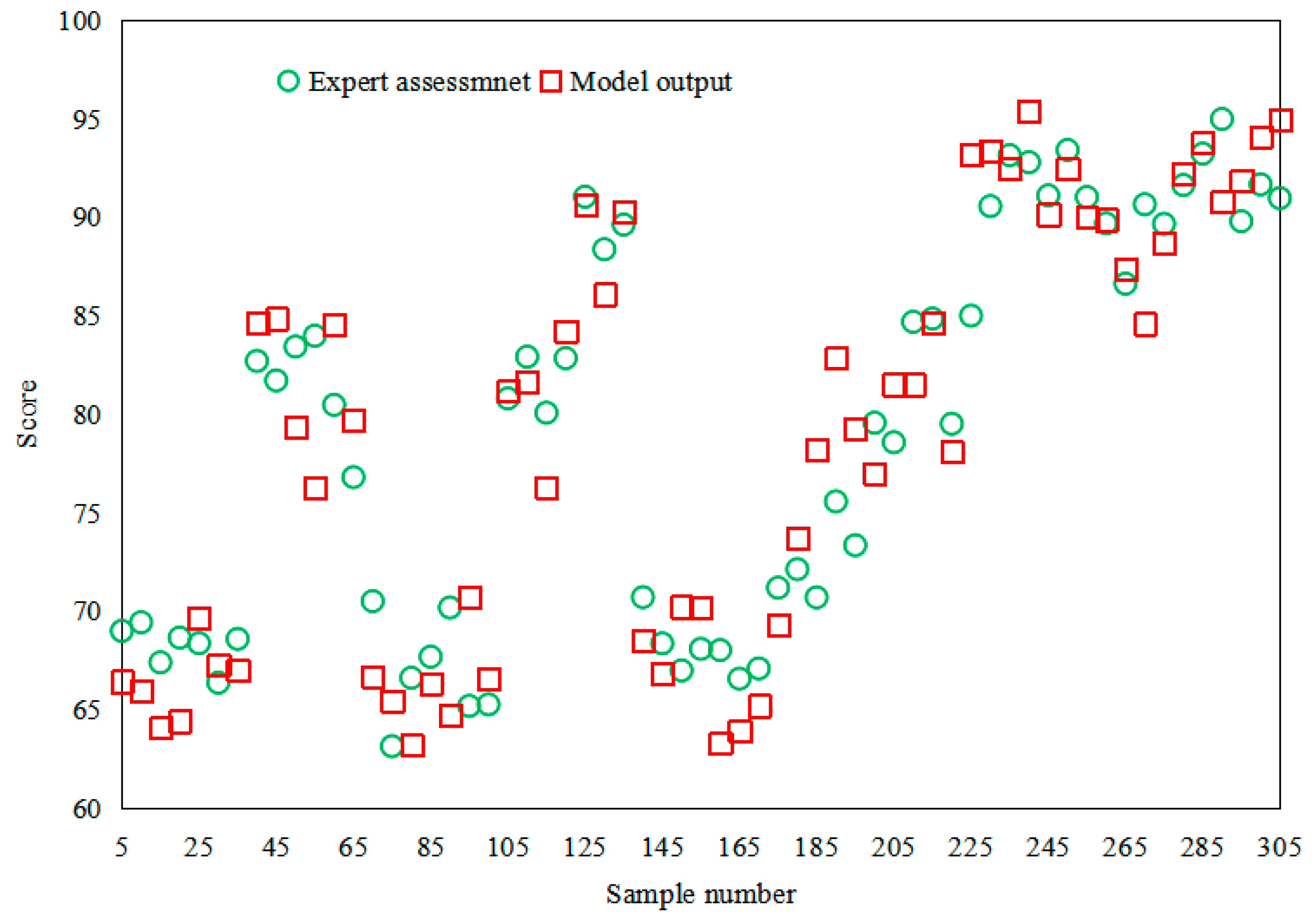
Compared with the traditional assessment model, the proposed instructional effect assessment model based on DL has the advantages of fast convergence and small prediction error. This shows that the model can better fit the data and accurately predict the instructional effect. To further verify the accuracy and practicability of the model, the model simulation experiment is carried out, and the simulation output results are compared with the expert assessment results. Specifically, a part of the sample data is selected as the training set, and the trained model is used for simulation and prediction. The prediction results are compared with the actual assessment results of these samples by experts.
Figure 4 shows a specific comparison between the model simulation output assessment results and the expert assessment results. The output results of training samples are close to the expert assessment results, which shows that our model can accurately predict the instructional effect and is consistent with the expert assessment. This further proves the feasibility of this model in practical application.
4. Discussion
The findings of this study demonstrate how the use of AI, specifically DL, has the potential to transform instructional design and assessment as a part of the academic environment for international sports communication. This research integrates AI into curriculum development and instructional effect assessment to address the long-standing challenges addressed in prior studies and introduce novel solutions. This study developed the instructional effect assessment model based on the constructivist learning theory, in which the personalized learning experience and instructor-controlled instruction strategies play a major role. Putting the constructivist construct that learning occurs best in an individualized way to the test, this model successfully processes diverse datasets from students' learning behavior and patterns of interaction. Like previous studies, this has found that AI can be used to enhance personalized education. For example, Agarwal and Agarwal [18] used neural networks in higher education and achieved improved predictive accuracy of instructional outcomes in a more limited setting. This study presents more applications than these works, as the integration of AI is designed within an interdisciplinary curriculum framework and is particularly dedicated to the dynamic and complex nature of international sports communication.
The findings of the study agree with earlier research highlighting the limitations of conventional methods of assessment based on subjective evaluations and static scores [19,20]. This study overcomes these limitations by employing DL algorithms so as to obtain a more objective, scalable, and nuanced assessment model. In Figure 3, for both centralized and decentralized selection functions, the proposed DL model is seen to converge faster than traditional methods such as linear regression and decision tree model. Consistent with Gameil and Al-Abdullatif [21], these advantages imply that multimedia and data-driven platforms are capable of optimizing instructional design. However, unlike previous research, the present research utilizes DL to assess unidimensional instructional effects based on behavioral, interactive, and academic performance data [22]. This approach is shown to be robust and reliable, as indicated by the close agreement of the DL model's predictions, shown in Figure 4, with expert assessments. This is also in accordance with Zhang [23], who put forward the proposition of integrating wireless network technology into teaching assessment but without a particular emphasis on AI or sophisticated algorithms. This study extends the technological integration in education by employing DL, providing precise feedback for teachers and students that should lead to increased instructional quality [24].
The design of the AI-assisted curriculum system responds to the gaps pointed out by Karataş et al. [25], who perceived the obstacles to cohesively integrating interdisciplinary content in traditional curricula. Since the curriculum framework requires the inclusion of theoretical knowledge, practical skills, and cultural literacy, it ensures a holistic learning experience and runs against Uljens and Ylimaki [26] critique of fragmented curricula in sports education. In addition, AI supporting the choice of curriculum evokes a change in the direction of a more flexible and living educational model that becomes necessary for the current international sports communication. In Fig, we show data preprocessing techniques used to tackle the common issue of outliers in educational datasets. The removal of the anomalies facilitates the instructor effect assessment model. Guo et al. [27] also discussed others that relied on simpler statistical models, and hence, similar approaches were designed for mobile evaluation algorithms for physical education. In this study, we bring DL one step closer to practical application by adopting it for a more sophisticated treatment of complex data and better accuracy in prediction and feedback capability.
The practical implications of the findings go beyond purely theoretical contributions. Through an instructional effect assessment model that delivers the personalized feedback sought by Janelli and Lipnevich [28], this study addresses the practical difficulties documented by Al Shloul et al. [29] regarding the requirement of innovative instruments for evaluating and enhancing instructional high-quality. This study's model is scalable and transferrable to diverse education contexts, both global and interdisciplinary. The work presented here overlaps in some ways with previous research but does so in ways that differentiate it in important ways. For instance, Alam and Mohanty [30] adopted principal component analysis for physical education evaluation concentrated on ideational integration rather than instructional design and assessment. On the other hand, this study proposes a holistic curriculum framework that relies extensively on advanced AI techniques. As Ospankulov et al. [31] did with the study of international sports talent training, his work does not reach the technological depth achieved here, especially the use of DL for instructional assessment.
Generally, by focusing on AI-based innovations, such a study is in line with an emerging trend in school reform, as pointed out by Wang et al. [3]. More specifically, this research departs from the conventional setting in which AI is regarded as an instrument for assessment and instead makes an original contribution by recognizing that it can also serve as a forum for curriculum innovation [32,33]. This study demonstrates the advantages of DL models, including rapid convergence and minimal prediction error (Figure 3), thereby giving actionable insights to educators and policymakers interested in modernizing interdisciplinary education. However, this study has some limitations despite its many contributions. For model training and validation, the data primarily from a single educational context may not be generalized. Furthermore, the DL model accurately predicts instructional effects but encounters scalability issues in data-poor settings, given the reliance on high-quality data.
5. Conclusions
This study explored the construction of an international sports communication curriculum system and instructional effect assessment framework, leveraging AI, specifically DL algorithms. This research provides innovative solutions to address gaps in traditional curriculum systems and assessment methods to make international sports communication education more effective, adaptable, and inclusive. This study concludes by offering a strong framework for synthesizing AI in international sports communication education. It invents a new pathway bridging the divide between conventional pedagogy and technical advancement, leading the way for a richer, more inclusive, better educational ground. In a world where AI technology is evolving, the integration of AI into education will impact learning and teaching in disciplines with new possibilities. Therefore, the research also makes substantial contributions to the theory and practice of education as it explores ways to combine AI into curriculum design and assessment processes. A comprehensive curriculum system that combines theoretical knowledge, practical skills, and cultural literacy addresses a large gap in the current existing literature. This responds to Zhao et al.’s (2019) critique of fragmented curricula in sports communication education and offers a cohesive framework that aligns with globalization and interdisciplinarity learning. Consequently, the proposed DL-based assessment model advances educational assessment from the subjective assessment limitations to provide precise, data-driven insight into students’ learning behavior and instructional effectiveness.
This research fills a gap in that there is a lack of studies that harness AI-driven methodologies with interdisciplinary curriculum development work. This study differed from previous studies in that it used an integrated approach to applying AI to both curriculum design and instructional effect assessment. This work extends previous work by showing that, in complex interdisciplinary settings, such as international sports communication, AI tools can be used effectively, thus expanding the role AI has to play in education. Implications to this study range from the academic to the practical. It academically highlights the ability of AI to profoundly alter the foundations of traditional pedagogy and introduce a model for future interdisciplinary education with emergent technologies. The research is actionable, giving educators and policymakers the ability to provide adaptive, data-driven curricula to accommodate a broad array of learner needs while simultaneously improving instructional outcomes.
However, the study has its limitations. Model training and validation were conducted using a dataset from a specific educational context that limits how widely the findings can be generalized. Additionally, while the DL-based model is able to predict instructional outcomes, applying the DL-based model effectively is significantly impacted by its reliance on high-quality, well-structured data in resource-limited or data-poor settings. The second limitation is the lack of ethical consideration, which omission includes data privacy and security. The future of AI-assisted educational models may involve real-time feedback mechanisms and the integration of adaptive learning platforms into the models. Secondly, ethics, technology, and pedagogy cooperation between educators, technologists, and policymakers are necessary to implement the ethical, technological, and pedagogical challenges in integrating AI-driven solutions. Future research could address these limitations by:
- Expanding the dataset to include diverse educational contexts and disciplines improves the model’s generalizability.
- Incorporating hybrid AI models that combine DL with other approaches to enhance adaptability in data-scarce environments.
- Exploring ethical frameworks to ensure responsible AI application in education, particularly concerning student data privacy.
- Conducting longitudinal studies to assess the long-term impact of AI-assisted curricula on student performance and career outcomes.
Funding
The author reported there is no funding associated with the work featured in this article.
Institutional Review Board Statement
Not Applicable
Informed Consent Statement
Not Applicable
Data Availability Statement
The data that support the findings of this study are not openly available due to securing the anonymity of the respondents. However, anonymized data sets are available from the corresponding author upon reasonable request.
Conflicts of Interest
No potential conflict of interest was reported by the author.
Abbreviations
The following abbreviations are used in this manuscript:
| AI | Artificial Intelligence |
| DL | deep learning |
References
- Xu, Y.; Liu, X.; Cao, X.; Huang, C.; Liu, E.; Qian, S.; Liu, X.; Wu, Y.; Dong, F.; Qiu, C.-W.; et al. Artificial Intelligence: A Powerful Paradigm for Scientific Research. Innovation (Camb) 2021, 2, 100179. [Google Scholar] [CrossRef] [PubMed]
- Saam, M. The Impact of Artificial Intelligence on Productivity and Employment – How Can We Assess It and What Can We Observe? 2024, 2024, 22–27.
- Wang, S.; Wang, F.; Zhu, Z.; Wang, J.; Tran, T.; Du, Z. Artificial Intelligence in Education: A Systematic Literature Review. Expert Systems with Applications 2024, 252, 124167. [Google Scholar] [CrossRef]
- Wei, Y.; Zhang, H.; Yin, H. Development of Communication and Sport in China Based on Mapping of Knowledge Information Visualization. Sage Open 2020, 10, 2158244019900175. [Google Scholar] [CrossRef]
- Mirzayeva, N.G. The Role of Sports Diplomacy in Contemporary International Relations: A Case Study of the Olympic Games. Scientific News of Academy of Physical Education and Sport 2024, 6, 116–121. [Google Scholar] [CrossRef]
- Murray, S.; Pigman, G.A. Mapping the Relationship between International Sport and Diplomacy. Sport in Society 2014, 17, 1098–1118. [Google Scholar] [CrossRef]
- Oluyemisi, O.M. Impact of Artificial Intelligence in Curriculum Development in Nigerian Tertiary Education. International Journal of Educational Research 2023, 12, 192–211. [Google Scholar]
- Räikkönen, T.; Hedman, J. Unlocking the Power of Sports: An Exploration of the Nexus between Shared Place, Community Competence, and Sense of Community. International Journal of Sport Policy and Politics 2024, 0, 1–19. [Google Scholar] [CrossRef]
- Virk, A.; Joshi, A.; Mahajan, R.; Singh, T. The Power of Subjectivity in Competency-Based Assessment. J Postgrad Med 2020, 66, 200–205. [Google Scholar] [CrossRef] [PubMed]
- Alfredo, R.; Echeverria, V.; Jin, Y.; Yan, L.; Swiecki, Z.; Gašević, D.; Martinez-Maldonado, R. Human-Centred Learning Analytics and AI in Education: A Systematic Literature Review. Computers and Education: Artificial Intelligence 2024, 6, 100215. [Google Scholar] [CrossRef]
- Jain, K.; Raghuram, J.N.V. Unlocking Potential: The Impact of AI on Education Technology. Multidisciplinary Reviews 2024, 7, 2024049–2024049. [Google Scholar] [CrossRef]
- Bhutoria, A. Personalized Education and Artificial Intelligence in the United States, China, and India: A sYstematic Review Using a Human-In-The-Loop Model. Computers and Education: Artificial Intelligence 2022, 3, 100068. [Google Scholar] [CrossRef]
- Wood, P.C.; Doğan, C.D. A Comparative Study on Assessment Methods Used by High School Teachers in Uganda and Turkey. Research in Comparative and International Education 2024, 19, 352–370. [Google Scholar] [CrossRef]
- Meylani, R. A Comparative Analysis of Traditional and Modern Approaches to Assessment and Evaluation in Education. BAEBD 2024, 15, 520–555. [Google Scholar] [CrossRef]
- Cui, Y.; Ma, Z.; Wang, L.; Yang, A.; Liu, Q.; Kong, S.; Wang, H. A Survey on Big Data-Enabled Innovative Online Education Systems during the COVID-19 Pandemic. Journal of Innovation & Knowledge 2023, 8, 100295. [Google Scholar] [CrossRef]
- Li, Y.; Zhang, H. Big Data Technology for Teaching Quality Monitoring and Improvement in Higher Education - Joint K-Means Clustering Algorithm and Apriori Algorithm. Systems and Soft Computing 2024, 6, 200125. [Google Scholar] [CrossRef]
- Taye, M.M. Understanding of Machine Learning with Deep Learning: Architectures, Workflow, Applications and Future Directions. Computers 2023, 12, 91. [Google Scholar] [CrossRef]
- Agarwal, M.; Agarwal, B.B. Predicting Student Academic Performance Using Neural Networks: Analyzing the Impact of Transfer Functions, Momentum and Learning Rate. International Journal of Experimental Research and Review 2024, 40, 56–72. [Google Scholar] [CrossRef]
- Abdulrahaman, M.D.; Faruk, N.; Oloyede, A.A.; Surajudeen-Bakinde, N.T.; Olawoyin, L.A.; Mejabi, O.V.; Imam-Fulani, Y.O.; Fahm, A.O.; Azeez, A.L. Multimedia Tools in the Teaching and Learning Processes: A Systematic Review. Heliyon 2020, 6, e05312. [Google Scholar] [CrossRef] [PubMed]
- Heydarnejad, T.; Tagavipour, F.; Patra, I.; Farid Khafaga, A. The Impacts of Performance-Based Assessment on Reading Comprehension Achievement, Academic Motivation, Foreign Language Anxiety, and Students’ Self-Efficacy. Language Testing in Asia 2022, 12, 51. [Google Scholar] [CrossRef]
- Gameil, A.A.; Al-Abdullatif, A.M. Using Digital Learning Platforms to Enhance the Instructional Design Competencies and Learning Engagement of Preservice Teachers. Education Sciences 2023, 13, 334. [Google Scholar] [CrossRef]
- Elahi, M.; Afolaranmi, S.O.; Martinez Lastra, J.L.; Perez Garcia, J.A. A Comprehensive Literature Review of the Applications of AI Techniques through the Lifecycle of Industrial Equipment. Discov Artif Intell 2023, 3, 43. [Google Scholar] [CrossRef]
- Zhang, J. School Wireless Network Classroom Teaching System Based on Artificial Intelligence. Applied Artificial Intelligence 2023, 37, 2219563. [Google Scholar] [CrossRef]
- Ouyang, F.; Jiao, P. Artificial Intelligence in Education: The Three Paradigms. Computers and Education: Artificial Intelligence 2021, 2, 100020. [Google Scholar] [CrossRef]
- Karataş, F.; Eriçok, B.; Tanrikulu, L. Reshaping Curriculum Adaptation in the Age of Artificial Intelligence: Mapping Teachers’ AI-Driven Curriculum Adaptation Patterns. British Educational Research Journal 2024, 00, 1–27. [Google Scholar] [CrossRef]
- Uljens, M.; Ylimaki, R.M. Non-Affirmative Theory of Education as a Foundation for Curriculum Studies, Didaktik and Educational Leadership. In Bridging Educational Leadership. In Bridging Educational Leadership, Curriculum Theory and Didaktik: Non-affirmative Theory of Education; Uljens, M., Ylimaki, R.M., Eds.; Springer International Publishing: Cham, 2017; ISBN 978-3-319-58650-2. [Google Scholar]
- Guo, S.; Yang, X.; Farizan, N.H.; Samsudin, S. The Analysis of Teaching Quality Evaluation for the College Sports Dance by Convolutional Neural Network Model and Deep Learning. Heliyon 2024, 10, e36067. [Google Scholar] [CrossRef]
- Janelli, M.; Lipnevich, A.A. Effects of Pre-Tests and Feedback on Performance Outcomes and Persistence in Massive Open Online Courses. Computers & Education 2021, 161, 104076. [Google Scholar] [CrossRef]
- Al Shloul, T.; Mazhar, T.; Abbas, Q.; Iqbal, M.; Ghadi, Y.Y.; Shahzad, T.; Mallek, F.; Hamam, H. Role of Activity-Based Learning and ChatGPT on Students’ Performance in Education. Computers and Education: Artificial Intelligence 2024, 6, 100219. [Google Scholar] [CrossRef]
- Alam, A.; Mohanty, A. Educational Technology: Exploring the Convergence of Technology and Pedagogy through Mobility, Interactivity, AI, and Learning Tools. Cogent Engineering 2023, 10, 2283282. [Google Scholar] [CrossRef]
- Ospankulov, Y.; Zhumabayeva, A.; Nishanbayeva, S.; Ussen, B.; Zhalel, A. The Effect of the Use of Digital Technologies in Physical Education Lessons on Students’ Physical Education Cultures and Attitudes towards the Lesson. International Journal of Education in Mathematics, Science and Technology 2023, 11, 1424–1442. [Google Scholar] [CrossRef]
- Pinski, M.; Benlian, A. AI Literacy for Users – A Comprehensive Review and Future Research Directions of Learning Methods, Components, and Effects. Computers in Human Behavior: Artificial Humans 2024, 2, 100062. [Google Scholar] [CrossRef]
- Walter, Y. Embracing the Future of Artificial Intelligence in the Classroom: The Relevance of AI Literacy, Prompt Engineering, and Critical Thinking in Modern Education. International Journal of Educational Technology in Higher Education 2024, 21, 15. [Google Scholar] [CrossRef]
Figure 1.
Instructional effect assessment model based on DL.
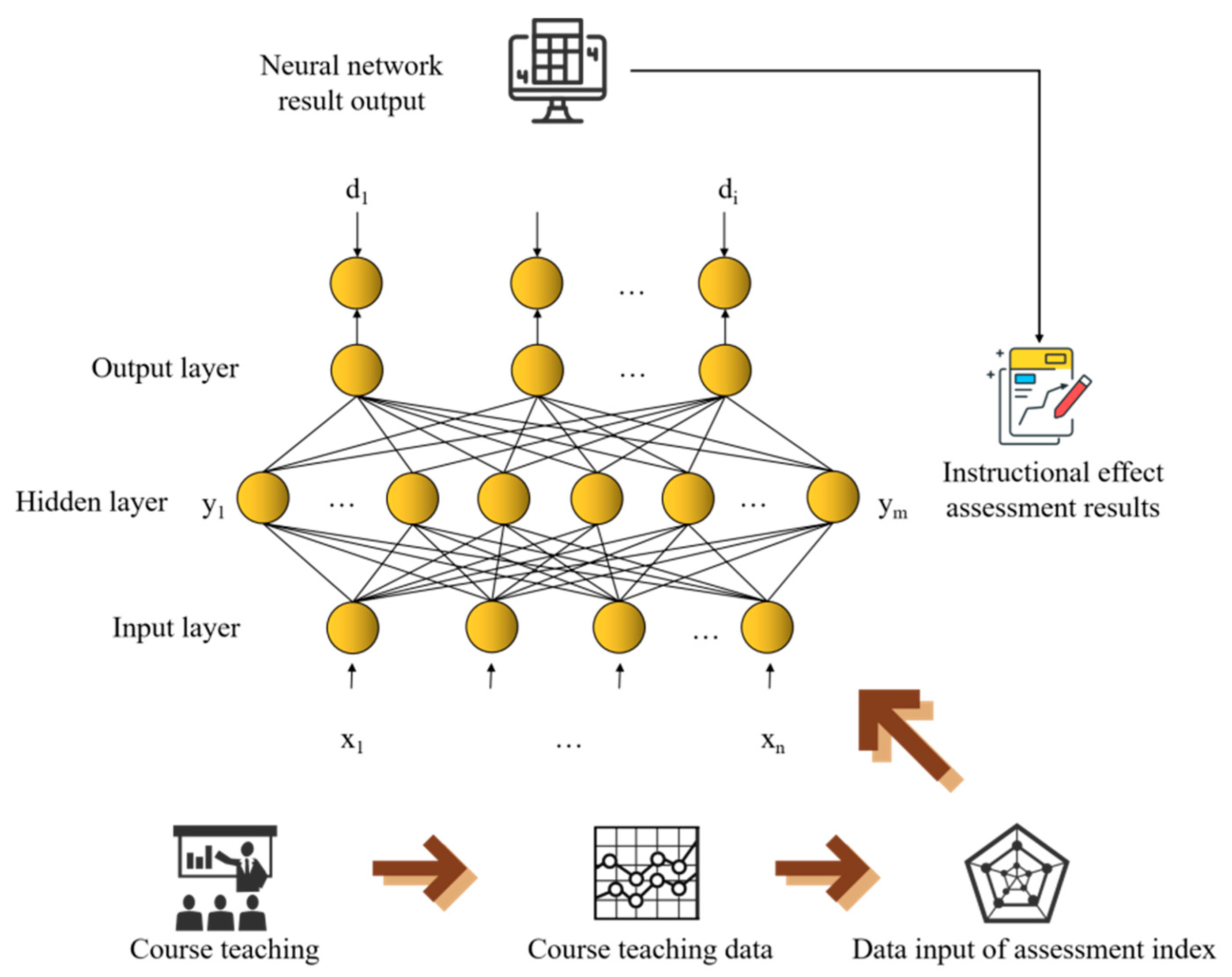
Figure 2.
Data outlier removal processing.
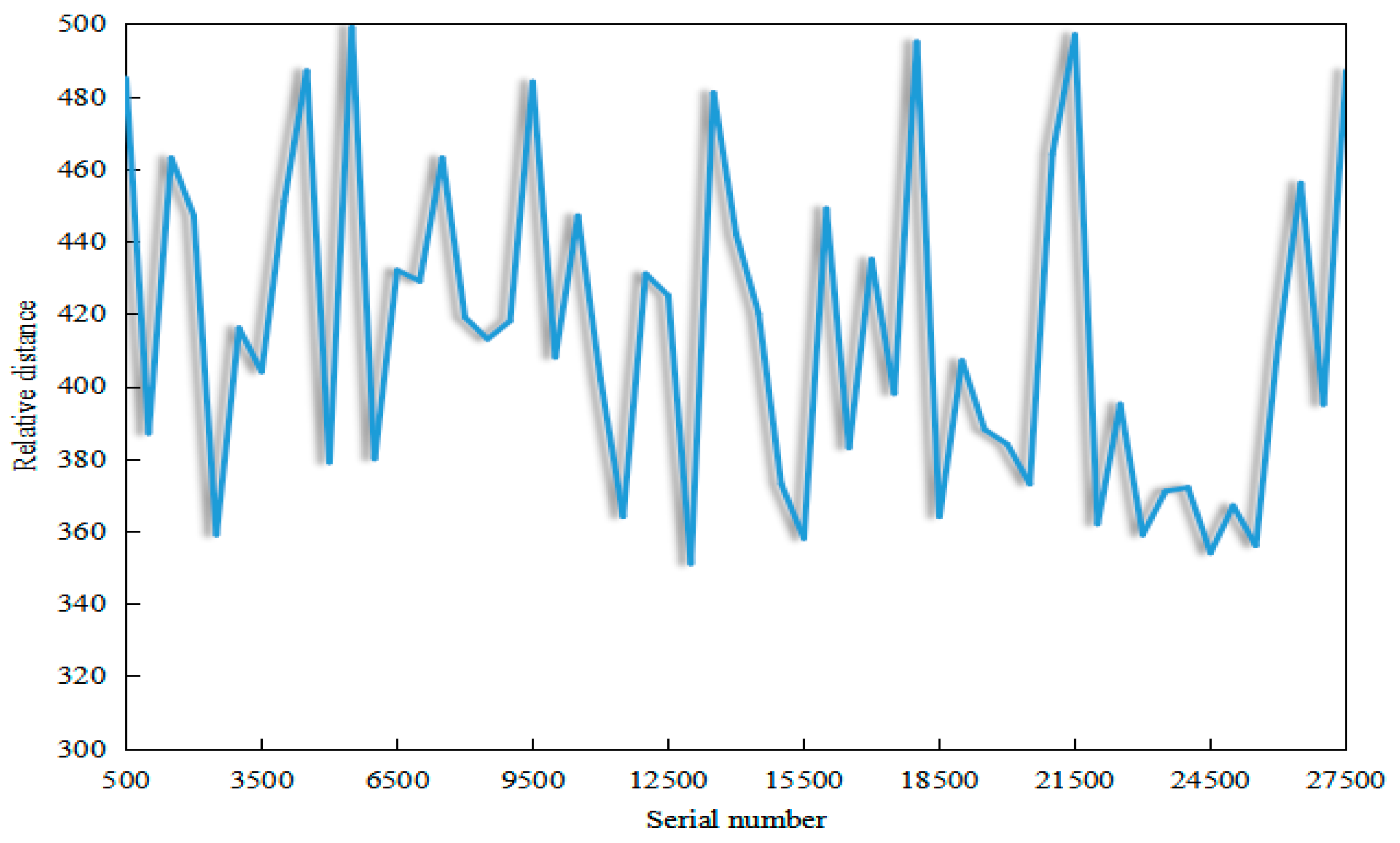
Figure 3.
Error situation of algorithm.
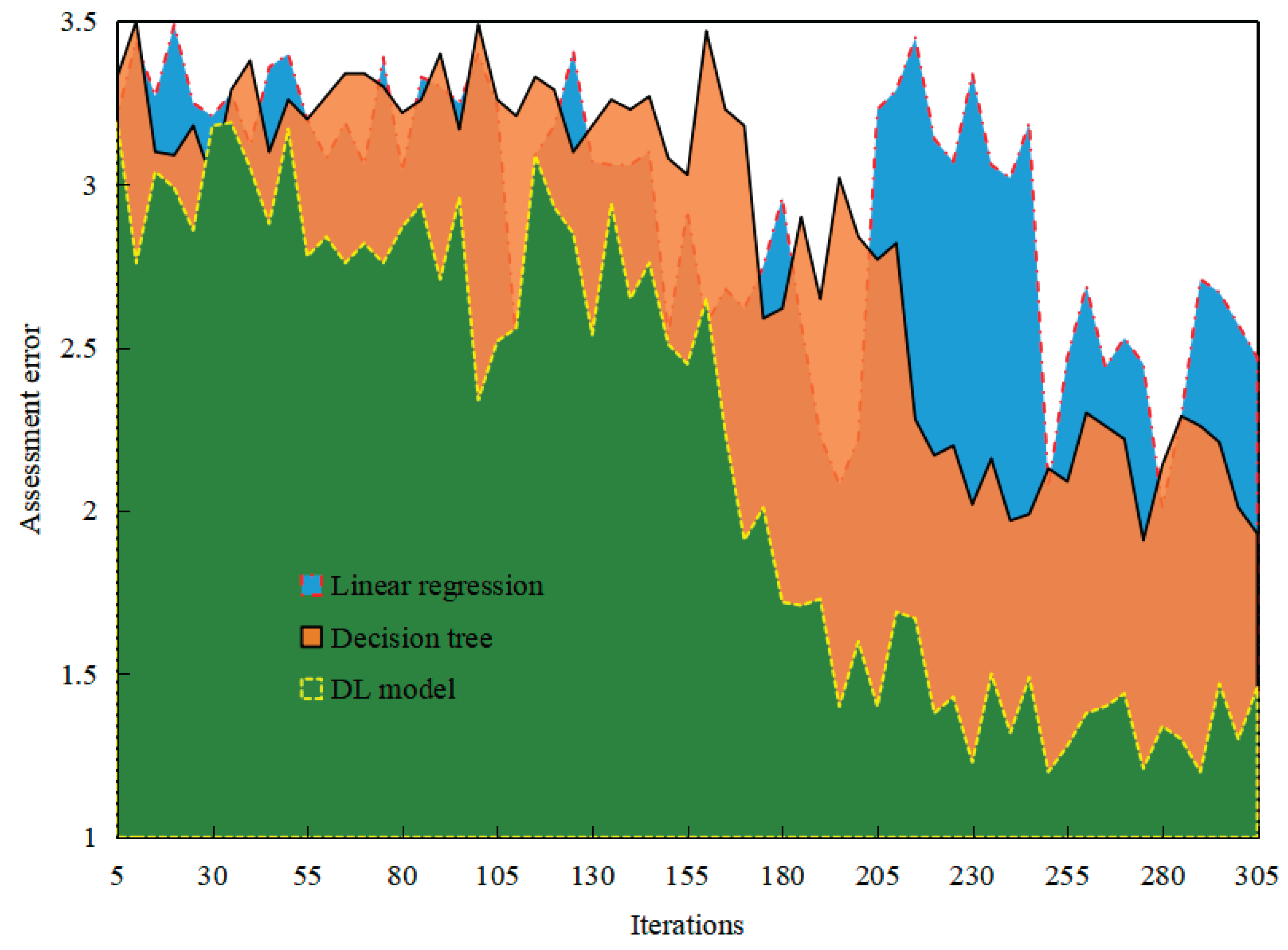
Figure 4.
Expert assessment results and model output results.
Disclaimer/Publisher’s Note: The statements, opinions and data contained in all publications are solely those of the individual author(s) and contributor(s) and not of MDPI and/or the editor(s). MDPI and/or the editor(s) disclaim responsibility for any injury to people or property resulting from any ideas, methods, instructions or products referred to in the content. |
© 2025 by the authors. Licensee MDPI, Basel, Switzerland. This article is an open access article distributed under the terms and conditions of the Creative Commons Attribution (CC BY) license (http://creativecommons.org/licenses/by/4.0/).
Copyright: This open access article is published under a Creative Commons CC BY 4.0 license, which permit the free download, distribution, and reuse, provided that the author and preprint are cited in any reuse.


