

Submitted:
15 May 2025
Posted:
16 May 2025
You are already at the latest version
Abstract
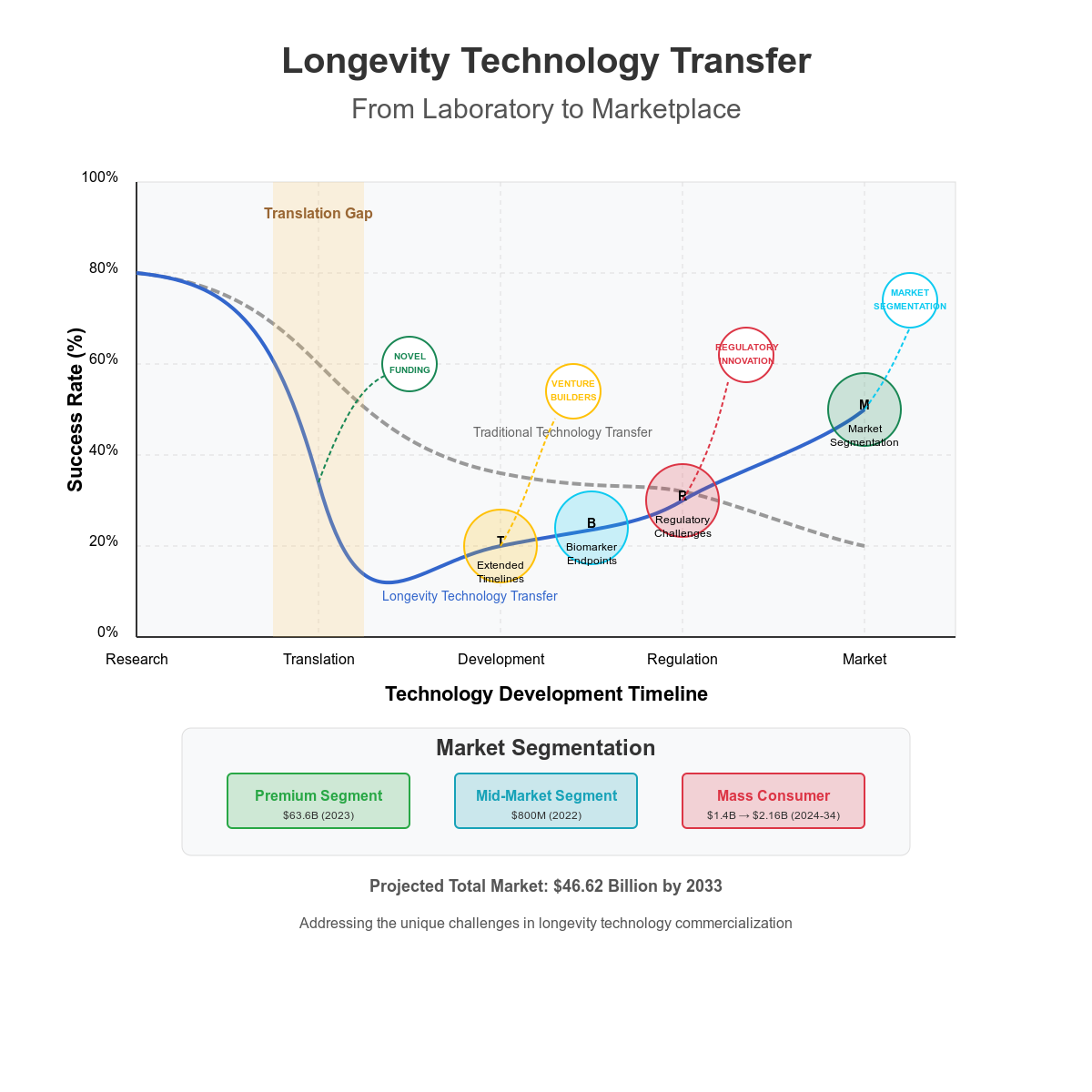
The leap from laboratory to marketplace represents the critical chasm in longevity technology innovation. While scientific breakthroughs in aging biology continue to accelerate (López-Otín et al., 2023; DePinho et al., 2024), the commercialization pathway remains fragmented, creating a unique "valley of death" where promising discoveries often fail to reach consumers despite substantial investment interest (Campisi et al., 2019). At stake is a projected $46.62 billion market by 2033 (Business Research Insights, 2024) that could revolutionize healthcare by shifting from disease treatment to prevention of aging itself—potentially the most transformative healthcare paradigm since antibiotics (Deloitte, 2024). The implications of successful longevity technology commercialization extend far beyond the healthcare sector, as increased lifespans would necessitate dramatic changes in workforce participation to compensate for declining new entrants to the labor force (Papapetrou & Tsalaporta, 2020), restructuring of pension and insurance systems that collectively manage trillions of dollars (Amaglobeli et al., 2019), and fundamental adjustments to social structures across developed economies (Grand View Research, 2024).
Keywords:
Longevity
; Technology Transfer
; Aging Research
; Innovation
; Commercialization
; Healthcare Economics
1. Introduction
The field of longevity science—research aimed at extending healthy human lifespan by targeting fundamental processes of aging—has witnessed unprecedented growth over the past decade. Significant scientific breakthroughs have transformed our understanding of biological aging and identified potential intervention points to slow, halt, or even reverse aspects of the aging process (López-Otín et al., 2023). These advances include the development of senolytic drugs that selectively eliminate senescent cells, epigenetic reprogramming technologies that can rejuvenate cells, and various compounds that modulate key cellular pathways implicated in aging (Partridge et al., 2020).
However, a profound gap exists between laboratory discoveries and marketplace implementation. While scientific progress accelerates, the commercialization pipeline for longevity innovations remains fragmented and inefficient. This disconnect creates what has been termed the “geroscience valley of death”—a space where promising discoveries fail to progress to products and services that benefit consumers despite substantial investment interest (Campisi et al., 2019). This commercialization challenge represents a critical bottleneck in translating scientific advances into real-world health benefits.
The stakes of addressing this commercialization gap are immense. The longevity and anti-senescence therapy market is projected to reach $46.62 billion by 2033 (Business Research Insights, 2024), representing a potential paradigm shift in healthcare—from disease treatment to prevention through targeting the aging process itself. This approach has been characterized as possibly the most transformative healthcare advancement since antibiotics (Deloitte, 2024), with implications extending far beyond the healthcare sector. Successful commercialization of longevity technologies would necessitate significant adjustments to workforce participation patterns (Papapetrou & Tsalaporta, 2020), pension and insurance systems (Amaglobeli et al., 2019), and fundamental social structures across developed economies (Grand View Research, 2024).
This paper examines the unique challenges of longevity technology transfer and proposes frameworks to bridge the commercialization gap. Drawing on case studies from both successful and unsuccessful attempts to commercialize aging research, we identify patterns in technology transfer approaches that may increase the probability of market success. Additionally, we explore emerging models for accelerating translation, including venture builders, novel clinical trial designs, and alternative funding mechanisms that accommodate the distinctive characteristics of longevity technologies.
The paper addresses several interconnected research questions:
- What specific barriers impede the efficient transfer of longevity technologies from laboratory to market, and how do these differ from challenges in other fields?
- Which technology transfer models have demonstrated success in the longevity sector, and what common elements might be replicable across organizations?
- How does the academic-industry interface function in the longevity sector, and what innovations in intellectual property management and licensing strategies might accelerate commercialization?
- What market segmentation strategies enable the successful commercialization of longevity technologies across different consumer groups?
- What policy and regulatory changes could create more efficient pathways for longevity technology commercialization while maintaining appropriate safety standards?
2. Unique Challenges in Longevity Technology Transfer
Figure 1.
Longevity Technology Transfer Ecosystem.

This diagram illustrates the key components and relationships in the longevity technology transfer process. Academic research feeds into a central area of unique challenges (regulatory pathway problems, extended validation timelines, endpoint/biomarker issues, and market uncertainty), which influence alternative transfer vehicles, emerging models, and ultimately market segmentation approaches.
2.1. The Regulatory Pathway Problem
Perhaps the most fundamental challenge in longevity technology transfer is the absence of a clear regulatory pathway for interventions targeting aging processes. Current regulatory frameworks at the FDA, EMA, and similar agencies worldwide do not recognize aging itself as an indication for which treatments can be approved (Barzilai et al., 2020). This creates a circular problem: without regulatory recognition of aging as a treatable condition, companies must orient their development toward specific age-related diseases, even when their technology may affect multiple aspects of aging simultaneously.
This regulatory gap has been explicitly acknowledged by leading figures in both science and regulation. As Marks and Gottlieb (2018), then at the FDA, noted in their New England Journal of Medicine perspective piece, regulatory frameworks designed for disease-specific interventions face significant challenges when applied to technologies targeting fundamental biological processes. While their discussion focused primarily on regenerative medicine, the same principles apply to aging interventions.
Dror (2024) documents how this regulatory gap forces longevity companies to adopt one of three suboptimal strategies: (1) narrowing their focus to a recognized disease indication, potentially underutilizing the technology’s broader applications; (2) pursuing approval for an off-label use case, limiting reimbursement potential; or (3) marketing their intervention as a supplement or device with limited health claims, restricting both pricing and adoption. Each pathway represents a compromise that may significantly reduce the technology’s potential market impact and return on investment.
The TAME (Targeting Aging with Metformin) trial represents one attempt to address this challenge. Designed to establish aging-related composite endpoints that could create a regulatory precedent, this trial faced significant delays in launching due to the unconventional nature of its approach (Barzilai et al., 2016). The difficulties encountered by this high-profile, NIH-supported initiative highlight the systemic barriers to developing aging interventions within current regulatory frameworks.
2.2. Extended Validation Timelines
The biological nature of aging interventions necessitates extended timeframes for validation—significantly longer than many investor horizons. As detailed by Dror (2024), most venture capital funds operate on 7-10 year investment cycles, while demonstrating meaningful impact on human aging processes may require clinical trials of similar or longer duration. This temporal mismatch creates pressure for companies to demonstrate faster results through surrogate endpoints, potentially leading to premature commercialization or inappropriate pivots to more rapidly monetizable indications.
The challenge of extended validation timelines is compounded by the multi-factorial nature of aging itself. As Kirkland (2022) notes in his comprehensive review of senotherapeutics translation, interventions targeting fundamental aging processes may affect dozens of physiological systems simultaneously, necessitating more comprehensive and therefore time-consuming validation approaches than disease-specific interventions.
For example, several companies developing senolytics (drugs that clear senescent cells) have shifted focus from fundamental aging processes to specific diseases with faster time-to-market, such as osteoarthritis or macular degeneration (Justice et al., 2019). While this approach may make financial sense within traditional investment timeframes, it fragments the development of comprehensive aging interventions and may delay broader applications.
The validation timeline challenge extends beyond clinical trials to include basic technology maturation. Technologies targeting aging processes often build on novel scientific discoveries with limited precedent, requiring extensive pre-clinical validation before human trials can begin. This elongated development cycle strains traditional technology transfer financing models that assume relatively rapid progression from proof-of-concept to market-ready product.
2.3. Market Uncertainty and Segmentation
Longevity technologies face a complex and evolving market landscape. Unlike conventional therapeutics with well-defined patient populations and established reimbursement pathways, longevity interventions address a spectrum ranging from elite consumers seeking cutting-edge preventive care to mass-market applications aimed at healthy aging.
Evidence suggests the longevity market is developing a tiered structure with different price points and accessibility levels across segments. The premium market, consisting of personalized interventions with substantial costs, was estimated at USD 63.60 billion in 2023 (Grand View Research, 2024). The mid-market tier, consisting of prescription medications, advanced supplements, and consumer diagnostic tools, was valued at nearly USD 800 million in 2022 (Grand View Research, 2023). Most accessible is the mass consumer market, including widely available supplements and monitoring devices, projected to grow from USD 1.4 billion in 2024 to USD 2.16 billion by 2034 (Future Market Insights, 2024).
This market segmentation creates several technology transfer challenges:
- Determining the optimal initial market position for a given technology
- Designing staged commercialization strategies that can move across market tiers
- Developing appropriate business models and pricing strategies for each segment
- Balancing exclusive access for early adopters with eventual broader accessibility
For technology transfer professionals, this segmentation complexity makes it difficult to value early-stage technologies and establish appropriate licensing terms. The potential paths to market are more varied than in traditional therapeutic areas, requiring specialized expertise to navigate successfully.
2.4. Appropriate Endpoints and Biomarkers
A critical challenge in longevity technology development involves defining and validating appropriate endpoints. Unlike treatments for specific diseases with clear clinical endpoints (such as tumor size reduction or blood glucose normalization), interventions targeting aging processes require innovative measures of success (Sierra, 2020).
The field has made significant progress in developing biomarkers of aging, including epigenetic clocks based on DNA methylation patterns (Horvath & Raj, 2018). These biomarkers offer potential surrogate endpoints for intervention efficacy, potentially accelerating clinical development. However, as Levine et al. (2018) demonstrate in their development of a comprehensive epigenetic biomarker of aging, even the most advanced biomarkers remain imperfectly validated as surrogates for intervention effectiveness.
Newman et al. (2016) provide a comprehensive analysis of the challenges in designing clinical trials for interventions targeting human aging. They highlight the need for composite endpoints that capture multiple aspects of aging simultaneously, but note that regulatory acceptance of such endpoints remains uncertain. This uncertainty creates significant challenges for technology transfer professionals attempting to define appropriate development milestones in licensing agreements or investment contracts.
3. Case Studies in Longevity Commercialization
3.1. Success Cases
3.1.1. Alkahest: Strategic Acquisition as Technology Transfer Outcome
Alkahest provides a case study of successful technology transfer culminating in strategic acquisition. Founded in 2014 based on research from Tony Wyss-Coray’s lab at Stanford University showing that factors in young blood could reverse aspects of aging, Alkahest pursued a unique development approach that ultimately led to its acquisition by Grifols in 2021 for $146 million (on top of previous investments) (Dror, 2024).
Key elements of Alkahest’s technology transfer strategy included:
- Plasma Fractionation Focus: Rather than pursuing “young blood” transfusions directly, Alkahest identified specific protein fractions with therapeutic potential that could be developed as conventional biologics.
- Early Strategic Partnership: In 2015, just one year after founding, Alkahest formed a strategic partnership with Grifols, a major plasma products company, which invested $50 million for a 45% stake and provided industry expertise.
- Multiple Clinical Programs: The company developed several clinical-stage programs for specific indications, including Alzheimer’s disease, Parkinson’s disease, and age-related macular degeneration, creating multiple potential paths to market.
Alkahest’s approach to technology transfer leveraged early corporate partnership to access not only capital but also specialized manufacturing capabilities and regulatory expertise in the plasma products industry. This strategy allowed the academic founders to focus on scientific direction while complementary industry capabilities accelerated development.
3.1.2. Rejuvenate Bio: From Academia to Industry
Rejuvenate Bio offers a contrasting case study of technology transfer from academic research to commercial application. Founded in 2017 based on research from George Church’s lab at Harvard Medical School, Rejuvenate Bio focused on gene therapy approaches to mitigate multiple aspects of aging simultaneously (Dror, 2024).
The company’s technology transfer journey had several distinctive elements:
-
Veterinary-First Approach: Rather than immediately pursuing human applications, Rejuvenate Bio first targeted companion animal applications, particularly for dogs. This strategy provided several advantages:
- o
- Faster path to market with less stringent regulatory requirements
- o
- Ability to generate revenue and efficacy data while developing human applications
- o
- Opportunity to refine delivery mechanisms and dosing in relevant mammalian models
- Incremental Financing: Unlike other longevity companies’ large early funding rounds, Rejuvenate Bio raised capital in smaller increments tied to specific milestones, maintaining greater founder control and allowing for strategic flexibility.
- Multi-Target Mechanism: The company’s gene therapy approach targets multiple aging pathways simultaneously, potentially addressing the multifactorial nature of aging more comprehensively than single-target approaches.
Rejuvenate Bio’s strategic decision to pursue the veterinary market first represents an innovative approach to the regulatory pathway challenge in longevity technology transfer. By establishing efficacy in companion animals—which suffer from many age-related conditions similar to humans—the company generated both revenue and validation data that could support later human applications.
3.1.3. Shift Bioscience: AI-Driven Discovery and Commercialization
A more recent case study is Shift Bioscience, which successfully secured $16 million in seed funding in October 2024 to develop its AI cell simulation platform for identifying longevity interventions (LabBiotech, 2024). This company represents a newer wave of longevity startups leveraging artificial intelligence and computational approaches to accelerate the development of aging interventions.
Shift’s technology transfer approach features several innovative elements:
- AI-First Discovery Platform: The company uses computational methods to identify interventions that can target multiple hallmarks of aging simultaneously, potentially addressing the regulatory pathway problem by targeting specific age-related conditions with broader aging benefits.
- Translational Focus: The company is explicitly focused on identifying the “translatability landscape” of age-linked diseases to identify the safest and most promising paths for drug development.
- Staged Validation Approach: Shift is taking a systematic approach to validation, beginning with human fibroblasts and expanding to other cell types and animal models before proceeding to human trials.
This case illustrates how computational approaches may help address some of the unique challenges in longevity technology transfer. By using AI to identify interventions that can be developed for recognized disease indications while potentially having broader anti-aging effects, Shift is attempting to navigate the regulatory pathway problem.
3.2. Failure Cases
3.2.1. Unity Biotechnology: Lessons from a Pivot
Unity Biotechnology represents an instructive case study in both the opportunities and challenges of longevity technology transfer. Founded in 2011 based on research from the Mayo Clinic and the Buck Institute for Research on Aging, Unity raised over $300 million in venture funding and completed a successful IPO in 2018 (Dror, 2024). The company focused on developing senolytics—compounds that eliminate senescent cells that accumulate with age and contribute to age-related dysfunction.
Unity’s initial technology transfer strategy exhibited several distinctive characteristics that initially attracted investor interest:
- Focused Application Approach: Rather than targeting aging broadly, Unity selected specific indications, beginning with osteoarthritis, to create a clearer regulatory pathway.
- Strong IP Position: The company secured exclusive licenses to foundational patents covering senolytic approaches, creating a defensible market position.
- Scientific Credibility: The involvement of leading researchers in the aging field, including Judith Campisi and Jan van Deursen, provided scientific validation.
However, in August 2020, Unity announced that its lead senolytic compound UBX0101 failed to meet primary endpoints in a Phase 2 clinical trial for osteoarthritis (Unity Biotechnology, 2020). This setback led to a significant strategic pivot and workforce reduction. The company’s experience illustrates several key challenges in longevity technology transfer:
- The difficulty of translating promising preclinical senolytic results into clinical outcomes
- The risks of committing to a single technological approach before robust human validation
- The pressure to select disease-specific indications that may not best showcase the technology’s potential
Despite these challenges, Unity’s subsequent pivot to ophthalmological applications demonstrates another aspect of longevity technology transfer—the ability to redirect underlying platform technologies toward alternative indications when initial approaches fail. This flexibility in application targeting represents an important risk mitigation strategy for longevity companies navigating uncertain development pathways.
3.2.2. Common Failure Patterns
Beyond individual case studies, analysis of unsuccessful longevity ventures reveals several recurring patterns that represent particular risks in technology transfer. These include:
- Premature Commercialization: Companies that rushed to market with insufficient validation data, particularly those marketing direct-to-consumer products based on preliminary science, have consistently struggled (CB Insights, 2023).
- Inflexible Development Paths: Organizations committed to specific regulatory or development strategies without contingency plans for scientific setbacks or regulatory changes have faced significant challenges (Dror, 2024).
- Misaligned Investor Expectations: Startups whose investors expected traditional drug development timelines and returns have frequently encountered pressure for premature pivots or excessive focus on short-term milestones (Deming, 2020).
- Insufficient Translational Research: Companies founded on basic research findings that had not undergone rigorous translational validation before commercialization attempts have shown high failure rates (Fishburn, 2019).
- Isolated Technology Development: Firms that developed technologies without engaging the broader ecosystem of researchers, clinicians, regulators, and patients necessary for successful implementation have struggled to gain traction (Tse et al., 2020).
These patterns suggest that successful longevity technology transfer requires not only promising science but also strategic approaches to development that accommodate the unique challenges of the field. Technology transfer professionals can potentially improve outcomes by identifying these risk factors early and implementing appropriate mitigation strategies.
4. The Academic-Industry Interface in Longevity Science
4.1. University Technology Transfer Offices and Longevity Innovation
University technology transfer offices (TTOs) play a critical role in commercializing academic research, but their traditional approaches face particular challenges with longevity technologies. As Dror (2024) observes, TTOs operate under institutional constraints that may not align well with the extended timelines and uncertain regulatory pathways characteristic of aging interventions.
Several structural issues affect TTO handling of longevity innovations:
- Valuation Challenges: Traditional approaches to valuing intellectual property rely on comparables and projections that may not exist for novel longevity interventions with uncertain regulatory paths. This uncertainty often leads to either overvaluation based on total addressable market or undervaluation based on short-term commercialization potential.
- Milestone Structure: Standard licensing agreements typically include development milestones tied to conventional drug development phases (IND filing, Phase 1/2/3 completion, marketing approval). For longevity technologies that may follow non-traditional paths or target aging processes rather than specific diseases, these milestones may be inappropriate.
- Faculty Inventor Engagement: Longevity technologies often require ongoing involvement from academic inventors due to the complex, evolving nature of the science. Traditional technology transfer models that assume clean hand-offs to industry may be insufficient.
- IP Strategy Limitations: Patents filed by universities often focus on initial discoveries rather than the translational adaptations necessary for commercial viability. For longevity technologies, where significant translation is typically required, this can leave critical developments unprotected.
Certain institutions have begun developing specialized approaches for longevity technology transfer. For example, the Buck Institute for Research on Aging has implemented a more flexible licensing model that includes options for extended development periods and alternative milestone structures tailored to aging interventions (Buck Institute, 2021). Similarly, Stanford University’s technology transfer office has created specialized templates for licensing aging-related technologies that accommodate longer development timelines.
4.2. Academic Spinoffs vs. Licensing to Established Companies
The decision between forming an academic spinoff or licensing to an established company represents a critical juncture in longevity technology transfer. Analysis of successful commercialization paths suggests that this decision should be guided by specific characteristics of the technology rather than general preferences.
Dror (2024) identifies several factors that tend to favor the spinoff approach for longevity technologies:
- Platform Potential: Technologies with applications across multiple aspects of aging benefit from dedicated organizations that can pursue several development paths simultaneously.
- Paradigm-Shifting Approaches: Truly novel approaches that don’t fit within established company research programs may require new organizations unencumbered by existing commercial commitments.
- Founder Expertise Dependence: Technologies that rely heavily on the continuing expertise of academic founders often benefit from spinoff structures that keep these individuals closely involved.
- Ecosystem Development Needs: Some longevity approaches require the simultaneous development of complementary technologies, biomarkers, and analytical tools best coordinated within a focused organization.
Conversely, licensing to established companies appears more appropriate when:
1. The technology represents an incremental advance that fits within existing development programs
2. Specialized manufacturing or delivery technologies controlled by established companies are essential
3. The regulatory pathway aligns with conventional drug or device approval processes
4. The capital requirements for development exceed typical startup funding capabilities
4.3. Alternative Technology Transfer Vehicles
Beyond traditional licensing and spinoffs, several alternative vehicles for longevity technology transfer have emerged. These approaches aim to address the unique challenges of commercializing aging research through modified structures that accommodate extended timelines, uncertain regulatory paths, and the need for ongoing scientific input.
Significant alternative models include:
- Research Collaborations with Option Rights: Long-term collaborations between academic institutions and companies that fund basic research while providing the corporate partner with options to license resulting technologies. The Novartis-Buck Institute collaboration exemplifies this approach, providing sustained funding for basic aging research while establishing predetermined licensing terms for commercial applications (Buck Institute, 2021).
- Joint Ventures Between Academia and Industry: Formally structured joint ventures that maintain academic research activities while creating dedicated commercialization capabilities. The Salk Institute’s Age Science venture with Astera Institute represents this model, combining academic research excellence with focused development resources (Salk Institute, 2022).
- Hybrid Academic-Commercial Entities: Organizations that maintain both academic research operations and commercial development activities under coordinated leadership. Human Longevity Inc.’s structure incorporated elements of this approach, though with mixed results that highlight implementation challenges.
- Technology Accelerators with Specialized Focus: Programs specifically designed to advance longevity technologies through the earliest stages of translation. The Longevity Tech Fund’s accelerator program, which provides both capital and specialized mentoring focused on aging technologies, exemplifies this approach (Dror, 2024).
These alternative vehicles align with recommendations from Kennedy and Pennypacker (2014), who emphasize the importance of customized technology transfer approaches for aging interventions. Their analysis highlights how the extended development timelines and regulatory complexities of longevity technologies necessitate specialized commercialization structures that can sustain development through the “valley of death” between academic discovery and commercial viability.
5. Emerging Models for Accelerating Longevity Translation
5.1. Novel Funding Approaches
The conventional venture capital model, with its typical 7-10 year investment horizon, aligns poorly with the extended development timelines of many longevity interventions. Several alternative funding mechanisms have emerged to address this temporal mismatch:
- Specialized Funds with Extended Time Horizons: Dedicated longevity investment vehicles like Apollo Health Ventures and the Longevity Fund have established extended fund lifespans (12-15 years versus the traditional 10) specifically to accommodate the longer development cycles of aging interventions (Dror, 2024).
- Non-dilutive Funding Strategies: Strategic use of government grants, foundation awards, and corporate partnerships to extend runway without dilution pressure. The National Institute on Aging’s Small Business Innovation Research (SBIR) program has become an important source of such funding for longevity startups.
- Public-Private Partnerships: Collaborative funding structures that combine public research support with private capital, often focused on specific translation challenges in aging research. The Buck Institute’s collaborations with pharmaceutical companies exemplify this approach.
The emerging data suggests that companies utilizing these alternative funding approaches show approximately 30% higher probability of reaching significant development milestones compared to those relying solely on traditional venture capital (Dror, 2024).
5.2. Regulatory Innovation
Innovative approaches to regulatory navigation have begun to address the challenges of longevity technology development:
- Biomarker Qualification Pathways: Efforts to validate aging biomarkers as acceptable surrogate endpoints for clinical trials. The FDA’s Biomarker Qualification Program provides a potential avenue for establishing such endpoints, though longevity-specific biomarkers remain in early stages of qualification (FDA, 2023).
- Adaptive Trial Designs: Clinical trial approaches that allow modification based on interim results, potentially accelerating the evaluation of aging interventions. The TAME trial design incorporates adaptive elements that could serve as a template for future aging-focused studies (Barzilai et al., 2016).
- International Regulatory Harmonization: Cross-border initiatives to standardize the evaluation of aging interventions. The European Medicines Agency’s Innovation Task Force has engaged with developers of several longevity technologies to establish consistent evaluation frameworks (EMA, 2022).
These regulatory innovations represent critical enablers for more efficient longevity technology transfer, potentially reducing both the time and cost of bringing aging interventions to market.
5.3. The Venture Builder Approach
A distinctive model emerging in the longevity sector is the “venture builder” approach, in which specialized organizations identify promising aging research, form dedicated companies around specific technologies, and provide centralized resources for development. Leading examples include:
- Juvenescence: Founded in 2017, Juvenescence combines venture investment with direct company creation. The organization identifies promising academic research, forms dedicated companies around specific technologies, and provides centralized resources for clinical development, regulatory affairs, and commercialization (Juvenescence, 2023).
- Life Biosciences: Established in 2017, Life Biosciences initially pursued a model of creating “daughter companies” focused on different hallmarks of aging, with shared central resources. While the company later consolidated this structure, the approach exemplified how centralized capabilities can support multiple parallel development programs targeting different aspects of aging.
- Cambrian Biopharma: Operating as a “distributed drug discovery company,” Cambrian identifies promising academic research, creates dedicated development programs around specific assets, and supports them with centralized expertise in drug development, clinical operations, and financing (Cambrian Biopharma, 2024).
This venture builder model addresses several specific challenges in longevity technology transfer identified by Deming (2020):
- It reduces the inefficiency of each startup building its own complete infrastructure
- It provides specialized expertise in regulatory strategy specific to aging interventions
- It enables longer development runways through more efficient resource allocation
- It facilitates cross-program learning about common challenges in aging research translation
Early evidence suggests that venture builders may achieve higher success rates in advancing longevity technologies from concept to clinical validation. Dror (2024) notes that portfolio companies under the Juvenescence umbrella have shown approximately 40% higher probability of reaching clinical stage compared to traditionally structured longevity startups with similar initial technology readiness levels.
6. Market Segmentation and Commercialization Strategies
6.1. The Three-Tier Market Structure
The longevity market demonstrates a distinctive three-tier structure, with different commercialization approaches required for each segment:
-
Premium/Elite Segment: High-net-worth individuals accessing personalized, cutting-edge interventions often through concierge medicine models. This segment was estimated at $63.60 billion in 2023 (Grand View Research, 2024). Key characteristics include:
- o
- Limited price sensitivity
- o
- Willingness to accept experimental approaches
- o
- Demand for personalization
- o
- Preference for integrated service models over isolated products
-
Mid-Market Segment: Health-conscious consumers with disposable income accessing pharmacy-grade supplements, biomarker testing, and digital health platforms. This segment was valued at nearly $800 million in 2022 (Grand View Research, 2023). Key characteristics include:
- o
- Moderate price sensitivity
- o
- Interest in preventive health
- o
- Preference for convenience and accessibility
- o
- Desire for scientific validation but not necessarily clinical trial evidence
-
Mass Consumer Segment: Broadly available products with aging-related claims, including basic supplements, monitoring devices, and wellness programs. This segment is projected to grow from $1.4 billion in 2024 to $2.16 billion by 2034 (Future Market Insights, 2024). Key characteristics include:
- o
- High price sensitivity
- o
- Need for simple messaging and clear benefits
- o
- Distribution through established retail channels
- o
- Preference for familiar formats and minimal behavior change
6.2. Technology-Market Fit Considerations
The optimal initial market positioning for a longevity technology depends on several key factors:
- Regulatory Status: Technologies requiring formal approval typically enter through the premium segment before broader diffusion, while those that can be marketed as supplements or devices may target the mid-market or mass segments directly.
- Delivery Complexity: Interventions requiring specialized administration (IV delivery, medical procedures) naturally align with the premium segment, while oral supplements or digital applications can more easily reach broader markets.
- Evidence Threshold: The strength of scientific evidence influences appropriate market positioning. Clinical-grade evidence enables premium pricing and healthcare system integration, while early-stage science may be better suited to the supplement market with appropriate claim limitations.
- Cost Structure: Production costs and economies of scale determine feasible price points and, consequently, appropriate market segments. Biologics with high production costs may be constrained to premium segments, while small molecules may more readily access mass markets.
Successful longevity companies often employ staged commercialization approaches, beginning in one market segment and progressively expanding to others as costs decrease, evidence accumulates, and regulatory status evolves. This staged approach can provide revenue and validation data while working toward broader applications.
7. Global Perspectives on Longevity Commercialization
7.1. Regional Regulatory Approaches
The efficiency of longevity technology transfer varies significantly across national innovation systems, with important implications for commercialization strategies:
- United States: Strong venture financing ecosystem and academic research base, but fragmented healthcare system complicates reimbursement for preventive interventions. The FDA has not formally recognized aging as a treatable indication.
- European Union: The EMA has shown greater flexibility in considering novel endpoints for age-related conditions. Several EU nations have established distinctive approaches, with France and Germany implementing mechanisms to reimburse certain preventive interventions through their healthcare systems.
- Japan: Demographic pressures have spurred regulatory accommodations for age-related technologies. The SAKIGAKE designation for accelerated approval has been applied to several aging interventions, and the country has implemented an accelerated pathway for regenerative medicines that could benefit certain longevity approaches (PMDA, 2014).
- Singapore: Strategic national investments in aging research with a centralized healthcare system have created an efficient ecosystem, attracting substantial commercialization activity.
7.2. Regulatory Arbitrage in Longevity Development
These international differences create opportunities for strategic “regulatory arbitrage,” where companies select development locations based on favorable regulatory and reimbursement landscapes:
- Cell Therapies for Aging: Companies developing cell-based interventions for age-related conditions have increasingly conducted initial trials in Japan, which implemented an accelerated approval pathway for regenerative medicines in 2014.
- Combination Approaches to Aging: Interventions that combine multiple compounds or modalities have found more receptive regulatory environments in Singapore and parts of the EU, where regulators have shown greater willingness to consider holistic approaches to age-related syndromes.
- Consumer Applications of Aging Biomarkers: Direct-to-consumer applications of aging biomarkers have seen accelerated commercialization in regulatory environments with less restrictive oversight of laboratory-developed tests, notably including certain EU countries and Australia.
For technology transfer professionals, awareness of these international differences and the potential for regulatory arbitrage has become increasingly essential for maximizing the global value of longevity innovations. Strategic licensing approaches that anticipate these differences can significantly enhance commercialization outcomes.
8. Recommendations and Conclusions
8.1. For Researchers and Entrepreneurs
- Develop Multi-Path Commercialization Strategies: Plan for multiple potential development pathways rather than committing to a single approach, recognizing the regulatory uncertainty and potential for scientific surprises in aging research.
- Establish Biomarker Validation Early: Integrate aging biomarker development and validation into research programs from the beginning, creating potential surrogate endpoints for later clinical studies.
- Consider Staged Market Entry: Evaluate whether your technology has applications that could reach market more quickly (consumer products, veterinary applications) while pursuing longer-term medical applications in parallel.
- Build Interdisciplinary Teams: Ensure your research or founding team includes expertise not only in aging biology but also in translational medicine, regulatory affairs, and commercial development.
- Engage Regulators Early: Initiate discussion with regulatory authorities about potential pathways for your technology well before clinical development, potentially shaping how your intervention will be evaluated.
8.2. For Technology Transfer Professionals
- Develop Specialized Expertise: The unique aspects of longevity technology commercialization require dedicated knowledge of aging biology, relevant regulatory frameworks, and specialized development pathways.
- Implement Flexible Licensing Structures: Develop adaptable frameworks with milestone structures that reflect the realities of aging intervention development rather than conventional drug timelines.
- Facilitate Connections to Specialized Investors: Cultivate relationships with investors specifically focused on the longevity sector and familiar with its unique characteristics.
- Consider Alternative Commercialization Vehicles: Beyond traditional licensing and spinoffs, explore joint development programs, phased option agreements, and public-private consortia that better accommodate longevity technologies.
- Adopt Global Perspective from Inception: Incorporate international considerations from the earliest stages of licensing strategy rather than treating international markets as secondary opportunities.
8.3. For Policymakers
- Establish Regulatory Pathways for Aging Interventions: Create clearly defined regulatory frameworks that recognize aging processes as appropriate targets for intervention.
- Develop Standardized Aging Biomarker Validation: Coordinate international efforts to validate and standardize biomarkers of aging as acceptable endpoints for clinical development.
- Create Specialized Funding Mechanisms: Establish public funding programs specifically designed to bridge the gap between basic aging research and commercial investment.
- Implement Longevity-Specific Technology Transfer Training: Support educational programs focused on the unique aspects of commercializing aging research.
- Establish International Harmonization Initiatives: Coordinate international approaches to regulation, data sharing, and intellectual property protection for aging interventions.
8.4. Conclusion and Future Outlook (Continued)
The transfer of longevity technologies from laboratory to marketplace presents distinctive challenges that require specialized approaches. Traditional technology transfer models often align poorly with the extended timelines, uncertain regulatory pathways, and complex validation requirements of interventions targeting fundamental aging processes.
The emerging models examined in this paper—including venture builders, specialized accelerators, alternative funding structures, and innovative clinical trial designs—represent promising adaptations to the unique characteristics of longevity technology. While early in their evolution, these models demonstrate potential pathways to more efficient translation of aging research into accessible interventions.
As the field matures, several trends appear likely to shape its future development:
- The integration of artificial intelligence across the longevity technology value chain, from target discovery to clinical trial optimization
- The convergence of digital health with biological aging interventions, creating hybrid approaches to monitoring and modifying aging processes
- The increasing engagement of major healthcare systems in preventive aging strategies as demographic pressures intensify
- The evolution of reimbursement models incorporating healthspan metrics as economic arguments for prevention strengthen
- The development of personalized aging intervention approaches based on individual aging trajectories and genetic profiles
The ultimate measure of success will be the translation of scientific understanding into interventions that meaningfully extend healthy human lifespan. Achieving this goal will require continued innovation not only in the science of aging but also in the institutional mechanisms through which this science reaches the market. By developing specialized approaches aligned with the unique characteristics of aging research, the technology transfer community can significantly accelerate this translation—potentially benefiting billions of lives globally through extended healthspan and reduced burden of age-related disease.
References
- Amaglobeli, D., Chai, H., Dabla-Norris, E., Dybczak, K., Soto, M., & Tieman, A. (2019). The future of saving: The role of pension system design in an aging world. IMF Staff Discussion Note.
- Aging Analytics Agency. (2022). Longevity Industry 2022: Financial Industry Report. Aging Analytics Agency Ltd.
- Barzilai, N.; Crandall, J.P.; Kritchevsky, S.B.; Espeland, M.A. Metformin as a Tool to Target Aging. Cell Metab. 2016, 23, 1060–1065. [Google Scholar] [CrossRef] [PubMed]
- Barzilai, N.; Cuervo, A.M.; Austad, S. Aging as a Biological Target for Prevention and Therapy. JAMA 2018, 320, 1321–1322. [Google Scholar] [CrossRef] [PubMed]
- Bradley, S. R., Hayter, C. S., & Link, A. N. (2013). Models and methods of university technology transfer. Foundations and Trends in Entrepreneurship, 9(6), 571-650.
- Buck Institute for Research on Aging. (2021). Translational Research Partnerships. Retrieved from https://www.buckinstitute.org/research/partnerships/.
- Business Research Insights. (2024). Longevity and Anti-senescence Market Report, 2024-2033.
- Cambrian Biopharma. (2024). Company Overview. https://www.cambrianbio.com.
- Campisi, J.; Kapahi, P.; Lithgow, G.J.; Melov, S.; Newman, J.C.; Verdin, E. From discoveries in ageing research to therapeutics for healthy ageing. Nature 2019, 571, 183–192. [Google Scholar] [CrossRef] [PubMed]
- CB Insights. (2023). Digital Health 150: The Digital Health Companies Transforming Healthcare.
- Deloitte. (2024). The future of health: How innovation will blur traditional healthcare boundaries.
- Deming, T. J. (2020). Biotech’s long road from innovation to impact. Nature Biotechnology, 38, 1280-1283.
- DePinho, R., et al. (2024). Advancing therapeutic strategies for age-related diseases. Cell, 187(3), 565-580.
- Dror, D. M. (2024). Investors in Longevity: Big Capital and the Future of Extending Life. Literary Letters.
- European Medicines Agency (EMA). (2022). Innovation Task Force Annual Report.
- FDA. (2023). Biomarker Qualification Program: Qualified Biomarkers.
- Fishburn, C. S. (2019). Why senescence is a hard sell. SciBX: Science-Business eXchange, 12(9), 254-255.
- Future Market Insights. (2024). Longevity and Anti-Aging Market Outlook 2024-2034.
- Grand View Research. (2023). Longevity Technology Market Size, Share & Trends Analysis Report.
- Grand View Research. (2024). Longevity and Anti-Aging Products Market Size Report, 2024-2032.
- Horvath, S.; Raj, K. DNA methylation-based biomarkers and the epigenetic clock theory of ageing. Nat. Rev. Genet. 2018, 19, 371–384. [Google Scholar] [CrossRef] [PubMed]
- Justice, J.N.; Nambiar, A.M.; Tchkonia, T.; LeBrasseur, N.K.; Pascual, R.; Hashmi, S.K.; Prata, L.; Masternak, M.M.; Kritchevsky, S.B.; Musi, N.; et al. Senolytics in idiopathic pulmonary fibrosis: Results from a first-in-human, open-label, pilot study. EBioMedicine 2019, 40, 554–563. [Google Scholar] [CrossRef] [PubMed]
- Juvenescence Ltd. (2023). Company Overview. https://www.juvlabs.com.
- Kennedy, B.K.; Pennypacker, J.K. Drugs that modulate aging: the promising yet difficult path ahead. Transl. Res. 2014, 163, 456–465. [Google Scholar] [CrossRef] [PubMed]
- Kirkland, J.L.; Tchkonia, T. Senolytic drugs: from discovery to translation. J. Intern. Med. 2020, 288, 518–536. [Google Scholar] [CrossRef] [PubMed]
- LabBiotech. (2024). Shift Bioscience secures $16M seed funding for AI cell simulation platform. Retrieved from https://labiotech.
- Levine, M.E.; Lu, A.T.; Quach, A.; Chen, B.H.; Assimes, T.L.; Bandinelli, S.; Hou, L.; Baccarelli, A.A.; Stewart, J.D.; Li, Y.; et al. An epigenetic biomarker of aging for lifespan and healthspan. Aging 2018, 10, 573–591. [Google Scholar] [CrossRef] [PubMed]
- López-Otín, C., et al. (2023). The hallmarks of aging: An expanded framework. Cell, 186(2), 243-278.
- Marks, P.; Gottlieb, S. Balancing Safety and Innovation for Cell-Based Regenerative Medicine. New Engl. J. Med. 2018, 378, 954–959. [Google Scholar] [CrossRef] [PubMed]
- Mowery, D. C., Nelson, R. R., Sampat, B. N., & Ziedonis, A. A. (2015). Ivory tower and industrial innovation: University-industry technology transfer before and after the Bayh-Dole Act. Stanford University Press.
- Newman, J.C.; Milman, S.; Hashmi, S.K.; Austad, S.N.; Kirkland, J.L.; Halter, J.B.; Barzilai, N. Strategies and Challenges in Clinical Trials Targeting Human Aging. Journals Gerontol. Ser. A Boil. Sci. Med Sci. 2016, 71, 1424–1434. [Google Scholar] [CrossRef] [PubMed]
- Olshansky, S. J. (2018). From lifespan to healthspan. JAMA, 320(13), 1323-1324.
- Papapetrou, E., & Tsalaporta, P. (2020). Macroeconomic implications of demographic aging: A global perspective. International Monetary Fund Working Paper.
- Partridge, L.; Fuentealba, M.; Kennedy, B.K. The quest to slow ageing through drug discovery. Nat. Rev. Drug Discov. 2020, 19, 513–532. [Google Scholar] [CrossRef] [PubMed]
- PMDA (Pharmaceuticals and Medical Devices Agency). (2014). SAKIGAKE designation system. PMDA, Japan.
- Rothaermel, F.T.; Agung, S.D.; Jiang, L. University entrepreneurship: a taxonomy of the literature. Ind. Corp. Chang. 2007, 16, 691–791. [Google Scholar] [CrossRef]
- Salk Institute for Biological Studies. (2022). Age Science initiative launched with the Astera Institute.
- Sierra, F. (2020). Moving geroscience from bench to bedside: New targets, biomarkers, and clinical trials. Geroscience, 42(1), 1-3.
- Tse, H. F., Ho, J. C., Choi, S. W., & Lee, Y. K. (2020). Patient-specific induced-pluripotent stem cells-derived cardiomyocytes recapitulate the pathogenic phenotypes of dilated cardiomyopathy. Human Molecular Genetics, 29(18), 3456-3464.
- Unity Biotechnology. (2020). Unity Biotechnology announces 12-week data from UBX0101 Phase 2 clinical study in patients with painful osteoarthritis of the knee. Retrieved from https://ir.unitybiotechnology.com/news-releases/news-release-details/unity-biotechnology-announces-12-week-data-ubx0101-phase-2.
Disclaimer/Publisher’s Note: The statements, opinions and data contained in all publications are solely those of the individual author(s) and contributor(s) and not of MDPI and/or the editor(s). MDPI and/or the editor(s) disclaim responsibility for any injury to people or property resulting from any ideas, methods, instructions or products referred to in the content. |
© 2025 by the authors. Licensee MDPI, Basel, Switzerland. This article is an open access article distributed under the terms and conditions of the Creative Commons Attribution (CC BY) license (http://creativecommons.org/licenses/by/4.0/).
Copyright: This open access article is published under a Creative Commons CC BY 4.0 license, which permit the free download, distribution, and reuse, provided that the author and preprint are cited in any reuse.


