

Submitted:
15 May 2025
Posted:
16 May 2025
You are already at the latest version
Abstract
The growing complexity of coastal tourism requires marketing strategies that go beyond promotion and align with the ecological, cultural, and planning dynamics of coastal territories. This article introduces the concept of Blue Marketing, a place-based, sustainability-oriented approach designed to guide communication, product design, and governance in marine and coastal destinations. Building on socio-environmental marketing and inspired by Integrated Coastal Zone Management (ICZM), the study proposes a Blue Marketing Decalogue (BMD) of strategic principles structured into three thematic blocks: (1) ecosystem-focused sustainability, (2) cultural identity and territorial uniqueness, and (3) strategic planning and adaptive governance. The decalogue has been empirically informed by a territorial analysis of the Barbate–Vejer coastal corridor (Cádiz, Spain), but is conceived as a flexible and transferable framework applicable to diverse coastal contexts. It incorporates both strategic and normative instruments that support the design of communication strategies aligned with environmental preservation, community identity, and long-term planning. This contribution enriches theoretical debates on the role of marketing in sustainable tourism and provides practical guidance for coastal destinations seeking to balance competitiveness with ecological responsibility. Ultimately, Blue Marketing is proposed as a vector for transformation, capable of reconnecting tourism promotion with the sustainability challenges and opportunities of coastal regions.
Keywords:
Blue Marketing Decalogue (BMD)
; Coastal tourism
; Tourism governance
; Place-based marketing
; Integrated Coastal Zone Management (ICZM)
; Sustainable tourism
1. Introduction
The development of coastal tourism has brought significant economic benefits to many seaside communities, enhancing local economies and creating new employment opportunities. However, it has also increased pressure on fragile ecosystems, particularly in municipalities that host Protected Natural Areas (PNAs), where the balance between tourism and conservation is delicate and increasingly difficult to maintain (Hall, 2001; Sánchez, 2012). The growing demand for coastal tourism, often concentrated in specific periods and spaces, has led to negative externalities such as biodiversity loss, habitat degradation, and cultural homogenization (Mier-Terán, 2006; Rodríguez, 2009).
Conventional tourism planning strategies have often proved insufficient to address these challenges, especially in coastal and marine environments that require a nuanced understanding of ecological fragility and socio-economic dynamics. In this context, there is an urgent need for new approaches that can integrate environmental conservation and sustainable tourism development in coastal territories (Griggs et al., 2013; Sumarmi et al., 2024).
This article introduces the concept of Blue Marketing, an innovative strategy that adapts the tools of sustainable and socio-environmental marketing specifically to the context of coastal tourism management. This approach seeks to promote responsible tourism models that enhance environmental conservation, support local communities, and foster the protection of traditional coastal lifestyles. It builds upon established frameworks of environmental marketing (Peattie, 2001; Kotler & Lee, 2005), sustainable tourism principles (World Tourism Organization, 2005), and the European Commission's "Blue Growth" strategy, adapting them to the specific conditions of marine-coastal spaces.
The importance of Blue Marketing lies in its ability to integrate territorial diagnosis, strategic planning, action implementation, and monitoring within a flexible but structured framework. This approach recognizes coastal areas as complex socio-ecological systems where tourism development must be aligned with conservation objectives, social engagement, and sustainable economic practices.
The main objective of this study is to propose a decalogue of principles for applying Blue Marketing strategies in coastal tourism destinations, based on theoretical insights and empirical experience derived from a case study in Barbate and Vejer de la Frontera (Spain).
Specifically, the article pursues the following specific objectives (SO):
SO1: To conceptualize and formulate a set of normative principles (a decalogue) for guiding Blue Marketing strategies in coastal tourism contexts.
SO2: To ground the proposed principles in empirical analysis from a coastal case study.
SO3: To contribute to the academic and practical debates on sustainable tourism development in coastal areas by formulating a normative and transferable set of principles that integrate marketing, environmental conservation, and cultural heritage management under a unified strategic vision.
By proposing a Blue Marketing decalogue grounded in theory and supported by empirical insights from a coastal case study, this article aims to provide a normative tool to support more sustainable, resilient, and place-based tourism planning in marine and coastal environments.
2. Background and Conceptual Foundations of Blue Marketing
The concept of sustainable tourism gained significant attention after the publication of Our Common Future (WCED, 1987) and the subsequent definitions provided by international organizations such as the World Tourism Organization (WTO, 2005). Sustainable tourism seeks to balance environmental conservation, economic profitability, and social equity, ensuring that tourism development meets present needs without compromising the ability of future generations. In coastal areas, where high ecological value converges with intense tourist activity, sustainable planning becomes even more critical (Barragán et al., 2020; Iamkovaia et al., 2020; Baloch et al., 2022). These environments exhibit particular vulnerability due to the interdependence of marine and terrestrial ecosystems, limited resilience to anthropogenic impacts, and accelerating threats related to climate change, such as coastal erosion and biodiversity loss.
Over the years, various models such as carrying capacity assessments (Arisci et al., 2003) and integrated environmental management tools (UNEP & UNWTO, 2005) have been developed to address these challenges. Nevertheless, coastal destinations continue to face critical limitations. One key issue is the disconnection between tourism promotion and spatial or environmental planning, which often results in incoherent strategies, overpromotion, and the neglect of territorial constraints (Butler, 1991; Hall, 2008; Bramwell & Lane, 2011; Ramírez-Guerrero et al., 2025). This lack of integration has been identified as a structural weakness in destination governance, where communication remains dissociated from planning instruments and sustainability goals.
A second major challenge is the loss of cultural identity and the homogenization of destination narratives, often caused by globalized branding practices that fail to reflect local distinctiveness (Richards, 2011; Hernández-Mogollón et al., 2018; Timothy, 2024). Many coastal territories possess valuable cultural resources linked to maritime heritage, traditional livelihoods, and symbolic landscapes, yet these are frequently underrepresented or oversimplified in promotional content. As a result, destinations risk becoming indistinguishable and culturally diluted, undermining both their authenticity and their long-term competitiveness.
Thirdly, the literature has highlighted the ecological consequences of unsustainable tourism communication, especially when marketing reinforces extractive or high-impact tourism patterns. Dodds & Holmes (2018) and He et al., (2024) note that marketing is still too often focused on mass appeal, neglecting its potential to foster environmental awareness and responsible behaviour among tourists.
In this context, Integrated Coastal Zone Management (hereinafter ICZM) offers a valuable conceptual framework to address these structural imbalances, as it promotes coordination between sectors, participatory governance, and conservation of both natural and cultural resources (de Andrés & Barragán, 2020). However, its application to tourism remains limited, partly due to the absence of specialized marketing tools that align with ICZM principles while addressing the specific needs of tourism management (Mestanza-Ramón et al., 2020).
In parallel, marketing theory has evolved toward more responsible and socially committed approaches. Since the 1970s, social marketing has been defined as the application of marketing principles to influence behaviours that benefit individuals and society (Kotler & Zaltman, 1971). This was followed by the emergence of environmental and sustainable marketing, which seek to align consumption and promotion with conservation values (Peattie, 2001; Kotler & Lee, 2005). In the Spanish-speaking academic context, Mier-Terán (2006) introduced the concept of socio-environmental marketing, emphasizing strategies to influence voluntary behaviour in favour of ecosystem protection and resource management.
Despite these advances, most marketing approaches still lack territorial sensitivity and often treat destinations generically, without considering the particularities of coastal systems (Clius & Patroescu, 2015). Furthermore, they rarely engage with the governance dimension of tourism planning, limiting their capacity to support adaptive management or stakeholder participation.
These limitations underline the need for an adapted framework capable of integrating environmental sustainability, reinforcement of local identity, and tourism competitiveness in marine-coastal territories. This proposal is inspired by ICZM frameworks, particularly the widely recognized decalogue formulated by Barragán (2003 y 2014), which outlines key principles for effective coastal governance. Following a similar logic, the present research aims to elaborate a decalogue adapted to the field of tourism marketing, an area where specific guidelines for coastal zones are still lacking despite the increasing sustainability challenges faced by these destinations.
It is within this context that the concept of Blue Marketing emerges as a necessary innovation. Building on the principles of socio-environmental marketing (Mier-Terán, 2006), this new approach proposes a specialized application tailored to the particularities of coastal and marine tourism destinations. It emphasizes territorial sensitivity, place-based diagnosis, stakeholder participation, and the alignment of tourism activities with ecosystem preservation and community well-being.
This also draws inspiration from the European Commission’s Blue Growth strategy (European Commission, 2012), incorporating a holistic vision of sustainable development in marine and maritime sectors. Unlike broader sustainable tourism models, Blue Marketing is designed to act directly on coastal vulnerabilities such as seasonality, overcrowding, illegal fishing, and habitat degradation, while promoting authentic cultural experiences linked to traditional coastal livelihoods.
In view of the above, this approach offers a new conceptual and methodological framework that addresses the strategic vacuum in current coastal tourism management. It positions tourism not merely as an economic activity, but as a vector for ecological responsibility, cultural revitalization, and adaptive governance, aligning destination promotion with the long-term sustainability of coastal ecosystems and communities.
To that end, and considering the objectives of the present study, Blue Marketing is defined as a tourism planning and management strategy specifically oriented towards marine-coastal areas, which adapts the principles of socio-environmental marketing to vulnerable territorial contexts. This approach integrates environmental awareness, sustainable tourism promotion, and cultural valorization into a place-based approach that seeks to balance local economic development with the conservation of coastal ecosystems. Its fundamental purpose is to design and communicate tourism products compatible with environmental preservation and coastal cultural identity, fostering participatory governance and shared responsibility among the different stakeholders involved in the destination.
While the principles of this coastal-oriented strategy could inspire initiatives in inland territories associated with aquatic ecosystems, its conceptual core is deeply rooted in the specific challenges and opportunities of marine-coastal environments, where land and sea interactions define ecological and cultural dynamics. Consequently, this emerging paradigm addresses a niche that is not fully covered by existing sustainable or territorial marketing approaches.
3. Materials and Methods
This study adopts a conceptual-applied methodological approach, whose main objective is the formulation of a normative ten-step guide for the implementation of sustainable tourism marketing strategies in coastal contexts. Unlike empirical studies based exclusively on quantitative or qualitative methods, this work is framed within the tradition of research oriented towards the design of operational frameworks for action (design-oriented research), combining theoretical review, territorial analysis and normative synthesis. The methodological process was developed in three complementary phases:
Firstly, a critical review of specialised literature on coastal tourism, sustainable marketing, ICZM and territorial governance models was carried out. This review made it possible to identify both the existing gaps in the literature - particularly in relation to the lack of specific marketing frameworks adapted to marine-coastal environments - and the principles already consolidated in other disciplines, such as the decalogue of coastal governance proposed by Barragán (2003 y 2014).
Secondly, the territorial diagnosis carried out in the area of Barbate and Vejer de la Frontera (province of Cádiz, Spain) was taken as an empirical reference, based on previous work focused on the characterisation of natural and cultural resources, environmental pressures and potential for sustainable tourism development. This case study, without being the core of the article, served as a basis for identifying territorial patterns, resource typologies, conflicts of use and strategic needs applicable to other coastal destinations with similar characteristics.
Finally, a normative synthesis was developed through the formulation of the Blue Marketing Decalogue (BMD), structured in ten guiding principles. These principles were defined through an iterative process that combined theoretical and empirical analysis, with the aim of offering a transferable tool to guide tourism planning from an integrated, sustainable and communicatively coherent perspective with the values of the coastal territory.
4. Results
The results of this study are organized to provide the empirical and strategic foundations that support the formulation of the Blue Marketing Decalogue (hereinafter BMD). Rather than offering a full application of an operational model, this section presents the key insight ed s derived from the territorial analysis of the Barbate–Vejer coastal corridor, which serves a reference case for identifying patterns, needs, and strategic opportunities relevant to sustainable tourism management in coastal environments. The findings are structured in three parts: first, the territorial diagnosis is summarized, highlighting the ecological and cultural values as well as the tourism-related pressures affecting the area; second, the main strategic axes emerging from the diagnosis are outlined; and finally, the implications of these results for the construction of the BMD are discussed.
4.1. Territorial Analysis and Diagnosis of the Barbate-Vejer Coastal Corridor
The area under analysis is located between the municipalities of Barbate and Vejer de la Frontera, on the Atlantic coast of the province of Cádiz (Spain). This coastal space is characterized by its remarkable ecological, cultural, and landscape richness, including high-value environmental units such as the La Breña y Marismas del Barbate Natural Park and the Tombolo of Trafalgar Natural Monument (Figure 1). The selection of this area is based on its dual status as a consolidated tourism destination and a zone under increasing environmental pressure, making it an ideal space for the application of strategies based on Blue Marketing approach.
From a territorial diagnostic perspective, the area features an undulating relief and a dense network of rural and coastal paths that link different landscape components, allowing for sustainable mobility modes such as hiking and cycling. In contrast to other more urbanized and saturated coastal areas of Andalusia, this coastal corridor maintains a high degree of conservation in its natural and cultural values and local identity.
In terms of natural heritage, the territory includes coastal habitats protected under the Natura 2000 network (SAC), with flora and fauna species of significant interest, especially those associated with wetlands, pine forests, dunes, and cliffs. These habitats form part of a mosaic of coastal ecosystems with high ecological value and low levels of anthropogenic disturbance, particularly within the boundaries of the La Breña y Marismas del Barbate Natural Park (Figure 2). Their distribution highlights the potential for low-impact tourism initiatives focused on biodiversity and environmental education.
From a cultural heritage perspective, the inventory identifies key elements such as historical defense towers (e.g., Torre del Tajo), traditional fishing infrastructures (almadraba sites) (Figure 3a,b), rural agrarian landscapes, and historical urban nuclei with Islamic and medieval origins, such as Vejer de la Frontera’s old town.
These elements form a network of cultural landmarks that are spatially associated with natural routes and coastal viewpoints, reinforcing the potential for integrated eco-cultural tourism experiences (Figure 4).
The spatial analysis conducted using Geographic Information Systems (GIS) enabled the overlay of layers containing topographic, cultural, infrastructural, and environmental data. This allowed for a comprehensive visualization of the territory, identifying both opportunities and constraints for tourism development. The analysis revealed that natural and cultural resources are not uniformly distributed, but rather tend to cluster in specific areas where the combination of landscape values, biodiversity, and cultural authenticity is particularly strong. This pattern allows for the design of thematic itineraries that can target different market segments, such as eco-tourists, cultural tourists, and experiential travelers.
Furthermore, the analysis of accessibility patterns shows that many of these key resources are connected through existing rural tracks and coastal trails, providing a viable infrastructure for the development of soft mobility tourism products (hiking, cycling, birdwatching). This facilitates the structuring of sustainable tourism circuits without the need for major new infrastructures, aligning with conservation objectives and enhancing the interpretative value of the landscape.
From an environmental perspective, the clearly coastal character of the territory reinforces its complexity as a planning space. The continuous interaction between marine and terrestrial systems generates a diversity of highly sensitive habitats—such as marshes, dunes, cliffs, and sandy beaches—that are subject to increasing pressures from seasonal tourism. This coastal condition not only shapes the spatial distribution of resources but also determines their vulnerability to climate change, particularly in terms of coastal erosion, salinization, and habitat loss. At the same time, the cultural identity of the area is closely tied to the sea, as evidenced by its fishing traditions, historical defensive structures against maritime incursions, and productive uses such as saltworks and almadraba tuna fishing. Altogether, this is a territory whose tourism planning requires the integration of specific criteria for sustainable coastal management, thus fully justifying the creation of normative planning tools adapted to these realities.
Overall, the inventory and spatial analysis confirm that the Barbate–Vejer coastal corridor possesses a rich and diversified resource base that, if properly valorized and communicated, can support the development of a responsible tourism model grounded in environmental conservation, cultural reinforcement, and destination competitiveness.
4.2. A Strategy Framework: Ten Principles for Blue Marketing in Coastal Destinations
The diagnostic work carried out in the Barbate–Vejer corridor reveals challenges that are not exclusive to this case but rather symptomatic of broader tensions documented in the academic literature on coastal tourism management and planning.
Firstly, a persistent disconnection between tourism marketing and the ecological reality of coastal environments can be observed. Promotional narratives often present these destinations as limitless spaces for leisure consumption, obscuring their ecological fragility and masking the pressures they endure due to urbanisation, seasonal overcrowding, and climate vulnerability (Dodds & Holmes, 2018). The diagnosis in the Barbate–Vejer area reflects this tension: while its natural values are exceptional, tourism promotion continues to rely heavily on idealised imagery with little reference to environmental limits or conservation needs. This reflects a widespread absence of ecological awareness in tourism communication strategies, as noted by Hall (2011), who warns that marketing remains largely disconnected from the sustainability agendas of destination planning.
Secondly, there is an evident loss of identity and homogenisation of tourism narratives, a phenomenon driven by the tendency to reproduce globalised, generic branding schemes. As highlighted by Hernández-Mogollón et al. (2018), many coastal destinations rely on stereotypical representations that dilute local culture and exclude community voices. The diagnosis of the study area confirms that symbolic elements such as traditional fishing, defensive maritime architecture, or agrarian landscapes are underrepresented or oversimplified in promotional content, undermining both authenticity and differentiation. This is consistent with the argument of Richards (2011), who emphasises the need for place-based branding that is participatory and grounded in real cultural values.
Finally, the study confirms a lack of coherence between tourism promotion and territorial planning instruments. Although strategic tourism planning has evolved in many coastal contexts, marketing actions often remain disconnected from land use planning, protected area management, and broader sustainability goals. This incoherence can lead to overpromotion of vulnerable zones, duplication of efforts, or the neglect of strategic priorities identified in destination management plans. As suggested by Bramwell & Lane (2011), the integration of marketing within destination governance frameworks remains one of the most underdeveloped aspects of sustainable tourism, particularly in coastal environments with complex institutional and environmental dynamics.
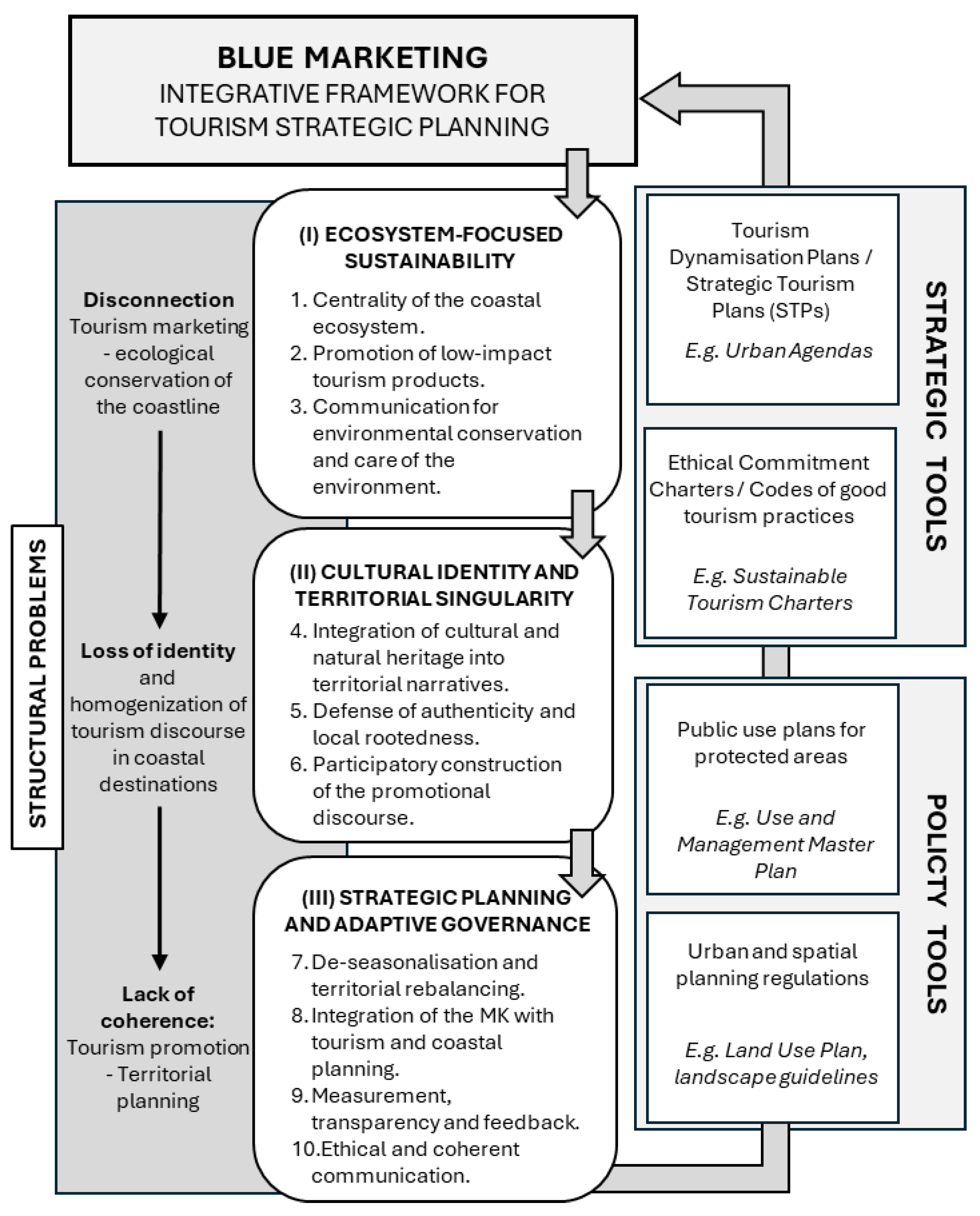
To provide an operational response to these structural problems, a policy framework is proposed, structured around ten guiding principles, organised into three strategic blocks: 1) ecosystem-focused sustainability; 2) cultural identity and territorial singularity; 3) strategic planning and adaptative governance. These principles are designed to guide the adaptation of tourism marketing to the ecological, cultural and planning dimensions of coastal territories, but also to facilitate their implementation through strategic tools and concrete policies. The framework is visually synthesised in Figure 5.
In response to the structural challenges identified in the previous section, this study proposes a normative framework composed of ten guiding principles, organised into three strategic blocks. While this framework has been conceptually developed through a comprehensive review of the academic literature, its practical configuration has been informed by the territorial diagnosis conducted in the Barbate–Vejer coastal corridor. This case study provided a grounded perspective on the misalignments commonly observed between tourism promotion, ecological sensitivity, and planning frameworks in coastal destinations.
The proposed framework is not intended to be prescriptive or context-specific; rather, it offers a flexible and transferable tool to support sustainable marketing strategies in diverse marine and coastal settings. Each of its principles addresses key dimensions of tourism communication—environmental, cultural, and governance-related—and can be implemented progressively, according to the institutional maturity and territorial characteristics of each destination.
The structure and content of the BMD are aligned with ongoing debates in the field of tourism studies. For instance, the need to reposition tourism marketing within broader destination governance frameworks has been underscored by authors such as Bramwell and Lane (2011), while Richards (2011) and Hernández-Mogollón et al. (2018) have called for more rooted, participatory narratives that reflect cultural specificity. Moreover, studies on climate vulnerability and sustainability in coastal tourism (e.g. Hall, 2011) emphasise the importance of integrating communication into the strategic planning of destinations.
The three strategic blocks and their corresponding principles are detailed below.
Block I. Ecosystem-focused sustainability: This first block responds to the increasing need for tourism marketing to support, rather than undermine, environmental preservation. Coastal ecosystems are particularly sensitive to the pressures generated by seasonal tourism and unregulated promotion. Numerous studies have emphasised the importance of integrating sustainability narratives into tourism marketing to ensure ecological resilience (Hall, 2011; Dodds & Holmes, 2018). The Barbate–Vejer corridor provided concrete insights into this challenge, with significant natural assets (e.g. protected areas under Natura 2000) often represented in promotional content without reference to their vulnerability or carrying capacity. Accordingly, the following framework principles are identified:
- Principle 1: Centrality of the coastal ecosystem. Tourism marketing should position the coastal ecosystem as a fundamental pillar of the destination’s identity and communication strategy, moving beyond scenic representation to acknowledge ecological complexity.
- Principle 2: Promotion of low-impact tourism products. Products such as interpretation trails, wildlife observation, or environmental education activities help reduce ecological footprint and create deeper connections between visitors and the natural environment.
- Principle 3: Communication for environmental awareness and stewardship. Marketing messages must actively promote responsible behavior, aligning with environmental education approaches (Mier-Teran, 2004) and transforming communication into a tool for awareness and conservation.
Block II. Cultural identity and territorial uniqueness: The second block focuses on preserving the cultural distinctiveness of coastal destinations, counteracting the tendency of globalised tourism to erase local identities. Research by Richards (2011), and Hernández-Mogollón et al. (2018) has shown how generic branding strategies contribute to cultural homogenisation and weaken destination authenticity. The principles identified under this block are:
- Principle 4: Integration of cultural and natural heritage in the territorial narrative. Narratives should reflect the hybrid reality of coastal territories where landscape, memory, and cultural practices are interwoven (Timothy, 2024).
- Principle 5: Defense of authenticity and narrative rootedness. Communication should prioritise community-based narratives and lived experiences over generic promotional messages, enhancing the emotional and symbolic connection with place.
- Principle 6: Participatory construction of promotional discourse. Involving local stakeholders in tourism promotion ensures greater narrative legitimacy, reinforces identity, and promotes shared governance in tourism communication.
Block III. Strategic planning and adaptive governance: The final block promotes stronger integration between marketing and territorial planning. Authors such as Hall (2008) and Bramwell & Lane (2011) highlight how the fragmentation between promotional and regulatory frameworks often leads to incoherent or unsustainable tourism development. This was evident in the study area, where promotional strategies were not always aligned with spatial planning tools or management frameworks of protected areas. The related principles are:
- Principle 7: Territorial de-seasonalization and spatial rebalancing. Tourism marketing can be a key driver in mitigating seasonality and redirecting flows to less-visited areas, enhancing territorial cohesion (Ramírez-Guerrero et al., 2025).
- Principle 8: Integration of marketing with coastal and tourism planning. Communication must be based on strategic planning priorities and coordinated with local governance structures (Hall, 2008), ensuring long-term coherence and legitimacy.
- Principle 9: Measurability, transparency, and adaptive feedback. Incorporating indicators to monitor the impacts of marketing actions allows for real-time evaluation and continuous adaptation (UNEP & UNWTO, 2005).
- Principle 10: Ethical communication and coherence. Avoiding greenwashing, exaggeration, or misleading representations is essential to build trust among visitors and host communities, as recognised in ethical tourism charters and responsible communication literature.
This normative framework offers ten interrelated principles organized into three strategic blocks that reflect the fundamental dimensions of coastal tourism sustainability: ecological preservation, cultural integrity, and adaptive governance. The Blue Marketing principles are intended to serve as a flexible tool that destinations can adapt and apply according to their territorial specificities, institutional contexts, and planning maturity. Their ultimate goal is to transform tourism marketing into a vector for sustainable development, rather than a mere promotional mechanism detached from territorial reality.
To enable the practical application of this normative framework, a set of strategic and normative instruments is proposed to guide its implementation in diverse coastal contexts. These instruments are not prescriptive but rather adaptive and transferable, allowing for integration into varying territorial realities and planning systems.
On the strategic side, the framework suggests tools that facilitate direct action and coordination between tourism marketing and destination management. These include Integrated Tourism Marketing Plans aligned with land-use and environmental planning instruments (e.g., city planning or protected area management plans); participatory communication platforms that engage local actors in branding and narrative design (as advocated by Salazar, 2012); and monitoring and feedback systems with sustainability indicators to evaluate the impact of promotional campaigns in real time (UNEP & UNWTO, 2005; Hall, 2011).
On the normative side, the model incorporates instruments that define ethical, narrative, and regulatory parameters. These include Territorial and Ethical Communication Charters, which ensure that tourism messages are coherent, place-based and free from greenwashing, and regulatory guidelines for the integration of marketing within broader tourism and environmental governance frameworks. These strategic framework is consistent with the principles of ICZM as articulated by Barragán (2003), particularly in relation to the institutional coordination, participatory governance, and preservation of coastal identity.
Together, these instruments provide an operational backbone to the BMD, reinforcing its applicability beyond the case study presented here. They enable destinations to transform their marketing practices into coherent, accountable, and sustainability-driven strategies that respect the complexity and uniqueness of coastal territories.
5. Discussion and Conclusions
This article propose a strategic framework for the application of Blue Marketing in coastal tourism destinations. The resulting Blue Marketing Decalogue (BMD) is grounded in real territorial dynamics and enriched through the empirical analysis of the Barbate–Vejer coastal corridor. While the framework is universally transferable to other coastal contexts, the case study served as a practical foundation to articulate, refine, and validate the ten guiding principles.
The achievement of the specific objectives is confirmed through the formulation of a structured proposal that combines theoretical rigor with applied territorial analysis. First, the research introduces a novel conceptualization of marketing in coastal settings, establishing Blue Marketing as a transdisciplinary and context-sensitive strategy that balances environmental conservation, cultural identity, and destination governance. Second, the study identifies core structural challenges commonly observed in coastal tourism planning—such as ecological fragility, cultural homogenization, and institutional disconnection between marketing and territorial governance—and addresses them through three strategic blocks: ecosystem-centered sustainability, cultural and identity-based communication, and planning-aligned governance. Third, the creation of the BMD itself fulfills the article’s normative ambition, offering a clear, flexible, and actionable framework for local administrations, tourism managers, and coastal planners.
The integration of real-world diagnosis—including spatial analysis, inventory of resources, and governance gaps—supports the principles outlined in the BMD. For instance, the emphasis on low-impact tourism products and soft mobility is informed by the ecological sensitivity and trail networks of the study area. Similarly, the need to co-create narratives and defend local identity is rooted in the spatial and cultural richness observed across the Barbate–Vejer corridor.
This framework aligns with the academic literature advocating for planning models that integrate sustainability and local engagement (Hall, 2001; Peattie, 2001; Mier-Terán, 2006). It also responds to calls for tourism marketing to move beyond promotion, adopting roles in education, regulation, and governance. In this sense, the Blue Marketing framework builds on and adapts existing approaches—such as sustainable, environmental, and socio-environmental marketing—while introducing a more place-based and integrative perspective tailored to coastal contexts. It is important to clarify that the aim of this article is not to introduce a new discipline, but rather to advance a renewed strategic and conceptual approach. Blue Marketing is conceived as a contextual adaptation that recognises the specific challenges and opportunities of coastal destinations. Its objective is to reinterpret and apply established marketing principles through the lens of territorial sensitivity, ecological vulnerability, and community-based governance—thereby contributing to a more integrated and sustainability-oriented vision for tourism communication and planning.
5.1. Theoretical Implications
The introduction of Blue Marketing as a conceptual and strategic framework in this study contributes to redefining the role of tourism marketing within coastal planning. Traditionally, tourism marketing has been associated with promotional and competitive positioning goals, often disconnected from environmental and cultural realities. In contrast, this article advances a broader theoretical vision in which marketing is framed as a mediating and integrative function, capable of aligning territorial identity, ecological sustainability, and destination governance.
This approach contributes to ongoing academic debates in tourism and environmental planning, particularly those addressing the fragmentation between promotional discourses and territorial regulation (Hall, 2008). By positioning the coastal ecosystem and cultural heritage as central narrative pillars, Blue Marketing adds symbolic and strategic value to local assets, reinforcing their protection through storytelling. Moreover, this aligns with the broader movement toward place-based marketing and post-disciplinary tourism models, where communication, governance, and planning intersect (Richards, 2011; Hernández-Mogollón et al., 2018).
In addition, the proposed BMD introduces a structured but adaptable typology of principles, filling a gap in the literature regarding normative guidance for coastal marketing strategies. Unlike purely promotional frameworks, Blue Marketing incorporates ethical standards, participatory narratives, and impact assessment mechanisms—features more commonly associated with environmental or planning literature (Bramwell & Lane, 2011; UNEP & UNWTO, 2005).
Finally, the framework reinforces the connection between Integrated Coastal Zone Management (ICZM) and tourism development, a relationship that remains underexplored in much of the existing literature (Barragán, 2003). By translating ICZM values—such as participation, identity, and adaptive management—into marketing language and strategy, the BMD offers a cross-disciplinary contribution with potential to inspire further conceptual innovation in the governance of coastal tourism.
The study contributes a novel conceptualization of the marketing-territory relationship, emphasizing that marketing strategies should not only seek to attract visitors but also promote conservation values and reinforce the authentic identity of the destination, in contrast to traditional promotional approaches focused solely on economic growth.
5.2. Practical Implications
From an operational standpoint, the BMD provides local authorities, tourism boards, and destination managers with a pragmatic roadmap to integrate communication strategies into sustainability objectives. In contexts marked by seasonal saturation, ecological sensitivity, or cultural dilution—common challenges in coastal destinations—the BMD offers criteria for decision-making that balance visibility with responsibility.
Each of the ten principles can be translated into concrete actions. For example, the promotion of low-impact tourism products (Principle 2) encourages municipalities to prioritize hiking routes, birdwatching, or environmental interpretation over mass-consumption offers. The participatory construction of tourism narratives (Principle 6) can be operationalized through community storytelling workshops or collaborative branding strategies, ensuring that promotional content reflects local values and avoids stereotypical imagery.
Moreover, the practical structure of the BMD is enhanced by the inclusion of enabling instruments. Strategic instruments—such as Integrated Destination Marketing Plans, thematic route development, or visitor management systems—help to translate principles into operational programs. At the same time, normative instruments—such as ethical charters, narrative guidelines, or regulatory codes—offer governance frameworks to legitimize and supervise the implementation process. These tools can be adapted to varying levels of institutional complexity, making the framework suitable for both consolidated and emerging destinations.
Importantly, the BMD contributes to the professionalization and governance of tourism marketing, an area often left outside formal planning structures. By integrating impact monitoring mechanisms (e.g., sustainability indicators for promotional actions), the model allows for adaptive management, improving accountability and long-term alignment with environmental and cultural objectives.
Finally, the application of Blue Marketing allows destinations to reposition their value proposition in highly competitive markets—not by promoting volume, but by enhancing identity, authenticity, and ecological coherence. This strategic repositioning strengthens territorial resilience, diversifies the tourism offer, and builds stronger connections between visitors and places.
6. Limitations and Futures Directions
Despite its contributions, this study presents certain limitations. First, while the framework is informed by an in-depth territorial case, its generalization requires validation across other socio-ecological settings. Second, the approach remains expert-driven; future applications should include participatory processes that allow local stakeholders, communities, and tourism agents to contribute directly to the definition and implementation of marketing narratives and strategies. This would enhance the legitimacy, cultural depth, and long-term viability of Blue Marketing initiatives. Future research should also explore how the BMD performs under different institutional, ecological, and market conditions, and how it can be operationalized through performance indicators, regulatory mechanisms, and co-management frameworks. Furthermore, comparative studies across coastal regions would help refine the universal elements of the framework and identify context-specific adaptations.
It is also important to emphasise the distinctive nature of coastal and marine destinations, which constitutes the conceptual foundation of the proposed approach. Unlike inland or urban tourism contexts, coastal territories are shaped by the continuous interaction between land and sea, giving rise to ecologically fragile and spatially dynamic systems. These areas are especially sensitive to overcrowding, climate-induced threats such as erosion and salinisation, and the loss of biodiversity.
These specificities reinforce the need for planning and communication strategies that are not only sensitive to ecological and cultural particularities, but also capable of articulating tourism development with long-term territorial resilience. In this regard, Blue Marketing should not be viewed as a generic solution, but as a targeted contribution to the ongoing redefinition of coastal tourism management in the face of growing environmental and social complexity.
Author Contributions
Conceptualization, G.R.-G. and M.A.-G.; methodology, G.R.-G.; software, A.F.-E.; validation, J.A.C.-R., A.F.-E. and G.R.-G.; formal analysis, G.R.-G., M.A.-G.; investigation, J.A.C.-R.; resources, J.A.C.-R.; data curation, A.F.-E.; writing—original draft preparation, G.R.-G.; writing—review and editing, G.R.-G., J.A.C.-R., A.F.-E., M.A.-G. All authors have read and agreed to the published version of the manuscript.
Funding
This research was supported by the COSTURA project, co-funded by the Regional Ministry of University, Research and Innovation of the Government of Andalusia and by the European Union through the Next Generation EU funds of the Recovery, Transformation and Resilience Plan under grant agreement PCM_00040.
Institutional Review Board Statement
Not applicable.
Informed Consent Statement
Not applicable.
Conflicts of Interest
The authors declare no conflicts of interest. The funders had no role in the design of the study; in the collection, analyses, or interpretation of data; in the writing of the manuscript; or in the decision to publish the results.
Abbreviations
The following abbreviations are used in this manuscript:
| ICZM | Integrated Coastal Zones Management |
| BMD | Blue Marketing Decalogue |
References
- (Arisci et al., 2003) Arisci, A. et al. (2003). Geoenvironmental analysis in coastal zone management: A case study in Southwest-Sardinia (Italy). Journal of Coastal Research, 963–970.
- (Baloch et al., 2022) Baloch, Q., Shah, S., Iqbal, N., Sheeraz, M., AsadUllah, M., Mahar, S., & Khan, A. (2022). Impact of tourism development upon environmental sustainability: a suggested framework for sustainable ecotourism. Environmental Science and Pollution Research International, 30, 5917 - 5930. [CrossRef]
- (Barragán, 2003) Barragán Muñoz, J. M. (2003). Propuesta de base metodológica para la gestión integrada de zonas costeras en Iberoamérica. (Doctoral dissertation, Universidad de Cádiz).
- Barragán, J. M. (2014). Política, gestión y litoral: Nueva visión de la gestión integrada de áreas litorales. Tebar.
- (Barragán et al., 2020). Barragán Muñoz, J. M., García Sanabria, J., & de Andrés García, M. (2020). ICZM strategy for the socioecological system of the Mar Menor (Spain): Methodological aspects and public participation. Socio-ecological studies in natural protected areas: Linking community development and conservation in Mexico, 243-272.
- (Bramwell & Lane, 2011) Bramwell, B., & Lane, B. (2011). Critical research on the governance of tourism and sustainability. Journal of Sustainable Tourism, 19(4–5), 411–421. [CrossRef]
- (Butler, 1991) Butler, R. (1991). Tourism, Environment, and Sustainable Development. Environmental Conservation, 18, 201 - 209. [CrossRef]
- (Clius & Patroescu, 2015) Clius, M., & Patroescu, M. (2015). Evaluation matrix for ecotourism potential-a tool for sustainable marketing in protected areas. Case study: 'Iron Gates' nature park. Ecology, Economics, Education and Legislation, 329-336.
- (de Andrés & Barragán, 2020) De Andrés García, M., & Barragán Muñoz, J. M. (2020). La gestión de áreas litorales en España y Latinoamerica, II. Universidad de Cádiz.
- (Dodds & Holmes, 2018) Dodds, R., & Holmes, M. (2018). Is coastal tourism sustainable? Social and ecological implications. Journal of Coastal Research, 85(sp1), 1406–1410.
- European Commission. (2012). Blue growth: Opportunities for marine and maritime sustainable growth (COM(2012) 494 final). Available: https://eur-lex.europa.eu/LexUriServ/LexUriServ.do?uri=COM:2012:0494:FIN:EN:PDF.
- (Griggs et al., 2013) Griggs, D., Stafford-Smith, M., Gaffney, O., Rockström, J., Öhman, M. C., Shyamsundar, P., ... & Noble, I. (2013). Sustainable development goals for people and planet. Nature, 495(7441), 305–307. [CrossRef]
- (Hall, 2008) Hall, C. M. (2008). Tourism planning: Policies, processes and relationships. Pearson Education.
- (Hall, 2011) Hall, C. M. (2011). Policy learning and policy failure in sustainable tourism governance: From first- and second-order to third-order change? Journal of Sustainable Tourism, 19(4–5), 649–671. [CrossRef]
- (He et al., 2024) He, X., Ye, C., Huang, S., & Su, L. (2024). The “Green Persuasion Effect” of Negative Messages: How and When Message Framing Influences Tourists’ Environmentally Responsible Behavior. Journal of Travel Research. [CrossRef]
- (Hernández-Mogollón et al., 2018) Hernández-Mogollón, J. M., Duarte, A. M., & Folgado-Fernández, J. A. (2018). Cultural heritage and urban tourism: Historic city branding in Spain. Cities, 78, 111–120.
- (Iamkovaia et al., 2020) Iamkovaia, M., Arcila Garrido, M., Cardoso Martins, F., Izquierdo González, A., & Vallejo Fernández de la Reguera, I. (2020). Analysis and comparison of tourism competitiveness in Spanish coastal areas.
- (Kotler & Lee, 2025) Kotler, P., & Lee, N. (2005). Corporate social marketing: Best of breed for social marketing. Social Marketing Quarterly, 11(3-4), 91–103. [CrossRef]
- (Kotler & Lee, 2005) Kotler, P., & Lee, N. (2005). Corporate social responsibility: Doing the most good for your company and your cause. Social Marketing Quarterly, 11(3–4), 91–103.
- (Kotler & Zaltman, 1971) Kotler, P., & Zaltman, G. (1971). Social marketing: An approach to planned social change. Journal of Marketing, 35(3), 3–12.
- (Mestanza-Ramón et al., 2020) Mestanza-Ramón, C., Chica-Ruiz, J., Anfuso, G., Mooser, A., Botero, C., & Pranzini, E. (2020). Tourism in Continental Ecuador and the Galapagos Islands: An Integrated Coastal Zone Management (ICZM) Perspective. Water. [CrossRef]
- (Mier-Terán, 2004) Mier-Terán Franco, J. J. (2004). Marketing socioambiental: Un nuevo paso en el desarrollo del marketing social. Revista Internacional de Marketing Público y No Lucrativo, 1(1), 139-153. [CrossRef]
- (Mier-Terán, 2006) Mier-Terán Franco, J. J. (2006). Marketing socioambiental: Una propuesta para la aplicación del marketing social al campo medioambiental (Doctoral dissertation, Universidad de Cádiz).
- (Peattie, 2001) Peattie, K. (2001). Towards sustainability: the third age of green marke-ting. The marketing review, 2(2), 129-146. [CrossRef]
- (Ramírez-Guerrero et al., 2025) Ramírez-Guerrero, G., Fernández-Enríquez, A., Chica-Ruiz, J. A., García-Onetti, J., & Arcila-Garrido, M. (2025). The territorialization of cultural heritage as an opportunity for its adaptive reuse from the tourist management. Tourism Planning & Development, 22(1), 85-110. [CrossRef]
- (Richards, 2011) Richards, G. (2011). Creativity and tourism: The state of the art. Annals of Tourism Research, 38(4), 1225–1253. [CrossRef]
- (Rodriguez, 2009) Rodríguez Rodriguez, D. (2009). Mitigación de los impactos del turismo en espacios naturales protegidos y mejora de su financiación a través de medidas económicas. El caso de la Comunidad de Madrid. Boletín de la asociación De Geógrafos Españoles.
- (Sánchez, 2012) Sánchez Aparicio, M.S. (2012). El reto del turismo en los espacios naturales protegidos españoles: la integración entre conservación, calidad y satisfacción (Doctoral dissertation, Universidad Complutense de Madrid).
- (Sumarmi et al., 2024) Sumarmi, S., Irawan, L., Arinta, D., Suprianto, A., Kurniawati, E., Graciani, H., Marlina, M., Fahim, N., Arif, M., Sholeha, D., & Shaherani, N. (2024). Tourism development strategy based on environmental services with integrated coastal zone management (ICZM) to achieve Sustainable Development Goals (SDGS) in Jolosutro beach of blitar regency Indonesia. GeoJournal of Tourism and Geosites. [CrossRef]
- (Timothy, 2024) Timothy, D. J. (2024). Heritage Tourism, Wellbeing and Quality of Life: Tourist and Destination Perspectives. In Managing Natural and Cultural Heritage for a Durable Tourism (pp. 17-29). Cham: Springer Nature Switzerland.
- (UNEP & UNWTO, 2005) UNEP & UNWTO (2005). Making Tourism More Sustainable: A Guide for Policy Makers. Paris: UNEP and UNWTO.
- (WCED, 1987) WCED. (1987) Report of the World Commission on Environment and Development: Our Common Future (The Brundtland Report).
Figure 1.
Location of the case study.
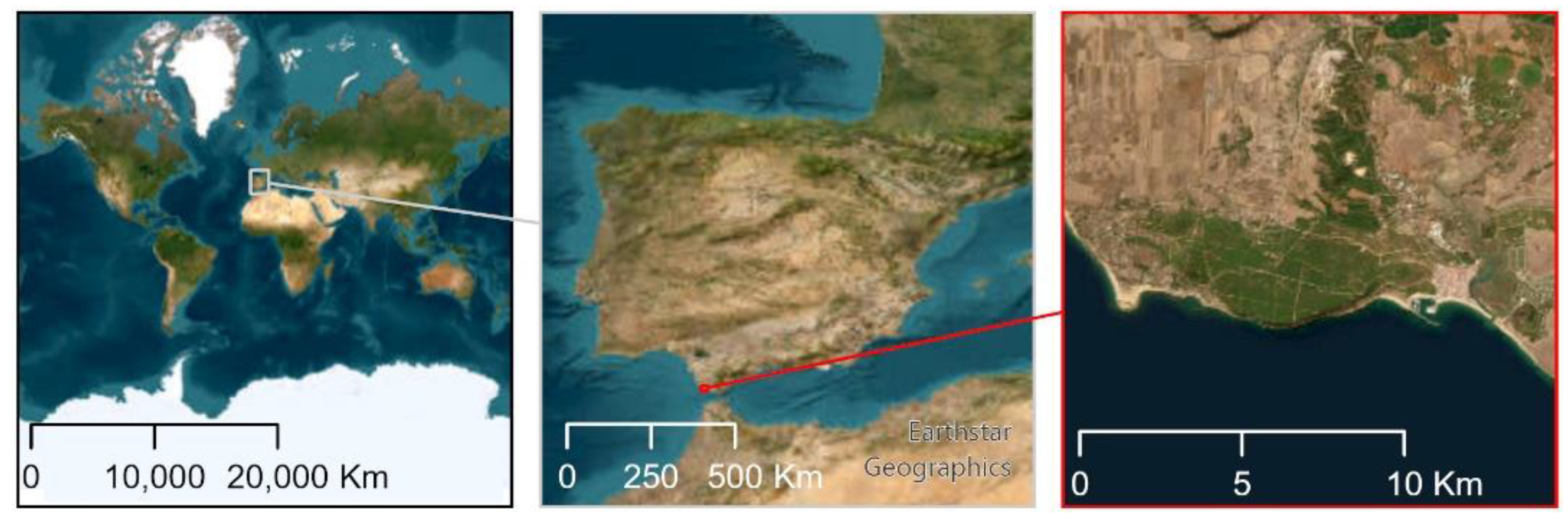
Figure 2.
Spatial distribution of protected natural areas and planning instruments in the Barbate–Vejer coastal system. Source: Authors.
Figure 2.
Spatial distribution of protected natural areas and planning instruments in the Barbate–Vejer coastal system. Source: Authors.
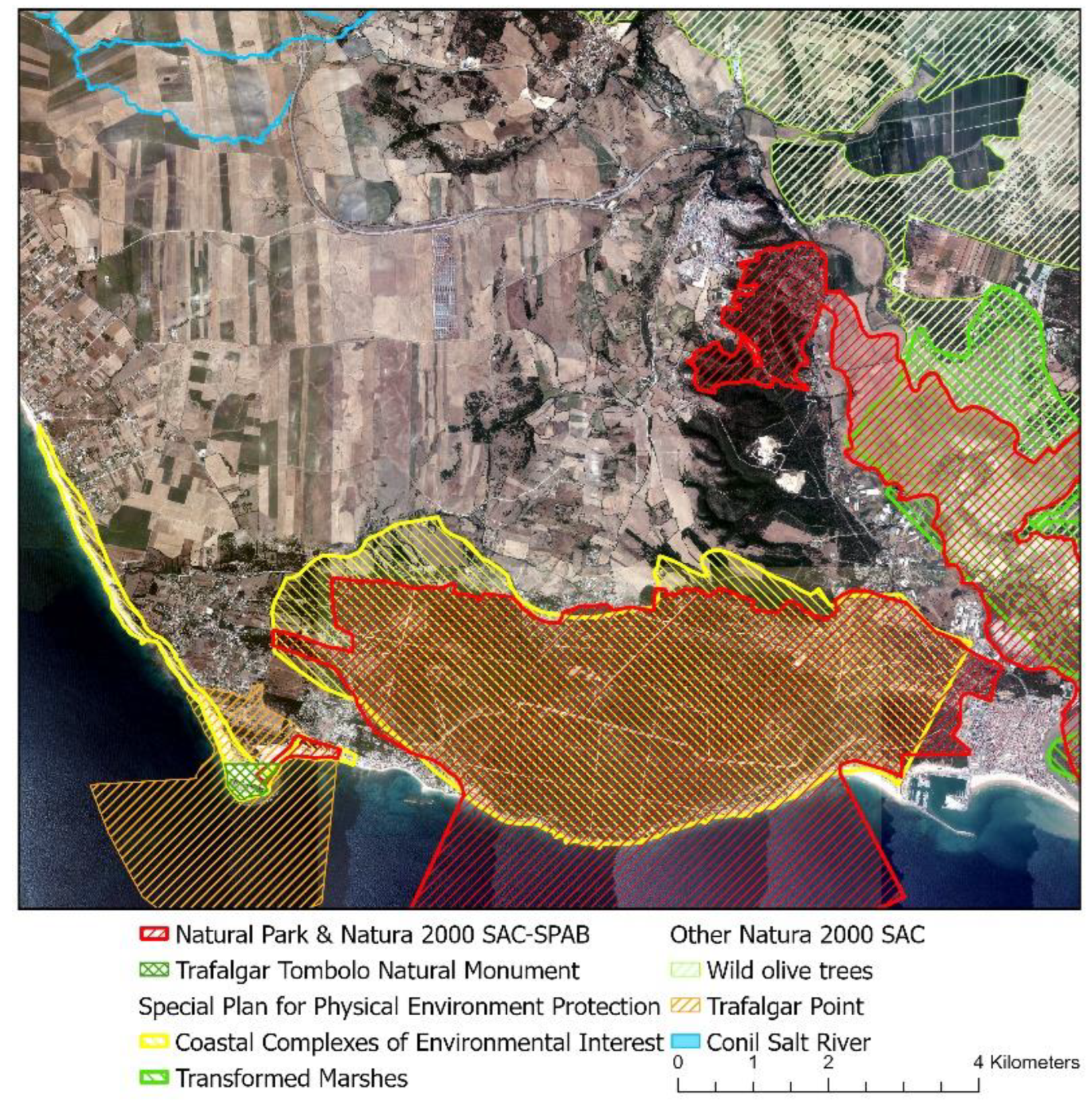
Figure 3.
(a) Traditional tuna fishing (almadraba) as an example of maritime cultural heritage. (b) Coastal cliffs and Torre del Tajo, a historic watchtower overlooking the Barbate coast, as a symbol of the cultural and scenic landscape.
Figure 3.
(a) Traditional tuna fishing (almadraba) as an example of maritime cultural heritage. (b) Coastal cliffs and Torre del Tajo, a historic watchtower overlooking the Barbate coast, as a symbol of the cultural and scenic landscape.
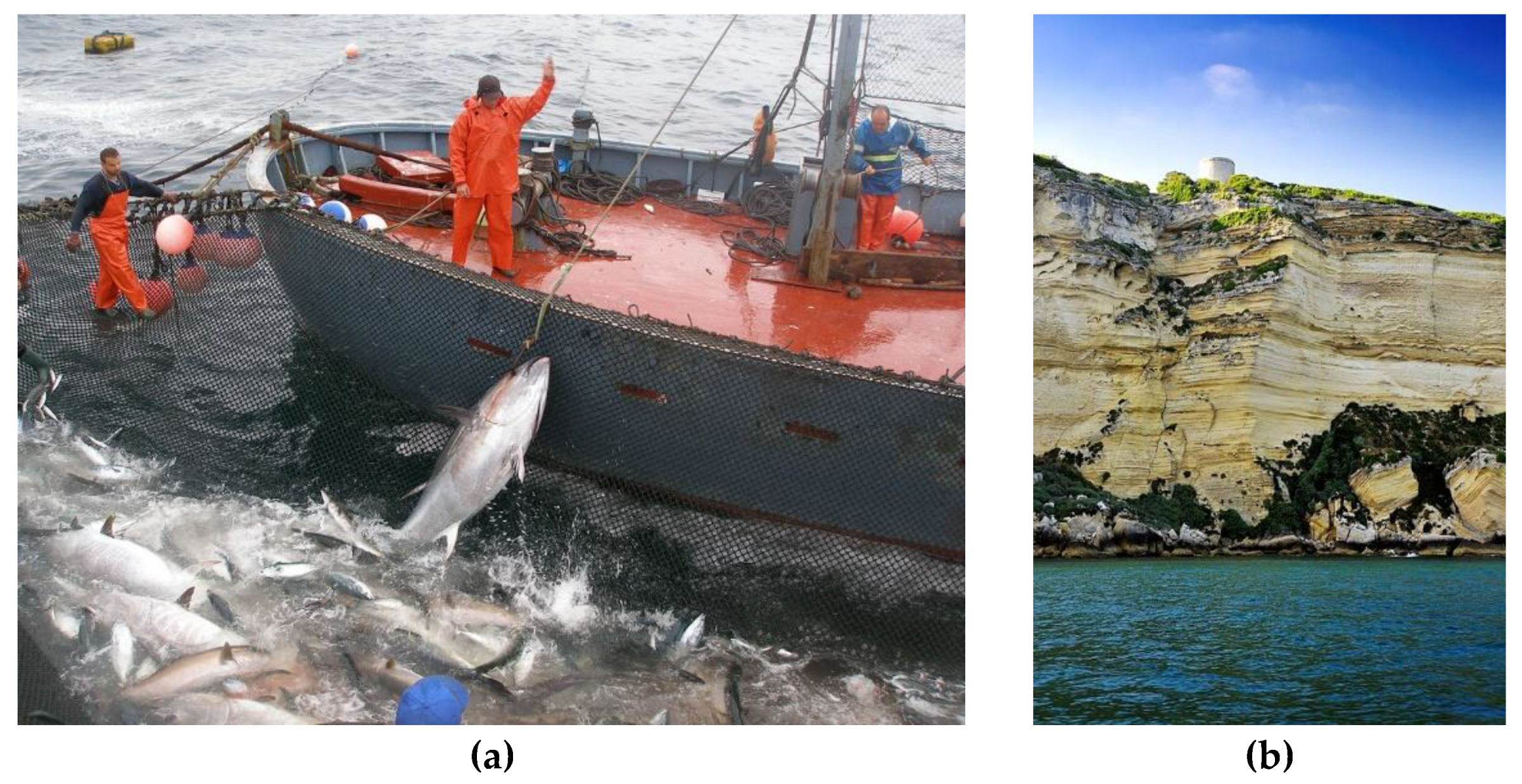
Figure 4.
Territorial distribution of cultural assets, tourism services, and coastal public domain in the Barbate–Vejer corridor. Source: Authors.
Figure 4.
Territorial distribution of cultural assets, tourism services, and coastal public domain in the Barbate–Vejer corridor. Source: Authors.
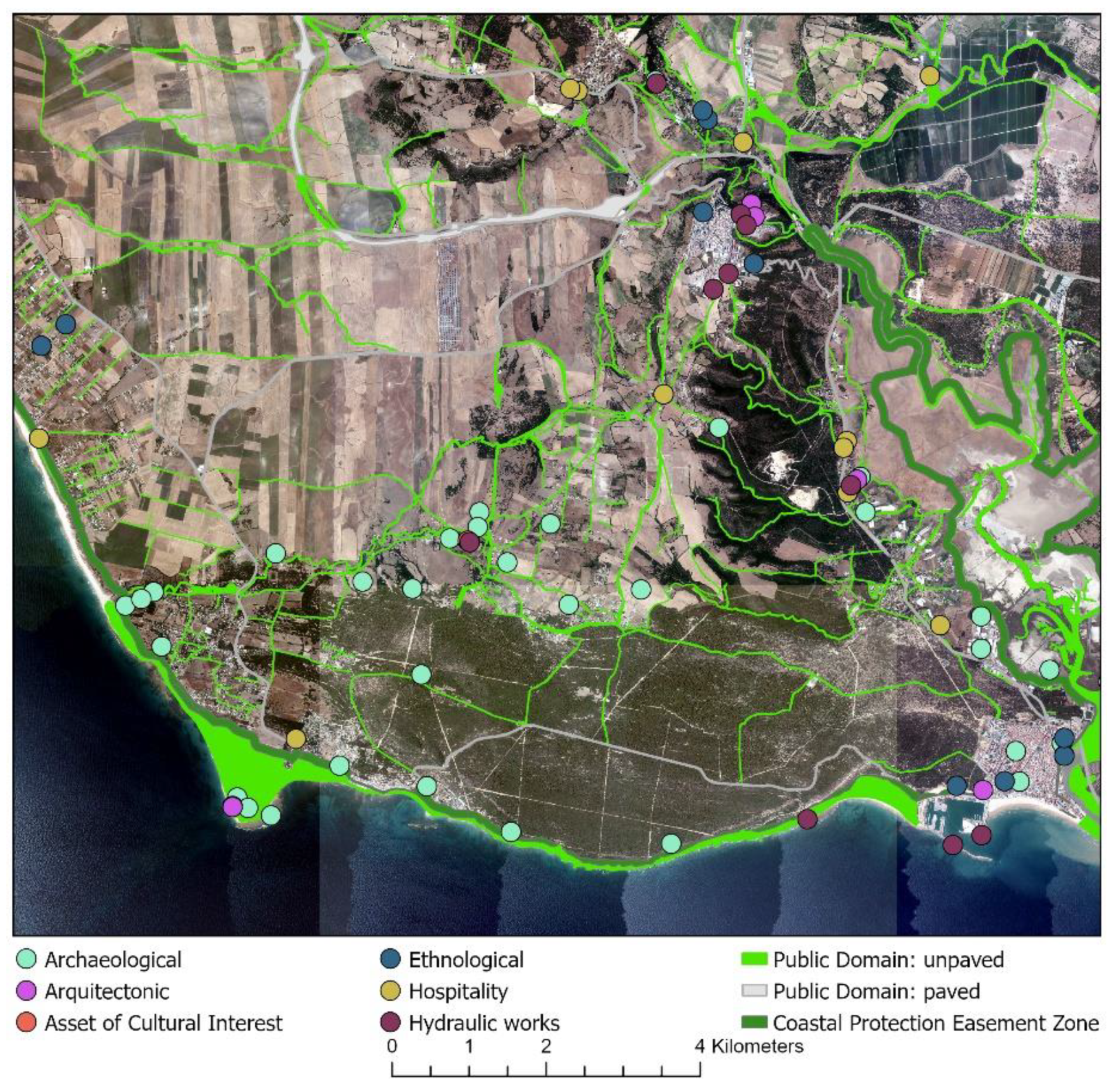
Figure 5.
Blue Marketing Decalogue (BMD): Strategic framework for sustainable tourism planning in coastal destinations. Source: Authors.
Figure 5.
Blue Marketing Decalogue (BMD): Strategic framework for sustainable tourism planning in coastal destinations. Source: Authors.
Disclaimer/Publisher’s Note: The statements, opinions and data contained in all publications are solely those of the individual author(s) and contributor(s) and not of MDPI and/or the editor(s). MDPI and/or the editor(s) disclaim responsibility for any injury to people or property resulting from any ideas, methods, instructions or products referred to in the content. |
© 2025 by the authors. Licensee MDPI, Basel, Switzerland. This article is an open access article distributed under the terms and conditions of the Creative Commons Attribution (CC BY) license (http://creativecommons.org/licenses/by/4.0/).
Copyright: This open access article is published under a Creative Commons CC BY 4.0 license, which permit the free download, distribution, and reuse, provided that the author and preprint are cited in any reuse.


