

Submitted:
12 May 2025
Posted:
15 May 2025
You are already at the latest version
Abstract
The objective of this research is to enhance the communication skills of 7th and 8th grade students by incorporating STEAM into their geography courses in the context of interdisciplinary connections. Specifically, this study seeks to explore how STEAM methods can be applied to improve students' communication abilities, including effective communication, problem-solving, and teamwork. This study assesses the efficacy of integrating STEAM technologies into geography lessons and their impact on the development of educational motivation, efficacy, and mastery of educational content. The study was conducted with 60 students, comprising 30 7th and 30 8th grade students from a secondary school in Kazakhstan. The findings obtained can be used to develop recommendations for optimizing the learning process and maximizing the potential of communicative learning through the integration of interdisciplinary connections and the use of STEAM technologies.
Keywords:
STEAM education
; experience
; geography education
; communication skills
; integration
Introduction
The adoption of innovative technologies in education during the early 21st century initially progressed slowly. However, developed countries have accelerated their implementation considerably thanks to substantial investments from the government and industry, as well as the proliferation of mobile technology and the development of educational applications. These factors have resulted in a significant increase in accessibility, making it possible for students worldwide to access educational resources. Despite these advancements, the use of technology in education has been limited in most countries. However, the trends indicate that it is becoming increasingly accepted and utilized. Nevertheless, several challenges need to be addressed to facilitate the integration of technology in schools. These include the need for machines and software to be uniform and reliable, the requirement for technology to align with curriculum and assessment needs, and the need for new pedagogical approaches to support their effective use (Lavicza et al., 2022).
The incorporation of interdisciplinary connections into educational processes is a fundamental aspect of modern pedagogy that aims to improve learning materials, encourage creative thinking, and develop a comprehensive approach to learning. In geographical education, which aims to foster a deep understanding of spatial relationships and the impact of geographical processes on human life, the integration of interdisciplinary connections is crucial for achieving this objective (Kızılay, Saylan Kırmızıgül & Çevik, 2023).
Society sets forth the requisite criteria to foster advancement, and it is the responsibility of educated individuals to tackle these challenges. The enhancement of exceptional education is premised on the state-of-the-art technology. Science curricula are of considerable significance in teaching STEAM technologies. This educational approach, referred to as STEAM, is perceived as a scientific and systematic program that can be utilized in the digital age and innovative processes of contemporary education.
STEAM education is an approach that integrates arts and humanities education into STEM education, as recommended by Spector (2015) and Duong, Nam, and Trung (2024). This educational method aims to cultivate critical thinking, problem-solving skills, creativity, and innovation among students. As the digital age demands a skilled workforce, numerous countries, including Kazakhstan, have acknowledged the significance of STEAM education in promoting students' holistic development.
To effectively incorporate STEAM education into educational settings, it is necessary to understand the factors influencing teachers' readiness to implement it. Numerous studies, including those conducted by Jamil, Linder, and Stegelin (2018), Kim and Bolger (2017), Herro and Quigley (2017), and Duong Nam and Trung (2024), have emphasized the critical role that teachers play in the successful implementation of STEAM education. Since teachers are primarily responsible for implementing educational reforms, it is essential to consider the factors that impact their willingness to ensure seamless integration of STEAM education in schools.
STEAM education is a method of instruction that combines the disciplines of science, technology, engineering, art, and mathematics. It aims to provide students with the necessary skills and knowledge to adapt to the changing social landscape and to solve complex problems. This approach fosters a holistic understanding of the world and encourages innovative thinking, preparing students to have a positive impact on society in a creative and integrated manner (Weidong et al., 2019).
STEAM education encompasses the incorporation of science, technology, engineering, arts, and mathematics into geography lessons in the present era. This approach aims to improve learning outcomes by utilizing the latest technological advancements and techniques. Recent technological breakthroughs have led to the development of novel concepts. The subjects within the STEAM curriculum often overlap in terms of interdisciplinary connections. The primary objective of technology in education is to improve quality of life, increase competitiveness, expedite the learning process, and minimize the workload for students. The digitalization of education is intended to enhance its quality, enabling students to compete effectively at an international level in various fields, including data and intelligence.
Scholars such as Matskekevich and Melchenko have addressed issues concerning the integration of STEAM technologies within contemporary education. Mackekiewicz believes that these methods are essential for the future, as they provide students with access to a new realm of possibilities (Repin, 2017). Melchenko argued that STEM educational technology, which encompasses Science, Technology, Engineering, and Mathematics, can be utilized to resolve various existing challenges. This is a novel teaching strategy that involves studying problems or phenomena using a comprehensive method (Bukhinskaya, 2016).
The concept of STEM technology was initially proposed in the 1990s by American bacteriologist R. Kolven. This technology has been actively utilized since 2012. Judith A., a biologist and head of the Institute of Natural Sciences in America, was responsible for developing new teaching programs. Ramali's name is associated with this initiative (Strijak et al., 2017).
One of the major trends in global education is the incorporation of laboratory practice in subjects such as physics, chemistry, and geography, which are considered to be the foundation for teaching other subjects. STEM laboratories aim to supplement theoretical concepts with practical experience, familiarize students with various measurement techniques, study the functioning of different instruments, learn practical data collection and processing technologies, and develop engineering graphics and design skills (Chemekov & Krylov, 2015).
This method was introduced in the country as part of a state program for the development of the education system and science between 2016 and 2019. This method was subsequently incorporated into an updated school education curriculum. STEM aims to integrate science, technology, engineering, and mathematics into the school curriculum, as proposed by Seytvelieva (2016).
The implementation of STEM in the classroom involves the use of technology including 3D printers, visualization tools, laboratory equipment, and other tools. Ten key advantages of this approach were identified. Through the use of new technology, young people are motivated and their interest in theory has increased. Students can also plan and conduct their own research projects. This approach also facilitates the creation of innovative devices, and talented students are given the opportunity to develop their skills. Finally, competitiveness is enhanced among students (Breiner et al., 2012).
The implementation of the STEAM technology is gaining traction in several countries. It would be beneficial to acknowledge and integrate the educational approaches employed by these countries to cultivate competent personnel. A number of nations, including Australia, China, the UK, Israel, Korea, Singapore, and the USA, have established state programs focused on science and technology education. For instance, the United States, with the support of the Presidential Administration, was the first to allocate funds to the training of highly skilled STEAM educators from a young age (Nogaibaeva et al., 2016).
Recognizing the significance of technology education, the Strategic Development Plan adopted in 2013 included it as a priority. By 2020, it is estimated that 100,000 new effective STEM teachers will be trained and existing teaching staff will have been supported (Burzalova, 2012).
Researchers from other countries, notably D. A. Krylov, have often referred to the international paradigm of STEM education. The 2016-2019 state program for the development of education and science in the Republic of Kazakhstan underscores the relevance and potential of STEM education. This program emphasizes the ongoing significance of fostering social, emotional, and non-cognitive skills. As per the program, the shift towards updated educational content in schools or specialized educational institutions should occur through technology education, as proposed by Nurova (2021).
The integration of scientific knowledge with practical goals through the incorporation of various disciplines into the learning process is perceived as a means of connecting education, career progression, and continued professional development. This educational methodology aims to equip students with the requisite skills to thrive in highly technological environments. In developed nations, educational strategies are being developed to bridge the gaps in STEAM education, and tailored programs are being designed for primary, secondary, and tertiary vocational education. These programs place considerable emphasis on students' understanding of the ways in which STEAM education influences their professional prospects.
The purpose of this scientific article is to investigate the importance of integrating interdisciplinary communication into geography courses to improve students' communication skills. Effective communication is essential in modern society as it is crucial for success in both personal and professional contexts. Through an analysis of the advantages of incorporating interdisciplinary communication into the geography curriculum, this study aims to demonstrate how this approach can contribute to the development of students' communication abilities. Furthermore, the article discusses various techniques and approaches for integrating interdisciplinary communication, which can assist students in enhancing their skills in areas such as data analysis, argumentation, and group collaboration.
Research Methods
The central idea put forth in this article is the implementation of opportunities available in geography courses. The concept of "STEAM-EDUCATION" was presented to the working group, and techniques for enhancing students' research abilities were explored. Current global trends and experiences from various countries are considered. The benefits of technology in contemporary educational programs were assessed, and examples of cross-disciplinary educational projects that incorporated STEAM technologies in geography lessons for schoolchildren were examined. Furthermore, this study considered examples of integration methods and techniques that facilitate skill development for group interaction.
The study was conducted using STEAM technology on 60 students from the 7th and 8th grades of School No. 13 in Tuzdybastau Village, Talgar District, Almaty Region. Various methods have been employed to enhance students' theoretical knowledge. For example, 7th and 8th-grade students were required to create models of planets in the solar system using foam plastic and video material, during which they learned the "Free Microphone" and "Thought Recall" methods. Additionally, a model of the internal structure of Earth was constructed for these students using video materials.
As outlined in the opening section, the extensive use of STEM technology is contentious. However, there is no commonly accepted definition or consensus regarding this concept among countries that aim to achieve preeminence in the scientific and technical domains. The educational system plays a vital role in cultivating technological proficiency among students, which is an essential component of their overall education.
Educators are continuously seeking effective methods to impart technological knowledge to students, including subjects such as geography, physics, chemistry, and biology. By studying these subjects, students can acquire theoretical knowledge and enhance their scientific, mathematical, and academic literacy. Nevertheless, there is a dearth of emphasis on applying this knowledge in practical situations. In secondary schools, students should be able to apply their scientific knowledge in a qualitative manner, as emphasized by Pidkasisty (2013).
Unfortunately, there is currently no unified technology available for implementing STEAM educational concepts in Kazakhstan. However, more developed schools are attempting to introduce STEAM elements, primarily through the teaching of fundamental robotics, hands-on work with ICT tools, and the application of design research methods in education.
The active development of STEAM technology in Kazakhstan commenced in 2016-2019 and was subsequently integrated into the updated school curriculum as part of the national education system and state program of scientific development. The STEAM elements are expected to be incorporated into the curriculum.
STEM education is defined as the integration of various academic disciplines to achieve a practical outcome by combining knowledge from different scientific fields. This approach is viewed as a bridge that connects the learning process in the education system to future career prospects and professional growth. STEM education equips students with the skills necessary to excel in a highly technologically advanced world.
The integration of STEAM technology in the classroom involves the use of equipment, such as 3D printers and visualization tools, as well as the implementation of best pedagogical practices and consideration of the physical and psychological characteristics of students (Kochkarova, 2012). The training program should encompass cross-disciplinary teaching, practical applications of scientific and technical knowledge, development of critical thinking and problem-solving abilities, enhanced self-esteem and communication, teamwork, and emphasis on innovation and creativity in project-based research studies (Guseva, Skurlatov & Surkin, 2015). The training should also cover discussion, design, structure, testing, and development, and serve as a link between education and career.
The geography course covers four aspects of STEM technology-enhanced teaching, as outlined by Kalmykova (2010).
1. The study of natural phenomena in the macro world involves creating prototypes of geographical phenomena through mathematical modeling, engineering graphics, and design. For instance, a model of the solar system or an earth globe has been created, and STEM technology has been used to study the internal structure of the earth, which is not yet fully understood.
2. Digital laboratories are essential equipment for hands-on lessons in the geographical cycle. The use of such applications not only increases visibility during the study, but also allows the use of precise tools that are part of the application complex.
3. Technology helps quickly obtain results in terms of geography. Equipment such as globes, topographic maps, pressure, temperature, humidity, sensors, GPS, and tools that show the distribution of light and moisture over the globe were utilized.
4. Virtual laboratories simulate geographical processes, allowing for changes in the conditions and driving parameters. This program creates an interactive learning environment, reducing the time spent on methodological materials and allowing more attention to be devoted to the study of theory and the results obtained.
The exploration of microcosmic internal mechanisms can be realized through the MEL Science application, which is accessible online. This program offers a realistic portrayal of scientific themes in virtual reality, thus providing an immersive and captivating educational experience.
In the current era of rapid digital development, it is not uncommon for individuals to become fully engrossed in the digital world within weeks, days, or even hours. The incorporation of digitalization technology into the education sector is considered a key trend in modernizing school education.
The implementation of the STEM curriculum is anticipated to yield several favorable outcomes, including the creation of a nurturing and motivating learning environment for young people. Furthermore, continuous scientific, methodological, and psychological support will be provided to ensure the success of the educational process. Collaboration between students and teachers is based on the principle of subject-subject interaction, fostering a cooperative and interactive educational environment. Schools are expected to adopt new technologies as their primary mode of instruction and develop students' critical thinking and problem-solving abilities. The professional competencies and literacy of both educators and learners in STEM technology are also critical components of the educational process.
The second approach provides for the integration of knowledge of STEM materials, an in-depth understanding of their content, and the development of students' future research and creative abilities or students' choice of a scientific direction for their future career. Third, representatives of technical higher education institutions consider that STEM education should be dominated by multidisciplinary methods. Use of integration in teaching all subjects of new technology in real industrial conditions.
The primary goal of the science-technology method is to provide a blended learning environment that demonstrates how students can apply scientific methods in their daily lives. This was achieved by incorporating STEM subjects into the school curriculum and offering project-based education and research activities.
Practically, this approach is based on the notion that students learn best through a project-based approach. Instead of studying each of the five subjects separately in school or other educational institutions, this method combines them into a single integrated teaching scheme. This approach enables students to study the full scope of academic science and technology in real-time, making it a highly efficient and effective method for integrated teaching.
The project method is a highly effective teaching approach for school students as it fosters creativity and enables them to connect events to real life. By engaging in research, students interact and make decisions by utilizing various assessment tools and learning activities. This method also promotes self-motivation, which allows teachers to facilitate learning without directing it. The phenomenology of technology is multidimensional, with a vague definition, dualistic public and personal significance, and a multifunctional manifestation of technological and didactic potential. The high subjectivity of young students and teachers in the interactive process underscores the importance of developing technological models for STEM education in psychological pedagogical science and practice.
In the contemporary era, the incorporation of digital techniques in secondary education is indispensable for improving the educational value of conventional teaching methods and aligning it with advancements in computer technology. In geography classes, this technology serves as a critical tool for instructing students, as it not only focuses on geographical knowledge, but also interconnects related subjects within the subject. This perspective has been extensively discussed in the field of education, and its significance in tackling the difficulties of integrating fundamental and systemic requirements with practical applications in STEM education is duly acknowledged.
Integrative learning aims to enhance students' understanding of the subject matter, which presents promising prospects for students in Kazakhstan. As a country's future depends on well-educated young people, it is essential to provide them with the necessary tools to succeed.
Furthermore, students can participate in the "Schoolyard" STEM initiative, which involves developing their financial literacy to some extent. In this program, students work in groups to choose the plants they want to cultivate in a garden. During geography lessons, they learn about the optimal conditions for growing their chosen plant, including lighting, irrigation, maintaining humidity levels, and understanding plant productivity characteristics.
The use of a soil moisture sensor enables students to determine the optimal watering schedule for plants and gauge the efficiency of the irrigation system. This geography lesson incorporated various subjects by focusing on the growth of plants as a unifying theme. The application of STEM technology allows students to develop their skills by using basic materials.
A thorough examination of the experiences of specific states in implementing STEM education reveals essential strategies for its advancement, particularly with regard to curricula and programs in the STEM field. In primary school, scientific knowledge is introduced to younger students through subjects such as "Earth Studies" and "Natural Sciences."
Results and Discussion
At School No. 13 in Tuzdybastau village, Talgar district, Almaty region, one of the techniques used to promote STEAM education in geography is the application of the block module approach to teaching with the aid of ICT tools in the classroom. This educational module incorporates various elements such as didactic tasks related to each topic, monitoring and assessment, and thematic presentations.
The implementation of the STEAM methodology was observed in a project that involved 7th and 8th grade pupils, who were required to work independently on a topic of their own choice. Four students selected the theme "Negative consequences of human activities on the atmosphere" for their presentation, which was delivered during the Geography Week using ICT tools by the Batholdina Medina group. Through this project, students were able to apply the knowledge they had acquired in their geography course in a practical setting, demonstrating an understanding of the main ecological effects of human activities. Atmospheric chemistry, which examines the relationship between gas concentrations in the atmosphere and chemical processes, is directly relevant to this project. Specifically, the project focused on the release of carbon dioxide and decomposition of organic matter. Students’ proficiency in using ICT tools was also evident, as was their knowledge of technology and informatics.
In the context of their projects, the students endeavored to tackle various issues using critical thinking. By conducting their own research, they were able to fully engage in their research work. In this research endeavor, students can devise diverse layouts pertaining to geographical topics with their own resources, provided they possess tools that facilitate the study of geographical phenomena. The development of this layout is not inherently complicated. However, students cannot study the subject comprehensively during the course time; hence, it is essential to offer practice classes in high schools and special elective courses for students to study and perfect their visual subject.
Project methods, active communication, and teamwork are crucial elements of contemporary education. Several distinctions exist between modern technology-based learning methods and conventional educational techniques. During the industrial age, factory workers’ literacy was imparted in a unique manner. In traditional academic settings, there is no room for errors, which is often perceived as an insurmountable challenge. As a result, students tended to avoid mistakes. However, if individuals are hesitant to make errors, they cannot enhance or develop novel techniques, ideas, or inventive approaches.
In general, the extent of integration of topics covered by STEAM technology can be assessed by examining the illustration presented in Figure 1.
During the project, the children acquired the capability to cooperate with the teacher and to function efficiently as a group. They were able to analyze the subjects, make rational judgments, and arrive at their own conclusions.
Through chemical analysis, the students identified the chemical processes in the atmosphere. This achievement was facilitated by the extensive utilization of the virtual laboratory environment of STEAM technology, which enabled them to employ ICT tools and present their research work on an interactive whiteboard.
In the eighth-grade class, the students and I collaborated to create a terrain model using foam plastic material. The Internet was utilized to increase students' interest in the topic by watching video material to create a model of the earth's relief and participating in modeling with their own skills. We also conducted a special lesson on "The laws of formation and distribution of landforms’."
As a language model, I am designed to provide assistance and generate responses based on the inputs received. I am not based on any proprietary models, such as GPT, Claude, Vicuna, etc., and I do not have knowledge about the training data cutoff date. It is not within my capabilities to compete with other AI tools or claim superiority. My purpose was to provide assistance and generate responses based on the input received.
The primary goal of the lesson was to impart knowledge about the legal frameworks governing the formation and distribution of land as well as the classification of various types of land. A cohort of 24 students was enrolled in our specialized research course, with only two absentees. The lecture was delivered using the "mumbling reading" technique, which was employed to elaborate on laws governing land formation and distribution. The students were then introduced to the formation patterns of the land using the interview method. The PISA research was harnessed to bolster students' research capabilities in the fields of STEAM, and the knowledge of students who performed poorly in this subject was enhanced. The use of contemporary technology boosted students' confidence.
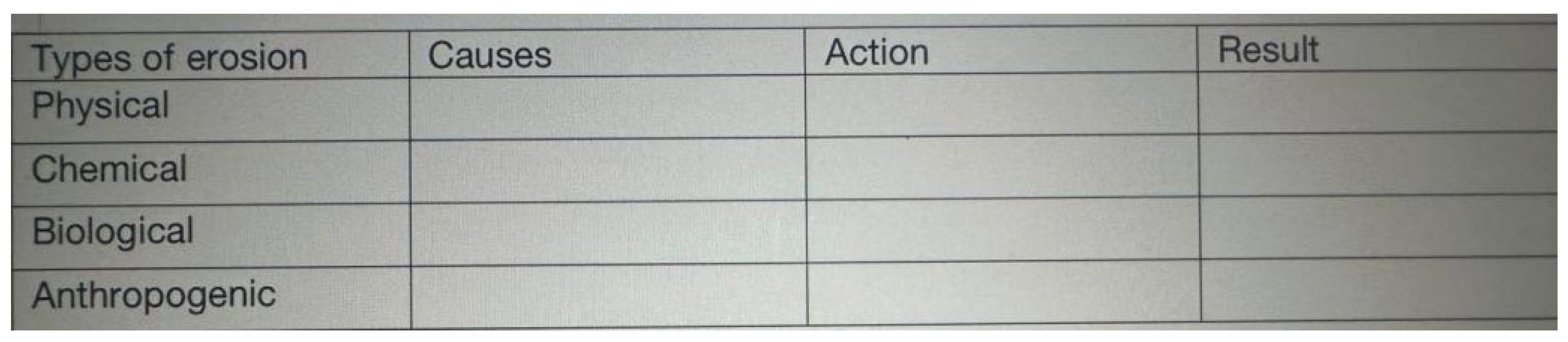
The integration and project method cannot be applied to every lesson, as it is challenging to incorporate such an approach within a confined timeframe of 40-45 minutes. Furthermore, schools may not always possess the equipment necessary for project implementation. In this specific lesson, the "Cause and effect table" method was employed, as illustrated in Figure 2, enabling students to identify the causes and consequences of the phenomenon. Consequently, to guarantee the quality of education, it is crucial to collaborate with teachers and allocate additional time to explore a topic in depth to attain a satisfactory outcome.
In traditional geography lessons, there is a tendency to use pre-made models. These can include models of Earth’s internal structure and topography utilizing STEAM technology, as well as other subject-specific models. However, relying on these ready-made models is often tedious. Incorporating hands-on model-making activities into lessons can provide students with a more comprehensive understanding of geographical concepts and laws. STEAM education emphasizes the processing, analysis, and creation of models, resulting in a more engaging and interactive learning experience. By integrating STEM lessons and hands-on model-making activities, teachers can evaluate students' grasp of subject matter and stimulate their interest in the field.
Conclusions
In summary, implementing STEAM education principles and integrating technology into course structures within educational institutions is an optimal approach for fostering research skills. By incorporating STEAM technologies, there is a higher likelihood of producing highly skilled professionals with a strong scientific focus, which is crucial in meeting future demands.
The study examined the application of STEAM technologies in primary and secondary education, as described in the literature. This research uncovered several advantages of using STEAM technology in geography courses, such as:
1. Subjects who could not be integrated were not taught. By incorporating interdisciplinary and project-based methodologies, fundamental natural sciences can be combined with technology, engineering, mathematics, and the arts and sciences.
2. Through practical experiments, theoretical knowledge can be applied to real-life situations. Thus, a substantial amount of new equipment is required. This enables students to develop modern technology and industrial products. Consequently, students can create models using their own hands.
3. STEAM technology fosters the development of fundamental research skills that aid children in solving complex issues in life.
4. Students' self-confidence increased. With the aid of technology, young people feel at ease in expressing their thoughts. Following each success, students become more confident in their abilities. In class, students face difficulties in integrating various subjects. To ensure high-quality education, primary and secondary schools should have well-equipped laboratories and special elective courses for students to study and master visual subjects. Alternatively, teachers should compile the learning objectives covered in various subjects and create an environment for the use of STEAM technology to acquire new knowledge.
References
- Averin, S.A.; Markova, V.A. STEM technology in education: fashion or reality? [Stem-technologies in education: fashion or reality] // Rebenok v sovremennom obrazovatelnom prostranstve megapolisa. Materialy IV Vserossiiskoi nauchno-prakticheskoi konferencii / redaktor- sostavitel AI Savenkov. -M., 2017. -S. 193–202.
- Buhinskaia, L.V. STEM v program dvenadcatiletnego obucheniia v Soedinennyh Shtatah Ameriki[STEM in the twelve-year study program in the United States of America] // European research. -2016. - No. 2 (13). -S. 99–101.
- Repin, A.O. Aktualnost STEM-obrazovaniia v Rossii kak prioritynogo napravleniia gosudarstvennojpolitiki [STEM education Relevance in Russia as a priority direction of state policy] // Nauchnaia ideia. -2017. - No. 1 (1). -S. 76–82.
- Strizhak, A.E.; Slipuhina, I.A.; Polihun. Cherneckii IS STEM-obrazovanie: kliuchevye defenicii [STEM-education: key definitions] // Informatsionnye tehnologii i sredstva obucheniia. -2017. T. 62. - No. 6. - S. 16–33.
- Chemekov, V.N.; Krylov, D.A. STEM –novyi podhod k injenernomu obrazovaniiu [STEM –a new approach to engineering education] // Vestnik Mariiskogo gosudarstvennogo universiteta. -2015. - No. 12. -S. 59–64.
- Seitvelieva, S.N. STEM-obrazovanie [STEM-education] // Novye komputernye tehnologii. -2016. – No. 1 (8).–S. 96–97.
- Nogaibaeva, G.; Jumajanova, S. Razvitie STEM-obrazovaniia v mire i Kazahstane [Development of STEM education in the world and Kazakhstan] // Obrazovatelnaia strana. -2016. - No. 20 (57).–S. 34–46.
- Breiner, J.; Harkness, S.; Johnson, C.; Koehler, C. What Is STEM? A Discussion About Conceptions of STEM in Education and Partnerships. School Science and Mathematics 2012, 112, 3–11. [Google Scholar] [CrossRef]
- Burzalova, T.V. Uchebno-issledovatelskaia deiatelnost uchashihsia profilnyh matematicheskih klassov kak vajnyi faktor vospitaniia [Educational and research activity of students of specialized mathematical classes as an important factor of education]. Vestnik Brianskogo Gosudarstvennogo universiteta 2012, 24–27. [Google Scholar]
- Nurova, R.J. STEM-oqytudyn jana adıstemesıjane alemdık bilım berudın basty trendı[New methods of STEM teaching and the main trend of World Education]. IT tehnologiia jane STEM oqytudyn manyzy" aimaqtyq gylymi-tajiribelik konferencija jinagy.–Atyrau 2021, 20–21. [Google Scholar]
- PidkasistyiP.I. Samostoiatelnaia poznavatelinaia deiatelnost shkolnikov v obuchenii[Independent cognitive activity of schoolchildren in education]. M.: Pedagogika, 2013. -240 s.
- Kochkarova, M.K. O sposobah formirovaniia interesa k processu poznaniia [The methods of formation of interest in the process of cognition]. Biologiia v shkole 2012, 25–29. [Google Scholar]
- Guseva, E.V.; Skurlatov, V.V.; Surkin. Intersubject integration as means of a profiling training. Vestnik Voennoy akademii materialno-tehnicheskogo obespecheniya im. Generala armii AV Hruleva 2015, 1, 141–146. [Google Scholar]
- Kalmykova, Z.I . Zavisimost urovnia usvoeniia znaniiot activity uchashhihsia v obuchenii[Dependence of the level of knowledge assimilation on the activity of students in education]. Sovremennaia pedagogika 2010, 18–21. [Google Scholar]
- Kızılay, E.; Saylan Kırmızıgül, A.; Çevik, M. The impact of technology-supported interdisciplinary integration on critical thinking and creativity: the perspective of pre-service teachers. Participatory Educational Rsearch (PER) 2023, 10(3), 247–265. [Google Scholar] [CrossRef]
- Duong, Nguyen Hong, Nam. : Factors affecting the implementation of STEAM education among primary school teachers in various countries and Vietnamese educators: comparative analysis. Education 2024, 3–13. [Google Scholar] [CrossRef]
- Spector, J. M. “Education, Training, Competencies, Curricula and Technology.”. In Emerging Technologies for STEAM Education. Educational Communications and Technology: Issues and Innovations; Ge, X.; Ifenthaler, D.; Spector, Ed.; Springer: Cham, 2015; pp. 3–14. [Google Scholar] [CrossRef]
- Lavicza, Z.; Weinhandl, R.; Prodromou, T.; Andi´c, B.; Lieban, D.; Hohenwarter, M.; Fenyvesi, K.; Brownell, C.; Diego-Mantecón, J.M. Developing and Evaluating Educational Innovations for STEAM Education in Rapidly Changing Digital Technology Environments. Sustainability 2022, 7237. [Google Scholar] [CrossRef]
- Weidong, G.; Wei, J.; Mimi, Z. STEAM-based education program for students of geography in university of Jinan. Advances in Economics, Business and Mnagement 2019, 116, 553–557. [Google Scholar] [CrossRef]
Figure 1.
- The result of research conducted by the project method.
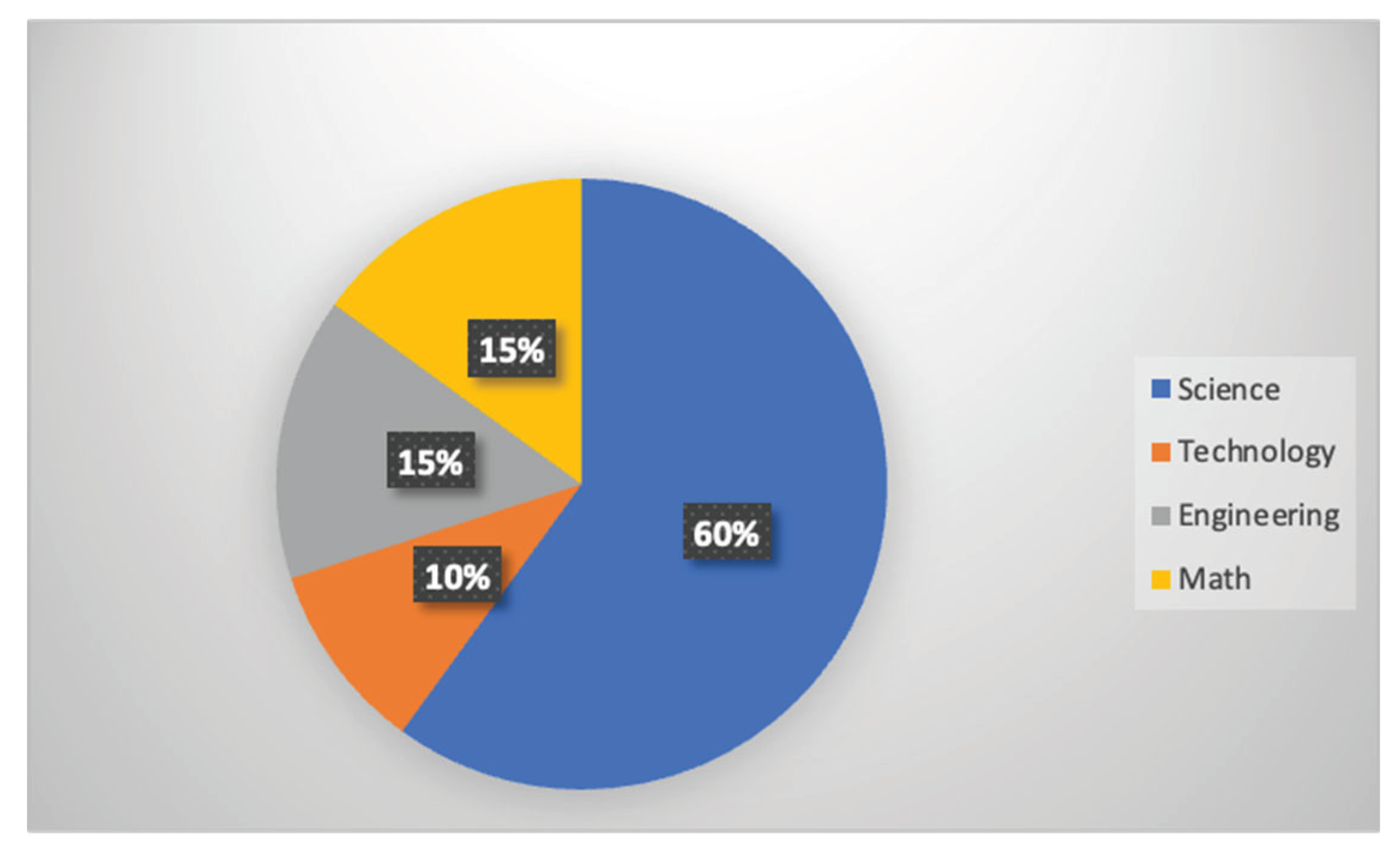
Figure 2.
- "Laws of landform formation and distributiontask on the topic.
Disclaimer/Publisher’s Note: The statements, opinions and data contained in all publications are solely those of the individual author(s) and contributor(s) and not of MDPI and/or the editor(s). MDPI and/or the editor(s) disclaim responsibility for any injury to people or property resulting from any ideas, methods, instructions or products referred to in the content. |
© 2025 by the authors. Licensee MDPI, Basel, Switzerland. This article is an open access article distributed under the terms and conditions of the Creative Commons Attribution (CC BY) license (http://creativecommons.org/licenses/by/4.0/).
Copyright: This open access article is published under a Creative Commons CC BY 4.0 license, which permit the free download, distribution, and reuse, provided that the author and preprint are cited in any reuse.


