

Submitted:
14 May 2025
Posted:
14 May 2025
You are already at the latest version
Abstract
Clean hydrogen is expected to play a crucial role in the future decarbonized energy mix. This places gasification of biomass as a critical conversion pathway for hydrogen pro-duction owing to its carbon neutrality. Yet there is limited research on the direction of the body of literature on the subject matter. Utilising the Bibliometrix package R, this paper conducted a systematic review and bibliometric analysis of the literature on gasification-derived hydrogen production over the past three decades. The results show a decade-wise spike in hydrogen research, mostly contributed by China, the United States, and Europe whereas the scientific contribution of Africa on the topic is limited. The current trend of the research is geared towards alignment with the Paris Agreement through feedstock diversification to include renewable sources such as biomass and municipal solid waste and decarbonising the gasification process through carbon capture technologies. The review reveals a gap in the experimental evaluation of heterogenous organic Municipal Solid Waste for hydrogen production through gasification within the Africa context. The study provides an incentive for policy actors and re-searchers to advance the green hydrogen economy in Africa.
Keywords:
Thermochemical conversion
; Municipal Solid Waste
; Hydrogen
; Biomass
; Gasification
1. Introduction
Amidst concerted global efforts to mitigate the climate crisis, the energy landscape is undergoing a profound transformation. Global energy demand continues to grow, influenced mainly by demand growth in emerging economies [1]. Hydrogen is theoretically expected to play a critical role in meeting this growing energy demand with the potential of supplying 18% of global energy demand by mid-century, exceeding projected fossil fuel demand in the heavy industry sector as well as in the shipping and aviation industries, and unlocking a multi-trillion dollar while mitigating CO2 emissions [2].
The strategic advantages of hydrogen are multi-faceted. The gas is abundantly available in nature and possesses the highest gravimetric energy density compared to any known fuel, thus positioning it as a promising choice for energy storage and for applications in energy-intensive industries [3]. Perhaps the most significant attraction of hydrogen in the transition economy is its low-carbon footprints. Hydrogen releases only water vapor when combusted, making it a plausible addition to the net-zero energy mix [4].
Various technological pathways have been developed and explored for hydrogen production, including water splitting, mainly through electrolysis; thermochemical conversion through pyrolysis and gasification; and biological processes photolysis [3]. The environmental friendliness of hydrogen is largely hinged on its method of production and feedstocks from which it is derived, thus giving rise to what is popularly termed the hydrogen rainbow [5]. Table 1. Illustrates the different types of hydrogen by their colour codes.
Even though water electrolysis using renewable-generated energy has gained prominence in the literature because of its environmental benefits (denoted green as shown in Table 1), electrolysis is constraint by economic and infrastructure concerns. For instance, while hydrogen generated from electrolysis is estimated to cost about 4 – 6 USD/kg, biomass gasification is estimated to generate hydrogen at a cost of about USD 2.68/kg of hydrogen [9].
The literature is, therefore, increasingly replete with biomass gasification as a viable alternative to conventional means of hydrogen production. Through a thermo-chemical process, gasification converts biogenous feedstocks into hydrogen-rich synthetic gas. Gasification offers a circular economy pathway for valorizing biogenous resources and some plastics into energy fuel [10,11]. The diversity of feed stocks available for gasification and the limited electricity supply in Sub-Saharan Africa makes the region an ideal geography for biomass gasification [9]. Gasification is also distinguished by its flexibility, efficiency and carbon-neutrality, with a potential for significant emission reduction through carbon capture techniques and reliance on sustainable sources of biomass [11,12]. For instance, [13] reported a carbon saving of 2.3 kgCO2eq for pyrolysis of waste as compared to landfilling.
With emerging techniques such as supercritical water gasification (SCWG), biomass is conveniently converted without the need for intensive drying thus further lowering the cost curve of the gasification-driven hydrogen economy [14]. However, the commercial deployment of gasification as a sustainable pathway for hydrogen production remains constraint by limited policy incentives and high feedstock costs [2]. This notwithstanding, the positive drivers of gasification research include the climate imperative to decarbonize the global energy mix and growing affordability of gasification technologies [15,16].
Even though the literature demonstrates a growing consensus on biomass gasification as a viable pathway for clean or green hydrogen production, the knowledge remains fragmented thus necessitating synthesis of the existing literature on gasification-derived hydrogen and its evolution. In this regard, some attempts have been made. Many of these reviews have either been skewed towards the gasification of biomass feedstock or do not target research with a focus on hydrogen production [17,18] Other reviews such as that of [19], have sought to conduct a comparative analysis of food-waste-to-energy thermochemical conversion pathways. Their study identified incineration, pyrolysis, and gasification as inefficient technologies based on their energy yields. However, in view of the improvement in technology efficiency over time, it is worth exercising caution in lending contemporary relevance to this decade-old study. Their findings for instance, sharply contrasts those of [16] and [20], who, barely a year later, reported gasification as the most efficient thermochemical process, and increasingly, the most cost-effective [16].
This context points to a gap in synthesized knowledge on hydrogen production through gasification across scales, feedstock diversity, and bibliometric trends. The objectives of the study are therefore set as follows:
- To map the evolution of thermochemical pathways for hydrogen production through gasification for the past three (3) decades.
- To examine regional and institutional distribution of hydrogen-focused gasification research output.
- To provide future research directions for policymakers, researchers, and industry actors interested in advancing low-carbon hydrogen production through gasification.
2. Materials and Methods
The systematic literature review approach followed the guidelines of the Preferred Reporting Items for Systematic Reviews and Meta-Analyses (PRISMA 2020) as shown in Figure 1. The search terms, and the bibliometric database used for the search as well as the inclusion and exclusion strategies for the sourced literature are discussed subsequently. The data analysis and visualisation tools are also discussed.
2.1. Search Querry
The literature search was conducted on May 01, 2025, using the Scopus database. Scopus is considered one of the most comprehensive and credible indexing for peer-reviewed scientific papers [21,22]. The search term (gasification AND "bio-hydrogen" ) OR (gasification AND "clean hydrogen") OR (gasification AND "green hydrogen”) OR (gasification AND hydrogen) was used.
2.2. Inclusion and Exclusion Criteria
The initial search using the search terms described earlier yielded 11,743 documents from the Scopus database. The documents were filtered for documents published from 1995 to 2025; to consider the evolution of literature over the past 30 years and a decade post the Paris Agreement, which marked the world’s greatest diplomatic success on climate change [23]. Document types were limited to finalised publications comprising articles, conference papers, reviews, books, and book chapters and further limited to only documents published in English Language. The documents were further filtered to include only literature from Energy, Environmental Science, Chemical Engineering, Engineering, Physics, Chemistry, Mathematics, Materials Science, Agricultural and Biological Sciences, Computer Science, Decision Science, and Economics and Econometrics subject areas.
The resulting documents from the foregoing inclusion and exclusion criteria were screened through manual reading of titles and abstracts to exclude documents that did not directly address or focus on gasification and hydrogen production. This resulted in a total of 8440 studies considered in this review. The PRISMA-compliant approach [24] is summarised in Figure 1.
2.3. Analysis and Visualization Tools
The Scopus-extracted data was exported in BibTeX format and analysed using the R package, Bibliometrix and its graphic user interface, Biblioshiny. Bibliometrix is the most popular R package for systematic review and visualisation of large volumes of literature [25], which, coupled with the biblioshiny package provides a user-friendly, web-based interface to identify and graphically-present the main themes of the literature [26].
3. Results
3.1. Analysis of Scientific Research Output
The results (Figure 2) show an increasing trend of production output of research on gasification focused on hydrogen production over the past three decade with over 60% of the research published between 2051 and 2025, peaking in 2024 with over 880 documents published on the topic. The trend also shows spikes in 2006, 2017 and 2024. This trend, though anecdotal, points to a 10-year cycle of increasing interest in hydrogen research. In fact, the International Energy Agency (IEA)’s 2024 Global Hydrogen Review shows that most hydrogen projects are expected to be delivered in 2027 [27], demonstrating a possible surge in hydrogen research from 2027 through 2030. The Covid-19 may have influenced the marginal spike observed in 2019 as overall global research output increased due to increased remote worktimes under lock-down orders [28,29]
Figure 3 and Figure 4 illustrate the most globally cited documents and relevant authors respectively.
With a citation of over 2382, the paper by [16] is by far the most cited document on the topic under review. Their paper provided a comprehensive overview of hydrogen production processes including thermochemical methods such as gasification. They concluded that gasification was among the most cost-competitive and efficient means of producing hydrogen (at a production cost of between $1.34 and $2.27/kg). [30], whose paper emerged as the second most cited in the literature, evaluated the conversion of biomass to biofuels through catalysis and provided early support for the conversion of sugars to renewable hydrogen. The third most widely cited document, though focused on thermochemical conversion techniques, was a slide deviation from the heavy emphasis of the literature on biomass but rather assessed the feasibility of hydrogen generation from solid plastics gasification [31].
The next most cited paper conducted a comprehensive assessment of hydrogen production methods, concluding that gasification and other thermochemical processes were preferred as long as efficiency is a priority [32]. [14] corroborated the cost-competitiveness of gasification for hydrogen production, with a distinct endorsement of biomass feedstocks and highlighted the prospects of super critical water gasification (SCWG) to further enhance efficiency.
In a state of the arts overview of biomass technology, [33], with 804 citations, reported that biomass gasification was a cost-effective means of producing hydrogen but concluded that a comprehensive review of the literature was missing. Other widely cited papers in the literature have reviewed the gasification technology either with respect to different feedstocks, environmental impacts, or the state of the technology [34,35,36,37,38,39,40,41,42].
The top destinations for documents pertaining to the topic were published in the International Journal of Hydrogen Energy and Energy, accounting for 1107 publications (representing nearly 13% of the literature) as shown in Figure 5. The distribution of publication on the subject matter supports Bradford’s law of scattering, which states that, “if scientific journals are arranged in order of decreasing productivity of articles on a given subject, they may be divided into a nucleus of periodicals more particularly devoted to the subject and several groups or zones containing the same articles as the nucleus, when the number of periodicals in the nucleus and succeeding zones will be as 1: n: n2, where “n” is a multiplier” [43] This law effectively posits that articles are majorly published in a concentrated few journals and the rest distributed over a large number of journals (See Table 2).
3.2. Keywords Tree Map
Figure 6 shows the prevalence of the keywords in the literature, demonstrating that the words ‘gasification’, ‘hydrogen production’, ‘hydrogen’ and ‘biomass’ emerged as the most prevalent keywords with gasification comprising 12%, and the next top three prevalent keywords making up 7% of the keywords in the literature respectively. The next most occurring keywords are ‘carbon dioxide’ (5%), ‘synthetic gas’ (4%), and ‘biomass gasification’ (3%). Apart from the fact that these dominant keywords may be attributed to their use in the direct search terms, the dominance of ‘gasification’ and ‘hydrogen production’ in the literature is also due to the positive prospects of biomass gasification as an efficient means of producing green hydrogen [44,45].
On the other hand, ‘coal combustion’, ‘feedstocks’, ‘water gas shift gasification’, ‘hydrogen fuels’, ‘fuel cells’, ‘super critical water’, ‘gas emissions’ are among the least prevalent keywords in the literature, accounting for 1% each of the keywords. This depicts either a decline or the emergence of literature on these terms. For instance, while the low prevalence of ‘coal combustion’ in the literature may be attributed to a declining interest in coal as a feedstock post-Paris Agreement [46], the low prevalence of ‘feedstocks’ could be attributed to the recent interest in exploring renewable feedstocks as alternatives to fossil fuels for gasification-derived bio-hydrogen [47,48].
It is observed that, even though bio-hydrogen is gaining momentum as a sustainable and competitive alternative to fossil-derived hydrogen [49,50], the term does not occur in the tree map in Figure 6. This is because the search string for this study focuses on hydrogen derived from gasification (a thermochemical process) whereas bio-hydrogen is a term often associated with hydrogen derived from biological processes such as anaerobic microbial digestion or fermentation [51,52].
3.3. Co-occurance Analysis
A co-occurrence network analysis (Figure 7) reveals four main clusters: Green, purple, red and blue clusters. The green cluster shows the co-occurrence of keywords such as ‘biomass gasification’, ‘hydrogen production’, ‘biomass’, ‘steam gasification’, ‘chemical reactions’ and ‘syngas’ reflecting a focus on process-oriented literature and revealing the strong interlinkage between gasification processes and hydrogen production in the literature. Some works with this focus on feedstock have assessed the feasibility of Athabasca bitumen as a feedstock for hydrogen generation through super critical water gasification, reporting significant hydrogen yields [53]. Similarly, [54] reported the viability of biomass as an alternative feedstock for hydrogen production through gasification.
The purple cluster is replete with keywords such as ‘carbon dioxide’, ‘hydrogen’, carbon monoxide’, ‘methane’, and ‘synthetic gas’, ‘oxygen’, ‘gases’, ‘gas generators’. This clearly illustrates a strong focus on the diverse products and bio-products of gasification processes. It is observed that there is a strong research link between the green and purple clusters, given that fundamental thermos-chemical processing techniques are often discussed in-tandem with the accompanying products and bi-products.
The blue cluster emphasises process optimisation techniques for improved efficiency and product ,‘catalysts’, ‘catalysts activity’, ‘supercritical water’ and ‘nickel’. Research with these keywords have sought to investigate the utility of various catalysts to improve biofuel yields and process efficiency. For instance, [55] reported increased hydrogen yield (90%) under optimised conditions of (360 °C, 0.5 g Ni-La catalyst loading, 0.5 g biomass and 10 min), emphasising the importance of Ni-L catalyst in the gasification process. Other studies have focused on assessing the effect of various catalysts on optimising the gasification process for improved hydrogen yield [56,57].
The red cluster focuses on environmental assessment and cost-benefit analyses featuring keywords such as ‘energy efficiency’, ‘economic analysis’, and ‘exergy’. Works in this cluster have evaluated the cost-competitiveness of using various feedstocks to produce hydrogen through gasification [58,59,60]. Understandably, keywords on greenhouse gas emission analysis co-occur with keywords such as ‘coal gasification’ and ‘natural gas’ as the literature here seeks to evaluate the emission profiles of fossil fuel feedstocks.
The co-occurrence analysis therefore reveals four clusters of literature on the subject matter: Fundamentals of the gasification process for hydrogen production and the feasible feedstocks as seen in [61,62,63,64,65,66,67,68]; evaluation of products and bio-products of the gasification process as reported by [62,69]; thermochemical process optimisation for hydrogen production, as reported by [70,71,72,73,74]; and emission and economic evaluation of the gasification process [75,76,77,78,79].
3.4. Most Relevant Affiliations
The bibliometric analysis (Figure 8) reveals that the top 10 affiliations are Xi’an Jiaotong University (China), Huazhong University of Science and Technology (China), King Fahd University of Petroleum and Minerals (Saudi Arabia), Universiti Teknologic Petronas (Malaysia), Chulalongkorn University (Thailand), National Energy Technology Laboratory (United States of America), University of Tehran (Iran), Southeast University (China), Tsinghua University (China), Zhejiang University (China). This trend points to a concentration of researcher affiliations with institutions in Asia and the Middle East, with only one of the top 10 institutions with the most author affiliations located outside Asia and the Middle East, i.e. The National Energy Technology Laboratory of the U.S.A. The proliferation of countries that may be characterised as petro-states such as Saudi Arabia and Iran in the top list of most affiliated institutions can be explained in terms of the fact that petro-states have an increased incentive and are actually making efforts in research and development to diversify away from petroleum, and thus views hydrogen as a convenient alternative in the long-term [80,81].
3.5. Country Scientific Production and Collaboration
Figure 9 illustrates the comparative scientific research output on hydrogen production through gasification. The map shows that research output on the subject matter are concentrated within a few countries, illustrated by the dark shades. Thus China, the United States of America, Germany, India and the United Kingdom register substantial research outputs. The map conversely shows large parts of Africa, Central Asia and some portions of Latin America in grey, pointing to limited research activity on the subject matter. African countries with marginal research output include South Africa, Egypt, and Nigeria.
The concertation of research outputs in China and Europe is reflected in their hydrogen infrastructure maturity as the two regions collectively hosts over 70% of global hydrogen capacity [82].
The country collaborative map (Figure 10) shows that countries with the most density of research outputs tend to also exhibit the most collaborative link across the globe. So that China, the United States and countries in Europe hosts the densest research links whereas the Global South demonstrates limited research collaborations, both inwardly and outwardly.
3.6. Trend of the Research
Figure 10 illustrates the evolution of the research from 1995 to 2025. Four thematic timelines emerge in the literature, discussed below:
Fundamentals of thermochemical processes (1995 – 2002)
The literature within this period is characterised by keyword such as ‘sulphidation’, ‘pressure drop’, ‘combustion’, ‘high temperature effects’ and ‘gasifiers’. This emphasises a focus on technical feasibility and unravelling the science behind thermochemical processes. For instance, [83] developed a reduced nitrogen oxides model for industrial coal-firing boilers. Their study reported that the latter stages of the gasification process (such as gasification) were important for the formation of hydro-carbon radicals from left over char. Also, [84] reported that the ammonia content in the resulting producer gas from a gasification process were most sensitive to the nitrogen content of the gasification fuel. Similar studies within this period assessed hydro-carbon yield from pyrolysis and gasification processes [85] while other literature assessed the effects of various gasifying agents on the gasification process [86,87].
Notwithstanding the focus of literature within the period on the thermodynamic fundamentals of gasification technology, the earliest appearance of the word ‘hydrogen’ in the published literature within the period was in 1995 when [88] discussed the emergence of carbon as a hydrogen carrier and advanced optimism about the generation of hydrogen from fossil fuels.
Process Optimisation and Feedstock Diversification (2003 – 2015)
This period represents the longest run where the trend shows a growing popularity of keyword such as ‘catalysts’, ‘concentration’, ‘thermal effects’, ‘mathematical modelling’, ‘biological materials’, ‘renewable energy resources’, and ‘reaction kinetics’. These keywords represent an evolution of the literature towards technical process optimisation and feedstock diversification beyond fossil fuel resources. Mathematical models and experimental set-ups have been designed to assess the effects of different operating conditions on the chemical properties of the resulting producer gas [89,90,91,92]. Some of these studies have established a positive correlation between temperature and hydrogen output from gasification processes with CaO also reported to increase hydrogen yield by over 16% [89]. Under high-pressure conditions, hydrogen yield is also reportedly increased through the use of Ca (OH)₂ as a CO2 absorbent [93].
This period also demonstrates that the interest in diversifying the feedstock away from fossil fuels precedes the Paris Agreement, given the early, albeit limited, emergence of literature seeking to assess the viability of renewable resources for hydrogen production via gasification [92,93].
Post Paris Agreement Alignment (2016 – 2022)
The literature post-Paris agreement sees a strong emergence of keywords such as ‘biomass gasification’, ‘municipal solid waste’ (MSW), ‘hydrogen production’, and ‘economic analysis’. Improvements in gasification technology and incentive to transition to a low-carbon economy makes municipal solid waste increasingly suitable and attractive for use in the thermos-chemical conversion of heterogenous waste such as Municipal Solid Waste to hydrogen-rich syngas [96,97], with the possibility of reaching an energy efficiency of 57% [96]. For instance, [97] reported that the organic component of Municipal Solid Waste in parts of Western Norway is able to generate 2700 tonnes of hydrogen via gasification. Similarly, [98] found that waste generation in a typical city in Ghana (Cape Coast) has the potential of generating over 780,000 kg of bio-hydrogen, with the waste generated projected to increase by over 70% in the next 29 years.
Despite this enormous potential of MSW for hydrogen production, unsustainable waste management practices pose a major barrier [98]. Lessons may be derived from a four-staged strategy proposal for the management of crop residue encompassing stakeholder engagement, education and capacity building and the development of integrated systems for the collection, storage and transportation of biomass resources for hydrogen production [99].
As established in the case of gasification of other biomass feedstocks, higher gasification temperatures tend to improve hydrogen yield from MSW gasification. [100] found that the gasification of Municipal Solid Waste at higher temperatures (600℃ – 800℃) increases the hydrogen yield by 30 - 40 percent. An oxygen-steam gasifying agent rather than pure oxygen is advised for hydrogen-rich syngas production from MSW gasification [100,101]. Similarly, metal and calcite-based catalysts such as marbles have proven effective in improving hydrogen yield from MSW gasification [100,102].
Decarbonisation (2023 – 2025)
This period marks a deep decarbonisation focus on the evolution of the literature on hydrogen production from gasification. The keywords prevalent here include ‘carbon capture and utilisation’ (CCU), ‘direct capture’, Kyoto protocol’, ‘clean energy’, and ‘greenhouse gas emissions’. Whilst the earliest emergence of the literature on CCU-coupled hydrogen production from gasification on within the period of 1995 – 2025 was recorded in 2011 [103], the period 2023 to 2025 is particularly replete with literature on the use of CCU as a carbon abating approach in the thermochemical production of hydrogen from biomass. Thus, several studies have been done on the lifecycle assessment (LCA) of bioenergy carbon capture and storage (BECCS) [104,105,106,107,108]. A key finding from this emerging theme is the need for a standardised approach to LCA of bioenergy production with CCS [108].
3.7. Research Gaps
The review of the literature on hydrogen production through gasification reveals a scarcity of research on the specific context of Africa. This is demonstrated by light colourisation of the region as shown in Figure 9 and Figure 10. This is particularly relevant because the MSW generated in most African cities is composed of over 60% organic component [109], whereas only about 44 - 60% of this waste is collected [110] with only 1% of this waste recovered [98]. Comparatively, over 96% of MSW is reportedly collected advanced countries [111]. This gap provides an incentive for increased research to advance the hydrogen economy in emerging economies such as Africa.
Furthermore, while literature features some studies on the evaluation of MSW gasification, the vast of the studies have treated MSW as a homogeneous resource, often overlooking the heterogeneity of MSW. For instance, some studies have focused on food waste [98,112] while others have focused on livestock manure [113,114] and crop residues [99] as raw materials for hydrogen production via gasification. This calls for expansive studies to broaden the body of knowledge on the thermodynamic, chemical and operational enablers of increased hydrogen production from municipal solid waste gasification.
4. Conclusions
The Post-Paris Agreement energy landscape is increasingly defined by an urgent demand for decarbonized energy systems. Hydrogen has emerged as a plausible alternative to carbon-intensive fossil fuels. As a result, thermochemical processes such as gasification have gained traction as competitive pathways for hydrogen production, particularly utilizing biomass and other biogenous substances as feedstock.
This study systematically mapped the evolution of thermochemical pathways for hydrogen production through gasification for the past three decades (from 1995 to 2025). The review revealed an increasing trend in research output on the subject matter, with spikes occurring in about every ten (10) years, demonstrating that we are living through the decade of hydrogen research and development. An institutional and geographical analysis of the research field reveals that the top contributing researchers are affiliated to institutions in Asia and the Middle East, predominantly in China, Saudi Arabia and Iran. This demonstrates a peculiar incentive of petro-states to diversify their economies from fossil fuels with hydrogen as a prospective alternative. The study also showed that the most extensive collaboration links are observed from China to the rest of the world. The United States also demonstrates strong research collaboration links. However, research collaborations among and with African researchers on the subject matter have been modest.
A trend analysis of the literature shows a most recent shift towards research focused on climate change mitigation in hydrogen production through thermochemical processes using carbon capture techniques. The most consistent research of interest, however, has been on the use of renewable biomass for hydrogen production through gasification.
Importantly, the study identifies a research gap on the sparsity of knowledge resource on the subject matter in the African context and the techno-economic feasibility of hydrogen production from heterogenous municipal solid waste gasification.
Abbreviations
| IEA | International Energy Agency |
| PV | Photo Voltaic |
| USD | United States Dollars |
| SCWG | Super Critical Water Gasification |
| PRISMA | Preferred Reporting Items for Systematic Reviews and Meta-Analyses |
| MSW | Municipal Solid Waste |
| CCU | Carbon Capture and Utilisation |
| CCS | Carbon Capture and Storage |
References
- Global Energy Review 2025.” [Online]. Available: www.iea.org.
- Kannah, R.Y.; Kavitha, S.; Preethi; Karthikeyan, O. P.; Kumar, G.; Dai-Viet, N.V.; Banu, J.R. Techno-economic assessment of various hydrogen production methods—A review. Bioresour. Technol. 2021, 319, 124175. [Google Scholar] [CrossRef]
- de Abreu, V.H.S.; Pereira, V.G.F.; Proença, L.F.C.; Toniolo, F.S.; Santos, A.S. A Systematic Study on Techno-Economic Evaluation of Hydrogen Production. Energies 2023, 16, 6542. [Google Scholar] [CrossRef]
- Hernandez, S.G.; Kirchofer, A. Incentivizing Hydrogen: A Perspective Review of Lifecycle Analysis Methodology Disparities Affecting Hydrogen Incentives in Policy Frameworks. Energy Clim. Chang. 2025, 6. [Google Scholar] [CrossRef]
- Yuan, Z.; Tang, J.; Chen, D.; Li, Y.; Hong, Z.; He, X. Membranes for hydrogen rainbow toward industrial decarbonization: Status, challenges and perspectives from materials to processes. Chem. Eng. J. 2023, 470. [Google Scholar] [CrossRef]
- N. Wasserstoffrat, “Information Paper: "Classification of different paths ¬tohydrogen production -(‘hydrogen rainbow’), 1.4.2022.”.
- Yuan, Z.; Tang, J.; Chen, D.; Li, Y.; Hong, Z.; He, X. Membranes for hydrogen rainbow toward industrial decarbonization: Status, challenges and perspectives from materials to processes. Chem. Eng. J. 2023, 470. [Google Scholar] [CrossRef]
- C. L. M. Eh, A. N. T. Tiong, J. Kansedo, C. H. Lim, B. S. How, and W. P. Q. Ng, “Circular Hydrogen Economy and Its Challenges,”. Chem Eng Trans 2022, 94, 1273–1278. [CrossRef]
- Tanyi, R.J.; Mensah, L.D.; Ntiamoah, A.; A Quansah, D.; Adaramola, M.S. Techno-economic assessment of hydrogen production in Ghana through PV electrolysis and biomass gasification. Oxf. Open Energy 2024, 3. [Google Scholar] [CrossRef]
- Natesakhawat, S.; Weidman, J.; Means, N.C.; Howard, B.H.; Shi, F.; Lekse, J.; Gray, M.; Wang, P. Hydrogen-rich syngas production from the steam co-gasification of low-density polyethylene and coal refuse. Fuel 2025, 395, 135254. [Google Scholar] [CrossRef]
- Salkuyeh, Y.K.; Saville, B.A.; MacLean, H.L. Techno-economic analysis and life cycle assessment of hydrogen production from different biomass gasification processes. Int. J. Hydrogen Energy 2018, 43, 9514–9528. [Google Scholar] [CrossRef]
- Vásquez, R.D.G.; Rhenals-Julio, J.D.; Mendoza, J.M.; Acevedo, J.; Silvera, A.J.B. Optimizing hydrogen production and efficiency in biomass gasification through advanced CFD modeling. Appl. Therm. Eng. 2025, 272, 126454. [Google Scholar] [CrossRef]
- Armoo, E.A.; Baidoo, T.; Mohammed, M.; Agyenim, F.B.; Kemausuor, F.; Narra, S. Environmental Assessment of Hybrid Waste-to-Energy System in Ghana. Energies 2025, 18, 595. [Google Scholar] [CrossRef]
- Hosseini, S.E.; Wahid, M.A. Hydrogen production from renewable and sustainable energy resources: Promising green energy carrier for clean development. Renew. Sustain. Energy Rev. 2016, 57, 850–866. [Google Scholar] [CrossRef]
- Megía, P.J.; Vizcaíno, A.J.; Calles, J.A.; Carrero, A. Hydrogen Production Technologies: From Fossil Fuels toward Renewable Sources. A Mini Review. Energy Fuels 2021, 35, 16403–16415. [Google Scholar] [CrossRef]
- Nikolaidis, P.; Poullikkas, A. A comparative overview of hydrogen production processes. Renew. Sustain. Energy Rev. 2017, 67, 597–611. [Google Scholar] [CrossRef]
- Wang, Z.; Li, B.; Pipitone, G.; Liu, Q.; Yang, T.; Wang, J.; Li, R. Hydrogen production from biomass: A review combined with bibliometric analysis. Int. J. Hydrogen Energy 2025, 117, 271–291. [Google Scholar] [CrossRef]
- Zou, X.; Zhai, M.; Liu, G.; Guo, L.; Zhang, Y.; Wang, X. Microdynamics of biomass steam gasification: A review. Energy Convers. Manag. 2024, 306. [Google Scholar] [CrossRef]
- Pham, T.P.T.; Kaushik, R.; Parshetti, G.K.; Mahmood, R.; Balasubramanian, R. Food waste-to-energy conversion technologies: Current status and future directions. Waste Manag. 2015, 38, 399–408. [Google Scholar] [CrossRef] [PubMed]
- Hosseini, S.E.; Wahid, M.A. Hydrogen production from renewable and sustainable energy resources: Promising green energy carrier for clean development. Renew. Sustain. Energy Rev. 2016, 57, 850–866. [Google Scholar] [CrossRef]
- E, A.R.H.; Salleh, N.Z.M.; Abdullah, M.; Ali, A.; Faisal, F.; Nor, R.M. Research trends, developments, and future perspectives in brand attitude: A bibliometric analysis utilizing the Scopus database (1944–2021). Heliyon 2022, 9, e12765. [Google Scholar] [CrossRef]
- L. Schoombee, “Why Scopus is essential for your literature review,” 2020.
- Unfccc, “ADOPTION OF THE PARIS AGREEMENT. Proposal by the President.,” 2015.
- Page, M.J.; McKenzie, J.E.; Bossuyt, P.M.; Boutron, I.; Hoffmann, T.C.; Mulrow, C.D.; et al. he PRISMA 2020 statement : an updated guideline for reporting systematic reviews. BMJ 2021, 372, 71. [Google Scholar] [CrossRef]
- Linnenluecke, M.K.; Marrone, M.; Singh, A.K. Conducting systematic literature reviews and bibliometric analyses. Aust. J. Manag. 2019, 45, 175–194. [Google Scholar] [CrossRef]
- Rojas-Sánchez, M.A.; Palos-Sánchez, P.R.; Folgado-Fernández, J.A. Systematic literature review and bibliometric analysis on virtual reality and education. Educ. Inf. Technol. 2022, 28, 155–192. [Google Scholar] [CrossRef]
- I. Energy Agency, “Global Hydrogen Review 2024,” 2024. [Online]. Available: www.iea.
- García-Costa, D.; Grimaldo, F.; Bravo, G.; Mehmani, B.; Squazzoni, F. The silver lining of COVID-19 restrictions: research output of academics under lockdown. Scientometrics 2024, 129, 1771–1786. [Google Scholar] [CrossRef]
- Rousseau, R.; Garcia-Zorita, C.; Sanz-Casado, E. Publications during COVID-19 times: An unexpected overall increase. J. Inf. 2023, 17. [Google Scholar] [CrossRef]
- Alonso, D.M.; Bond, J.Q.; Dumesic, J.A. Catalytic conversion of biomass to biofuels. Green Chem. 2010, 12, 1493–1513. [Google Scholar] [CrossRef]
- Ragaert, K.; Delva, L.; Van Geem, K. Mechanical and chemical recycling of solid plastic waste. Waste Manag. 2017, 69, 24–58. [Google Scholar] [CrossRef]
- Dincer, I.; Acar, C. Review and evaluation of hydrogen production methods for better sustainability. Int. J. Hydrogen Energy 2015, 40, 11094–11111. [Google Scholar] [CrossRef]
- Molino, A.; Chianese, S.; Musmarra, D. Biomass gasification technology: The state of the art overview. J. Energy Chem. 2016, 25, 10–25. [Google Scholar] [CrossRef]
- Osman, A.I.; Mehta, N.; Elgarahy, A.M.; Hefny, M.; Al-Hinai, A.; Al-Muhtaseb, A.H.; Rooney, D.W. Hydrogen production, storage, utilisation and environmental impacts: a review. Environ. Chem. Lett. 2021, 20, 153–188. [Google Scholar] [CrossRef]
- Lopez, G.; Artetxe, M.; Amutio, M.; Alvarez, J.; Bilbao, J.; Olazar, M. Recent advances in the gasification of waste plastics. A critical overview. Renew. Sustain. Energy Rev. 2018, 82, 576–596. [Google Scholar] [CrossRef]
- Megía, P.J.; Vizcaíno, A.J.; Calles, J.A.; Carrero, A. Hydrogen Production Technologies: From Fossil Fuels toward Renewable Sources. A Mini Review. Energy Fuels 2021, 35, 16403–16415. [Google Scholar] [CrossRef]
- Sikarwar, V.S.; Zhao, M.; Fennell, P.S.; Shah, N.; Anthony, E.J. Progress in biofuel production from gasification. Prog. Energy Combust. Sci. 2017, 61, 189–248. [Google Scholar] [CrossRef]
- Pham, T.P.T.; Kaushik, R.; Parshetti, G.K.; Mahmood, R.; Balasubramanian, R. Food waste-to-energy conversion technologies: Current status and future directions. Waste Manag. 2015, 38, 399–408. [Google Scholar] [CrossRef]
- Arregi, A.; Amutio, M.; Lopez, G.; Bilbao, J.; Olazar, M. Evaluation of thermochemical routes for hydrogen production from biomass: A review. Energy Convers. Manag. 2018, 165, 696–719. [Google Scholar] [CrossRef]
- Cao, L.; Yu, I.K.; Xiong, X.; Tsang, D.C.; Zhang, S.; Clark, J.H.; Hu, C.; Ng, Y.H.; Shang, J.; Ok, Y.S. Biorenewable hydrogen production through biomass gasification: A review and future prospects. Environ. Res. 2020, 186, 109547. [Google Scholar] [CrossRef]
- Abdoulmoumine, N.; Adhikari, S.; Kulkarni, A.; Chattanathan, S. A review on biomass gasification syngas cleanup. Appl. Energy 2015, 155, 294–307. [Google Scholar] [CrossRef]
- Lepage, T.; Kammoun, M.; Schmetz, Q.; Richel, A. Biomass-to-hydrogen: A review of main routes production, processes evaluation and techno-economical assessment. Biomass- Bioenergy 2021, 144. [Google Scholar] [CrossRef]
- Desai, N.; Veras, L.; Gosain, A. Using Bradford's law of scattering to identify the core journals of pediatric surgery. J. Surg. Res. 2018, 229, 90–95. [Google Scholar] [CrossRef]
- Nguyen, V.G.; Nguyen-Thi, T.X.; Nguyen, P.Q.P.; Tran, V.D.; Ağbulut, Ü.; Nguyen, L.H.; Balasubramanian, D.; Tarelko, W.; Bandh, S.A.; Pham, N.D.K. Recent advances in hydrogen production from biomass waste with a focus on pyrolysis and gasification. Int. J. Hydrogen Energy 2023, 54, 127–160. [Google Scholar] [CrossRef]
- Pandey, B.; Prajapati, Y.K.; Sheth, P.N. Recent progress in thermochemical techniques to produce hydrogen gas from biomass: A state of the art review. Int. J. Hydrogen Energy 2019, 44, 25384–25415. [Google Scholar] [CrossRef]
- Trencher, G.; Downie, C.; Hasegawa, K.; Asuka, J. Divestment trends in Japan's international coal businesses. Renew. Sustain. Energy Rev. 2020, 124. [Google Scholar] [CrossRef]
- Kasiński, S.; Dębowski, M. Municipal Solid Waste as a Renewable Energy Source: Advances in Thermochemical Conversion Technologies and Environmental Impacts. Energies 2024, 17, 4704. [Google Scholar] [CrossRef]
- Hameed, Z.; Aslam, M.; Khan, Z.; Maqsood, K.; Atabani, A.; Ghauri, M.; Khurram, M.S.; Rehan, M.; Nizami, A.-S. Gasification of municipal solid waste blends with biomass for energy production and resources recovery: Current status, hybrid technologies and innovative prospects. Renew. Sustain. Energy Rev. 2021, 136. [Google Scholar] [CrossRef]
- Dowaidar, M. Microbial pathways for sustainable hydrogen production. Int. J. Hydrogen Energy 2025. [Google Scholar] [CrossRef]
- Gbiete, D.; Narra, S.; Kongnine, D.M.; Narra, M.-M.; Nelles, M. Insights into Biohydrogen Production Through Dark Fermentation of Food Waste: Substrate Properties, Inocula, and Pretreatment Strategies. Energies 2024, 17, 6350. [Google Scholar] [CrossRef]
- Golub, N.; Zubchenko, L.; Demianenko, I.; Zhang, Y.; Seminska, N. Intensification of the Biohydrogen Production Process. Innov. Biosyst. Bioeng. 2024, 8, 37–45. [Google Scholar] [CrossRef]
- Talapko, D.; Talapko, J.; Erić, I.; Škrlec, I. Biological Hydrogen Production from Biowaste Using Dark Fermentation, Storage and Transportation. Energies 2023, 16, 3321. [Google Scholar] [CrossRef]
- Rana, R.; Nanda, S.; Kozinski, J.A.; Dalai, A.K. Investigating the applicability of Athabasca bitumen as a feedstock for hydrogen production through catalytic supercritical water gasification. J. Environ. Chem. Eng. 2018, 6, 182–189. [Google Scholar] [CrossRef]
- Loipersböck, J.; Luisser, M.; Müller, S.; Hofbauer, H.; Rauch, R. Experimental Demonstration and Validation of Hydrogen Production Based on Gasification of Lignocellulosic Feedstock. Chemengineering 2018, 2, 61. [Google Scholar] [CrossRef]
- Song, Y.-Q.; Nanda, S.; Cong, W.-J.; Sun, J.; Dong, G.-H.; Magdziarz, A.; Fang, Z.; Dalai, A.K.; Kozinski, J.A. Hydrogen production from cotton stalk over Ni-La catalysts supported on spent bleaching clay via hydrothermal gasification. Ind. Crop. Prod. 2022, 186. [Google Scholar] [CrossRef]
- Kang, K.; Azargohar, R.; Dalai, A.K.; Wang, H. Systematic screening and modification of Ni based catalysts for hydrogen generation from supercritical water gasification of lignin. Chem. Eng. J. 2016, 283, 1019–1032. [Google Scholar] [CrossRef]
- Kang, K.; Azargohar, R.; Dalai, A.K.; Wang, H. Hydrogen production from lignin, cellulose and waste biomass via supercritical water gasification: Catalyst activity and process optimization study. Energy Convers. Manag. 2016, 117, 528–537. [Google Scholar] [CrossRef]
- J. Lundgren, B. J. Lundgren, B. Vreugdenhil, Y. Ganjkhanlou, and R. Baldwin, “Published by IEA Bioenergy Biomass gasification for hydrogen production,” 2025.
- Hu, D.; Huang, Y.; Liu, D.; Su, L.; Shen, A.; Chen, Y.; Guo, L. Techno-economic analysis of sewage sludge supercritical water gasification for hydrogen and electricity co-generation system. Energy 2024, 313. [Google Scholar] [CrossRef]
- Khandelwal, K.; German, C.S.; Dalai, A.K. Technoeconomic analysis of supercritical water gasification of canola straw for hydrogen production. Int. J. Hydrogen Energy 2024, 96, 1067–1078. [Google Scholar] [CrossRef]
- Hosseini, S.E.; Wahid, M.A. Hydrogen production from renewable and sustainable energy resources: Promising green energy carrier for clean development. Renew. Sustain. Energy Rev. 2016, 57, 850–866. [Google Scholar] [CrossRef]
- Demirbas, A. Combustion characteristics of different biomass fuels. Prog. Energy Combust. Sci. 2004, 30, 219–230. [Google Scholar] [CrossRef]
- Ni, M.; Leung, D.Y.C.; Leung, M.K.H.; Sumathy, K. An overview of hydrogen production from biomass. Fuel Process. Technol. 2006, 87, 461–472. [Google Scholar] [CrossRef]
- Cha, J.S.; Park, S.H.; Jung, S.-C.; Ryu, C.; Jeon, J.-K.; Shin, M.-C.; Park, Y.-K. Production and utilization of biochar: A review. J. Ind. Eng. Chem. 2016, 40, 1–15. [Google Scholar] [CrossRef]
- Molino, A.; Chianese, S.; Musmarra, D. Biomass gasification technology: The state of the art overview. J. Energy Chem. 2016, 25, 10–25. [Google Scholar] [CrossRef]
- Sikarwar, V.S.; Zhao, M.; Fennell, P.S.; Shah, N.; Anthony, E.J. Progress in biofuel production from gasification. Prog. Energy Combust. Sci. 2017, 61, 189–248. [Google Scholar] [CrossRef]
- Pham, T.P.T.; Kaushik, R.; Parshetti, G.K.; Mahmood, R.; Balasubramanian, R. Food waste-to-energy conversion technologies: Current status and future directions. Waste Manag. 2015, 38, 399–408. [Google Scholar] [CrossRef] [PubMed]
- Cantrell, K.B.; Ducey, T.; Ro, K.S.; Hunt, P.G. Livestock waste-to-bioenergy generation opportunities. Bioresour. Technol. 2008, 99, 7941–7953. [Google Scholar] [CrossRef] [PubMed]
- Abdoulmoumine, N.; Adhikari, S.; Kulkarni, A.; Chattanathan, S. A review on biomass gasification syngas cleanup. Appl. Energy 2015, 155, 294–307. [Google Scholar] [CrossRef]
- Arabloo, M.; Bahadori, A.; Ghiasi, M.M.; Lee, M.; Abbas, A.; Zendehboudi, S. A novel modeling approach to optimize oxygen–steam ratios in coal gasification process. Fuel 2015, 153, 1–5. [Google Scholar] [CrossRef]
- Cao, W.; Wei, W.; Jin, H.; Yi, L.; Wang, L. Optimize hydrogen production from chicken manure gasification in supercritical water by experimental and kinetics study. J. Environ. Chem. Eng. 2022, 10. [Google Scholar] [CrossRef]
- Leimert, J.M.; Treiber, P.; Karl, J. The Heatpipe Reformer with optimized combustor design for enhanced cold gas efficiency. Fuel Process. Technol. 2016, 141, 68–73. [Google Scholar] [CrossRef]
- Bartik, A.; Fuchs, J.; Pacholik, G.; Föttinger, K.; Hofbauer, H.; Müller, S.; Benedikt, F. Experimental investigation on the methanation of hydrogen-rich syngas in a bubbling fluidized bed reactor utilizing an optimized catalyst. Fuel Process. Technol. 2022, 237. [Google Scholar] [CrossRef]
- Rapagna, S. Catalytic gasification of biomass to produce hydrogen rich gas. Int. J. Hydrogen Energy 1998, 23, 551–557. [Google Scholar] [CrossRef]
- Megía, P.J.; Vizcaíno, A.J.; Calles, J.A.; Carrero, A. Hydrogen Production Technologies: From Fossil Fuels toward Renewable Sources. A Mini Review. Energy Fuels 2021, 35, 16403–16415. [Google Scholar] [CrossRef]
- Osman, A.I.; Mehta, N.; Elgarahy, A.M.; Hefny, M.; Al-Hinai, A.; Al-Muhtaseb, A.H.; Rooney, D.W. Hydrogen production, storage, utilisation and environmental impacts: a review. Environ. Chem. Lett. 2021, 20, 153–188. [Google Scholar] [CrossRef]
- Kothari, R.; Buddhi, D.; Sawhney, R. Comparison of environmental and economic aspects of various hydrogen production methods. Renew. Sustain. Energy Rev. 2008, 12, 553–563. [Google Scholar] [CrossRef]
- Muellerlanger, F.; Tzimas, E.; Kaltschmitt, M.; Peteves, S. Techno-economic assessment of hydrogen production processes for the hydrogen economy for the short and medium term. Int. J. Hydrogen Energy 2007, 32, 3797–3810. [Google Scholar] [CrossRef]
- Chiesa, P.; Consonni, S.; Kreutz, T. Co-production of hydrogen, electricity and CO from coal with commercially ready technology. Part A: Performance and emissions. Int. J. Hydrog. Energy 2005, 30, 747–767. [Google Scholar] [CrossRef]
- Zumbraegel, T. The Technopolitics of Hydrogen: Arab Gulf States’ Pursuit of Significance in a Climate-Constrained World. Geoforum 2024, 158. [Google Scholar] [CrossRef]
- Baumgarten, J.; Schneider, C.P.; Möst, D. Hydrogen Economy Index – A comparative assessment of the political and economic perspective in the MENA region for a clean hydrogen economy. Int. J. Hydrogen Energy 2025, 101, 1503–1517. [Google Scholar] [CrossRef]
- I. Energy Agency, “Global Hydrogen Review 2024,” 2024. [Online]. Available: www.iea.
- Taniguchi, M.; Yamamoto, K.; Kobayashi, H.; Kiyama, K. A reduced NOx reaction model for pulverized coal combustion under fuel-rich conditions. Fuel 2002, 81, 363–371. [Google Scholar] [CrossRef]
- Leppälahti, J.; Koljonen, T. Nitrogen evolution from coal, peat and wood during gasification: Literature review. Fuel Process. Technol. 1995, 43, 1–45. [Google Scholar] [CrossRef]
- Karcz, A.; Porada, S. Formation of C1C3 hydrocarbons during pressure pyrolysis and hydrogasification in relation to structural changes in coal. Fuel 1995, 74, 806–809. [Google Scholar] [CrossRef]
- Takarada, T.; Onoyama, Y.; Takayama, K.; Sakashita, T. Hydropyrolysis of coal in a pressurized powder-particle fluidized bed using several catalysts. Catal. Today 1997, 39, 127–136. [Google Scholar] [CrossRef]
- Gil, J.; Corella, J.; Aznar, M.P.; Caballero, M.A. Biomass gasification in atmospheric and bubbling fluidized bed: Effect of the type of gasifying agent on the product distribution. Biomass- Bioenergy 1999, 17, 389–403. [Google Scholar] [CrossRef]
- De Jong, K.; Van Wechem, H. Carbon: Hydrogen carrier or disappearing skeleton? Int. J. Hydrogen Energy 1995, 20, 493–499. [Google Scholar] [CrossRef]
- Inayat, A.; Ahmad, M.M.; Mutalib, M.I.A.; Yusup, S.; Khan, Z. Mathematical Modelling for Hydrogen Production from Steam Gasification of Cellulose. Appl. Mech. Mater. 2014, 625, 176–179. [Google Scholar] [CrossRef]
- Corbetta, M.; et al. Mathematical Modelling of Coal and Biomass Gasification: Comparison on the Syngas H2/CO Ratio under Different Operating Conditions. Computer Aided Chemical Engineering 2014, 33, 1669–1674. [Google Scholar] [CrossRef]
- Iwuchukwu, I.J.; Sheth, A. Mathematical modeling of high temperature and high-pressure dense membrane separation of hydrogen from gasification. Chem. Eng. Process. - Process. Intensif. 2008, 47, 1292–1304. [Google Scholar] [CrossRef]
- Valin, S.; Ravel, S.; Guillaudeau, J.; Thiery, S. Comprehensive study of the influence of total pressure on products yields in fluidized bed gasification of wood sawdust. Fuel Process. Technol. 2010, 91, 1222–1228. [Google Scholar] [CrossRef]
- Otomo, J.; Wen, C.-J.; Takahashi, H.; Kuramoto, K.; Hatano, H.; Lin, S.-Y. Effect of carbon dioxide absorbent on initial hydrogen production from epoxy resin under high-temperature and -pressure steam conditions. Chem. Eng. J. 2004, 99, 125–129. [Google Scholar] [CrossRef]
- Nastasi, B.; de Santoli, L.; Albo, A.; Bruschi, D.; Basso, G.L. RES (Renewable Energy Sources) Availability Assessments for Eco-fuels Production at Local Scale: Carbon Avoidance Costs Associated to a Hybrid Biomass/H2NG-based Energy Scenario. Energy Procedia 2015, 81, 1069–1076. [Google Scholar] [CrossRef]
- Fermoso, J.; Arias, B.; Plaza, M.; Pevida, C.; Rubiera, F.; Pis, J.; García-Peña, F.; Casero, P. High-pressure co-gasification of coal with biomass and petroleum coke. Fuel Process. Technol. 2009, 90, 926–932. [Google Scholar] [CrossRef]
- Ozturk, M.; Dincer, I. An integrated system for clean hydrogen production from municipal solid wastes. Int. J. Hydrogen Energy 2021, 46, 6251–6261. [Google Scholar] [CrossRef]
- Renkel, M.F.; Lümmen, N. Supplying hydrogen vehicles and ferries in Western Norway with locally produced hydrogen from municipal solid waste. Int. J. Hydrogen Energy 2018, 43, 2585–2600. [Google Scholar] [CrossRef]
- Alani, I.; Dzagli, M.M.; Kongnine, D.M.; Narra, S.; Asiedu, Z. Biomethane and Green Hydrogen Production Potential from Municipal Solid Waste in Cape Coast, Ghana. Sol. Energy Sustain. Dev. J. 2024, 13, 102–119. [Google Scholar] [CrossRef]
- Angbé, K.J.H.; Nougbléga, Y.; Narra, S.; Singh, V. Strategy Development for Hydrogen-Conversion Businesses in Côte d’Ivoire. Biomass 2024, 4, 904–919. [Google Scholar] [CrossRef]
- Gao, W.; Farahani, M.R.; Rezaei, M.; Hosamani, S.; Jamil, M.; Imran, M.; Baig, A.Q. Experimental study of steam-gasification of municipal solid wastes (MSW) using Ni-Cu/γ-Al 2O3 nano catalysts. Energy Sources, Part A: Recover. Util. Environ. Eff. 2017, 39, 693–697. [Google Scholar] [CrossRef]
- Khuriati, A.; Purwanto, P.; Huboyo, H.S.; Suryono, S.; Putro, A.B. Journal of Physics: Conference Series 2018, 012006.
- Irfan, M.; Li, A.; Zhang, L.; Wang, M.; Chen, C.; Khushk, S. Production of hydrogen enriched syngas from municipal solid waste gasification with waste marble powder as a catalyst. Int. J. Hydrogen Energy 2019, 44, 8051–8061. [Google Scholar] [CrossRef]
- Baufumé, S.; Hake, J.-F.; Linssen, J.; Markewitz, P. Carbon capture and storage: A possible bridge to a future hydrogen infrastructure for Germany? Int. J. Hydrogen Energy 2011, 36, 8809–8821. [Google Scholar] [CrossRef]
- Huang, S.; Duan, W.; Jin, Z.; Yi, S.; Lv, Q.; Jiang, X. Progress in carbon capture and impurities removal for high purity hydrogen production from biomass thermochemical conversion. Carbon Capture Sci. Technol. 2024, 14. [Google Scholar] [CrossRef]
- Liu, H.; Guo, W.; Fan, Z.; Huang, F.; Liu, S. Comparative exergy and economic analysis of deep in-situ gasification based coal-to-hydrogen with carbon capture and alternative routes. Chem. Eng. J. 2024, 490. [Google Scholar] [CrossRef]
- Wang, J.; Zheng, Y.; He, S.; Yan, J.; Zeng, X.; Li, S.; Tian, Z.; Lei, L.; Chen, Y.; Deng, S. Can bioenergy with carbon capture and storage deliver negative emissions? A critical review of life cycle assessment. J. Clean. Prod. 2023, 434. [Google Scholar] [CrossRef]
- Zhang, K.; Ding, L.; Chai, M.; Fu, Z.; Chen, J.; Hou, C.; Lv, H. Kinetic investigations of coal gasification for high-purity H2 production with carbon capture and storage potential. J. Energy Inst. 2023, 111. [Google Scholar] [CrossRef]
- Liu, H.; Guo, W.; Fan, Z.; Huang, F.; Liu, S. Comparative life cycle energy, water consumption and carbon emissions analysis of deep in-situ gasification based coal-to-hydrogen with carbon capture and alternative routes. J. Clean. Prod. 2023, 426. [Google Scholar] [CrossRef]
- Miezah, K.; Obiri-Danso, K.; Kádár, Z.; Fei-Baffoe, B.; Mensah, M.Y. Municipal solid waste characterization and quantification as a measure towards effective waste management in Ghana. Waste Manag. 2015, 46, 15–27. [Google Scholar] [CrossRef] [PubMed]
- C. Kumar, A. C. Kumar, A. Bailey-Morley, E. Kargbo, and L. Sanyang, “Waste management in Africa A review of cities’ experiences,” 2022. [Online]. Available: www.odi.org/en/publications/waste-management-in-africa-a-review-of-cities-experiences.
- Adedara, M.L.; Taiwo, R.; Bork, H.-R. Municipal Solid Waste Collection and Coverage Rates in Sub-Saharan African Countries: A Comprehensive Systematic Review and Meta-Analysis. Waste 2023, 1, 389–413. [Google Scholar] [CrossRef]
- Pham, T.P.T.; Kaushik, R.; Parshetti, G.K.; Mahmood, R.; Balasubramanian, R. Food waste-to-energy conversion technologies: Current status and future directions. Waste Manag. 2015, 38, 399–408. [Google Scholar] [CrossRef] [PubMed]
- Cantrell, K.B.; Ducey, T.; Ro, K.S.; Hunt, P.G. Livestock waste-to-bioenergy generation opportunities. Bioresour. Technol. 2008, 99, 7941–7953. [Google Scholar] [CrossRef]
- Cao, W.; Wei, W.; Jin, H.; Yi, L.; Wang, L. Optimize hydrogen production from chicken manure gasification in supercritical water by experimental and kinetics study. J. Environ. Chem. Eng. 2022, 10. [Google Scholar] [CrossRef]
Figure 1.
2020 PRISMA flow chart.
Figure 2.
Annual production of literature.
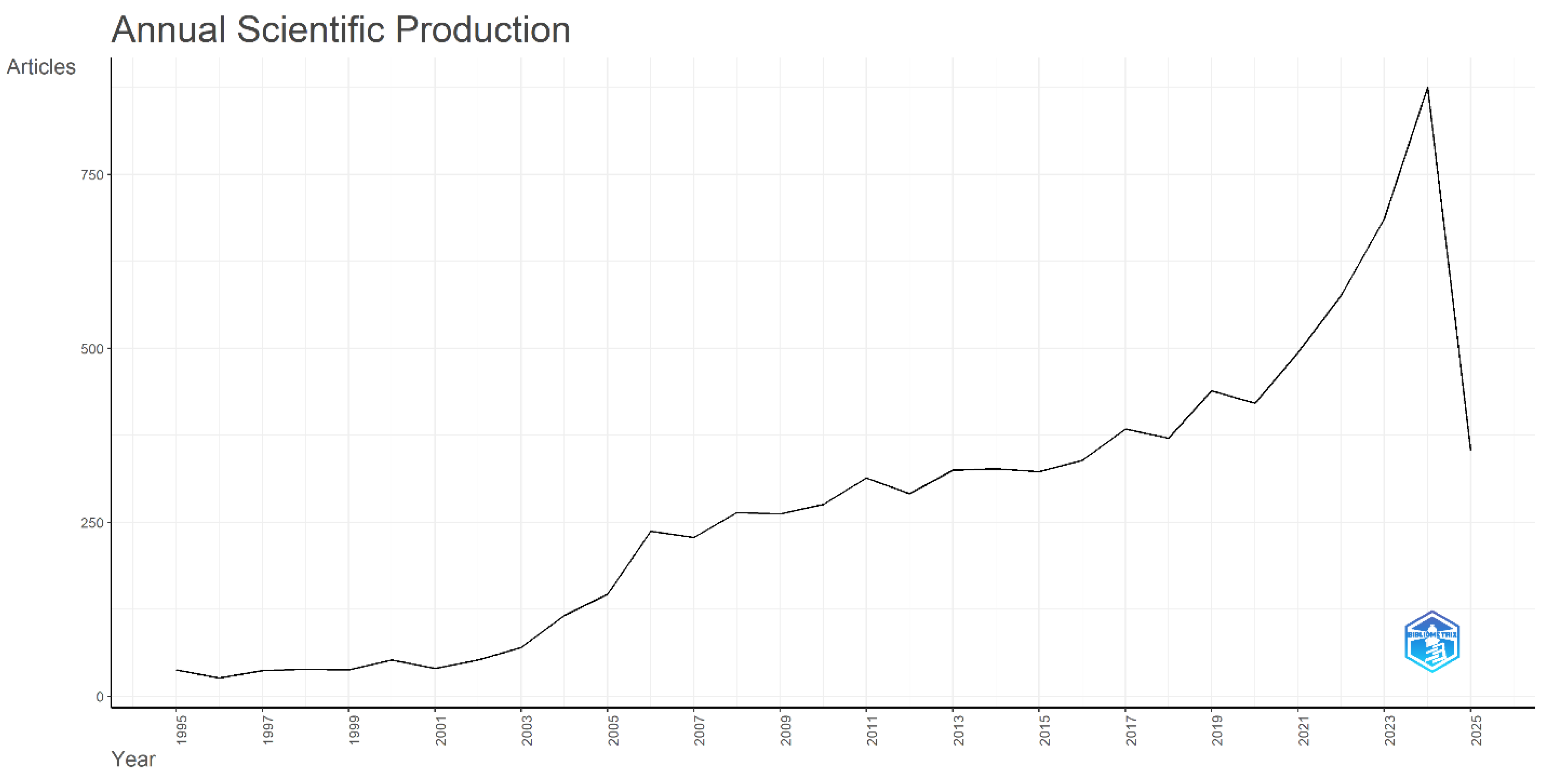
Figure 3.
Most globally cited documents.
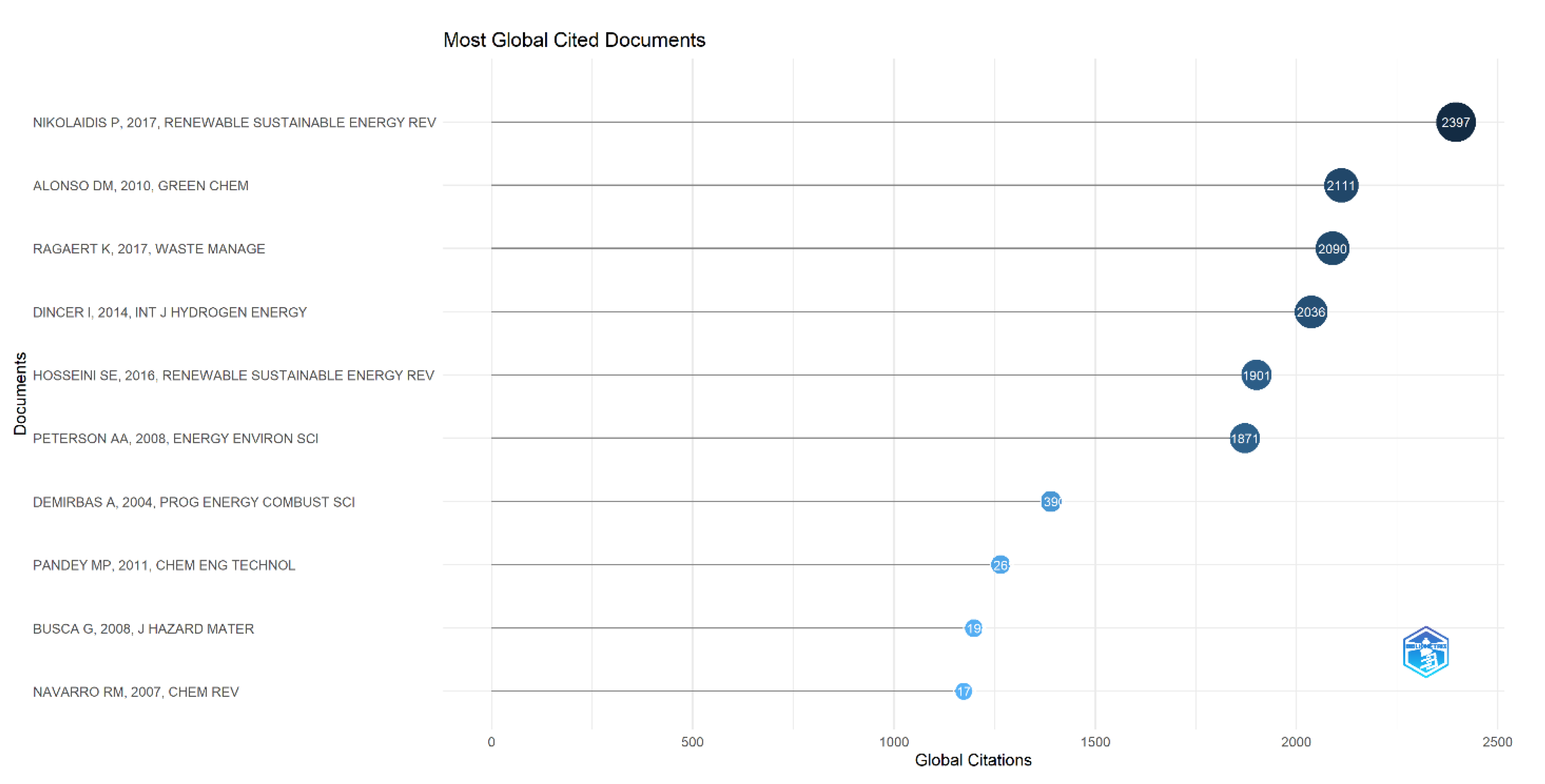
Figure 4.
Most relevant authors.
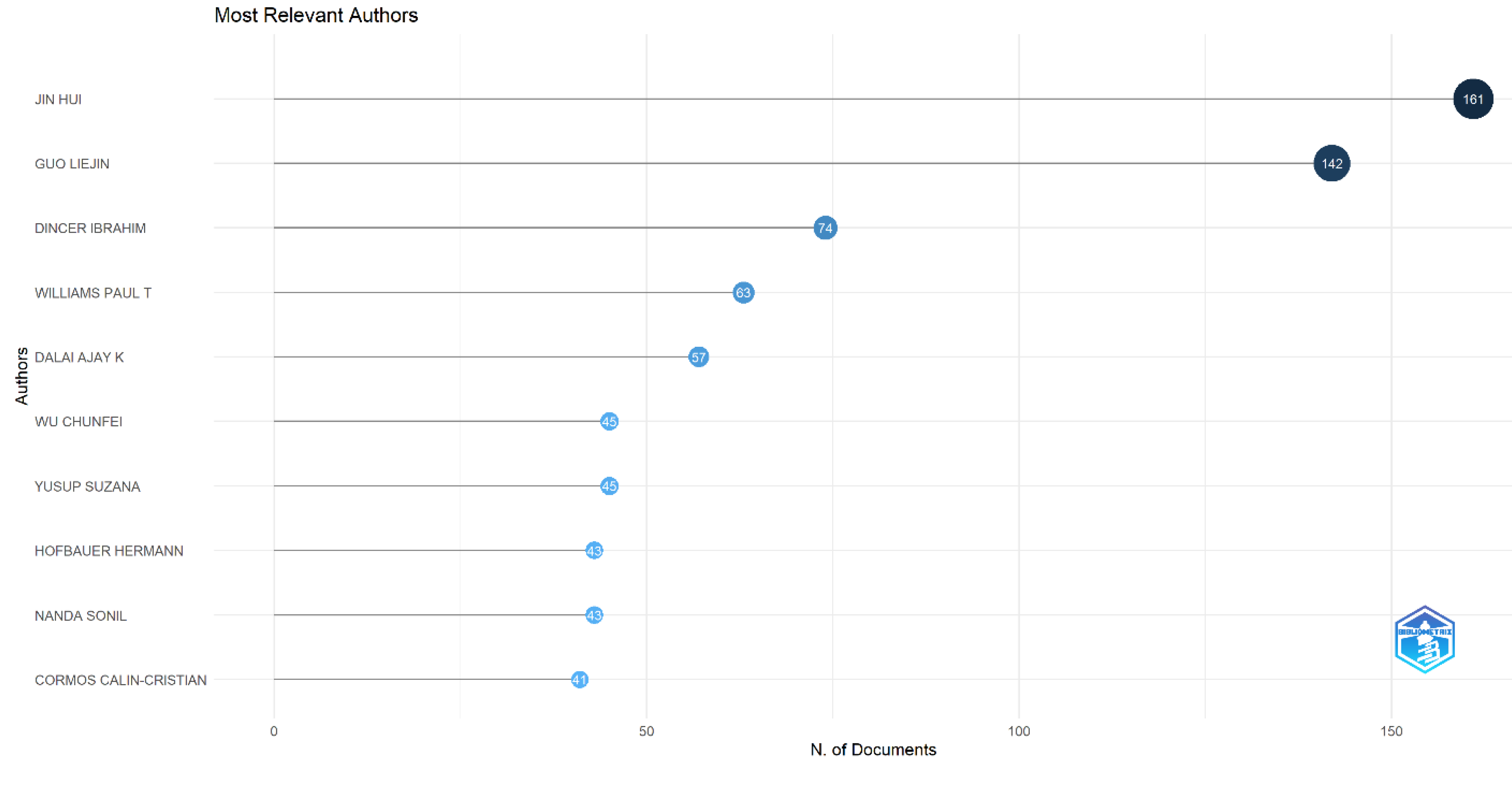
Figure 5.
Most relevant sources.
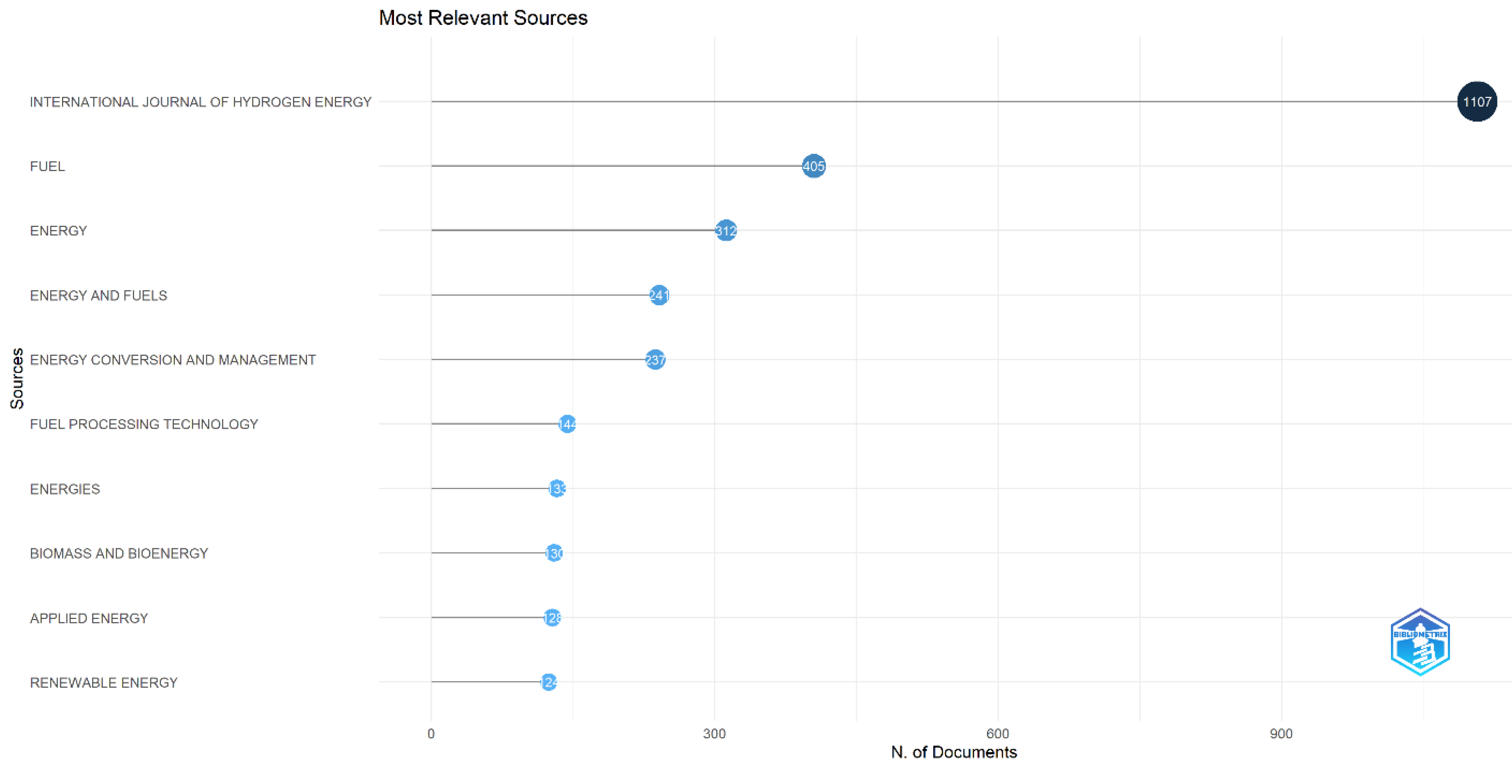
Figure 6.
Tree Map of Keywords.
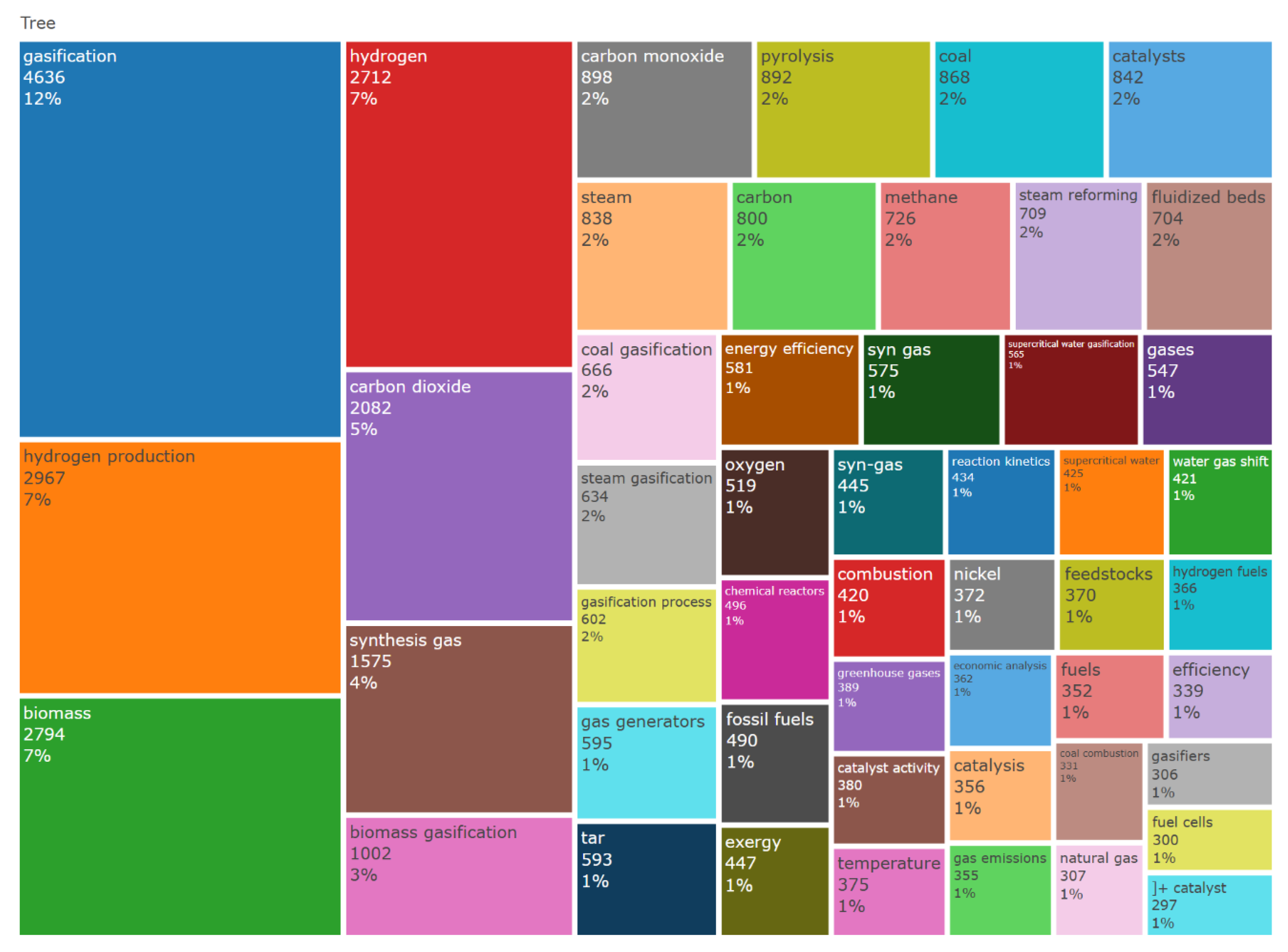
Figure 7.
Co-occurrence map.
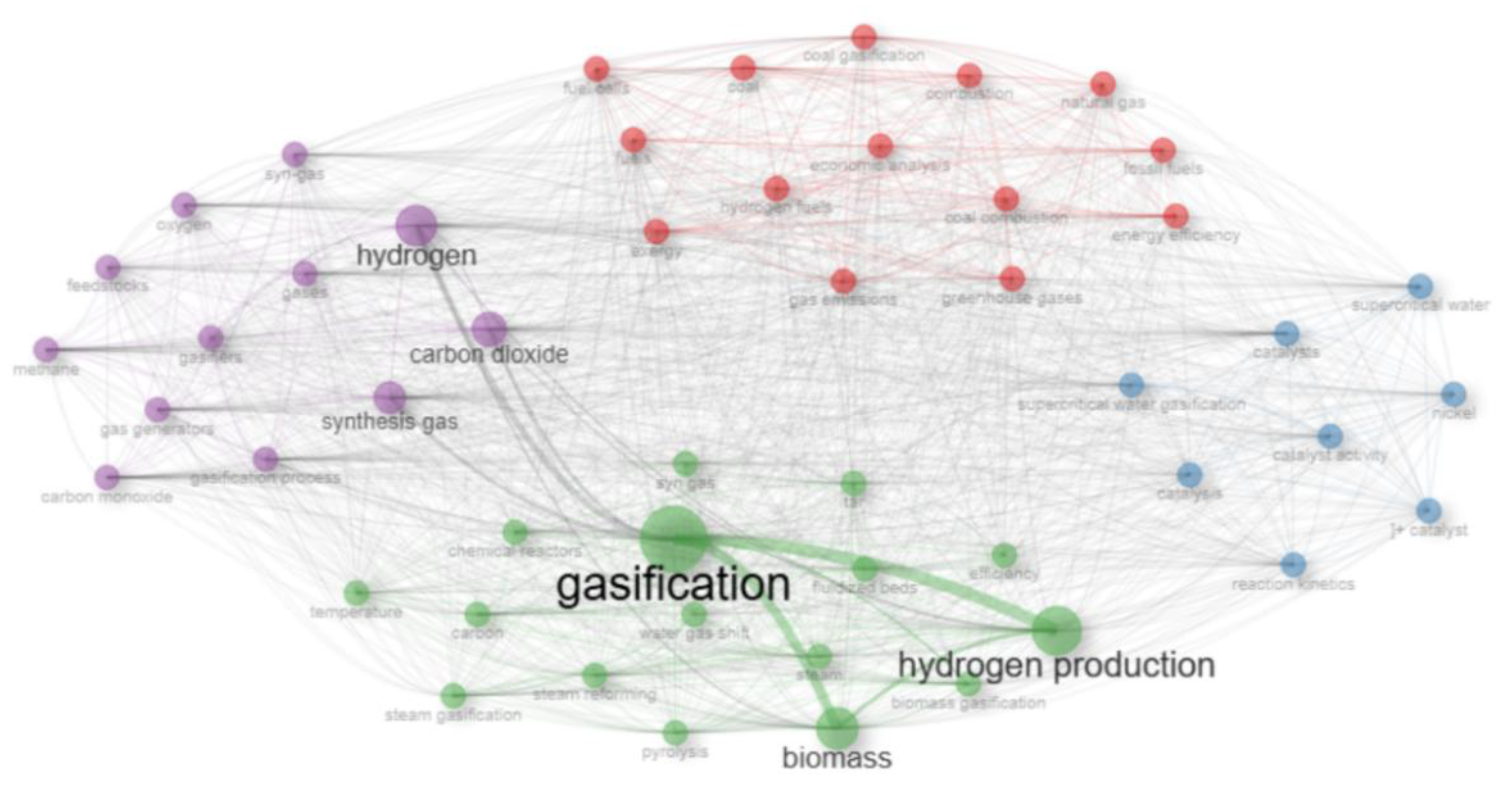
Figure 8.
Most relevant affiliations.
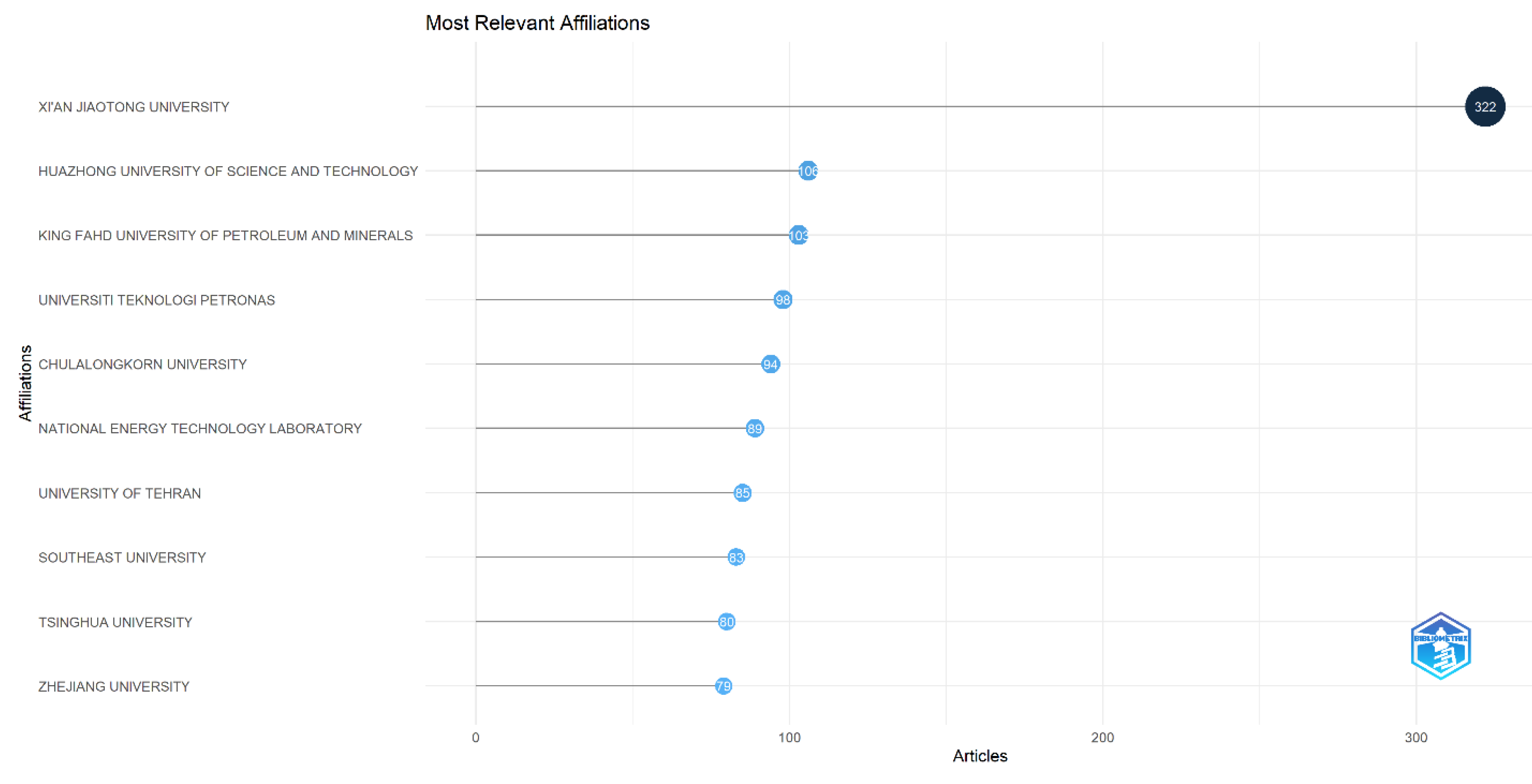
Figure 9.
Country scientific production.
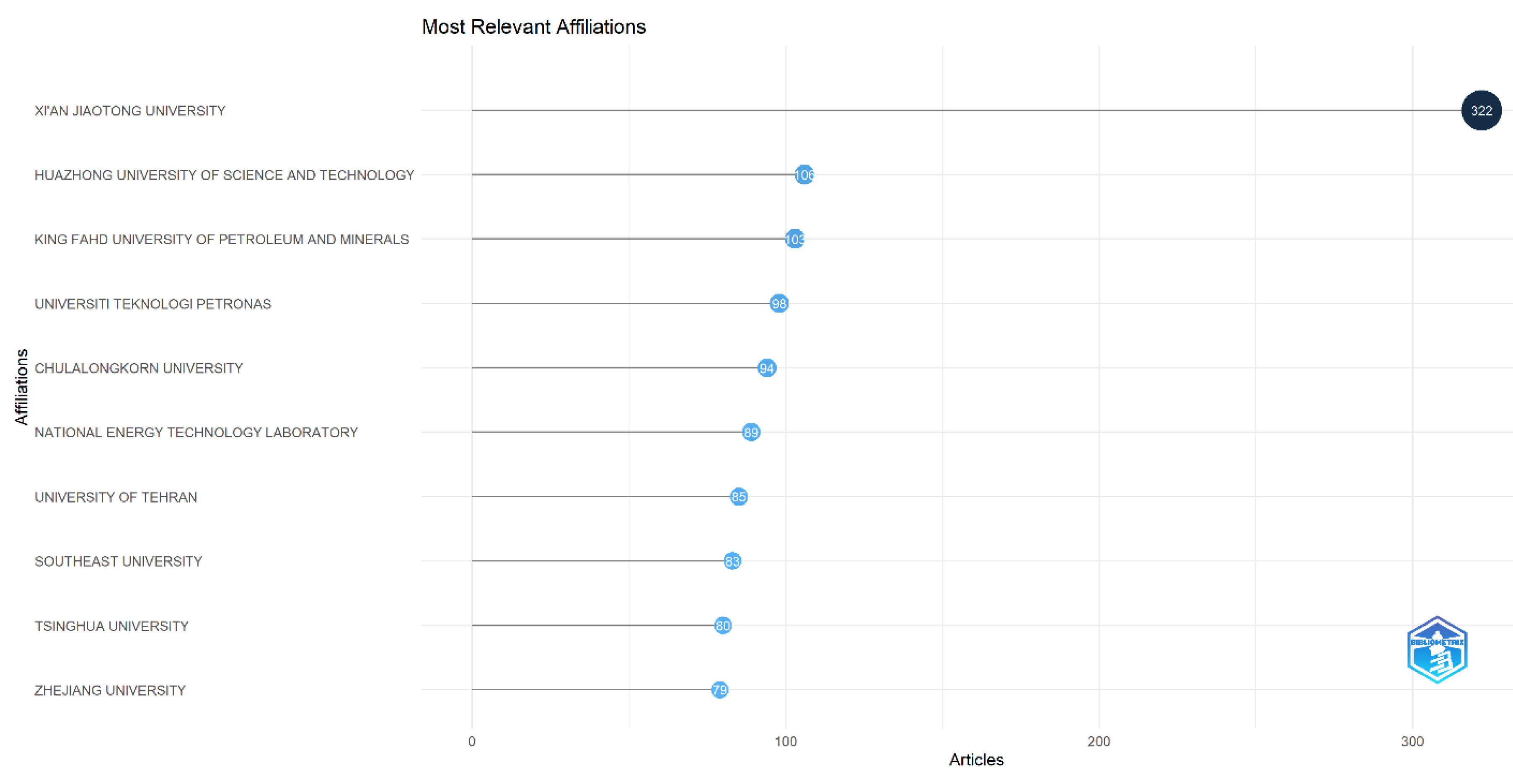
Figure 10.
Research collaborative map.
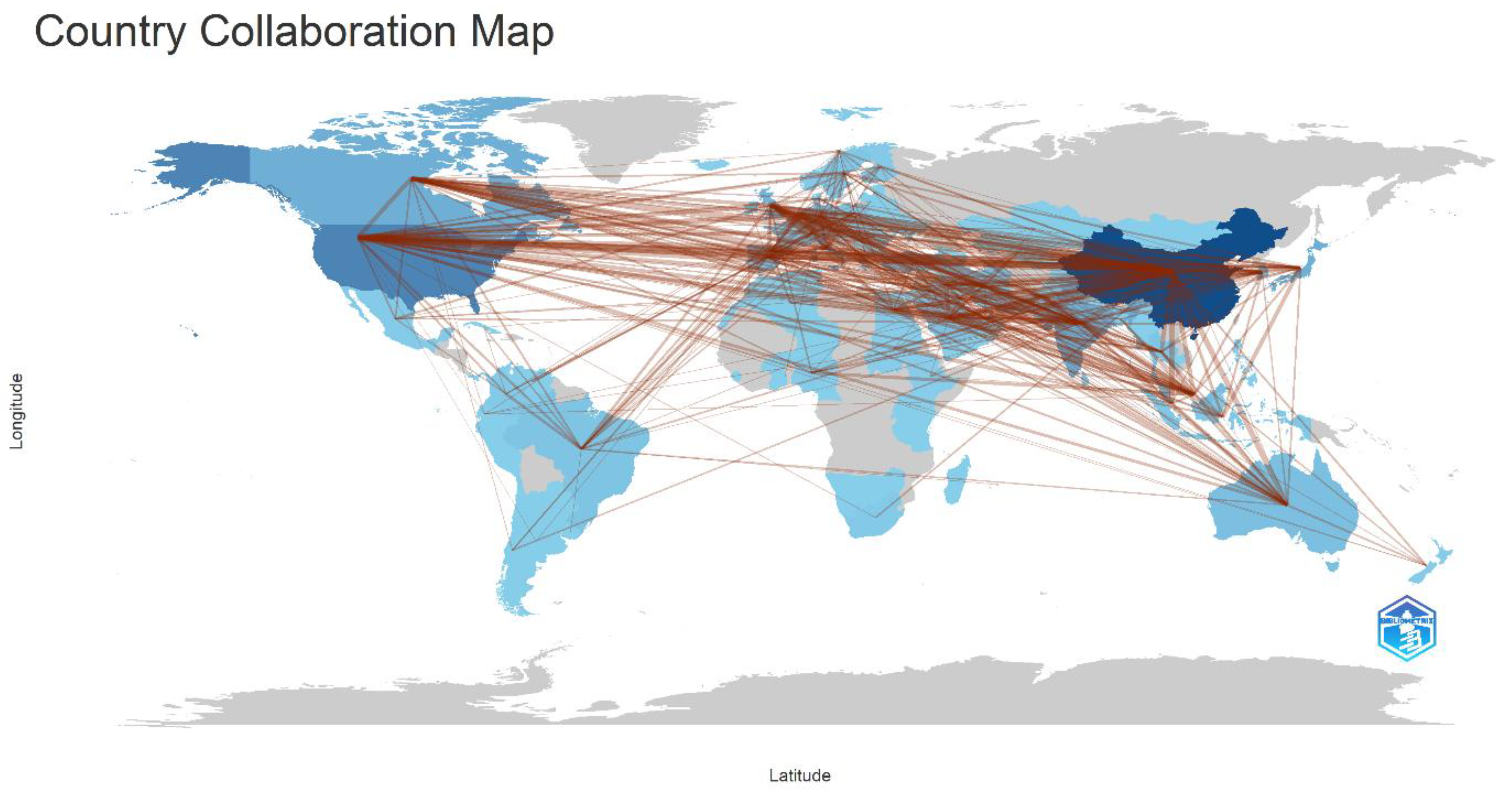
Figure 11.
Research trend.
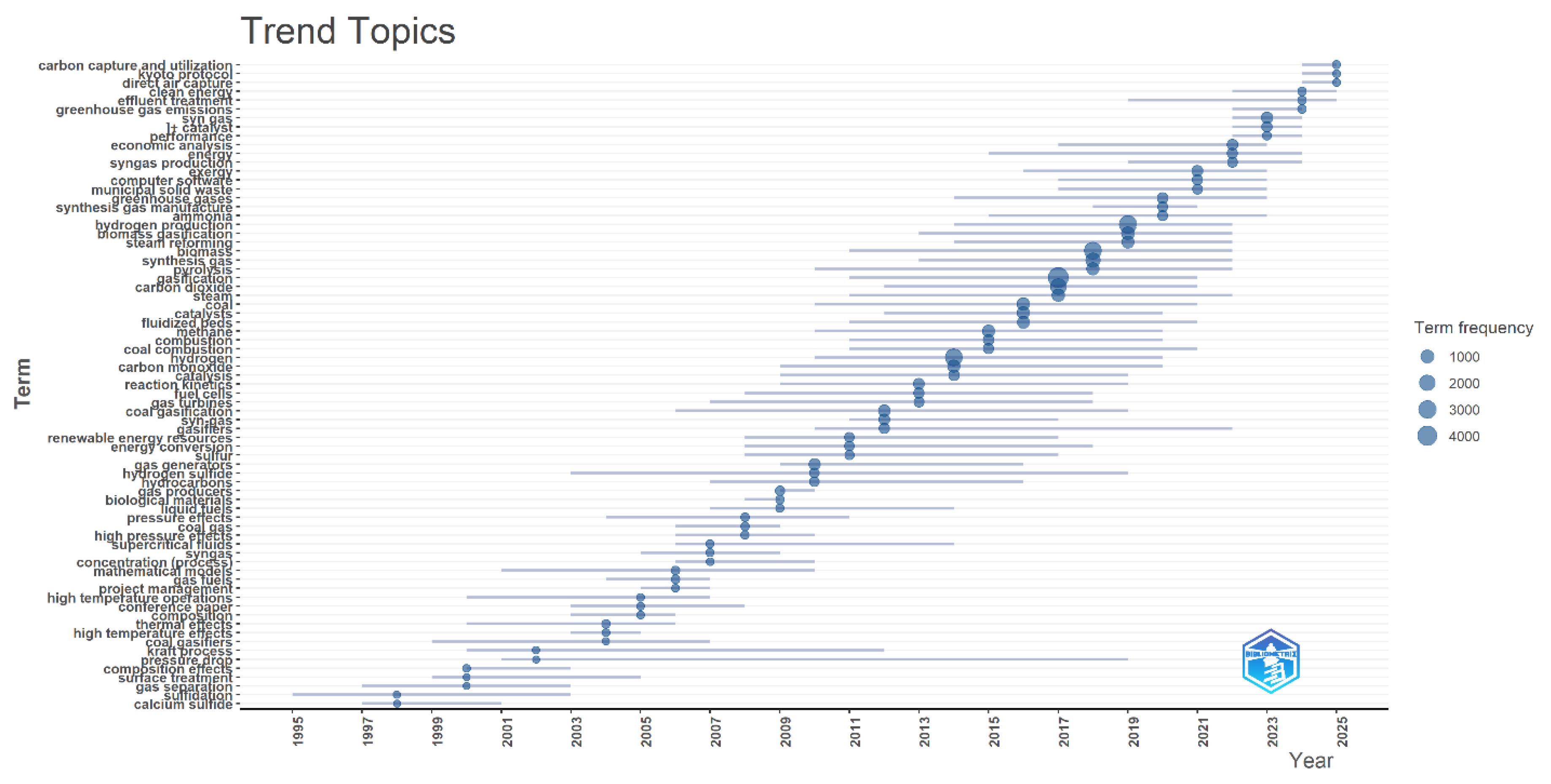

Table 1.
The hydrogen rainbow.
| Energy Source Material | Hydrogen Production Technology | Hydrogen Type Produced |
|---|---|---|
| Biomass | Conversion (Thermochemical/Biochemical) | Green Hydrogen |
| Electricity for Electrolysis | Green Hydrogen | |
| Direct Solar | Direct Water Splitting | Green Hydrogen |
| Electricity for Electrolysis | Green Hydrogen | |
| Solar PV | Electricity for Electrolysis | Green Hydrogen |
| Hydro | Electricity for Electrolysis | Green Hydrogen |
| Wind | Electricity for Electrolysis | Green Hydrogen |
| Geo-thermal | Electricity for Electrolysis | Green Hydrogen |
| Nuclear Energy | Electricity for Electrolysis | Pink Hydrogen |
| Aluminium (Metals) | Chemical Reaction | Grey Hydrogen |
| Coal | Gasification | Grey or Black Hydrogen |
| Electricity for Electrolysis (indirect) | Grey Hydrogen | |
| Natural Gas | Steam Reformation | Grey Hydrogen |
| Steam Reformation + Carbon Sequestration | Blue Hydrogen | |
| Electricity for Electrolysis (indirect) | Grey Hydrogen | |
| Petroleum/Oil | Cracking | Grey Hydrogen |
| Cracking + Carbon Sequestration | Blue Hydrogen |
Table 2.
Main sources of literature obey Bradford's Law.
| Source | Rank | Frequency | Cumulative Frequency | Zone |
| INTERNATIONAL JOURNAL OF HYDROGEN ENERGY | 1 | 1107 | 1107 | Zone 1 |
| FUEL | 2 | 405 | 1512 | Zone 1 |
| ENERGY | 3 | 312 | 1824 | Zone 1 |
| ENERGY AND FUELS | 4 | 241 | 2065 | Zone 1 |
| ENERGY CONVERSION AND MANAGEMENT | 5 | 237 | 2302 | Zone 1 |
| FUEL PROCESSING TECHNOLOGY | 6 | 144 | 2446 | Zone 1 |
| ENERGIES | 7 | 133 | 2579 | Zone 1 |
| BIOMASS AND BIOENERGY | 8 | 130 | 2709 | Zone 1 |
| APPLIED ENERGY | 9 | 128 | 2837 | Zone 1 |
| RENEWABLE ENERGY | 10 | 124 | 2961 | Zone 2 |
| INDUSTRIAL AND ENGINEERING CHEMISTRY RESEARCH | 11 | 112 | 3073 | Zone 2 |
| CHEMICAL ENGINEERING JOURNAL | 12 | 106 | 3179 | Zone 2 |
| JOURNAL OF CLEANER PRODUCTION | 13 | 99 | 3278 | Zone 2 |
| CHEMICAL ENGINEERING TRANSACTIONS | 14 | 83 | 3361 | Zone 2 |
| ENERGY PROCEDIA | 15 | 83 | 3444 | Zone 2 |
| JOURNAL OF THE ENERGY INSTITUTE | 16 | 83 | 3527 | Zone 2 |
| BIOMASS CONVERSION AND BIOREFINERY | 17 | 75 | 3602 | Zone 2 |
| EUROPEAN BIOMASS CONFERENCE AND EXHIBITION PROCEEDINGS | 18 | 71 | 3673 | Zone 2 |
| ACS NATIONAL MEETING BOOK OF ABSTRACTS | 19 | 70 | 3743 | Zone 2 |
| RENEWABLE AND SUSTAINABLE ENERGY REVIEWS | 20 | 68 | 3811 | Zone 2 |
| JOURNAL OF SUPERCRITICAL FLUIDS | 21 | 67 | 3878 | Zone 2 |
| ENERGY SOURCES, PART A: RECOVERY, UTILIZATION AND ENVIRONMENTAL EFFECTS | 22 | 62 | 3940 | Zone 2 |
| PROCEEDINGS OF THE ASME TURBO EXPO | 23 | 62 | 4002 | Zone 2 |
| AICHE ANNUAL MEETING, CONFERENCE PROCEEDINGS | 24 | 58 | 4060 | Zone 2 |
| PROCESS SAFETY AND ENVIRONMENTAL PROTECTION | 25 | 58 | 4118 | Zone 2 |
Disclaimer/Publisher’s Note: The statements, opinions and data contained in all publications are solely those of the individual author(s) and contributor(s) and not of MDPI and/or the editor(s). MDPI and/or the editor(s) disclaim responsibility for any injury to people or property resulting from any ideas, methods, instructions or products referred to in the content. |
© 2025 by the authors. Licensee MDPI, Basel, Switzerland. This article is an open access article distributed under the terms and conditions of the Creative Commons Attribution (CC BY) license (http://creativecommons.org/licenses/by/4.0/).
Copyright: This open access article is published under a Creative Commons CC BY 4.0 license, which permit the free download, distribution, and reuse, provided that the author and preprint are cited in any reuse.


