

Submitted:
30 April 2025
Posted:
02 May 2025
You are already at the latest version
Abstract
The present study addresses the need for valid and reliable tools to assess employability thinking among young people in training. In a labor market increasingly shaped by transversal skill demands, the objective was to construct and validate a scale adapted for secondary and post-secondary non-tertiary students. Grounded in strategic frameworks such as the Europe 2020 Strategy, the European Skills Agenda, and relevant Spanish legislation, an abbreviated version of the Graduate Skills and Attributes Scale (GSAS) was administered to a representative sample of 949 Andalusian students enrolled in compulsory secondary education, baccalaureate, or vocational training. A cross-sectional and exploratory research design was adopted, with all procedures conducted in accordance with ethical and legal standards and approved by the University of Granada’s ethics committee. Exploratory and confirmatory factor analyses were performed, leading to a refined 28-item version of the instrument. Items were grouped into four well-defined factors: ethical self-regulation and achievement orientation, effective communication and collaborative working, proactivity and commitment to learning, and analytical thinking and information handling. The factors demonstrated high internal consistency and structural validity. These findings indicate that the scale is a clear and effective tool for assessing employability-related competencies and may assist in the design of educational interventions aimed at improving students’ professional development.
Keywords:
youth employability
; transversal competencies
; assessment
; skills scale
; education-work transition
1. Introduction
Interactional skills make up a set of social and communicational abilities that enable people to relate effectively with others in personal, academic and/or professional settings. Such skills comprise aspects such as verbal and non-verbal communication, active listening, assertiveness, conflict resolution and team working [1,2]. All of these aspects facilitate the cognitive decision making process, whilst maintaining an equilibrium in which critical thinking, the analysis of problems and risk assessment all come into play [3]. In order to perform such processes, analytical thinking skills are needed that enable the decomposition of complex information, effective management, pattern identification and the assessment of situations using evidence-based deductive reasoning [4,5].
Development of the aforementioned competencies is complemented throughout the process of lifelong learning by the capacity to continuously acquire knowledge and skills, with this being an essential requirement in a changing world and a society that is bolstered by overwhelming technological changes [6,7]. It is precisely within this context that employment skills are equally as essential. Such skills pertain to personal and professional skills that enable the identification of opportunities, innovation, calculated risk taking and resource management to support the creative oversight of projects that must be rolled out under the auspices of ethical and socially responsible conduct [1,8,9].
Development of all of the competencies that make up the construct denominated employability thinking calls for inter-related cognitive, behavioural and functional processes. For this reason, such skills must be identified and worked on as a set, as highlighted in the Europe 2020 Strategy (2010-2020) for sustainable development and 10. Likewise, these aspects are found at the heart of Spanish employment legislation, as reflected through 11, which regulates the oversight and integration of professional training, and 12, which regulates public employment. They also form the basis of various initiatives targeting employability such as the Spanish Active Employment Support Strategy 2021-2024 and the Strategy for Entrepreneurship and Youth Employment (SEYE).
Against a backdrop in which youth employability has become a priority for educational and workplace policy, it is essential that skills and attributes are promoted that ease the transition from training to the professional world. Personal, social and functional competencies that make up that known as employability thinking constitute a key element for the basic development of students, especially during the formative stages of secondary and post-compulsory education [13]. The present work it framed by this line of thinking, focusing attention on the exploration of such abilities through application of an internationally validated scale (GSAS). In this way, the present study strives, not only, to obtain a diagnostic overview of the skill profile of Andalusian students, but, also, contribute towards debate on the role played by education in equipping young people to confidently face that challenges of employment in an ever-changing society.
Representativeness of the sample and inclusion of certain sampling elements were guaranteed through the establishment of specific selection criteria. Measurement accuracy and integrity were ensured by following a structured data collection process, which adhered to General Data Protection Regulation (GDPR) outlined by the European Union and the Organic Law on the Protection of Personal Data and Guarantee of Digital Rights (LOPD-GDD) established by the Spanish Data Protection Agency. A descriptive, exploratory and cross-sectional approach was taken as a means of producing evidence regarding the fundamental competencies that favour the transition from education to the workplace experienced by the population of interest. The present study is embedded within the excellence projects directed by the Ministry of Science, Innovation and Universities, and the State Research Agency.
The scale employed in the present study is a context- and sample-specific adaptation of the Graduate Skills and Attributes Scale (GSAS), which was conceived and validated by 14 in the context of distance higher education. The scale comprises 64 items that correspond to the variables of interest by addressing the skills and attributes that make up the construct of employability [15,16]. Namely, these skills and attributes pertain to interactional skills, problem solving and decision making skills, orientation towards lifelong learning, entrepreneurial skills, skills for presenting and applying information, goal-oriented behaviour, ethical and responsible behaviour, and analytical thinking skills.
Thus, the analysis of employability thinking reflects an essential requirement at a social level. For this reason, the main aim of the present research was to construct and validate a scale that enables accurate measurement of thinking around this construct in young people, with a view towards producing a robust instrument to aid evaluation of core competencies for the transition from education to the workplace. A secondary aim was to support evaluation, decision making throughout this process, and the establishment of measures and targeted training programs. Study findings serve to validate the cultural, contextual and functional adaptation of the scale by unveiling its robust structure based around key factors associated with employability in young people, as reflected through acceptable reliability and goodness of fit indices. This tool will, in this way, promote synthesised and rigorous evaluation of essential competencies for the transition from the education setting to the workplace.
2. Materials and Methods
2.1. Design and Participants
The present work employed a descriptive, exploratory and cross-sectional design. A sample of 949 secondary and post-compulsory non-tertiary students (♂ = 402 [42.4%]; ♀ = 525 [55.3%]; Other = [22 2.4%]) was recruited from Andalusia, Spain. Specifically, the sample comprised 246 (25.9%) CSE students, 456 (48.1%) VT students and 247 (26.0%) baccalaureate students enrolled at public institutions during the 2023/2024 academic year. In this sense, the following inclusion criteria were considered during sample selection: (a) Students enrolled on at least 60% of the complete in-person course; (b) Students who regularly attended classes on assessment days; (c) Students who did not present with any type of pathology that impeded them from completing the questionnaire.
2.2. Instruments
The Graduate Skills and Attributes Scale (GSAS) was employed, which was initially conceived and validated by 14 within the context of distance higher education. This scale comprises a total of 64 items (for example, “I can communicate my viewpoints clearly and fluently in English”), which are rated along a six-point Likert scale ranging from 1 (“Totally disagree”) to 6 (“Totally agree”). The scale assesses eight core dimensions that compose the construct of employment skills, namely, interactional skills, problem solving and decision-making skills, orientation towards lifelong learning, entrepreneurial skills, skills for the presentation and application of information, goal-oriented behaviour, ethical and responsible conduct, and analytical thinking skills. In the original study, internal consistency indices for the different dimensions presented Cronbach alpha values that ranged between α = 0.75 and α = 0.92 in the development sample (n = 272), and between α = 0.79 and α = 0.96 in the validation sample (n = 1102). This indicates that the scale has acceptable psychometric properties. In the present work, reliability coefficients ranged between α = 0.750 and α = 0.873 for the different subscales, which is consistent with values reported by the original study. The overall reliability coefficient produced was α = 0.940.
2.3. Procedure
The present research is framed by project MCIN/AEI/10.13039/501100011033, which is embedded within the excellence projects framework of the Ministry of Education, Professional Training and Sport.
In order to gather the cross-sectional data targeted by the study, communication was initiated with the various participating educational centres. Contact was made through an information pack that was drawn up by the project principal investigator (PI), in which study aims, intended outcomes and a commitment to the return of gathered results was detailed.
Following the receipt of permissions from centre directors, informed consent was requested from the legal guardians of potential participants. Next, instruments were administered during the first trimester of the 2023/2024 academic year. Data collection involved a total of five educational institutions. Questionnaires were administered in the presence of a researcher attached to the project and the relevant group/class tutor, with the aim of guaranteeing the correct completion of instruments and resolution of any potential doubts. The entire procedure was performed under normal conditions and without any notable incident.
It serves to highlight that participant anonymity was guaranteed at all times, with questionnaire responses being anonymous and the rights of participants to confidentiality being respected at all times. Likewise, the present research adhered to the ethical principles laid out in the Declaration of Helsinki (1975) later updated in Brazil in 2013, and received approval from the Ethical Committee of the University of Granada (2598/ CEIH/2022).
2.4. Data Analysis
IBM SPSS® software was used in its version 26.0 to perform the basic descriptive analyses pertaining to exploratory factor analysis (EFA), whilst factor loadings and the rotated matrix were obtained using JASP® 0.18.1.0. software. With regards to EFA, the maximum likelihood method with varimax rotation was employed and Cronbach alpha and McDonald omega coefficients were calculated to determine internal consistency of the scale (95% reliability index). Confirmatory factor analysis (CFA) was performed using the same software, JASP® 0.18.1.0. In this case, goodness of fit indices outlined by 17 were employed. In terms of chi-square, indices associated with non-significant p-values indicate good model fit. On the other hand, comparative fit indices (CFI) are deemed to be acceptable with values above 0.90 and excellent with values above 0.95. The normalised fit index (NFI) should be higher than 0.90, whilst incremental fit indices (IFI) are deemed to be acceptable when higher than 0.90 and excellent when higher than 0.95. Finally, root mean square error of approximation (RMSEA) indices are excellent when below 0.05 and acceptable when below 0.08. Parameter estimates were made using the maximum likelihood method (ML), given that this method is coherent, unbiased and invariant to scale type.
3. Results
Table 1 presents medium ratings and basic descriptive outcomes pertaining to the 29 items comprised by the employability scale. As can be seen, the scale was developed based on the structure and dimensions established by 14, elaborating an abbreviated version of this scale. Thus, various dispersion measures were employed in consideration of kurtosis and asymmetry values, with the aim of establishing the distribution of response data. In this sense, item four was discarded (I can use technology effectively to communicate with others). Item removal was performed in line with recommendations outlined by 18 and 19, with this specific item presenting asymmetry and kurtosis values higher than two.
Next, a scree plot was constructed with the aim of verifying the ideal number of factors for the factor solution (Figure 1). The scree plot makes it possible to observe distribution of the eigenvalues associated with the extracted components. As shown, the first component presents a significantly larger eigenvalue than all other components (approximately 11.8), which is followed by an abrupt drop in the trend traced by the graph. Moving on from component two, eigenvalues decrease rapidly before stabilising below the value of two, with homogenously low values then being maintained. This graphical outline indicates existence of one dominant component and suggests the importance of retaining two or three factors, depending on underlying theoretical criteria. This interpretation is alligned with both the Kaiser criterion (retaining components with eigenvalues greater than 1) and the “elbow” criterion (turning point in the curve).
The three-dimensional graph of factor components in rotated space (Figure 2) represents the distribution of two items as a function of their factor loadings on initially extracted components. Observing the graph, it can be seen that the majority of items are grouped in the central area of the space, without exhibiting a clear dispersion or the formation of well-defined clusters. This dense and relatively homogenous grouping around a common central point reinforces the previous interpretation of the scree plot in the sense that it outlines the predominance of two underlying components or, in this case, a barely differentiated factor structure. Absence of a broad and segmented distribution in relation to the rotated components limits ability of the empirical evidence to justify the existence of multiple clearly differentiated dimensions and, instead, points to a simple factor structure.
Table 2 presents outcomes regarding the psychometric properties of the scale when considering only the 28 items or indicators for which data exhibits a normal distribution. A rotated factor matrix was employed, alongside loadings for the dimensions of the different factors through the program IBM SPSS® 26.0 with principal components and varimax rotation being used. Adequacy of the correlation matrix was sufficient, given that the Bartlett statistic exhibited adequate fit [12229.57; df = 378; p < 0.001]. This indicates the absence of a matrix identity characterised by correlations (r = 1) along the matrix diagonal and 0 for the rest of the matrix. This is undesirable given that the desired outcome is for all items that make up the validated scale to be inter-correlated. In contrast, the Kaiser-Meyer-Olkin (KMO) value was excellent [KMO = 0.965]. This outcome is congruent with the Bartlett sphericity index, given that emergence of a value close to one gives the idea that the squared sum of the partial correlations is weak, whilst the correlations between items are more noteworthy. It also serves to highlight that the determinant of the matrix achieves an ∣R∣ value of 0.00000134. In other words, ∣R∣ ≈ 0, but not ∣R∣ = 0. This suggests that enough of a relationship between variables exists to be able to extract factors, without falling into the trap of complete collinearity. This aspect is also important, given that it implies that the matrix cannot be considered as a singular matrix or, accordingly, a non-invertible matrix, due to the fact that EFA must work with invertible matrices, above all at the time of executing extraction procedures.
Aside from this, the four-factor solution generated explained 46% of overall variance, which is an adequate percentage. Likewise, factor loadings are presented in order from highest to lowest. Loadings lower than 0.30 are not considered.
Prior to presenting a plausible interpretation of the obtained factors, obtained outcomes will be discussed in relation to eigenvalues, variance explained by each factor and contribution to the overall factor structure, and factor determination indices (FDI). The aim of this is to establish the importance of estimated factor scores when it comes to representing real latent factors.
Through the exploratory factor analysis performed, four eigenvalues higher than one were extracted, in line with Kaiser criteria. The first factor presented an eigenvalue of 11.398 and explained 38.9% of total variance prior to rotation, which indicates its dominance compared with the other three factors. Factors 2, 3 and 4 obtained eigenvalues of 1.344, 1.140 and 1.047, respectively, and explained a joint total of 7.0% of total variance. Following application of orthogonal rotation, variance was redistributed in a more balanced way. Specifically, the first factor explained 15.5% of total variance, followed by the second with 12.5%, the third with 9.8% and the fourth with 8.1%, which summed to reach a total of 46.0% of explained variance. Whilst the first factor still stands out for its greater explanatory power, the drastic reduction in eigenvalues for all other factors could suggest a moderately defined factor structure. Nonetheless, the improved distribution following rotation supports the factorial interpretation, despite total explained variance being slights below the 50% threshold that tends to be considered as acceptable in social sciences. Taken together, obtained values could be considered to be adequate, although with room for improvement, especially should a more robust and explanatory factor structure be desired. Finally, with regards to FDIs, in accordance with 20, it can be observed that FDIs are higher than 0.80 were achieved for three factors (factors one, two and three), which indicates that factor scores are relatively reliable. In the case of the FDI for factor four, which was significantly lower than 0.80, it can be stated that scores were highly acceptable.
Factor 1 was denominated “ethical self-regulation and achievement orientation” and houses eleven items (I.2, I.6, I.12, I.17, I.18, I.19, I.20, I.21, I.22, I.23 and I.24). This dimension considers aspects linked to personal responsibility, ethical conduct, planning and goal prioritisation, alongside the ability to act autonomously with a clear achievement orientation. Factor 2 was denominated “effective communication and collaborative working” and groups together seven items (I.1, I.3, I.5, I.7, I.8, I.14 and I.15). This factor refers to communication and interpersonal skills, such as the ability to clearly express ideas, resolve conflict, obtain support when working in a team and adapting speech to the social context.
Next, factor 3 was denominated “proactivity and commitment to learning” and is comprised of five items (I.9, I.10, I.11, I.13 and I.25). This dimension describes whether an individual takes a motivated and active attitude towards learning, whilst also defining the ability to take on challenges, anticipate problems and motivate others. Finally, factor 4 is defined as “analytical thinking and information handling” and is composed of five items (I.16, I.26, I.27, I.28 and I.29). This factor focuses on cognitive abilities related with rational data analysis, the organisation of information, memory and accurate explanation of complex content.
In addition, it serves to highlight that the reliability indices obtained for all dimensions are adequate. Factor 1 exhibits the highest internal consistency (α = 0.873; ω = 0.875), followed by factor 2 (α = 0.836; ω = 0.839) and, next, factor 4 (α = 0.825; ω = 0.828), which indicates robust homogeneity of items. Factor 3, although with slightly lower values (α = 0.750; ω = 0.754), also reaches acceptable levels of reliability. Overall, the total scale demonstrates excellent reliability (α = 0.940; ω = 0.943), which attests to its consistency and internal stability.
Next, confirmatory factor analysis (CFA) was performed with the aim of comparing scale consistency values produced through exploratory factor analysis (EFA). To this end, a structural equation model (SEM) was constructed that comprised the various determined factors and items grouped within them. The model comprised a total of four latent variables, with each representing an obtained dimension, in addition to a total of 28 observed variables that pertain to the items included on the final scale. Goodness of fit outcomes for this model are now reported. Firstly, the chi-squared value produced was associated with a significant p-value (X2 = 1104.84; df = 293; p < 0.001]. Nonetheless, it serves to outline that this test is highly sensitive to sample size and, consequently, it was decided to employ other fit indices. In this way, incremental fit (IFI), normalised fit (NFI), comparative fit (CFI) and Tucker-Lewis (TLI) indices all revealed acceptable values (IFI = 0.927; NFI = 0.903; CFI = 0.927; TLI = 0.919). Further, the root mean square error of the mean (RMSEA) value was also acceptable, being 0.054, whilst the standardised root mean squared residual (SRMR) was adequate, being 0.037.
Table 3 presents the standardised factor loadings produced by confirmatory factor analysis, with all items presenting high and statistically significant (p < 0.001) values. All loadings exceed the minimum recommended threshold of 0.50, which indicates good convergent validity and sufficient evidence of a meaningful relationship between each item and their respective latent variable. Within factor 1 (ethical self-regulation and achievement orientation), the highest loading pertains to item I-21 (0.741), whilst the lowest pertains to item I-18 (0.556). In the case of factor 2 (effective communication and collaborative working), the highest loading corresponds to item I-7 (0.769), whilst the lowest belongs to item I-5 (0,529). For factor 3 (proactivity and commitment to learning), item I-13 achieves the highest loading (0.764), whilst item I-9 exhibits the lowest (0.571). Finally, with regards to factor 4 (analytical thinking and information handling), it can be seen that the highest loading belongs to item I-28 (0.831), whilst the lowest corresponds to item I-16 (0.460). These outcomes confirm that items sufficiently represent their respective dimensions, which supports the suggested model structure.
Standardised covariance values between factors (Table 4) reveal strong and statistically significant (p < 0.001) relationships, which suggests that the factor structure is integrated and coherent. The strongest correlation was produced between factor 1 (ethical self-regulation and achievement orientation) and factor 3 (proactivity and commitment to learning), with a coefficient of 0.863, which reflects a solid theoretical link between dimensions oriented towards both personal and professional development. The weakest correlation, although still fairly strong, was observed between factor 3 and factor 4 (analytical thinking and information handling), with a value of 0.773, which could be interpreted as betraying a distinction between motivational aspects and cognitive abilities. This finding reinforces the idea that, despite being interrelated, the dimensions of employability thinking maintain their individuality within the proposed model.
Visual representation of the structural model provides graphical confirmation of the adequacy and robustness of the identified four-factor model (Figure 3). Pathways (arrows) linking items with their respective factors demonstrate clearly differentiated loadings consistent with quantitative outcomes and visually reinforce the idea of well-defined conceptual groupings. An internally balanced structure emerges, without any overlapping between factors or the presence of items with multiple saturations. This favours model interpretation. Further, correlations between factors, represented by two-way arrows, are in line with relevant theoretical precepts and coherent with existing literature on employability thinking. Overall, the model is found to be both statistically robust, and theoretically coherent and visually clear. This suggests that the scale is structurally valid and useful as a multidimensional assessment instrument.
4. Discussion
The present study aimed to develop and validate a scale for measuring employability thinking in young people in training through exploratory and confirmatory factor analysis. The importance of this is ingrained in the need to count on synthetic, valid and reliable instruments that enable comprehensive identification of key competencies for the transition from education to the workplace in adolescents and young people. In this sense, the developed scale contributes towards bridging a gap in the psycho-pedagogical setting, given that it adapts a tool that was originally conceived for use in the university context and reconstructs it so that it is applicable to earlier educational stages. This is similar to that described in work conducted by 21, 22 and 23.
From a methodological point of view, the process of refining items followed rigorous psychometric criteria [19,24]. Firstly, the scale was reduced following an expert panel to leave a shortened version comprising 30 items. Following this, quantitative validation was performed, which started with basic descriptive analysis. Based on this, items were removed that presented asymmetry and kurtosis values higher than recommended thresholds (±2). This ensured that normality of the data distribution could be guaranteed and increased the robustness of later estimations. This led to a final set of items being determined and ensures more parsimonious and accurate measurement.
Exploratory factor analysis allowed identification of a structure composed of four clearly differentiated factors, which reflects a restructuring of the original eight-dimensional structure proposed by the reference instrument. This finding should not be interpreted as a loss of conceptual richness but, instead, as a process that synthesises and more effectively groups together functional components of employability thinking. Statistical adequacy of the solution is supported by excellent KMO, Bartlett and internal reliability (Cronbach alpha and McDonald’s omega) coefficients, in addition to the fact that total explained variance was higher than 50%. All of the above indicates that the model is statistically robust [24,25].
At a theoretical level, the identified factors exhibit clear conceptual coherence. The first factor, “ethical self-regulation and achievement orientation”, integrate elements of planning, responsibility and ethical conduct, all of which are fundamental aspects at the heart of strategic thinking oriented towards personal and professional development. The second factor, “effective communication and collaborative working”, groups together interpersonal competencies that have proven to be decisive for academic and workplace performance in changing environments. In the case of the third factor, “proactivity and commitment to learning”, this reflects a motivational profile that is characterised by initiative, curiosity and active engagement. Finally, the fourth factor, “analytical thinking and information handling”, synthesises high-level cognitive skills that are linked with data processing and rational decision making. These factors are grouped together based on premises outlined by 14, 26 and 27.
Confirmatory factor analysis corroborated this aforementioned four-factor structure, with high and significant factor loadings being produced for all items. This indicates high convergent validity [28]. In addition, global fit indices for the structural model (CFI, IFI, NFI, TLI and RMSEA) are within acceptable ranges, which further supports the consistency of the proposed dimensional structure. It serves to highlight that, whilst the chi-squared outcome was significant, sensitivity of this index to sample size means that it should be interpreted with caution and justifies the need for alternative indices to be calculated [29].
Correlations produced between factors included in the model are also noteworthy in that they indicate an integrated structure, in which all dimensions are interrelated but maintain their individuality. The most notable relationship emerges between self-regulation and proactivity, specifically, suggesting that young people with a greater sense of responsibility and achievement orientation also tend to be more committed to learning and show greater initiative. This interdependence points to the importance of working on all of the aforementioned skills jointly in educational programs [30,31,32].
Amongst the limitations of the present study, it serves to highlight that the sample was geographically restricted to one specific autonomous community, which limits the generalisability of findings. Likewise, adaptation of a scale conceived for use with university students to a younger audience implies certain conceptual challenges that may require additional validation using a more heterogenous sample or via longitudinal analysis. This being said, present findings support psychometric and pedagogical utility of the developed scale. Its brief nature, clarity of items and robust structure make it a valuable tool for both research and educational intervention. As a future perspective, it is recommended that the present scale be compared with other similar instruments in order to determine its convergent validity. Another direction could be to conduct studies that explore the sensitivity of the scale to changes in training programs targeting the employability of young people.
5. Conclusions
The scale developed to measure employability thinking in young people demonstrated adequate structural validity and internal consistency through both exploratory and confirmatory factor analysis. Based on a rigorous process of item refinement and restructuring, a four-factor model was defined that allows a synthetic, clear and coherent assessment of the construct. Specifically, the four factors are ethical self-regulation and achievement orientation, effective communication and collaborative working, proactivity and commitment to learning, and analytical thinking and information handling.
Goodness of fit indices obtained for the confirmatory model, together with high standardised factor loadings, suggest that the instrument is robust and useful for identifying the key competencies that boost employability in educational settings. Further, the identified factor structure reflects a comprehensive and coherent skill profile that aligns with current challenges to youth professional development in a world that is ever-changing and highly demanding in terms of soft and cognitive skills. It is proposed that this profile be considered by educational and employability policy reflected through regional norms and initiatives.
The brief nature of the scale, together with its conceptual clarity, makes it a hugely valuable tool for application in school settings and career guidance programs. Scale implementation may assist with both the identification of needs and evaluation of interventions targeting improved employability in young people. Further, it is deemed necessary to continue with the process of validating this scale in broader and more diverse samples, at the same time as exploring its relationship with relevant external variables, such as academic performance, workplace insertion and engagement in informal learning experiences. The present scale, therefore, provides a solid starting point for the design of evidence-based pedagogical actions targeted towards boosting personal, academic and professional student development.
Author Contributions
“Conceptualization, J.E-L and E. O-M..; methodology, C.R-S and O.H-A..; software, R.C-C and C.R-S..; validation, R.C-C, O. H-A. and C.R-S; formal analysis, R.C-C, O. H-A. and C.R-S.; investigation, J.E-L, O.H-A., J.S-G. and E. O-M.; resources, , J.E-L, O.H-A. and E. O-M.; data curation, R.C-C and C.R-S.; writing—original draft preparation, R.C-C , C.R-S, J.E-L, O.H-A. and E. O-M ; writing—review and editing, J.E-L, O.H-A and E. O-M.; visualization, J.E-L and E. O-M.; supervision, E. O-M.; project administration, J.E-L and E. O-M.; funding acquisition, J.E-L and E. O-M.
Funding
This research was funded by project: Junta de Andalucía-Consejería de Universidad, Investigación e Innovación/ Proyecto (P21_00104). Project title: COMUNIDADES INTERACTIVAS Y AMBIENTES HÍBRIDOS DE APRENDIZAJE QUE FACILITAN LA ORIENTACIÓN Y ACCIÓN TUTORIAL PARA JÓVENES VULNERABLES EN ZONAS ERACIS ANDALUZAS [INTERACTIVE COMMUNITIES AND HYBRID LEARNING ENVIRONMENTS THAT SUPPORT GUIDANCE AND TUTORIAL ACTION FOR VULNERABLE YOUNG PEOPLE IN ANDALUSIAN ERACIS AREAS].
Ethics Committee
Favourable approval from the ethics committee of the University of Granada (2598/ CEIH/2022).
Acknowledgments
The authors would like to thank the educational centers located in disadvantaged areas of Andalusia for their collaboration in this phase of the project. We are also grateful to the teaching staff for their commitment and to the students and families for their participation.
Conflicts of Interest
The authors declare no conflicts of interest.
References
- Karaca-Atik, A.; Meeuwisse, M.; Gorgievski, M.; Smeets, G. Uncovering important 21st-century skills for sustainable career development of social sciences graduates: A systematic review. Educational Research Review 2023, 39, 100528. [CrossRef]
- Spitzberg, B. H.; Cupach, W. R. Interpersonal skills. In The SAGE handbook of interpersonal communication; Knapp, M.L., Daly, J. A, Eds.; SAGE Publications: United States, Thousand Oaks, Calif, 2011; 4th ed, pp. 481–524.
- Hastie, R.; Dawes, R. M. Rational choice in an uncertain world: The psychology of judgment and decision making, 2nd ed.; SAGE Publications, Thousand Oaks, California, United States, 2010.
- Facione, P. A. Critical thinking: What it is and why it counts (2015 update). Insight Assessment: San José, California, United States, 2015.
- Rivas, S. F.; Saiz, C.; Ossa, C. Metacognitive strategies and development of critical thinking in higher education. Frontiers in Psychology 2022, 13, 913219. [CrossRef]
- Candy, P. C. Lifelong learning and information literacy. White House Conference on School Libraries: Washington, D.C., United States, 2002.
- Lazorak, O.; Belkina, O.; Yaroslavova, E. Changes in student autonomy via e-learning courses. International Journal of Emerging Technologies in Learning (iJET) 2021, 16, 209-225. [CrossRef]
- Asefer, A.; Abidin, Z. Soft skills and graduates’ employability in the 21st century from employers’ perspectives: A review of literature. International Journal of Infrastructure Research and Management 2021, 9, 44-59. https://iukl.edu.my/rmc/wp-content/uploads/sites/4/2022/02/5.-Al-Asefer_compressed.pdf.
- Gibb, A. A. In pursuit of a new ‘enterprise’ and ‘entrepreneurship’ paradigm for learning: Creative destruction, new values, new ways of doing things and new combinations of knowledge. International Journal of Management Reviews 2002, 4, 233–269. [CrossRef]
- Capacities Agenda for Europe (2020). Employment, Social Affairs and Inclusion: European Skills Agenda. Available online: https://employment-social-affairs.ec.europa.eu/policies-and-activities/skills-and-qualifications/european-skills-agenda_en?prefLang=es (accessed on 1 April 2025).
- Organic Law 3/2022, de 31 of March, on the organisation and integration of vocational training. Available online: https://www.boe.es/buscar/act.php?id=BOE-A-2022-5139.
- Law 3/2015, of 30 March, regulating the exercise of senior positions in the General State Administration. Available online: https://www.boe.es/buscar/act.php?id=BOE-A-2015-3444.
- González-Melgar, C.; Álvarez-Arregui, E.; Rodríguez-Díaz, F. J. Modelo de formación en competencias y empleabilidad: Una mirada desde los colectivos vulnerables. Revista de Educación Inclusiva 2024, 17, 5-24. Available online: https://revistaeducacioninclusiva.es/index.php/REI/article/view/984.
- Coetzee, M. Measuring student graduateness: Reliability and construct validity of the Graduate Skills and Attributes Scale. Higher Education Research & Development 2014, 33, 887-902. [CrossRef]
- Harvey, L. Defining and measuring employability. Quality in Higher Education 2001, 7, 97–109. [CrossRef]
- Yorke, M.; Knight, P. T. Embedding employability into the curriculum. Higher Education Academy: York, Inglaterra, United Kingdom, 2004.
- Kock, N. Advanced mediating effects tests, multi-group analyses, and measurement model assessments in PLS-based SEM. International Journal of e-Collaboration (IJeC) 2014, 10, 1-13. [CrossRef]
- Hu, L. T.; Bentler, P. M. Fit indices in covariance structure modeling: Sensitivity to underparameterized model misspecification. Psychological Methods 1998, 3, 424–453. [CrossRef]
- Schmitt, T. A. Current methodological considerations in exploratory and confirmatory factor analysis. Journal of Psychoeducational Assessment 2011, 29, 304-321. [CrossRef]
- Ferrando, P. J.; Lorenzo-Seva U. A note on improving EAP trait estimation in oblique factor-analytic and item response theory models. Psicológica 2016, 37, 235-247. Available online: https://www.redalyc.org/articulo.oa?id=16946248007.
- Gürbüz, S.; Joosen, M. C.; Kooij, D. T.; Bakker, A. B.; Van Der Klink, J. J.; Brouwers, E. P. Measuring sustainable employability: psychometric properties of the capability set for work questionnaire. BMC Public Health 2022, 22, 1184. [CrossRef]
- Nasir, H.; Tan, C. S.; Pheh, K. S. The Executive Skills Questionnaire-Revised: Adaptation and psychometric properties in the working context of Malaysia. International Journal of Environmental Research and Public Health 2021, 18, 8978. [CrossRef]
- Rodrigues, R. I. Testing the psychometric properties of a short skills inventory for students looking for their first job. BMC Psychology 2021, 9, 1-20. [CrossRef]
- Marsh, H. W.; Guo, J.; Dicke, T.; Parker, P. D.; Craven, R. G. Confirmatory factor analysis (CFA), exploratory structural equation modeling (ESEM), and set-ESEM: optimal balance between goodness of fit and parsimony. Multivariate Behavioral Research 2020, 55, 102-119. [CrossRef]
- Bonett, D. G.; Wright, T. A. Cronbach’s alpha reliability: Interval estimation, hypothesis testing, and sample size planning. Journal of Organizational Behavior 2015, 36, 3-15. [CrossRef]
- Bennett, M.; Bentley, M. Three-Dimensional Thinking: A Theoretical Model to Enhance Students’ Employability through Problem-Solving. The International Journal of Learning in Higher Education 2021, 28, 189-199. [CrossRef]
- Makhsin, M.; Mokhtar, A. A. Soft skills through thinking intelligence to increase employability graduates. Australian Journal of Basic and Applied Sciences 2015, 9(13 (S)), 12-18.
- Cunningham, W. A.; Preacher, K. J.; Banaji, M. R. Implicit attitude measures: Consistency, stability, and convergent validity. Psychological Science 2001, 12, 163-170. [CrossRef]
- Morata-Ramírez, M.; Holgado-Tello, F. P.; Barbero-García, I.; Mendez, G. Análisis factorial confirmatorio: recomendaciones sobre mínimos cuadrados no ponderados en función del error Tipo I de Ji-Cuadrado y RMSEA. Acción Psicológica 2015, 12, 79-90. [CrossRef]
- Pandey, P.; Srivastava, A. Role of Need for Achievement on Decision making and Life Orientation of Young Adults. Youth Voice Journal 2022, 1-15.
- Tao, V. Y.; Hong, Y. Y. When academic achievement is an obligation: Perspectives from social-oriented achievement motivation. Journal of Cross-Cultural Psychology 2014, 45, 110-136. [CrossRef]
- Vendrell-Morancho, M.; Rodríguez-Mantilla, J. M.; Fernández-Díaz, M.ª J. Identificación de Perfiles de Pensamiento Crítico entre el Estudiantado Universitario Español: un Análisis de Conglomerados con el Método K-Medias. RELIEVE 2024, 30, art.2. [CrossRef]
Figure 1.
Scree plot.
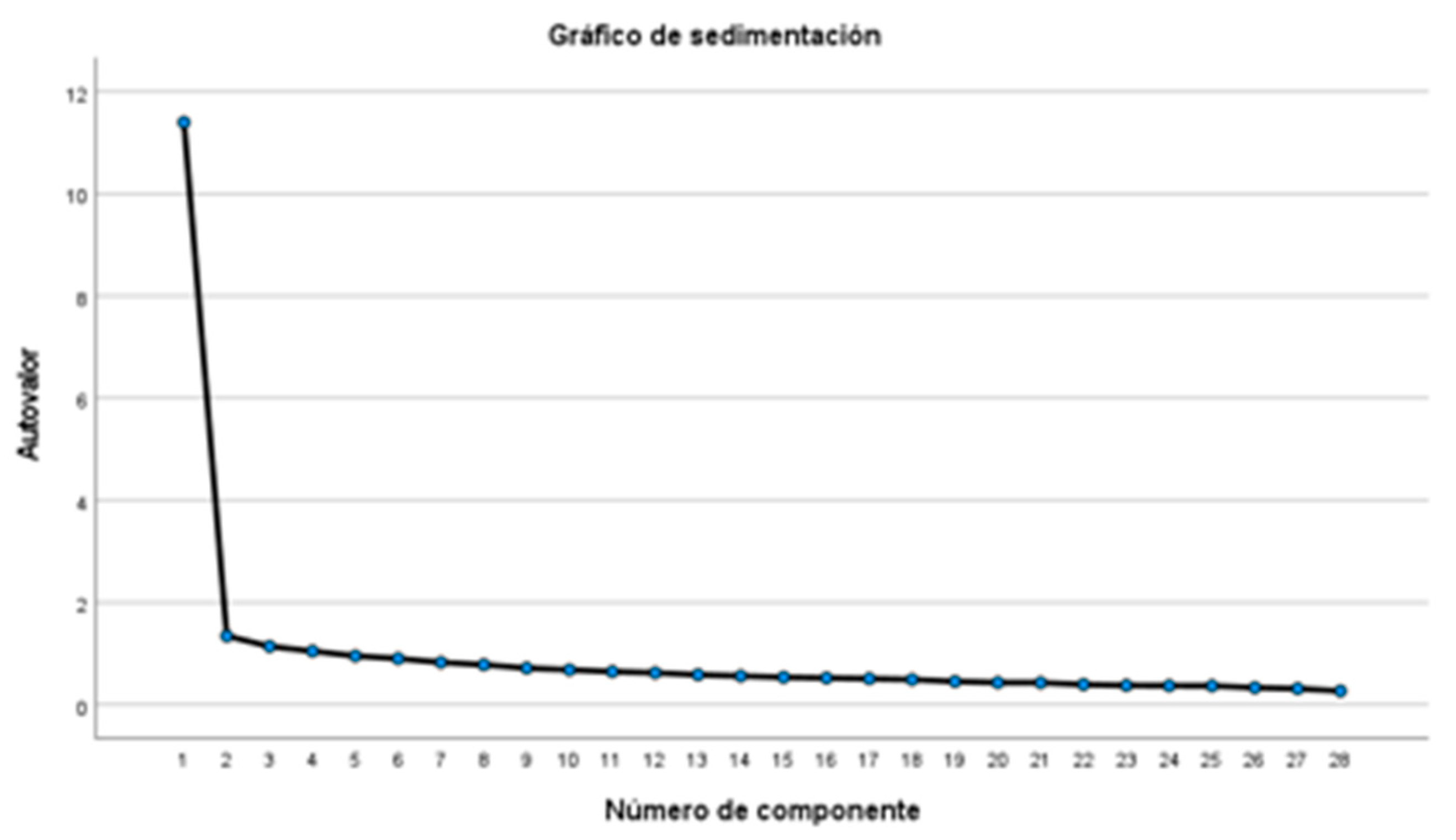
Figure 2.
Component graph in rotated space (3D).
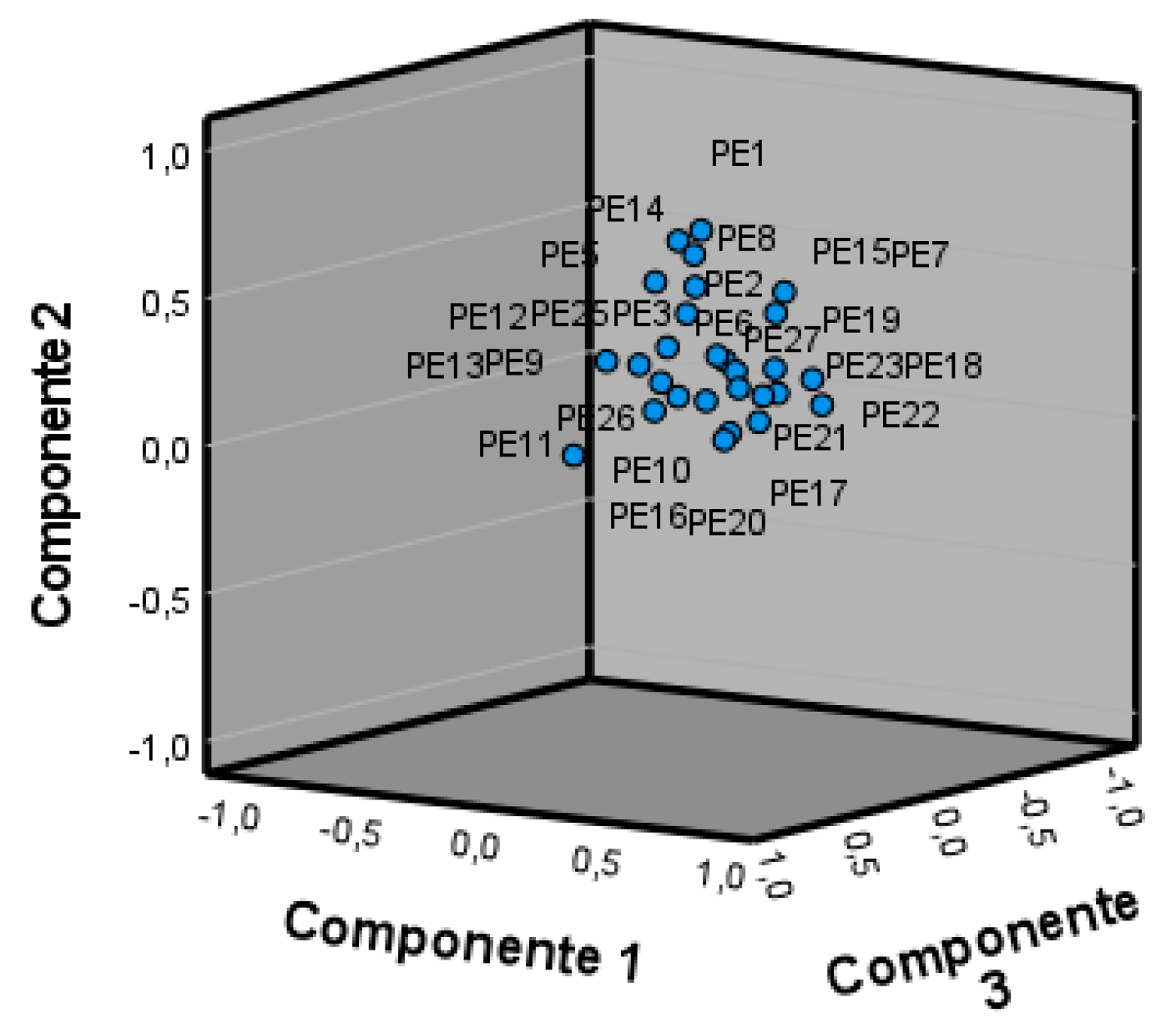
Figure 3.
Structural model for confirmatory factor analysis.
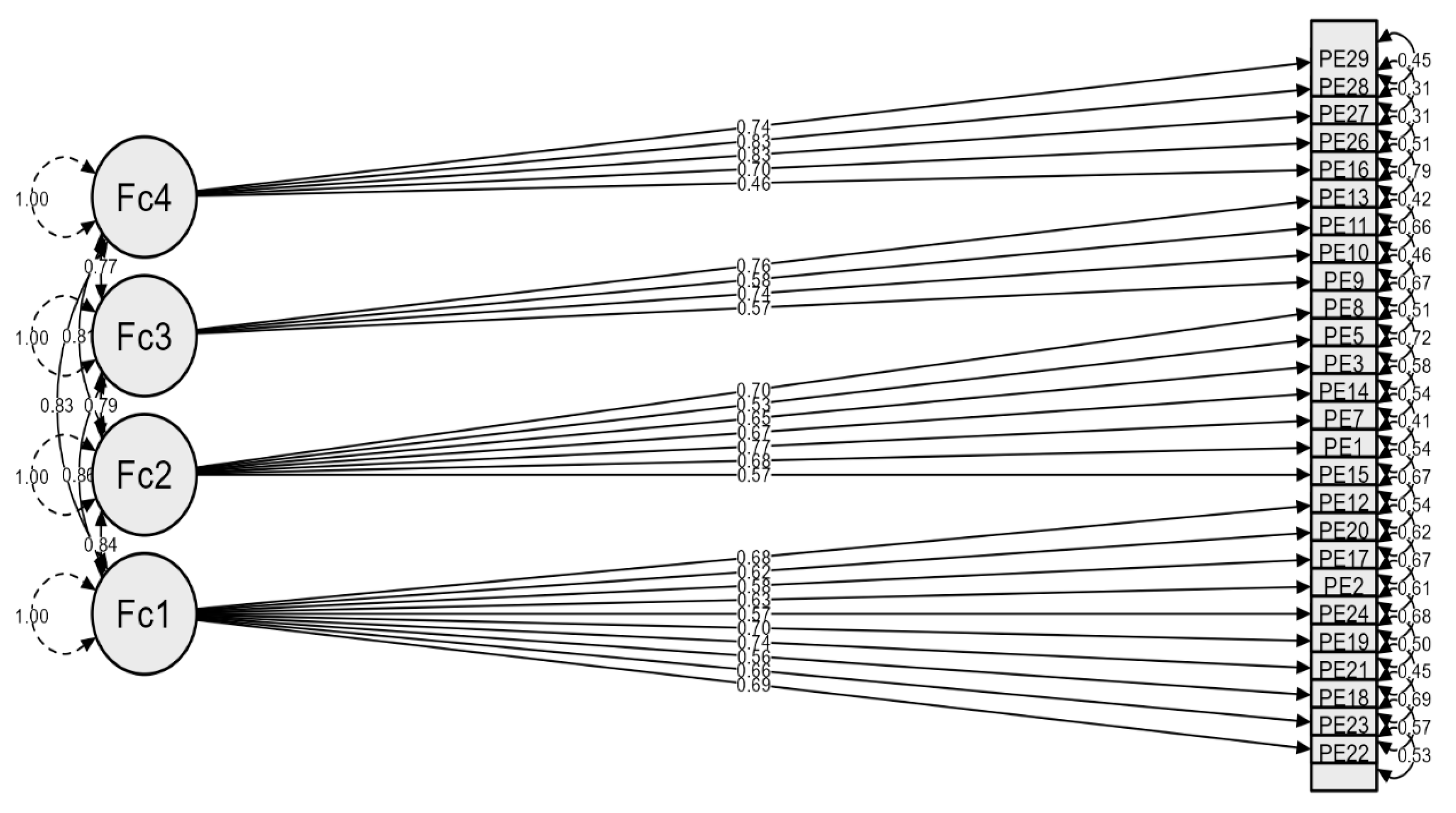

Table 1.
Basic descriptive data pertaining to employability thinking scale items.
| M | SD | V | A | K | |
|---|---|---|---|---|---|
| 1. I can communicate my viewpoint clearly and fluently | 4.72 | 1.20 | 1.44 | -0.927 | 0.517 |
| 2. I find it easy to listen and understand what others are saying | 5.01 | 1.09 | 1.20 | -1.311 | 1.660 |
| 3. I find it easy to resolve conflict with other people | 4.45 | 1.21 | 1.47 | -0.677 | 0.099 |
| 4. I can use technology effectively to communicate with others | 5.29 | 1.05 | 1.10 | -1.849 | 3.623 |
| 5. It is easy for me to obtain cooperation and support from others when I work in a team | 4.55 | 1.22 | 1.50 | -0.779 | 0.189 |
| 6. I am capable of searching for more information to improve my understanding of an issue | 4.87 | 1.13 | 1.29 | -0.956 | 0.486 |
| 7. I can adapt my ideas and opinions by clearly presenting them to the people who listen to me | 4.74 | 1.14 | 1.30 | -0.837 | 0.312 |
| 8. I can make decisions both in my life and work so that they are simpler | 4.84 | 1.09 | 1.18 | -0.883 | 0.546 |
| 9. I get ahead of problems in order to creatively resolve them | 4.18 | 1.33 | 1.77 | -0.419 | -0.456 |
| 10. I make sure to perform all necessary tasks when I want to learn something | 4.77 | 1.24 | 1.54 | -0.856 | 0.038 |
| 11. I like to know the most recent news about the subjects that interest me | 4.33 | 1.43 | 2.05 | -0.640 | -0.455 |
| 12. I am interested in developing myself as a person and improving my skills | 5.30 | 1.07 | 1.15 | -1.817 | 3.341 |
| 13. I accept and take on challenging goals with enthusiasm | 4.53 | 1.24 | 1.56 | -0.697 | -0.068 |
| 14. It is easy for me to share my ideas and opinions to convince others | 4.55 | 1.21 | 1.47 | -0.759 | 0.281 |
| 15. I like to present my ideas through simple language | 4.78 | 1.15 | 1.33 | -0.954 | 0.698 |
| 16. It is easy for me to quickly memorise information | 4.16 | 1.42 | 2.03 | -0.481 | -0.581 |
| 17. I consider a wide array of alternatives before making a decision | 4.48 | 1.24 | 1.54 | -0.662 | 0.013 |
| 18. I normally set realistic goals | 4.64 | 1.20 | 1.44 | -0.837 | 0.290 |
| 19. I am capable of making a plan that considers the resources I need | 4.74 | 1.11 | 1.23 | -0.868 | 0.565 |
| 20. It is easy for me to meet deadlines | 4.58 | 1.34 | 1.80 | -0.805 | -0.108 |
| 21. I am capable of establishing ordered priorities to achieve a goal | 4.67 | 1.21 | 1.46 | -0.774 | 0.098 |
| 22. I accept responsibility for my decisions and actions | 5.04 | 1.09 | 1.20 | -1.193 | 1.095 |
| 23. I act in an ethical way in my day-to-day | 4.81 | 1.12 | 1.25 | -0.827 | 0.318 |
| 24. I promote responsible behaviour towards the community and environment | 4.68 | 1.20 | 1.45 | -0.754 | 0.047 |
| 25. It is easy for me to motivate my peers to reach their goals | 4.66 | 1.19 | 1.43 | -0.789 | 0.246 |
| 26. I can understand numerical information and draw conclusions | 4.37 | 1.27 | 1.63 | -0.576 | -0.272 |
| 27. I can organise information and relate it | 4.68 | 1.16 | 1.34 | -0.792 | 0.311 |
| 28. I can analyse information and data rationally | 4.63 | 1.14 | 1.32 | -0.714 | 0.144 |
| 29. I can provide accurate explanations for the information and data that is presented to me | 4.53 | 1.15 | 1.33 | -0.670 | 0.256 |
Table 2.
Rotated factor matrix and factor loadings.
| F-1 | F-2 | F-3 | F-4 | Uniqueness | |
|---|---|---|---|---|---|
| I-22 | 0.913 | 0.380 | |||
| I-23 | 0.706 | 0.483 | |||
| I-18 | 0.700 | 0.564 | |||
| I-21 | 0.617 | 0.432 | |||
| I-19 | 0.572 | 0.464 | |||
| I-24 | 0.566 | 0.529 | |||
| I-17 | 0.555 | 0.598 | |||
| I-2 | 0.486 | 0.506 | |||
| I-20 | 0.483 | 0.557 | |||
| I-12 | 0.457 | 0.427 | |||
| I-6 | 0.421 | 0.547 | |||
| I-15 | 0.526 | 0.525 | |||
| I-1 | 0.855 | 0.396 | |||
| I-14 | 0.806 | 0.407 | |||
| I-7 | 0.712 | 0.369 | |||
| I-5 | 0.655 | 0.542 | |||
| I-8 | 0.553 | 0.467 | |||
| I-3 | 0.436 | 0.544 | |||
| I-11 | 0.925 | 0.376 | |||
| I-10 | 0.616 | 0.420 | |||
| I-13 | 0.538 | 0.413 | |||
| I-9 | 0.521 | 0.564 | |||
| I-25 | 0.425 | 0.587 | |||
| I-16 | 0.754 | 0.531 | |||
| I-26 | 0.685 | 0.390 | |||
| I-28 | 0.582 | 0.316 | |||
| I-27 | 0.568 | 0.323 | |||
| I-29 | 0.530 | 0.413 | |||
| Eigenvalues | 11.398 | 1.344 | 1.140 | 1.047 | - |
| % explained variance | 15.5% | 12.5% | 9.8% | 8.1% | 46.0% |
| Factorial determination index | 0.829 | 0.837 | 0.842 | 0.788 | - |
| Reliability | α = 0.873 ω = 0.875 |
α = 0.836 ω = 0.839 |
α = 0.750 ω = 0.754 |
α = 0.825 ω = 0.828 |
α = 0.940 ω = 0.943 |
Table 3.
Factor loadings produced through confirmatory factor analysis his is a table.
| Factor | Indicator | Estimate | Std. Error | z-value | p | Lower CI | Upper CI | Std. Est. (all) |
|---|---|---|---|---|---|---|---|---|
| Factor 1 | I-22 | 0.757 | 0.032 | 23.399 | < 0.001 | 0.693 | 0.820 | 0.689 |
| I-23 | 0.737 | 0.033 | 22.039 | < 0.001 | 0.672 | 0.803 | 0.658 | |
| I-18 | 0.668 | 0.037 | 17.888 | < 0.001 | 0.595 | 0.741 | 0.556 | |
| I-21 | 0.898 | 0.035 | 25.883 | < 0.001 | 0.830 | 0.966 | 0.741 | |
| I-19 | 0.783 | 0.032 | 24.156 | < 0.001 | 0.720 | 0.847 | 0.705 | |
| I-24 | 0.683 | 0.037 | 18.339 | < 0.001 | 0.610 | 0.756 | 0.568 | |
| I-2 | 0.689 | 0.033 | 20.753 | < 0.001 | 0.624 | 0.754 | 0.628 | |
| I-17 | 0.719 | 0.038 | 18.772 | < 0.001 | 0.644 | 0.794 | 0.578 | |
| I-20 | 0.833 | 0.041 | 20.432 | < 0.001 | 0.753 | 0.913 | 0.620 | |
| I-12 | 0.728 | 0.032 | 22.994 | < 0.001 | 0.666 | 0.790 | 0.679 | |
| Factor 2 | I-15 | 0.661 | 0.036 | 18.310 | < 0.001 | 0.590 | 0.731 | 0.573 |
| I-1 | 0.813 | 0.036 | 22.494 | < 0.001 | 0.742 | 0.883 | 0.676 | |
| I-7 | 0.879 | 0.033 | 26.863 | < 0.001 | 0.815 | 0.943 | 0.769 | |
| I-14 | 0.818 | 0.036 | 22.471 | < 0.001 | 0.747 | 0.890 | 0.675 | |
| I-3 | 0.784 | 0.037 | 21.225 | < 0.001 | 0.711 | 0.856 | 0.645 | |
| I-5 | 0.649 | 0.039 | 16.663 | < 0.001 | 0.573 | 0.726 | 0.529 | |
| I-8 | 0.764 | 0.032 | 23.686 | < 0.001 | 0.701 | 0.827 | 0.701 | |
| Factor 3 | I-9 | 0.760 | 0.042 | 17.892 | < 0.001 | 0.677 | 0.843 | 0.571 |
| I-10 | 0.914 | 0.037 | 24.639 | < 0.001 | 0.842 | 0.987 | 0.737 | |
| I-11 | 0.829 | 0.046 | 18.087 | < 0.001 | 0.739 | 0.919 | 0.579 | |
| I-13 | 0.954 | 0.037 | 25.966 | < 0.001 | 0.882 | 1.026 | 0.764 | |
| Factor 4 | I-16 | 0.655 | 0.046 | 14.276 | < 0.001 | 0.565 | 0.745 | 0.460 |
| I-26 | 0.892 | 0.038 | 23.624 | < 0.001 | 0.818 | 0.966 | 0.697 | |
| I-27 | 0.963 | 0.032 | 30.319 | < 0.001 | 0.901 | 1.025 | 0.830 | |
| I-28 | 0.955 | 0.031 | 30.357 | < 0.001 | 0.893 | 1.016 | 0.831 | |
| I-29 | 0.853 | 0.033 | 25.639 | < 0.001 | 0.788 | 0.919 | 0.740 |
Table 4.
Covariance between factors.
| Estimate | Std. Error | z-value | p | Lower CI | Upper CI | Std. Est | |||
|---|---|---|---|---|---|---|---|---|---|
| Factor 1 | ↔ | Factor 2 | 0.836 | 0.016 | 53.111 | < 0.001 | 0.805 | 0.867 | 0.836 |
| Factor 1 | ↔ | Factor 3 | 0.863 | 0.017 | 52.098 | < 0.001 | 0.831 | 0.896 | 0.863 |
| Factor 1 | ↔ | Factor 4 | 0.832 | 0.015 | 54.674 | < 0.001 | 0.802 | 0.861 | 0.832 |
| Factor 2 | ↔ | Factor 3 | 0.793 | 0.021 | 37.860 | < 0.001 | 0.752 | 0.834 | 0.793 |
| Factor 2 | ↔ | Factor 4 | 0.810 | 0.017 | 46.992 | < 0.001 | 0.776 | 0.844 | 0.810 |
| Factor 3 | ↔ | Factor 4 | 0.773 | 0.021 | 36.586 | < 0.001 | 0.731 | 0.814 | 0.773 |
Disclaimer/Publisher’s Note: The statements, opinions and data contained in all publications are solely those of the individual author(s) and contributor(s) and not of MDPI and/or the editor(s). MDPI and/or the editor(s) disclaim responsibility for any injury to people or property resulting from any ideas, methods, instructions or products referred to in the content. |
© 2025 by the authors. Licensee MDPI, Basel, Switzerland. This article is an open access article distributed under the terms and conditions of the Creative Commons Attribution (CC BY) license (http://creativecommons.org/licenses/by/4.0/).
Copyright: This open access article is published under a Creative Commons CC BY 4.0 license, which permit the free download, distribution, and reuse, provided that the author and preprint are cited in any reuse.


