

Submitted:
24 April 2025
Posted:
25 April 2025
You are already at the latest version
Abstract
With increasing wildfire impacts on communities in high-latitude areas, a call for community involvement in wildfire risk reduction has been widely promoted. Correspondingly, a ‘community-based’ approach has been advocated in research understanding wildfire, with various interpretations of ‘community’ evident in this work. This paper identifies and characterises how ‘community’ has been conceptualised and operationalised in research on wildfire risk reduction in high-latitude areas (defined as areas above 50°N). We conducted a scoping review to identify and characterise the different interpretations of ‘community’ in wildfire research from six dimensions: research background, community role and function, social inclusion and exclusion, participatory approach, power relations, and research innovation and reflexivity. We find that the use of ‘community’ has expanded beyond its geographical scale in wildfire research, with increasing recognition of community heterogeneity. Recent research has increasingly focused on, and worked with, Indigenous Nations, as well as diverse community attributes. However, ambiguity over what ‘community’ means exists in wildfire research, with such work limited to certain community attributes with a neglect of social exclusion and power hierarchy within community participation. We therefore suggest a critical reflection of community-based approach in future wildfire research and emphasise community heterogeneity in addressing the impacts of climate change.
Keywords:
wildfires
; disaster risk reduction
; community
; community-based approach
; high latitude areas
1. Introduction
The increase in the frequency, severity, and duration of wildfires has caused significant loss and damages across North America, Australia, and Arctic regions in recent years due to the impacts of climate change [1,2]. In a 2°C warming scenario, the global area burnt by wildfires is projected to further increase by 35% (medium confidence) [1]. The impacts of wildfires not only directly threaten people and lead to economic loss, such as livelihoods and landscape changes in fire-prone areas, but also indirectly affect the health and welfare of distant communities due to smoke [3,4]. High-latitude areas—defined here as areas above 50°N—have experienced an increase in weather-based fire and are projected to experience the largest increase in fire season length by the end of this century [5]. Recent wildfires have demonstrated the increasing severity of their impacts on communities in high-latitude regions. In Canada, for example, wildfires in the Northwest Territories in 2023 resulted in 20,000 residents in Yellowknife being evacuated [6], while the Swan Lake fire in 2019 became the most expensive in Alaska’s history, causing around US$46 million of damage [7]. In the context of wildfires, collaborative and adaptive governance across a broad range of actors and scales has been advanced as a priority way to reduce risks [8].
Broadly considering the increasing risks of disasters, including those linked to wildfires, the Sendai Framework for Disaster Risk Reduction (SFDRR) [9] has emphasised a shared responsibility in disaster risk reduction with central governments and relevant stakeholders as one of its guiding principles and called for the empowerment of local authorities and communities [9]. Correspondingly, a ‘community-based’ approach, also referred to as locally-led, has been widely advocated in research seeking to document and understand local priorities, needs, knowledge, and capacities in an effort to reduce disaster risk [10,11]. Such an approach promotes community participation and empowerment in the design, implementation, and analysis stages of research [12].
With the growing popularity of community-based research, ‘community’ has been interpreted in many different and sometimes conflicting ways. The idea of using ‘community’ terminology and framing has also been questioned by some, with critiques focusing on who gets to define ‘community’, the scope and meanings of ‘community’, and a need for clarity over how ‘community-based’ work is conducted [13,14]. The initial assumption that a community is a static homogenous group has been increasingly challenged by the reality of social differences in identities, conflicting values, and resource priorities [15]. This conception has been critiqued for its neglect of heterogeneity inside and its engagement with outsiders [16]. We distinguish four conceptions of ‘community’ commonly applied in environmental change research in recent years: (a) solely place-based community, (b) an integration of personal social networks, (c) a group of people with a shared social identity, and (d) a collaboration for shared interests [13,17,18,19]. These conceptions illustrate that community is not limited to one nature, rather on different scales by place, network, interests, and identities [16]. Correspondingly, the community is embedded with diversity, difference, and disagreement [13,20].
The conception of ‘community’ further poses the question of social inclusion and exclusion, referring to who is included and who is excluded [17]. Community heterogeneity, including division, conflicts, and oppression, for example, can be downplayed if oversimplistic conceptions of community are applied in research [13]. Under-represented populations, such as marginalised genders, ethnic, and socio-economic groups, can be less motivated to participate in community and hidden or excluded from community-based research. Simply enforcing local collective actions may submerge marginal groups’ voices, and increase homogeneity, further strengthening existing unequal power distribution [21,22]. Another concern about the community-based approach in the context of high-latitude areas is the potential of research fatigue due to tokenistic community participation or power hierarchies among right-holders [23]. The enforcement of being a community can make actors with different interests seem to speak the same language but interpret the same information differently, which may cause a failure to achieve disaster risk reduction at the local level [16].
Given the background of increasing wildfire risk, we conducted a scoping review on different uses of ‘community’ in wildfire research published over the last decade in high latitude areas. We review the research questions that have been explored, how the ‘community’ has been interpreted, then summarise the complementarities and shortcomings of different community conceptions. We consider the potential consequences of applying the label ‘community’ to particular peoples and regions, which can unintentionally lead to further social exclusion and power hierarchies inside the community.
2. Materials and Methods
2.1. Scoping Review Method
We used the ROSES systematic mapping approach to identify in-scope published journal articles for review (Figure 1). We conducted the literature search on Scopus in June 2024 using the keywords (“community” OR “community-based”) AND (wildfire OR “wildland fire” OR bushfire OR “brush fire” OR megafire OR “forest fire”). We deployed a multi-stage procedure based on the inclusion and exclusion criteria (Table 1) to identify relevant in-scope articles. We begin with a title, keyword, and abstract search in Scopus. This search was limited to published journal articles, written in English and published between 2015 until 23rd June 2024. We initially filtered out articles in the fields of “Veterinary, Immunology and Microbiology, Materials Science, Chemistry, Chemical Engineering, Pharmacology, Toxicology and Pharmaceutics, Neuroscience, Medicine, Physics and Astronomy, and Biochemistry, Genetics and Molecular Biology” in Scopus, and 2,822 articles were retrieved. EPPI software was used to help manage in-scope literature, including finding duplicates, literature screening, and analysis. Four duplicates were found automatically or after title and abstract screening, 13 articles were inaccessible, leaving 110 articles subject to full-text review, after which 31 articles were retained for analysis (Figure 1).
2.2. Evaluation Framework and Data Analysis
To characterise how ‘community’ has been approached in research on wildfire risk reduction in high-latitude areas, we developed a framework based on Aiken et al.’s [24] critical approach to studying ‘community’ in climate change research. It includes consideration of diverse meanings of ‘community’, recognition of social differences in community action, alertness to community tension with powerful actors both within and outside, including within participatory approaches and critical thinking of the community-based approach itself. We developed this approach across several key dimensions: community role and function, social inclusion and exclusion, participatory approach, power relations, and research innovation and reflexivity. We also draw upon other academic literature that highlights the complexity and heterogeneity of communities, their involvement in research, and the power dynamics between communities and researchers [13,19,22,25,26]. Guided by this work, as well as Aiken et al. [24], we defined and established evaluation attributes for each dimension. Additionally, we added one more dimension – research background – to summarise the research mainstream over the last decade. Together, these six dimensions form the basis of our evaluation framework for understanding ‘community’ in the context of wildfire research (Table 2).
We applied this evaluation framework to review the common conceptions of ‘community’ applied within wildfire research and the attributes studied in the context of wildfires in high latitude areas. We examined the common research practices of representing ‘community’ and the research focus of a community-based approach for wildfire research. We classify the interpretation level(s) of ‘community’ in the literature reviewed and the participation levels of community and other stakeholders in the research along a series of codes, referred to by community participation levels in the research from David-Chavez and Gavin [12] and the cyber resilience maturity tiers from the National Institute of Standards and Technology [27] (Table 3). We coded the interpretation levels of ‘community’ from partial in which lack of interpretation, up to consistent in which a clear and consistent interpretation in the research (Table 3(1)). A similar coding category was also used in classifying the participation levels of community and other stakeholders in the research from partial in which at most an assigned task with no decision-making power in the research, up to adaptive in which a primary role over the research process (Table 3(2)).
Apart from these categorical codes, a thematic analysis was conducted for inductive and qualitative questions to summarise the key findings in interpreting ‘community’ and suggest research tendencies.
3. Results
3.1. Publication Trends
All in-scope studies (n=31) are published in a wide range of journals related to wildfire. The International Journal of Disaster Risk Reduction (n=7) takes a primary role in publishing community-based research about wildfire risk reduction. Natural Hazards (n=3), International Journal of Disaster Risk Science (n=2), and Sustainable Development (n=2) are the other three journals that cover a certain amount of relevant research.
Regarding geographical coverage, our results are consistent with the global research tendency for wildfires that the US, Australia, and Canada are the main three countries in the social science research of wildfires [37]. Canada (23 out of 31) is the most prominent country for community-based wildfire research in high-latitude areas. Alaska (US) (n=6), Russia (n=3), Sweden (n=2), and Norway (n=1) are the other countries for related wildfire research. Particularly, most of the research in Canada is conducted in western and southern areas, including British Columbia (n=7), Alberta (n=7), Saskatchewan (n=5), and Ontario (n=4). The geographical locations of focus include rural (n=19) and urban areas (n=3), Indigenous land (n=4), the wildland-urban interface (WUI) (n=1), or Island (n=1).
Furthermore, we categorise the research aims and questions in the included articles: 28 out of 31 studies fit with the disaster risk reduction field, the other 3 fit into the broader climate change adaptation field. Based on the research questions, the topics include the lived experience of wildfire (n=12); wildfire governance management (n=5); risk perception and awareness (n=5); community practice and resilience (n=6); wildfire risk mapping (n=3). Among all studies, there has been an emerging research tendency of including Indigenous Nations’ perspectives in wildfires (8 out of 31), with these studies mainly focusing on Indigenous Nations’ evacuation experience [38,39], the interpretation of fires and fire risks [40,41,42,43], and community capacity for wildfire risk reduction [44,45].
3.2. Community Role and Function
In our examination of how ‘community’ has been interpreted and the way ‘community’ has been invoked in wildfire research; 11 out of 31 studies partially interpret ‘community’, and 13 studies have an informed level of interpretation. Only 7 studies give clear and consistent interpretation of ‘community’. The common confusions of ‘community’ conception in the research are: 1) the conflation of ‘community’ with other terms, such as neighbourhood [46,47], settlement [42,48], geographical location [44,49,50,51], municipality [52], First Nation land [39], or private sector [53]; 2) over-simplification of ‘community’ with focus on one specific dimension, such as a single social identity [29,38,40,42,54] or location [41,55,56,57,58]; and 3) neglect to define or characterise ‘community’ when focusing on community resilience [53].
The concept of ‘community’ is applied in different ways depending on the nature of the research being conducted [13]. Most community-based wildfire studies do not solely depend on a geographical boundary to characterise ‘community’. Rather, ‘community’ has been advanced to include understanding of social identity or collective interest and common practice. Common conceptions of ‘community’ in wildfire studies include social identity-focused community (n=16), collective interest and common practice-focused community (n=10), and solely place-based community (n=5). Social identity-based community has been commonly applied to understanding various groups’ lives related to wildfires, including their lived experience of wildfire (n=9) and risk perception and awareness (n=3), with a particular focus on understanding Indigenous Nations’ lived experience of wildfire (n=6) [38,39,40,41,42,43], while less focus has been given to wildfire governance management (n=1). Collective interest and common practice-focused community conceptions are deployed in a more flexible manner to cover most themes, including understanding wildfire governance management systems (n=3) and community resilience for wildfires (n=3), risk perception and awareness (n=3), and the lived experience of wildfire (n=3).
3.3. Social Inclusion and Exclusion
We summarised all community attributes that have been applied in interpreting ‘community’ in the literature reviewed and clustered them into three categories: 1) community demography: defines ‘community’ through demography elements, including “race/ethnicity (Indigenous Nations)”, “gender”, and “age”, as well as others, including residency, education, employment status, income level, family size, health, and marital status; 2) the lived experience of wildfire: defines ‘community’ as a group of people by either a shared experience, such as evacuation decisions and wildfire practices, or their professional involvement in wildfire risk management; 3) location-based information: defines ‘community’ by physical geographical information, including flammability hazard map, land cover data, and road network.
To develop further understanding of how different community attributes contribute to conceptual understanding of ‘community’, we reviewed attributes in relation to community conceptions. We find 14 studies focus on social identity, primarily defined by one or more demographic attributes, such as gender, age and ethnicity, as a way of determining the scale of ‘community’, with other community attributes and their interactions with these demographic characteristics used to reveal the heterogeneity within the community. Two other studies with a social identity focus define the scale of ‘community’ by the lived experience of wildfires using professional work experience and social media data to do so. In contrast, collective interest and common practice-focused community primarily relies on people’s lived experience of wildfires. For example, six studies conceptualise ‘community’ by research participants’ living experience and work experience about wildfires. The other three studies are based on the demographic attributes, including ethnicity and occupation. For the remaining five studies based on the solely place-based community conception, three of them interpret ‘community’ by the location-based information to define the community scale, including road network, land cover scale and geographical location. The other two define ‘community’ driven by people’s lived experience of wildfires based on the geographical location.
The inclusion of multiple community attributes and their interactions in the research methodology of reviewed studies reflects an acknowledgement of community heterogeneity. When coding for the levels of recognition of community heterogeneity based on the extent of research consideration of diverse community attributes and their interactions, 16 out of 31 studies were found to be at the partial level, indicating a lack of full recognition of community heterogeneity. Additionally, 9 out of 31 studies were at the informed level, recognising community heterogeneity but with inconsistent countermeasures. Only 6 studies consistently recognised community heterogeneity and adapted measures to incorporate various community attributes. Common research practices that include multiple community attributes in the design, implementation, and discussion stages of reviewed studies, include the use of (1) sample distributions based on various community attributes [46,47]; (2) inductive methods to identify social identities inside the community [58,59]; (3) quantitative-based research methodologies to include qualitative social dimension(s) [55]; and (4) awareness of research reflexivity in considering social inclusion and exclusion [51]. For example, Walker et al. [51,59] applied intersectionality theory to understand the heterogeneous lived experiences of wildfires within and across various social identity attributes and correlated power relations, describing the extent of physical and mental impacts Indigenous Nations experienced in wildfires due to their long-term neglected position [51]. This work indicates a need to reposition ‘community’ by challenging the existing racialised and gendered power discourse [51]. We also identified common gaps in interpreting community heterogeneity methodologically, including (1) limited consideration of social inclusion and exclusion criteria in representing ‘community’; (2) inadequate reflection of community heterogeneity in research design, implementation, analysis, and discussion; (3) especially in research focusing on wildfire risk mapping, ‘community’ only serving as a reference instead of a subject.
3.4. Power Relations
A community-based approach has been critiqued for either implicit neglect or misuse of power hierarchies inside and outside the community, where questions are raised about whether the inequitable research relationship can benefit the community [60]. To explore how a community-based approach deals with the power relations inside and outside the community, we started by examining positionality in interpreting the ‘community’ and who represented ‘community’ in the reviewed studies. With a focus on academic journal articles, all reviewed studies initially stand on an outside academic position to define the scope of ‘community’. Adopting such an etic perspective to conceptualise ‘community’ can simplify the research design process for researchers. However, reliance on an outside position risks overlooking internal hierarchies, social frictions, and the nuanced dynamics within communities, potentially leading to a misrepresentation of community interests [13]. Yet a community-based approach can equally offer an opportunity to identify and renegotiate the balance of power [61]. 20 out of 31 reviewed studies give an additional standpoint of interpreting ‘community’ beyond its academic understanding. For example, eight studies reflect the term ‘community’ and its meaning from a policy standpoint in the research procedure. The other twelve studies include an insider standpoint to define the scope of ‘community’ by consulting ‘community’ themselves in the research procedure, including community elites and local residents.
Another perspective on power relations in relation to community-based approach is to examine how the ‘community’ has been represented. The sample selection to represent ‘community’ in research reflects a result of competing dialogues about power relations among different groupings [62]. Some groups may have more power to earn their position and stand for their opinions in driving the research discussion and results, while others even may not be able to get a place in the research to represent their diverse interests due to potential social exclusion or marginalisation. We summarise the community represented groups among all reviewed studies. The most commonly represented group are local residents (n=24). Other commonly represented groups are community elites (n=8), such as gatekeepers, community officers, or key informants, and officials from multi-level governments and fire divisions (n=8) who have knowledge related to wildfire or climate change adaptation, NGO representatives (n=2) and the private sector (n=2). Nine out of 31 studies include representatives of multiple groups in the research and recognise the potential power hierarchies driven by community representativeness in the research [41,44,45,51,52,55,63,64,65].
Besides the community group that is represented, who else participates in research and their relationship with ‘community’ can reveal the power relations inside and outside of the community and drive the research understanding of ‘community’. Common stakeholders in the studies include official agencies (n=9), community elites (n=8), private sector organisations (n=3), local residents (n=1), or NGO representatives (n=1). Stakeholders participated in the reviewed studies by (1) assisting in making connections between ‘community’ and researchers (n=9); (2) being a member of the research community advisory committee (n=3); (3) advising and providing relevant information (advice or data resources) about the community (n=3), and (4) reviewing the preliminary analysis results (n=2).
3.5. Participatory Approach
Community participation reveals the way ‘community’ is involved in the research. Community-based research can involve the community in all stages, from deciding the research topic, designing the methodology, implementing data collection and analysis, to disseminating the research results [61]. Most studies keep a passive relationship with the community (13 out of 31), only engaging communities to perform data collection tasks, such as interviews and surveys. There is also an increasing tendency of improving community involvement in the research. For example, six studies included a consultation with the community, such as community suggestions on research design, a community advisory committee setup, or community assistant assignation. Eight studies built up a working collaboration with the community. In addition to the usual practices of consulting with the community, preliminary results were commonly shared with them for review to strengthen this collaboration. The study conducted by Bélisle et al. [41], for instance, was able to make the community drive the study, helping to build a strong partnership between academic researchers and the community. However, three studies reported no direct interaction with the community.
We also found that the extent of community participation in the research varies with different conceptual understandings of ‘community’. Studies with a focus on collective interest and common practices involve the community either by performing a task for the research (n=7) or being consulted in the research process (n=3). While studies with a social identity-focused community understanding show more willingness to involve the community. Most of them are able to collaborate or consult with the community to a different extent beyond the requested data collection activity (9 out of 16), while the other 7 studies are still limited to asking communities for a task or excluding community involvement in the research. This difference can be rooted in the fact that most of the social identity-focused studies focus on the wildfire impacts on different social groups’ lived experiences of wildfires, with a wider recognition of community heterogeneity in nature, while the collective interest and common practice-focused community studies focus on how the wildfire has been managed and prepared.
3.6. Research Innovation and Reflexivity
Awareness of research self-reflexivity in community-based research refers to the ability to acknowledge and deal with the potential issues and limitations of community participation in the research. We found a lack of consistent critical reflection in the studies reviewed. 20 out of 31 studies lack awareness of reviewing their community-based approaches in design, implementation, and analysis; another 9 studies gave inadequate self-reflection of the community-based approach. The remaining two studies have consistent reviews on their community-based approaches from sampling methods, community participation level, data collection tools, and result significance [55,66]. Commonly reported research limitations are: (1) community representativeness bias; (2) geographical scale limitation; (3) inconsistent community participation; (4) community heterogeneity ignorance; (5) research unsuitability to local background; and (6) limitations in data collection strategy.
We also summarised the research recommendations of community-based approaches made in the analysed papers and categorised them into four mainstream categories: (1) suggestion to understand community practices and behaviours for wildfire risk reduction; (2) emphasis on the necessity of recognising and involving the community in research of wildfire risk reduction; (3) recommendation to increase understanding of wildfire governance changes under the impacts of climate change; (4) consideration of community heterogeneity and inclusiveness in community-based wildfire research.
4. Discussion and Conclusions
The use of a community-based approach within wildfire risk management research is an acknowledgement of community rights and knowledge (Dempsey, 2010). The interpretation of diverse community attributes, as well as the power relations inside and outside of the community, shape the complexity of involving ‘community’ in research and determine how participation takes place. This paper conducts a scoping review of the different interpretations of ‘community’ in wildfire research in high latitude regions. In this section we further contextualise and discuss the results in-light of the broader literature and explore how the term ‘community’ accompanies the set of assumptions generated by the research community that can unintentionally reinforce potential issues.
4.1. The Ambiguity of ‘Community’
The distribution of various conceptions of community demonstrates that there is no consistent way to conceptualise ‘community’ in research. From our results, a transformation of ‘community’ from solely place-based understanding to a focus on its inner heterogeneity has been demonstrated in wildfire research. ‘Community’ is thus not just constrained to a static and unchanging formation by geographical location and social characteristics [67]. Rather, it seen as reflecting on people’s living in a reality given time, spatial, and subjective scales [67]. The main conceptual understanding of ‘community’ in wildfire research reviewed here is driven by social identity and collective interest and common practice. The distribution of various community conceptions demonstrates that there is no best way to conceptualise ‘community’ in research. A more flexible conceptual understanding of ‘community’ based on the problem being addressed opens space for the expression of views from all interested in the community-based approach [22].
Various community attributes have been studied in wildfire research to further reveal the heterogeneity of ‘community’. This finding indicates a transition to include diverse community attributes and conceptualise the ‘community’ from a social and historical perspective, as well as the innovation in community participation patterns. However, the oversimplification of ‘community’ is still evident, with most studies that we reviewed primarily focusing on certain demographic attributes such as ethnicity, gender and age, or involving community key informants who are in certain powerful positions. This finding is consistent with research more generally, where it has been argued that there is a simplification of the social and historical dimensions of wildfires and marginalisation of whom is involved in research as representative of the community [69]. This issue can expose mismatches between the external imagination of ‘community’, the internal self-reflection of ‘community’ themselves, and the corresponding actual complex relationship that exist on the ground [16].
With the flexible community conception as well as the heterogeneity inside the community, an ambiguity exists in understanding ‘community’ and its application in wildfire research. We argue that the norm of ‘community’ for wildfire research has been accompanied by a set of assumptions from researchers’ perspectives that may not fully reflect the complexities of local backgrounds in high latitude areas. The simple assumption of ‘community’ as a homogenous group can no longer meet the diversity of community-based research in the last decade. This ambiguity can bring disparate interpretations of ‘community’ by research beneficiaries in understanding wildfire risk reduction at the community level [16]. It also complicates the boundaries and scale of collaborating with the community in research [62]. Hasty treatment of interpreting ‘community’ based on preconceived research expectations and stereotyping can lead to research bias regarding equity, trust and communication [70]. Few studies, for instance, have explored how social complexity integrated from social characteristics, history, culture, and regional settings influences community capacity for wildfire risk reduction [71]. The exploration of ‘community’ needs to go beyond academic practice, and researchers need to work on a more nuanced and dynamic understanding of ‘community’ and pay extra attention to these when practising a community-based approach [13]. Further research is needed to tackle the interaction between various community attributes and reveal potential exclusion when selecting ‘community’ representatives.
4.2. Indigenous Voices in Research
A community-based approach offers the possibility to extend the focus of research from the western-dominant scientific knowledge to incorporate other forms of knowledge [22]. There has been an emerging tendency in research over the last decade of incorporating Indigenous worldviews of fires, ecosystems, and humans and respecting Indigenous rights for climate change adaptation. Indigenous Nations are identified as highly susceptible globally to climate change due to socio-economic marginalisation and land dispossession, along with habitation is areas undergoing rapid warming [72]. In high-latitude areas, the understanding of ‘community’ for Indigenous Nations is linked with development and colonial history [73]. For Indigenous Nations, fire is not just a physical phenomenon but is seen as a living, dynamic force that plays a crucial role in their way of life and their connection to the land. According to Christianson et al. [74], fire is integral to Indigenous livelihoods and helps maintain and strengthen relationships with the land. Additionally, as noted by Vinokurova et al. [42], fire holds unique spiritual and moral significance for Indigenous Nations, embodying deep cultural, spiritual, and ethical values. Indigenous Nations have managed their nature, land, and resources by fire for thousands of years. Such cultural practices surrounding fire are different from the western perspective on prescribed burning and lie in the complex social and cultural dynamics beyond professional wildfire risk management [67]. A research tendency to acknowledge and address the under-representation of Indigenous Nations in wildfires is a critical step of knowledge reconciliation and research collaboration between researchers and Indigenous communities [41]. Future wildfire research can pay more attention to examining the reality of various social groups, as well as the historical, political, and territorial understanding of fire, land, and forest [69].
4.3. A Future of Community Shaping: A Sense of Sharing
This review elaborates on how the concept of ‘community’ and the community-based approach assists in exploring wildfire risk reduction. The initial motivation of involving ‘community’ in research reflects a need for grassroots collaboration, as well as an expectation to rebalance the roles and responsibilities of wildfire risk reduction by empowering communities. From our results, the starting point of choosing ‘community’ in the approach should be equipped with deliberative consideration in research design and implementation, instead of superficially pursuing a prevailing norm itself [13]. The wildfires prompt a sense of collective mobilisation to learn and prepare for the wildfires, which contributes to a format of ‘community’ centred by locality, social identity, and collective interests [68]. The community is expected to play the same important role as other key actors to address the increasing wildfire risk [75]. With the research recommendation of involving the community and recognising community heterogeneity in wildfire research, simply focusing on the social demographic elements in the methodology and analysis is insufficient to envisage the implications of social inclusion and exclusion in the wildfire study [37]. A multi-faceted approach is needed to explore values in the community heterogeneity [59]. We encourage a transit of community position from being passive to an active actor in the research to contribute to the knowledge of wildfire risk reduction. It can give a bottom-up understanding of wildfire risk reduction beyond the inherent central governmentalized or academic-led mindset.
Author Contributions
F.D.: conceptualisation, methodology, investigation, writing – original draft, writing – reviewing and editing; J.D.F.: conceptualisation, methodology, writing-reviewing and editing, supervision; S.M.S: conceptualisation, methodology, writing-reviewing and editing, supervision.
Funding
This research received no external funding
Institutional Review Board Statement
Not applicable.
Data Availability Statement
No new data were created or analysed in this study. Data sharing is not applicable to this article.
Conflicts of Interest
The authors declare no conflicts of interest.
References
- IPCC. Climate Change 2022: Impacts, Adaptation and Vulnerability Working Group II Contribution to the Sixth Assessment Report of the Intergovernmental Panel on Climate Change; Cambridge University Press: UK and New York, NY, USA, 2022. [Google Scholar]
- Park, C.Y.; Takahashi, K.; Fujimori, S.; Jansakoo, T.; Burton, C.; Huang, H.; Kou-Giesbrecht, S.; Reyer, C.P.O.; Mengel, M.; Burke, E.; et al. Attributing human mortality from fire PM2.5 to climate change. Nature Climate Change 2024, 14, 1193–1200. [Google Scholar] [CrossRef]
- Dodd, W.; Scott, P.; Howard, C.; Scott, C.; Rose, C.; Cunsolo, A.; Orbinski, J. Lived experience of a record wildfire season in the Northwest Territories, Canada. Canadian Journal of Public Health 2018, 109, 327–337. [Google Scholar] [CrossRef]
- Villaverde Canosa, I.; Ford, J.; Paavola, J.; Burnasheva, D. Community Risk and Resilience to Wildfires: Rethinking the Complex Human–Climate–Fire Relationship in High-Latitude Regions. Sustainability 2024, 16, 957. [Google Scholar] [CrossRef]
- Flannigan, M.; Cantin, A.S.; de Groot, W.J.; Wotton, M.; Newbery, A.; Gowman, L.M. Global wildland fire season severity in the 21st century. Forest Ecology and Management 2013, 294, 54–61. [Google Scholar] [CrossRef]
- The Guardian. ‘Real threat to city’: Yellowknife in Canada evacuates as wildfire nears. 2023.
- Hollander, Z. AK’s Swan Lake Fire Tops 2019 Wildfires at $46M. Alaska Dispatch New 2019.
- Miller, B.A.; Yung, L.; Wyborn, C.; Essen, M.; Gray, B.; Williams, D.R. Re-Envisioning Wildland Fire Governance: Addressing the Transboundary, Uncertain, and Contested Aspects of Wildfire. Fire 2022, 5, 49. [Google Scholar] [CrossRef]
- UNDRR. Sendai Framework for Disaster Risk Reduction 2015 - 2030; The United Nations Office for Disaster Risk Reduction: Switzerland, 10 Feburary 2015; p. 32. [Google Scholar]
- Reid, H.; Alam, M.; Berger, R.; Cannon, T.; Huq, S.; Milligan, A. Community-based adaptation to climate change: an overview. In Participatory Learning and Action, 60 ed.; Holly Ashley, N.K., and Angela Milligan, Ed.; 2009; p. 24.
- Rahman, M.F.; Falzon, D.; Robinson, S.-a.; Kuhl, L.; Westoby, R.; Omukuti, J.; Schipper, E.L.F.; McNamara, K.E.; Resurrección, B.P.; Mfitumukiza, D.; et al. Locally led adaptation: Promise, pitfalls, and possibilities. Ambio 2023, 52, 1543–1557. [Google Scholar] [CrossRef] [PubMed]
- David-Chavez, D.M.; Gavin, M.C. A global assessment of Indigenous community engagement in climate research. Environmental research letters 2018, 13. [Google Scholar] [CrossRef]
- Titz, A.; Cannon, T.; Krüger, F. Uncovering ‘Community’: Challenging an Elusive Concept in Development and Disaster Related Work. Societies 2018, 8, 71. [Google Scholar] [CrossRef]
- Burkett, I. Traversing the swampy terrain of postmodern communities: Towards theoretical revisionings of community development. European journal of social work 2001, 4, 233–246. [Google Scholar] [CrossRef]
- Leach, M.; Mearns, R.; Scoones, I. Environmental Entitlements: Dynamics and Institutions in Community-Based Natural Resource Management. World Development 1999, 27, 225–247. [Google Scholar] [CrossRef]
- Wilkinson, A.; Parker, M.; Martineau, F.; Leach, M. Engaging ‘communities’: anthropological insights from the West African Ebola epidemic. Philosophical Transactions of the Royal Society B: Biological Sciences 2017, 372, 20160305. [Google Scholar] [CrossRef]
- Mulligan, M.; Steele, W.; Rickards, L.; Fünfgeld, H. Keywords in planning: what do we mean by ‘community resilience’? International planning studies 2016, 21, 348–361. [Google Scholar] [CrossRef]
- Paveglio, T.B.; Nielsen-Pincus, M.; Abrams, J.; Moseley, C. Advancing characterization of social diversity in the wildland-urban interface: An indicator approach for wildfire management. Landscape and Urban Planning 2017, 160, 115–126. [Google Scholar] [CrossRef]
- Räsänen, A.; Lein, H.; Bird, D.; Setten, G. Conceptualizing community in disaster risk management. International Journal of Disaster Risk Reduction 2020, 45, 101485. [Google Scholar] [CrossRef]
- Panelli, R.; Welch, R. Why Community? Reading Difference and Singularity with Community. Environment and Planning A: Economy and Space 2005, 37, 1589–1611. [Google Scholar] [CrossRef]
- Defilippis, J.; Fisher, R.; Shragge, E. Neither Romance Nor Regulation: Re-evaluating Community. International journal of urban and regional research 2006, 30, 673–689. [Google Scholar] [CrossRef]
- Lane, M.B.; McDonald, G. Community-based Environmental Planning: Operational Dilemmas, Planning Principles and Possible Remedies. Journal of environmental planning and management 2005, 48, 709–731. [Google Scholar] [CrossRef]
- Ford, J.D.; Stephenson, E.; Cunsolo Willox, A.; Edge, V.; Farahbakhsh, K.; Furgal, C.; Harper, S.; Chatwood, S.; Mauro, I.; Pearce, T.; et al. Community-based adaptation research in the Canadian Arctic. 2016.
- Aiken, G.T.; Middlemiss, L.; Sallu, S.; Hauxwell-Baldwin, R. Researching climate change and community in neoliberal contexts: an emerging critical approach. WIREs Climate Change 2017, 8. [Google Scholar] [CrossRef]
- Walker, G. The role for ‘community’ in carbon governance. Wiley interdisciplinary reviews. Climate change 2011, 2, 777–782. [Google Scholar] [CrossRef]
- Mulligan, M. On Ambivalence and Hope in the Restless Search for Community: How to Work with the Idea of Community in the Global Age. Sociology 2015, 49, 340–355. [Google Scholar] [CrossRef]
- National Institute of Standards and Technology. The NIST Cybersecurity Framework (CSF) 2.0. 2024.
- Taylor Aiken, G.; Middlemiss, L.; Sallu, S.; Hauxwell-Baldwin, R. Researching climate change and community in neoliberal contexts: an emerging critical approach. WIREs Climate Change 2017, 8. [Google Scholar] [CrossRef]
- Acharibasam, J.B.; Datta, R. Enhancing community resilience to climate change disasters: Learning experience within and from sub-Saharan black immigrant communities in western Canada. Sustainable Development 2024, 32, 1401–1411. [Google Scholar] [CrossRef]
- Lukes, S. Power: a radical view, Second Edition ed.; Palgrave Macmillan: London, 2005. [Google Scholar]
- Tschakert, P.; Parsons, M.; Atkins, E.; Garcia, A.; Godden, N.; Gonda, N.; Henrique, K.P.; Sallu, S.; Steen, K.; Ziervogel, G. Methodological lessons for negotiating power, political capabilities, and resilience in research on climate change responses. World Development 2023, 167, 106247. [Google Scholar] [CrossRef]
- Jones, P.S. Urban Regeneration’s Poisoned Chalice: Is There an Impasse in (Community) Participation-based Policy? Urban Studies 2003, 40, 581–601. [Google Scholar] [CrossRef]
- Davis, K.; Ford, J.D.; Quinn, C.; Team, I.R.; Harper, S.L. From participatory engagement to co-production: modelling climate-sensitive processes in the Arctic. Arctic Science 2021, 7, 699–722. [Google Scholar] [CrossRef]
- Reed, M.S. Stakeholder participation for environmental management: A literature review. Biological Conservation 2008, 141, 2417–2431. [Google Scholar] [CrossRef]
- Deborah, S. Carr, K.H. An Evaluation of Three Democratic, Community-Based Approaches to Citizen Participation: Surveys, Conversations With Community Groups, and Community Dinners. Society & Natural Resources 2001, 14, 107–126. [Google Scholar] [CrossRef]
- Poisner, J. A CIVIC REPUBLICAN PERSPECTIVE ON THE NATIONAL ENVIRONMENTAL POLICY ACT’S PROCESS FOR CITIZEN PARTICIPATION. Environmental Law 1996, 26, 53–94. [Google Scholar]
- Thomas, A.S.; Escobedo, F.J.; Sloggy, M.R.; Sánchez, J.J. A burning issue: Reviewing the socio-demographic and environmental justice aspects of the wildfire literature. PLOS ONE 2022, 17, e0271019. [Google Scholar] [CrossRef]
- Asfaw, H.W.; McGee, T.K.; Christianson, A.C. Indigenous Elders’ Experiences, Vulnerabilities and Coping during Hazard Evacuation: The Case of the 2011 Sandy Lake First Nation Wildfire Evacuation. Society & Natural Resources 2020, 33, 1273–1291. [Google Scholar] [CrossRef]
- Christianson, A.C.; McGee, T.K.; Whitefish Lake First, N. Wildfire evacuation experiences of band members of Whitefish Lake First Nation 459, Alberta, Canada. Natural Hazards 2019, 98, 9–29. [Google Scholar] [CrossRef]
- Sirina, A.A. Evenki fire and forest ontology in the context of the wildfires in Siberia. Polar Science 2021, 29, 100726. [Google Scholar] [CrossRef]
- Bélisle, A.C.; Gauthier, S.; Asselin, H. Integrating Indigenous and scientific perspectives on environmental changes: Insights from boreal landscapes. People and Nature 2022, 4, 1513–1535. [Google Scholar] [CrossRef]
- Vinokurova, L.; Solovyeva, V.; Filippova, V. When Ice Turns to Water: Forest Fires and Indigenous Settlements in the Republic of Sakha (Yakutia). Sustainability 2022, 14, 4759. [Google Scholar] [CrossRef]
- Garbis, Z.; Cox, A.; Orttung, R.W. Taming the wildfire infosphere in Interior Alaska: Tailoring risk and crisis communications to specific audiences. International Journal of Disaster Risk Reduction 2023, 91, 103682. [Google Scholar] [CrossRef]
- Lewis, M.; Christianson, A.; Spinks, M. Return to Flame: Reasons for Burning in Lytton First Nation, British Columbia. Journal of Forestry 2018, 116, 143–150. [Google Scholar] [CrossRef]
- Asfaw, H.W.; McGee, T.; Christianson, A.C. The role of social support and place attachment during hazard evacuation: the case of Sandy Lake First Nation, Canada. Environmental Hazards 2019, 18, 361–381. [Google Scholar] [CrossRef]
- Asfaw, H.W.; First Nation, S.L.; McGee, T.K.; Christianson, A.C. A qualitative study exploring barriers and facilitators of effective service delivery for Indigenous wildfire hazard evacuees during their stay in host communities. International Journal of Disaster Risk Reduction 2019, 41, 101300. [Google Scholar] [CrossRef]
- Ergibi, M.; Hesseln, H. Awareness and adoption of FireSmart Canada: Barriers and incentives. Forest Policy and Economics 2020, 119, 102271. [Google Scholar] [CrossRef]
- McGee, T.K. Preparedness and Experiences of Evacuees from the 2016 Fort McMurray Horse River Wildfire. Fire 2019, 2, 13. [Google Scholar] [CrossRef]
- Kuklina, V.; Sizov, O.; Bogdanov, V.; Krasnoshtanova, N.; Morozova, A.; Petrov, A.N. Combining community observations and remote sensing to examine the effects of roads on wildfires in the East Siberian boreal forest. Arctic Science 2023, 9, 393–407. [Google Scholar] [CrossRef]
- Walsh, K.A.; Sanseverino, M.; Higgs, E. Weather Awareness: On the Lookout for Wildfire in the Canadian Rocky Mountains. Mountain Research and Development 2017, 37, 494–501. [Google Scholar] [CrossRef]
- Walker, H.M.; Reed, M.G.; Fletcher, A.J. Wildfire in the news media: An intersectional critical frame analysis. Geoforum 2020, 114, 128–137. [Google Scholar] [CrossRef]
- Labossière, L.M.M.; McGee, T.K. Innovative wildfire mitigation by municipal governments: Two case studies in Western Canada. International Journal of Disaster Risk Reduction 2017, 22, 204–210. [Google Scholar] [CrossRef]
- Uhnoo, S.; Persson, S. The flip side of the coin: Perils of public–private disaster cooperation. Journal of Contingencies and Crisis Management 2022, 30, 440–450. [Google Scholar] [CrossRef]
- Schmidt, J.I.; Ziel, R.H.; Calef, M.P.; Varvak, A. Spatial distribution of wildfire threat in the far north: exposure assessment in boreal communities. Natural Hazards 2024, 120, 4901–4924. [Google Scholar] [CrossRef]
- Krutein, K.F.; McGowan, J.; Goodchild, A. Evacuating isolated islands with marine resources: A Bowen Island case study. International Journal of Disaster Risk Reduction 2022, 72, 102865. [Google Scholar] [CrossRef]
- Brémault-Phillips, S.; Pike, A.; Olson, J.; Severson, E.; Olson, D. Expressive writing for wildfire-affected pregnant women: Themes of challenge and resilience. International Journal of Disaster Risk Reduction 2020, 50, 101730. [Google Scholar] [CrossRef]
- Subroto, S.; Datta, R. Perspectives of racialized immigrant communities on adaptability to climate disasters following the UN Roadmap for Sustainable Development Goals (SDGs) 2030. Sustainable development (Bradford, West Yorkshire, England) 2024, 32, 1386–1400. [Google Scholar] [CrossRef]
- Elliott, T.M.; Reed, M.G.; Fletcher, A.J. Learning from wildfire: co-creating knowledge using an intersectional feminist standpoint methodology. Frontiers in Environmental Science 2023, 11. [Google Scholar] [CrossRef]
- Walker, H.M.; Reed, M.G.; Fletcher, A.J. Applying intersectionality to climate hazards: a theoretically informed study of wildfire in northern Saskatchewan. Climate Policy 2021, 21, 171–185. [Google Scholar] [CrossRef]
- Wallerstein, N.; Muhammad, M.; Sanchez-Youngman, S.; Rodriguez Espinosa, P.; Avila, M.; Baker, E.A.; Barnett, S.; Belone, L.; Golub, M.; Lucero, J.; et al. Power Dynamics in Community-Based Participatory Research: A Multiple–Case Study Analysis of Partnering Contexts, Histories, and Practices. Health Education & Behavior 2019, 46, 19S–32S. [Google Scholar] [CrossRef]
- Wilson, E.; Kenny, A.; Dickson-Swift, V. Ethical Challenges in Community-Based Participatory Research: A Scoping Review. Qualitative Health Research 2018, 28, 189–199. [Google Scholar] [CrossRef] [PubMed]
- Dempsey, S.E. Critiquing Community Engagement. Management Communication Quarterly 2010, 24, 359–390. [Google Scholar] [CrossRef]
- Setten, G.; Lein, H. “We draw on what we know anyway”: The meaning and role of local knowledge in natural hazard management. International Journal of Disaster Risk Reduction 2019, 38, 101184. [Google Scholar] [CrossRef]
- Copes-Gerbitz, K.; Dickson-Hoyle, S.; Ravensbergen, S.L.; Hagerman, S.M.; Daniels, L.D.; Coutu, J. Community Engagement With Proactive Wildfire Management in British Columbia, Canada: Perceptions, Preferences, and Barriers to Action. Frontiers in Forests and Global Change 2022, 5. [Google Scholar] [CrossRef]
- Kulig, J.; Botey, A.P. Facing a wildfire: What did we learn about individual and community resilience? Natural Hazards 2016, 82, 1919–1929. [Google Scholar] [CrossRef]
- Bogdan, E.; Krueger, R.; Wright, J.; Woods, K.; Cottar, S. Disaster Awareness and Preparedness Among Older Adults in Canada Regarding Floods, Wildfires, and Earthquakes. International Journal of Disaster Risk Science 2024, 15, 198–212. [Google Scholar] [CrossRef]
- Adlam, C.; Almendariz, D.; Goode, R.W.; Martinez, D.J.; Middleton, B.R. Keepers of the Flame: Supporting the Revitalization of Indigenous Cultural Burning. Society & Natural Resources 2022, 35, 575–590. [Google Scholar] [CrossRef]
- Fairbrother, P.; Tyler, M.; Hart, A.; Mees, B.; Phillips, R.; Stratford, J.; Toh, K. Creating “Community”? Preparing for Bushfire in Rural Victoria. Rural Sociology 2013, 78, 186–209. [Google Scholar] [CrossRef]
- Sousa, J.; Çinar, C.; Carmo, M.; Malagoli, M.A.S. Social and historical dimensions of wildfire research and the consideration given to practical knowledge: a systematic review. Natural Hazards 2022, 114, 1103–1123. [Google Scholar] [CrossRef]
- Andress, L.; Hall, T.; Davis, S.; Levine, J.; Cripps, K.; Guinn, D. Addressing power dynamics in community-engaged research partnerships. Journal of Patient-Reported Outcomes 2020, 4, 24. [Google Scholar] [CrossRef] [PubMed]
- Paveglio, T.B.; Moseley, C.; Carroll, M.S.; Williams, D.R.; Davis, E.J.; Fischer, A.P. Categorizing the Social Context of the Wildland Urban Interface: Adaptive Capacity for Wildfire and Community “Archetypes”. Forest Science 2014, 61, 298–310. [Google Scholar] [CrossRef]
- Ford, J. Indigenous Health and Climate Change. American Journal of Public Health 2012, 102, 1260–1266. [Google Scholar] [CrossRef]
- Haalboom, B.; Natcher, D. The power and peril of “vulnerability”: Lending a cautious eye to community labels. Reclaiming Indigenous Planning 2013, 357–375. [Google Scholar]
- Christianson, A.C.; Sutherland, C.R.; Moola, F.; Gonzalez Bautista, N.; Young, D.; MacDonald, H. Centering Indigenous Voices: The Role of Fire in the Boreal Forest of North America. Current Forestry Reports 2022, 8, 257–276. [Google Scholar] [CrossRef]
- Copes-Gerbitz, K.; Pascal, D.; Comeau, V.M.; Daniels, L.D. Cooperative community wildfire response: Pathways to First Nations’ leadership and partnership in British Columbia, Canada. International Journal of Disaster Risk Reduction 2024, 114, 104933. [Google Scholar] [CrossRef]
Figure 1.
ROSES systematic mapping flow chart: the literature search and screening results.
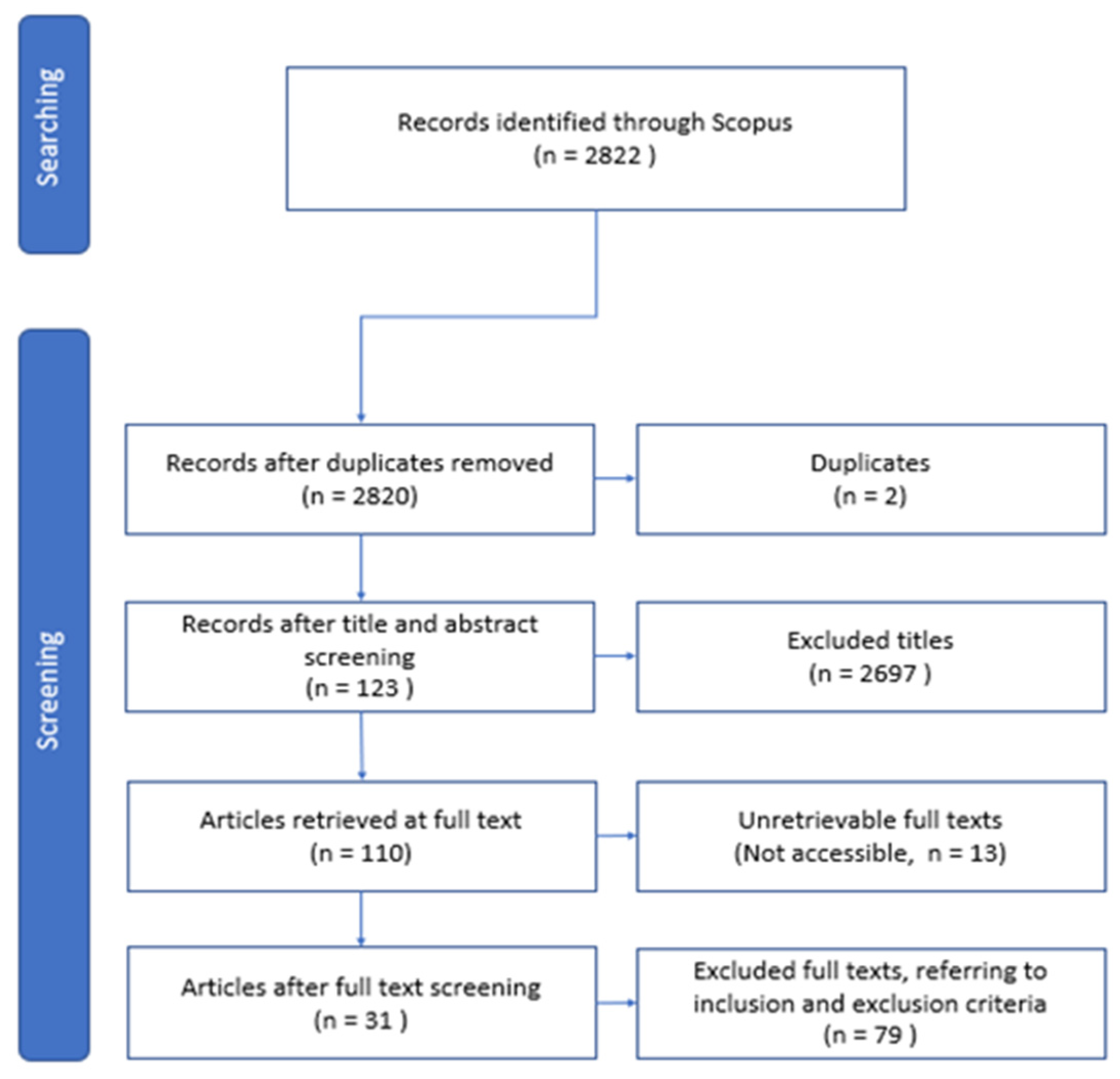

Table 1.
The inclusion and exclusion criteria for the scoping review.
| Theme | Inclusion | Exclusion |
|---|---|---|
| Publication years | Published between 2015-2024 | Published before 2015 |
| Language | Published in English | Published in non-English |
| Document type | Journal articles in Scopus | Other including but not limited to books, book chapters, conference proceedings, and editorials in Scopus |
| Field | Wildfire research in disaster risk re-duction and climate change adaptation in the fields of social science, geography and environment science | Other including but not limited to books, book chapters, conference proceedings, and editorials in Scopus |
| Study Area | High-latitude areas (above 50°N) | Other areas (below 50°N) |
| Focus | A focus on community level of wildfire risk reduction | Other scales such as individual scale, national scale, landscape scale of wildfires, etc; Or focus on conceptual or theoretical under-standing of community-based wildfire risk reduction |
Table 2.
The evaluation framework, adapted from Aiken et al.’s [24].
Table 2.
The evaluation framework, adapted from Aiken et al.’s [24].
| Dimension | Content (attributes) | Reference |
|---|---|---|
| Research background | General information, on the study including: (a)Study location (b)Published journal (c)Research themes |
|
| Community role and function | Dimension emphasizes how ‘community’ has been under-stood in the research, including: (a)The Interpretation level of ‘community’ (b)The community conception types (c)The correlation between community conception and research themes |
Lane and McDonald [22]; Aiken et al. [28]; Walker [25]; Mulligan et al. [17]; Titz et al. [13]; Räsänen et al. [19] |
| Social inclusion and exclusion | Dimension emphasizes which attributes of ‘community’ have been studied, including: (a)the main attribute(s) of ‘community’ research studied (b)other attribute(s) of ‘community’ research considered |
Lane and McDonald [22]; Titz et al. [13]; Mulligan et al. [17]; Acharibasam and Datta [29] |
| Power relations | Dimension refers to who represented and participated in the research as ‘community’, including: (a)the perspective of perceiving the ‘community’ (b)the represented group(s) of ‘community’ in the research (c)the other stakeholders involved in the community-based research in perceiving ‘community |
Lukes [30]; Rahman et al. [11]; Lane and McDonald [22]; Titz et al. [13]; Tschakert et al. [31] |
| Participatory approach | Dimension refers to community participation in the re-search at various stages, such as research design, implementation, and outputs, including: (a)the research practices of community participation (b)the level(s) of community participation |
Jones [32]; Davis et al. [33]; David-Chavez and Gavin [12]; Reed [34]; Reid et al. [10] |
| Research reflexivity | The critical reflection on community-based research itself, including: (a)the critical reviews on the research design, implementation, and outputs (b)the research connection and suggestions for future research tendency. |
Carr and Halvorsen [35]; Poisner [36]; Aiken et al. [28] |
Table 3.
The categorical codes for both the interpretation level(s) of ‘community’ in the literature reviewed and the participation levels of community and other stakeholders in the research [12,27]. (1) The interpretation level(s) of ‘community’. (2) The participation levels of community and other stakeholders in the research.
Table 3.
The categorical codes for both the interpretation level(s) of ‘community’ in the literature reviewed and the participation levels of community and other stakeholders in the research [12,27]. (1) The interpretation level(s) of ‘community’. (2) The participation levels of community and other stakeholders in the research.
| (1) | |||
|---|---|---|---|
| Partial | Informed | Consistent | |
| Lack of interpretation to reflect on the criterion in the research practice | Limited interpretation to reflect on the criterion in the research process | Clear and consistent interpretation to reflect on the criterion in all lines of research practice | |
| (2) | |||
| Partial | Informed | Consistent | Adaptive |
| Perform a task requested by the researcher | Being consulted in the decision-making process over the research process | Work collaboratively with the community over the research process | Have primary authority over the research process (e.g., represent the community) |
Disclaimer/Publisher’s Note: The statements, opinions and data contained in all publications are solely those of the individual author(s) and contributor(s) and not of MDPI and/or the editor(s). MDPI and/or the editor(s) disclaim responsibility for any injury to people or property resulting from any ideas, methods, instructions or products referred to in the content. |
© 2025 by the authors. Licensee MDPI, Basel, Switzerland. This article is an open access article distributed under the terms and conditions of the Creative Commons Attribution (CC BY) license (http://creativecommons.org/licenses/by/4.0/).
Copyright: This open access article is published under a Creative Commons CC BY 4.0 license, which permit the free download, distribution, and reuse, provided that the author and preprint are cited in any reuse.