

Submitted:
23 April 2025
Posted:
24 April 2025
You are already at the latest version
Abstract
Currently at least a third of greenhouse gas emissions (GHG) are due to the agricultural sector, where a significant contribution is due to the food meat production. Therefore, in parallel with the initiatives underway already regarding the transformation of the transport sector, to reduce the impact of emissions associated with means of transport, it is essential to urgently adopt also measures to limit GHG emissions associated with food production, given the significant contribution of this sector to the total GHG emissions. Otherwise, it will not be possible to meet the objectives of the Paris Agreements, for achieve net-zero greenhouse gas emissions by 2050, to reduce the severe impacts of climate change. In principle, achieving the goal of drastically reducing GHG emissions from the global food system in the coming decades, could seem like a simpler task than reducing emissions in the transportation sector, since in this case it is not necessary to implement any new technology such as the development of electric cars and/or neutral fuels to get zero emissions. In this case, given that meat consumption is responsible for the majority of GHG emissions, it would only be enough to urgently implement a series of legislative measures aimed at supporting a transition towards a diet based mainly on plant foods and reducing the massive production and consumption of animal foods. On the other hand, there is currently a growing number of consumers who are very interested in following healthy and sustainable diets from an environmental point of view. This implies that the reduction of meat in the diet, in certain consumer groups, is gaining popularity, which in turn is generating the increase in plant-based products available in the markets. In general, these products adapt to snack food formats, pastas, pizzas, and especially vegan and/or vegetarian burgers. That is, in a practically spontaneous way we are witnessing the gradual replacement of the characteristic components of the Westernized diet, currently followed by most citizens on a planetary scale, containing excess of ultra-processed foods, salt and sugar, and rich in animal proteins, by nutrients of plant origin, healthier and more respectful of the environment. To encourage this trend legal measures could be urgently implemented aimed at improving the nutritional quality of current snacks, widely consumed by society, but of very low nutritional quality, together with measures aimed at promoting agricultural reform, encouraging the production of high nutritional legumes and pseudocereals.
Keywords:
smart-food
; diet
; plant-based foods
1. Introduction
1.1. Current Panorama of Food Production and Consumption over the World
According to a recent report from the World Health Organization (WHO) [1], obesity and diseases associated with the metabolic syndrome constitute the pandemic that produces the most victims worldwide, since every year at least 2.8 million people die due to obesity or overweight [2]. In addition, this tragedy affects not only high-income countries, but currently obesity is also prevalent in low- and middle-income countries, so that already in 2016, more than 1.9 billion adults were overweight, of whom 650 million are obese [3]. In fact, this is perhaps the most serious public health problem of the 21st century, given that according to the WHO, most of the world population lives in countries where overweight and obesity currently cause more deaths than malnutrition, caused by a deficit in food intake. In these countries are included all high- and middle-income countries [4]. In addition, it is a problem that is continuously and uninterruptedly worsening, since the prevalence of obesity has tripled since 1975 [5]. Thus, almost a third of the world’s population can currently be classified as obese or overweight. In addition, obesity rates have increased in all ages and both sexes, in all countries, ethnic groups, or socioeconomic levels, although the prevalence of obesity is always higher in older people and women [6].
Thus, an excessive and/or unsuitable food intake in daily diet causes numerous health issues, diseases, and serious pathologies, such as heart disease, stroke, diabetes, and cancers of various types, among others. In fact, a World Health Organization (WHO) study estimates that around 30% of the total population of the world is suffering from diseases related to obesity [7]. Besides, due to the extreme difficulty of most of the people to follow a healthy diet which preventatively avoids the disease, once a certain pathology has occurred, people necessarily must depend on different medications [8]. This places huge costs on national health systems. In addition, people ostensibly reduce their quality of life for years, due to various chronic disease acquired by inadequate nutrition [9]. On the other hand, various environmental risks currently threaten world food security, such as water scarcity, land degradation and other environmental problems, which affect the climate change [10]. In this sense, the current world food system represents a potential threat on climate change, given the importance of the sustainability of the food system as a fundamental element to achieve the sustainability, of both cities and the agrarian system that produces food [11].
On the other hand, achieving the replacement of current ultra processed junk food of the Westernized diet, currently generally consumed worldwide, by healthier and more organic products can mean not only a great advance in the reduction of pathologies associated with obesity, but also in reducing its impact on the environment, since by using a eating style more healthy, reducing meats and processed foods to the maximum, a more circular consumption will be achieved, significantly by reducing all the waste that is generated with highly processed foods due to all the industrial treatment that surrounds them [12]. In addition, excessive and inadequate intake at the global population level, implies excessive production and waste management of said foods, which generates significant excesses of CO2 emissions, which would be avoided with the correct diet of the population and the substitution of current foods consumed, usually in excess. In this sense, the general pattern of food intake in countries with advanced economies is associated with an excessive use of meat products, so a dietary change from foods of animal origin to foods of plant origin would not only result in improving the health of citizens, but in achieving a notable reduction in greenhouse gas emissions from agricultural production for cattle raising nutriments. In addition, this would allow the recovery of agricultural lands, now destined to produce food for livestock, which could increase carbon sequestration by reestablishing its natural vegetation, prior to its agricultural use, which would be generated [13].
Therefore, and given the current rate of increase in the consumption of meat products from industrial livestock farming, it is assumed that this is actually completely non-viable, and unsustainable not only because of the damage it produces to human health, but also because of the impact that this massive industrial practice is generating the destruction of biodiversity in large areas of the planet, as well as by its important contribution to climate change. Thus, the agricultural sector dedicated mainly to the production of meat currently generates around a third of the emissions of greenhouse gases (GHG) in the world [14].
1.2. Current Perspectives for Measures Planned to Reduce Emissions from the World Food System in the Coming Decades
It is important to highlight that, despite the significant efforts made by governments in their climate policies to promote renewable energy in transport, initiatives to reduce the impact of food and agriculture on the climate are currently practically non-existent [15]. However, to meet the objectives of the Paris Agreements [16], it is necessary to drastically reduce emissions from the world food system in the coming decades, in parallel with the initiatives under way regarding the transformation of the transport sector [17].
Consequently, considering the magnitude of the current emissions from the food sector, to achieve an appreciable reduction of them, would have to jointly addressing a variety of strategies, such as modifying the diets currently in use, both in quantity and composition; reduce the vast amount of food wasted, and improve current farming practices [18]. In this sense, achieving a rationalization in the food diet at a global level could achieve a significant reduction in the emissions responsible for the greenhouse effect, because of that foods of animal origin generate much more GHG emissions than plant products. Thus, overconsumption of proteins and/or meat calories, not only dangerously harms the health of citizens but also generates a significant increase in polluting emissions, because of animal-based foods are typically more resource-intensive and environmentally impactful to produce than plant-based foods. Accordingly, beef presents the highest emission levels, with GHG per kg approximately 10 times higher than chicken and foods of plant origin such as nuts, seeds, or legumes 20 times higher [19]. In this respect, Figure 1 summarizes the emission levels of several characteristic foods of animal and plant origin that are most consumed within the so-called Westernized diet, usually poor in vegetables, rich in animal protein, ultra-processed foods, sugar, and salt [20].
The rationalization in the food diet at a global level could be achieved easily because its main strength would be that they do not require to develop any new technology, although their main weakness will be that it could require changing cultural patterns deeply rooted in different local customs [21]. Therefore, it is feasible and of absolute urgency to define which diets and food production practices will ensure that both the United Nations Sustainable Development Goals (SDGs) and the Paris Agreement on climate change are achieved. In this respect, the EAT-Lancet Commission on Healthy Diets from Sustainable Food Systems has proposed the “Planetary Health Diet”, the optimal diet for people and planet [22]. This commission of scientists assumes that it is possible to get currently feed a population of 10,000 million people, with a healthy diet and within the framework of the planetary limits established for anthropogenic greenhouse gas (GHG) emissions. To achieve this purpose, it would be necessary on a planetary scale, for the intake of animal proteins to be reduced by at least half, and the consumption of vegetables, legumes, and nuts to be doubled [23].
Therefore, the planetary health diet is a global reference diet for adults, designed to benefit both people and planet, and to counteract the pernicious effects of the so-called westernized diet, poor in vegetables, rich in animal protein, ultra-processed foods, sugar and salt, which is causing catastrophic damage to the planet’s ecology and death every year of more than 11 million people. This planetary health diet is represented in Figure 2 by a plate containing a half of fruits and vegetables. The other half consists of primarily whole grains, plant proteins (beans, lentils, pulses, nuts), and unsaturated plant oils. Besides, is also included modest amounts of meat and dairy, and some added sugars and starchy vegetables. Thus, the diet is enough flexible to allow for adaptation to several dietary needs, personal preferences, and cultural traditions, not excluding pure vegetarian diets [24]. Thus, by replacing the current westernized diet on a global scale with the planetary health diet proposed by the EAT-Lancet Commission, significant reductions in agricultural greenhouse gas (GHG) emissions would be obtained, in at least 101 countries over the world [25].
Consequently, it is essential to start as soon as possible a process of replacing meat foods with others of plant origin, since foods of animal origin consume more resources and produce a greater environmental impact than foods of plant origin. Thus, a change in the diet, increasing the proportion of the intake of foods of plant origin, with respect to foods of animal origin, seems in many studies the most correct to improve environmental sustainability [26,27,28]. In such a way that the change in diet could be more important than any other type of measures to achieve the climate objectives proposed for 2050 [29]. In this respect, it must be considered that, compared to any other type of food, beef production is the most responsible for methane emissions, contributing to the increase in global warming, and for the changes it produces in biomass due to deforestation [30].
However, the possible adoption of any type of measures aimed at promoting the population’s reduction in the amount of meat in the daily diet, could possibly present two important types of drawbacks, that would justify its rejection. Firstly, in certain groups of health specialists, and especially in large sectors of the population, it is considered that meat ensures a higher quality in the diet, especially regarding proteins and some essential minerals such as iron [31]. On the other hand, achieving a balanced diet in calories as well as in the main nutrients and micronutrients, using mainly vegetable foods as proposed by the planetary diet, requires more planning than in the westernized diet, to organize the three daily meals, that currently is the followed by most of the population. Thus, the current urban lifestyle itself is one of the main obstacles to being able to follow a healthy diet, based mainly on plant foods, such as the planetary diet or other similar ones such as the Mediterranean diet, DASH, Harvard plate, and so [32]. so that, it can be concluded that the current westernized diet, responsible for the serious health problems of the population, as well as of the excessive emission of greenhouse gases, is not only a result of the free choice of citizens, but also consequence of objective difficulties to tail other alternative dietary guidelines, within our current lifestyle [33].
2. Some Possible Measures to move Towards a Healthier and More Sustainable Future
2.1. Implement New Strategies to Increase the Proportion of Plant Foods in the Diet of the Current Urban Population, Within the Concept of “Smart Food”
To achieve the introduction of a greater proportion of plant foods in the diet of the current urban population, it is a priority to address new strategies that are truly compatible with the actual urban lifestyle. In this sense, the poor quality of the current Westernized diet is mainly due to the difficulty of adapting to the complex work schedules that are followed today. Thus, in the urban environments the consumption of very different snacks, Italian pasta, and pizzas is massively used, as an alternative to quickly replace the intake of one of the main meals of the day. These snacks and pasta, usually high processed, are generally foods with minimal nutritional quality, which simply function as substitute foods, due to lack of time to have a normal meal. Therefore, to a certain extent, they are also responsible for the poor quality of the current Westernized diet [34,35,36].
However, it could be a good strategy to take advantage of these fast foods to improve the nutritional quality of the daily intake of foods consumed in the current lifestyle. It would be enough to significantly improve the nutritional quality of popular snacks and pasta foods [37,38,39]. In this respect, it has been proposed the use of an innovative baked and UVB-irradiated snack, obtained from Pleurotus eryngii mushrooms, an edible mushroom native to the Mediterranean basin, to improve the nutritional quality of daily food intake [40]. Therefore, currently there is a tendency to improve the quality of snacks by incorporating essential nutrients and micronutrients such as vitamins, amino acids, minerals, fiber, etc. [41,42,43,44]. Besides, various studies have also been described aimed at increasing the nutritional quality of pastas and pizzas, through the application of whole wheat flour, legumes, and other functional foods in the preparation of different pastas and pizzas [45,46,47]. Accordingly, to improve the nutritional quality of the current diet, could be an appropriate strategy to apply snacks and pasta, but with a higher nutritional quality, given that the consumption of snacks is a fact fully accepted by the population. In this respect, American citizens currently take almost a quarter of their daily feeding from different snacks [37], integrated in the current schedules and rhythms of life. If the nutritional quality of these snacks could be increased, there is no doubt that this would have a very effective impact on the quality of the citizens’ diet, and consequently on their health.
These healthy snacks with a higher nutritional quality, would be based mainly on the intake of plant foods, because of they are the most appropriate to improve both the health of citizens and the planet. Obviously, these snacks should be able to be easily integrated with other foods, mainly different vegetables, throughout the day, to achieve a healthy diet, in accordance with the criteria of the planetary diet, or that proposed by the Harvard plate, or the diet dash, which are healthy proposals, closely related to the traditional Mediterranean Diet [32]. These pastas foods, improved by inclusion of nonconventional ingredients and functional foods, instead of usual refined wheat flour [45,46,47] become healthy snacks [48,49,50]. Besides, they may be also considered “smart foods” since they will be good for consumers, because they are nutritious and healthy, as well for the planet and farmers, because they are more environmentally sustainable and could even increase revenues of agriculturalists [49,50,51,52,53]. This concept is really considered the future model to adopt food systems that provide healthy diets, without altering the natural resources of the planet and being economically viable for farmers. In summary, a Smart Food fulfil criteria of being good for citizens because is nutritious and healthy; good for the planet because of is environmentally sustainable; and good for the farmers because is potentially able to increase yields, and profits. [54,55,56,57].
The production and consumption of vegetable and vegan burgers should be implemented under the same concept, since they could allow the replacement of large quantities of meat foods, instead using vegetables of a diverse nature. This hamburger type is being increasingly popular in fast food restaurant chains, as an alternative to classic meat hamburgers. For its preparation, products such as tofu, seitan, lentils, and other legumes are used that replace the amino acids contained in meat, but without such a high fat content, and maintaining organoleptic properties very similar to conventional hamburgers [58,59,60]. These new plant foods are gaining rapid acceptance and including some controversy over the names of these meat substitute products in the European Union [61].
Therefore, Smart Food represents a concept that establishes a clear interrelation not only between a healthy diet for citizens and its environmentally sustainable nature, but also associates this binomial with agricultural practice capable of producing this type of smart foods through economically viable agricultural companies. However, current agricultural production is focused on a small group of cereals and legumes (wheat, corn, barley, and soybeans fundamentally) which provide the main contribution of nutrients not only for citizens, but even the necessary food used for livestock. The production of these inputs is carried out by large corporations, which supply the market with low quality products at very low prices.
However, this practice entails a minimum quality in the nutrition of the billions of citizens who consume it in the form of very diverse types of food formats. In fact, the poverty in essential amino acids and micronutrients is evident, given the small number of vegetable food sources used as well as the high proportion of refined wheat flour. In this sense, the high contribution of meat to the current Westernized diet is justified because this is essential to be able to achieve the adequate proportion of essential nutrients, which could be obtained from the consumption of plant foods. Therefore, it would not be prudent to implement measures that simply entail a drastic reduction in the population’s intake of meat, since this would imply a significant reduction in the amounts of nutrients, especially essential amino acids, that at the present time are obtained from meat foods.
Hence, to reduce the proportion of meat in the current diet, it is essential not only to provide greater quantities of plant foods, but also to clearly improve the contribution of all essential amino acids, which can be achieved by introducing greater proportions of legumes, in the detriment of the refined wheat flour currently consumed massively. The replacement of meat with a wide variety of legumes will not only have a significant impact on the reduction of emissions and the sustainability of agricultural production but will also have a very important impact on the health of citizens, since these vegetable foods provide the essential micronutrients for a healthy diet.
In this sense, currently the concept of a healthy diet is fundamentally associated with an adequate intake of calories and macronutrients, that is, proteins, carbohydrates, and fats. However, micronutrients are biocatalysts made up of minimal amounts of different minerals, vitamins, and enzymes, which allow the proper assimilation of macronutrients. Therefore, only the intake of adequate amounts of carbohydrates, proteins and fats is not a guarantee of a healthy diet since it must also be associated with appropriate amounts of micronutrients. In fact, an important correlation of multiple pathologies with dietary deficiencies of certain micronutrients is continually being demonstrated. The main advantage of foods of plant origin is their high content of essential micronutrients, much higher in quantity and quality than in the meats usually consumed.
Among the measures that should be adopted as a priority by the different administrations, it would be necessary to consider the drastic improvement in the nutritional quality of vegetable and vegan burgers, snacks, and different pastas, including pizzas, massively consumed by urban populations on a planetary scale, with special preference for younger population groups. Thus, by simply replacing refined wheat flour with other whole grains in mixtures with pseudocereals and legumes, the nutritional quality of these foods could be increased very significantly, since this would provide all the essential amino acids as well as an important number of micronutrients, minerals, and vitamins. For this purpose, could be incorporated into the production of vegetable and vegan burgers, snacks and pasta of all kinds, in addition to wheat, a whole series of cereals like rice, corn, barley, oat, rye, sorghum, millet and/or pseudo-cereals, such as quinoa, chia, amaranth, buckwheat, and mainly legumes, among others, lentils, chickpea, black beans, white beans, pints beans, broad beans, soy, lupines or peanuts, because the complementary contribution of legumes to cereals, to get all the essential amino acids, fibers, and micronutrients.
In this respect, there are currently numerous studies that show innovative food applications of legumes, such as burgers, pasta, or bakery products [40,41,42,43,44,45,46,47,48,49,50,51,52,58,59,60], because of this type of foods present a format perfectly recognizable to consumers and therefore they present great commercial viability. Thus, unlike those similar foods currently consumed, they contain all the essential amino acids, just like meats, but with a significantly lower proportion of saturated fats and a high amount of dietary fiber, which necessarily will positively affect the health and reduce obesity of its consumers. A very interesting aspect of this proposal is that some of these innovative food products are already being marketed in various countries, at the initiative of the own manufacturers, considering the interest of a still minority market, but that could present a growing interest for the consumers. Thus, in addition to vegetable burgers, which are already sufficiently introduced to generate controversy regarding their food classification [61], in Spain, Pastas Gallo Company has on the market noodles, spaghetti, macaroni, spirals, and pizza dough, composed 100% of different legumes such as chickpeas, lentils or peas. Various snacks are also marketed that use several legumes with the purpose of balancing the contributions of essential amino acids. Examples of these commercially available snacks are Falafel in Israel, Doushabao in Chine, Bindaetteok in Korea, Butsi in Philippines, Mame daifuku in Japan, Batagor in Indonesia, Bolani in Afghanistan, or Pé-de-moleque, Acarajé, and Arrumadinho in Brazil.
However, despite these are very popular products in their countries of origin, but they are not known or available internationally. Similarly, when considering the traditional Mediterranean diet, which has thousands of recipes that incorporate all types of legumes and functional foods, but the current lifestyle in large cities makes it extremely difficult to resort to this healthy type of diet. Therefore, the most appropriate strategy could be to introduce functional foods and legumes into diets that are currently consumed on a massive scale, such as vegetable and vegan burgers, snacks and different pastas. Nevertheless, these commercial initiatives should be strongly implemented by the different administrations, at different levels, given the objective interest in promoting the concept of smart food, with multiple repercussions both environmentally and on the health of citizens.
2.2. Reduce the Environmental Impact in Food Production
Given that, according to estimates by the United Nations [62], food production is responsible for a third of global greenhouse gas emissions worldwide, it is necessary for countries that seek leadership in the reduction of climate change to take measures like those that they are already carrying out to reduce the consumption of fossil fuels. Thus, there is currently an intense debate in the European Union (EU) regarding the role that carbon-neutral fuels could play in the current transition framework to bring the European Green Deal to a successful conclusion, which seeks to make Europe the first climate neutral continent in the world [63]. For this purpose, a series of measures are being prepared to achieve a drastic reduction in CO2 emissions from passenger cars and vans, imposing a reduction in emissions of 55% of passenger cars and 50% of vans by 2030 [64].
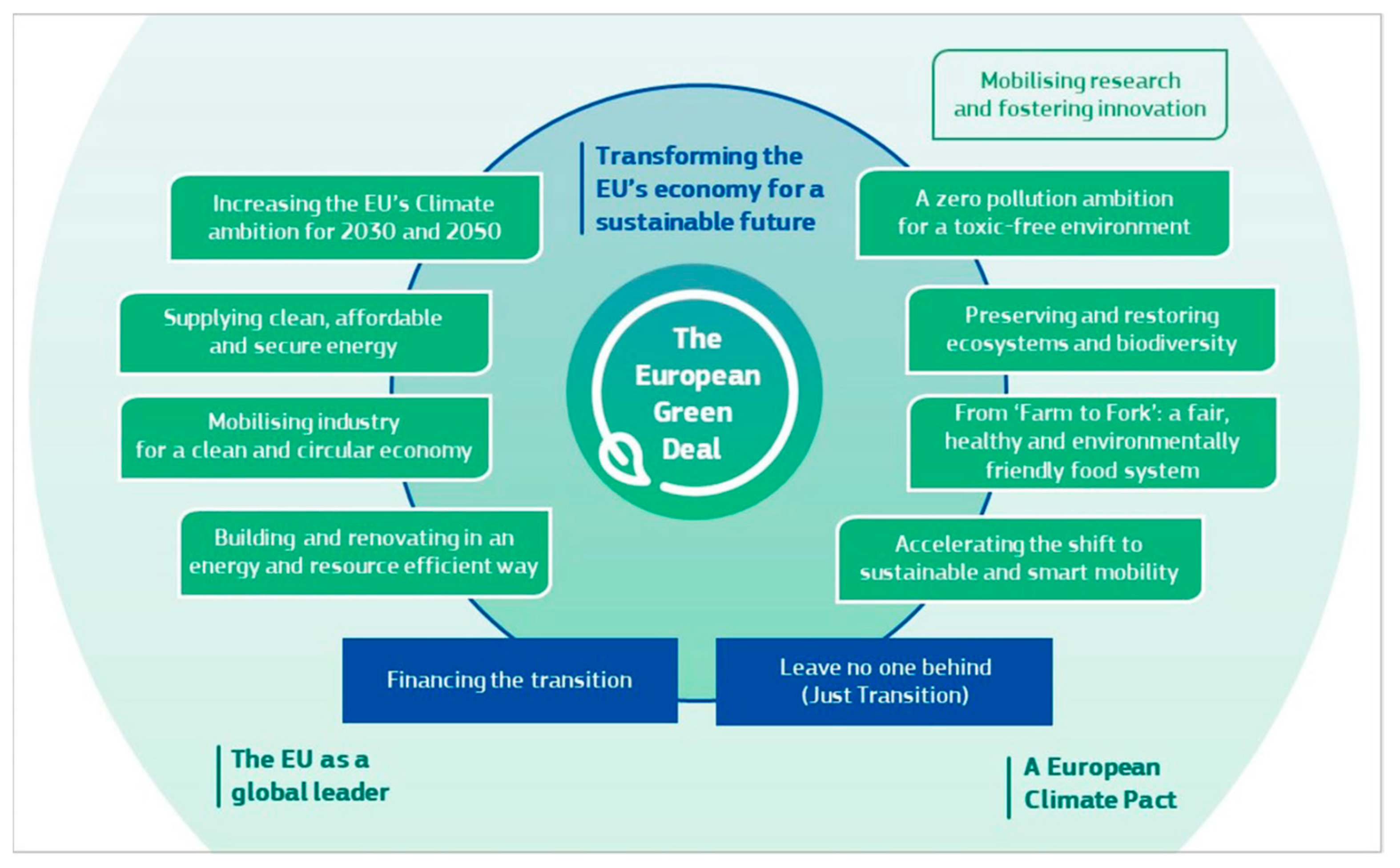
However, despite the fact that the European commission included the goal to “lead a global transition towards competitive sustainability from farm to fork” in its European Green Deal Program [65], in order to improve the environmental performance of food production for the overall reduction of the environmental impact of whole human activity, as summarized in Figure 3, the truth is that to date no specific actions have been carried out in this field, Despite the fact that this European Green Deal clearly indicates as one of its main objective will be to improve the well-being and health of all citizens [66] by providing healthy, and affordable food for all budgets, together to increasing biodiversity.
In fact, in this green plan (Figure 3) considers dedicating an adequate financing to get a green transition, empowering European industry and small and medium sized companies, boosting the circular economy, creating a sustainable food system, and preserving biodiversity. An explanation for this lack of concrete policies in the present days by the different EU countries, could be associated to different cultural barriers to implement a food circular economy, due to lack of consumer interest or awareness and/or low business interest [67]. However, for the rationalization of food chine, to increase the health of citizens as well as the environment security, it is not necessary to implement new technologies or achieve new scientific results. It is only necessary to incorporate new policies at different scales, local, national, and global, that promote a new dietary model, in which the consumption of meat and refined wheat is reduced, and the intake of legumes and pseudocereals is increased. Thus, government policies, culture, and financial issues seems to be the most significant causes, which could boost the current state of paralysis in reaching significant decisions to advance towards the objectives of smart food at a global level.
In this respect, although there is currently a growing awareness in certain social strata about the convenience of increasing the proportion of legumes and functional foods incorporated into vegetable and vegan burgers, pastas and snacks to mainly improve the quality of the diet, to get improve health and avoiding obesity, private spontaneous activity is not enough to address the urgency with which this problem must be addressed. The current climate emergency and the deterioration in the health of a high proportion of the population, justifies the convenience of urgent intervention by public administrations to try to stop this trend. In this sense, it must be considered that in the EU food contributes towards almost a third of the region’s Ecological Footprint (EF) and appropriates over half of its biocapacity, yet a quarter of the biocapacity for food consumption originates from non-EU countries. Thus, EU-27 citizens currently take more from nature than the region’s ecosystems can regenerate emphasizing the need for new or reinforced food and trade policies to enable a transformation to sustainable EU food systems [68].
In addition, the Sustainable Development Goals (SDGs) approved in September 2015 at the United Nations (UN) General Assembly, are fully in force, where one of those goals, SDG2, promises to ensure food security and nutrition within sustainable food systems [69]. Therefore, all countries have been committed for almost a decade, to initiating actions that tend to guarantee the achievement of these objectives. In other case, the world runs the risk of not meet the Sustainable Development Goals (SDGs) and the Paris Agreement, and in a short time the planet could be severely degraded, and a good part of the population will suffer more and more from malnutrition and preventable diseases, associated with metabolic syndrome.
Consequently, the initiation of measures equivalent to those already in place regarding emissions associated with means of transport is unavoidable. Above all, because in this case no type of technological development is required to address emissions associated with food, so that are the policymakers of the most developed countries who must address new measures to encourage the application of a smart food system, that contributes efficiently to the control of emissions within the planned deadlines, with a view to achieving zero emissions by 2050, in accordance with the objectives proposed by the European commission, that include as the goal to “lead a global transition towards competitive sustainability from farm to fork” in its European Green Deal Program. Consequently, to improve the environmental performance of food production is therefore a key issue for the overall reduction of the environmental impact of human activity.
Accordingly, it is absolutely essential to take as soon as possible strong measures to reduce the consumption of animal origin foods, taking into account that production of animal-based foods accounts for more than three quarters of global agricultural land use, and around two-thirds of agriculture’s production-related greenhouse gas emissions, while only contributing forty percent of total protein consumed by people in a year owing primarily to their heavy reliance on, and low efficiency of, converting crops to an animal feed. In this sense, the raising of cattle or sheep to produce meat foods generates greenhouse emissions that can be up to 250 times higher, per gram of protein, than those generated in the production of legumes, to obtain the same quantity of proteins [70].
In this respect, given the urgency of the environmental and health problems, and given the current absence of practical measures by the European commission, in order to get advance the goal to “lead a global transition towards competitive sustainability from farm to fork”, foreseen in the European Green Deal Program, some measures could be initiated inspired in several policy reforms that have recently been implemented at the national, state and municipal levels in the United States to support a transition towards more plant-based and reduce large-scale animal-based food production [71].
In any case, the need to promote measures not only such as those proposed here seems to be evident, to encourage the quality of the raw materials used in the manufacture of the most popular foods, such as vegetable and vegan burgers, snacks, and pasta, with new standards, regulations, or taxes, but also some other punitive measures, like those planned for fossil fuels. In this case it would seem convenient to modify taxes and fees such as VAT, depending on the climate footprint produced by different foods, very different as can be seen in Figure 1.
Of course, it will be also essential to develop programs that influence the cultural aspects closely related to food in consumers, informing them of the advantages to follow nutritional guidelines based on the majority consumption of plant products, with a parallel reduction of meat products, it will finally improve both planetary and human health [72]. Therefore, it is worth highlighting that in this scenario, the smart food concept must play a fundamental role to develop a sustainable food system, to jointly solve the current global issues, related to the environmental concern as well as malnutrition, and the several lifestyle diseases. It is essential in this sense that the population be informed that the current plague of metabolic diseases, such as obesity, cardiovascular disease, diabetes, hypertension, dementia, and cancer, has its origin in an inadequate diet, the so-called Westernized diet [73,74,75,76,77,78,79].
3. Conclusions
Currently, meat consumption in advanced economic countries generates an amount of GHG emissions like those generated by the combustion of different types of transport vehicles, considering all emissions factors combined with livestock statistics. Direct and indirect greenhouse gas (GHG) emissions from the ~30+ billion animals consumed as food each year contribute ~14–16% of the global total [80]. Thus, livestock are a major contributor to overall global warming, if all GHC emissions are included, such as methane and N2O, as well as the conversion of pastures to feed livestock, thus increasing to 23% the warming directly attributable to this activity [81]. In order to meet international climate change objectives, it is essential to implement interventions that promote the reduction of goods and services that generate high GHG emissions. In this sense, based on the analysis of the literature, three main domains with the highest emissions have been detected: the use of personal vehicles, meat consumption and energy consumed at home [82].
All countries in the world have been committed, for more than a decade, to complying with the Sustainable Development Goals (SDGs) and the Paris Agreement and to initiate actions that tend to guarantee the achievement of these objectives [83], but the main measures initiated refer mainly to the use of transport vehicles [84], and energy consumed at homes [85]. Regarding food systems in generic terms, although they have been identified as one of the main sectors that must be addressed to achieve the UN SDG by 2030, the delay in the measures that must be implemented in this short period of time, is very important [86]. This is especially worrying when it comes to meat supply chain in the perspective of the UN SDGS [87].
Thus, despite that the objectives to achieve a sustainable and competitive global transition in its European Green Deal Program are defined [65], to get food production with a general reduction in environmental impact, as summarized in Figure 3, no specific actions have been carried out in this field until now, to reduce large-scale animal-based food production [71]. This could be because the main difficulties would be associated with the profound cultural changes that society would have to assume, to give up meat consumption and opt for plant-based foods [88,89,90,91,92].
Until now, according to the immense bibliography generated in the last five years, the most appropriate strategies to reduce the amount of meat in the diet should focus mainly on the production and consumption of vegetarian and/or vegan burgers [58,59,60,61,93,94,95,96,97,98,99,100,101,102,103,104,105,106,107,108,109,110,111,112,113,114,115,116,117].
Along with this huge number of studies evaluating the possibility of implementing the vegetarian burgers to increase the consumption of plant foods to the detriment of meat foods, we are also witnessing the proliferation of a growing number of studies which aim to implement the production of snack, pizzas and pastas, enriched with different whole grains, pseudocereals and legumes in order to improve the nutritional quality of citizens, resorting to several plant foods [37,38,39,40,41,42,43,44,45,46,47,48,49,50,51,118,119,120,121,122,123,124] In this context, the incorporation of insects into the food chain is also gaining strength because they are a potential solution for the food industry, if it is took into account that they are currently a part of the traditional diet of two billion people over the world [125,126,127,128,129,130,131,132,133]. In this sense, the European Union has already included in Regulation (EU) 2015/2283 (European Parliament and Council of the European Union, 2015), the use of insects as a new food, assuming the benefits that this entails [134]. Among these, it is worth highlighting the obtaining of high-quality proteins and nutrients, the high efficiency in terms of their production compared to other sources of animal protein, with a significant reduction in water consumption and GHG emissions [125].
In summary, we can currently see the existence of a growing number of consumers who are increasingly interested in the health and sustainability aspects of their diets. Thus, meat reduction is gaining popularity among some consumer groups, which has led to an increase in plant-based products in the markets. Fundamentally, these consumers who are trying to switch to more sustainable and healthy diets are motivated mainly by the health benefits achieved by reducing or excluding meat and its derived products. But in addition, these diets also have environmental benefits such as reducing greenhouse gas (GHG) emissions and the demand for agricultural land use. However, it can be considered that governments have not yet made significant decisions on these types of issues, so at a legislative and practical level, greenhouse gas emissions associated with food, mainly due to meat consumption, are uncontrolled. This fact is putting at risk the achieving the planned objectives, on the indicated dates, 2030 and 2050, fundamentally.
At the time of promoting any type of legal measures aimed at reducing the quantities of meat products in the Westernized diet, attention should first be paid to that current gastronomic customs have undergone important changes, so that the practice of domestic cooking is increasingly less common. In addition, a large number of pre-cooked dishes are increasingly consumed, and we are witnessing the birth of a new cuisine based on fast food served at home and street foods, such as hamburgers, pizzas, pastas, and ice creams, with to the emergence of new cultural and physical spaces for enjoying food outside the home [129]. Therefore, these legal measures should be consistent with maintaining the format of the foods that are consumed regularly, but improving their composition and nutritional quality, increasing not only the quantity of vegetables, but also their quality and variety. This only could be achieved by a significantly increasing the proportion of different legumes and whole grains, to the detriment of refined wheat flour in the food daily intake, which is currently consumed in excessive quantities.
Considering that these are familiar foods designs for the population, there should be no special difficulties so that the legal regulations that could oblige the sustenance industry to manufacture these new food products can be put into practice. All these measures, fundamentally legal regulations, would follow the scheme proposed by the so-called “Smart Food” concept that establishes a clear interrelation between a healthy diet for citizens and its environmentally sustainable nature, both associated with agricultural practice able to produce healthy foods by viable agricultural companies.
Funding
This research received no external funding.
Institutional Review Board Statement
Not applicable.
Informed Consent Statement
Not applicable.
Conflicts of Interest
The authors declare no conflicts of interest.
References
- Rutter, H.; Cavill, N.; Bauman, A.; Bull, F. Systems approaches to global and national physical activity plans. Bull World Health Organ 2019, 97, 162–165. [Google Scholar] [CrossRef] [PubMed]
- Ellulu, M.; Abed, Y.; Rahmat, A.; Ranneh, Y.; Ali, F. Epidemiology of obesity in developing countries: challenges and prevention. Global Epidemic Obesity 2014. [Google Scholar] [CrossRef]
- Aziz, R.; Sherwani, A.Y.; Mahri, S.A.; Malik, S.S.; Mohammad, S. Why Are Obese People Predisposed to Severe Disease in Viral Respiratory Infections? Obesities 2023, 3, 46–58. [Google Scholar] [CrossRef]
- Boutari, C.; Mantzoros, C.S. A 2022 update on the epidemiology of obesity and a call to action: as its twin COVID-19 pandemic appears to be receding, the obesity and dysmetabolism pandemic continues to rage on. Metabolism. 2022, 133, 155217. [Google Scholar] [CrossRef]
- Gallagher, E.J.; LeRoith, D. Obesity and cancer. Cancer Metastasis Rev. 2022, 41, 463–464. [Google Scholar] [CrossRef]
- Yu Chung Chooi, Y.C.; Ding, C.; Magkos, F. The epidemiology of obesity. Metab. Clin. Exp. 2019, 92, 6–10. [Google Scholar] [CrossRef]
- Rehman, F.; Khalid, O.; Haq, N.; Khan, A.R.; Bilal, K.; Madan, S.A. Diet-Right: A Smart Food Recommendation System. KSII Trans. INTERNET Inf. Syst. 2017, 11, 2910–2925. [Google Scholar] [CrossRef]
- Gerhart, J.G.; Balevic, S.; Sinha, J.; Perrin, E.M.; Wang, J.; Edginton, A.N.; Gonzalez, D. Characterizing Pharmacokinetics in Children With Obesity—Physiological, Drug, Patient, and Methodological Considerations. Front. Pharmacol. 2022, 13, 818726. [CrossRef]
- Busutil, R.; Espallardo, O.; Torres, A.; Martínez-Galdeano, L.; Zozaya, N.; Hidalgo-Vega, A. The impact of obesity on health-related quality of life in Spain. Busutil Et al. Health Qual. Life Outcomes 2017, 15, 197. [Google Scholar] [CrossRef]
- Li, X.; Siddique, K.H.M.; Food and Agriculture Organization of the United Nations. Future Smart Food: Rediscovering Hidden Treasures of Neglected and Underutilized Species for Zero Hunger in Asia; FAO: Bangkok, Thailand, 2018. Matern Child Nutr. 2020, 16, e13008. [CrossRef]
- Zou, T.; Dawodu, A.; Mangi, A.; Cheshmehzangi, A. Exploring Current Trends, Gaps & Challenges in Sustainable Food Systems Studies: The Need of Developing Urban Food Systems Frameworks for Sustainable Cities. Sustainability 2023, 15, 10248. [Google Scholar] [CrossRef]
- Popkin, B.M.; Ng, S.W. The nutrition transition to a stage of high obesity and noncommunicable disease prevalence dominated by ultra-processed foods is not inevitable. Obes. Reviews. 2022, 23, 13366. [Google Scholar] [CrossRef]
- Sun, Z.; Scherer, L.; Tukker, A.; Seth, A.; Spawn-Lee, S.A.; Bruckner, M.; Gibbs, H.K.; Behrens, P. Dietary change in high-income nations alone can lead to substantial double climate dividend. Nat Food 2022, 3, 29–37. [Google Scholar] [CrossRef]
- Crippa, M.; Solazzo, E.; Guizzardi, D.; Monforti-Ferrario, F.; Tubiello, F.N.; Leip, A. Food systems are responsible for a third of global anthropogenic GHG emissions. Nat. Food 2021, 2, 198–209. [Google Scholar] [CrossRef]
- Willits-Smith, A.; Aranda, R.; Heller, A.R.; Rose, D. Addressing the carbon footprint, healthfulness, and costs of self-selected diets in the USA: a population-based cross-sectional study. Lancet Planet Health 2020, 4, 98–106. [Google Scholar] [CrossRef]
- Clark, M.A.; Domingo, N.G.G.; Colgan, K.; Thakrar, S.K.; Tilman, D.; Lynch, J.; Azevedo, I.L.; Hill, J.D. Global food system emissions could preclude achieving the 1.5° and 2 °C climate change targets. Science 2020, 370, 705–708. [Google Scholar] [CrossRef]
- Fawzy, S.; Osman, A.I.; Doran, J.; Rooney, D.W. Strategies for mitigation of climate change: a review. Environ. Chem. Lett. 2020, 18, 2069–2094. [Google Scholar] [CrossRef]
- Lucas, E.; Guo, M.; Guillén-Gosálbez, G. Low-carbon diets can reduce global ecological and health costs. Nat. Food 2023, 4, 394–406. [Google Scholar] [CrossRef]
- Heller MC, Willits-Smith A, Meyer R, Keoleian GA, Rose, D. Greenhouse gas emissions and energy use associated with production of individual self-selected US diets. Env. Res Lett 2018, 13, 044004. [CrossRef]
- Batlle-Bayer, L.; Bala, A.; García-Herrero, I.; Lemaire, E.; Song, G.; Aldaco, R.; Fullana-Palmer, P. The Spanish Dietary Guidelines: A potential tool to reduce greenhouse gas emissions of current dietary patterns. J. Clean. Prod. 2019, 213, 588–598. [Google Scholar] [CrossRef]
- Yang, M.; Zhang, Z.; Wang, Z. Does Internet use connect smallholder farmers to a healthy diet? Evidence from rural China. Front. Nutr. 2023, 10, 1122677. [Google Scholar] [CrossRef]
- Willett, W.; Rockstrom, J.; Loken, B.; Springmann, M.; Lang, T.; Vermeulen, S.; Garnett, T.; Tilman, D.; DeClerck, F.; Wood, A.; et al. Food in the Anthropocene: the EAT–Lancet Commission on healthy diets from sustainable food systems. Nat. Food 2023, 4, 394–406. [Google Scholar] [CrossRef]
- Lucas, E.; Guo, M.; Guillén-Gosálbez, G. Low-carbon diets can reduce global ecological and health costs. Nat. Food 2023, 4, 394–406. [Google Scholar] [CrossRef]
- Lawrence, M.A.; Baker, P.I.; Pulker, C.E.; Pollard, C.M. Sustainable, resilient food systems for healthy diets: the transformation agenda. Public Health Nutr. 2019, 1–5. [Google Scholar] [CrossRef]
- Semba, R.D.; de Pee, S.; Kim, B.; McKenzie, S.; Nachman, K.; Bloem, M.W. Adoption of the ‘planetary health diet’ has different impacts on countries’ greenhouse gas emissions. Nat. Food 2020, 1, 481–484. [Google Scholar] [CrossRef]
- Comerford, K.B.; Miller, G.D.; Kapsak, W.R.; Brown, K.A. The Complementary Roles for Plant-Source and Animal-Source Foods in Sustainable Healthy Diets. Nutrients 2021, 13, 3469. [Google Scholar] [CrossRef]
- Hennessy, D.P.; Shalloo, L.; van Zanten, H.H.E.; Schop, M.; De Boer, I.J.M. The net contribution of livestock to the supply of human edible protein: the case of Ireland. J. Agric. Sci. 2021, 159, 463–471. [Google Scholar] [CrossRef]
- Meyer, N.; Reguant-Closa, A. “Eat as If You Could Save the Planet and Win!” Sustainability Integration into Nutrition for Exercise and Sport. Nutrients 2017, 9, 412. [Google Scholar] [CrossRef]
- Theurl, M.C.; Lauk, C.; Kalta, G.; Mayer, A.; Kaltenegger, K.; Morais, T.G.; Teixeira, R.F.M.; Domingos, T.; Winiwarter, W.; Erba, K.H.; et al. Food systems in a zero-deforestation world: Dietary change is more important than intensification for climate targets in 2050. Sci. Total Environ. 2020, 735, 139353. [Google Scholar] [CrossRef]
- Pena-Bermudez, Y.A.; Vincenzi, R.; Meo-Filho, P.; Sakamoto, L.S.; Lobo, R.; Benetel, G.; Lobo, A.; Matos, C.; Benetel, V.; Lima, C.G.; et al. Effect of Yerba Mate Extract as Feed Additive on Ruminal Fermentation and Methane Emissions in Beef Cattle. Animals 2022, 12, 2997. [Google Scholar] [CrossRef]
- Binnie, M.A.; Barlow, K.; Johnson, V.; Harrison, C. Red meats: Time for a paradigm shift in dietary advice. Meat Sci. 2014, 98, 445–451. [Google Scholar] [CrossRef]
- Tangney, C.C.; Staffileno, B.A.; Rasmussen, H.E. Healthy Eating: How Do We Define It and Measure It? What’s the Evidence? J. Nurse Pract. 2017, 13, 7–15. [Google Scholar] [CrossRef]
- Kopp, W. How Western Diet And Lifestyle Drive The Pandemic Of Obesity And Civilization Diseases. Diabetes Metab. Syndr. Obes. Targets Ther. 2019, 12, 2221–2236. [Google Scholar] [CrossRef]
- Faris, M.E.; Al-Bakheit, A.; Hasan, H.; Cheikh Ismail, L.; Jahrami, H.; Rajab, D.; Afra Almashgouni, A.; Alshehhi, A.; Aljabry, A.; Aljarwan, M.; et al. Assessment of nutritional quality of snacks and beverages sold in university vending machines: a qualitative assessment. Br. Food J. 2021, 123, 2449–2460. [Google Scholar] [CrossRef]
- Sanders, L.M.; Slavin, J. Impact of Pasta Intake on Body Weight and Body Composition: A Technical Review. Nutrients 2023, 15, 2689. [Google Scholar] [CrossRef]
- Adjibade, M.; Mariotti, F.; Leroy, P.; Souchon, I.; Saint-Eve, A.; Fagherazzi, G.; Soler, L.G.; Huneau, J.F. Impact of intra-category food substitutions on the risk of type 2 diabetes: a modelling study on the pizza category. Br. J. Nutr. 2022, 127, 1240–1249. [Google Scholar] [CrossRef]
- Altamore, L.; Ingrassia, M.; Columba, P.; Chironi, S.; Bacarella, S. Italian Consumers’ Preferences for Pasta and Consumption Trends: Tradition or Innovation? J. Int. Food Agribus. Mark. 2019. [Google Scholar] [CrossRef]
- Assassi, P.; Selwyn, B.J.; Lounsbury, D.; Chan, W.; Harrell, M.; Wylie-Rosett, J. Baseline dietary patterns of children enrolled in an urban family weight management study:associations with demographic characteristics. Child Adolesc. Obes. 2021, 4, 37–59. [Google Scholar] [CrossRef]
- Hess, J.M.; Slavin, J.L. The benefits of defining “snacks”. Physiology & Behavior 2018, 193, 284–287. [Google Scholar] [CrossRef]
- Amerikanou, C.; Tagkouli, D.; Tsiaka, T.; Lantzouraki, D.Z.; Karavoltsos, S.; Sakellari, A.; Kleftaki, S.A.; Georgios Koutrotsios, G.; Giannou, V.; Zervakis, G.I.; et al. Pleurotus eryngii Chips—Chemical Characterization and Nutritional Value of an Innovative Healthy Snack. Foods 2023, 12, 353. [Google Scholar] [CrossRef]
- Hess, J.; Rao, G.; Slavin, J. The Nutrient Density of Snacks: A Comparison of Nutrient Profiles of Popular Snack Foods Using the Nutrient-Rich Foods Index. Glob. Pediatr. Health 2017, 4, 1–6. [Google Scholar] [CrossRef] [PubMed]
- Tyl, C.; Bresciani, A.; Marti, A. Recent Progress on Improving the Quality of Bran-Enriched Extruded Snacks. Foods 2021, 10, 2024. [Google Scholar] [CrossRef] [PubMed]
- Li, X.; Guillermic, R.M.; Nadimi, M.; Paliwal, J.; Koksel, F. Physical and microstructural quality of extruded snacks made from blends of barley and green lentil flours. Cereal Chemistry. 2022, 99, 1112–1123. [Google Scholar] [CrossRef]
- Sissons, M. Development of Novel Pasta Products with Evidence Based Impacts on Health—A Review. Foods 2022, 11, 123. [Google Scholar] [CrossRef]
- Alam, S.S.; Bharti, D.; Pradhan, B.K.; Sahu, D.; Dhal, S.; Kim, N.M.; Jarzebski, M.; Pal, K. Analysis of the Physical and Structure Characteristics of Reformulated Pizza Bread. Foods 2022, 11, 1979. [Google Scholar] [CrossRef]
- Pasqualone, A.; Costantini, M.; Faccia, M.; Difonzo, G.; Caponio, F.; Summo, C. The Effectiveness of Extruded-Cooked Lentil Flour in Preparing a Gluten-Free Pizza with Improved Nutritional Features and a Good Sensory Quality. Foods 2022, 11, 482. [Google Scholar] [CrossRef]
- Nikinmaa, M.; Mustonen, S.A.; Huitula, L.; Laaksonen, O.; Linderborg, K.M.; Nordlund, E.; Nesli Sozer, N. Wholegrain oat quality indicators for production of extruded snacks. LWT - Food Sci. Technol. 2023, 174, 114457. [Google Scholar] [CrossRef]
- Chriqui, J.F.; Lina, W.; Leidera, J.; Shangc, C.; Pernad, F.M. The Harmonizing Effect of Smart Snacks on the Association between State Snack Laws and High School Students’ Fruit and Vegetable Consumption, United States—2005–2017. Prev Med. 2020, 139, 106093. [Google Scholar] [CrossRef]
- Mann, G.; Lambert, L.G.; Gupta, K.; Partacz, M. Smart snacks in universities: possibilities for university vending. Health Promot. Perspect. 2020, 10, 393–400. [Google Scholar] [CrossRef]
- Ciurzynska, A.; Ciesluk, P.; Barwinska, M.; Marczak, W.; Ordyniak, A.; Lenart, A.; Janowicz, M. Eating Habits and Sustainable Food Production in the Development of Innovative “Healthy” Snacks. Sustainability 2019, 11, 2800. [Google Scholar] [CrossRef]
- Turnwald, B.P.; Crum, A.J. Smart food policy for healthy food labeling: Leading with taste, not healthiness, to shift consumption and enjoyment of healthy foods. Prev. Med. 2019, 119, 7–13. [Google Scholar] [CrossRef] [PubMed]
- Ashaolu, T.J.; Ashaolu, J.O. Perspectives on the trends, challenges and benefits of green, smart and organic (GSO) foods. Int. J. Gastron. Food Sci. 2020, 22, 100273. [Google Scholar] [CrossRef] [PubMed]
- Hawkes, C.; Smith, T.G.; Jewell, J.; Wardle, J.; Hammond, R.A.; Friel, S.; Thow, A.M.; Kain, J. Smart food policies for obesity prevention. Lancet 2015, 385, 2410–2421. [Google Scholar] [CrossRef] [PubMed]
- Brouwer, I.D.; van Liere, M.J.; de Brauw, A.; Dominguez-Salas, P.; Herforth, A.; Kennedy, G.; Lachat, C.; Omosa, E.B.; Talsma, E.F.; Vandevijvere, S.; et al. Reverse thinking: taking a healthy diet perspective towards food systems transformations. Food Secur. 2021, 13, 1497–1523. [Google Scholar] [CrossRef]
- Ikegwu, T.M.; Balogu, T.V.; Iroagba, N.L.; Okoyeuzu, C.F.; Obiora, C.U.; Balogu, D.O.; Agu, H.O. Food Security in Emerging Global Situations-Functional Foods and Food Biotechnology Approaches: A Review. J. Adv. Food Sci. Technol. 2023, 10, 46–74. [Google Scholar] [CrossRef]
- Kennedy, E.T.; Buttriss, J.L.; Bureau-Franz, I.; Wigger, P.K.; Drewnowski, A. Future of food: Innovating towards sustainable healthy diets. Nutr. Bull. 2021, 46, 260–263. [Google Scholar] [CrossRef]
- Cortesi, A.; P’enicaud, C.; Saint-Eve, A.; Soler, L.G.; Souchon, I. Does environmental impact vary widely within the same food category? A case study on industrial pizzas from the French retail market. J. Clean. Prod. 2022, 336, 130128. [Google Scholar] [CrossRef]
- Latunde-Dada, G.O.; Kajarabille, N.; Rose, S.; Arafsha, S.M.; Kose, T.; Aslam, M.F.; Hall, W.L.; Sharp, P.A. Content and Availability of Minerals in Plant-Based Burgers Compared with a Meat Burger. Nutrients 2023, 15, 2732. [Google Scholar] [CrossRef]
- Greene, D.; Zhu, O.Y.; Dolnicar, S. Vegan burger, no thanks! Juicy American burger, yes please! The effect of restaurant meal names on affective appeal. Food Qual. Prefer. 2024, 113, 105042. [Google Scholar] [CrossRef]
- H Herawati, H.; Kamsiati, E. Characteristics of vegetarian patties burgers made from tofu and tempeh. IOP Conf. Ser.: Earth Environ. Sci. 2021, 653, 012103. [Google Scholar] [CrossRef]
- Bánáti, D. Veggie burgers, vegan meats? The ruling of the European Parliament paved the way for meat substitutes with meat denominations. J. Food Investigation. 2020, 66, 3166–3174. [Google Scholar]
- Filipovic, S.; Lior, N.; Radovanovic, M. The green deal – just transition and sustainable development goals Nexus. Renew. Sustain. Energy Rev. 2022, 168, 112759. [Google Scholar] [CrossRef]
- Paltsev, S.; Chen, Y.H.H.; Karplus, V.; Kishimoto, P.; Reilly, J.; Löschel, A.; von Graevenitz, K.; Koesler, S. Reducing CO2 from cars in the European Union. Transportation 2018, 45, 573–595. [Google Scholar] [CrossRef]
- Cifuentes-Faura, J. European Union policies and their role in combating climate change over the years. Air Qual. Atmos. Health 2022, 15, 1333–1340. [Google Scholar] [CrossRef]
- Rosamond, J.; Dupont, C. The European Council, the Council, and the European Green Deal. Politics Gov. 2021, 9, 348–359. [Google Scholar] [CrossRef]
- Delouyi, F.L.; Ranjbari, M.; Esfandabadi, Z.S. A Hybrid Multi-Criteria Decision Analysis to Explore Barriers to the Circular Economy Implementation in the Food Supply Chain. Sustainability 2023, 15, 9506. [Google Scholar] [CrossRef]
- Galli, A.; Antonelli, M.; Wambersie, L.; Bach-Faig, A.; Bartolini, F.; Caro, D.; Iha, K.; Lin, D.; Mancini, M.S.; Sonnino, R.; et al. EU-27 ecological footprint was primarily driven by food consumption and exceeded regional biocapacity from 2004 to 2014. Nat. Food 2023, 4, 810–822. [Google Scholar] [CrossRef]
- Fanzo, J. Healthy and Sustainable Diets and Food Systems: the Key to Achieving Sustainable Development Goal 2? Food Ethics 2019, 4, 159–174. [Google Scholar] [CrossRef]
- Gardner, C.D.; Hartle, J.C.; Garrett, R.D.; Offringa, L.C.; Wasserman, A.S. Maximizing the intersection of human health and the health of the environment with regard to the amount and type of protein produced and consumed in the United States. Nutr. Reviews. 2019, 77, 197–215. [Google Scholar] [CrossRef]
- Espinosa-Marrón, A.; Adams, K.; Sinno, L.; Cantu-Aldana, A.; Tamez, M.; Marrero, A.; Bhupathiraju, S.N.; Mattei, J. Environmental Impact of Animal-Based Food Production and the Feasibility of a Shift Toward Sustainable Plant-Based Diets in the United States. Front. Sustain. 2022, 3, 841106. [Google Scholar] [CrossRef]
- Poore, J.; Nemecek, T. Reducing food’s environmental impacts through producers and consumers. Science 2018, 360, 987–992. [Google Scholar] [CrossRef] [PubMed]
- Wangari, C.; Mwema, C.; Siambi, M.; Silim, S.; Ubwe, R.; Malesi, K.; Anitha, S.: Kane-Potaka, J. ‘Changing perception through participatory approach by in-volving adolescent school children in evaluating Smart Food dishes in school feeding program – Real time experience from Central Tanzania. Ecol. Food Nutr. 2020, 59, 472–485. [CrossRef]
- Anitha, S.; Htut, T.T.; Tsusaka, T.W.; Jalagam, A.; Kane-Potaka, J. Potential for smart food products in rural Myanmar: Use of millets and pigeonpea to fill the nutrition gap. J. Sci. Food Agric. 2019, 100, 394–400. [Google Scholar] [CrossRef] [PubMed]
- Bhatia, M.; Ahanger, T.A. Intelligent decision-making in Smart Food Industry: Quality perspective. Pervasive Mob. Comput. 2021, 72, 101304. [Google Scholar] [CrossRef]
- Stevens, H.; Ruperti, Y. Smart food: novel foods, food security, and the Smart Nation in Singapore. Food Cult. Soc. 2023. [Google Scholar] [CrossRef]
- Halgamuge, M.N.; Bojovschi, A.; Fisher, P.M.J.; Le, T.C.; Adeloju, S.; Murphy, S. Internet of Things and autonomous control for vertical cultivation walls towards smart food growing: A review. Urban For. Urban Green. 2021, 61, 127094. [Google Scholar] [CrossRef]
- Challinor, A.J.; Arenas-Calles, L.N.; Whitfield, S. Measuring the Effectiveness of Climate-Smart Practices in the Context of Food Systems: Progress and Challenges. Front. Sustain. Food Syst. 2022, 6, 853630. [Google Scholar] [CrossRef]
- Mustafa, M.A.; Mabhaudhi, T.; Massawe, F. Building a resilient and sustainable food system in a changing world – A case for climate smart and nutrient dense crops. Glob. Food Security. 2021, 28, 100477. [Google Scholar] [CrossRef]
- Altamura, C.; Cecchi, G.; Bravo, M.; Brunelli, N.; Laudisio, A.; Di Caprio, P.; Botti, G.; Paolucci, M.; Khazrai, Y.M.; Vernieri, F. The Healthy Eating Plate Advice for Migraine Prevention: An Interventional Study. Nutrients 2020, 12, 1579. [Google Scholar] [CrossRef]
- Barthelmie, R.J. Impact of Dietary Meat and Animal Products on GHG Footprints: The UK and the US. Climate 2022, 10, 43. [Google Scholar] [CrossRef]
- Reisinger, A.; Clark, H. How much do direct livestock emissions actually contribute to global warming? Glob. Chang. Biol. 2018, 24, 1749–1761. [Google Scholar] [CrossRef] [PubMed]
- Wynes, S.; Nicholas, K.A.; Zhao, J.; Donner, S.D. Measuring what works: quantifying greenhouse gas emission reductions of behavioral interventions to reduce driving, meat consumption, and household energy use. Environ. Res. Lett. 2018, 13, 113002. [Google Scholar] [CrossRef]
- Brecha, R.J.; Ganti, G.; Lamboll, R.D.; Nicholls, Z.; Hare, B.; Lewis, J.; Meinshausen, M.; Schaeffer, M.; Smith, C.J.; Gidden, M.J. Institutional decarbonization scenarios evaluated against the Paris Agreement 1.5 °C goal. Nat. Commun. 2022, 13, 4304. [Google Scholar] [CrossRef]
- Collaço, F.M.A.; Teixeira, A.C.R.; Machado, P.G.; Borges, R.R.; Brito, T.L.F.; Mouette, D. Road Freight Transport Literature and the Achievements of the Sustainable Development Goals—A Systematic Review. Sustainability 2022, 14, 3425. [Google Scholar] [CrossRef]
- Kee, K.K.; Ting, H.H.; Lim, Y.S.; Ting, J.T.W.; Peter, M.; Ibrahim, K.; Show, P.L. Feasibility of UTS Smart Home to Support Sustainable Development Goals of United Nations (UN SDGs): Water and Energy Conservation. Sustainability 2022, 14, 12242. [Google Scholar] [CrossRef]
- Wattiaux, M.A. Sustainability of dairy systems through the lenses of the sustainable development goals. Front. Anim. Sci. 4:1135381. [CrossRef]
- Djekic, I.V. Meat supply chain in the perspective. of UN SDGS. Theory Pract. Meat Process. 2021, 6, 242–247. [Google Scholar] [CrossRef]
- Nevalainen, E.; Niva, M.; Vainio, A. A transition towards plant-based diets on its way? Consumers’ substitutions of meat in their diets in Finland. Food Qual. Prefer. 2023, 104, 104754. [Google Scholar] [CrossRef]
- Fresán, U.; Errendal, S.; Craig, W.J. Influence of the Socio-Cultural Environment and External Factors in Following Plant-Based Diets. Sustainability 2020, 12, 9093. [Google Scholar] [CrossRef]
- Milfont, T.L.; Satherley, N.; Osborne, D.; Wilson, M.S.; Sibley, C.G. To meat, or not to meat: A longitudinal investigation of transitioning to and from plant-based diets. Appetite 2021, 166, 105584. [Google Scholar] [CrossRef]
- Bryant, C.; Sanctorum, H. ‘Alternative proteins, evolving attitudes: Comparing consumer attitudes to plant-based and cultured meat in Belgium in two consecutive years’. Appetite 2021, 161, 105161. [Google Scholar] [CrossRef]
- Jahn, S.; Furchheim, P.; Strässner, A.M. Plant-Based Meat Alternatives: Motivational Adoption Barriers and Solutions. Sustainability 2021, 13, 13271. [Google Scholar] [CrossRef]
- Tarrega, A.; Rizo, A.; Murciano, A.; Laguna, L.; Fiszman, S. Are mixed meat and vegetable protein products good alternatives for reducing meat consumption? A case study with burgers. Curr. Res. Food Sci. 2020, 3, 30–40. [Google Scholar] [CrossRef] [PubMed]
- Boukid, F.; Castellari, M. Veggie burgers in the EU market: a nutritional challenge? Eur. Food Res. Technol. 2021, 247, 2445–2453. [Google Scholar] [CrossRef]
- Cole, E.; Goeler-Slough, N.; Cox, A.; Nolden, A. Examination of the nutritional composition of alternative beef burgers available in the United States. Int. J. FOOD Sci. Nutr. 2022, 73, 425–432. [Google Scholar] [CrossRef]
- Abd -Elhak, N.A. Preparation and Evaluation of Different Nutritive Vegetarian Burger for Females and Women. Egypt. J. Food. Sci. 2021, 49, 107–123. [Google Scholar] [CrossRef]
- Michel, F.; Knaapila, A.; Hartmann, C.; Siegrist, M. A multi-national comparison of meat eaters’ attitudes and expectations for burgers containing beef, pea or algae protein. Food Qual. Prefer. 2021, 91, 104195. [Google Scholar] [CrossRef]
- Smetana, S.; Profeta, A.; Voigt, R.; Kircher, C.; Heinz, V. Meat substitution in burgers: nutritional scoring, sensorial testing, and Life Cycle Assessment. Future Foods 2021, 4, 100042. [Google Scholar] [CrossRef]
- Costa-Catala, J.; Toro-Funes, N.; Comas-Basté, O.; Hernández-Macias, S.; Sánchez-Pérez, S.; Latorre-Moratalla, M.L.; Veciana-Nogués, M.T.; Castell-Garralda, V.; Carmen Vidal-Carou, M. Nutrients 2023, 15, 2807. [CrossRef]
- Hielkema, M.H.; Onwezen, M.C.; Reinders, M.J. Veg on the menu? Differences in menu design interventions to increase vegetarian food choice between meat-reducers and non-reducers. Food Qual. Prefer. 2022, 102, 104675. [Google Scholar] [CrossRef]
- Sousa, R.; Portmann, R.; Recio, I.; Dubois, S.; Egger, L. Comparison of in vitro digestibility and DIAAR between vegan and meat burgers before and after grilling. Food Res. Int. 2023, 166, 112569. [Google Scholar] [CrossRef]
- Harnack, L.; Mork, S.; Valluri, S.; Weber, C.; Schmitz, K.; Stevenson, J.; Pettit, J. Nutrient Composition of a Selection of Plant-Based Ground Beef Alternative Products Available in the United States. J Acad Nutr Diet. 2021, 121, 2401–2408. [Google Scholar] [CrossRef]
- Fernandes, W.D.; Pinto, F.R.; Barroso, S.; Gil, M.M. Development, Characterization, and Consumer Acceptance of an Innovative Vegan Burger with Seaweed. Sustainability 2023, 15, 10869. [Google Scholar] [CrossRef]
- Rajaretnam, S.; Malik, N.H. Physical and Sensory Properties of Vegetarian Burger Patty. Enhanc. Knowl. Sci. Technol. 2023, 3, 422–431. [Google Scholar] [CrossRef]
- Bouwman, E.P.; Bolderdijk, J.W.; Onwezen, M.C.; Taufik, D. “Do you consider animal welfare to be important?” activating cognitive dissonance via value activation can promote vegetarian choices. J. Environ. Psychol. 2022, 83, 101871. [Google Scholar] [CrossRef]
- Ingenbleek, P.T.M.; Zhao, Y. The Vegetarian Butcher: on its way to becoming the world’s biggest ‘meat’ producer? Int. Food Agribus. Manag. Rev. 2019, 22. [Google Scholar] [CrossRef]
- Kim, S.; Chung, S.J. Hedonic plasticity of vegan burger patty in implicit or explicit reference frame conditions. J Sci Food Agric 2023, 103, 2641–2652. [Google Scholar] [CrossRef]
- Rousta, N.; Hellwig, C.; Wainaina, S.; Lukitawesa, L.; Agnihotri, S.; Rousta, K.; Taherzadeh, M.J. Filamentous Fungus Aspergillus oryzae for Food: From Submerged Cultivation to Fungal Burgers and Their Sensory Evaluation—A Pilot Study. Foods 2021, 10, 2774. [Google Scholar] [CrossRef]
- Franca, P.; Pierucci, A.P.; Boukid, F. Analysis of ingredient list and nutrient composition of plant-based burgers available in the global market. Int. J. Food Sci. Nutr. 2024. [Google Scholar] [CrossRef]
- Wang, L.; Li, W.; Zheng, Y. Does the advertising of plant-based burgers attract meat consumers? The influence of new product advertising on consumer responses. Agribusiness. 2024, 1–19. [Google Scholar] [CrossRef]
- Rosenfeld, D.L.; Rothgerber, H.; Tomiyama, A.J. When meat-eaters expect vegan food to taste bad: Veganism as a symbolic threat. Group Process. Intergroup Relat. 2024, 27, 453–468. [Google Scholar] [CrossRef]
- Shen, Y.C.; Chen, H.S. Exploring Consumers’ Purchase Intention of an Innovation of the Agri-Food Industry: A Case of Artificial Meat. Foods 2020, 9, 745. [Google Scholar] [CrossRef]
- Tuomisto, H.L. The eco-friendly burger Could cultured meat improve the environmental sustainability of meat products? EMBO Rep. 2019, 20, e47395-1. [Google Scholar] [CrossRef] [PubMed]
- Besson, T.; Bouxom, H.; Jaubert, T. Halo It’s Meat! the Effect of the Vegetarian Label on Calorie Perception and Food Choices. Ecol. Food Nutr. 2020, 59, 3–20. [Google Scholar] [CrossRef] [PubMed]
- Schillaci, E.; Gràcia, A.; Capellas, M.; Rigola, J. Numerical modeling and experimental validation of meat burgers and vegetarian patties cooking process with an innovative IR laser system. J. Food Process Eng. 2022, 45, e14097. [Google Scholar] [CrossRef]
- Slegers, P.M.; Helmes, R.J.K.; Draisma, M.; Broekema, R.; Vlottes, M.; van den Burg, S.W.K. Environmental impact and nutritional value of food products using the seaweed Saccharina latissimi. J. Clean. Prod. 2021, 319, 128689. [Google Scholar] [CrossRef]
- Kustar, A.; Patino-Echeverri, D. A Review of Environmental Life Cycle Assessments of Diets: Plant-Based Solutions Are Truly Sustainable, even in the Form of Fast Foods. Sustainability 2021, 13, 9926. [Google Scholar] [CrossRef]
- Cortesi, A.; P’enicaud, C.; Saint-Eve, A.; Soler, L.G.; Souchon, I. Does environmental impact vary widely within the same food category? A case study on industrial pizzas from the French retail market. J. Clean. Prod. 2022, 336, 130128. [Google Scholar] [CrossRef]
- Cappelli, A.; Cini, E. Challenges and Opportunities in Wheat Flour, Pasta, Bread, and Bakery Product Production Chains: A Systematic Review of Innovations and Improvement Strategies to Increase Sustainability, Productivity, and Product Quality. Sustainability 2021, 13, 2608. [Google Scholar] [CrossRef]
- Segovia-Siapco, G.; Burkholder-Cooley, N.; Tabrizi, S.H.; Sabaté, J. Beyond Meat: A Comparison of the Dietary Intakes of Vegetarian and Non-vegetarian Adolescents. Front. Nutr. 2019, 6, 86. [Google Scholar] [CrossRef]
- Guess, N.; Klatt, K.; Wei, D.; Williamson, E.; Ulgenalp, I.; Trinidade, O.; Kusaslan, E.; Yildirim, A.; Gowers, C.; Guard, R.; et al. Cross-Sectional Analysis of Products Marketed as Plant-Based Across the United States, United Kingdom, and Canada Using Online Nutrition Information. Curr. Dev. Nutr. 2023, 7, 100059. [Google Scholar] [CrossRef]
- Noguerol, A.T.; Págan, M.J.; García-Segovia, P.; Varela, P. Green or clean? Perception of clean label plant-based products by omnivorous, vegan, vegetarian and flexitarian consumers. Food Res. Int. 2021, 149, 110652. [Google Scholar] [CrossRef]
- Lindke, A.R.; Travis, A.; Smith, T.A.; Cotwright, C.J.; Morris, D.; Cox, G.O. Plate Waste Evaluation of Plant-Based Protein Entrees in National School Lunch Program. J Nutr. Educ. Behav. 2022, 54, 12–19. [Google Scholar] [CrossRef] [PubMed]
- Corvo, P.; Fontefrancesco, M.F.; Matacena, R. Eating at Work: The Role of the Lunch-Break and Canteens for Wellbeing at Work in Europe. Soc. Indic. Res. 2020, 150, 1043–1076. [Google Scholar] [CrossRef]
- Cappelli, A.; Oliva, N.; Bonaccorsi, G.; Lorini, C.; Cini, E. Assessment of the rheological properties and bread characteristics obtained by innovative protein sources (Cicer arietinum, Acheta domesticus, Tenebrio molitor): Novel food or potential improvers for wheat flour? LWT Food Sci. Technol. 2020, 118, 108867. [Google Scholar] [CrossRef]
- Galli, V.; Venturi, M.; Coda, R.; Maina, N.H.; Granchi, L. Isolation and characterization of indigenous Weissella confusa for in situ bacterial exopolysaccharides (EPS) production in chickpea sourdough. Food Res. Int. 2020, 138, 109785. [Google Scholar] [CrossRef]
- Roncolini, A.; Milanovi’c, V.; Aquilanti, L.; Cardinali, F.; Garofalo, C.; Sabbatini, R.; Clementi, F.; Belleggia, L.; Pasquini, M.; Mozzon, M.; et al. Lesser mealworm (Alphitobius diaperinus) powder as a novel baking ingredient for manufacturing high-protein, mineral-dense snacks. Food Res. Int. 2020, 131, 109031. [Google Scholar] [CrossRef]
- García-Segovia, P.; Igual, M.; Martínez-Monzó, J. Physicochemical Properties and Consumer Acceptance of Bread Enriched with Alternative Proteins. Foods 2020, 9, 933. [Google Scholar] [CrossRef]
- Cappelli, A.; Cini, E.; Lorini, C.; Oliva, N.; Bonaccorsi, G. Insects as food: A review on risks assessments of Tenebrionidae and Gryllidae in relation to a first machines and plants development. Food Control. 2020, 108, 106877. [Google Scholar] [CrossRef]
- García-Segovia, P.; Igual, M.; Noguerol, A.T.; Martínez-Monzó, J. Use of insects and pea powder as alternative protein and mineral sources in extruded snacks. Eur. Food Res. Technol. 2020, 246, 703–712. [Google Scholar] [CrossRef]
- van Huis, A. Prospects of insects as food and feed. Org. Agr. 2021, 11, 301–308. [Google Scholar] [CrossRef]
- Acosta-Estrada, B.A.; Reyes, A.; Rosell, C.M.; Rodrigo, D.; Ibarra-Herrera, C.C. Benefits and Challenges in the Incorporation of Insects in Food Products. Front. Nutr. 2021, 8, 687712. [Google Scholar] [CrossRef]
- Alhujaili, A.; Nocella, G.; Macready, A. Insects as Food: Consumers’ Acceptance and Marketing. Foods 2023, 12, 886. [Google Scholar] [CrossRef] [PubMed]
- European Parliament and Council of the European Union (2015). Regulation (EU) 2015/2283 of the European parliament and of the council of 25 November 2015 on novel foods, amending regulation (EU) No 1169/2011 of the European parliament and of the Council and repealing regulation (EC) No 258/97 of the European parliament and of the Council and commission regulation (EC) No 1852/2001. Official Journal of the European Union L, 327, 1–22.
Figure 1.
Greenhouse gas emissions per kilogram of several food products measured in carbon dioxide equivalents (CO2eq), from beginning-to-consumer [20].
Figure 1.
Greenhouse gas emissions per kilogram of several food products measured in carbon dioxide equivalents (CO2eq), from beginning-to-consumer [20].
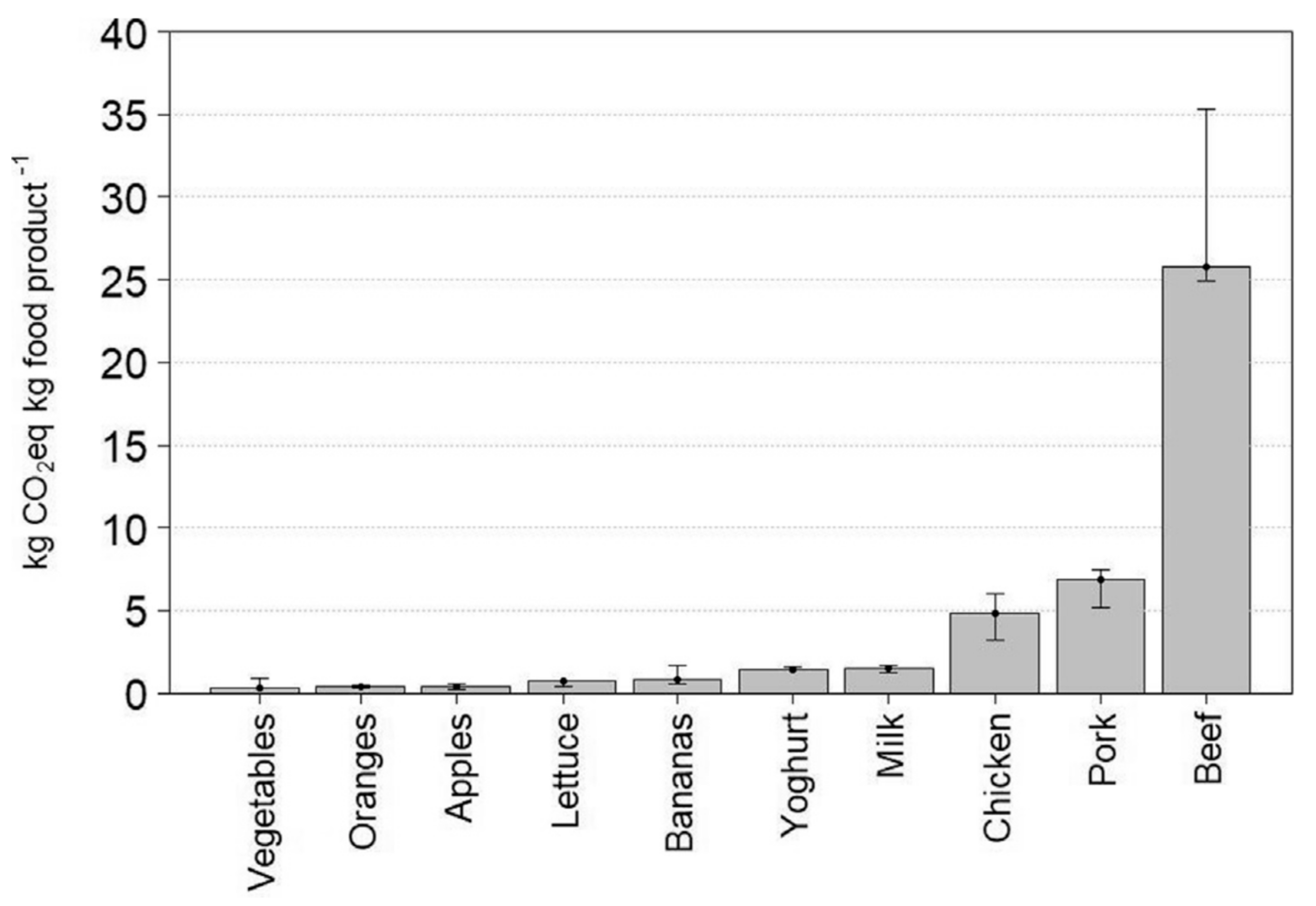
Figure 2.
The EAT-Lancet Commission planetary health plate [24].
Figure 2.
The EAT-Lancet Commission planetary health plate [24].
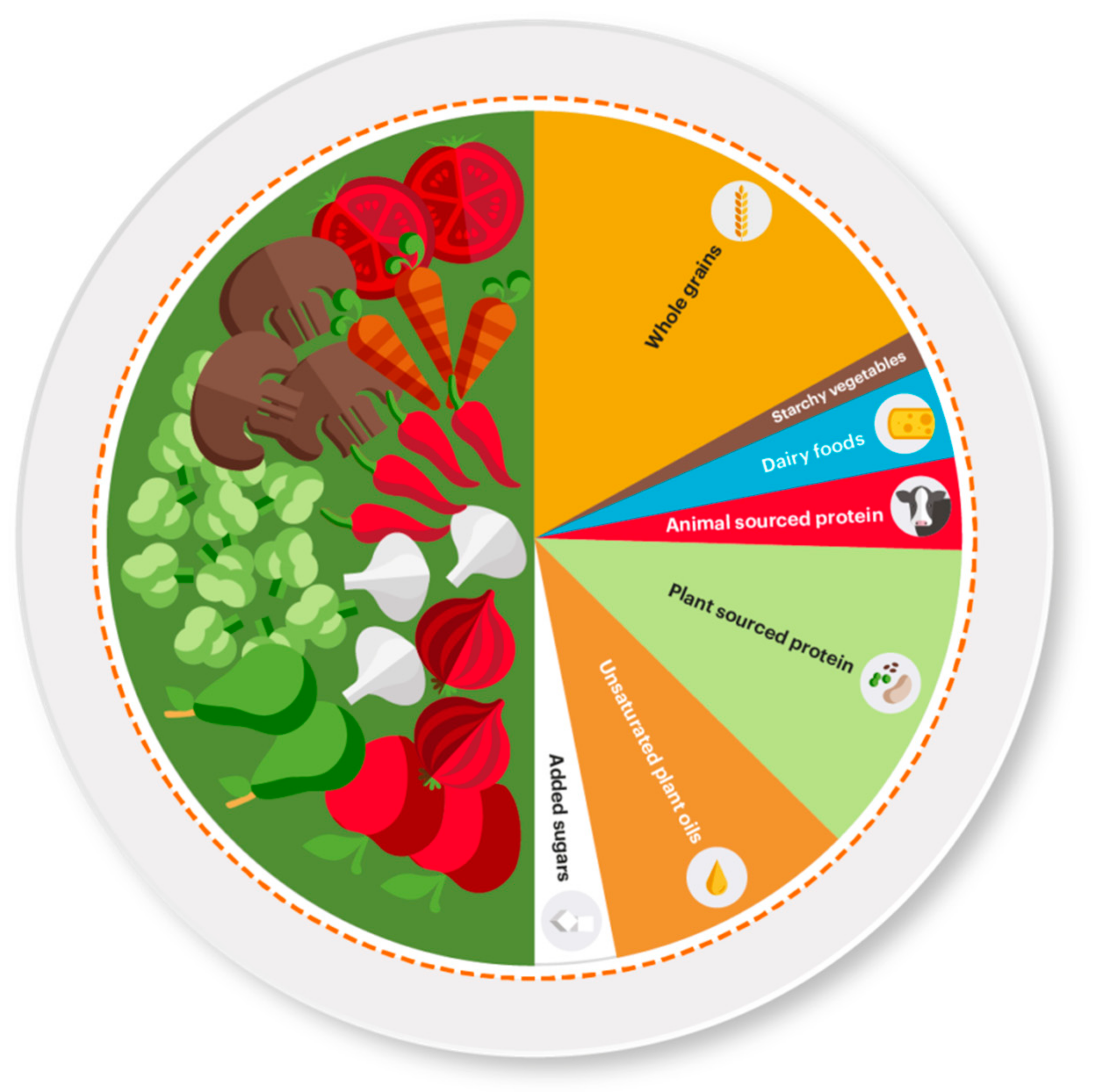
Figure 3.
Elements of The European Green Deal. Source: European Commission (2019) [65].
Figure 3.
Elements of The European Green Deal. Source: European Commission (2019) [65].
Disclaimer/Publisher’s Note: The statements, opinions and data contained in all publications are solely those of the individual author(s) and contributor(s) and not of MDPI and/or the editor(s). MDPI and/or the editor(s) disclaim responsibility for any injury to people or property resulting from any ideas, methods, instructions or products referred to in the content. |
© 2025 by the author. Licensee MDPI, Basel, Switzerland. This article is an open access article distributed under the terms and conditions of the Creative Commons Attribution (CC BY) license (http://creativecommons.org/licenses/by/4.0/).
Copyright: This open access article is published under a Creative Commons CC BY 4.0 license, which permit the free download, distribution, and reuse, provided that the author and preprint are cited in any reuse.


