

Submitted:
18 April 2025
Posted:
21 April 2025
You are already at the latest version
Abstract
South Korea has experienced the world’s lowest birth rate for more than two decades. In fact, South’s Korea’s population of close to 52 million is on track to halve by the end of this century. Yet spending more than $270 billion (390 trillion won) on policies including subsidized housing, paid parental leave, child care and early education programs, and family support services failed to reverse this declining trend. Thus, this paper explored the role of socioeconomic and gender inequities that have shaped cultural beliefs regarding parenting, child care, and family life in Korea, and how the sociocultural, educational, historical, and political processes have subsequently shaped the contemporary landscape of Korean early childhood policies and programs. Employing the critical discourse analysis (CDA), this paper describes, interprets, and explains the ways in which discourses of parenting and child care construct, legitimize, and at times, resist inequities in parenting and early childhood development. Key explanatory frameworks emerged from data: 1) Family socioeconomic status and excessive comparison in a hyper-competitive culture; 2) Childrearing as luxury: Gender inequities in parenting and family life; and 3) Parenting as investment: The opportunity cost of childrearing. The paper concludes with implications for early childhood policies designed to strengthen families and children’s well-being.
Keywords:
childrearing
; parenting
; child care
; early childhood education
; low fertility
; family socioeconomic status (SES)
; gender inequities
; ethnotheories
; critical discourse analysis
; family support policies
1. Introduction
South Korea has experienced the world’s lowest birth rate for more than two decades. The country’s total fertility rate (TFR), the average number of babies a woman is expected to have during her reproductive life, rose from 0.72 to 0.75 in 2024 for the first time in nine years [1,2]. Historically, the fall in fertility rates has been most significant in Korea among OECD countries: The TFR dropped from six children per woman in 1960, but has plummeted since to an estimated low of 0.72 children per woman in 2023 (Figure 1), and even worse in Seoul with a TFR of 0.55, far below the 2.1 needed to maintain a stable population in the absence of immigration [2,3]. Korea (or South Korea used interchangeably in this paper) is the only member of the OECD countries with a fertility rate below 1 and has been portrayed as a demographic time bomb. Moreover, South Korea’s population of close to 52 million is on track to halve by the end of this century; 96.5% of Korea’s cities and districts will likely be extinct by 2117 [4]. In fact, Korea may become the first country to disappear from the face of the earth from population extinction if its low fertility rate continues [5].
Korea’s demographic crisis in the context of low birth rates and rapid population aging pose a considerable challenge to economic growth, labor supply, the public pensions system, and the social welfare system [6,7]. Korea’s elderly dependency ratio is projected to be the highest among OECD countries at 79% [8]. Further, the increasingly rapid pace of population aging will have detrimental social, political, and fiscal impacts including inevitable school closings and the spread of ghost towns as well as a significant impact of forecasted reduction in the military size on national stability [4,8]. In response, the Korean government has spent more than $270 billion USD (390 trillion won) of public dollars since 2006 to address significant concerns about a rapidly aging population and projected population extinction [9]. However, these policy reforms–subsidized housing in Seoul for newlyweds, extending paid parental leave, family support (i.e., monetary baby vouchers to new parents), and expanding access to publicly-funded early childhood care and education (ECCE) programs have failed to reverse this declining trend. In recent years, Former President Yoon has declared a demographic crisis and presided over the Presidential Committee on an Aging Society and Population Policy to roll out new policy measures to reverse the trend of declining birth rate in South Korea. The Yoon administration pledged to provide a monthly allowance of 1 million Korean Won ($770 USD) by 2024 to parents that have a child less than a year old. The local cities also implemented policies, such as subsidies for fertility treatment based on demographic data: On average, women gave birth to their first child at 33, and close to 10% of 230,000 new births came from fertility treatments [10,11].
Though giving money to families can temporarily relieve the financial burden of raising children, some experts have expressed concerns that giving money won’t correct the current demographic crisis in the long run [12,13,14]. Additionally, some scholars have critiqued the insufficiency of low fertility policy measures for prioritizing promoting childbirth over women’s reproductive rights, health, and safety regardless of marital status [6]. When the Korean government, for example, published a birth map indicating how many women of reproductive age lived in different regions, it prompted a national birth strike and feminist protests with women holding banners that read, “My womb is not a national public good,” or “My womb, my choice” [15]. In recent years, families of young children have benefitted from vouchers on child care expenses, subsidized housing, free taxis, subsidies to cover hospital bills and IVF treatments [16]. Concerned with the continuously declining fertility rate, leading politicians and policymakers implemented more creative solutions such as hiring nannies from Southeast Asia similar to families in Hong Kong and Singapore, exempting men from serving in the military if they become a father of 3 children before turning age of 30 [13,17]. Unsurprisingly, this wide array of financial incentives and public benefits have not been effective; policymakers have been accused of not listening to young people – especially women – about their needs [6,14,18,19].
The central aim of this paper was to describe, interpret, and explain the ways in which discourses on parenting and child care construct, legitimize, and at times, resist socioeconomic and gender inequities in parenting and early childhood development. Moreover, the paper explored how the sociocultural, educational, historical, and political contexts have subsequently shaped the parental ethnotheories–shared cultural beliefs and values regarding child development and parenting–and broadly, the contemporary landscape of Korean early childhood care and education (ECCE) policies and programs [20,21]. In identifying underlying causes behind policy failure and reimagine future directions for transformative policies, the paper examined the following research questions:
- RQ1: What are the prominent discourses on low fertility, parenting, child care, and family life in contemporary Korean society?
- RQ2: How have socioeconomic and gender inequities shaped Korea’s parental ethnotheories on child development, parenting, and family life?
- RQ3: What early childhood and family support policy implications can be drawn from understanding these discourses?
Thus, drawing from multimodal data sources including talk, text, media, cultural artifacts, policies, narratives, speeches, interviews, opinion poll, policy forum, visual images, demographic trends, policy reports as well as empirical and theoretical works across multiple disciplines, this study conducted a critical discourse analysis (CDA) to identify three explanatory frameworks for understanding contributing factors to Korea’s low birth rates, and possibly reversing this alarming demographic shift.
2. Methods
Critical discourse analysis (CDA) is a qualitative analytical approach derived from the use of linguistics for critically describing, interpreting, and explaining the ways in which discourses construct, maintain, and legitimize social inequalities [22,23,24]. Given the interdisciplinary nature of this study and its goals, CDA was the most suited methodological choice for examining and uncovering patterns of discourses on childrearing and family support for children’s learning and development in the context of growing socioeconomic and gender inequalities in South Korea. While CDA is not grounded in a unitary theory or set of methods, the central premises of CDA posit that 1) the way people use language is purposeful; 2) language, knowledge, and power are inextricably linked; 3) language as a cultural practice mediates relationships of power and privilege in social interactions and institutions that are tied to historical contexts; 4) oral and written language promotes particular ideologies, a system of ideas and values that reflects the established order and manifests itself in everyday actions, decisions, and practices [22,23,24,25,26]. Moreover, CDA is particularly concerned with linguistic manifestations of the connections of injustice, inequality, and power [24]. This study applied CDA to examine the tacit meanings, values, and assumptions embedded in multimodal discourse consisting of talk, text, and media on childrearing, and more broadly, parental ethnotheories–collectively shared cultural beliefs and values about child development, parenting, as well as societal roles in childrearing, family support, child care, and early education [20].
More specifically, CDA employs an inductive approach [24]. Analytic procedures used in CDA are not limited to particular methods but are generally hermeneutic or interpretive to uncover latent or underlying beliefs that appear in language disguised as analogies, metaphors, or other conceptual expressions characterized by 1) problem-oriented focus; 2) analysis of semiotic data; 3) the view that discourses are situated in time and place; 4) the idea that expressions of language in text and talk are never neutral; 5) systematic, interpretive, descriptive, and explanatory analyses; and 6) interdisciplinary methodologies [23,24]. Applying the general analytical framework for CDA, the study’s analytic approach was comprised of seven stages [22].
Stage 1: Select the discourse. This analytic stage involved reading and observing broadly to develop through an inductive process key discourses related to inequality as a contributing factor to Korea’s low fertility rate and cultural beliefs about parenting, child care, family life, and children’s development and education. This process involved developing preliminary hypotheses to larger pieces of data, examined what was (or was not) being communicated, analyzed the modes and delivery of communication and language use related to childbirth, childrearing, and family support, and how parents were described by whom, and comparatively examining the voices of youth, men, women, current parents, researchers, and policymakers.
Stage 2: Locate and prepare data sources. I identified multiple data sources including talk, text, multimedia, social media, narratives, speeches, interviews, opinion poll, policy forum, cultural artifacts, visual images, demographic trends, policy reports, research briefs, white papers, as well as empirical and theoretical works across multiple disciplines including child development, family science, education, sociology, demography, economics, and social welfare. The final analytic sample included 143 newspaper articles; a total of 67 hour-recordings of documentary series and narrative video data including cultural artifacts and visual images; hundreds of social media post and comments since 2022 when Korea’s TFR of 0.78 alarmed the nation; 31 hour-recordings of public lecture, film, interviews, political speeches, and policy discussions on policy forums; 25 policy reports and white papers from the Korean government agencies and committees, policy think tanks, and research organizations; 18 research briefs on sociodemographic trends and public opinion data in Korea; and finally, 47 peer-reviewed journal articles and 8 books.
Stage 3: Examine the background of data. This stage entailed examining the social and historical context of multimodal data and the producers of the talk, texts, and multimedia content. I also considered the intended purpose and audience as well as the historical context shaping the data.
Stage 4: Code data and identify overarching themes and subthemes. Using qualitative coding methods, I established a coding approach and conducted a thematic analysis including open and deductive coding, then axial coding to identify relations among codes and themes within the data to develop a more comprehensive understanding of how the discourses provide explanatory frameworks for understanding South Korea’s resistance to childrearing despite billions of public investments. To identify the experiential, relational, and expressive values of language as a cultural tool, I further investigated how words, phrases, sentences, questions, and longer stretches of text were used to 1) make certain ideas or facts significant or not (e.g., ‘What is one thing Korea with the world’s lowest fertility rate must renounce?;’ categorizing top reasons for not having children by age and income level; word choice and repetition, the use of striking taglines such as demographic time bomb, population extinction just like dinosaurs, a national emergency, crisis, ‘Korea is so screwed!’); 2) enact specific activities, identities, and relationships (e.g., the roles mothers and fathers play in children’s development and learning by developmental stages, social norms and cultural expectations tied to the parenting and gender identities; conflicting images of women at home and workplace); 3) privilege or discredit specific forms of knowledge (e.g., the use and sources of data, statistics, scientific language, direct quotes from youth, working mothers, scholars, identifying whose voices are amplified or marginalized across data sources); and 4) identifying alignment between textual analysis and scholarly literature. This process of microanalysis helped discern how the discourses convey what is believed to be normal, good, right, proper, appropriate, and desirable regarding parenting, children’s development, and family life in Korea.
Stage 5: Analyze interdiscursivity. Upon completing the open coding of text, written forms of talk, multimedia and social media content, and artifacts, I analyzed the external relations that control the production of selected data as well as the reciprocal relations–how selected data might affect sociocultural practices and structures in families and workplace.
Stage 6: Analyze the internal relations. Then I inquired about the aims, representations, and positionality of selected data through patterns of words, headlines and leading statements, policy priorities, highlighted phrases or images, use of quoted materials and cited research, multiplicity and marginality of voices, and metaphors that support the conceptualization of emergent discourses.
Stage 7: Interpret the meanings of major themes as well as external and international relations identified in prior stages. In this final stage, I revisited the data and analytic memos to conceptually map structural features and individual fragments of the talk, text, and multimedia content into the broader context and themes established in the earlier analytic stages. Throughout the analysis, I recorded my analytic impressions and questions in memos describing the connections, questions, and insights gathered throughout the interpretation.
Furthermore, I engaged in multiple steps to ensure the integrity and validity of the study’s findings. First, the criterion for evaluating rigor in CDA research are completeness, accessibility, and consequential validity [22]. Accordingly, the analytic approach included data source triangulation to ensure completeness (i.e., new data revealed no new findings); member checking to ensure the findings were readable and comprehensible to Koreans when assessing accessibility; and establishing consequential validity by amplifying the silenced and disempowered voices of the women and youth [24]. Second, through self-reflection, peer debriefing, and member checking, I engaged in ongoing critical examination of my positionality–beliefs, assumptions, and epistemological lenses tied to my identities as a Korean American, immigrant, bilingual and bicultural mother scholar of color committed to socioeconomic equity and educational justice, and how these factors might shape the research process and interpretation of findings [22,23].
3. Results: Discourses on Parenting, Child Care, and Family Life
3.1. Rising Socioeconomic Inequities and the Culture of Excessive Comparison and Hyper-Competitiveness
The most prominent factor contributing to Korea’s lowest fertility rate in the world, according to scholars, was the culture of hyper-competitiveness that propels families of young children to ‘keep up with the Joneses’ in a lifelong rat race to compete with others to gain social status, power, economic resources, and educational advantages [18]. This status-seeking behavior starts in early childhood as early as age 3 when children are enrolled in a wide variety of private education and enrichment programs to acquire competitive advantages over their peers in Korean language acquisition and literacy skills, English immersion preschools, private tutors who provide individualized lesson plans on workbooks in early numeracy or reading comprehension, to name a few. Korean parents, particularly the families in the Seoul metropolitan region, believe that without the ability to afford the educational expenses to prepare their children for school, they fear that their children will be left behind in “a winner-take-all system” [27,28,29]. The recurring pattern of discourse related to socioeconomic inequities focused on the following three subthemes: 1) ‘high pressure expenses’ to equalize unequal chances, 2) private education expenditures propelled by ‘education fever’, and 3) the scarcity of affordable housing. In the following paragraphs, I elaborate on parental ethnotheories on each of these subthemes and how they might further contribute to families’ resistance to having children despite the public investment.
3.1.1. ‘High Pressure Expenses” to Equalize Unequal Chances
This kind of competitive spirit is what produced the economic miracle in Korea and is now undercutting society to the point of experiencing a low fertility rate only observed in a massive pandemic or a war [9,14]. Scholars argue that while adequate competition is needed, Korean culture breeds excessive competition and cultural obsession with materialistic values in the age of rising socioeconomic inequalities between the haves and the have nots [30], which further leads to a shared sense of perpetual anxiety with one’s social standing and survivability [13,18,31,32]. To support this view, Korea ranks one of the lowest in happiness, well-being, and life satisfaction, which measures how people evaluate their life on a scale from 0 to 10 that accounts for their satisfaction in housing, income, jobs, community, education, environment, civic engagement, health, life satisfaction, safety, work-life balance [33,34]. Some attribute this level of fiercely competitive ambiance to the spatial concentration of residents clustered in Seoul [35]. Youth, young adults as well as parents of young children in under-resourced communities have persistently experienced what Koreans call “a sense of deprivation,” a commonly used term in popular media that is fundamentally rooted in comparison of one’s status in relation to others who may be more advantaged in educational attainment, income, intergenerational wealth, occupational prestige, or the zip code of one’s residence [18].
Evidence suggests that the single driving force that has increased the childrearing expenditure in Korea has been fierce competition: According to a recent survey of 1,000 Korean adults aged 19-44, 88% of respondents believed that “South Korea is not a welcoming environment to raise children in” because South Korean society promotes “severe pressures due to competition” (88.9%), “severe issues comparing oneself or one’s children to others” (89.2%), and difficulties achieving residential stability” (86.4%) [21,30]. Another scholar emphasized that “In our country, competition begins at birth. To ensure your child does not lose, parents must invest in what we call, ‘high pressure expenses’--additional expenses on top of basic expenses for raising children [13,18]. To many parents, ‘high pressure expenses’ is a necessary condition for childbearing in Korea that include ‘expensive’ and ‘famous’ educational products including book series and toys, private tutors and coaches, enrichment programs, baby gears, fashion wear, travel and recreational activities, to name a few. Evidence further suggests a significant effect of family socioeconomic status (SES) on fertility: Lower-income couples, on average, tend to have fewer children or delay having children and the decline in fertility rate is larger for low-income households [36]. Among the cohorts of new births from 2010-2019, 54% of babies were born to highest-income families, 37% to moderate-income families, and 9% to low-income families. In other words, more than half of children in South Korea are born to high-income families while only 1 in 10 children are born to low-income families [13,36].
3.1.2. Private Education Expenditure Propelled by ‘Education Fever’
Inordinate amounts of expenditures on private education are cited as one of the biggest obstacles to childrearing among married couples [21]. Despite a decline in student enrollment, South Korean families’ expenditure on private education hit a record high, totaling 29.2 trillion won ($20.1 billion USD) in 2024, attesting to an intensifying dependence of families on private education [37]. This figure is striking given that in 2024, Korean government’s total planned budget for K-12 education was 74 trillion won ($50 billion USD) [3]. Unfortunately, average family expenditures on private education are continually rising, marking the fastest pace of annual growth among which cram school and private tutoring expenditures among high schools was the highest. Korean parents’ preoccupation with their children’s education, also known as “education fever” has resulted in excessive spending on costly supplemental education starting in early childhood [31,32]. Based on a survey sample of over 13,000 children under the age of 6, the first time the government officially collected and disclosed data on private education costs for preschool children, families spent an average of 332,000 won ($228 USD) per month [37]. This trend of private spending in early education is largely driven by growing demand for English language education in early childhood [38].
Family investment in private education in early childhood is a common cultural practice: Over 26% of toddlers (aged 2 and younger) attend private lessons, while 50% of children aged 3 and 81% of children aged 5 attend hagwons, costly private supplemental education cram schools [37]. On the walls and advertisements of these early childhood cram schools are displayed banners that reinforce the cultural notion that college admissions tracking begins in early childhood: “We design the blueprint for your child from kindergarten to college admissions,” or the announcement list of their students who gained entry to the most competitive elementary schools, the first foot in the door to most prestigious universities and careers [38]. Just in the past few months, several documentary episodes, and a K-drama amplified the desperation and despair among parents and the unintended cost of education fever on young children. First, ‘60-minute pursuit,’ an investigative report from Korean Broadcasting System (KBS), covering the pressure and process for 7 year olds who take high-stakes entrance exams to get leveled into English kindergarten and early childhood math hagwons in Daechi-dong, Korea’s capital of cram schools, gained 1.7M views in a span of weeks [38]. To gain admission into one of the “Big 10,” most competitive early childhood English hagwons, kindergarteners must memorize at least 1,800 synonyms and antonyms, demonstrate reading comprehension and grammar skills on par with the U.S. academic standards, compose an essay within 15 minutes, and complete a 1:1 interview in English with a hagwon instructor. Upon reviewing the test questions, one principal stated that asking 7 year-old children to answer inferential questions is developmentally inappropriate and is considered a form of “cognitive abuse” [38]. Further, each hagwon publicly releases the test score ranking which is used to assign thousands of children into ability grouping [38].
This early learning approach breeds excessive social comparison (e.g., determining one’s worth based on how they stick up against others), an achievement-oriented orientation that prioritizes rote memorization, and a sense of exclusivity akin to possessing luxury goods in limited edition. Children attending one of the prestigious English hagwons conveys a social status among parents: Carrying a canvas tote bag with the logo of one of the top English hagwons is more covetous among Daechi mothers of young children than carrying a Chanel bag, a phenomenon not exclusive to Seoul but shared across major metropolitan regions in Korea [38,39]. Second, Soo-ji Lee, a famous comedian, launched on her YouTube channel, “Hot Issue Ji” [39,40], a parody of Daechi-moms that went viral in social media channels, exceeding 8.5M views within a few months: These clips highlight the lifestyle of a Gangnam mom whose life revolves around the educational arrangement of a 3 year-old daughter enrolled in an English immersion preschool and many other extracurricular activities in Daechi-dong. Third, a new television drama series, Riding Life, portrays the complexity and consequences of a parenting practice that is commonly understood in Korea as “riding” --busily shifting children from one hagwon to the next lesson meticulously arranged by ambitious mothers who network and exchange information in exclusive cliques to hoard opportunities and resources for their children [39,40,41]. All these multimedia contents critically raise essential questions for Korea: For whom do these exams and test preparation schools exist? How does the current system undermine children’s rights to their well-being and future, their sense of curiosity and genuine interest in learning? How is Korea’s culture of hyper-competitiveness reinforcing the ideology of childhood, motherhood, and family life? What are the lifelong consequences and solutions for dismantling these structural inequalities that further exacerbate injustices and inequities in early childhood education? To address these questions, the Korean government conducted the country’s first evaluation of English kindergartens, which reported a significant portion of children enrolled in these programs are experiencing psychological distress and anxiety, and in extreme cases, insomnia and panic attacks as they are shoved into English immersion settings without prior knowledge or adequate support during a developmental period when they are just acquiring Korean language and literacy [42]. Jin (2025) further highlighted the negative impact of English preschools and kindergartens on parent-child relationships and household expenditure on basic necessities [42].
Most of these private cram schools emphasize ‘being ahead prerequisite learning’ where students are supplemented with materials at least 1 year ahead of their grade level [31,32,38,41]. Elementary school students spend, on average, 5 hours per day in hagwons [38]. On average, an individual family of children in grades K-12 spends about 10% of their income per child on education [31]. The excessive spending on supplemental education from the earliest ages would further fuel the country’s fiercely competitive academic environment in the context of rising income and regional inequalities. Additionally, the influence of family socioeconomic status (SES) on student achievement has increased during the past decades, offering evidence of growing educational inequality and widening income gap in South Korea [27,43]. Specifically, families with higher income brackets spent nearly seven times more than those in lower-income groups [37]. One mother noted, “what my husband and I constantly talk about is this: ‘If we can save an X amount of money, we can send our kids to an X number of hagwons (also known as cram schools or shadow education)” [18]. These experiences of family investment in their children’s academic competitiveness across a broad socioeconomic spectrum have been widely captured in multiple tv series such as My Golden Kids (2024; Episodes 188 and 215), Crash Course in Romance (2023), Green Mothers Club (2022), The Penthouse: War in Life (2020), Sky Castle (2018), to name a few [47,48,49,50].
The link between family expenditure in private education and fertility has been explored by several scholars. A recent study found that an increase of 1% in families’ spending on private education is significantly associated with a 0.3 decrease in TFR in South Korea [51]. During the years 2007-2023, family expenditures on private tuition, coaching, and cram schools have increased by 36.5% while TFR decreased by 42.9% during the same period. Another study examined the status externality–parents’ value of their children’s education relative to the education of other children–as an important mechanism for low birth rates in Korea [31]. Status externality drives up family expenditure on private education investments, which makes childrearing costly (or seemingly unaffordable) further inducing parents to have fewer or no children [31]. Deep concern for social status as well as peer influence on beliefs and behaviors in East Asian contexts are historically shaped by Confucianism and a culture of interdependence [29]. The practice of enrolling young children in an array of hagwons is so widespread that to opt out is seen as setting your child up to fail, an inconceivable notion in hyper-competitive Korea [17]. Further, lower spending on private education among higher-SES families lowered private education expenditures of lower-SES families, providing empirical evidence for status externality [31]. This effect was relatively stronger among low-SES families who invest more aggressively as measured by the percentage of family income spent on private education with a motivation of bringing their children’s status closer to that of the other children [31]. Moreover, TFR in Korea would be 28% higher without the status externality: This mechanism significantly affects the low-SES families so much that in the absence of status externality, childlessness falls from 5% to less than 1% in the lowest-income quintile [31].
3.1.3. Scarcity of Affordable Housing
Korea has the highest capital population concentration (50.6%) of all industrialized countries [35]. In fact, between 2015 and 2021, 78.5% of the population added to the great Seoul area represented the young adults for jobs [52]. Scholars report that the increase in interregional migration and population concentration in the Seoul metropolitan since 2015 is a key cause of Korea’s declining birth rate, which significantly declined starting 2015 (Figure 2) [1,13,35]. Higher capital population concentration with limited resources concentrated in the metropolitan region further drove competition. Based on the survey conducted in 2023 among respondents in their 20s and 30s, the top three obstacles to having children were the 1) high cost of housing (24.2%); 2) work-life balance (19.6%); and 3) financial burden of raising a child (11.4%) [18,21]. Most importantly, in a large survey of 1,572 respondents aged 20-64, housing insecurity was the biggest obstacle to fertility and the most urgent policy priority given that Seoul is home to over half the country’s 52 million citizens [18,21,28,53]. Unlike many other countries, housing stability is perceived as a foundational necessity for family planning in Korea [18,28,43,53]. One father puts it this way: “Where do we live and start our family is the first and primary concern for all families” [13]. Consequently, if people share the belief that if they cannot afford to own a home of their own, if we can’t be a ‘good’ parent, then we shouldn’t have children” [6,12,18].
3.2. Childrearing as Luxury: Gender Inequities and Affordability of Parenting
Another prominent theme, ‘childrearing as luxury,’ highlighted the inequitable affordability of parenting largely due to 1) income and wealth disparity, as well as 2) gender inequities in childrearing and occupation: “It’s not that young people in Korea don’t want to have children, they feel that they can’t have children” [14]. Scholars have proposed an alternative hypothesis for South Korea’s low fertility rates to social norms and expectations for unequal gender division of childrearing coupled with occupational inequality [54,55,56]. Korea ranks first in the highest educational attainment of women who surpass their male counterparts: 77% of women aged 25-34 have a tertiary qualification compared to 63% of men [3]. Although women clearly outperform men in education, the key measures of labor market outcomes are generally worse for women than for men: 76% of young women were employed, compared to 83% of men [3]. Moreover, Korea ranks 40 out of 41 in terms of gender inequality among OECD countries [33]. Women are still often expected to terminate their careers upon marriage or motherhood, assigning childrearing and familial responsibilities nearly exclusively to women [14,57]. Additionally, for 12 consecutive years, Korea ranked last in the working environment for women, illuminating persistent challenges in gender equality, according to the Economist’s (2025) glass ceiling index [58]. Korea continues to have the widest gender-based wage gap in the OECD: Women earn about two-thirds of the income than men [59]. Grueling workplace norms and inhumanely long working hours in a perpetual cycle (Figure 3) are inhospitable to family life, especially for women who are still expected to carry out the bulk of housework and childrearing [8,14,57]. The unequal distribution of the burden of child care between mothers and fathers was a key determinant of fertility [54]. More specifically, Korean women put in 2.8 hours more than men on the home and family each day compared to 0.8 hours in Sweden with a TFR of 1.7 or 1.8 more hours in the U.S. with a TFR of 1.7 [55].
As women’s educational attainment, wages, and career advancement pathways increased, the opportunity cost of having children and the financial burden of starting a family in South Korea increased over time [8,13]. With rising economic inequalities, gender introduces an additional barrier that contributes to the divergence in values between men and women, and women choosing not to have children. A concept of solo parenting popularized in the past few years refers to one person who almost entirely takes on the “penalties” or “cost of childrearing” that should be shared by many [13,57]. South Korea has become a society in which women work eight times more than men in household chores and six times more in caregiving responsibilities [14]. Consequently, young women embrace the belief that, “motherhood inevitably leads to career termination,” and “to working moms, having children is a luxury” [18,43]. Furthermore, men must choose between a paternity leave or a promotion; for women, it’s a choice between having a family or a career [8]. In fact, only a third of mothers, for example, return to their job after childbirth [14]. Women who are concerned about their own career advancement and the financial cost of child care and education decide to delay childbirth or not to have babies at all [7,30]. Moreover, while Korea has significantly expanded access to publicly-funded child care [, mothers report that getting a spot to enroll your child in these programs is “like winning the lottery” [18]. Furthermore, the gender gap in both paid and unpaid work in Korea is exceptionally large, requiring the sacrifices of two women–mother and grandma [8]. While some families rely on grandparent care or ‘twilight parenting,’ many women do not perceive relying on grandparents as a sustainable option [18,41].
Over the past several decades, Korea’s rapid economic development propelled women into higher education and the workforce, expanding women’s ambitions but the expected norms and roles of the wife and mother have not evolved at nearly the same pace [15,17]. One scholar noted that Korea has “a work system that is designed around an ‘ideal worker’ who starts work in the emerging adulthood, working full-time and overtime, for 40 years, always available at work without taking time off for childbearing, child care, or elder care. That model fits married men married to homemakers. It is a model perfectly designed for the workforce of the 1950’s but that is not the workforce in Korea today. By failing to change that definition of the ideal worker, you created a system that is very bad for women, but it’s also bad for men, and it’s worst of all for children” [14]. Furthermore, in the Seoul Family Survey of 1,574 residents in Seoul in their 20s to 40s, the top reason for not having a child was: “Because I don’t have the confidence to do a good job of raising them,” followed by the second reason: “Because Korean society is not suitable for raising children to live happily” [22]. Additionally, 63% of Seoul citizens who currently have one child indicated they were unlikely to have a second child [22].
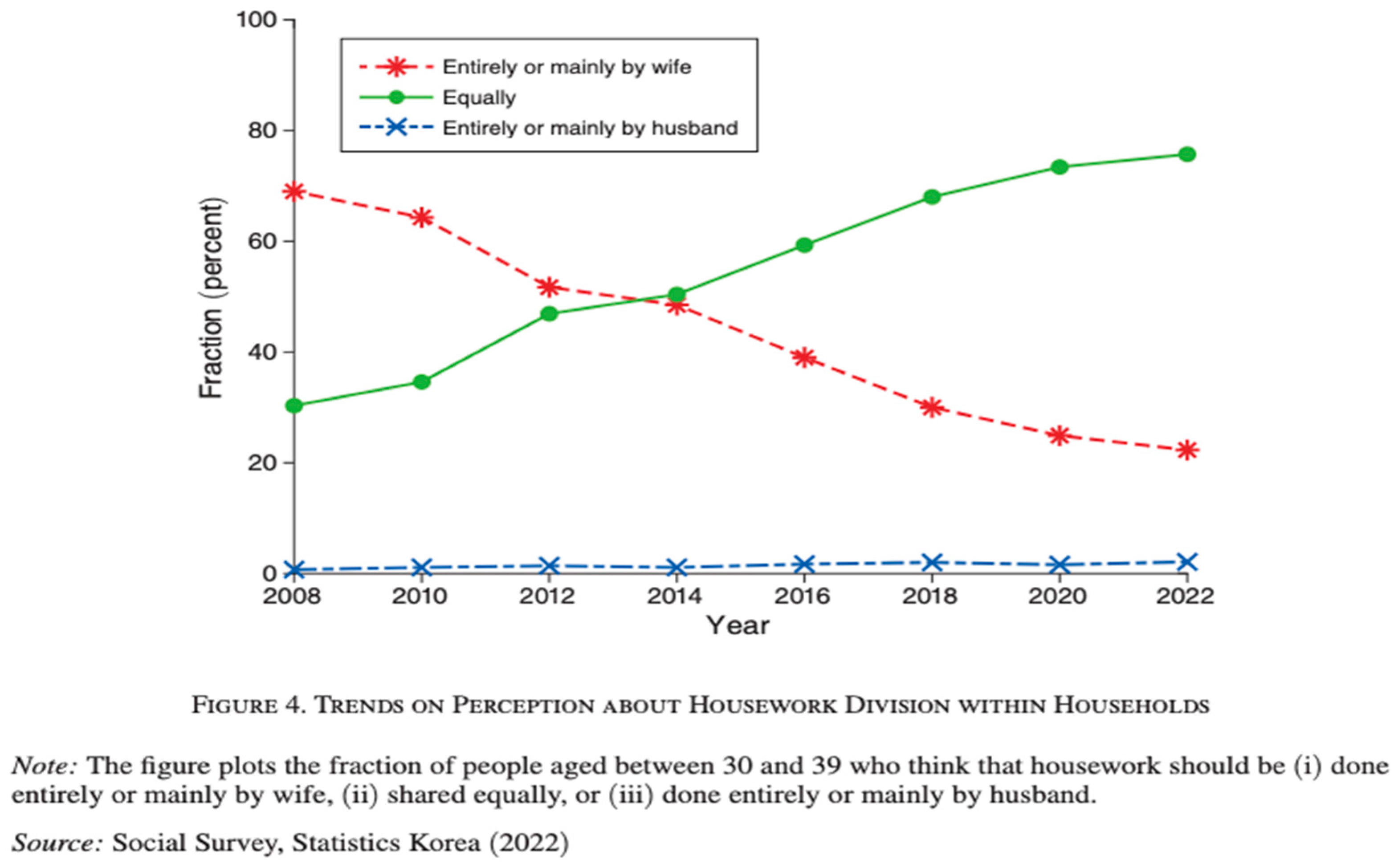
The plummeting fertility rate has its roots in the rapid societal transformation of Korea’s economy while maintaining societal values and expectations of motherhood and childrearing rooted in tradition. The countries with “lowest low” fertility rates today experienced rapid growth in GNP per capita after a long period of stagnation and were catapulted into modernity, without giving sufficient time for generations to adapt the beliefs, values, and traditions of their citizens. Goldin (2024), a Nobel Prize-winning economist, pointed out that swift economic changes as experienced in Korea while gender roles were slower to evolve has contributed to both generational conflicts and gendered ideological divides that result in a rapid decrease in the total fertility rate [55]. This hypothesis of “compressed modernity” explains a civilizational condition in which economic, political, social, and cultural changes occur in an extremely condensed manner in respect to both time and space [61]. South Korea as an advanced capitalist society combines lightning-fast and compressed economic transformation and the slow, uneven evolution of social institutions such as the family [30,61]. Former President Yoon declared that, “The government will strive to build a society where women can still lead their life pursuing their own values when they get married, give birth and raise children.” However, while women are increasingly holding onto the belief of equal division of housework including childrearing and parenting support for children’s development and learning, men’s attitudes toward gendered roles and division of labor related to parenting have not changed relatively much (Figure 4). Moreover, a recent study of 7,000 married women in Korea from 2014 to 2022 reported that an hour increase in husbands’ housework was linked with a 12% decrease in the risk of depressive symptom onset in women [57].
Korean society transitioned from traditional family structures to more egalitarian forms, with a significant increase in women entering the workforce. Expectations men have of women entrenched in a historically patriarchal culture do not match the rapidly shifting cultural and gender-based expectations women have of men: “Young men in Korea don’t see a path on delivering fatherhood the way their fathers did. Young men hold a traditional image of a breadwinner, but young Korean women are set on a different expectation” [14]. This mismatched expectations in gender roles results in a lack of mutual understanding and a deep polarization that extends beyond politics, affecting social attitudes, relationships, family processes, and parenting [14,54,55]. Women in Korea are getting steadily more liberal whereas men are getting very sharply more conservative: While this political divide along gender lines is observed in other democracies, Korea ranks highest in the ideological gap where young and far more pronounced among the younger generation aged 18-29 than among men and women in their thirties and upward [63].
Very few rich countries have successfully reversed a population decline, and none has climbed back above the replacement rate of 2.1 births per woman after dropping below it [15]. Women’s attitudes have become more work-centric over time (Figure 4) [54]. Interestingly, desire to have children has grown but faster among men: Based on a recent survey administered among 884 childless individuals aged between 20-49 who were asked about their intention to become a parent, the average score for men was 3.7 compared to 3.0 for women, further reflecting the traditional gender role expectations and ideological divides that women are primarily in charge of children’s education and well-being [21].
3.3. Parenting as Return on Investment & Paradigm Shift on Happiness among the N-po Generation
According to the World Happiness Report, Korea ranked 33rd out of the 38 OECD member countries, placing fifth from the bottom and people’s levels of life satisfaction and well-being decreased even more in the past few years [33]. The term, “N-po generation,” has become a symbolic term referring to young generations who have given up on N number of things including dating, marriage, and childrearing, on the grounds that they can barely afford to care for themselves, let alone a family, due to rising income and wealth inequalities, soaring cost of living, job shortages, and scarcity of affordable housing in Korea [64]. Data demonstrates that the structure of the traditional family unit in Korea has been disintegrating at an alarming rate [2,28,30]. Marriage and children are more closely linked in South Korea than nearly anywhere else with just 2.5% of children born outside of marriage in 2020, compared with an OECD average of more than 40% [9,65]. This high correlation between marriages and births further explains a recent rise in TFR because of an increase in marriages, a leading indicator of new births, which jumped 14.9% in 2024, the biggest spike since 1970.
Marriage is often perceived as a prerequisite for having children in Korea and in other parts of Asia. Furthermore, the “dating → marriage → childrearing” rites of passage are seen as an inseparable series [18]. Subsequently, increasing numbers of younger generations are giving up romantic relationships and resorting to the mindset of “don’t start at all” if I cannot afford to raise children. Relatedly, more than a third of Korean men and a quarter of Korean women who are now in their mid-to-late 30s report that they will never marry; even more will never have children, which would be considered selfish for not conforming to the traditional expectations and neglecting their duties for society only for the sake of their own happiness [13,21,66]. Given that the opportunity costs of marriage, childbirth, and childrearing are too costly for women in a patriarchal society, younger generations of women are coming to believe that having children is “just a fantasy,” empowered to opt out, but being denied the wonder of motherhood [2,17].
Moreover, marriage and childrearing have culturally shifted from necessity toward individualistic choice. The resounding ethos of childrearing in contemporary Korea among young women was: “Not necessarily” [18]. Young women in Korea, for example, are actively choosing single life as childrearing is valued as one of many goals in life, no longer a sole mission of women [18,66]. There seems to be multiple factors that encourage women to choose their career advancement over building a family of their own. First, to raise a child, a family spends on average 381,980,000 won ($263,135 USD). For many, the perceived burden and financial costs of parenting outweighs the joy. A new study in the U.S. reveals the cost of raising a child has surged 25%, reaching nearly over $300,000 (USD)over an 18-year period [67]. Among the tracked categories, child care costs jumped the most since 2023, rising 51.8% from $11,752 to $17,836 (USD). According to another study, South Korea was the most expensive country in the world to raise a child to the age of 18, 7.8 times the gross domestic product (GDP) per capita [68]. Second, of those women who take time off to have a child, only a third return to work or they were passed over for promotions. Feeling forced to choose between two mutually exclusive pathways, more young working women are choosing to pursue their dreams that bring fulfillment [17]. Next, the questions related to childrearing young people wrestle with are related to the opportunity costs, cost efficiency of parenting, and parents’ returns on their investment: “There are many adults nowadays who believe that raising children does not bring much happiness. Is it worth the cost? Compared to my investments in childrearing and educational support, how much can a child produce returns on my investment in college and beyond?” [18]. Another youth puts it this way: “Other than the joy of parenting, is there anything else for me to gain? Would this be a costly decision that detracts from my own happiness and well-being?” [28].
Policy experts and scholars agree that this generation has not experienced the centrality of family and thus lost a sense of its importance for their own life mapping [18,28]. Among the younger generation, becoming a parent is believed to result in socioeconomic disadvantages. To support this view, a big data analysis of social media platforms revealed a paradigmatic shift on patterns and trends related to happiness, increasing moving away from relational elements towards individual pursuits and fulfillment: Most frequently used words related to happiness included: “eat,’ ‘see and experience,’ ‘go visit/travel,’ ‘enjoy,’ and ‘healthy’ with a stronger emphasis on efficiency; Meanwhile, relational words such as ‘to meet someone,’ ‘to love,’ ‘to be together,’ significantly decreased in rank over the years [18]. Another youth interviewee explained that “In today’s world, there are so many aspects of life that can bring you happiness other than starting a family and raising children. So we won’t necessarily feel the need to have children. We have entered an age that gives more importance to individual happiness. So more people think that rather than investing in a child, they would rather invest in their own happiness” [18].
Finally, the individual pursuit of happiness is exclusive to childrearing in Korea based on the cultural notion of “one coin” [18]. Using big data analytics, researchers captured the cultural attitudes and beliefs about parenting among younger generations of Koreans in one phrase: “One coin” [18]. With “one coin” to play the game of life, young generations feel extreme societal and psychological pressures to compete and succeed at first attempts given inequitable access to resources and opportunities among those in underprivileged communities. In this mindset, one mission leads to the next: College admissions, employment, marriage, childbirth, childrearing, parental support for children’s education, career, and wedding, then retirement. From this point of view, childrearing has become an inaccessible dream because with having children comes a series of more complicated life missions, they feel that they will inevitably fail at, and the thought that they would be responsible for positioning your children at the risk of failure and social judgment forces couples to delay or give up on becoming parents. A shared sense of despair and failure is deeply rooted in the social reality of Korean society where definitions of success and failure are determined by external standards and social pressures imposed on individuals. And a mere act of liberating oneself from societal norms is frowned upon. To choose one’s own happiness within the regimented confines of societal norms, increasing numbers of younger generations are renouncing marriage and parenthood.
4. Discussion & Implications
This paper explored the role of socioeconomic and gender inequities that have shaped cultural beliefs regarding parenting, child care, and family life in Korea, and how the sociocultural, educational, historical, and political processes have subsequently shaped the discourse patterns related to the contemporary landscape of Korean early childhood policies and programs. This paper investigated the underlying causes behind policy failures despite billions of public investments using a critical discourse analysis (CDA). Consistent with the findings from Roh and Yang (2019), emergent patterns of discourses on parenting, child care, and family life support a strong need to critically reconsider the existing instrumentalist approach to early childhood and family support policies to transform Korea’s fiercely competitive culture and construct alternative pathways for strengthening families and supporting the healthy development and well-being of youngest citizens [19].
The Presidential Committee on an Aging Society and Population Policy has implemented a “select and concentrate” strategy that focused on policies most likely to have direct short-term impact across the five key priorities: 1) child care and early education; 2) balancing work and child care; 3) housing expansion and subsidies; 4) childrearing expenses; and 5) strengthen support for infertility treatments (IVF) as 10% of new births nationally come from IVF annually [8,16,69]. Critics have argued that Korea’s continuously declining trend of already low birth rate is an outcry against current institutional and social practices that demand systemic transformation [69]. Critics also point out that current policies have a unidimensional view that approaches low fertility as a matter of childrearing expenses but need to broaden the scope to target societal beliefs and values that are deeply rooted in parental ethnotheories on childrearing [13]. Another standing criticism of existing low fertility policies is the view on child development: Childrearing is a lifelong commitment that requires continual support for families to raise children well beyond early childhood [16]. Future policies must actively engage the participation and cooperation from the local governments. The following section discusses implications targeted to address socioeconomic and gender inequities in housing stability, child care and early education as well as family support policies.
4.1. Affordable Housing Policies
Across various data sources, the top priority for low fertility policy voted by a third of the respondents in their 20s and 30s was a housing policy particularly targeted to support single young adults as well as families with children. Between 2019-2021, with a steep increase in population density, housing prices went up 40%, on average, but even more in the metropolitan area. Housing policy being proposed as part of the low fertility policy is unique to South Korea. Need for housing stability is perceived as a major barrier to childrearing because more than half of Korea’s population is concentrated in the Seoul metropolitan area. Relatedly, with a 10% increase in housing prices, the total fertility rate decreases by 0.14 seven years later [35].
4.2. Child Care and Early Childhood Education Policies
Evidence suggests that cash transfer or baby vouchers can be helpful temporarily but has a small positive effect on increasing birth rates. Instead, strengthening paid parental leave to ensure economic stability and reduce psychological distress of parents is of central importance. Additionally, what is truly needed is a total revamp of the workforce system that effectively implements the paid parental leave policies, allowing people to be both workers and dedicated parents [14,16,18]. Parents indicated that support for parents to directly care for their children (i.e., parental leave) and provision of publicly funded child care were the top priorities compared to financial assistance (e.g., parental allowance, childbirth allowance, child allowance) [21]. In addition, expanding equitable access to high quality ECCE programs from birth can relieve psychological stress and financial burden of families of young children, particularly among dual-income households [16,18,54]. Compared to the rigorous teacher preparation training K-12 teachers obtain, strengthening the quality of the child care workforce development is of a pressing concern. Moreover, equity-oriented early childhood policies can target supporting children and families in underserved communities. Most importantly, privatization of hagwons is primarily concerned with ensuring profit thereby inducing a broadly shared sense of anxiety among parents and offering solutions to beat the academic competition starting in early childhood. Policies designed to strengthen public education while reducing family spending on private education seems critical.
4.3. Family Support Policies and Family-Friendly Workplace
Closely aligned with key discourses presented in this paper, Jang and Masatsusku (2024) utilized neural network analysis methods to examine scholarly publications and large survey data to identify family life as the most important factor influencing happiness among Koreans, suggesting an urgent need for designing child care and family support policies that can improve the quality of family life [70]. Raising children and building a family should be a fundamental right no one should be denied access regardless of one’s social status. Data further demonstrate that current policy measures reflect gendered stereotypes on reproduction and the patriarchal family norms. Government must strive to enable men to share more equally in family planning and childrearing responsibilities [6,57].
Future policies must center the perspectives of women and younger generations in improving the work-life balance for both genders and revising gender-biased regulations in the law when designing policy alternatives. Despite the past decade of public investments in child care and family support policies, Korea’s spending on parental leave is among the lowest [1]. While parental leave in Korea provides one year coverage paying up to 80% of the average monthly wage, only 4% of eligible fathers in large corporations and the public sector take up this policy. Among mid-size companies and small businesses, only 2.3% of fathers utilize parental leave. Another important point of consideration for policymakers is that over 80% of laborers in Korea’s market economy belong to small businesses, mid-size companies, hourly wage jobs, and entrepreneurs that are excluded from current parental leave policies [. Workplace policies designed to promote healthier work-life balance is critical for reversing the population decline. Furthermore, to increase the take up and duration of parental leave by fathers, policies that reduce the financial burden of parental leave on families and requiring firms to disclose the percentage of their eligible male employees are needed. At Lotte Group, for example, the fertility of their employees has been over 2.05 in 2022. 90% of men employed at Lotte Group participate in paternity leaves that cover 100% of their salary for the first month [13]. Parental leave policies should automatically apply to all eligible parents with an option to opt out if they choose not to take it. Additionally, flexible hours and remote work options would significantly enhance the quality of family life while allowing parents to return to work [12,13,16,18]. Lastly, with the employment of live-in nannies from Southeast Asia, Hong Kong and Singapore experienced increased women’s participation in the labor market, closing the gap in the percentage of working mothers of 0-5 year-old and 6-17 year-old children [14]. In Singapore, for example, 20% of households rely on 286,300 live-in nannies from abroad [14]. It also remains to be seen whether Korea’s implementation of a pilot program allowing the employment of nannies from Southeast Asian countries would effectively address the growing need for child care and household help.
5. Conclusions
While Korea’s TFR is the lowest among OECD countries, Korea is not alone in the Asia region struggling with a rapidly aging population: Fertility rate hit a record low in China (1.18), Japan (1.26), Singapore (1.04), and Taiwan (0.89) in 2024 [9,71]. Key discourses presented in this paper may apply to other East Asian countries that share a similar sociological phenomenon of low birth rate and a cultural concern for social status coupled with excessive education spending. Discourses constructed from the study will further provide explanatory frameworks for informing scalable and equitable policy and practice in child care, family support, and early childhood care and education (ECCE). In closing, policy measures alone are insufficient to address the population decline and eventual extinction in South Korea or elsewhere. In addition to policies and systematic efforts to better support families of young children, this paper uncovered a dire need for collective reimagining of cultural transformation–1) interrogating the narrowly defined standards of success that rank orders one’s social status and expanding cultural notions of flourishing that honor the multiplicity of voices, identities, and life journeys; 2) disrupting traditionally conceived, gendered norms around childrearing, parenting, and household chores to increase father engagement; and finally, 3) cultivating a child-centered, family-friendly culture that reaffirms the centrality of family and restores Korea’s collective spirit that has been demoralized by a sense of defeat in the face of hyper-competition, inequality, and injustice.
Funding
This research received no external funding.
Data Availability Statement
All data used in this paper is publicly available and upon request.
Acknowledgments
The author has reviewed and edited the output and takes for the content of this publication.
Conflicts of Interest
The author declares no conflicts of interest. The funders had no role in the design of the study; in the collection, analyses, or interpretation of data; in the writing of the manuscript; or in the decision to publish the results.
References
- Korean Statistical Information Service (KOSIS) (2025). Total fertility rate. Available online: https://kosis.kr/eng/.
- Ahn, A. (2023, March 19). South Korea has the world’s lowest fertility rate, a struggle with lessons for us all. NPR. Available online: https://www.npr.org/2023/03/19/1163341684/south-korea-fertility-rate.
- OECD (2024, June 20). Society at a Glance 2024 - Country Notes: Korea. Available online: https://www.oecd.org/en/publications/2024/06/society-at-a-glance-2024-country-notes_d98f4d80/korea_5c43a214.html.
- I’m, S. B.; Lee, J. (2021, August 22). As population dwindles, most cities could disappear. Korea JoongAng Daily. Available online: https://koreajoongangdaily.joins.com/2021/08/22/national/socialAffairs/aging-society-low-birthrate-population/20210822171700338.html.
- Coleman, D.A. (2002). Replacement migration, or why everyone is going to have to live in Korea: A fable for our times from the United Nations. Philosophical transactions of the Royal Society of London. Series B, Biological sciences, 357(1420), 583–598. [CrossRef]
- Kim, Y.M. (2018a). Gender analysis on the Plan for Ageing Society and Population - For reconstruction of the discourses on low fertility. Journal of Critical Social Welfare, 59, 103-152. [CrossRef]
- Lee, J.; Kim, C. (2024, February 28). In South Korea, the world's lowest fertility rate plunges again in 2023. Reuters. Available online: https://www.reuters.com/world/asia-pacific/south-koreas-fertility-rate-dropped-fresh-record-low-2023-2024-02-28/.
- Jones, R.S. (2023, June 22). Korean policies to reverse the decline in the fertility rate part 1: Balancing work and family. The Korea Economic Institute. Available online: https://keia.org/the-peninsula/korean-policies-to-reverse-the-decline-in-the-fertility-rate-part-1-balancing-work-and-family/.
- Reed, B. (2024, February 28). South Korea’s fertility rate sinks to record low despite $270bn in incentives. The Guardian. Available online: https://www.theguardian.com/world/2024/feb/28/south-korea-fertility-rate-2023-fall-record-low-incentives.
- OECD KOREA Policy Centre. (2023). Family database in the Asia-Pacific Region. SF2.3: Age of mothers at childbirth and age-specific fertility. Available online: https://oecdkorea.org/resource/download/2023/SF_2_3_Age_mothers_childbirth_2023.pdf.
- Seoul Metropolitan Government. (2024, November 4). Seoul expands support for infertility treatments: 1 in 5 births in Seoul results from infertility procedures. Available online: https://english.seoul.kr/seoul-expands-infertility-procedure/.
- Korean Broadcasting System (KBS). (2023). 가정의 달 특집 2030 저출산을 말하다–청출어람단. Available online: https://www.ondemandkorea.com/player/vod/gen-z-and-millennials-views-on-low-birth-rate-1.
- Korean Broadcasting System (KBS). (2024). 가정의 달 특별기획 5 부작. 저 너머의 출산. Available online: https://tv.nate.com/program/clips/29775.
- Williams, J. (2024, June 20). A conversation with Joan Williams: Korea is so screwed, Wow! Anniversary special. Education Broadcasting System (EBS). Available online: https://www.youtube.com/watch?v=HqqthZDCvfQ.
- Sussman, A.L. (2023, March 21). The real reason South Koreans aren’t having babies. The Atlantic. Available online: https://www.theatlantic.com/ideas/archive/2023/03/south-korea-fertility-rate-misogyny-feminism/673435/?utm_source=copy-link&utm_medium=social&utm_campaign=share.
- Educational Broadcasting System (EBS). (2023d). 초대석 - 모든 아이는 국가가 키운다. [The nation raises all children: Interview with Youngmi Kim, Former Vice Chairman of the Presidential Committee on an Aging Society and Population Policy]. Available online: https://www.youtube.com/watch?v=DGk0YO75-zw.
- Mackenzie, J. (2024, February 27). Why South Korean women aren’t having babies. BBC. Available online: https://www.bbc.com/news/world-asia-68402139.
- Education Broadcasting System. (EBS). (2023c). 초저출생, 국민의 의견을 듣는다. [Listening to the popular opinions on low birth rates]. Available online: https://www.ondemandkorea.com/player/vod/birth-rate-opinion?contentId=1589332.
- Roh, B.R.; Yang, K.E. (2019). Text mining analysis of South Korea’s birth-rate decline issue in newspaper articles: Transition patterns over 18 years. Korean Journal of Social Welfare, 71(4), 153-175. Available online: https://www.dbpia.co.kr/Journal/articleDetail?nodeId=NODE09273613.
- Harkness, S.; Super, C.M. (2021). Why understanding culture is essential for supporting children and families. Applied Developmental Science, 25(1), 14-25. [CrossRef]
- Seoul Family Center (2024). Seoul Family Report. ISSN 3022-4195. Seoul Metropolitan Government. Available online: https://familyseoul.or.kr/file/46237.
- Mullet, D.R. (2018). A general critical discourse analysis framework for educational research. Journal of Advanced Academics, 29(2), 116-142. [CrossRef]
- Van Dijk, T.A. (1993). Principles of critical discourse analysis. Discourse & Society, 4(2), 249-283. [CrossRef]
- Wodak, R.; Meyer, M. (2009). Methods for critical discourse analysis. London, England: Sage.
- Foucault, M. (1980). Power/knowledge: Selected interviews and other writings, 1972-1977. New York: Pantheon.
- Brookfield, S.D. (2005). The power of critical theory: Liberating adult learning and teaching. San Francisco: Jossey-Bass.
- Byun, S.; Kim, K. (2010). Educational inequality in South Korea: The widening socioeconomic gap in student achievement. Research in the Sociology of Education, 17, 155-182. [CrossRef]
- Ministry of Health and Welfare. (2024). Voices of youth and listening to the Minister of Health and Welfare: Solutions for low fertility and population aging. 청출 어람단. 복지부 차관에게 듣는다: 저출산 고령화 해법. Available online: https://www.youtube.com/playlist?list=PL3fOWhRbsK9MK13-I1JA_C7YBpea0dRvv.
- Sorensen, C.W. (1994). Success and education in South Korea. Comparative Education Review, 38(1), 10-35. [CrossRef]
- Hankyoreh. (2024, October 8). 88% of Koreans think their society isn’t fit for raising children, poll finds. Available online: https://english.hani.co.kr/arti/english_edition/e_national/1161590.html.
- Kim, S.; Tertilt, M.; Yum, M. (2024). Status externalities in education and low birth rates in Korea. American Economic Review, 114(6), 1576-1611. [CrossRef]
- Seth, M.J. (2002). Education fever: Society, politics, and the pursuit of schooling in South Korea. Honolulu, HI: University of Hawaii Press.
- OECD Better Life Index (2024). Life Satisfaction. Available online: https://www.oecdbetterlifeindex.org/topics/life-satisfaction/.
- Korean Broadcasting System (KBS World). (2025b, February 24). South Koreans report lower life satisfaction for the first time in 4 years. Available online: http://world.kbs.co.kr/service/news_view.htm?lang=e&Seq_Code=191191.
- Bank of Korea. (2023). Regional Population Migration and the Regional Economy Report. Available online: https://www.bok.or.kr/portal/bbs/P0002507/view.do?nttId=10081308&menuNo=200069.
- Yoo, J.S. (2022). Fertility rate analysis by income class and policy implications. Korean Journal of Social Science, 41(3), 233-258. [CrossRef]
- Choi, J.Y. (2025, March 13). Private education spending hits record despite fall in student numbers. The Korea Herald. Available online: https://www.koreaherald.com/article/10440947.
- Korean Broadcasting System (KBS). (2025a, February 14). 추적 60 분: 7 세 고시, 누구를 위한 시험인가 [Pursuit of 60 minutes: Entrance exams for 7 year olds: For whom do the exams exist?] [Documentary]. Episode 1400. Available online: https://www.youtube.com/watch?v=DysyxTqFlnY.
- Hot Issue Ji (2025, February 5). Human documentary: In the name of a mother: Episode 1 [Video]. YouTube. Available online: https://www.youtube.com/watch?v=1XpyBBHTRhk.
- Hot Issue Ji (2025, February 25). Human documentary: In the name of a mother: Episode 2 [Video]. YouTube. Available online: https://www.youtube.com/watch?v=wXXKyGA-LXc.
- Kim, C. (Executive Producer). (2025). 라이딩 인생 [Riding life] [TV drama series]. KT Studio Genie.
- Jin, T.H. (2025, April 11). EBS News exclusive special report: Nation’s first evaluation study of ‘English kindergartens’: Severe side effects on children’s anxiety and parent-child conflict. Available online: https://v.daum.net/v/20250411142647424.
- Education Broadcasting System (EBS). (2023a). 30 분 리얼토크 - 초 저출생 0.78 3 부작. [A 30-minute real talk: Ultra-low fertility rate of 0.78] [A documentary series. Part I-III]. Available online: https://www.ondemandkorea.com/player/vod/birth-rate-078.
- Kim, C. (Executive Producer). (2025). 라이딩 인생. [Riding life] [TV drama series]. KT Studio Genie.
- Kim, S.H. (Executive Producer). (2024a)요즘 육아 금쪽같은 내새끼. [My Golden Kids]. [Reality TV Series]. Episode 188. Channel A. Available online: https://www.imdb.com/title/tt30797088/.
- Kim, S.H. (Executive Producer). (2024b)요즘 육아 금쪽같은 내새끼. [My Golden Kids]. [Reality TV Series]. Episode 215. Channel A. Available online: https://www.imdb.com/title/tt30797088/.
- Yang, H.S. (2023). 일타 스캔들. [Crash Course in Romance]. [Korean Drama TV Series]. Netflix. Available online: https://www.imdb.com/title/tt24578016/.
- Ra, H.N. (2022). 그린마더스클럽. [Green Mothers’ Club]. [Korean Drama TV Series]. Netflix. Available online: https://www.imdb.com/title/tt15060900/?ref_=fn_all_ttl_1.
- Joo. D.M. (2020). 펜트하우스. [The Penthouse: War in Life]. Seasons 1-3. [Korean Drama TV Series]. Netflix. Available online: https://www.imdb.com/title/tt13067118/?ref_=fn_all_ttl_1.
- Kim, J.Y. (2018b). SKY 캐슬. [SKY Castle]. [Korean Drama TV Series]. JTBC. Available online: https://www.imdb.com/title/tt9151274/.
- Chae, H.S. (2025, February 5). The curse of spending 27 trillion won on cram schools: With a 1% increase in private supplemental education, total fertility rate drops by 0.3%. JoongAng Daily. Available online: https://www.joongang.co.kr/article/25312022.
- Hankyoreh. (2023, November 3). Korea has the highest capital population concentration of OECD–BOK says it’s hurting birth rates. Available online: https://english.hani.co.kr/arti/english_edition/e_national/1114875.html.
- Educational Broadcasting System (EBS). (2023b). 저출생 인구위기 극복의날: 0.78 이후의 세계. 7 부작. [A 7-part documentary series, Population planning in the age of ultra-low birth]. Available online: https://www.youtube.com/playlist?list=PLpuzWnAKjQgC0Xtkq0V-sm6sKd_s74iFS.
- Doepke, M.; Kindermann, F. (2019). Bargaining over babies: Theory, evidence, and policy implications. American Economic Review, 109(9), 3264-3306. [CrossRef]
- Goldin, C. (2024). Babies and the macroeconomy. NBER Working Paper 33311. National Bureau of Economic Research. Available online: https://www.nber.org/papers/w33311.
- Myoung, S.; Park, J.; Yi, J. (2021). Social norms and fertility. Journal of the European Economic Association, 19(5), 2429-2466.
- Baek, S.U.; Lee, Y.M.; Won, J.U.; Yoon, J.H. (2024). Association between husband’s participation in household work and the onset of depressive symptoms in married women: A population-based longitudinal study in South Korea. Social Science & Medicine, 362, 117416. [CrossRef]
- The Economist. (2025, March 5). The best places to be a working woman in 2025. Available online: https://www.economist.com/graphic-detail/2025/03/05/the-best-places-to-be-a-working-woman-in-2025.
- OECD (2023). Gender wage gap. Available online: https://www.oecd.org/en/data/indicators/gender-wage-gap.html.
- OECD Family Database. (2022). Usual working hours per week by gender. Available online: https://www.oecd.org/content/dam/oecd/en/data/datasets/family-database/lmf_2_1_usual_working_hours_gender.pdf.
- Chang, K. (2022). The logic of compressed modernity. Cambridge, UK: Polity Press.
- Statistics Korea. (2022). Social Survey. Family, Education and Training, Health, Crime and Safety, Environment. Available online: https://kostat.go.kr/board.es?mid=a20111050000&bid=11761.
- Burn, J. (2024, January, 8). A new global gender divide is emerging: Opinion data points. Financial Times. Available online: https://www.ft.com/content/29fd9b5c-2f35-41bf-9d4c-994db4e12998.
- N-po generation. (2025, February 11). In Wikipedia. Available online: https://en.wikipedia.org/wiki/N-po_generation.
- OECD (2022, December). Share of births outside of marriage. OECD Family Database. Available online: https://www.oecd.org/content/dam/oecd/en/data/datasets/family-database/sf_2_4_share_births_outside_marriage.pdf.
- Hancocks, P. (2022, December 4). South Korea spent $200 billion, but it can’t pay people enough to have a baby. CNN World. Available online: https://www.cnn.com/2022/12/03/asia/south-korea-worlds-lowest-fertility-rate-intl-hnk-dst.
- Weaver, S. (2025, April 1). It now costs nearly 300K to raise a child; here’s where it’s most expensive. LiveNOW from FOX. Available online: https://www.livenowfox.com/news/cost-to-raise-child-300k-where-most-expensive.
- Tappe, A. (2022, April 9). Child care is expensive everywhere. But this country tops the list. CNN Business. Available online: https://www.cnn.com/2022/04/09/economy/global-child-care-costs-us-china/index.html.
- Cho, J. (2021). A study on the problems and improvement tasks of the Framework Act on low birth in an aging society. Chungnam Law Review, 32(1), 11-42. [CrossRef]
- Jang, J.H.; Masatsuku, N. (2024). A study of factors influencing happiness in Korea: Topic modeling and neural network analysis. Data & Metadata, 3, 238. [CrossRef]
- World Bank. (2022). Fertility rate, total (birth per woman). Available online: https://data.worldbank.org/indicator/SP.DYN.TFRT.IN.
Figure 1.
Korea’s Total Fertility Rate is the Lowest among OECD Countries [3].
Figure 1.
Korea’s Total Fertility Rate is the Lowest among OECD Countries [3].
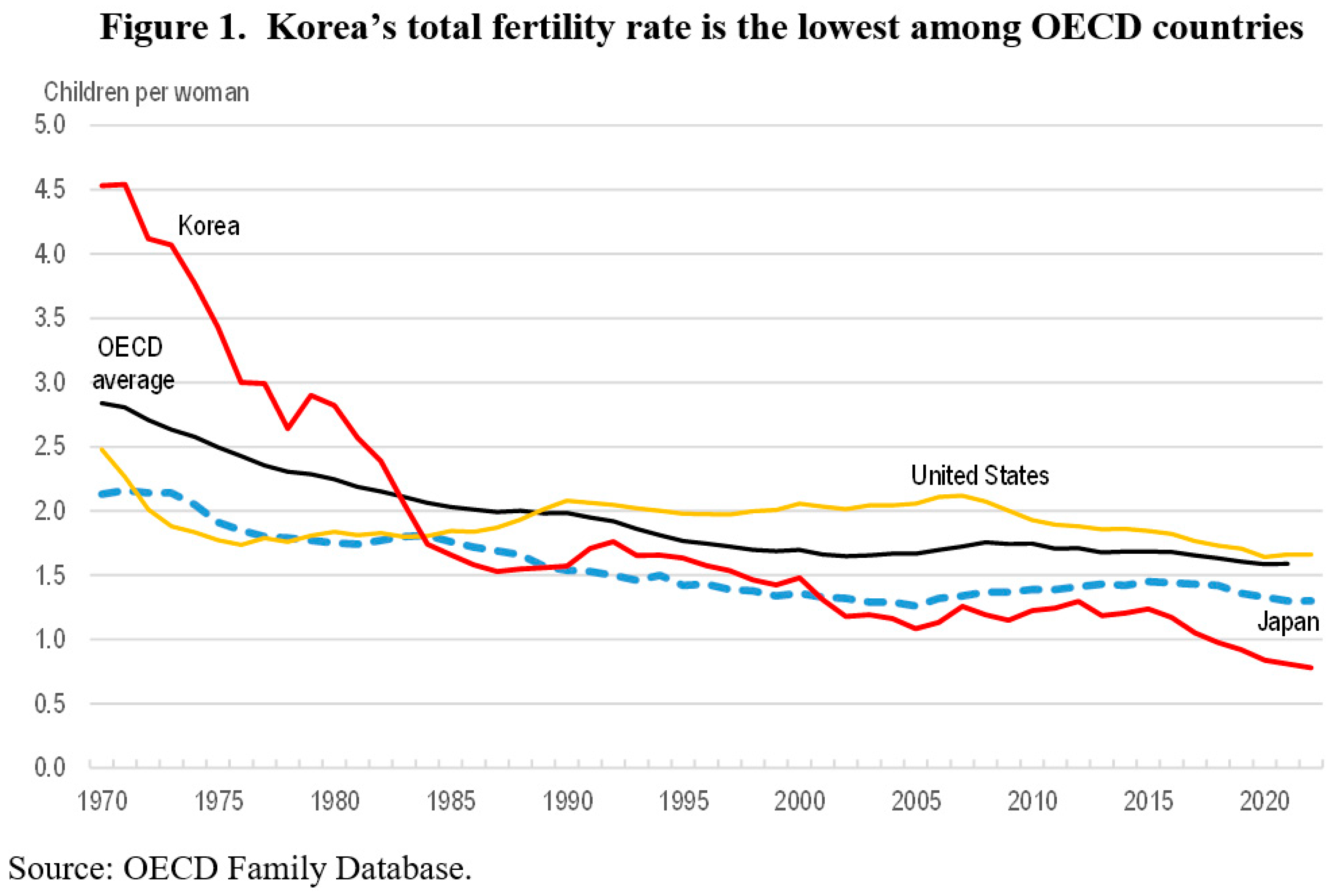
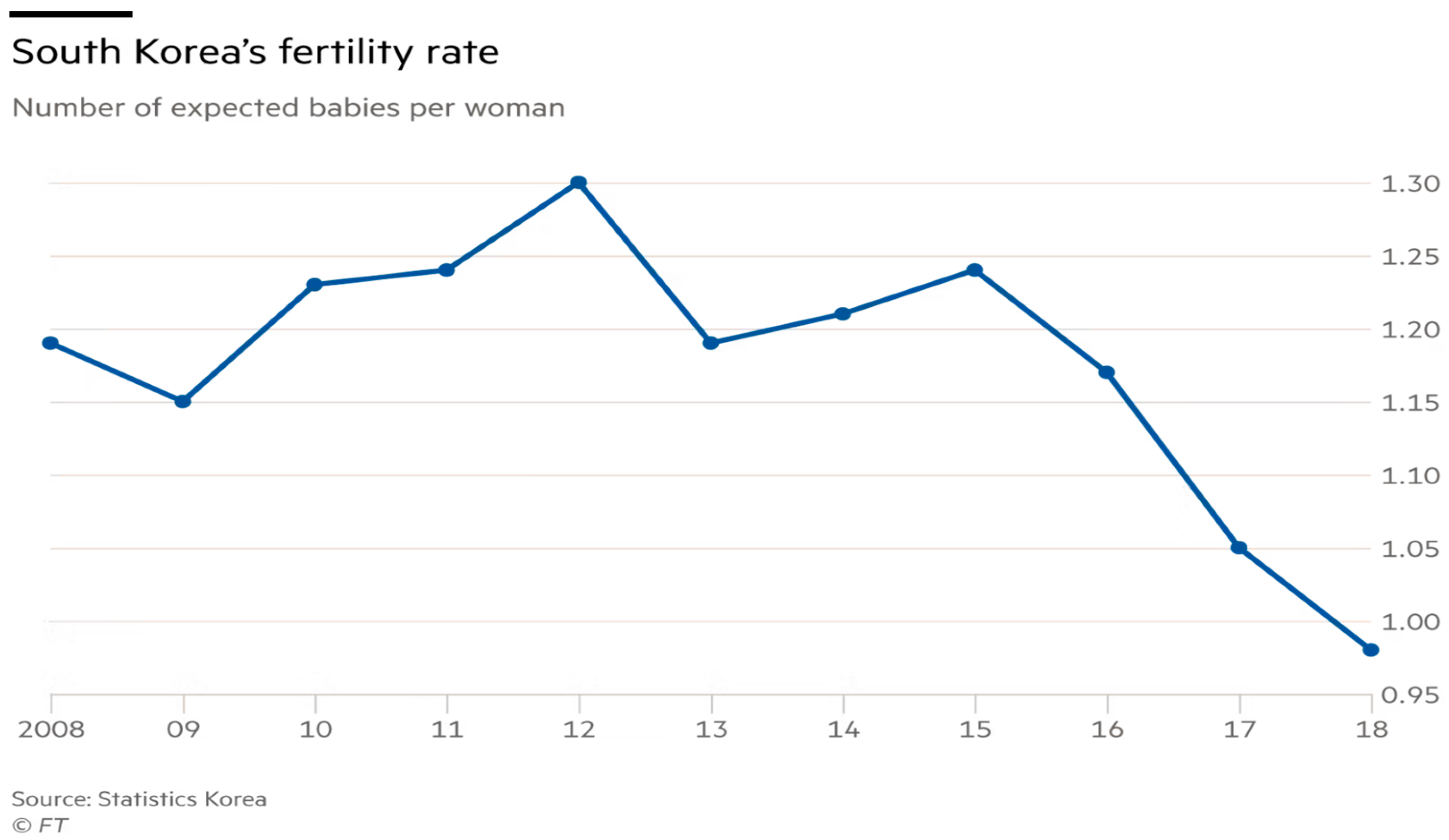
Figure 3.
Working Hours for Women in Each OECD Country [60].
Figure 3.
Working Hours for Women in Each OECD Country [60].
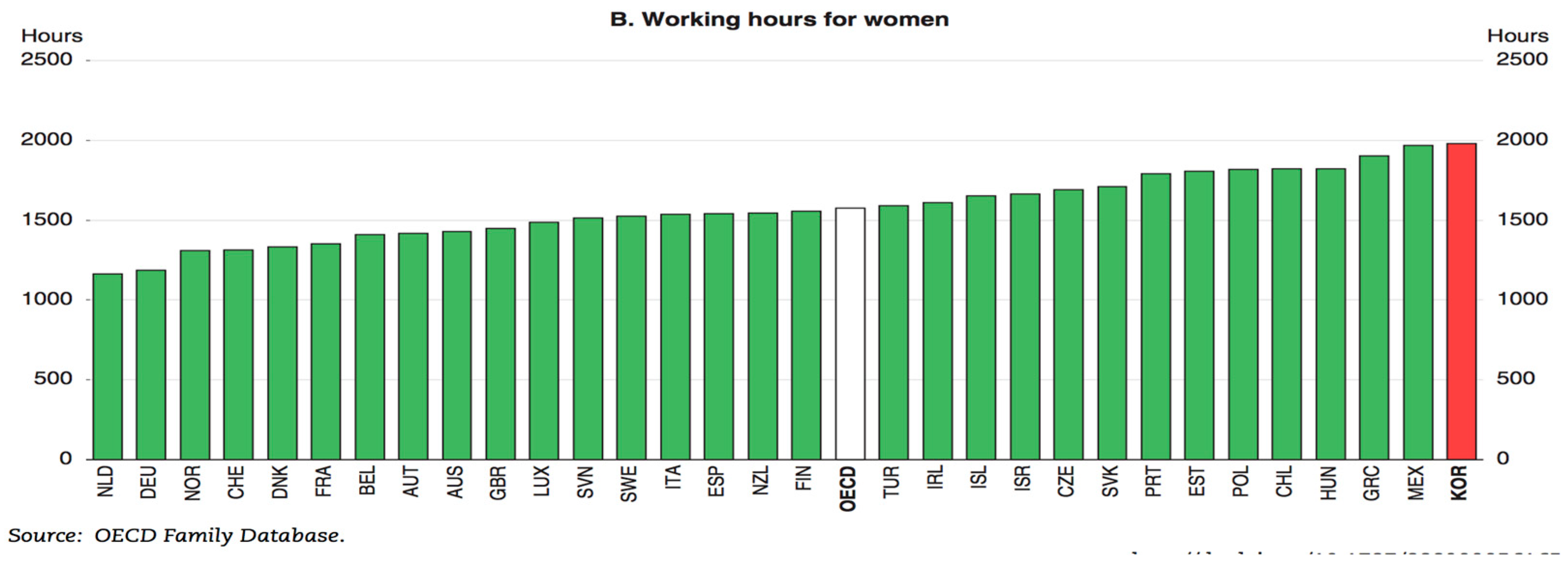
Figure 4.
Trends on Perception about Housework Division within Households [62].
Figure 4.
Trends on Perception about Housework Division within Households [62].
Disclaimer/Publisher’s Note: The statements, opinions and data contained in all publications are solely those of the individual author(s) and contributor(s) and not of MDPI and/or the editor(s). MDPI and/or the editor(s) disclaim responsibility for any injury to people or property resulting from any ideas, methods, instructions or products referred to in the content. |
© 2025 by the authors. Licensee MDPI, Basel, Switzerland. This article is an open access article distributed under the terms and conditions of the Creative Commons Attribution (CC BY) license (http://creativecommons.org/licenses/by/4.0/).
Copyright: This open access article is published under a Creative Commons CC BY 4.0 license, which permit the free download, distribution, and reuse, provided that the author and preprint are cited in any reuse.