

Submitted:
16 April 2025
Posted:
17 April 2025
You are already at the latest version
Abstract
For the first time the deposition area of heavy metals and other trace elements (Al, Ba, Cd, Co, Cr, Cu, Fe, Mn, Ni, P, Pb, S, Sr, Sb, V, Zn, and Hg) in the territory surrounding the landfill of domestic (municipal) waste at the 9th km of the Vilyuisky tract of Yakutsk within a radius of 150 km was estimated using the method of ICP-OES. Simultaneously, mosses, lichens and soil were analyzed for radionuclide content (40K, 137Cs, 212 Pb, 214Pb, 212Bi, 214Bi, 208Tl, 7Be, and 228Ac) in a number of selected samples by semiconductor gamma spectrometry. The results of examination of moss samples by ICP-OES indicate the presence of large amounts of toxic Ba and metal debris (Al, Co, Cr, Fe, S, and Pb) at the landfill. In addition, it is shown that the investigated samples contain elements such as: Cd, Co, Cr, Cu, Cu, Mn, Ni, Pb, Sr, V, Zn, and Hg. The method of gamma spectrometry revealed that the studied samples contain such radioactive element as 137Cs, daughter products of 238U and 232Th. Detection of the same heavy metals and radionuclides in the atmospheric air and soil of the city, as well as in the vegetation and soil near the landfill may indicate that one of the sources of environmental pollution may be products of incineration of the landfill contents at the 9th km of the Vilyuisky tract.
Keywords:
domestic waste landfill
; moss-biomonitor
; soil
; heavy metals
; radionuclides
; landfill
; optical emission spectrometry
; gamma spectrometry
; descriptive statistics
1. Introduction
One of the most important aspects in solving the problems of environmental protection and human health is the control of atmospheric air quality. The most hazardous environmental pollutants include heavy metals (HM) and radionuclides. In most European countries the need to study the consequences of their impact on the environment and human health led to the creation of national and international programs on biomonitoring of atmospheric deposition of heavy metals. Data on atmospheric deposition of HM and other toxic elements, as well as radionuclides, are collected on the basis of analysis of biomonitoring mosses, which serve as an analog of aerosol filters [1].
For the first time, the biomonitoring method with mosses was applied to assess the areal impact of a solid domestic (municipal) waste (SDW) landfill on the example of SDW at the 9th km of the Vilyuisky tract in Yakutsk, the capital of the Republic of Sakha (Yakutia) (Figure 1). An acute problem for the city and its residents is an unsatisfactory environmental condition, since housing and communal, fuel and energy enterprises are located on its territory [2]. According to [3], the level of atmospheric air pollution in Yakutsk is estimated to be more than twice as high. Priority pollutants of atmospheric air are suspended solids, carbon oxide, nitrogen dioxide, benz(a)preren, sulfur dioxide [4].
In general, the territory of the republic is characterized by significant limitations for possible location of environmental protection facilities in the field of SDW handling, such as: permafrost, specially protected natural areas (SPNA), as well as the lack of an extended network of highways. Under the federal program “Clean Country” the existing landfill at km 9 is subject to reclamation after commissioning of a new landfill. According to the results of the inspection conducted in December 2022, it was found that this landfill is overfilled, continues to operate illegally, it accommodates prohibited waste, which burns even in winter, emitting poisonous substances [5].
From the legislative point of view, solid municipal waste is waste generated in residential premises in the process of consumption, as well as goods that have lost their consumer properties in the process of their use. Solid municipal waste also includes waste generated in the process of activities of legal entities, individual entrepreneurs, similar in composition to that generated in residential premises. Regional operators remove from the population food waste and food packaging (glass, wooden, polymer, etc.), bags and sweepings from dwellings, house plants and bulky waste. The latter include unusable furniture, small and large household appliances, electrical appliances except for mercury-containing lamps [5].
In addition to household waste, the list of waste types accepted at the SDW landfill at the 9th km of the Vilyuisky tract also includes scrap of various metals, used mercury-containing devices (lamps, thermometers, relays), cardboard and paper, tires, tires, glass containers, packaging and film made of polystyrene, polyethylene, polypropylene [6].
The inspection revealed overfilling of the landfill with waste that continues to accumulate, which significantly exceeds the design capacity of the landfill [5]. An important problem is that there is no separate collection of solid domestic waste in Yakutsk. This leads to particularly negative consequences, because when mixing, for example, paper, cellulose, fabrics with food waste, expired medicines, mercury-containing products, pesticides, etc., chemical reactions are formed with the release of various hazardous substances, including methane, ammonia, cyanide, chlorine compounds and salts of highly toxic heavy metals (Cu, Pb, Sn, Zn, Co, Cd, Mo, Ni, Hg, Bi, and Sb).
The tested methodology of biomonitoring with mosses made it possible to determine the level of atmospheric deposition of heavy metals and other toxic elements, as well as radionuclides in the zone with a radius of ~51 km and assess their contribution to the impact of the landfill on the environment of the study region.
2. Materials and Methods
2.1. Study Area and Moss Sampling
Three species of mosses: Hylocomium splendens, Pleurozium Schreberi and Brachythecium salebrosum, as well as lichens and soil were selected as research objects.
The sampling sites were selected at the 10th, 27th, 30th, 51st km along the Vilyui tract from Yakutsk. It should be noted that the site at km 27 is the area of the new landfill. Figure 1 shows a general view of the landfill, which is located at km 9. Figure 2 shows a map of sampling sites for mosses-biomonitors, lichens and soil along the Vilyuisky tract.
Biomonitor mosses (Hylocomium splendens, Pleurozium Schreberi and Brachythecium salebrosum) were sampled in accordance with the UNECE ICP Vegetation methodology [7]. To determine the elemental composition of atmospheric deposition, green and green-brown segments of mosses corresponding to three-year growth were sampled.
The moss was thoroughly cleaned from extraneous debris and soil residues. The cleaned samples were pulverized using a ball mill with agate cups (planetary monomill PULVERISETTE 6 classic line by Fritsch), then the obtained material was dried at 40 °C to constant weight.
2.2. Determination of elemental composition
The elemental composition of moss samples was determined in the Frank Laboratory of Neutron Physics of the Joint Institute for Nuclear Research in Dubna by optical emission spectrometry with inductively coupled plasma (ICP-OES ) PlasmaQuant PQ 9000 Elite (Analytik Jena, Germany) and a direct mercury analyzer DMA-80 evo Milestone. Then 0.5 g of moss was weighed on an analytical balance and placed in a Teflon vial with 5 mL of HNO3 and 2 mL of H2O2. The samples were mineralized in a MARS6 microwave system (SEM, USA). After mineralization, the solutions were filtered through filter paper, transferred to 50 ml calibrated flasks and brought the volume to the mark with deionized water. Fifteen elements were determined: Al, Ba, Ba, Cd, Co, Co, Cr, Cr, Cu, Fe, Mn, Ni, P, Pb, S, Sr, V, and Zn. For mercury determination, 50 µg of the sample was weighed on an analytical balance and placed in a nickel cuvette for subsequent analysis on a direct mercury analyzer.
2.3. Quality control of the analyses
INCT-PVTL-6 (Tobacco leaves) standard was used for quality control of the analyses [8].
2.4. Determination of radionuclides
Determination of radioactive elements in moss, lichen and soil samples was carried out in the Radiation Technology Laboratory of the Ammosov North-Eastern Federal University (NEFU) in Yakutsk.
Measurements of radionuclide concentration by gamma-spectrometry method were carried out without taking into account background values, but it should be noted that in the discussion of the results of this study there will be compared the values of radionuclide concentration indicators in the selected sampling points with the data obtained in studies of radionuclide presence in uluses remote from Yakutsk. For this purpose, samples of moss, lichen and soil were measured on a semiconductor gamma spectrometer “ORTEC” with a detector made of extremely pure germanium type GEM-40 (SCGS). For sufficient reliability of measurements the device was calibrated using standard standards 241Am and 152Eu. Before measurement, the samples were air-dried at room temperature for two months to constant weight. After drying, the moss and lichen samples were ashed in a muffle furnace at 250 0C for 2-3 hours, then ground to a homogeneous powder. After mass measurement the ash was placed in a special vessel “Denta”. The radionuclide composition of the samples prepared in this way is measured with the help of SCGS within 8-16 hours.
The soil samples were air-dried for two months at room temperature, then cleaned and pulverized to a homogeneous mass. The content of radioactive elements in the soil was determined using the above technique on a semiconductor spectrometer.
Gamma spectra were analyzed using Maestro32 software.
3. Results and discussion
3.1. Descriptive statistics of elemental analysis
Table 2 presents the results of the discriminative statistics (mean, standard deviation, median, minimum, maximum and data scatter for five measurements) of elemental concentration values in moss samples. This table presents the statistics (mean, standard deviation, median, minimum, maximum and data scatter) obtained in the present study and the data obtained in the study of biomonitor mosses in Norway by ICP-OES method. To analyze the concentration of heavy metals in mosses-biomonitors in the territory near Yakutsk, the data on the concentration of heavy metals in mosses in Norway were chosen, since the same method - ICP-OES method - was used to study the elemental composition. In addition, it was decided to use the heavy metal indicators of this country, since this European country is considered to be one of the environmentally clean regions of Europe.
A comparison of median values of element concentrations was carried out, which showed that there is a significant excess of element concentrations in moss samples collected in the area near the landfill of Yakutsk compared to the median values of element concentrations in moss samples collected in Norway. Comparison of the results of discriminative statistics shows that there is a significant difference in median concentrations for the following elements: aluminum Al (1.2 times), barium Ba (2.3 times), cobalt Co (1.6 times), chromium Cr (1.5 times), iron Fe (1.3 times), sulfur S (1.2 times) and lead Pb (24 times), which is consistent with the fact that the landfill contains a large amount of paper (Ba) and metal debris (Al, Co, Cr, Fe, Pb).
The greater variation of Norwegian data is explained by the geographical extent of the region, the maximum values correspond to the southern part, which is under the influence of long-range atmospheric transport of pollutants from Western Europe.
From the obtained results, the following trend of accumulation of investigated elements is observed in the landfill area: P > S > Al > Fe > Mn > Ba > Sr > Zn > Cu > Pb > Cr > Cr > V > Ni >Co > Cd > Hg.
As can be seen from Table 2, the comparison of medians of the obtained values of Ba, Cr, Fe and Pb content exceeds similar values for the conditionally “clean” territory of Norway (with the fact that there is a ferro-chromium plant on its territory, which corresponds to the maximum values in the data scatter of the work [9].
As examples, Figure 5 and Figure 6 show the decrease of lead and iron concentration depending on the distance between the dump and sampling point. Red dots indicate the concentrations of lead and iron in moss samples collected on the territory of another district of the republic (Amginsky ulus), located at a distance of 200 km from Yakutsk.
Table 3 presents the results of correlation analysis of the investigated elements. Pairу correlations are observed for almost all defined metals.
Especially clear correlation with high correlation coefficient is traced for such metals as Fe-Cr, V-Ni, Hg-S, Pb-Cd, Fe-Pb, and Cd-Cu (Figure 7).
According to the results of gamma spectrometric analysis (Table 4) the radionuclide 137Cs was detected in all selected samples. The highest value of caesium concentration was shown in the soil sample from the 27th km of Vilyuisky tract, the lowest value was obtained in the sample of moss Hyloconium splendens from the 10th km of Vilyuisky tract. The content of radiocaesium in the studied samples corresponds to the level of global fallout and is much lower than the permissible level of interference (1000 Bq/kg). Cosmogenic radionuclide 7Be was also detected in the vegetation samples, the presence of which can be explained by prolonged precipitation during the sampling period. Radioisotopes of lead 212Pb, thallium 208Tl, bismuth 212Bi and actinium 228Ac — daughter products of thorium radionuclide 223Th — are present in the studied samples. In addition, isotopes of lead 214Pb and bismuth 214Bi, which are daughter products of uranium 238U, were detected.
In studies of soil and vegetation samples in the Lena-Amga interfluve and taiga-meadow landscapes of the Vilyui River basin conducted in [10], the presence of 137Cs in moss and lichen samples was detected. The range of this radionuclide concentration values was from 1±0 to 36±2 Bq/kg in the Lena-Amga interfluve and 21±1 to 36±3 Bq/kg in the Vilyui River basin.
Comparison of these indicators with the results of our study indicates that in the samples collected along the Vilyui tract, the content (concentration) of radiocaesium, the range of values of which varies from 3±1 to 71±2 Bq/kg, significantly exceeds the range of the study data [10]. Such values require further investigation and data analysis to identify sources of contamination. One of the sources of contamination with heavy metals and radionuclides can be a landfill for utilization of solid domestic waste.
The landfill for solid domestic waste utilization at the 9th km of the Vilyuisky tract has been in operation since 1967 and is the largest among the solid domestic waste landfills in the territory of the City of Yakutsk with an area of 31.8242 ha. Until the beginning of the 21st century, dust, carbon monoxide and carbon dioxide, sulfur and nitrogen oxides, hydrocarbons, phosphorus compounds, pesticides, radioactive isotopes were considered to be the main environmental pollutants, while the content of heavy metals and their compounds was not paid due attention [11].At present, the attention of researchers is more focused on determining the concentration of heavy metals, for example, in atmospheric air.
Atmospheric pollution by increased amounts of chemical elements formed, for example, during fuel combustion and landfill burning occurs by spreading them in the form of suspended matter (SM) (smoke and dust). It is known that there is a dependence of mortality on the level of SM in atmospheric air [12]. According to the results of elemental analyses of dust and soluble phase of snow cover samples conducted by the Institute of Permafrost Science named after P.I. Melnikov. P.I. Melnikov Institute of Permafrost Science of the Siberian Branch of RAS, atomic emission and mass spectral methods revealed that in the territory of Yakutsk the atmospheric air pollution with SM is 2 times higher on average compared to the sanitary norms, and radionuclides such as U and Th were detected in the snow cover.
Airborne explosives in the surface atmosphere are solid particles of different sizes. Medium-fine PM10 (PM - “particulate matter”, the figure shows the content of all particles with a diameter of 10 microns) are most uniformly distributed, their amount averaging about 10% of the explosives. Toxic substances are adsorbed on their surface, PM10 can remain in suspension for several days and be transported tens to hundreds of kilometers. These particles are the most dangerous, since about 10% of inhaled dust particles can penetrate into the deep parts of the lungs (alveoli) and linger there, and 15% are swallowed with saliva [6].
According to the results of the study, the atmospheric dust of Yakutsk contains a large amount of sulfur, calcium, sodium and iron oxides, and insignificant amounts of phosphorus, titanium, manganese, potassium and aluminum oxides [6]. It has been observed that elements of third (Ba, V, W, Mn, Sr), second (B, Co, Ni, Mo, Cu, Sb, Cr) and first (As, Cd, Hg, Pb, Zn) toxicity classes are also present in the dust. In the report of this work, conducted in 2020, accumulations of elements Zn, Mn, Co, Ti, Ni, Ga, Sr, Zr, Sn, La were found in the surface atmosphere of Yakutsk in large particles PM10-100.
It was found that the concentration of Zn, Mn exceeds the maximum permissible values in soil. PM<10 particles contain Cu, Cd, Pb, Be, Y, Sc, Cr, where the content of metals Cu, Cd, Pb also exceeds the permissible values in soil. In addition, it was found that radionuclides are common in the atmospheric dust of the city.
The heavy metals and radionuclides detected in this work in moss, lichen and soil samples confirm the results of the study of the atmospheric air of Yakutsk [6]. It was shown that the concentration of some heavy metals in moss samples exceeds the maximum permissible concentration values (PCV) in soil, which indicates that the concentration of heavy metals is even higher in the soil of the areas from which the moss was collected [13].
According to the present study, heavy metals also detected are chromium Cr (concentration higher than PCV), nickel Ni and zinc Zn (concentration higher than PCV), which are found in the industrial sites of mining and processing companies (MPC). From recent work, it is known that as a result of mining operations in the surrounding areas, there is an increase in heavy metals in soil and vegetation. Shrubs growing in the industrial site of Udachninsky MPC (Yakutia, Russia) accumulate high levels of heavy metals, namely Cr, Ni and Zn [14], i.e., high concentrations of heavy metal species encountered during MPC operation can also be found in the area where there are no industrial enterprises.
In addition, the results of the present study can be confirmed by the data of Federal Service for Supervision of Communications, Information Technology and Mass Communications (2020). In this landfill, a total of 460,000 tons of waste was deposited, with an established design capacity of 450,000 tons, that is, the landfill was already overfilled 2020, and as of the end of 2021, the overflow of waste was already 135,178.3 tons, and it continues to accumulate [5]. As a result of smoldering (combustion) of waste in the collected samples of atmospheric air, the excess of sulfur dioxide SO2 for urban and rural settlements was found almost 10 times. Along with this, facts of illegal acceptance and burial of prohibited waste such as office equipment, household appliances (monitors, TVs, computers, cartridges, refrigerators, microwaves, etc.), tires, black and non-ferrous metal, etc., as well as waste subject to recycling (paper, cardboard, polymeric materials, metals, etc.), which includes heavy metals and other toxic substances, have been established.
4. Conclusions
As a result of the study of moss samples by optical emission spectrometry with inductively coupled plasma, there is a large amount of paper (Ba) and metal debris (Cr, Fe, Pb) in the landfill. Comparison of median values of Ba, Cr, Fe and Pb content shows that they exceed the same values for the conditionally “clean” territory of Norway. Thus, the results of this work, indicating the presence of barium (Ba — element of the third class of toxicity), lead (Pb — element of the first class of toxicity), chromium (Cr (VI) — toxic form of chromium), confirm the results of an earlier study of the atmosphere and soil of Yakutsk [6]. In addition, the high concentration values of such heavy metals in moss samples from the territories close to the city (near the landfill) are comparable to the concentration values of heavy metals in vegetation samples from places near, for example, industrial sites of mining and processing plants [14].
Comparison of the results of determining the presence of heavy metals in mosses collected on the Vilyui tract by ICP-OES method and using a direct analyzer of mercury, as well as the atmospheric air of Yakutsk showed that such elements as Cd, Co, Cr, Cu, Cu, Mn, Ni, Pb, Sr, V, Zn, Hg were detected in the objects of study [6]. And when comparing the data of radionuclide analysis of mosses, lichen, soil, obtained by gamma-spectrometry in this work, and snow cover of Yakutsk [6], it was revealed that the same radioactive elements are present in the studied samples: daughter radioisotopes of uranium and thorium. Detection of the same heavy metals and radionuclides in the atmosphere, soil of the city and in vegetation and soil near the landfill may indicate that one of the sources of environmental contamination may be the products of combustion of the contents of the landfill at km 9 on the Vilyui tract.
In the coming years, it is planned to start operation of a new landfill in Yakutsk on a 46 hectare site at the 27th km of the Vilyuisky Tract. The landfill will start accepting garbage as soon as the garbage transfer station at the 8th kilometer of the Vilyuisky Tract becomes operational [15]. In this paper, one of the sampling points is the 27th kilometer along the Vilyui Tract. The results obtained from samples collected from this location may be useful in the preparation and operation of the new landfill: it may serve as background data for similar studies for future monitoring of the environmental impact of the landfill in the vicinity of this location.
Author Contributions
“Conceptualization, M.F. and S.M.; methodology, M.F.and S.M.; formal analysis, M.F., S.M., K.P., V.K., G.I., Vl.K., E.Z.; investigation, M.F., S.M., K.P., V.K., G.I., Vl.K., E.Z.; data curation, M.F., S.M., K.P., Vl.K.; writing—original draft preparation, X.X.; writing—review and editing, M.F., S.M., K.P.; visualization, M.F., S.M., K.P., Vl.K.; supervision, X.X.; M.F., S.M.; funding acquisition, M.F., S.M. All authors have read and agreed to the published version of the manuscript.
Funding
The work was carried out as part of the state assignment no. FSRG-2021-0014, FSRG-2024-0002 and with the financial support of the Endowment of the Foundation of the North-Eastern Federal University named after M.K. Ammosov.
Institutional Review Board Statement
Not applicable.
Informed Consent Statement
Not applicable.
Data Availability Statement
Data are published in the paper.
Acknowledgments
In this section, you can acknowledge any support given which is not covered by the author contribution or funding sections. This may include administrative and technical support, or donations in kind (e.g., materials used for experiments).
Conflicts of Interest
The authors declare no conflicts of interest.
References
- UNECE ICP Vegetation. https://icpvegetation.ceh.ac.uk/ (accessed on 11.12.2024).
- Environmental problems of Yakutsk. – URL: http://mirznanii.com/a/329319-1/ekologicheskie-problemy-yakutska (accessed on 29.06.2023) (in Russia). (accessed on 29.06.2023).
- Pakhomov, A. A.; Fedorova E., Ya. Environmental pressures on Yakutsk and counteraction measures; Sustainable North: Society, Economics, Ecology, politics : Proceedings of the VI All-Russian Scientific and Practical Conference, Yakutsk, September 29, 2021 / Editor-in-chief E. E. Grigorieva. Yakutsk: Northeastern Federal University named after M. K. Ammosov, 2021; pp. 211–215. (in Russian) [Google Scholar]
- Chemezov, E. N.; Sosina S., A. The state of the atmosphere of the Republic of Sakha (Yakutia); Symbol of Science, 2017; № 1. – URL: https://cyberleninka.ru/article/n/sostoyanie-atmosfery-respubliki-saha-yakutiya (Accessed on: 03.11.2023).
- Residents of Yakutsk will be able to donate garbage to the municipal landfill. SakhaNews. – URL: https://1sn.ru/ziteli-yakutska-smogut-sdavat-musor-na-gorodskoi-poligon-otxodov (accessed on: 03.11.2023).
- Scientific and technical report "Origin and composition of dust in the territory of the Yakutsk municipality". – URL: https://sinetspark.org/dust_in_yakutsk/tpost/itp1oh7n91-zaversheno-nauchnoe-issledovanie-prichin (accessed on: 04.07.2023).
- Moss Manual-2020 // ICP Vegetation. – URL: https://icpvegetation.ceh.ac.uk/get-involved/manuals/moss-survey (accessed on: 05.07.2023).
- Labmix24 Polish Virginia Tobacco Leaves. – URL: https://labmix24.com/en/products/IC-INCT-PVTL-6 (accessed on: 20.01.2024).
- Steinnes, E.; et al. Atmospheric deposition of heavy metals in Norway. National moss survey 2015 //NILU rapport. – 2017.
- Yakovleva, V. D.; Stepanov V., E. Radioecological problems of peaceful underground nuclear explosions in Yakutia; Sputnik+: Moscow, 2013. [Google Scholar]
- Avtsyn A., P.; Zhavoronkov A., A.; Marachev A., G.; Milovanov A., P. Human pathology in the North; Meditsina Publ.: Moscow, 1985. [Google Scholar]
- Golikov R., A.; Surzhikov D., V.; Kislitsyna V., V.; Steiger V., A. The impact of environmental pollution on public health (literature review); Scientific Review. Medical sciences, No. 5., 2017; pp. 20-31.
- Maximum permissible concentrations of chemicals in the soil: Hygienic standards; Federal Center of Hygiene and Epidemiology of Rospotrebnadzor: Moscow, 2006; p. 15.
- Gololobova, A. , Legostaeva Y. Potentially toxic elements uptake and distribution in Betula middendorffii T. and Duschekia fruticosa R. growing on diamond mining area (Yakutia, Russia) // Plants 2024, 13, 2440. [Google Scholar] [CrossRef]
- The new Yakutsk landfill will begin receiving waste in 2024. – URL: https://yakutia-daily.ru/novyj-musornyj-poligon-yakutska-nachnet-prinimat-othody-v-2024-godu/ (accessed on: 24.04.2024). 2024.
Figure 1.
General view of the landfill, where the initial sampling point is marked (10).
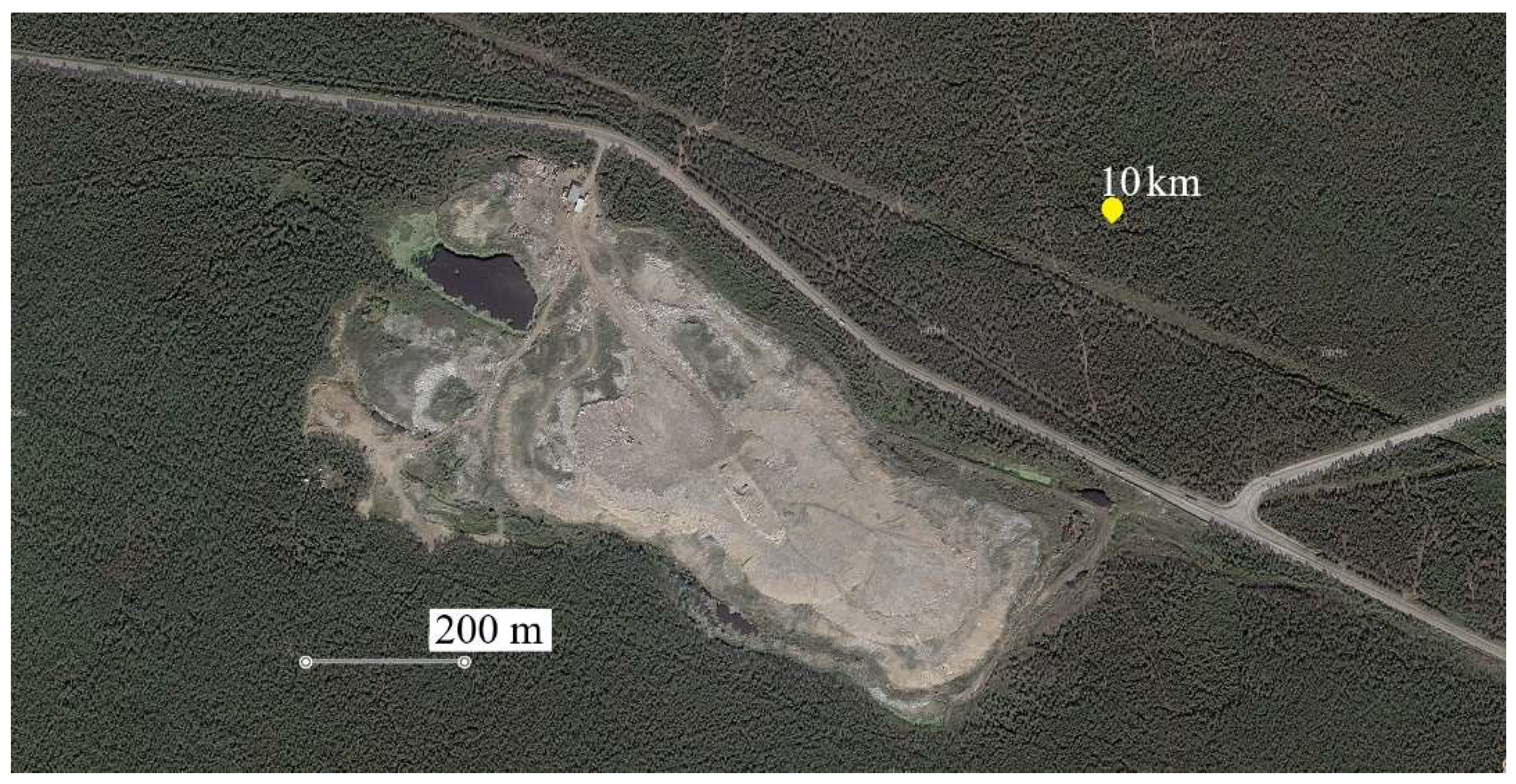
Figure 2.
Sampling map of moss biomonitors and soils along the Vilyui Tract.
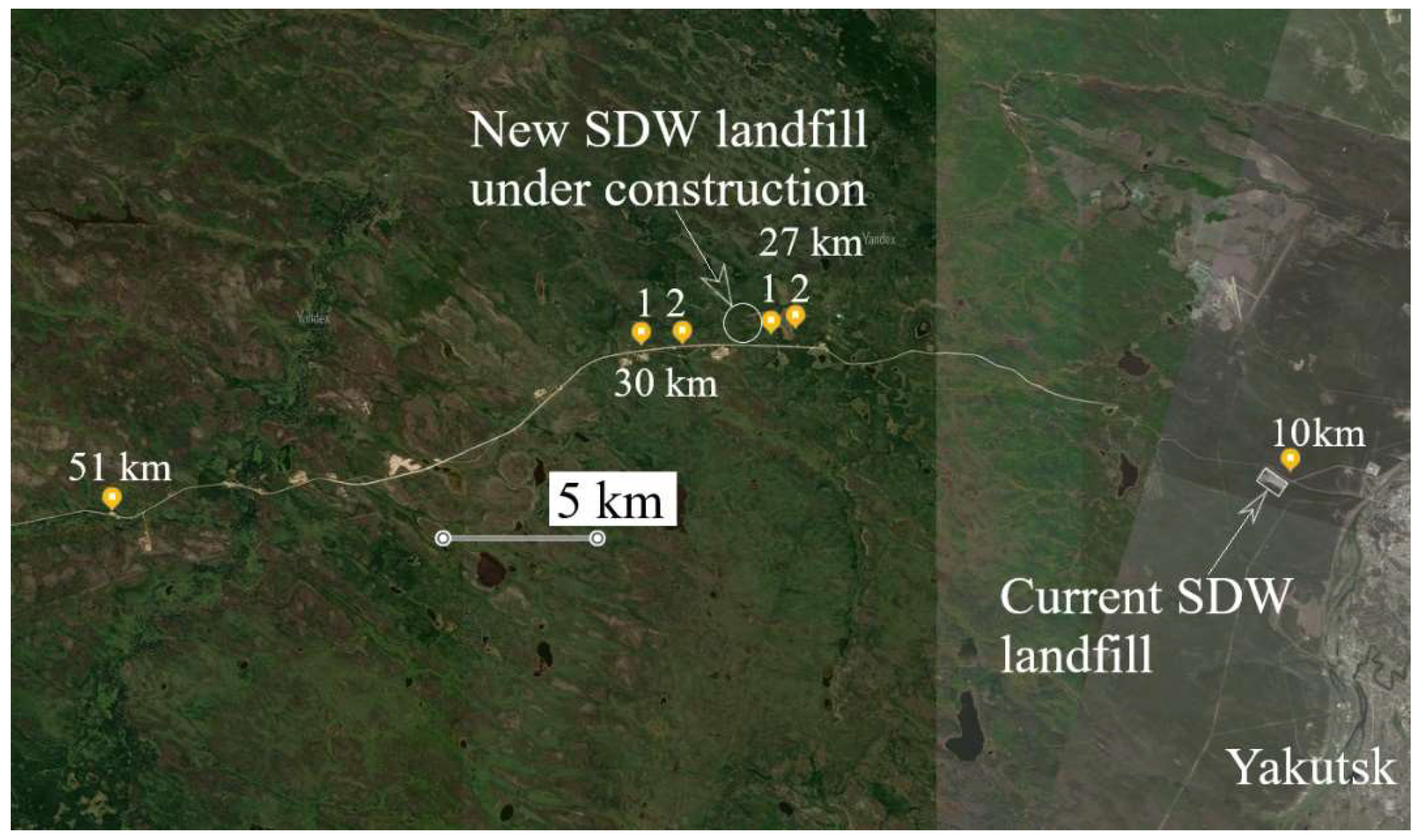
Figure 3.
Species of moss biomonitors growing in the sampling area.
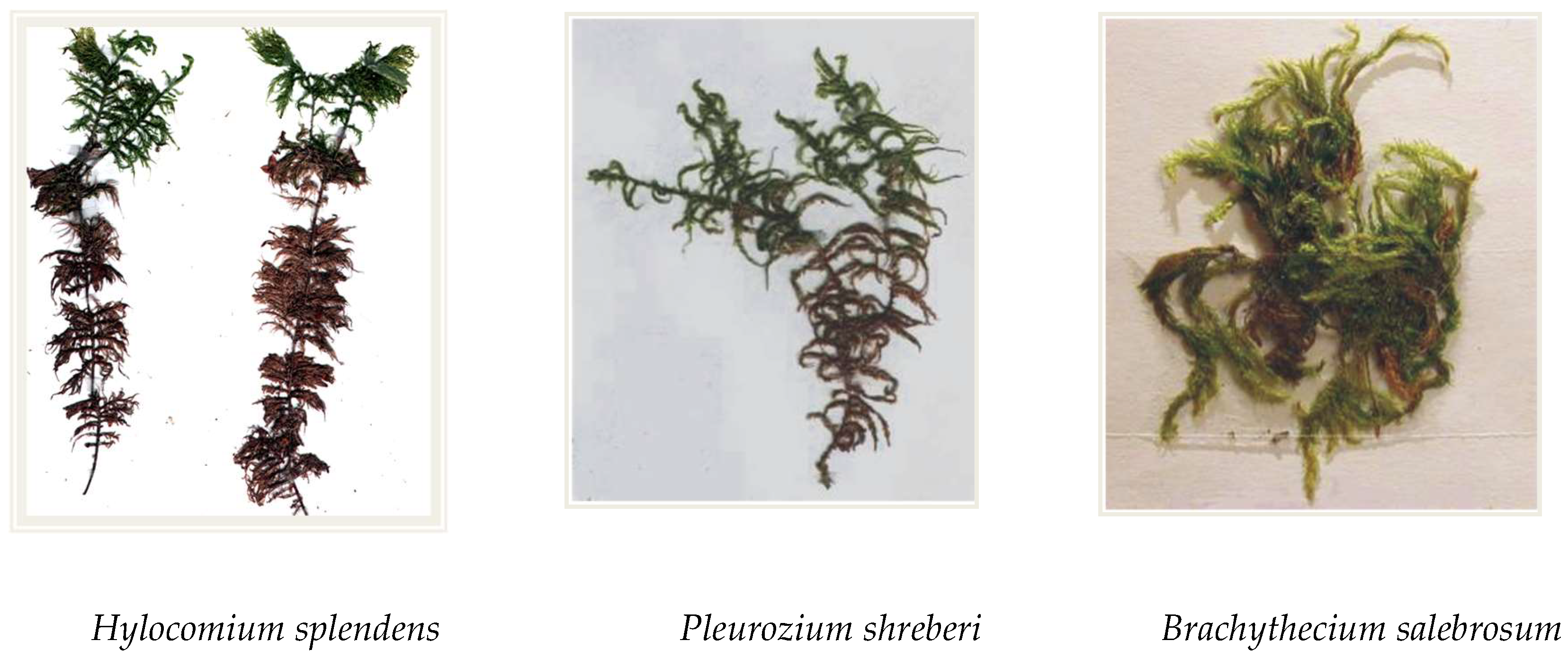
Figure 4.
The four annual segments (increases) that are used in the elemental analysis.
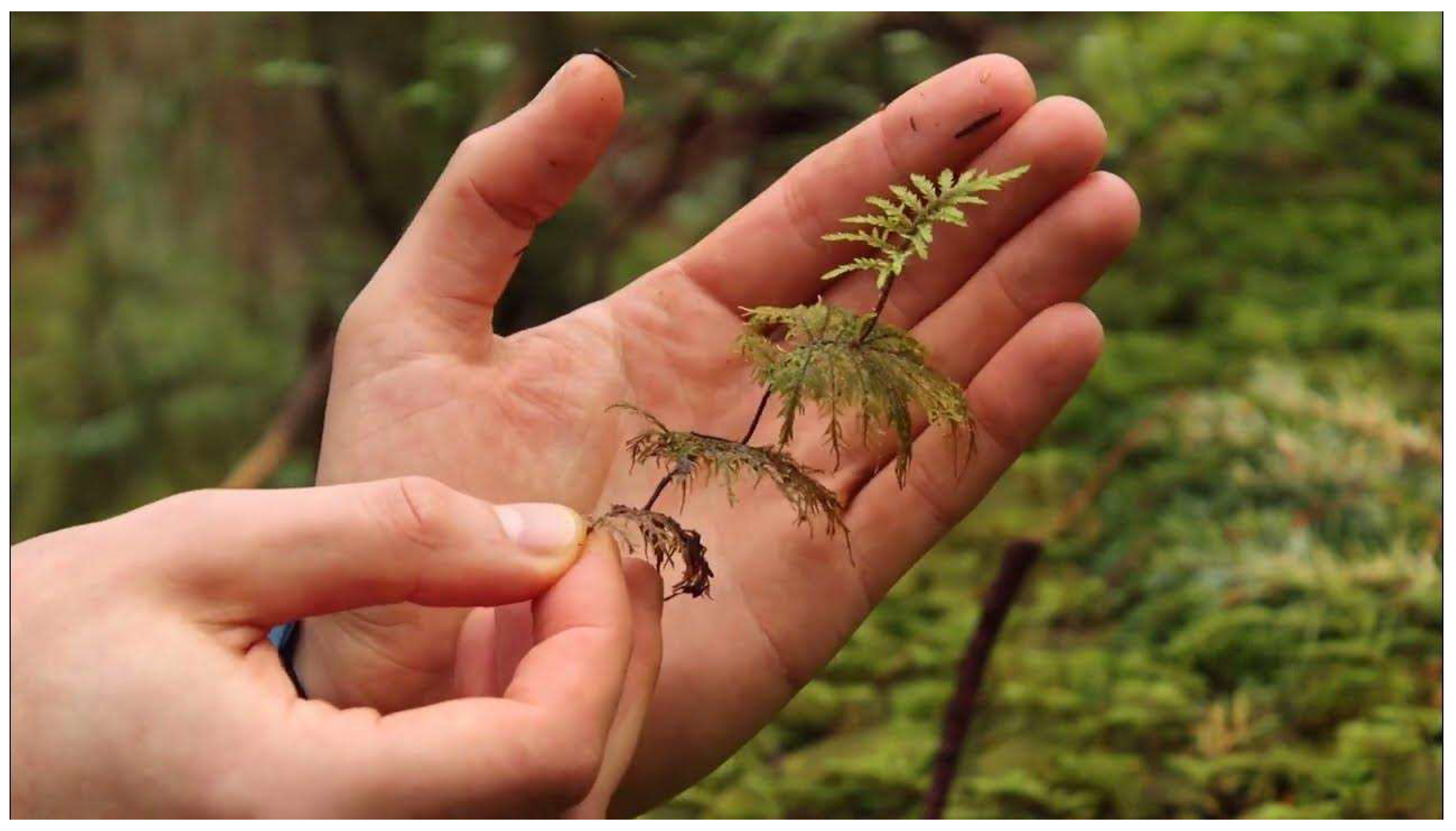
Figure 5.
Decreasing concentration of lead in moss with distance (km) from the landfill.
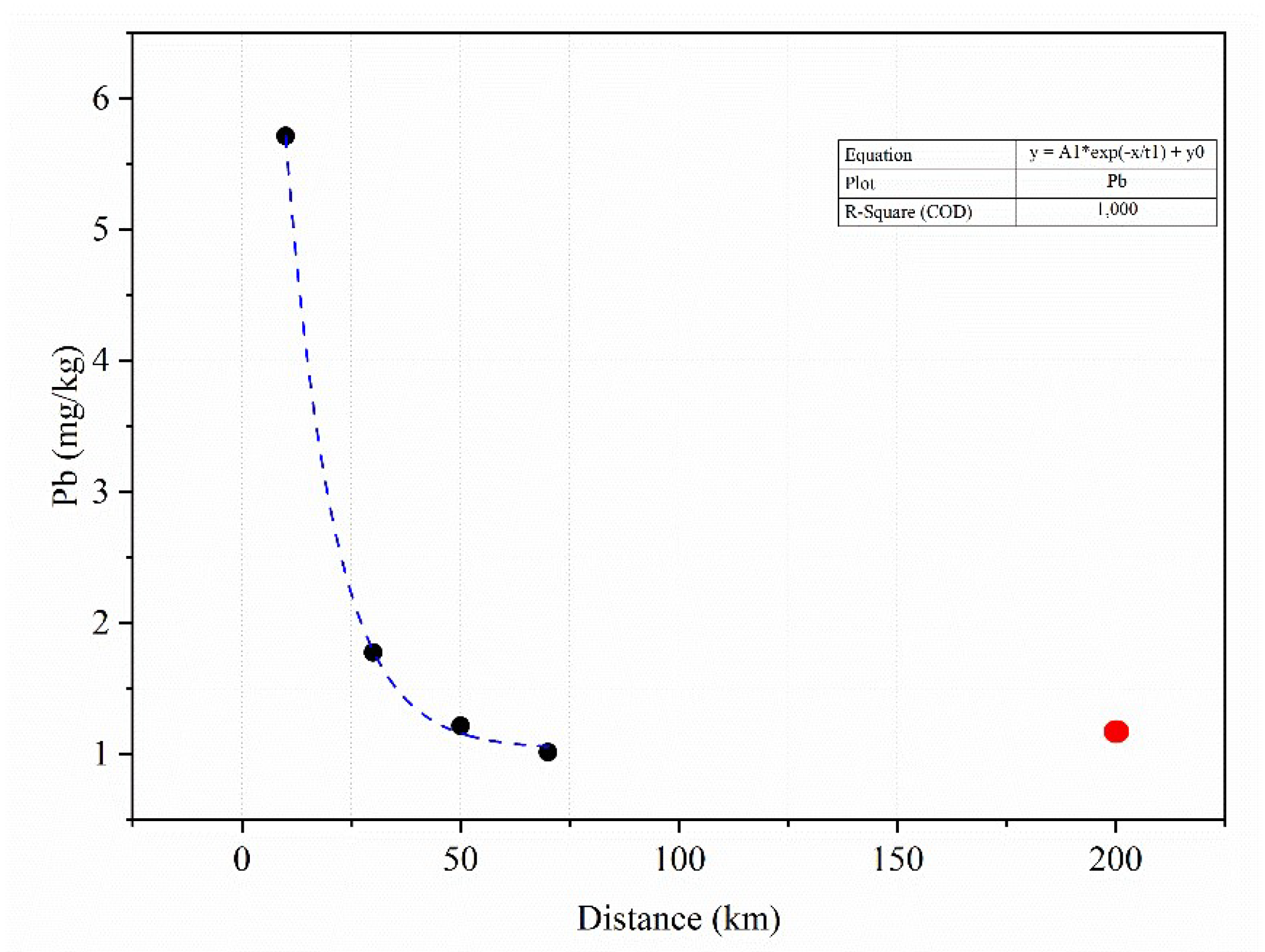
Figure 6.
Decreasing concentration of iron in moss with distance (km) from the landfill.
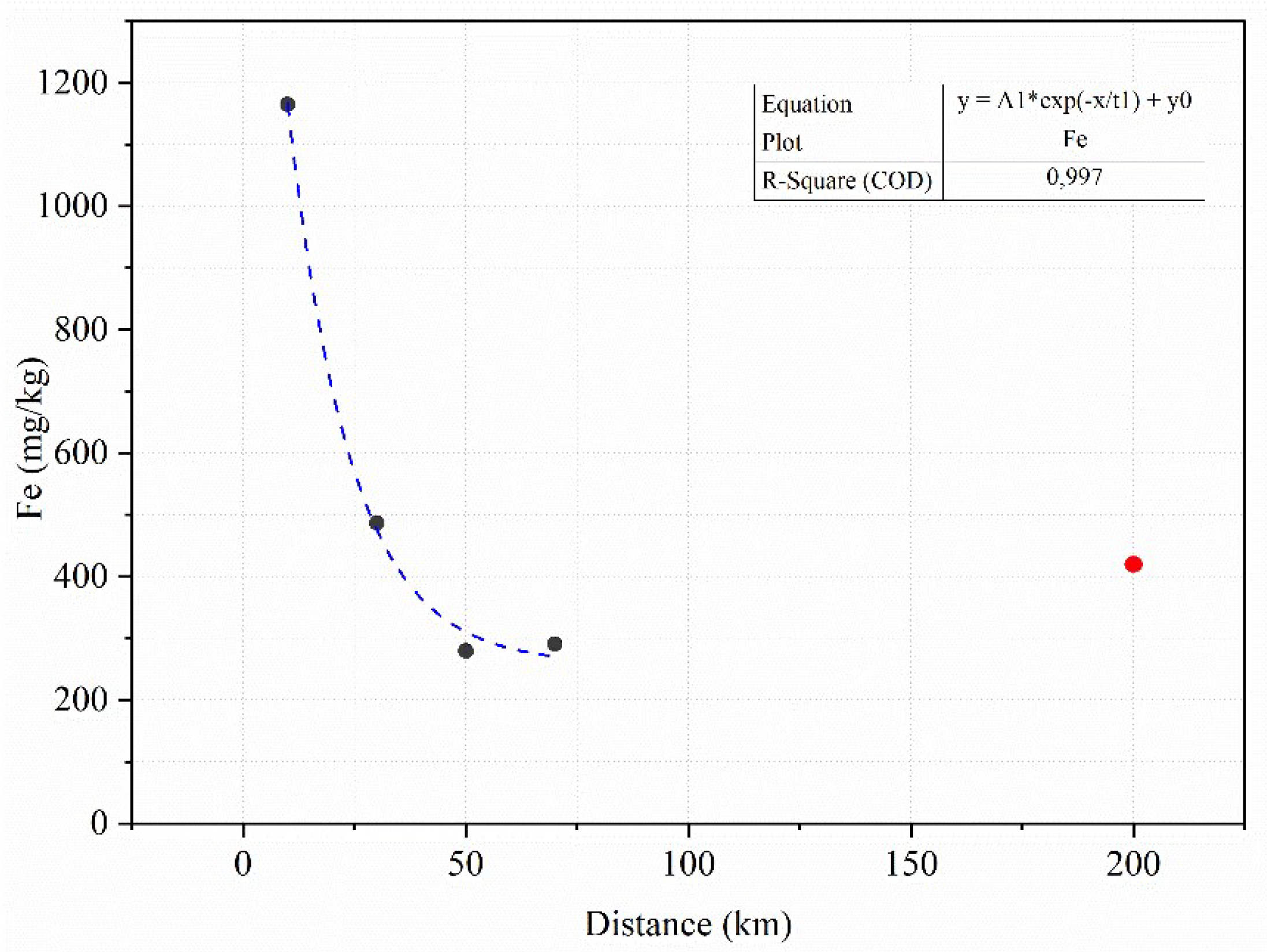
Figure 7.
Paired correlations of concentrations of a number of specific elements.
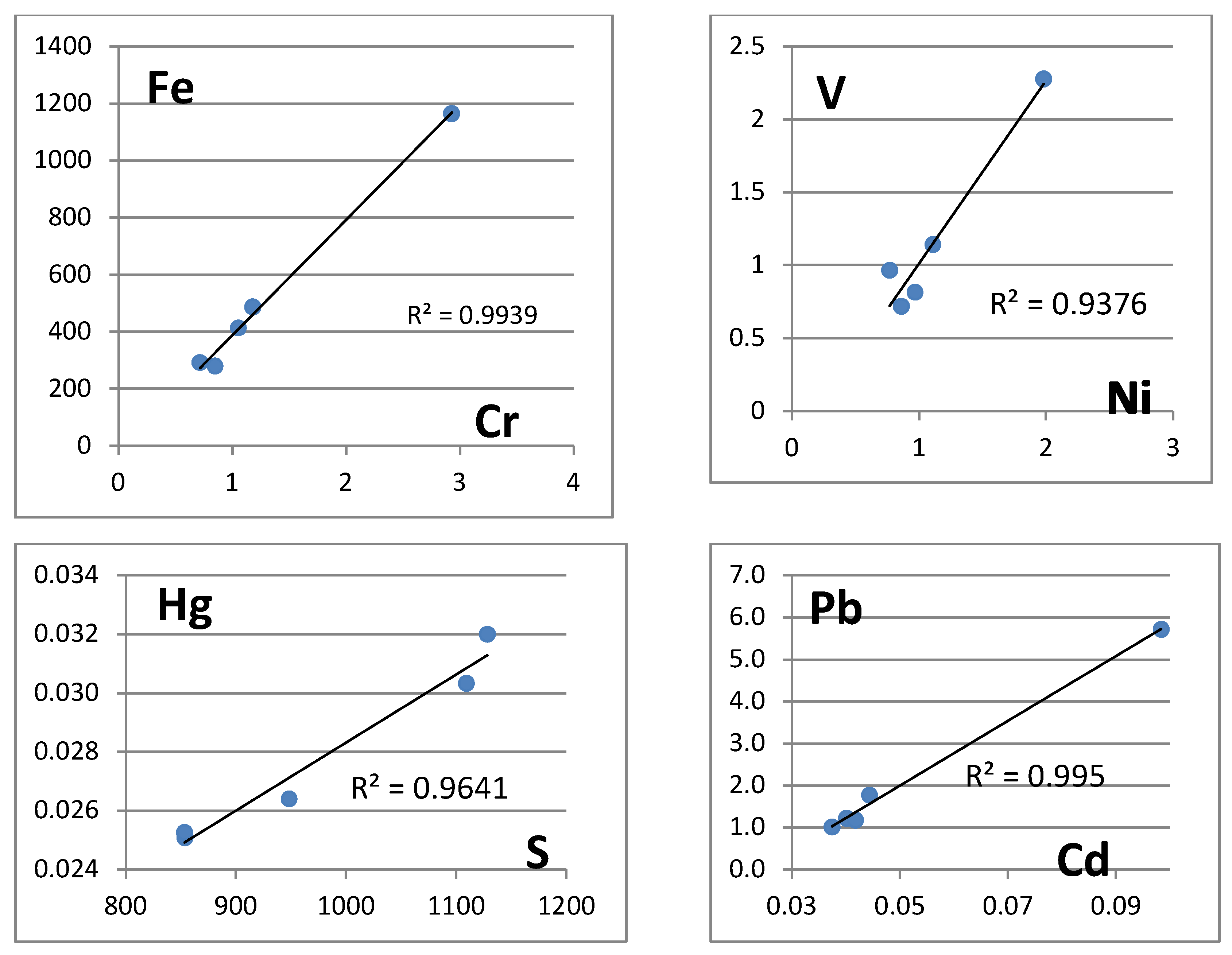

Table 1.
Results of analyzing the Virginia Tobacco Leaves standard [8].
Table 1.
Results of analyzing the Virginia Tobacco Leaves standard [8].
| Ele- ment |
Concen- tration |
SD | Passport’ data | Ele- ment |
Concen- tration |
SD | Passport data |
| Al | 213.6 | 1.634 | 252 | Ni | 1.227 | 0.0167 | 1.49 |
| Ba | 41.66 | 0.2112 | 41.6 | P | 2898 | 21.46 | 2420 |
| Cd | 2.41 | 0.0169 | 2.23 | Pb | 0.7433 | 0.0366 | 0.972 |
| Co | 0.1502 | 0.0147 | 0.154 | S | 3886 | 87.79 | 3780 |
| Cr | 0.5721 | 0.0072 | 0.911 | Sr | 132 | 1.244 | 133 |
| Cu | 5.234 | 0.0464 | 5.12 | V | 0.3383 | 0.0115 | 0.405 |
| Fe | 267.9 | 5.904 | 258 | Zn | 47.47 | 0.4012 | 43.6 |
| Mn | 144.4 | 1.755 | 136 |
Table 2.
Descriptive statistics of the concentration of heavy metals in moss samples (mg/kg).
| Element | Average | St. Dev. | Median | Range(Min-Max) |
Norway [9] Median (Range) |
| Al | 686 | 392 | 567 | 366─1345 | 460 (100─3050) |
| Ba | 55.2 | 16.9 | 58.0 | 28─71.5 | 25 (53─130)- |
| Cd | 0.052 | 0.026 | 0.042 | 0.037─0.098 | 0.08 (0.02─1.33) |
| Co | 0.32 | 0.11 | 0.32 | 0.19─0.47 | 0.2 (0.06─23) |
| Cr | 1.35 | 0.90 | 1.05 | 0.72─2.93 | 0.7 (0.2─17) |
| Cu | 3.42 | 1.89 | 2.77 | 2.04─6.7 | 4.2 (1.8─370) |
| Fe | 527 | 367 | 413 | 280─1165 | 310 (78─8125) |
| Mn | 337 | 213 | 287 | 86─668 | 400 (40─1660) |
| Ni | 1.14 | 0.49 | 0.97 | 0.77─1.98 | 1.1 (0.4─550) |
| P | 1842 | 268 | 1845 | 1538─2249 | ─ |
| Pb | 2.18 | 2.00 | 1.22 | 1.02─5.72 | 0.05 (0.001–0.4) |
| S | 979 | 134 | 949 | 853.6─1128.5 | 820 (470─1860) |
| Sr | 41 | 18 | 46 | 16.36─60.19 | 136 (3.8─60) |
| V | 1.2 | 0.6 | 1.0 | 0.72─2.28 | 1.2 (0.3─14) |
| Zn | 28 | 17 | 24 | 14.3─56.04 | 31 (8─409) |
| Hg | 0.0282 | 0.0038 | 0.0264 | 0.0251─0.0339 | 0.05 (0.005─0.53) |
Table 3.
Correlation analysis of elements obtained for the study area.
| Al | Ba | Cd | Co | Cr | Cu | Fe | Mn | Ni | P | Pb | S | Sr | V | Zn | Hg | |
| Al | 1.00 | |||||||||||||||
| Ba | 0.37 | 1.00 | ||||||||||||||
| Cd | 0.74 | -0.08 | 1.00 | |||||||||||||
| Co | 0.70 | 0.42 | 0.55 | 1.00 | ||||||||||||
| Cr | 0.94 | 0.16 | 0.92 | 0.69 | 1.00 | |||||||||||
| Cu | 0.50 | -0.17 | 0.93 | 0.48 | 0.74 | 1.00 | ||||||||||
| Fe | 0.95 | 0.19 | 0.90 | 0.71 | 0.99 | 0.71 | 1.00 | |||||||||
| Mn | 0.44 | 0.78 | 0.10 | 0.47 | 0.34 | -0.08 | 0.33 | 1.00 | ||||||||
| Ni | 0.89 | 0.27 | 0.84 | 0.83 | 0.95 | 0.73 | 0.92 | 0.41 | 1.00 | |||||||
| P | -0.26 | -0.25 | 0.11 | -0.47 | -0.16 | 0.32 | -0.16 | -0.63 | -0.24 | 1.00 | ||||||
| Pb | 0.77 | -0.02 | 0.99 | 0.63 | 0.93 | 0.91 | 0.92 | 0.16 | 0.86 | 0.04 | 1.00 | |||||
| S | 0.41 | 0.02 | 0.55 | 0.13 | 0.44 | 0.54 | 0.46 | -0.23 | 0.35 | 0.64 | 0.53 | 1.00 | ||||
| Sr | -0.36 | 0.48 | -0.38 | -0.11 | -0.45 | -0.20 | -0.41 | 0.02 | -0.35 | 0.46 | -0.35 | 0.32 | 1.00 | |||
| V | 1.00 | 0.37 | 0.77 | 0.71 | 0.95 | 0.54 | 0.97 | 0.45 | 0.90 | -0.25 | 0.81 | 0.39 | -0.37 | 1.00 | ||
| Zn | 0.60 | -0.28 | 0.95 | 0.40 | 0.83 | 0.89 | 0.79 | 0.04 | 0.74 | 0.04 | 0.92 | 0.34 | -0.57 | 0.64 | 1.00 | |
| Hg | 0.60 | 0.19 | 0.59 | 0.10 | 0.57 | 0.46 | 0.61 | 0.01 | 0.39 | 0.49 | 0.58 | 0.88 | 0.16 | 0.59 | 0.41 | 1.00 |
Table 4.
Specific activity of radionuclides (Bc/kg) in moss, lichen and soil samples collected on the Vilyuysky tract.
Table 4.
Specific activity of radionuclides (Bc/kg) in moss, lichen and soil samples collected on the Vilyuysky tract.
| No. | Sample | Vilyuysky tract | Radionuclide specific activity, Bq/kg | ||||||||
| 40K | 137Cs | 212Pb | 214Pb | 214Bi | 208Tl | 212Bi | 7Be | 228Ac | |||
| 1 | Moss Brachythecium salebrosum |
10 km | 705±37 | 18±2 | 50±4 | 21±4 | 30.±4 | 21±2 | 66±24 | 45±13 | 18±7 |
| 2 | Moss brachythecium salebrosum | 27 km | 243±15 | 3±1 | 14±2 | 7±2 | 5±2 | 4±1 | |||
| 3 | Moss brachythecium salebrosum |
30 km | 425±30 | 56±3 | 38±3 | 19±4 | 25±4 | 12±2 | |||
| 4 | Moss Hyloconium splendens |
51 km | 343±20 | 63±2 | 18±2 | 11±2 | 11±2 | 6±1 | 38±9 | ||
| 5 | Lichen Cladonia rangiferina |
30 km | 421±20 | 70±2 | 16±2 | 15±2 | 13±2 | 4±1 | 28±8 | 13±4 | |
| 6 | Soil | 27 km | 446±14 | 98±2 | 17±1 | 8±1 | 5±1 | 7±1 | 13±3 | ||
| 7 | Soil | 30 km | 720±12 | 34±1 | 2±0.6 | 9±1 | 8±1 | 6±1 | 17±5 | 15±2 | |
| 8 | Soil | 51 km | 595±13 | 19±1 | 16±1 | 6±1 | 4±1 | 6±1 | 20±5 | 8±2 | |
Disclaimer/Publisher’s Note: The statements, opinions and data contained in all publications are solely those of the individual author(s) and contributor(s) and not of MDPI and/or the editor(s). MDPI and/or the editor(s) disclaim responsibility for any injury to people or property resulting from any ideas, methods, instructions or products referred to in the content. |
© 2025 by the authors. Licensee MDPI, Basel, Switzerland. This article is an open access article distributed under the terms and conditions of the Creative Commons Attribution (CC BY) license (http://creativecommons.org/licenses/by/4.0/).
Copyright: This open access article is published under a Creative Commons CC BY 4.0 license, which permit the free download, distribution, and reuse, provided that the author and preprint are cited in any reuse.


