

Submitted:
16 April 2025
Posted:
17 April 2025
You are already at the latest version
Abstract
Cysteine-rich protein 61 (CYR61) is a matricellular protein in the CCN family that is involved in cellular adhesion, migration, proliferation, and angiogenesis. The ligand interacts with integrins α6β1, αvβ3, αvβ5, and αIIbβ3 to modulate tumor progression and metastasis while modifying the tumor microenvironment. CYR61 exhibits context-dependent roles in cancer, acting as both a tumor promoter and suppressor. Increased expression is linked to extracellular matrix remodeling, immune modulation, and integrin-mediated signaling, making it a potential prognostic biomarker and therapeutic target. Emerging research highlights the utility of CYR61 in liquid biopsies for cancer detection and monitoring. Integrin-targeted therapies, including CYR61-blocking antibodies and CAR-T approaches, offer novel treatment strategies. However, therapy-induced toxicity and resistance remain challenges. Further elucidation of the molecular mechanisms of CYR61 may enhance targeted therapeutic interventions and improve patient outcomes.
Keywords:
CYR61
; cancer
; matricellular protein
; CCN family
1. Introduction
Cysteine-rich protein 61 (CYR61) is a member of the CCN family of matricellular proteins and has been shown to play a critical role in cellular communication, adhesion, and migration [1]. The acronym CCN represents the original members of this family: Cysteine-rich protein 61, Connective Tissue Growth Factor (CTGF), and Nephroblastoma (NOV) [2]. Originally identified in 1990 as a growth factor-inducible immediate-early gene, CYR61 has since been recognized as a key regulator of angiogenesis, chondrogenesis, and fibrogenesis [3,4,5]. CYR61 interactions with integrins, heparan sulfate proteoglycans, and low-density lipoprotein receptor-related proteins enable it to modulate cell proliferation, differentiation, and immune responses [6].
CYR61 consists of conserved domains that mediate its diverse biological functions, including its ability to bind integrins such as αvβ3, αvβ5 α6β1, and αIIbβ3 [2]. These interactions influence DNA synthesis, cellular adhesion, and migration, particularly in vascularized tumors and cancerous environments [7]. Describing the roles of CYR61 in cancer is crucial, as its dual functions in promoting or suppressing tumorigenesis highlight the complexity of its biological impact [8,9,10]. Indeed, CYR61 has been implicated in various cancers, including breast, prostate, pancreatic, and lung cancers, where it affects tumor progression, metastasis, and treatment resistance [11,12,13,14,15].
Given its involvement in multiple pathological processes, CYR61 is being explored as a potential biomarker for cancer prognosis and a therapeutic target [16]. Understanding its molecular mechanisms could aid in the development of targeted therapies that disrupt CYR61-integrin signaling pathways. Furthermore, as research continues, CYR61’s role in immune surveillance and tissue repair further underscores its significance in both normal physiology and disease states.
2. Discovery
In 1990, O’Brien and colleagues in the Lau lab successfully cloned a growth factor-inducible immediate-early gene, CYR61, which encodes a 379 amino acid polypeptide with 38 conserved cysteines, a molecular mass of 42 kilodaltons, and an N-terminal secretory signal [3,4,17]. Once associated with the extracellular matrix, CYR61’s half-life extends to greater than 24 hours, and with high heparin binding affinity, CYR61 was quickly theorized to be involved in cell-to-cell communication [6]. Bork recognized structural motifs in CYR61, CTGF and NOV. This established a designation of “CCN family proteins”, which has expanded to encompass six members that regulate other bioactive peptides through direct binding interactions [2,17]. Kireeva and colleagues in the Lau Lab purified CYR61 and revealed its function as a chemotactic factor on fibroblasts, promoting cell proliferation, migration, and adhesion to endothelial cells [1,18]. As an angiogenesis-inducing ligand, CYR61 promotes cell adhesion through several binding interactions with integrins. Integrin αvβ3 augments growth factor-induced DNA synthesis and mediates the adhesion of vascular endothelial cells; integrin α6β1 binding influences fibroblast cell adhesion; and the αIIbβ3 domain can promote platelet adhesion and aggregation [7,19]. Early in vitro studies demonstrated CYR61 involvement in tissue-specific stages of chondrogenesis and, therefore, theorized to aid in mammalian embryonic skeleton development [4,20]. By the early 2000s, CYR61 was established to be involved in fibrogenesis, angiogenesis, chondrogenesis, as well as cell proliferation and differentiation through direct binding of integrins, heparan sulfate proteoglycans, and low-density lipoprotein receptor-related proteins [1,17,21,22,23].
Recent findings uncovered the participation of the CCN family proteins in regulating the production of cytokines and chemokines through autocrine and paracrine feedback and directly modifying cellular migratory processes, suggesting a pivotal role in the human immune-surveillance process [24]. Since the discovery of CYR61 roles in inflammation and tissue repair, studies continue to explore it as a potential biomarker for therapeutic targeting and immune surveillance [16,25].
3. Structural Domain and Functions
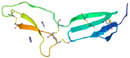
As members of the CCN family proteins, CYR61, CTGF, and NOV share significant sequence homology with highly conserved intron-exon regions [2,26]. The CYR61 gene has been mapped to chromosome 1p22.31 and encodes a 381 amino acid polypeptide with 38 conserved cysteines, a molecular mass of 42 kilodaltons, and an N-terminal secretory signal [3,26,27]. The first of five exons (with four interspaced introns) encodes a secretory signal from the N-terminal, while the following four exons encode conserved mosaic CCN family domains [27,28,29,30]. Sequence analysis of these four conserved domains shares homology with insulin-like growth factor-binding proteins (IGFBP), von Willebrand Factor type C domain (vWC), thrombospondin type 1 repeat (TSR), and the C-terminal (CT) domains of some types of collagens and mucins [2,30]. The CCN family protein conserved secretory signal, insulin-like growth factor binding protein, vWC repeat, TSR, and CT domain regions are likely a result of exon shuffling [31]. Adhesion receptors for CYR61 include: αvβ3 and α6β1 with endothelial cells [32], α6β1 with fibroblasts [33], α6β1 with smooth muscle cells, αMβ2 with monocytes, and αIIbβ3 with platelets [1,5,19,32,33,34,35]. A summary of CYR61 domains, conserved sequences, binding sites, and ribbon diagrams is shown in Table 1 [27,36,37,38,39].
4. CYR61 Interactome
4.1. Integrin α6β1
The integrin α6β1 has binding sites in two domains of CYR61 (Figure 1 and Table 1) that allow for heparin binding and integrin α6β1/heparan sulfate proteoglycans (HSPGs)-mediated fibroblast cell adhesion. Within the third domain with homology to TSR; T1, with the sequence GQKCIVQTTSWSQCSKS (aa 223-239) as well as in the fourth domain (CT); H1, with the sequence KGKKCSKTKKSPEPVR (aa 280-295); and H2, with a sequence FTYAGCSSVKKYRPKY (aa 296-314) [40]. Both the α6β1 binding domain and the cell surface heparan sulfate proteoglycan binding sites work in tandem to support vascular smooth muscle cell adhesion and chemotaxis, but not chemokinesis [5]. Integrin α6β1 and HSPGs act as co-receptors in human skin fibroblasts, smooth muscle cells, and endothelial cells to mediate cell adhesion and support smooth muscle cell migration [40]. Successful binding of α6β1 and HSPGs leads to a substantial and sustained level of reactive oxygen species (ROS) and activates the cellular tumor antigen p53 and ERK/MAPK tumor suppression pathways [25,41]. Integrin α6β1 represents a promising target for antimetastatic therapies aiming to impair tumor metastasis through platelet-dependent mechanisms [42].
4.2. Integrin αvβ3
The binding sites for integrin αvβ3 reside within the third domain of CYR61 (Figure 1 and Table 1) and have been shown to promote pro-angiogenic activities in activated endothelial cells [31,43]. While there are several αvβ3 binding sites, Asp-125 in the 20-residue sequence of the vWC domain of V2 is particularly critical for integrin interactions [44]. Upon successful binding, downstream αvβ3-dependent pathways augment growth factor-induced DNA synthesis within the same cell type, which enables endothelial cell adhesion [7]. Binding to integrin αvβ3 allows CYR61 to promote cell proliferation, survival, and angiogenesis through the adhesion of vascular endothelial cells in a manner independent of heparin-binding activity elsewhere on the CYR61 protein [25]. The β3 class of arginylglycylaspartic acid (RGD)-integrins has α-N-(benzoxycarbonyl)-diaminopropanoic acid bundles, which contribute to the selectivity of αvβ3 over αvβ5. Although αvβ3 is typically expressed at low or undetectable levels in adults, it is involved in multiple signaling transduction pathways in cancer and tumor progression, including cell proliferation, adhesion, migration, stemness, immune escape, drug resistance, and bone metastasis. Therefore, high expression of αvβ3 in patients presents an opportunity for αvβ3-targeted therapeutics in biomarker-driven clinical trials [15]. The αvβ3 expression in carcinomas such as pancreatic cancer has been shown to increase lymph node metastases in vivo and enhance anchorage-independent tumor growth in vitro [13]. Current research addressing αvβ3 antagonist toxicity reduction and limited efficacy explores a new biometric-targeted drug delivery system utilizing exosomes derived from human umbilical cord mesenchymal stromal cells (hUCMSCs) to encapsulate triptolide and generate αvβ3-specific chimeric antigen receptor T cells, which have been proven to induce complete elimination of melanoma lesions [45].
4.3. Integrin αvβ5
CYR61 has distinct expression profiles for three non-small lung cancer cell lines (H1155, H460 and H2122), five colorectal cancer cell lines (SW837, SW620, HT-29, HCA-7 and HCT116), one breast cancer cell line (MCF-7), and one esophageal squamous carcinoma cell line (TE-7) with enhanced expression of αvβ5 integrin [11]. Integrin αvβ5 binding on CYR61 (Figure 1 and Table 1 is within the vWC repeat region of the second domain. The adhesion and proliferation of human breast cancer cells and astrocyte adhesion to vitronectin, and fibroblast migration to CYR61 are mediated by integrin αvβ5 [31]. CYR61 tumor necrosis factor-a encounters require αvβ5, α6β1, and syndecan-4 interactions to inhibit the biphasic activation of JNK to induce apoptosis [11,46].
4.3. Integrin αIIbβ3
The αIIbβ3 binding site on CYR61 is within the second domain (Figure 1 and Table 1), homologous with the vWC repeat [11]. Antibodies from patients who develop thrombocytopenia post-treatment with an RGD-mimetic platelet inhibiting drug similarly recognize ligand-inducible binding sites at αIIbβ3 [47]. The availability of the pure orthosteric inhibitors of αIIbβ3 presents a tool to further research the mechanisms linking integrin conformation and deter thrombosis [48].
5. CYR61 Roles in Cancer
Expression of CYR61 is multifaceted and is most often associated with tumorigenesis, but can also enable tumor suppression, such as in non-small cell lung cancer [14]. In certain cases, such as hepatocellular carcinogenesis, CYR61 induces pathways that generate ROS, which may both promote and inhibit tumorigenesis [49,50,51,52]. A study demonstrated that while CYR61 expression is decreased in endometrial cancer, endometrial adenocarcinoma cell lines (MDA-MB-231, AN3CA, HEC1A, HEC1B, KLE, and RL95–2) overexpressing CYR61 resulted in reduced tumor formation in nude mice [53]. This can be a result of the truncated isoform morphology of CYR61 more often having oncogenic properties, while full-length CYR61 often exhibits antiproliferative effects [29].
Somatic cells can secrete matricellular proteins into the extracellular space to join other matricellular proteins, soluble factors, and stromal cells to comprise a tumor microenvironment that is capable of mechanical modulation of cellular activities [54]. CYR61 is highly expressed in various tumor microenvironments and can influence tumor progression by modulating the extracellular matrix (ECM) to affect the adhesion, migration, and survival of cancer cells [55]. One study showed that CYR61 facilitates tumor progression in the pancreas by changing the morphology of pancreatic islets, altering the cellular microenvironment, and enabling tumor-promoting properties [56]. Expression of CYR61 in secreted endogenous phosphorylated form is associated with aggressive metastatic phenotypes and poor prognosis in breast cancer and correlates with more advanced clinical stages, larger tumor sizes, and lymph node positivity, indicating a role in promoting tumor aggressiveness [57]. CYR61 also promotes survival in endothelial cells through integrin αvβ3 binding and induces p53-dependent apoptosis in fibroblasts through the engagement of α6β1-HSPG binding domains [40,58,59]. An increased expression of CYR61 is associated with more frequent binding of integrin avβ3, which has been shown to play a major role in breast cancer progression through proangiogenic activity of tumor vascularization. Therefore, overexpression of αvβ3 can be a biomarker for poor prognosis and a therapeutic target in breast cancer [57,60,61]. While CYR61 levels are low in healthy prostate tissue and increase during prostate cancer development within the epithelium, decreased serum CYR61 expression in patients after surgical treatment of prostate cancer is associated with a greater risk of relapse [62]. This increased expression has been shown to promote prostatic cell proliferation and, conversely, enhance the cytotoxicity of tumor necrosis factor-related induced apoptosis that selectively kills cancer cells [63,64,65]. The ambiguity of boundaries between tumor and surrounding tissue has resulted in mixed findings regarding the participation of CYR61 in different stages of various cancers [66]. Patients with ovarian epithelial carcinoma, however, had significantly higher CYR61 expression compared to patients with benign ovarian tumors, indicating a role in regional lymph node metastases and progression of clinical disease stage [67]. A summary of associated cancers to CYR61 domains and their respective ligands is shown in Table 2.

Table 2.
Cancers associated with cyr61 binding domains and corresponding ligands.
| Ligand | Binding domain | Associated cancers |
| α6β1 | TSR, CT | Breast, ovarian, lung, lung metastasis, prostate |
| αvβ3 | vWC | Bone metastasis, breast, cervical, colon, melanoma, non-small cell lung, ovarian, glioblastoma, prostate, and pancreatic. |
| αvβ5 | vWC | Breast, colorectal, gastric, liver metastasis, ovarian, glioblastoma, pancreatic, and prostate. |
| αIIbβ3 | vWC | Breast, ovarian, and prostate. |
6. CYR61 in Liquid Biopsies
Liquid biopsies can facilitate the monitoring of treatment responses over time. Therefore, changes in CYR61 levels in serum may reflect the effectiveness of therapeutic interventions, allowing for real-time assessment of patient status and adjustment of treatment plans accordingly. Liquid biopsy of serum CYR61 has potential as a diagnostic and prognostic biomarker, aiding in the detection, monitoring, and management of cancer through non-invasive means. Measuring CYR61 levels in serum presents a potentially minimally invasive and inexpensive clinical biomarker that is independent of the prostate-specific antigen and correlates with worse prognosis for colorectal cancer, breast cancer, and prostate cancer [12,41,57,68,69,70,71]. Enzyme-linked immunosorbent assays have revealed an increase in serum CYR61 levels in patients with colorectal cancer compared to patients with colorectal adenomas and healthy controls [70]. Detecting elevated serum CYR61 can improve diagnosis and decipher the clinicopathological status of breast cancer patients [72]. In prostate cancer, higher serum CYR61 levels have been observed in patients with non-organ-confined disease compared to those with organ-confined disease, suggesting its utility in differentiating between disease stages [12]. In a study, the breast cancer mesenchymal disseminated tumor cell (mDTC) line, BC-M1, had high CYR61 levels associated with a change in microenvironmental conditions by viable circulating tumor cells [73].
7. CYR61 as a Potential Target in Cancer
Due to its dual role in promoting apoptosis and influencing tumor cell behavior, CYR61 may serve as a potential biomarker and therapeutic target in cancer prognosis and treatment. Modulating its activity could aid in developing strategies to enhance the efficacy of cancer therapies that rely on inducing apoptosis in tumor cells [55]. CYR61 has been established as a critical factor in breast cancer progression, influencing tumor growth, invasiveness, and therapy resistance. CYR61 is also implicated in promoting neovascularization, as it enhances the expression of vascular endothelial growth factor (VEGF), which is crucial for tumor blood supply and growth. Cells expressing CYR61 acquire an antiestrogen-resistant phenotype, presenting a clinical challenge in breast cancer treatment [8]. One study found that the pro-angiogenic effects of CYR61 are dependent on the VEGF/VEGF-Receptor 2 (VEGF-R2) signaling pathway, and blocking this pathway with an anti-VEGF-R2 antibody abolishes the angiogenic effects of CYR61, decreasing the invasiveness of β tumors through enhanced integrin function [56]. One study found that the pro-angiogenic effects of CYR61 are dependent on the VEGF/VEGF-Receptor 2 (VEGF-R2) signaling pathway, and blocking this pathway with an anti-VEGF-R2 antibody abolishes the angiogenic effects of CYR61, decreasing the invasiveness of β tumors through enhanced integrin function [56]. Huang et al. identified CYR61-β1 integrin-AMPKα as a potential therapeutic target to mitigate participation in facilitating tumor cell extravasation and regulating anoikis migration of breast cancer metastasis to the lung [10]. Utilizing a blocking antibody against integrin αvβ3 is capable of inhibiting heregulin (HRG) induction of the aggressive phenotypes of the breast cancer cells in vivo [8]. Since heparin is often targeted in malignant diseases for antithrombotic prophylaxis, CYR61 is a potential target to interfere with the migration of PC-3 cells [65,74]. Even though integrins can be important therapeutic targets, current RGD-based anti-integrin drugs induce conformational changes that trigger incongruous cell adhesion and potentially fatal immune reactions [75].
8. Challenges
Current gaps in knowledge include addressing integrin antagonist toxicity reduction and precisely understanding the mechanisms by which CYR61 promotes aggressive cancer phenotypes [45,76]. The complexity of integrin functions and their sometimes-opposing characteristics pose challenges in developing effective integrin-targeting therapies [77]. Cancer cells have the ability to change their integrin repertoire and become resistant to drug treatments, which may be overcome through antagonist targeting of multiple binding integrins [78]. Recently, integrin αvβ3-chimeric antigen receptor (CAR)-T cells showed therapeutic potential to halt the survival and metastasis of solid tumors such as melanoma, glioblastoma, breast cancer, pancreatic cancer, and prostate cancer [79].
9. Conclusions
As a key member of the CCN protein family, CYR61 plays a vital role in regulating cell adhesion, migration, proliferation, and angiogenesis through interactions with integrins and heparan sulfate proteoglycans [5]. Its ability to modulate the extracellular matrix and influence tumor microenvironments has positioned CYR61 as a critical factor in both normal cellular function and pathological conditions [54]. While its role in tissue repair and immune surveillance highlights its physiological importance, CYR61’s involvement in tumor progression and metastasis underscores its dual nature in cancer biology [16,24,55]. The expression of CYR61 has been linked to both tumor-promoting and tumor-suppressive effects, depending on the cancer type and cellular context [49,50,51,52]. In cancers such as breast, prostate, and pancreatic cancer, CYR61 enhances tumor growth, invasion, and resistance to therapy, making it a promising biomarker for disease progression [8,12,13,15,78]. However, its apoptotic effects in fibroblasts and its association with tumor suppression in non-small cell lung cancer indicate a more complex regulatory function [14]. Targeting CYR61-integrin interactions presents an opportunity for novel therapeutic strategies, particularly in integrin-mediated tumor progression [43,46,74,80]. Current challenges in CYR61 research include mitigating integrin antagonist toxicity and understanding the molecular mechanisms driving its pro-tumorigenic versus tumor-suppressive effects [45]. Advancements in targeted therapies, including integrin αvβ3-CAR T cells and CYR61-blocking antibodies, offer new possibilities for cancer treatment [8,56,79]. As research continues, further exploration of CYR61’s role in cancer biology and immune modulation may lead to breakthroughs in precision medicine and targeted therapy development.
Author Contributions
Conceptualization, A.S., G.L.O-H; writing—original draft preparation, A.S., G.L.O-H; writing—review and editing, A.S., G.L.O-H.; visualization, A.S., G.L.O-H.; supervision, G.L.O-H; funding acquisition, G.L.O-H.. All authors have read and agreed to the published version of the manuscript.
Funding
This work was supported by the NIH grant: T32 CA221709/CA/NCI NIH HHS/United States, and the Burroughs Wellcome Fund Postdoctoral Enrichment Program (Award ID: 1277523).
Institutional Review Board Statement
Not applicable.
Informed Consent Statement
Not applicable.
Data Availability Statement
Not applicable.
Acknowledgments
A.S would like to thank the Master of Science in Medical Sciences program at the Western University of Health Sciences. G.L.O.H would like to thank the T32 Cancer Metabolism Training Program, the T32 committee, her advisor, Dr. Susan L. Neuhausen, and the Department of Population Sciences at the City of Hope Comprehensive Cancer Center.
Conflicts of Interest
The authors declare no conflict of interest. The funders had no role in the writing of the manuscript.
Abbreviations
The following abbreviations are used in this manuscript:
| CAR-T | Chimeric Antigen Receptor T cells |
| CCN | Cysteine-Rich Protein, Connective Tissue Growth Factor, Nephroblastoma |
| CT | C-Terminal |
| CTGF | Connective Tissue Growth Factor |
| CYR61 | Cysteine-Rich 61 |
| ECM | Extracellular Matrix |
| HRG | Heregulin |
| HSPG | Heparan Sulfate Proteoglycan |
| hUCMSC | Human Umbilical Mesenchymal Stromal Cells |
| IGFBP | Insulin-like Growth Factor Binding Protein |
| mDTC | mesenchymal Disseminated Tumor Cell |
| NOV | Nephroblastoma |
| RGD | Arginine, Glycine, Aspartic Acid |
| ROS | Reactive Oxygen Species |
| TSR | Thrombospondin Type 1 Repeat |
| VEGF | Vascular Endothelial Growth Factor |
| vWC | von Willebrand Factor Type C Domain |
References
- Kireeva ML, Mo FE, Yang GP, Lau LF: Cyr61, a product of a growth factor-inducible immediate-early gene, promotes cell proliferation, migration, and adhesion. Mol Cell Biol 1996, 16(4):1326-1334. [CrossRef]
- Bork P: The modular architecture of a new family of growth regulators related to connective tissue growth factor. FEBS Lett 1993, 327(2):125-130.
- O'Brien TP, Yang GP, Sanders L, Lau LF: Expression of cyr61, a growth factor-inducible immediate-early gene. Mol Cell Biol 1990, 10(7):3569-3577.
- Wong M, Kireeva ML, Kolesnikova TV, Lau LF: Cyr61, product of a growth factor-inducible immediate-early gene, regulates chondrogenesis in mouse limb bud mesenchymal cells. Dev Biol 1997, 192(2):492-508. [CrossRef]
- Grzeszkiewicz TM, Lindner V, Chen N, Lam SC, Lau LF: The angiogenic factor cysteine-rich 61 (CYR61, CCN1) supports vascular smooth muscle cell adhesion and stimulates chemotaxis through integrin alpha(6)beta(1) and cell surface heparan sulfate proteoglycans. Endocrinology 2002, 143(4):1441-1450.
- Yang GP, Lau LF: Cyr61, product of a growth factor-inducible immediate early gene, is associated with the extracellular matrix and the cell surface. Cell Growth Differ 1991, 2(7):351-357.
- Babic AM, Kireeva ML, Kolesnikova TV, Lau LF: CYR61, a product of a growth factor-inducible immediate early gene, promotes angiogenesis and tumor growth. Proc Natl Acad Sci U S A 1998, 95(11):6355-6360. [CrossRef]
- Tsai MS, Bogart DF, Castaneda JM, Li P, Lupu R: Cyr61 promotes breast tumorigenesis and cancer progression. Oncogene 2002, 21(53):8178-8185.
- Chen CC, Lau LF: Functions and mechanisms of action of CCN matricellular proteins. Int J Biochem Cell Biol 2009, 41(4):771-783.
- Huang YT, Lan Q, Lorusso G, Duffey N, Ruegg C: The matricellular protein CYR61 promotes breast cancer lung metastasis by facilitating tumor cell extravasation and suppressing anoikis. Oncotarget 2017, 8(6):9200-9215.
- Jandova J, Beyer TE, Meuillet EJ, Watts GS: The matrix protein CCN1/CYR61 is required for alpha(V)beta5-mediated cancer cell migration. Cell Biochem Funct 2012, 30(8):687-695.
- Terada N, Kulkarni P, Getzenberg RH: Cyr61 is a potential prognostic marker for prostate cancer. Asian J Androl 2012, 14(3):405-408.
- Desgrosellier JS, Barnes LA, Shields DJ, Huang M, Lau SK, Prevost N, Tarin D, Shattil SJ, Cheresh DA: An integrin alpha(v)beta(3)-c-Src oncogenic unit promotes anchorage-independence and tumor progression. Nat Med 2009, 15(10):1163-1169.
- Tong X, Xie D, O'Kelly J, Miller CW, Muller-Tidow C, Koeffler HP: Cyr61, a member of CCN family, is a tumor suppressor in non-small cell lung cancer. J Biol Chem 2001, 276(50):47709-47714.
- Gu Y, Dong B, He X, Qiu Z, Zhang J, Zhang M, Liu H, Pang X, Cui Y: The challenges and opportunities of alphavbeta3-based therapeutics in cancer: From bench to clinical trials. Pharmacol Res 2023, 189:106694.
- Jun JI, Lau LF: Taking aim at the extracellular matrix: CCN proteins as emerging therapeutic targets. Nat Rev Drug Discov 2011, 10(12):945-963.
- Rachfal AW, Brigstock DR: Structural and functional properties of CCN proteins. Vitam Horm 2005, 70:69-103.
- Kireeva ML, Latinkic BV, Kolesnikova TV, Chen CC, Yang GP, Abler AS, Lau LF: Cyr61 and Fisp12 are both ECM-associated signaling molecules: activities, metabolism, and localization during development. Exp Cell Res 1997, 233(1):63-77.
- Chen N, Chen CC, Lau LF: Adhesion of human skin fibroblasts to Cyr61 is mediated through integrin alpha 6beta 1 and cell surface heparan sulfate proteoglycans. J Biol Chem 2000, 275(32):24953-24961.
- O'Brien TP, Lau LF: Expression of the growth factor-inducible immediate early gene cyr61 correlates with chondrogenesis during mouse embryonic development. Cell Growth Differ 1992, 3(9):645-654.
- Brigstock DR: The connective tissue growth factor/cysteine-rich 61/nephroblastoma overexpressed (CCN) family. Endocr Rev 1999, 20(2):189-206.
- Perbal B: CCN proteins: multifunctional signalling regulators. Lancet 2004, 363(9402):62-64.
- Mo FE, Muntean AG, Chen CC, Stolz DB, Watkins SC, Lau LF: CYR61 (CCN1) is essential for placental development and vascular integrity. Mol Cell Biol 2002, 22(24):8709-8720.
- Emre Y, Imhof BA: Matricellular protein CCN1/CYR61: a new player in inflammation and leukocyte trafficking. Semin Immunopathol 2014, 36(2):253-259.
- Lau LF: CCN1/CYR61: the very model of a modern matricellular protein. Cell Mol Life Sci 2011, 68(19):3149-3163.
- Martinerie C, Viegas-Pequignot E, Nguyen VC, Perbal B: Chromosomal mapping and expression of the human cyr61 gene in tumour cells from the nervous system. Mol Pathol 1997, 50(6):310-316. [CrossRef]
- Jay P, Berge-Lefranc JL, Marsollier C, Mejean C, Taviaux S, Berta P: The human growth factor-inducible immediate early gene, CYR61, maps to chromosome 1p. Oncogene 1997, 14(14):1753-1757.
- Yang R, Chen Y, Chen D: Biological functions and role of CCN1/Cyr61 in embryogenesis and tumorigenesis in the female reproductive system (Review). Mol Med Rep 2018, 17(1):3-10.
- Planque N, Perbal B: A structural approach to the role of CCN (CYR61/CTGF/NOV) proteins in tumourigenesis. Cancer Cell Int 2003, 3(1):15. [CrossRef]
- Holbourn KP, Acharya KR, Perbal B: The CCN family of proteins: structure-function relationships. Trends Biochem Sci 2008, 33(10):461-473.
- Grzeszkiewicz TM, Kirschling DJ, Chen N, Lau LF: CYR61 stimulates human skin fibroblast migration through Integrin alpha vbeta 5 and enhances mitogenesis through integrin alpha vbeta 3, independent of its carboxyl-terminal domain. J Biol Chem 2001, 276(24):21943-21950.
- Heng EC, Huang Y, Black SA, Jr., Trackman PC: CCN2, connective tissue growth factor, stimulates collagen deposition by gingival fibroblasts via module 3 and alpha6- and beta1 integrins. J Cell Biochem 2006, 98(2):409-420.
- Kireeva ML, Lam SC, Lau LF: Adhesion of human umbilical vein endothelial cells to the immediate-early gene product Cyr61 is mediated through integrin alphavbeta3. J Biol Chem 1998, 273(5):3090-3096.
- Schober JM, Chen N, Grzeszkiewicz TM, Jovanovic I, Emeson EE, Ugarova TP, Ye RD, Lau LF, Lam SC: Identification of integrin alpha(M)beta(2) as an adhesion receptor on peripheral blood monocytes for Cyr61 (CCN1) and connective tissue growth factor (CCN2): immediate-early gene products expressed in atherosclerotic lesions. Blood 2002, 99(12):4457-4465.
- Jedsadayanmata A, Chen CC, Kireeva ML, Lau LF, Lam SC: Activation-dependent adhesion of human platelets to Cyr61 and Fisp12/mouse connective tissue growth factor is mediated through integrin alpha(IIb)beta(3). J Biol Chem 1999, 274(34):24321-24327.
- Altschul SF, Madden TL, Schaffer AA, Zhang J, Zhang Z, Miller W, Lipman DJ: Gapped BLAST and PSI-BLAST: a new generation of protein database search programs. Nucleic Acids Res 1997, 25(17):3389-3402.
- Kalus W, Zweckstetter M, Renner C, Sanchez Y, Georgescu J, Grol M, Demuth D, Schumacher R, Dony C, Lang K et al: Structure of the IGF-binding domain of the insulin-like growth factor-binding protein-5 (IGFBP-5): implications for IGF and IGF-I receptor interactions. EMBO J 1998, 17(22):6558-6572.
- Xu ER, Blythe EE, Fischer G, Hyvonen M: Structural analyses of von Willebrand factor C domains of collagen 2A and CCN3 reveal an alternative mode of binding to bone morphogenetic protein-2. J Biol Chem 2017, 292(30):12516-12527.
- Tan K, Duquette M, Liu JH, Dong Y, Zhang R, Joachimiak A, Lawler J, Wang JH: Crystal structure of the TSP-1 type 1 repeats: a novel layered fold and its biological implication. J Cell Biol 2002, 159(2):373-382.
- Leu SJ, Chen N, Chen CC, Todorovic V, Bai T, Juric V, Liu Y, Yan G, Lam SC, Lau LF: Targeted mutagenesis of the angiogenic protein CCN1 (CYR61). Selective inactivation of integrin alpha6beta1-heparan sulfate proteoglycan coreceptor-mediated cellular functions. J Biol Chem 2004, 279(42):44177-44187.
- Lv H, Fan E, Sun S, Ma X, Zhang X, Han DM, Cong YS: Cyr61 is up-regulated in prostate cancer and associated with the p53 gene status. J Cell Biochem 2009, 106(4):738-744.
- Mammadova-Bach E, Zigrino P, Brucker C, Bourdon C, Freund M, De Arcangelis A, Abrams SI, Orend G, Gachet C, Mangin PH: Platelet integrin alpha6beta1 controls lung metastasis through direct binding to cancer cell-derived ADAM9. JCI Insight 2016, 1(14):e88245.
- Leu SJ, Lam SC, Lau LF: Pro-angiogenic activities of CYR61 (CCN1) mediated through integrins alphavbeta3 and alpha6beta1 in human umbilical vein endothelial cells. J Biol Chem 2002, 277(48):46248-46255.
- Chen N, Leu SJ, Todorovic V, Lam SC, Lau LF: Identification of a novel integrin alphavbeta3 binding site in CCN1 (CYR61) critical for pro-angiogenic activities in vascular endothelial cells. J Biol Chem 2004, 279(42):44166-44176.
- Gu Y, Du Y, Jiang L, Tang X, Li A, Zhao Y, Lang Y, Liu X, Liu J: alphavbeta3 integrin-specific exosomes engineered with cyclopeptide for targeted delivery of triptolide against malignant melanoma. J Nanobiotechnology 2022, 20(1):384.
- Chen CC, Young JL, Monzon RI, Chen N, Todorovic V, Lau LF: Cytotoxicity of TNFalpha is regulated by integrin-mediated matrix signaling. EMBO J 2007, 26(5):1257-1267.
- Bougie DW, Rasmussen M, Zhu J, Aster RH: Antibodies causing thrombocytopenia in patients treated with RGD-mimetic platelet inhibitors recognize ligand-specific conformers of alphaIIb/beta3 integrin. Blood 2012, 119(26):6317-6325.
- Adair BD, Alonso JL, van Agthoven J, Hayes V, Ahn HS, Yu IS, Lin SW, Xiong JP, Poncz M, Arnaout MA: Structure-guided design of pure orthosteric inhibitors of alphaIIbbeta3 that prevent thrombosis but preserve hemostasis. Nat Commun 2020, 11(1):398.
- Kardeh S, Ashkani-Esfahani S, Alizadeh AM: Paradoxical action of reactive oxygen species in creation and therapy of cancer. Eur J Pharmacol 2014, 735:150-168.
- Chen CC, Kim KH, Lau LF: The matricellular protein CCN1 suppresses hepatocarcinogenesis by inhibiting compensatory proliferation. Oncogene 2016, 35(10):1314-1323.
- Zhang H, Li W, Huang P, Lin L, Ye H, Lin D, Koeffler HP, Wang J, Yin D: Expression of CCN family members correlates with the clinical features of hepatocellular carcinoma. Oncol Rep 2015, 33(3):1481-1492. [CrossRef]
- Kim KH, Chen CC, Monzon RI, Lau LF: Matricellular protein CCN1 promotes regression of liver fibrosis through induction of cellular senescence in hepatic myofibroblasts. Mol Cell Biol 2013, 33(10):2078-2090. [CrossRef]
- Chien W, Kumagai T, Miller CW, Desmond JC, Frank JM, Said JW, Koeffler HP: Cyr61 suppresses growth of human endometrial cancer cells. J Biol Chem 2004, 279(51):53087-53096.
- Lorusso G, Ruegg C: The tumor microenvironment and its contribution to tumor evolution toward metastasis. Histochem Cell Biol 2008, 130(6):1091-1103.
- Juric V, Chen CC, Lau LF: Fas-mediated apoptosis is regulated by the extracellular matrix protein CCN1 (CYR61) in vitro and in vivo. Mol Cell Biol 2009, 29(12):3266-3279.
- Huang YT, Lan Q, Ponsonnet L, Blanquet M, Christofori G, Zaric J, Ruegg C: The matricellular protein CYR61 interferes with normal pancreatic islets architecture and promotes pancreatic neuroendocrine tumor progression. Oncotarget 2016, 7(2):1663-1674.
- Espinoza I, Kurapaty C, Park CH, Vander Steen T, Kleer CG, Wiley E, Rademaker A, Cuyas E, Verdura S, Buxo M et al: Depletion of CCN1/CYR61 reduces triple-negative/basal-like breast cancer aggressiveness. Am J Cancer Res 2022, 12(2):839-851.
- Todorovic V, Chen CC, Hay N, Lau LF: The matrix protein CCN1 (CYR61) induces apoptosis in fibroblasts. J Cell Biol 2005, 171(3):559-568.
- Lee KB, Byun HJ, Park SH, Park CY, Lee SH, Rho SB: CYR61 controls p53 and NF-kappaB expression through PI3K/Akt/mTOR pathways in carboplatin-induced ovarian cancer cells. Cancer Lett 2012, 315(1):86-95.
- Gasparini G, Brooks PC, Biganzoli E, Vermeulen PB, Bonoldi E, Dirix LY, Ranieri G, Miceli R, Cheresh DA: Vascular integrin alpha(v)beta3: a new prognostic indicator in breast cancer. Clin Cancer Res 1998, 4(11):2625-2634.
- Sampath D, Winneker RC, Zhang Z: The angiogenic factor Cyr61 is induced by the progestin R5020 and is necessary for mammary adenocarcinoma cell growth. Endocrine 2002, 18(2):147-159.
- D'Antonio KB, Schultz L, Albadine R, Mondul AM, Platz EA, Netto GJ, Getzenberg RH: Decreased expression of Cyr61 is associated with prostate cancer recurrence after surgical treatment. Clin Cancer Res 2010, 16(23):5908-5913.
- Marra M, Santini D, Meo G, Vincenzi B, Zappavigna S, Baldi A, Rosolowski M, Tonini G, Loeffler M, Lupu R et al: Cyr61 downmodulation potentiates the anticancer effects of zoledronic acid in androgen-independent prostate cancer cells. Int J Cancer 2009, 125(9):2004-2013.
- Franzen CA, Chen CC, Todorovic V, Juric V, Monzon RI, Lau LF: Matrix protein CCN1 is critical for prostate carcinoma cell proliferation and TRAIL-induced apoptosis. Mol Cancer Res 2009, 7(7):1045-1055.
- Lin CM, Liang CZ: Cyr61: a potential therapeutic target for prostate cancer. Asian J Androl 2014, 16(5):788-789.
- Pilarsky CP, Schmidt U, Eissrich C, Stade J, Froschermaier SE, Haase M, Faller G, Kirchner TW, Wirth MP: Expression of the extracellular matrix signaling molecule Cyr61 is downregulated in prostate cancer. Prostate 1998, 36(2):85-91.
- Lin Y, Xu T, Tian G, Cui M: Cysteine-rich, angiogenic inducer, 61 expression in patients with ovarian epithelial carcinoma. J Int Med Res 2014, 42(2):300-306.
- Han S, Bui NT, Ho MT, Kim YM, Cho M, Shin DB: Dexamethasone Inhibits TGF-beta1-Induced Cell Migration by Regulating the ERK and AKT Pathways in Human Colon Cancer Cells Via CYR61. Cancer Res Treat 2016, 48(3):1141-1153.
- Jeong D, Heo S, Sung Ahn T, Lee S, Park S, Kim H, Park D, Byung Bae S, Lee SS, Soo Lee M et al: Cyr61 expression is associated with prognosis in patients with colorectal cancer. BMC Cancer 2014, 14:164.
- Song YF, Xu ZB, Zhu XJ, Tao X, Liu JL, Gao FL, Wu CL, Song B, Lin Q: Serum Cyr61 as a potential biomarker for diagnosis of colorectal cancer. Clin Transl Oncol 2017, 19(4):519-524.
- Chen PC, Cheng HC, Yang SF, Lin CW, Tang CH: The CCN family proteins: modulators of bone development and novel targets in bone-associated tumors. Biomed Res Int 2014, 2014:437096.
- Lin Z, Song Y, Qiu Y, Shi P, Zeng M, Cao Y, Zhu X: Serum CYR61 as a potential biomarker to improve breast cancer diagnostics. Biomark Med 2022, 16(15):1121-1128.
- Bartkowiak K, Heidrich I, Kwiatkowski M, Gorges TM, Andreas A, Geffken M, Verpoort K, Muller V, Schluter H, Pantel K: Cysteine-Rich Angiogenic Inducer 61: Pro-Survival Function and Role as a Biomarker for Disseminating Breast Cancer Cells. Cancers (Basel) 2021, 13(3).
- Schmitz P, Gerber U, Jungel E, Schutze N, Blaheta R, Bendas G: Cyr61/CCN1 affects the integrin-mediated migration of prostate cancer cells (PC-3) in vitro. Int J Clin Pharmacol Ther 2013, 51(1):47-50.
- Van Agthoven JF, Xiong JP, Alonso JL, Rui X, Adair BD, Goodman SL, Arnaout MA: Structural basis for pure antagonism of integrin alphaVbeta3 by a high-affinity form of fibronectin. Nat Struct Mol Biol 2014, 21(4):383-388.
- Menendez JA, Mehmi I, Griggs DW, Lupu R: The angiogenic factor CYR61 in breast cancer: molecular pathology and therapeutic perspectives. Endocr Relat Cancer 2003, 10(2):141-152.
- Pang X, He X, Qiu Z, Zhang H, Xie R, Liu Z, Gu Y, Zhao N, Xiang Q, Cui Y: Targeting integrin pathways: mechanisms and advances in therapy. Signal Transduct Target Ther 2023, 8(1):1.
- Sheldrake HM, Patterson LH: Strategies to inhibit tumor associated integrin receptors: rationale for dual and multi-antagonists. J Med Chem 2014, 57(15):6301-6315.
- Wallstabe L, Mades A, Frenz S, Einsele H, Rader C, Hudecek M: CAR T cells targeting alpha(v)beta(3) integrin are effective against advanced cancer in preclinical models. Adv Cell Gene Ther 2018, 1(2).
- Harris LG, Pannell LK, Singh S, Samant RS, Shevde LA: Increased vascularity and spontaneous metastasis of breast cancer by hedgehog signaling mediated upregulation of cyr61. Oncogene 2012, 31(28):3370-3380. [CrossRef]
Figure 1.
Gene and Domain Architecture of CYR61. The CYR61 gene undergoes transcription to produce RNA, which is subsequently translated into the CYR61 protein. Each exon, along with its corresponding RNA transcript and protein segment, is represented as a uniquely colored rectangle. Protein modules are labeled beneath each segment. Binding regions for integrins and heparan sulfate proteoglycans (HSPGs) on the CYR61 protein are indicated. Abbreviations: UTR – untranslated region; IGFBP – insulin-like growth factor binding protein domain; vWC – von Willebrand factor type C repeat; TSR – thrombospondin type 1 domain; HSPG – heparan sulfate proteoglycan; SP – signal peptide; CT – C-terminal.
Figure 1.
Gene and Domain Architecture of CYR61. The CYR61 gene undergoes transcription to produce RNA, which is subsequently translated into the CYR61 protein. Each exon, along with its corresponding RNA transcript and protein segment, is represented as a uniquely colored rectangle. Protein modules are labeled beneath each segment. Binding regions for integrins and heparan sulfate proteoglycans (HSPGs) on the CYR61 protein are indicated. Abbreviations: UTR – untranslated region; IGFBP – insulin-like growth factor binding protein domain; vWC – von Willebrand factor type C repeat; TSR – thrombospondin type 1 domain; HSPG – heparan sulfate proteoglycan; SP – signal peptide; CT – C-terminal.
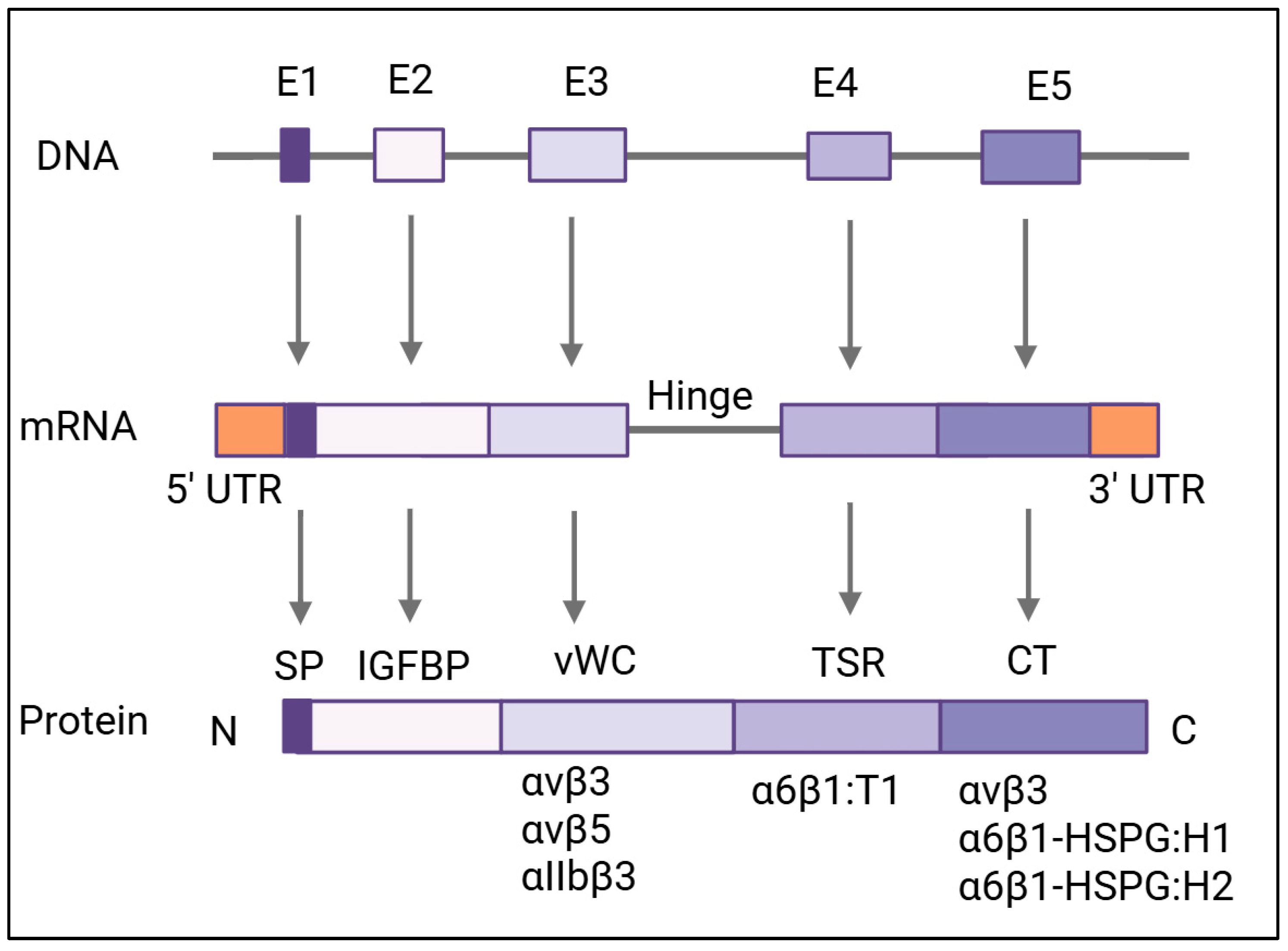
Table 1.
CYR61 domains and binding sites.
| Domain | Conserved Sequence | Binding Sites | Ribbon Diagram |
|---|---|---|---|
| Insulin-like Growth Factor Binding Protein (IGFBP) | CPAACHCPLEAPKCAPGVGLVRDGCGCCKVCAKQLNEDCSKTQPCDHTKGLEC | Insulin-like growth factor binding proteins |  |
| von Willebrand Factor type-C repeat (vWC) | CEYNSRIYQNGESFQPNCKHQCTCIDGAVGCIPLCPQESLPNLGCPNPRLVKVTGQCCE | αvβ3 αvβ5 αIIbβ3 |
|
| Thrombospondin type-1 repeat (TSR) | CIVQTTSWSQCSKTCGTGISTRVTNDNPECRLVKETRICEVRPC | α6β1 |  |
| C-terminal (CT) | PEPVRFTYAGCLSVKKYRPKYCGSCVDGRCCTPQLTRTVKMRFRCEDGETFSKNVMMIQSCKCNYNCPHANEAAFPFYRLFND | αvβ3, α6β1-HSPG: H1, α6β1-HSPG:H2 | 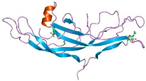 |
Disclaimer/Publisher’s Note: The statements, opinions and data contained in all publications are solely those of the individual author(s) and contributor(s) and not of MDPI and/or the editor(s). MDPI and/or the editor(s) disclaim responsibility for any injury to people or property resulting from any ideas, methods, instructions or products referred to in the content. |
© 2025 by the authors. Licensee MDPI, Basel, Switzerland. This article is an open access article distributed under the terms and conditions of the Creative Commons Attribution (CC BY) license (http://creativecommons.org/licenses/by/4.0/).
Copyright: This open access article is published under a Creative Commons CC BY 4.0 license, which permit the free download, distribution, and reuse, provided that the author and preprint are cited in any reuse.