
Submitted:
15 April 2025
Posted:
15 April 2025
You are already at the latest version
Abstract
Rural culture is the essence of rural tourism[1]. As a critical material carrier for the inheritance and preservation of rural culture, public cultural spaces have emerged in recent years as a new driving force for the development of rural cultural tourism. Against the backdrop of China’s rural cultural tourism development, this study explores the construction of rural public cultural spaces centered on traditional culture, aiming to investigate new mechanisms for their development in the new era. To this end, the study takes Moganshan, China as a case study and employs a literature review, ArcGIS spatial analysis, and questionnaire surveys. By integrating historical literature, spatial distribution data of cultural heritage, and analyses of various groups’ perspectives on constructing rural public cultural spaces, it systematically examines three critical issues in current practices: an insufficient exploration of indigenous traditional culture[2], unreasonable planning and utilization[3], and an imperfect mechanism for public participation[4]. The findings indicate that rural areas in China possess abundant and distinctive conventional cultures, which are vividly reflected in cultural heritage distributed across different regions. Moreover, in the new era, diverse groups have shown great attention to rural culture—not only endorsing the construction of public cultural spaces centered on traditional rural history and culture but also asserting that innovative public cultural spaces can promote the development of rural cultural tourism. Based on these outcomes, the study proposes three new models for constructing rural public cultural spaces: recreational cultural space, cultural heritage space, and cultural creative space, thereby offering fresh perspectives for advancing rural cultural tourism.
Keywords:
Rural
; Public Cultural Space
; Cultural Tourism
; Moganshan
1. Introduction
Public spaces are one of the key agents in advancing culture, arts, and education [5]. In this context, rural public cultural spaces, as an important component of public space, not only bear the functions of promoting art and education but also play a pivotal role in driving the development of cultural tourism. Rural public cultural spaces constitute a systemic field jointly formed by local actors (rural residents), tangible spaces (or virtual spaces), activity domains, and institutional frameworks [6], and they serve as critical material carriers for the protection of cultural heritage in rural areas.
In recent years, by leveraging characteristics such as publicity, cultural significance, local distinctiveness, and production, rural public cultural spaces have disseminated knowledge of cultural heritage preservation through public cultural communication channels. This has enhanced the local community’s awareness of cultural heritage protection, emerging as a new driving force for the development of the cultural tourism economy in the new era [6]. However, with the accelerated pace of constructing rural public cultural spaces, multiple challenges have gradually emerged—such as a lack of distinctive cultural characteristics, diminished functionality, and inadequate development of virtual spaces [7]. These issues have led to the fragmentation and erosion of outstanding traditional culture [8] and the collapse of its spiritual order [9], causing a loss of conventional craftsmanship and cultural knowledge, and posing severe challenges to the living transmission of cultural heritage [8].
More specifically, the challenges in constructing rural public cultural spaces mainly stem from three aspects: inadequate excavation of indigenous traditional culture [2], unreasonable planning and utilization [3], and an imperfect mechanism for public participation in the construction process [4]. As an indispensable component of rural residents’ daily lives and production activities, insufficient exploration of indigenous traditional culture weakens public cultural identity and a sense of belonging, leading to the loss of collective memory and exacerbating the attrition of cultural heritage custodians [10]; unreasonable planning and utilization of cultural spaces fail to fully meet the diverse cultural needs of the populace, thereby reducing their efficacy [11]; and an underdeveloped public participation mechanism diminishes the cultural subjectivity of residents, creating tension between a state-centric logic and localized, differentiated approaches [12].
With the transformation of the cultural economic development model, the critical role of constructing rural public cultural spaces in cultural tourism has become increasingly prominent, drawing the attention of scholars worldwide. For example, G. Brunori and colleagues have placed culture at the forefront of rural economic development, arguing that establishing appropriate governance models and affirming the importance of regional elites are keys to effectively excavating and leveraging indigenous culture during rural development [13]. J.Y. Do and his team, approaching the issue from a planning perspective, have investigated the construction of rural public cultural spaces, suggesting that the development of rural cultural welfare facilities and strategic spatial planning significantly impact the development of public spaces—especially in addressing the public’s demand for cultural tourism [14]. In addition, regarding the construction of public participation mechanisms, L. Dilley and others, using the example of rural public cultural space development in South Korea, contend that adjusting the role of government, addressing the emotional needs of rural residents (as seen in Japanese rural areas), and reinforcing the role of non-profit organizations and experts in regional space construction are crucial [15].
Compared to other nations, China’s vast rural expanses [16] and deeply rooted traditional cultural foundations have led to more nuanced research on the issues surrounding the construction of rural public cultural spaces. Broadly speaking, Chen Bo and Ding Cheng have noted that current construction efforts in China face challenges such as uneven development, lack of distinctive cultural features, and weakened functionality [7]. In addressing these issues, further analyses have been conducted by various scholars. For instance, Fang Yaming and Liu Yuanjing suggest that the insufficient intrinsic motivation behind rural public cultural space development is related to the loss of local cultural agency and a crisis in recognizing the value of traditional culture [17]. Gao Chunfeng proposes corresponding solutions by arguing that refining the cultural characteristics of rural public cultural spaces requires being rooted in local traditions, inheriting and innovating rural cultural heritage, and unearthing unique narratives and cultural expressions centered on traditional values [18]. Moreover, with regard to unreasonable planning and utilization, Yang Yongheng and Chen Jian emphasize that strengthening the service functions of rural public cultural spaces involves fully harnessing the agency of local residents and leveraging local cultural leaders as pivotal human resources [19]. Additionally, Geng Da and colleagues, focusing on institutional adjustments, argue that during the construction of rural public cultural spaces in China, the government should recalibrate the interplay between state-centric and peasant-centric logics, nurture villagers’ cultural self-awareness, and enhance the intrinsic mechanisms of rural culture, thereby facilitating a fundamental shift from a government-led “cultural delivery” approach to one that “cultivates culture. [11]”
Based on these research findings, this paper aims to further strengthen the construction of rural public cultural spaces in China by focusing on three key areas: excavating historical cultural connotations, adjusting planning and utilization, and perfecting public participation mechanisms. Using Moganshan as a case study, the paper explores new pathways for constructing rural public cultural spaces within the context of cultural tourism development in the new era. First, by employing a literature review, the historical development process of the Moganshan region is systematically delineated to identify core cultural elements from different periods. Second, through GIS spatial analysis, the visualization of the spatial distribution of cultural heritage in the Moganshan area is enhanced. The findings from these two methodologies will lay a solid historical and cultural foundation for the innovative construction of rural public cultural spaces in Moganshan. Finally, by utilizing questionnaire surveys, the study examines the impact of public participation mechanisms on the construction of rural public cultural spaces, thereby offering new perspectives for developing rural public cultural space construction.
2. Materials and Methods
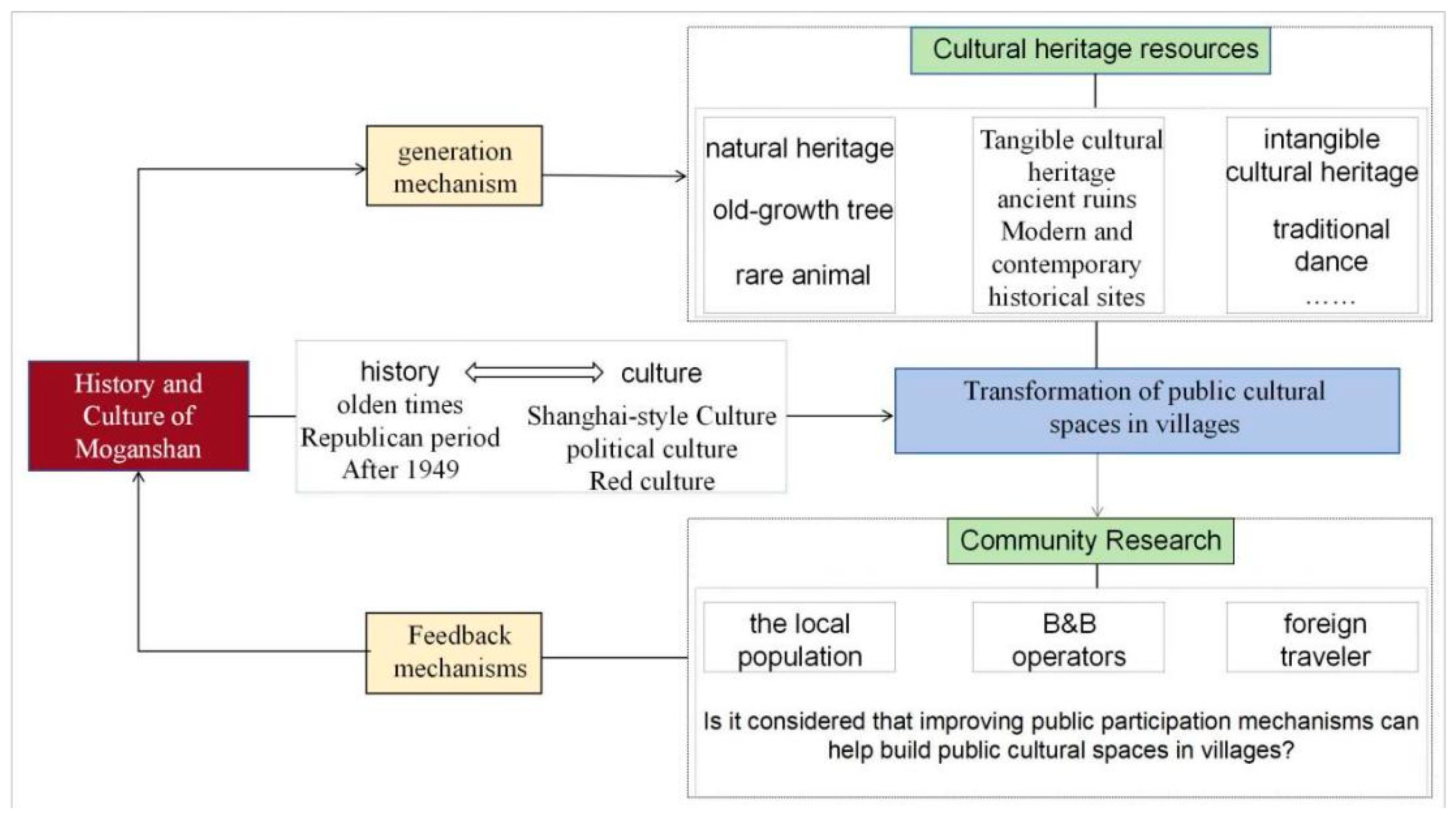
Constructing material spaces based on local culture is an important strategy to avoid the ‘one village looking the same’ phenomenon in rural public cultural space development [10]. Therefore, this study integrates historical research, GIS spatial analysis, and questionnaire surveys to delineate the historical and cultural connotations of the Moganshan region, analyze the spatial distribution characteristics of cultural heritage, and employs linear regression analysis on 300 survey responses from various stakeholders to investigate the genuine perspectives of the public regarding the construction of mechanisms for public participation in rural public cultural spaces.
Figure 1.
Research Methods for Constructing Rural Public Cultural Spaces in the Moganshan Region.
1. Literature Research Method
The core of the literature research method lies in the organization and analysis of historical materials [20]. Specifically, this study’s literature research method comprises three key steps: First, collecting and organizing relevant historical materials from the Moganshan region to construct a comprehensive historical and cultural background; second, employing comparative analysis of the literature to explore the similarities and differences in cultural manifestations during various historical periods and to identify the fundamental causes behind these changes; and third, integrating and synthesizing the key information from the literature to extract the cultural characteristics of each historical period and to clarify their evolutionary trajectory.
Multiple types of historical sources are utilized to achieve this research objective. Official documents such as Zhejiang Tongzhi and Wukang County Annals record the basic geographical, historical, political, and cultural information of the Moganshan region. In contrast, local chronicles like Moganshan Annals and Republican-era newspapers such as Zhonghua (Shanghai) provide critical insights into the cultural landscape during specific historical periods.
In addition to material collection, this study further incorporates the theoretical framework of historical development stages to analyze the cultural evolution of the Moganshan region. The theory of historical development stages holds that social and cultural change is propelled by a series of phases, each characterized by unique cultural traits and historical contexts [21]. Under this framework, the study utilizes comparative literature research to delve into the critical nodes and events of cultural transformation in the Moganshan region. This approach allows for dividing the region’s historical and cultural development into distinct periods and stages, thereby enabling an exploration of the trajectories of cultural change over time.
Finally, by integrating and synthesizing the literature, this research distils the core cultural characteristics of the Moganshan region at different historical stages. This portion of the study is crucial for understanding the historical depth and evolution of the region’s culture. The emergence of distinct cultural characteristics across different historical stages is attributed to the cumulative effect of historical events and the unique socio-historical contexts characterized by political reforms, social transformations, and shifts in cultural ideologies.
2. The ArcGIS Spatial Analysis Method
GIS, or Geographic Information System, is a system that, based on geospatial data and aided by computer technology, collects, manages, manipulates, simulates, analyzes, and displays spatially relevant data. It employs geographic modelling and analytical methods to provide various spatial and dynamic geographic information, forming geospatial information models for geographic research and data organization [22].
This study employs the GIS method to construct a digital boundary for the Moganshan region and geocode the cultural heritage data within it, thereby establishing a spatial information model of cultural heritage distribution in Moganshan. The development of this model not only facilitates the revelation of the spatial distribution characteristics of cultural heritage in the region and supplies essential geographic information for cultural tourism development. Moreover, applying GIS technology enhances data analysis precision, enabling visitors to gain a comprehensive and intuitive understanding of the geographic features and evolutionary trends of Moganshan’s cultural heritage distribution.
Generating cultural heritage spatial distribution maps and kernel density maps using ArcGIS primarily involves four stages: data preparation, visualization processing, spatial analysis, and final mapping. First, during the data preparation phase, it is necessary to collect cultural heritage point data within the boundaries of Moganshan Town. This dataset includes detailed geographic coordinate information. In addition, administrative boundaries, transportation networks, and topographic data for Moganshan Town are obtained as background support to ensure standardized data formats and a unified coordinate system. Next, the collected data are loaded into ArcGIS, and through symbolization and classification techniques, tangible and intangible cultural heritage elements are differentiated and visually represented on the map. Supplementary map elements such as labels, scale bars, and north arrows are added to enhance readability. This process not only elucidates the geographic distribution pattern of cultural heritage but also establishes a solid foundation for subsequent spatial analysis.
In conducting kernel density analysis, the Kernel Density tool in ArcGIS is utilized to compute the spatial density distribution of cultural heritage points. The relevant calculation formula is as follows:
Where D(x, y) represents the kernel density value at location (x, y), that is, the pixel value of the kernel density distribution map; n denotes the total number of input cultural heritage points; wi is the weight of the i-th point; h2 represents the search radius, which corresponds to the spatial extent of Moganshan Town; di is the distance from position (x, y) to the i-th point; and K(di/h) is the kernel function used to calculate the weight at a given distance di. ArcGIS employs the quartic kernel function calculation formula, expressed as follows:
In this context, the standardized distance represents the distance ratio from point i to the analysis point relative to the search radius. The kernel function returns a value of zero when t > 1, meaning that points located beyond the search radius exert no influence on the density value at the given location. By setting an appropriate search radius and grid resolution, this method smooths the distribution of cultural heritage points, thereby producing a kernel density raster. With suitable colour rendering techniques, the resulting heat map delineates the spatial distribution pattern of cultural heritage in Moganshan Town. Furthermore, the underlying formation mechanisms can be effectively analyzed by integrating ancillary elements such as administrative boundaries and transportation networks. Finally, ensuring the map’s completeness and conformity to academic standards is essential during the mapping stage, with the final output exported in high-resolution format.
3. Questionnaire Survey Method
The questionnaire survey method is a quantitative research approach firmly rooted in a positivist epistemology. It involves systematically distributing standardized questionnaires to targeted participants, then carefully collecting, organizing, and statistically analyzing the returned data to derive empirical research findings [23]. As an empirical social research tool, its very nature necessitates integrating random sampling procedures and robust statistical analyses [24].
In this study, the questionnaire survey method is adopted to generate critical quantitative data that bridges the gap from qualitative insights to empirical validation, thereby supporting the refinement of public participation mechanisms in constructing rural public cultural spaces in the Moganshan region. On the one hand, the method must be underpinned by a well-defined theoretical framework; on the other, the degree to which abstract constructs are operationalized into concrete measures is paramount for ensuring the validity of the research. Moreover, because human subjects are the primary focus, their intrinsic characteristics inevitably influence the reliability and applicability of the survey instrument.
Framed by the context of cultural tourism development and guided by public participation theory, this study seeks to investigate the perceptions and expectations of different stakeholder groups regarding their involvement in the construction of rural cultural spaces in Moganshan. Accordingly, the questionnaire has been meticulously designed for three distinct groups—residents, tourists, and homestay operators—employing a stratified sampling strategy. Data collection is executed through online survey platforms and offline, in situ distribution, with 100 responses solicited from each group.
In evaluating the reliability of the questionnaire, Cronbach’s alpha is employed as the primary reliability metric. At the same time, the Corrected Item-Total Correlation (CITC) is used to assess the reliability of individual items. All survey data are rigorously subjected to tests of both reliability and validity. Once the sample collection is complete, linear regression analysis will be conducted to examine the predictive effects of various factors on the efficacy of the public participation mechanism. Furthermore, by comparing the differences among various stakeholder groups—specifically in terms of their cognitive levels, willingness to participate, and policy recommendations—the study reveals both the shared characteristics and the unique perspectives of each group regarding their involvement in the construction of rural cultural spaces in the Moganshan region. The questionnaire thus addresses the following primary research questions:
1. What are the residents’ perceptions of public participation in constructing rural public cultural spaces?
2. How do homestay operators view the development of rural cultural spaces in the Moganshan region?
3. What attitudes do non-local tourists hold toward constructing rural public cultural spaces in Moganshan?
3. Results
3.1. A Review of the Historical and Cultural Development in the Moganshan Region
Based on a literature research methodology, the collection, collation, and analysis of relevant historical documents concerning Moganshan yield the following conclusions.
3.1.1. Origins and Early Development
From the perspective of the origins of Moganshan’s historical and cultural identity, the name “Moganshan” is derived from the legend of the sword-forging by Gan Jiang and Mo Ye during the Spring and Autumn period. Since ancient times, the region has served as a confluence of cultures [25].
Beginning in the Southern Liang period, several renowned Buddhist temples were successively established in the Moganshan area—such as Tianquan Temple [26], Shiyi Temple [27], and Tongshan Temple [28]. These temples formed a religious and cultural network centered on Buddhist culture. The flourishing of temple culture promoted regional socio-economic development and attracted numerous literati. For instance, during the Tang dynasty, Huzhou’s governor Yu Di [26], the Song dynasty legal officer Mao Pang of Hangzhou [26], and the Ming dynasty philosopher Wang Yangming [26], among others, visited the area, leaving behind calligraphic works and poetry. In addition, the region nurtured historical figures such as Yu Xin [29], Shen Yue and Meng Jiao, thereby earning its reputation as a genuine center of scholarly pursuit.
3.1.2. Modern and Contemporary Developments
Regarding the modern evolution of Moganshan’s cultural landscape, its development can be divided into three phases (as illustrated in Figure 2).
Phase One (Late 1880s to Late 1920s): The Maritime Culture Led by Missionaries.In the early Republic of China, the area attracted many foreign missionaries due to Moganshan’s proximity to the emerging port of Shanghai and its inherent regional advantages. These included the American Baptist missionary Folei Jia [30], along with missionaries such as Meisheng, as well as Huo Shidun and Dr. Shibode. They publicized Moganshan’s scenic beauty in Western newspapers, establishing it as one of the four renowned summer resorts in Jiangnan alongside Lushan, Beidaihe, and Jigongshan [30]. Moreover, these Western missionaries spurred Westerners to lease land and construct residences there [31]. This leasing activity catalyzed an evolution in Moganshan’s architectural culture, gradually giving rise to a “Sino-Western fusion” style characteristic of maritime culture [31]. By May 1928, a total of 167 villas had been constructed by various nations on the mountain [32]. However, Westerners’ large-scale purchase of property and their operation of entertainment venues for profit provoked dissatisfaction among the residents. With the enactment of new regulations by the local government, the commercial activities of Westerners in the region were gradually curtailed [33] and Western cultural influence eventually receded from the historical stage.
Phase Two (Late 1920s to Late 1940s). In 1928, the prominent Nationalist politician Huang Fu resigned from his post as Foreign Minister and chose to retire in Moganshan [34] where he initiated a series of rural reforms and educational experiments. He acquired land to establish Moganshan Primary School, thus inaugurating new chapters in rural education and healthcare reform [35]. During this phase, Huang Fu introduced advanced educational concepts and agricultural technologies through exchanges with experts from Suzhou, Shanghai, and other regions, laying the foundation for the modernization of Moganshan. Following Huang Fu’s retreat to Moganshan, Chiang Kai-shek ascended the mountain on four separate occasions and resided in Villa No. 1 of Wuling Village, Moganshan [36]. At that time, Moganshan gradually evolved into a retreat for numerous famous politicians and intellectuals of the Nationalist government, with scholars and business people frequently gathering there. In many respects, it became an important venue for political and cultural discourse during the Republican era [36]. Notably, events such as the 1937 negotiations between the Nationalists and the Communists [37] and the 1948 Jin Yuquan Conference [37] rendered Moganshan an important witness to modern Chinese history.
Phase Three (Early 1950s).In 1954, Chairman Mao Zedong briefly stayed in Moganshan [36] and thereafter, figures such as Chen Yi and Liu Bocheng also visited the mountain. During the early years of the People’s Republic of China, the Moganshan region emerged as a key red base in Southeast China [25].
3.2. Analysis of the Spatial Distribution of Cultural Heritage in the Moganshan Region
Based on ArcGIS spatial analysis methods, the cultural heritage types within the Moganshan region were first systematically organized, leading to the following conclusions.
3.2.1. Current Status of Cultural Heritage
According to official data, the Moganshan region presently possesses five tangible cultural heritage items and seventeen intangible cultural heritage projects with clearly verifiable information (see Figure 3 and Figure 4). These assets are distributed throughout the foothills and surrounding villages. The formation and development of these cultural heritages have greatly benefited from the region’s excellent natural ecology [25]. The cooperative interaction of a favorable ecological environment and a diverse cultural heritage has coalesced into a regional cultural ecosystem, sustaining the prosperity and stability of cultural tourism.
3.2.2. Detailed Analysis of Heritage Constituents
Secondly, an in-depth analysis of the intrinsic connotations of the region’s cultural heritage reveals that the tangible cultural heritage comprises two Paleolithic sites and three significant modern historical sites. In particular, the discoveries at the Wulongshan and Huangdunshan sites [38] unequivocally demonstrate the region’s long-standing historical and cultural legacy. Meanwhile, the Huang Fu Mausoleum, the “Wenzhi Cangshu Lou”, and the Moganshan villa complex [39] underscore the pivotal role of Republican-era culture in shaping the area’s identity. Notably, the Republican-era villa complex—exemplified by the Baiyunshan Guan and comprising nearly one hundred villas—was designated a National Key Cultural Heritage Site as early as 2006 [40].
In addition, the extant intangible cultural heritage encompasses projects in traditional crafts, dance, medicine, folk literature, and folklore, with their proportional distributions illustrated in Figure 5. Traditional crafts account for approximately two-thirds of these projects and include bamboo culture, tea culture, and other facets of everyday life typical of the mountainous regions of western Zhejiang. Bamboo culture, for instance, documents the production and living conditions of western Zhejiang’s agrarian era [41]. Tea culture, particularly the production of Moganshan Huangya—which dates back to the Tang dynasty—further highlights the region’s deep historical roots [42]. Moreover, traditional skills such as Shanwa sewing, the handcrafted production of Li family cloth shoes, and the ancient herbal methods for soap-making in Moganshan Town reflect the resourcefulness of local villagers amid challenging living conditions. Similarly, the production of sesame oil, qingtuan, and other food ingredients illustrates how local communities adapted their culinary practices to alleviate the rigors of seasonal labor (see Figure 6).
3.2.3. Spatial Distribution Characteristics
Furthermore, analysis of the spatial distribution characteristics of the region’s cultural heritage indicates that within the administrative boundaries of Moganshan Town, heritage sites are dispersed across nine villages near the Moganshan Scenic Area (see Figure 7). Three key characteristics emerge:
1. Bifurcated Cultural Systems: The spatial distribution exhibits two distinct cultural systems oriented east and west. The eastern part, corresponding to the original boundaries of Moganshan Town, constitutes the core cultural area. In contrast, the western part comprises Fatou Township, which was incorporated into Moganshan Town after 2016 [43]. The western region, being closer to the mountainous area, predominantly features intangible heritage projects related to bamboo and tea.
2. Density Variations: The cultural heritage within Moganshan Town shows a pattern of denser distribution in the south compared to the north and in the east compared to the west, with a maximum density of 0.27 (see Figure 8). This variation is closely related to the different historical developmental trajectories of the local villages. For example, villages near the Moganshan Scenic Area established comprehensive religious systems as early as the Wei and Jin periods, with numerous ancient temples contributing to a longer period of cultural development and a higher population density, thus resulting in a greater concentration of cultural heritage. In contrast, the Dongshen Village area, historically a stronghold of the prominent Shen family during the Wei, Jin, and Southern and Northern Dynasties [44], exhibits a cultural concentration primarily centered on the scenic area in the east, while the western concentration centers on Dongshen Village.
3. Alignment with Transportation Corridors: The spatial distribution of heritage sites is largely aligned along major transportation routes—such as Huang Fu East Road, Tianquan Mountain Road, and Qianbai Line—which facilitate outward diffusion. Convenient transportation not only plays a pivotal role in regional economic development but also serves as an important conduit for the external dissemination of culture, thereby bolstering the prosperity of cultural tourism [45].
3.3. Analysis of Public Survey Results in the Moganshan Region
The survey was conducted against the backdrop of cultural tourism development. Three respondent groups were defined—residents, homestay operators, and non-local tourists—and three separate questionnaires were designed around public participation in constructing rural cultural spaces. A total of 300 samples were collected, with 100 responses per questionnaire.
3.3.1. Analysis of Survey Results for Local Residents
Table 1 employs as independent variables (a) public participation in cultural heritage preservation and (b) the effectiveness of rural cultural spaces in transmitting local traditional culture. The dependent variable is whether public participation in constructing rural public cultural spaces enhances the understanding of local cultural heritage. Linear regression analysis yields the following findings:
1.The regression coefficient for participation in cultural heritage preservation through interactive activities is 0.407 (t = 4.773, p = 0.000 < 0.01). This indicates that public engagement in cultural heritage preservation activities within rural public cultural space construction significantly and positively influences the understanding of local traditional culture. This result confirms that residents are positive about participating in rural public cultural space development.
2.The regression coefficient for the effectiveness of rural cultural spaces in transmitting local traditional culture is 0.290 (t = 3.198, p = 0.002 < 0.01). This suggests that the establishment of cultural heritage within these spaces assists the public in comprehending local traditional culture, thereby further verifying the positive impact of residents’ participation in the construction of rural public cultural spaces in the Moganshan region.
3.3.2. Analysis of Survey Results for Homestay Operators
Table 2 uses the following independent variables:
·Whether local cultural heritage is promoted within homestays;
·The belief that cultural heritage preservation can enhance the attractiveness of homestays;
·Willingness to offer cultural heritage-related experiential activities to homestay guests;
·Willingness to join cultural heritage preservation associations or organizations and
·Whether the interaction between homestays and rural public cultural spaces drives local economic development.
The dependent variable is how rural public cultural space construction in Moganshan, focusing on cultural heritage preservation, affects the operators’ business activities. Linear regression analysis reveals:
1.The regression coefficients are as follows: 0.157 for promoting local cultural heritage in homestays (t = 2.120, p = 0.037 < 0.05), 0.280 for the willingness to offer cultural heritage-related experiences (t = 3.911, p = 0.000 < 0.01), and 0.191 for willingness to join cultural heritage preservation associations or organizations (t = 2.781, p = 0.007 < 0.01). These results indicate that homestay operators exhibit a positive attitude toward participating in constructing rural public cultural spaces in the Moganshan region.
2.The regression coefficient for the belief that cultural heritage preservation can enhance the competitiveness of homestays is 0.202 (t = 2.687, p = 0.009 < 0.01), while the coefficient for the perceived impact of the interaction between homestays and rural public cultural spaces on local economic development is 0.209 (t = 2.824, p = 0.006 < 0.01). These findings demonstrate that the construction of rural public cultural spaces positively influences homestay operations.
3.3.3. Analysis of Survey Results for Non-local Tourists
Table 3 adopts the following independent variables:
·Your interest in participating in Moganshan cultural heritage preservation;
·Whether you have previously participated in Moganshan’s cultural heritage preservation activities;
·Whether you support the efforts of local government and social organizations in cultural heritage preservation and
·Whether you are willing to volunteer to maintain rural public cultural space.
The dependent variable is the degree to which you perceive the construction of Moganshan’s rural public cultural space aligned with local economic development. Linear regression analysis shows:
1.The regression coefficient for “Are you interested in participating in Moganshan cultural heritage preservation?” is 0.185 (t = 2.237, p = 0.028 < 0.05), and that for “Are you willing to volunteer in the maintenance of rural public cultural space?” is 0.233 (t = 2.787, p = 0.006 < 0.01). These results imply that most non-local tourists favor constructing rural public cultural spaces centered on cultural heritage.
2.The regression coefficient for “Have you participated in Moganshan’s cultural heritage preservation activities?” is 0.216 (t = 2.500, p = 0.014 < 0.05), and that for “Do you support local government and social organizations in their cultural heritage preservation efforts?” is 0.359 (t = 4.309, p = 0.000 < 0.01). This indicates that most tourists are supportive and willing to volunteer to maintain rural public cultural spaces.
4. Discussion
Authors should discuss the results and how they can be interpreted from the perspective of previous studies and of the working hypotheses. The findings and their implications should be discussed in the broadest context possible. Future research directions may also be highlighted.
1. Construction of Recreational Cultural Spaces in the Moganshan Region
A literature analysis was conducted to examine the long-standing history and diverse cultural heritage of the Moganshan region. This rural culture—centered on village life—constitutes a vital component of community memory, embodying foundational perceptions of society, life, and history, and is a crucial guarantee for maintaining rural social order [8]. The research reveals that Moganshan has historically been a confluence of cultures. The region’s unique cultural landscape is jointly shaped by Buddhist culture centered on temples, cosmopolitan culture influenced by missionaries, political culture epitomized by figures such as Huang Fu, and red culture centered on Mao Zedong. As an important material manifestation [46], this cultural landscape typifies the characteristics of historical cultural geography [47] by encapsulating the intertwined relationships among community, historical culture, and the natural environment. In doing so, it lays the foundation for highlighting the cultural distinctiveness of rural public cultural spaces. It promotes the development of rural cultural tourism, effectively compensating for the previously weak cultural identity in constructing such spaces. Consequently, this study, set against a rural cultural tourism development backdrop, proposes constructing recreational, cultural spaces by capitalizing on Moganshan’s extant cultural landscapes.
Recreational, cultural space is a novel concept that integrates the development of recreational spaces with cultural spaces, simultaneously fulfilling leisure, entertainment, and cultural dissemination functions. Although recreational cultural spaces are human-centered and built around recreational activities [48]—much like conventional recreational spaces—they differ by primarily focusing on the exhibition of historical cultural landscapes and the provision of traditional cultural experiences. The goal is to maximize the regional cultural advantage during the development of cultural tourism. On one hand, these spaces are designed to provide residents with venues for accessing information about indigenous traditions, thereby strengthening regional cultural identity [49]. On the other hand, they offer visitors, particularly during holidays, to closely observe and experience Moganshan’s native traditions. As a renowned leisure tourism destination within the Yangtze River Delta [50], Moganshan boasts natural landscapes—such as bamboo forests, cloud vistas, ancient trees, and mountain springs—that, through thoughtful design and spatial planning, can accommodate various cultural activities. Dynamically, these spaces vividly display the region’s historical and cultural heritage, creating retreats and cultural experience venues removed from the urban clamor and catering to modern tourists’ dual demands for healthful rejuvenation and spiritual nourishment [51]. Furthermore, recreational cultural spaces may serve as public platforms for non-governmental organizations (e.g., the Homestay Operators Association) to participate in local cultural space development, thereby becoming convergence points for regional ecological protection, historical cultural promotion, and economic development [52].
It is also noteworthy that planning tourism routes is indispensable in constructing recreational and cultural spaces [53]. Based on the region’s profound historical and cultural heritage, this study proposes a tourism route planning strategy centered on historical cultural promotion. Such planning, founded on cultural tourism, employs diversified historical themes to interlink multiple recreational and cultural spaces, thereby achieving the dual objectives of protecting historical and cultural landscapes and the natural environment [54]. By connecting dispersed sites—such as ancient temples or Republican-era edifices—with eco-leisure routes like hiking trails and sightseeing paths, the interplay between linear and nodal spaces is reinforced, enhancing the cultural tourism experience. To this end, optimizing spatial layouts and dynamic route designs is essential. Specifically, historical cultural tourism routes should be planned with strategically located rest points and themed experiential circuits (for example, Chan tea and wellness experiences from the Song Dynasty, architectural tours of Republican cultural heritage, and red cultural mountain explorations) so that tourists can both recuperate physically in natural settings and receive spiritual nourishment through immersive cultural activities. This multidimensional experiential model is well suited to meet the diverse needs of visitors, thereby enhancing the overall competitiveness of rural areas within the context of cultural tourism development.
2. Construction of Cultural Heritage Spaces in the Moganshan Region
Using ArcGIS spatial analysis, this study investigates the diverse types of cultural heritage present in the Moganshan region. These cultural heritages are significant carriers of the region’s historical culture and cultural assets passed down through generations among rural communities [55]. The findings indicate that the distribution of cultural heritage in Moganshan Town is primarily divided into two distinct cultural systems—exhibiting dense concentrations in the south and east and sparser distributions in the north and west. Further analysis reveals that these heritages predominantly cluster within residential village areas and radiate outward from central nodes along transportation routes, reflecting the unique lifestyles and values of Moganshan residents. Notably, intangible cultural heritage is particularly abundant and varied; its spatial distribution, characterized by transmission dynamics and an area-based pattern [45], offers robust empirical support for optimizing the planning and utilization of rural cultural spaces and addressing the issue of inadequate spatial planning in rural public cultural space development. Accordingly, this study—situated within rural cultural tourism development and based on Moganshan’s existing cultural heritage spatial distribution—proposes constructing cultural heritage spaces, particularly emphasizing intangible cultural heritage workshops.
Intangible cultural heritage workshops represent a paradigmatic type within cultural heritage space construction [16]. Since their inception, these workshops have been designed to link intangible cultural heritage projects with communities and markets, emphasizing the practical production of intangible cultural heritage products. As a breakthrough model for rural development, they aim to optimize regional planning for rural public cultural spaces by aligning with the growing tourist demand for “cultural experiences,” thereby fostering innovative developments in rural cultural space planning [55] and promoting new paradigms in rural cultural tourism.
Establishing intangible cultural heritage workshops depends on two essential conditions: cultural substance and appropriate venues. Regarding cultural substance, the intangible heritage skills prevalent in Moganshan’s popular scenic areas are primarily traditional handicrafts—such as bamboo weaving, cloth shoe production, and herbal soap making. Additionally, lacquerware from surrounding towns is actively featured during the intangible cultural heritage festival. However, with the accelerated commercialization of these techniques, there is an increasing risk of excessive packaging and cultural homogenization. Moreover, due to insufficient depth and breadth in public participation, the cultural subjectivity of local communities is gradually eroded, reducing cultural experience to mere consumption and endangering the intergenerational transmission of intangible heritage. This situation underscores the critical importance of constructing dedicated cultural heritage spaces. As pivotal venues for the transmission of intangible cultural heritage, these workshops are well suited for offering training programs in traditional skills, organizing cultural experience courses and festive activities, and transforming intangible cultural heritage from static display to dynamic development via interactive exchanges, thereby bolstering local cultural promotion within the framework of cultural tourism [56].
Furthermore, visitors’ innovative contributions can further invigorate the heritage’s vitality, positioning these workshops as incubators for cultural branding. In terms of spatial development, the construction of such workshops can be coordinated with local governmental initiatives by utilizing existing historical buildings in the Moganshan region, thus achieving centralized protection of cultural heritage. This approach revives traditional master-apprentice transmission systems within these spaces—preserving the authenticity of intangible cultural heritage—and facilitates their industrialization and commercial operation. It promotes cross-sector collaboration among heritage practitioners, designers, artists, and scholars, creating an innovative public platform for participatory cultural heritage protection. Additionally, as vehicles for the innovative development of rural public cultural spaces, intangible cultural heritage workshops can cooperate with non-governmental organizations such as the Homestay Operators Association to create distinctive cultural attractions, enable autonomous funding operations, and promote the “intangible cultural heritage + tourism” model, further enhancing the rationality of regional rural public cultural space planning.
3. Construction of Cultural Creative Spaces in the Moganshan Region
A questionnaire survey was employed to analyze the perspectives of residents, homestay operators, and visitors regarding the construction of rural public cultural spaces in the Moganshan region. Public cultural participation is critical to the development of these spaces. By considering public opinions and empowering citizens—incorporating their cultural choices and preferences as key indicators for cultural policy—pathways for optimizing rural public cultural space construction can be effectively refined [57], thus advancing rural cultural tourism development. The survey results indicate that the construction of rural public cultural spaces enjoys broad support. Residents believe that public participation in these projects can effectively disseminate Indigenous traditional culture; homestay operators are convinced that such participation can significantly promote local cultural and economic development, and visitors express considerable interest in developing these spaces. Moreover, regardless of whether they are residents, homestay operators, or external visitors, respondents uniformly expressed their willingness to participate in constructing Moganshan’s rural public cultural spaces. This high level of public engagement provides a solid community foundation for refining participatory mechanisms in public cultural space construction, effectively addressing issues such as insufficient sustainability, order, and dynamism in cultural development [58]. Consequently, this study—framed within rural cultural tourism development and leveraging the strong basis for public participation in Moganshan—introduces the concept of creative cultural spaces.
Cultural creative spaces were defined by UNESCO in 1988 as “venues that concentrate on folk and traditional cultural activities” [59]. In her work On the Significance of Cultural Creative Spaces, Professor Jiang Lili of the National University of Singapore posits that cultural creative spaces constitute a form of cultural clustering that integrates specific cultural industries [59]. Compared with traditional cultural spaces, cultural creative spaces serve as innovative platforms combining cultural creative industries with spatial development, fulfilling dual functions of cultural transmission and industrial agglomeration. Their objective is to organically integrate the three key themes of public participation—namely, the government, non-governmental organizations (e.g., the Homestay Operators Association), and the general public—thus addressing various institutional issues in constructing rural public cultural spaces.
The development of cultural creative spaces in Moganshan is still nascent. Existing spaces include a variety of forms, such as cultural plazas, Republican-era libraries, Wenzhi Cangshulou art exhibitions, Moganshan printmaking galleries, Yucun water streets, and floating stages. Additionally, projects under construction include modern cultural facilities such as art museums and planetariums. Renovated historical buildings retain a strong Republican cultural ambiance while incorporating traditional folk craft display areas that contrast with and complement contemporary art galleries, creating new avenues for cultural consumption within the regional cultural tourism framework. However, due to the current shortcomings in public participation mechanisms, the development of cultural creative spaces in Moganshan faces several challenges. First, insufficient exploration of indigenous traditional culture has led to a shallow integration of culture and space, with overall development trending toward homogenization and overlapping functions in certain areas—this may result in fragmented value systems and heterogeneous community groups, thereby hindering the construction of rural public cultural spaces [60]. Strengthening public participation mechanisms is imperative; by harnessing the positive engagement of the public as the core of institutional development, it is possible to broadly collect traditional cultural information, enabling citizens to function both as participants and co-constructors in regional cultural tourism development [61]. Second, inadequate planning has resulted in insufficient interconnection among cultural creative spaces. For example, the secluded location of the Wenzhi Cangshulou, with its lack of clear signage along tour routes, has led to low visitor numbers. At the same time, the spatial remoteness between the outdoor stage and the water stage at Yucun Plaza hinders effective interaction. In order to address this issue, government authorities must provide improved management mechanisms and timely update relevant cultural policies to the evolving dynamics of regional cultural tourism. Finally, as the primary drivers of cultural creative space commercial development, non-governmental organizations such as homestay associations are expected to serve as vital communication bridges between the government and the public. On the one hand, these organizations—operating as government-appointed working groups—can be commissioned to construct cultural creative spaces and, during the process of space development and cultural product design, collect effective public cultural inputs, thereby broadening the scope of public participation in rural public cultural space construction and allocating part of the generated revenue to local villagers. This approach realizes the goals of community co-construction and shared benefits under the framework of cultural tourism development, fostering a synergistic environment for cultural tourism and economic progress alongside residents. On the other hand, as intermediaries between the public and governmental bodies, these organizations can organize activities and experiential courses centered on cultural creative product design, serving as think tanks that transform public opinions into actionable policy inputs for further planning of cultural creative spaces that align with regional cultural tourism development (the specific process is illustrated in Figure 9).
5. Conclusions
Under the broad backdrop of cultural tourism development, the construction of public cultural spaces in rural China faces several challenges, including insufficient excavation of historical and cultural connotations, imperfect spatial planning, and inadequate public participation. Using the Moganshan region as a case study, this paper proposes three novel models for constructing rural public cultural spaces: recreational, cultural heritage, and cultural creative spaces. These models are grounded in the region’s indigenous historical and cultural foundations, carefully considering the spatial distribution of existing cultural heritage and striving to establish a more comprehensive public participation mechanism during the construction process of rural public cultural spaces. In doing so, they aim to promote the development of regional cultural tourism.
The principal conclusions of this study are as follows. First, rural areas in China possess a long and diverse history, with each developmental stage exhibiting its unique cultural connotation. Constructing recreational cultural spaces centered on local historical culture will effectively highlight regional historical characteristics and offer a viable approach to address the current shortfall in excavating Indigenous traditional culture within the construction of rural public cultural spaces. Second, given the vast geographical expanse of rural China and the uneven distribution of cultural heritage—with ancient villages serving as focal points in rural public cultural space planning—establishing cultural heritage spaces centered on intangible cultural heritage workshops can effectively leverage regional cultural heritage. This approach not only strengthens the cultural service function of rural public cultural spaces but also meets the diverse cultural needs of different stakeholders, thereby offering an effective solution to the issue of irrational planning in rural public cultural space construction. Lastly, as rural residents in China hold a deep affection for their Indigenous traditional culture and tourists place a high value on regional cultural heritage, constructing cultural creative spaces to perfect public participation mechanisms will significantly improve the current government-dominated public participation model. By fully empowering non-governmental organizations and ordinary citizens to partake in the construction of rural public cultural spaces, this model provides an exemplary framework to resolve the deficiencies in public participation mechanisms.
Author Contributions
Conceptualization, Bai, Y.T. and Qin, Z.C.; methodology, Bai, Y.T. and Qin, Z.C.; validation, Bai, Y.T.; writing—original draft preparation, Bai, Y.T.; writing—review and editing, Bai, Y.T.; supervision, Qin, Z.C.; All authors have read and agreed to the published version of the manuscript.
Funding
This research is a milestone achievement of the “Research on Enhancing the Communication Power of Yangtze River Culture”, a special project of the National Social Science Foundation of China in the field of arts.Item No. 24BH172.
Institutional Review Board Statement
Not applicable.
Informed Consent Statement
Not applicable.
Data Availability Statement
Not applicable.
Conflicts of Interest
The authors declare no conflict of interest.
References
- Zhang, Y.; Zhang, Y. Rural Culture and the Development of Rural Tourism. Econ. Geogr. 2007, 3, 509–512. [Google Scholar] [CrossRef]
- Xue, X. Study on the Construction Strategy of Public Space in Bailuyuan Based on Regional Culture Inheritance. Master’s Thesis, Xi’an University of Architecture and Technology, Xi’an, China, 2022; p. 62. [Google Scholar] [CrossRef]
- Yang, L. Research on the Design of Rural Public Cultural Space from the Perspective of Scene Theory. Master’s Thesis, Hubei University, Wuhan, China, 2024; p. 27. [CrossRef]
- Meng, X. The Dilemma, Dimensions and Directions of Constructing Rural Public Cultural Space. J. South China Univ. Technol. (Soc. Sci. Ed.) 2019, 6, 102–110. [Google Scholar] [CrossRef]
- UNESCO. World Conference on Culture and Arts Education [OL]. (2024-02-13). Available online: https://www.unesco.org/sites/default/files/medias/fichiers/2024/03/WCCAE_Background%20document_ZH.pdf?hub=86510 (accessed on 11 February 2025).
- Li, L. Research on the Reconstruction of Public Cultural Space in Rural Areas in the New Era; Huazhong University of Science and Technology Press: Wuhan, China, September 2021; pp. 34–35. [Google Scholar]
- Chen, B.; Ding, C. Analysis and Evaluation of Cultural Participation of Chinese Rural Residents: A Method Based on Scene Theory. Jianghan Forum 2018, 7, 139–144. [Google Scholar] [CrossRef]
- He, L. Public Cultural Living Space and Rural Cultural Construction. J. Jiangxi Norm. Univ. (Philos. Soc. Sci. Ed.) 2011, 2, 8–13. [Google Scholar] [CrossRef]
- Lü, B. The Necessity, Dilemma and Path of Rural Cultural Reshaping under the Vision of Rural Revitalization. Seeking Truth 2019, 2, 97–108. [Google Scholar] [CrossRef]
- Fan, X.; Li, R. Construction of Rural Public Space from the Perspective of Cultural Heritage Protection: A Case Study of Ding Village in Shanxi. Ind. Des. 2022, 8, 134–136. [Google Scholar] [CrossRef]
- Shu, R. The Field, Spatial Expression and Structural Reconstruction of Rural Public Culture. J. Anhui Norm. Univ. (Humanit. Soc. Sci. Ed.) 2019, 1, 91–96. [Google Scholar] [CrossRef]
- He, M.; Jian, J. Subject Reciprocity: Balancing Standardization and Differentiation in the Production of Rural Public Cultural Space—An Analysis Based on Political Opportunity Structure Theory. J. Beijing Admin. Inst. 2021, 5. [Google Scholar] [CrossRef]
- Brunori, G.; Rossi, A. Differentiating Countryside: Social Representations and Governance Patterns in Rural Areas with High Social Density: The Case of Chianti, Italy. J. Rural Stud. 2007, 23, 183–205. [Google Scholar] [CrossRef]
- Do, J.-Y.; Suh, J.-H. The Analysis of the Project Characteristics on a Comprehensive Village Development—A Case of the Rural Public Spaces and Facilities. J. Korean Soc. Rural Plan. 2016, 22, 33–47. [Google Scholar] [CrossRef]
- Dilley, L.; Shinzato, S.; Ando, M. Revitalising the Rural in Japan: Working through the Power of Place. Electron. J. Contemp. Jpn. Stud. 2017. https://www.japanesestudies.org.uk/ejcjs/vol17/iss3/dilley.html. [Google Scholar]
- Miao, M. Review and Prospect of Research on Rural Public Cultural Space in China. J. Agric. Libr. Inf. Sci. 2023, 4, 4–18. [Google Scholar] [CrossRef]
- Fang, Y.; Liu, Y. Soft Governance: The Expansion of Rural Public Cultural Space in the New Era. Changbai J. 2019, 6, 138–145. [Google Scholar] [CrossRef]
- Gao, C. Construction Path of Rural Public Cultural Space from the Perspective of Narrative Expression. Learn. Trib. 2019, Feb, 59–65. [Google Scholar]
- Chen, J. Functional Failure of Rural Public Cultural Services in Rural Revitalization. Libr. Forum 2019, 7, 42–49. [Google Scholar] [CrossRef]
- Du, X. A Vibrant Literature Research Method. Shanghai Educ. Res. 2013, 10, 1. [Google Scholar] [CrossRef]
- Marx, K.; Engels, F. Selected Works of Marx and Engels, Volume 2; People’s Publishing House: Beijing, China, 1995; p. 33. [Google Scholar]
- Zhang, C.; et al. GIS Spatial Analysis Theory and Methods; Wuhan University Excellent Press: Hubei, October 2004; p. 1. [Google Scholar]
- Zheng, J. A Review of Research on Questionnaire Survey Method. Theory Observ. 2014, 10, 102–103. [Google Scholar] [CrossRef]
- Feng, X. The Questionnaire Survey Method in the Context of Methodology. Sociol. Res. 1994, 3, 13–18. [Google Scholar] [CrossRef]
- Lai, H. (Ed.) Moganshan Gazetteer; Shanghai Bookstore Publishing House: Shanghai, China, June 1994; pp. 1–2, 9–46, 151. [Google Scholar]
- Shu, T.; Chen, D. (Eds.) (Comp.) Wukang County Gazetteer, Volume 11. Qing Daoguang Ninth Year Edition, 24 Volumes, pp. 130–131, 704, 722, 1641.
- Ji, Z.; Lu, K. (Eds.) (Comp.) Zhejiang General Gazetteer (Yongzheng Edition). Qing Guangxu Twenty-Fifth Year Zhejiang Book Bureau Reprint. 280 Volumes, p. 14396.
- Li, W.; Shen, Y. (Eds.) (Comp.) Zhejiang General Gazetteer, Volume 229. Qing Wenyuange Siku Quanshu Edition, 280 Volumes, p. 18604.
- Shu, T.; Chen, D. (Eds.) (Comp.) Wukang County Gazetteer, Volume 1. Qing Daoguang Ninth Year Edition, 24 Volumes, p. 65.
- Moganshan Gazetteer. Zhejiang Province Moganshan Administration Yearbook. 1929; pp. 59–68. [Google Scholar]
- Hu, B. Moganshan Gazetteer. Zhonghua (Shanghai) 1930, 2, 7–8. [Google Scholar]
- Wu, C. The Past of Moganshan Villas; Tongji University Press: Shanghai, China, January 2017; p. 30. [Google Scholar]
- Provisional Organizational Regulations of Zhejiang Province Moganshan Administration. Zhejiang Province Moganshan Administration Yearbook 1929, 69–70.
- Zhang, X. Biography of Huang Fu; Tuanjie Publishing House: Beijing, China, 2005; p. 123. [Google Scholar]
- Luo, Y. Huang Fu and Moganshan; China Literature and History Publishing House: Beijing, China, January 2013; pp. 82–117. [Google Scholar]
- Ye, Q.; et al. Moganshan; Xiling Yinshe Publishing House: Hangzhou, China, September 2015; pp. 86, 107–112, 181–182. [Google Scholar]
- Yang, S. (Ed.) History of the Communist Party of China’s Negotiations, Volume 1; Central Literature Publishing House: Beijing, China, January 2005; p. 84. [Google Scholar]
- Deqing County Government Office. Deqing County People’s Government Notice on Adding Zhongchuming Site and Other 3 Sites as County-Level Cultural Protection Units and Adjusting the Protection Scope of 6 County-Level Cultural Protection Units Including Anji Bridge [OL]. (2021-11-17). Available online: http://www.deqing.gov.cn/art/2021/11/17/art_1229562778_1663144.html (accessed on 19 February 2025).
- Deqing County Bureau of Culture, Radio, Television, Tourism and Sports. 2024 Deqing County Cultural and Museum Units Directory [OL]. (2024-10-15). Available online: http://www.deqing.gov.cn/art/2024/10/15/art_1229518873_3987649.html (accessed on 19 February 2025).
- State Council. Notice of the State Council on the Approval and Publication of the Sixth Batch of National Key Cultural Relics Protection Units [OL]. (2008-03-28). Available online: https://www.gov.cn/zhengce/content.
- Yu, G.; Cheng, Y. Research on the Protection and Development Strategies for Traditional Zhejiang Bamboo Weaving. Zhejiang For. Sci. Technol. 2020, 1, 103–108. [Google Scholar] [CrossRef]
- He, Y.; Zhao, H. The Historical Origins and Development Exploration of Moganshan Huangya. Chin. Tea Process. 2011, 4, 11–13. [Google Scholar] [CrossRef]
- Zhejiang Provincial People’s Government. Zhejiang Provincial People’s Government Approval of Part of the Administrative Division Adjustment in Deqing County [OL]. (2016-01-08). Available online: https://www.zj.gov.cn/art/2016/1/12/art_1229019364_55085.html (accessed on 3 March 2025).
- Lin, J. A Study on the Ancestral Home of Shen Yue. J. Hangzhou Univ. (Philos. Soc. Sci.) 1997, 2, 59–65. [Google Scholar]
- Li, J.; Wang, Z. Research on the Spatial Distribution and Chronological Lineage of National Intangible Cultural Heritage Projects. Acta Geogr. Sin. 2022, 12, 3162–3179. [Google Scholar] [CrossRef]
- Fouberg, E.H.; Murphy, A.B.; De Blij, H.J. Human Geography: People, Place, and Culture; John Wiley & Sons, 2012; p. 13. [Google Scholar]
- Dai, D.X.; Dai, K.Y. The Re-presentation of Historical Cultural Landscape; Tongji University Press: Shanghai, China, January 2009; pp. 11–12. [Google Scholar]
- Chen, J. Research on Open Space Planning and Design of Rural Tourism-Taking Guide Village of Taihuyuan Town, Hangzhou as an Example of Open Space Planning and Design; Zhejiang A&F University: Zhejiang, China, 2012; p. 17. [Google Scholar] [CrossRef]
- Lu, L.; Zhu, Z. History, Landscape and Subject: The Construction of Rural Cultural Space under the Vision of Rural Revitalization. Nanjing Soc. Sci. 2018, 11, 115–122. [Google Scholar] [CrossRef]
- Zhang, H.; et al. Spatio-Temporal Distribution Characteristics and Causes of Homestays around Moganshan. Geogr. Res. 2019, 11, 2695–2715. [Google Scholar] [CrossRef]
- Li, H. Research on the Pattern and Functional Optimization of Urban Ecological Recreation Space; Tourism Education Press: Beijing, China, May 2019; pp. 9–10. [Google Scholar]
- Zhang, A.; Zhao, L. The Impact of Perceived Value on Residents’ Willingness to Participate in the Construction of Tourist Towns: A Case Study of Zhejiang Moganshan Tourist Town. Tour. Stud. J. 2019, 4, 119–131. [Google Scholar] [CrossRef]
- Feng, W. Analysis and Integration of Urban Recreation Space; Chongqing University: Chongqing, China, 2007; p. 119. [Google Scholar]
- Wang, J. Guilin Tourism Must Enrich Its Historical and Cultural Characteristics. Reform Strategy 2000, 5, 51–55. [Google Scholar] [CrossRef]
- Shi, M. Intangible Cultural Heritage Workshops: Mode Innovation from “Blood-Infusion” to “Blood-Making” in Rural Revitalization. J. Yunnan Min. Univ. (Philos. Soc. Sci. Ed.) 2023, 5, 43–46. [Google Scholar] [CrossRef]
- Liu, X. Research on the Current Situation and Countermeasures of Intangible Cultural Heritage Poverty Alleviation: A Case Study of Nanning’s Intangible Cultural Heritage Employment Workshop. J. Party Sch. Nanning CPC 2021, 1, 56–60. [Google Scholar] [CrossRef]
- Fu, C.; Hou, X. Interpretative Dimensions and Scene Design of Contemporary Rural Public Cultural Space in China. Art Hundred 2016, 6, 38–43. [Google Scholar] [CrossRef]
- Wang, X. Public Participation: The Theoretical Imagination and Institutional Practice of Participatory Democracy. Politics and Law 2008, 6, 8–14. [Google Scholar] [CrossRef]
- UNESCO. Convention for the Safeguarding of the Intangible Cultural Heritage [OL]. (2010-04-21). Available online: https://www.ihchina.cn/art/detail/id/15719.html (accessed on 5 April 2025).
- United Nations. Report of the United Nations Conference on Environment and Development, Volume 1; United Nations: Rio de Janeiro, 1992; p. 11. [Google Scholar]
- Zhang, Y. Non-Governmental Organizations Are a Weak Link in Intangible Cultural Heritage Protection in China [OL]. (2014-12-07). Available online: https://www.chinafolklore.org/web/index.php?NewsID=13303 (accessed on 5 April 2025).
Figure 2.
Stages of Historical Development of the Moganshan Region and its Core Culture.
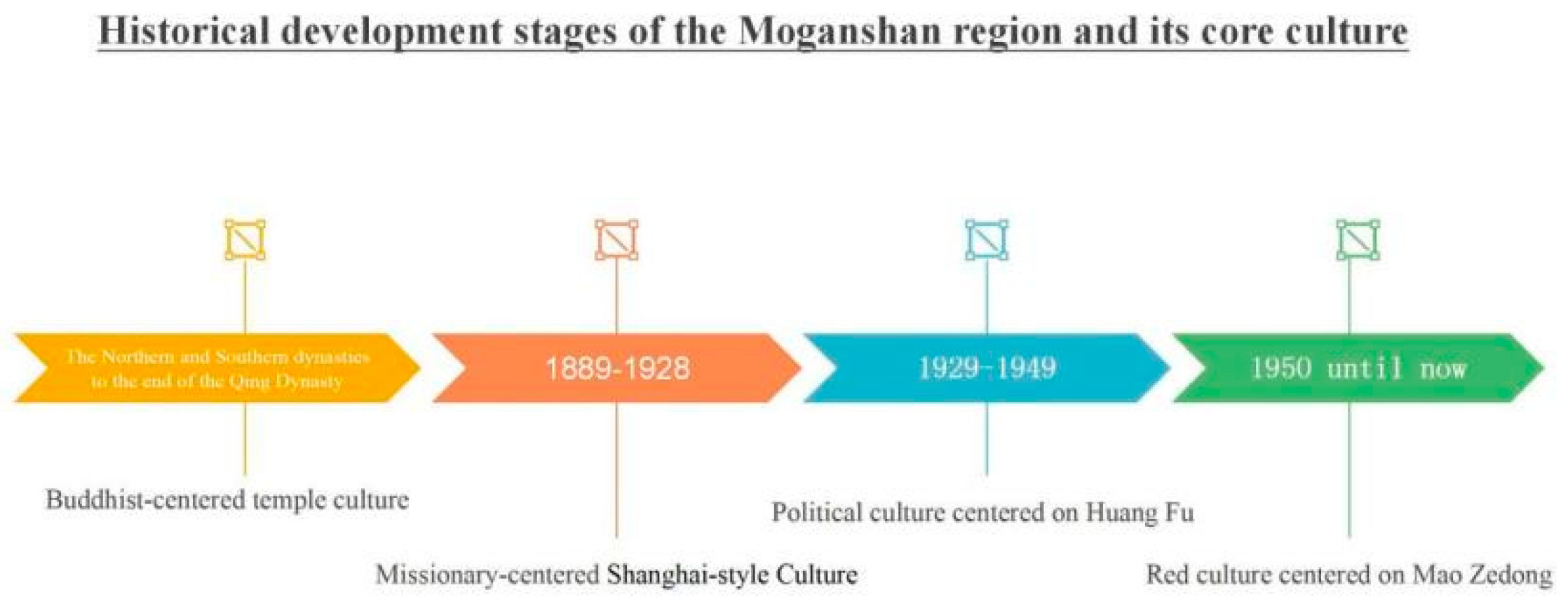
Figure 3.
Current tangible cultural heritage in the Moganshan region.
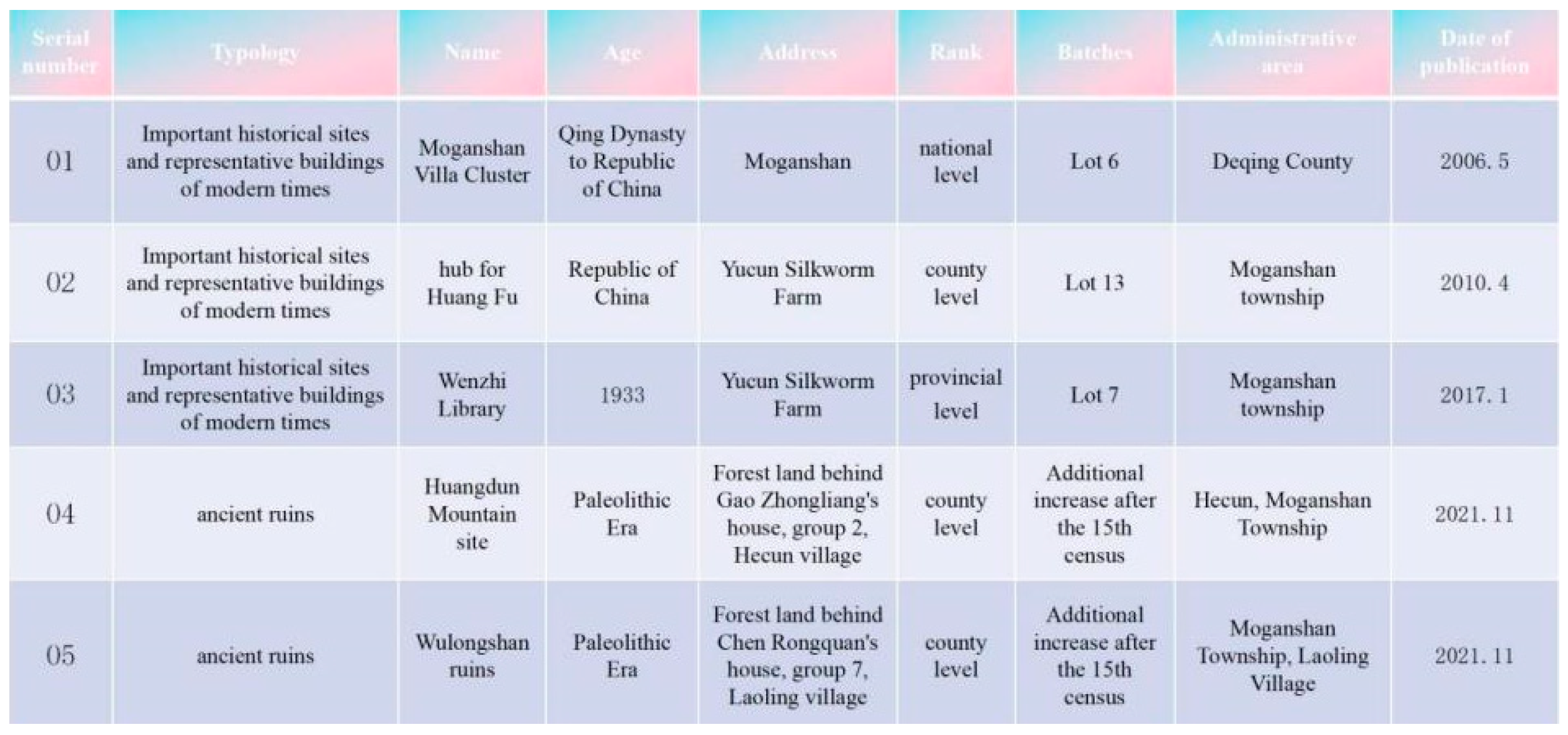
Figure 4.
Current intangible cultural heritage in the Moganshan region.
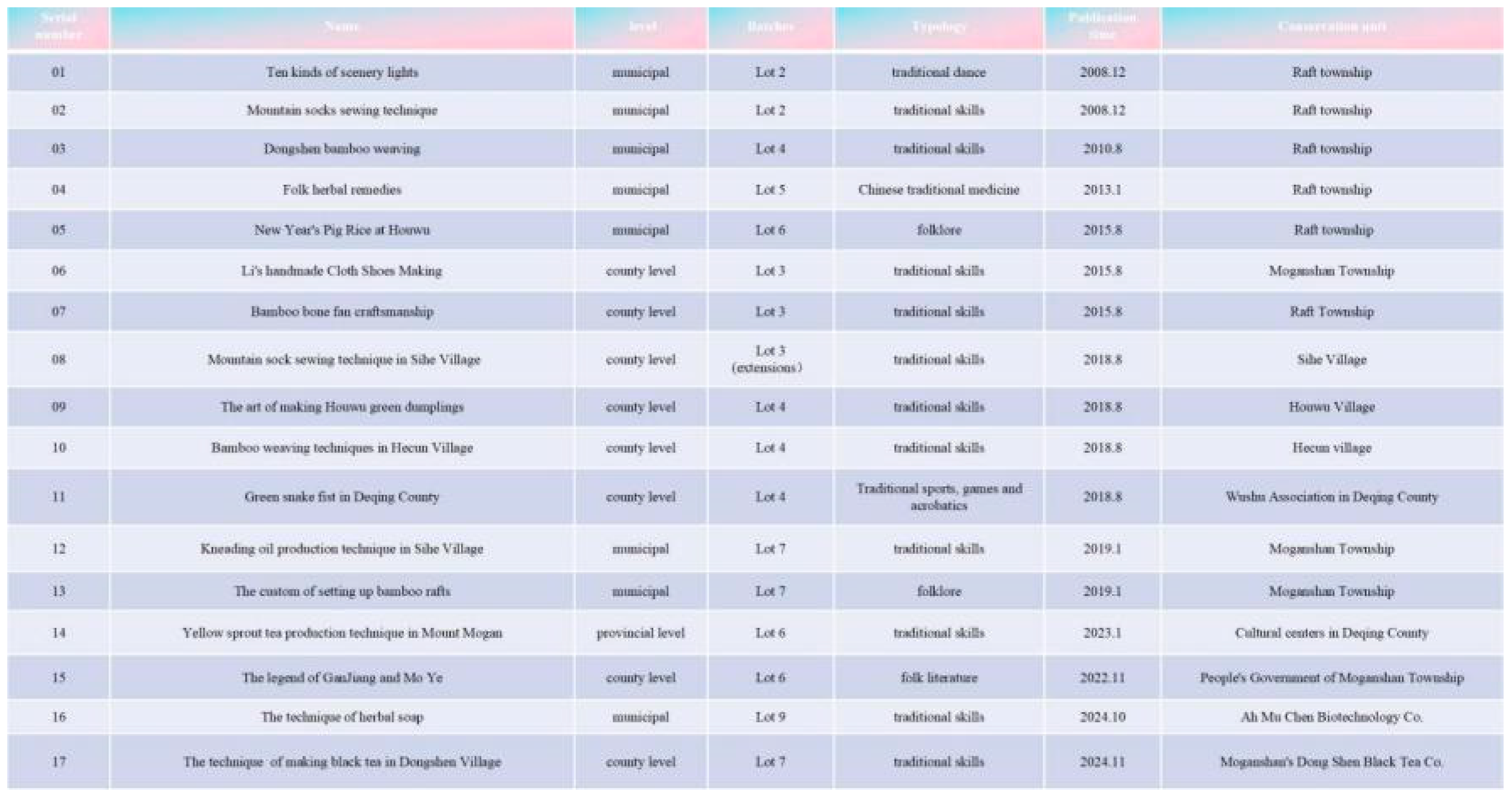
Figure 5.
Proportional distribution of intangible cultural heritage in the Moganshan region.
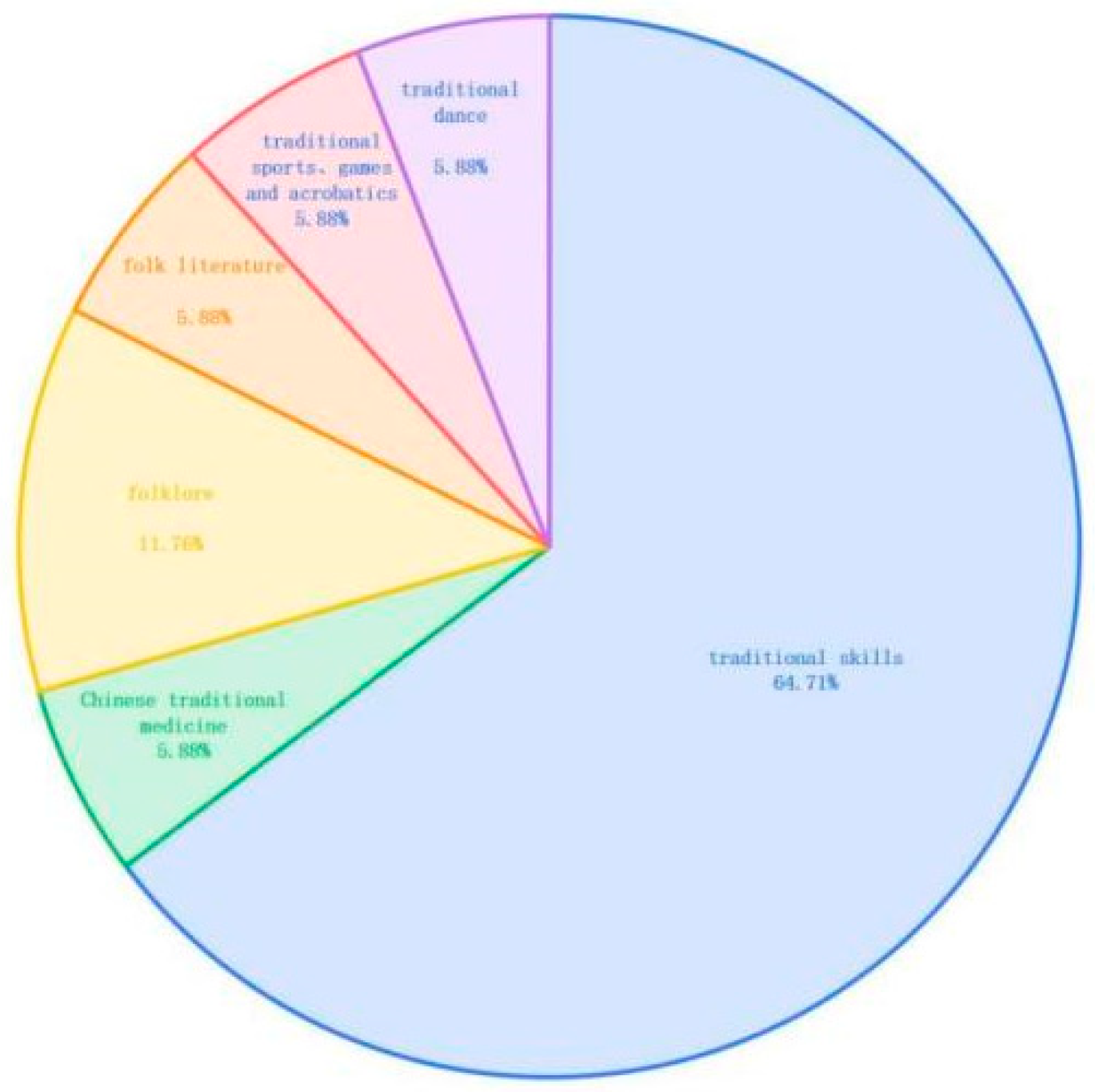
Figure 6.
Partial current status images of cultural heritage in the Moganshan region.
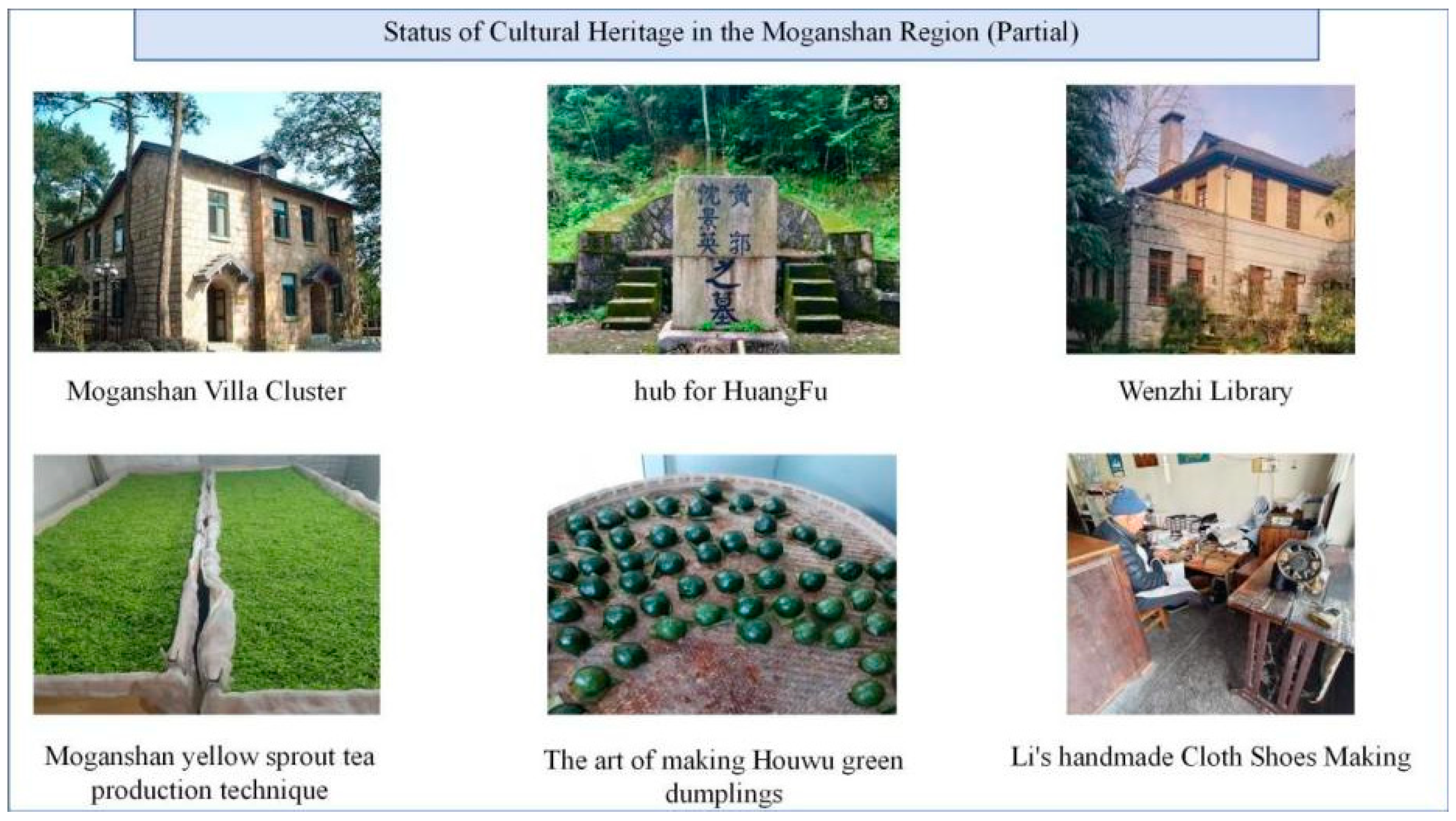
Figure 7.
Map of cultural heritage distribution in the Moganshan region.
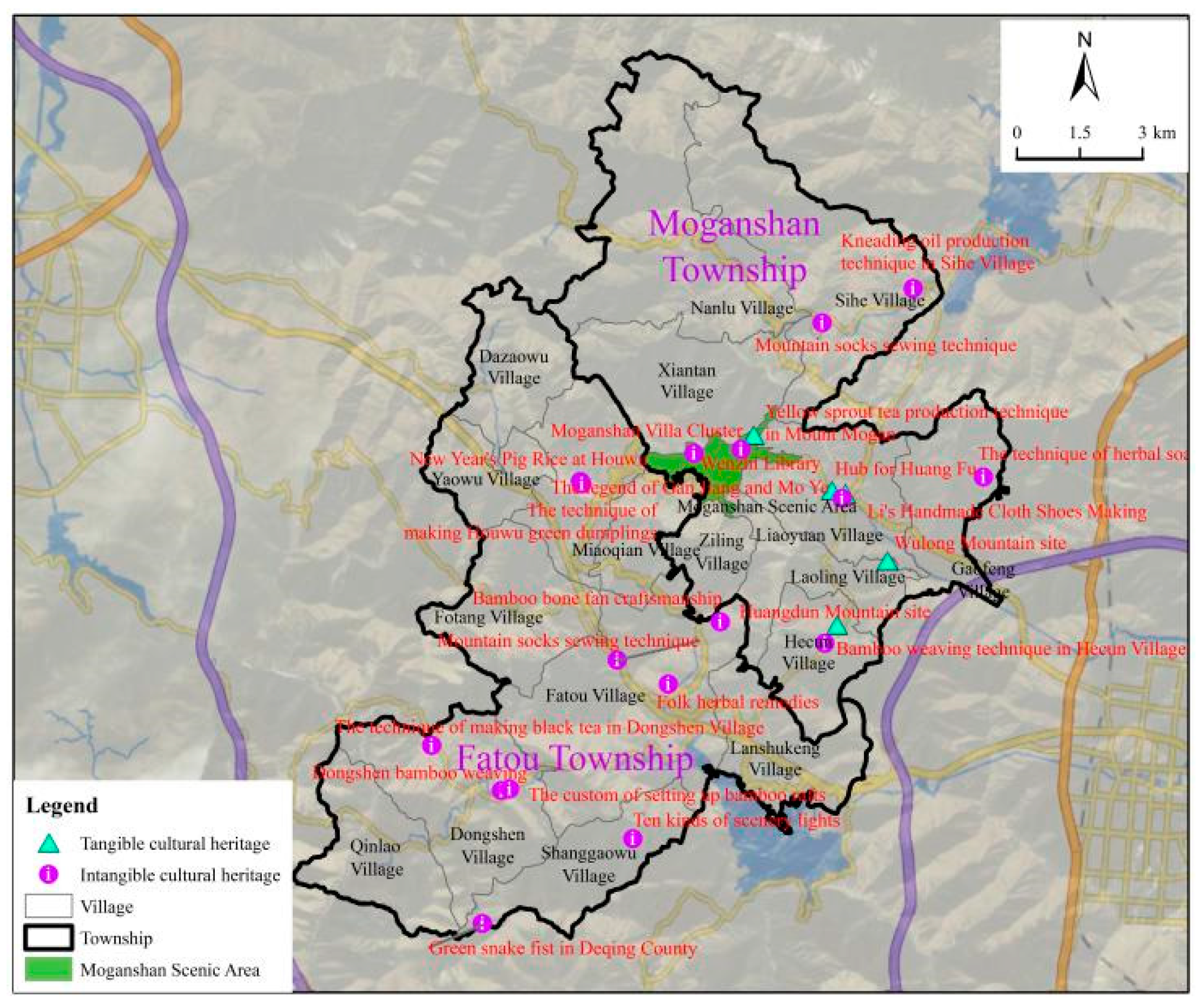
Figure 8.
Kernel density map of cultural heritage distribution in the Moganshan region.
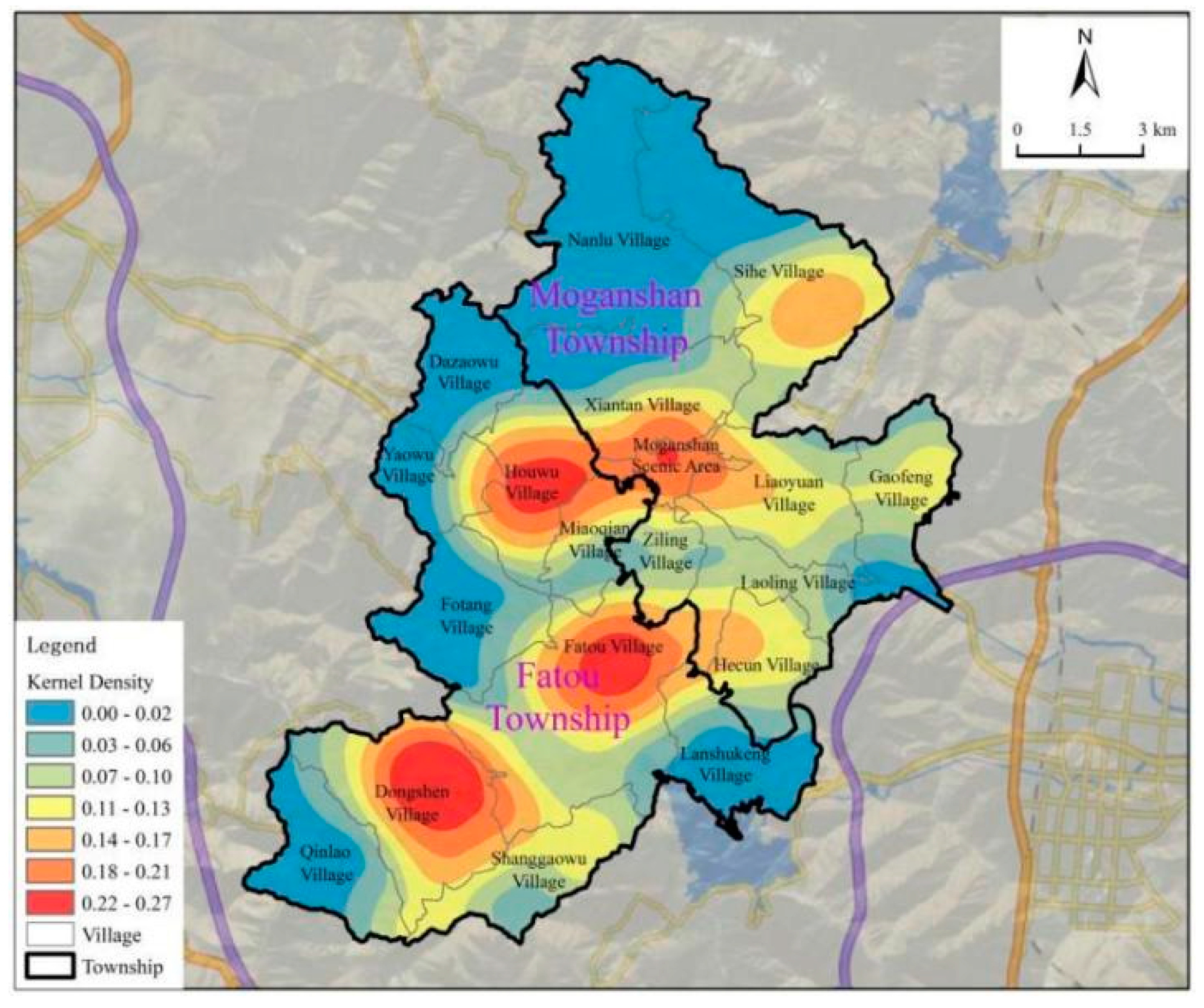
Figure 9.
Architecture of public participation in rural public cultural space in Moganshan area.
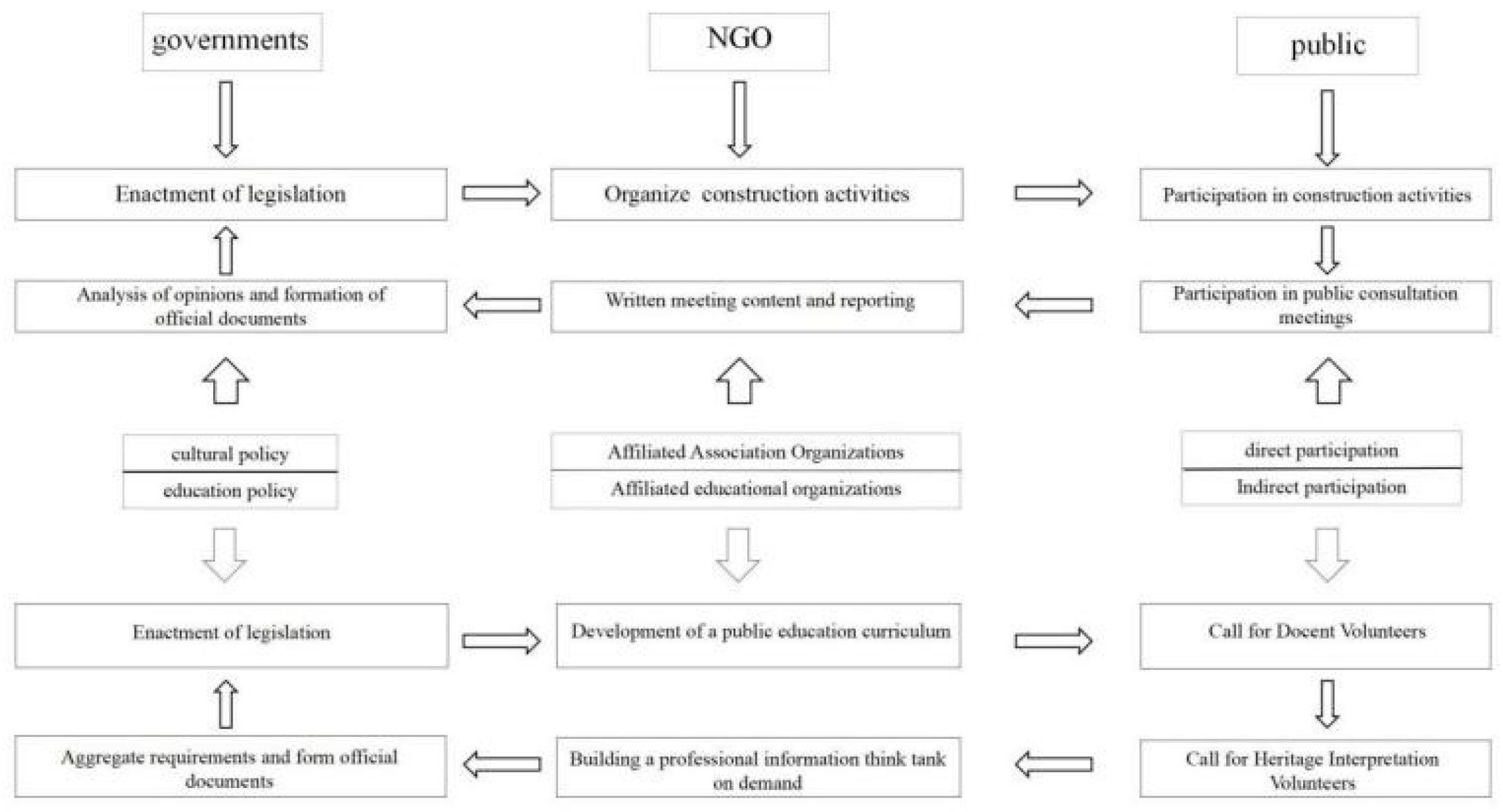

Table 1.
Results of linear regression analysis (n=100).
| Unstandardized coefficients | Standardized coefficients | t | p | Covariance Diagnostics | |||
|---|---|---|---|---|---|---|---|
| B | standard error | Beta | VIF | Tolerance | |||
| Constant | 0.548 | 0.190 | - | 2.877 | 0.005** | - | - |
| Q4 Participation in cultural heritage preservation through interactive activities | 0.407 | 0.085 | 0.438 | 4.773 | 0.000** | 1.402 | 0.713 |
| Q7 Whether rural cultural spaces effectively convey local traditional culture | 0.290 | 0.091 | 0.294 | 3.198 | 0.002** | 1.402 | 0.713 |
| R 2 | 0.416 | ||||||
| Adapt R 2 | 0.404 | ||||||
| F | F (2,97)=34.594,p=0.000 | ||||||
| D-W Numeric | 2.068 | ||||||
Note: Dependent variable = Q9 Whether public participation in the construction of public cultural spaces in villages can enhance the understanding of local traditional culture. * p<0.05 ** p<0.0
Table 2.
Results of linear regression analysis (n=100).
| Unstandardized coefficients | Standardized coefficients | t | p | Covariance Diagnostics | |||
|---|---|---|---|---|---|---|---|
| B | standard error | Beta | VIF | Tolerance | |||
| Constant | -0.003 | 0.207 | - | -0.016 | 0.987 | - | - |
| Whether to promote local cultural heritage in B&Bs? | 0.157 | 0.074 | 0.173 | 2.120 | 0.037* | 1.361 | 0.735 |
| Whether cultural heritage preservation is considered to enhance the competitiveness of B&Bs? | 0.202 | 0.075 | 0.206 | 2.687 | 0.009** | 1.202 | 0.832 |
| Would you like to offer cultural heritage related experiences to B&B visitors? | 0.280 | 0.072 | 0.306 | 3.911 | 0.000** | 1.253 | 0.798 |
| Would you like to join a cultural heritage preservation association or organization? | 0.191 | 0.069 | 0.210 | 2.781 | 0.007** | 1.168 | 0.856 |
| Does the interaction between B&Bs and rural public cultural spaces have a driving effect on the local economy? | 0.209 | 0.074 | 0.218 | 2.824 | 0.006** | 1.220 | 0.820 |
| R 2 | 0.542 | ||||||
| Adapt R 2 | 0.518 | ||||||
| F | F (5,94)=22.256,p=0.000 | ||||||
| D-W Numeric | 2.007 | ||||||
Note: Dependent variable = whether the construction of rural public cultural space in Moganshan has an impact on your business activities. * p<0.05 ** p<0.01
Table 3.
Results of linear regression analysis (n=100).
| Unstandardized coefficients | Standardized coefficients | t | p | Covariance Diagnostics | |||
|---|---|---|---|---|---|---|---|
| B | standard error | Beta | VIF | Tolerance | |||
| Constant | 0.026 | 0.215 | - | 0.121 | 0.904 | - | - |
| Are you interested in participating in the preservation of Moganshan’s cultural heritage? | 0.185 | 0.083 | 0.187 | 2.237 | 0.028* | 1.274 | 0.785 |
| Have you been involved in cultural heritage preservation activities in Moganshan? | 0.216 | 0.086 | 0.218 | 2.500 | 0.014* | 1.379 | 0.725 |
| Do you support the work of local government and community organizations in cultural heritage preservation? | 0.359 | 0.083 | 0.348 | 4.309 | 0.000** | 1.188 | 0.842 |
| Would you like to participate as a volunteer in the maintenance of public cultural spaces in the countryside? | 0.233 | 0.084 | 0.226 | 2.787 | 0.006** | 1.201 | 0.832 |
| R 2 | 0.478 | ||||||
| Adapt R 2 | 0.456 | ||||||
| F | F (4,95)=21.772,p=0.000 | ||||||
| D-W Numeric | 1.878 | ||||||
Note: Dependent variable = Whether you think Moganshan’s rural public cultural space construction program is coordinated with local economic development. * p<0.05 ** p<0.01
Disclaimer/Publisher’s Note: The statements, opinions and data contained in all publications are solely those of the individual author(s) and contributor(s) and not of MDPI and/or the editor(s). MDPI and/or the editor(s) disclaim responsibility for any injury to people or property resulting from any ideas, methods, instructions or products referred to in the content. |
© 2025 by the authors. Licensee MDPI, Basel, Switzerland. This article is an open access article distributed under the terms and conditions of the Creative Commons Attribution (CC BY) license (http://creativecommons.org/licenses/by/4.0/).
Copyright: This open access article is published under a Creative Commons CC BY 4.0 license, which permit the free download, distribution, and reuse, provided that the author and preprint are cited in any reuse.


