
Submitted:
13 April 2025
Posted:
14 April 2025
You are already at the latest version
Abstract
The consumed power is a vital factor in the field of communication where it presents the point of tradeoff between the high performance and the cost. Further, the effect of this point extends to the environment. In fact, the behavior of applications kinds is going to support the high data rate which means more power consumption related to the increment of transmitted bits density such as the multimedia applications (gaming, video conferencing and electronics learning). On the other hand, the resources of communication fields are limited. Therefore, it is necessary to manage the resources of the system efficiently from the power consuming point of view. The green communication is the trend that deals with this issue and seeks to reduce the exhausted power as minimum as possible where it can be defined as the concept that addressing the exploration of sustainability as terms of condition of environmental, energy efficiency and the communication purposes. In general, the green communication is divided into two main parts: the hardware side which interests with manufactured techniques to reduce the power consumption, and the side of algorithms methods to manage the power efficiently. One of the fifth mobile generation methods is coordination of multipoint that is used to enhance the performance of the systems from traffic and consumed power points of view. This work submits the principals of coordination of multi sector of a base station in a cell to reduce the consumed power of the system by improve the link of the channel in case of the cell of IEEE 802.16e. In other words, the number of transmitted bursts for same information will be decreased related to employ the higher scheme of modulation rather than the robust modulation type. Consequently, the same information will be sent successfully but in a fewer bursts and lower power consumption. The results indicated that, the coordination among sectors submitting better performance related to exploit the green communication as a term of traffic. It is worth to mention that, the supposed model of IEEE 802.16e cell is simulated using opnet modeler and it is adopted the appropriate assumptions to implement the model successfully.
Keywords:
802.16e
; Coordination
; Efficient Power
; Green Communication
; MSCo
1. Introduction
In last decades, the international issue of carbon emissions is significantly arisen. Naturally, Carbon dioxide is presented in the earth’s atmosphere where it forms part of a natural circulation of the life as terms of the major components of the nature. On the other side, the humanity exploit to natural biological cycle by extract fossil fuels and burning it in different ways for various usages. Consequently, carbon mixes with oxygen and creates even more carbon dioxide than would have naturally been present in the atmosphere [1]. In fact, this process enters in the most aspects of industry fields. One of these fields is the section of communication networks.
The increment in the demanding of clients as a term of data rate pushes the vendors of the applications and services to develop the techniques of building the communication systems. Consequently, high data rate is adopted, so more energy per bit for a given bit error rate (BER), which leads to increases the consuming of energy for the system. Further, the threat of production of CO2 emissions increases too. Based on the reports of Information and Communications Technology (ICT) organization, it is more than 70% is being used by radio access frequency in the field of networking [2].
On the other hand, green communication is the trend that aims to compensate the problems of power consuming and CO2 emissions. This trend depends on two main paths, the first related the manufacturing and techniques while the second deals with the software side (some calculations are used to reduce the transmitted data) to offer energy efficient computing.
In general, the green communication is a hot topic that contributes in all the sides of the communication such as networking, sensors, and generations of communication as well as the field of IoT.
1.1. Literature Reviews
This section reviews the different works which related to the field of green communication and explains various methods which exploits hardware or a software point to offer an efficient energy consuming.
The issue of power consumption in vehicular ad hoc networks (VANETs) related to green communication, is the main point which is submitted by [3]. In this article, the authors studied the energy efficiency of a quality of service optimized version of Optimized Link State Routing protocol (OLSR). They introduced Differential Evolution (DE-OLSR), the researchers dealt with analyzing of the possible energy savings in the nodes of VANETs. They conducted sequence groups of VANET simulations as a term of analyzing the power consumption as well as the QoS in order to compare DE-OLSR with the standard version of OLSR using two ns-2 modules: Mac802_11Ext and WirelessPhyExt in specific region. The performance evaluation results shown that, DE-OLSR clearly outperforms the original standard from energy consumption point of view.
The authors in [4] proposed a computing infrastructure based on green computing for energy efficient wireless networking including some challenges and techniques like power consumption in network architecture, algorithm efficiency, virtualization, and dynamic power saving. The study of them focused on the sender and receiver (end users) dealing with the medium of wireless computing infrastructure with respect to energy consumption where used the platform of Ns-3. They suggested approaches to minimize the energy consumption. They depended on four aspects: idle state of devices, obstacle and interaction of other materials, cost related to overhearing, and the power utilization. The metrics of the results were consumption of power in case sending state and idle state as well as virtual and physical memory. They made a comparison among different algorithm for routing and analyzed that devices use maximum power in the idle state and could reduce it by using Temporally Ordered Routing algorithm (TORA) routing protocol.
IoT trend related to green communication is the direction of [5]. The authors submitted a modified version for Message Queue Transport Telemetry (MQTT) protocol which deals with low energy where they added geo location information into specific MQTT packets. As a consequent, in the new MQTT and after adding geo location, information would reaching subscribers can be filtered out by a broker to fall only within the subscribers geo fence.
Green communication and LTE are discussed in [6]. This paper examined to reduce the power consumption in LTE broadcast using the criteria of super cell. The researchers offered a scenario to reduce the overall energy consumption by taking advantage of both the small cells and the device to device communication technology. It is worth to mention that, the suggested algorithm was based on the assumption that all the users of a phantom cell are going to receive a service with the same content. The results of indicated that the power consumption reduced using the concept of super cell.
The authors in [7] tackled the existing energy efficient methods in the green cloud computing fields. They put forward our green cloud solution for data center dynamic resource management. The paper proposed approach to reduce the infrastructure energy consumption and maintain the required performances. The basic idea optimized energy consumption in cloud computing data centers by optimizing the use of its resources by adopting various policies for host and virtual machine (VM) overload detection, migration VM selection and VM placement policies.
In [8], the paper offered green communication as a term of ambient backscatter communication (AmBC) where this network in which a full duplex access point (FAP) simultaneously transmits downlink orthogonal frequency division multiplexing (OFDM) signals to its legacy user (LU) and receives uplink signals backscattered from multiple backscatter devices BDs in a time-division-multiple-access manner. They proposed that an efficient iterative algorithm for solving the formulated non-convex problem by leveraging the block coordinated decent and successive convex optimization techniques. The results of simulation indicated that the proposed joint design achieves significant throughput gains as compared to the benchmark scheme with equal resource allocation.
Different techniques of 5th generation for the green communication technology and some challenges are discussed in [9]. These techniques include device to device communication (D2D), massive multiple input multiple output (MIMO) systems, heterogeneous networks (HetNets) and Green Internet of Things (IoT). Advantages and drawbacks are highlighted considering different inherent challenges. This paper recommended that a combination of D2D and IoT could serve as a more appropriate technique for the energy efficiency needs of the 5G systems.
The routing algorithm of indoor traffic is subjected by [10] to reduce the power consumption. The authors dealt with mesh cell in home contained on access points and mobile nodes. They proposed an algorithm based on hybrid routing scheme using the fuzzy logic, Indoor routing protocol for green home networks (ING). This algorithm combines both proactive and reactive mechanisms. The main metrics of this work was optimization the radius of covered area. The results indicated that the new algorithm of this paper submitted better performance compared with multihop algorithm as a term of packet dropping. However, the proposed algorithm recorded slow time (end to end delay) as comparing with the multihop algorithm.
2. The Coordination Among Multi Point
2.1. Background
In order to explain the principle of base stations coordination to represent a kind of green communication, this work explains the case of enhancing the link of the channel to reduce the probability of signal distortion and then enhance the efficiency of traffic. This process reduces the probability of retransmitting the signals due to bad circumstances of the channel. Consequently, the overall of the power consumption is going to decrease. However, the relationship between the green communication and the performance of the systems is strong. Commercially, it isn't preferred to providing powerful system as a term of consuming power with poor performance.
Most of modern communication systems deal with modulation techniques such as quadrature phase shifts keying (QPSK) and quadratic amplitude modulation (QAM), there are many kinds of QAM like 16, 32, 64, and 256 points. The differences among these types of modulations related to two main factors. First of them is the relationship between energy per noise and the nominal bit error rate, as shown in Figure 1 [11].
The second factor relates to the amount of traffic which is transmitted by these types of modulations. Table 1, explains the relationship between modulation types and the bandwidth efficiency limit. It is clear that, the expected data rate increases with the increment of the value of bit per symbol [12].
One of the features which are offered by new systems of communication is adaptive modulations. In other words, the link of system channel is strong (i.e light noise) then the system is qualified to employ high degree of modulations such as 64QAM or 256QAM. Consequently, the data rate will increase per time. In the hard conditions of the channel (heavy noise), the system is forced to use the robust type of modulation against noise such as QPSK kind [13].
For instance, suppose that there is 1000 bits to transfer from source to destination. If the source deals with QPSK, it will send two bits for each burst of data; consequently the source will send 500 bursts to the destination. On the other side, if this source employs 256QAM (8 bits per burst of data) then the source will send 125 bursts of data to destination.
Unfortunately, the process of adaptive modulations is related to the channel state strongly where it isn't possible to employ high level of modulation such as 256QAM in the bad circumstances of the channel. This will lead to certain failure for the signal. In the terminology of digital modulation, the high level of modulations deals with many closed points constellation so the effect of the noise will be more dangerous on the nominal signal [14].
For energy efficient planning, it is more appropriate to enhance the link of system channel to employing high level of modulation schemes. The proposed case employs the green communication from the power consumption point of view depending on the modulations types, and represents the results as a term of traffic (sent and received). In short, this work connects between exploiting the energy efficiently and the performance of the system.
2.2. The Coordination Among Sectors
This work suggests the operation of multi sector coordination concept for the cell of 802.16e cell to provide efficient consuming for the power to offer better performance as a term of sent and received traffic. This operation supposes a general cooperation and coordination among the base stations of the system or the sectors of one base station where all these points (base stations or the sectors of a base station) operate in synchronization style in the downlink stream to enhance the channel link [15]. However, the link of the channel forms impairment to the signal because it is leading to demolition the frame of the signal, see Figure 2.
The operation of points coordination submit the coordination among the base stations or the sectors of one base station to enhance the signal of the users as shown in Figure 3.
3. The Model of Proposed Work
The model of this work is based on the technology of worldwide interoperability for microwave access (WiMAX) system in fixed fashion and builds on the standard of IEEE 802.16e. In general, the WiMAX system is classified as beyond the third generation of communication generations where it supports data capacity and can deal with fixed and mobile stations. Further, this technology deals with either time division duplexing or frequency division duplexing [16-24]. Table 2 illustrates the basic characteristics for this model.
This model simulates the fundamental components of WiMAX system in order to operate the model successfully using opnet modeler. The model includes cloud part to connect the end terminals of the system to the server which provides the service of file transfer protocol, see Figure 4.
3.1. The Scenarios of the Proposed Work
There are two scenarios related to this work, the first one presents the basic case of WiMAX system without the operation of multi sector coordination (MSCo) while the second scenario submits the effect MSCo on the performance of WiMAX system. Table 3 explains the distribution of users which are distributed randomly on the sectors of the cell with respect to the schemes of modulation and coding rate. WiMAX system supports seven schemes of modulation and coding rate: QPSK1/2, QPSK3/4, 16QAM1/2, 16QAM3/4, 64QAM2/3, and 64QAM3/4. It is noted that the table explains three schemes only as shown in the table. This is related to MSCo that effects on these schemes only (qualify QPSK1/2 to QPSK3/4 and QPSK3/4 to 16QAM). The second part of table 3 demonstrates the effect of MSCo on the users' distribution with respect to the schemes of modulation and coding rate. For instance, sector 1 in case of QPSK1/2 covers five users before employing the operation of CoMP. While after using MSCo, the users which previously dealt with the scheme of QPSK1/2, they qualify to use the scheme of QPSK3/4.
On the other hand, the model presents a practical case for users' distribution randomly. In fact, the system includes other users are covered by sectors of the cell where these users deal with the schemes of modulation larger or equal to 16QAM. Hence, from the level of 16QAM up to highest level of modulation are out of sectors supporting. For the previous reason, the model considers the first two types of modulations based on 802.16e standard and the number of users are chosen and distributed randomly on the nominal schemes of modulation.
It is worth to mention that, the proposed work doesn't deal with the effect of the overhead which are caused by MSCo on the system and is left to the future work.
4. Results and Discussion
The proposed work deals with file transfer protocol for a range of sizes (1M, 2M, 4M, and 8M bps). This is related to explain the effect of supported cell until consuming the capacity of the cell. Figure 5 demonstrates the relationship between sent and received traffic for the basic cell of the system. This figure explains that all transmitted bits of different users are received successfully. Figure 6 explains that the same relationship of Figure 5 but for the system after dealing with sectors coordination. Hence, the system successes to transfer all information from the sources to the destinations but in fewer data as compared to the Figure 5.
Figure 7. illustrates the performance of the system at 2Mbps for the basic and enhanced system while Figure 8 explains the same relationship of Figure 7 but for 4Mbps.
The previous figures ensure that, the system transfers all information from the sources to destinations successfully.
The last figure (Figure 9) demonstrates the behavior of the system at 8Mbps.
It is noted that there are lost data because the sent data is larger than received data for the two scenarios due to system collapse.
5. Conclusions
This work offers one of green communication type by enhancing the link of WiMAX channel using sectors coordination based on MSCo operation. The results indicated that, the improved link of the channel leads the system to transmit fewer bursts to represents the same information comparing with the basic system. Consequently, the power consuming is decreased. Hence, the lost bits increases with the increment of file size. The results shown that, the lost data are reduced with employing MSCo where in the cases of 2M and 8M bits of file sizes, the lost data are reduced by 9.1% and 5.9% respectively comparing with the basic system (without MSCo). The results indicated that, the enhanced system contributes to decrease the lost data and consequently minimizing the process of retransmitted which means the consumed power will decrease. In conclude, the green communication offered efficient planning for energy consumption as a term of traffics.
References
- Malloy A.," What is the Problem with Carbon Emissions", last update 10-7-2018. Available: http://everbluetraining.com Last access: 24-12-2019.
- Ramírez I. U. and Tello N. A. B., " A Survey of Challenges in Green Wireless Communications Research", 2014 International Conference on Mechatronics, Electronics and Automotive Engineering, IEEE, 2014. [CrossRef]
- Toutouh J. and Alba E., " An Efficient Routing Protocol for Green Communications in Vehicular Ad-hoc Networks", 13th Annual Genetic and Evolutionary Computation Conference, GECCO 2011, Companion Material Proceedings, Dublin, Ireland, 2011. [CrossRef]
- Mateen A. and Abbas S., "Energy Efficient Wireless Networking and Computing Infrastructure", International Journal of Natural and Engineering Sciences, vol. 9, issue 3: 60-64, 2015.
- Srivastava G., Fisher A., Bryce R., and Crichigno J., "Green Communication with Geolocation", 89th Vehicular Technology Conference (VTC), IEEE, PP 1-6,2019.
- Bakhshaie A., Shahraki H. S., "Green LTE Broadcasting", ArXiv, abc/1803.03489, 2018.
- Diouani S. and Medromi H., "Green Cloud Computing: Efficient Energy-Aware and Dynamic Resources Management in Data Centers", (IJACSA) International Journal of Advanced Computer Science and Applications, Vol. 9, Issue. 7, 2018. [CrossRef]
- Yang G., Yuan D., Liang Y-C. ,"Optimal Resource Allocation in Full-Duplex Ambient Backscatter Communication Networks for Green IoT", ArXiv, 1806.06598, 2018.
- Malik A. M., and Ur-Rehman M. "Green Communications: Techniques and Challenges", Energy Web and Information Technology, vol 4, issue 14,2017.
- Sethom K., Al- Ibrahimi N., and Pujolle G., "ING: Indoor Routing Protocol for Green" International Journal of Computer Networks & Communications (IJCNC) Vol.3, No.4, 2011.
- Kaur J., Kaur H., and Sandhu M., " Comparison of BER for Various Digital Modulation Schemes in OFDM System", International journal of advanced research in electronics and communication engineering (IJARECE), Vol. 5, Issue 4, 2016.
- Sauter M., "Communication Systems for the Mobile Information Society", John Wiley & Sons Ltd, 2006.
- Abdul Fatah S. E. and Mawjoud S A., "Impact of Downlink Distributed and Adjacent Subcarrier Permutation Modes on the Performance of Mobile WiMAX System in ITU-R Ped. B Channel with Obtaining Optimum Cyclic Prefix" , Al-Rafidain Engineering, Vol.20, No. 4, 2012.
- Giordano A A., and Levesque A. H., "Modeling of Digital Communication Systems Using Simulink", John Wiley & Sons, Inc. 2015.
- Marsch P., and Fettweis G. P., " Coordinated Multi Point in Mobile Communication, from theory to practice", Cambridge University Press, 2011.
- Khanduri R., Chaudhary C., and Gupta V., "The Role of IEEE802.16e Mobile WiMAX", International Journal of Computer Applications, Volume 70– No.16, 2013.
- Q. I. Ali, "Design, implementation & optimization of an energy harvesting system for VANETs’ road side units (RSU)," IET Intelligent Transport Systems, vol. 8, no. 3, pp. 298-307, 2014.
- Q. I. Ali, "An efficient simulation methodology of networked industrial devices," in Proc. 5th Int. Multi-Conference on Systems, Signals and Devices, 2008, pp. 1-6.
- Q. I. Ali, "Security issues of solar energy harvesting road side unit (RSU)," Iraqi Journal for Electrical & Electronic Engineering, vol. 11, no. 1, 2015.
- Q. I. Ali, "Securing solar energy-harvesting road-side unit using an embedded cooperative-hybrid intrusion detection system," IET Information Security, vol. 10, no. 6, pp. 386-402, 2016.
- Q. Ibrahim, "Design & Implementation of High-Speed Network Devices Using SRL16 Reconfigurable Content Addressable Memory (RCAM)," Int. Arab. J. e Technol., vol. 2, no. 2, pp. 72-81, 2011.
- M. H. Alhabib and Q. I. Ali, "Internet of autonomous vehicles communication infrastructure: a short review," Diagnostyka, vol. 24, 2023. [CrossRef]
- Q. I. Ali, "Realization of a robust fog-based green VANET infrastructure," IEEE Systems Journal, vol. 17, no. 2, pp. 2465-2476, 2022. [CrossRef]
- Q. I. Ali and J. K. Jalal, "Practical design of solar-powered IEEE 802.11 backhaul wireless repeater," in Proc. 6th Int. Conf. on Multimedia, Computer Graphics and Broadcasting, 2014.
Figure 1.
Bit error rate and the energy per noise ratio for various modulations types [11].
Figure 1.
Bit error rate and the energy per noise ratio for various modulations types [11].
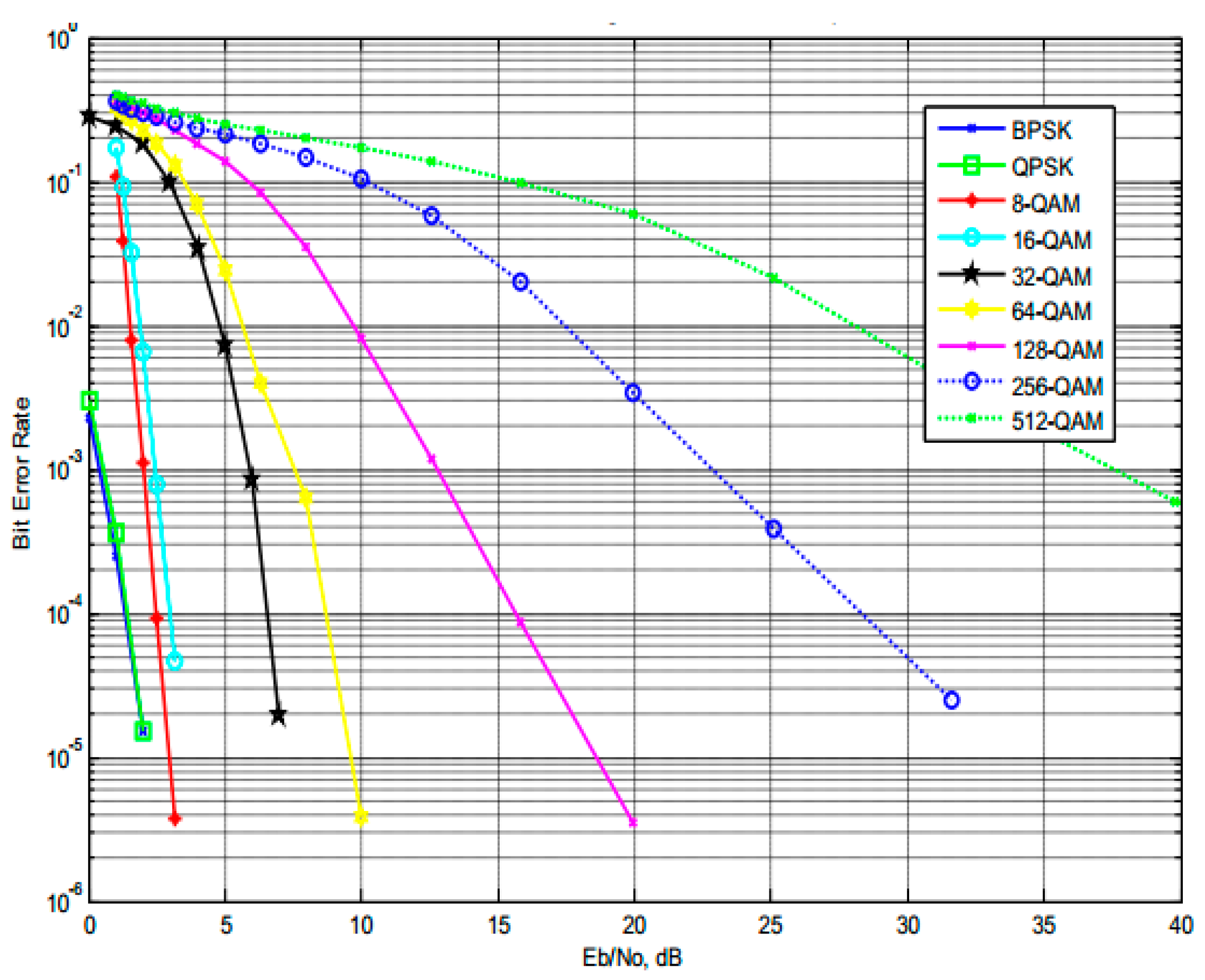
Figure 2.
the effect of channel link on the power of the signal.
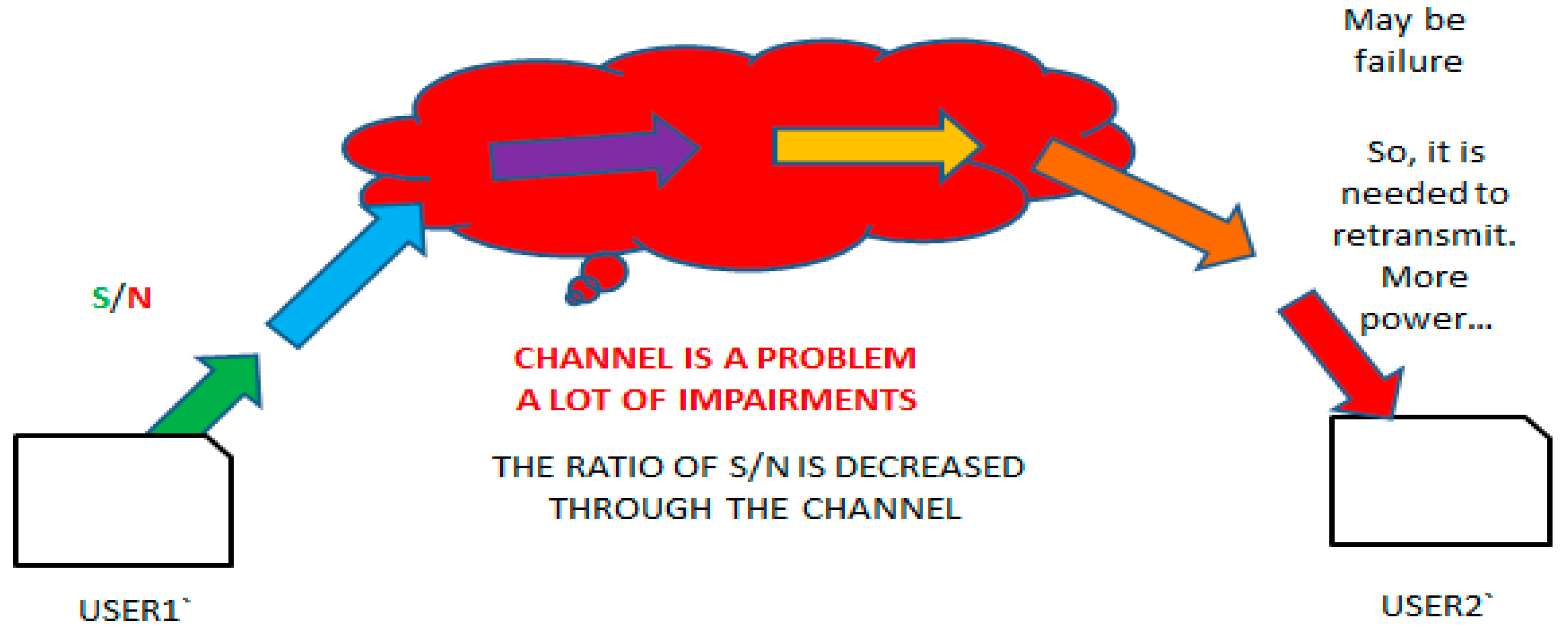
Figure 3.
the effect of CoMP operation the signal of the users.
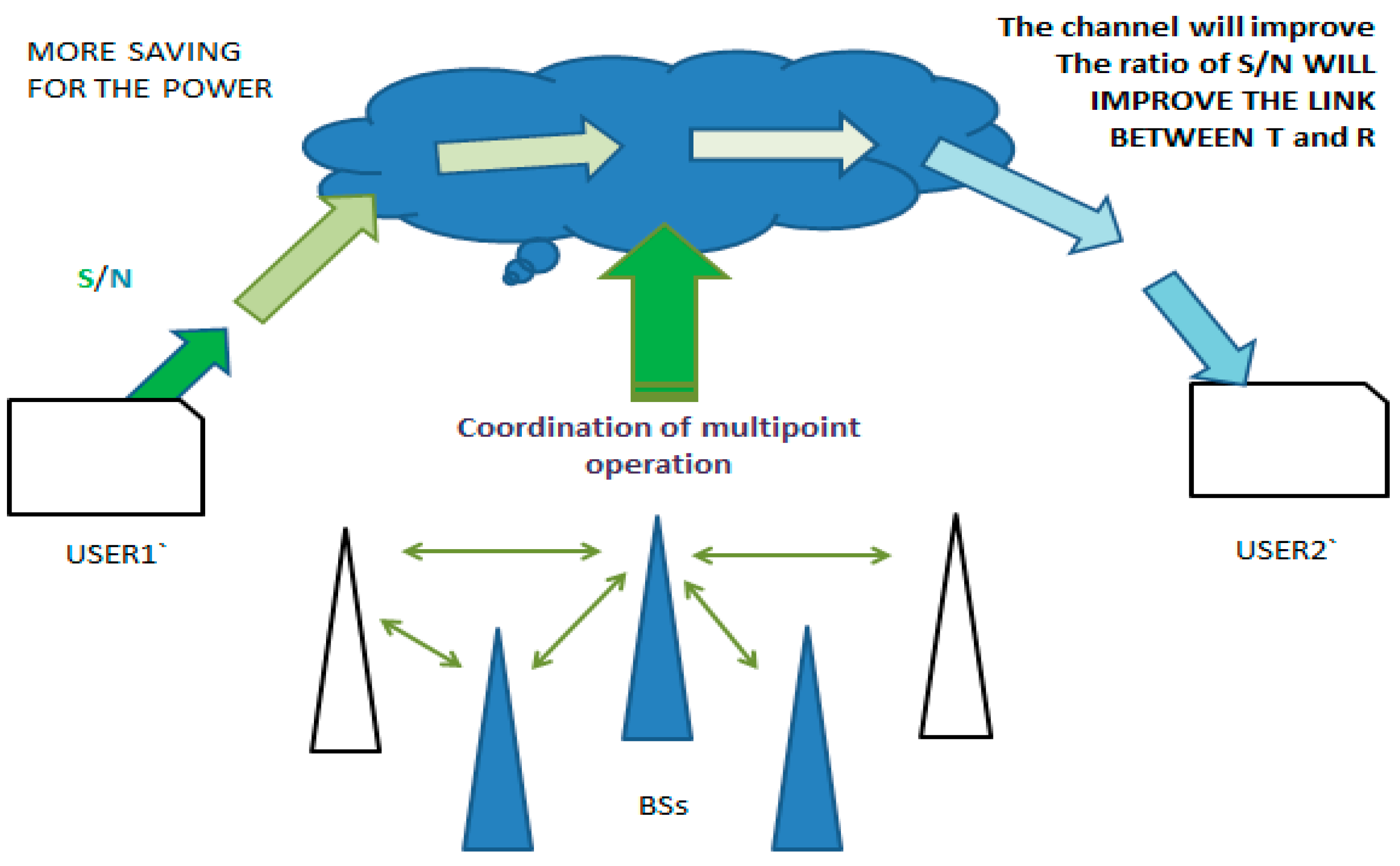
Figure 4.
the model of proposed work.
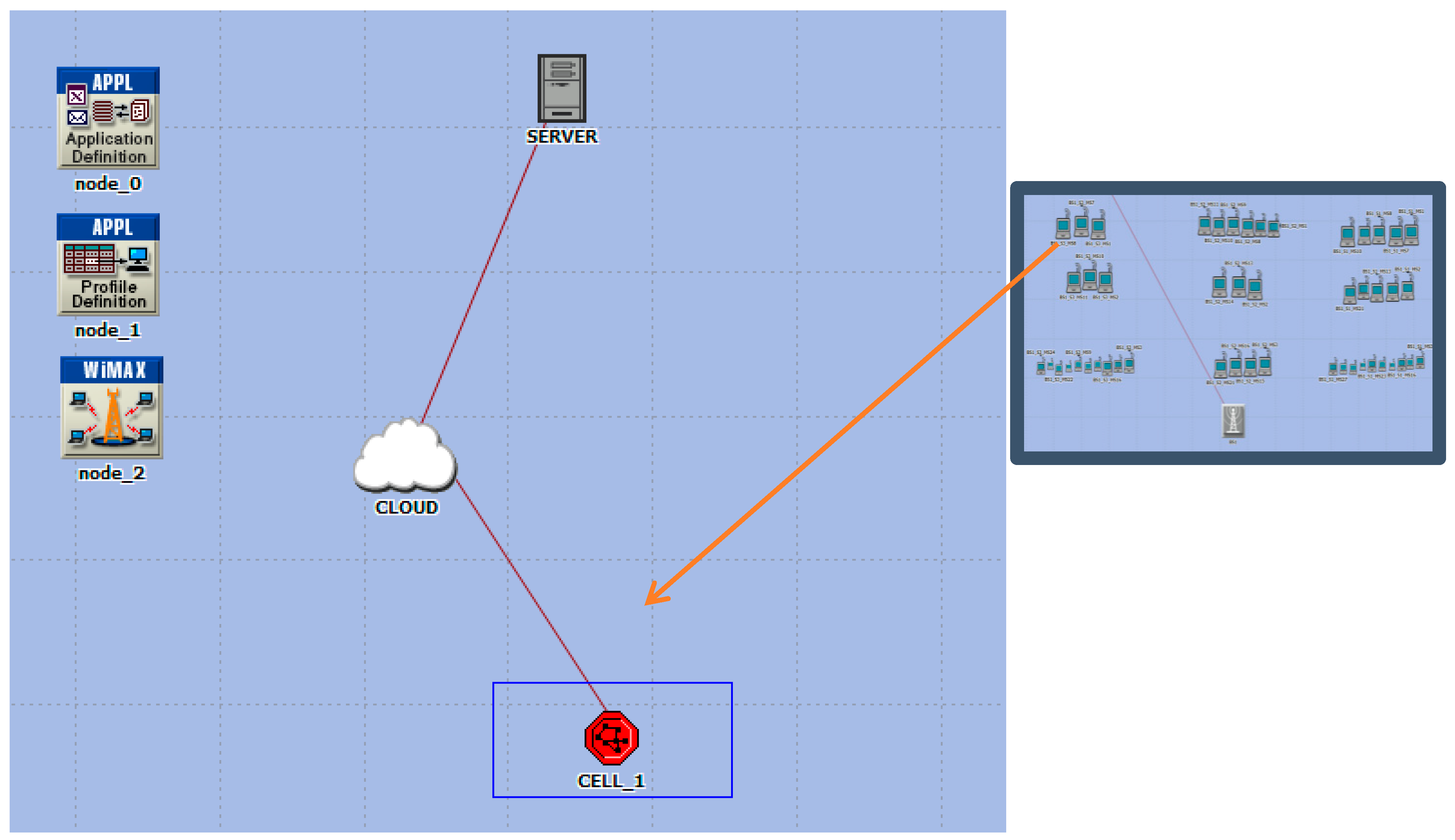
Figure 5.
the performance of the basic system at 1Mbps per user.
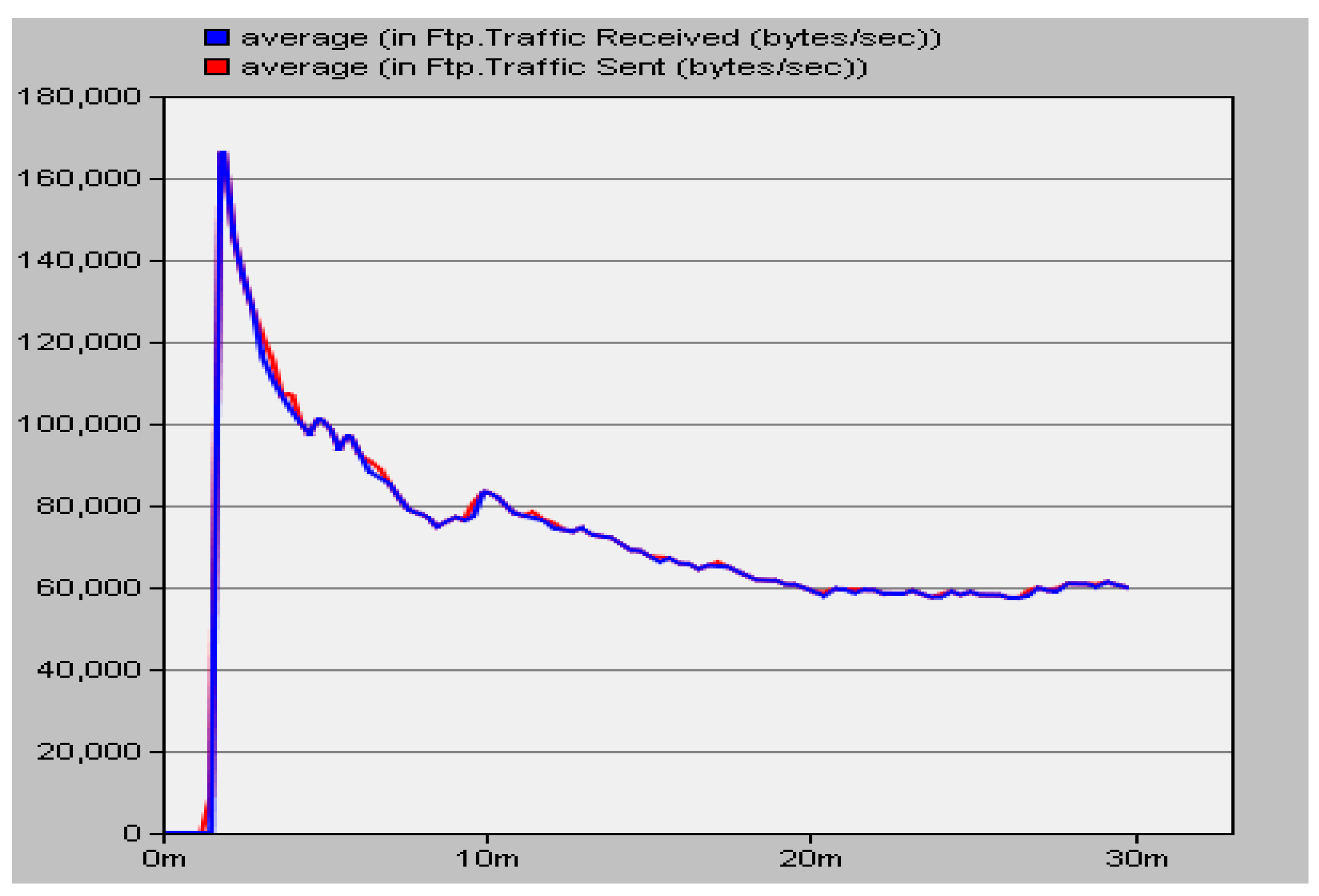
Figure 6.
the performance of the enhanced system at 1Mbps per user.
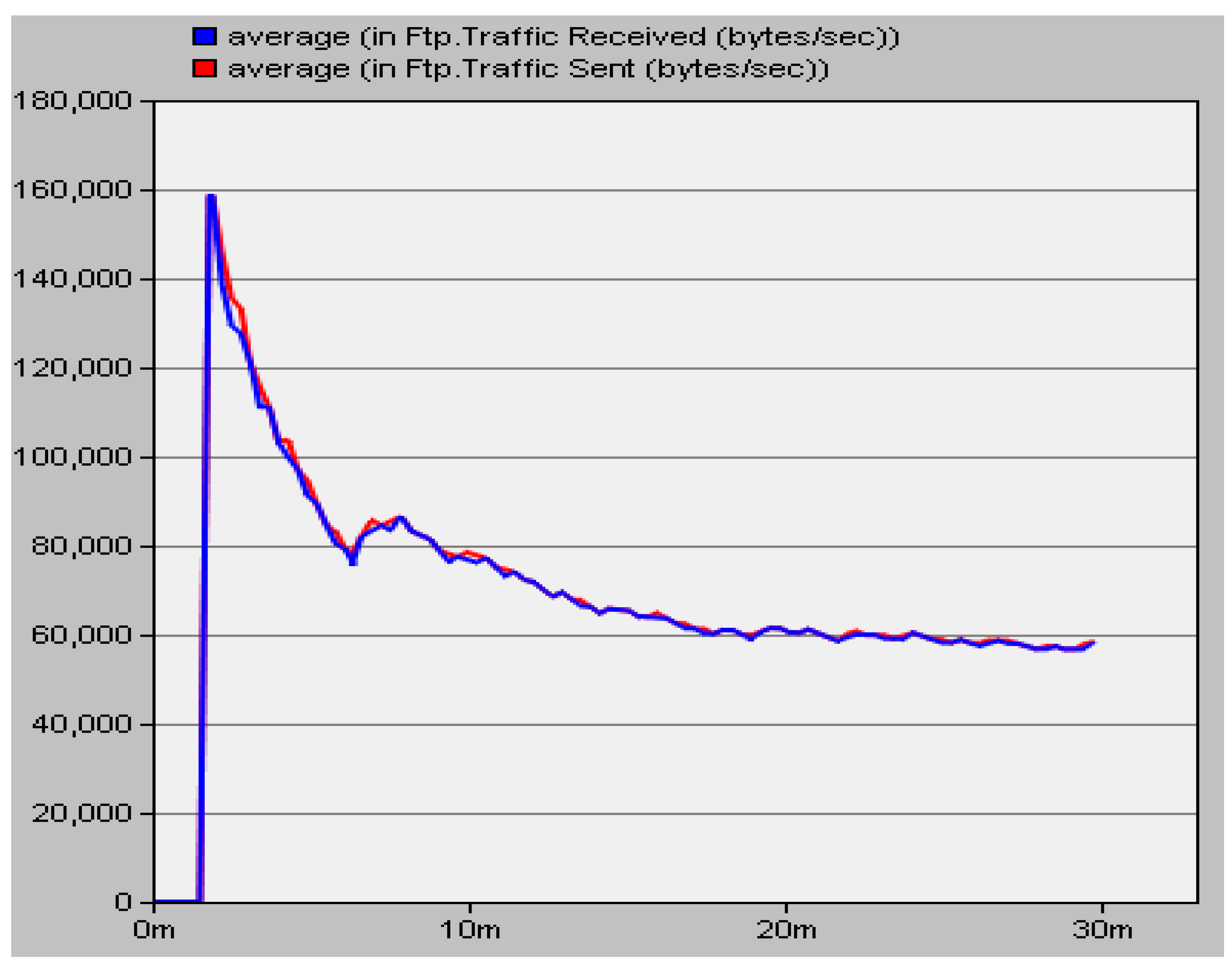
Figure 7.
the performance of the basic and enhanced system at 2Mbps per user.

Figure 8.
the performance of the basic and enhanced system at 4Mbps per user.
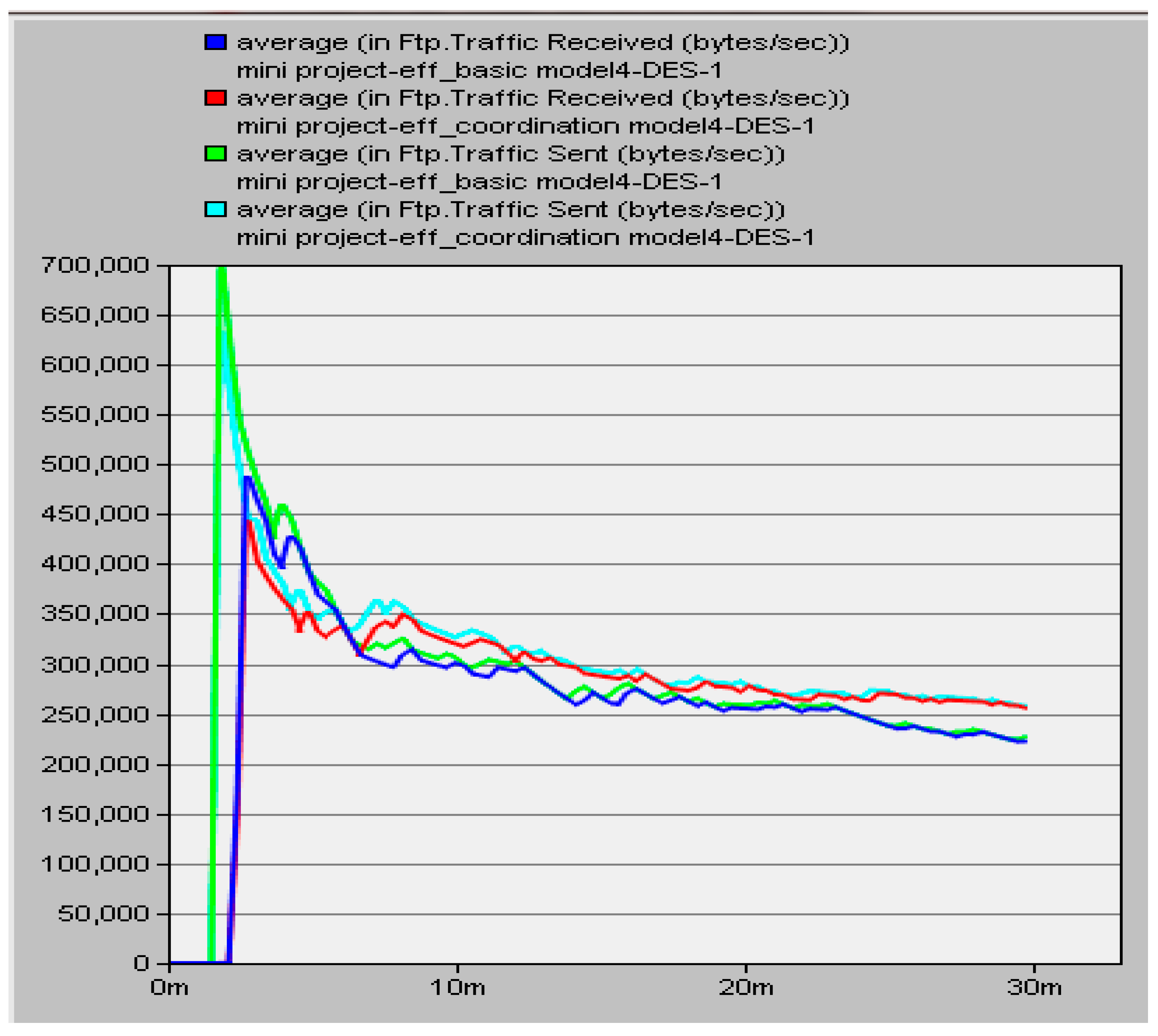
Figure 9.
the performance of the basic and enhanced system at 8Mbps per user.
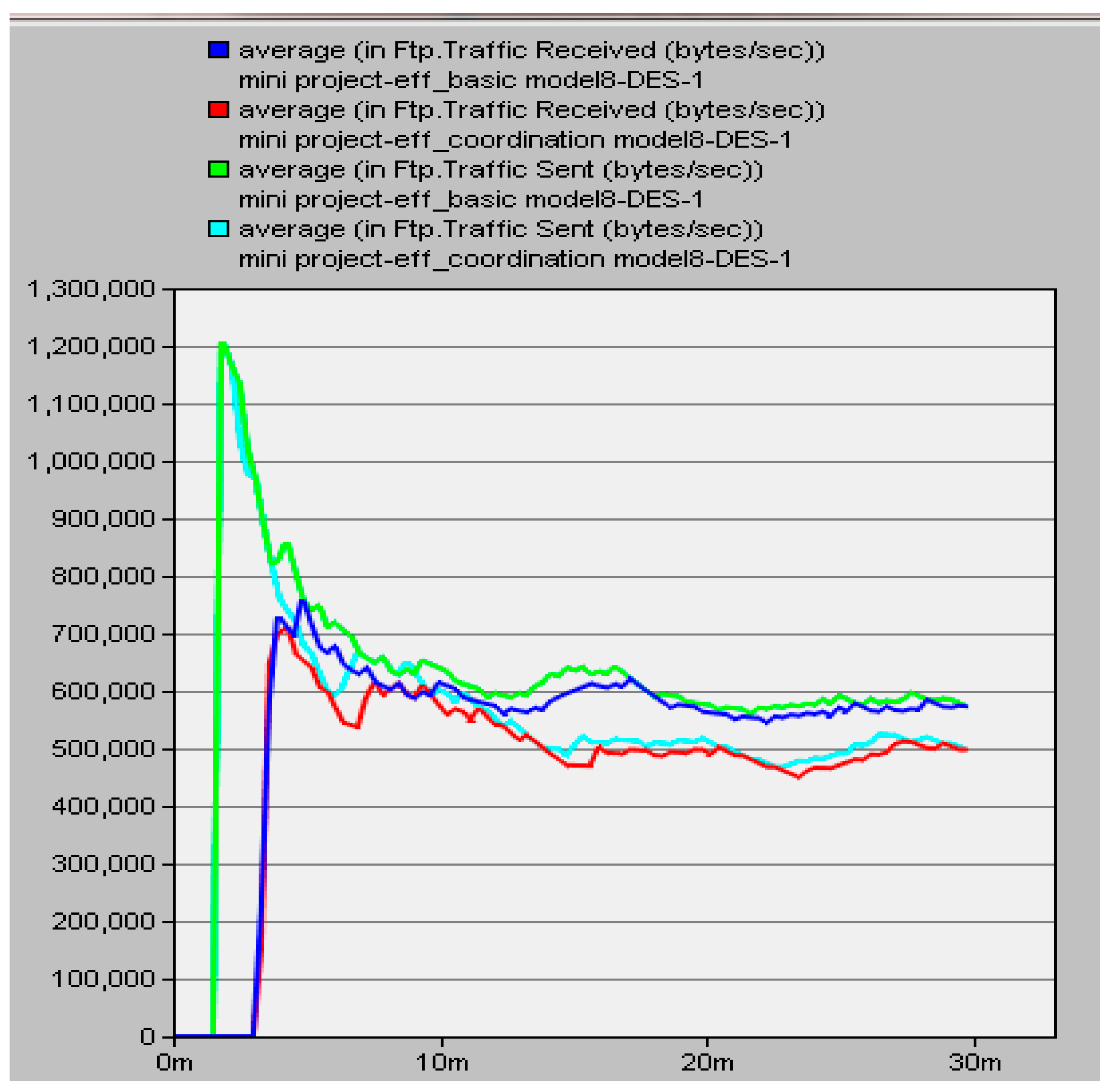

Table 1.
it illustrates the relationship between modulation types and the bit per symbol.
| Modulation types | Theoretical bandwidth capability(bit/symbol)In (bit/second/hertz) |
|---|---|
| QPSK | 2 |
| 8QAM | 3 |
| 16QAM | 4 |
| 32QAM | 5 |
| 64QAM | 6 |
| 256QAM | 8 |
Table 2.
WiMAX assumptions.
| Factor | Description |
|---|---|
| Multiplexing concept | OFDMA |
| No. of subcarriers | 2048 |
| Bandwidth | 20MHz |
| Duplexing | Time division |
| Application | File transfer protocol |
| Frame duration | 5m sec |
| Symbol duration | 102.86 micro sec |
| Stream direction | downlink |
| Simulated time | 30 minutes |
Table 3.
it explains the distribution of users on the schemes of modulation and coding rate before and after using MSCo operation.
Table 3.
it explains the distribution of users on the schemes of modulation and coding rate before and after using MSCo operation.
| Firstly: The basic model | ||||
| Modulation | Coding Rate | Number of users per the cell | ||
| Sector 1 | Sector 2 | Sector 3 | ||
| QPSK | 1/2 | 5 | 6 | 3 |
| QPSK | 3/4 | 5 | 3 | 3 |
| 16QAM | 1/2 | 10 | 4 | 10 |
| Secondly: The Coordination model | ||||
| Modulation | Coding Rate | Number of users per the cell | ||
| Sector 1 | Sector 2 | Sector 3 | ||
| QPSK | 1/2 | 0 | 0 | 0 |
| QPSK | 3/4 | 5 | 6 | 3 |
| 16QAM | 1/2 | 15 | 10 | 13 |
Disclaimer/Publisher’s Note: The statements, opinions and data contained in all publications are solely those of the individual author(s) and contributor(s) and not of MDPI and/or the editor(s). MDPI and/or the editor(s) disclaim responsibility for any injury to people or property resulting from any ideas, methods, instructions or products referred to in the content. |
© 2025 by the authors. Licensee MDPI, Basel, Switzerland. This article is an open access article distributed under the terms and conditions of the Creative Commons Attribution (CC BY) license (http://creativecommons.org/licenses/by/4.0/).
Copyright: This open access article is published under a Creative Commons CC BY 4.0 license, which permit the free download, distribution, and reuse, provided that the author and preprint are cited in any reuse.


