
Submitted:
04 April 2025
Posted:
07 April 2025
You are already at the latest version
Abstract
Digital literacy and technology-enabled education have immense potential to transform rural communities by addressing long-standing challenges such as limited access to quality education, lack of skilled teachers, and infrastructural constraints. Leveraging e-learning and Learning Management Systems (LMS) can provide innovative solutions to these problems, offering tailored learning experiences, access to diverse educational resources, and skill development opportunities. LMS tools, integrated with localized content and multilingual support, can bridge geographical and cultural divides, enabling equitable access to education and vocational training. Despite their transformative potential, implementing e-learning and LMS in rural settings faces numerous obstacles, including inadequate digital infrastructure, low internet penetration, limited affordability of digital devices, and a lack of digital literacy among both learners and educators. Furthermore, community reluctance to adopt modern educational technologies and the need for region-specific customization present additional hurdles. Addressing these challenges requires a multistakeholder approach involving government agencies, non-profit organizations, and technology providers to ensure sustainable adoption and meaningful impact. This review paper examines the role of digital literacy and e-learning in rural education, explores successful case studies of LMS adoption in resource-constrained environments, and analyzes the challenges of implementing these technologies effectively. It also provides actionable recommendations for scaling elearning initiatives, such as improving digital infrastructure, conducting community-focused training programs, and offering online, low-bandwidthcompatible LMS solutions. The findings underscore the critical role of digital literacy and LMS in bridging the rural-urban educational divide, enhancing skill development, and promoting socio-economic progress. The paper concludes with policy recommendations and future directions for research to ensure the scalability and inclusivity of digital learning systems, ultimately contributing to the vision of equitable and effective education for all learners.
Keywords:
Digital Literacy
; E-Learning
; Online Learning
; Learning Management System (LMS)
; Rural Education
; Digital Divide
Introduction
Digital literacy and technology-enabled education are pivotal in transforming rural communities, addressing long-standing challenges such as limited access to quality education, a shortage of skilled teachers, and infrastructural constraints. Rural areas in India often struggle with educational disparities due to geographical isolation and inadequate resources, resulting in a lack of opportunities for youth and adults alike. The advent of e-learning platforms and Learning Management Systems (LMS) presents an innovative solution to these problems by providing tailored learning experiences and access to diverse educational resources. E-learning can bridge the gap between urban and rural education by leveraging technology to deliver high-quality instructional materials directly to learners' homes, thereby overcoming geographical barriers that have historically restricted educational access [1]. Moreover, LMS tools can enhance the learning experience by offering structured environments that facilitate student engagement and collaboration. By integrating localized content and multilingual support, LMS can cater to the unique cultural and linguistic needs of rural populations, making education more relevant and accessible [3]. This adaptability is crucial in ensuring that learners not only receive information but also engage with it meaningfully, fostering a sense of community among students who may feel isolated due to their geographical circumstances.
Despite the transformative potential of e-learning and LMS, several obstacles hinder their implementation in rural settings. Inadequate digital infrastructure remains a significant barrier; many rural areas lack reliable internet access, which is essential for effective online learning [4,5]. Additionally, low internet penetration rates and the limited affordability of digital devices further exacerbate the digital divide. Many families in these regions cannot afford smartphones or computers, which are critical for accessing e-learning platforms. Furthermore, a lack of digital literacy among both learners and educators poses another challenge. Without the necessary skills to navigate online learning environments effectively, both teachers and students may struggle to utilize these technologies to their fullest potential [2].
Community reluctance to adopt modern educational technologies can also impede progress. Many individuals may be hesitant to embrace e-learning due to unfamiliarity with technology or skepticism regarding its effectiveness compared to traditional teaching methods. This reluctance underscores the need for targeted training programs that enhance digital literacy among educators and learners alike [4,5]. Additionally, the customization of content to reflect local contexts is essential for fostering acceptance and ensuring that e-learning initiatives resonate with community members.
Addressing these challenges requires a multi-stakeholder approach involving government agencies, non-profit organizations, educational institutions, and technology providers. Collaborative efforts can help improve digital infrastructure, provide affordable access to devices, and implement community-focused training programs aimed at enhancing digital literacy [1]. Successful case studies from various regions demonstrate that when stakeholders work together to create supportive ecosystems for e-learning, significant improvements in educational outcomes can be achieved.
This paper aims to explore the role of digital literacy in enhancing e-learning initiatives through LMS solutions in rural communities. By examining successful case studies and identifying challenges associated with implementation, this paper will provide actionable recommendations for scaling e-learning initiatives. Ultimately, the findings underscore the critical importance of digital literacy and technology integration in bridging the rural-urban educational divide, enhancing skill development, and promoting socio-economic progress.
Literature Survey
A. Digital Literacy and Its Role in Education
Digital literacy is a key factor in enhancing the quality of education in rural communities. According to a study by [4,5], digital literacy programs in rural India are still in their nascent stages. The research highlights the importance of digital skills in enabling access to information and improving overall educational outcomes. Additionally, a report by the Ministry of Electronics and Information Technology (2021) outlines various government initiatives aimed at promoting digital literacy, such as the Pradhan Mantri Gramin Digital Saksharta Abhiyan (PMGDISHA), which seeks to make at least one person per rural household digitally literate. Recent research by Kumar, [9] investigates the connection between digital literacy and women's empowerment in rural Himachal Pradesh. This study, involving 250 rural participants, uses analytical tools to gain insights into the relationship between digital literacy and women's empowerment. The findings reveal a significant positive link between digital literacy and empowerment, emphasizing the role of education in enhancing digital skills among women. Another significant study [10] examines the effect of digital literacy on business skills development in rural communities. Utilizing a mixed-methods approach, the study found that participants who completed a digital literacy program showed significant improvement in their digital skills and confidence in using digital tools for business purposes. This highlights the importance of digital literacy in fostering economic growth and empowering individuals in rural areas.
B. E-Learning Platforms for Rural Education
E-learning platforms have emerged as powerful tools for addressing educational disparities in rural areas. These platforms provide flexible access to high-quality instructional materials that can be tailored to meet the specific needs of learners in remote locations. The COVID-19 pandemic accelerated the adoption of digital education, revealing both its potential and limitations. While urban areas quickly transitioned to online learning, rural regions faced significant challenges due to inadequate infrastructure and limited access to devices [12]. E-learning platforms can facilitate personalized learning experiences and provide access to diverse educational resources that would otherwise be unavailable. However, as noted by [6], successful implementation requires addressing infrastructural deficits and ensuring that students have reliable access to technology.
C. Learning Management Systems (LMS) in Rural Settings
Learning Management Systems (LMS) play a crucial role in enhancing the e-learning experience by providing structured environments that support student engagement and collaboration. LMS can integrate localized content and multilingual support, making education more relevant for diverse rural populations [3]. Research indicates that LMS can mitigate some challenges associated with traditional classroom settings by enabling asynchronous learning opportunities that accommodate varying schedules and learning paces [8]. However, the effectiveness of LMS in rural settings is contingent upon adequate training for both teachers and students in utilizing these systems effectively.
D. Successful Models and Case Studies
There are successful examples of digital literacy and e-learning initiatives in rural settings. The Gram Panchayat e-Governance Project in Karnataka, as documented by [13], demonstrates how digital tools can enhance governance and educational outcomes in rural areas. Another notable example is the Digital Empowerment Foundation’s initiatives, which have successfully implemented e-learning programs in several rural communities, leading to improved educational and socio-economic outcomes.
E. Technological and Ethical Consideration
As technology becomes increasingly integrated into education, ethical considerations surrounding data privacy and equity must be addressed. The use of e-learning platforms raises concerns about data security and the potential misuse of personal information collected from students [8]. Additionally, ensuring equitable access to technology is paramount; without addressing disparities in device availability and internet connectivity, marginalized communities may be further disadvantaged. Policymakers must prioritize inclusive strategies that promote digital equity while safeguarding users' rights.In conclusion, while digital literacy, e-learning platforms, and LMS offer substantial opportunities for enhancing education in rural India, significant barriers remain. Addressing these challenges requires a collaborative approach involving government agencies, non-profit organizations, educational institutions, and community stakeholders committed to creating supportive ecosystems for technology integration.
Current State of Rural Education in India
Education plays a pivotal role in the development of individuals and societies, yet rural India continues to face significant educational challenges. The disparity between urban and rural education is well-documented, with rural schools often struggling with inadequate infrastructure, insufficient teaching staff, and limited access to educational resources. The Annual Status of Education Report (ASER, 2020) provides a comprehensive overview, indicating that basic facilities such as functional toilets, drinking water, and electricity are lacking in many rural schools [12]. This lack of infrastructure significantly hampers the learning environment, contributing to lower literacy rates and higher dropout rates compared to urban areas. In addition to infrastructure issues, there is a notable shortage of skilled teachers in rural areas. The Ministry of Human Resource Development (2021) highlights that many rural schools operate with untrained or underqualified teachers, affecting the quality of education delivered. This situation is further exacerbated by the lack of continuous professional development opportunities for teachers in rural regions.
Efforts to improve education in rural India have been ongoing, with various government initiatives aimed at addressing these challenges. The National Education Policy (NEP) 2020 introduces several reforms to make education more inclusive and accessible. According to [14], the NEP 2020 emphasizes the importance of integrating traditional and online education systems to leverage the strengths of both approaches. Hybrid models are being explored to combine face-to-face teaching with digital learning tools, which can help overcome geographical barriers and provide quality education to remote areas. Furthermore, digital literacy is increasingly recognized as a crucial component in enhancing educational outcomes in rural areas. [9] conducted a study on the impact of digital literacy on women's empowerment in rural Himachal Pradesh. Their findings indicate that improving digital skills among women not only enhances their educational opportunities but also contributes to their overall empowerment. This underscores the importance of integrating digital literacy programs within the rural education framework. The current state of rural education is also impacted by socio-economic factors. Many rural families face economic hardships that prevent them from investing in their children's education. A significant portion of students from rural areas are first-generation learners, and their parents may not fully recognize the value of education, leading to higher dropout rates. The Government of India's Sarva Shiksha Abhiyan (SSA) and Rashtriya Madhyamik Shiksha Abhiyan (RMSA) are key programs aimed at universalizing elementary and secondary education, respectively. These programs have made considerable progress in increasing enrolment rates, but retention and quality of education remain pressing concerns.
The current state of rural education in India is characterized by several challenges, including inadequate infrastructure, shortage of skilled teachers, and socio-economic barriers. However, initiatives like the NEP 2020 and targeted digital literacy programs hold promise for addressing these issues and improving educational outcomes in rural areas. Continued investment in infrastructure, teacher training, and digital literacy is essential to bridge the educational gap between urban and rural India.
Role of E-Learning and LMS, Digital Literacy in Rural Education
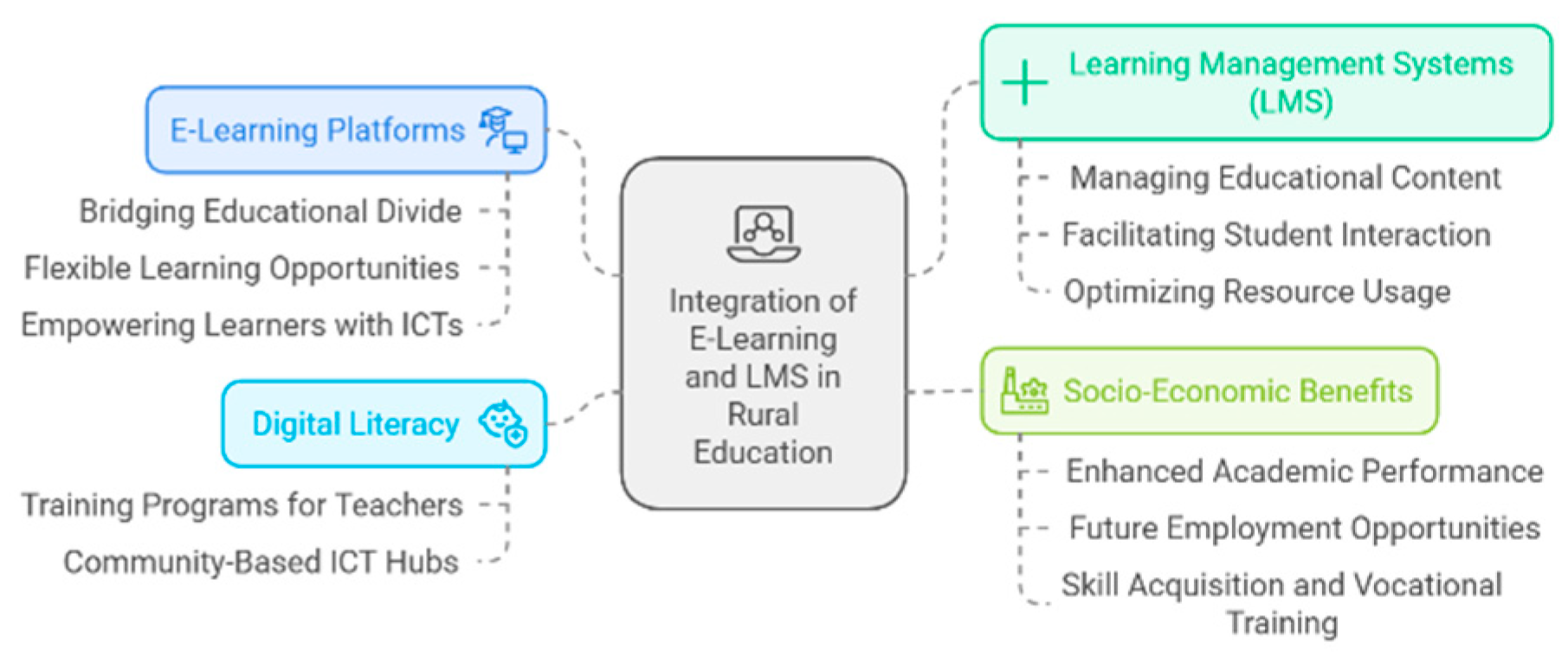
The integration of e-learning and Learning Management Systems (LMS) into rural education has emerged as a transformative approach to addressing the challenges faced by these communities. E-learning platforms provide an innovative means of delivering educational content, while LMS facilitate structured learning environments that enhance engagement and collaboration among students.[13,14] Together, they play a crucial role in promoting digital literacy, which is essential for effective participation in today’s knowledge-driven economy.
E-learning platforms have the potential to bridge the educational divide between urban and rural areas by providing access to high-quality instructional materials that are often unavailable in traditional classroom settings. [16,17,18], e-learning services tailored for rural communities can significantly enhance educational outcomes by offering flexible learning opportunities that accommodate the unique needs of learners. This flexibility is particularly important in rural areas where geographical isolation and infrastructural deficits often limit access to quality education (Hussain & Wang, 2013). E-learning initiatives can empower learners by providing them with the tools necessary to engage with modern information and communication technologies (ICTs), thereby enhancing their overall educational experience.
Learning Management Systems (LMS) further augment the capabilities of e-learning by providing a structured framework for managing educational content and facilitating student interaction. An LMS can include features such as quizzes, discussion forums, and progress tracking, which enhance the learning process by promoting active participation (Arulchelvan, 2022). In rural schools, where teacher-student ratios are often unfavorable, LMS can help optimize resource usage by allowing educators to manage multiple classes efficiently and provide personalized support to students. The effectiveness of LMS in improving academic performance has been documented in various studies, indicating that their use leads to reduced absenteeism and improved learning outcomes (Arulchelvan, 2022). Digital literacy is a critical component of this integration, as it equips both educators and students with the skills necessary to navigate e-learning environments effectively. A lack of digital literacy can hinder the adoption of e-learning technologies, limiting their potential impact on educational outcomes. Research indicates that targeted training programs aimed at enhancing digital literacy among teachers can significantly improve their ability to utilize e-learning tools effectively (Mugabirwe et al., 2021). For instance, initiatives that establish community-based ICT hubs have shown promise in providing teachers with access to training resources and technological tools necessary for effective teaching (MIT Solve, 2020).
Moreover, the socio-economic implications of integrating e-learning and digital literacy into rural education are profound. E-learning not only enhances academic performance but also prepares students for future employment opportunities by equipping them with essential digital skills. As highlighted in a recent study on e-learning for rural development in India, these platforms can facilitate skill acquisition and vocational training, ultimately contributing to economic growth in rural areas (E-Learning for Rural Development in India, 2024). By fostering an environment where learners are proficient in digital technologies, communities can enhance their overall productivity and improve livelihoods.
However, challenges remain in the implementation of e-learning and LMS solutions in rural contexts. Issues such as inadequate internet infrastructure, limited access to devices, and cultural resistance to adopting new technologies can impede progress (Achari, 2021). Addressing these barriers requires a collaborative approach involving government agencies, non-profit organizations, and local communities to create supportive ecosystems for technology integration.
The role of e-learning and LMS in promoting digital literacy within rural education is vital for bridging educational gaps and fostering socio-economic development. By leveraging technology effectively and enhancing digital skills among educators and learners alike, rural communities can overcome traditional barriers to education and empower their populations for future success.
Figure 1.
E-Learning and LMS Integration in Rural Education.
Government Initiatives to Improve Digital Literacy and Promote E-Learning
Several initiatives have been put in place by the Indian government to increase digital literacy:
- Bharat Net Project: Introduced to all Gram Panchayats in the country, this project provides broadband connectivity to all telecom service providers. It was approved by the Union Cabinet on October 25, 2011, and its three-step implementation was sanctioned by the Telecom Commission on April 30, 2016.
- National Digital Literacy Mission (NDLM) (2014): Initiated by the Ministry of Communication & Information Technology to equip every family member with essential digital literacy skills needed to thrive in a technology-dependent society.
- Saksharata Abhiyan Digital: The second phase of the NDLM, launched in December 2014, aimed to provide basic digital literacy training to 2.50 lakh people, including ration dealers, ASHA personnel, and other government workers. As of October 2016, over 87.68 lakh individuals have received training, and 53.46 lakh have obtained certification.
- Digital India Campaign: Launched on July 1, 2015, by Prime Minister Narendra Modi to enhance internet access and online infrastructure to promote digital empowerment across the nation.
- Internet Saathi Program: Introduced by Google India and Tata Trusts in 2015 to improve digital literacy among women in rural areas. Trained women, called "Internet Saathis," serve as educators and mentors, assisting other women in their communities to use the internet effectively.
- Pradhan Mantri Gramin Digital Saksharta Abhiyan (PMGDISHA): Part of the Digital India Programme, launched in 2017 to achieve digital literacy for 6 crore individuals in rural areas by training one person aged 14 to 60 per household.
E-Learning Programs for Rural Education
- E-Pathshala: Developed by the Central Institute of Educational Technology and NCERT, this portal/app offers a variety of printed and digital educational materials, including audio-visual content and teacher training modules.
- National Digital Library of India: Established in July 2017 by the Ministry of Education, it is an electronic library featuring lectures, audiobooks, textbooks, films, articles, and other educational resources.
- Sugamya Pustakalaya: Launched for individuals with limited vision or print difficulties, this initiative by the Daisy Forum of India and the Department of Empowerment of Persons with Disabilities is supported by Tata Consultancy Services.
- Swayam: A platform for massively open online courses, started by AICTE, NPTEL, the Ministry of Education, and the Government of India. It aims to bridge the digital divide by making education accessible to anyone, anywhere, anytime.
- Swayam Prabha: A program by the Ministry of Human Resource Development offering 34 DTH channels that broadcast educational content 24x7 using the GSAT-15 satellite.
- DIKSHA: Launched in September 2017, this Digital Infrastructure for Knowledge Sharing platform supports educators in self-education and training with cutting-edge digital tools.
- PM E-Vidya: Unveiled on May 17, 2020, this initiative integrates digital and online learning to provide access to e-learning for around 25 crore schoolchildren in the nation.
- National Programme on Technology Enhanced Learning (NPTEL): It is a project of MHRD initiated by seven Indian Institutes of Technology (Bombay, Delhi, Kanpur, Kharagpur, Madras, Guwahati and Roorkee) along with the Indian Institute of Science, Bangalore in 2003, to provide quality education to anyone interested in learning from the IITs. The main goal was to create web and video courses in all major branches of engineering and physical sciences at the undergraduate and postgraduate levels and management courses at the postgraduate level.
Case Studies and Evidence
The integration of e-learning and digital literacy initiatives in rural education has been documented through various case studies, showcasing both the challenges and successes of these approaches in enhancing educational outcomes. These case studies provide valuable insights into how technology can be leveraged to address the unique needs of rural communities.
One notable example is the Digital Literacy for Rural Schools initiative in Uganda, which aims to equip primary school teachers with essential digital skills. This program addresses the significant learning gap exacerbated by the COVID-19 pandemic, during which many students were unable to access educational resources. The initiative involves creating community-based ICT hubs that provide teachers, learners, and parents with access to information communication technology (ICT) tools and learning materials. Teachers receive training in digital literacy, enabling them to create relevant curriculum content that can be distributed to students at home [2]. This approach not only enhances the capacity of teachers to facilitate remote learning but also fosters household-based learning, thereby improving educational access for children who have been out of school for extended periods
In Bangladesh, a study on the Digitalization of Education in Rural Schools highlights the impact of digital technologies on educational access and utilization. The research employed a mixed-methods approach, including surveys and interviews, to assess the current status of digital education in rural areas. Findings indicate that while digitalization presents opportunities for enhancing learning experiences, significant barriers remain, such as inadequate infrastructure and limited teacher training [18]. The study emphasizes the need for targeted interventions to address these challenges, suggesting that comprehensive strategies involving government initiatives and community involvement are essential for successful implementation.
Another relevant case is presented in a study conducted in Mozambique, where researchers examined the potential of an online learning tool to increase digital literacy among rural communities. The project aimed to create a sustainable method for improving digital literacy by designing an internet learning tool tailored to local user requirements. The results indicated that such tools could significantly enhance digital skills among users with low or no prior experience [3]. This case illustrates how localized solutions can effectively promote digital literacy and support long-term development in rural settings. In India, e-learning has become a powerful tool for bridging educational gaps in rural areas. A recent study outlines how e-learning platforms can overcome geographical limitations by delivering instructional materials directly to remote communities. This research highlights the socio-economic benefits of integrating e-learning into education systems, including improved job prospects and enhanced agricultural knowledge [6]. However, it also identifies challenges related to infrastructure constraints and disparities in digital literacy that must be addressed to maximize the effectiveness of e-learning initiatives.
The Considerations for Digital Literacy in Rural Communities report discusses the critical factors influencing digital literacy adoption in emerging economies. It emphasizes the importance of developing an integrated curriculum that encompasses various aspects of literacy, including health and financial literacy [19]. This comprehensive approach is essential for fostering an environment conducive to digital literacy growth and ensuring that rural populations can fully benefit from technological advancements. These case studies collectively demonstrate that while e-learning and digital literacy initiatives hold significant promise for improving education in rural areas, their success depends on addressing infrastructural barriers, enhancing teacher training, and fostering community engagement. By implementing tailored strategies that consider local contexts and needs, stakeholders can create effective educational ecosystems that empower learners and educators alike.
Challenges and Barriers
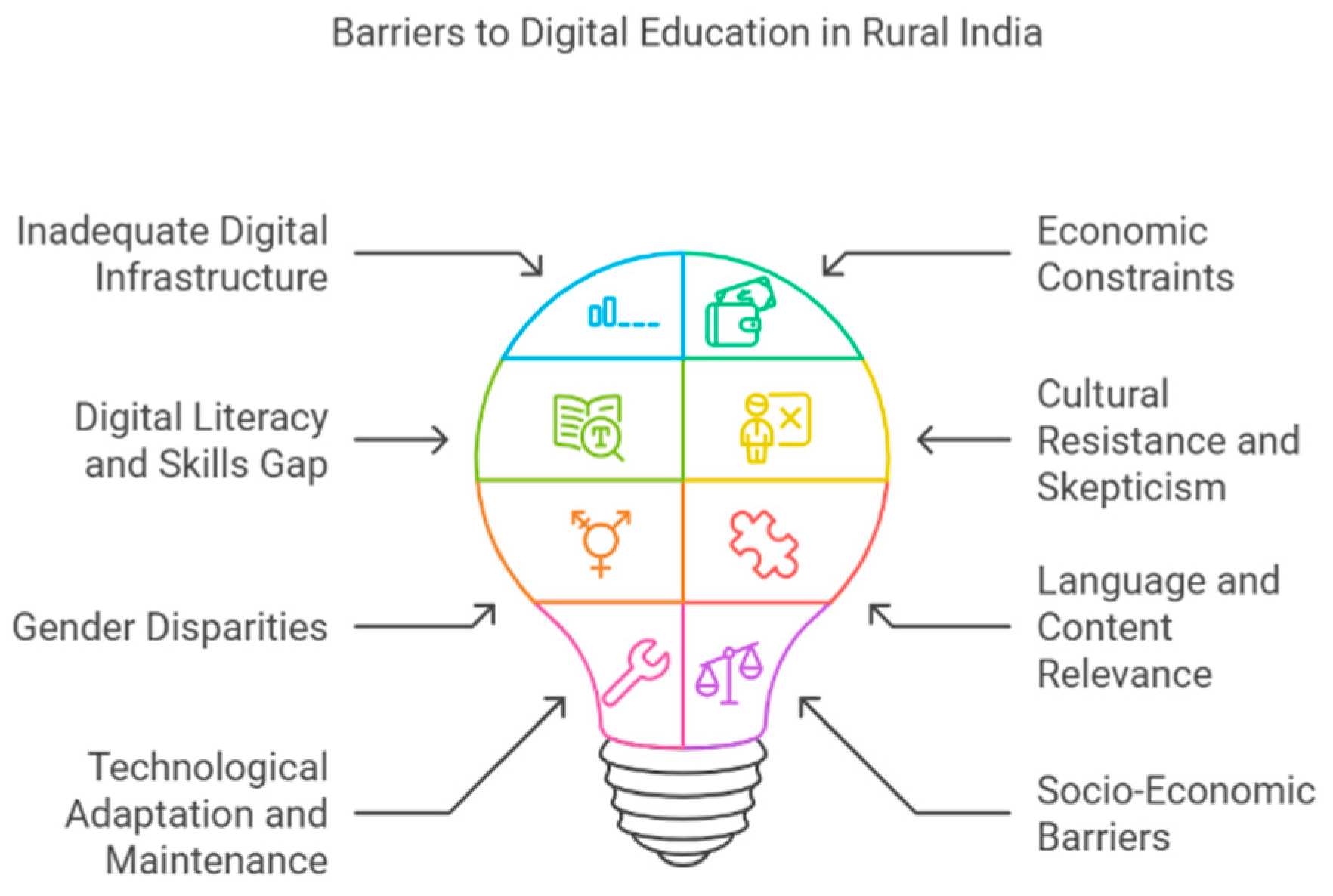
Implementing digital education in rural areas of India presents numerous challenges and barriers that need to be addressed to fully harness the potential of e-learning, Learning Management Systems (LMS), and digital literacy programs. One of the most significant barriers is the lack of digital infrastructure in rural areas. Many villages have limited access to reliable internet connectivity and electricity, which are essential for effective digital learning. According to recent data, only 29% of rural households have internet access, compared to 66% in urban areas [16]. This digital divide significantly hampers the adoption of e-learning and LMS, as students and educators cannot access online resources without reliable internet connections. Economic constraints pose another critical challenge. Many families in rural areas cannot afford digital devices such as smartphones, tablets, or computers, which are necessary for accessing e-learning platforms. Suggestions include hybrid models combining traditional and online education to help mitigate these economic barriers by providing a more affordable and accessible learning solution.
A lack of digital literacy among both students and educators is a significant barrier to the effective use of digital tools in education. Many teachers in rural areas are not adequately trained to use e-learning platforms and LMS, which limits their ability to integrate these technologies into their teaching. Similarly, students who lack basic digital skills may struggle to navigate online learning environments. Digital literacy programs are essential in empowering individuals and improving their educational opportunities [21].
Gender disparities present another barrier to digital education in rural areas. Women and girls often face additional challenges in accessing digital resources due to societal norms and gender-based discrimination. Programs like the Internet Saathi initiative aim to address these disparities by improving digital literacy among women and empowering them to use technology for educational and economic purposes. The language and relevance of digital content are crucial factors for the success of e-learning in rural areas. Many e-learning platforms and LMS are designed in English, which can be a barrier for students in rural areas who are more comfortable with regional languages. It is essential to create and distribute educational materials in local languages to enhance the accessibility and effectiveness of digital learning. Ensuring that digital devices and internet infrastructure are well-maintained and updated is critical for the smooth functioning of e-learning and LMS platforms. [20]. Addressing these issues requires coordinated efforts from government agencies, technology providers, and local communities. Socio-economic factors also play a critical role in limiting the effectiveness of digital education in rural areas. Many students from economically disadvantaged backgrounds may need to work to support their families, leaving little time for education. Additionally, there can be a lack of awareness and understanding among parents about the benefits of digital education, which can lead to low enrolment and participation rates in e-learning programs.
Figure 2.
Barriers to Digital Education in Rural India.
Future Perspectives and Recommendations
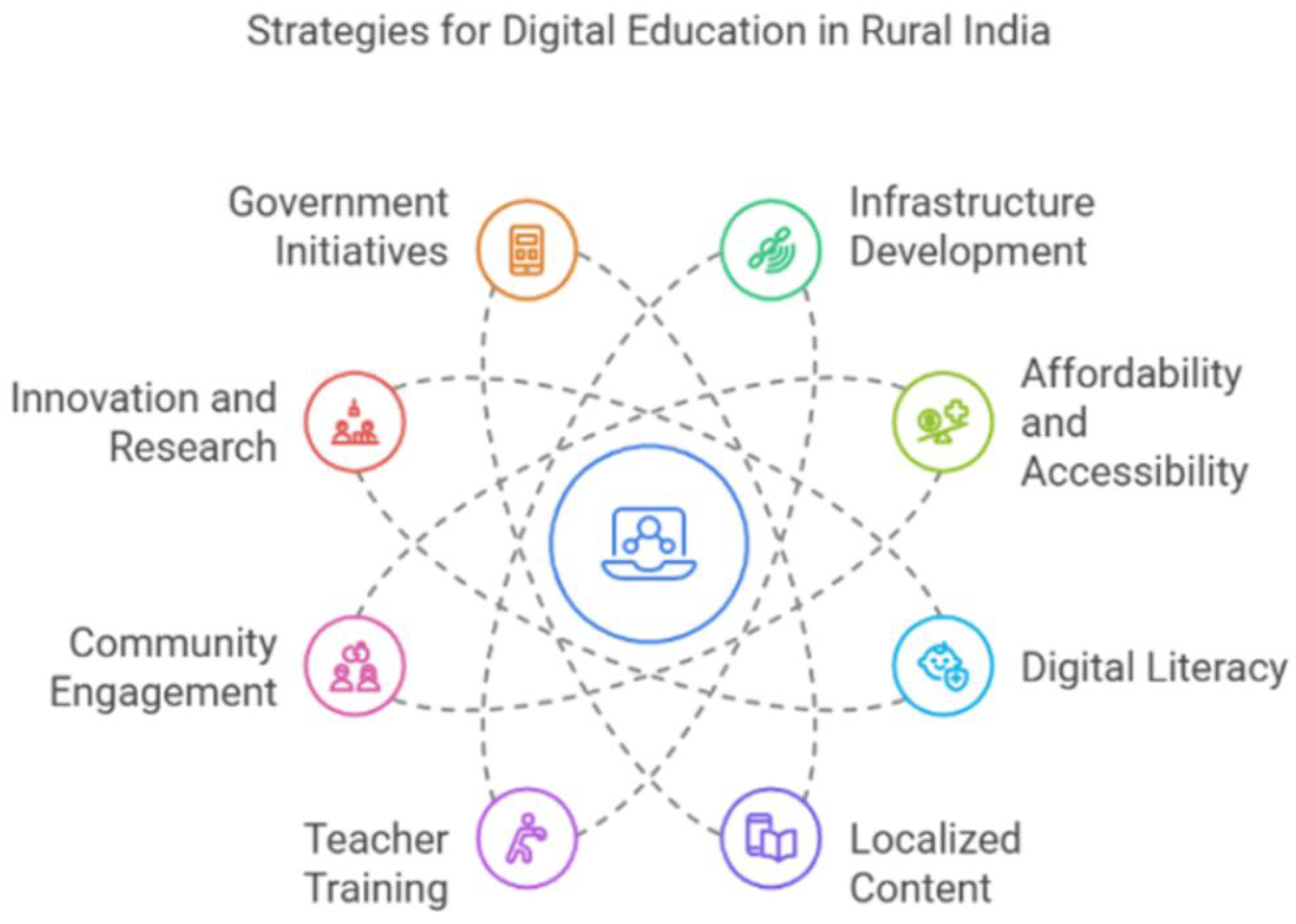
As we look toward the future of digital education in rural India, it is essential to envision strategies that address existing challenges while leveraging technological advancements to enhance educational outcomes. To bridge the digital divide, it is crucial to invest in robust digital infrastructure in rural areas. The government should continue to expand programs like Bharat Net, which aims to provide broadband connectivity to all Gram Panchayats. Public-private partnerships can play a significant role in accelerating infrastructure development. Ensuring that digital devices and internet services are affordable and accessible to all families in rural areas is vital. Subsidies, low-cost financing options, and community-based programs for distributing devices can help overcome economic barriers. The government and non-profit organizations can collaborate to provide digital devices to students from low-income households and ensure affordable internet plans are available. Digital literacy programs should be scaled up to equip students, educators, and community members with the necessary skills to effectively use digital tools. The Pradhan Mantri Gramin Digital Saksharta Abhiyan (PMGDISHA) and other similar initiatives should be expanded and tailored to the specific needs of rural populations. Training programs should also focus on advanced digital skills and critical thinking to prepare students for the future job market. Creating and distributing educational content in local languages is essential to make digital learning more accessible and relevant to rural students. E-learning platforms and Learning Management Systems (LMS) should integrate localized content that reflects the cultural and linguistic diversity of rural communities. Continuous professional development for teachers is crucial for the successful integration of digital tools in education. Training programs should focus on developing educators' digital literacy, pedagogical skills, and ability to create engaging and interactive online learning experiences. Platforms like DIKSHA and NPTEL can be leveraged to provide teachers with the resources and support they need to enhance their teaching practices. Engaging the community in digital education initiatives is vital for their success. Parents, local leaders, and community organizations should be involved in planning and implementing programs to ensure they are culturally appropriate and meet the needs of the community. Awareness campaigns and workshops can help build trust and acceptance of digital education among community members. Feedback from students, teachers, and community members should be actively sought and used to refine and enhance programs. Encouraging innovation and research in digital education can lead to the development of new tools, methodologies, and best practices [22]. Collaboration between educational institutions, technology providers, and research organizations can foster a culture of continuous improvement and innovation. Funding and support for research initiatives focused on rural education and digital learning should be prioritized. Government initiatives like SWAYAM, DIKSHA, PM e-Vidya, Swayam Prabha, and VidyaDaan play a crucial role in this transformation by providing accessible, inclusive, and high-quality educational resources [24]. Awareness should be created related to government platforms like NPTEL which are Massive open online courses (MOOCs) and can be used to gain knowledge and skills related to tech and non tech fields. These platforms can also be used to get certified which can prove their knowledge and increase the job prospects.
Figure 3.
Strategies for Digital Education In Rural India.
Conclusion
The integration of digital literacy using e-learning, and Learning Management Systems (LMS) into rural education offers a transformative opportunity to address significant challenges faced by these communities. Despite barriers such as inadequate infrastructure, socio-economic constraints, and cultural attitudes, the potential benefits of digital education are substantial. Key recommendations include investing in infrastructure development for reliable internet access, enhancing digital literacy training for educators and students, and creating culturally relevant content that resonates with local communities. Additionally, addressing affordability issues through subsidized devices and strengthening policy frameworks will promote equitable access to technology. Fostering community engagement is also essential for the successful adoption of digital initiatives; involving parents and local leaders can build trust and support. Ultimately, recognizing technology as a powerful tool for equity and opportunity is crucial for paving the way toward a more inclusive educational landscape. By overcoming existing challenges and leveraging the potential of digital literacy and e-learning, we can empower rural learners and ensure that no child is left behind in the pursuit of quality education. Continued research and innovation will be necessary to adapt these strategies to the evolving needs of rural communities.
References
- Tavangarian, D. (2004). Is e-Learning the Solution for Individual Learning?. Electronic Journal of E-learning, 2(2), pp265-272.
- Mugabirwe Olivia et al. (2021). Digital Literacy for Rural Schools: A Community-Based ICT Hub Approach.
- Fredin, A., & Ndiaye, M. (2023). Using an Online Learning Tool to Increase Digital Literacy in Rural Areas of Mozambique: A Minor Field Study.
- Kumar, P. (2011). Rural Development Through E-Learning: The Andhra Pradesh Model.
- KUMAR, V. (2021). Effectiveness Of E-Learning In Primary Education. NVEO-NATURAL VOLATILES & ESSENTIAL OILS Journal| NVEO, 241-248.
- Hans, V. (2024). E-Learning for Rural Development in India: Closing Disparities and Empowering Communities. E-Learning for Rural Development in India: Closing Disparities and Empowering Communities (January 22, 2024).
- Mustafa, F. Mustafa, F., Nguyen, H. T. M., & Gao, X. A. (2024). The challenges and solutions of technology integration in rural schools: A systematic literature review. International Journal of Educational Research, 126, 102380. [CrossRef]
- Hussain, S.; Wang, Z.; Rahim, S. E-learning services for rural communities. arXiv, 2013; arXiv:1308.4820. [Google Scholar]
- Kumar, S., Kumar, V., & Devi, N. (2024). Digital literacy: a pathway toward empowering rural women. Global Knowledge, Memory and Communication. [CrossRef]
- The Effectiveness of E-LMS on Performance of Indian Rural Schools: A Case from a Developing Country, March 2012, Contemporary Educational Technology 3(1).
- Kaakandikar, R., Nikam, R., Vanarse, R. A., & Khedkar, A. M. Digital Literacy Impact on Rural Business Skills: A Study from India.
- Kulshrestha, T., Ramswaroop, S., & Kant, A.R. (2013). Benefits of Learning Management System (LMS) in Indian Education.
- Rise of Learning Management System (LMS): An Overview. International Journal of Research in Signal Processing, Computing & Communication System Design 5 (1), 2019, 25-28.
- Mehta, S. N. (2020). E-Learning–An Online Educational Platform Challenges and Futuristic Scope in Rural India. Xi’an University of Architecture & Technology, XII, 14-20.
- Vaddiraju, A. K., & Manasi, S. (2019). E-governance: Learning from Karnataka. Indian Journal of Public Administration, 65(2), 416-429. [CrossRef]
- Trimukhe, P. A Comparative Study Between Traditional and Online Education System in Context with NEP 2020. Chief Editor.
- Thomas, B., Senith, S., Kirubaraj, A. A., & Ramson, S. J. (2020). Digital Education of Rural India to Impact Rural Economy. Medico-legal Update, 20(2), 791. [CrossRef]
- Patel, S. Perspective of Digital Transformation in Rural India. [CrossRef]
- Sharma, R. C. (2009). E-learning in India. In Encyclopedia of Distance Learning, Second Edition (pp. 840-846). IGI Global. [CrossRef]
- Akter, S. (2024). DIGITALIZATION OF EDUCATION IN RURAL SCHOOLS: A STUDY OF ACCESS, UTILIZATION, AND IMPACT TOWARD DIGITALIZATION IN BANGLADESH. American International Journal of Multidisciplinary Scientific Research, 15(1), 1-9. [CrossRef]
- ALONSO-CALPEÑO, M. J., SANTANDER-CASTILLO, J., & RAMÍREZCHOCOLATL, Y. (2023). Considerations for digital literacy in rural communities in the context of ITC4D implementation in emerging economies. ECORFAN: Journal Republic of Peru, 9(16).
- Jindal, Aman & Chahal, Bhupinder. (2020). Challenges and Opportunities for Online Education in India. Pramana. 8. 99.
- IAMAI. (2023). Internet Access in Rural India: Current Trends and Future Prospects.
- Cain, E. J., Valauri, A., Perry, J. R., & DeLoach, A. (2024). Exploring How Rural Schools and Communities Influence the Academic Journeys of College Students in STEM Majors. Rural Educator, 45(3), 15-33. 45(3), 15–33. [CrossRef]
Disclaimer/Publisher’s Note: The statements, opinions and data contained in all publications are solely those of the individual author(s) and contributor(s) and not of MDPI and/or the editor(s). MDPI and/or the editor(s) disclaim responsibility for any injury to people or property resulting from any ideas, methods, instructions or products referred to in the content. |
© 2025 by the authors. Licensee MDPI, Basel, Switzerland. This article is an open access article distributed under the terms and conditions of the Creative Commons Attribution (CC BY) license (http://creativecommons.org/licenses/by/4.0/).
Copyright: This open access article is published under a Creative Commons CC BY 4.0 license, which permit the free download, distribution, and reuse, provided that the author and preprint are cited in any reuse.